Do Chow Chows Shed? Grooming and Coat Care
Chow Chows shed year-round and often have heavy seasonal coat blows. Learn rough versus smooth coat care, line brushing, bathing and drying, mat and skin checks, nail care, shaving limits, and when professional grooming is the safer choice.
Petful is reader supported. As an affiliate of platforms like Amazon and Chewy, we may earn a commission when you buy through links on this page. There is no extra cost to you.
If you are asking do chow chows shed, the short answer is yes, substantially. Both rough and smooth Chows have dense double coats that release hair year-round and often “blow” undercoat more heavily during seasonal changes.
Knowing do chow chows shed is only the beginning. A safe routine must reach the undercoat without scraping skin, dry the coat completely after bathing, prevent mats, and keep the dog cool without routinely shaving protective coat.

Sign up for expert-backed reviews and safety alerts all in one place.
Do Chow Chows shed?
Do Chow Chows shed? Yes, throughout the year and commonly with heavier seasonal coat blows. Individual dogs vary, with shedding affected by coat type, climate, health, hormones, and care. Neither rough nor smooth Chows are hypoallergenic, and no tool or shampoo stops normal shedding.
The Chow Chow Club, AKC, and Royal Kennel Club breed standard all describe a double-coated dog. The undercoat insulates, while the outer coat helps protect skin.
| Brush and comb | Several short sessions each week | Increase during coat blow or where coat tangles |
|---|---|---|
| Bath | When dirty or on an individual schedule | Skin disease requires veterinary or groomer guidance |
| Dry | Towel blot, then cool or comfortably warm airflow to the skin | Stop for overheating, distress, or skin pain |
| Nails and paws | Check weekly and trim as needed | Use professional help for fear, pain, or hidden quick |
| Professional groom | Based on coat, handling, and home capacity | Book earlier during coat blow or mat formation |
Use four levels of evidence when setting a Chow grooming routine. Breed standards establish that rough and smooth Chows are double coated. Weekly hands-on checks show how quickly one dog's undercoat releases or tangles. A dated grooming log reveals seasonal and product-related patterns. A groomer or veterinarian should interpret mats, skin lesions, pain, or a sudden coat change.
Set the routine from four observable signals
After each session, record loose-hair volume, comb resistance, skin findings, and handling comfort. If any one worsens, shorten the interval or change the setup. That produces a defensible schedule for the individual instead of treating a breed-average frequency as a rule.
The Chow Chow profile provides broader ownership context, while the Chow color guide shows why shade and coat texture are separate traits.
How to weigh coat evidence
Breed tendencies describe populations, not every individual dog, so a double-coat description does not determine one Chow's shedding calendar or grooming tolerance. Records, direct observation and professional findings answer different questions: a dated coat log reveals seasonal change, a comb check finds packed undercoat today, and a groomer or veterinarian interprets mats, skin lesions, pain, and handling limits. An article-specific evidence ladder for do chow chows shed that separates population tendencies, individual observations, records and professional findings. The page must give the reader a concrete decision framework rather than a generic fact list: inspect, record, adjust the interval, and refer abnormal findings instead of brushing harder. Documented records anchor that ladder when memory, labels, and current observation conflict.
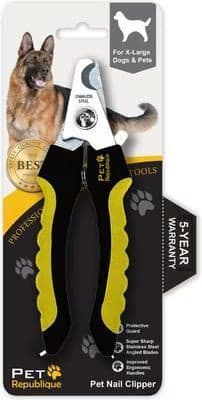
Sharp stainless-steel clippers with a built-in safety guard to help prevent over-cutting, sized for large breeds.
Petful may earn a commission when you click through to Chewy, at no extra cost to you.
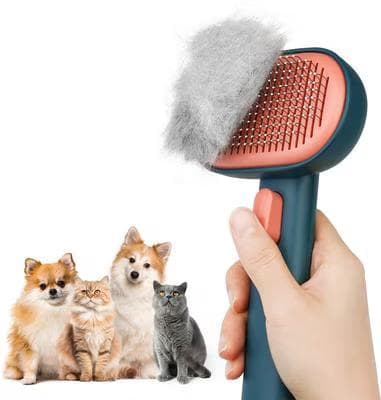
An aumuca self-cleaning slicker brush can lift loose hair in short, light passes. The pins should move through separated sections without raking skin. It does not replace a metal comb check or safely cut out a tight mat.
Rough vs smooth Chow Chow coats
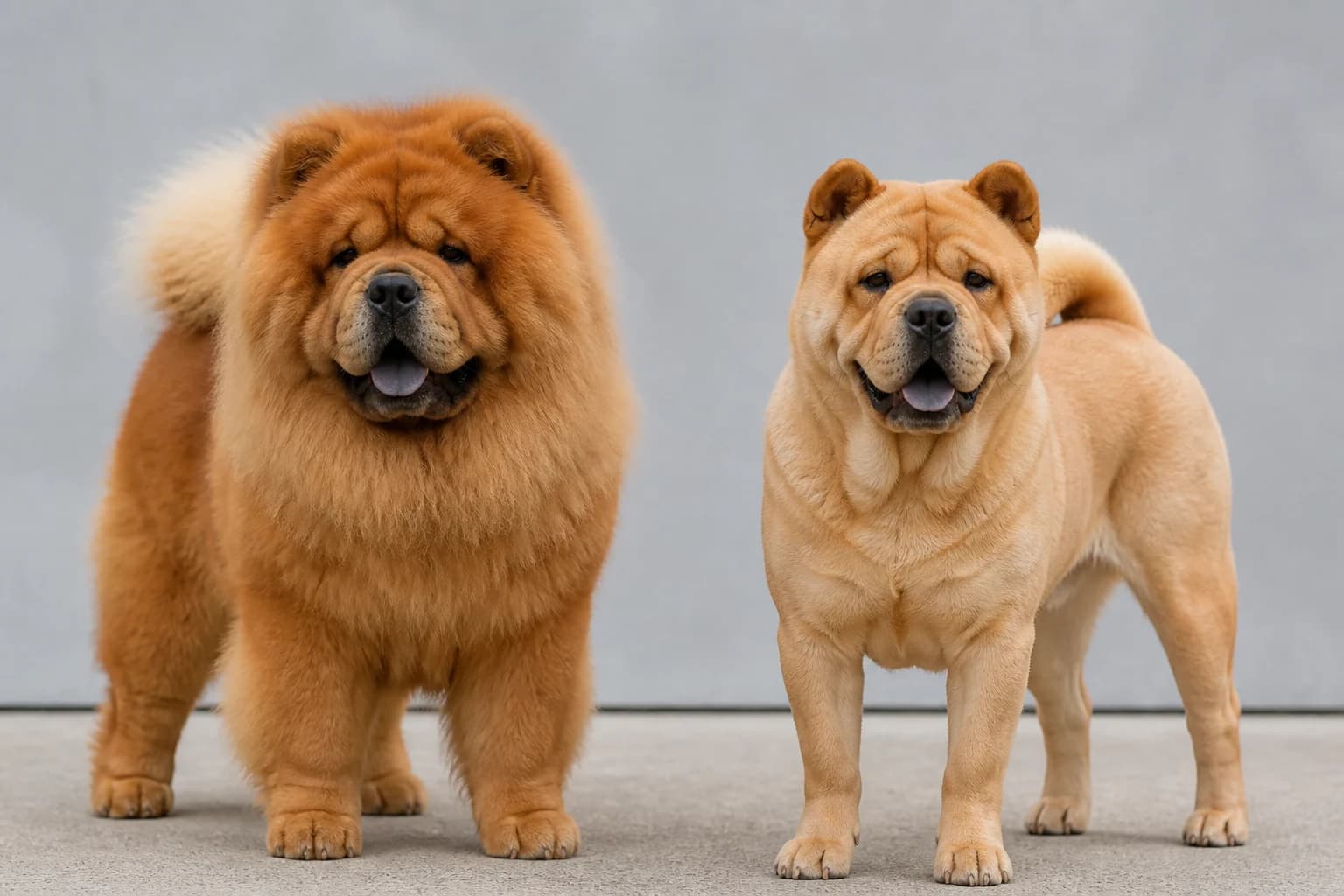
The rough coat has abundant outer hair, a dense undercoat, a mane or ruff, and feathering on the tail and legs. The smooth coat, sometimes called a short hair Chow Chow, is shorter and less feathered but still dense and double layered.
Smooth does not mean low shedding. It may be quicker to brush because sections are shorter, yet loose undercoat still needs removal. Rough coats create more areas where friction and moisture can hide problems, especially behind ears, in the ruff, armpits, groin, and rear feathering.
Separate coat length from care workload
Coat color does not predict shedding amount or temperament. A black, cream, blue, cinnamon, or red dog needs a routine based on actual texture and skin condition.
Run a comb through the same four test zones on either coat type: behind the ears, under the ruff, at the armpits, and across the rear feathering or breeches. A smooth coat may look tidy while dense undercoat is still packed at the skin. The result of that test, not the label rough or smooth, should set the next session.
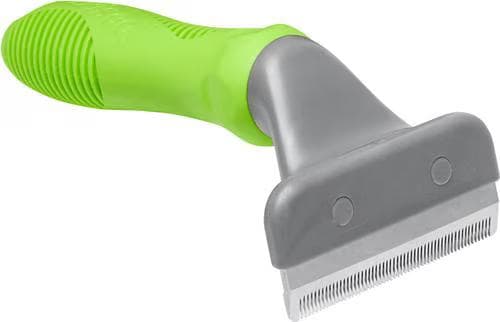
For a smooth or less tangled coat, a Frisco medium-to-long-hair deshedding brush may remove loose undercoat. Use sparingly, never on wet or irritated skin, and stop if it catches live coat or causes redness.
Brushing and line-combing routine
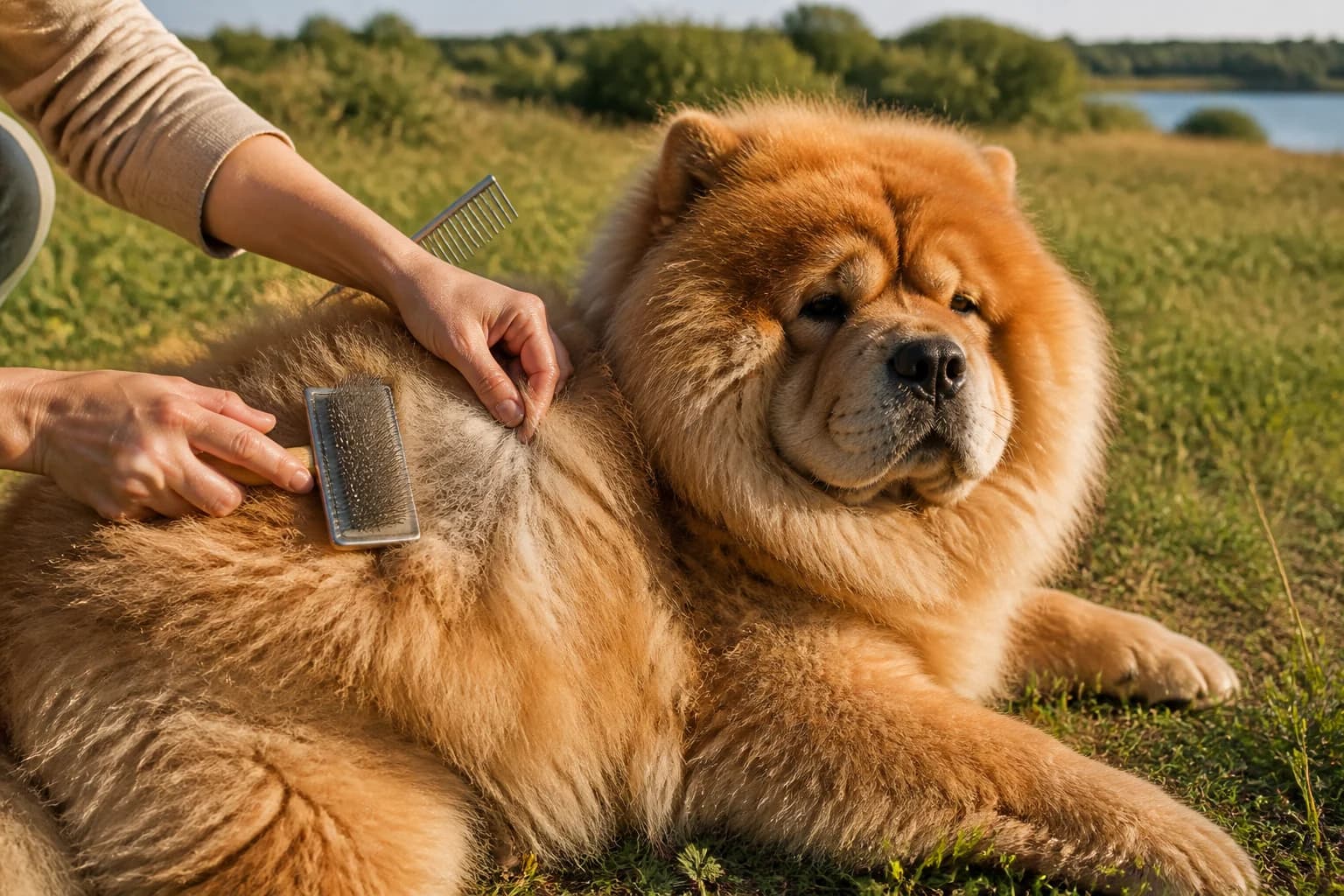
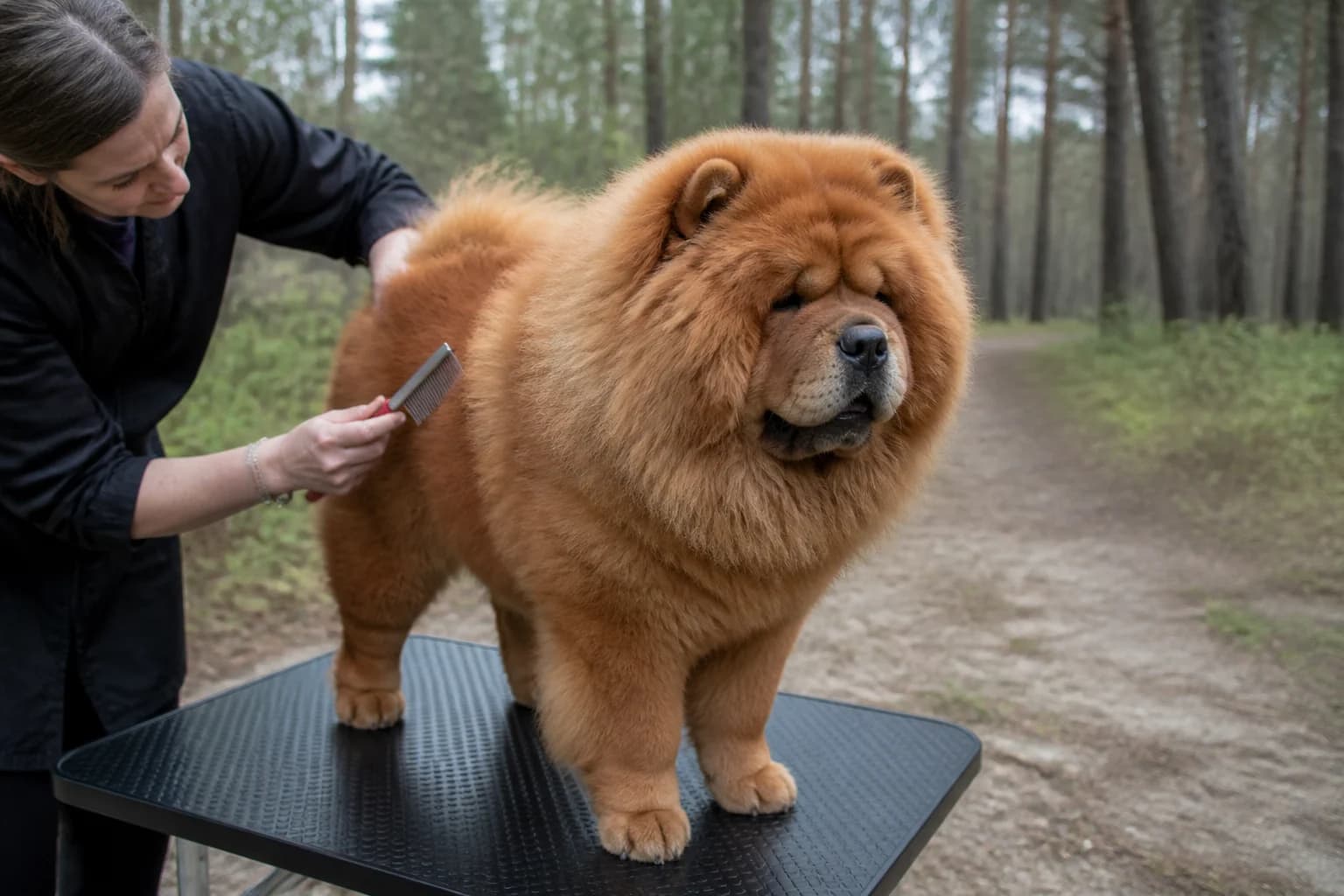
Line brushing works in small sections instead of skimming the fluffy top. With the dog standing or lying comfortably, part a narrow line of coat, support the skin, and brush outward from near the base toward the tips. Follow with a comb to verify that the section is free of tangles.
A practical sequence is:
- Feel through the dry coat for mats, dampness, tenderness, or debris.
- Work from lower body sections upward so finished hair stays separated.
- Use short strokes and minimal pressure.
- Comb behind ears, under the collar, at the ruff, armpits, tail base, and feathering.
- Stop while the dog remains comfortable and return later if needed.
Give each tool one defined job
Use a slicker to separate and lift loose hair, then a metal comb as the quality check. If the comb stops, return to smaller sections instead of adding pressure. A dematting blade, rake, or deshedding edge should never be the default response to a tight area because thin Chow skin can be pulled into the coat.
The finished section should let the comb travel from near the skin to the tip without scraping. Finding a knot is useful information, not a reason to rush. Record where tangles recur so collar fit, moisture, movement, and brushing coverage can be reviewed.
Never pin a frightened dog down to finish. Early cooperative handling is especially important for Chow Chow puppies. Reward calm standing, one brush stroke, a paw touch, and brief dryer noise as separate skills.
Petful may earn a commission when you click through to Chewy, at no extra cost to you.
The aumuca slicker brush is useful only when its size and pin feel suit the dog. For loose undercoat, the Frisco deshedding brush offers another approach, but more passes are not better. Overworking one patch can break coat and inflame skin.
Seasonal coat blow
During a coat blow, soft undercoat may come out in tufts and collect rapidly around the home. Climate-controlled indoor living can make seasonal timing less distinct, so some dogs shed heavily at unexpected times.
Chow Chow shedding and Chow Chow deshedding searches describe normal coat work, but no tool should be used to force out attached coat or scrape the skin.
- Heavy loose undercoat is normal during a coat blow, but bald patches, sores, odor, pain, intense itch, or a sudden coat change are not grooming problems to “brush out.” Stop irritating the area and seek veterinary guidance. A documented photo and symptom timeline provide documented evidence for professional guidance.
Increase session frequency rather than making one marathon session. Work in a ventilated, cool area, offer breaks and water, and monitor breathing. Dense-coated Chows can overheat during prolonged handling, especially under hot dryers.
Managing hair in the home
Coat management is easier when shedding is captured in short grooming sessions before it spreads through the house. Use a washable nonslip mat, keep a vacuum nearby, and launder dog bedding according to its care instructions. Replace HVAC filters on the schedule recommended for the system and household.
Environmental cleaning reduces loose hair but does not make a Chow hypoallergenic. People with allergies may react to proteins in dander, saliva, and urine, not hair length alone. Anyone with asthma or significant allergy should discuss exposure with a medical professional before bringing a dog home.
Nutrition matters to general skin and coat health, but no food or supplement stops a normal coat blow. Sudden excessive loss, broken hair, bald patches, or itch needs veterinary evaluation rather than an unproven “shed control” product.
Bathing and drying the dense coat
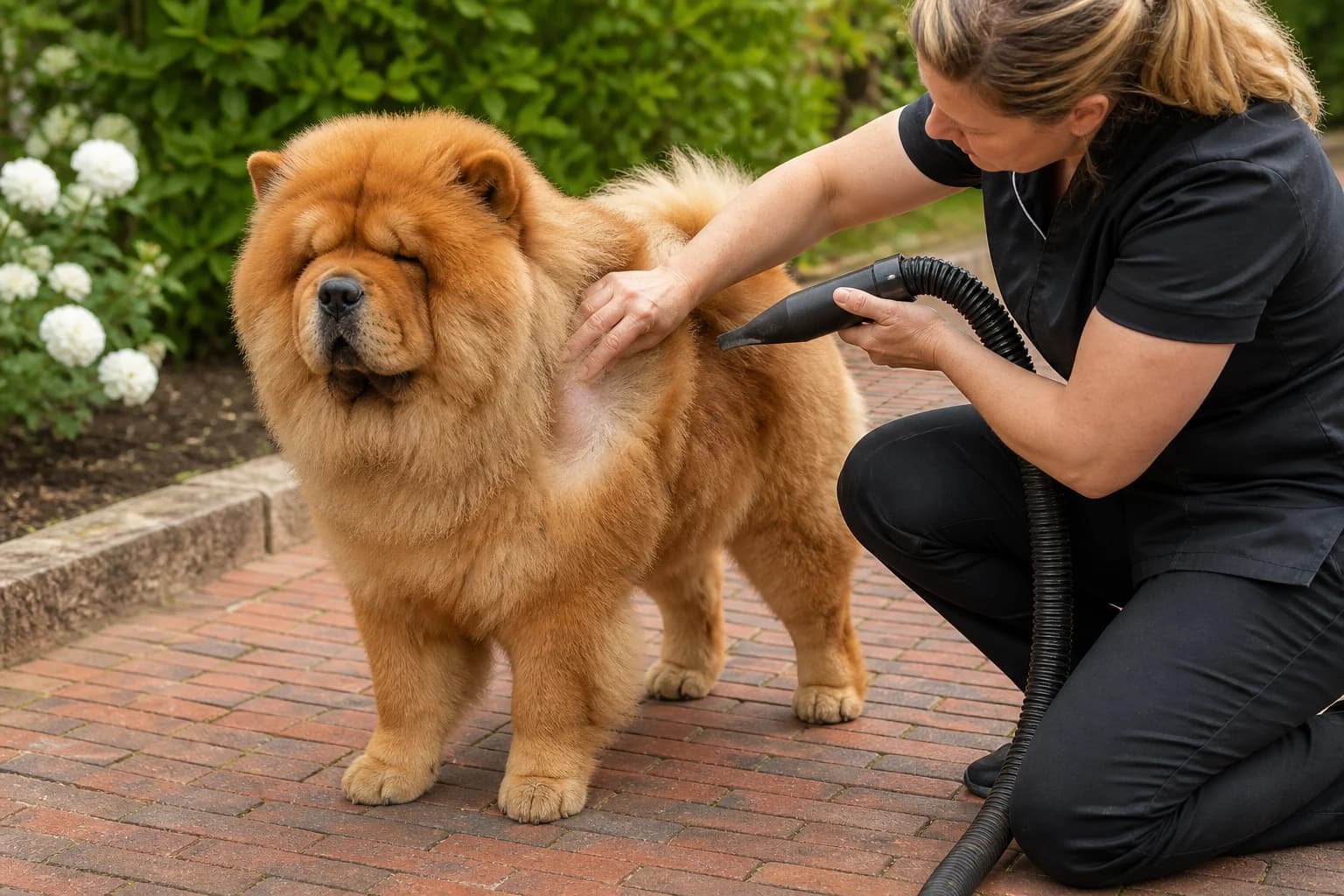
Brush and detangle before bathing because water can tighten mats. Fully wetting a dense coat takes time. Apply dog shampoo as directed, avoid eyes and ear canals, and rinse until water runs clean and the coat no longer feels slippery.
To bathe a Chow Chow and dry a Chow Chow safely, use a suitable Chow Chow shampoo only as labeled, rinse to the skin, and use moving cool or comfortably warm airflow.
Build the bath around complete drying
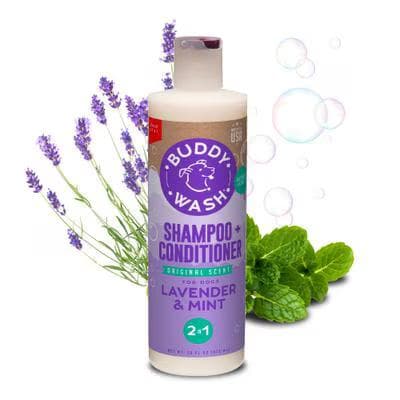
A Buddy Wash Lavender & Mint shampoo and conditioner may suit routine bathing for some healthy adult dogs. Fragrance or botanicals can irritate sensitive individuals, so do not use it on painful, infected, or medically treated skin without veterinary direction.
Keep localized cleanup separate from a full bath. Earth Rated Thick Hypoallergenic 3-in-1 Dog Grooming Wipes, Unscented, 100 count may remove light surface dirt from intact coat or paws between baths, but a wipe cannot clean packed undercoat, treat skin disease, or replace rinsing after shampoo.
Blot rather than rub with towels. Use controlled cool or comfortably warm airflow while parting the hair so moisture escapes from the undercoat. Keep the nozzle moving and far enough away to protect skin. Stop if the dog pants heavily, tries to escape, becomes hot, or shows fear.
Petful may earn a commission when you click through to Chewy, at no extra cost to you.
The Buddy Wash shampoo and conditioner needs complete rinsing and drying. It does not treat hot spots, parasites, infection, or allergy. Never leave a dense coat damp at the skin simply because the surface feels dry.
Mats, skin checks and hot spots
Small tangles may be gently teased apart from the ends while supporting the skin. Tight mats pull continuously and can conceal wounds. Do not cut close to skin with scissors because folded skin can rise into the mat.
Seek a skilled groomer or veterinarian for widespread matting, pain, odor, discharge, raw skin, or a dog who cannot tolerate safe removal. WebVet's overview of using dog clippers explains basic clipper considerations, but dense Chow coats and tight mats can require professional judgment.
Hot spots are inflamed, often moist lesions that can spread quickly. WebVet's guide to hot spots on dogs explains why clipping or cleaning the surface does not identify the underlying trigger. Painful, expanding, odorous, or recurrent lesions need veterinary assessment. Brushing harder will not solve the cause.
Areas to check after every full brush
Run your fingertips through the coat and look at the skin in high-friction areas. Check behind each ear, under the collar or harness, inside elbows, armpits, groin, tail base, rear feathering, and between toes. Compare left and right for swelling, heat, tenderness, or odor.
Collars and harnesses can compact a dense coat. Remove them indoors when safe, inspect fit, and brush the contact areas. A tool that fit during a short summer coat may pinch when undercoat returns.
Seeds, burrs, foxtails, and other plant material can travel under the coat. After outdoor walks, inspect paws, ears, armpits, and groin. Embedded plant material or sudden head shaking, sneezing, swelling, or lameness needs professional attention.
Nails, paws, ears and hygiene
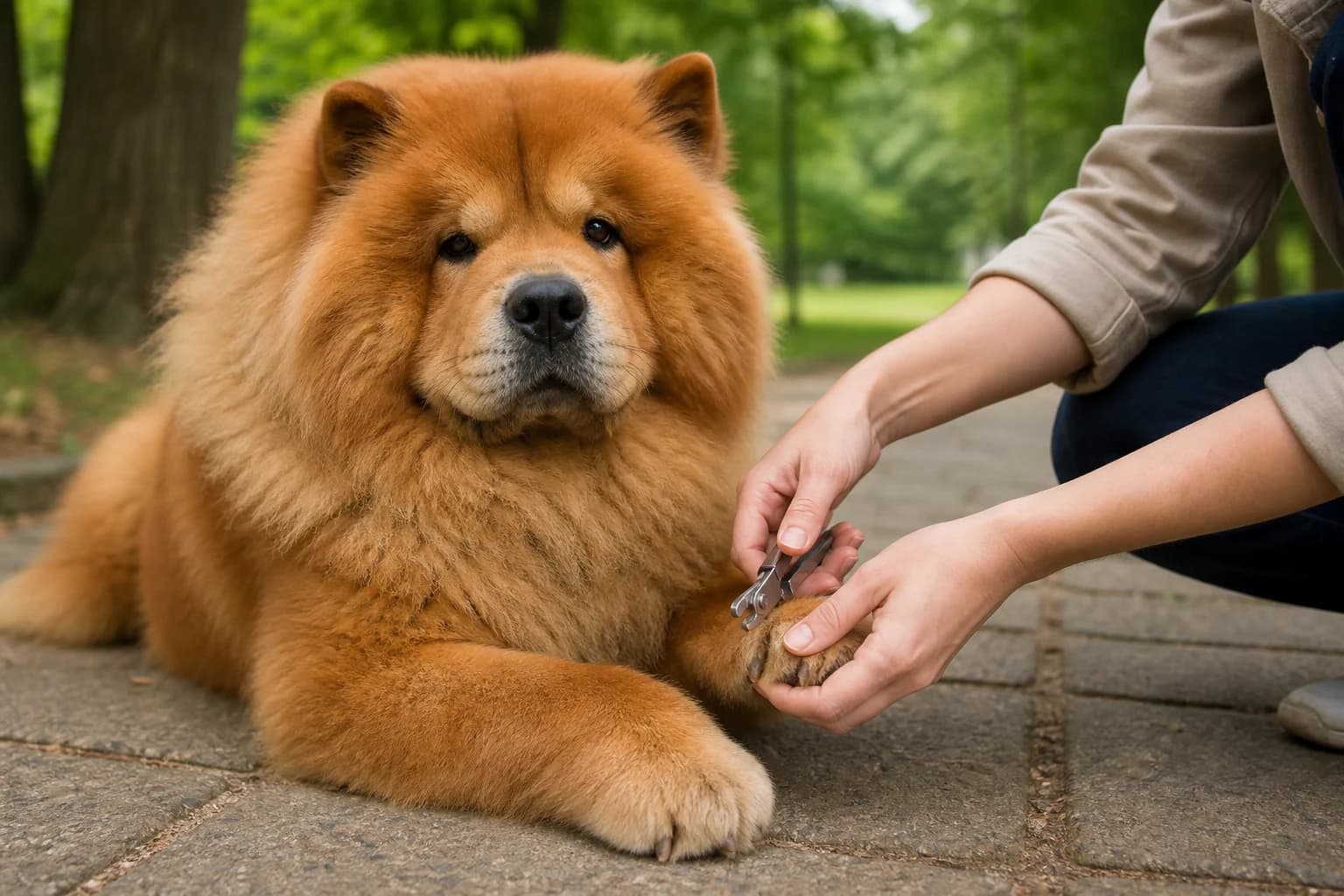
Check nails weekly. Long nails can change footing, but aggressive trimming can cut the quick. Thick coat around feet also hides cracked pads, burrs, interdigital redness, or swelling.
The Pet Republique large-breed nail clipper includes a guard, but the guard cannot locate the quick. Trim tiny slivers only when the clipper fits and the dog is relaxed. A groomer or veterinary team is safer for fear, pain, or very overgrown nails.
Use a weekly extremity check
Look at ear flaps and the canal entrance without probing. New odor, redness, discharge, repeated head shaking, or pain needs veterinary review. Do not pour household solutions into the ears or push swabs into the canal.
To clean Chow Chow ears, limit routine care to veterinarian-approved external cleaning and never probe a painful or inflamed canal.
Petful may earn a commission when you click through to Chewy, at no extra cost to you.
For cooperative paw care, pair the Pet Republique nail clipper with gradual training before making a cut: show tool, touch paw, briefly hold a toe, and reward. The tool is not suitable if it crushes the nail, obstructs your view, or causes distress.
The Dremel 7350-PT Cordless Dog & Cat Rotary Nail Grinder Kit offers a different way to shorten small amounts when noise, vibration, fit, and battery condition suit the dog. Introduce the switched-off tool first, keep moving parts away from coat, and stop before heat builds. It does not make restraint safe or reveal the quick.
Should you shave a Chow Chow?
Routine shaving is generally not appropriate for a healthy Chow double coat. It does not stop shedding, can expose skin to sun and injury, and may alter how coat regrows. Removing insulation also does not make a dog safe in heat.
There are limited medical or severe-mat circumstances in which a veterinarian or qualified groomer may clip an area. That is a professional decision based on welfare, not a summer hairstyle.
A Chow Chow summer haircut should not mean routine double-coat shaving. Cooling depends on shade, water, airflow, appropriate activity, body condition, and prompt response to heat distress.
- Never shave a Chow to prevent heatstroke and never use hot, stationary dryer air. Heat safety depends on cool-hour activity, shade, water, airflow, body condition, and prompt response to distress. Seek veterinary care for heavy panting, weakness, vomiting, confusion, collapse, or abnormal gum color.
The health guide to Chow Chow lifespan and risks covers heat warning signs and other conditions that can affect coat or grooming tolerance.
Professional grooming schedule
Some households can maintain the coat at home, while others need professional bathing, drying, nail care, or coat-blow support. The right interval depends on coat type, mat tendency, skin health, handling comfort, season, and owner capacity.
- Individual evidence from frequent short sessions supports household fit by making recurring coat-care demands visible
- Cooperative handling can improve comfort with brushing, drying, feet, and nails
- A Chow Chow groomer with dense-coat experience can provide drying and coat-blow support
- Regular owner checks create a useful record between appointments
- Dividing care into short sessions can reduce handling strain
- Home grooming can miss compacted undercoat, tight mats, or hidden skin problems
- Tools and practice do not replace professional help when the coat or skin is painful
- Professional cost, travel, and appointment timing still require a realistic household plan
- Even a trained second observer cannot diagnose skin disease from coat appearance alone
- Incomplete drying or incorrect tool use can irritate skin and damage coat
Interview groomers before an urgent mat problem. Ask about double-coat experience, dryer temperature, breaks, handling methods, and what happens if the dog becomes distressed. Grooming cost varies by coat condition, behavior, size, region, and requested services.
Choose the interval from failure points
Start with the shortest interval that prevents packed undercoat, mats, damp skin, and overlong nails without overwhelming the dog. Then adjust from the record. A dog whose ruff mats at week four may need that zone handled sooner even if the rest of the coat remains manageable.
Book extra support before a seasonal coat blow, after a medically required grooming pause, or when home drying cannot reach the skin. Waiting for a dense coat to become painful usually turns a routine appointment into a longer and harder one.
Prepare for the first grooming appointment
Tell the groomer the dog's age, medical conditions, skin history, bite or handling history, medications, and previous grooming experience. Share which cues, rewards, and positions the dog understands. Honesty helps the salon decide whether its staffing and equipment are a safe match.
Bring the dog on a secure, well-fitted walking setup. Allow toileting before the appointment, but avoid exhausting exercise or a large meal immediately beforehand. Confirm exactly which services are planned and whether the salon will call before clipping any unexpected mat.
Afterward, check the skin and behavior. Report persistent distress, limping, coughing, skin redness, cuts, eye irritation, or reluctance to move. Document a concern promptly with photos and contact the groomer and veterinarian as appropriate.
A realistic weekly home routine
Divide the body rather than attempting a full groom every time. One day can cover ruff and shoulders, another sides and chest, another rear feathering and tail. Finish each area with a comb check and stop before the dog loses patience.
A sample week might include:
- Two or three coat sessions of 10 to 20 minutes, adjusted to tolerance
- One nail, paw, and ear check
- Daily visual checks for burrs, damp coat, or new itch
- A longer comb-through when seasonal shedding increases
- Cooperative-care practice on non-grooming days
Frequency must change if coat, health, or handling changes. The best schedule is one that keeps skin visible, coat free of painful mats, nails functional, and the individual dog comfortable.
Keep records and tools decision-ready
Record bath date, products, mat locations, skin findings, nail and ear observations, and the dog's handling response. Patterns may show that tangles recur beneath one harness, itch began after a product change, or tolerance declined alongside pain. Groomers describe coat and handling findings; veterinarians diagnose and treat disease.
Remove hair from tools after each session, clean them as directed, and dry them fully. Replace bent pins, rusty teeth, dull nail blades, cracked guards, or equipment that overheats. During illness or surgical recovery, follow veterinary bathing and clipping restrictions and work only on unaffected areas the dog can comfortably tolerate.
Choose comfort and skin health over a perfectly sculpted outline. A complete session that overheats, frightens, or injures the dog is not successful. Shorter staged work, an experienced professional, or veterinary support may cost more time, but it preserves cooperative handling and produces a safer long-term grooming routine.
Related Chow Chow topic owners
Chow Chow at a glance
The Chow Chow profile owns broad chow chow questions, including what is chow chow and unusual search wording such as mr chow chow or chow chow chow dog. It covers breed history, appearance, temperament, exercise, health, and overall ownership fit. This grooming page narrows the decision to the coat in front of you, using comb resistance, skin findings, drying capacity, handling comfort, and dated records to set the routine.
Best dog food for Chow Chows at a glance
Use the Chow Chow food guide for chow chow food, chow chow the food, what is chow chow food, and food chow chow queries. It owns complete-and-balanced nutrition, calorie control, label comparison, formats, and medical feeding boundaries. Normal double-coat shedding does not select a formula, while itch, bald areas, odor, or skin inflammation require veterinary assessment before an owner starts restrictive diet changes.
Chow Chow puppy buying checklist
The Chow Chow puppy guide covers sourcing, scams, records, and early care. This page shows how to prepare cooperative coat care after the dog comes home.
Chow Chow colors at a glance
The Chow Chow colors guide covers recognized shades and rough or smooth coats. Color does not set grooming frequency, which must follow the individual coat.
Chow Chow price at a glance
The Chow Chow price guide owns acquisition and lifetime spending. Grooming is one variable budget line, while this guide explains the work behind it.
Chow Chow mixes at a glance
The Chow Chow mixes guide owns ancestry and variable outcomes. Apply this grooming method only after inspecting the mixed dog's actual coat and handling tolerance.
Why Chow Chows have blue-black tongues
The Chow Chow tongue guide owns pigment, oral care, and mouth emergencies. Tongue color has no role in a coat-care decision.
Full-grown Chow Chow size at a glance
The full-grown Chow Chow size guide owns measurements, growth, and equipment. Size affects salon logistics but does not replace a coat assessment.
Are Chow Chows aggressive?
The Chow Chow temperament guide covers behavior, management, and humane training. Grooming discomfort is individual evidence, not a breed verdict.
Chow Chow lifespan at a glance
The Chow Chow health and lifespan guide owns disease risk and senior care. Grooming may reveal a change but cannot diagnose its cause.
Chow Chow FAQs
Some groomers refuse Chow Chows because of salon capacity, dense-coat workload, handling history, safety limits or the needs of the individual dog. When owners ask do Chow Chows shed, they may underestimate the time, drying equipment, staffing, heat monitoring, and handling skill a dense coat requires. Some salons cannot safely accommodate every dog. The evidence points to one clear next step: to disclose medical and behavior history, find Chow-experienced care, and build cooperative brushing, paw, and dryer skills early.
The downsides of having a Chow Chow can include substantial coat care, heat management, careful socialization and a household that respects an independent dog. The answer to do Chow Chows shed is yes, and high hair volume is only one commitment. Dense-coat maintenance, complete drying, heat protection, nails, skin checks, and cooperative handling take time and money. Use the individual record to choose a clear next step: to compare that realistic workload with household capacity before adopting and arrange professional support before mats develop.
Do Chow Chows shed heavily? Many do, year-round, with much greater undercoat release during seasonal coat blows. Amount varies with rough or smooth coat, climate, health, hormones, and the individual. Before deciding, use this clear next step: several short weekly brush-and-comb sessions, increased during coat blow, while veterinary signs such as bald patches or itch stay separate.
No. The fact that do Chow Chows shed has a clear yes answer means hair and dander are present, but allergens can also come from saliva and urine. No breed is allergen-free. For this household, choose a practical clear next step: medical allergy guidance and realistic exposure planning, not relying on smooth coat, frequent bathing, or a seller's hypoallergenic claim.
Because do Chow Chows shed throughout the year, several thorough sessions each week are a practical starting point, with more during coat blow or mat formation. Individual coat and handling tolerance control the schedule. At that point, take this clear next step: line brushing in sections, a comb check to the skin, and stopping before overheating or distress.
There is no universal interval even though do Chow Chows shed substantially. Coat condition, season, home drying ability, nails, skin health, and handling comfort determine professional frequency. When uncertainty remains, choose the safest clear next step: to interview a double-coat groomer, set a preventive schedule before matting, and adjust it from documented coat and skin findings.
Routine shaving is not recommended and does not change the underlying answer to do Chow Chows shed. It can expose skin and alter regrowth, while limited clipping may be necessary for severe mats or medical care. The decision framework leads to a clear next step: professional assessment and heat management through shade, water, airflow, healthy condition, and cool-hour activity.
Since do Chow Chows shed dense undercoat, surface-dry hair can hide moisture at the skin. Blot with towels, part sections, and use moving cool or comfortably warm airflow while monitoring breathing and skin temperature. After reviewing the evidence, keep the clear next step specific: to stop for distress or overheating and seek professional drying help when home equipment is inadequate.

Coreen Saito is a pet writer and longtime shelter volunteer with more than a decade in animal rescue. She covers cat behavior, breed care, and the small, ordinary science of sharing a life with companion animals, with a particular focus on honest takes about the products and decisions that actually matter. At home in Arizona, she's outranked by Mac (a dog with the loudest opinion in the house), Rebel (a cat who governs by quiet authority), and Meri (an orange tabby who runs the late shift and the laundry basket). She writes about all three, plus the rescues that keep coming through her life, at LifeWithMinty.com.
Sign up for expert-backed reviews and safety alerts all in one place.