Chow Chow Full Grown: Size and Weight Guide
Learn typical full-grown Chow Chow height and weight, how puppy growth unfolds, and why body condition matters more than one scale number. Includes mini and giant claim checks, equipment measurements, and veterinary warning signs.
Petful is reader supported. As an affiliate of platforms like Amazon and Chewy, we may earn a commission when you buy through links on this page. There is no extra cost to you.
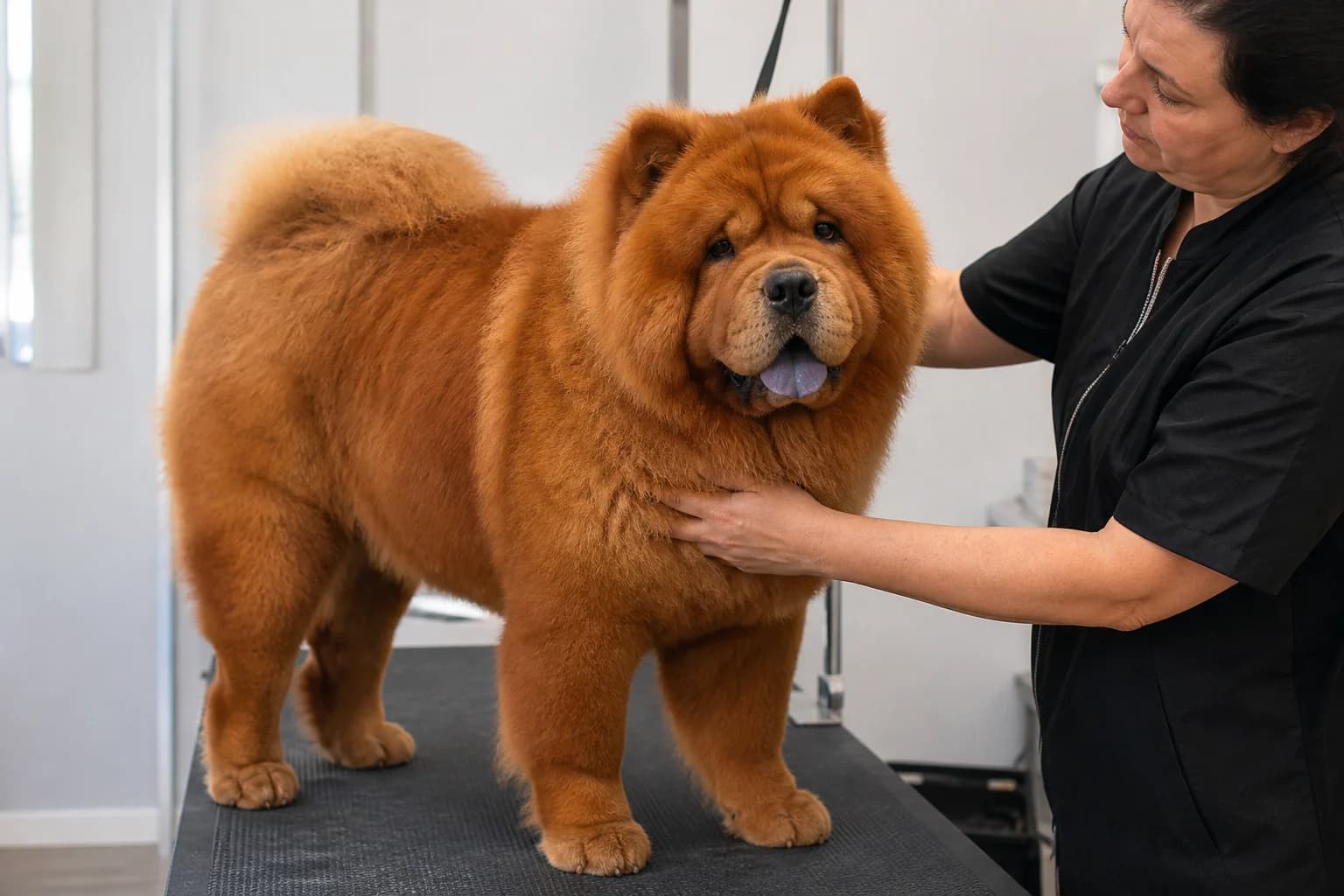
A chow chow full grown is a sturdy medium-size dog, not a miniature spitz and not a giant breed. The dense coat can make the body look larger than it is, so height, weight, measurements, and body condition all matter.
This chow chow full grown guide gives practical adult ranges, puppy growth checkpoints, and equipment measurements. Breed averages describe a population, but they do not predict the exact adult size or healthy weight of one dog.

Sign up for expert-backed reviews and safety alerts all in one place.
Full-grown Chow Chow size at a glance
A Chow Chow full grown generally stands about 17 to 20 inches at the shoulder. Published weight ranges often fall around 45 to 70 pounds, but sex, frame, muscle, coat, and individual body condition affect scale weight. Individual dogs vary. Use hands-on body-condition checks and veterinary guidance, not appearance alone.
The AKC Chow Chow profile and Royal Kennel Club breed standard describe a compact, squarely built dog. The Chow Chow Club adds breed-specific context. These are population references, not targets that every pet must hit.
| Shoulder height | About 17 to 20 inches | Compare with breed standards and size doorways |
|---|---|---|
| Weight | Often about 45 to 70 pounds | Track a trend, not a standalone verdict |
| Body condition | Ribs palpable with a visible waist when coat is compressed | Assess whether weight suits the individual frame |
| Crate length | Dog's nose-to-rump length plus room to stand and turn | Select actual interior dimensions |
| Harness fit | Neck and chest girth measured under the coat | Choose size and adjust without relying on breed label |
Use an evidence ladder for any “mini,” “giant,” or expected adult-size claim:
- Population tendency: Standards give a typical adult height and build.
- Individual observation: Current measurements show one dog's size today.
- Documented record: Repeated weights and parent sizes add context.
- Professional finding: A veterinarian evaluates growth and body condition.
Breed tendencies describe populations, not every individual dog. Records, direct observation and professional findings answer different questions. An article-specific evidence ladder for Chow Chow full grown that separates population tendencies, individual observations, documented records and professional findings keeps each claim at the right level. Use it as a concrete decision framework rather than a generic fact list: compare the population range, measure the individual, check dated growth and parent records, then use veterinary findings to interpret body condition or an unexpected change.
Our Chow Chow breed profile covers the broader care and temperament picture. Coat shade does not determine size, as the guide to Chow Chow colors explains.

Petful may earn a commission when you click through to Chewy, at no extra cost to you.
Measured meals are easier to keep consistent than a repeatedly topped-up bowl. A Petlibro Granary Wi-Fi automatic feeder can schedule dry-food portions for some households, but its settings must match the food's calorie density and the dog's plan. It cannot judge body condition or replace hands-on feeding.
Height and weight standards
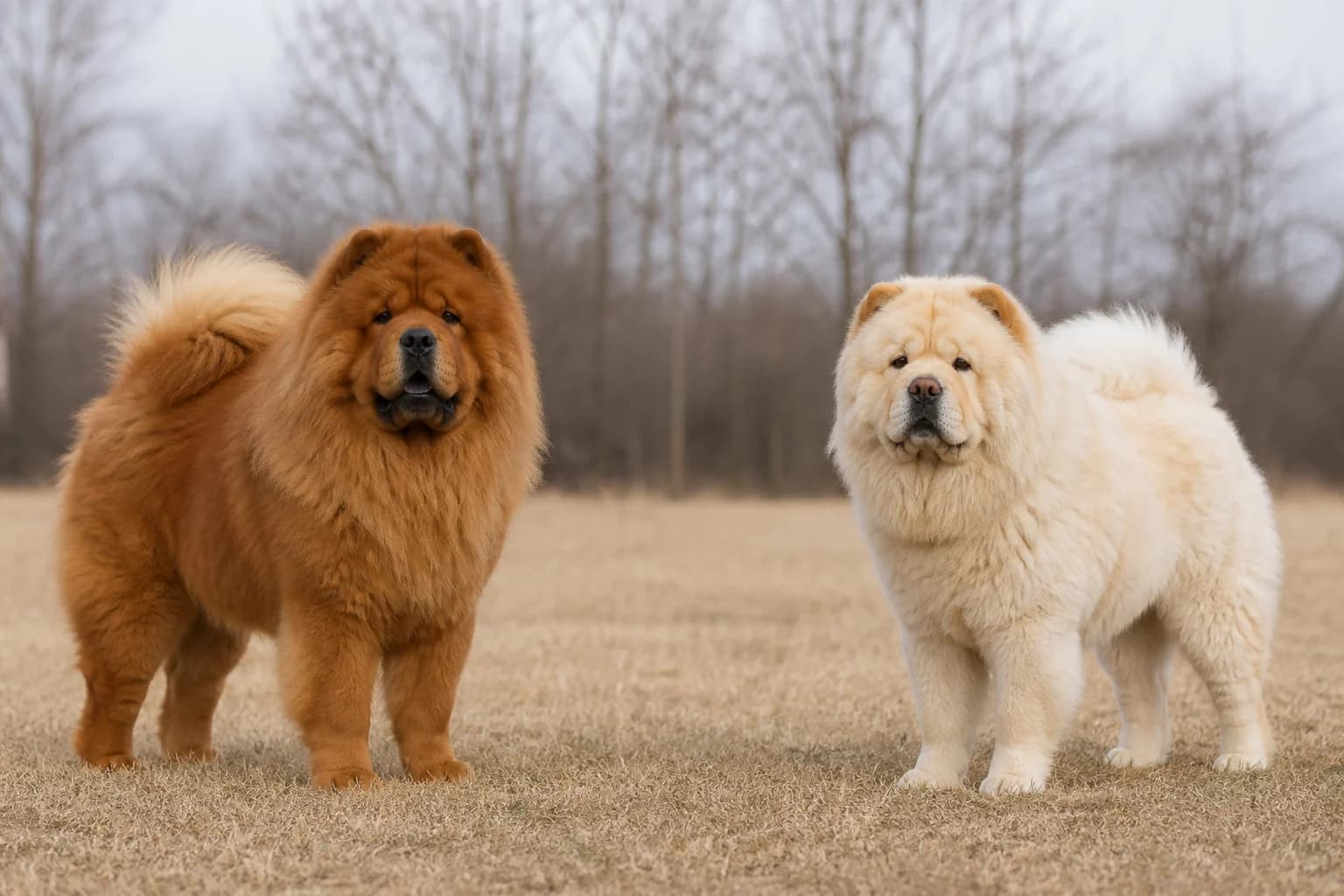
Height is measured from the ground to the highest point of the shoulder blades, not to the top of the head or ears. Place the dog squarely on a level surface and use a rigid level across the withers if an accurate measurement matters.
Weight is useful as a trend. A 55-pound Chow with a smaller frame and excess fat may be less healthy than a muscular 62-pound dog with an appropriate waist. Thick coat hides both ribs and waist, so photos alone can mislead.
Measure four dimensions before choosing gear
Height and scale weight answer only part of the size question. Record nose-to-rump length while the dog stands naturally, chest girth with the tape under the coat, and floor-to-head height in addition to shoulder height. Those four measurements help distinguish a growth question from a product-fit question.
Measure twice and write down the date. A puppy's harness and crate measurements can change quickly, while an adult's coat blow can change girth without changing frame. Product labels such as medium or large are not standardized, so compare the dog's current numbers with the manufacturer's current chart.
Interpret measurements in context
The AVMA healthy-weight guidance emphasizes individual assessment. Ask your veterinarian to show you how to feel through the coat and identify the ribs, waist, abdominal tuck, and muscle coverage.
Do not feed toward the highest number in an online chart. Calorie needs change with age, neuter status, activity, weather, health, and food. WebVet's dog feeding schedule can help organize meals, while the amount still needs to fit the individual.
Male vs female size
Males may be heavier or more substantial on average, but male and female ranges overlap. A large female can outweigh a small-framed male, and coat volume can exaggerate either dog's outline.
Sex is only one data point. Parent size, growth history, body condition, and health tell you more about the individual dog. For a puppy, ask for documented adult weights and heights of both parents without treating them as a guarantee.
Use parent size as context, not a promise
Compare both parents rather than accepting a seller's claim based on one unusually small or large relative. Confirm that the measurements belong to those dogs and note whether the puppy is still on its expected growth curve. Genetics influence adult build, but nutrition, illness, neuter timing, and ordinary individual variation can change the outcome.
Petful may earn a commission when you click through to Chewy, at no extra cost to you.
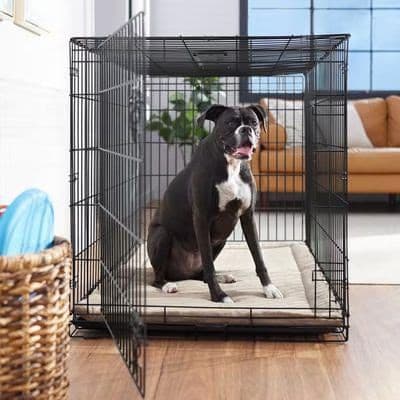
An X-large Frisco wire crate offers generous space, but “X-large” is not automatically the right Chow Chow crate size. Compare the crate's interior measurements with your dog standing, turning, and lying down. A crate that is oversized for travel or house-training can create different problems.
Puppy growth stages
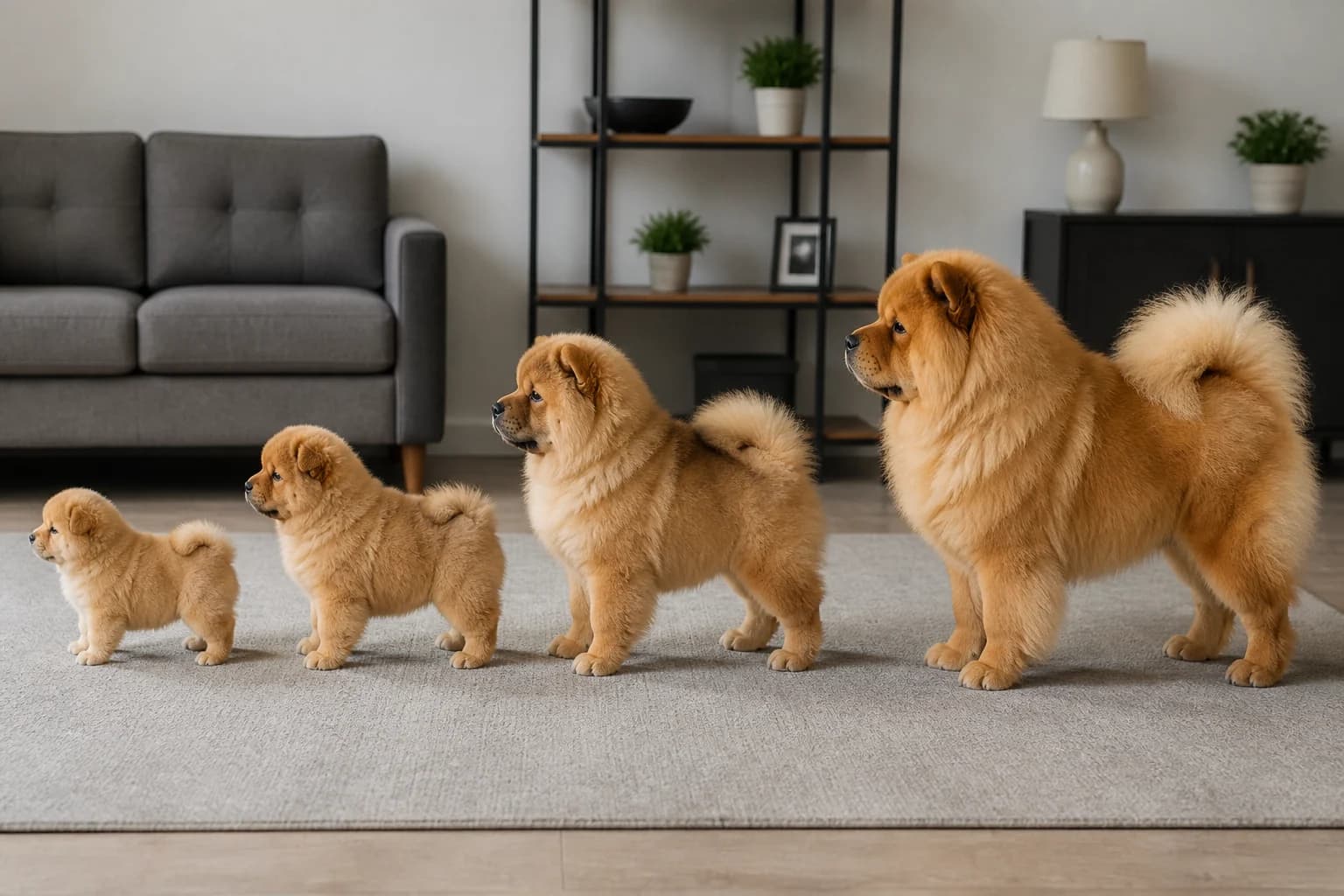
Chow puppies grow quickly during the first months, then continue filling out after their most dramatic height gains slow. Many approach adult height around the first year, while chest, muscle, coat, and overall maturity may continue developing beyond that.
No single Chow Chow growth chart can forecast every puppy. Instead, record a calm weight at regular intervals and look at the curve. A steady trend that suits the puppy is more useful than chasing one online percentile.
Watch the direction and rate of change
One measurement can be affected by a full stomach, a different scale, or a handling error. A series shows whether growth is steady, has flattened unexpectedly, or has accelerated alongside excess body fat. Compare the curve with body condition and veterinary examinations rather than trying to make the puppy match a breed-wide percentile.
Useful puppy records include:
- Date, age, weight, and body-condition note
- Food name, calorie density, and measured daily amount
- Appetite, stool, vomiting, and energy changes
- Major illness, medication, or activity changes
- Veterinarian comments at vaccination and wellness visits
- Contact your veterinarian if a puppy stops gaining as expected, loses weight, has persistent vomiting or diarrhea, cannot eat comfortably, becomes weak, or develops a swollen abdomen. Use documented evidence and professional guidance. Do not force rapid growth with extra calories or supplements.
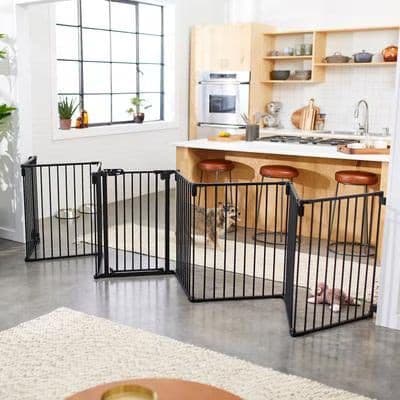
A Frisco configurable gate and playpen can define a supervised puppy area, but 30-inch panels may not contain every athletic or determined Chow. Check stability, gaps, climbing behavior, and the puppy's comfort before relying on it.
Body condition vs scale weight
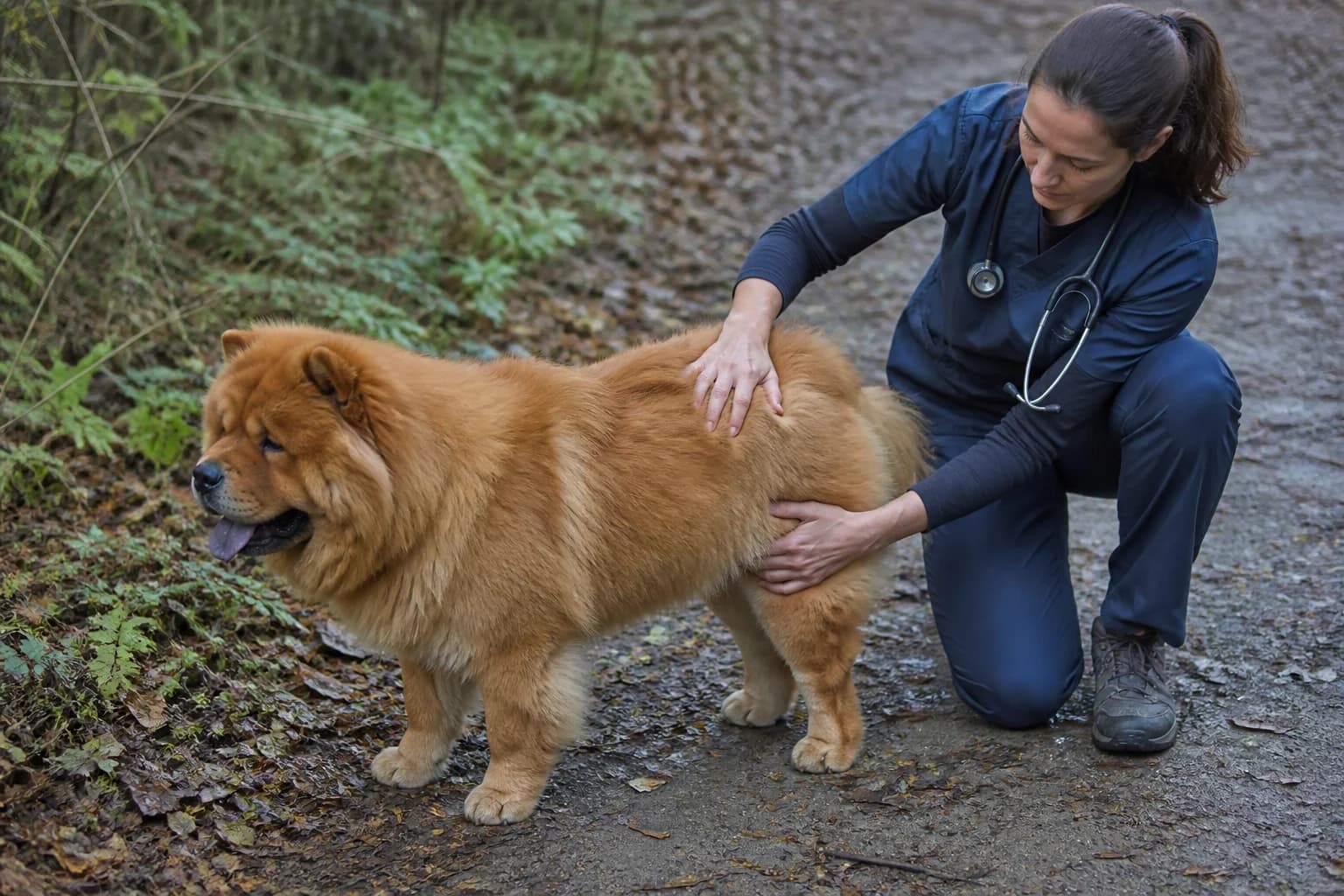
Body condition asks whether fat coverage suits the dog's frame. With a Chow, part the coat and use both hands. Ribs should usually be palpable without pressing through a thick fat layer, and a waist should be detectable from above when the coat is compressed.
An overweight Chow Chow may still look merely fluffy in a photograph, which is why a hands-on score and repeat measurements are more useful than coat outline.
Muscle condition is related but different. An older Chow can lose muscle while staying the same scale weight because fat replaces lean tissue. That is why monthly weights, side and overhead photos, hands-on checks, and veterinary examinations complement one another.
Separate fat coverage from muscle loss
Feel over the ribs and waist for body condition, then assess muscle over the spine, shoulders, skull, and thighs. A dog can carry extra fat while losing muscle, so a stable number on the scale does not always mean stable condition. Ask a veterinarian to demonstrate both scores and record them alongside weight.
Petful may earn a commission when you click through to Chewy, at no extra cost to you.
For a senior or mobility-limited dog, a FurHaven NAP jumbo orthopedic bed may provide a broad padded resting surface. Measure the sleeping posture and floor space first. A bed can improve comfort, but it does not treat joint disease or make an unsafe floor route accessible.
If weight changes, review the measured amount and treats before making a dramatic food cut. An automatic feeder can improve consistency with compatible dry kibble, yet family members must still coordinate treats and confirm that the machine dispenses the intended amount.
Mini, teacup and giant claims
“Mini Chow Chow,” “miniature Chow Chow,” and “teacup Chow Chow” are not separate standard size varieties. A small adult may be an individual at the low end of the range, a young puppy, a mix, or a dog affected by health or breeding choices. “Giant Chow” is also marketing language rather than a recognized variety.
Chow Chow miniature is an awkward search phrase for the same unsupported size claim, not the name of a recognized variety.
Verify claims before buying
Do not buy a puppy because a seller promises an exact tiny adult weight. Ask instead for verified parent sizes, age-appropriate veterinary records, health screening, and a written contract. A dog sold as mini is not automatically easier to house, train, groom, or keep healthy.
Likewise, deliberately maximizing size can place extra demands on joints, mobility, cooling, and equipment. Bigger is not a quality grade.
Before placing a deposit, compare the seller's words with verifiable evidence:
- Registered breed terminology and the stated ancestry
- Adult heights and weights for both parents
- Age-specific veterinary records for the puppy
- Health-screening records that can be independently checked
- A contract that does not guarantee an exact adult weight
Equipment sizing for an adult Chow
Measure the dog, not the breed label. Dense hair can add inches around the neck and chest, so slide the tape under the coat without compressing the body.
For common purchases:
- Crate: Measure nose to rump and floor to top of head or ears, then follow the manufacturer's allowance.
- Bed: Measure the dog's stretched sleeping length and preferred curl or sprawl.
- Harness: Record neck base and chest girth, then recheck fit through coat changes.
- Gate: Compare panel height and gap size with jumping, climbing, and squeezing behavior.
- Vehicle setup: Verify weight ratings, ventilation, restraint fit, and actual cargo dimensions.
For walking equipment, the PetSafe Easy Walk Dog Harness, Red/Black, Medium/Large is one adjustable option for a dog whose current chest measurement falls within its chart. Recheck the fit under the coat and after weight or seasonal coat changes. A Frisco Traffic Leash with Dual Padded Handles & Poop Bag Dispenser, Black, 6-ft long, 1 count gives a closer handle for controlled transitions, but it does not make an ill-fitting harness or untrained dog safe.
A Frisco Marble Print Stainless Steel Double Elevated Dog Bowl, Gold Stand, Medium may suit an adult whose standing posture and bowl height fit the dimensions, but elevation is not medically necessary for every Chow. For travel, the Frisco Silicone Collapsible Travel Bowl with Carabiner, Teal, Small (1.5 cup) packs compactly but holds only 1.5 cups, so larger dogs may need refills or a larger measured option. For more, see Petful’s guide to stainless steel dog bowl.
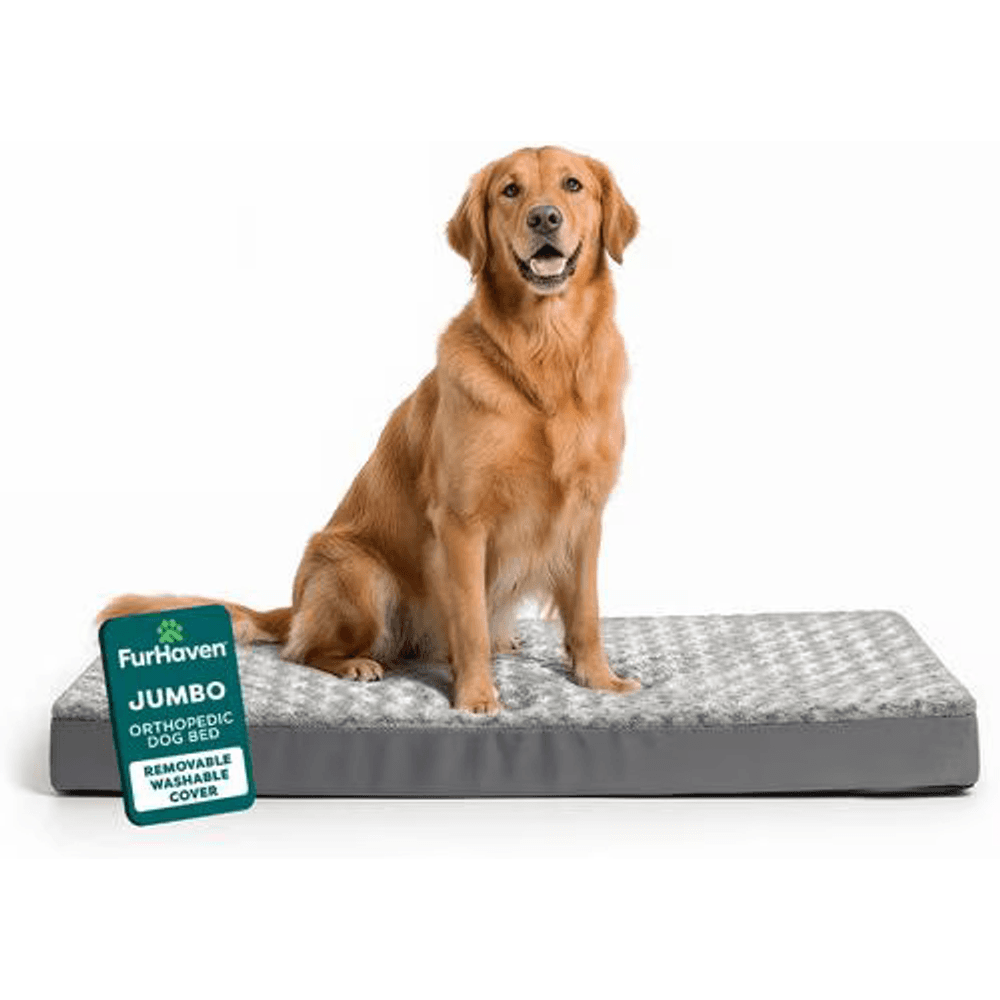
A plush orthopedic foam mattress that cushions aging joints and pressure points, giving a stiff or trembling senior dog warm, supportive rest.
Petful may earn a commission when you click through to Chewy, at no extra cost to you.
The Frisco X-large wire crate may fit a large measured Chow but can be more space than a smaller adult needs. The Frisco gate and playpen offers flexible panels but must be anchored safely, while the FurHaven jumbo bed is useful only if its dimensions fit both dog and room.
When growth needs veterinary review
One unusual weight is not always an emergency, but a verified trend deserves attention. Call your veterinarian for unexplained loss, rapid gain, slowed puppy growth, repeated digestive signs, increased thirst or urination, weakness, pain, reluctance to exercise, or difficulty breathing.
Build a growth record a veterinarian can use
Use the same reliable scale when possible, at a similar time of day and before a meal. For a puppy, weekly or biweekly measurements may be useful during rapid growth. For a stable adult, monthly tracking is often enough unless the veterinarian requests something different.
Record the number without trying to force it onto a generic chart. Add the food's calories per cup or kilogram, measured daily portion, treats, medications, stool changes, and illness. A steady curve with good body and muscle condition can be appropriate even if it differs from an internet average.
Photographs can support the record when they are consistent:
- Side view while the dog stands squarely
- Overhead view with the coat gently compressed
- Front and rear views showing stance and muscle symmetry
- A short walking video if gait or weakness is a concern
Do not manipulate a painful dog into a pose. A video captured naturally on a nonslip surface is safer and often more useful.
Planning space around adult dimensions
Adult size affects more than crate selection. Measure vehicle door openings, stair width, grooming-table capacity, preferred sleeping area, and the distance a dog must walk across hot pavement. A 60-pound Chow with painful joints may need more usable floor space and traction than a healthy heavier dog.
For travel, compare the restraint or crate manufacturer's weight and dimension limits. Leave ventilation around the dense coat and never reduce space simply to fit a product into the vehicle. Airline rules, cargo dimensions, and carrier requirements change, so verify current policies directly before a trip.
At home, use nonslip runners on slick routes and arrange food, water, and beds where the dog can turn without twisting. Gates must not create narrow corners where the dog feels trapped. An adult's ability to clear or push a barrier matters more than the product's marketing category.
What an adult weight change can mean
Weight gain may reflect excess calories or reduced activity, but medication effects, endocrine disease, fluid, and other conditions can contribute. Loss may reflect calorie deficit, dental pain, digestive disease, cancer, kidney disease, diabetes, or other problems. These are examples, not diagnoses.
Recheck the scale result, then look for a pattern. A veterinarian can combine body condition, muscle condition, examination, and testing rather than assuming the cause from one number. Rapid change, weakness, vomiting, breathing difficulty, or collapse needs faster attention.
- Useful growth evidence
- Limits to remember
- Household fit can use the individual evidence in front of you
- No population tendency guarantees one outcome
- Repeated weights show direction over time
- A scale cannot assess muscle, fat distribution, or cause
- Parent size provides context
- It cannot guarantee one puppy's adult size
- Body-condition checks add individual evidence
- Thick coat makes visual-only scoring unreliable
- Veterinary findings can identify a health concern
- Online charts cannot diagnose or prescribe
Bring the food label, measured portion, treat list, and weight log. That gives the veterinarian documented evidence and reduces guesswork.
Adult size and everyday handling
A medium-size dog with a broad chest and dense coat can be difficult to lift safely. Teach the Chow to step onto a scale, walk onto a low platform, enter a vehicle ramp, and stand for measurement. These skills reduce the need for manual lifting at veterinary or grooming visits.
If lifting is unavoidable, ask a professional to demonstrate safe support for the chest and hindquarters. Never lift by the front legs, collar, scruff, or abdomen. People with back or balance limitations should plan assistance before an injury or emergency.
Doorways and grooming areas also need traction. A nonslip mat helps the dog stand naturally for height, girth, and paw care. Slipping can make a dog crouch, which produces inaccurate measurements and may create handling fear.
Recheck gear as coat and body change
Seasonal undercoat can change harness and collar fit even when body weight is stable. Slide fingers beneath straps at the skin, check for hair compression, and inspect armpits and the neck for rubbing. Refit after grooming, weight change, and coat blow.
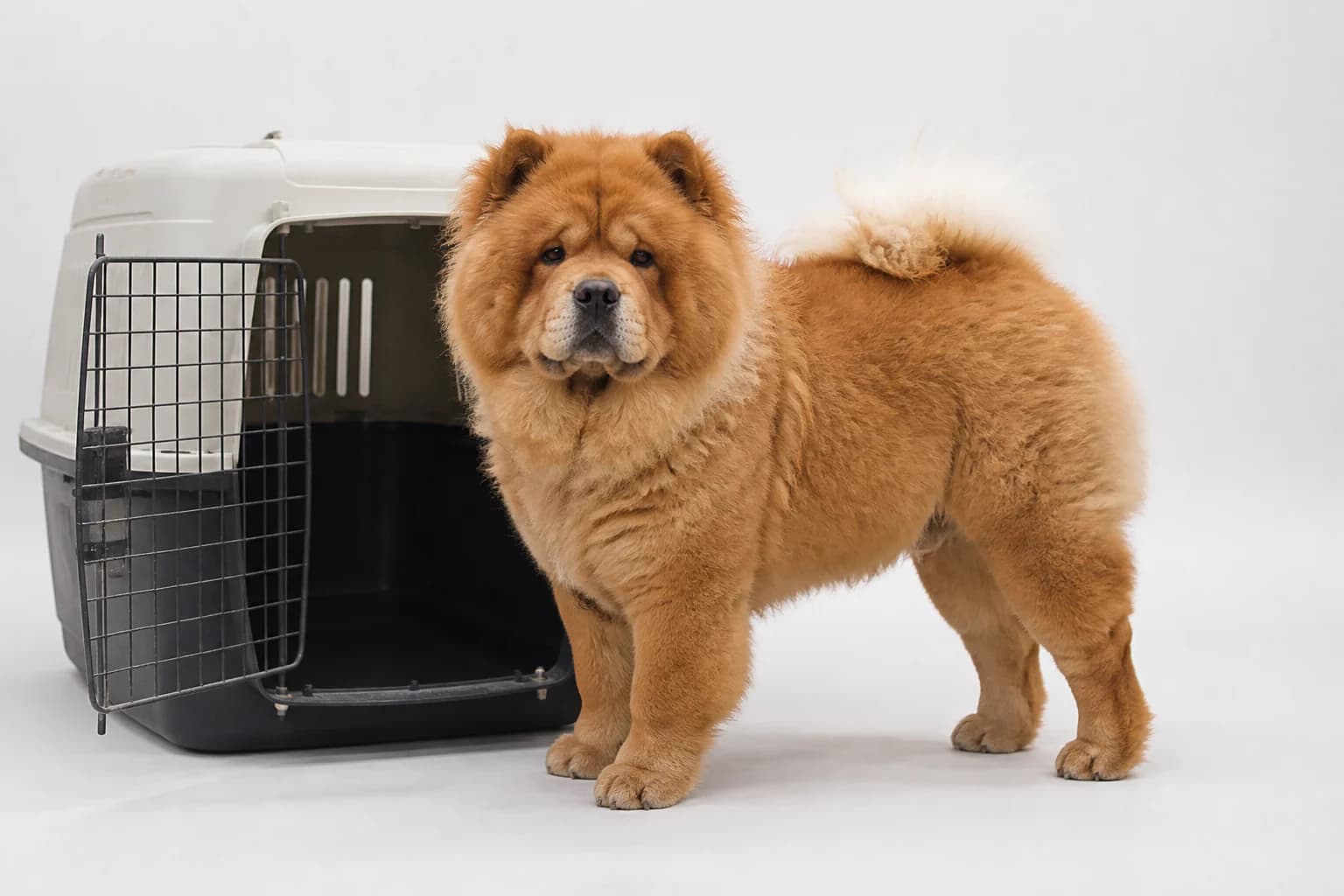
A puppy can outgrow a crate or harness between planned purchases. Check weekly during rapid growth. An older Chow may need easier buckles, more padding, a lower bed edge, or a ramp even if weight remains unchanged.
Product labels such as medium, large, and X-large are not standardized. Save the dog's actual measurements and compare them with each manufacturer's current chart.
Related Chow Chow topic owners
Use the owner page that matches the decision instead of asking body size to answer unrelated questions:
Chow Chow at a glance
Broad chow chow, mr chow chow, and what is chow chow searches need the Chow Chow profile. The awkward query “chow chow chow dog” has the same whole-breed intent. That owner covers history, appearance, temperament, exercise, grooming, and household fit. This page owns adult measurements, growth records, body and muscle condition, mini marketing claims, and equipment dimensions. Size is one part of the breed decision, not the whole answer.
Best dog food for Chow Chows at a glance
Chow chow food, chow chow the food, and what is chow chow food questions belong to the Chow food guide. That owner evaluates life-stage adequacy, calorie density, manufacturer evidence, portions, and transitions. Adult weight and body condition inform feeding, but chow chow size alone cannot select a formula or determine the correct calories for one dog.
- The Chow puppy guide owns sourcing, records, scams, and socialization, including unsupported adult-weight promises.
- The Chow color guide owns recognized colors and rough-versus-smooth coat identity.
- The Chow price guide owns acquisition and lifetime budgeting.
- The Chow mixes guide owns uncertain ancestry and variable mixed-breed outcomes.
- The blue-black tongue guide owns normal oral pigment, puppy development, and color-change emergencies.
- The temperament guide owns body language, training, visitors, and behavior support.
- The health guide owns screening and disease-risk decisions, not size prediction.
- The grooming guide owns brushing, coat blow, bathing, drying, and shaving limits.
Chow Chow FAQs
How big Chow Chows are fully grown is best expressed as a population range, not a promised number. A Chow Chow full grown generally stands about 17 to 20 inches at the shoulder, while published weight ranges often fall around 45 to 70 pounds. For a clear next step, measure the individual on a level surface, then interpret weight alongside frame, muscle, coat, sex, body condition, growth records, and veterinary findings.
Some groomers refuse Chow Chows because a dense double coat, the size of a Chow Chow full grown, heat sensitivity, or an individual dog's handling history can exceed a salon's time, equipment, staffing, or safety limits. That is a capacity decision, not a judgment about every dog. For a clear next step, seek a double-coat-experienced groomer, disclose behavior and medical needs, and build cooperative handling before mats or nail problems become urgent.
Many Chow Chows approach adult height around 12 months, but a Chow Chow full grown includes more than final shoulder height. Chest, muscle, coat, and overall physical maturity may continue developing beyond the first year, and timing varies by dog. For a clear next step, maintain a dated individual growth curve and ask a veterinarian to review slowed growth, weight loss, persistent digestive signs, lameness, or a sudden change in rate.
A male Chow Chow full grown may fall within the broad adult reference of about 45 to 70 pounds, but sex alone does not define a healthy target. Male and female ranges overlap, while frame, muscle, and fat coverage differ. For a clear next step, use repeated scale weights plus hands-on body-condition and muscle-condition scoring, then ask a veterinarian to interpret the trend rather than selecting the highest number on an online chart.
Female Chow Chows may be smaller on average, but male and female ranges overlap substantially, so sex cannot predict one dog's final size. A large-framed female can outweigh a smaller male, and coat volume can distort a visual comparison of a Chow Chow full grown. For a clear next step, measure shoulder height, chest girth, length, weight, body condition, and muscle condition before choosing equipment or portions.
No recognized miniature or teacup Chow Chow variety exists. A dog marketed as a mini may be young, mixed, naturally small, or affected by health or breeding choices, and a guaranteed tiny Chow Chow full grown is a marketing claim rather than a reliable growth record. For a clear next step, verify age, documented parentage, parent sizes, veterinary records, health screening, registry terminology, and the individual's measured growth curve.
A Chow Chow's dense coat makes visual-only weight judgments unreliable, even when the Chow Chow full grown appears broad and balanced. Feel for the ribs through the coat, compress the coat to look for a waist and abdominal tuck, assess muscle over the spine and thighs, and track scale weight over time. For a clear next step, ask a veterinarian to demonstrate body-condition and muscle-condition scoring, especially when change is rapid or unexplained.

Coreen Saito is a pet writer and longtime shelter volunteer with more than a decade in animal rescue. She covers cat behavior, breed care, and the small, ordinary science of sharing a life with companion animals, with a particular focus on honest takes about the products and decisions that actually matter. At home in Arizona, she's outranked by Mac (a dog with the loudest opinion in the house), Rebel (a cat who governs by quiet authority), and Meri (an orange tabby who runs the late shift and the laundry basket). She writes about all three, plus the rescues that keep coming through her life, at LifeWithMinty.com.
Sign up for expert-backed reviews and safety alerts all in one place.