Chow Chow: Temperament, Size, Care and Breed Guide
Learn about Chow Chow temperament, size, coat, blue-black tongue, training, grooming, heat safety, health and responsible sourcing through an evidence-first breed guide.
Petful is reader supported. As an affiliate of platforms like Amazon and Chewy, we may earn a commission when you buy through links on this page. There is no extra cost to you.
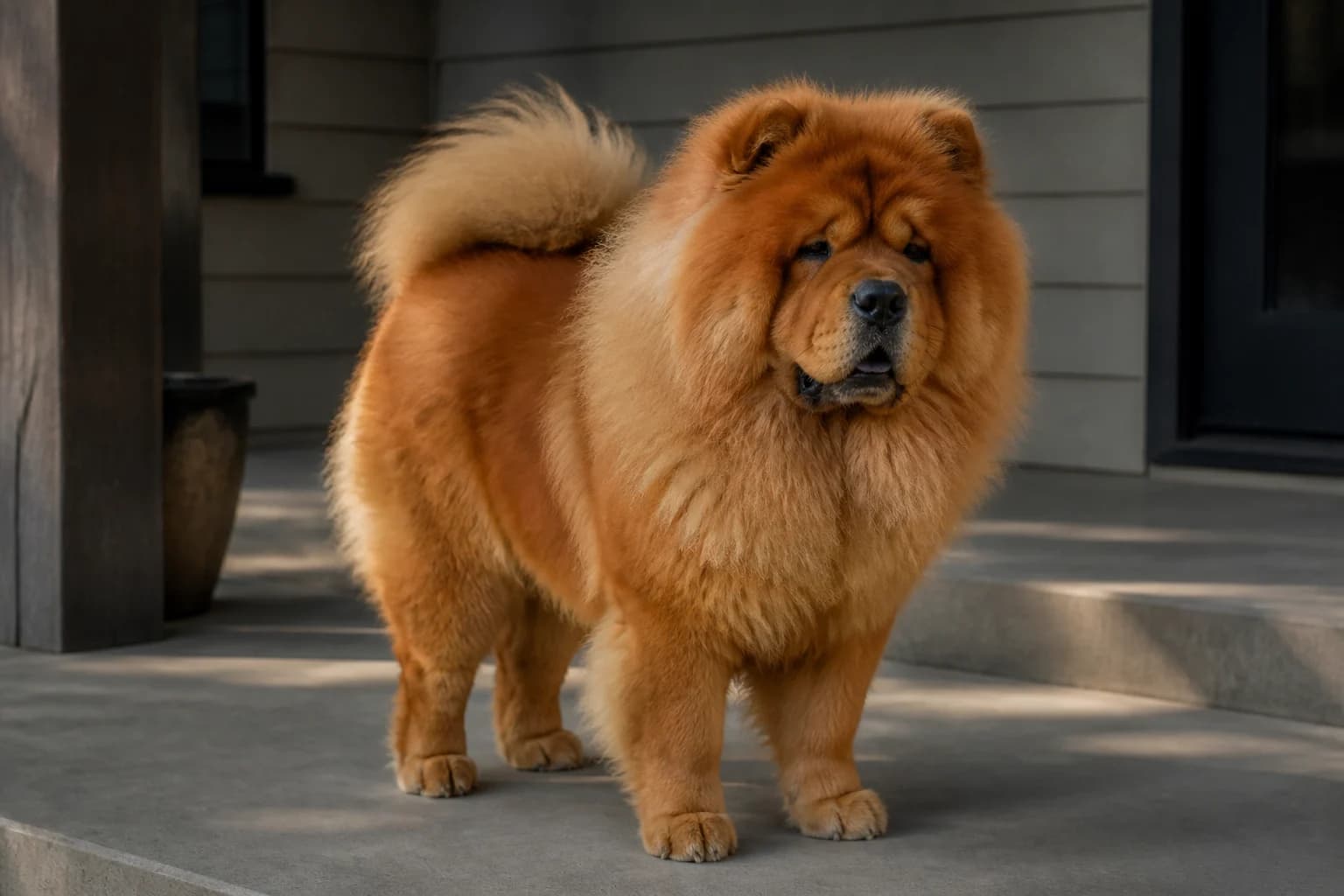
The chow chow is a squarely built dog from China, recognized for a dense rough or smooth coat, small upright ears, a tail carried over the back, and distinctive blue-black tongue pigmentation. This ancient breed is often reserved and self-possessed rather than socially exuberant.
Living well with a chow chow requires more than admiring the lionlike outline. Early socialization, reward-based training, heat-aware exercise, coat care, health screening, and respect for the individual dog's boundaries all matter.
Breed tendencies describe populations, not every dog. Appearance, color, a shelter label, or seller wording cannot prove ancestry, health, or future behavior. Use the AKC Chow Chow profile, Chow Chow Club information, direct observation, records, and professional findings together.

Sign up for expert-backed reviews and safety alerts all in one place.
Chow Chow at a glance
A Chow Chow is usually an independent, reserved companion with substantial coat-care and socialization needs. Individual dogs vary. Use population tendencies to prepare, individual observation to manage daily life, documented records to understand history and professional findings for health or behavior decisions.
The breed does not fit neatly into labels such as aggressive, cuddly, easy, or difficult. A well-matched household values calm routines, consent-based handling, safe management, and training that earns cooperation. Prospective owners should be comfortable with a dog who may prefer proximity over constant physical affection.
Search data can record awkward variants such as "chow chow chow chows," "chow chows," and "chow chows dogs." Each points to the same breed-level question, but the answer must still separate broad tendencies from the individual dog's observed behavior, coat, health, and history.
This article-specific evidence ladder for chow chow decisions separates population tendencies, individual observations, records and professional findings. Breed tendencies describe populations, not every individual dog. Records, direct observation and professional findings answer different questions. Together they create a concrete decision framework rather than a generic fact list. The page gives the reader a concrete decision framework rather than a generic fact list.
| Temperament | Often reserved and discerning | Individual body language, history and behavior across settings |
|---|---|---|
| Size | Medium, sturdy and squarely built | Current measurements, growth records and veterinary body-condition assessment |
| Coat | Rough or smooth double coat | Actual density, matting history and grooming tolerance |
| Exercise | Moderate activity with heat limits | Age, fitness, weather, recovery and medical guidance |
| Household fit | Needs supervision, boundaries and socialization | Structured introductions and the household's real routine |
Use evidence at the level of the decision
An article-specific evidence ladder for Chow Chow questions separates population tendencies, individual observations, documented records, and professional findings. Breed tendencies describe populations, not every individual dog. Records, direct observation and professional findings answer different questions. Use the comparison table as a concrete decision framework rather than a generic fact list: start broad, observe the individual, verify the record, and seek professional interpretation where the stakes require it.
An Embark Breed & Health Dog DNA Test Kit can offer ancestry and selected genetic information when background is uncertain, but it does not certify pedigree, predict temperament, or replace veterinary screening.

Petful may earn a commission when you click through to Chewy, at no extra cost to you.
History and original purpose
The Chow Chow's history reaches back centuries in China. The breed has been associated with guarding, hunting, hauling, and other practical work, although modern companion dogs vary widely in drive and ability. Historical function helps explain plausible independence and watchfulness, but it should never excuse unsafe behavior or harsh training.
For readers asking where are Chow Chows from, the concise answer is China, where accounts describe an ancient Chinese dog with several practical roles. The historical record gives useful context, not a behavioral script for a modern companion.
The Royal Kennel Club Chow Chow profile and national breed-club materials provide standards and history. They are useful for understanding type, not for predicting one dog's social comfort.
Questions history can and cannot answer
Good history questions are specific:
- What work shaped the breed's structure and behavior?
- Which traits still affect modern care?
- What has the individual dog learned in its actual home?
- How does age, pain, and environment modify what owners see?
Do not confuse historical guarding with a need to provoke suspicion. A companion Chow benefits from neutral exposure, secure management, and reinforcement for calm observation.
What to document during the first month
Whether a Chow arrives as a puppy or adult, the first month should produce a useful individual record. Avoid interpreting every early behavior as permanent. Stress, fatigue, unfamiliar routines, pain, medication, and the sudden loss of a prior environment can change what the dog shows.
Record these observations by date and setting:
- Appetite, water intake, sleep, elimination, and energy.
- Comfort with collar, leash, coat touch, ears, paws, and mouth.
- Response to familiar and unfamiliar adults at a safe distance.
- Body language around children, dogs, food, toys, doors, and resting places.
- Recovery after sounds, visitors, movement, or handling.
- Ability to settle when nothing is happening.
- Signs of heat stress, lameness, eye discomfort, itch, or pain.
Keep the routine intentionally plain at first. A series of calm days reveals more than taking the dog to crowded stores, dog parks, parties, and grooming appointments at once. Add one variable at a time so the household can tell what helped or hurt.
At the end of each week, separate facts from interpretation. "The dog froze for four seconds when a visitor reached over its head, then moved behind the owner" is evidence. "The dog hates men" is a conclusion that may not be supported. Specific records help veterinarians and behavior professionals give better guidance.
Appearance, coat and blue-black tongue
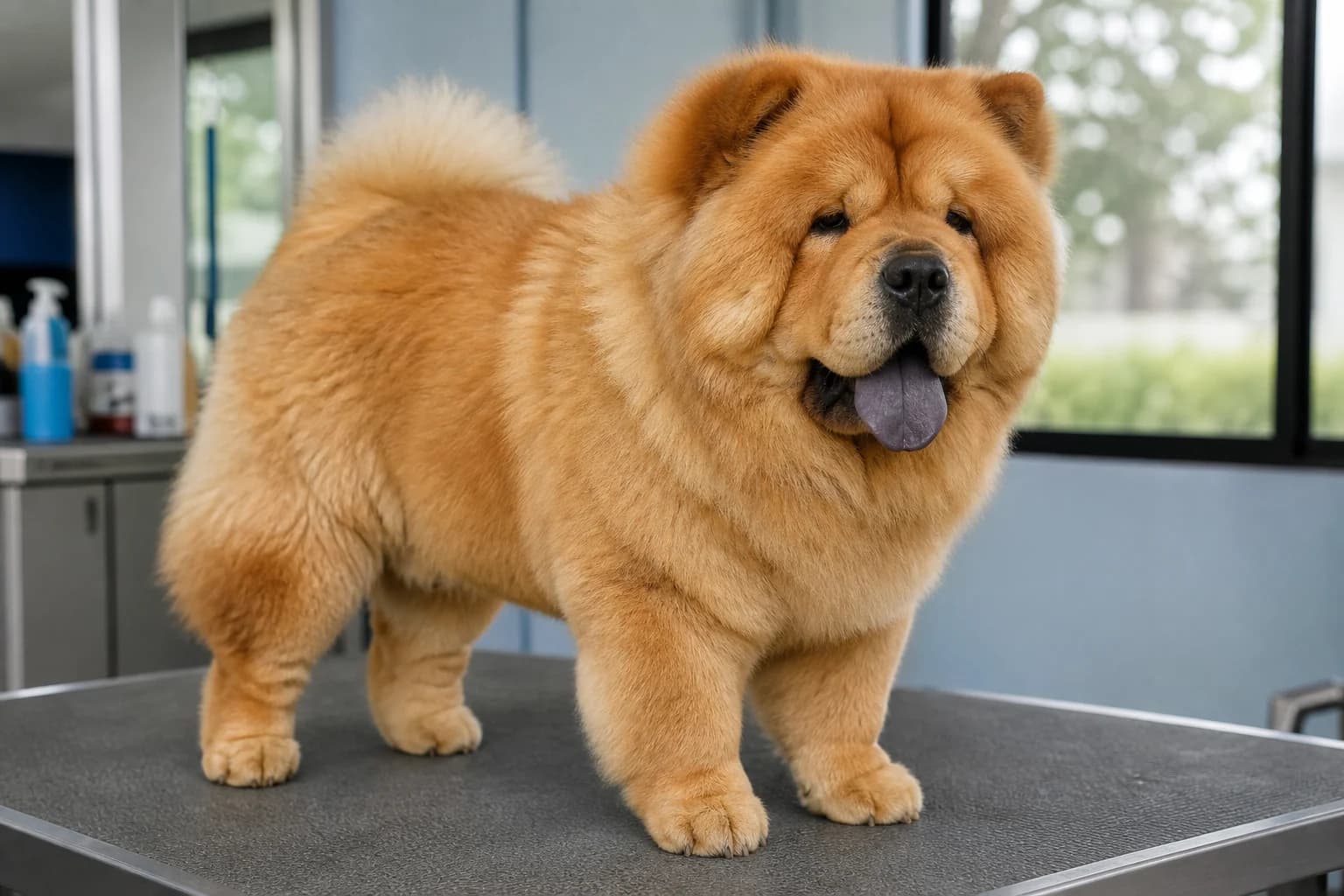
The Chow has a broad head, small triangular ears, deep body, relatively straight rear movement, and a high-set tail carried over the back. Rough coats create the familiar mane and heavy feathering. Smooth coats are shorter but still dense and double.
Recognized colors and coat texture deserve visual detail, so Petful's Chow Chow colors guide owns red, black, blue, cinnamon, cream, and marketing claims about unusual colors. Color alone does not prove purity, quality, health, or value.
Tongue pigment is description, not proof
Blue-black tongue pigmentation is a famous breed feature. Puppies can develop pigmentation as they mature, and normal distribution varies. The Chow Chow blue-black tongue guide explains normal development and warning signs. A sudden color change, wound, swelling, bleeding, pain, or trouble eating needs veterinary attention.
Body shape also should not be exaggerated for fashion. Extreme skin folds, impaired movement, narrow nostrils, or obvious eye irritation are not desirable simply because a dog looks dramatic.
Structure that changes everyday care
The square outline is more than a show-ring description. It changes how an owner should inspect movement, fit equipment, and plan traction. Dense coat can disguise the waist and skin, while the relatively straight rear action can make a short, stilted gait look familiar even when a new limp or reluctance deserves attention.
Check the individual dog from several angles:
- Watch a relaxed walk on a nonslip surface rather than judging a posed photograph.
- Feel through the coat for ribs, waist, mats, moisture, and tender areas.
- Look for clear, comfortable eyes rather than accepting squinting as a facial expression.
- Measure the neck, chest, body length, and standing height before buying equipment.
- Learn the dog's normal tongue, gum, breathing, and recovery pattern so a change is recognizable.
These observations describe current condition. Registration and screening records answer ancestry and inherited-risk questions, while a veterinarian or qualified groomer supplies the professional finding when movement, eyes, skin, or coat comfort is uncertain.
Chow Chow temperament and family fit
Many Chows are loyal to familiar people and reserved with strangers. Some enjoy quiet contact and others dislike prolonged touching. The correct response is to read the individual dog, create choice, and prevent people from crowding or cornering it.
Chow Chow personality is therefore better documented with context than summarized with one adjective. Record who was present, what happened before the response, how much distance the dog had, and how quickly the dog recovered.
WebVet's guide to dog body language helps owners notice turning away, freezing, lip licking, lowered posture, hard staring, or attempts to retreat. One signal needs context, but repeated discomfort should change the interaction.
- No breed label makes a dog safe or dangerous. Supervise children, provide an escape route and separate during food or high-energy events. Use documented evidence from specific incidents and seek professional guidance for growling, guarding, lunging or bites. Punishing warnings can make future behavior harder to read.
The FurHaven NAP Ultra Plush Orthopedic Deluxe Cat & Dog Bed with Removable Cover, Gray, Jumbo can define a quiet resting place if the jumbo dimensions suit the dog and room. An orthopedic label does not treat pain, and reluctance to lie down warrants veterinary assessment.
The dedicated Chow Chow temperament and training guide covers aggression questions, household introductions, and training in depth.
Test family fit in ordinary situations
A single quiet meeting cannot show how a Chow manages a whole household. If the source permits it, gather repeated observations in low-pressure situations and ask for foster or prior-home notes. Focus on behaviors that lead to a management decision:
- Can the dog rest while people move through the room?
- Does the dog move away, freeze, or escalate when touch stops being comfortable?
- How does the dog respond when a child runs, a visitor enters, or another animal approaches a barrier?
- Can an adult interrupt access to food, doors, or resting spaces without confrontation?
- How long does recovery take after surprise or excitement?
The goal is not to provoke a reaction. It is to identify distance, supervision, barriers, and professional support the real dog needs before anyone relies on a family-dog label.

Petful may earn a commission when you click through to Chewy, at no extra cost to you.
Training, socialization and exercise
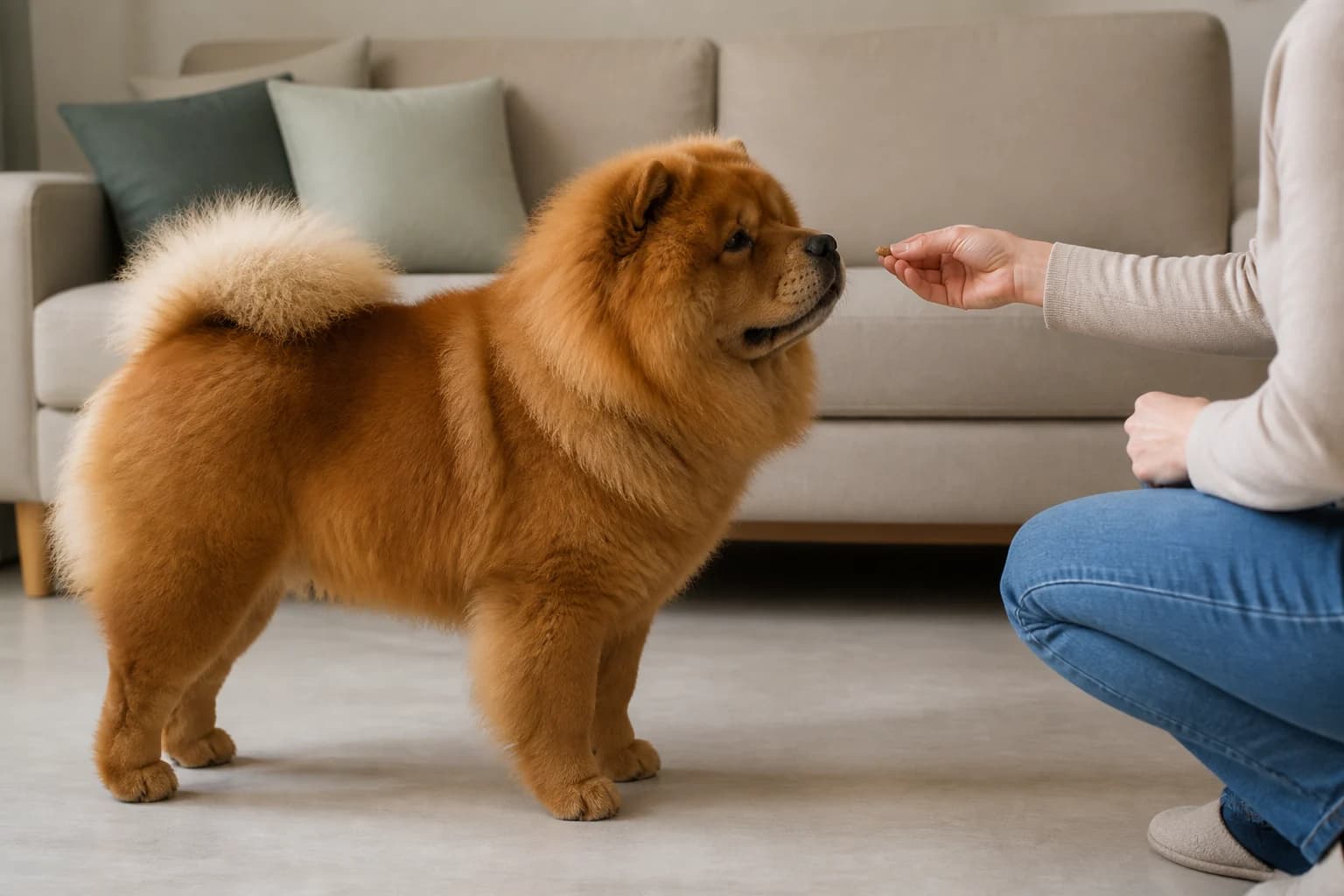
Train with short, clear, reward-based sessions. Independence is not a reason to use force. It means the handler should make the desired response worthwhile, prevent repeated unwanted behavior, and avoid overwhelming the dog.
Chow Chow training, Chow Chow socialization, and Chow Chow exercise are separate parts of the plan. Training builds useful skills, socialization creates safe and positive exposure without forced contact, and exercise supports physical and behavioral needs without relying on exhaustion.
Priority skills include:
- Voluntary attention and name response.
- Hand targeting for low-conflict movement.
- Recall practiced on a long line.
- Calm stationing on a mat.
- Cooperative ear, eye, paw, and coat handling.
- Comfortable muzzle training as a positive safety skill.
- Passing people and dogs without forced greetings.
A food-based search can make independent problem-solving useful. The Pet Parents Forager Snuffle Mat & Slow Feeder Dog Bowl, Meadow Natural can hold part of a measured meal for supervised sniffing, but it should be removed if the dog chews fabric, guards it, or becomes frustrated. The KONG Classic Dog Toy, Large offers another supervised enrichment format when that size and filling suit the dog.
For leash practice, the Frisco Traffic Leash with Dual Padded Handles & Poop Bag Dispenser, Black, 6-ft long, 1 count provides a second handle for close control, but no leash prevents pulling or substitutes for training. Confirm hardware strength and keep enough distance that the Chow can still respond without being held in a forced greeting.
Control exposure without forcing contact
Socialization means creating safe, positive, age-appropriate experiences, not making a puppy interact with everyone. Let the dog observe at a comfortable distance and retreat. Quality matters more than the number of encounters.
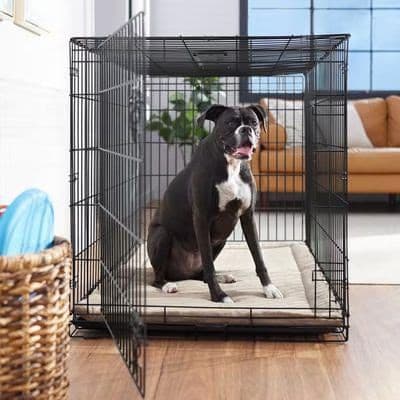
A Frisco Heavy Duty Fold & Carry Single Door Collapsible Wire Dog Crate, X-Large may provide a rest area only if the crate is measured to the individual dog, introduced gradually, kept cool, and never used to force isolation through panic. X-large may be bigger than needed for some Chows.
Exercise should match age, conditioning, body condition, joints, and weather. Calm walks, sniffing, problem-solving, and short training sessions often suit the breed better than repetitive high-impact work. Watch recovery rather than pursuing a fixed mileage target.
Grooming, heat and everyday care
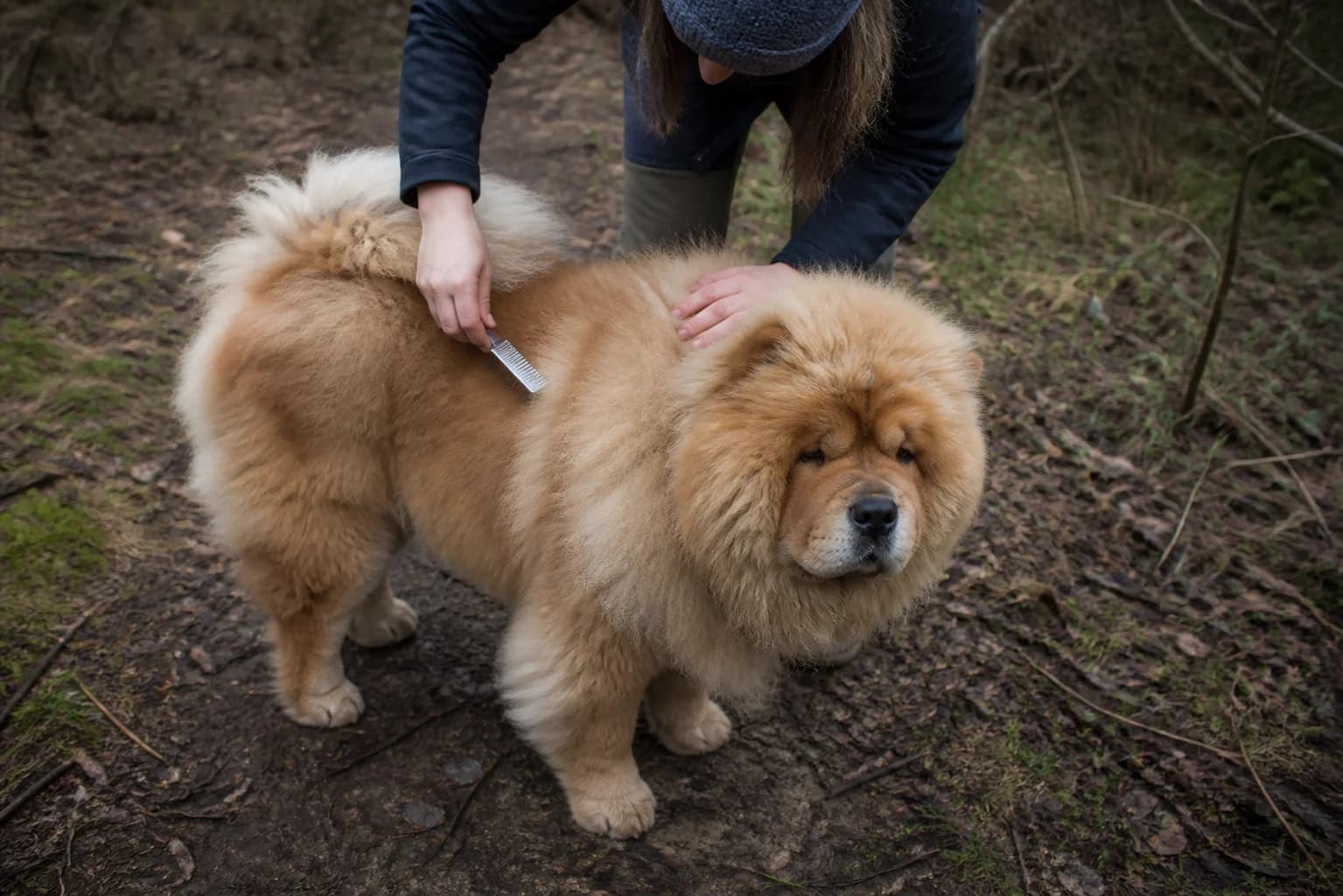
This grooming, heat and everyday care plan begins with the coat and the dog's recovery in warm conditions. Both coat types shed. Rough coats need line brushing and comb checks through dense areas. Smooth coats are shorter, not maintenance-free. Mats can form behind ears, under collars, in armpits, and around the rear.
A coat-care check should reach the skin
Divide the coat into small sections, lift the outer hair, and check from the skin outward. A Frisco Deshedding Cat & Dog Brush, Medium, Medium to Long Hair can collect loose undercoat on a suitable coat, but it should not be dragged through a mat or repeatedly scraped over one area. Follow with a metal comb check rather than assuming a smooth surface means the base is clear.
A weekly home review should cover:
- Behind the ears, under the collar, armpits, groin, tail base, and rear feathering.
- Redness, odor, moisture, scale, broken coat, parasites, or pain.
- Nails and paw hair that affect traction.
- Eye discharge, squinting, and face rubbing.
- Whether the dog can stand, turn, and lie down comfortably during care.
Chow Chow heat tolerance varies with weather, humidity, coat, body condition, activity, age, acclimation, and health. Dense coat makes shade, water, cool rest, surface temperature, and early response to heat signs essential parts of everyday care.
The Chow Chow grooming and shedding guide explains tools, bathing, drying, mat prevention, and shaving questions. Build cooperative handling before the coat requires urgent work.
Plan care around heat and handling
Dense coat and body type can make hot conditions risky. Exercise during cooler periods, provide shade and water, avoid hot surfaces, and stop when the dog cannot recover normally. Heavy panting, weakness, vomiting, confusion, collapse, or abnormal gum color is an emergency.
An automatic feeder such as the Petlibro Granary WIFI Automatic Cat & Dog Feeder with Camera & 3 Pet Food Desiccant Bags, White, 5-L may help deliver measured kibble on a schedule, but it cannot judge body condition, supervise eating, provide water, or respond to illness. Confirm portion accuracy and food compatibility.
Everyday care also includes:
- Weekly hands-on skin, eye, ear, and paw checks.
- Measured meals and weight monitoring.
- Dental care and veterinary prevention.
- Secure identification and escape planning.
- A cool, undisturbed rest area.
The Petlibro Stainless Steel Dog & Cat Fountain, 101-oz may suit a Chow that prefers moving water, provided it is cleaned on schedule and backed up by a plain bowl. It does not prevent heat illness, and a new increase, decrease, or refusal to drink warrants veterinary discussion.
Health, lifespan and size
Chows can be affected by orthopedic, eye, skin, and other health concerns. Population risk is not a diagnosis. The OFA CHIC program shows how breed-specific screening records can be organized and verified. A CHIC number does not mean every result was normal or guarantee a healthy dog.
Chow Chow life expectancy is a population estimate rather than a promise or countdown for one dog. Preventive care, body condition, access to treatment, environment, and individual disease all influence the lived outcome.
The Chow Chow health and lifespan guide covers screening, symptoms, and veterinary action points. The Chow Chow size and full-grown guide covers growth, measurements, body condition, and misleading mini or giant labels.
Turn population risk into individual monitoring
Use the AVMA's healthy-weight guidance with veterinary assessment. Dense coat can make body condition difficult to see, so hands-on rib, waist, and muscle checks are important.
The Embark Breed & Health Dog DNA Test Kit may report selected variants, but it does not replace examination, hip or elbow imaging, eye exams, or other breed-relevant screening. Discuss results with a veterinarian.
Seek care for eye pain or squinting, sudden lameness, persistent itch or odor, breathing distress, marked appetite or weight change, or any rapid behavior change.
A preventive-care file for the individual dog
Keep one digital or paper file that travels with the dog. Include microchip information, current medications, allergies or adverse reactions, vaccine and preventive history, diagnostic results, insurance details, emergency contacts, and the regular veterinarian's information.
For a Chow, add:
- Eye examination and any treatment history.
- Orthopedic screening or imaging records.
- Dated body weight and body-condition notes.
- Skin, ear, and grooming observations.
- Heat tolerance and recovery observations.
- Handling and muzzle-training notes for safer care.
This file does not predict lifespan. It shortens the distance between a new sign and informed professional care. It also prevents breed assumptions from replacing the dog's actual history.
If the veterinarian recommends home brushing, the Virbac C.E.T. Dual-Ended Dog & Cat Toothbrush provides two head sizes for a gradual dental routine. It is not appropriate for a painful mouth or a dog who cannot be handled safely, and it cannot remove established tartar below the gumline.
Climate, travel and emergency planning
Dense coat makes climate part of ordinary ownership. Check heat and humidity before activity, provide reliable cooling, and plan transport so the dog is never left in a parked vehicle. A Chow who seems reluctant to walk in hot weather may be protecting itself rather than being stubborn.
Prepare for disruptions:
- Identify a climate-controlled boarding or caregiver option before it is needed.
- Teach calm loading and short vehicle rides.
- Keep water, a bowl, medication, records, identification and cooling supplies ready.
- Confirm that lodging, rentals, insurers and transport providers accept the breed.
- Know the route and payment process for the nearest emergency clinic.
In smoke, storms, outages or evacuation, the dog's reserve may make handling by strangers difficult. Positive muzzle training, a secure leash setup, and familiar bedding can reduce risk, but every tool should be introduced before an emergency.
Petful may earn a commission when you click through to Chewy, at no extra cost to you.
Build a professional care team early
Do not wait for matting, eye pain, aggression, or lameness to find help. Identify a veterinarian comfortable with the breed's handling needs, a groomer who can work without forcing severe dematting, and a reward-based trainer or behavior professional.
Ask each provider how they handle:
- Fear, refusal and the need to pause.
- Pre-visit medication prescribed by a veterinarian.
- Muzzle training and low-stress restraint.
- Communication between medical, grooming and behavior care.
- Written observations owners can add to the dog's record.
A good team does not assume every Chow is dangerous or easy. It plans from the individual dog's history, current body language and medical needs.
Daily routine example
A workable routine alternates care, activity and uninterrupted rest. The exact timing should follow the dog and household, but each need should have a place.
- A cool morning toilet trip and sniff-focused walk.
- Measured breakfast followed by quiet digestion time.
- A brief cooperative-care or training session.
- A long undisturbed rest period.
- A low-key enrichment activity or observation outing.
- An evening walk adjusted for heat, mobility and recovery.
- Coat, eye, paw and skin check before settling.
The schedule should remain flexible. A senior dog, puppy, dog recovering from illness, or dog living in extreme weather needs different duration and intensity. The useful measure is whether the Chow maintains healthy body condition, moves comfortably, sleeps well, and can recover after ordinary events.
Routine also supports behavior. Predictable rest and meals reduce some conflict, while planned barriers keep the dog from repeatedly practicing doorway rushing or unwanted greetings. Predictability is not rigidity. Owners should still prepare the dog gradually for reasonable changes and emergency handling.
Review the routine when conditions change
Review the routine every season. Coat density, temperature, daylight, school schedules, visitors and the dog's age can alter what works. Make one adjustment at a time, document recovery, and keep veterinary or behavior guidance attached to the individual dog rather than to a generalized breed rule.
When several caregivers share responsibility, write down cue words, meal measurements, access rules and emergency contacts. Consistency reduces confusion and makes any new behavior easier to trace.
Puppies, rescue and responsible sourcing
A seller, rescue, or shelter label is the beginning of due diligence. Verify identity where possible, obtain complete veterinary records, observe temperament, and understand the contract or adoption agreement. Do not accept guarantees based on color, price, rarity, or photographs.
Petful's Chow Chow puppies buying guide covers parent screening, early socialization, deposits, and scam protection. The Chow Chow price guide separates acquisition quotes from first-year and lifetime costs.
Match sourcing questions to the individual dog
If adopting an adult, foster observations can answer high-value questions about handling, rest, strangers, dogs, household noise, and separation. A visual shelter label cannot prove ancestry. Petful's Chow Chow mixes guide explains trait ranges and responsible interpretation.
For a puppy, verify public parent-screening records and ask how handling and social exposure were introduced. Responsible sourcing includes a return plan and honest discussion of health and temperament, not only an attractive litter.
The Frisco Heavy Duty Fold & Carry Single Door Collapsible Wire Dog Crate, X-Large may support a measured, open-door settling plan. Never choose crate size by breed label alone, and do not leave a distressed puppy to panic.
Is a Chow Chow right for you?
A strong match is a household that accepts reserve, manages introductions, maintains the coat, trains without intimidation, and can protect the dog from heat. The breed may be a poor fit when people expect instant sociability, frequent hugging, chaotic unsupervised interaction, or a dog who welcomes every stranger.

A Chow Chow pros and cons list becomes useful only when matched to a real household. A Chow Chow first time owner should have a specific plan for reward-based training, controlled introductions, cooperative grooming, veterinary access, heat safety, and backup care before making a commitment.
- Household fit may include calm indoor routines
- Individual evidence clarifies social comfort
- Loyal relationships can develop with trusted people
- Grooming and heat management are substantial
- Reserve requires thoughtful introductions
- Cooperative handling and health care take time and planning
Food should be selected by life stage, calories, body condition, and veterinary needs. The best dog food for Chow Chows guide owns that decision. A Petlibro Granary WIFI Automatic Cat & Dog Feeder with Camera & 3 Pet Food Desiccant Bags, White, 5-L can deliver measured dry food, but it does not choose the diet or replace human observation.
The FurHaven NAP Ultra Plush Orthopedic Deluxe Cat & Dog Bed with Removable Cover, Gray, Jumbo may support a consistent rest station if measurements fit. Bedding is one environment choice, not a solution for joint pain or anxiety.
Choose from the documented individual dog, not the dramatic outline. A responsible decision considers temperament evidence, records, realistic care time, climate, cost, and access to qualified professional help.
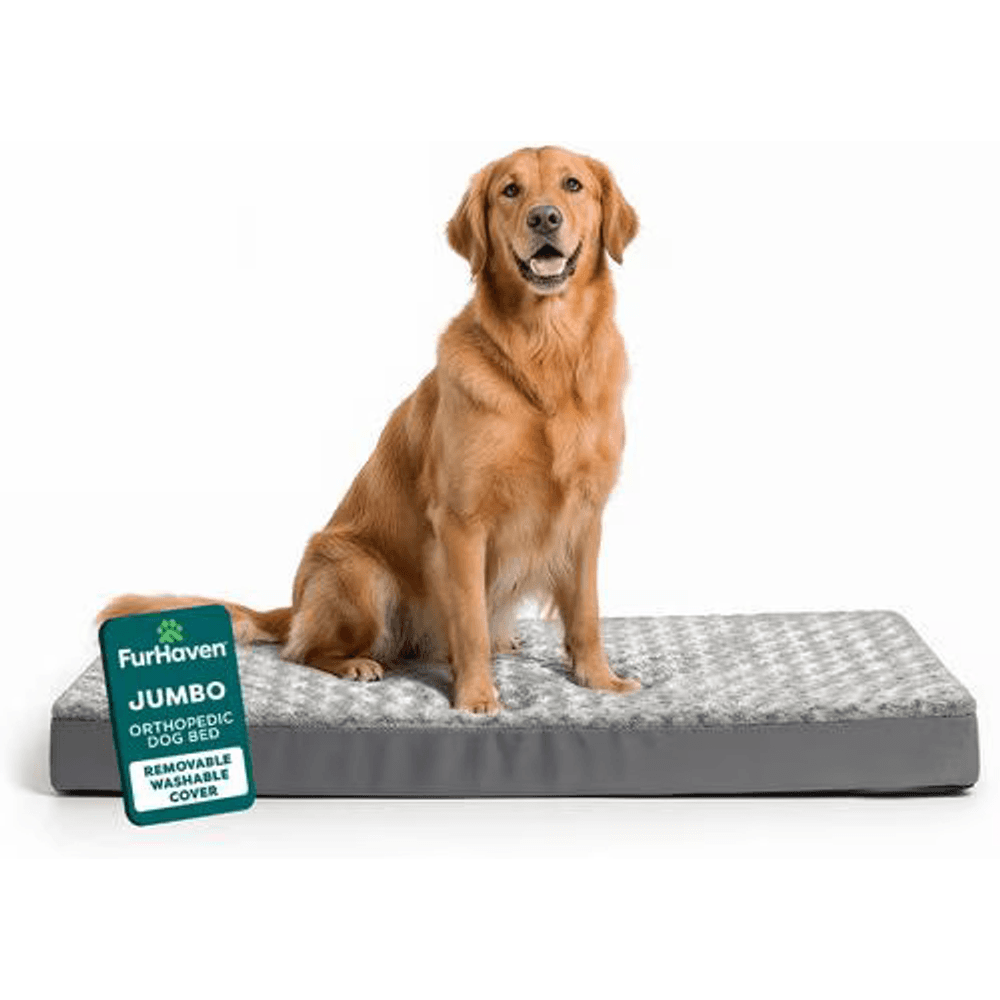
A plush orthopedic foam mattress that cushions aging joints and pressure points, giving a stiff or trembling senior dog warm, supportive rest.
Petful may earn a commission when you click through to Chewy, at no extra cost to you.
Make the final household-fit decision
Bring the evidence into one written decision instead of letting appearance or one meeting dominate. List what is verified, what is directly observed, what a professional found, and what remains uncertain. Then compare those needs with named people, available time, housing rules, climate, transport, and budget.
High-value evidence includes:
- Veterinary and screening records tied to the correct dog or parents.
- Repeated behavior observations across quiet and more active settings.
- Handling tolerance for eyes, ears, paws, coat, and transport.
- Actual coat condition and professional grooming observations.
- Measured adult size, body condition, and equipment fit.
- Recovery after exercise, heat, visitors, and unfamiliar dogs.
Write management responsibilities as actions. "Adult supervises every child interaction" is stronger than "good with kids." "Dog rests behind two secure barriers during deliveries" is stronger than "protective but fine." "Professional grooming booked on a documented interval" is stronger than "we will brush."
Identify the uncertainty the household cannot safely absorb. Unknown dog compatibility may matter in a multi-dog home. Severe grooming fear may exceed an owner's handling skill. Insurance or housing restrictions may make placement impossible even when the dog is otherwise appealing.
Name the household decision clearly
The final decision can be yes, no, or not yet. "Not yet" may mean gathering another foster observation, obtaining a veterinary interpretation, measuring the home, or confirming a policy. Waiting for evidence is responsible ownership, not a failure to connect with the breed.
Set a review date after placement. Compare the original assumptions with veterinary findings, grooming records, measured routine and observed recovery. Revise the plan without treating change as proof that anyone failed. The purpose of a breed guide is to prepare useful questions, while the living dog's evidence controls daily care.
Related Chow Chow topic owners
This pillar owns the whole-breed decision. Use the exact sibling that owns a narrower question:
Best dog food for Chow Chows at a glance
Queries for chow chow food, chow chow the food, or what is chow chow food need a nutrition decision, not a breed-profile summary. The best dog food for Chow Chows guide owns life stage, calorie density, label evidence, manufacturer questions, and feeding transitions. Use this profile to judge household fit, then use the food owner for an individual feeding plan.
Chow Chow puppy buying checklist
Chow chow puppies, buying a chow chow, and chow chow for sale searches require source and transaction verification. The Chow Chow puppy buying checklist owns breeder, rescue, health-record, contract, deposit, and scam evidence. A profile can explain the adult breed, but it cannot verify a litter, seller, or puppy. Check the records tied to the exact animal before committing money.
Chow Chow colors at a glance
Chow chow colors, black chow chow, and chow chow black searches belong to the Chow Chow colors guide. That owner distinguishes red, black, blue, cream, and cinnamon, plus rough and smooth coats, without treating appearance as ancestry or health proof. This profile explains why the coat affects care, while the color page handles identification, documentation, and seller claims in context.
Chow Chow price at a glance
Chow chow price, chow chow cost, and price for a chow chow questions need a budget with visible assumptions. The Chow Chow price guide separates acquisition, first-year setup, recurring care, insurance, emergencies, and senior contingencies. Use the profile to understand workload and fit, then price those responsibilities for the household's location, service access, and risk tolerance over the dog's lifetime.
Chow Chow mixes at a glance
A chow chow mix, chow chow mixes, or mix chow chow label cannot predict which parent traits will appear. The Chow Chow mixes guide owns ancestry uncertainty, possible size and coat ranges, parent health records, and individual behavior assessment. Use this purebred profile for population context, but base a mixed dog's care on observed traits, documented history, and professional findings.
Why Chow Chows have blue-black tongues
Chow chow tongue, chow chow dog tongue, and chow chow dogs tongue questions need a pigment and safety boundary. The blue-black Chow Chow tongue guide explains normal inherited pigmentation, puppy color development, routine oral baselines, and sudden color changes that can signal an emergency. A stable dark tongue is a breed trait, not proof of ancestry or present health status.
Full-grown Chow Chow size at a glance
Chow chow size, chow chow full grown, and full grown chow chow questions belong to the full-grown Chow Chow size guide. That owner covers height and weight ranges, growth records, body and muscle condition, unsupported mini claims, and equipment measurements. Use the profile for whole-breed fit, then measure the individual dog directly rather than estimating through the dense coat.
Are Chow Chows aggressive?
Searches asking are chow chow aggressive, are chow chows aggressive, or are chow chow dogs aggressive need behavior context rather than a label. The Chow Chow temperament and training guide owns body language, reserve, guarding, socialization, visitor management, reward-based training, and professional-help thresholds. Breed tendencies do not predict one dog, so use observed behavior and documented history for safety decisions.
Chow Chow lifespan at a glance
Chow chow lifespan, chow chow life expectancy, and chow chow dog lifespan queries belong to the Chow Chow health and lifespan guide. That owner explains population ranges, screening records, eye and joint risks, skin and thyroid concerns, heat safety, senior monitoring, and veterinary escalation. A range helps with planning, but it cannot forecast one dog's future or diagnose a new sign.
- Build a coat-specific routine in the Chow Chow grooming and shedding guide.
Chow Chow FAQs
Some insurers, landlords, or jurisdictions place the Chow Chow on restricted-breed lists, but the exact list and legal effect vary by location and can change. A policy label is not a behavioral finding about one dog. For a clear next step, obtain current housing, insurance, and local rules in writing, then evaluate the individual dog's documented history, body language, recovery, and management needs separately.
Whether a Chow Chow is a good family dog depends on the individual dog and the family's daily routine. Some fit calm homes that supervise children, respect retreat, maintain barriers, and accept quiet affection, but breed never guarantees safe interaction. A clear next step is to review repeated body-language observations and recovery, then write specific rules for food, visitors, play, handling, and undisturbed rest before placement.
Asking whether Chow Chow dogs are friendly is too broad to predict one dog's behavior. Many are devoted to familiar people and reserved with strangers, while sociability changes with health, history, setting, and choice. For a clear next step, replace the label with observations of voluntary approach, loose posture, touch tolerance, retreat, and recovery during a low-pressure interaction. Never force a greeting to test a breed stereotype.
Why some Chow Chows do not like to cuddle can reflect individual preference, heat, discomfort, or handling history rather than weak attachment. A Chow Chow may choose to rest near trusted people without wanting restraint or prolonged touch. For a clear next step, let the dog initiate and leave contact, note which touch it chooses, and arrange veterinary review if a previously affectionate dog suddenly avoids contact.
Boy or girl Chow Chows are not universally better than one another. Individual temperament, health, handling comfort, social history, and household fit are more useful than sex stereotypes when choosing a Chow Chow. For a clear next step, compare candidates with the same observation and record criteria, including recovery and touch tolerance, then discuss reproductive and medical considerations for that individual with a veterinarian.
Chow Chows have blue tongues because dense melanin pigment develops in the tongue tissue during puppyhood, creating the breed's characteristic blue-black appearance. Stable pigment does not prove pedigree or health. For a clear next step, learn the Chow Chow's normal mouth baseline and contact a veterinarian for a sudden color change, swelling, bleeding, a painful lesion, difficulty eating, weakness, collapse, or breathing distress.
Whether Chow Chows are aggressive cannot be answered by a breed label. Reserve, fear, pain, guarding, learning history, environment, and access to escape can produce very different responses in individual dogs. For a clear next step, prevent risky exposure, record the trigger and recovery pattern, seek veterinary assessment for sudden change, and obtain qualified behavior help for escalating threats, lunging, bites, or serious distress.
Chow Chows can shed heavily because both rough and smooth varieties have double coats, and the dense undercoat can hold loose hair until it is brushed out. Amount varies with coat, season, health, nutrition, and the individual. For a clear next step, comb to the skin on a realistic schedule, record mats or irritation, and ask a double-coat-experienced groomer to assess maintenance needs without routine shaving.
How much exercise a Chow Chow needs varies with age, conditioning, joints, body condition, weather, and recovery after activity. Many dogs benefit from cool-hour walks, sniffing, and short reward-based training rather than repetitive high-impact work. For a clear next step, track duration, heat, gait, panting, and recovery, then ask a veterinarian about lameness, unusual panting, reluctance, collapse, or declining stamina.
Some Chow Chows can live in apartments when the property permits the breed and the household reliably provides cool conditions, toilet access, exercise, grooming, training, and safe management in shared spaces. For a clear next step, verify building and insurance rules in writing, then assess the individual Chow Chow's behavior around noise, elevators, hallways, visitors, other dogs, and time alone before committing.

Kristine Lacoste has been researching dog and cat breeds for nearly a decade and has observed the animals up close at dog shows in both the United States and the United Kingdom. She is the author of the book One Unforgettable Journey, which was named as a finalist for a Maxwell Award from the Dog Writers Association of America, and was host of a weekly pet news segment on the National K-9 Academy Radio Show. In addition, she was the New Orleans coordinator for Dogs on Deployment, a nonprofit that helps military members and their pets, for 3 years. Kristine has researched and written about pet behaviors and care for many years. She holds a bachelor’s degree in psychology, another bachelor’s degree in English and a Master of Business Administration degree.
Sign up for expert-backed reviews and safety alerts all in one place.