Tortoiseshell Cat: Colors, Genetics, Personality, and Care
A tortoiseshell cat is a coat pattern, not a breed, and nearly all torties are female. Explore the genetics behind the mosaic coat, the 2025 orange-gene discovery, Maine Coon torties, lifespan, cost, and the folklore of these lucky cats.
Petful is reader supported. As an affiliate of platforms like Amazon and Chewy, we may earn a commission when you buy through links on this page. There is no extra cost to you.
According to the Cat Fanciers' Association, a tortoiseshell cat is a coat pattern rather than a breed, and roughly 99.9% of these mottled orange-and-black cats are female because the orange color rides on the X chromosome. The pattern shows up across dozens of breeds and millions of household cats, which is why "tortoiseshell cat" is searched about 165,000 times a month in the United States alone. If you have ever looked at a cat whose coat looks like someone swirled two pots of paint together (one black, one ginger) and never quite stirred them, you have met a tortie. This guide walks through what the pattern is, the genetics that create it (including a landmark 2025 discovery), why males are so rare, how long these cats live, what they cost, and the folklore that has followed them across oceans and centuries.
- 1A tortoiseshell cat is a coat pattern, not a breed: brindled orange and black with little or no white.
- 2The pattern is sex-linked, so about 99.9% of torties are female; males occur roughly 1 in 3,000 and are almost always sterile.
- 3In 2025 scientists finally pinpointed the orange gene as a regulatory deletion at the X-linked ARHGAP36 locus (Current Biology).
- 4The pattern does not affect lifespan: healthy indoor cats typically live 12-16 years.
- 5"Tortitude" is owner-reported and modest at best; breed, individual temperament, and socialization matter far more than coat color.

Sign up for expert-backed reviews and safety alerts all in one place.
What is a tortoiseshell cat?
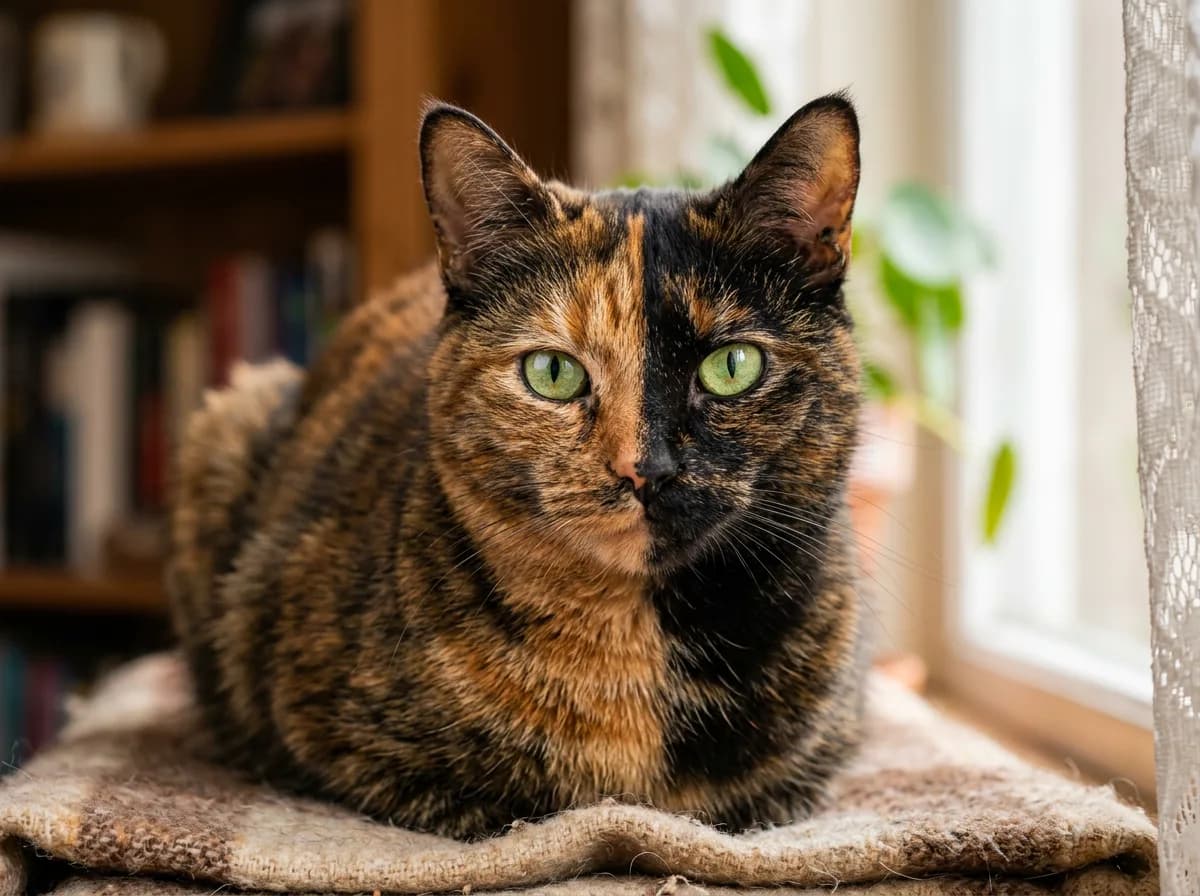
A tortoiseshell cat (often shortened to "tortie") is a domestic cat whose coat blends two pigments, black (or its variants) and orange/red, in a marbled, brindled mix with little or no white. The name comes from the resemblance to polished tortoiseshell, the mottled brown material once used for combs and jewelry. The single most important thing to understand is that tortoiseshell is a coat pattern, not a breed. A tortie can be a pedigreed Persian, a barn cat of unknown ancestry, or anything in between. The pattern describes the color arrangement of the fur, while the breed describes the cat's lineage, body type, and standards set by registries like the Cat Fanciers' Association (CFA) and The International Cat Association (TICA).
Tortie cat and tortoiseshell cat mean the same thing, and people use the terms interchangeably. Both refer to the interwoven orange-and-black mosaic. When that same mosaic appears with large amounts of white that break the colors into distinct, separate blocks, the cat is called a calico instead (more on that distinction below). The defining feature of a true tortoiseshell is that the colors blend and brindle together rather than sitting in clean, separate patches.
- "Tortoiseshell" and "calico" describe the arrangement of color in the coat, not a cat's breed or pedigree. A tortie's breed comes from its parents, not its pattern. Tabby, the striped or swirled wild-type pattern, is also a coat pattern and not a breed.
Because the pattern is so widespread, torties vary enormously in shade and texture. Some are crisp black and bright ginger; others are softened to gray and cream (the dilute version); others carry tabby striping woven through the color (a torbie); and some wear a small white locket on the chest or a few white toes and are still considered torties, not calicos. The next section breaks down those variations with a labeled gallery.
Tortoiseshell coat patterns and colors
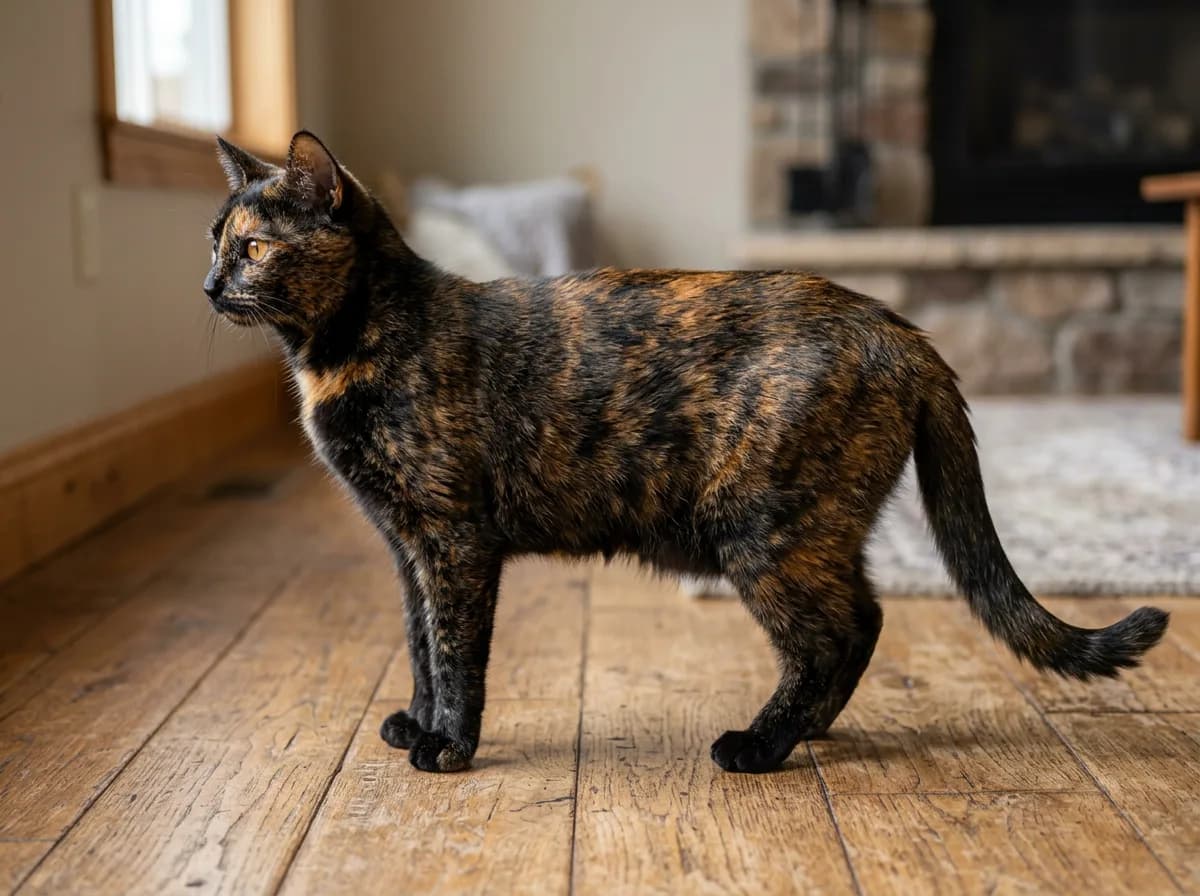
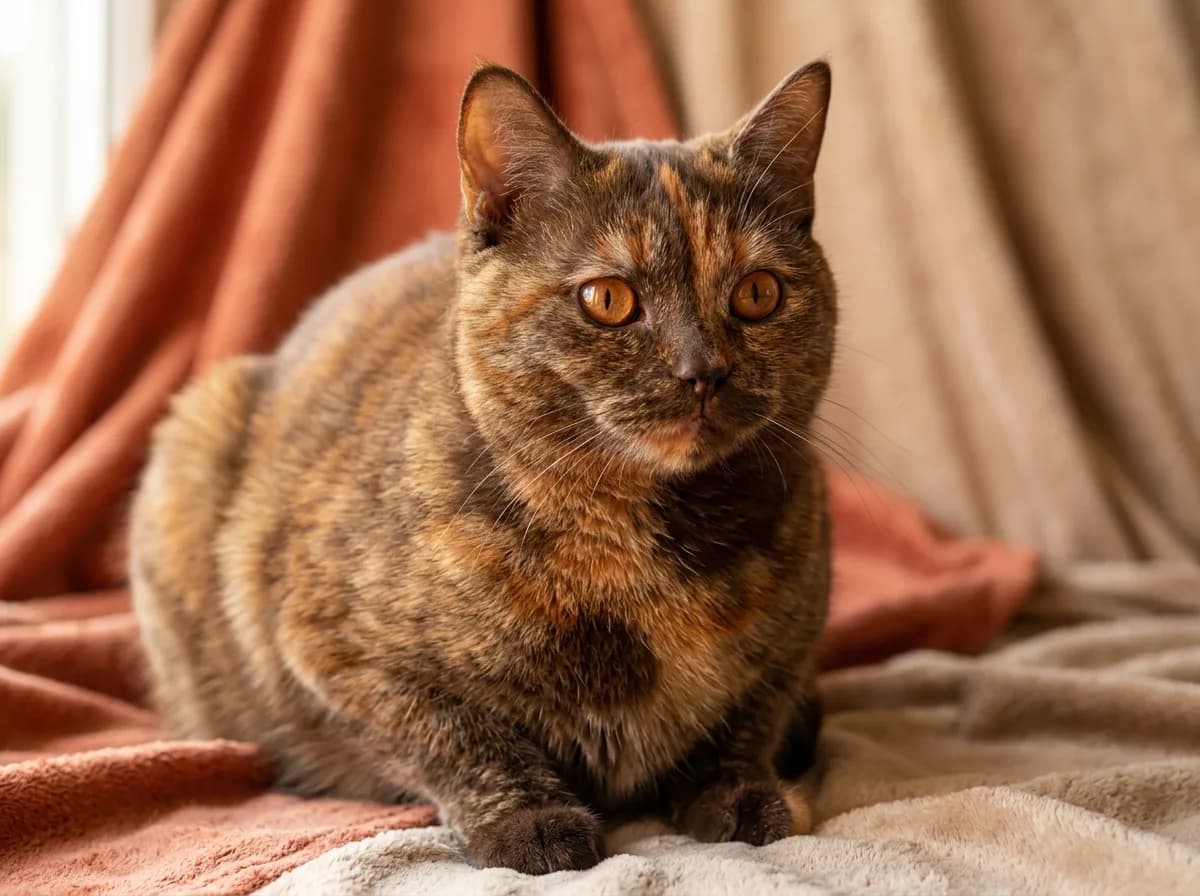
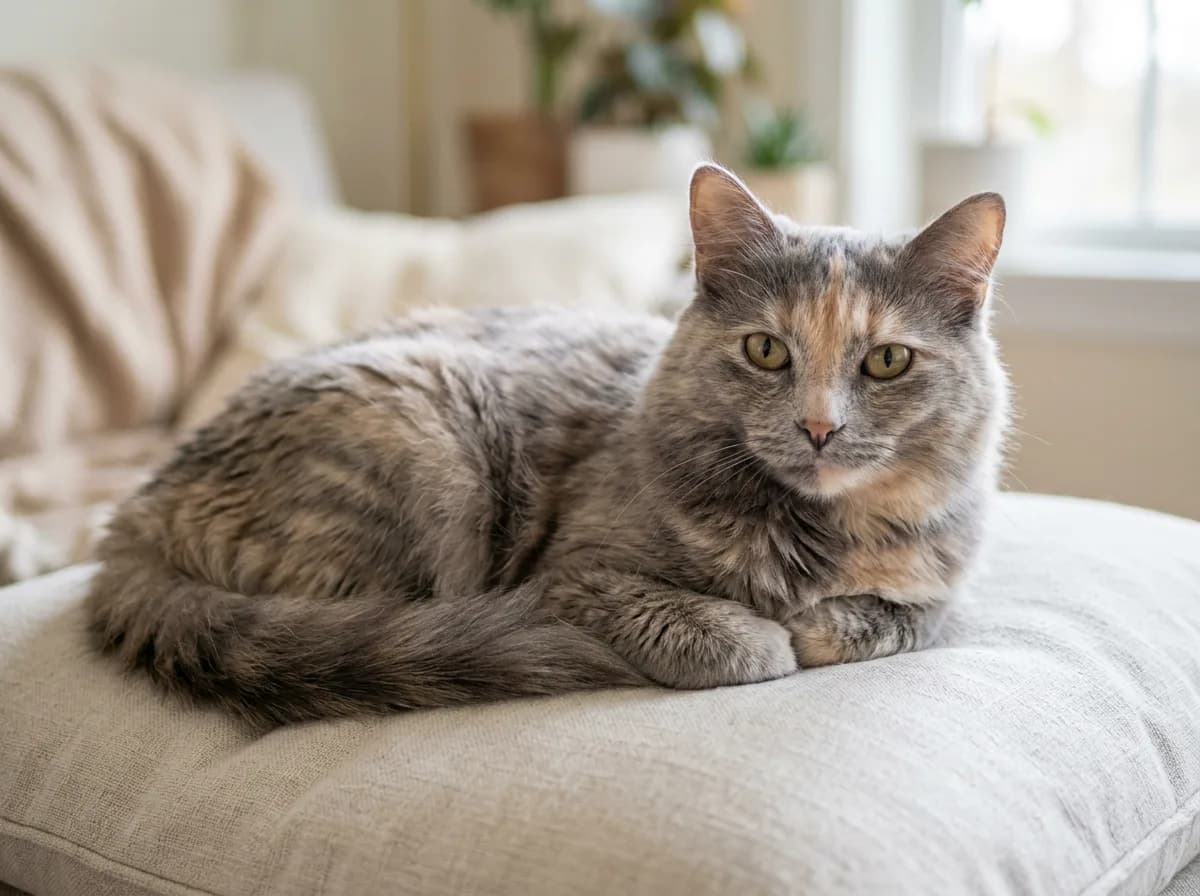
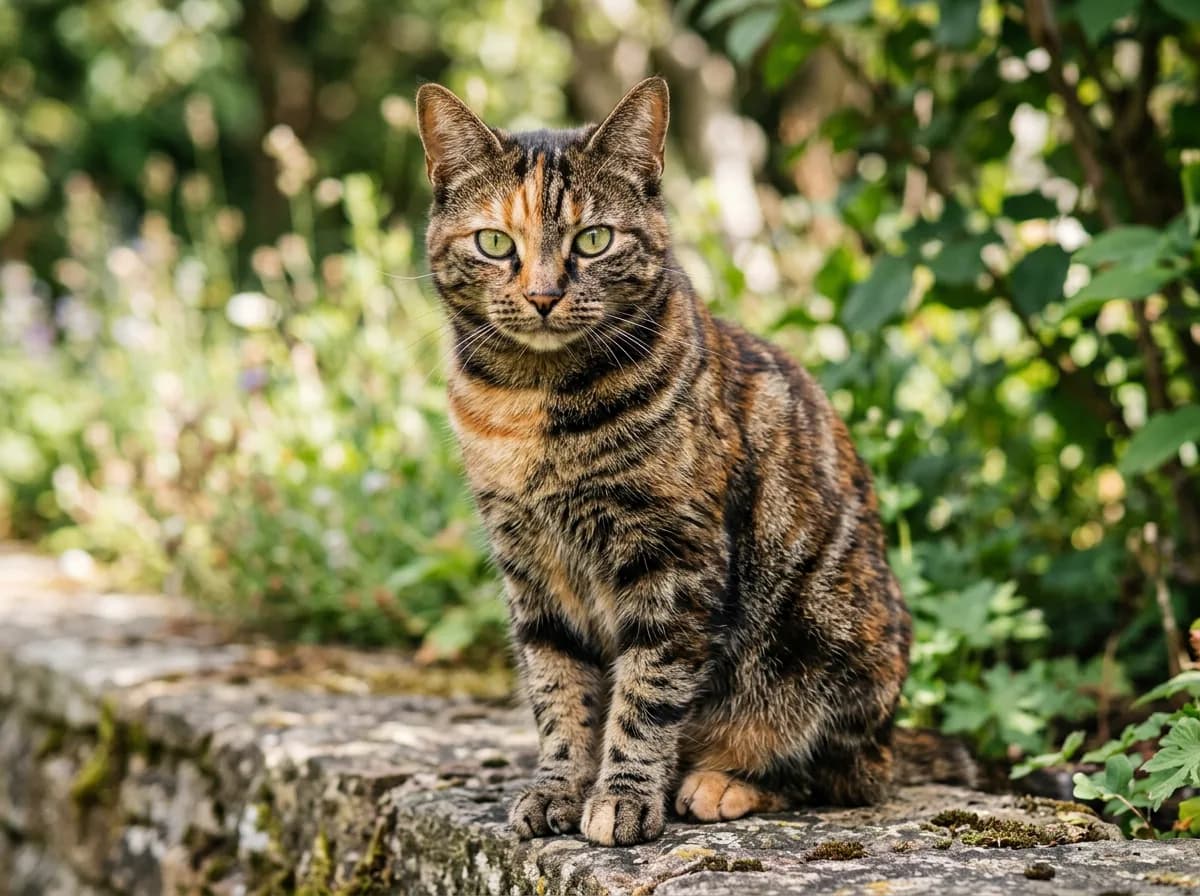
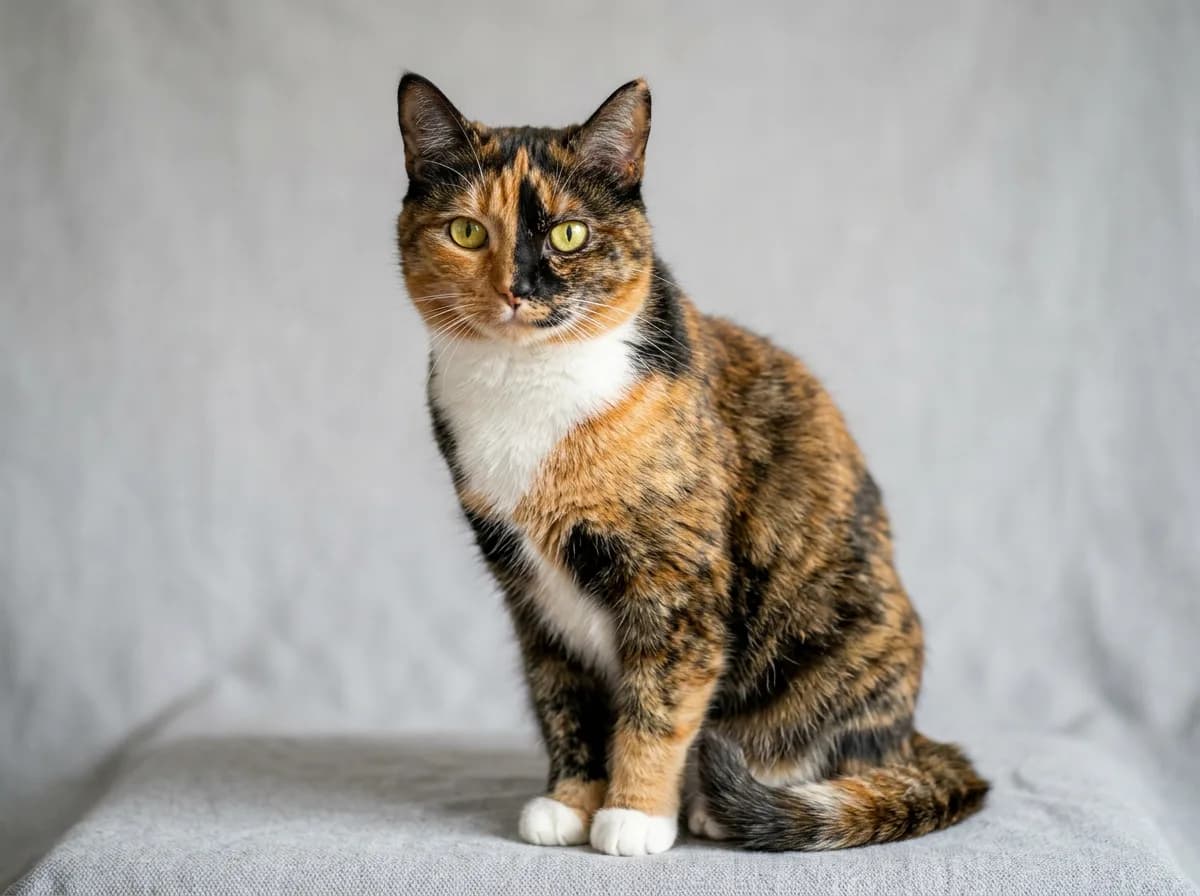
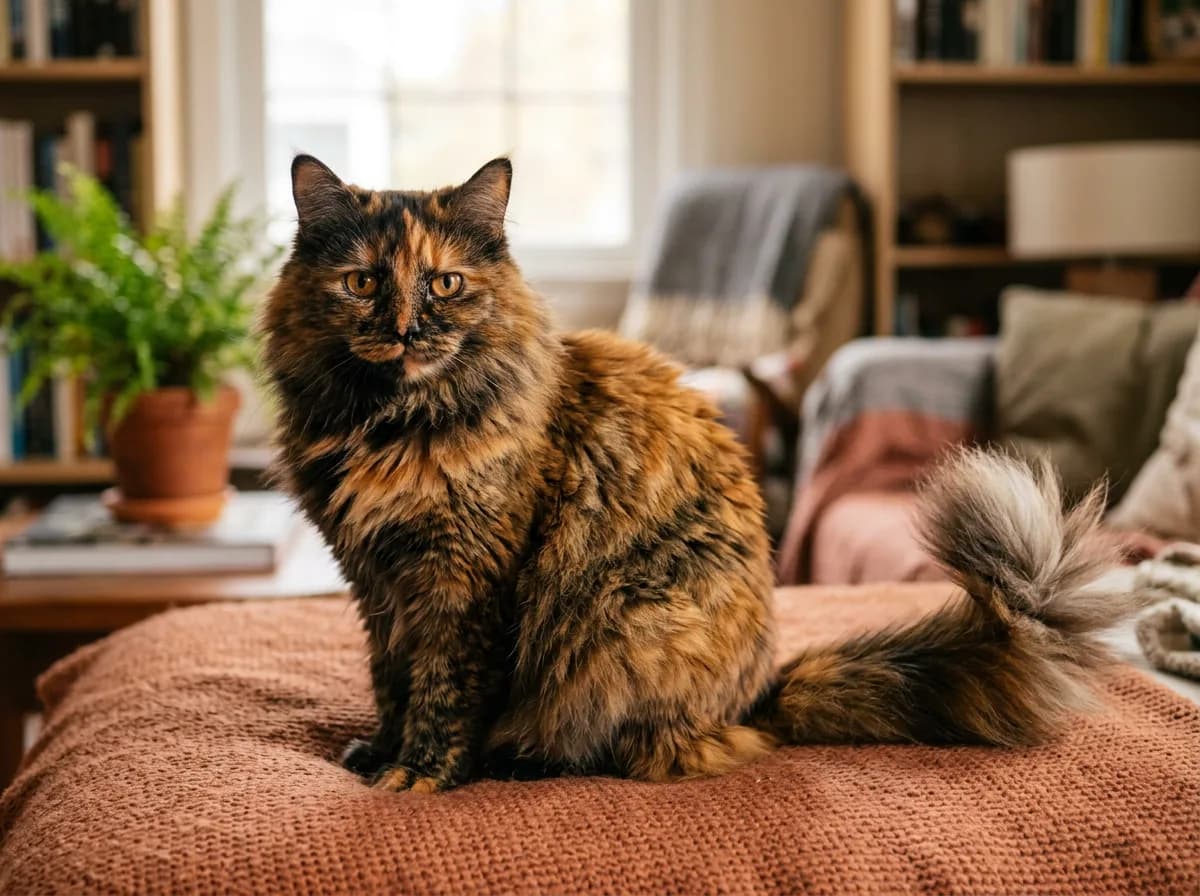
Torties are not a single look. The pattern expresses itself across a spectrum of shades, and the differences come down to which pigments are present, whether the dilution gene is active, and whether tabby striping shows through. Below is a labeled gallery of the major tortoiseshell variations you will encounter.
Classic (black-based) tortoiseshell. The most familiar tortie: deep black interwoven with rich orange or red, brindled together with little or no white. This is what most people picture when they hear "tortoiseshell cat."
Chocolate and cinnamon tortoiseshell. In breeds that carry the brown (chocolate) or cinnamon color genes, the dark portion of the coat is a warm brown rather than true black, paired with orange. These are common in breeds like the Persian and certain Oriental breeds.
Dilute tortoiseshell (blue-cream). When a cat inherits two copies of the recessive dilution gene, black softens to blue-gray and orange softens to cream. The result is a muted, pastel "blue-cream" brindle. Dilute torties have a hazier, smokier appearance than their high-contrast cousins.
Torbie (patched tabby). When the tortoiseshell pattern combines with tabby striping, you get a "torbie," also called a patched tabby. Look closely and you will see tabby stripes or swirls running through the orange and black sections. Torbie is a popular search in its own right (about 12,100 monthly searches), which tells you how often people notice the striping and wonder what they are looking at.
Tortie-and-white (tricolor). Add a moderate amount of white and you get a tortoiseshell-and-white, sometimes informally called a "tortico." It has more white than a classic tortie but less than a calico, and the orange and black still tend to blend rather than separate into the distinct blocks a calico shows.
Long-haired tortoiseshell. The pattern appears in long-haired cats too, including Maine Coons, Persians, and Norwegian Forest Cats. A long haired tortoiseshell cat (about 2,900 monthly searches) carries the same brindled color across a plush, flowing coat, which can make the swirling effect even more dramatic.

Never Scoop Again® with the Whisker Litter-Robot, the smart self-cleaning automatic litter box. Monitor visits and track weights for better overall care in the Whisker® app. Multi-cat friendly.
Petful may earn a commission when you click through to Whisker, at no extra cost to you.
| Variation | What you see | Cause |
|---|---|---|
| Classic tortie | Black and orange brindled, little/no white | Standard black + orange pigments |
| Chocolate tortie | Brown and orange brindled | Brown (chocolate) color gene |
| Dilute tortie | Blue-gray and cream, muted | Two copies of the dilution gene (d/d) |
| Torbie | Tortie color plus tabby stripes | Tortie pattern + tabby gene |
| Tortie-and-white | Tortie color with white chest/paws | Tortie + low-grade white spotting |
| Long-haired tortie | Brindled color on a long coat | Tortie pattern + long-hair gene |
The genetics behind the tortoiseshell coat
The tortoiseshell pattern is one of the most elegant illustrations of genetics in the animal world, and 2025 added a major new chapter to the story.
The sex-linked orange gene and X-inactivation
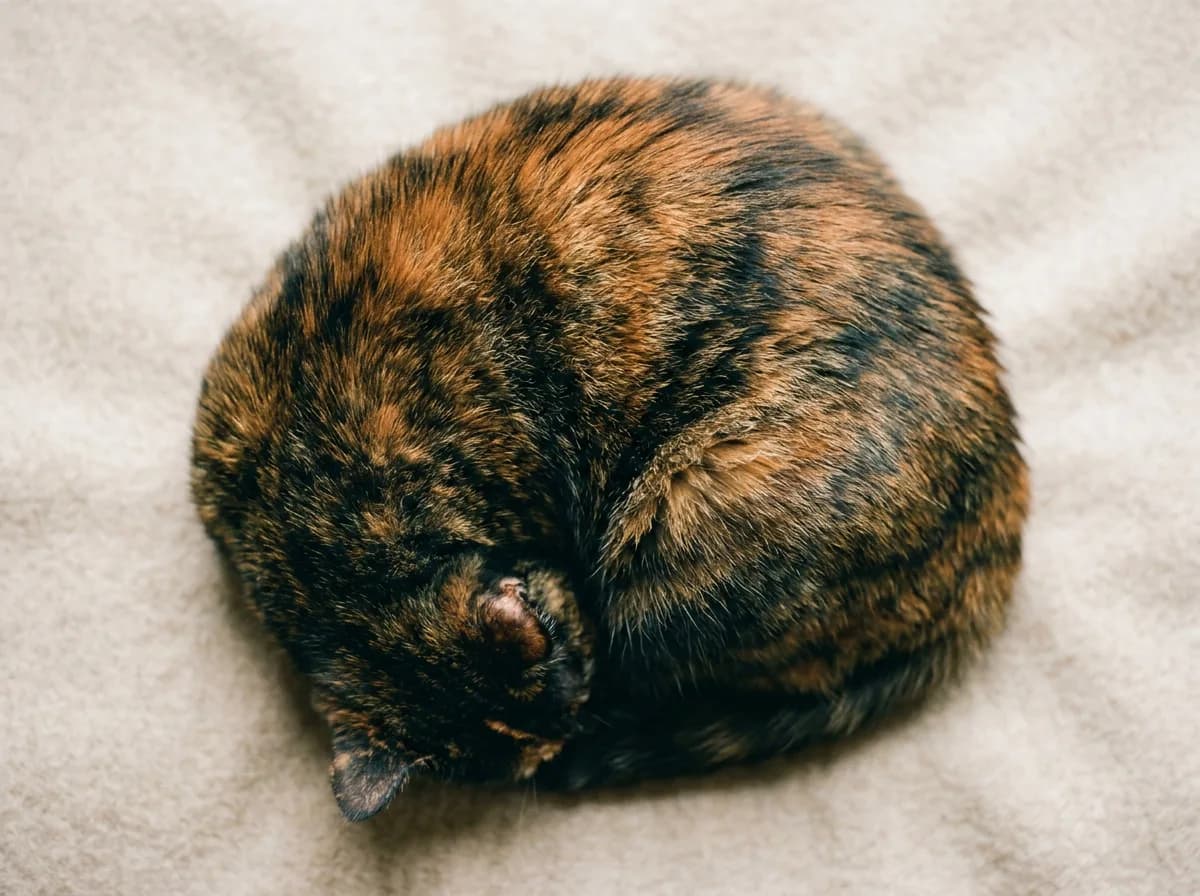
The gene that produces orange (red) fur sits on the X chromosome. The orange variant, traditionally written as O, produces phaeomelanin (the red/orange pigment) and masks black eumelanin wherever it is active. Female cats have two X chromosomes (XX); male cats have one X and one Y (XY).
Here is the crucial part. Early in development, every female cell randomly switches off one of its two X chromosomes. This is called X-chromosome inactivation, or lyonization, first described by the geneticist Mary Lyon in 1961. If a female cat inherits the orange variant on one X and the non-orange (black) variant on the other, then in some patches of skin the orange X stays active (those patches grow orange fur) and in other patches the black X stays active (those patches grow black fur). The result is the mosaic of orange and black we call tortoiseshell. Because the silencing happens at random, no two torties look exactly alike, and even cloned torties do not share an identical coat: the pattern is set by chance, not by a blueprint. Because a male cat has only one X, he is normally either all-orange or all-black, not both, which is why torties are overwhelmingly female.
The 2025 ARHGAP36 discovery
For more than a century, scientists knew the orange gene was on the X chromosome but could not say which gene it actually was. That changed in 2025. Two independent research teams, one led by Greg Barsh at HudsonAlpha and Stanford and one led by Hiroyuki Sasaki at Kyushu University, identified the long-sought orange gene as a regulatory deletion affecting ARHGAP36. Their work was published in Current Biology in May 2025.
The teams found that every orange cat they studied carried a roughly 5-kilobase deletion (about 5,076 nucleotides) within the ARHGAP36 gene on the X chromosome, and no non-orange cat had it. The deleted stretch contains a regulatory element, and removing it causes ARHGAP36 to be overexpressed in pigment cells. That overexpression shifts the cell's pigment production away from black-brown eumelanin and toward orange-red phaeomelanin. In other words, the deletion does not create a new orange pigment; it flips a switch that tells the pigment cell to make orange instead of black.
This is the single biggest piece of new information on the tortoiseshell story, and it is exactly the detail most pages still miss. It confirms at the molecular level what breeders and geneticists had inferred for decades from breeding records alone.
- If a tortie article you read stops at "X-chromosome inactivation" and never mentions ARHGAP36, it predates the May 2025 Current Biology discovery. The deletion at the ARHGAP36 locus is the actual molecular cause of orange coloration, identified in 2025.
Why tortoiseshell cats are almost always female (and why males are rare)
Because the orange gene is X-linked and a tortie needs both an orange X and a non-orange X to show the pattern, the math heavily favors females. A female (XX) can carry one of each variant; a normal male (XY) cannot. Roughly 99.9% of tortoiseshell and calico cats are female.
A male tortoiseshell cat does exist, but rarely. The most-cited figure, from the College of Veterinary Medicine at the University of Missouri, is that only about 1 in 3,000 tortoiseshell cats is male. There are three main ways it can happen:
- XXY (Klinefelter syndrome). The cat carries an extra X chromosome (XXY instead of XY), giving him two X's like a female and therefore the ability to show both colors. This is the most common cause, and these males are almost always sterile.
- Chimerism. Two early embryos fuse into one cat that carries two genetically distinct cell lines. A small number of fertile male torties are chimeras.
- Somatic mosaicism. A genetic change occurs in some cells during early development, producing patches of different color.
- A male tortie is a genetic curiosity, not a premium product, and he has no breeding value because he is almost always sterile. Do not believe claims that male torties are "worth thousands," and do not assume every male tortie is infertile: rare fertile cases (usually chimeras or mosaics) do exist. XXY males can also face extra health challenges.
Searches like male tortoiseshell cat (about 2,400 a month) and "tortoiseshell cat for sale" show how much curiosity surrounds the rare males, but the honest answer is that finding a male tortie is luck, not a purchase you can plan around.
Tortoiseshell vs calico: the quick difference
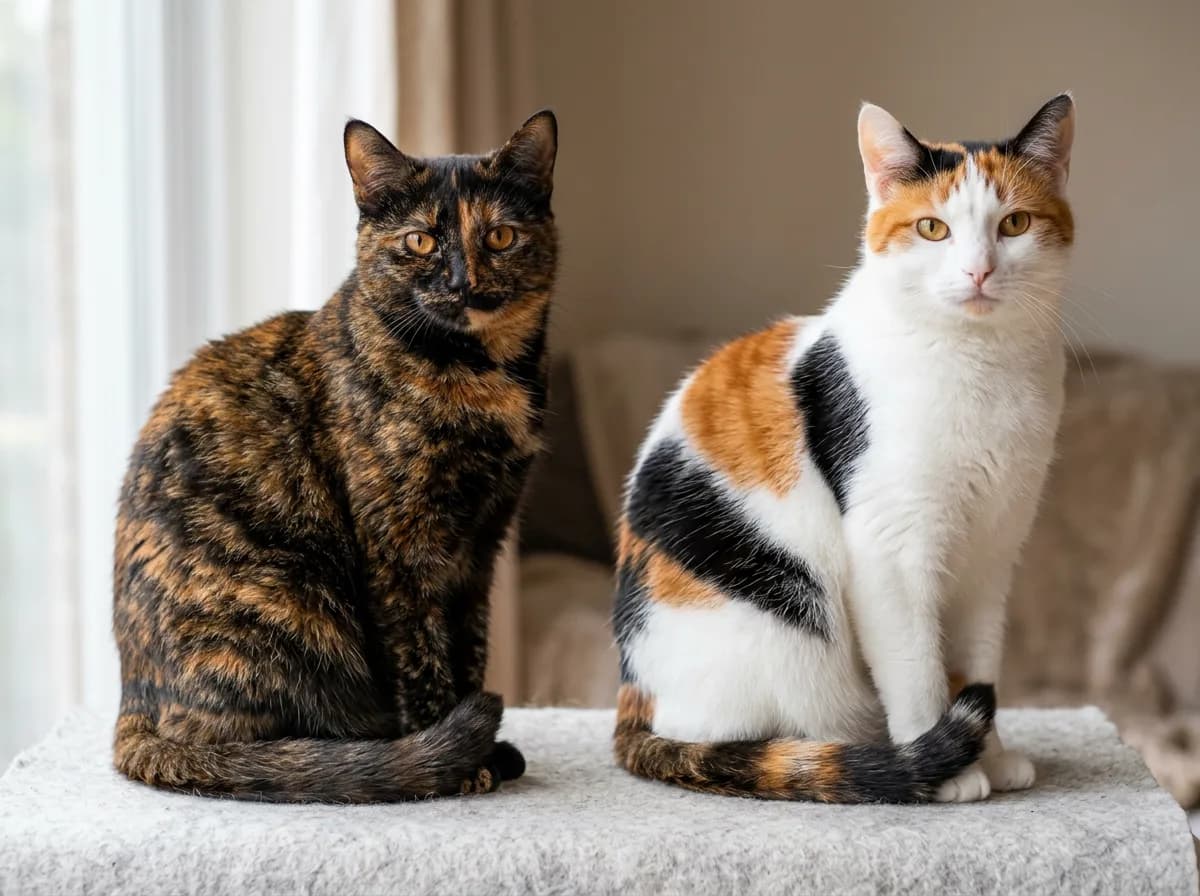
Tortoiseshell and calico cats share the same genetic foundation (the sex-linked orange gene plus X-inactivation), but they look different because of one extra factor: the white-spotting gene.
- A tortoiseshell has its orange and black brindled and interwoven, with little or no white. A small white chest locket or a few white toes is still a tortie.
- A calico is predominantly white with distinct, separate patches of orange and black. The white-spotting gene (a KIT-related piebald gene) pushes the colors apart into clean blocks.
A simple way to remember it: a tortie's colors blend, a calico's colors separate. Add tabby striping to a calico and you get a "caliby" or "tabico." For a full side-by-side breakdown of the two patterns, including the dilute versions and the genetics in detail, see our dedicated comparison guide. The short version is that they are cousins created by the same orange-gene mosaic, separated only by how much white the cat carries.
Tortie cat breeds: which breeds come in tortoiseshell
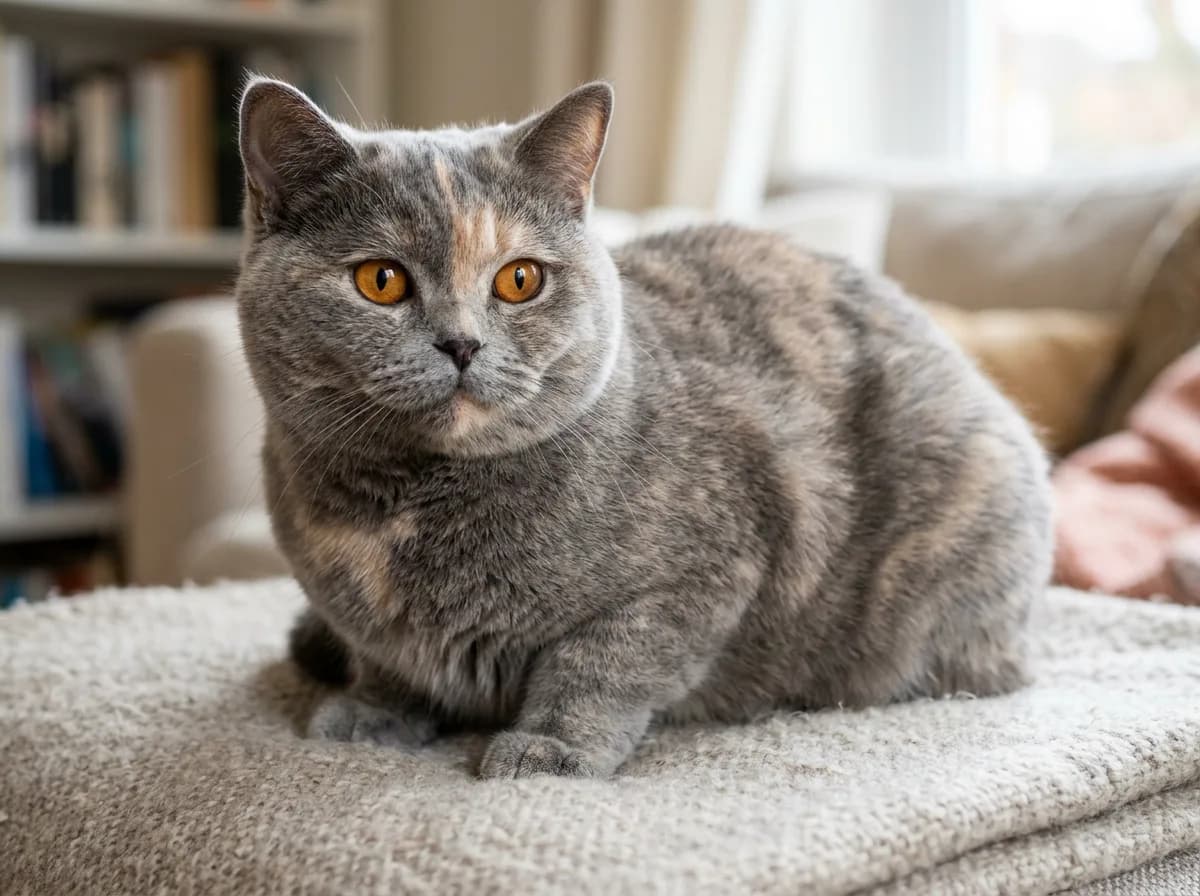
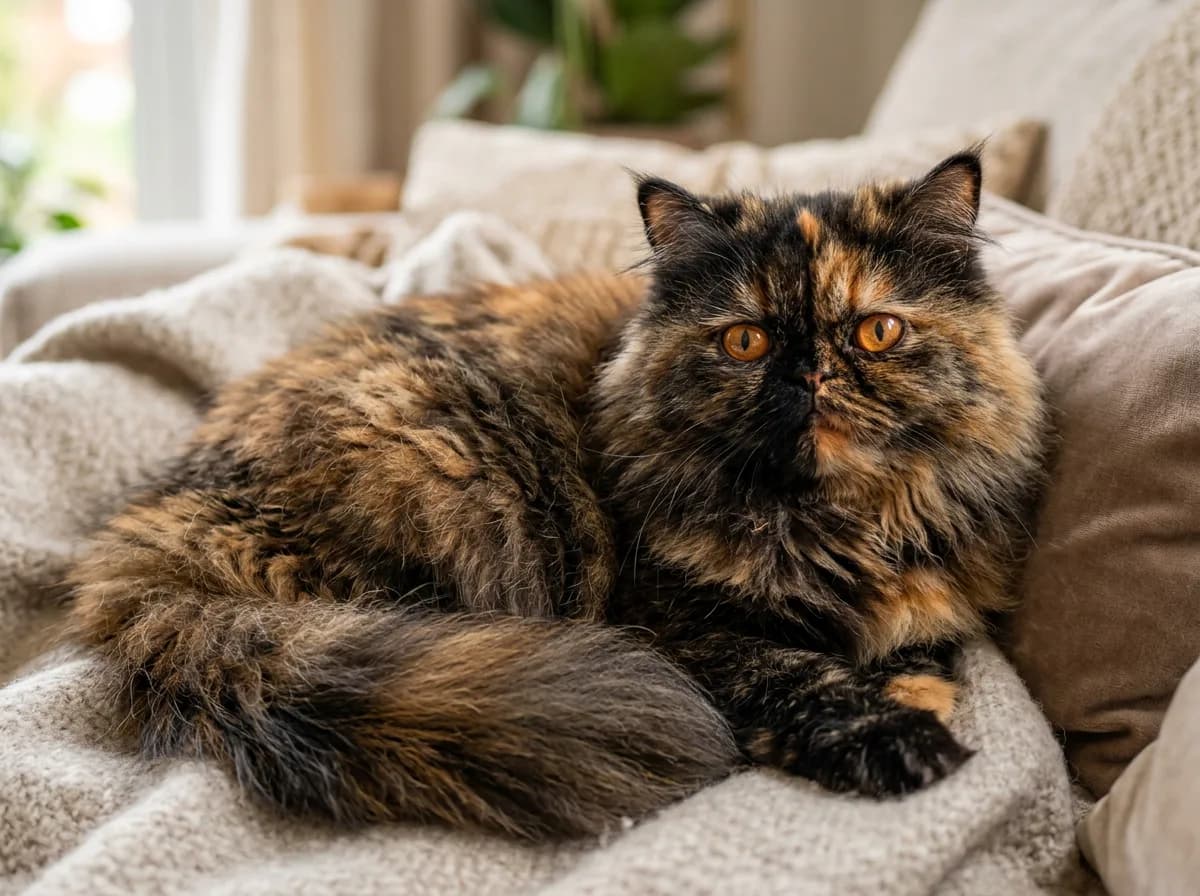
Because tortoiseshell is a pattern and not a breed, it can appear in any breed that carries both the orange and non-orange color genes. A tortoiseshell cat breed, then, is really any recognized breed that happens to produce the pattern. The pattern is especially common in:
- American Shorthair and British Shorthair (the British Shorthair's plush blue-based coats produce striking dilute torties)
- Persian and Exotic Shorthair (long and short-haired tortie Persians are a registry staple)
- Maine Coon and Norwegian Forest Cat (large long-haired torties, covered in detail below)
- Japanese Bobtail (the breed most associated with the tricolor "mi-ke" and the lucky beckoning cat)
- Cornish Rex and Devon Rex (curly-coated torties)
- Manx and random-bred domestic shorthairs and longhairs (the majority of pet torties)
If you are drawn to a specific body type or temperament, you choose the breed first and the pattern second. A plush, easygoing tortie might be a British Shorthair; a flat-faced, glamorous tortie might be a Persian; a large, sociable tortie might be a Maine Coon. The long-haired tortie look is delivered by breeds carrying the long-hair gene, so a long haired tortoiseshell cat is usually a Maine Coon, Persian, or Norwegian Forest Cat rather than a breed of its own.
Persians and their color divisions are a good example of how registries handle tortie coloring: the pattern is recognized as one of many color options within the breed, not as a separate breed. You can read more about the breed in our Persian cat breed profile and about how registries sort the colors in our Persian cat colors guide. The plush blue-based British Shorthair is another breed where dilute (blue-cream) torties are especially eye-catching.

63-inch multi-level cat tree with scratch posts, hammock, plush perches, and dangling toys. Vertical territory is non-negotiable for high-energy climbing breeds like the Bengal.
Petful may earn a commission when you click through to Chewy, at no extra cost to you.
Maine Coon tortoiseshell cats
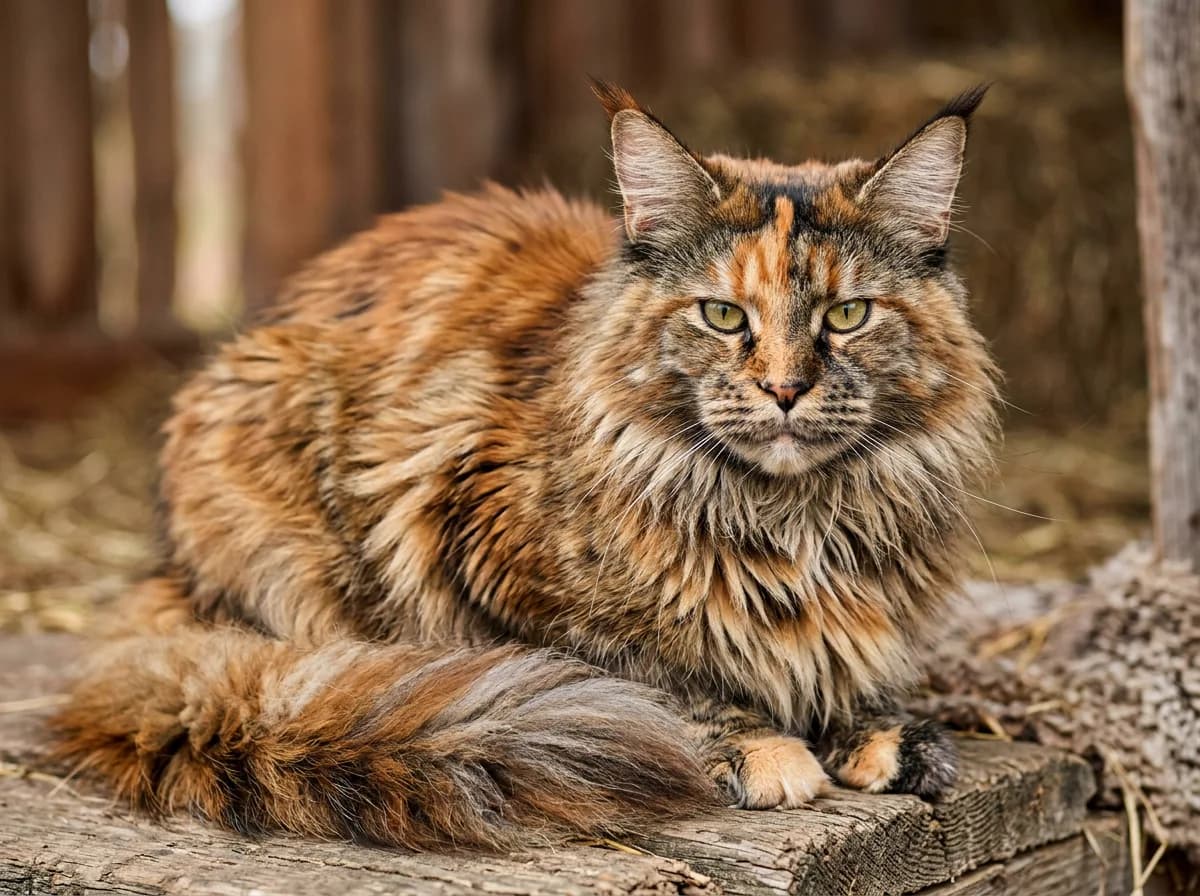
The Maine Coon deserves its own section, because "tortie Maine Coon" draws roughly 6,600 searches a month and yet most tortie articles skip it entirely. A Maine Coon tortoiseshell cat is simply a Maine Coon (one of the largest domestic breeds) wearing the tortoiseshell pattern.
Appearance and size
On a Maine Coon, the tortoiseshell pattern stretches across a big, rectangular body with a long, shaggy double coat, tufted ears, a ruff around the neck, and a long bushy tail. The brindled orange and black (or, in dilutes, cream and blue-gray) flows through that abundant fur, often making the mosaic look even more dramatic than on a short-haired cat. Many tortie Maine Coons also carry tabby striping, making them torbie Maine Coons, with classic Maine Coon "M" markings on the forehead and ringed tails showing through the color.
Adult Maine Coons are large: males commonly reach 13-18 pounds and females 8-12 pounds, with a slow maturity that can take 3-4 years to reach full size. The tortie pattern does not change any of that; it only changes the colors painted across the breed's signature frame.
Where the tortie Maine Coon demand goes
Because the pattern is just a color option in the breed, a tortie Maine Coon is priced and cared for exactly like any other Maine Coon. If you want one, you are shopping for a Maine Coon from a reputable breeder and hoping for (or selecting) the tortie coloring, not seeking out a separate "tortie Maine Coon breed." To go deeper on the breed itself, see our Maine Coon breed profile, our Maine Coon colors guide, and the parallel color pages on the black Maine Coon and orange Maine Coon, since black and orange are the two pigments a tortie blends together.
- A tortie or torbie Maine Coon costs the same as any other Maine Coon from the same breeder. The pattern adds no premium and no discount. Choose your breeder for health testing and temperament, and treat the coat color as a bonus, not a price negotiation.
Tortoiseshell cat personality: is tortitude real?
If you spend time around tortie owners, you will hear about "tortitude," the idea that tortoiseshell cats are feistier, more strong-willed, and more opinionated than other cats. It is one of the most beloved bits of cat lore, and it is also not scientifically established.
The closest thing to evidence is a 2016 survey from the University of California, Davis (Stelow, Bain, and Kass, published in the Journal of Applied Animal Welfare Science). Analyzing 1,274 owner responses, the researchers found that owners reported slightly higher aggression toward humans in sex-linked orange females (tortoiseshells, calicos, and torbies), along with gray-and-white and black-and-white cats, particularly during handling and vet visits. The key words are "owner reported" and "slightly." It is a modest, perceived effect, not a personality type, and individual variation dominates.
In practice, a tortie's temperament tracks her breed, her individual nature, and how she was socialized far more than her coat color. A well-socialized tortie can be a lap cat; a poorly socialized cat of any color can be prickly. For a deeper look at the tortitude question, the survey, and what behaviorists actually say, see our tortoiseshell cat personality guide.
- Adopting or rehoming a cat based on a "tortitude" stereotype is a mistake in both directions: you might pass over a sweet tortie, or you might be surprised when one is mellow. Judge the individual cat in front of you, not the pattern.
Tortoiseshell cat lifespan, health, and care
The tortoiseshell pattern itself does not affect health or lifespan. A tortie is exactly as healthy as any other cat of her breed, so her care needs come from her breed and her individual health, not her coat color.
Lifespan
A healthy indoor tortie typically lives 12-16 years, and some reach 20. Tortoiseshell cat lifespan (about 880 monthly searches) is one of the questions Google itself surfaces, and the honest answer is that there is no pattern-specific number: a tortie lives as long as any well-cared-for cat of her type. Indoor living, a good diet, regular veterinary care, and dental hygiene are the levers that actually move lifespan.
Health
There is no tortie-specific disease. The one health caveat is the rare male tortie: an XXY (Klinefelter) male can face additional health issues tied to the chromosomal difference, on top of being sterile. For the overwhelming majority of torties (the females), health risks are simply the risks of their breed, such as the heart and joint conditions screened for in Maine Coons or the kidney and breathing concerns in flat-faced Persians.
Care
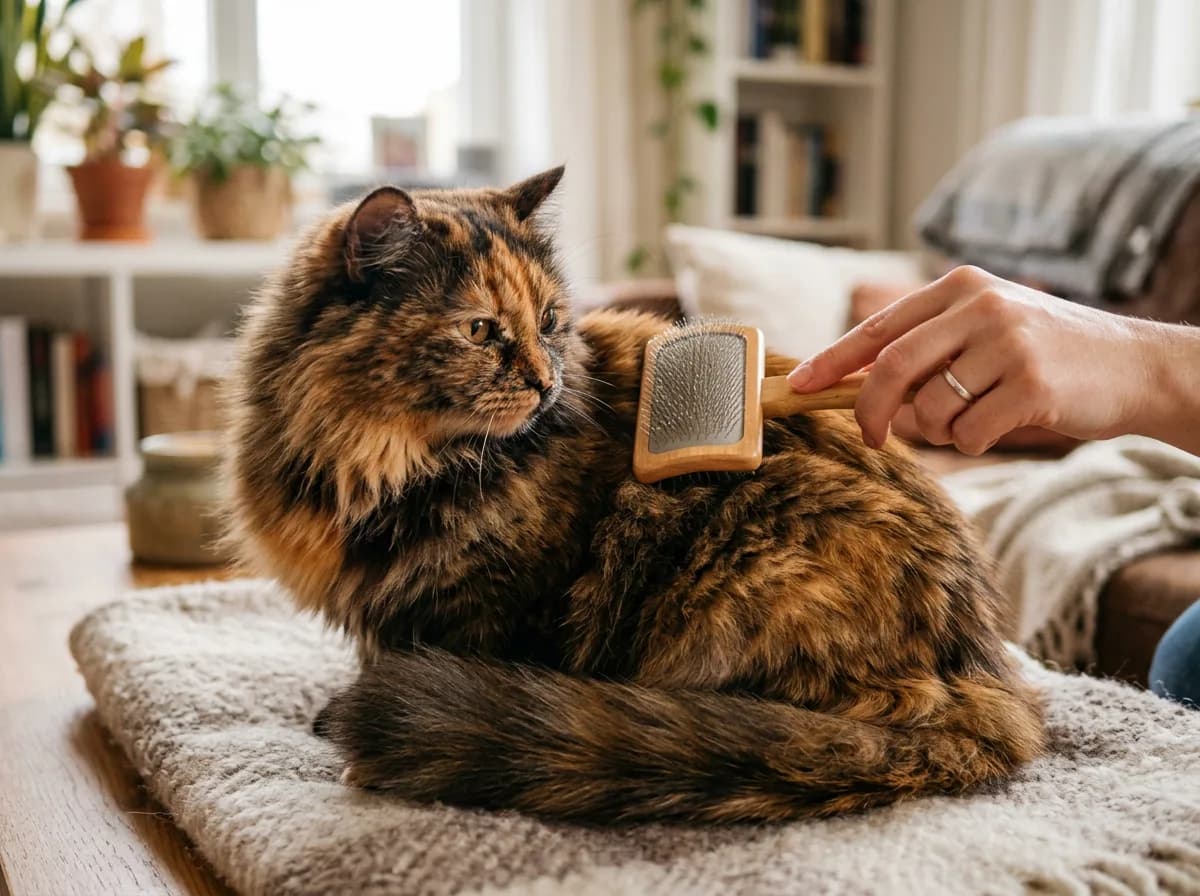
Care follows the coat length and the breed:

108-oz stainless steel pet fountain with quiet pump and water-level window. Bengals are notoriously water-obsessed; a flowing fountain encourages hydration and pulls them away from sinks and toilets.
Petful may earn a commission when you click through to Chewy, at no extra cost to you.
- Grooming. A short-haired tortie needs only weekly brushing. A long haired tortoiseshell cat (Maine Coon, Persian, Norwegian Forest Cat) needs frequent brushing, often several times a week, to prevent mats and reduce hairballs.
- Diet. Feed a complete, life-stage-appropriate cat food and keep an eye on weight, since obesity shortens lifespan in cats of every color.
- Veterinary care. Annual wellness exams, core vaccines, parasite prevention, and dental care. Spaying or neutering is recommended for all pet cats.
The care takeaway is simple: care for a tortie exactly as you would care for any cat of her breed and coat length, because the pattern changes nothing medically. Match grooming to coat length, keep her at a healthy weight, and keep up with annual vet visits and dental care.
For a sense of how breed shapes care and longevity, our breed profiles for the Maine Coon and Persian lay out the grooming and health considerations that matter most for long-haired torties.
Are tortoiseshell cats rare, and how much do they cost?
People often ask "are tortoiseshell cats rare" (about 1,000 monthly searches), and the answer depends on what you mean.
- Female torties are common. The tortoiseshell pattern is widespread in the general cat population. Walk through any shelter and you will likely meet several.
- Male torties are genuinely rare. At roughly 1 in 3,000, a male tortie is the true rarity, for the genetic reasons covered above.
- Specific shades can be uncommon. A crisp dilute tortie, a chocolate tortie, or a particular long-haired tortie in a specific breed may be harder to find, but that is about breed and color genetics, not the tortie pattern itself.
On price, there is no "tortoiseshell premium." The pattern adds nothing to the cost. What you pay depends entirely on where the cat comes from and its breed:
- Shelter or rescue adoption: typically about $50-200, often including vaccines and spay/neuter.
- Purebred kittens that happen to be tortie: roughly $800-2,500 for most pedigreed breeds, set by the breed's normal pricing (a tortie Maine Coon costs what a Maine Coon costs, a tortie Persian costs what a Persian costs).
Folklore, superstitions, and the spiritual meaning of tortoiseshell cats
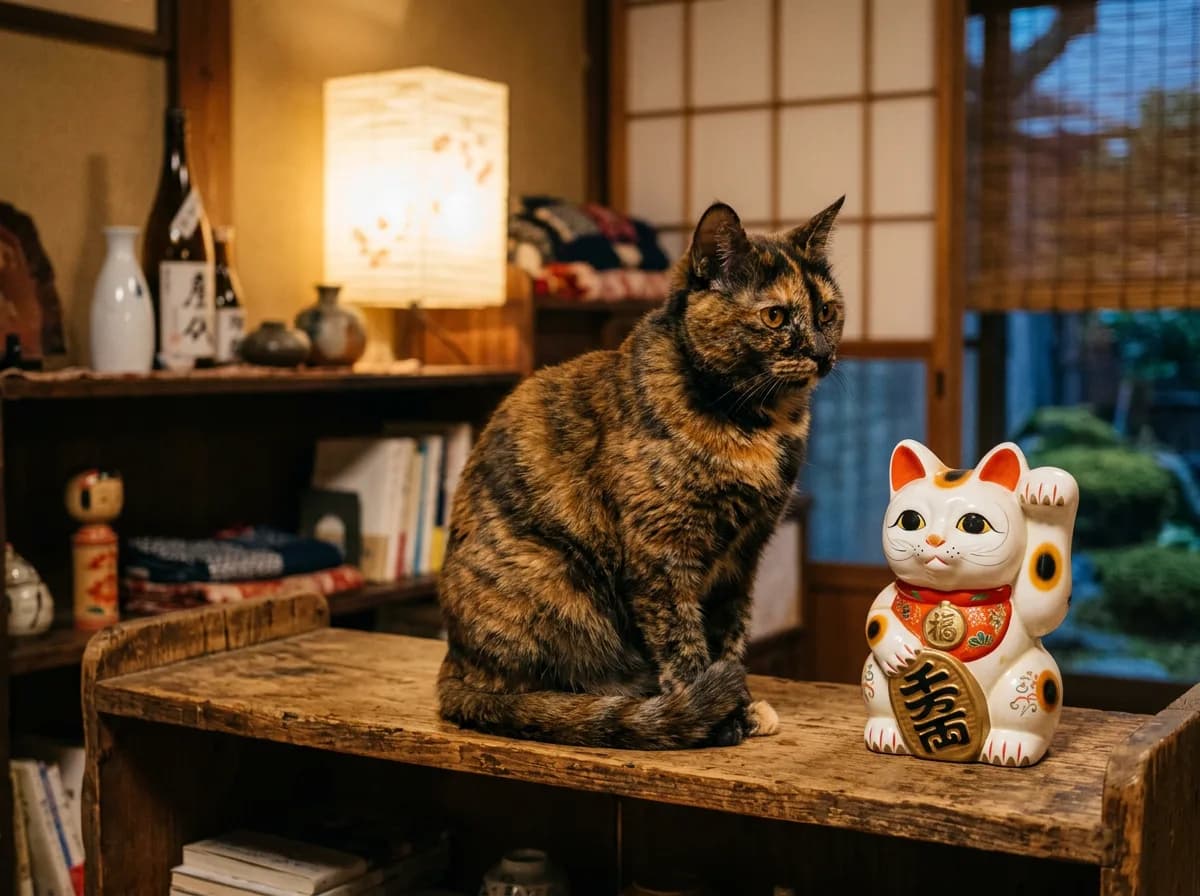
Few cats carry as much lore as the tortie. Across cultures, the spiritual meaning of a tortoiseshell cat skews lucky and protective.
- Money cats. In parts of the United States and the United Kingdom, torties and calicos are nicknamed "money cats," believed to bring prosperity and good fortune to the household.
- Ship's cats and safe returns. Sailors historically prized tortoiseshell and tricolor cats, believing they protected the ship and helped the crew return home safely from sea.
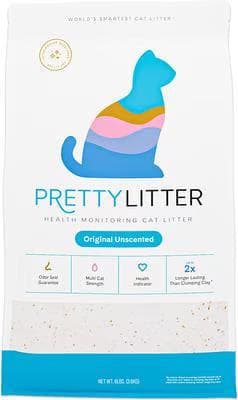
Color-changing crystal litter that flags pH shifts in your cat's urine, an early warning sign of UTIs, kidney issues, and more.
Petful may earn a commission when you click through to Chewy, at no extra cost to you.
- Celtic and folk traditions. Various folk traditions associate tortoiseshell cats with good luck and even with the ability to ward off bad fortune.
- Japan's lucky cat. In Japanese culture, the tricolor cat is the "mi-ke" (literally "three fur"), considered especially auspicious. The mi-ke is the model for the maneki-neko, the beckoning "lucky cat" figurine seen in shops and homes, traditionally depicted as a calico Japanese Bobtail with one paw raised to invite good fortune.
A word of caution on all of this: folklore is cultural storytelling, not science. There is no evidence a tortie's coat carries luck or spiritual power. The lore is a charming part of the pattern's history and a fun reason these cats are beloved, but it should not drive a real decision about adopting or caring for a cat.
Tortoiseshell cat names
Tortie owners love a name that nods to the coat's fiery, two-toned look, which is why tortoiseshell cat names (about 2,400 monthly searches) is its own popular search. A few crowd-pleasers:
- For the orange-and-black blend: Pumpkin, Marble, Spice, Ginger, Amber, Brindle, Patches.
- For the dilute (blue-cream) torties: Misty, Pearl, Hazel, Smokey, Dove.
- Spitfire and feisty names that lean into tortitude: Saffron, Pepper, Phoenix, Tigerlily, Calypso.
This is just a sampler. For a much longer, sorted list (female, unisex, dilute-specific, and more), a dedicated names resource is the better tool, since naming is its own deep topic.
More on torties
This pillar is the overview. If you want to go deeper on a specific corner of the tortie world, these companion topics drill down:
- Dilute tortoiseshell cats: the soft blue-cream version, its genetics, and how to tell a dilute from a faded classic tortie.
- Tortoiseshell kittens: what to expect as a tortie kitten grows, including how eye color shifts from blue to its adult color around 6-7 weeks and how the coat shade can change as the adult coat comes in (the underlying pattern is fixed in the womb).
- Tortoiseshell cat personality and tortitude: the full look at the UC Davis survey and what behaviorists say.
- Tortoiseshell Persian cats: the long-haired, flat-faced tortie and how Persian registries handle the coloring.
Frequently asked questions
A tortoiseshell cat is special because its mottled orange-and-black coat is created by a rare genetic process (X-chromosome inactivation of the sex-linked orange gene), which makes nearly every tortie female and gives each one a one-of-a-kind pattern that no two cats share. The pattern also carries centuries of good-luck folklore.
The orange gene sits on the X chromosome. A cat needs both an orange X and a non-orange X to show both colors, which normally only happens in females (XX). Males (XY) have a single X, so they are usually all-orange or all-black. About 99.9% of torties are female.
Tortoiseshell cats can be very friendly. There is no scientific proof that the pattern creates a specific temperament. A 2016 UC Davis owner survey reported slightly higher perceived aggression in sex-linked orange females, but the effect was modest and owner-reported. Breed, individual personality, and socialization matter far more than coat color.
In folklore, tortoiseshell cats are widely seen as lucky and protective. They are nicknamed "money cats" in some Western traditions, were prized by sailors to bring ships home safely, and in Japan the tricolor "mi-ke" is the auspicious model for the maneki-neko lucky cat. These meanings are cultural, not scientific.
Yes, very. Only about 1 in 3,000 tortoiseshell cats is male, per a University of Missouri figure. Males usually have an extra X chromosome (XXY, Klinefelter syndrome) and are almost always sterile. A few fertile males exist, typically as chimeras.
The pattern adds no premium. Shelter or rescue adoption typically runs about $50-200, often including vaccines and spay/neuter. A purebred kitten that happens to be tortie costs whatever its breed normally costs, roughly $800-2,500 for most pedigreed breeds.
Female torties are common; the pattern is widespread in the cat population. Male torties are genuinely rare at about 1 in 3,000. Specific shades, like a chocolate or dilute long-haired tortie in a particular breed, can be harder to find, but that is about breed and color genetics, not the tortie pattern itself.
The pattern does not affect lifespan. A healthy indoor tortie typically lives 12-16 years, and some reach 20. Lifespan tracks the cat's breed, diet, weight, indoor living, and veterinary and dental care, not coat color.
No. Tortoiseshell is a coat pattern, not a breed. It appears across many breeds (Persian, Maine Coon, British Shorthair, American Shorthair, Japanese Bobtail, and more) and in countless random-bred cats. A tortie's breed comes from its parents, not its pattern.
Both share the same orange-gene mosaic. A tortoiseshell has its orange and black brindled and blended together with little or no white. A calico is mostly white with distinct, separate patches of orange and black, because it also carries the white-spotting gene that pushes the colors apart.
A dilute tortoiseshell carries two copies of the recessive dilution gene, which softens black to blue-gray and orange to cream. The result is a muted, pastel "blue-cream" version of the classic tortie, with the same brindled blending in softer tones.
A torbie, also called a patched tabby, is a tortoiseshell with tabby striping showing through the orange and black sections. Look for stripes or swirls and an "M" on the forehead woven into the tortie color.
There is no tortie-specific disease, because the pattern does not affect health. The only exception is the rare XXY male tortie, who can face extra health issues tied to the chromosomal difference. Otherwise a tortie's health risks are simply those of her breed.
Yes. Tortoiseshell is a recognized color option within the Maine Coon breed. A tortie Maine Coon is a full-size, long-haired Maine Coon wearing the brindled orange-and-black (or dilute blue-cream) pattern, often with tabby striping that makes it a torbie Maine Coon.

Coreen Saito is a pet writer and longtime shelter volunteer with more than a decade in animal rescue. She covers cat behavior, breed care, and the small, ordinary science of sharing a life with companion animals, with a particular focus on honest takes about the products and decisions that actually matter. At home in Arizona, she's outranked by Mac (a dog with the loudest opinion in the house), Rebel (a cat who governs by quiet authority), and Meri (an orange tabby who runs the late shift and the laundry basket). She writes about all three, plus the rescues that keep coming through her life, at LifeWithMinty.com.
Sign up for expert-backed reviews and safety alerts all in one place.