Tortoiseshell Persian Cat: Colors, Price and Care Guide
A tortoiseshell Persian cat is a purebred Persian in the tortie coat pattern, not a separate breed. See the CFA-recognized colors, why nearly all are female, grooming needs, realistic price, and the health facts every owner should know.
Petful is reader supported. As an affiliate of platforms like Amazon and Chewy, we may earn a commission when you buy through links on this page. There is no extra cost to you.
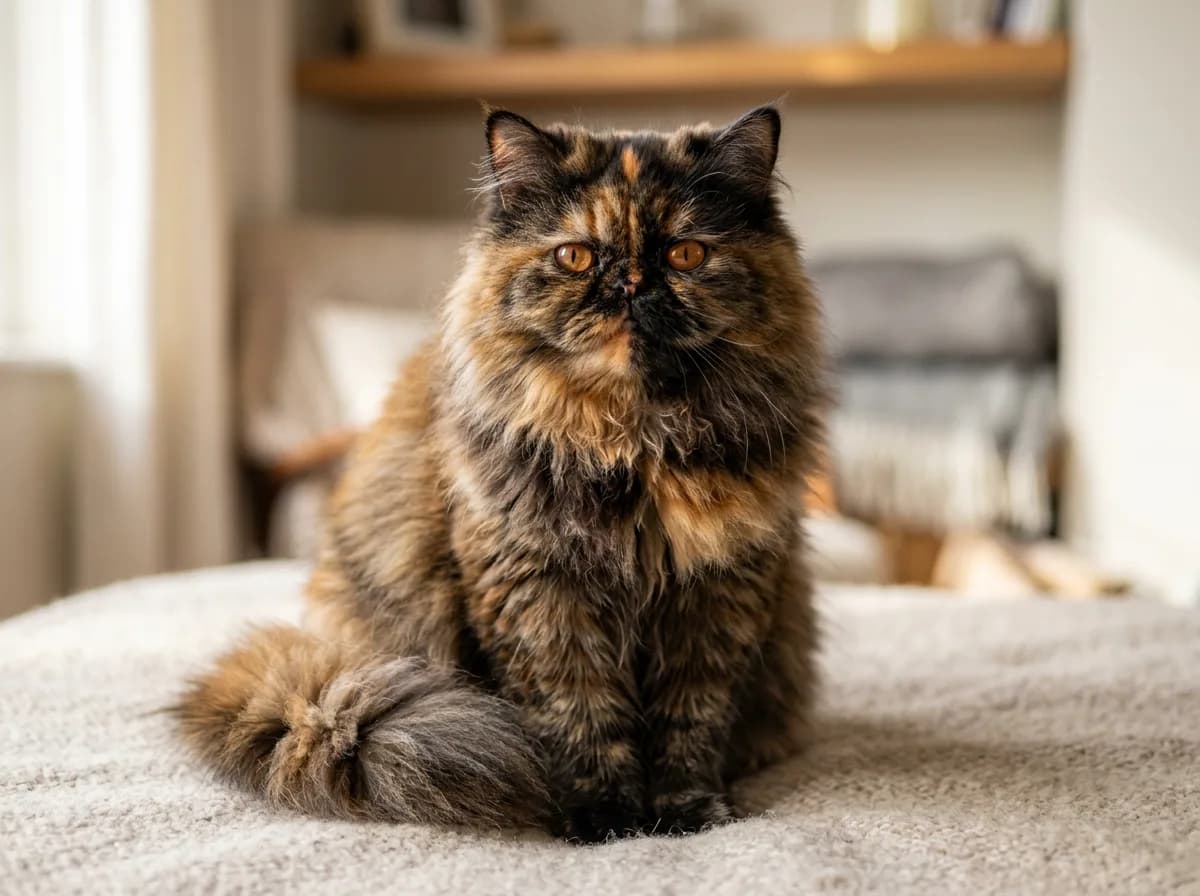
The Cat Fanciers' Association files the tortoiseshell Persian cat in its Parti-Color division alongside three siblings (blue-cream, chocolate tortoiseshell, and lilac-cream), which means a tortie is not a separate breed but a recognized color of the long-haired Persian. A tortoiseshell Persian is simply a purebred Persian wearing the brindled orange-and-black coat, and because that coat is built on the X chromosome, roughly 99.9% of them are female. This guide covers the full range of tortie Persian colors, why almost all of them are girls, what the CFA show standard actually says, how to groom that demanding double coat, what a kitten realistically costs, and the health facts every owner needs before falling for those big copper eyes.
- 1A tortoiseshell Persian is a purebred Persian with the tortie coat pattern, not a distinct breed.
- 2The CFA recognizes it in the Parti-Color division: tortoiseshell, blue-cream, chocolate tortoiseshell, and lilac-cream.
- 3Roughly 99.9% of tortie Persians are female because the orange gene is X-linked.
- 4Expect a purebred Persian to run about $800-2,500; the tortoiseshell pattern adds no premium.
- 5The work is the coat, not the color: daily brushing, face cleaning, and PKD and brachycephalic care come with every Persian.

Sign up for expert-backed reviews and safety alerts all in one place.
What Is a Tortoiseshell Persian Cat?
A tortoiseshell Persian cat is a Persian whose coat carries the tortoiseshell pattern: a mottled, brindled mix of black (or its dilute and chocolate variants) and red or cream, woven together rather than laid out in neat blocks. So yes, Persian cats absolutely can be tortoiseshells. The tortie look is one of the oldest documented colors in the breed, and it sits within an official show division rather than being some happy accident.
The key thing to understand is that "tortoiseshell" describes the coat, not the cat. Tortoiseshell and calico are coat patterns, not breeds, in exactly the same way that "blonde" is not a separate kind of human. Tabby, for the record, is the ancestral wild-type pattern that all domestic cats descend from, also not a breed. A tortie can be a random-bred shelter cat, a Maine Coon, a British Shorthair, or, as here, a Persian. What makes this cat a Persian is its lineage and its breed-defining traits: the round head, the short muzzle, the cobby body, and above all that flowing double coat. The tortoiseshell part just tells you which colors got dealt into the mix.
- "Tortoiseshell Persian" is shorthand for "a Persian that happens to be tortie." You will never find tortoiseshell listed as its own breed in any registry, because it is a color description that can appear in dozens of breeds.
Because the pattern rides on top of the breed, everything that is true of Persians in general (the grooming load, the flat-faced health considerations, the gentle temperament, the price) is true of a tortie Persian. The color changes nothing about care or cost. It only changes how the cat looks.
Tortoiseshell Persian Cat at a Glance
Before the deep dive, here is the quick-facts snapshot most buyers want first. These figures describe the Persian breed; the tortoiseshell coat does not alter any of them.
| Trait | Detail |
|---|---|
| Weight | 7-12 lb (3-5.5 kg) |
| Lifespan | Typically 12-16 years with good care, some reach their late teens |
| Coat | Long, dense double coat; tortoiseshell coloring (black or dilute with red or cream) |
| Temperament | Calm, affectionate, quiet, low-energy lap cat |
| Energy level | Low; a placid indoor companion, not an athlete |
| Grooming load | High; daily brushing plus regular bathing and face cleaning |
| Sex | Roughly 99.9% female |
| Registry status | CFA Parti-Color division (a recognized show color) |
If you have met any Persian, you have effectively met the temperament and care profile of a tortie Persian. What follows is everything the color adds on top.
Tortoiseshell Persian Colors and Coat Variations
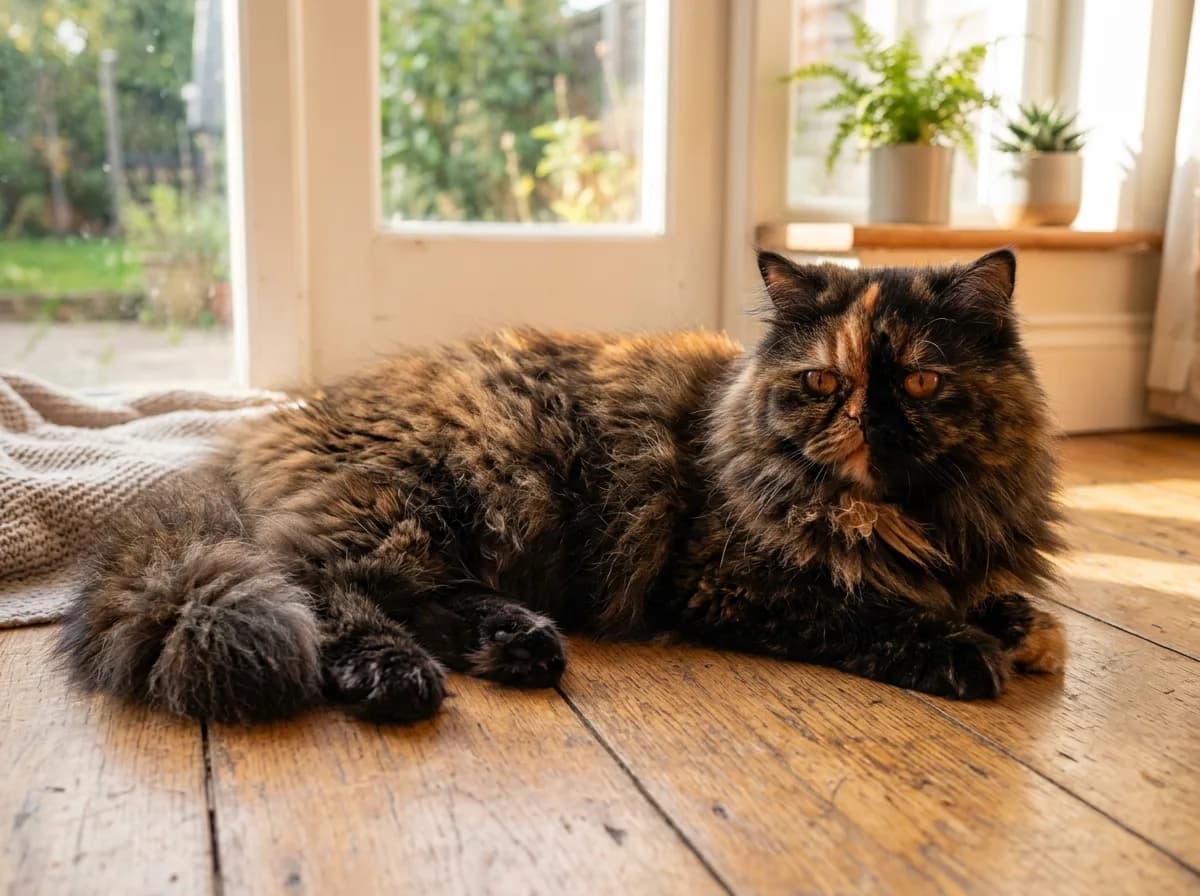
This is where a tortie Persian gets genuinely interesting, and where almost every competing article stops at a single sentence. "Tortoiseshell" is not one color; it is a family of color combinations. The CFA standard describes the base tortoiseshell as black with patches of red, or with red softly intermingled across the body and extremities, with several shades of red acceptable. From there, the dilution and chocolate genes open up a whole palette.
Black Tortoiseshell (Classic Tortie)
The classic and most familiar version. The coat blends true black with red and orange, sometimes in distinct patches, sometimes in a fine brindle. This is the textbook "tortoiseshell" of the CFA Parti-Color division, and the look that comes to mind when most people picture a tortie.

Never Scoop Again® with the Whisker Litter-Robot, the smart self-cleaning automatic litter box. Monitor visits and track weights for better overall care in the Whisker® app. Multi-cat friendly.
Petful may earn a commission when you click through to Whisker, at no extra cost to you.
Blue-Cream (Dilute Tortoiseshell)
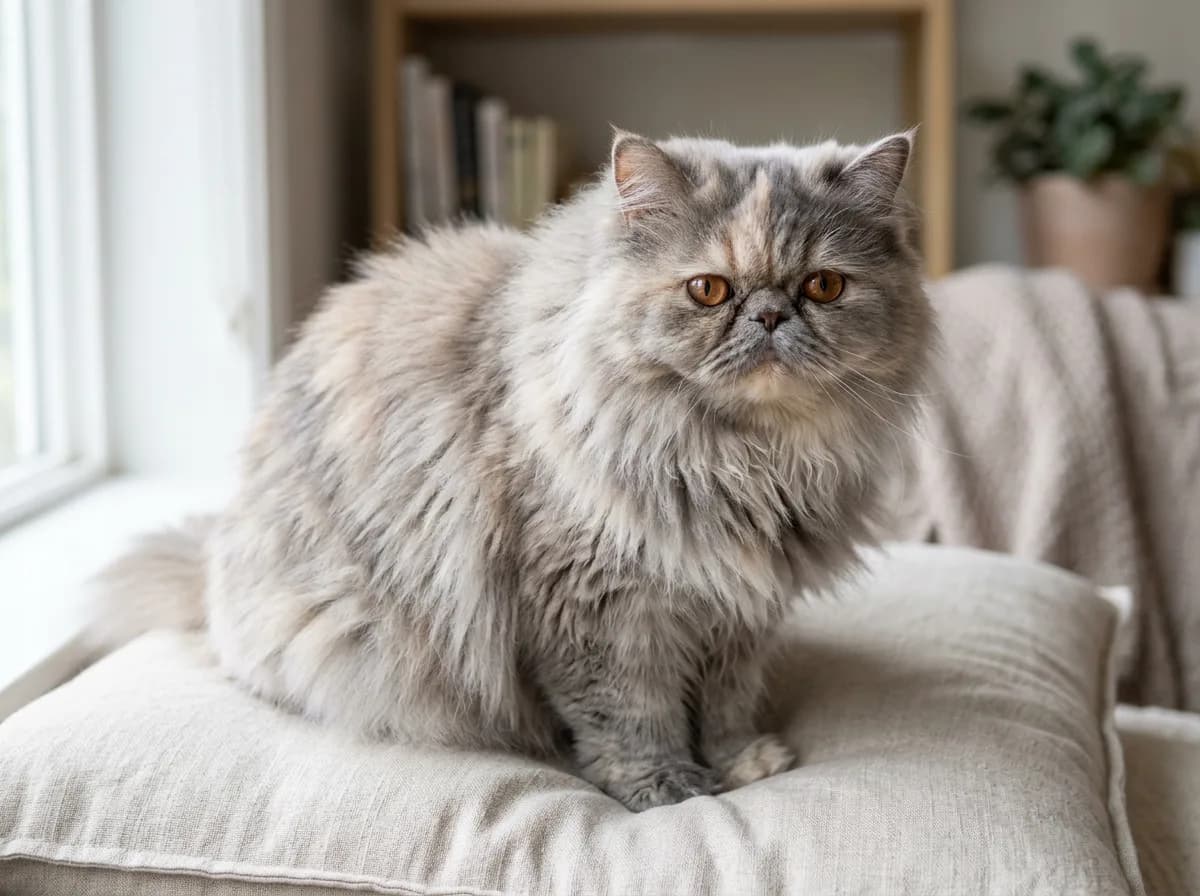
When a Persian carries two copies of the recessive dilution gene (the MLPH, or melanophilin, gene), black softens to a smoky blue-gray and red softens to cream. The result is the blue-cream Persian: a powdery, pastel tortie of blue-gray and cream rather than black and orange. The CFA recognizes blue-cream as its own Parti-Color class. It is one of the most sought-after dilute looks in the breed.
Chocolate and Lilac Tortie
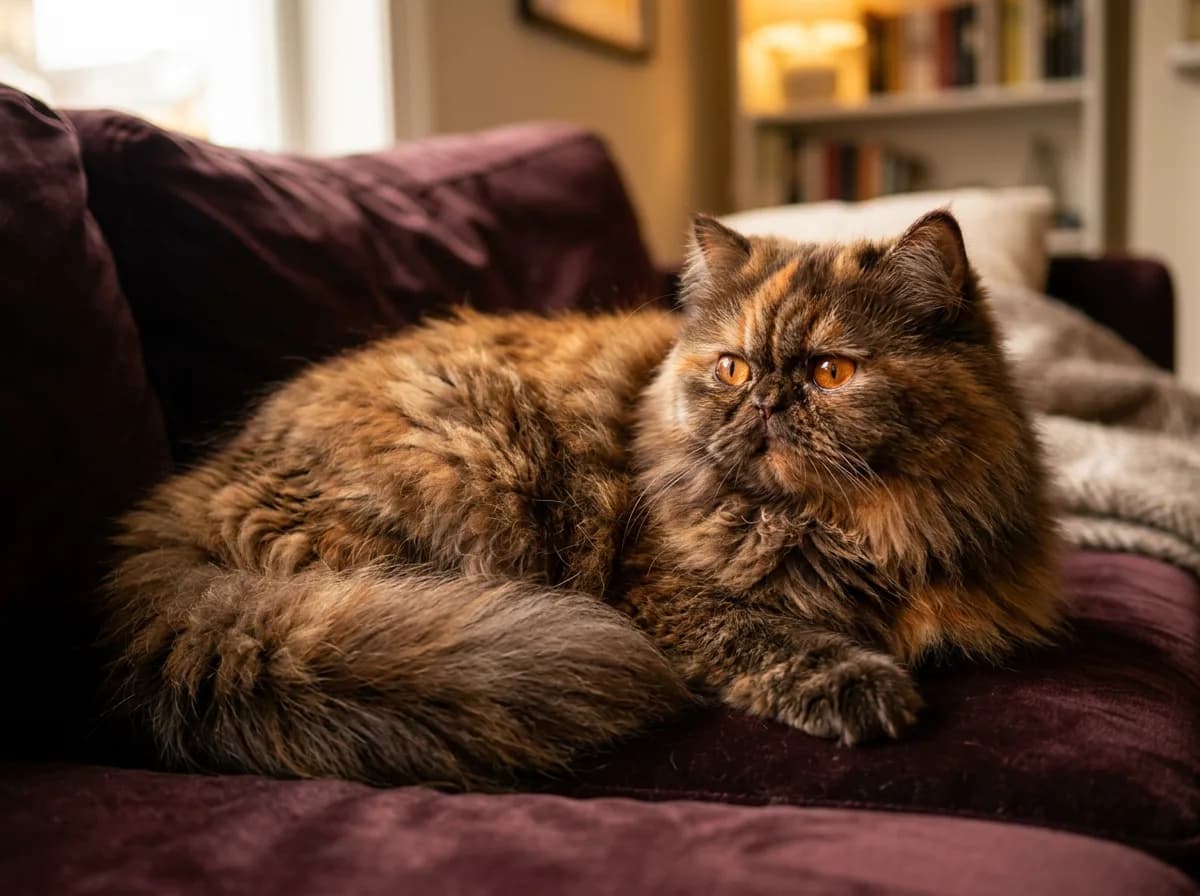
Persians can also carry the chocolate color gene, which turns black into a rich warm brown. A chocolate tortoiseshell is chocolate brown intermingled with red. Apply the dilution gene to chocolate and you get lilac, producing the lilac-cream: a pinkish, warm lavender-gray softly mixed with cream. Both the chocolate tortoiseshell and the lilac-cream were accepted for championship status in the CFA Parti-Color division in 1993, so these are not fringe colors but officially recognized show classes.
Tortoiseshell Smoke and Shaded
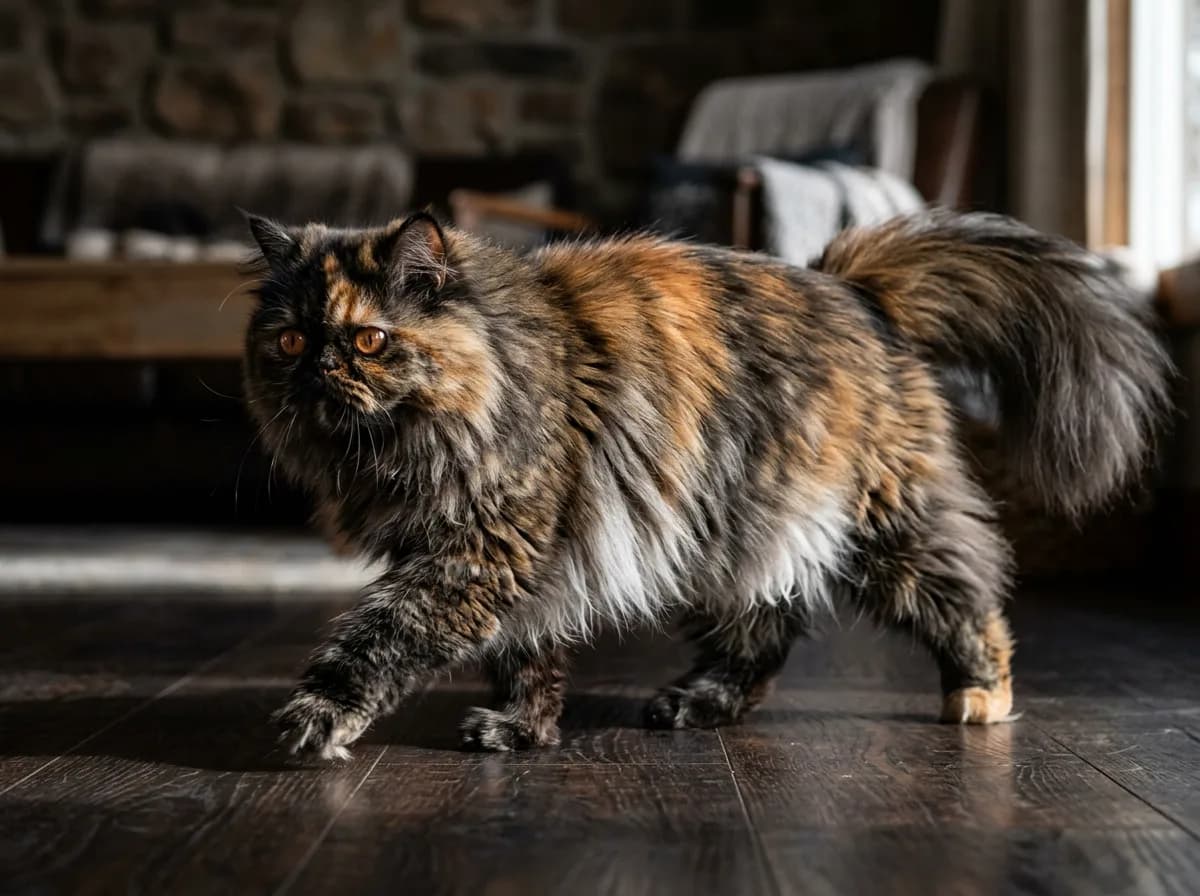
A smoke tortie has a white undercoat tipped with tortoiseshell coloring, so the cat looks solid tortie at rest but flashes pale roots when it moves or is parted. A shaded tortie carries even more of that pale undercoat. These tipped variations sit in the broader Persian color picture and add depth and shimmer to the tortie coat.
Tortie Tabby (Torbie)
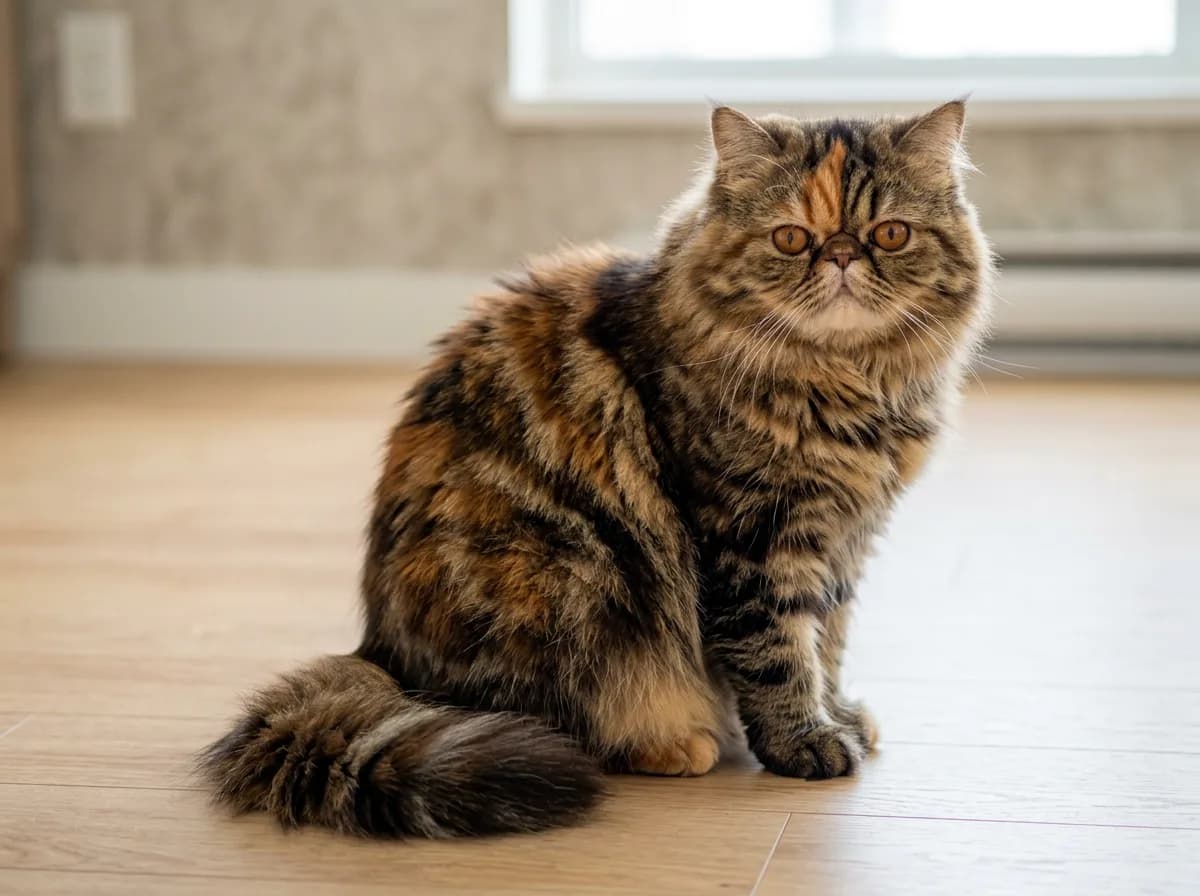
When a tortoiseshell coat also carries tabby striping, you get a torbie, short for tortie-tabby and sometimes called a patched tabby. The red areas show classic tabby stripes or swirls while the black or brown areas keep the tortie mottling. It is a busy, beautiful coat that combines two patterns at once.
Tortoiseshell vs Calico Persian
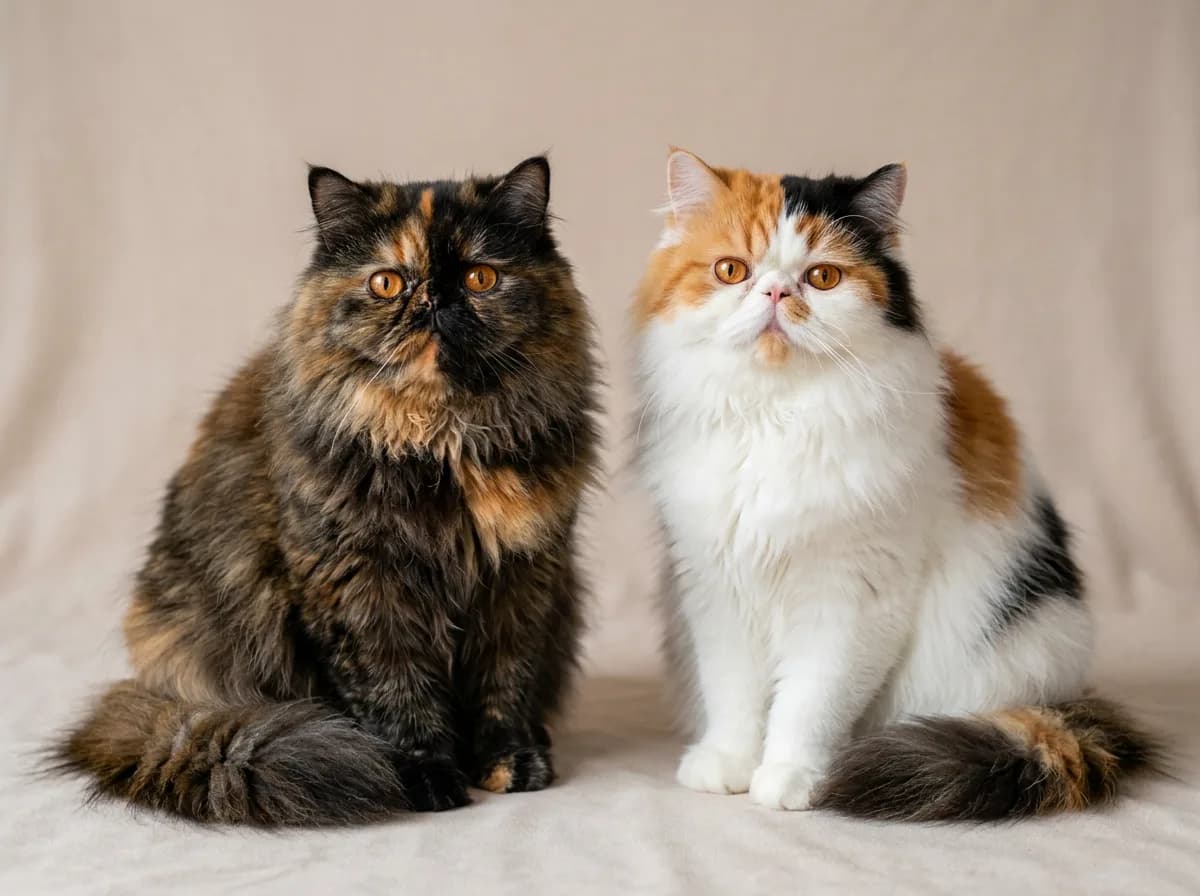
People mix these up constantly, so here is the clean line. A tortoiseshell is brindled or interwoven orange and black with little or no white; a small white chest locket or white toes still counts as a tortie. A calico is predominantly white with distinct, separate patches of orange and black. The difference is the white-spotting gene (a KIT-related piebald gene): add it and the colors break apart into large blocks on a white background. A calico Persian, then, is a tortie Persian that also inherited heavy white spotting. Both are recognized Persian colors; the calico belongs to the Calico and Bicolor side of the parti-color picture rather than the pure Parti-Color tortie classes.
- Tortie equals brindled orange and black, little to no white. Calico equals lots of white with separate orange and black blocks. Torbie equals a tortie with tabby stripes. Blue-cream equals the dilute (softened) version of a tortie. Same genetic family, different dials turned up or down.
Why Almost All Tortoiseshell Persians Are Female
This is the most important genetics fact about any tortie, Persian or otherwise. The sex-linked orange gene sits on the X chromosome. The orange version (O) produces phaeomelanin, the red and orange pigment, and it masks black. A female cat has two X chromosomes. If she carries orange on one X and non-orange (black) on the other, both colors show up across her coat through a process called random X-chromosome inactivation, or lyonization, first described by geneticist Mary Lyon in 1961. Early in development, each cell randomly switches off one of its two X chromosomes, so some patches of skin grow orange fur and others grow black. That mosaic is the tortoiseshell.
A male cat has only one X chromosome, so he can be orange or black, but not both at once. That is why roughly 99.9% of tortoiseshell and calico cats are female. The genetics simply do not allow most males to display the pattern.
- After more than a century of work, two independent teams (Greg Barsh's group at HudsonAlpha and Stanford, and Hiroyuki Sasaki's team at Kyushu University) identified the long-sought orange gene in 2025 as a small regulatory deletion affecting a gene called ARHGAP36. The findings were published in Current Biology in May 2025. It confirmed the textbook X-linked model that explains why your tortie Persian is almost certainly a girl.
The tortie Persian connection runs deep here. One of the earliest hard proofs of the breeding behavior of this color came from a famous tortoiseshell Persian of the Victorian era named Doncaster, whose offspring helped early fanciers work out that tortie was a sex-linked, female-dominant pattern long before anyone could name a gene.
The Rare Male Tortie Persian
Male torties do exist, at roughly 1 in 3,000 (the figure commonly cited from the University of Missouri). They arise through an extra chromosome (XXY, called Klinefelter syndrome), through chimerism (two embryos fusing), or through somatic mosaicism. XXY males are almost always sterile and often carry other health problems, so a male tortie Persian is a genetic curiosity, not a more valuable cat. He has no breeding value, and any breeder pricing a male tortie as "rare and expensive" is selling novelty, not pedigree.
- Despite the folklore, a male tortoiseshell Persian is worth no more than any other Persian and usually cannot breed. Be skeptical of anyone marketing one as a high-priced rarity. The pattern is the curiosity; it does not add pedigree value.
CFA Recognition: Where Torties Fit in the Persian Divisions
The Cat Fanciers' Association divides the Persian breed into color divisions for the show ring, and the tortoiseshell sits in the Parti-Color division. Per the CFA Persian standard, the Parti-Color division consists of four colors:
| Color | What It Looks Like |
|---|---|
| Tortoiseshell | Black with patches of red, or red softly intermingled, on body and extremities; several shades of red acceptable |
| Blue-Cream | Blue (gray) with patches of cream or cream softly intermingled (the dilute tortie) |
| Chocolate Tortoiseshell | Rich warm chocolate brown with patches of red or red intermingled (championship since 1993) |
| Lilac-Cream | Warm pinkish-toned lavender with patches of cream or cream intermingled (championship since 1993) |
That registry placement matters for two reasons. First, it confirms that a tortoiseshell Persian is a fully legitimate, showable color rather than a flaw or a mixed-breed marker. Second, it tells a buyer what to expect on a pedigree: a well-bred tortie Persian should trace to recognized Parti-Color lines. Eye color in these colors is brilliant copper, per the standard. Calico and bicolor Persians (the heavily white-spotted versions) sit in their own division, which is why a calico is described separately from the pure tortie classes above.
History of the Tortoiseshell Persian
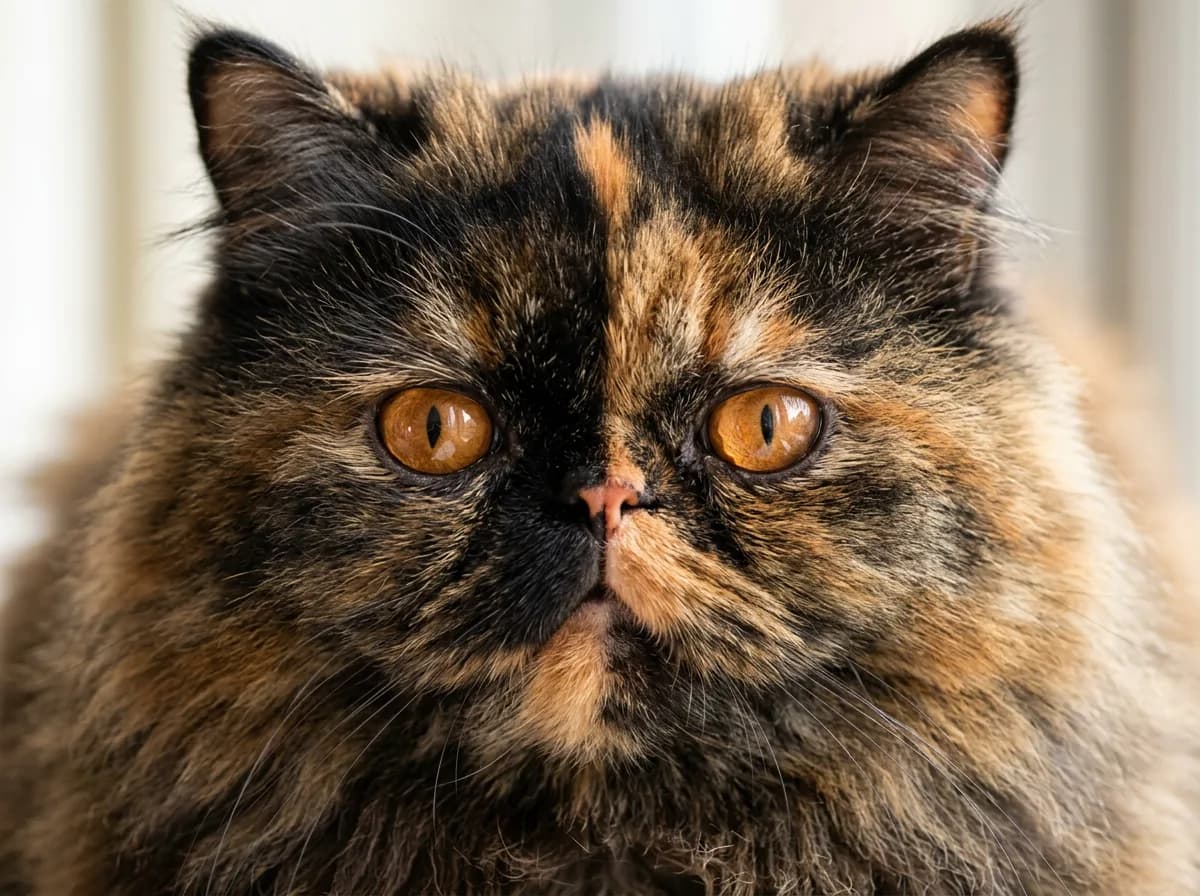
Tortie Persians are not a modern designer fad. They were present at the very birth of the organized cat fancy. When Harrison Weir laid out the first cat show standards in Britain in the late 1800s (his "Points of Excellence" appeared around 1889), tortoiseshell long-hairs were already a known and admired color. By 1903, Frances Simpson devoted a full chapter of her landmark reference "The Book of the Cat" to Tortoiseshell Persians, discussing Victorian breeders, show records, and the prized tortoiseshell-and-white variety.
That long pedigree is part of why the color is so firmly embedded in the breed today. Breeders have been deliberately working with tortie Persian lines for well over a century, which is also why the genetics of the color were understood (through cats like Doncaster) decades before the underlying gene was sequenced.
Tortoiseshell Persian Personality: Sweet Persian Meets Tortitude
Here is where honesty matters. There is a persistent folk belief in "tortitude," the idea that tortoiseshell cats are feistier, more opinionated, and sassier than other cats. It makes for great stories, and Princess Donut from Dungeon Crawler Carl is practically the patron saint of it. But it is not scientifically established that coat pattern determines personality.
The one real piece of data is a 2015-2016 study from UC Davis (Stelow, Bain, and Kass, published in the Journal of Applied Animal Welfare Science, based on 1,274 analyzed owner responses). It found that owners reported slightly higher aggression in sex-linked orange female cats (torties, calicos, and torbies), along with gray-and-white and black-and-white cats, specifically during handling and vet visits. The key words are owner-reported and slightly. Individual variation dominates, and the effect was modest.

63-inch multi-level cat tree with scratch posts, hammock, plush perches, and dangling toys. Vertical territory is non-negotiable for high-energy climbing breeds like the Bengal.
Petful may earn a commission when you click through to Chewy, at no extra cost to you.
What that means in practice for a tortie Persian: temperament is driven far more by the Persian breed and by socialization than by the tortie color. Persians are famously calm, gentle, quiet, and affectionate lap cats. A tortie Persian is, first and foremost, a Persian: a placid companion who would rather be brushed and adored than chase a laser pointer. Any extra "attitude" is anecdotal seasoning on top of a fundamentally mellow cat.
- Choose a tortie Persian for the Persian temperament (gentle, low-energy, devoted), and treat "tortitude" as a fun bit of lore rather than a behavior forecast. Meet the individual kitten and its parents; that tells you far more than the color does.
Grooming a Long-Haired Tortoiseshell Coat
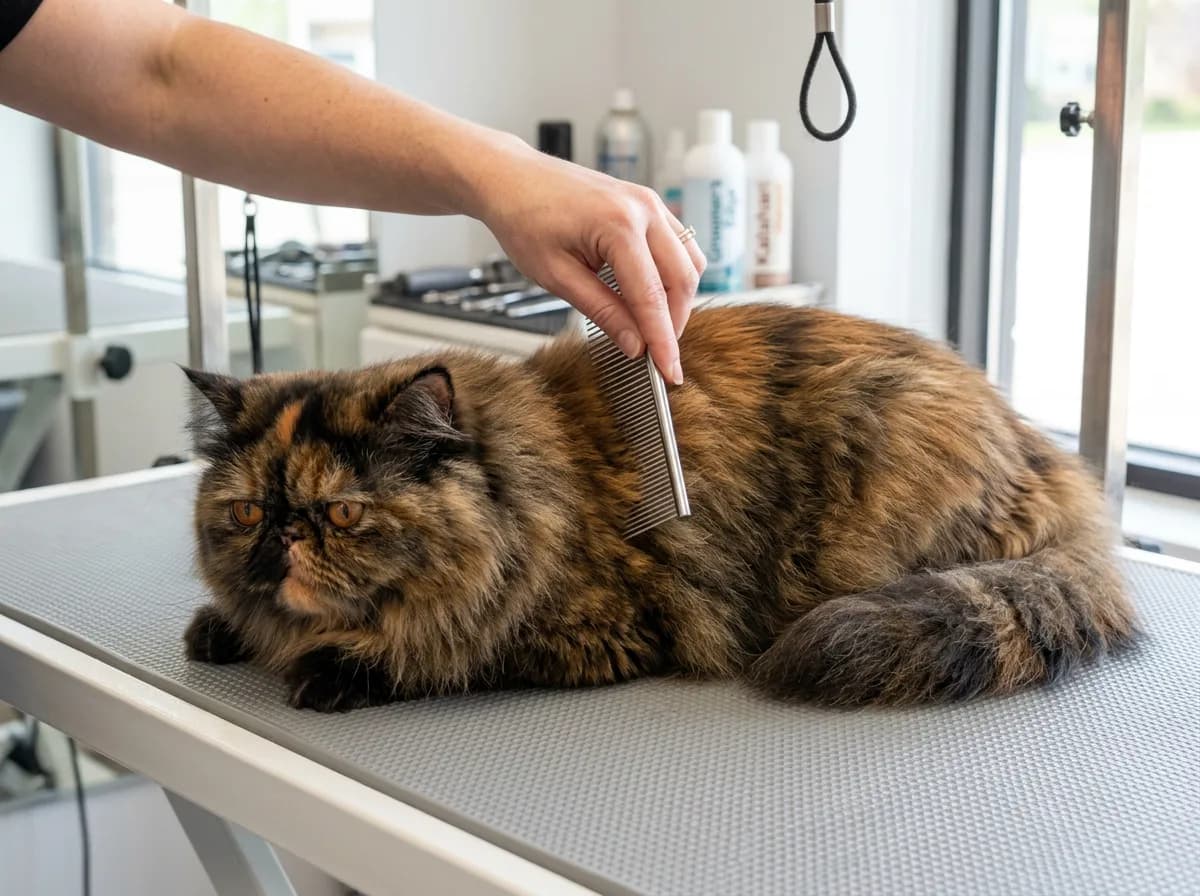
This is the part too many buyers underestimate, and the part the leading competitor leaves out entirely. A Persian coat is long, dense, and double-layered, and it mats within days if it is neglected. The tortoiseshell coloring does not change the workload one bit; you are grooming a Persian, and that is a serious daily commitment.
| Task | Frequency | Why It Matters |
|---|---|---|
| Brush and comb the coat | Daily, 10-15 minutes | Prevents painful mats and reduces hairballs; a metal comb reaches the dense undercoat |
| Bathe | Every 4-6 weeks | Keeps the long coat clean and manageable and controls grease |
| Clean the eyes and face | Daily | Flat-faced Persians tear heavily; wiping prevents tear-staining and skin irritation |
| Check and trim around the rear | Weekly | Long fur can trap waste; keep the area tidy for hygiene |
| Trim nails | Every 2-3 weeks | Routine paw and claw maintenance |
| Professional groom (optional) | Every 6-8 weeks | A "lion cut" or sanitary trim can ease summer maintenance |
The single biggest reason Persians end up matted, shaved, or rehomed is that owners assume the cat will manage its own coat. It will not. If you cannot commit to daily brushing and frequent face cleaning, the Persian (in any color, tortie included) is the wrong breed for you.
- Persian fur mats within a few days of neglect, and severe mats can pull the skin and require a vet or professional to shave out. A tortie Persian needs hands-on coat care every single day, plus regular bathing. Budget the time before you budget the money.
Eye and Face Care
Because Persians are flat-faced, their tear ducts are often kinked, so they tear heavily (chronic epiphora) and develop tear-staining at the inner corners of the eyes. Daily wiping with a soft, damp cloth or a vet-approved eye wipe keeps the face clean and prevents the staining and skin irritation that come with a wet, soiled muzzle. This is non-negotiable maintenance, not an occasional touch-up.
Tortoiseshell Persian Cat Price
Let us answer the question competing pages dodge: how much is a tortoiseshell Persian cat? The honest answer is that a tortie Persian costs the same as any other purebred Persian, because the tortoiseshell pattern adds no premium. Plan on roughly $800-2,500 for a pet-quality purebred Persian kitten from a breeder, with show- or breeding-quality cats and top bloodlines running higher.
| Source | Typical Cost | Notes |
|---|---|---|
| Shelter or rescue adoption | $50-200 | Often includes vaccinations and spay/neuter; tortie Persians do turn up in rescue |
| Pet-quality purebred kitten | $800-2,500 | A healthy, pedigreed Persian from a responsible breeder; tortie color adds no premium |
| Show- or breeding-quality | Higher | Top bloodlines and championship lines command more; reflects pedigree, not the tortie color |
| "Rare male tortie" upsell | Avoid the premium | A male tortie is a sterile curiosity with no breeding value; do not pay extra for it |
- Two kittens from the same litter, one tortie and one solid blue, should cost the same. Price tracks pedigree, health testing, and breeder reputation, never the coat pattern. If a seller charges more "because she is a rare tortie," that is a sales pitch, not a market reality.
Whatever the sticker price, remember the ongoing cost. A Persian's grooming, eye care, and the health screening this breed needs (more on that next) mean the purchase price is a fraction of the lifetime cost. Adoption from a Persian-specific rescue is a genuine and far cheaper alternative if you are open to an adult cat.
Tortoiseshell Persian Health and Lifespan
A crucial reassurance up front: the tortoiseshell coat pattern itself is not linked to any disease. A 2024 study specifically found no genetic association among coat colors and the major Persian conditions (progressive retinal atrophy and polycystic kidney disease), so the tortie color carries no extra health risk. The health considerations here are Persian-breed considerations, and they apply to every Persian regardless of color.
A healthy tortie Persian typically lives about 12-16 years, with good care and indoor living pushing some to their late teens. The main breed-specific issues to know about:

108-oz stainless steel pet fountain with quiet pump and water-level window. Bengals are notoriously water-obsessed; a flowing fountain encourages hydration and pulls them away from sinks and toilets.
Petful may earn a commission when you click through to Chewy, at no extra cost to you.
- Polycystic kidney disease (PKD): A hereditary condition where cysts gradually replace kidney tissue, usually showing signs between 7 and 10 years of age. A reputable breeder screens parent cats (genetic testing and ultrasound) and should provide documentation. This is the single most important question to ask any Persian breeder.
- Brachycephalic (flat-faced) issues: The short muzzle can cause breathing difficulty, especially in extreme "peke-faced" Persians. A moderate, more open face is healthier. Heat and exertion are harder on flat-faced cats.
- Eye conditions: Chronic tearing (epiphora), tear-staining, and entropion can stem from the facial structure; an early-onset, inherited form of progressive retinal atrophy (PRA) also occurs in the breed and can be screened for genetically.
- Dental and skin issues: The compressed jaw can crowd teeth, and the dense coat needs upkeep to prevent skin problems under mats.
- Before you buy a tortie Persian, ask to see PKD and PRA genetic test results for both parents, and favor breeders producing more moderate, open faces. The coat pattern is harmless; the breed's flat-faced and kidney issues are the real things to vet.
A male tortie Persian (the rare XXY type) is the one exception worth noting: those cats often have shorter lifespans and additional health complications tied to the chromosomal anomaly, separate from the breed issues above.
Tortoiseshell Persian vs Other Long-Haired Tortoiseshell Cats
A tortie Persian is not the only long-haired tortoiseshell cat you will meet, and it helps to know how it compares. The tortoiseshell pattern shows up across many long-coated breeds and random-bred cats, but the breed underneath changes the cat's size, build, coat texture, and temperament.
- Maine Coon tortie: A tortoiseshell Maine Coon is a much larger, more rugged cat with a shaggier, water-resistant coat and a playful, dog-like personality. It is a working-cat build, not a lap-cushion build. For more, see Petful’s guide to Tortoiseshell cat personality.
- Domestic longhair tortie: A random-bred long-haired tortie has no pedigree and unpredictable traits, but can be a wonderful, lower-cost companion (often available in rescue). It is the most common long-haired tortie you will encounter.
- Tortoiseshell Persian: The Persian is the small-to-medium, cobby, flat-faced, supremely fluffy option with the calmest temperament and the heaviest grooming demand of the three.
If you specifically want the tortie coloring with a quiet lap-cat nature and a luxurious coat (and you can commit to the grooming), the Persian is the long-haired tortie for you. If you want a big, playful tortie, look toward the Maine Coon instead.
Why Tortoiseshell Persians Are Suddenly Everywhere: Princess Donut
Search interest in tortoiseshell Persians has surged (the head term is up well over 100% year over year), and a big part of that is fiction. Princess Donut, the breakout co-star of Matt Dinniman's wildly popular Dungeon Crawler Carl series, is canonically a tortoiseshell Persian: a pedigreed, award-winning show cat described as fluffy, flat-faced, and "black and beige and white," with big yellow eyes and a "sultry yet pompous" voice. Before the dungeon, she belonged to the protagonist's ex-girlfriend and competed on the show circuit.
Donut has put a very specific image in readers' heads (a glamorous, opinionated tortie Persian) and sent fans searching for the real thing. Related searches like "Tortoiseshell Persian cat Donut" and "Award winning tortoiseshell Persian cat" trace straight back to the books. It is a fun cultural moment, and it is genuinely driving the breed's visibility, but it is worth keeping perspective: Donut is a fictional character with a fictional personality, and a real tortie Persian is a Persian first (gentle and mellow), not a sharp-tongued princess. Adopt or buy because you want the cat and can do the grooming, not because of a novel.
- Tortie Persians have always been "art models," from Victorian show paintings to modern fiction. Donut is just the latest. Author Matt Dinniman has said torties are his favorite cats and the hardest to draw, which is partly why he made his star a tortie.
Finding a Tortoiseshell Persian Kitten
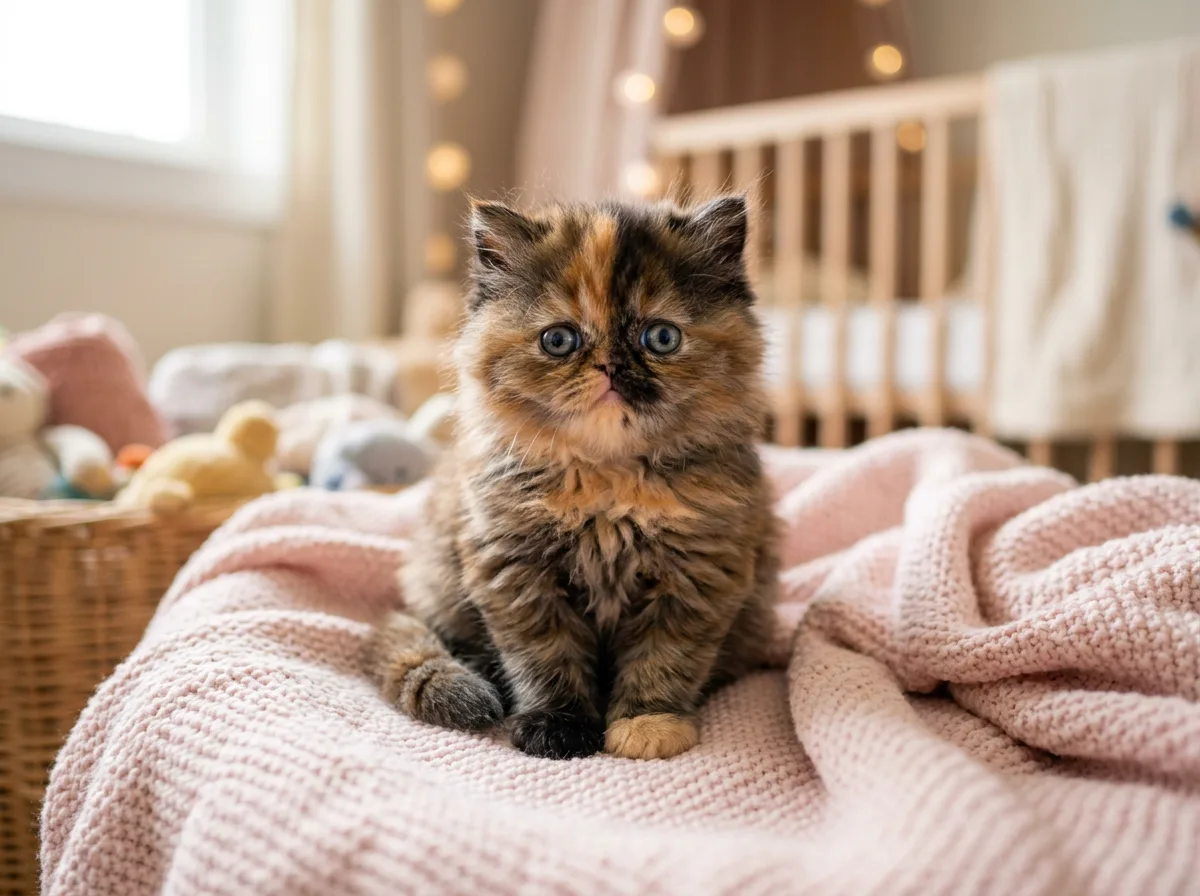
Whether you are searching for a tortoiseshell Persian kitten through a breeder or a rescue, the same diligence applies. Because the demand bump is real, so is the risk of careless or unethical sellers cashing in.
What to ask and look for:
- PKD and PRA test results for both parents, in writing. A breeder who cannot or will not provide them is a hard pass.
- A moderate face. Favor kittens with a more open muzzle over extreme flat "peke" faces; they breathe and tear better.
- In-person or video meetings with the kitten and at least the mother, in a clean home environment.
- No early separation. Reputable breeders do not release kittens before about 12 weeks.
- Honest pricing. A tortie kitten should cost the same as her solid-colored littermates. Be wary of "rare tortie" or "rare male tortie" premiums.
One small note for new kitten owners: tortie kittens are born with blue eyes that shift to their adult copper color around 6-7 weeks, and the coat shade can deepen as the adult coat grows in, even though the underlying tortie pattern is fixed before birth. A slightly washed-out kitten coat often matures into a richer adult tortie.
If a purebred is out of reach or you simply want to give a cat a home, Persian-specific and general cat rescues regularly have tortie Persians and Persian mixes. It is a faster, cheaper, and deeply rewarding route to the same beautiful cat.
For more on the breed behind the pattern, see Petful's full guides to the Persian cat breed and the complete range of Persian cat colors, which map every CFA division in detail. If you are weighing other fluffy options, our Maine Coon breed profile and Maine Coon colors guide cover the larger long-haired tortie, while the Siberian cat guide and British Shorthair profile round out the popular tortie-capable breeds.
Frequently Asked Questions
Yes. Tortoiseshell is a recognized Persian color in the CFA Parti-Color division, which includes tortoiseshell, blue-cream, chocolate tortoiseshell, and lilac-cream. A tortoiseshell Persian is simply a purebred Persian wearing the brindled orange-and-black tortie coat; it is a color, not a separate breed.
A tortoiseshell Persian costs the same as any other purebred Persian, because the pattern adds no premium. Expect roughly $800-2,500 for a pet-quality kitten from a responsible breeder, with show or breeding lines running higher. Rescue adoption typically runs $50-200.
A complete, balanced cat food formulated for the cat's life stage, ideally one designed for Persians or flat-faced breeds with a kibble shape the cat can pick up easily. High-quality protein, controlled calories to prevent obesity, and plenty of fresh water (or wet food) to support kidney health all matter. Ask your vet for a specific recommendation, especially given the breed's PKD risk.
Among recognized colors, the chocolate and lilac-based shades (including chocolate tortoiseshell and lilac-cream) are among the least common because they require specific recessive genes. A fertile male tortoiseshell Persian is the genuine rarity at roughly 1 in 3,000, but he is a sterile curiosity rather than a more valuable cat.
Tortoiseshell is a well-established, century-old Persian color, so torties themselves are not rare within the breed. Certain variants (chocolate tortie, lilac-cream) are less common, and a male tortie Persian is genuinely rare. But the everyday tortie Persian is a recognized, readily available color.
Almost. Roughly 99.9% are female because the orange gene is carried on the X chromosome, and a cat needs two X chromosomes to display both orange and black. Male torties occur at about 1 in 3,000 (through XXY chromosomes, chimerism, or mosaicism) and are almost always sterile.
Persian first, tortie second. Persians are calm, gentle, quiet, affectionate lap cats with low energy. The "tortitude" reputation is not scientifically established; a UC Davis owner survey found only a modest, owner-reported uptick in handling-related feistiness in tortie-pattern cats. Breed and socialization shape personality far more than coat color.
A tortoiseshell is brindled orange and black with little or no white (a small white locket still counts). A calico is mostly white with distinct, separate orange and black patches. The difference is the white-spotting gene: add heavy white spotting to a tortie and you get a calico. Both are recognized Persian colors.
Typically 12-16 years with good care, and some indoor Persians reach their late teens. The tortoiseshell pattern does not affect lifespan. Breed-specific health issues (PKD, brachycephalic problems, eye conditions) are the main factors, which is why health-screened parents matter so much.
A lot. The long Persian double coat needs daily brushing and combing (10-15 minutes), a bath every 4-6 weeks, and daily eye and face cleaning to prevent mats and tear-staining. The tortie color adds nothing to the workload; you are grooming a Persian, which is a serious daily commitment.
Yes. In Matt Dinniman's Dungeon Crawler Carl series, Princess Donut is canonically a pedigreed, award-winning tortoiseshell Persian show cat, described as fluffy and flat-faced with black, beige, and white coloring and large yellow eyes. Her popularity is helping drive the surge in tortie Persian searches.
The tortie palette includes classic black tortoiseshell (black and red), blue-cream (the dilute, blue-gray and cream), chocolate tortoiseshell (brown and red), lilac-cream (lavender and cream), plus smoke and shaded versions and the tabby-striped torbie. The CFA Parti-Color division formally recognizes tortoiseshell, blue-cream, chocolate tortoiseshell, and lilac-cream.
Final Thoughts
A tortoiseshell Persian cat gives you two beautiful things at once: the storied, century-old tortie coat in all its black, blue-cream, chocolate, and lilac variations, wrapped around the gentle, fluffy, flat-faced Persian breed. Just remember what the color does and does not mean. It is a recognized CFA Parti-Color color, not a separate breed; it makes the cat almost certainly female; and it adds nothing to the price, the personality, or the health risk. What you are really signing up for is the Persian: the daily grooming, the eye care, the PKD and flat-faced screening, and in return, one of the calmest, most affectionate lap cats in the world, dressed in the most artful coat in the registry. Do the homework on the breeder, commit to the brushing, and a tortie Persian will be a devoted companion for well over a decade.

Coreen Saito is a pet writer and longtime shelter volunteer with more than a decade in animal rescue. She covers cat behavior, breed care, and the small, ordinary science of sharing a life with companion animals, with a particular focus on honest takes about the products and decisions that actually matter. At home in Arizona, she's outranked by Mac (a dog with the loudest opinion in the house), Rebel (a cat who governs by quiet authority), and Meri (an orange tabby who runs the late shift and the laundry basket). She writes about all three, plus the rescues that keep coming through her life, at LifeWithMinty.com.
Sign up for expert-backed reviews and safety alerts all in one place.