Persian Cat: The Complete Breed Guide
Thinking about a Persian cat? This complete guide covers the breed's calm personality, grooming needs, doll-face vs flat-face types, colors, health risks like PKD, lifespan, price, and whether this glamorous lap cat fits your home.
Petful is reader supported. As an affiliate of platforms like Amazon and Chewy, we may earn a commission when you buy through links on this page. There is no extra cost to you.
The Persian cat is a long-haired, flat-faced breed known for its calm, affectionate personality and its glamorous, flowing coat. Recognized by the Cat Fanciers' Association since the late 1800s, the Persian is one of the oldest and most popular pedigreed cats in the world, instantly identifiable by its round face, small ears, and large, expressive eyes. Persians are quiet, gentle homebodies that prefer a sunny lap to a high shelf, which makes them a natural fit for apartments and calm households. That beauty comes with a genuine commitment: the long coat needs daily brushing to prevent painful mats, the flat-faced (peke-face) lines are prone to breathing, eye, and dental problems, and the breed as a whole carries a notable risk of polycystic kidney disease (PKD). A healthy Persian cat typically lives 12 to 16 years. This guide covers everything a prospective owner needs to know: appearance and types, temperament, grooming, health, price, and whether a Persian is the right fit for you.
- 1The Persian is a calm, affectionate lap cat with a luxurious long coat that demands daily grooming.
- 2Expect a quiet, low-energy companion that thrives in apartments and gentle homes.
- 3The flat-faced look comes with real health trade-offs (breathing, eyes, teeth) plus a breed-wide risk of polycystic kidney disease, so DNA testing of the parents matters.
- 4Plan for 12 to 16 years and a serious daily grooming routine.
| Trait | Detail |
|---|---|
| Origin | Persia (modern Iran), refined in Britain and the US from the 1800s |
| Lifespan | 12 to 16 years |
| Weight | 7 to 12 pounds |
| Coat | Long, thick, flowing; daily grooming required |
| Temperament | Calm, affectionate, quiet, low-energy |
| Colors | 7 CFA divisions (solid, silver/golden, shaded/smoke, tabby, parti-color, calico/bicolor, himalayan) |
| Recognized by | CFA, TICA |
| Best for | Apartments, calm homes, dedicated groomers |

Sign up for expert-backed reviews and safety alerts all in one place.
What Does a Persian Cat Look Like?
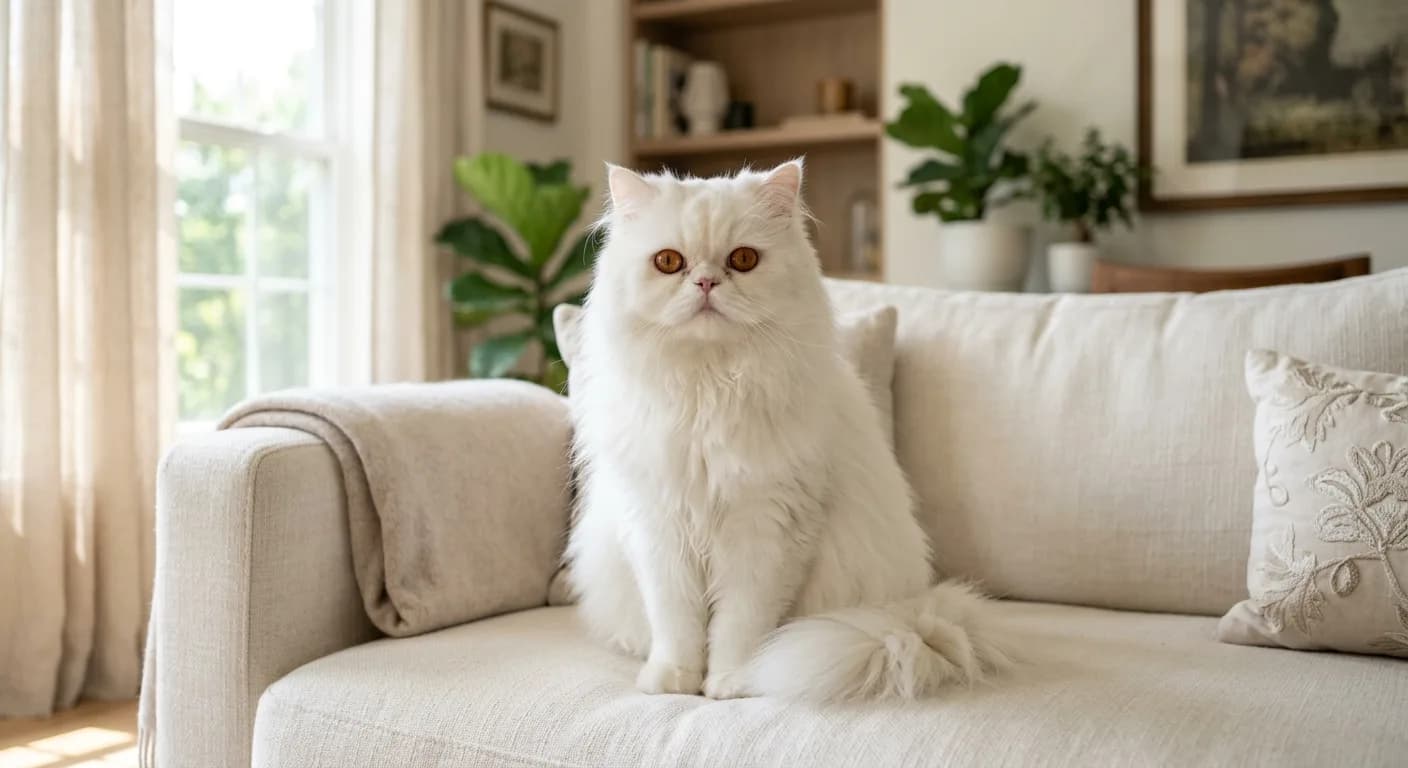
The Persian is a medium-sized, cobby (broad and rounded) cat that looks larger than it is because of its dense coat. The defining features are a round head, full cheeks, a short nose, small rounded ears set low, and big round eyes. Underneath the glamour, a Persian is a solid, short-legged cat that carries itself with quiet dignity rather than athleticism.
Doll-Face vs. Peke-Face Persians
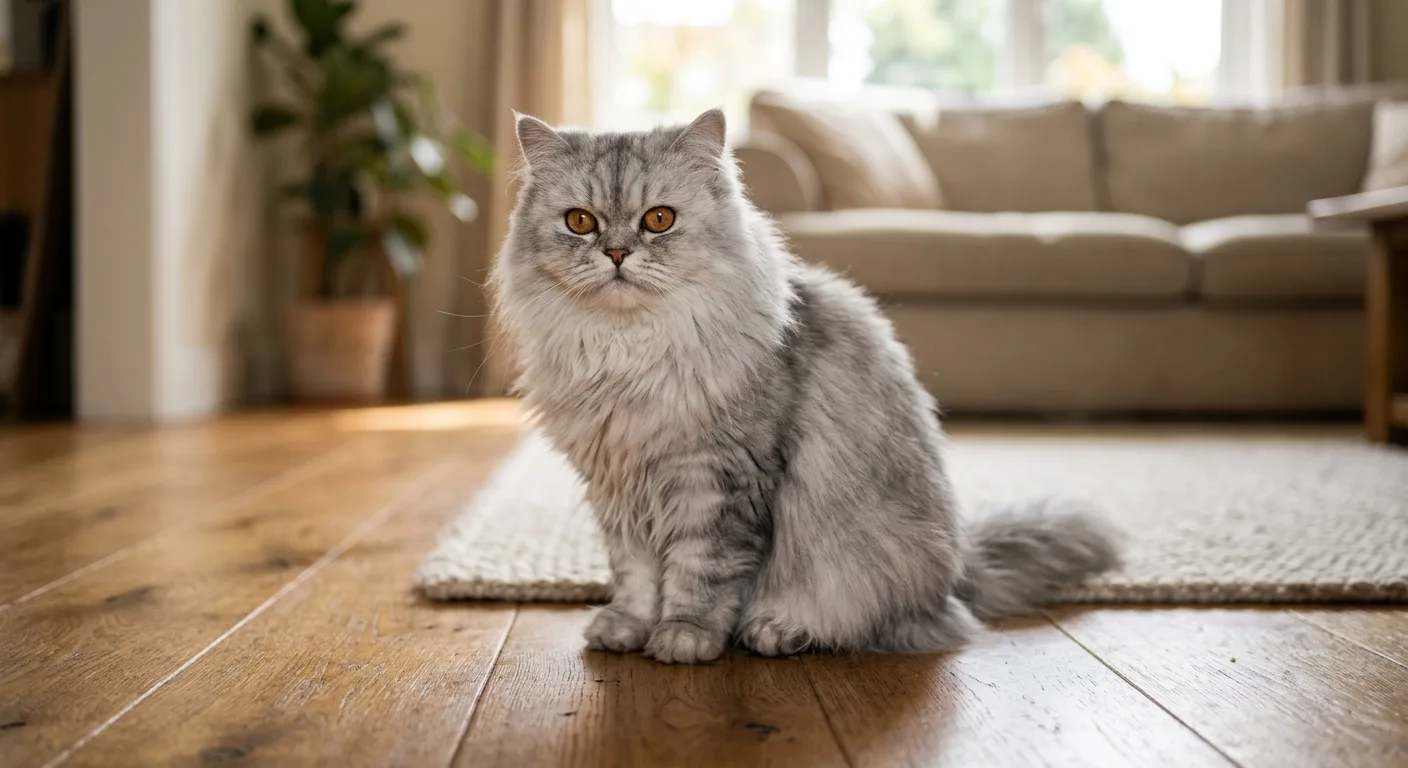
This is the single most useful distinction for a new buyer, and most guides skip it. The doll-face (traditional) Persian keeps a more moderate, slightly longer nose closer to the breed's original look. The peke-face (flat-face or ultra-typed) Persian has the extremely flattened muzzle seen in show lines, named for its resemblance to a Pekingese dog. The flatter the face, the higher the risk of tear-duct overflow, breathing trouble, and dental crowding. Many owners specifically seek out doll-face Persians for exactly this reason, and they often command a price premium.
Persian Cat Colors and Patterns
Few breeds come in as many colors as the Persian. The Cat Fanciers’ Association sorts them into seven divisions: solid (white, black, blue, cream, chocolate, lilac), silver and golden (including the sparkling chinchilla), shaded and smoke, tabby, parti-color (tortoiseshell), calico and bicolor, and the pointed Himalayan pattern. White Persians are especially in demand, and they can have blue, copper, or striking odd-colored eyes. Chocolate and lilac are the rarest and priciest colors. For the full breakdown with photos, see our guide to Persian cat colors and patterns.

Never Scoop Again® with the Whisker Litter-Robot, the smart self-cleaning automatic litter box. Monitor visits and track weights for better overall care in the Whisker® app. Multi-cat friendly.
Petful may earn a commission when you click through to Whisker, at no extra cost to you.
Size and Body Type
Persians typically weigh 7 to 12 pounds, with males at the heavier end. The body is "cobby": low to the ground, broad-chested, and rounded, with a short, thick tail and a level back. This is a cat built for lounging, not leaping.
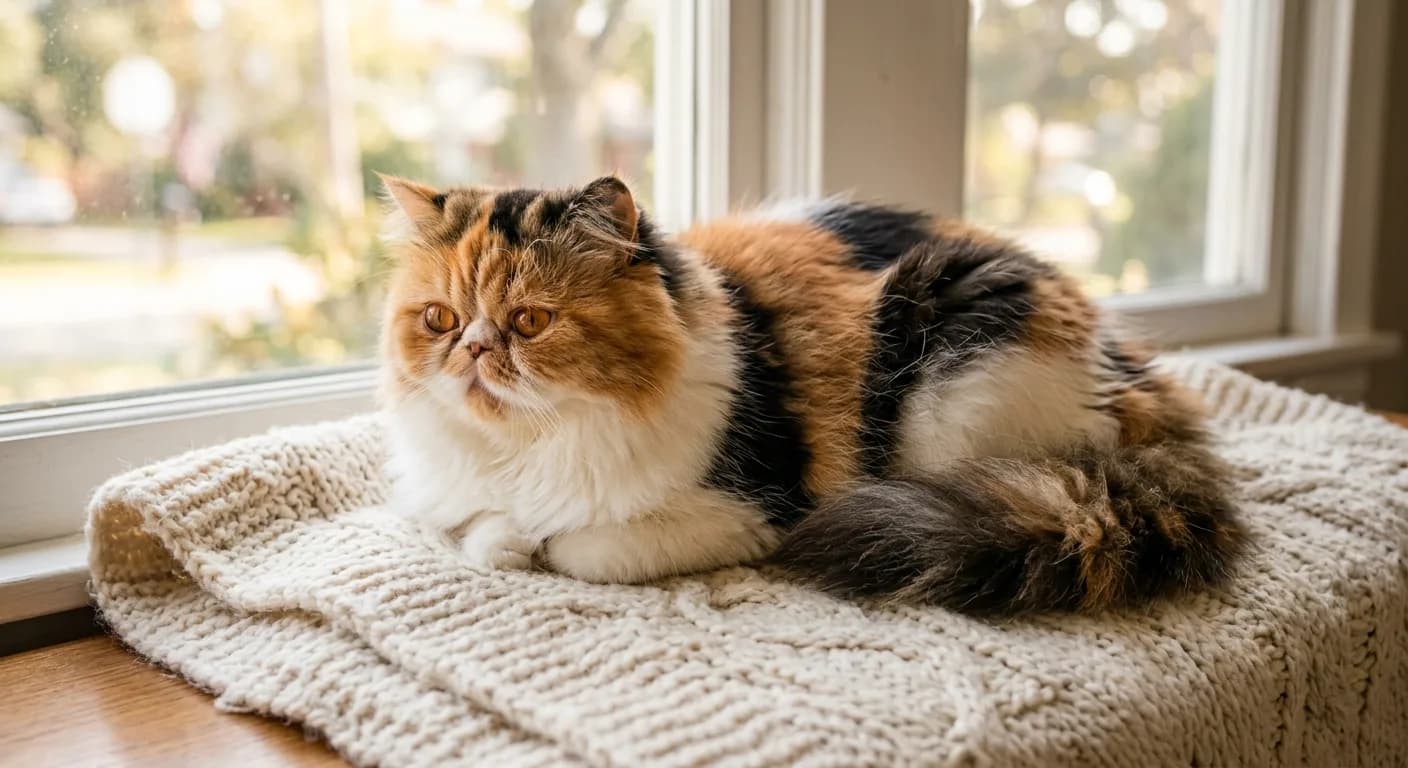
Persian Cat Temperament and Personality
If you want a cat that treats your lap as its rightful throne, the Persian delivers. Persians are famously placid, sweet-natured, and undemanding. They bond closely with their people but express it through quiet companionship rather than clingy attention. They are not climbers or counter-surfers, and they rarely cause the chaos a more athletic breed brings.
Do Persians meow a lot? No. The Persian has a soft, musical voice and uses it sparingly, which is part of why the breed suits apartments and noise-sensitive homes so well. Persians are generally excellent with respectful children and calm dogs, though they prefer a predictable routine over a loud, chaotic household. They are content to be admired and will happily spend the afternoon as a decorative cushion in a sunbeam.
Persian Cat Grooming: A Daily Commitment
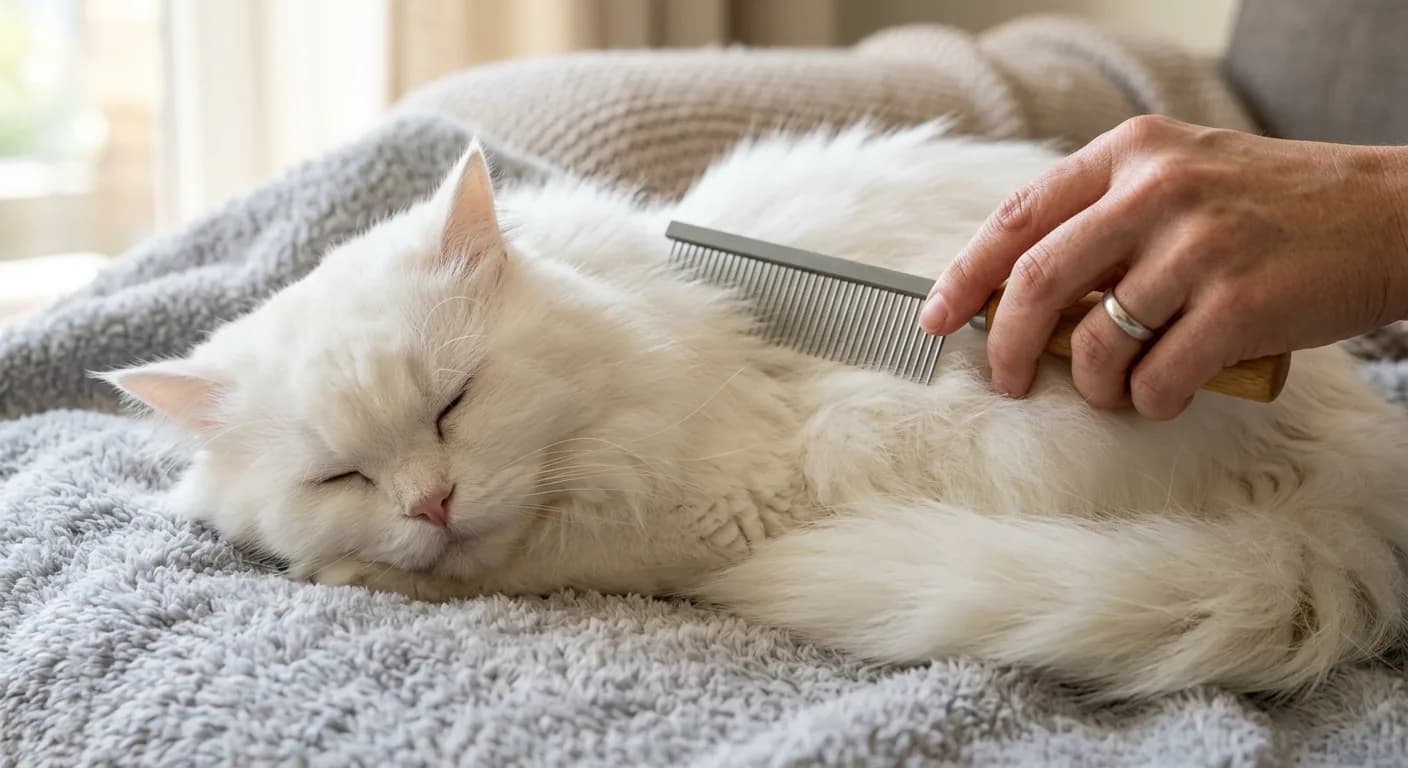
Here is the honest truth that decides whether a Persian is right for you: that coat is a daily job, not a weekly one. A Persian’s long, fine fur tangles and mats quickly, and a neglected coat becomes painful, unhygienic, and eventually requires shaving by a vet.
A realistic Persian grooming routine looks like this:
- Daily brushing with a stainless-steel comb to work through the undercoat and prevent mats, especially behind the ears, under the legs, and around the rear.
- Daily eye cleaning with a damp cloth, since the flat face causes tears to overflow and stain the fur.
- A bath every few weeks to keep the coat clean and reduce oil buildup, ideally started in kittenhood so the cat tolerates it.
- A professional groom every 6 to 8 weeks for many owners, including a sanitary trim or a "lion cut" in summer. Petful’s guide to dingleberries and pseudocoprostasis explains how to clear matted stool safely and when it becomes a vet problem.
If a daily grooming ritual sounds like more than you can commit to, the Persian’s short-haired cousin, the Exotic Shorthair, offers the same sweet face and temperament with a fraction of the coat care.
Persian Cat Health Problems
Persians are loving and long-lived when well bred, but the breed and especially its flat-faced lines carry health risks every owner should understand before buying. Choosing a doll-face cat from health-tested parents is the single best way to stack the odds in your favor.
Polycystic Kidney Disease (PKD)
PKD is the most important hereditary condition in Persians: an inherited disorder in which fluid-filled cysts form in the kidneys and slowly impair function over years. It was historically widespread in the breed, but a reliable DNA test now exists, and responsible breeders screen their breeding cats to eliminate it. Never buy a Persian kitten without seeing PKD-negative results for the parents.

63-inch multi-level cat tree with scratch posts, hammock, plush perches, and dangling toys. Vertical territory is non-negotiable for high-energy climbing breeds like the Bengal.
Petful may earn a commission when you click through to Chewy, at no extra cost to you.
Brachycephalic (Flat-Face) Breathing and Eye Issues
The flattened peke-face skull can cause brachycephalic airway problems: noisy breathing, reduced exercise tolerance, and heat sensitivity. The same facial structure leads to chronic tear overflow and staining, and shallow eye sockets that are prone to irritation. Doll-face Persians, with their more moderate muzzles, are meaningfully less affected.
Dental and Coat Conditions
Crowded jaws make Persians prone to dental disease, so annual dental checks matter. The dense coat is also vulnerable to mats and to ringworm if hygiene slips, which is one more reason the daily grooming routine is non-negotiable.
- Before you buy, ask the breeder for written proof of a PKD-negative DNA test on both parents and a recent vet exam. For a flat-faced (peke-face) kitten, ask specifically about breathing and tear-duct health. A reputable breeder will welcome these questions.
A healthy, well-bred Persian usually lives 12 to 16 years, and many reach their late teens with attentive care, a quality diet, indoor living, and routine veterinary screening. Our guide to Persian cat lifespan covers the factors that move that number most.
Feeding and Exercise Needs
Persians are not high-energy cats, which means they can gain weight easily. Feed a measured, high-quality diet built around animal protein, and consider the flat-faced breed’s preference for shallow or tilted bowls (the short muzzle makes deep bowls awkward). Keep meals portioned rather than free-fed to prevent obesity, which compounds the breed’s joint and breathing risks.
Exercise is light but still important. A couple of short, gentle play sessions a day with a wand toy or a ball keeps a Persian engaged and helps manage weight, even if your cat would rather supervise than sprint.
How Much Does a Persian Cat Cost?
A pet-quality Persian kitten from a reputable, health-testing breeder generally runs $1,200 to $3,000, with doll-face cats, rare colors like chocolate and lilac, and show-quality lines reaching higher. Adoption through a Persian or Himalayan rescue is far less expensive, often a few hundred dollars, and is a genuinely good option for owners who want the breed without the breeder price tag. For a full cost breakdown, see our Persian cat price and lifetime cost guide.

108-oz stainless steel pet fountain with quiet pump and water-level window. Bengals are notoriously water-obsessed; a flowing fountain encourages hydration and pulls them away from sinks and toilets.
Petful may earn a commission when you click through to Chewy, at no extra cost to you.
Whatever route you choose, budget for the ongoing cost too. Between premium food, grooming supplies or professional groomers, and the breed’s health-screening needs, a Persian is a meaningful annual commitment on top of the purchase price. When you are ready to find one, our guide to buying or adopting a Persian covers breeders, rescues, and red flags.
Persian Cat Types and Related Breeds
The Persian sits at the center of a small family of related cats, and two of them are officially Persian relatives worth knowing.
Himalayan (Colorpoint Persian)
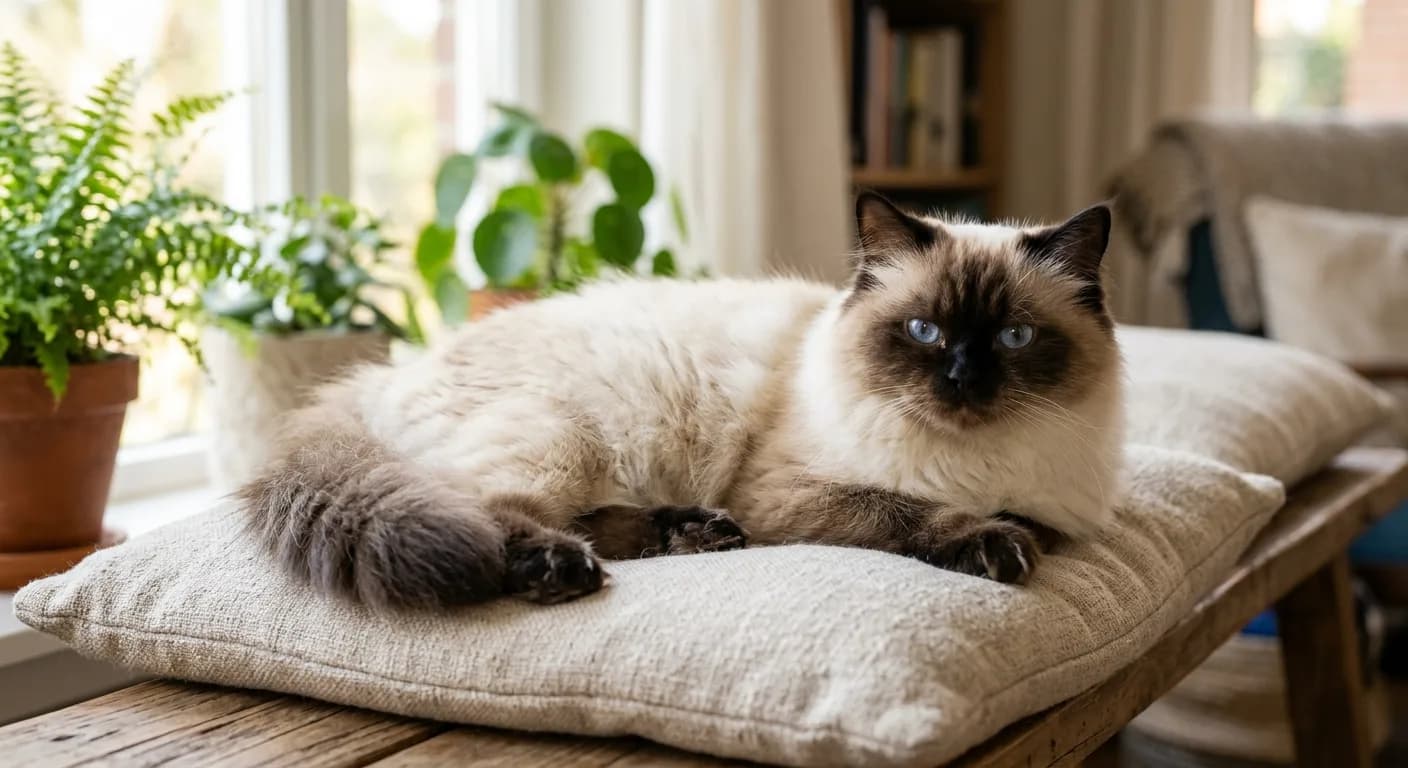
The Himalayan is a Persian in everything but coloring: it carries the pointed pattern and blue eyes of the Siamese, the result of crossing the two breeds decades ago. The CFA classifies the Himalayan as a color division of the Persian rather than a separate breed, so a Himalayan is, genetically and temperamentally, a colorpoint Persian.
Exotic Shorthair (The Shorthaired Persian)
The Exotic Shorthair was created by crossing Persians with shorthaired breeds to produce the same round face and gentle personality in an easy-care plush coat. If you love the Persian look but cannot commit to daily brushing, the Exotic is the breed to consider. Owners who want a similarly calm, affectionate companion sometimes also look at the Ragdoll, a larger, docile breed with a more manageable coat.
Persian Cat History and Origin
The Persian’s story begins with long-haired cats from Persia (modern Iran) and surrounding regions, prized for their flowing coats and brought to Europe by traders in the 1600s. The breed was refined heavily in Britain and the United States from the 1800s onward, and it was one of the founding breeds of the cat fancy. Queen Victoria’s well-documented fondness for Persians helped cement the breed’s status as a symbol of elegance, and the modern show Persian, with its rounder face and fuller coat, was developed largely over the 20th century.
Is a Persian Cat Right for You?
A Persian is an outstanding companion for the right owner and a frustrating mismatch for the wrong one. The deciding factor is rarely love of the breed: it is grooming.
- 1A Persian is a great fit if you want a calm, affectionate, apartment-friendly lap cat, you can commit to daily brushing and eye cleaning, and you will buy from a health-testing breeder or adopt.
- 2It is a poor fit if you want a playful, independent, low-maintenance cat, you travel often and cannot keep up a daily coat routine, or you are not prepared for the flat-faced breed’s potential vet costs.
If you have decided a Persian is your cat, the next step is choosing a healthy kitten and setting it up well from day one. Our guide to Persian kittens covers what to look for in a litter and how to start grooming and socialization early.
Frequently Asked Questions About Persian Cats
A pet-quality Persian kitten from a reputable breeder typically costs $1,200 to $3,000, with doll-face cats, rare colors, and show lines costing more. Adoption through a breed rescue is much less, often a few hundred dollars. Ongoing grooming and health care add to the lifetime cost.
Yes, for the right home. Persians are calm, affectionate, quiet, and apartment-friendly, which makes them excellent companions for gentle households. The main commitment is daily grooming, which is non-negotiable with the long coat.
No. Persians have a soft, musical voice and are among the quieter cat breeds. They communicate more through their expressive eyes and calm presence than through frequent meowing.
The main concerns are polycystic kidney disease (PKD, DNA-testable), brachycephalic breathing and eye issues in flat-faced lines, dental crowding, and coat matting. Buying from a breeder who screens for PKD and choosing a more moderate doll-face cat reduces the risks.
Persian cats typically live 12 to 16 years, and many reach their late teens with a good diet, indoor living, weight management, and routine veterinary care.
A Himalayan is a colorpoint Persian. It has the Persian body and coat with the pointed coloring and blue eyes of the Siamese, and the CFA classifies it as a color division of the Persian breed rather than a separate breed.
A pedigreed, indoor Persian is exactly the kind of cat you do not want to lose. Keep its microchip, breed papers, PKD test, and vet records in one digital profile with MyPetID.
Create a free pet record
Coreen Saito is a pet writer and longtime shelter volunteer with more than a decade in animal rescue. She covers cat behavior, breed care, and the small, ordinary science of sharing a life with companion animals, with a particular focus on honest takes about the products and decisions that actually matter. At home in Arizona, she's outranked by Mac (a dog with the loudest opinion in the house), Rebel (a cat who governs by quiet authority), and Meri (an orange tabby who runs the late shift and the laundry basket). She writes about all three, plus the rescues that keep coming through her life, at LifeWithMinty.com.
Sign up for expert-backed reviews and safety alerts all in one place.