Persian Cat Lifespan: How Long Do Persians Really Live?
Persian cats live 12 to 16 years on average, but face type, PKD testing, and indoor living shift that range significantly. Learn what determines lifespan and how to give your Persian the best odds.
Petful is reader supported. As an affiliate of platforms like Amazon and Chewy, we may earn a commission when you buy through links on this page. There is no extra cost to you.
The typical persian cat lifespan is 12 to 16 years for a healthy, indoor cat with regular veterinary care. The Cat Fanciers' Association (CFA) recognizes the Persian as a long-lived breed when its specific health needs are managed proactively, and large UK veterinary-records studies place the breed's median lifespan in the low-to-mid teens. One factor narrows that window sharply: polycystic kidney disease (PKD), a hereditary condition historically common in unscreened Persians that can cut years from a cat's life if the breeding line was never DNA-tested. Understanding why online sources quote ranges anywhere from 10 to 13 years up to 15 to 20 years requires looking at face type, living environment, and genetic screening status together, not in isolation.
- 1Healthy lifespan is 12 to 16 years
- 2PKD is the #1 genetic threat
- 3Flat-face types carry extra respiratory and dental risk
- 4Indoor living adds 2 to 5 years versus outdoor
- 5DNA-screened breeding lines live longest

Sign up for expert-backed reviews and safety alerts all in one place.
Why Do Different Sources Quote Such Different Lifespans?
If you've searched "how long do Persian cats live" and gotten three different answers, you're not imagining things. Sources legitimately disagree because they're describing different populations of Persians.
A study in the *Journal of Feline Medicine and Surgery* (O'Neill et al., 2014) based on UK veterinary records put median lifespan for Persians at roughly 12.5 years, lower than many breed books suggest. Breed club literature often cites 12 to 17 years for well-maintained lines. The highest estimates (15 to 20 years) tend to come from anecdotal owner reports and don't separate doll-face from flat-face types or screened from unscreened cats.
Three variables drive most of the disagreement:
1. Face type (doll-face vs peke-face): Traditional doll-face Persians have a moderate muzzle and experience far fewer brachycephalic health complications than the modern peke-face (extremely flat) show type.
2. PKD screening status: Breeding lines that carry one or two copies of the PKD1 mutation develop progressive kidney cysts. Cats from PKD-positive lines diagnosed early often reach only 10 to 13 years.
3. Indoor vs outdoor lifestyle: Outdoor and indoor-outdoor cats face cars, predators, and infectious disease, trimming expected lifespan by 2 to 5 years.
Never Scoop Again® with the Whisker Litter-Robot, the smart self-cleaning automatic litter box. Monitor visits and track weights for better overall care in the Whisker® app. Multi-cat friendly.
Petful may earn a commission when you click through to Whisker, at no extra cost to you.
When all three factors favor the cat (doll-face, PKD-negative line, indoor-only), a lifespan well above 14 years is realistic. When all three work against it, 10 years is not unusual.

 Sponsored
Have a health question about your cat?
Talk to a licensed vet at Dutch over video or message, including nights and weekends.
Use code Pets60
Plans start at $12/month · covers up to 5 pets
- Licensed vets in most states
- Rx for 150+ conditions
- 4.7 on Trustpilot
What Is Polycystic Kidney Disease and Why Does It Matter So Much?
Polycystic kidney disease (PKD) is a dominant genetic mutation that causes fluid-filled cysts to grow inside the kidneys from birth. Cats don't show clinical signs until mid-life, typically between 7 and 10 years, when enough functional kidney tissue has been replaced by cysts to trigger chronic kidney disease (CKD).

Presoaked wipes that gently clean the fur and skin around a dog's or cat's eyes, lifting away tear stains, discharge, and daily debris. A quick, no-rinse way to keep the eye area clean between baths. For routine cleaning only.
Petful may earn a commission when you click through to Chewy, at no extra cost to you.
Studies of unscreened Persian populations have historically found the PKD1 mutation in a substantial share of cats, which is exactly why DNA screening through labs like the UC Davis Veterinary Genetics Laboratory is now standard for responsible breeders. Once CKD sets in, median survival from diagnosis ranges from months to a few years depending on severity and management.
The good news is that the causative mutation is a single dominant variant with a reliable DNA test. Responsible breeders test both parents; a cat from two PKD-negative parents cannot inherit the mutation. When you're evaluating a breeder, asking for PKD DNA test certificates (not just ultrasound screening, which misses some early cysts) is the single most impactful health question you can ask. You can find more on evaluating breeders in our guide to buying or adopting a Persian.
- Polycystic kidney disease is progressive and has no cure. DNA screening before breeding is the only way to eliminate it from a line. If your Persian was not from a screened breeder, ask your vet about baseline kidney bloodwork and ultrasound starting at age 5.
How Does a Flat Face Affect a Persian's Lifespan?
The extreme flat-faced (peke-face or ultra-type) Persian is a product of selective breeding that went further after the 1950s. The resulting skull shape compresses the nasal passages and soft palate, creating brachycephalic obstructive airway syndrome (BOAS).
BOAS effects that can shorten lifespan include:
- Chronic low-grade oxygen deficit straining the heart over years
- Increased anesthetic risk, making routine surgeries more dangerous
- Higher rates of dental crowding, which accelerates periodontal disease and systemic inflammation
- Corneal exposure due to shallow eye sockets, raising infection risk
Veterinary research has found that brachycephalic (flat-faced) cats face higher anesthetic and surgical risks than longer-nosed cats. For everyday longevity, the compounding cost of chronic low-grade hypoxia and dental disease is harder to quantify but real.
Traditional or doll-face Persians retain a moderate muzzle and are significantly less affected. If longevity is your priority, a doll-face from a reputable breeder is the stronger choice, and our article on Persian cat covers the two types in detail.
Indoor vs Outdoor: How Much Does It Change the Numbers?
The American Veterinary Medical Association (AVMA) and the American Association of Feline Practitioners (AAFP) both recommend keeping cats indoors, citing outdoor life as a leading cause of premature death. For Persians, the case is even stronger.

63-inch multi-level cat tree with scratch posts, hammock, plush perches, and dangling toys. Vertical territory is non-negotiable for high-energy climbing breeds like the Bengal.
Petful may earn a commission when you click through to Chewy, at no extra cost to you.
Persians are not athletic, fast, or street-savvy. Their long coats pick up parasites and mat badly outdoors. They don't read traffic well and tend to trust strangers (including predators). Studies tracking domestic cat mortality consistently find indoor-only cats living 2 to 5 years longer on average.
A Persian that goes outdoors unsupervised in a suburban or rural area is realistically looking at 9 to 13 years. The same cat kept strictly indoors, with good veterinary care, has a credible shot at 14 to 16.
SponsoredVet care that's always there
Unlimited video calls and messaging with licensed vets for less than a typical vet visit. One membership covers up to five pets.
Use code Pets60
Plans start at $12/month · covers up to 5 pets
- Licensed vets in most states
- Rx for 150+ conditions
- 4.7 on Trustpilot
Do Male and Female Persians Live Different Lengths of Time?
The sex difference in domestic cat lifespan is modest and not Persian-specific. In the O'Neill et al. UK veterinary records study, female cats of all breeds had a slightly longer median lifespan than males, on the order of 1 to 1.5 years. This likely reflects the cardiovascular and roaming benefits of spaying (females) and neutering (males).
For Persians specifically, neutered males and spayed females show comparable longevity when all other variables are controlled. Intact (unaltered) cats of either sex live measurably shorter lives due to reproductive cancers, fighting injuries, and roaming behavior. Have your Persian spayed or neutered before 6 months if you haven't already.
Persian Cat Age Chart: Cat Years to Human Years
The old "1 cat year equals 7 human years" rule is inaccurate. Cats mature rapidly in the first two years, then age more slowly. The chart below uses the Feline Life Stage Guidelines from the AAFP as its framework.
| Cat Age | Life Stage | Human Equivalent |
|---|---|---|
| 1 year | Kitten/Junior | 15 years |
| 2 years | Junior | 24 years |
| 4 years | Prime | 32 years |
| 6 years | Prime | 40 years |
| 8 years | Mature | 48 years |
| 10 years | Mature | 56 years |
| 12 years | Senior | 64 years |
| 14 years | Senior | 72 years |
| 16 years | Geriatric | 80 years |
| 18 years | Geriatric | 88 years |
| 20 years | Geriatric | 96 years |
What Is the Oldest Recorded Persian Cat?
The oldest reliably documented Persian on record is a matter of some uncertainty because breed-specific longevity records are rarely centrally maintained. The general cat longevity record is held by Creme Puff of Austin, Texas, a mixed-breed domestic who reached 38 years and 3 days (1967 to 2005), recognized by Guinness World Records.

108-oz stainless steel pet fountain with quiet pump and water-level window. Bengals are notoriously water-obsessed; a flowing fountain encourages hydration and pulls them away from sinks and toilets.
Petful may earn a commission when you click through to Chewy, at no extra cost to you.
For Persians specifically, anecdotal owner reports of cats reaching 20 to 22 years exist but have not been independently verified through veterinary records. Verified outliers in the 18 to 20 year range are plausible for indoor, doll-face, PKD-negative Persians with excellent lifetime care. Treat any claim above 20 years with appropriate skepticism unless records support it.
How to Maximize Your Persian's Lifespan
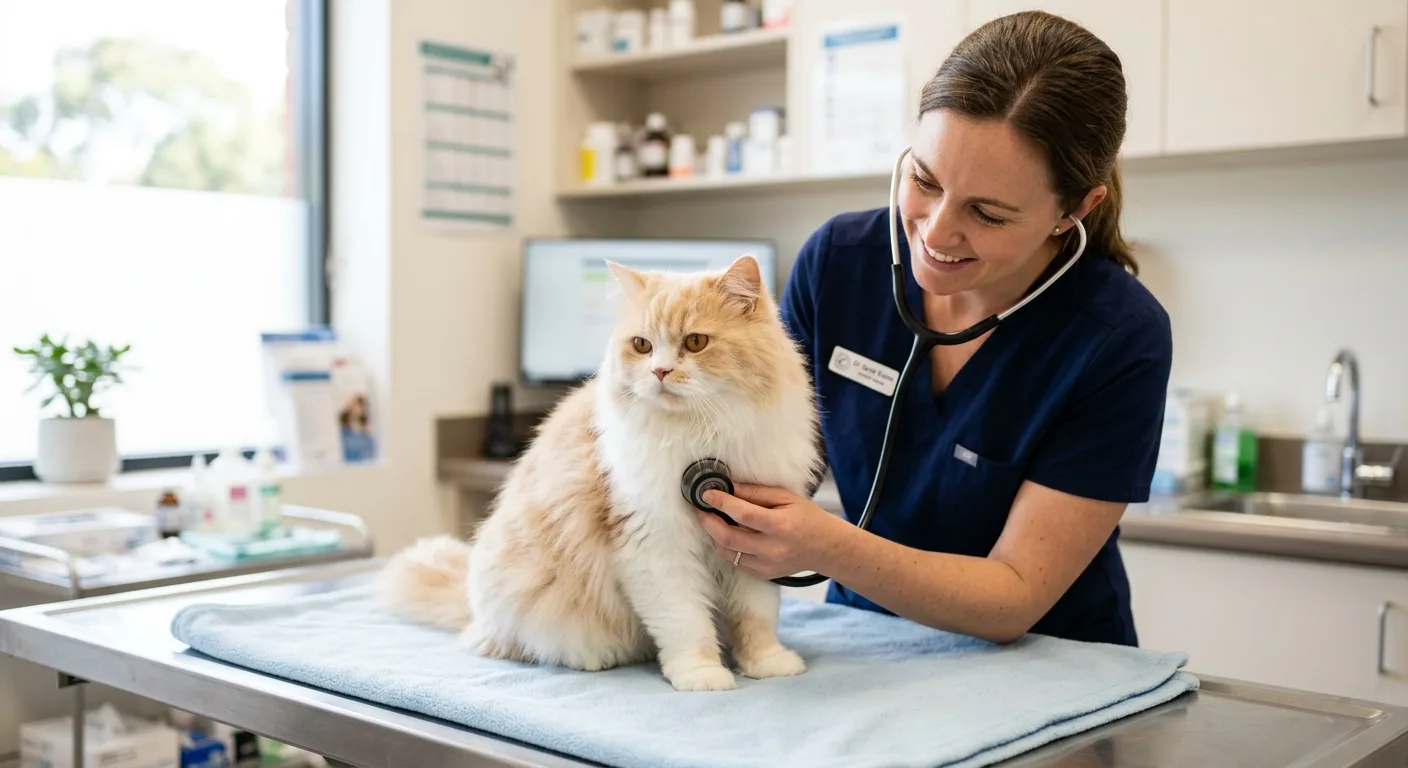
The variables you can control break into five practical areas.
Diet and weight: Obesity drives diabetes, joint disease, and hepatic lipidosis in cats. Persians are relatively sedentary, so calorie density matters. Feed a high-protein, moderate-fat diet appropriate to life stage. Avoid free-feeding kibble. Target a body condition score of 4 to 5 out of 9 (ribs palpable but not visible).
Dental care: Brachycephalic Persians are especially prone to periodontal disease because teeth crowd into a shortened jaw. Brush teeth 3 to 4 times weekly with veterinary enzymatic toothpaste. Annual professional dental cleanings under anesthesia are recommended starting at age 2 to 3, adjusted for anesthetic risk in flat-face cats.
Annual bloodwork: For senior Persians (age 8 and older), twice-yearly bloodwork is the standard of care recommended by AAFP. Annual bloodwork from age 5 onward gives the earliest possible warning of PKD progression, hyperthyroidism (most common in cats over 10), and CKD, the three most likely killers of aging Persians.
Coat and eye maintenance: Mats pull on skin and cause skin infections if untreated. Flat-face cats accumulate eye discharge that, if left, leads to facial fold dermatitis. Daily eye wiping and a grooming schedule (full brush-out every 1 to 2 days) prevent these cascading health problems.
Environmental enrichment: Persians are calm, but boredom and inactivity still matter. Mental stimulation (puzzle feeders, window perches, structured play) helps maintain a healthy weight and reduces stress-associated immune suppression.
Choosing a Long-Lived Persian: What to Look For
The single highest-leverage decision you can make for your Persian's lifespan is choosing a reputable breeder who DNA-tests for PKD. Ask to see certificates showing both parents tested negative. The next factor is face type: if you want fewer health complications, ask specifically for a traditional or doll-face line, not the ultra-flat show type.
Cost is often a signal here. A PKD-tested breeding program costs more to run. Breeders who charge very little are often cutting corners on health screening. Our breakdown of Persian cat price explains how testing and pedigree legitimately affect cost, and what price red flags to watch for.
If you're adopting from a rescue, ask about any known health history and budget for a full veterinary workup (including kidney ultrasound) in the first 60 days.
A healthy, indoor Persian typically lives 12 to 16 years. The range widens based on face type, PKD screening status, and whether the cat lives indoors.
Yes, on average. Peke-face (ultra-flat) Persians face greater respiratory, dental, and anesthetic risks than traditional doll-face types, which can reduce their expected lifespan by 1 to 3 years.
Polycystic kidney disease is a hereditary mutation causing kidney cysts. It cannot be cured, but it can be eliminated from a breeding line through DNA testing. Buying from a PKD-negative-tested breeder is the best prevention.
Keep your cat strictly indoors, feed a high-protein diet calibrated to their activity level, schedule annual (senior: twice-yearly) bloodwork, maintain a dental hygiene routine, and groom the coat daily to prevent mats and skin infections.
Yes. A 15-year-old Persian is in the geriatric life stage, equivalent to roughly 76 human years. Cats in this range do reach this age, particularly indoor doll-face cats from PKD-screened lines with consistent veterinary care.
A long Persian life runs on consistent care. MyPetID keeps vaccine reminders, PKD and vet records, and medication notes in one free digital profile so nothing slips through the cracks.
Start a free pet health record
Coreen Saito is a pet writer and longtime shelter volunteer with more than a decade in animal rescue. She covers cat behavior, breed care, and the small, ordinary science of sharing a life with companion animals, with a particular focus on honest takes about the products and decisions that actually matter. At home in Arizona, she's outranked by Mac (a dog with the loudest opinion in the house), Rebel (a cat who governs by quiet authority), and Meri (an orange tabby who runs the late shift and the laundry basket). She writes about all three, plus the rescues that keep coming through her life, at LifeWithMinty.com.
Sign up for expert-backed reviews and safety alerts all in one place.