Dilute Tortoiseshell Cat: Colors, Genetics and Tortitude
A dilute tortoiseshell cat wears the tortie pattern in soft blue-cream pastels, thanks to a recessive dilution gene. Explore the MLPH genetics, why nearly all are female, personality myths, and how to tell a dilute tortie from a dilute calico.
Petful is reader supported. As an affiliate of platforms like Amazon and Chewy, we may earn a commission when you buy through links on this page. There is no extra cost to you.
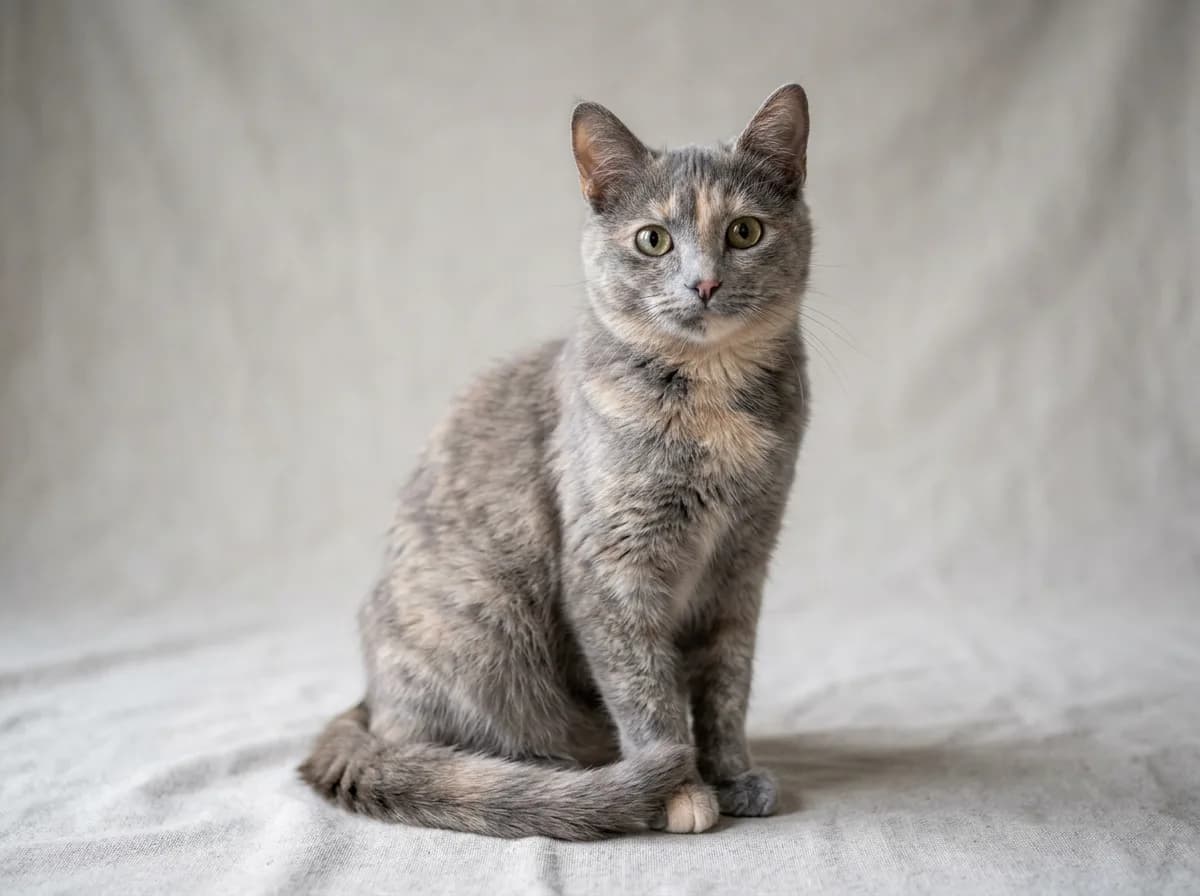
A dilute tortoiseshell cat is a tortie whose coat has been softened by a recessive gene called MLPH (melanophilin), which the UC Davis Veterinary Genetics Laboratory traces to a single-base deletion that turns sharp black into smoky blue-gray and bright orange into pale cream. The result is the same brindled, marbled tortoiseshell pattern you know, repainted in pastel. Where a standard tortie blazes in jet black and fiery ginger, the dilute version wears muted blue and butter-cream, a watercolor wash instead of an oil painting. That softer palette is why breeders and show registries often call these cats blue-cream, and it is why roughly 99.9% of them, like all torties, are female. This guide covers the full color range, the genetics in plain language, how to tell a dilute tortie apart from a dilute calico, and whether "tortitude" holds up to the science.
- 1A dilute tortoiseshell cat carries the same orange-and-black tortie mosaic as a standard tortie, but a recessive d/d dilution gene (MLPH) softens black to blue-gray and orange to cream.
- 2The dilution gene is autosomal recessive, so a cat needs two copies (d/d) to show the pastel coat.
- 3Like all torties, about 99.9% are female because the orange color is carried on the X chromosome.
- 4Tortoiseshell is a coat pattern, not a breed, so it appears in Persians, Maine Coons, British Shorthairs, and random-bred cats alike.
- 5The pattern does not change lifespan or temperament, and healthy indoor cats typically live 12-16 years.

Sign up for expert-backed reviews and safety alerts all in one place.
What Is a Dilute Tortoiseshell Cat?
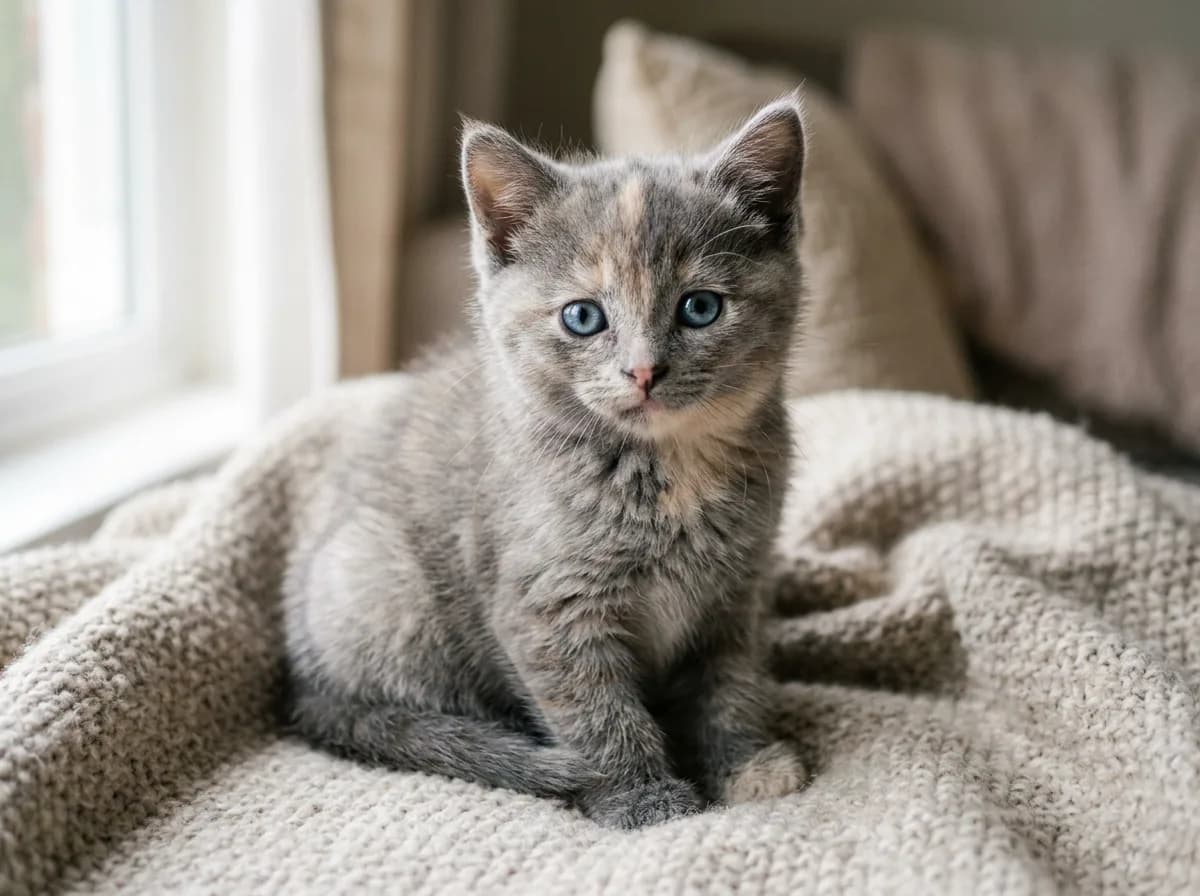
A dilute tortoiseshell cat is a domestic cat that wears the tortoiseshell pattern (a marbled blend of two pigment colors, with little or no white) in muted pastel shades instead of the usual vivid black and orange. The dilution comes from a recessive gene that lightens every pigment in the coat, so black becomes blue-gray and orange becomes cream. The brindled, interwoven look stays the same. Only the saturation changes.
It helps to break the name into two parts. "Tortoiseshell" describes the pattern: two colors swirled together across the body, named for the mottled shell of a sea turtle. "Dilute" describes the intensity: a genetic dimmer switch that takes the volume down on the color. Put them together and you get a cat that looks like a tortie seen through frosted glass, all soft blues and creams with patches that melt into one another rather than meeting in hard lines.
That softness is the practical giveaway. On a standard tortie, the boundary between orange and black is crisp and high-contrast. On a dilute tortie, the boundary between cream and blue-gray is hazy and low-contrast, which is why these cats are sometimes mistaken for solid gray cats with a faint wash of color. Look closely in good light and the two distinct pigments resolve into view.
- A dilute tortoiseshell is a tortoiseshell cat whose two coat colors have been genetically softened: black to blue-gray, orange to cream. Same pattern, pastel palette. Show registries call this combination "blue-cream."
Tortoiseshell, including the dilute form, is a coat pattern rather than a breed. A dilute tortie can be a pedigreed Persian, a Maine Coon, or a one-of-a-kind shelter cat with no papers at all. The pattern says nothing about ancestry and everything about which pigment genes the cat inherited.
Dilute Tortoiseshell vs Standard Tortie: Side-by-Side Photos
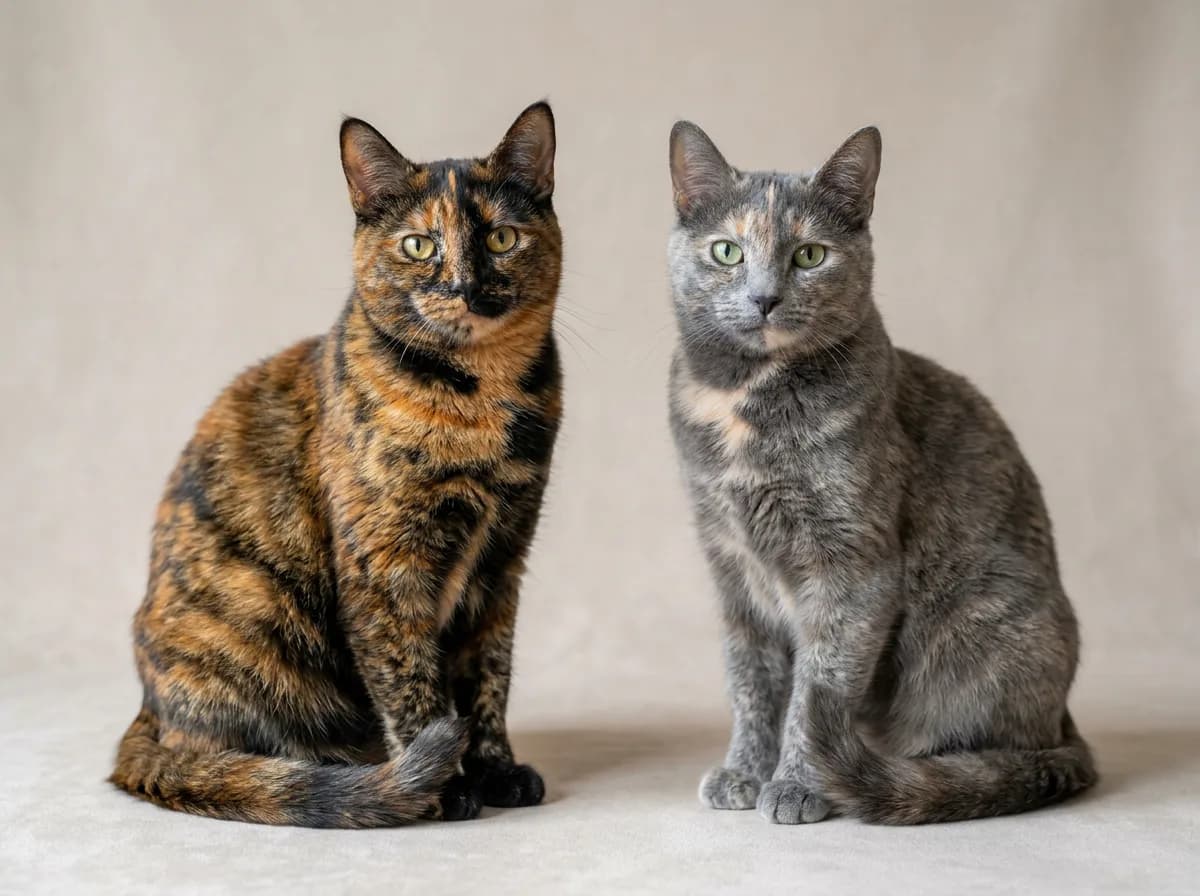
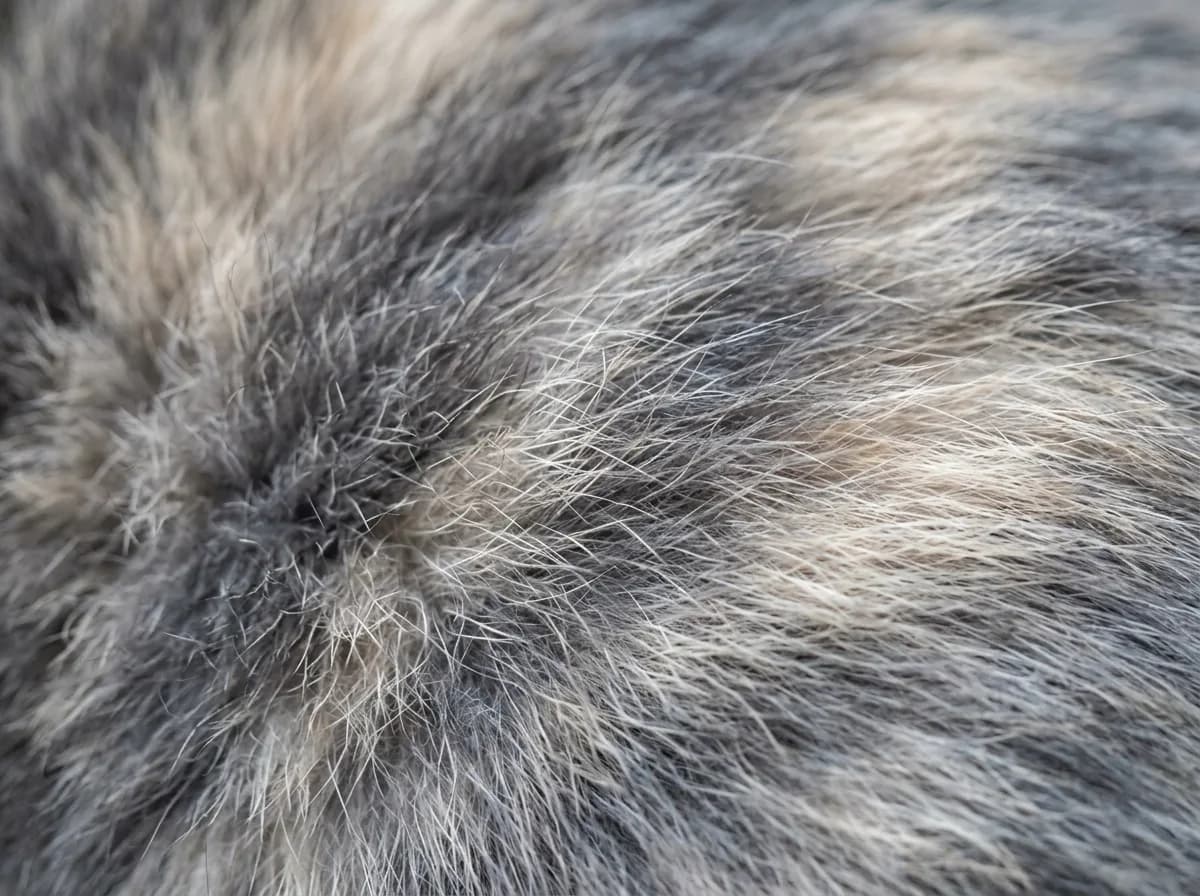
The fastest way to understand a dilute tortie is to put it next to a standard tortie. They share the exact same pattern. What differs is the pigment intensity, and once you see the two coats together the difference is obvious.
A standard tortoiseshell has high contrast: deep black against bright copper-orange, with patches that read as separate even at a glance. A dilute tortoiseshell has low contrast: soft blue-gray against pale cream, with patches that blur gently into one another. From across a room a standard tortie looks boldly patched, while a dilute tortie can read as a muted gray cat until you get close.
The dilution gene does not pick and choose. It lightens every base color a cat carries, not just black and orange. That gives a tidy color-swap chart that holds for all cats, torties included.
| Standard (Dense) Color | Dilute Version | What It Looks Like |
|---|---|---|
| Black | Blue | Smoky blue-gray, like a Russian Blue |
| Red / Orange | Cream | Soft butter or pale apricot |
| Chocolate (brown) | Lilac | Dove gray with a warm taupe cast |
| Cinnamon | Fawn | Pale "coffee and cream" caramel |
In a standard tortoiseshell, the two colors are usually black and red (orange). Run that pair through the dilution gene and you get blue and cream, which is exactly the blue-cream coat that defines the classic dilute tortie. The rarer base pairs, chocolate-and-red or cinnamon-and-red, dilute into lilac-cream and fawn-cream, two pastel variants almost no other guide bothers to chart.
- Hard, high-contrast edges between colors mean a standard tortie. Soft, hazy, low-contrast edges where blue-gray fades into cream mean a dilute tortie. The boundary, not the brightness, is the most reliable tell.
The Genetics of Dilution: The MLPH Gene and the d/d Genotype
Two separate genetic systems team up to build a dilute tortoiseshell cat. The first creates the tortie pattern. The second turns the volume down on the color. Understanding both is what lets you predict, and verify, what you are looking at.
Part one: how the tortie pattern forms
The orange color in cats is carried on the X chromosome by the sex-linked orange gene. In 2025, two independent teams (Greg Barsh's group at HudsonAlpha and Stanford, and Hiroyuki Sasaki's team at Kyushu University) identified this long-sought orange gene as a regulatory deletion affecting a gene called ARHGAP36, published in Current Biology. Orange (O) produces phaeomelanin, the reddish-orange pigment, and it masks the black eumelanin that would otherwise show.
Because the orange gene sits on the X chromosome, a cat's sex matters. Female cats have two X chromosomes (XX). A female who inherits orange on one X and non-orange (black-based) on the other carries the instructions for both colors at once. Early in development, every cell randomly switches off one of its two X chromosomes, a process called X-chromosome inactivation, or lyonization, first described by geneticist Mary Lyon in 1961. In one patch of skin the orange X stays active; in the neighboring patch the black X wins. The result is a mosaic of orange and black across the body. That mosaic is the tortoiseshell.

Never Scoop Again® with the Whisker Litter-Robot, the smart self-cleaning automatic litter box. Monitor visits and track weights for better overall care in the Whisker® app. Multi-cat friendly.
Petful may earn a commission when you click through to Whisker, at no extra cost to you.
Part two: how dilution softens the colors
Now add the second system. The dilution trait is governed by the MLPH gene, which stands for melanophilin. The UC Davis Veterinary Genetics Laboratory has identified the dilute mutation in cats as a single-base deletion (c.83delT) that disrupts the MLPH protein. That protein normally helps spread pigment granules evenly down each hair shaft. When it is broken, the granules clump and distribute unevenly, so the eye perceives a paler, softer color even though the underlying pigment is the same.
Dilution is autosomal recessive. "Autosomal" means it is not on the sex chromosomes, so it works the same way in males and females. "Recessive" means a cat needs two copies of the dilute allele (written d/d) to show the pastel coat. A cat with one dilute copy and one dense copy (D/d) looks fully colored but carries dilution silently and can pass it to kittens. Only a d/d cat shows the dilute coat. In one line: a dense tortie has at least one D, a dilute tortie is d/d, and both parents must carry at least one d for a litter to include a dilute kitten.
Stack the two systems and the picture is complete. The orange gene plus lyonization paints the tortie mosaic. The d/d genotype at MLPH then washes that mosaic out to pastel. Black becomes blue, orange becomes cream, and you have a blue-cream dilute tortoiseshell cat. Because dilution is recessive, two fully-colored cats can produce a dilute kitten if both quietly carry one d allele, so a dilute tortie in a shelter litter from non-dilute-looking parents is not a fluke; it is recessive genetics doing exactly what it does.
Why Almost All Dilute Torties Are Female
The same X-linked orange gene that builds the tortie mosaic also explains the lopsided sex ratio. Roughly 99.9% of tortoiseshell and calico cats, dilute or dense, are female. To display both orange and non-orange at once, a cat generally needs two X chromosomes, and that is the standard female (XX) arrangement. A typical male (XY) has only one X, so he is either all-orange or all-black-based, not both.
Male torties do exist, at roughly 1 in 3,000 cats, the figure commonly cited from the University of Missouri. They arise through a few genetic routes:
- XXY (Klinefelter syndrome). The cat carries an extra X chromosome, giving him the two X's needed for the mosaic. These males are almost always sterile and can have associated health issues.
- Chimerism. Two early embryos fuse into one cat that carries two cell lines. The rare fertile male torties are usually chimeras.
- Somatic mosaicism. A genetic change during early development produces tortie patches in an otherwise typical male.
- Not all male torties are sterile; the rare fertile ones are usually chimeras or mosaics. And a male tortie is not "worth more." He is a genetic curiosity with no breeding value, not a premium product. Treat any "rare male, high price" listing with skepticism.
The dilution gene does not change any of this. Because MLPH dilution is autosomal (off the sex chromosomes), it affects males and females equally. So a dilute tortie follows the same near-universal female skew as a dense tortie. The blue-cream coat is just a dense tortie genotype with d/d layered on top.
Dilute Tortie Colors and Coat Types
"Dilute tortoiseshell" is an umbrella for several pastel color combinations and every coat length. The base pair of colors and the dilution gene together set the palette; the breed sets the texture.
Blue-cream (the classic)
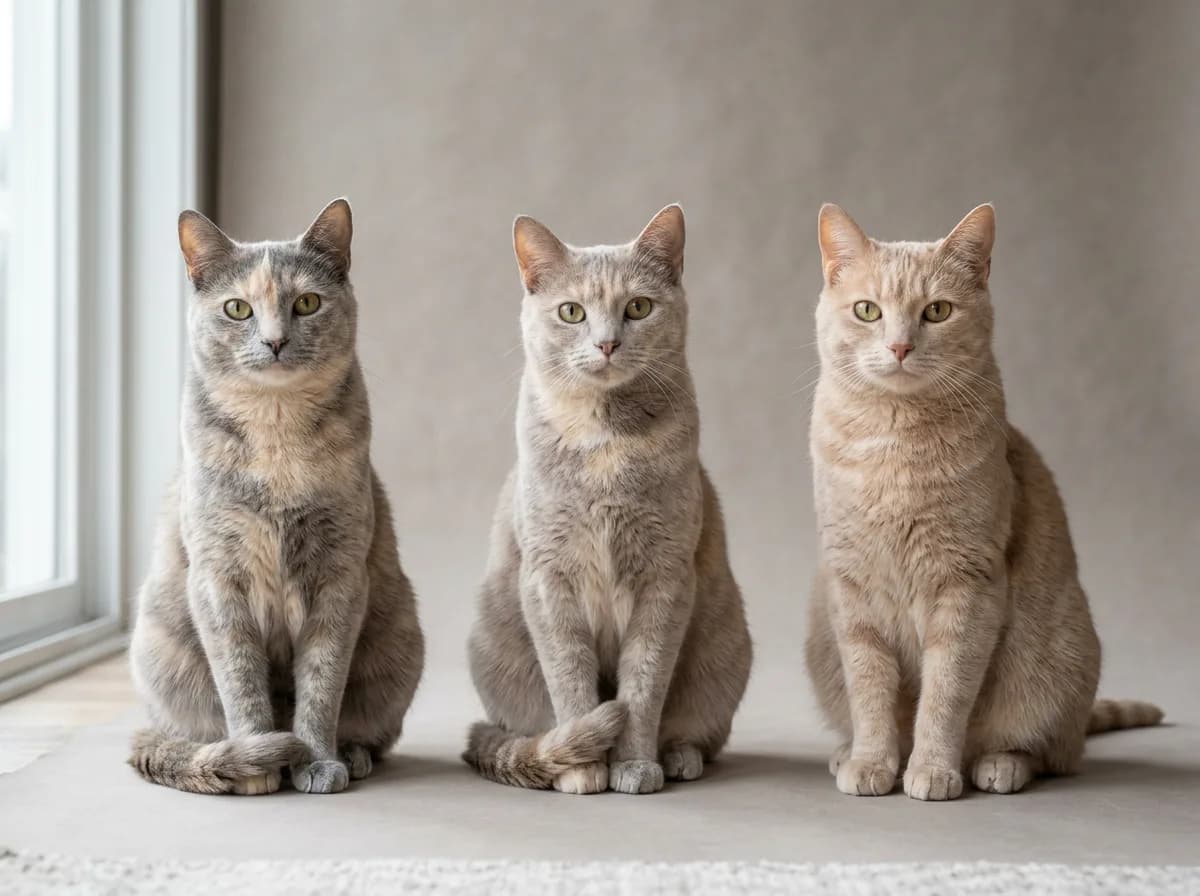
The signature dilute tortie is blue-cream: smoky blue-gray (diluted black) blended with pale cream (diluted orange). This is what most people picture, and it is the official show-world name for the coat. If someone refers to a blue cream tortoiseshell cat, they mean this exact combination. Because the blue can dominate large areas, casual observers often call it a grey tortoiseshell cat, which is accurate shorthand: the gray IS the diluted black half of the tortie.
Lilac-cream and fawn-cream (the rare pastels)
When the dense base is chocolate rather than black, dilution turns it to lilac (a dove-gray with a warm taupe cast), pairing with cream for a lilac-cream tortie. When the base is cinnamon, dilution produces fawn (a pale caramel), giving a fawn-cream tortie. These need the chocolate or cinnamon genes in addition to d/d, so they are scarce and show up mostly in breeds where those base colors are cultivated, such as some Orientals and Devon Rex lines.
Shorthair, longhair, and curly coats
Coat length and texture are set by the breed, not the tortie pattern, so dilute torties come in every coat type:
- Shorthair dilute tortie: the most common, seen in domestic shorthairs, British Shorthairs, and American Shorthairs.
- Longhair dilute tortie: a long haired dilute tortoiseshell cat shows the pastel pattern on a flowing coat, classic in Persians, Maine Coons, and Norwegian Forest Cats. The longer hair can make the colors look even softer and more blended.
- Curly or sparse coats: Devon Rex and Cornish Rex can carry the dilute tortie pattern on their distinctive wavy coats, and even a Sphynx can be a "dilute tortie" by skin pigment.
One thing that does not change is the dilution itself. A dilute tortie kitten's color often deepens or rearranges slightly as the adult coat grows in, though the underlying pattern is fixed before birth. The pastel softness, however, is permanent: a dilute kitten will not "darken up" into a standard tortie, because the d/d genotype never changes.
If you are drawn to the longhair look specifically, the breed pages for the Persian cat and the Maine Coon are good starting points, since both breeds commonly produce dilute tortie coats and their grooming needs differ sharply from a shorthair's.
Dilute Tortie vs Dilute Calico vs Blue-Cream: How To Tell Them Apart
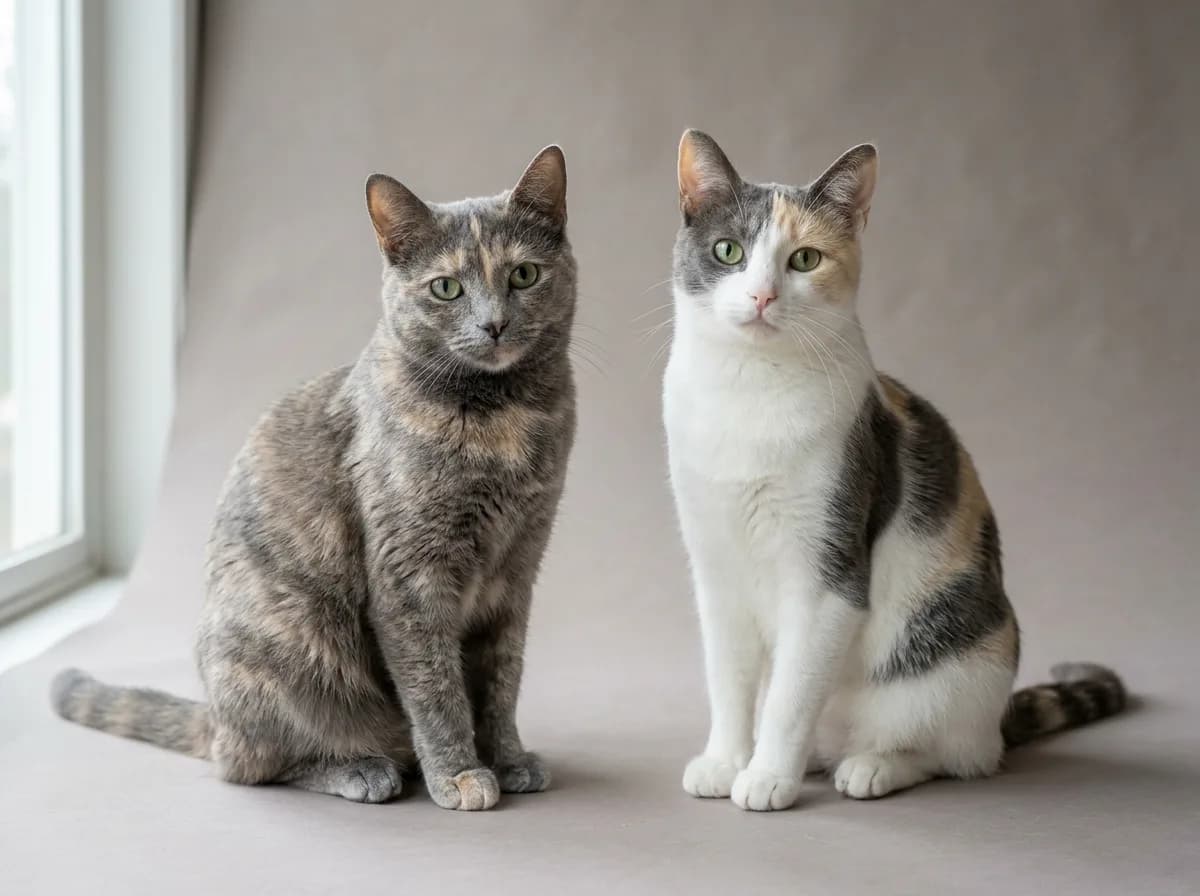
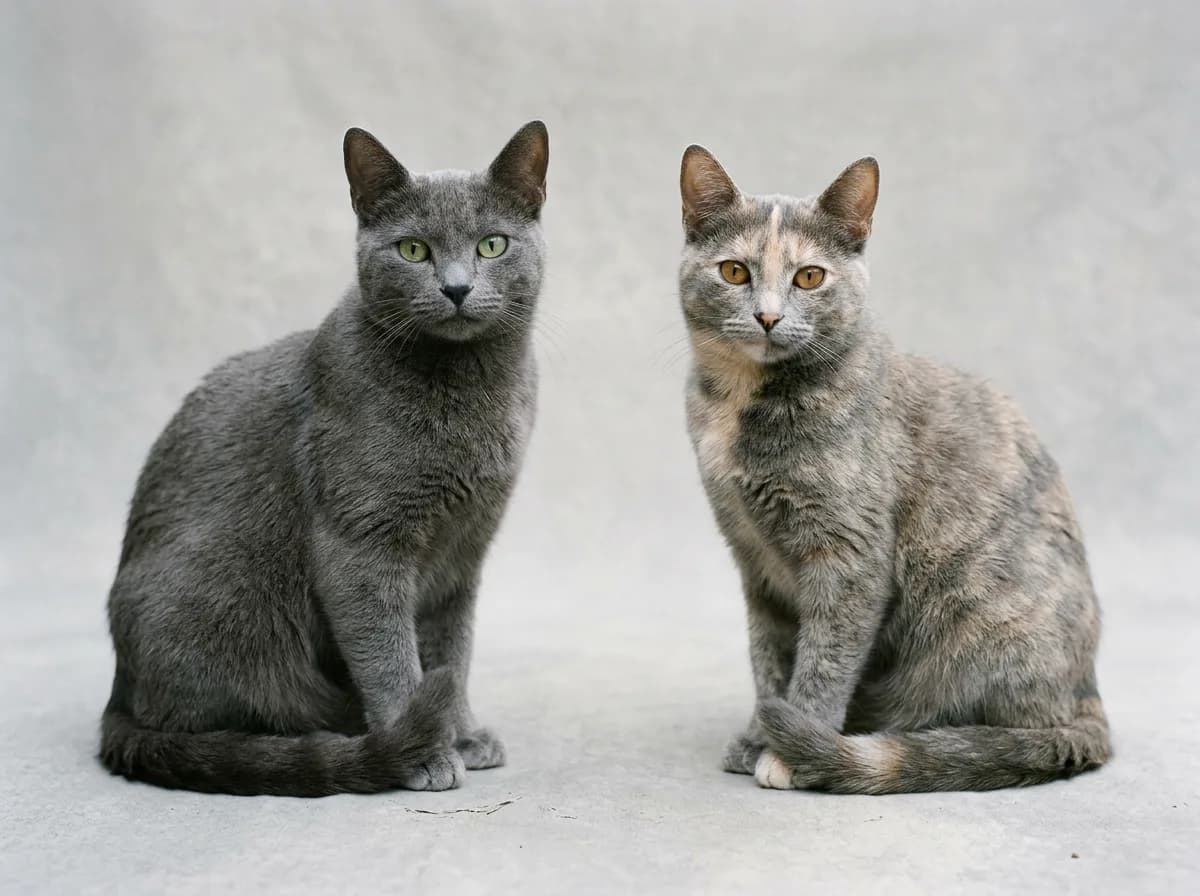
This is the question that fills Reddit and Facebook cat groups, and it has a clean answer once you know what to look for. Three coats get confused: dilute tortie, dilute calico, and a plain solid blue cat.
The deciding factor is white and how the colors are arranged.
- Dilute tortoiseshell: blue-gray and cream brindled and blended together, with little or no white. A small white chest locket or a few white toes still counts as a tortie.
- Dilute calico: predominantly white, with the blue and cream appearing as distinct, separate patches rather than blended. The white-spotting gene (a KIT-related piebald gene) pushes the colors apart into clean blocks on a white ground.
- Solid blue cat: one uniform blue-gray with no cream at all. A British Shorthair or Russian Blue is solid blue, not a dilute tortie. If you cannot find any cream, it is not a tortie of any kind.
So the rule of thumb runs: lots of white with separated patches means dilute calico; little or no white with blended colors means dilute tortie; no second color at all means solid blue. A dilute tortoiseshell cat with white that has shifted toward the calico end of the spectrum is, by definition, edging into dilute calico territory; the more white and the more separated the patches, the more "calico" the label.
Tabby striping adds one more wrinkle. A dilute tortie with visible tabby stripes inside its patches is a dilute "torbie" (a tortie-tabby). It is still a dilute tortie at heart, just with the tabby pattern showing through.
The full side-by-side of every tortie-versus-calico distinction, including the white-spotting genetics in depth, lives in our dedicated calico-versus-tortoiseshell comparison. This page stays focused on owning the dilute end of the family: the colors, the genotype, and how to read a blue-cream coat.
How Rare Are Dilute Tortoiseshell Cats?
Dilute torties are genuinely uncommon, but the reason they feel rare is worth unpacking, because the genetics and the day-to-day reality tell slightly different stories.
On paper, the odds stack up. A dilute tortie needs three things to line up at once: the tortie mosaic (which already requires the female XX arrangement in the typical case), then two copies of the recessive dilution allele (d/d), inherited from two parents who each carry at least one d. Tortoiseshell cats are themselves a minority of the cat population, and dilute coats are a minority within that. Multiply those probabilities and dilute torties land well below standard torties in frequency.
In practice, "rare" is relative. The dilution gene is common enough in the general cat population that dilute torties turn up regularly in shelters and rescues, often from ordinary mixed-breed parents who silently carried the recessive d. A dilute tortie is harder to find than a tabby or a solid black cat, but they are a recognized, regularly-adopted coat, not a unicorn. They are not so rare that you need a breeder or a waiting list, yet rare enough that spotting one feels like a small piece of luck. Watching local shelter and rescue listings will usually turn one up without a long wait.
Dilute Tortie Personality: Is Tortitude Real?
"Tortitude" is the popular belief that tortoiseshell cats, dilute ones included, are feisty, strong-willed, and full of attitude. It is a fun idea, and many owners swear by it. But as a scientific claim, it is not established.
The most-cited research is a 2015 study from UC Davis (Stelow, Bain, and Kass; published in the Journal of Applied Animal Welfare Science in 2016), which analyzed 1,274 owner survey responses. It found that owners reported slightly higher aggression in sex-linked-orange female cats (torties, calicos, and torbies), along with gray-and-white and black-and-white cats, specifically during handling and vet visits. The keyword is "owner-reported." The effect was modest, it relied on owner perception rather than controlled behavioral testing, and individual variation dwarfed any pattern-linked trend.
In plain terms: the pattern does not determine the personality. A dilute tortie's temperament is shaped far more by her breed, her individual nature, and how she was socialized as a kitten than by the color of her coat. If you adopt a dilute tortie expecting a guaranteed sass machine, you may get a cuddly lap cat instead, and that is entirely normal.
One caution about the "tortitude" label: do not let it excuse a behavior problem. If a cat is suddenly aggressive or hard to handle, the cause is far more likely to be pain, fear, or a medical issue than her coat color. "She's just being a tortie" can hide a treatable problem, so when behavior changes, see a veterinarian.

63-inch multi-level cat tree with scratch posts, hammock, plush perches, and dangling toys. Vertical territory is non-negotiable for high-energy climbing breeds like the Bengal.
Petful may earn a commission when you click through to Chewy, at no extra cost to you.
Breeds That Can Have a Dilute Tortoiseshell Coat
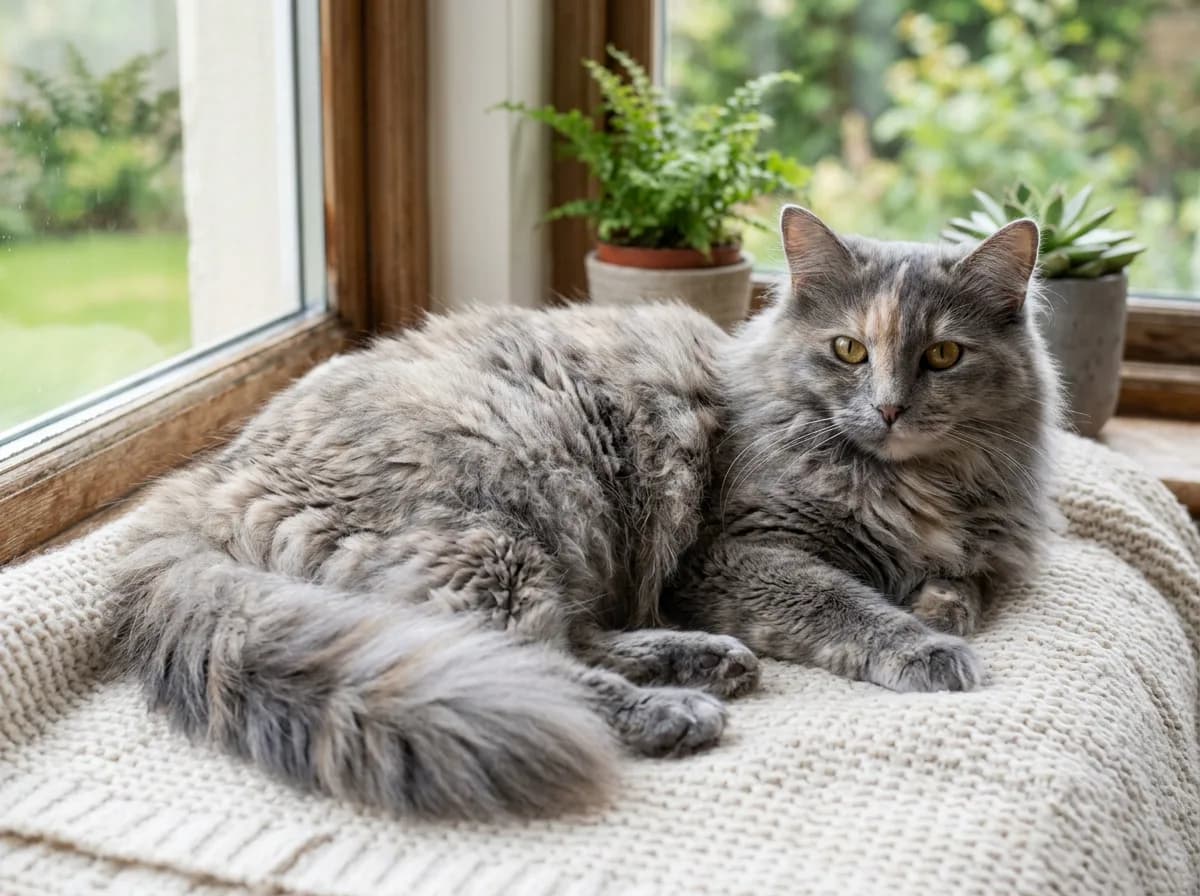
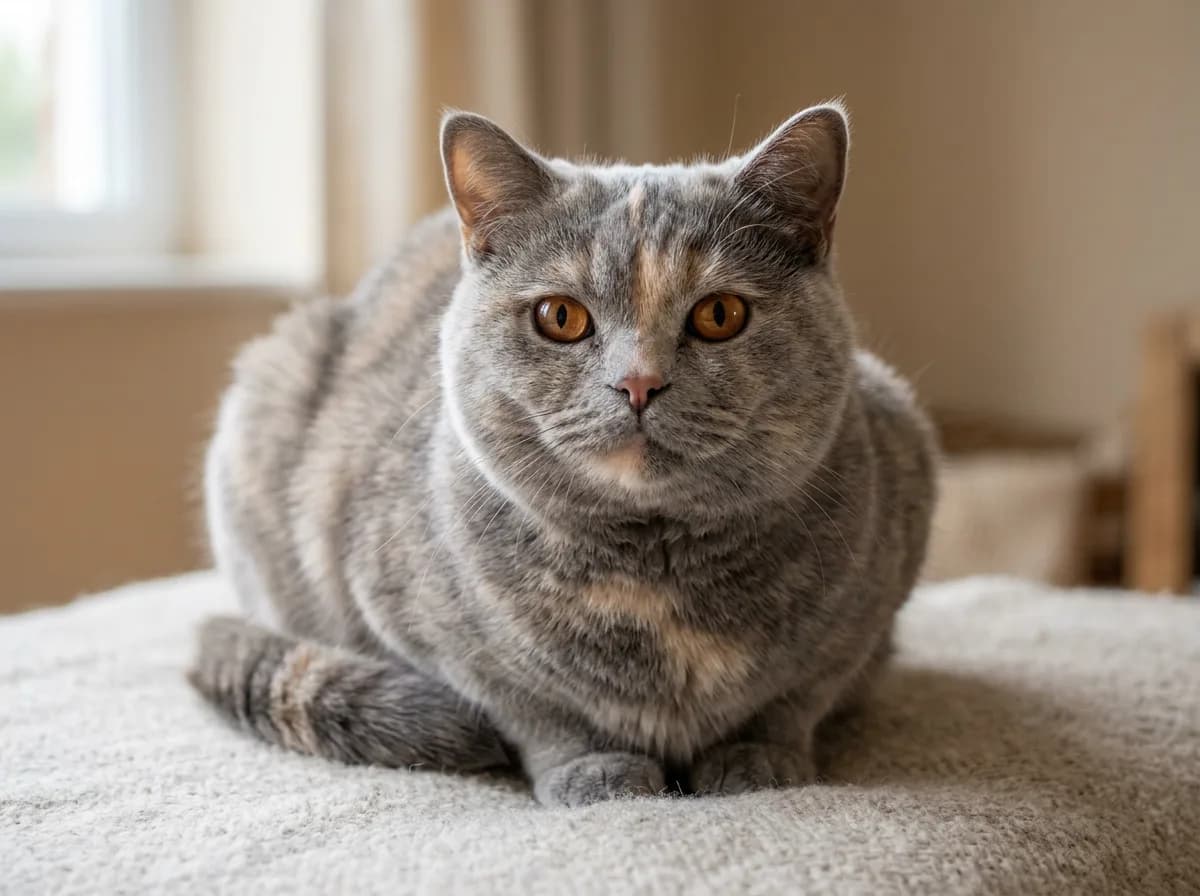
Because tortoiseshell is a pattern and not a breed, the dilute tortie coat appears across many pedigreed breeds (so long as the breed carries the orange and dilution genes) as well as in countless random-bred cats. The breed decides the body type, coat length, and care needs; the genes decide the color.
Breeds that commonly produce dilute tortoiseshell coats include:
- [Persian](https://www.petful.com/cat-breeds/persian-cat/): a longhair classic; blue-cream is a recognized Persian color. See the breakdown of Persian cat colors for where tortie and dilute tortie fit.
- [Maine Coon](https://www.petful.com/cat-breeds/profile-maine-coons/): large, semi-longhair, and well known for blue-cream and dilute tortie coats.
- [British Shorthair](https://www.petful.com/cat-breeds/british-shorthair/): the breed most associated with the plush "blue" coat, and a frequent source of blue-cream dilute torties.
- American Shorthair: a hardy random-bred-derived breed that readily shows the pattern.
- Devon Rex and Cornish Rex: curly-coated breeds that can carry dilute tortie, including the rarer lilac-cream.
- Norwegian Forest Cat and [Siberian](https://www.petful.com/cat-breeds/siberians/): sturdy longhairs from cold climates that produce striking dilute torties.
- Japanese Bobtail, Manx, and Exotic Shorthair: all recognized to carry the tortie pattern, dilute included.
Purebred status always comes from the breed, not the coat. A blue-cream Persian is a purebred Persian; a blue-cream domestic shorthair is a wonderful mixed-breed cat. The dilute tortie pattern itself confers no pedigree, because papers come from breed registry and lineage, never from color.
Most dilute torties you meet, though, are not pedigreed at all. They are mixed-breed cats whose parents both happened to carry the recessive dilution allele, which is exactly why shelters are the most reliable place to find one.
Photo Gallery: Identify Your Dilute Tortoiseshell Cat
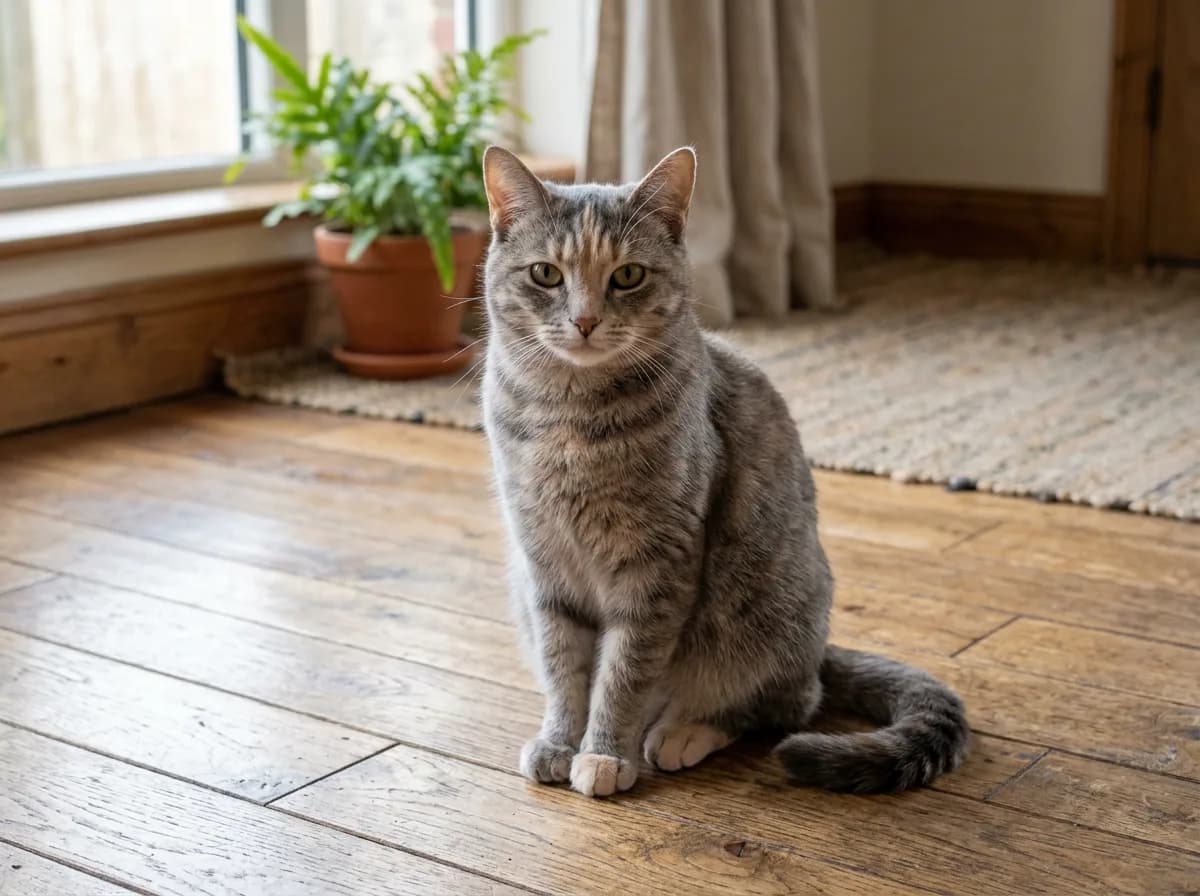
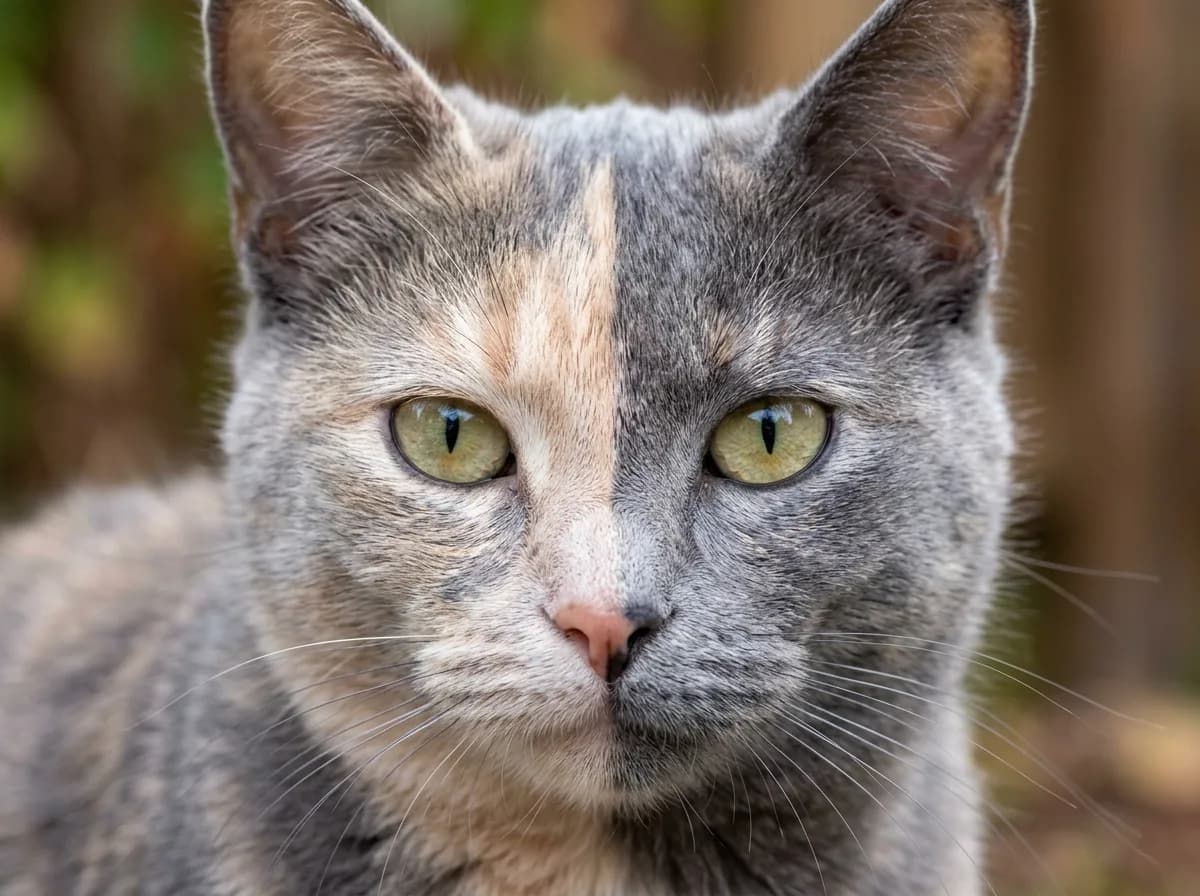
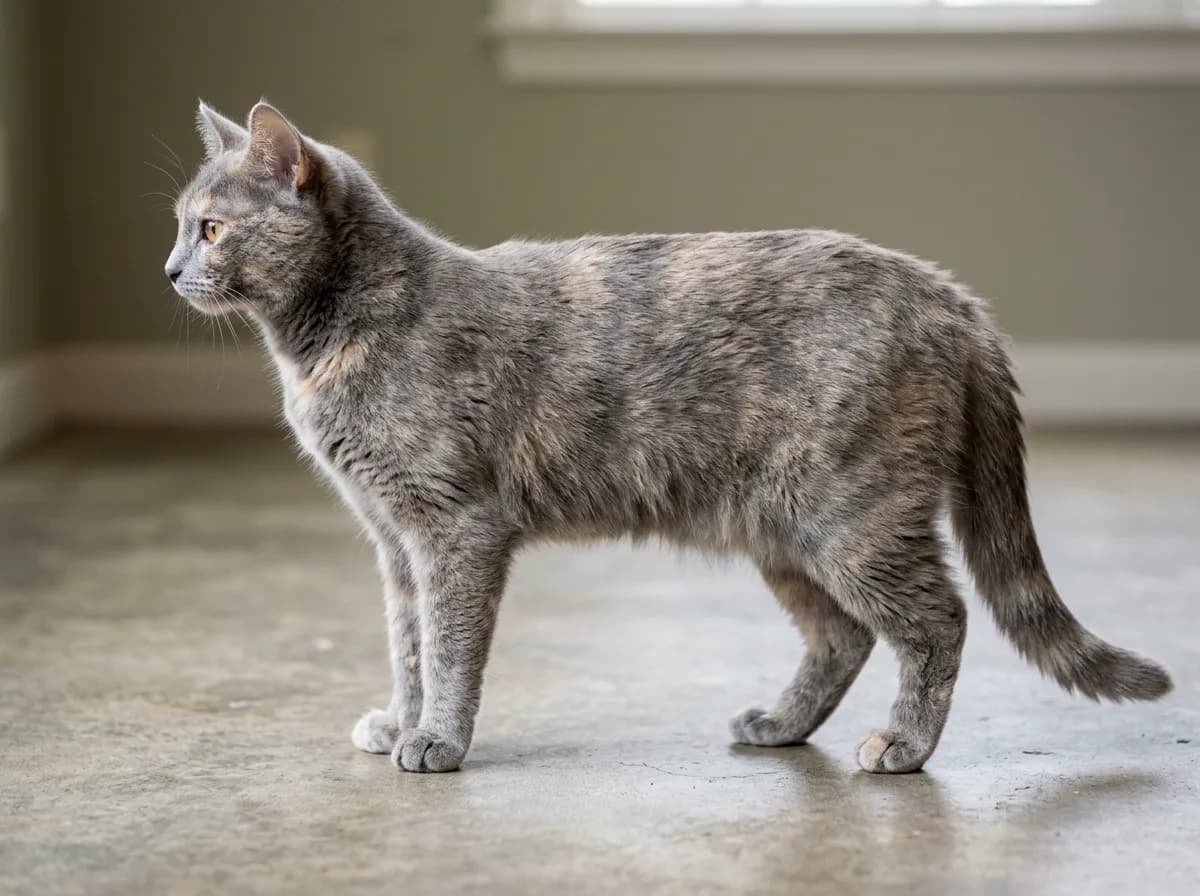
The single biggest signal from the search results for this coat is identification intent: the top results are full of "is this a dilute tortie?" threads from people holding up a photo and asking. Use this gallery as a visual checklist against your own cat.
When you compare your cat to the gallery, run through this quick checklist:
- Two colors, both present? You should see both blue-gray AND cream somewhere. One color alone means a solid cat, not a tortie.
- Pastel, not vivid? Soft blue and pale cream point to dilute. Sharp black and bright orange point to standard.
- Blended, not blocked? Brindled, melting boundaries mean tortie. Separated patches on lots of white mean calico.
- Stripes inside the patches? Visible tabby striping makes it a dilute torbie, still a dilute tortie variant.
- A split or asymmetric face? A face divided down the middle into two colors is a hallmark tortie giveaway.
- Indoor lighting washes out the already-subtle dilute colors and makes a blue-cream cat look plain gray. Natural daylight near a window brings out the cream patches and confirms the tortie pattern. This single tip resolves most "is it a dilute or just gray?" questions.
Caring for a Dilute Tortoiseshell Cat
A dilute tortoiseshell needs the same care as any cat of her breed and coat length. There is no special "dilute tortie" regimen, because the pattern is purely cosmetic. Tailor the care to the coat, not the color.

108-oz stainless steel pet fountain with quiet pump and water-level window. Bengals are notoriously water-obsessed; a flowing fountain encourages hydration and pulls them away from sinks and toilets.
Petful may earn a commission when you click through to Chewy, at no extra cost to you.
Grooming by coat length
- Shorthair dilute torties need only weekly brushing to remove loose hair and a little extra during seasonal shedding.
- Longhair dilute torties (Persian, Maine Coon, Norwegian Forest types) need brushing several times a week, sometimes daily, to prevent mats and tangles. The pale cream areas can show dirt and tear-staining more than dark fur, so the face and any white areas benefit from gentle regular wiping.
- Curly-coated dilute torties (Devon, Cornish Rex) need minimal brushing but may need occasional bathing because their sparse coats distribute skin oils differently.
Diet, enrichment, and lifespan
Feed a complete, balanced, life-stage-appropriate diet and keep an eye on portions, since indoor cats are prone to weight gain. Provide vertical space, scratching surfaces, and interactive play to keep her mentally and physically engaged. None of this changes because she is a dilute tortie, but matching enrichment to her individual energy level matters far more than her coat ever will.
The pattern does not affect lifespan. A healthy indoor dilute tortie typically lives 12-16 years, and some reach 20 with good care, regular veterinary checkups, and a safe indoor life. (The rare XXY male tortie is the exception; Klinefelter-related health issues can shorten his life.) The takeaway: care tracks the breed and coat length, not the color. A dilute tortie Persian needs Persian-level grooming and face care, while a dilute tortie domestic shorthair needs a quick weekly brush. Look up your cat's breed-specific needs (or her coat length if she is mixed) and follow that, not a color-based myth.
Do Dilute Coats Come With Health Issues?
This is the YMYL question worth getting exactly right, because some sources hand-wave vague "health implications" of the dilution gene without sourcing them. Here is the evidence-based version.
The condition people are usually thinking of is color dilution alopecia (CDA), a hair-loss disorder linked to dilute (blue and fawn) coats. CDA is well documented in dogs, especially blue Doberman Pinschers and other blue or fawn breeds, where affected animals can develop thinning hair and skin problems in the diluted areas.
In cats, the picture is very different. Cats carry the same MLPH dilution gene as dogs and mice, yet in cats and mice that gene is generally not associated with the coat or skin abnormalities seen in some dog breeds. Color dilution alopecia has been reported only rarely in blue or cream cats, which tells us the dilute coat in cats is largely benign. A blue-cream dilute tortie is not at meaningful elevated risk of a coat disorder simply because she is dilute.
- The dilute coat itself is not a health condition. But any cat losing hair in patches, developing flaky or itchy skin, or showing bald spots should be examined by a veterinarian. The cause is far more likely to be allergies, parasites, ringworm, stress, or an endocrine issue than the dilution gene. Do not write off skin or coat changes as "just a dilute thing."
The one genuine health caveat is unrelated to the dilute coat and applies to the rare male tortie. An XXY (Klinefelter) male carries an extra chromosome and can have associated health problems and a potentially shorter lifespan. That is a chromosomal issue, not a pigment one, and it does not apply to the overwhelmingly female dilute tortie population.
Bottom line: a dilute tortoiseshell is, coat-wise, as healthy as any other cat. Base her health expectations on her breed and her individual veterinary history, not on the dilution gene.
150+ Names for Dilute Tortoiseshell Cats
The soft blue-cream palette practically begs for a pastel, vintage, or good-luck name. No other dilute tortie guide offers a naming list, so here is a generous one organized by theme. Pick one that matches her coat, her attitude, or the lucky "money cat" lore that follows torties everywhere.
Pastel and soft-color names
Misty, Smokey, Hazel, Pearl, Dove, Ash, Sterling, Slate, Cloud, Stormy, Frost, Lavender, Lilac, Heather, Iris, Periwinkle, Bluebell, Cornflower, Wisteria, Sky, Storm, Cirrus, Silvie, Bluebelle, Smudge, Cinder, Twilight, Dusk, Shadow, Opal, Moonstone, Quartz, Pewter, Flint, Gossamer.
Cream and warm-tone names
Buttercup, Cream, Caramel, Honey, Biscuit, Latte, Buttermilk, Custard, Toffee, Maple, Marzipan, Vanilla, Butterscotch, Praline, Brulee, Crème, Almond, Oatmeal, Sandy, Peaches, Apricot, Buttercream, Nougat, Tawny, Sunny, Goldie, Marigold, Saffron, Amber, Ginger (ironic for a dilute), Clementine.
Blue-cream and "two-tone" inspired
Blue, Bluey, Indigo, Azure, Cobalt, Denim, Calico (cheeky), Patches, Mosaic, Marble, Swirl, Brindle, Domino, Duo, Harmony, Medley, Mingle, Mottle, Dapple, Confetti, Kaleido, Prism, Mingle, Tessera.
Lucky "money cat" and folklore names
Lucky, Penny, Sixpence, Fortune, Clover, Cricket, Maneki (after the lucky cat), Mochi, Sakura, Koban, Fortuna, Pesos, Sterling, Sterling, Treasure, Jewel, Gem, Cricket, Talisman, Charm, Hope, Faith, Star, Magic, Wish, Trinket, Bounty.
Elegant and vintage names
Coco, Violet, Olive, Mabel, Pearl, Dahlia, Bijou, Celeste, Esme, Juniper, Maisie, Posy, Saffron, Seraphina, Tansy, Winnie, Beatrix, Clementine, Cordelia, Eloise, Genevieve, Hazelnut, Marguerite, Ophelia, Persephone, Rosalind, Vivienne, Wilhelmina, Bluebell, Primrose, Marigold, Delphine.
Sassy "tortitude" names (just in case)
Sass, Diva, Duchess, Empress, Queenie, Boss, Bossy, Tiger (ironic), Pepper, Spice, Chili, Zinger, Tabasco, Sriracha, Wasabi, Firecracker, Rebel, Maverick, Rogue, Trouble, Mischief, Havoc, Tempest, Fury, Blaze, Cayenne, Habanero, Jalapeno, Nitro, Sparky.
Whatever theme you pick, say the name across the room a few times before you commit. A name you can call comfortably and a cat can learn to recognize beats a clever one you never actually use.
Folklore and Luck: Why Torties Are Called Money Cats
Dilute torties inherit the same rich folklore as all tortoiseshell cats. Across maritime and Celtic traditions, torties carried "money cat" and good-luck reputations. Sailors once kept tortoiseshell cats aboard ships in the belief they brought good fortune and protected against storms, and finding a tortie was considered lucky in several European folk traditions.
In Japan, the tri-color cat (the mi-ke, meaning "three fur") is the model for the maneki-neko, the beckoning "lucky cat" figurine seen in shop windows worldwide, raised paw inviting in good fortune and prosperity. A dilute tortie, with her softened version of that mosaic, carries the same symbolic charm.
There is no science behind the luck, of course, but the lore is part of why these cats are so beloved, and it makes the "money cat" naming theme above feel especially fitting for a blue-cream beauty.
Adopting a Dilute Tortoiseshell Cat
Because tortoiseshell is a coat pattern and not a breed, "for sale" and "price" mean something specific for a dilute tortie, and it is easy to get talked into overpaying if you do not know how it works.
What it costs
- Shelter or rescue adoption: typically $50-200, usually including spay/neuter, initial vaccines, and a microchip. This is by far the most common and most economical route, and most dilute torties are mixed-breed cats who end up here.
- Purebred dilute torties: if you want a blue-cream Persian, Maine Coon, or British Shorthair specifically, you pay that breed's going rate, roughly $800-2,500 for most pedigreed kittens. You are paying for the breed and pedigree, not the coat.
Where to adopt
Watch local shelters, breed-specific and all-breed rescues, and reputable online adoption listings; dilute torties turn up regularly given how widespread the dilution gene is. If you have your heart set on a particular breed in dilute tortie coloring, contact registry-affiliated breeders for that breed and ask whether they produce blue-cream lines, rather than searching for "dilute tortie for sale" as if it were a breed unto itself.
Whichever route you choose, the most important questions are about health, temperament, and socialization, the things that actually shape life with your cat. The coat, gorgeous as it is, is the least consequential detail.
Frequently Asked Questions
Yes, dilute torties are uncommon. A cat needs the tortie pattern (which almost always requires being female), plus two copies of the recessive dilution gene (d/d). That combination is harder to find than a standard tortie, though not so rare that you need a breeder. The dilution gene is common enough that dilute torties turn up regularly in shelters.
No. A dilute tortie needs the same care as any cat of her breed and coat length. The dilute pattern is purely cosmetic and has no special grooming, dietary, or medical requirements. Match her care to her coat length (more brushing for longhairs) and her breed, not to her color.
It depends entirely on the individual cat, not the coat. There is no scientific evidence that the dilute tortie pattern makes a cat more or less affectionate or clingy. Temperament is shaped by breed, individual personality, and early socialization. Some dilute torties are velcro lap cats; others are independent. The coat does not predict it.
There is no coat-specific personality. The popular "tortitude" idea (that torties are feisty and strong-willed) comes from a 2015 UC Davis owner survey that found modestly higher owner-reported aggression in sex-linked-orange females during handling and vet visits. The effect was small, owner-reported, and dwarfed by individual variation. Breed and socialization matter far more than color.
Adopting from a shelter or rescue typically costs $50-200 and usually includes spay/neuter, vaccines, and a microchip. A purebred cat that happens to be dilute tortie (a blue-cream Persian or Maine Coon, for example) follows that breed's pricing, roughly $800-2,500 for a pedigreed kitten. The dilute tortie coat itself adds no price premium.
The pattern does not affect lifespan. A healthy indoor dilute tortie typically lives 12-16 years, and some reach 20 with good care and regular veterinary checkups. The rare exception is the XXY (Klinefelter) male tortie, who can have chromosome-related health issues and a potentially shorter life.
Yes, but it is rare, about 1 in 3,000 cats. Because the orange color is X-linked, a male usually needs an extra X chromosome (XXY, Klinefelter syndrome) to show the tortie mosaic; he can also be a chimera or somatic mosaic. Most male torties are sterile. A male tortie is a genetic curiosity, not a more valuable cat.
White is the dividing line. A dilute tortie is mostly blue-gray and cream blended together with little or no white. A dilute calico is predominantly white with distinct, separate patches of blue and cream, thanks to the white-spotting gene pushing the colors apart. More white plus separated patches means calico; little white plus blended colors means tortie.
A classic dilute tortie is blue-cream: smoky blue-gray (diluted black) blended with pale cream (diluted orange). Rarer variants include lilac-cream (from a chocolate base) and fawn-cream (from a cinnamon base). In every case the dilution gene softens the standard tortie's black-and-orange into pastel.
No. Tortoiseshell, including the dilute form, is a coat pattern, not a breed. A dilute tortie can be a pedigreed Persian, Maine Coon, or British Shorthair, or a one-of-a-kind mixed-breed shelter cat. Purebred status comes from the breed and lineage, never from the coat pattern.
Many breeds, including Persian, Maine Coon, British Shorthair, American Shorthair, Devon Rex, Cornish Rex, Norwegian Forest Cat, Siberian, Japanese Bobtail, Manx, and Exotic Shorthair, plus countless random-bred cats. Any breed that carries both the orange and dilution genes can produce a dilute tortie.
As white increases and the colors separate into distinct patches, the cat shifts from a dilute tortie toward a dilute calico. A small amount of white (a chest locket or white toes) still counts as a dilute tortie. A cat that is predominantly white with separate blue and cream patches is a dilute calico. The amount and arrangement of white decides the label.
Local shelters and rescues are the most reliable and economical source, since most dilute torties are mixed-breed cats and the dilution gene is widespread. For a specific purebred in dilute tortie coloring, contact registry-affiliated breeders of that breed and ask about blue-cream lines. Prioritize health, temperament, and socialization over the coat.

Coreen Saito is a pet writer and longtime shelter volunteer with more than a decade in animal rescue. She covers cat behavior, breed care, and the small, ordinary science of sharing a life with companion animals, with a particular focus on honest takes about the products and decisions that actually matter. At home in Arizona, she's outranked by Mac (a dog with the loudest opinion in the house), Rebel (a cat who governs by quiet authority), and Meri (an orange tabby who runs the late shift and the laundry basket). She writes about all three, plus the rescues that keep coming through her life, at LifeWithMinty.com.
Sign up for expert-backed reviews and safety alerts all in one place.