Tortoiseshell Kitten Guide: What to Expect as She Grows
A tortoiseshell kitten is a pattern, not a breed. See how her coat and eyes change as she grows, why almost all torties are female, what adoption costs, and how to care for her in year one.
Petful is reader supported. As an affiliate of platforms like Amazon and Chewy, we may earn a commission when you buy through links on this page. There is no extra cost to you.
Geneticist Mary Lyon's 1961 work on X-chromosome inactivation explains why roughly 99.9% of every tortoiseshell kitten you will ever meet is female, and it is the single most useful fact for a new owner to understand. A tortoiseshell kitten is not a breed: she is a cat (most often a domestic shorthair) wearing one of the most striking coat patterns in the feline world, a brindled mosaic of orange and black created by two color genes competing across her body. This guide walks through what to expect from the first weeks of life: how her blue eyes shift to their adult color around 6 to 7 weeks, how her coat shade can deepen and change as the adult coat grows in even though the pattern itself was locked at birth, what "tortitude" really means, what adoption should cost, and how to care for her through a busy first year.
- 1A tortoiseshell kitten is a coat pattern, not a breed, so any breed-premium pricing is a red flag
- 2Nearly all tortie kittens are female because the pattern depends on two X chromosomes; male torties occur about 1 in 3,000
- 3Her eyes are blue at birth and settle into their adult color around 6 to 7 weeks
- 4The pattern is fixed in the womb, but coat shades can deepen or shift as the adult coat replaces the kitten fluff
- 5Shelter adoption typically runs $50 to $200 and usually includes spay, vaccines, and a microchip

Sign up for expert-backed reviews and safety alerts all in one place.
What Is a Tortoiseshell Kitten?
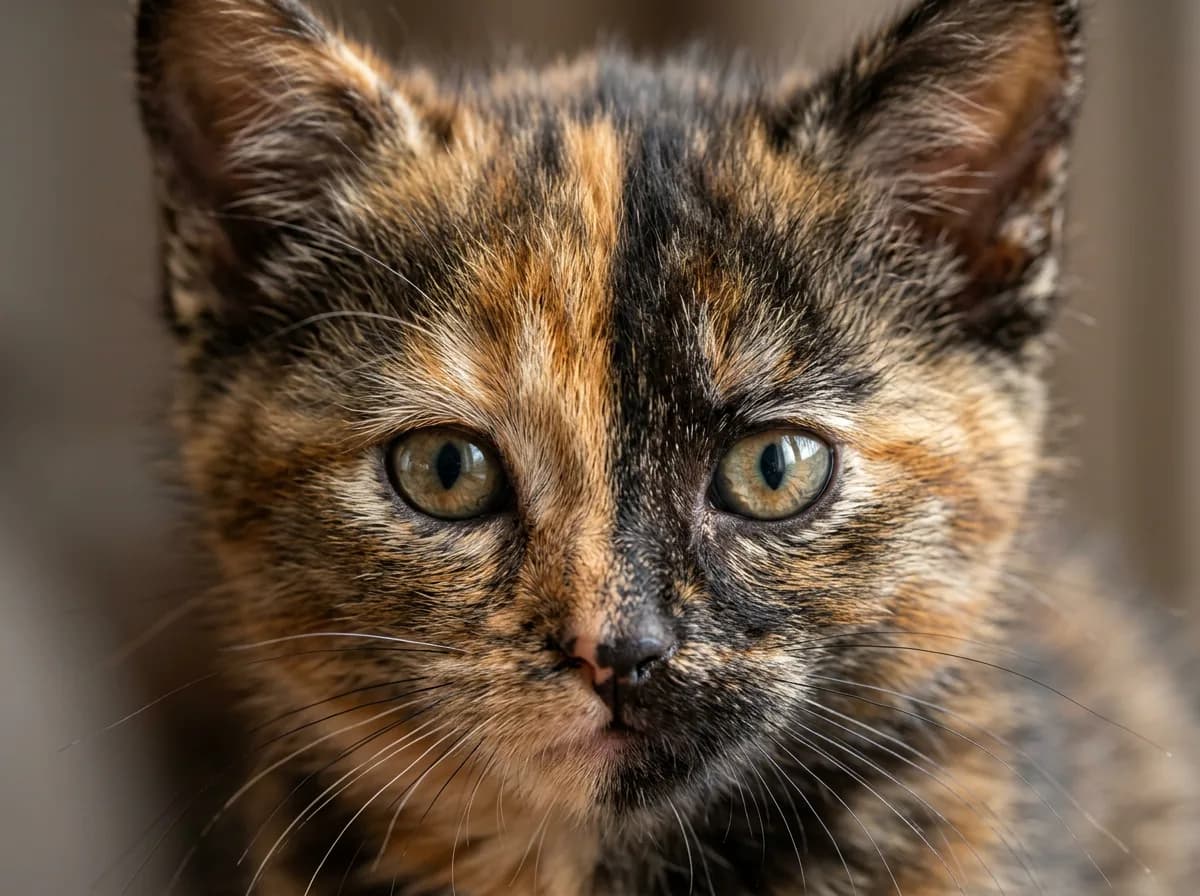
A tortoiseshell kitten is a kitten whose coat blends orange (red) and black hairs into a marbled, interwoven pattern with little or no white. The name comes from the mottled brown-and-amber look of natural tortoiseshell material, the same shell once used for combs and jewelry. Tortoiseshell is a color pattern, not a breed: a tortie can be a random-bred domestic shorthair, a domestic longhair, or a pedigreed Persian, Maine Coon, or Cornish Rex. What makes her a tortie is the genetics of her coat, not her ancestry.
The pattern itself comes down to one sex-linked gene. The orange gene (O) sits on the X chromosome. Orange produces phaeomelanin (the red and orange pigment) and masks black eumelanin wherever it is active. A female kitten has two X chromosomes. If she carries orange on one X and non-orange on the other, both colors show up across her coat because of a process called X-chromosome inactivation, or lyonization, described by geneticist Mary Lyon in 1961. In each cell, one X is randomly switched off early in development, so some patches of skin grow orange fur and others grow black fur. The result is the brindled tortie mosaic.
In 2025, two independent teams (Greg Barsh's group at HudsonAlpha and Stanford, and Hiroyuki Sasaki's team at Kyushu University) finally identified the long-sought orange gene as a regulatory deletion affecting a gene called ARHGAP36, published in Current Biology. That discovery confirmed the biology behind every tortoiseshell kitten born for centuries.
- A tortoiseshell has brindled orange and black with little or no white. A calico has the same two colors plus large distinct white patches. A torbie is a tortie with tabby striping layered on top. Same color genes, different amounts of white and striping.
If you want the deeper genetics of tri-color coats and how a breed shapes everything else about a cat, the breed profiles for the Persian cat and the Maine Coon show how the same tortie pattern appears across very different breeds.

Never Scoop Again® with the Whisker Litter-Robot, the smart self-cleaning automatic litter box. Monitor visits and track weights for better overall care in the Whisker® app. Multi-cat friendly.
Petful may earn a commission when you click through to Whisker, at no extra cost to you.
Tortoiseshell Kitten Pictures: Every Color and Pattern Variant
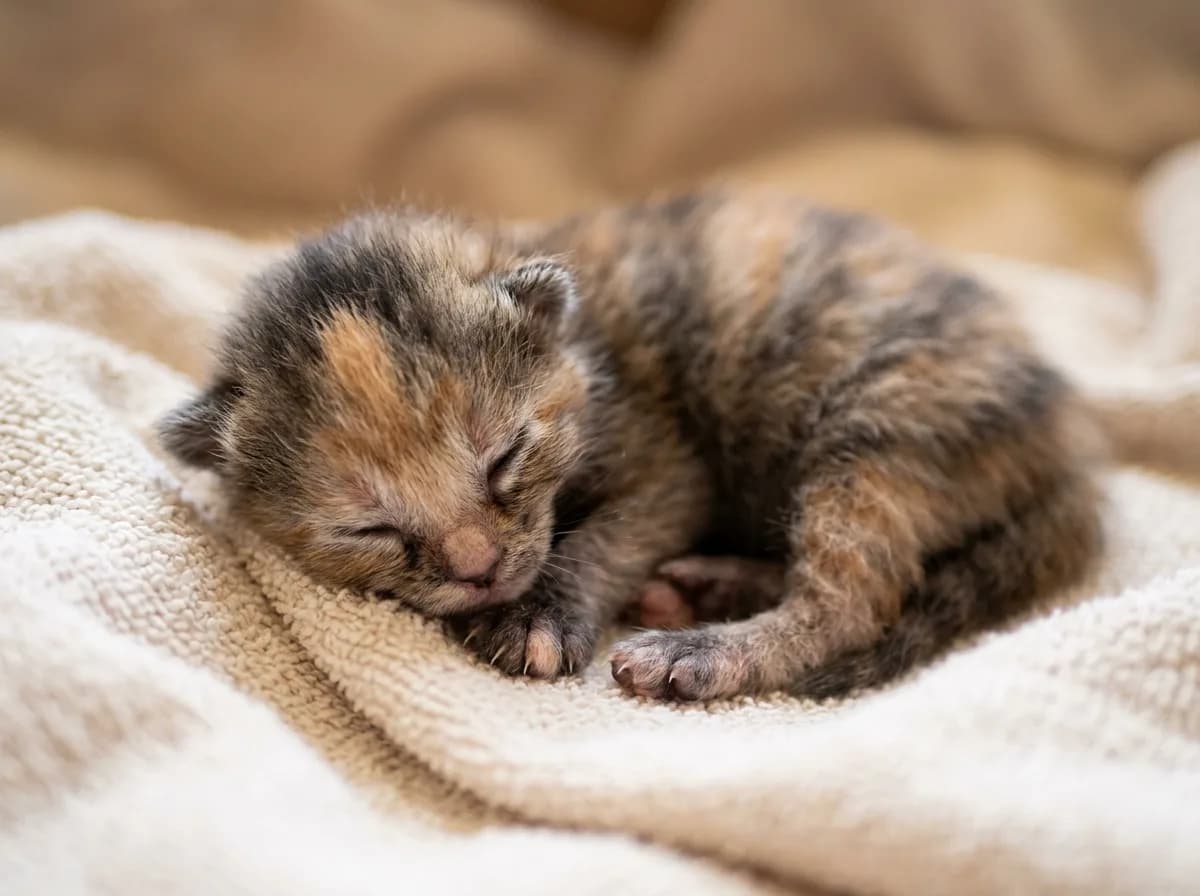
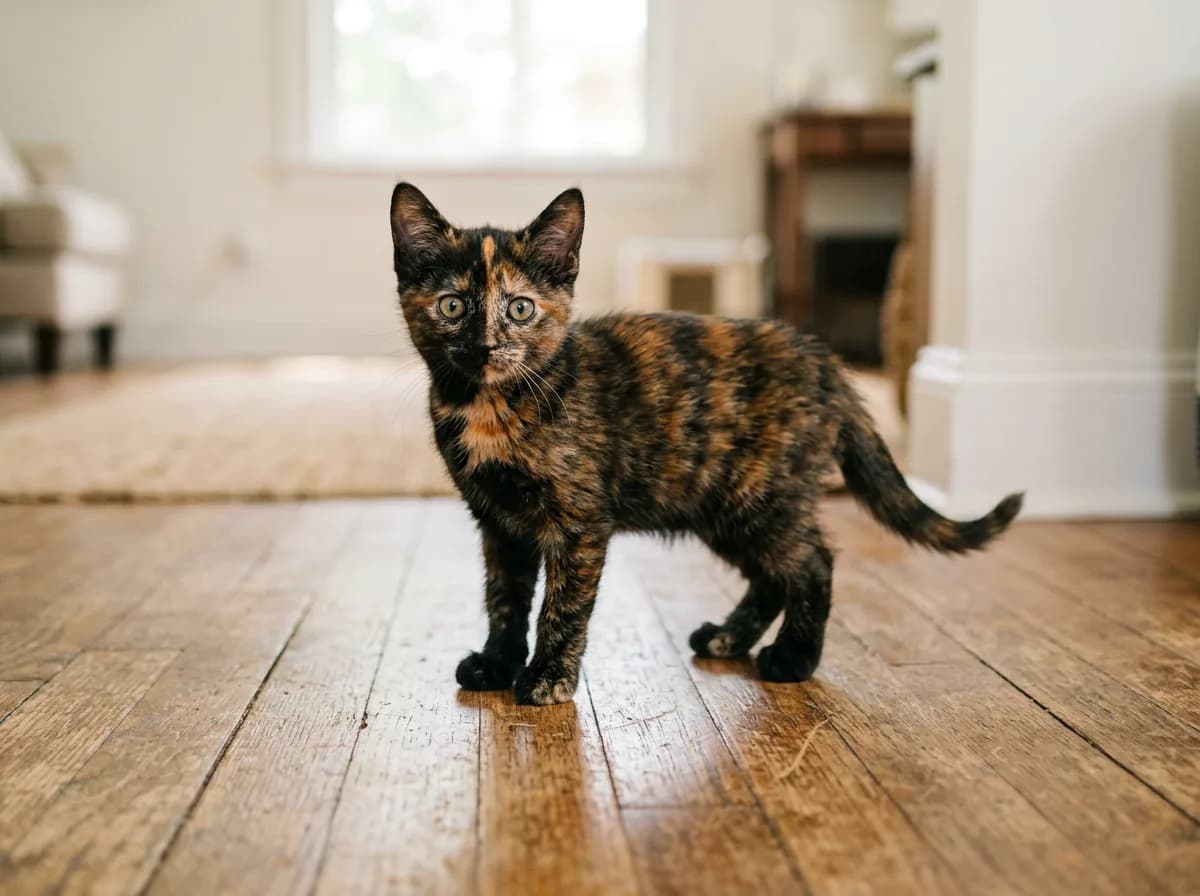
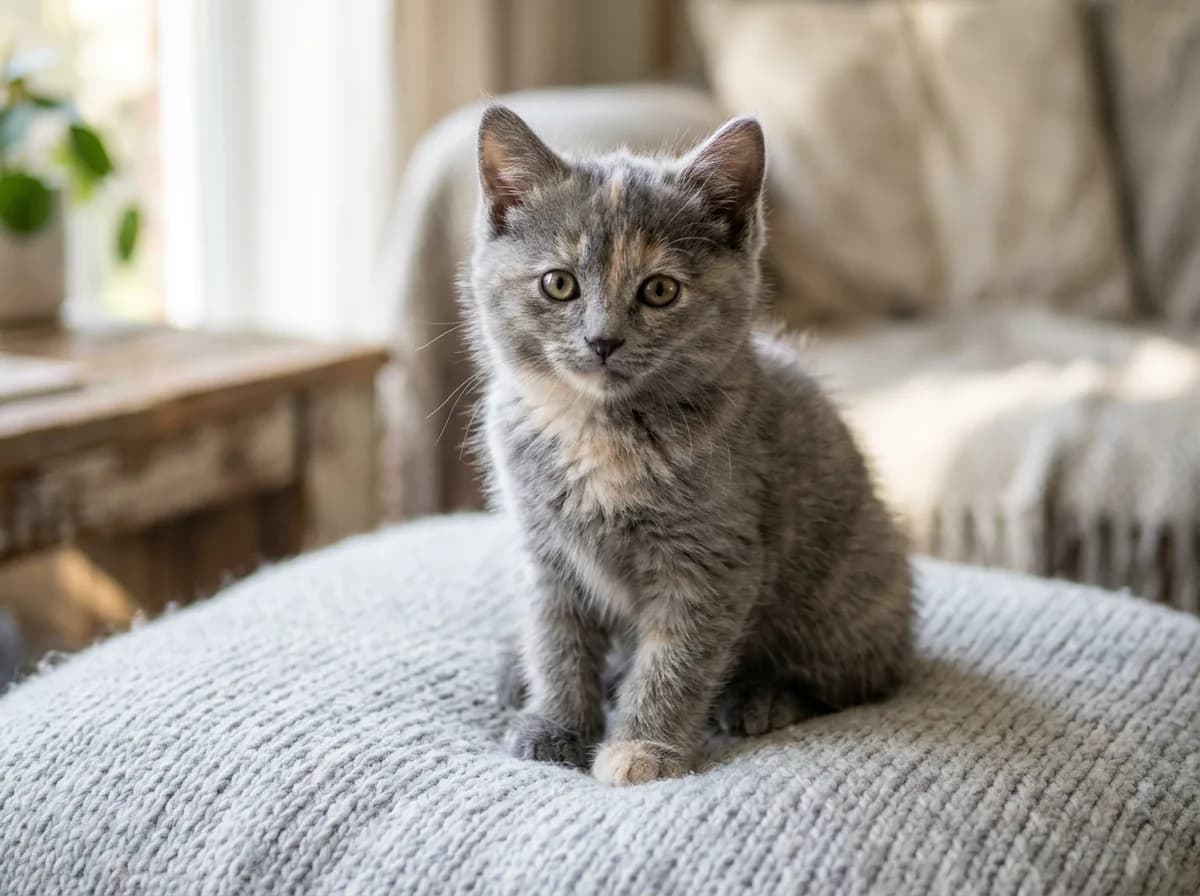
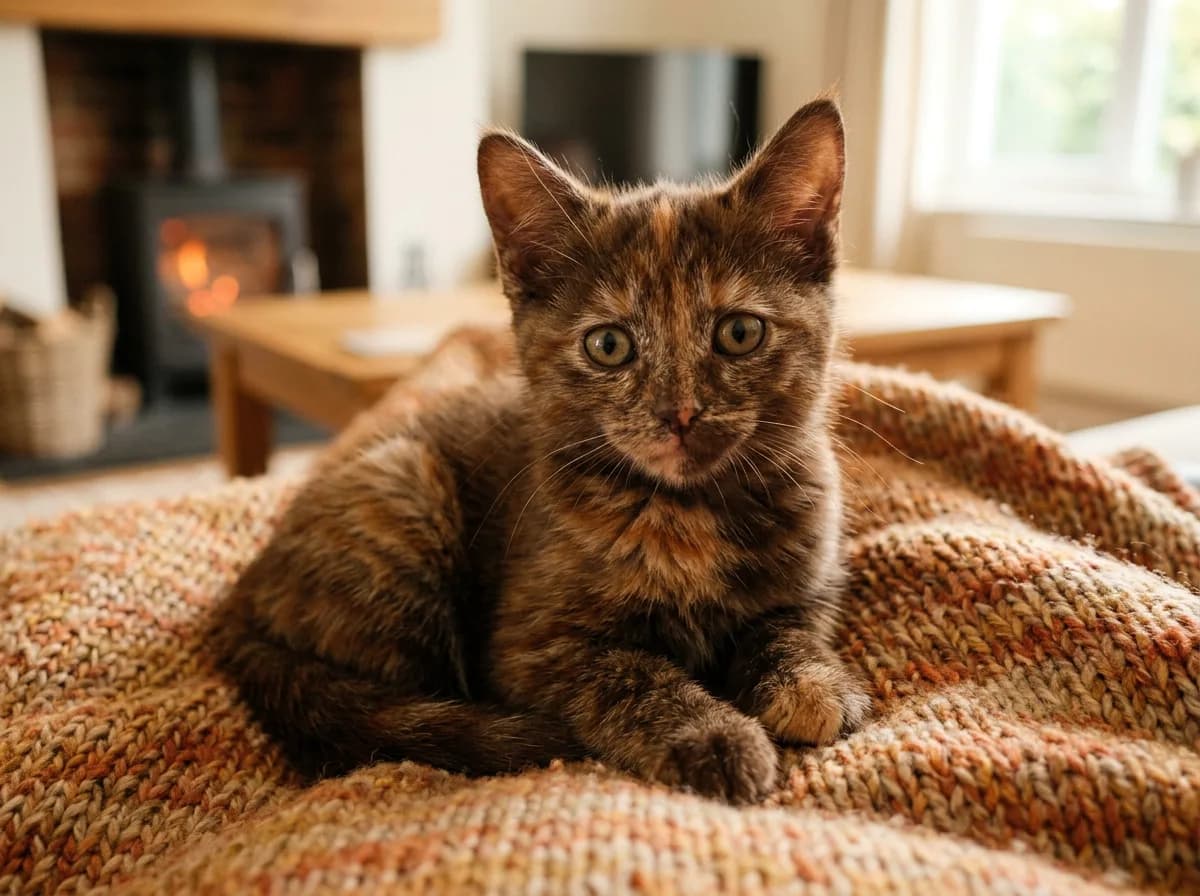
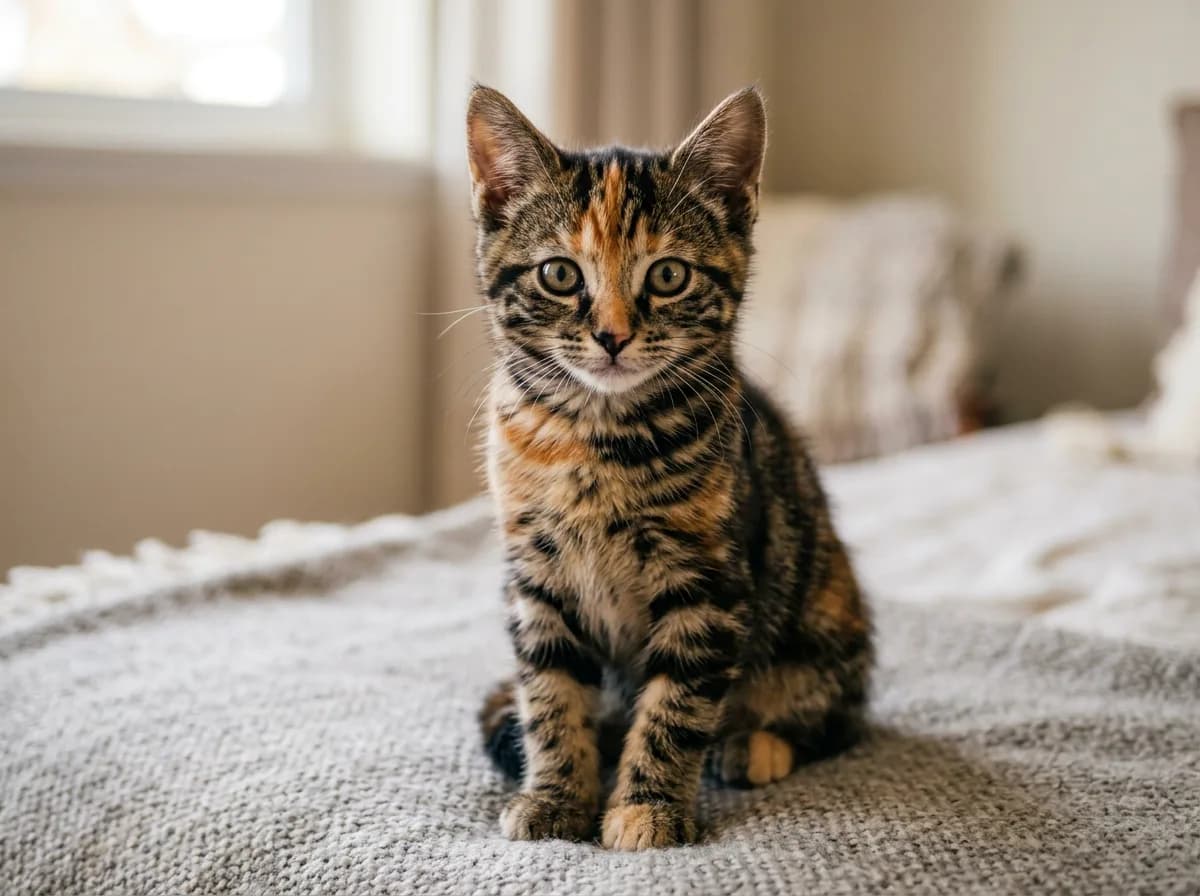
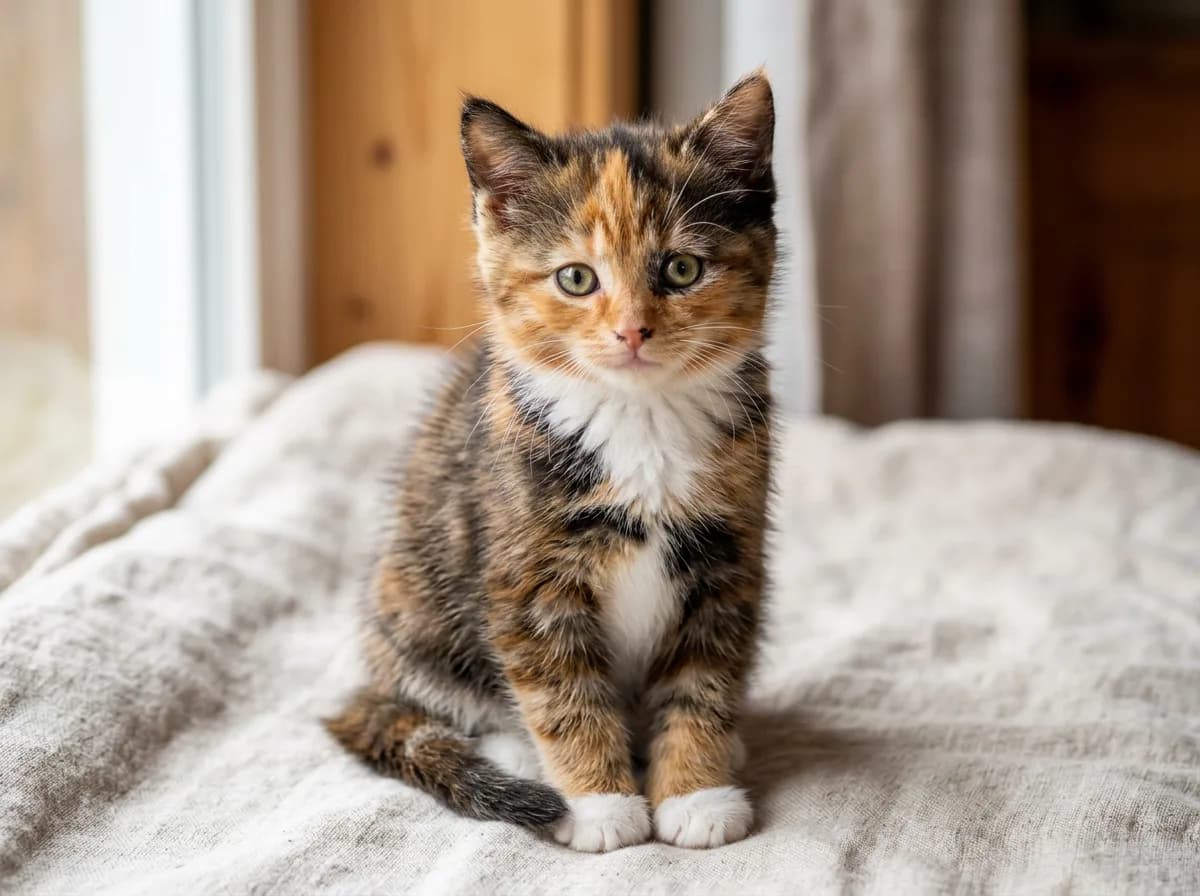
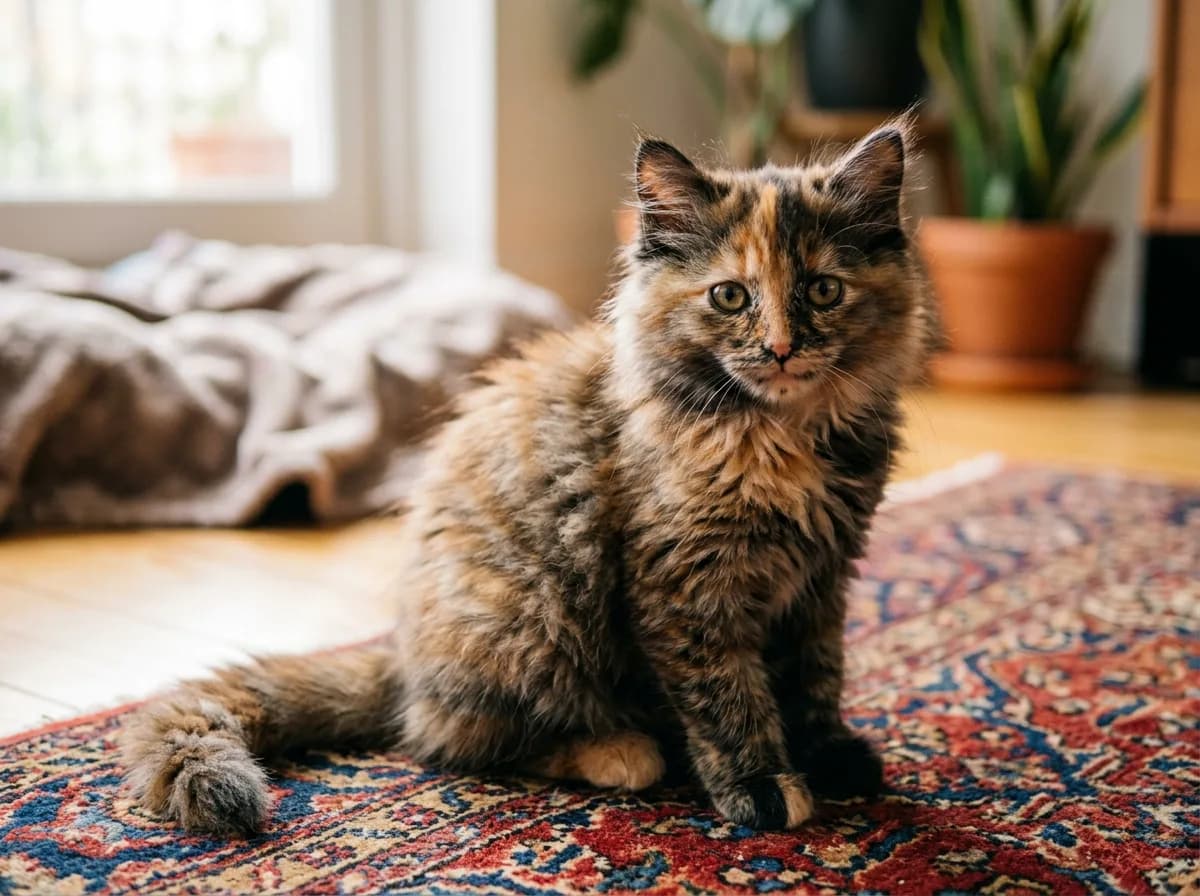
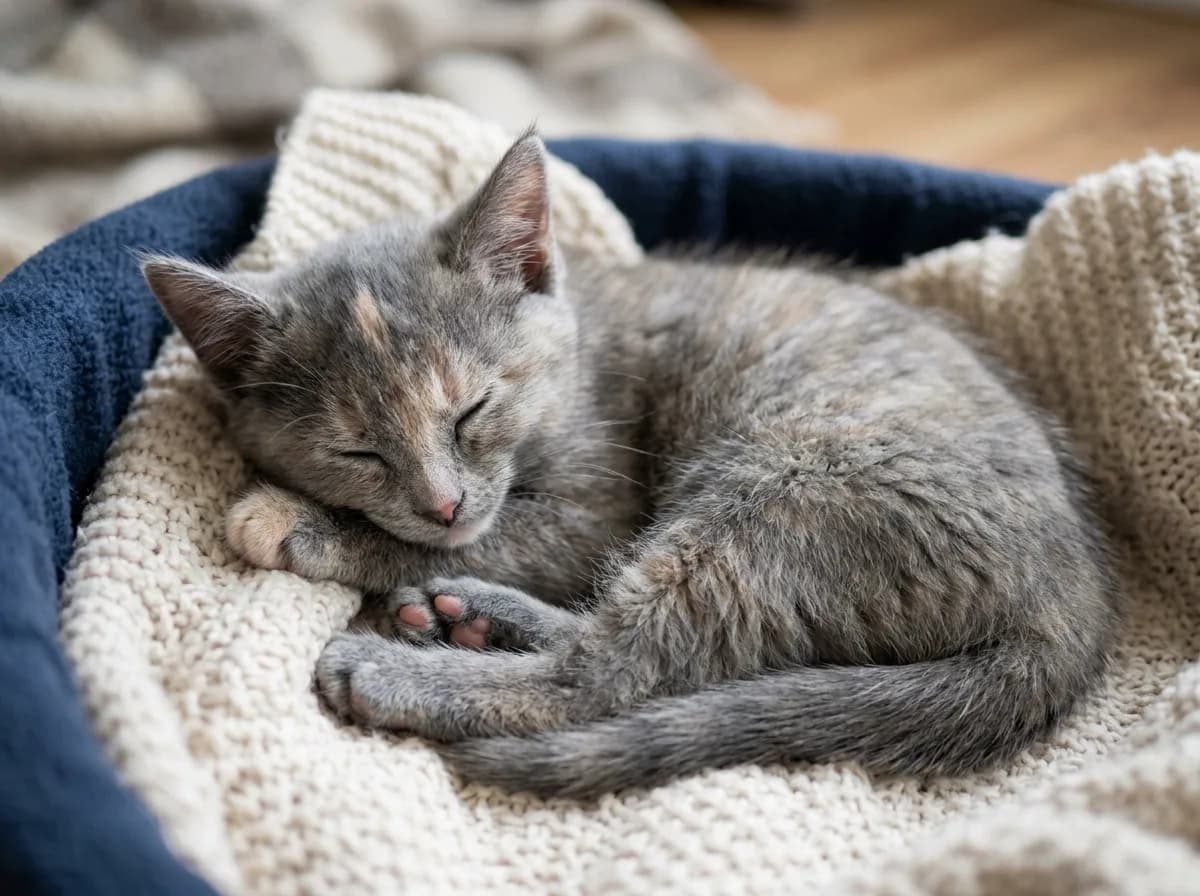
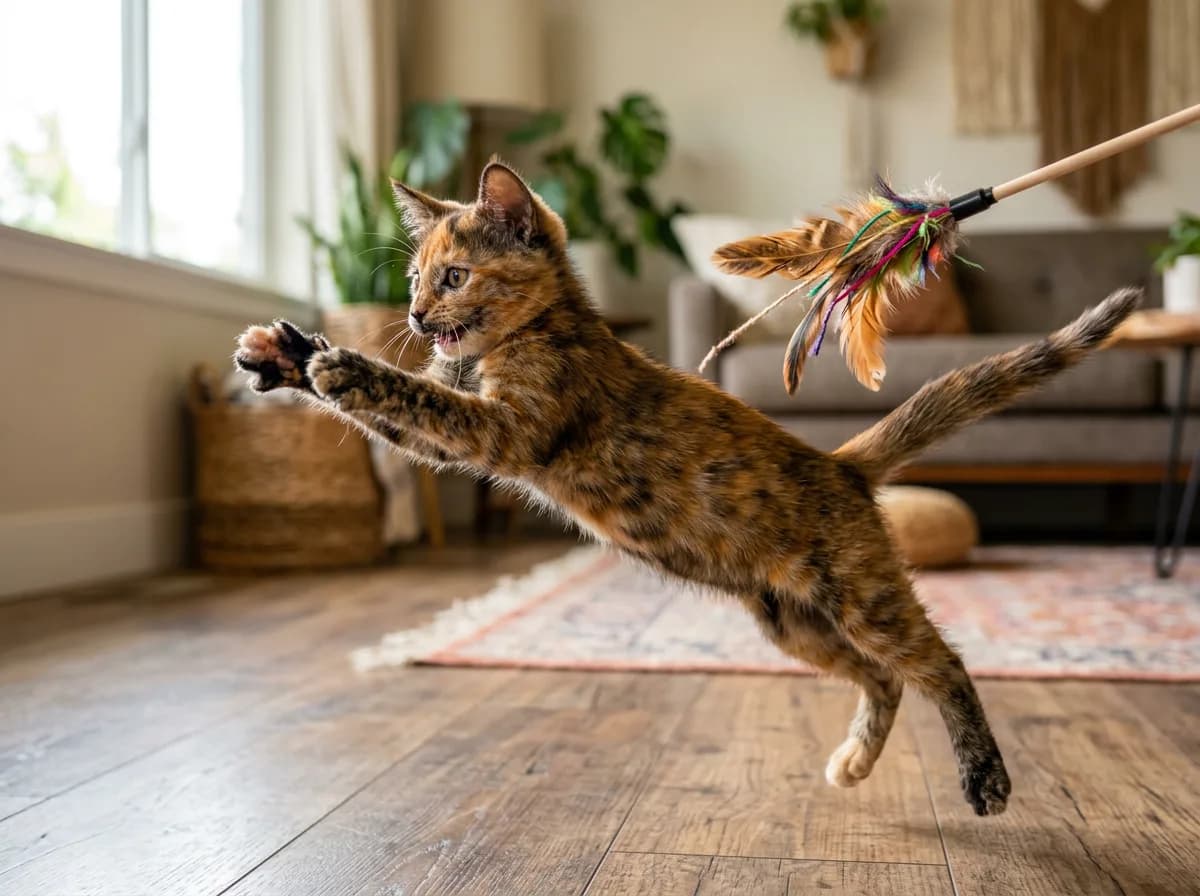
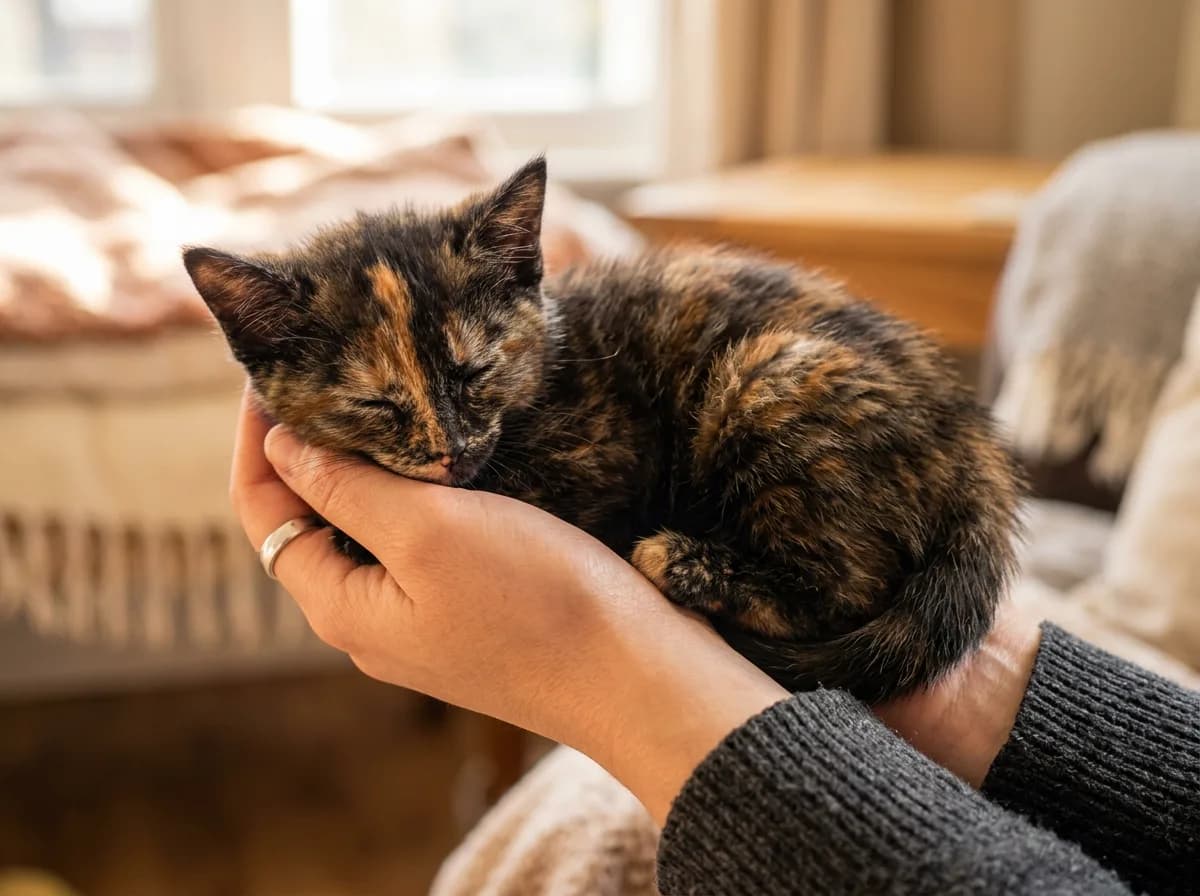
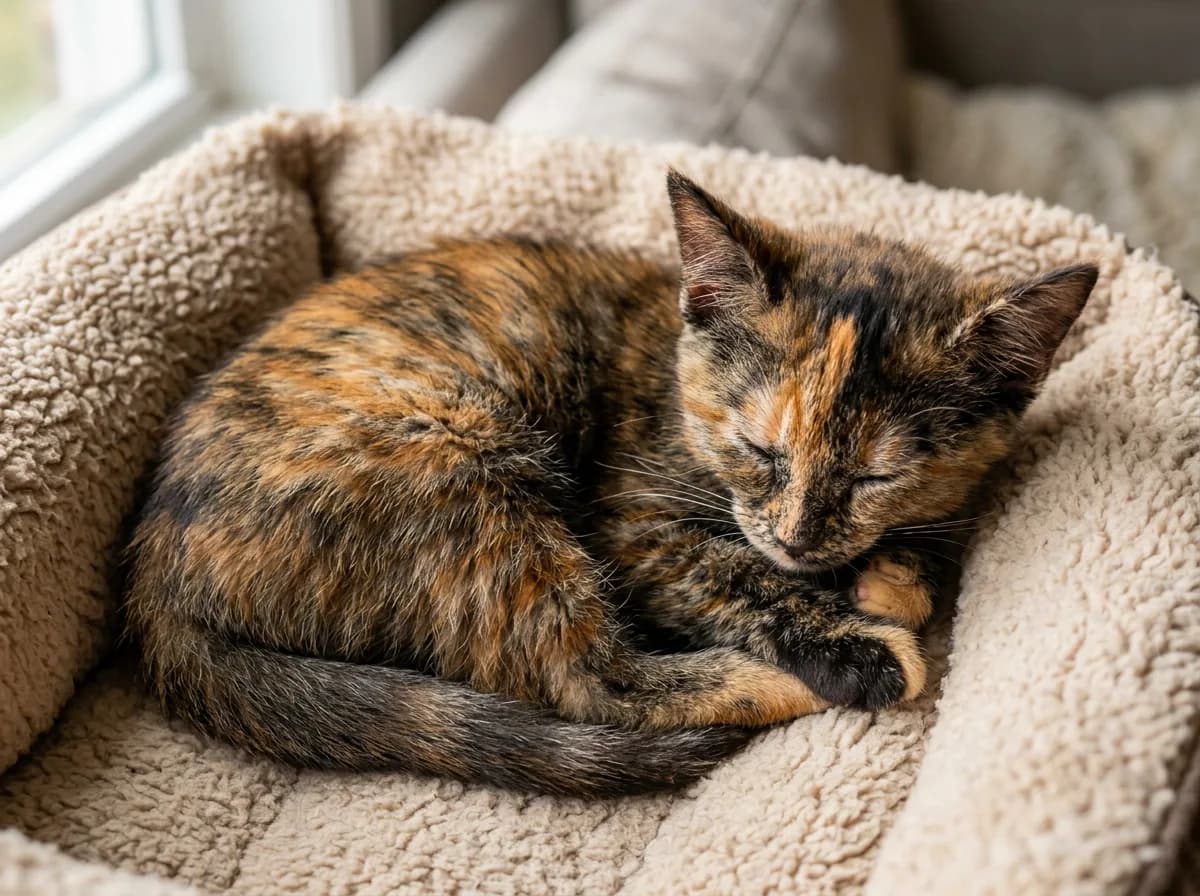
Because the tortie pattern is a random mosaic, no two tortoiseshell kittens look exactly alike. The same orange-and-black recipe also bends into several recognizable variants depending on a kitten's other genes (dilution, white spotting, tabby striping, and coat length). Here is what each one looks like in kitten form.
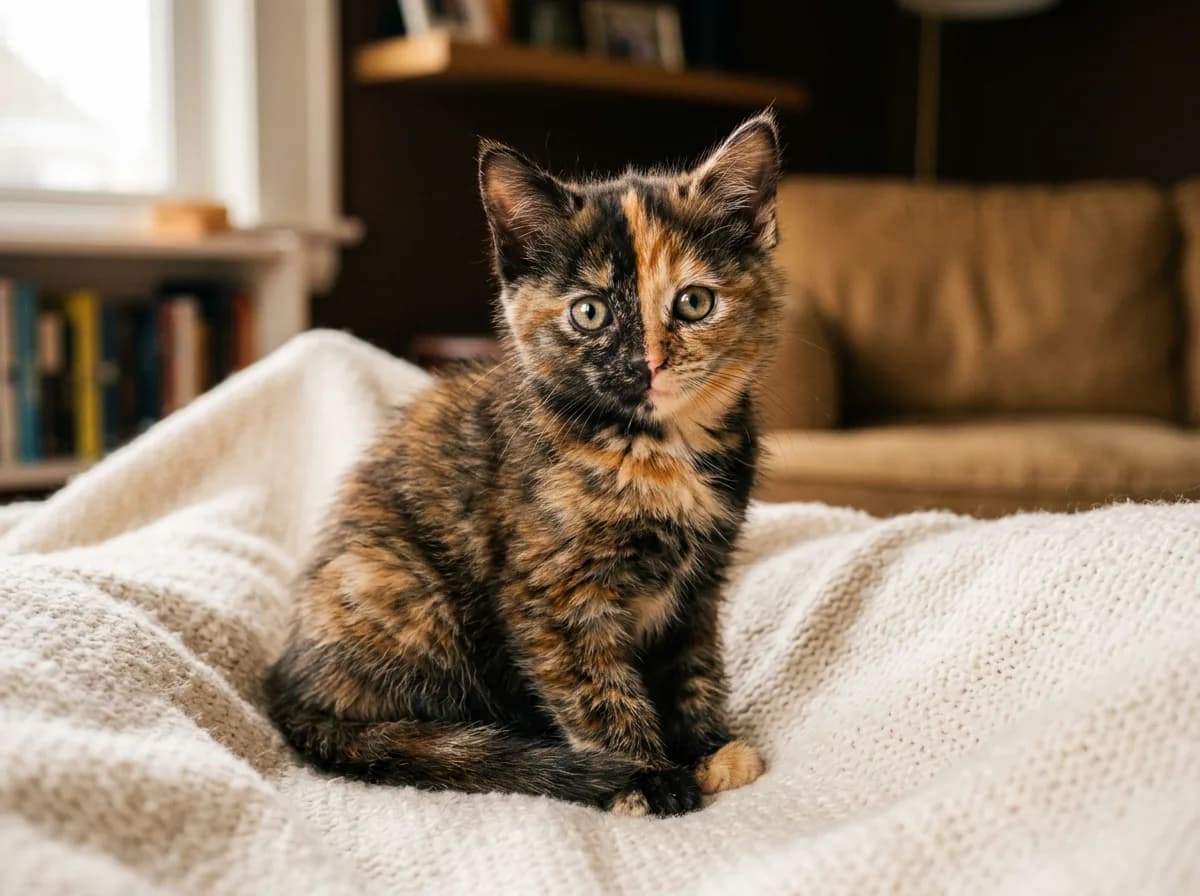
A newborn tortie's pattern is already determined, but the colors can look muted and soft in the first days, before the patches sharpen up.
By 8 weeks (the youngest a kitten should typically leave its mother), the brindled pattern is much more defined and the adult eye color is starting to emerge.
A dilute tortie kitten swaps black for blue-gray and orange for cream, producing a soft, muted blue-cream coat.
In breeds that carry the chocolate gene, black is replaced by a warm brown, giving a chocolate tortie.
A torbie (also called a patched tabby) carries tabby striping on top of the tortie patches, often with the classic tabby "M" on the forehead.
Add a bit of the white-spotting gene and you get a tortie-with-white kitten (sometimes called a tortico), which has more white than a classic tortie but less than a true calico.
Long-haired tortie kittens, common in or descended from Persians, Maine Coons, and Norwegian Forest Cats, wear the same pattern in plush, flowing fur.
Why Almost All Tortoiseshell Kittens Are Female
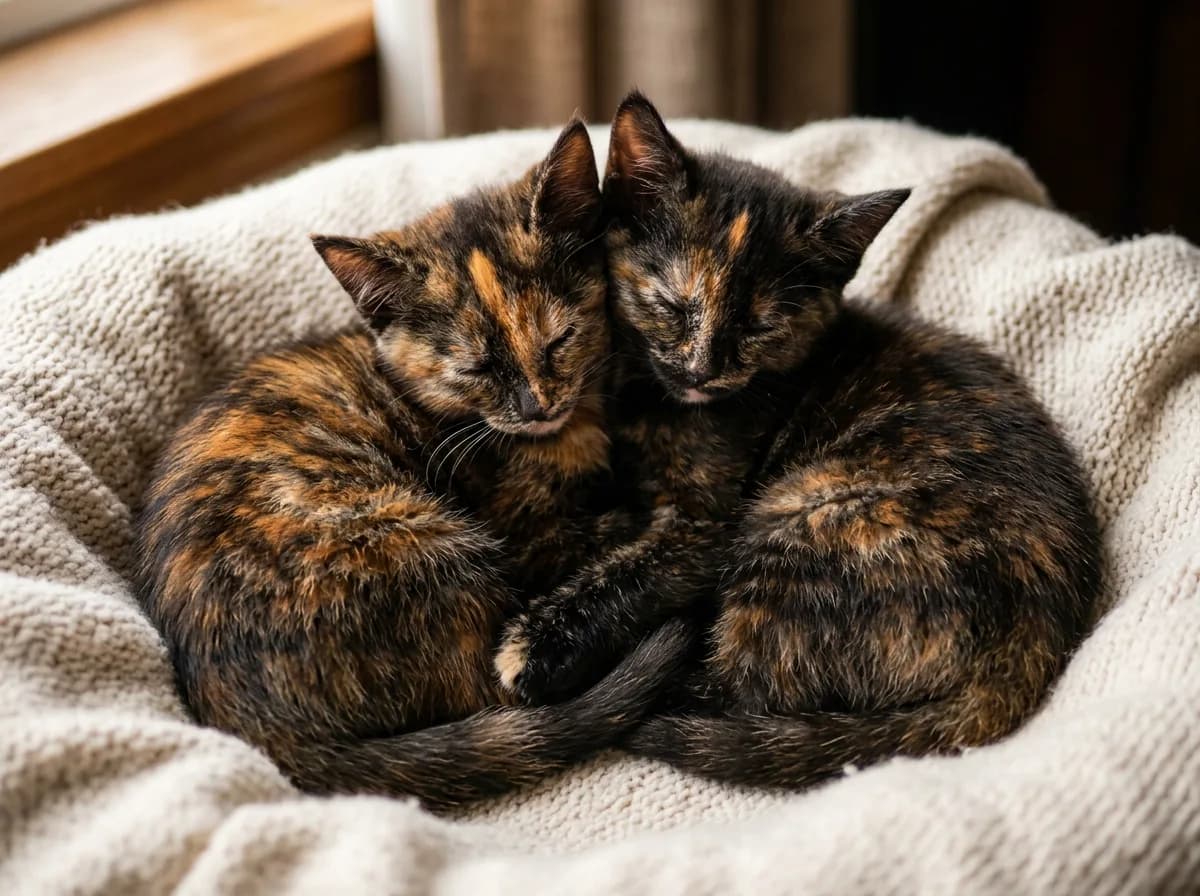
The reason nearly every tortoiseshell kitten is female comes straight from the genetics above. The orange gene lives on the X chromosome, and a kitten needs to display both orange and black to be a tortie. A female (XX) can carry orange on one X and non-orange on the other, so X-inactivation paints her in both colors. A male (XY) usually has only one X, so he can be orange OR black, but not both at once. With only one X to work with, a male simply does not have the genetic setup to produce the tortie mosaic.
That is why roughly 99.9% of tortoiseshell and calico cats are female. It is one of the most reliable sex-prediction shortcuts in all of cat ownership: if you are looking at a brindled orange-and-black kitten, you are almost certainly looking at a girl.
This near-certainty has a practical upshot: because almost every tortie kitten is female, you should plan for a spay rather than a neuter, which matters for both budgeting and timing (more on that in the care section below).
Male Tortoiseshell Kittens: How Rare Are They Really?
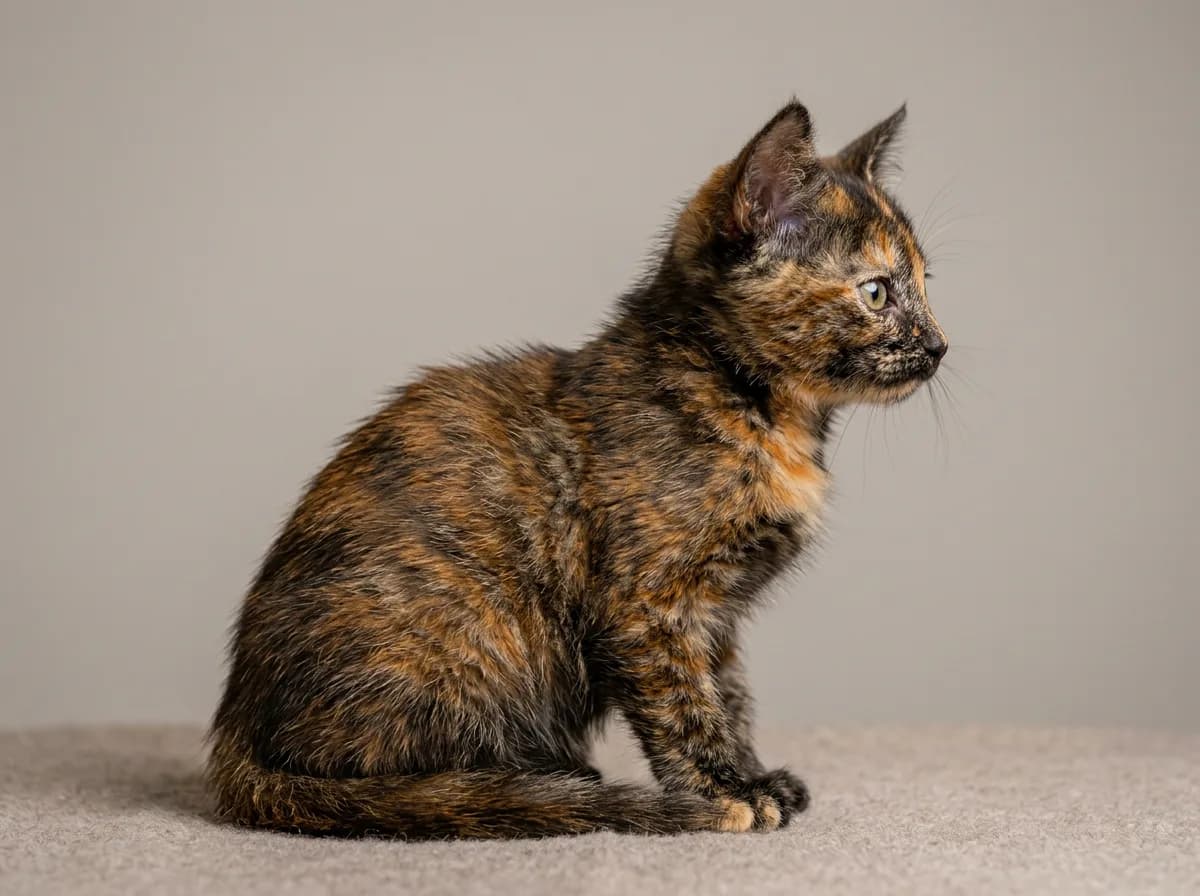
Male torties do exist, but they are genuinely rare. The commonly cited figure from the University of Missouri is about 1 in 3,000 tortoiseshell cats being male. When a male tortie does appear, it is almost always because of a chromosomal quirk rather than ordinary inheritance.
The most common cause is an extra X chromosome (an XXY pattern, known in cats as a form of Klinefelter syndrome). With two X chromosomes, that male can run the same X-inactivation mosaic a female does, producing the tortie coat. Other routes are chimerism (the kitten formed from two fused embryos) or somatic mosaicism (a mutation in a subset of cells). XXY males are almost always sterile and can carry a higher load of health problems, so they often need extra veterinary attention over their lives.
- A male tortoiseshell kitten has no breeding value (these cats are almost always sterile) and is not "worth more" as a result. If a seller is charging a premium for a "rare male tortie," treat it as a red flag, not a bargain.
How Your Tortoiseshell Kitten's Coat Will Change as She Grows
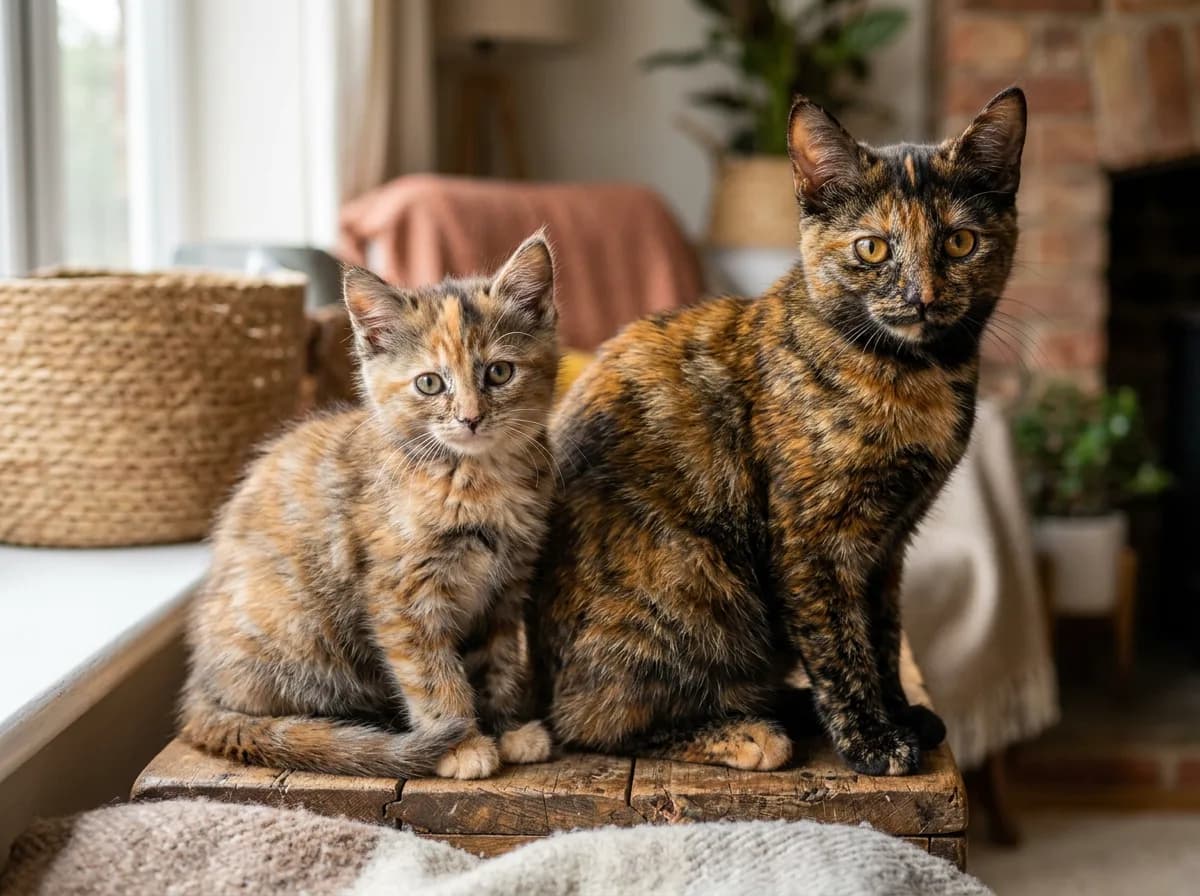
This is the question competitors almost never answer, and it is the one new tortie owners ask most: what will my tortoiseshell kitten look like grown up? The reassuring answer is that her pattern was fixed in the womb. The map of orange patches and black patches is set before she is born and will not rearrange itself. What can change is the shade and crispness of those colors as her fluffy kitten coat is replaced by her sleeker adult coat.
A few specific shifts are normal:
- Patches sharpen. A young tortie can look softly intermingled, with orange and black hairs mixed together rather than in clean blocks. As the adult coat grows in, those areas often resolve into more distinct patches.
- Shades can deepen. Colors frequently look richer and more saturated in the adult coat than in the kitten coat. Reds can look more vivid and blacks more solid.
- Undercoat reveals. When a longer-coated tortie sheds her summer coat thins, you may see more of an undercoat that is a slightly different tone than the top coat.
Fever Coat: When a Kitten Is Born Pale
One dramatic early surprise is a fever coat. Some kittens are born with fur that is much lighter (silvery, washed-out, or cream-tinged) than their genetics should produce. It is linked to the mother having a fever, prolonged stress, or certain medications during pregnancy, and it affects only the kitten's first coat. As the kitten grows, she sheds out the pale fever fur and her true colors come in. A fever-coat tortie can look almost ghostly as a newborn and then "develop" into a richly colored adult. The fading is usually complete within a few weeks to a year, with most of the change showing between about 4 and 8 months.
Kitten Eyes: From Blue to Their Adult Color
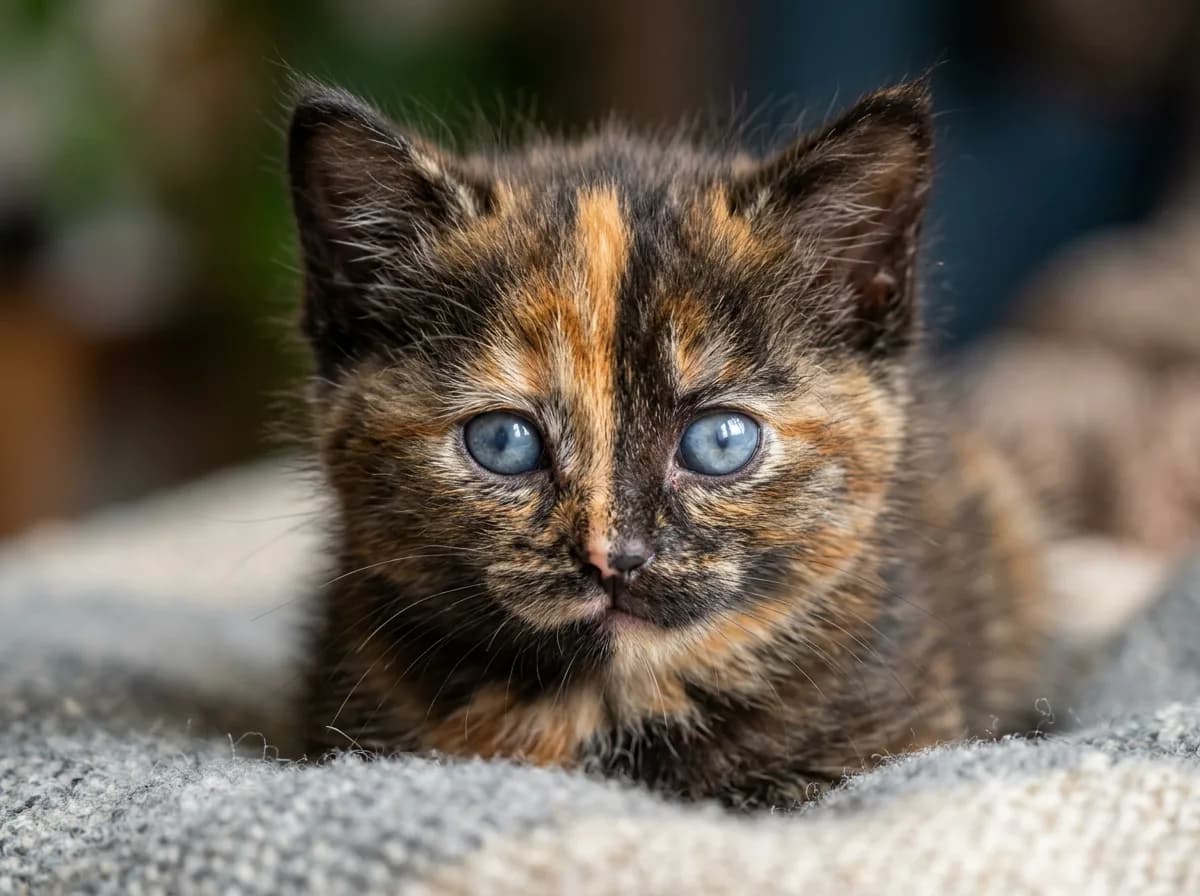
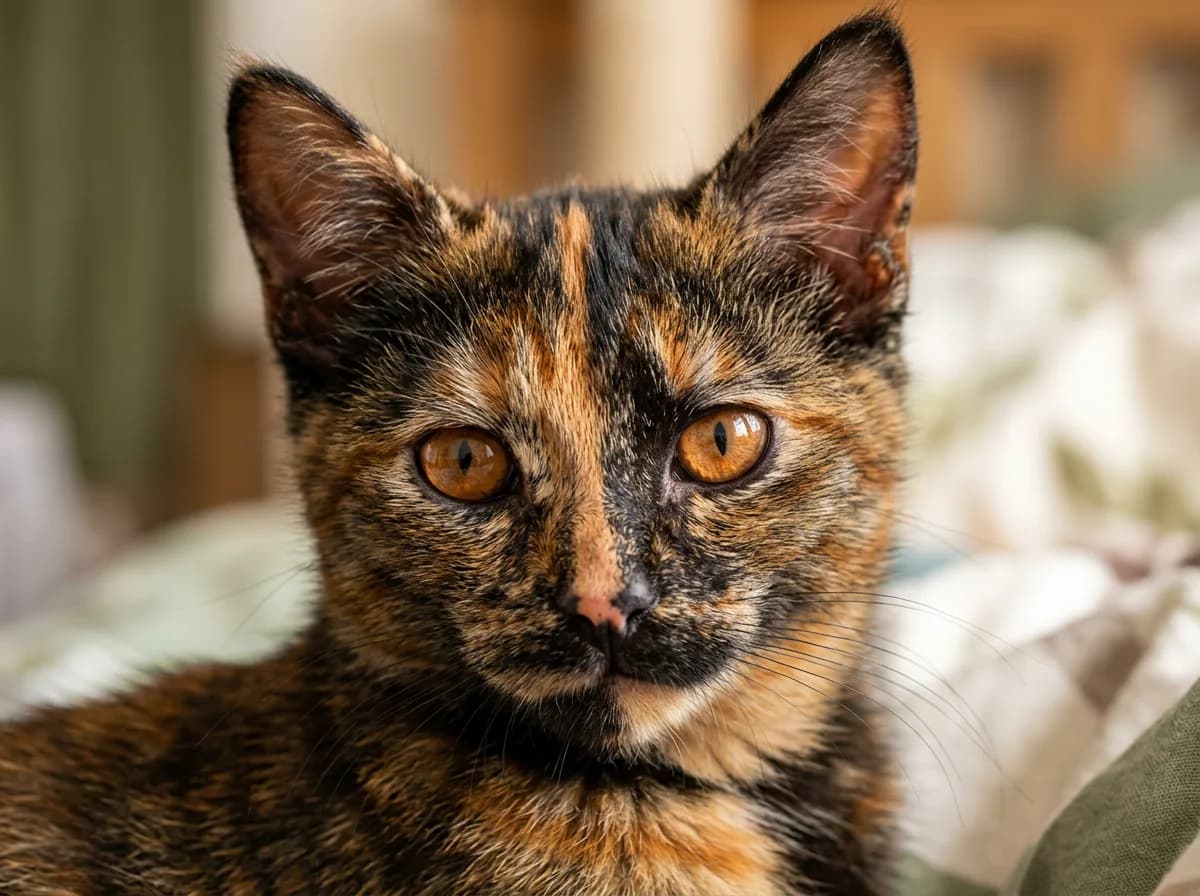
Every tortoiseshell kitten is born with blue eyes, and that blue is temporary. Newborns actually open their eyes at around 1 to 2 weeks of age, and at that point the iris has not yet developed its pigment, so it looks cloudy blue. As the melanocytes (the pigment-producing cells in the iris) mature, the true adult color emerges.
The shift usually starts around 6 to 7 weeks of age. If your kitten is going to have green, gold, copper, or amber eyes, that is when you will first notice the blue giving way. The process is generally well underway by 7 weeks and finishes settling between about 12 and 16 weeks (3 to 4 months). Once the adult color has come in, it stays.

63-inch multi-level cat tree with scratch posts, hammock, plush perches, and dangling toys. Vertical territory is non-negotiable for high-energy climbing breeds like the Bengal.
Petful may earn a commission when you click through to Chewy, at no extra cost to you.
- If you fall in love with a tortie kitten's blue eyes at 5 weeks, know they will almost certainly change. Eye color is not settled until around 3 to 4 months in most kittens.
Dilute Tortoiseshell Kittens
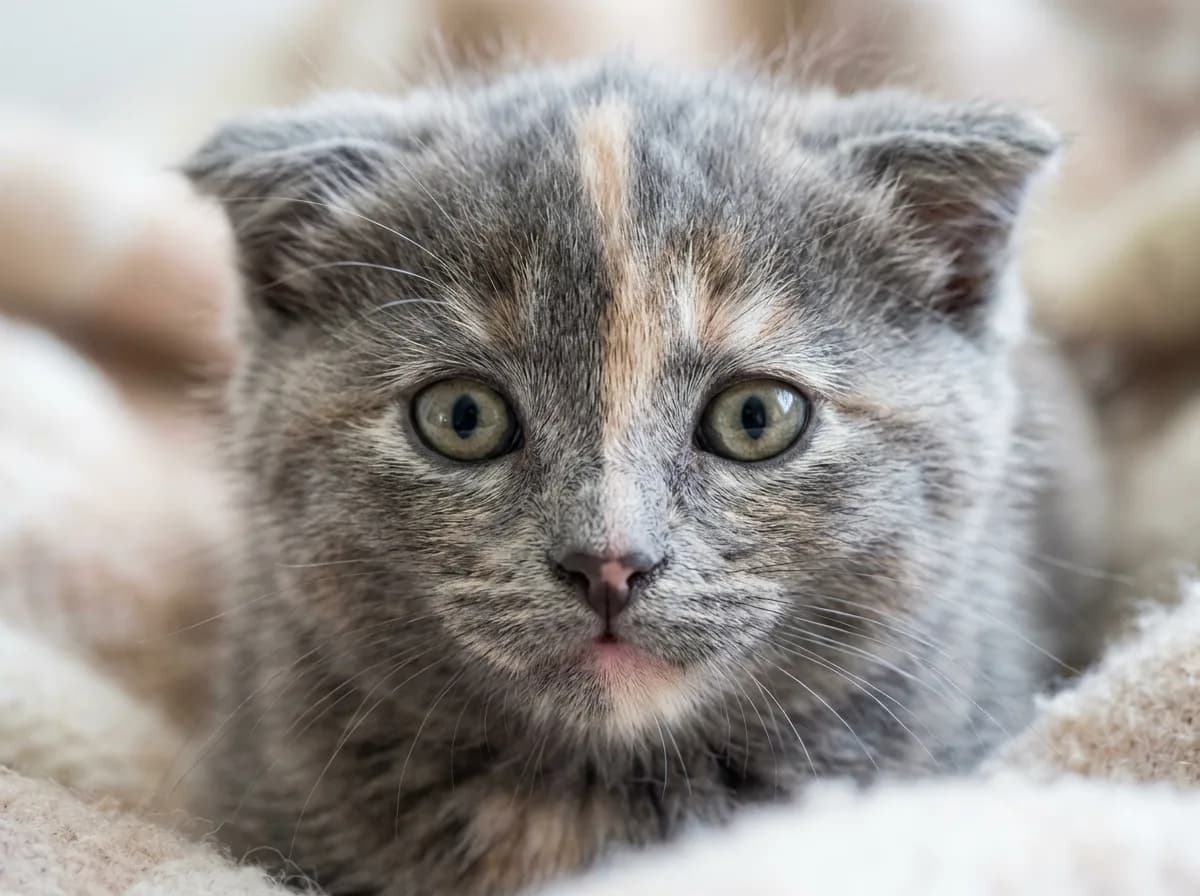
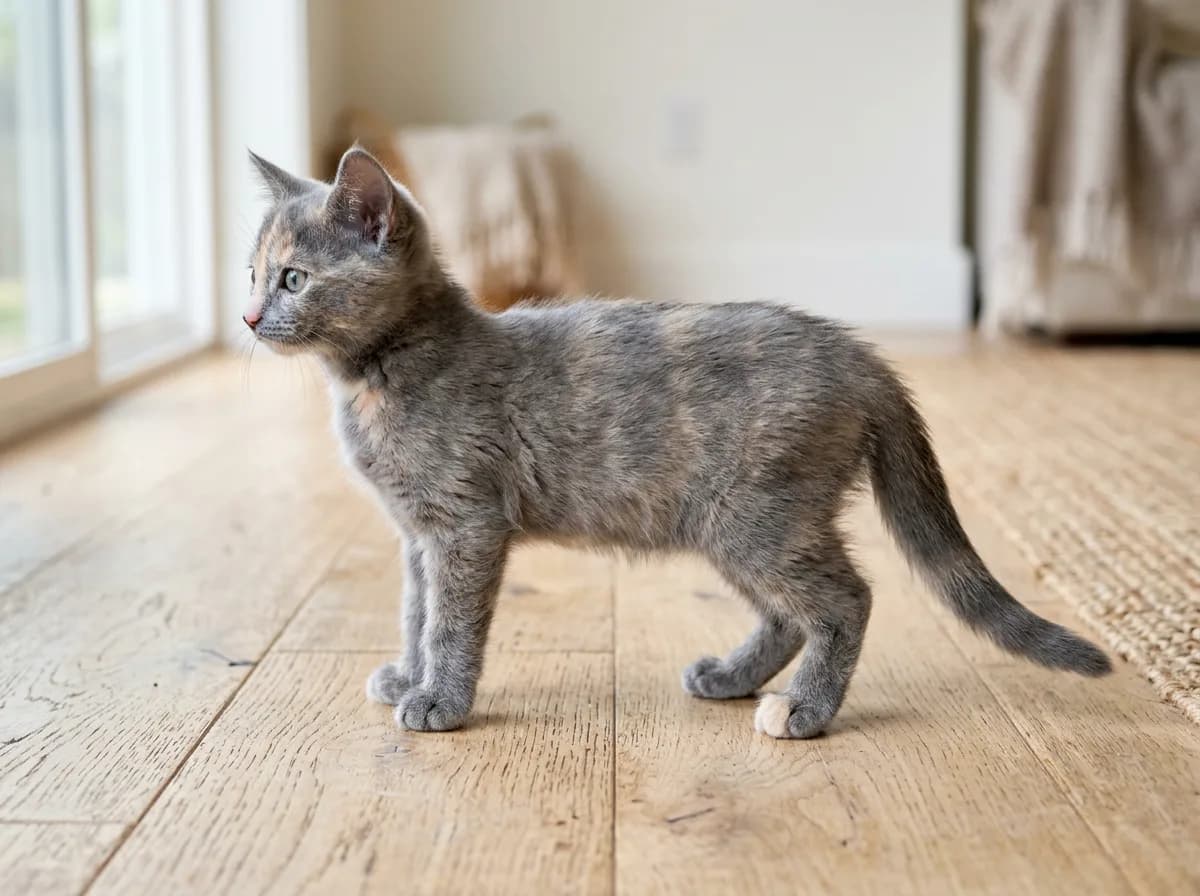
A dilute tortoiseshell kitten is one of the most-searched tortie variants, and for good reason: the soft, smoky version of the pattern is genuinely lovely. A dilute tortie swaps the standard black for a muted blue-gray and the bright orange for a pale cream, giving an overall blue-cream brindle instead of the high-contrast black-and-orange.
The dilution comes from a separate gene, MLPH (melanophilin). It is recessive, so a kitten needs two copies (written d/d) to show the dilute coat. That gene does not change the pattern; it just lightens every color in it. A dilute tortie has little or no white (a dilute calico is the mostly-white version with blue-cream patches).
Dilute torties show up in many breeds, including the British Shorthair, which is famous for its plush blue coats and carries the dilution gene widely.
Tortie vs. Calico vs. Torbie: Which One Is Your Kitten?
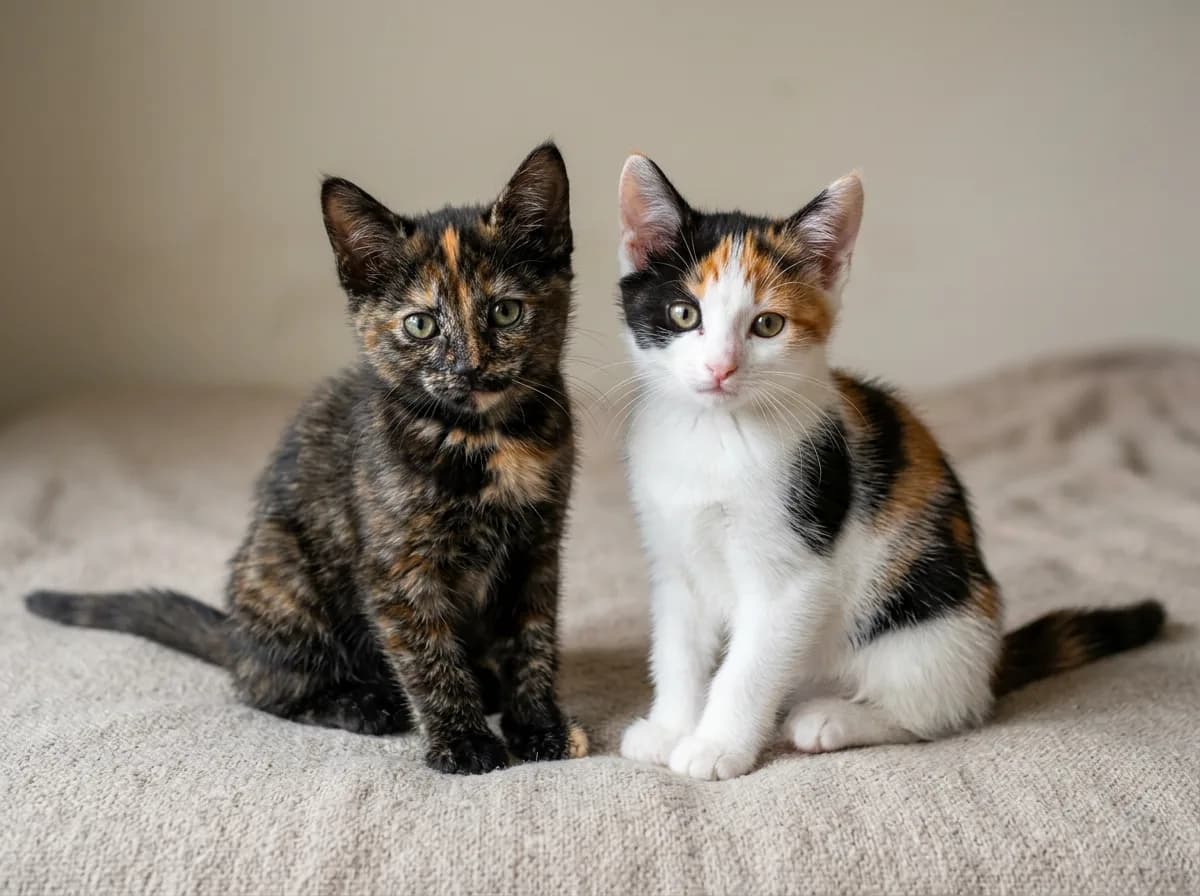
It is easy to mix up the tri-color patterns, especially in fluffy kittens where everything looks soft. Here is the quick field guide.
| Pattern | What It Looks Like | Amount of White | Tabby Striping |
|---|---|---|---|
| Tortoiseshell | Brindled, interwoven orange and black | Little or none (a small chest locket is still a tortie) | No |
| Tortie with white (tortico) | Brindled orange and black plus white | More white than a tortie, less than a calico | No |
| Calico | Distinct separate patches of orange, black, and white | Predominantly white | No |
| Torbie (patched tabby) | Tortie colors plus visible stripes | Little or none | Yes |
| Dilute tortie | Blue-gray and cream brindle | Little or none | No |
The simplest test: how much white, and is there striping? Lots of white with clean separate patches points to calico. Brindled colors with stripes layered on points to torbie. Brindled colors with little white and no stripes is a classic tortie.
Tortoiseshell Kitten Personality: Is Tortitude Real?
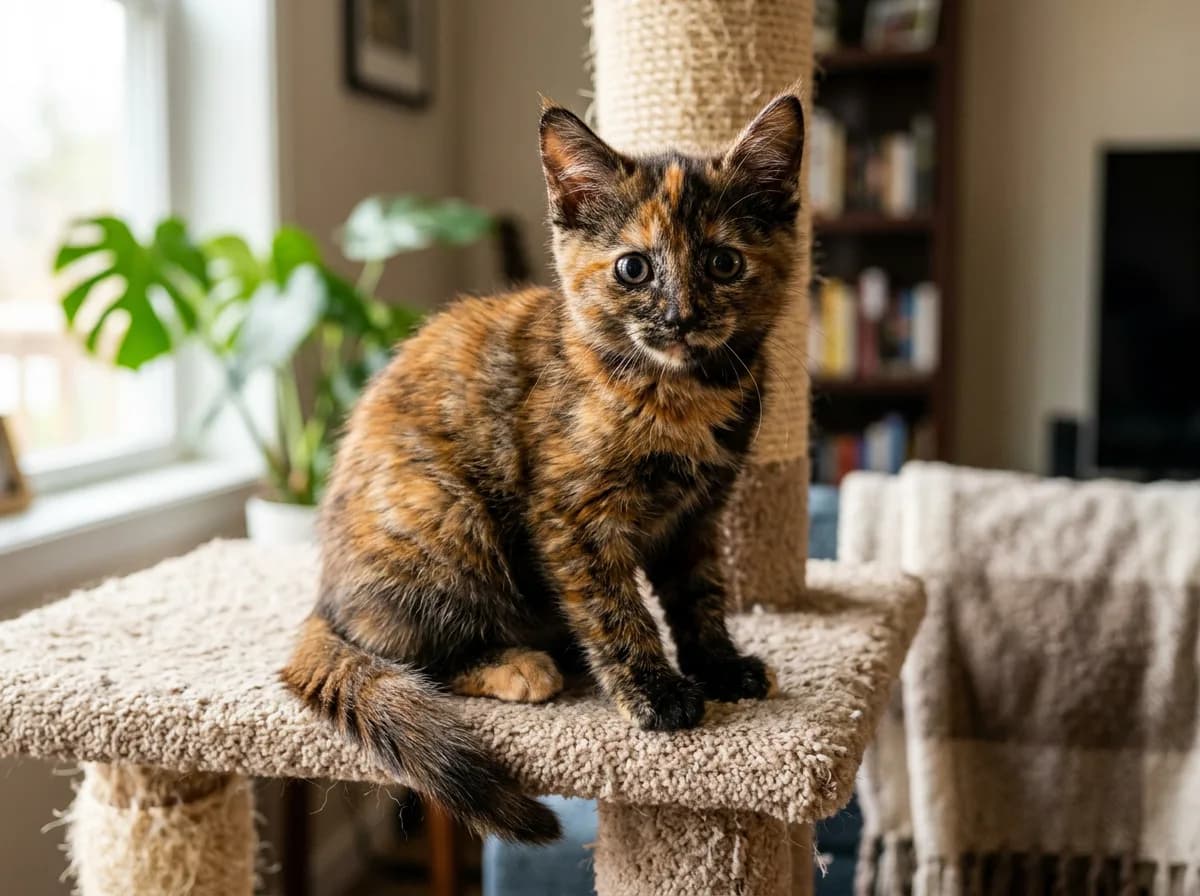
Tortie owners swear their cats have "tortitude": a bold, sassy, opinionated streak. It is a fun idea, but the science is mixed. The pattern itself does not program a personality.
The most relevant data is a 2015 UC Davis survey (Stelow, Bain, and Kass, published in 2016 in the Journal of Applied Animal Welfare Science, analyzing 1,274 responses). Owners of sex-linked-orange females (torties, calicos, and torbies), along with gray-and-white and black-and-white cats, reported slightly higher rates of aggression during handling and vet visits. The effect was modest and owner-reported, not a measured personality type, and individual variation dominated everything.
So is your tortie kitten destined to be feisty? Not because of her coat. A kitten's eventual temperament is shaped far more by breed, early socialization, and how she is raised than by the color of her fur. The single most important thing you can do is socialize her well during the critical window (roughly 2 to 9 weeks), with gentle handling, new people, and positive experiences.

108-oz stainless steel pet fountain with quiet pump and water-level window. Bengals are notoriously water-obsessed; a flowing fountain encourages hydration and pulls them away from sinks and toilets.
Petful may earn a commission when you click through to Chewy, at no extra cost to you.
Which Breeds Can Produce Tortoiseshell Kittens?
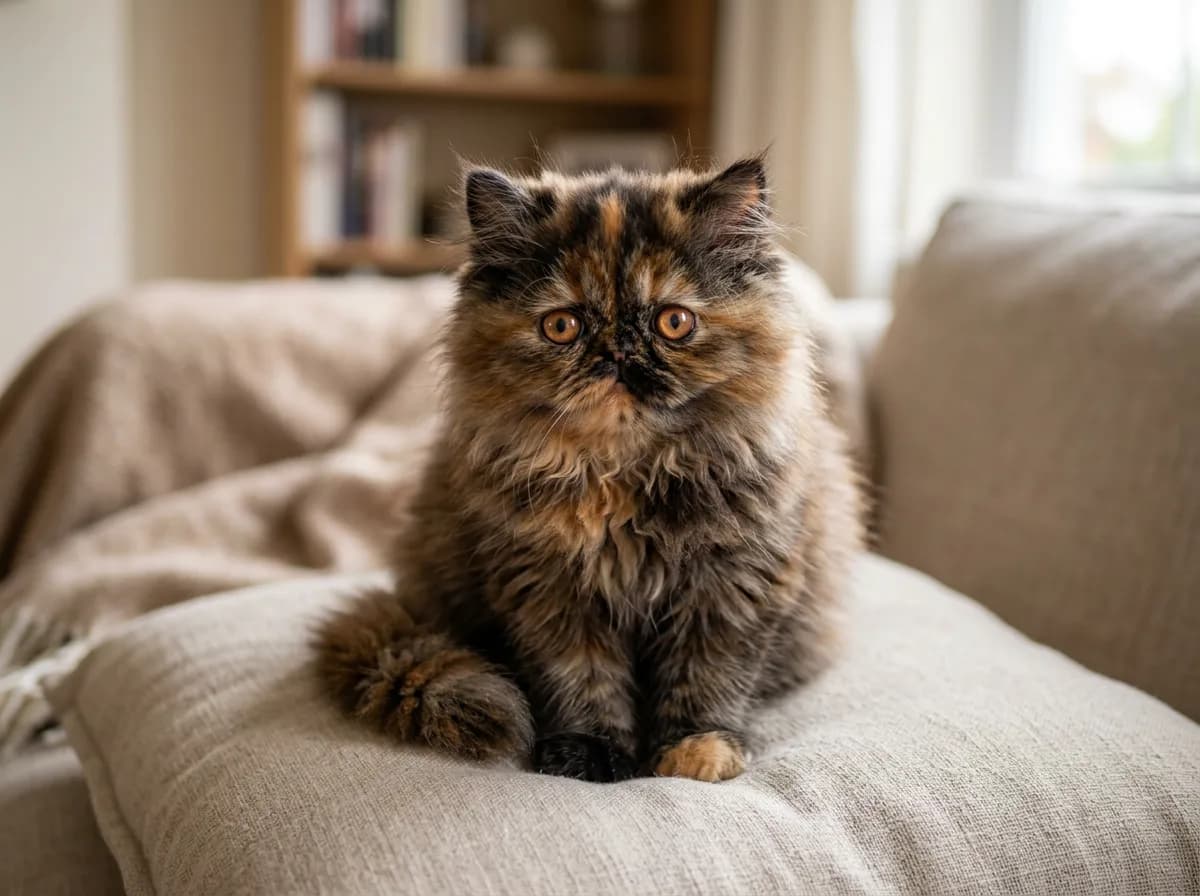
Most tortoiseshell kittens are domestic shorthairs or domestic longhairs (the everyday, non-pedigreed cats that make up the bulk of any shelter). But because tortie is a pattern and not a breed, plenty of pedigreed breeds produce torties too, as long as they carry the orange gene.
| Breed | Coat Length | Tortie Notes |
|---|---|---|
| Domestic Shorthair | Short | The most common tortie of all, found in every shelter |
| Domestic Longhair | Long | Same pattern in a fluffy coat |
| Maine Coon | Long | Large breed; tortie and torbie both appear |
| Persian | Long | Tortie and tortie-and-white are recognized divisions |
| Cornish Rex | Short (curly) | Tortie shows in the breed's wavy coat |
| American Shorthair | Short | Classic tortie and calico colors |
| Japanese Bobtail | Short or long | The tri-color mi-ke is iconic in this breed |
Purebred status always comes from the breed, never from the pattern. A tortie Persian is valuable because she is a Persian, not because she is a tortie.
Breeds like the Cornish Rex relatives in the Sphynx family and the Siberian can all carry the tortie pattern in their own distinctive coats.
Adopting a Tortoiseshell Kitten: Cost and Where to Look
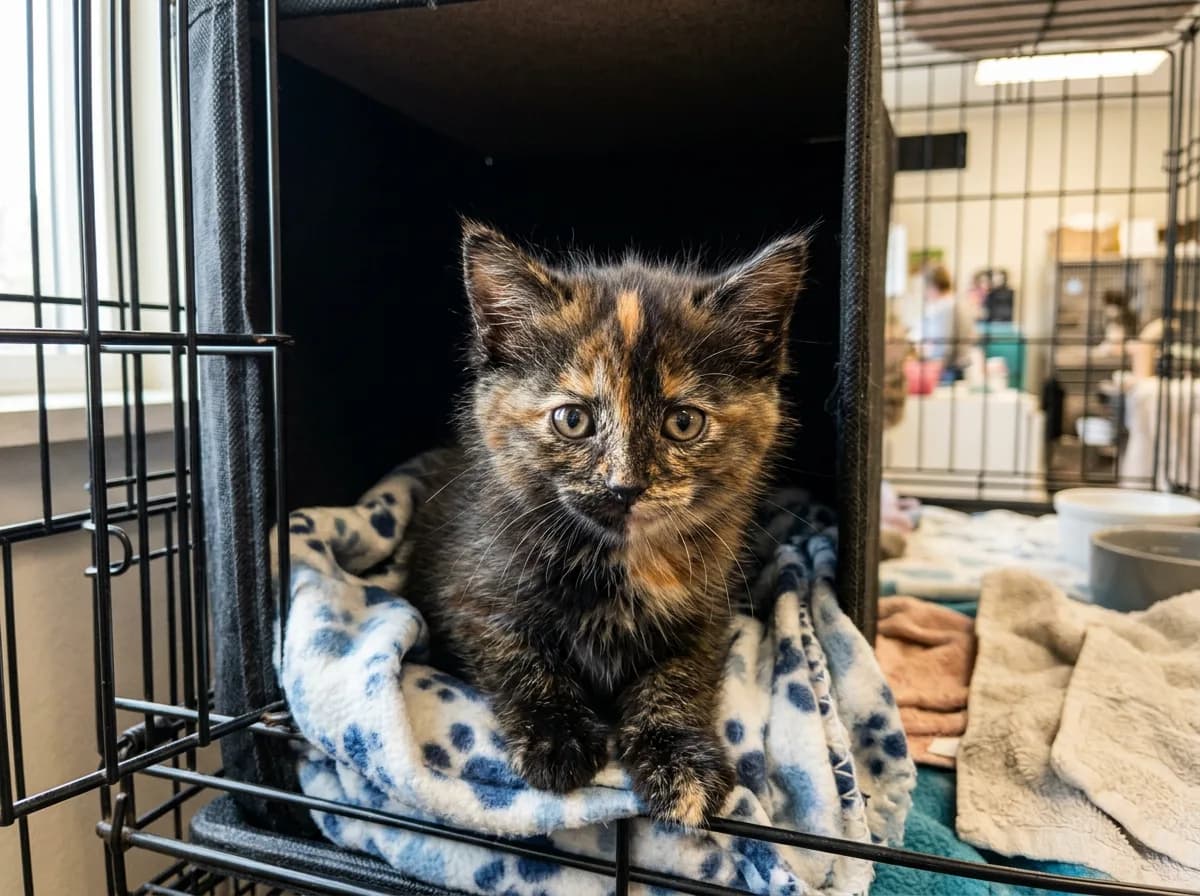
Here is the most important money fact for a tortoiseshell kitten: the pattern is not a breed, so it should not carry a breed premium. The normal, sensible route is a shelter or rescue, where adoption fees typically run $50 to $200 and usually bundle in spay or neuter, core vaccines, deworming, and often a microchip. That fee is a bargain compared to paying separately for those services.
If a seller is quoting four-figure breeder prices for a "tortoiseshell kitten," that is a warning sign. You are either being charged a breed price (in which case you are buying a pedigreed cat that happens to be a tortie, and the breed should justify the cost), or you are being upsold on a pattern that costs nothing extra to produce. Genuinely pedigreed kittens of breeds that happen to be tortie run roughly $800 to $2,500, but that price reflects the breed, not the coloring.
- Beware any listing that prices a kitten higher because she is a tortie, a "rare" male tortie, or a dilute. The pattern adds no real value. Pay for health, temperament, and (if pedigreed) the breed, not for the coat.
Where to look:
- Local shelters and rescues are flooded with tortie and calico kittens, especially during "kitten season" (roughly spring through early fall), when litters are most common and shelters are most full.
- Breed-specific rescues if you want a particular long-haired or pedigreed tortie.
- Reputable breeders only if you specifically want a pedigreed breed; expect health testing and documentation, not a "tortie premium."
Tortoiseshell Kitten Care Basics
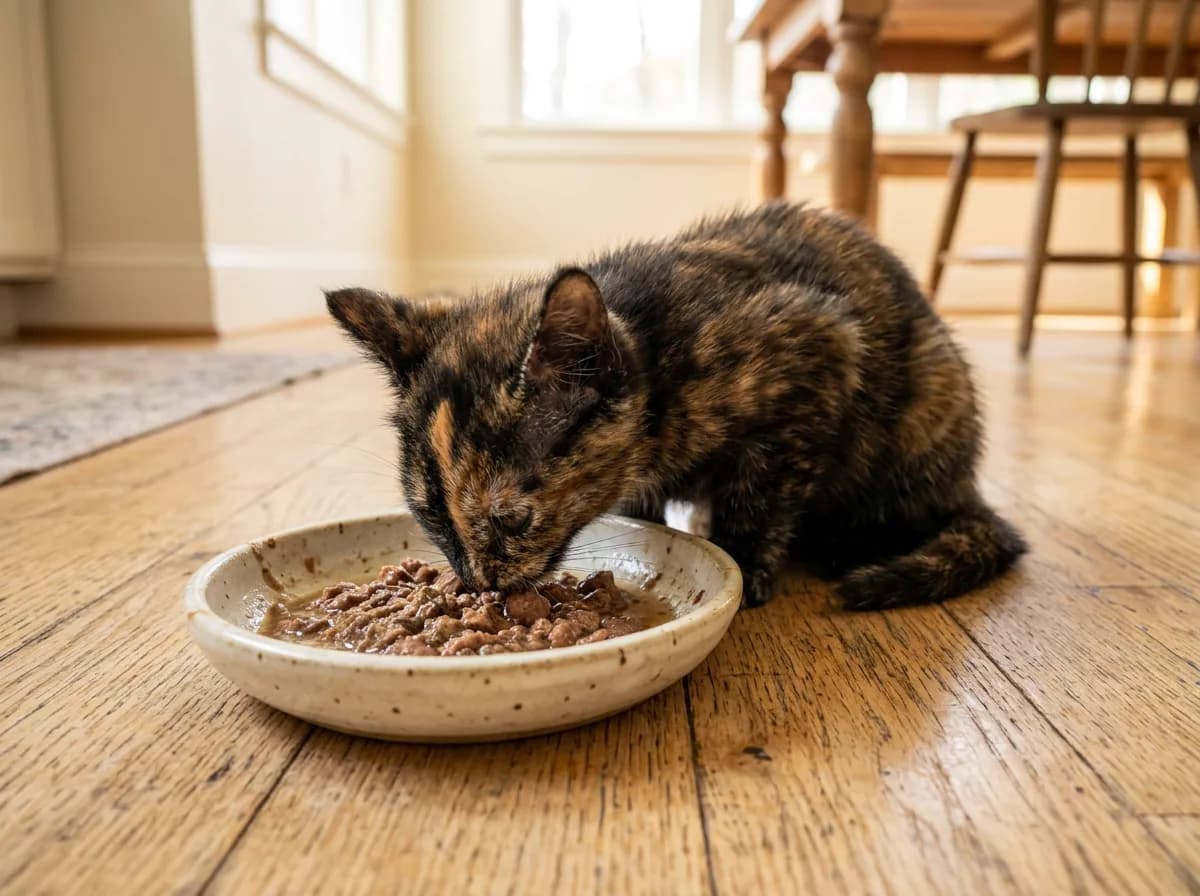
Caring for a tortie kitten is the same as caring for any healthy kitten, with one planning twist (spay) thanks to her near-certain female genetics.
| Age | Feeding | Key Milestones |
|---|---|---|
| 0-4 weeks | Mother's milk or kitten formula | Eyes open (1-2 weeks); blue eyes; relies fully on mom |
| 4-8 weeks | Weaning onto wet kitten food | Litter training begins; eye color starts shifting (6-7 weeks); socialization window |
| 8-12 weeks | Kitten food, 3-4 small meals a day | First core vaccines; ready to go home (8 weeks earliest); eye color settling |
| 3-6 months | Kitten food, multiple meals | Booster vaccines; rabies; plan spay (often around 5-6 months or per vet) |
| 6-12 months | Transition toward measured kitten/adult food | Spay if not already done; adult coat and color deepen |
A few essentials:
- Feeding. Kittens grow fast and need calorie-dense, complete kitten food, fed in several small meals a day. Always provide fresh water.
- Litter training. Most kittens take to a low-sided litter box quickly once weaned. Keep it clean and easy to reach.
- Socialization. The window from about 2 to 9 weeks is golden. Gentle daily handling, new people, and calm exposure to household sounds build a confident adult.
- Vaccines and vet visits. Follow your vet's kitten vaccine schedule (typically core vaccines starting around 6 to 8 weeks with boosters every few weeks, plus rabies).
- Spay planning. Because she is almost certainly female, budget and schedule a spay. Many vets spay around 5 to 6 months, though pediatric spay is common in shelters. Spaying prevents unwanted litters and reduces certain health risks.
- A tortie kitten is overwhelmingly likely to be female and can become pregnant young. Schedule her spay early; an unplanned litter is the most common avoidable surprise of tortie ownership.
If you are still choosing among cat types, our cat breed library covers temperament and care needs across popular breeds so you can match a kitten to your home.
Tortoiseshell Folklore and Fun Facts
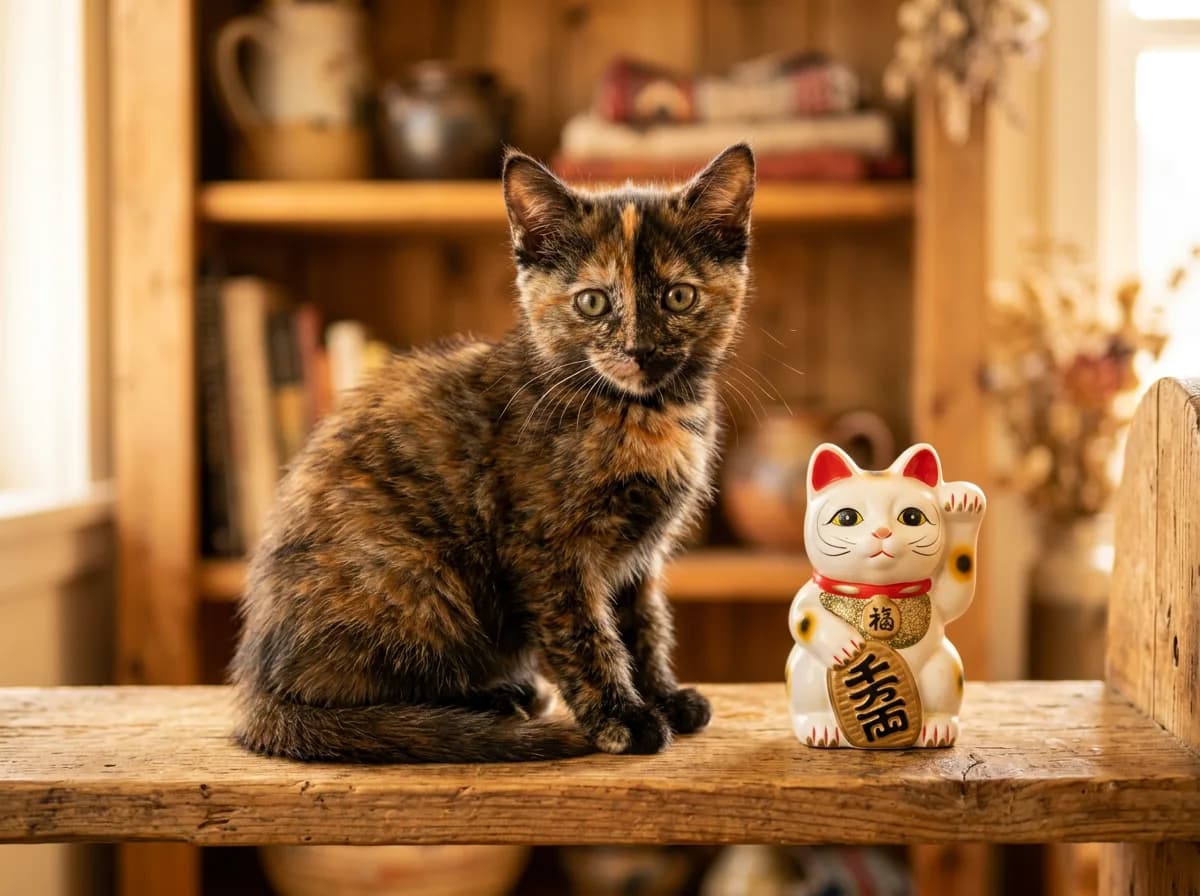
Tortie kittens come with a rich trail of folklore. In maritime and Celtic traditions, tortoiseshell cats were "money cats," thought to bring luck and even protect ships at sea, which is why sailors prized them as ship's cats. In Japan, the tri-color mi-ke (literally "three-fur") cat is the model for the famous maneki-neko, the beckoning good-luck figurine you see in shop windows. Across cultures, a tortie in the home has long been read as a sign of good fortune.
The science is just as charming. Every tortie's pattern is a one-of-a-kind genetic mosaic, so your kitten's coat is literally unrepeatable, a visible record of which X chromosome switched off in which cell, painted across her whole body.
Frequently Asked Questions
A tortoiseshell kitten wears a one-of-a-kind brindled pattern of orange and black created by random X-chromosome inactivation, so no two are alike. Almost all are female, the pattern is fixed at birth, and the coat shades often deepen as she matures.
The pattern is fairly common in female cats, so tortie kittens are not rare overall and turn up in most shelters. What is rare is a male tortie, which occurs only about 1 in 3,000 cats.
The orange gene sits on the X chromosome, and a cat needs both orange and black to be a tortie. Females have two X chromosomes and can display both colors through X-inactivation; males usually have only one X, so they normally cannot make the tortie mosaic. About 99.9% of torties are female.
It depends on the individual cat, not the pattern. Tortitude is mostly anecdotal. A tortie kitten that is gently handled and well socialized in her first weeks is just as likely to be a cuddly, affectionate adult as any other cat.
Shelter or rescue adoption typically costs $50 to $200 and usually includes spay or neuter, vaccines, and often a microchip. Since tortie is a pattern and not a breed, beware of breeder-style prices; only a pedigreed breed (roughly $800 to $2,500) justifies a higher cost.
Look at the white. A tortoiseshell has brindled orange and black with little or no white. A calico is predominantly white with large, distinct separate patches of orange and black. A kitten with some white but not mostly white is a tortie with white.
The pattern (where the patches sit) is fixed in the womb and will not move. But the shades can deepen and the patches often sharpen as the adult coat replaces the kitten fluff. A fever coat can also make a newborn look pale before her true colors come in.
All kittens are born with blue eyes. The adult color usually starts emerging around 6 to 7 weeks of age and is typically settled between 12 and 16 weeks (3 to 4 months). After that, the eye color stays.
Very rare, about 1 in 3,000. Male torties usually result from an extra X chromosome (XXY), chimerism, or mosaicism. They are almost always sterile and may have more health issues, so they are a curiosity, not a more valuable cat.
A dilute tortie has a softer blue-gray and cream coat instead of black and orange. The lighter look comes from a recessive dilution gene (MLPH) that needs two copies. The pattern is the same; only the color intensity changes.
Not because of their coat. A 2015 UC Davis survey found a modest, owner-reported tendency toward more handling-related feistiness in sex-linked-orange females, but the effect was small and individual variation dominated. Socialization and breed matter far more than pattern.
Most tortie kittens are domestic shorthairs or longhairs, but the pattern also appears in Maine Coons, Persians, Cornish Rex, American Shorthairs, Japanese Bobtails, and more. Any breed carrying the orange gene can produce a tortie; purebred status comes from the breed, not the pattern.

Coreen Saito is a pet writer and longtime shelter volunteer with more than a decade in animal rescue. She covers cat behavior, breed care, and the small, ordinary science of sharing a life with companion animals, with a particular focus on honest takes about the products and decisions that actually matter. At home in Arizona, she's outranked by Mac (a dog with the loudest opinion in the house), Rebel (a cat who governs by quiet authority), and Meri (an orange tabby who runs the late shift and the laundry basket). She writes about all three, plus the rescues that keep coming through her life, at LifeWithMinty.com.
Sign up for expert-backed reviews and safety alerts all in one place.