Maine Coon Cat: The Complete Gentle Giant Breed Guide
Meet the Maine Coon beyond its impressive size. Learn what daily care involves, how to assess health records and household fit, and where to explore cost, colors, growth, and lifespan in more detail.
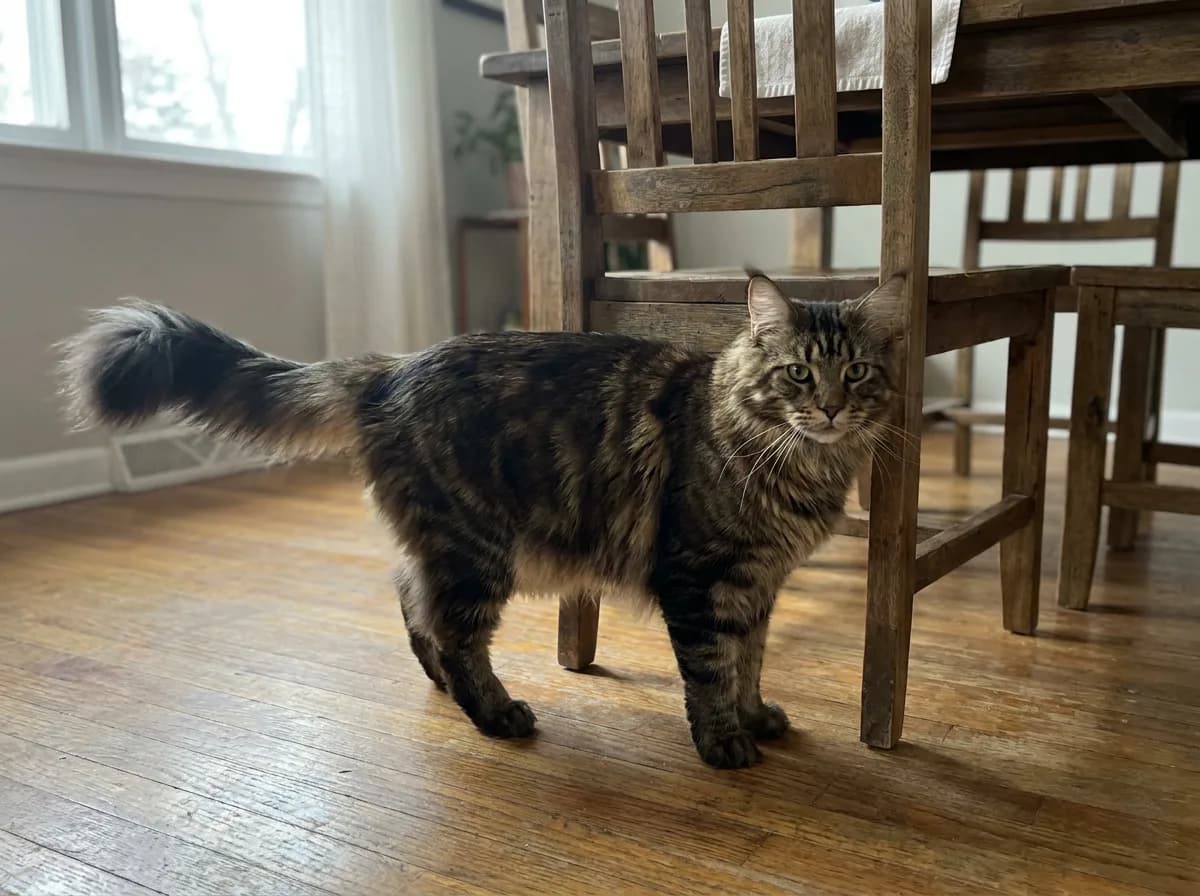
Brown tabby Maine Coon standing beside a wooden dining chair with its plumed tail extended.
Petful is reader supported. As an affiliate of platforms like Amazon and Chewy, we may earn a commission when you buy through links on this page. There is no extra cost to you.
The Maine Coon is a large, sociable cat with a shaggy coat and a reputation for joining whatever its people are doing. This gentle giant can be a wonderful companion if you have room for sturdy cat furniture, time for regular grooming, and a realistic veterinary budget. Choosing one means planning for the everyday care behind those impressive ears and enormous tails.

Sign up for expert-backed reviews and safety alerts all in one place.
Maine Coon Cat at a Glance
The Maine Coon is a naturally developed domestic cat breed from New England, recognized by the Cat Fanciers Association and The International Cat Association. It is one of the largest natural domestic breeds, combining an imposing frame with a generally friendly, playful disposition.
- 1A large domestic cat with a social, gentle giant reputation
- 2Best for households that welcome daily interaction and regular coat care
- 3Slow maturation makes healthy growth more useful than chasing a giant weight
- 4Health screening matters even when a kitten looks lively and well
Think of the breed as a companion who needs accommodations, rather than a decorative longhair. Before committing, picture where a large litter box will go, how you will carry the cat to appointments, and who will maintain its coat during a busy week. The answer need not be a huge house or expensive equipment. It does need to be a workable routine shared by everyone responsible for the cat.
Is a Maine Coon a Good House Cat?
Yes, a Maine Coon can be a good house cat when the home provides usable space and indoor enrichment. A floor plan matters more than a particular number of bedrooms: the cat needs somewhere to stretch, climb safely, retreat, and use its litter box without being crowded. A comfortable indoor life also avoids the need to rely on unsupervised roaming for entertainment.
For climbing furniture, compare platform dimensions, stability, and the manufacturer's weight limits with your cat's size. Height alone does not establish suitability for a large adult, and required anchors matter. Provide a separate scratching surface, too: the Necoichi Premium Comfort Cat Scratcher Wall is one option to compare against the cat's stretch and preferred scratching position. Check its dimensions and setup instructions before buying.
Build the room around these practical checks:
- Turning room: Can the cat enter the litter box, turn around, and dig without rubbing against the sides? Measure the usable interior, especially with covered boxes.
- Secure routes: Can it get from a perch to the floor without jumping onto an unstable table or crossing a dog's bed?
- Private space: Is there a resting spot that children, visitors, and other pets will leave alone?
- Daily activity: Can you offer a clear play area and put wand toys away safely after supervised play?
The feline veterinary guidance at Cat Friendly Homes emphasizes accessible resources, predictable interactions, and an enriching environment. Apply that to your actual room: shift a chair, clear a landing area, or move a feeding station before buying more furniture.
Petful may earn a commission when you click through to Chewy, at no extra cost to you.
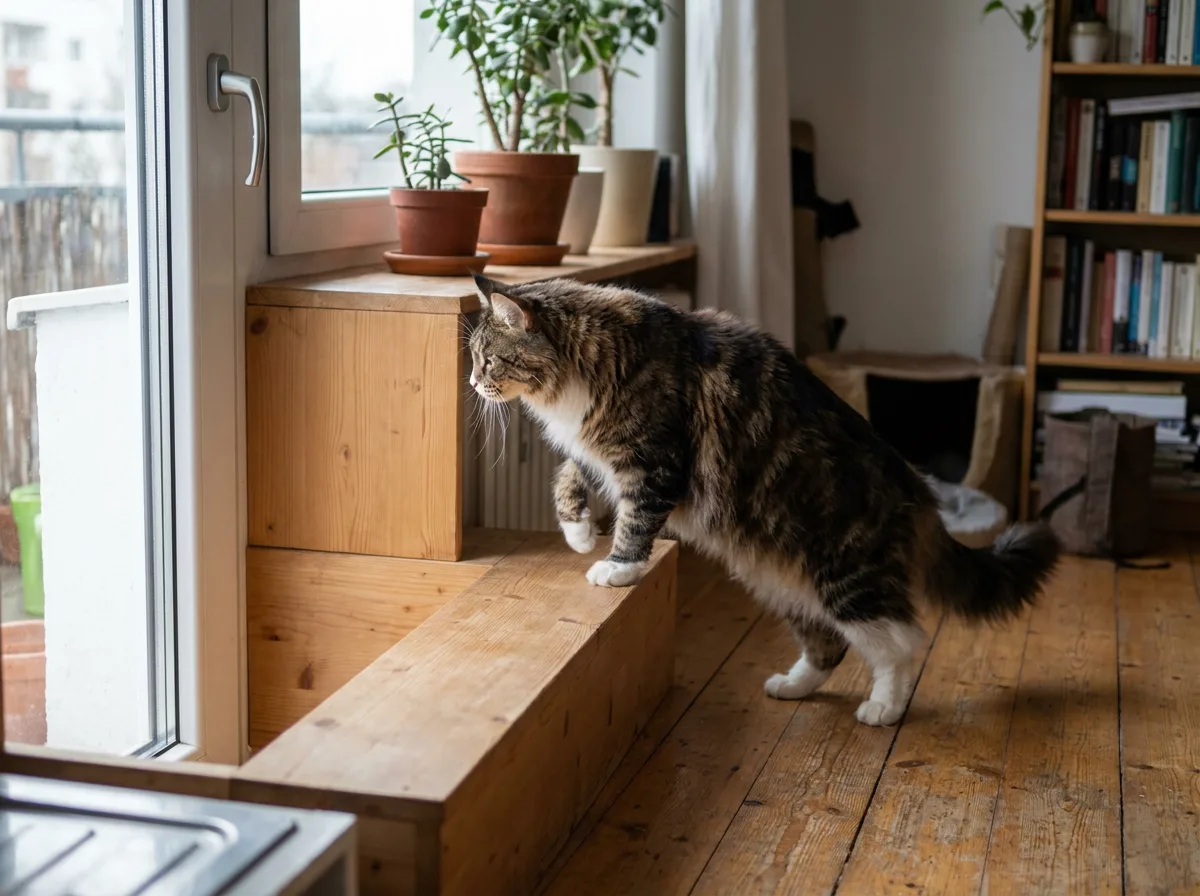
A quiet apartment may suit an individual cat better than a large, hectic house. Ask a rescue or breeder how the cat responds to household noise and separation, and plan a calm arrival space. Secure screens and doors; a curious cat's size is no protection against a fall or escape.
What a Maine Coon Looks Like and How to Spot a Mix
A domestic longhair and a Norwegian Forest Cat can both be mistaken for a Maine Coon. Long hair and a big tail are shared features, so a photo cannot establish pedigree or prove that a cat is a Maine Coon mix. For a documented purebred, look for verifiable registration and parentage records rather than relying on a seller's visual comparison.
Use this identification checklist to compare appearance with the TICA Maine Coon breed standard:
- Body: Look for a substantial, rectangular body with balanced proportions. Fluff can disguise the underlying frame.
- Muzzle: The muzzle has a notably square shape. A close head photograph is more informative than a distant picture of a sitting cat.
- Ears: Large ears have furnishings inside them; lynx-tipped ears may be conspicuous, but tufts alone do not identify a breed.
- Coat and tail: The coat has an uneven, shaggy outline and a long plumed tail, rather than identical hair length everywhere.
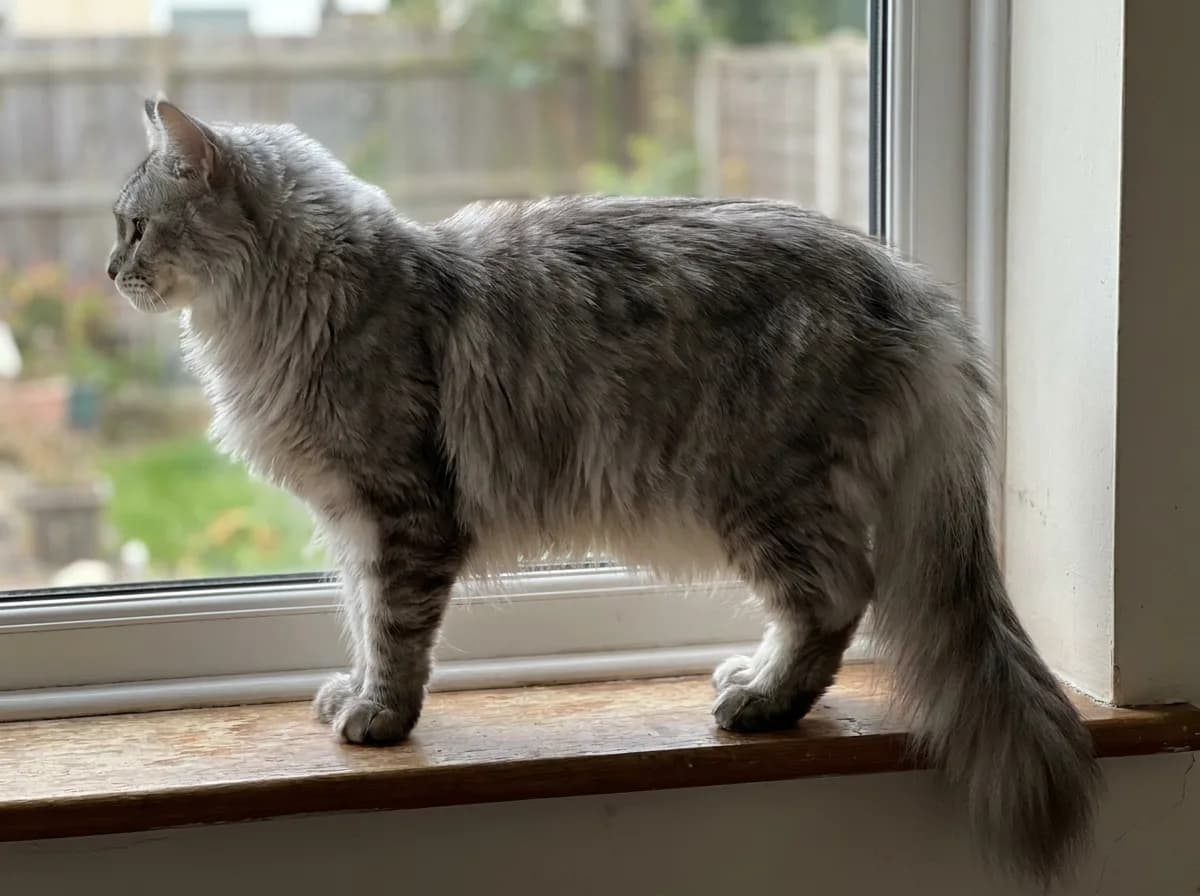
- Norwegian Forest Cat: Its CFA standard describes a triangular head and straight nose profile, useful contrasts with the Maine Coon's square muzzle.
- Domestic longhair: This is a coat description, not a specific pedigree. Its appearance can vary widely and overlap with registered longhaired breeds.
On an adoption listing, “DLH” generally means domestic longhair; adding “Maine Coon” may reflect a resemblance or known history. Ask which one the organization means. A responsible answer can simply be that the ancestry is unknown.
- Visible traits can suggest a resemblance. They cannot distinguish a pedigreed Maine Coon from every domestic longhair mix, establish a percentage of ancestry, or replace registration records. An undocumented cat is not less deserving of a home.
Different types of Maine Coon cats advertised online may refer to coat colors, show lines, or a seller's marketing labels. Those labels do not automatically describe separate breeds. Likewise, a polydactyl cat has extra toes, a trait recognized in TICA's Maine Coon Polydactyl category; extra toes are not proof of Maine Coon ancestry.
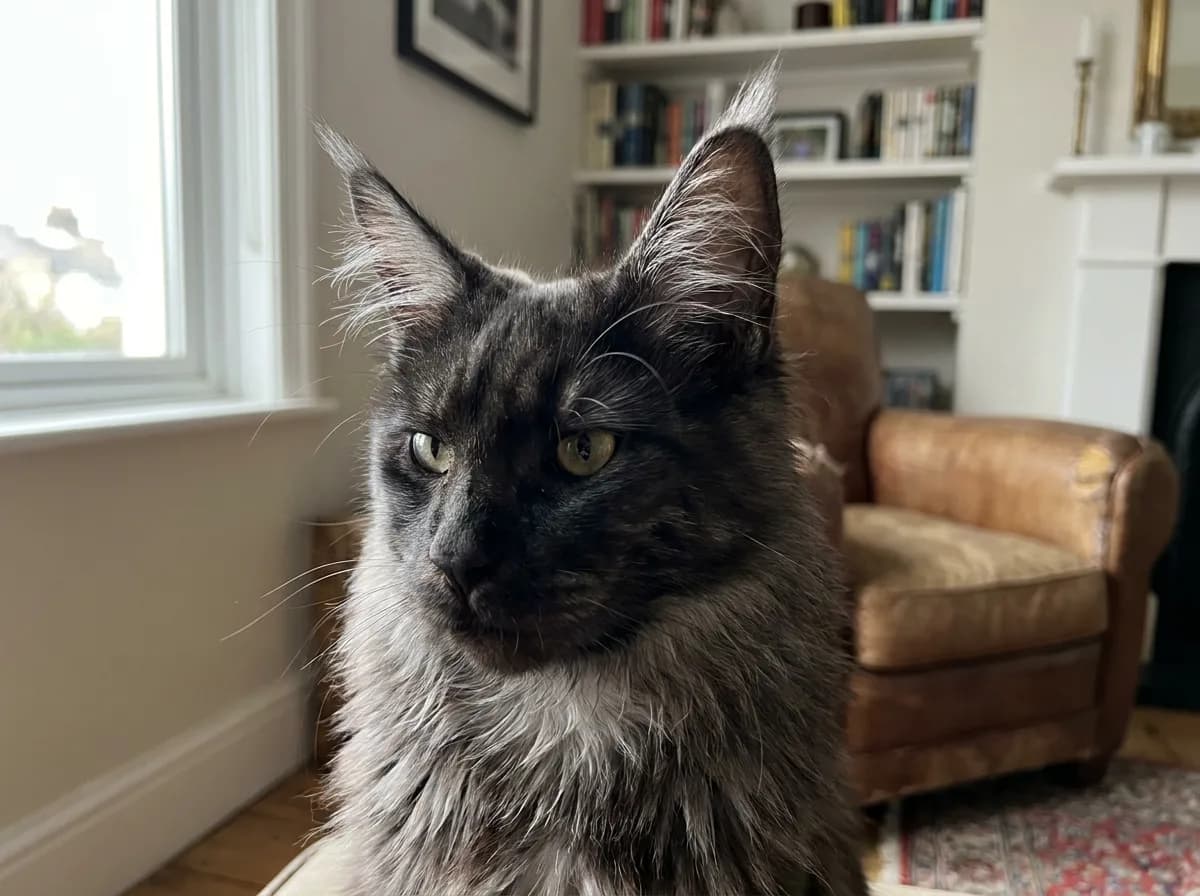
When looking through Maine Coon cat pictures, compare like with like. Camera distance, a thick winter coat, and a person holding a cat toward the lens can all affect apparent size. Request an ordinary full-body view and a current veterinary weight if size influences your equipment choices. Neither a dramatic photograph nor a breed label tells you whether that individual will enjoy being picked up.
History and Origin: America and the First Show Cat
There is no documented pairing of two modern cat breeds that “makes” a Maine Coon. It developed as a natural population of domestic cats in the northeastern United States, rather than as a recent designer cross. Stories about raccoons, royal cats, and seafaring owners are colorful folklore, not established pedigrees. Cats and raccoons cannot produce offspring together.
The Cat Fanciers Association's breed history records the Maine Coon's New England roots and describes Cosey, a brown tabby that won at the 1895 New York cat show. CFA championship recognition followed in 1976. That long history helps explain the breed's identity, but it does not mean every large longhaired cat found in Maine belongs to a registered breeding line.
Grooming and Care: Managing the Shaggy Coat
Regular, gentle combing is the foundation of Maine Coon coat care. Work through manageable areas while the cat is comfortable instead of waiting until the whole coat is tangled. The CFA recommends combing two or three times weekly; adjust the routine to the individual coat and how readily knots develop. A smooth-looking surface can still hide tangles underneath.
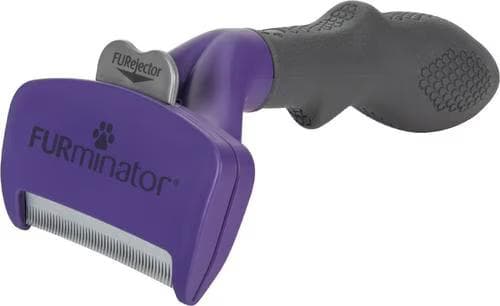
A deshedding tool is an optional addition, not a replacement for checking the coat with your fingers and a suitable comb. If a groomer recommends one for your cat, the FURminator Long Hair Cat Deshedding Tool, Medium is a longhair model to consider. Follow its instructions, use light pressure, and stop if it catches, irritates the skin, or upsets the cat. Never drag a tool through a tight mat.
Petful may earn a commission when you click through to Chewy, at no extra cost to you.
A coat check you can repeat
- Start with an area your cat accepts, using brief strokes and a reward for calm cooperation.
- Check behind the front legs, the chest ruff, belly edges, and hindquarters. Work gently; do not force the cat onto its back.
- Separate small, loose tangles without pulling the skin. Ask a groomer or veterinarian to handle dense mats, rather than cutting blindly beneath them.
- End before the cat becomes distressed. Several short sessions are easier to sustain than a wrestling match.
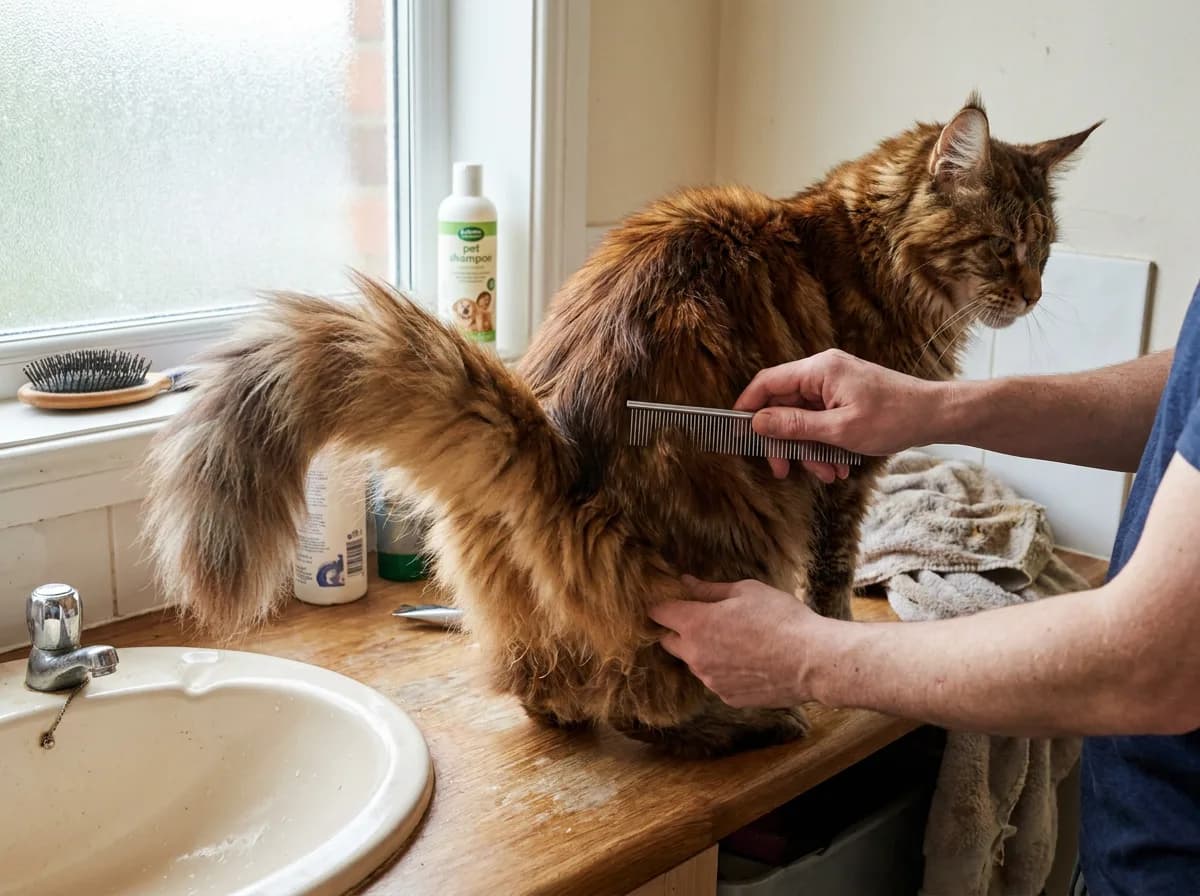
Keep the tools somewhere easy to reach and choose a surface where the cat feels secure. If grooming becomes noticeably harder, record what changed. A cat that suddenly objects to being touched or stops keeping its rear coat clean may need a veterinary examination, rather than a stronger restraint technique. The coat-care routine should help you notice changes, not conceal them.
Feeding a large cat without overfeeding
Maine Coon cat food should be complete and balanced for the cat's life stage. A breed name on the bag is less useful than the nutritional adequacy statement, an appropriate portion, and how the individual maintains body condition. Cornell's feeding guidance explains why kitten and adult needs differ and why homemade diets need professional formulation.
Ask your veterinarian for a starting daily calorie allowance and translate it using the calories on the actual food label. “One cup” is not a portable feeding instruction between brands. Record treats and food used for training as part of the day's intake, and keep fresh water available. A large frame does not justify unlimited portions.
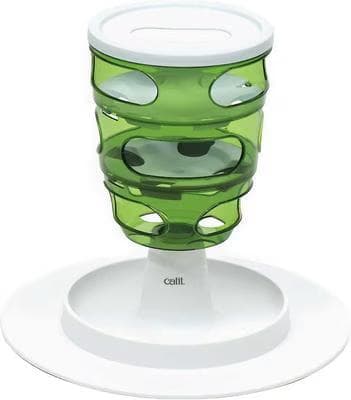
For a cat that enjoys working for dry food, the Catit Senses 2.0 Food Tree Cat Feeder can hold part of an already measured meal. Begin with an easy setup and watch the first attempts. If the cat gives up or cannot retrieve its food comfortably, simplify the activity or use an accessible dish; a puzzle should provide engagement, not make eating frustrating.
Coordinate feeding in a shared household
In a shared household, give one person responsibility for measuring the daily allowance, or leave a simple feeding record where everyone can see it. That prevents a friendly cat from collecting several unplanned breakfasts. Track appetite changes as well as leftovers, especially after a move or a change of food.
Personality and Temperament: Why They Are Called Gentle Giants
Maine Coons are often affectionate, curious, and interested in family activity. The Governing Council of the Cat Fancy describes a playful, companionable cat that can form strong household bonds. “Gentle giant” describes a common reputation, not a promise that every individual tolerates noise, unfamiliar dogs, or rough handling.
Do Maine Coon cats pick a person? Some show a clear preference, while others move comfortably among several family members. Food, familiar routines, and the way a person interacts with the cat can all shape the relationship. Let the cat initiate contact and give it choices. Trying to secure affection through repeated picking up or preventing it from leaving usually works against a comfortable bond.
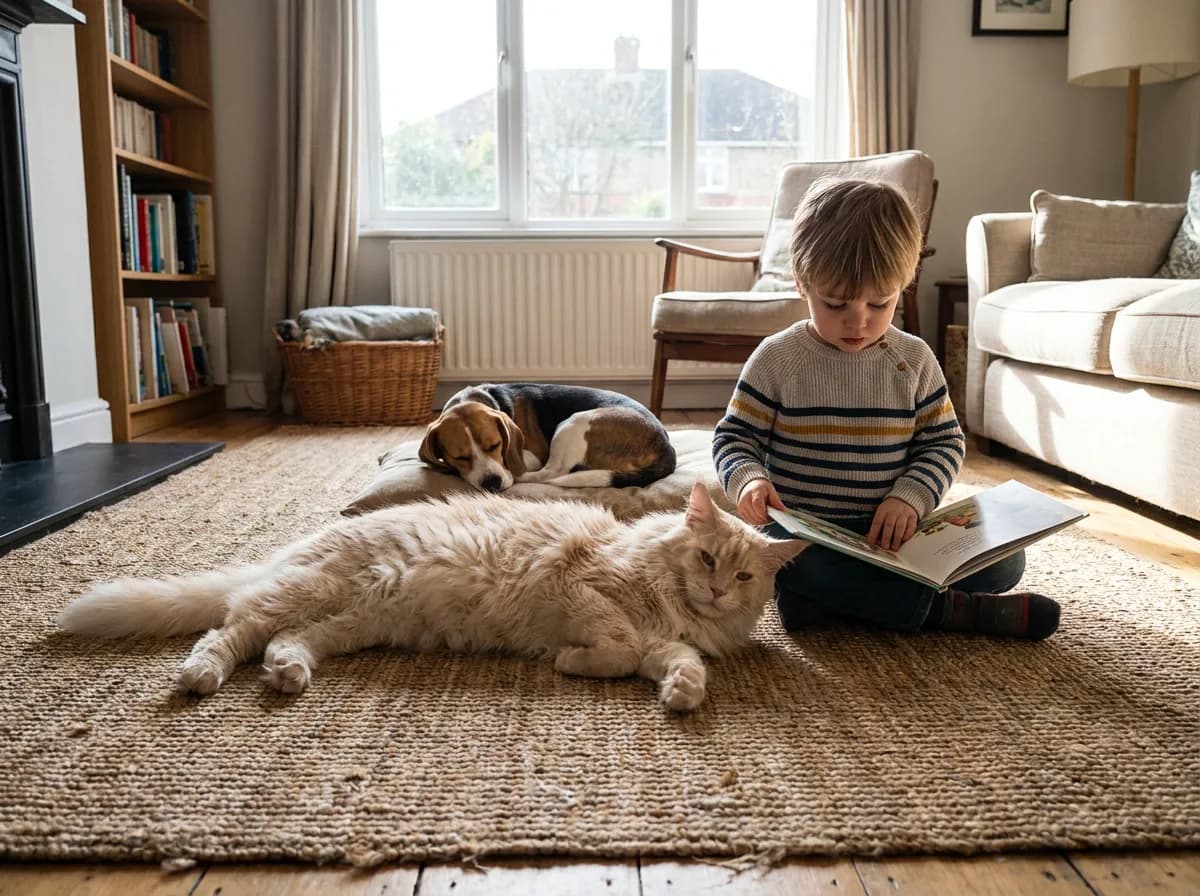
For a family with children, practice specific rules rather than relying on “be gentle”:
- Pet the cat while it remains on a comfortable surface instead of carrying it around.
- Keep faces away from the cat's face and give it room to leave.
- Leave sleeping, eating, hiding, and litter-box time undisturbed.
- Use toys for play instead of encouraging pouncing on hands or feet.
Maine Coon behavior problems still need an individual explanation. Scratching, for example, is normal feline behavior that needs an appropriate outlet; Cornell recommends matching scratching surfaces to the cat's preferences. Sudden aggression, hiding, or house-soiling should prompt a health and environmental assessment, not the assumption that this supposedly easygoing breed is being difficult.
Living With a Maine Coon Day to Day
Some Maine Coons sleep with their owners, and others prefer a nearby chair, a cool floor, or their own bed. There is no breed rule requiring a cat to share your mattress. Offer a comfortable alternative from the beginning, and decide household bedroom boundaries consistently. A cat choosing another sleeping spot is not a reliable measure of how attached it is to you.
A manageable routine might include a short play session before your workday, a midday check by someone at home when needed, and another opportunity for activity in the evening. Adapt it to the individual rather than expecting every cat to fetch, walk on a harness, or enjoy water because a video shows another Maine Coon doing so.
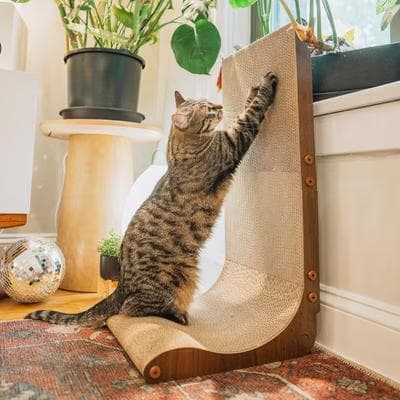
Curved cardboard wall scratcher with a wood frame that protects walls and gives cats a satisfying vertical scratch surface.
Petful may earn a commission when you click through to Chewy, at no extra cost to you.
Keep a small care record that a sitter can follow:
- The food, measured portions, and usual mealtimes.
- Where the cat likes to hide and which handling it accepts.
- The veterinarian's number and the location of the carrier.
- Any prescribed medicine instructions supplied by the veterinarian.
Practice carrier entry during ordinary quiet days by leaving an appropriate carrier accessible and rewarding voluntary exploration. Check that you can carry it safely with the adult cat inside. A plan that works for a kitten may become awkward as the cat grows, particularly if stairs or a long walk to the car are involved.
Health and Lifespan: What Every Owner Should Know
Maine Coon cat health issues worth discussing before adoption include hypertrophic cardiomyopathy, hip dysplasia, and spinal muscular atrophy. Screening reduces uncertainty about particular inherited risks; it does not guarantee a healthy lifetime. Ask for named tests and dated results, and take the documents to your veterinarian instead of relying on a general “health tested” claim.
Hypertrophic cardiomyopathy, or HCM, involves abnormal thickening of heart muscle. Maine Coons are among the predisposed breeds. Cornell identifies echocardiography, an ultrasound examination of the heart, as the diagnostic standard. Your veterinarian can advise whether a cardiologist's examination is appropriate for a particular cat and its family history.
- For hypertrophic cardiomyopathy, ask about the Maine Coon MYBPC3 DNA result and dated heart ultrasound reports for the parents. Also ask about hip assessment and spinal muscular atrophy testing. Confirm whose records you are seeing and discuss any unclear result with your veterinarian.
Cornell's joint-health guidance identifies Maine Coon susceptibility to hip dysplasia. Reduced jumping or stiffness deserves attention. Spinal muscular atrophy is an inherited neuromuscular condition associated with weakness and muscle loss; the OMIA genetics reference recommends testing breeding Maine Coons for the associated variant.
Make preventive care practical
Keep vaccination, parasite prevention, dental assessment, and weight monitoring on a veterinary plan suited to your cat. Do not wait for dramatic illness to bring up a change in appetite, grooming, movement, or litter-box habits. Videos and a short timeline can help explain an intermittent change at the appointment.
For home dental care, Cornell recommends gradual introduction to toothbrushing with cat-safe toothpaste. The small end of the Virbac C.E.T. Dual-Ended Dog & Cat Toothbrush is an option if it fits your cat's mouth comfortably. Start with accepted lip handling and progress gently; ask the veterinarian first if the mouth seems painful. Human toothpaste is unsuitable.
Difficulty breathing, collapse, or sudden painful hind-leg weakness needs urgent veterinary attention. Those signs are not a situation for trying a supplement or waiting for the next routine visit.
Kittens and Buying: How to Choose a Healthy Maine Coon
Choose a Maine Coon kitten by its documented care and the suitability of the household match, not by a promise of exceptional adult size. Before sending money, establish who is supplying the kitten, what records accompany it, and what happens if the placement does not work out. Registry membership and health screening answer different questions, so check both.
Use a conversation with the breeder or rescue to work through the details:
- Identity: Ask how the kitten's identity connects to its veterinary record, registration documents where applicable, and written agreement.
- Health history: Request actual examination, vaccination, parasite-care, and parental screening records rather than a screenshot declaring “all clear.”
- Everyday experience: Ask what handling, household sounds, food, and litter the kitten already knows.
- Handover: Confirm the agreed transfer age, the supplies and records provided, and how to contact the organization afterward.
- Support: Read return provisions and health terms before a deposit. A verbal reassurance is difficult to evaluate later.
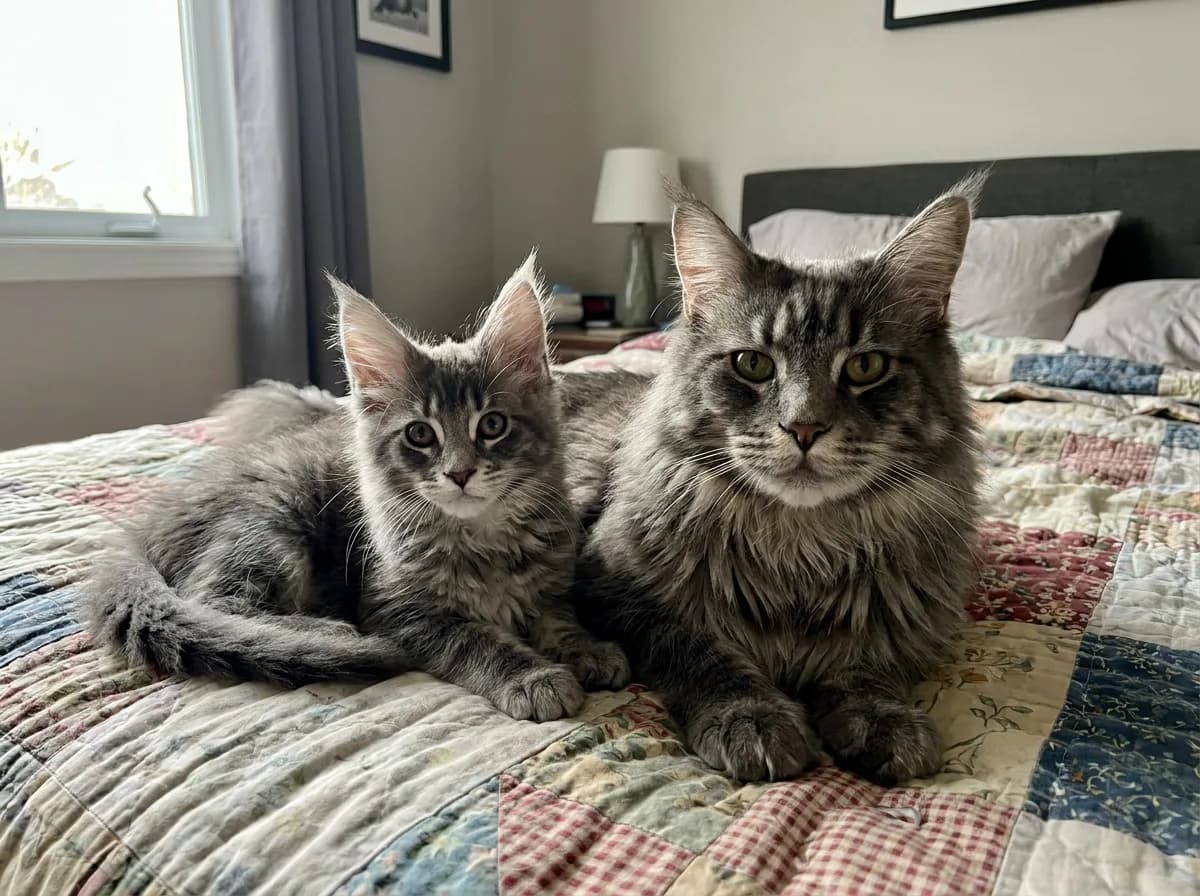
During the first year, keep a dated record of weight, appetite, and veterinary advice. A 1-year-old Maine Coon may still look narrower and less fully coated than a mature adult. Slow development is a reason for patient monitoring, not a reason to increase food until the cat resembles a large show animal. Arrange the transition from growth food with your veterinarian according to development and body condition.
Videos showing the first 100 days of Maine Coon kittens can make growth look remarkably fast. They cannot establish what a particular kitten should weigh or when it is ready to leave its mother. For your own kitten, the useful comparison is its consistent growth record and veterinary assessment. Repeated vomiting, poor appetite, or failure to gain as expected needs professional attention, not comparison with a social-media timeline.
Male vs. Female Maine Coons
Neither a boy nor a girl Maine Coon is automatically the better pet. Males tend to be larger, but size does not tell you which cat will be affectionate, playful, independent, or comfortable with children. The most useful information comes from observing the individual and asking someone who knows its behavior in an ordinary home.
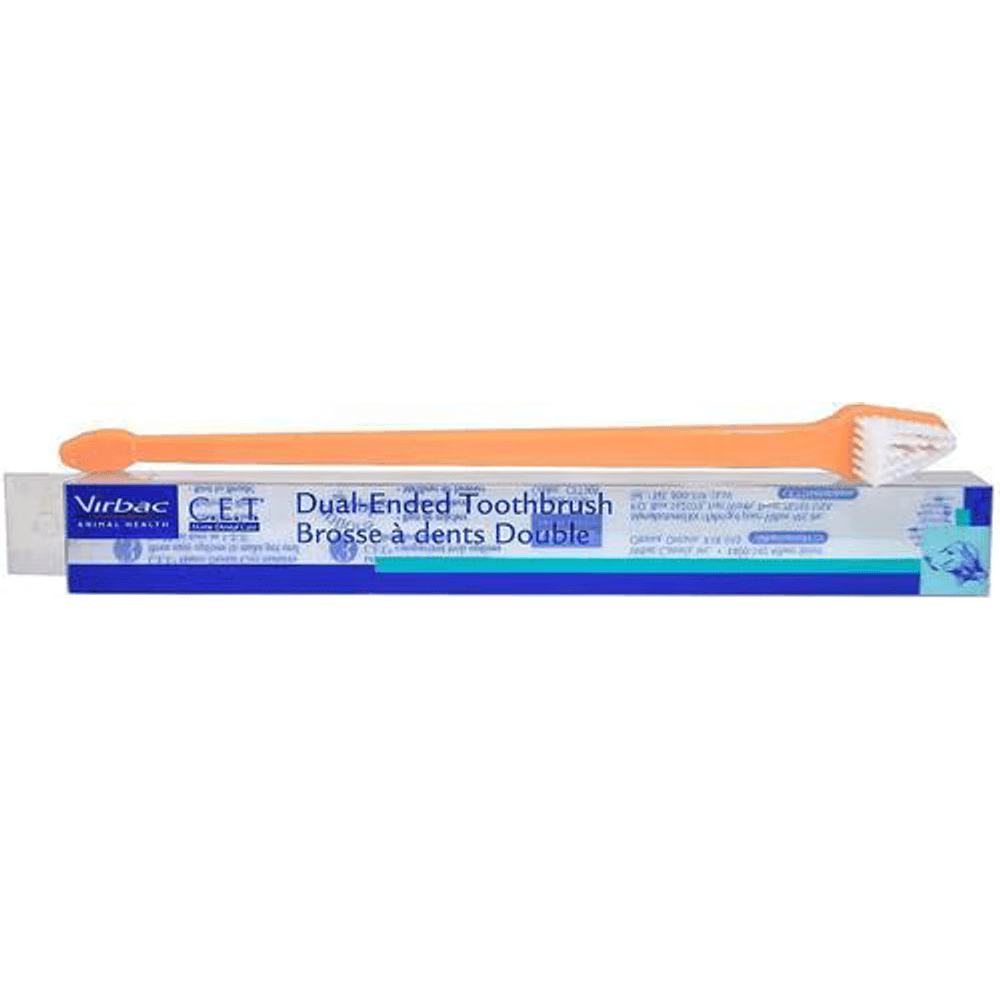
A dual-ended toothbrush with a large and a small head to fit different mouth sizes and reach the back molars where plaque hides. Soft bristles angled for the gumline.
Petful may earn a commission when you click through to Chewy, at no extra cost to you.
When comparing available cats, ask the same questions about each one:
- Does it approach willingly, watch from a distance, or need time to settle?
- What happens when play ends or handling becomes unwelcome?
- Has it lived comfortably with the kind of animals and activity in your household?
- Can you manage its anticipated adult equipment needs and carrier weight?
Descriptions of Maine Coon characteristics in males and females often harden tendencies into rules. Avoid choosing a female solely because you expect effortless independence, or a male because you expect constant cuddling. An adult cat in a foster home may offer clearer information about day-to-day temperament than a prediction based on a young kitten's sex. Discuss neutering and any individual medical considerations with the veterinarian.
Size and Weight: Just How Big Do Maine Coons Get?
Maine Coons are large cats, but there is no single weight every healthy adult should reach. Breed references give varying adult weight ranges, and males are generally larger than females. Use your veterinarian's body-condition assessment alongside a scale reading; pushing a cat toward a target number can turn normal variation into excess weight.
| Measure | Male and female comparison | What the number helps you decide |
|---|---|---|
| Adult weight | Males generally heavier; considerable individual variation | Carrier capacity and tracking changes with the veterinarian |
| Shoulder height | Measure the individual standing comfortably | Clearance and access to covered spaces |
| Body length | Measure body separately from tail | Usable resting and litter-box space |
| Nose to tail | Includes the long tail; not interchangeable with body length | Interpreting published length comparisons |
Black and white Maine Coons do not have separate size classes based on coat color. For either color, assess the individual cat's age, frame, body condition, and measurements. A white coat or a dark outline in a photograph cannot tell you which cat needs the larger carrier.
For the detailed dimensions and growth discussion, see how big Maine Coons get. Treat published weight charts as broad context, not a diagnosis. When buying a carrier or bed, your own cat's measurements and the manufacturer's limits are more useful than a breed average.
The Biggest Maine Coons: Record Holders and Viral Giants
The biggest Maine Coon cat in a photograph is an exceptional individual, not a realistic promise for a kitten. Length records and weight claims also measure different things: a cat can be very long without being unusually heavy, while a heavy cat is not necessarily in healthy body condition.
Our guide to the biggest Maine Coons on record separates the record-holder question from typical breed expectations. If a seller promotes a future “giant,” ask for documented parentage and health records before discussing size. A smaller, comfortable cat is a better outcome than pursuing an extreme measurement.
What a weight-record claim can prove
We could not verify a certified heaviest Maine Coon cat from the sources checked for this guide. Guinness explains that it discontinued heaviest-pet records to discourage overfeeding. A reported weight on a breeder's page or social account therefore should not be presented as a Guinness weight record.
When a Maine Coon record-weight claim appears, check the awarding organization, measurement date, and category. A verified length record establishes length, not the greatest weight. For your own cat, track weight to support healthy care rather than trying to exceed another animal's measurement.
Colors and Patterns: Beyond the Classic Brown Tabby
An orange Maine Coon, a brown tabby, a solid black cat, and a white cat can all belong to the same breed. Color names describe the coat; they do not establish separate size or personality classes. Lighting and the undercoat can also make a cat look different across photographs.
The Maine Coon coat colors guide explains the wider range of patterns and shades. Use it when comparing a listing's terminology with what you see, while keeping health history and temperament central to the choice. A premium color description does not replace those checks or demonstrate better breeding practices.
Cost of Ownership: What a Maine Coon Really Costs
Maine Coon cost includes the acquisition fee, suitable equipment, routine care, and money available for unexpected illness. The question “How much is a Maine Coon cat worth?” has no single answer: the seller's price and the household's sustainable care budget are different calculations. Compare itemized arrangements rather than assuming the highest price includes everything.
| Budget item | Planning approach | Check before committing |
|---|---|---|
| Kitten price or adoption fee | Obtain the actual written quote | Included care, records, registration where applicable, and contract terms |
| Initial setup | Price a suitable carrier, litter box, scratching furniture, and tools | Interior dimensions and safe load limits |
| Yearly upkeep | Total food, litter, routine veterinary care, and grooming needs | Monthly spending plus less frequent appointments |
| Unexpected care | Decide on accessible savings and any insurance policy | Upfront payment, exclusions, deductible, and claim terms |
Use our detailed guide to what a Maine Coon costs for published price bands and a broader breakdown, then replace estimates with local quotes. For the separate risk-protection decision, WebVet's guide to whether cat insurance is worth it explains how to compare savings with a policy. Read the actual coverage terms, especially for pre-existing and hereditary conditions.
Lifespan and Healthy Aging
Maine Coon lifespan figures describe populations or broad expectations, not the years an individual cat has left. Indoor living can reduce exposure to hazards, but it does not eliminate inherited disease or ordinary age-related illness. The useful goal is an ongoing plan for comfort and health, with examinations and testing guided by your veterinarian.
Our Maine Coon lifespan guide covers longevity in more detail. For everyday observation, notice changes from your cat's own normal behavior: how it reaches favorite furniture, maintains its coat, eats, and uses the litter box. A gradual change is still worth reporting.
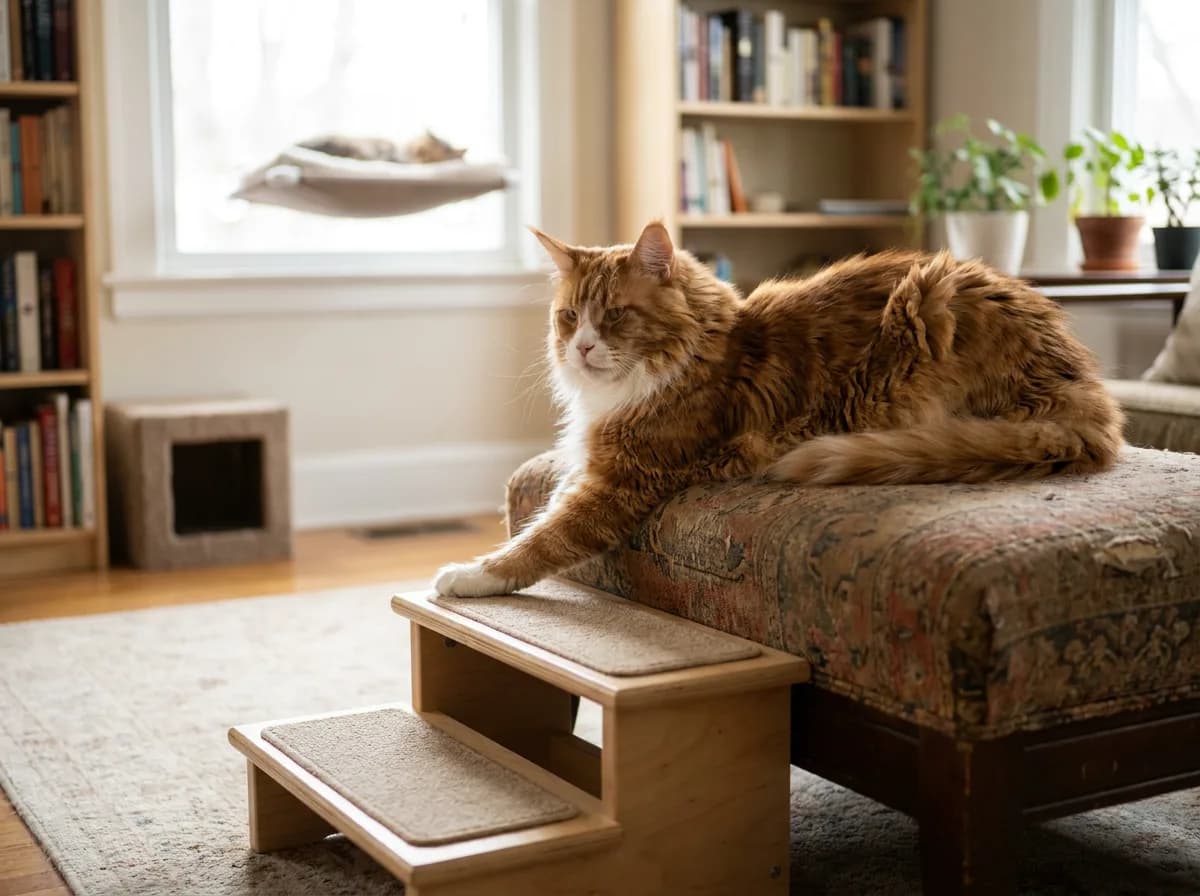
Make useful places easier to reach before a difficult jump becomes the only option. A broad low resting surface and a clear route to food, water, and toileting can simplify the home. Discuss stiffness or reduced activity with the veterinarian instead of attributing everything to age. Rearranging furniture supports access; it does not diagnose or treat pain.
Downsides and the Fit Decision
The main downside of a Maine Coon is the commitment behind its size and coat. Roomy equipment takes up space, grooming needs attention even during busy weeks, and inherited health risks make good records and veterinary planning important. A sociable cat also needs more from the household than food delivery and an occasional photograph.
Use this Maine Coon fit scorecard as a household discussion, not a numerical test. For each point, write ready, needs preparation, or not yet, plus the person responsible for the next action. A family can have enough money and still lack grooming time; a small home can work well if its layout meets the cat's needs.
- Space: Place a tape outline where the litter box, carrier, and resting furniture will go. Check doors, walking routes, and whether another pet can block access. If the setup only works by removing an essential escape route, rethink it.
- Budget: Collect local routine-care quotes and identify how you would pay an unexpected bill. Keep setup costs separate from recurring costs so an impressive tree does not consume money needed for veterinary care.
- Grooming time: Put short sessions on the calendar and identify a backup caregiver or professional. If nobody can maintain the coat comfortably, resolve that before bringing the cat home.
- Multi-pet dynamics: Plan a separate arrival area and a gradual introduction. Consider the resident animal's behavior, not just the Maine Coon's reputation. A dog that persistently chases cats needs a more substantial assessment than a larger cat.
- Health screening readiness: Decide who will collect records, ask about gaps, and arrange the first appointment. If a seller will not provide understandable documentation, pause the transaction instead of explaining the missing information away.
- Ready means the practical needs have a workable plan. Needs preparation means there is a specific task, owner, and realistic next step. Not yet means a central care need remains unresolved. This household checklist is an editorial planning aid, not a validated assessment or a prediction of a cat's behavior.
For example, a renter who can fit a suitable litter box but has no secure climbing furniture may simply need a better setup. A household counting on a hypoallergenic cat despite serious allergies has a different unresolved question that equipment will not solve. Discuss that with an allergist before adoption. Let the largest unmet need determine the next step, rather than balancing it against attractive features such as coat color or size.
Frequently Asked Questions About Maine Coons
Expect loose hair and regular cleaning, with individual variation. A seasonal coat blow may make shedding more noticeable, although indoor coats do not always follow a neat seasonal pattern. Increase checks when loose hair starts tangling; weekly combing should be adjusted to the coat rather than treated as a maximum. Bald patches, skin irritation, or an abrupt change warrant a veterinary check.
Start with stable freestanding furniture, a broad resting surface near a secure window, and enough room for a suitable litter box. Check the lease before installing wall-mounted shelves. Do not omit a product's required anchor simply to avoid drilling; choose another safe arrangement if installation is not permitted. A low, sturdy platform may suit the space better than a tall tree.
Many can live in multi-pet households, but compatibility depends on the individuals. Use slow introductions with separation first, controlled exposure, and an easy retreat. Progress when both animals remain comfortable, not after a fixed number of days. Persistent chasing, guarding, or fear calls for a revised plan and professional advice. A second pet is not automatically a cure for loneliness.
No. Allergy considerations involve proteins, including the Fel d 1 protein, rather than simply long or short hair. No cat breed is reliably allergen-free, and an individual's reaction cannot be predicted from a breed label. Speak with an allergist before adoption if symptoms are significant. The AAAAI's pet-allergy guidance explains why coat length is not a dependable shortcut.
No. A negative result for the tested MYBPC3 variant does not rule out HCM from other causes or other heart disease. UC Davis explains that the known Maine Coon variant is not the sole cause of HCM. An echocardiogram assesses the heart itself; discuss the appropriate screening plan with your veterinarian rather than treating a DNA report as a lifetime guarantee.
Weight alone cannot answer that. Ask your veterinarian to assess body condition, muscle, and the growth record together. You should be able to feel the ribs through an appropriate fat covering, but a thick coat can make visual judgments difficult. Bring food quantities and recent weights to the appointment. Do not start a growing kitten on a restrictive diet just to match an online chart.

Kristine Lacoste has been researching dog and cat breeds for nearly a decade and has observed the animals up close at dog shows in both the United States and the United Kingdom. She is the author of the book One Unforgettable Journey, which was named as a finalist for a Maxwell Award from the Dog Writers Association of America, and was host of a weekly pet news segment on the National K-9 Academy Radio Show. In addition, she was the New Orleans coordinator for Dogs on Deployment, a nonprofit that helps military members and their pets, for 3 years. Kristine has researched and written about pet behaviors and care for many years. She holds a bachelor’s degree in psychology, another bachelor’s degree in English and a Master of Business Administration degree.
Sign up for expert-backed reviews and safety alerts all in one place.