The Biggest Maine Coon Cat Ever: Records, Giants, and What's Possible
The biggest maine coon cat on record measured 48.5 inches from nose to tail. This guide covers Guinness record holders Stewie and Barivel, viral giant Kefir, realistic size limits by sex, and how to tell if your own Maine Coon is unusually large.
Petful is reader supported. As an affiliate of platforms like Amazon and Chewy, we may earn a commission when you buy through links on this page. There is no extra cost to you.
The biggest maine coon cat ever measured stretched a jaw-dropping 48.5 inches from nose to tail tip, which is longer than most four-year-old children are tall. That cat was Stewie, a gentle giant from Reno, Nevada, who set the Guinness World Record in 2010 and held it until his passing in 2013. Since then, another Maine Coon has stepped into the spotlight, and viral giants like Kefir keep proving that this breed operates on a scale all its own. Whether you want to understand the records, find out how big males and females actually get, or figure out whether your own cat is unusually large, this guide covers all of it.
- 1Stewie, a Maine Coon from Nevada, holds the all-time length record at 48.5 inches (123 cm)
- 2Barivel from Italy is the current longest living domestic cat at 47.2 inches (120 cm)
- 3Healthy adult male Maine Coons typically weigh 15-25 lbs, with the genuinely large reaching 25-28 lbs
- 4Maine Coons grow for 3-5 years before reaching full size, far longer than other breeds
- 5A big frame is genetic; true obesity still harms health and must be distinguished from natural size

Sign up for expert-backed reviews and safety alerts all in one place.
The Official Records: Longest Maine Coon Cats Ever
When people search for the biggest maine coon cat, they usually have two questions: who holds the record right now, and who was the largest of all time? The answers are two different cats.
Stewie: The All-Time Length Record (48.5 Inches)
Mymains Stewart Gilligan, known as Stewie, was verified by Guinness World Records on August 28, 2010, as the longest domestic cat ever measured. He stretched 123 cm (48.5 inches) from the tip of his nose to the tip of his tail. He also weighed approximately 34.6 lbs (15.7 kg) at peak, though that figure included some excess weight. Stewie lived with Robin Hendrickson in Reno, Nevada, and was bred at Mymains Cattery in Hermiston, Oregon. He was also a trained therapy animal who visited local hospitals and senior centers before passing away from cancer in 2013 at age eight.
- As of 2026, no domestic cat has officially surpassed Stewie's 48.5-inch (123 cm) nose-to-tail measurement. The all-time length record belongs to a Maine Coon, and it has held for over 15 years.
Barivel: The Longest Living Domestic Cat (47.2 Inches)
Barivel is a black classic tabby Maine Coon owned by Cinzia Tinnirello and Edgar Scandurra in Vigevano, Pavia, Italy. Guinness World Records officially verified his length at 120 cm (47.2 inches) on May 22, 2018, making him the longest living domestic cat in the world. He sits just 1.3 inches shorter than Stewie's all-time record. At the time of his verification at roughly two years old, he weighed approximately 9 kg (about 20 lbs), which is a healthy weight for a cat his frame size. Barivel's name comes from the Italian word for clown, which his owners found fitting for his playful personality.

Never Scoop Again® with the Whisker Litter-Robot, the smart self-cleaning automatic litter box. Monitor visits and track weights for better overall care in the Whisker® app. Multi-cat friendly.
Petful may earn a commission when you click through to Whisker, at no extra cost to you.
- "Longest ever" and "longest living" are two separate Guinness categories. Stewie holds the first; Barivel holds the second. If Barivel has since passed, a new living-record holder may have been certified.
Ludo: The Interim Record Holder
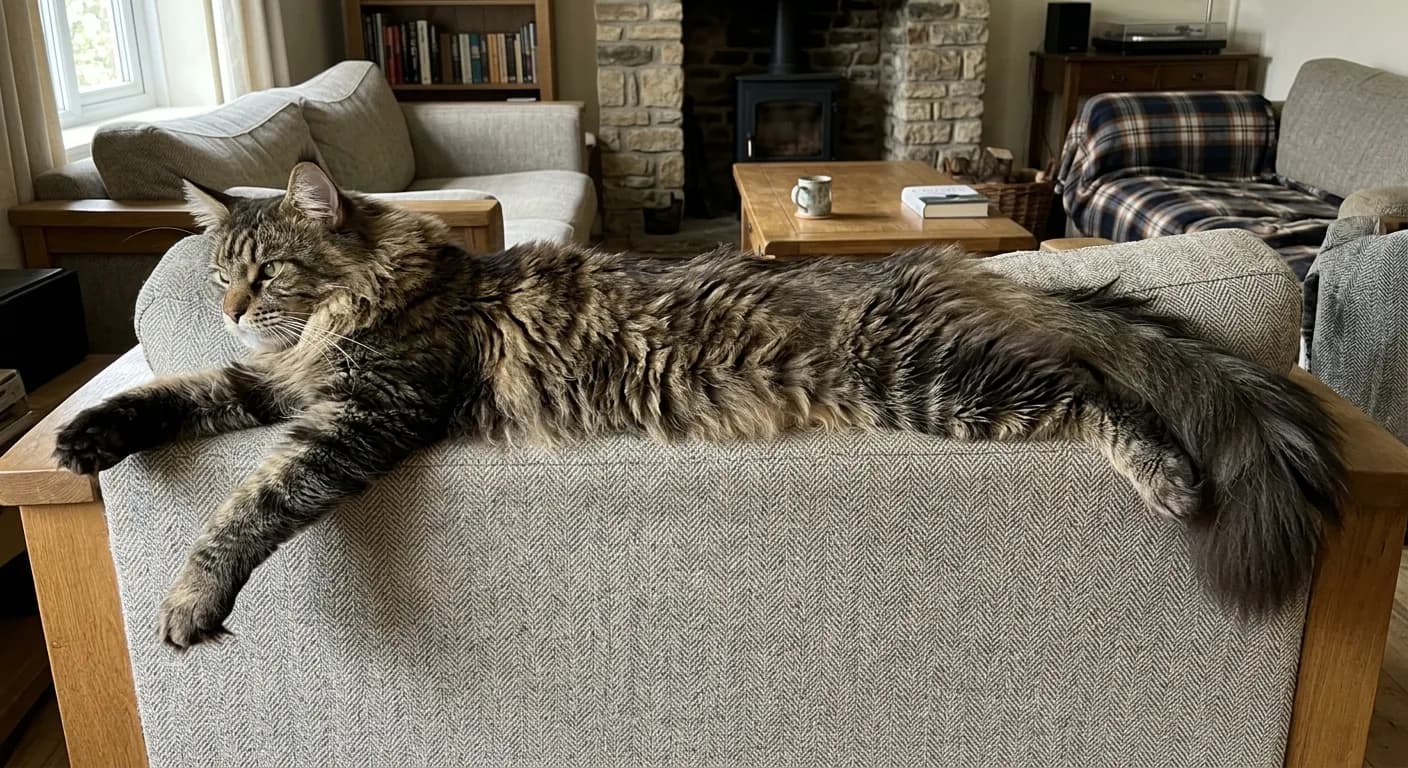
Between Stewie's passing and Barivel's verification, a Maine Coon named Ludo held the record for longest living domestic cat. Owned by Kelsey Gill in Wakefield, UK, Ludo measured 118.33 cm (46.6 inches) when verified on October 6, 2015. He was dethroned by Barivel in 2018.
Notable Biggest Maine Coon Cats: A Superlatives Table
Beyond the official Guinness records, a number of Maine Coons have gone viral for sheer size or weight. Here is a factual summary of the most-cited giants.
| Name | Length or Weight | Claim | Notes |
|---|---|---|---|
| Stewie (Mymains Stewart Gilligan) | 48.5 in (123 cm) | All-time Guinness record for longest domestic cat | Reno, NV; passed away 2013 |
| Barivel | 47.2 in (120 cm) | Guinness record for longest LIVING domestic cat | Vigevano, Italy; verified 2018 |
| Ludo | 46.6 in (118.3 cm) | Former longest living domestic cat | Wakefield, UK; verified 2015 |
| Kefir | ~27.5 lbs (12.5 kg) | Viral internet sensation; called "world's biggest cat" by media | Russia; weight at 1 yr 10 mo; not an official Guinness holder |
| Samson | ~28 lbs (12.7 kg) | Described as "New York's biggest cat" | 4 ft long; widely featured by Barcroft |
| Zeus (Moldova) | ~28.66 lbs (13 kg) / 39 in standing | Viral "size of a 4-year-old" media coverage | Instagram giant; no official GWR measurement |
Why Do Maine Coons Get So Big? The Science Behind the Size
Maine Coons are not simply large by accident. Three interconnected factors explain their exceptional size, and understanding them also explains why some individual cats push far beyond the breed average.
1. Evolutionary Origins in Cold New England Winters
The Maine Coon developed naturally in the harsh climate of Maine, where thick bones, heavy musculature, dense water-resistant coats, and large snowshoe-like paws were survival advantages, not cosmetic traits. Natural selection over generations favored robust body plans. Toe tufts, ear tufts, a heavy ruff, and a long bushy tail all evolved to retain heat. A bigger body has a better surface-area-to-volume ratio for cold climates, which means less heat is lost per pound of body weight.
2. Genetics and Selective Breeding
Size in Maine Coons is strongly heritable. Larger parents tend to produce larger offspring. Professional breeders who specialize in oversized Maine Coons have selectively paired large-framed cats for decades, producing cats that routinely exceed 20 lbs at a healthy weight. The Cat Fanciers Association (CFA) and The International Cat Association (TICA) both recognize the Maine Coon as a large breed with no upper weight standard, meaning breeders have significant latitude to develop extremely large lines. Some European lines have specifically been selected for maximum frame size.
3. Slow Maturation: The 3-5 Year Growth Window
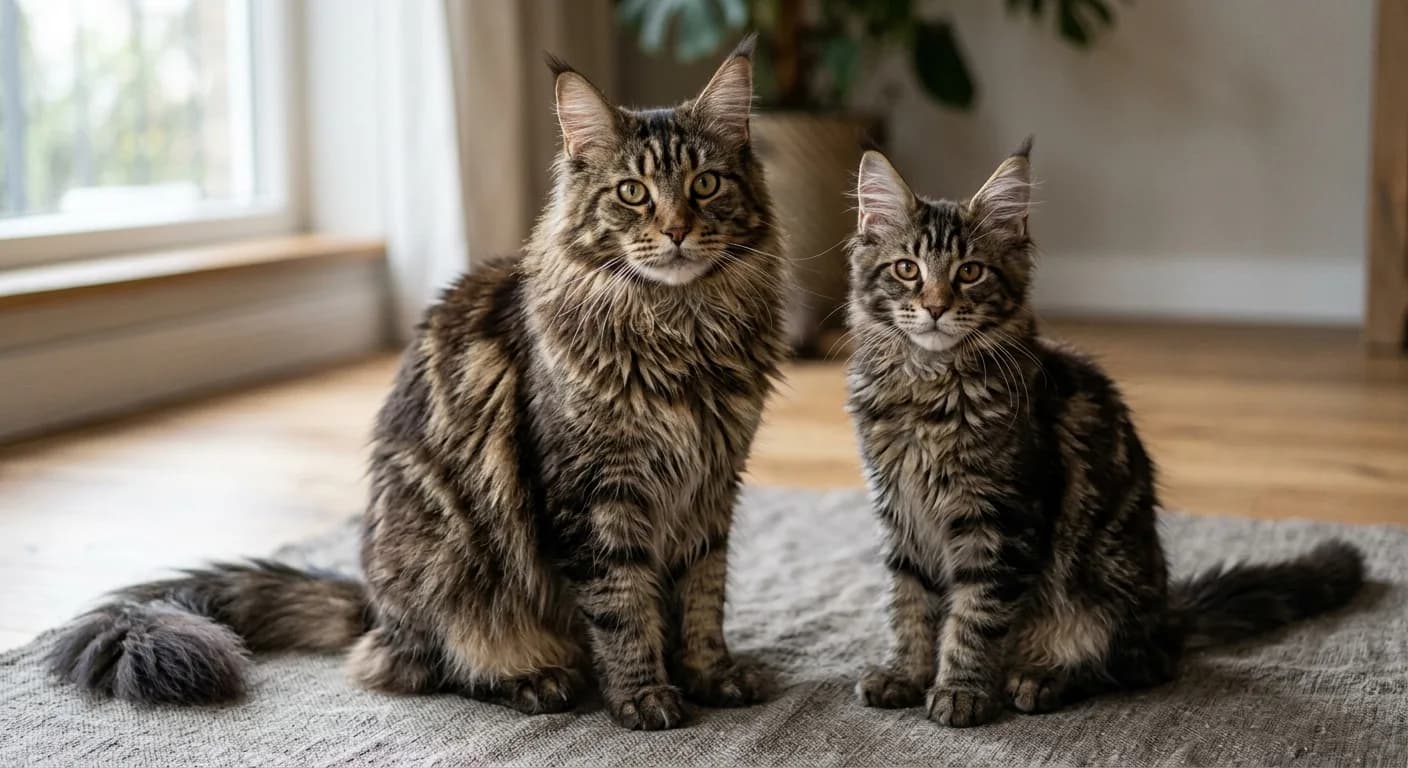
Most domestic cats are physically mature by 12-18 months. Maine Coons are the notable exception. They continue to grow steadily for three to five years before reaching full adult size. This extended growth window is the single biggest reason individual Maine Coons can become so extraordinarily large. The breed standard explicitly accounts for slow maturation. Each additional month of growth allows bones and muscles to develop further, compounding into a final adult frame that simply cannot be reached in a 12-month window.
- If your Maine Coon is two years old and already looks huge, they likely are not done yet. Do not panic about size at 24 months. Talk to your vet about whether their weight tracks lean mass or fat.
Realistic Maximum Size by Sex
Not every Maine Coon will become a Barivel. The breed has a genuine size range, and knowing where that range ends helps you set realistic expectations and catch real obesity early.

63-inch multi-level cat tree with scratch posts, hammock, plush perches, and dangling toys. Vertical territory is non-negotiable for high-energy climbing breeds like the Bengal.
Petful may earn a commission when you click through to Chewy, at no extra cost to you.
| Sex | Typical Adult Weight | Typical Adult Length (nose to tail) | Upper Realistic Limit |
|---|---|---|---|
| Male | 15-25 lbs (6.8-11.3 kg) | 30-38 inches | 25-28 lbs for a genuinely large, healthy male |
| Female | 8-14 lbs (3.6-6.4 kg) | 28-36 inches | 18-20 lbs for a genuinely large, healthy female |
| Exceptional outliers (verified) | 27-34 lbs | 40-48 inches | Rare; requires genetics plus verified healthy body condition |
- A Maine Coon heavier than 28 lbs is almost certainly overweight, not just "naturally big." Excess weight puts strain on joints and the heart. Maine Coons are already at elevated risk for hypertrophic cardiomyopathy (HCM). Carry extra weight into that risk profile and you shorten a cat's life.
Kefir: The Viral Giant Who Captured the Internet
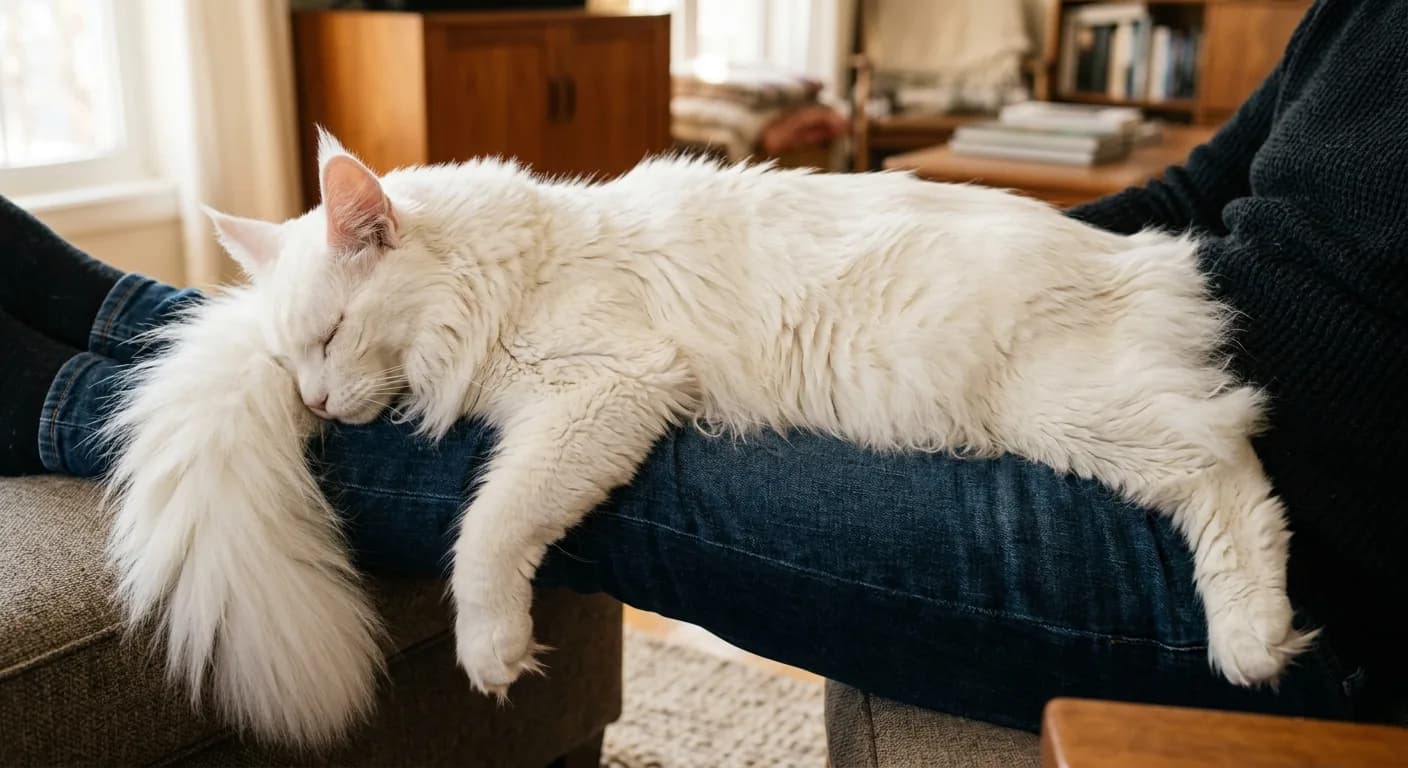
No discussion of the biggest Maine Coon cat is complete without Kefir. Owned by Yulia Minina in Stary Oskol, Russia, Kefir is a white Maine Coon who went globally viral in early 2022 when photos surfaced showing him draped over Yulia's lap, his size making her look like she was holding a small dog. At 1 year and 10 months of age, he weighed 12.5 kg (27.5 lbs) and was still actively growing, given the breed's 3-5 year maturation timeline. His calm, dog-like temperament and enormous white coat made him one of the most-shared cat photos of that year. Kefir has never submitted to official Guinness World Records measurement, so while he is a genuine giant, the "world's biggest" label attached to him in the media is informal.
How to Tell If Your Maine Coon Is Unusually Big
Most Maine Coon owners suspect their cat is larger than average. Here is how to assess that fairly.
Measure Nose to Tail
Lay your cat on a flat surface (or gently encourage them to stretch out). Measure from the tip of the nose to the tip of the tail, not the base of the tail. A male over 36 inches is on the large end of normal. A male over 40 inches is genuinely exceptional and worth documenting with a vet visit.
Use a Body Condition Score, Not Just the Scale
The Body Condition Score (BCS) is a 1-9 scale veterinarians use to assess fat versus lean mass. A score of 5 is ideal. At a healthy 5, you should be able to:

108-oz stainless steel pet fountain with quiet pump and water-level window. Bengals are notoriously water-obsessed; a flowing fountain encourages hydration and pulls them away from sinks and toilets.
Petful may earn a commission when you click through to Chewy, at no extra cost to you.
- Feel the ribs without pressing hard, but not see them
- See a slight waist tuck when viewed from above
- See a gentle abdominal tuck when viewed from the side
A cat weighing 25 lbs with a BCS of 5 is a genuinely large, healthy Maine Coon. The same cat at BCS 8-9 is obese. Weight alone does not answer the question.
Check the Growth Timeline
If your cat is under three years old and already large, they may not be done. Maine Coons continue adding muscle mass and filling out their frames into their fourth or fifth year. A cat that looks enormous at 18 months often looks proportionally correct by age four, because the rest of their frame catches up.
- Photograph your Maine Coon next to the same reference object (a standard 12-inch ruler, a specific piece of furniture) every six months from kittenhood. Watching the size progression is both fascinating and useful data for your vet.
When to Talk to Your Vet
Talk to your vet about your Maine Coon's size if:
- Your male exceeds 25 lbs and you are not sure whether it is muscle or fat
- Your cat seems reluctant to jump or shows stiff movement (obesity puts extra strain on joints)
- You want a formal BCS assessment and a healthy weight target
- Your cat is past age five and still gaining weight (adult growth should slow significantly after year four)
How This Spoke Differs from the Maine Coon Size Guide
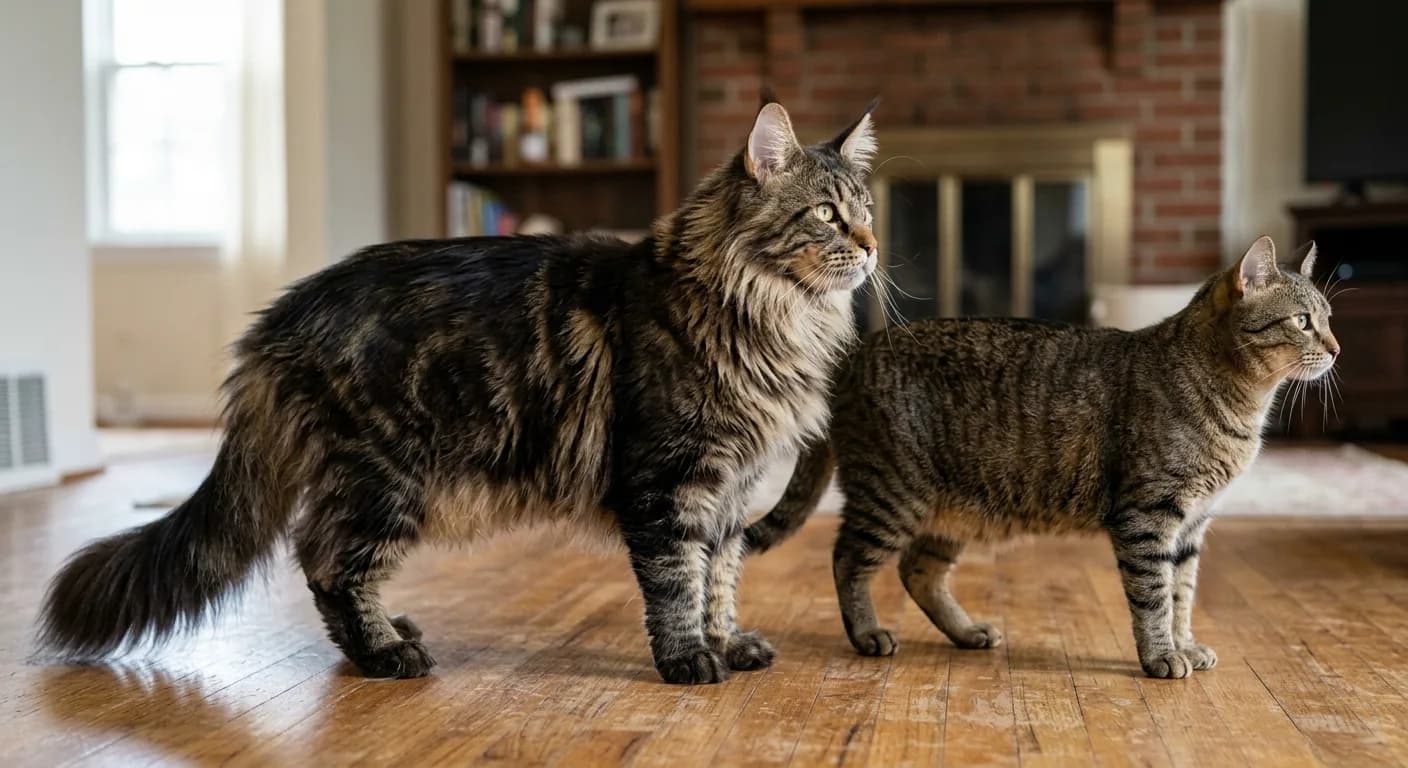
For detailed growth charts, monthly weight milestones, height measurements, and a full breakdown of how Maine Coon size compares to other breeds, see our dedicated Maine Coon size guide. That article answers "how big will my Maine Coon get?" month by month. This page focuses specifically on the outliers, the record-holders, and the science behind the cats that push far beyond even the Maine Coon's already generous breed standard. The two articles are complementary, not redundant.
For broader breed history, personality, coat care, and health considerations, the Maine Coon breed profile is the complete starting point. And if you are budgeting for one of these giants, a larger frame does not raise the purchase price; see our Maine Coon cat cost guide for the full breakdown.
The largest Maine Coon cat ever officially measured was Stewie, whose full name was Mymains Stewart Gilligan. He was verified by Guinness World Records on August 28, 2010, at 48.5 inches (123 cm) from nose to tail tip and weighed approximately 34.6 lbs. He lived in Reno, Nevada, and passed away from cancer in 2013.
Barivel, a black classic tabby Maine Coon from Vigevano, Italy, holds the Guinness World Record for longest living domestic cat at 47.2 inches (120 cm). This was verified on May 22, 2018. If Barivel has since passed, a new living record holder may have been certified by Guinness.
XXL Maine Coons, as marketed by some breeders, typically refer to males in the 22-30 lb range with long, large-framed bodies. A genuinely healthy XXL male will have a Body Condition Score of 5, meaning you can feel the ribs without pressing hard. Some breeders claim 30-32 lb cats, but at those weights, veterinary BCS assessment is essential to distinguish healthy mass from obesity.
Most healthy Maine Coon males cap out around 22-25 lbs. Some genetically exceptional males reach 27-28 lbs with a healthy body condition. Claimed weights of 32-35 lbs exist but are generally associated with obesity, which shortens a Maine Coon's lifespan. The breed is already at elevated risk for hypertrophic cardiomyopathy, and excess weight compounds that risk.
Three factors drive Maine Coon size: evolutionary origins in cold New England climates (where larger bodies with better heat retention were survival advantages), strong genetics and decades of selective breeding for large frame size, and a uniquely extended growth window of 3-5 years versus the 12-18 months typical of most cat breeds.
Kefir, a white Maine Coon from Russia owned by Yulia Minina, is one of the most famous giant Maine Coons online after going viral in 2022 at 27.5 lbs (12.5 kg) while still growing. However, he is not an official Guinness World Record holder. Barivel holds the verified record for longest living domestic cat.
Measure your cat stretched out from nose to tail tip. A male over 36 inches is on the large side of normal; over 40 inches is exceptional. More important than length is body condition: a large Maine Coon should have a visible waist tuck, palpable ribs without hard pressing, and a BCS of 5 on a 1-9 scale. Your vet can assess this formally.
Maine Coons typically take 3-5 years to reach full adult size. Most domestic cats are mature by 12-18 months. This extended growth period is the primary reason Maine Coons develop such large frames. Males continue filling out with muscle mass well into their third and fourth year.

Coreen Saito is a pet writer and longtime shelter volunteer with more than a decade in animal rescue. She covers cat behavior, breed care, and the small, ordinary science of sharing a life with companion animals, with a particular focus on honest takes about the products and decisions that actually matter. At home in Arizona, she's outranked by Mac (a dog with the loudest opinion in the house), Rebel (a cat who governs by quiet authority), and Meri (an orange tabby who runs the late shift and the laundry basket). She writes about all three, plus the rescues that keep coming through her life, at LifeWithMinty.com.
Sign up for expert-backed reviews and safety alerts all in one place.