Bombay Cat vs Black Cat: How to Tell Them Apart
All Bombays are black, but few black cats are Bombays. This guide compares coat, copper eyes, all-black paw pads, build, price, and the people-loving personality that sets a true pedigree Bombay apart from an ordinary black domestic shorthair.
Petful is reader supported. As an affiliate of platforms like Amazon and Chewy, we may earn a commission when you buy through links on this page. There is no extra cost to you.
When people compare a bombay cat vs black cat, the simplest rule does most of the work: all Bombay cats are black cats, but very few black cats are Bombays. A "black cat" is just a coat color shared by millions of mixed-breed domestic shorthairs. A Bombay is a specific, rare pedigreed breed, developed in the 1950s by crossing sable Burmese cats with black American Shorthairs to create a sleek "miniature panther." So the cat dozing on your couch could be either one. This guide walks through every visible tell, coat to copper eyes to all-black paw pads, plus price, temperament, and the one health test responsible breeders run on pedigree Bombays. Petful’s separate guide to Bombay cat prices breaks down breeder, adoption, and lifetime costs.
Below you will find a side-by-side comparison table, then a section on each difference, and a FAQ that answers the questions people ask most. By the end you should be able to look at your own cat and make a confident call, or know exactly what paperwork settles it for good.
All Bombays are black, but most black cats are not Bombays. A true Bombay is a pedigreed breed (Burmese crossed with American Shorthair) with a patent-leather coat black to the roots, copper or gold eyes, an all-black nose and paw pads, and a famously people-oriented, dog-like personality. An ordinary black cat is a coat color, not a breed, and is usually a black domestic shorthair from a shelter.

Sign up for expert-backed reviews and safety alerts all in one place.
Bombay Cat vs Black Cat: Key Differences at a Glance
Here is the fast answer. This table mirrors the traits owners and breeders use to separate a pedigreed Bombay from a black domestic shorthair. Each row is unpacked in the sections that follow.
| Trait | Pedigreed Bombay | Ordinary Black Cat (Domestic Shorthair) |
|---|---|---|
| Breed status | Recognized breed (CFA, TICA) | Not a breed, just a coat color |
| Coat | Patent-leather jet black to the roots, short and close-lying | Often black, but may show rusting, white hairs, or faint ghost tabby stripes |
| Color points | All black, no white anywhere | White lockets, chest spots, or toe tips are common |
| Eyes | Vivid copper to gold, round and wide-set | Usually yellow, green, or hazel |
| Nose and paw pads | Solid black nose leather and black paw pads | Pads may be pink, gray, or mixed |
| Body type | Compact, muscular, surprisingly heavy for its size | Varies widely, no fixed standard |
| Personality | People-oriented, vocal, dog-like, follows you room to room | Ranges from cuddly to aloof, no breed-set temperament |
| Price | About 500 to 2,000 dollars from a registered breeder | Free to about 150 dollars to adopt from a shelter |
| Availability | Rare, often waitlisted | Extremely common, especially around shelters |
| Health screening | Reputable breeders screen breeding cats for HCM | No breed-specific screening |
Coat: Patent-Leather Black vs Possible Rusting and Tabby Ghost Markings
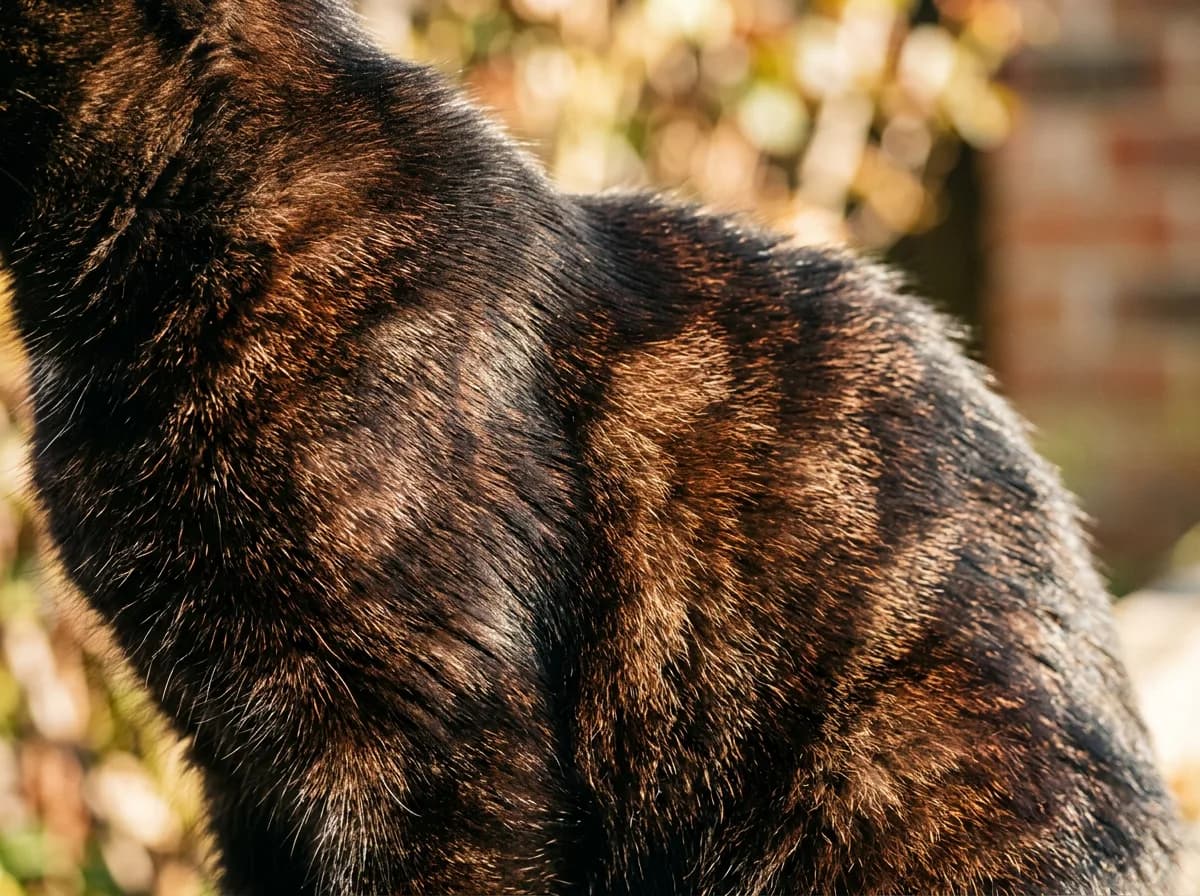
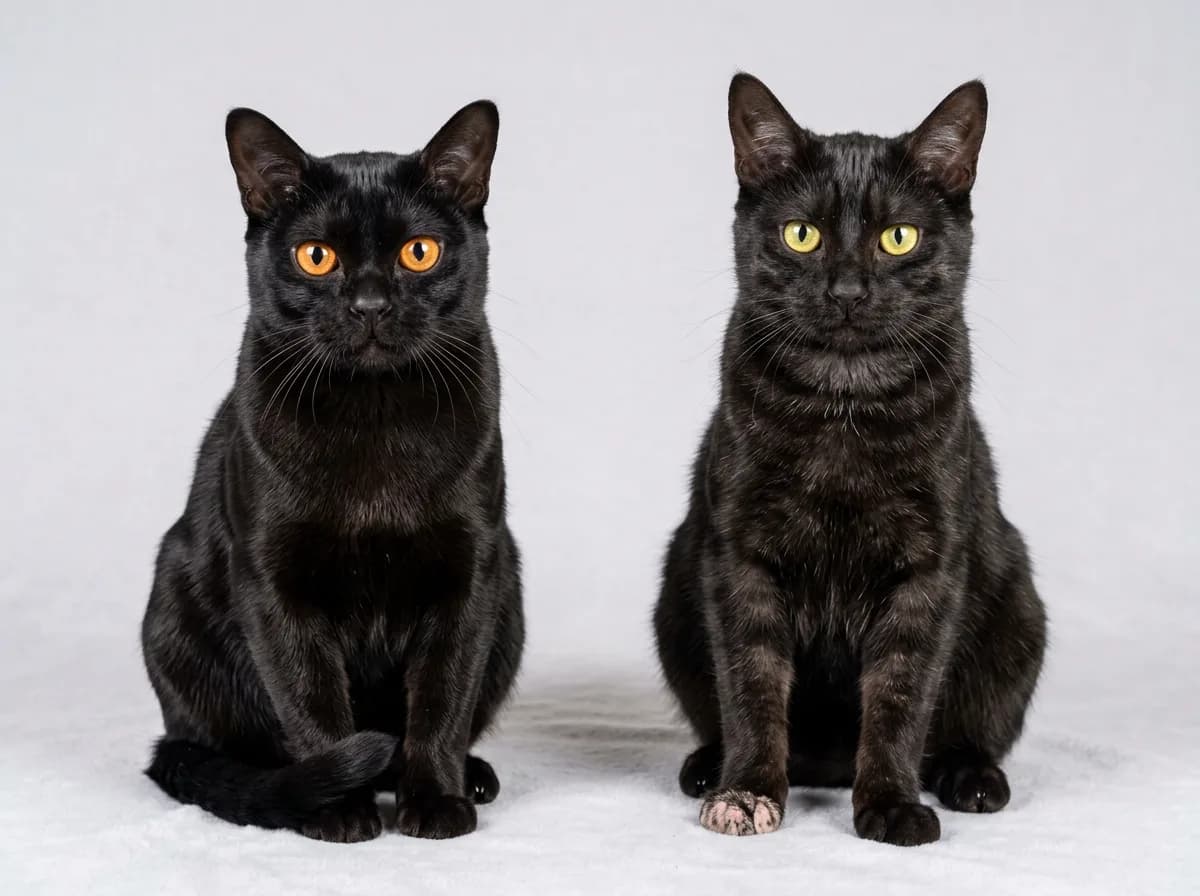
The coat is the first place a Bombay gives itself away. A show-quality Bombay is jet black from the tip of each hair all the way down to the root, with no paler undercoat hiding underneath. The texture is short, fine, and close-lying, which is why breeders describe it as "patent leather" or "polished onyx." In strong light it gleams rather than going dull or brownish.
An ordinary black cat tells a different story under the same light. Many black domestic shorthairs show "rusting," a reddish or brownish cast on the coat caused by sun exposure or a diet light in certain nutrients. Plenty also carry faint "ghost" tabby markings, the swirls or stripes you can only see when the sun hits at the right angle, because the tabby pattern gene is hiding under the solid black. A scatter of white hairs, a small chest locket, or white toe tips is also common and instantly rules out a pedigreed Bombay.
- Take your cat to a sunny window and really look. If the coat throws faint stripes, a rusty sheen, or any white hairs, you almost certainly have a beautiful black domestic shorthair rather than a pedigreed Bombay. A Bombay stays solid, glossy black in any light.

Never Scoop Again® with the Whisker Litter-Robot, the smart self-cleaning automatic litter box. Monitor visits and track weights for better overall care in the Whisker® app. Multi-cat friendly.
Petful may earn a commission when you click through to Whisker, at no extra cost to you.
Eyes: Copper and Gold vs Yellow-Green
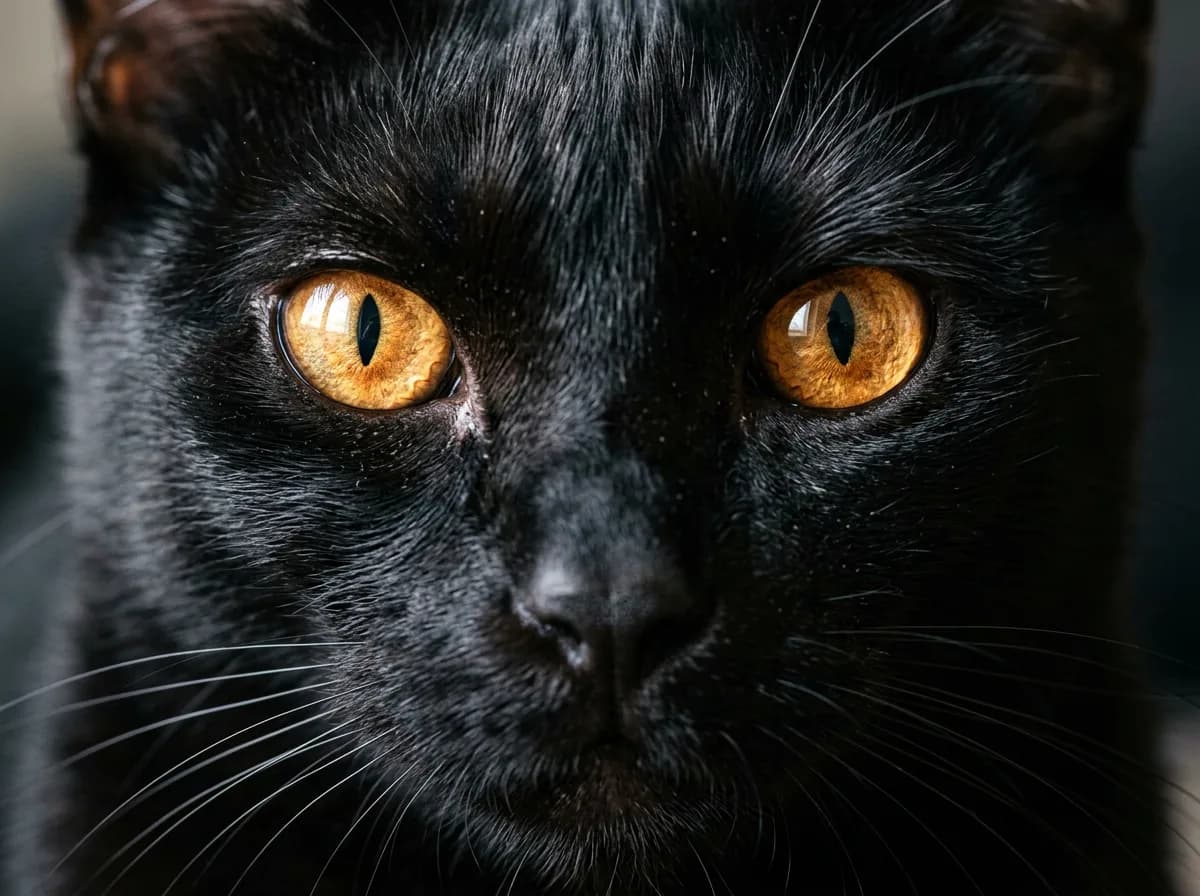
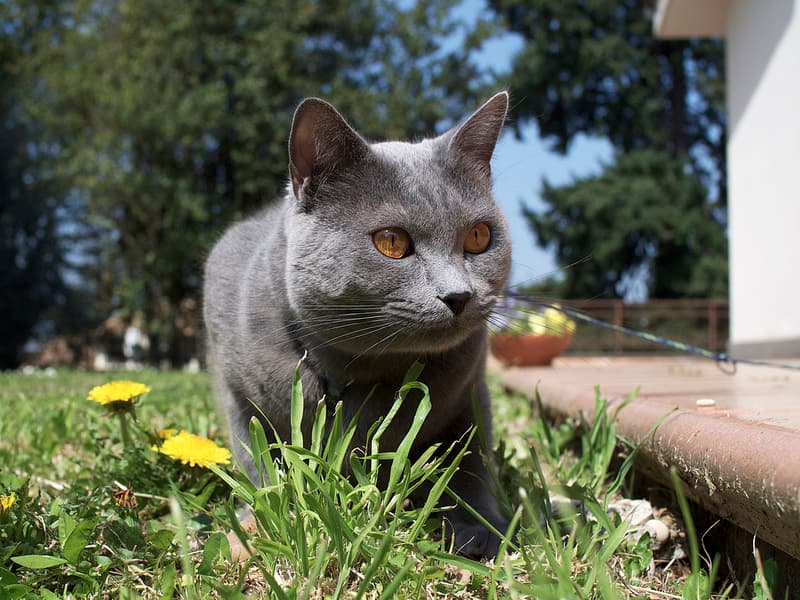
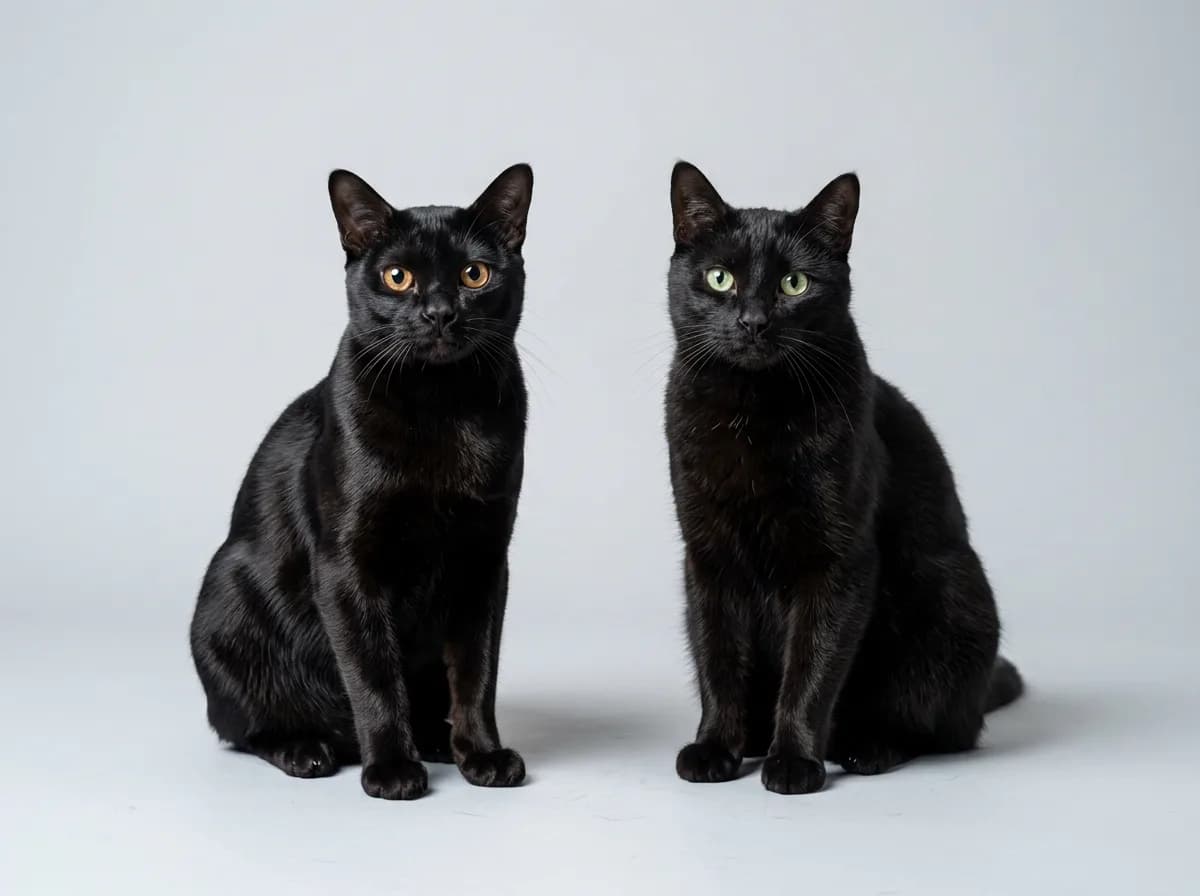
Eye color is one of the cleanest tells in the whole bombay cat vs black cat comparison. The breed standard prizes deep copper to rich gold eyes, the more saturated the better, set in a round, wide-open shape. Against the black coat, a Bombay's eyes look like two glowing coins, which is exactly the "mini panther" effect breeders spent decades refining.
Black domestic shorthairs come with whatever eye color their genetics handed them. That is usually yellow, green, hazel, or a muddy in-between. Bright green eyes in particular are a strong sign you are not looking at a Bombay, since the breed almost never carries them. Eye color alone is not proof, a rescue cat can luck into gold eyes, but copper eyes plus a flawless black coat plus the right personality is a strong three-part case.
Nose, Paw Pads and Whiskers: All Black on a Bombay
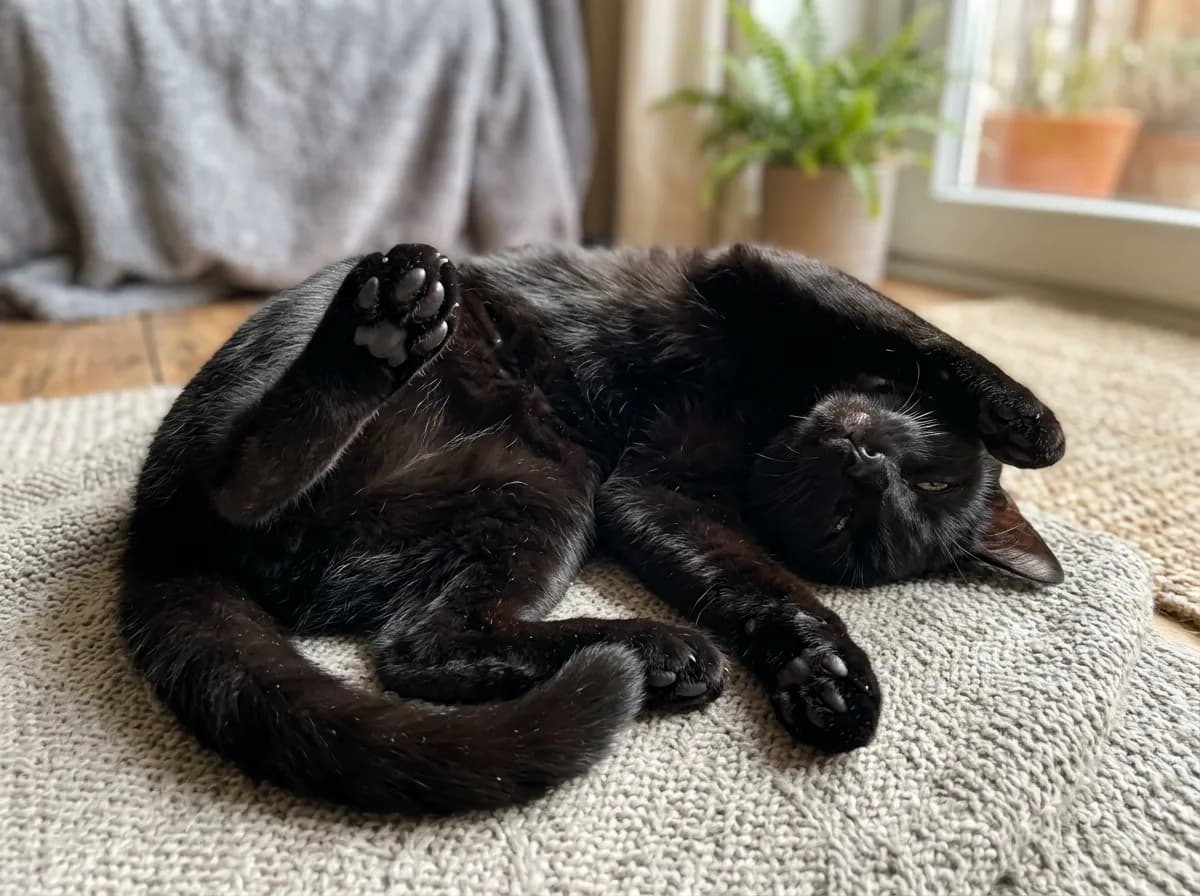
Here is the detail most quick guides skip, and it is one of the most reliable. On a true Bombay, everything is black, not just the fur. The nose leather is solid black, the paw pads are black, and even the whiskers are typically black rather than white. Breeders call this "black to the bone," and a flash of pink anywhere is a disqualifying fault.
Flip an ordinary black cat's paw over and you will often find pink, gray, or mottled pads, and the nose may be pink or dark-spotted rather than uniformly black. Many black domestic shorthairs also sport white whiskers. None of that is a flaw in a pet, it just confirms the cat is a black domestic shorthair rather than a registered Bombay. People specifically search for the "bombay cat vs black cat paws" difference because it is so easy to check at home: lift a paw and look.
Body and Build: The Compact Mini-Panther
Pick up a Bombay and the nickname makes sense. Despite a medium frame, Bombays are dense and muscular, so they feel noticeably heavier than they look, a quality breeders affectionately call the "surprise weight." Adults usually run about 8 to 12 pounds for males and 6 to 9 pounds for females, with a rounded head, a short muzzle, and a smooth, panther-like walk. Females tend to sit at the lighter end of that range.
An ordinary black cat has no fixed build at all, because "black" is a color and not a breed. A black domestic shorthair might be rangy and slim, round and chunky, or anything in between, depending on whatever mixed ancestry it carries. If your cat is a lean, leggy black cat or a big fluffy one, that body shape itself is a clue it is not a Bombay. For comparison, a heavy-boned breed like the British Shorthair has its own distinct cobby build worth a look.
Want to see how a different stocky breed compares? Our guide to British Shorthair temperament walks through another popular cat that often comes in black and is regularly confused with a Bombay.

63-inch multi-level cat tree with scratch posts, hammock, plush perches, and dangling toys. Vertical territory is non-negotiable for high-energy climbing breeds like the Bengal.
Petful may earn a commission when you click through to Chewy, at no extra cost to you.
Temperament: Why Bombays Are People-Oriented, Vocal and Dog-Like
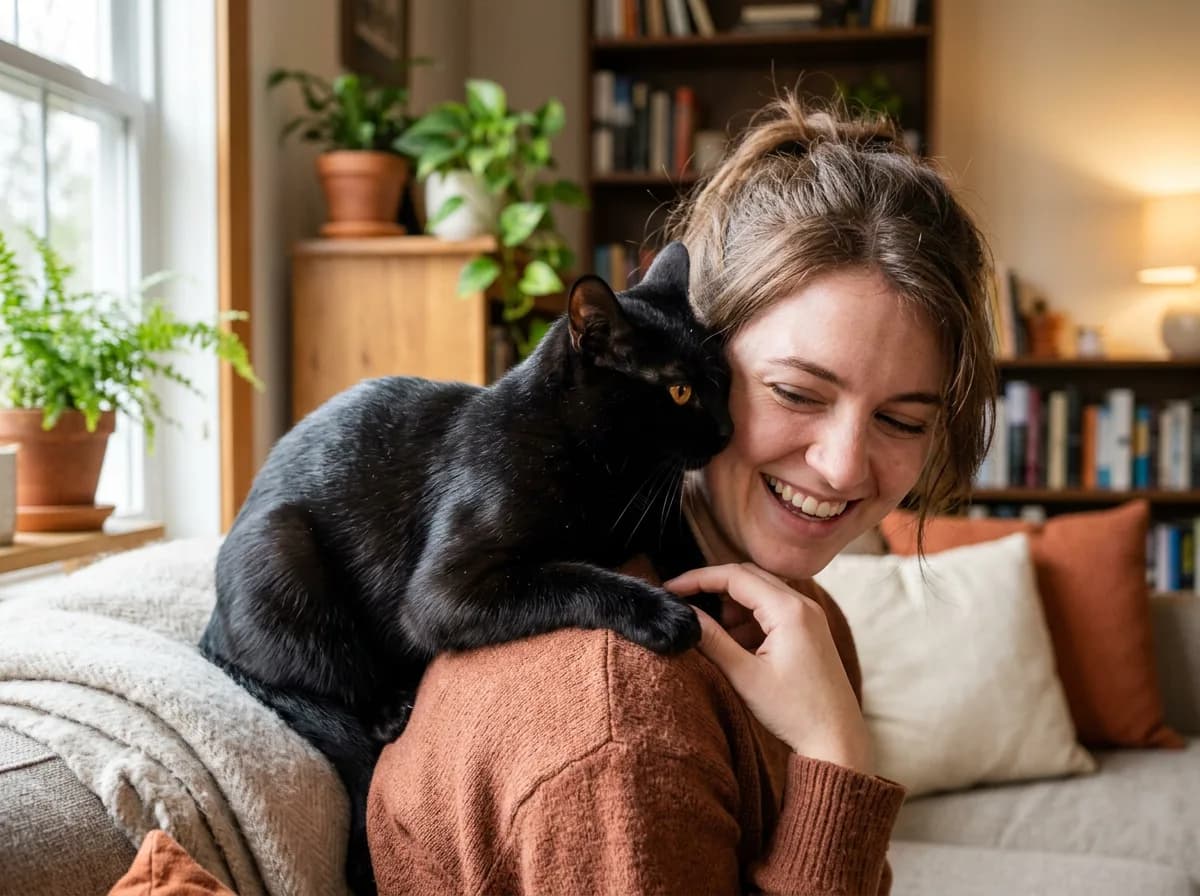
If the coat and eyes are the body, temperament is the soul of the breed, and it is where a Bombay truly separates from a random black cat. Bombays are famous for being people-oriented to the point of being clingy, in the best way. They follow their humans from room to room, ride on shoulders, flop into laps, and many will play fetch, walk on a harness, and learn their name like a small dog. They are also chatty, holding running conversations in a soft voice and asking for attention out loud.
Because Bombays are so social, they do not love being left alone for long stretches and can get lonely in an empty house. An ordinary black cat, by contrast, has no breed-set personality at all. One shelter black cat is a velcro lap cat, the next is shy and independent, because temperament in a mixed-breed cat comes down to that individual's genetics and history, not its color. So a deeply dog-like, talkative black cat is at least a hint toward Bombay, while a cool, aloof one leans the other way.
If you are drawn to that affectionate, follow-you-everywhere energy, the Sphynx cat personality guide covers another famously velcro breed, and a busy or multi-pet home tends to keep social cats like these happiest.
Price and Rarity: Pedigree Bombay vs Free Shelter Black Cat
This is where the two diverge hardest, and it is the gap most comparison pages leave out. A pedigreed Bombay kitten from a registered breeder typically costs between about 500 and 2,000 dollars, with show or breeding lines reaching higher, because the breed is genuinely rare and good breeders maintain small, carefully screened programs. Expect a waitlist. Bombays are not a cat you usually find on short notice.
An ordinary black cat is one of the easiest, cheapest cats to bring home. Black cats are overrepresented in shelters and are statistically among the last to be adopted thanks to lingering superstition, so adoption fees are often low or waived during promotions, frequently in the free to 150 dollar range. If you love the panther look but not the panther price, a black domestic shorthair from a shelter is the rescue-and-save move, and you would be giving a home to a cat that statistically waits longest.
Curious how Bombay pricing stacks up against its Burmese ancestor or another breed? Compare the Burmese cat price and the Persian cat price and cost to see where a pedigreed cat budget really lands.

Color-changing crystal litter that flags pH shifts in your cat's urine, an early warning sign of UTIs, kidney issues, and more.
Petful may earn a commission when you click through to Chewy, at no extra cost to you.
Health: The HCM Heart-Screening Point for Pedigree Bombays
Bombays are generally hardy cats that often live 12 to 16 years, but like many pedigreed breeds they carry one heart concern worth knowing about: hypertrophic cardiomyopathy, or HCM. HCM is the most common heart disease in cats overall, and it causes the heart muscle to thicken so the heart pumps less efficiently. It is not unique to Bombays, but because Bombays descend from a small founder pool, responsible breeders take it seriously.
What that means in practice is simple, and it is a real reason to buy from a reputable breeder. Good Bombay breeders have their breeding cats screened by a veterinary cardiologist, usually with an echocardiogram, and avoid breeding affected lines. When you are choosing a Bombay kitten, ask the breeder whether the parents have been heart-screened. An ordinary black cat has no breed-specific screening, so a yearly vet check, a heart listen, and watching for symptoms like labored breathing or sudden lethargy is the sensible baseline for any cat regardless of color.
- Before you put down a deposit, ask whether both parent cats have been screened for HCM by a cardiologist and request to see the results. A breeder who screens, registers their cats, and answers health questions openly is worth the wait. One who cannot or will not is a red flag.
How to Tell If Your Black Cat Is Actually a Bombay
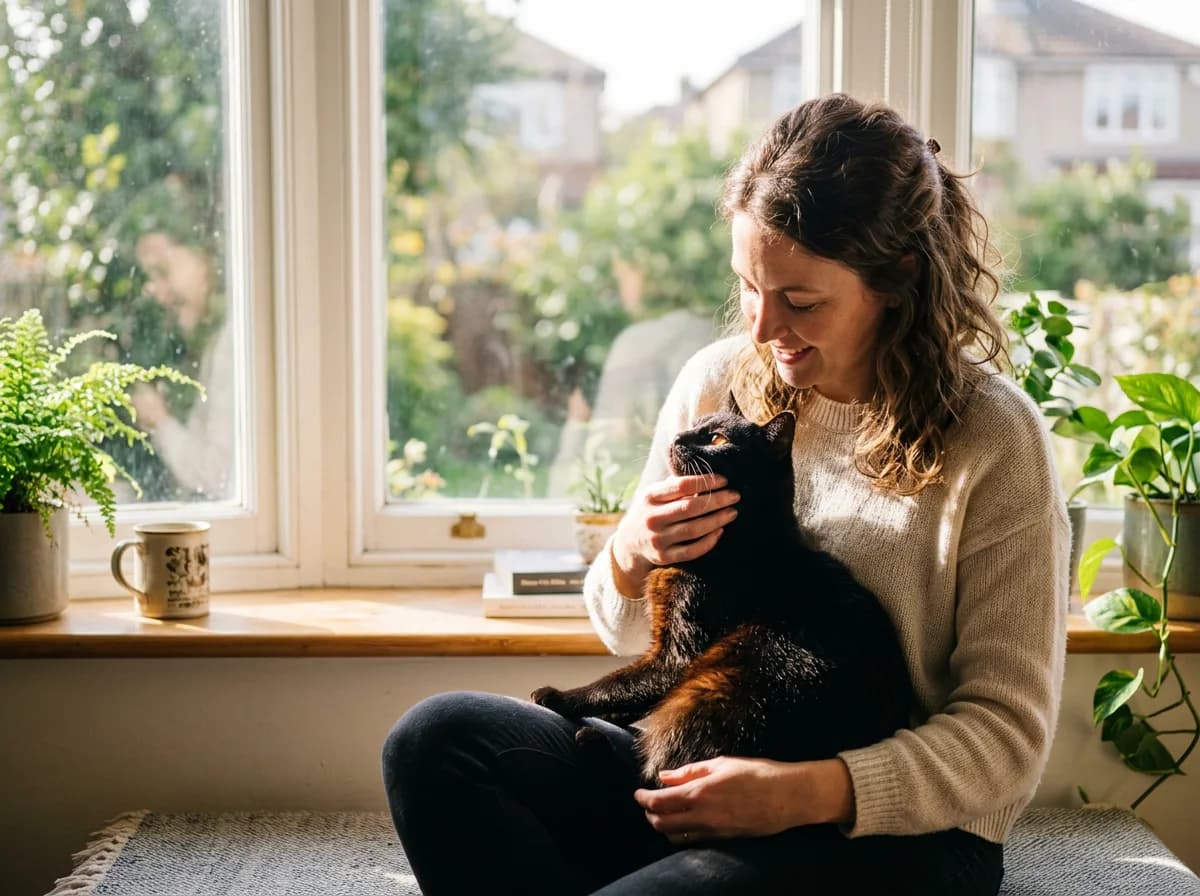
You can run a quick at-home checklist, but understand its limit up front: visible traits build a strong case, yet only paperwork or DNA settles it. Walk through these points and tally how many your cat hits.
Check each of the following:
Coat: Is it jet black to the roots, glossy, with zero white hairs, rusting, or ghost stripes in bright sun?
Eyes: Are they vivid copper or gold rather than green or hazel?
Nose and paw pads: Are the nose leather and every paw pad solid black, with no pink?
Build: Is the cat compact, muscular, and surprisingly heavy for its size?
Personality: Is it intensely social, vocal, and dog-like, following you around and craving lap time?
Hit all five and you very likely have a Bombay or a close Bombay-type mix. Miss a few and you most likely have a wonderful black domestic shorthair, which is nothing to be disappointed about. The only way to confirm a true Bombay is documentation: registration papers from a recognized registry such as CFA or TICA tracing the cat to Bombay parents, or a feline breed-ancestry DNA test. Without a pedigree from a breeder, even a textbook-perfect black cat is officially a domestic shorthair, not a registered Bombay. For help reading swirls and stripes that hint at mixed ancestry, our tabby cat guide explains how to spot pattern genes hiding in a dark coat.
For the white-cat version of appearance versus pedigree, see our Khao Manee vs. white cat guide.
New to coat genetics? Our guide to tabby cats explains the ghost-striping that often shows up in supposedly solid black cats, and our look at black cat history and superstition is a fun read if your panther came from a shelter.
For the full picture on the pedigreed breed itself, read our Bombay cat breed profile, and if you love a big black cat, the black Maine Coon guide covers a very different all-black option.
Black Burmese vs Bombay, and Other Look-Alikes
A few near-twins cause real confusion. A black Burmese (sometimes registered under the Asian or Mandalay group depending on the registry) shares the Bombay's Burmese ancestry and sleek dark coat, but a Burmese carries the Burmese coat-color gene and often shows subtle sable shading, while a Bombay is solid black. A black American Shorthair, the breed's other parent, has the chunkier American Shorthair build and rounder face without the Bombay's panther sleekness. And a black domestic shorthair, the most common look-alike of all and a fast-rising search term, is simply an unregistered mixed cat that happens to be black. When in doubt, the registry paperwork is what tells these apart, not the photo.
Bombay Cat vs Black Cat: Frequently Asked Questions
Most likely just black. Bombays are rare, so without breeder papers your cat is almost certainly a black domestic shorthair. A Bombay is solid jet black to the roots with copper or gold eyes, an all-black nose and paw pads, and a clingy, dog-like personality. White hairs, green eyes, or pink paw pads rule a Bombay out.
Check five things: a jet-black coat with no white or rusting, vivid copper or gold eyes, an all-black nose and paw pads, a compact muscular body, and an intensely social, vocal personality. If your cat hits all five it may be a Bombay, but only registration papers from CFA or TICA or a feline DNA test can truly confirm it.
Very rare. All Bombays are black by definition, but Bombays are an uncommon breed with small, carefully managed breeding programs, so they are far less common than ordinary black cats. You will usually join a waitlist with a registered breeder, whereas black domestic shorthairs fill shelters everywhere and are easy to adopt.
Bombays were purpose-bred in the 1950s to look like a miniature panther: a sleek, all-black, copper-eyed cat with a famously affectionate, dog-like temperament. They are social, vocal, and playful, often learning to fetch and walk on a harness. That combination of striking looks and people-loving personality is what makes the breed special.
The Bombay was created by crossing the sable Burmese with the black American Shorthair, starting in the 1950s with breeder Nikki Horner. The Burmese contributed the sleek body and big personality, and the American Shorthair contributed the solid black coat and copper eyes. The goal was a domestic cat that looked like a small black panther.
No Bombay costs anywhere near that. A pedigreed Bombay usually runs about 500 to 2,000 dollars. The cats that fetch tens of thousands of dollars are ultra-rare hybrids like the Ashera or high-generation Savannah, not Bombays. If you love the black-panther look on a budget, a black domestic shorthair from a shelter is often free to adopt.
Both descend from the Burmese, so they look similar, but a black Burmese carries the Burmese coat-color gene and can show subtle sable shading and a slightly different body, while a Bombay is bred to be solid jet black with copper eyes. Registry status differs too: they are recognized as separate breeds, so the pedigree paperwork is what tells them apart.
Bombays themselves do not need a test to be pets, but reputable breeders screen their breeding cats for hypertrophic cardiomyopathy, the most common feline heart disease, usually by echocardiogram with a cardiologist. When buying a Bombay kitten, ask whether the parents were heart-screened. For any cat, yearly vet checks are the sensible baseline.
Whichever cat you have, a glossy black coat is something to celebrate. If yours came from a shelter, our piece in praise of black cats is a reminder of why these panthers deserve the spotlight.

Coreen Saito is a pet writer and longtime shelter volunteer with more than a decade in animal rescue. She covers cat behavior, breed care, and the small, ordinary science of sharing a life with companion animals, with a particular focus on honest takes about the products and decisions that actually matter. At home in Arizona, she's outranked by Mac (a dog with the loudest opinion in the house), Rebel (a cat who governs by quiet authority), and Meri (an orange tabby who runs the late shift and the laundry basket). She writes about all three, plus the rescues that keep coming through her life, at LifeWithMinty.com.
Sign up for expert-backed reviews and safety alerts all in one place.