Black Maine Coon: Traits, Temperament, Cost, and Care Guide
The black Maine Coon carries the same gentle-giant size, dog-like personality, and heritable health profile as any other Maine Coon. Learn about solid black vs. black smoke, eye colors, real pricing, grooming, and how to find a reputable breeder.
Petful is reader supported. As an affiliate of platforms like Amazon and Chewy, we may earn a commission when you buy through links on this page. There is no extra cost to you.
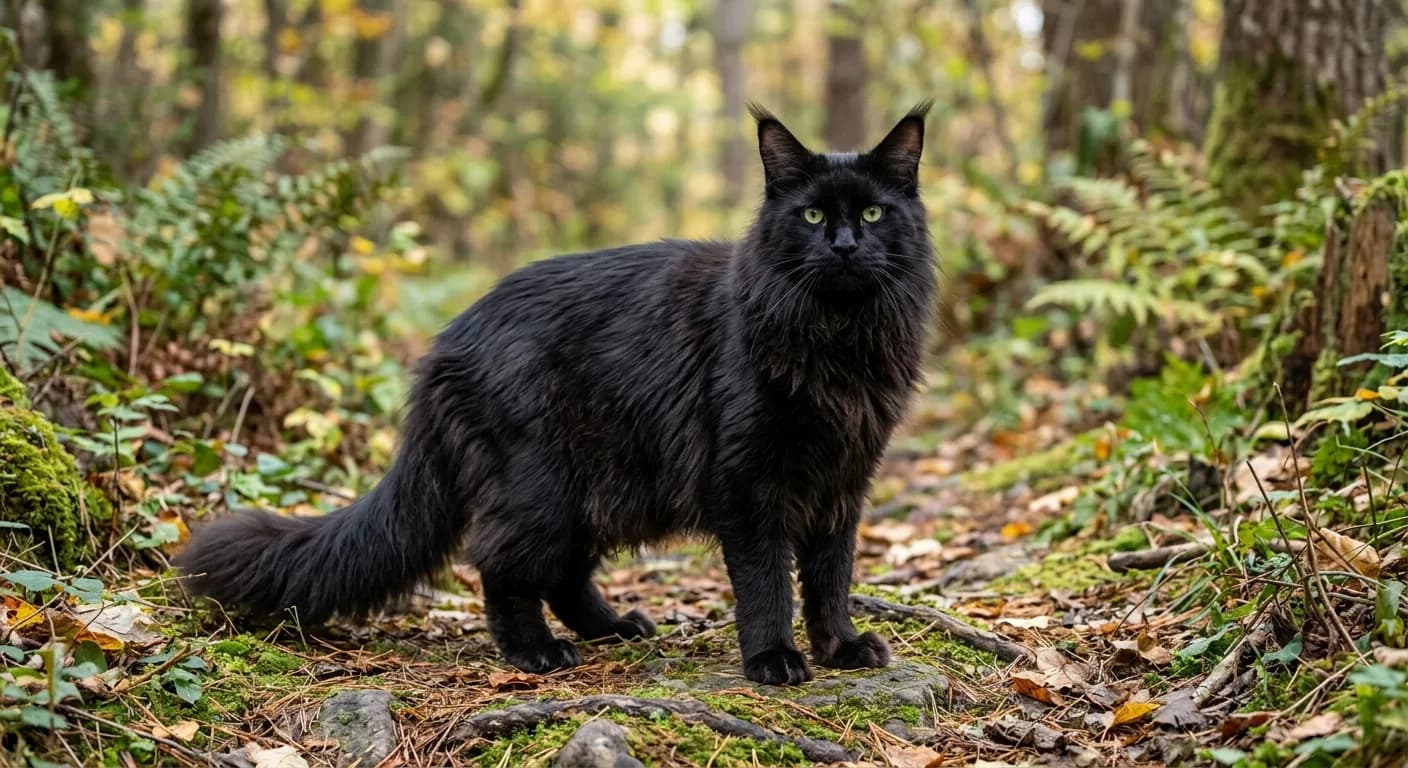
The black Maine Coon is one of the oldest and most striking color expressions of a breed the Cat Fanciers' Association (CFA) describes as "America's native longhaired cat," and this raven-coated giant carries every trait that made the breed famous: a muscular rectangular frame, a lion-like ruff, and a famously sociable personality. Whether you are drawn to the jet, uniform color of a solid black Maine Coon or the ghostly shimmer of the black smoke variant, understanding what sets this color apart (and what it shares with every other Maine Coon) will help you find the right cat and care for them well.
- 1Black Maine Coon cats carry the same size, temperament, and lifespan as all other Maine Coons.
- 2Solid black and black smoke are both CFA/TICA-recognized expressions; smoke reveals a silver undercoat.
- 3Black is not a rare or premium color: expect to pay $1,000-2,500 pet-quality from a reputable breeder.
- 4Eye color is gold, copper, or green. Blue eyes are only possible on white cats, not solid blacks.
- 5The same four heritable health conditions affect all Maine Coons equally: HCM, hip dysplasia, SMA, and PKD.

Sign up for expert-backed reviews and safety alerts all in one place.
What Is a Black Maine Coon?
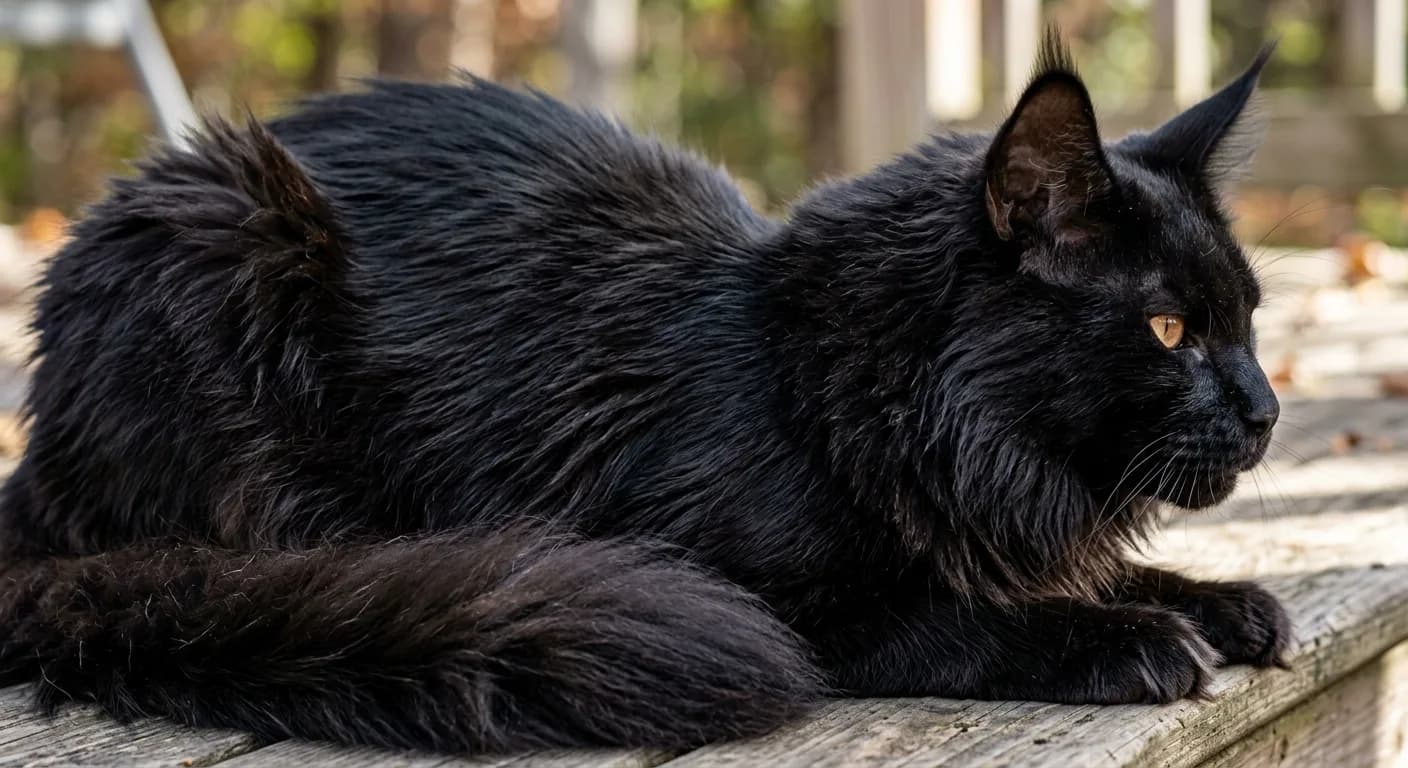
A black Maine Coon is simply a Maine Coon cat whose coat expresses a solid or near-solid black phenotype. The breed itself originated in the northeastern United States, with Maine recognized as its home state, and has been registered with the CFA since 1976. The TICA standard recognizes more than 75 color and pattern combinations for the breed, and solid black (designated "Black" in CFA and TICA breed standards) is among the most classic. For more, see Petful’s guide to black cat breeds.
Genetically, black in cats is produced by the dominant allele of the B (Brown/Black) gene, combined with a non-agouti background that suppresses tabby patterning. This means a solid black Maine Coon carries two copies of the non-agouti allele (aa), locking out the tabby banding that would otherwise show in the coat. The result is dense, uniform pigmentation from root to tip, with no ghost striping visible in normal indoor light.
What a black Maine Coon is NOT is a separate variety, a rarer subtype, or a more expensive cat than any other color. As the Maine Coon breed profile at Petful explains, the breed standard applies equally across all recognized colors and patterns. Any breeder charging a color premium for black is applying marketing math, not breed-standard logic.
Solid Black vs. Black Smoke Maine Coon
Not every cat that looks "black" at first glance is genetically solid black. The black smoke Maine Coon is a distinct genetic expression that produces a dramatically different look once the cat is in motion or when the fur is parted.
Solid Black
A solid black Maine Coon has an entirely black coat with no lighter roots. When you part the fur to the skin, the hair shaft is black all the way down. In CFA show competition, even a tiny white spot, locket, or white hair is a fault. The nose leather and paw pads are black.
Black Smoke
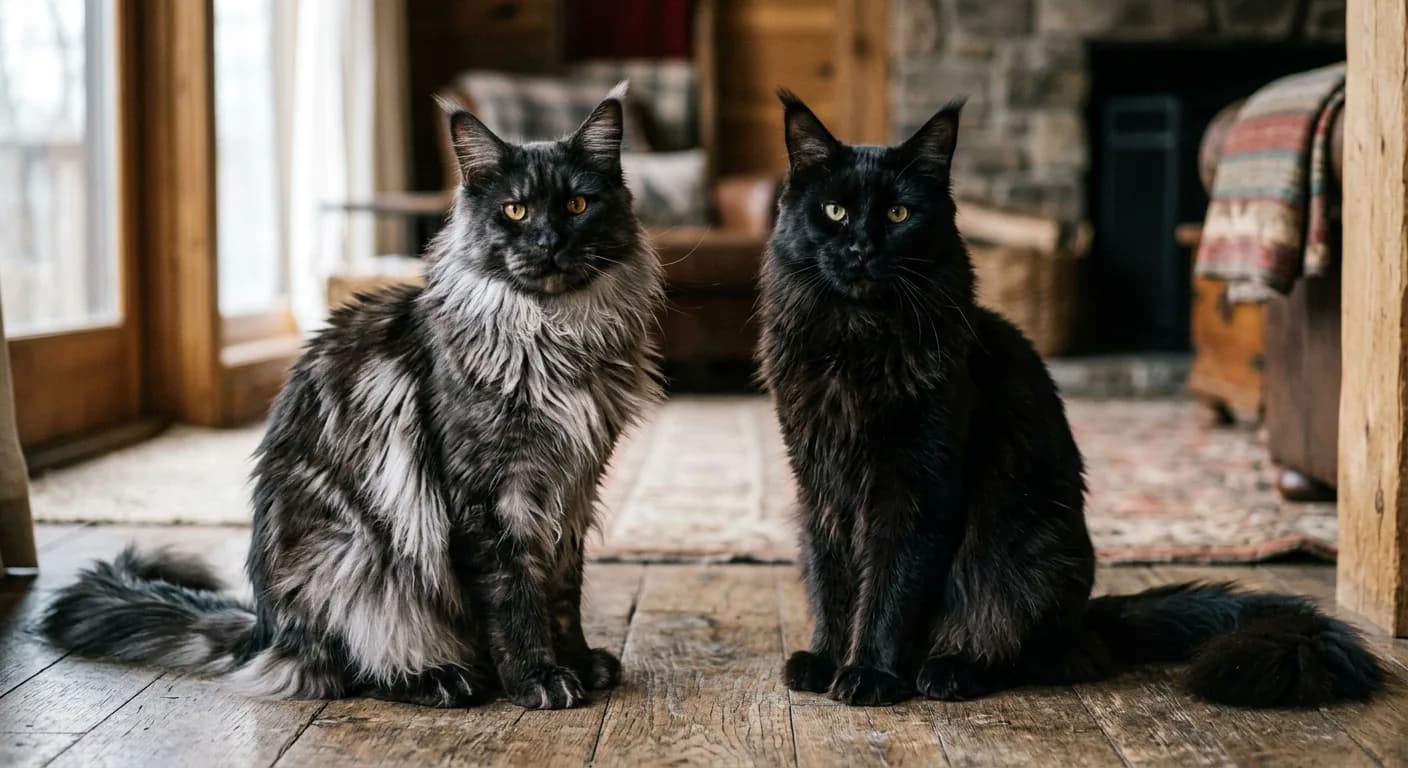
A black smoke Maine Coon carries the inhibitor gene (I), which bleaches the lower portion of each hair shaft to a near-white silver while leaving the upper portion black. At rest, the cat looks convincingly black. The reveal happens when the coat moves: part the fur and a silvery-white undercoat flashes into view. TICA describes the smoke pattern as "white undercoat deeply tipped with black." The nose leather and paw pads remain black, but the ruff and ear tufts often show silvery highlights even without parting the coat.
| Feature | Solid Black | Black Smoke |
|---|---|---|
| Coat color root to tip | 100% black | Black tips, white/silver roots |
| Inhibitor gene present | No | Yes |
| Ruff/ear-tuft tone | Black | Silver-white highlights |
| Visible undercoat when parted | Black | Bright white/silver |
| Nose leather | Black | Black |
| Paw pads | Black or brown | Black |
| CFA/TICA recognized | Yes | Yes |
| Price difference | None (canon price) | None (canon price) |
- The surest test is parting the fur at the base of the tail or along the flank. A silver-white root zone that is at least one-third the length of the hair confirms the smoke pattern. Kittens often look more obviously "smoky" before their adult coat fully develops.
Size and Physical Traits of a Full-Grown Black Maine Coon
Maine Coons are one of the largest domestic cat breeds, and a black coat does nothing to change that. According to the CFA and TICA breed standards, males typically reach 15-25 lb and females 8-14 lb at full maturity. Full growth is slow: most Maine Coons do not reach their final size until 3-5 years of age.

Never Scoop Again® with the Whisker Litter-Robot, the smart self-cleaning automatic litter box. Monitor visits and track weights for better overall care in the Whisker® app. Multi-cat friendly.
Petful may earn a commission when you click through to Whisker, at no extra cost to you.
Structural Traits
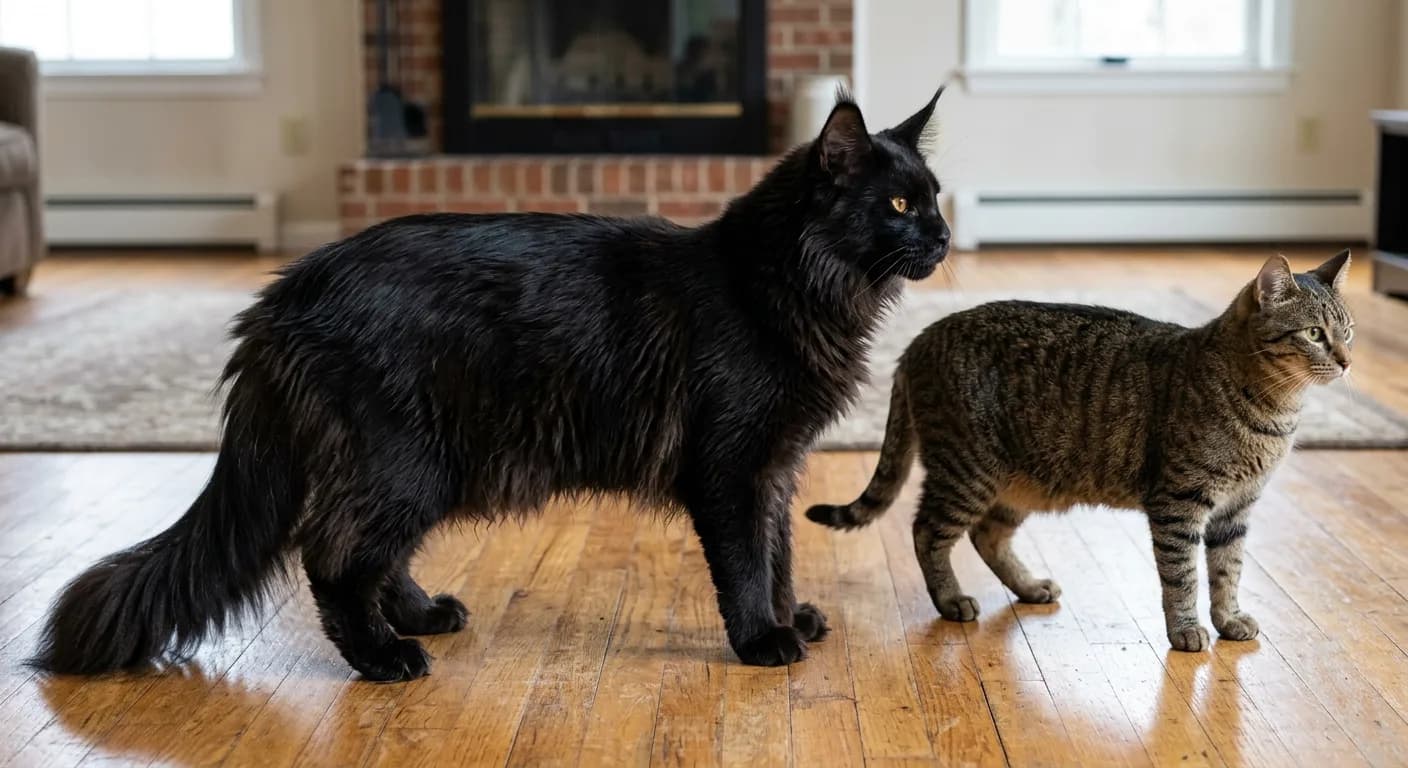
- Frame: Large, long, rectangular, and heavily muscled. The body is solidly built from chest to haunches, with substantial bone throughout.
- Head: Medium-width, slightly longer than it is wide, with high prominent cheekbones and a firm, squarish muzzle.
- Ears: Large, tall, and wide-set, tapering to a point. The signature lynx-tip tufts of hair extending from the ear tips are a breed hallmark and are especially visible on black cats against the backdrop of dark fur.
- Eyes: Large, oval, set wide apart and slightly oblique. Color is gold, copper, or green (see the dedicated eye-color section below).
- Coat: Long and flowing, with a shorter mantle over the shoulders (to prevent matting while hunting through underbrush), a lion-like neck ruff, a full chest frill, and a heavily plumed tail that matches the body length.
- Tail: Long, wide at the base, tapering to the tip, and covered in long flowing fur.
- Paws: Large, round, and tufted between the toes (snowshoe feet, another breed hallmark).
On a solid black cat, every one of these features is set off dramatically. The ear tufts, paw tufts, and tail plume appear almost ink-dark against pale flooring or bedding, giving the cat a visually arresting silhouette.
Black Maine Coon Temperament and Personality
The black coat is purely cosmetic; temperament is breed-driven, not color-driven. Maine Coons as a breed are frequently described by the CFA and TICA as "dog-like" in their loyalty and sociability. They are curious, intelligent, playful across their entire lifespan, and remarkably patient with children and other animals.
Key personality traits include:
- High sociability: Maine Coons typically follow their owners from room to room and enjoy being in the middle of household activity. They are rarely aloof.
- Moderate vocalization: They communicate with chirps, trills, and quiet chirring sounds rather than a demanding Siamese-style yowl.
- Playfulness: Even adult Maine Coons retain a kitten-like fascination with interactive toys, puzzle feeders, and fetch-style play.
- Gentle with children: The breed's patient, easygoing nature makes it a strong match for households with respectful children. They are large enough to hold their own without resorting to scratching.
- Compatible with dogs and other cats: Most Maine Coons adapt well to other pets, particularly when introduced gradually. Their confident temperament means they seldom panic around calm dogs.
- Water curiosity: A quirky breed trait is a fascination with running water. Many Maine Coons (including black ones) tap at faucets, drink from streams, or investigate the shower.
If you are comparing the Maine Coon's social style to another large breed, the contrast with the Ragdoll's ultra-relaxed, floppy personality is instructive: both breeds are gentle giants, but Maine Coons are noticeably more active and adventurous.
Eye Color: What Eyes Do Black Maine Coons Have?
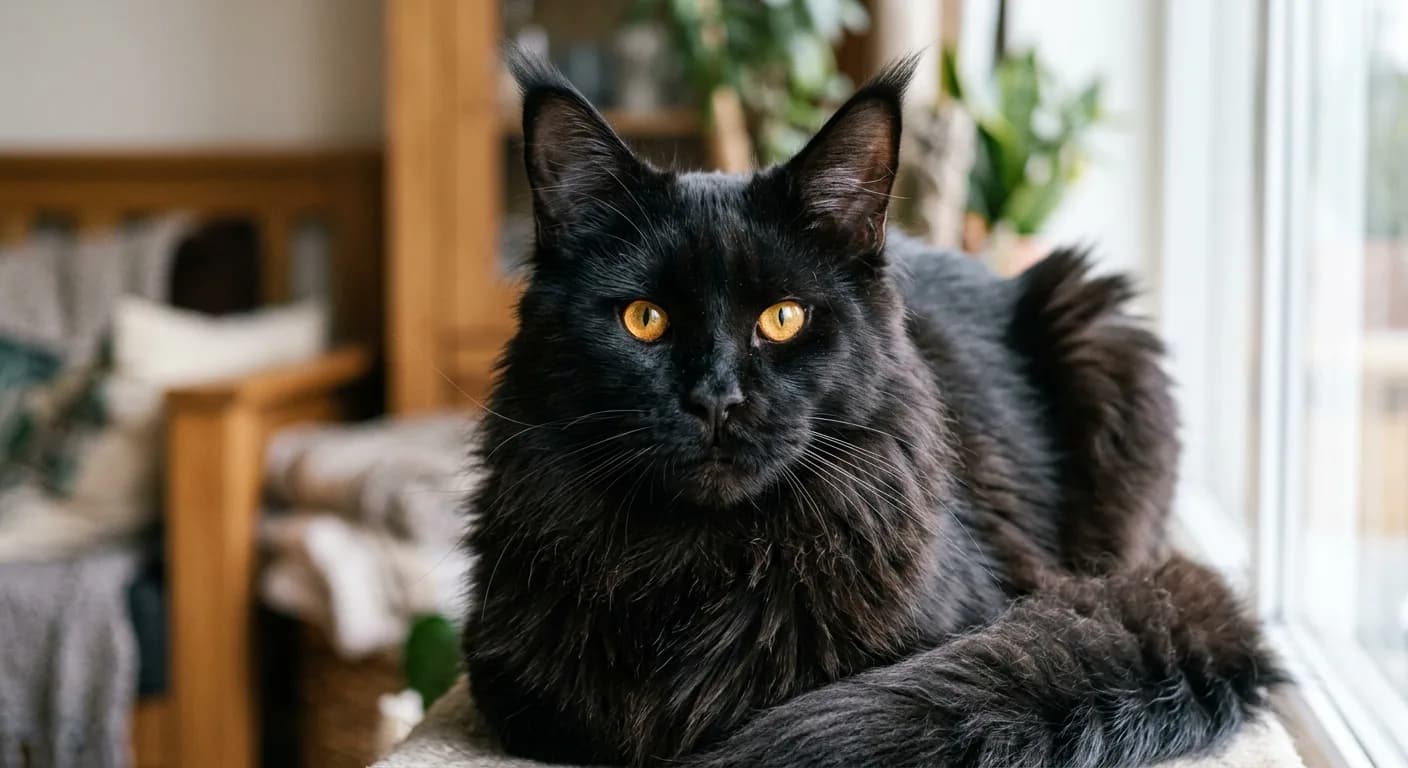
Eye color is one of the most common sources of confusion about black Maine Coons, particularly because online photos often show striking blue-eyed black cats claimed to be Maine Coons.
According to the CFA and TICA breed standards, gold, copper, and green are the accepted eye colors for solid and smoke Maine Coons. Blue eyes are genetically linked to white coat coloration (specifically the W gene or the white-spotting S gene) in the Maine Coon. A fully black cat does not carry the white-producing allele, so blue eyes are not possible on a true solid black or black smoke Maine Coon. Any listing claiming a blue-eyed black Maine Coon is either mislabeling the color, showing a mixed-breed cat, or misrepresenting the breed standard.
In practice, most black Maine Coons have warm gold or copper eyes, which create a striking visual contrast with the dark coat. Green is less common but fully standard. The eyes are large and oval in shape, placed wide apart on the face, and at full maturity they have a vivid intensity that looks especially dramatic set against a black ruff.
- If a breeder advertises "rare blue-eyed black Maine Coon kittens," treat it as a warning sign. Blue eyes do not occur in genetically solid or smoke black Maine Coons under the CFA or TICA breed standard. Responsible breeders know and state this clearly.
How Much Does a Black Maine Coon Cost?
Per the Maine Coon price canon and CFA/TICA guidelines, coat color carries no official premium. The price ranges below apply to black Maine Coons the same as to any other color:
- Pet-quality from a reputable breeder: $1,000-2,500
- Show or breeding-quality: $2,500-4,000
- Top show lines: $4,000-6,500 or more
- Rescue or shelter adoption: $100-400
The $1,000-2,500 range reflects what most pet owners pay for a spayed or neutered kitten from a health-tested cattery. The higher tiers apply to cats sold with breeding rights or for the show ring, where pedigree, confirmed health test results (HCM echo, SMA DNA, PKD DNA), show record of the parents, and TICA/CFA registration all factor into price.
If a breeder is charging $3,000 for a "rare black" kitten without providing show-quality documentation or a full health testing panel, the premium is marketing, not value. For comparison context on how coat color affects pricing in longhaired breeds (it genuinely does in some), see how Himalayan cat pricing works, where colorpoint genetics and color-specific demand do drive variation.
Ongoing Costs
Beyond the purchase or adoption price, budget for:

63-inch multi-level cat tree with scratch posts, hammock, plush perches, and dangling toys. Vertical territory is non-negotiable for high-energy climbing breeds like the Bengal.
Petful may earn a commission when you click through to Chewy, at no extra cost to you.
- High-quality protein-rich cat food: $60-120/month depending on brand
- Annual veterinary visits: $200-400/year after initial setup
- Cardiac screening (HCM echo): $300-600 every 1-3 years for breeding cats; optional but prudent for pets
- Grooming tools (slicker brush, wide-tooth comb, detangling spray): $40-80 one-time
- Large litter boxes to suit the breed's size: $30-80 each
- Responsible Maine Coon breeders DNA-test breeding stock for SMA and PKD, and echo-test for HCM before breeding. Ask for documentation. A kitten sold without any health testing records from a cattery with dozens of litters available at low prices is a potential rescue-risk purchase, regardless of coat color.
Black Maine Coon Kittens: What to Expect
Black Maine Coon kittens present some unique characteristics that surprise first-time owners.
Ghost Striping in Kittens
Many solid black kittens show faint "ghost" tabby striping or a brownish cast to their fur in the first weeks of life. This is developmentally normal. The melanin pigmentation in young kittens is not yet fully expressed, so the suppressed agouti patterning can briefly show through as faint stripes on the legs or a slightly grayish tint to the black. By 6-12 months, most solid black Maine Coons transition to a dense, uniform jet-black coat.
Smoke Kittens Look Different at Birth
Black smoke kittens are born nearly solid black. The silver root zone that defines the smoke pattern develops gradually as the inhibitor gene suppresses pigment in the lower hair shaft over the first weeks to months. By 8-12 weeks, the smoke pattern is usually discernible to an experienced breeder, though the full effect is not apparent until the adult coat comes in.
Size at 8-12 Weeks
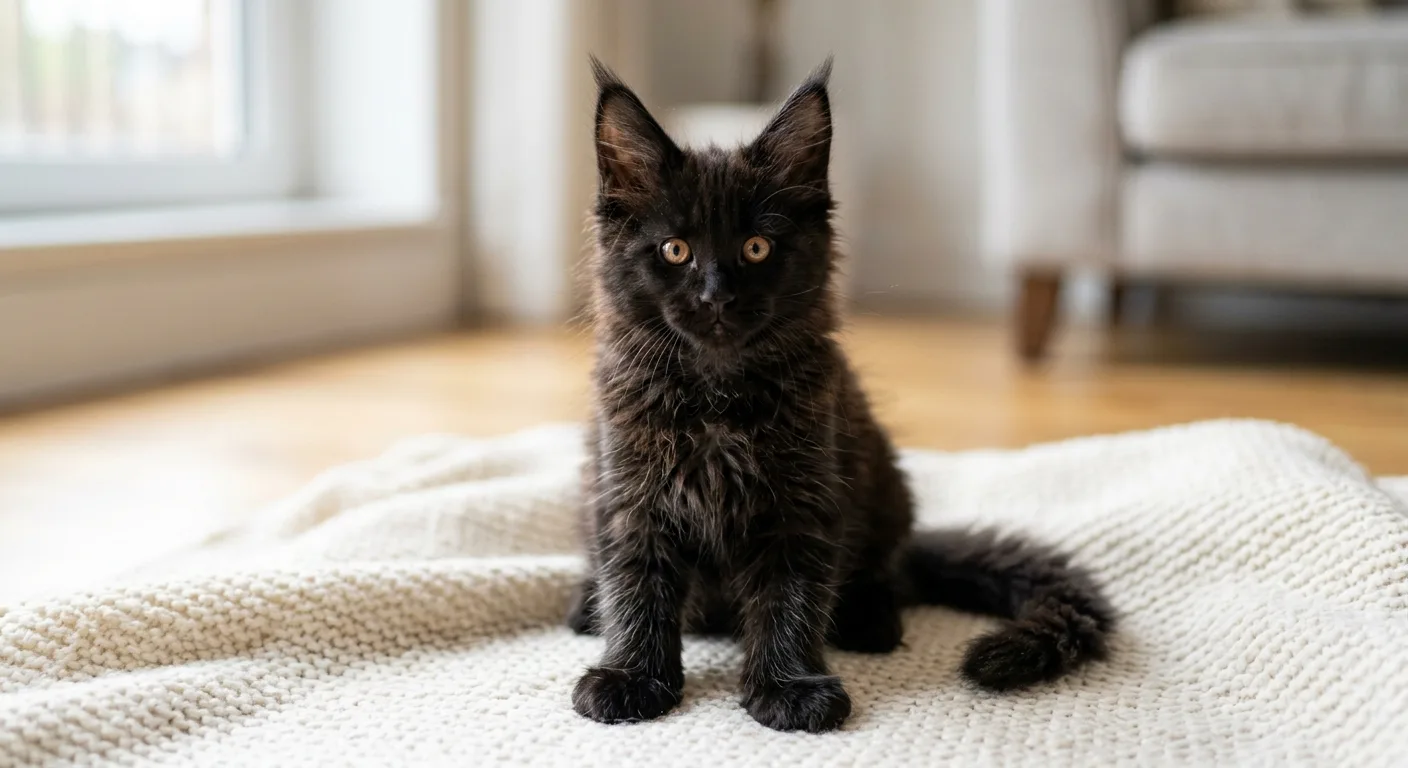
At 8-12 weeks old, Maine Coon kittens look broadly similar to other longhaired kittens. The breed's large size does not become dramatically apparent until 6-12 months, when they begin to outpace other breeds noticeably. Paw size relative to body is often the earliest tell.
Finding a Reputable Black Maine Coon Breeder
Because the Maine Coon's popularity makes it a target for backyard breeders and kitten mills, buying from the right source matters far more than coat color preferences.
What a Reputable Breeder Does
1. Registers with CFA, TICA, or both. Registry membership is not a guarantee, but it creates accountability and requires adherence to breed standards and a code of ethics.
2. Health tests breeding stock. At minimum: HCM cardiac echo (not just DNA, because the MyBPC3 mutation does not catch all HCM-positive cats), SMA DNA test, and PKD DNA test. Hip dysplasia screening via PennHIP or OFA is a bonus.
3. Provides a written health guarantee. Typically 1-2 years for genetic conditions.
4. Does not release kittens before 12-16 weeks. Early-weaning is a flag for prioritizing sales over kitten welfare and socialization.
5. Invites you to visit (or video call) the cattery. Clean facilities and visible socialization of kittens with people are non-negotiable.
6. Does not breed "rare black" at a premium. Reputable breeders know that black is a standard color with standard pricing.

108-oz stainless steel pet fountain with quiet pump and water-level window. Bengals are notoriously water-obsessed; a flowing fountain encourages hydration and pulls them away from sinks and toilets.
Petful may earn a commission when you click through to Chewy, at no extra cost to you.
Where to Search
- CFA Breeders directory (cfa.org)
- TICA Breeders directory (tica.org)
- The Maine Coon Breeders and Fanciers Association (MCBFA)
- Maine Coon rescue networks (mainecoonrescue.net and regional groups)
- Before committing to a deposit, request the cardiac echo reports and DNA test results for both the sire and dam. A breeder who cannot or will not provide them is not a breeder to trust with a $1,500-plus purchase.
Health Considerations for Black Maine Coons
Black coat color does not create additional health risks, but all Maine Coons share a set of heritable conditions that buyers should understand before purchasing. Responsible breeders screen for all of them.
Hypertrophic Cardiomyopathy (HCM)
HCM is the most serious health concern in the breed. It causes the heart muscle to thicken abnormally, reducing the heart's ability to pump efficiently. A Maine Coon-specific mutation (MyBPC3) is DNA-testable, but because other mutations also cause HCM in cats, DNA testing alone is insufficient. The gold standard is an echocardiogram (cardiac ultrasound) performed by a veterinary cardiologist, ideally repeated every 1-3 years in breeding cats. The Winn Feline Foundation and several university veterinary schools have published breed-specific HCM research. For pets, annual or biennial vet auscultation plus an echo at the first sign of a murmur is the practical protocol.
Hip Dysplasia
Maine Coons have an elevated incidence of hip dysplasia compared to most other breeds. Mild cases may produce no clinical signs; severe cases cause pain and lameness. Radiographic screening (PennHIP or OFA Hip) identifies affected cats before breeding. Ask breeders whether hip-screening is part of their program.
Spinal Muscular Atrophy (SMA)
SMA is a neuromuscular disease caused by degeneration of spinal cord motor neurons. Affected kittens develop a characteristic wobbling, swaying gait and muscle weakness, typically apparent by 3-4 months. A DNA test identifies carriers and affected cats; two carrier parents can produce affected offspring. SMA does not affect lifespan but does affect quality of life. A reputable breeder will not breed two SMA carriers together.
Polycystic Kidney Disease (PKD)
PKD causes fluid-filled cysts to develop in the kidneys, gradually reducing function. Maine Coons can inherit a form of PKD, and a DNA test is available. Ask for test results before purchasing.
General Health Outlook
Beyond these four conditions, Maine Coons are generally robust, long-lived cats. The breed's average lifespan is 12-15 years, with many individuals reaching the high teens in good health. Maintaining a healthy weight is important because the breed's calm, people-oriented lifestyle can lead to overeating if food is not regulated.
- Rapid breathing at rest, open-mouth breathing, sudden weakness in the hindquarters, or a reluctance to jump are all potential signs of cardiac or neuromuscular problems in a Maine Coon of any color. Contact a veterinarian promptly if you observe any of these signs, as HCM can progress quickly.
Caring for a Black Maine Coon's Coat
Grooming Frequency
The Maine Coon's long, semi-water-resistant double coat is designed to resist matting better than many other longhaired breeds, but it is not maintenance-free. Plan for two to three brushing sessions per week with a wide-tooth metal comb and a slicker brush. Pay particular attention to the armpits, the base of the tail, and the area behind the ears, where tangles tend to form first.
On a black coat, loose white undercoat hairs are more visually apparent when they shed onto dark surfaces, so consistent brushing reduces the volume of fur deposited on furniture and clothing.
Seasonal Shedding
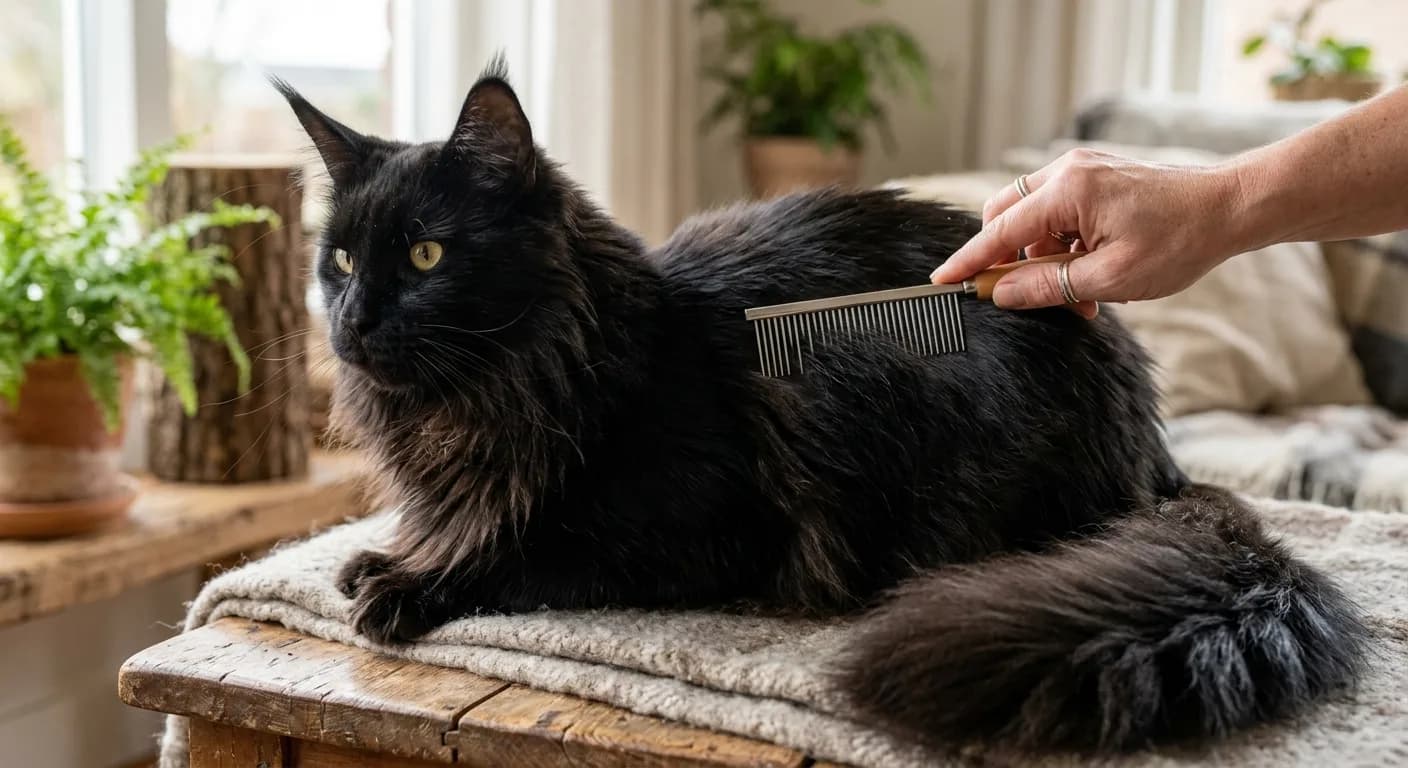
Maine Coons have a moderate-to-heavy shed twice a year (spring and fall), when they drop the previous season's undercoat. Daily brushing during these periods prevents mat formation and hairballs.
Sun-Tipping and the Reddish-Brown Sheen
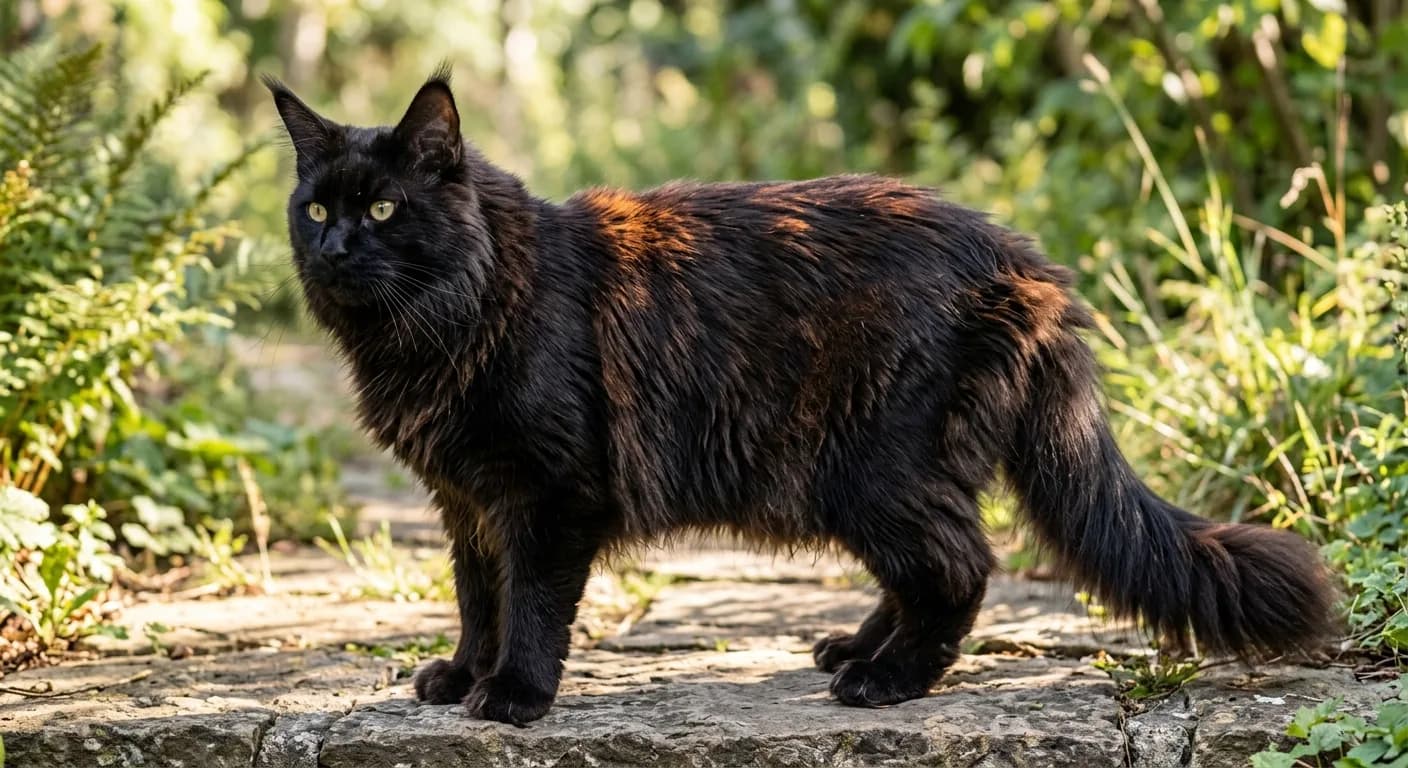
One coat phenomenon that surprises owners of black Maine Coons is the appearance of a reddish-brown or rusty cast to the coat after prolonged sun exposure. This is called "rusting" or "sun-tipping" and is caused by the photodegradation of eumelanin (black pigment) by UV light. A secondary contributor is tyrosine deficiency: tyrosine is an amino acid required for melanin synthesis, and a diet low in tyrosine can produce a brownish tint in cats whose coats should be solid black. Feeding a high-quality, protein-rich diet and limiting extended sun exposure (or providing shade) will minimize rusting.
- If your black Maine Coon's coat develops a reddish tint, try switching to a premium food with a higher animal-protein content. Tyrosine comes from dietary protein, so higher-quality protein sources can restore true black pigmentation in 6-12 weeks as the coat cycles. Limit extended outdoor sun exposure as well.
Frequently Asked Questions About Black Maine Coons
No. Black is a fully standard CFA and TICA-recognized color for the Maine Coon. It is neither rarer nor more common than tabby or bicolor; any breeder marketing black as "rare" to justify a price premium is applying marketing, not breed-standard logic.
Pet-quality kittens from reputable health-tested breeders typically range from $1,000-2,500. Show or breeding-quality cats run $2,500-4,000, and top show lines can exceed $4,000-6,500. Rescue adoption is $100-400. Black coat color adds no official price premium.
A black smoke Maine Coon carries the inhibitor gene, which bleaches the lower portion of each hair shaft to a near-white silver while leaving the tips black. The cat looks solid black at rest but reveals a striking silver-white undercoat when the fur is parted or moves.
Gold, copper, and green are the standard eye colors for solid black and black smoke Maine Coons per the CFA and TICA breed standards. Blue eyes are genetically linked to the white-coat gene and cannot occur in a true solid black Maine Coon.
Generally yes, though coat tone can shift slightly with age. Kittens often show faint brownish ghost striping that resolves by 12 months, and adult coats can develop a reddish or rusty sheen from UV exposure or low dietary tyrosine, which is reversible with diet changes and reduced sun exposure.
This is called rusting or sun-tipping. UV light degrades eumelanin pigment, shifting it toward reddish-brown. A low-tyrosine diet (tyrosine is needed for melanin production) can also cause it. Feed a high-protein diet and reduce direct sun exposure to restore the true black coat color.
Males typically reach 15-25 lb and females 8-14 lb; body length can reach 38-40 inches nose to tail and height 10-16 inches at the shoulder. Full size is usually not reached until 3-5 years of age.
Yes. The Maine Coon breed is consistently rated highly for compatibility with respectful children and other household pets, including cats and calm dogs. Their patient, confident nature makes them well-suited to busy multi-pet households.
Search the CFA and TICA breeder directories, and the Maine Coon Breeders and Fanciers Association (MCBFA). Verify that breeding cats are health-tested for HCM (via echocardiogram), SMA, and PKD. Avoid any cattery marketing black as a premium color or releasing kittens before 12 weeks.
The same four conditions that affect all Maine Coons: hypertrophic cardiomyopathy (HCM), hip dysplasia, spinal muscular atrophy (SMA), and polycystic kidney disease (PKD). Coat color has no influence on health risk. Responsible breeders screen for all four.
They are moderate to heavy shedders, typical for the breed. Plan for two to three brushing sessions per week year-round and daily brushing during the spring and fall seasonal shed. A black coat makes shed white undercoat hairs more visually apparent on light surfaces.
How Black Maine Coons Compare to Similar Breeds
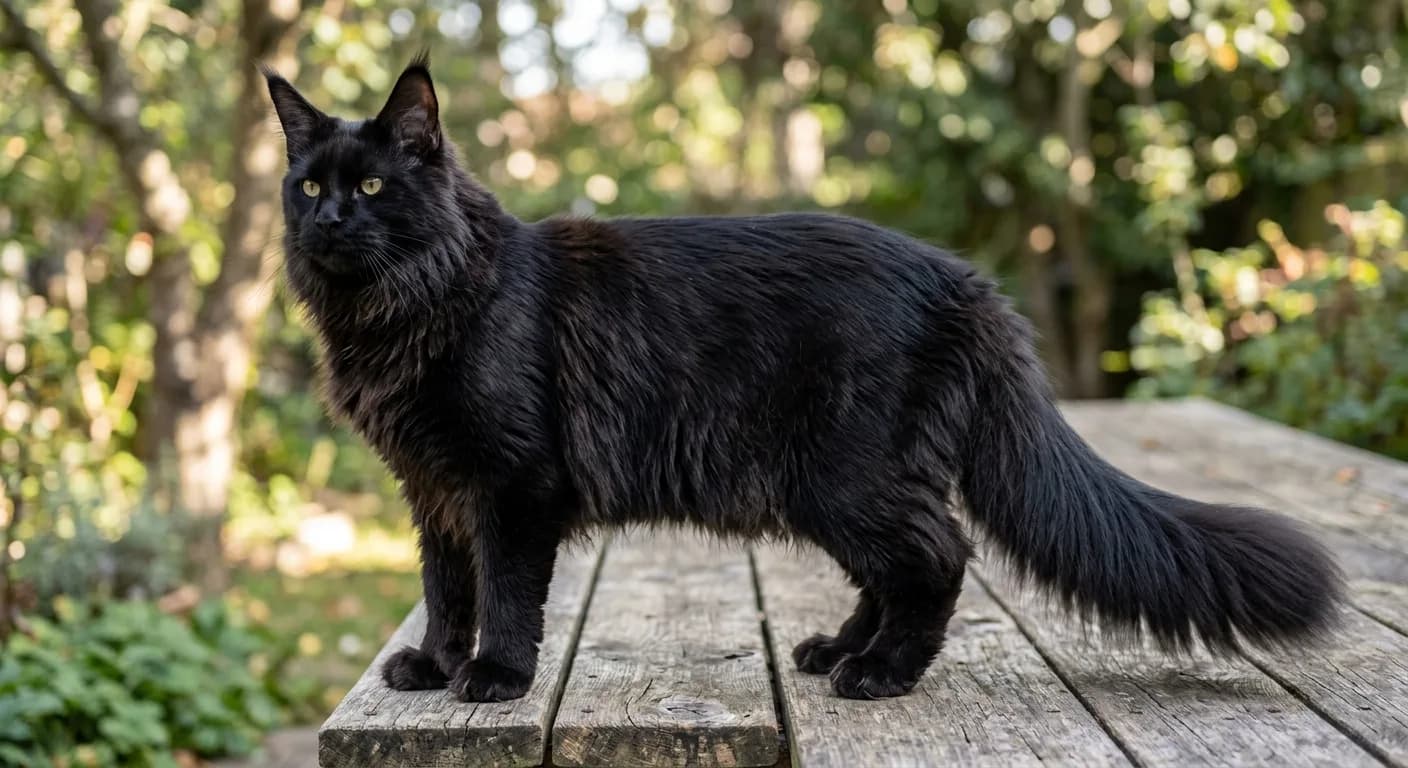
If you are drawn to the black Maine Coon's size and flowing dark coat, two other breeds are frequently confused with the Maine Coon and are worth comparing:
The Norwegian Forest Cat is the breed most commonly "mistaken for a Maine Coon." Both are large, semi-longhaired, and come in solid black. The key structural differences: Norwegian Forest Cats have a more triangular head profile and a distinctly flat forehead, while Maine Coons have a longer, more angular face with high cheekbones and a squarish muzzle. The Wegie's tail is also less heavily plumed.
The Siberian cat is another large semi-longhaired breed that appears in solid black. Siberians have a more rounded, cobby build compared to the Maine Coon's rectangular frame, and their coat has a denser, more insulating undercoat developed for a Russian climate.
Both look-alikes appear in black as a recognized color, so the best way to confirm a Maine Coon is through a registered breeder with documented pedigree, not by appearance alone.
A black Maine Coon is a real investment, so a free MyPetID profile is worth setting up early to keep your cat's microchip number, vaccination records, and proof of ownership in one place, with a QR tag to help a lost cat get home fast.
Set up a free MyPetID profileMore Maine Coon reading: the full Maine Coon colors guide, the white Maine Coon, and Maine Coon lifespan.

Coreen Saito is a pet writer and longtime shelter volunteer with more than a decade in animal rescue. She covers cat behavior, breed care, and the small, ordinary science of sharing a life with companion animals, with a particular focus on honest takes about the products and decisions that actually matter. At home in Arizona, she's outranked by Mac (a dog with the loudest opinion in the house), Rebel (a cat who governs by quiet authority), and Meri (an orange tabby who runs the late shift and the laundry basket). She writes about all three, plus the rescues that keep coming through her life, at LifeWithMinty.com.
Sign up for expert-backed reviews and safety alerts all in one place.