5 Things to Know About Bombay Cats
Meet the Bombay cat, the affectionate mini-panther. This complete breed guide covers personality, shedding, grooming, health, lifespan, and how much a Bombay cat costs before you adopt.

Petful is reader supported. As an affiliate of platforms like Amazon and Chewy, we may earn a commission when you buy through links on this page. There is no extra cost to you.
The Bombay cat is the closest thing to a panther you can legally keep on your couch. With a jet-black, patent-leather coat, big copper-gold eyes, and a muscular, sun-warmed body, this "mini-panther" was bred to look wild and act like a lap cat. If you are weighing a Bombay cat as your next companion, this complete breed profile covers personality, shedding, grooming, health, lifespan, price, and how to tell a true Bombay from an ordinary black housecat. For more, see Petful’s guide to Bombay cat prices.
Bombays are people-cats to the core. They follow you room to room, chat in a soft voice, and would rather supervise your every move than nap alone. Below is everything a prospective owner needs to know before bringing one home. There is more on this in Petful’s guide to Bombay cat personality.
The Bombay cat is a medium-sized, all-black breed bred to resemble a miniature panther. Bombays are affectionate, vocal, dog-like companions that shed lightly, live 9 to 15 years, and are best known for one heritable heart condition (HCM) to screen for. They are a rare breed, so expect a waitlist and a price of roughly $500 to $2,000 from a reputable breeder.

Sign up for expert-backed reviews and safety alerts all in one place.
Bombay Cat Breed Overview
Here is the Bombay cat at a glance. Use this quick-reference table to compare the breed against other cats you may be considering.
| Trait | Details |
|---|---|
| Weight | 6 to 12 pounds |
| Lifespan | 9 to 15 years |
| Coat | Short, dense, glossy, jet black |
| Eye color | Copper to gold (round, wide-set) |
| Shedding | Low |
| Temperament | Affectionate, playful, vocal, social |
| Good with kids and pets | Yes, when socialized |
| Prevalence | Rare |
Bombays are medium-sized but surprisingly heavy for their frame. Pick one up and you will feel the difference: that compact, muscular body carries more weight than the silhouette suggests, which is part of the panther illusion.
Because Bombays are indoor cats who crave a clean, predictable routine, a reliable litter setup matters from day one. A self-cleaning box keeps odor down and the box fresh between scoops.

Never Scoop Again® with the Whisker Litter-Robot, the smart self-cleaning automatic litter box. Monitor visits and track weights for better overall care in the Whisker® app. Multi-cat friendly.
Petful may earn a commission when you click through to Whisker, at no extra cost to you.
What Does a Bombay Cat Look Like? The Mini-Panther
A Bombay is built to look like a scaled-down panther, and breeders selected for three signature features: a black patent-leather coat, copper or gold eyes, and a rounded, sweet face. The coat is short, fine, and so glossy it almost looks wet. Unlike a black domestic shorthair, a pedigreed Bombay is black to the roots, with black nose leather and black paw pads.
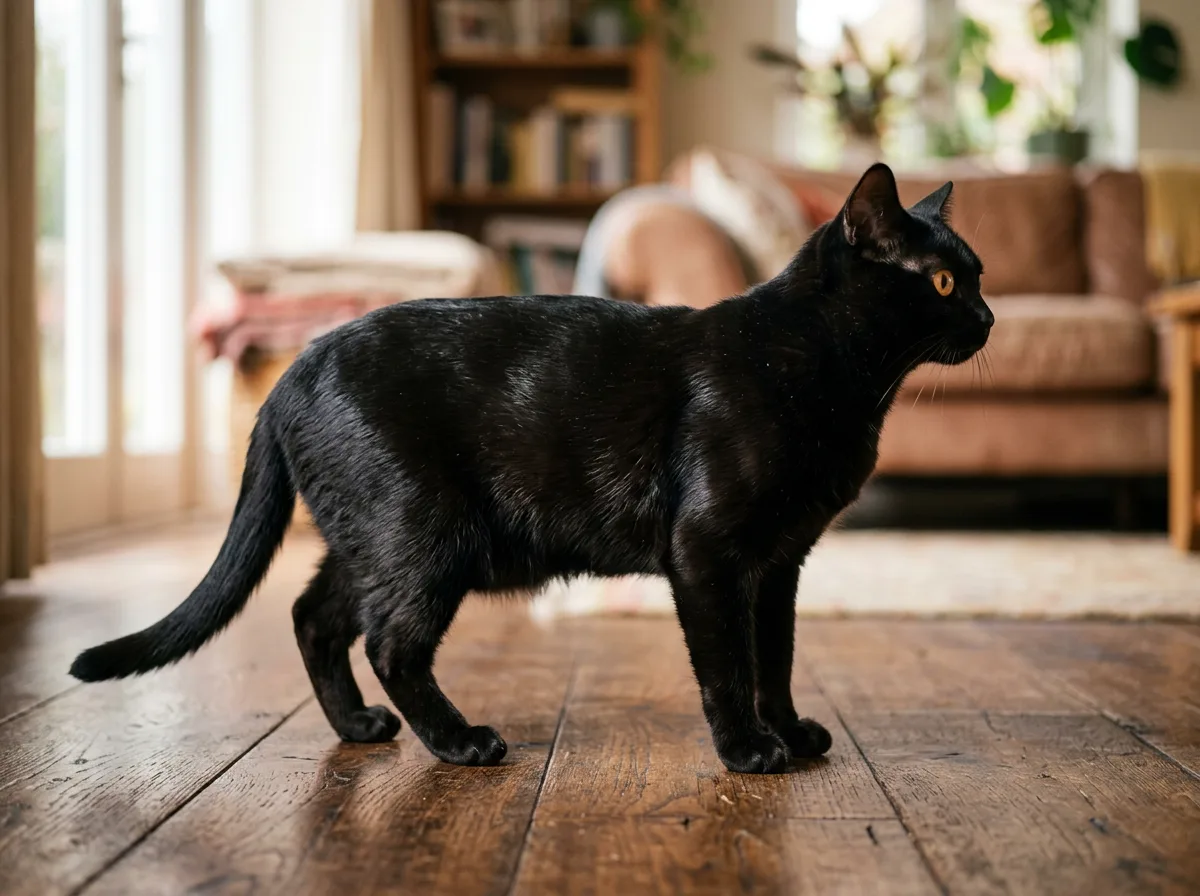
The eyes are the second tell. They are large, round, set wide apart, and range from deep copper to brilliant gold. Green eyes are considered a fault in show Bombays, though they show up in pet-quality and mixed-heritage cats. The head is rounded with no sharp angles, the ears are medium and tip slightly forward, and the overall expression is open and friendly rather than wild.
Bombay Cat vs. a Black Housecat: How to Tell the Difference
Plenty of all-black shelter cats get labeled "Bombay," but a true Bombay is a recognized pedigreed breed, not just a color. Here is how to spot a genuine Bombay:
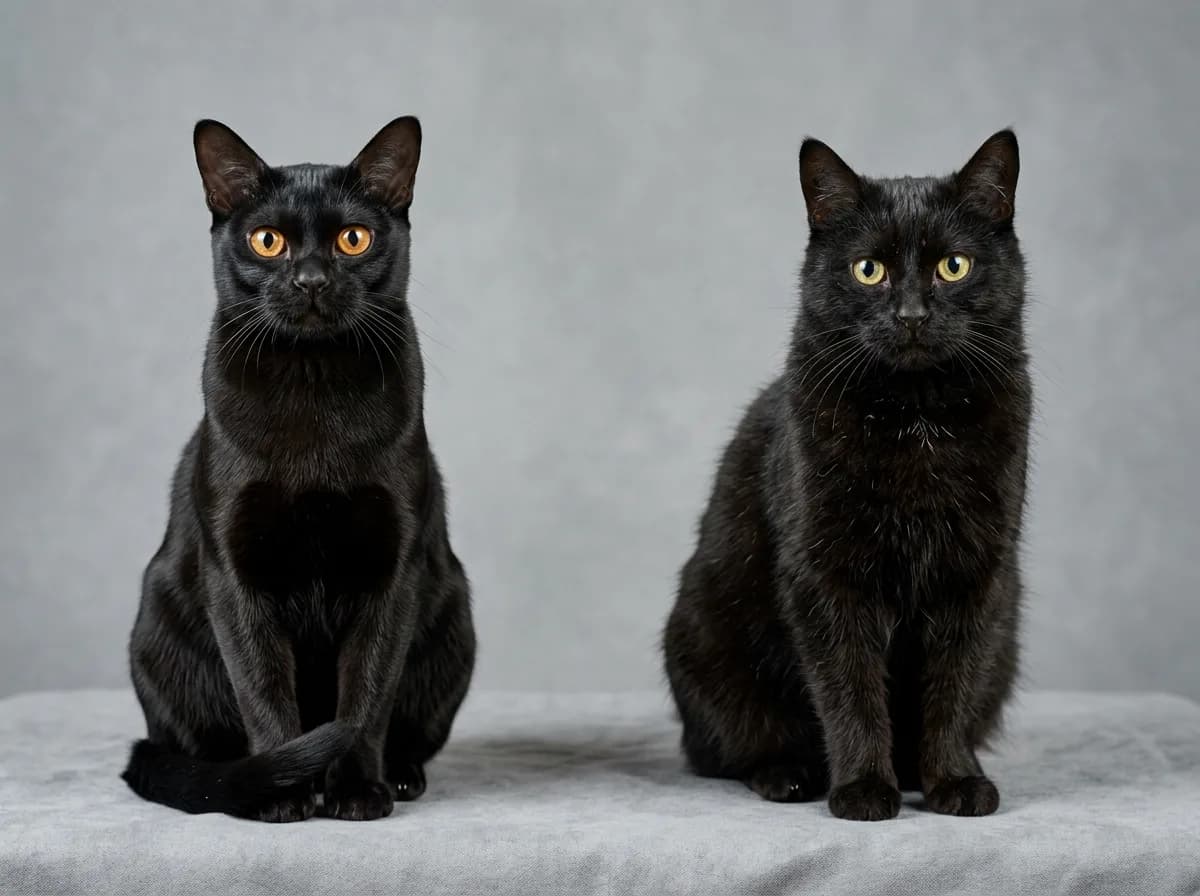
- Coat: jet black to the roots with a high-gloss, patent-leather sheen, no rusting or tabby ghost markings in sunlight.
- Eyes: round and copper to gold, not the yellow-green of most black housecats.
- Nose and paw pads: solid black.
- Build: medium, muscular, and heavier than it looks.
- Personality: unusually people-oriented, talkative, and dog-like.
- If a black cat has any white hairs, green eyes, pink paw pads, or faint tabby stripes in bright light, it is almost certainly a black domestic shorthair rather than a pedigreed Bombay. That does not make it any less wonderful, just not a true Bombay.
Bombay Cat Personality and Temperament
Bombay cats are easygoing, intelligent, and relentlessly social. They are inquisitive, always ready to play, and famously fond of children. Many learn to play fetch as kittens and keep the habit for life. If you want a cat that ignores you, this is not the breed.
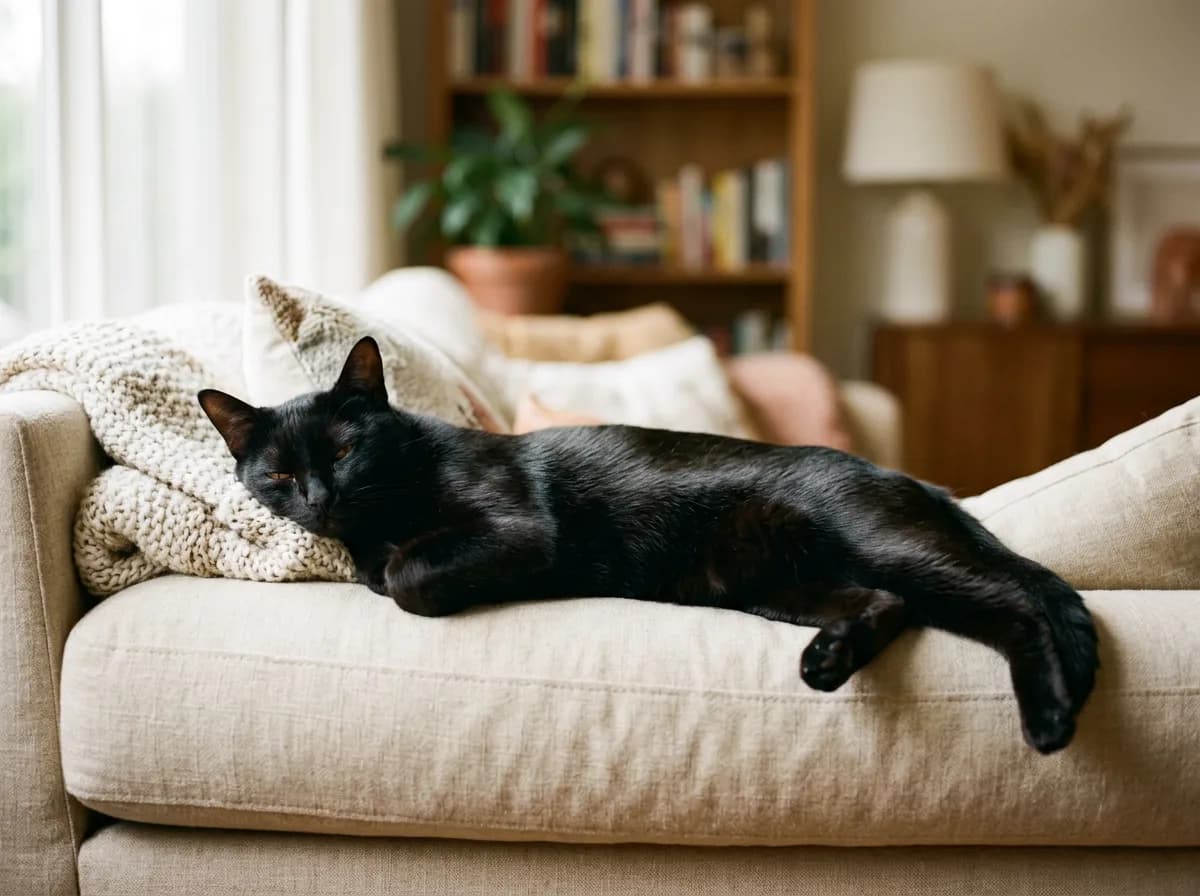
Bombays bond hard and want to be involved in whatever you are doing. It is not unusual for one to trail you like a puppy, ride on a shoulder, or burrow under the covers at night. Because they are so attached, they do not do well left alone for long stretches, so a second pet or a busy household helps keep a solo Bombay content.
Are Bombay Cats Vocal?
Yes. Bombays are a talkative breed, though their voice is softer and sweeter than the loud yowl of an Oriental or Siamese. Expect chirps, trills, and conversational meows, especially at mealtime or when they want your attention. They are not shy about telling you when they feel ignored.
Do Bombay Cats Like to Be Held?
Most do. Bombays are one of the more cuddle-friendly cat breeds and many actively seek out laps, shoulders, and warm spots against your body. As with any cat, individual personality and early handling matter, but the breed as a whole leans affectionate and hands-on.
To channel all that energy and curiosity, give a Bombay vertical space and daily interactive play. A tall cat tree or tower gives them somewhere to climb, perch, and survey their territory, which keeps a smart, social cat from getting bored.

63-inch multi-level cat tree with scratch posts, hammock, plush perches, and dangling toys. Vertical territory is non-negotiable for high-energy climbing breeds like the Bengal.
Petful may earn a commission when you click through to Chewy, at no extra cost to you.
Do Bombay Cats Shed? Grooming and Coat Care
Bombay cats shed, but only lightly. Their short, fine, single-layer coat sheds far less than a long-haired or double-coated breed, and the loose hairs that do come off are easy to manage. This makes the Bombay one of the lower-maintenance cats when it comes to grooming and loose fur around the house.
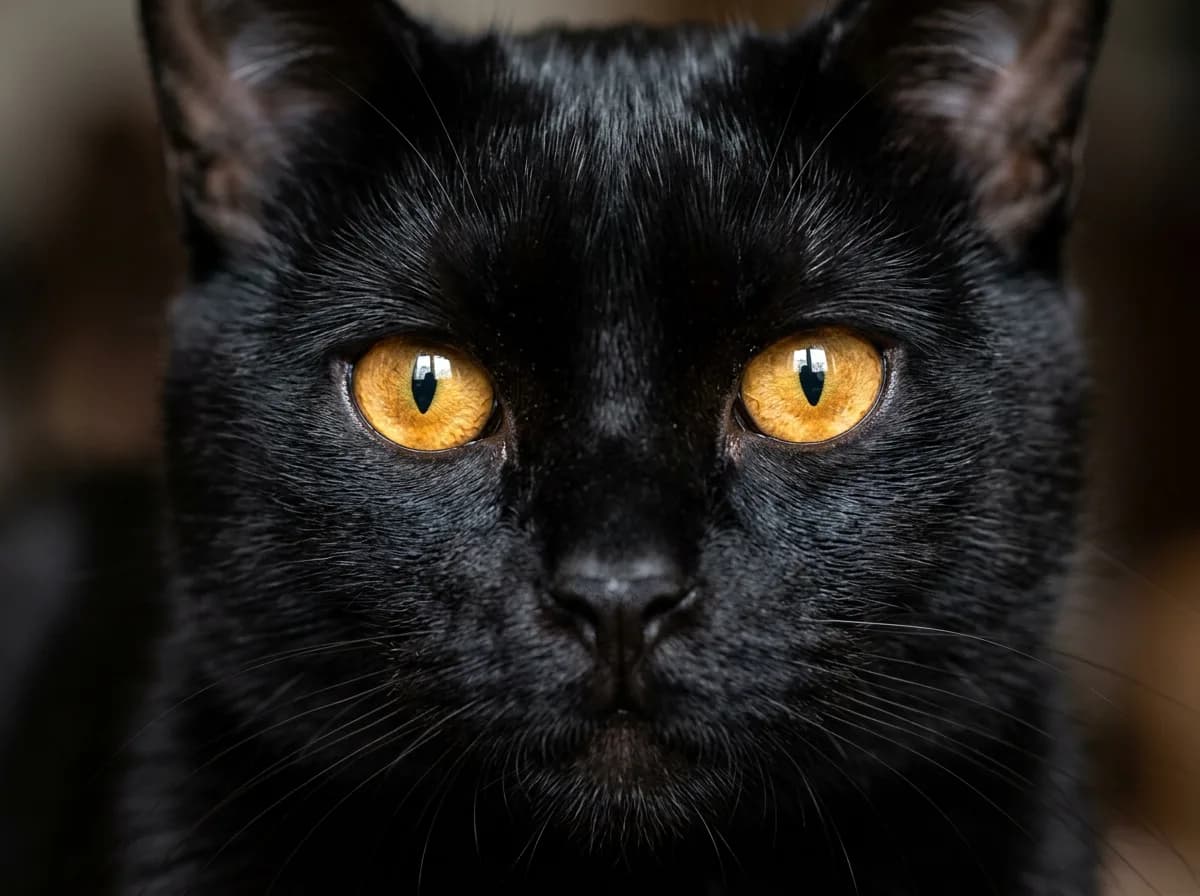
A quick weekly once-over with a soft brush or grooming glove is enough to capture loose hair and keep that signature patent-leather shine. Many owners simply run a damp hand or a chamois cloth over the coat to bring up the gloss. Bathing is rarely needed and should only happen occasionally or when a cat gets into something messy.
- Low shedding is not the same as hypoallergenic. No cat is truly allergen-free, because the main allergen (Fel d 1) lives in saliva and skin oils, not just hair. Bombays may bother allergy sufferers a little less simply because they shed less, but sensitive people should spend time with the breed before committing.
Round out grooming with the basics every cat needs: weekly tooth brushing, nail trims every couple of weeks, and a quick ear check. Starting these routines in kittenhood makes them a non-event for life.
New to cat care? Our guide to the essential supplies for a new kitten covers the brushes, nail clippers, and starter gear worth buying before your Bombay comes home.
Bombay Cat Health and Lifespan
Bombays are generally healthy, hardy cats with a typical lifespan of 9 to 15 years, and many well-cared-for indoor Bombays live into their mid-teens and beyond. As a hybrid of the Burmese and the American Shorthair, the breed benefits from a relatively diverse gene pool, but there are a few conditions responsible owners should know about.
Hypertrophic Cardiomyopathy (HCM)
The most important health concern in Bombays is hypertrophic cardiomyopathy, or HCM, the most common form of heart disease in cats. HCM causes the muscular wall of the heart to thicken, which makes it harder for the heart to pump blood efficiently. It can lead to heart failure, blood clots, or sudden death, and early stages often show no outward symptoms.
Because HCM can be inherited, reputable Bombay breeders screen their breeding cats with regular cardiac ultrasounds (echocardiograms) performed by a veterinary cardiologist. If you are buying a kitten, ask the breeder for the parents heart-screening history. For any Bombay, routine wellness exams let your veterinarian listen for a heart murmur or arrhythmia that can be an early clue.
Other Conditions to Watch
- Excessive tearing: some Bombays produce extra tears or have minor sinus issues tied to their shortened, rounded muzzle. Gentle daily eye wiping keeps staining and irritation down.
- Brachycephalic traits: the flatter face of some lines can contribute to mild breathing or dental crowding issues, so watch for noisy breathing and keep up with dental care.
- Weight gain: Bombays love food and company, and an under-exercised indoor cat can put on pounds. Keep meals measured and play sessions frequent.
Whatever the breed, learning the early warning signs that a cat is sick helps you catch problems before they become emergencies. Bombays are stoic, so subtle changes in appetite, energy, or breathing are worth a vet call.
- Labored or open-mouthed breathing, sudden hind-leg weakness or paralysis, fainting, or a blue-gray tongue can signal a heart emergency in any cat and need immediate veterinary care. Do not wait to see if it passes.
American vs. British Bombay Cat
There are two distinct types of Bombay, and they were developed separately on different continents.
| Feature | American Bombay | British Bombay |
|---|---|---|
| Origin | United States, 1950s to 1960s | United Kingdom, 1970s |
| Foundation crosses | Sable Burmese x black American Shorthair | Burmese x black domestic and British cats |
| Eye color standard | Copper to gold | Gold to green accepted in some registries |
| Body type | Rounded, muscular, medium | Slightly more foreign or slender |
In the United States, breeder Nikki Horner set out in the 1950s to create a "mini-panther" by crossing sable Burmese cats with black American Shorthairs. The British Bombay was developed later by crossing Burmese with black domestic and British cats. The practical difference for most pet owners is small, but show registries treat the eye-color standard differently: green eyes are a fault in the American Bombay yet are tolerated in some British lines.
If you love the Burmese influence in the Bombay, it is worth reading up on the Burmese cat, the affectionate, people-focused breed that gave the Bombay much of its temperament and build.
History of the Bombay Cat
Nikki Horner developed the Bombay breed beginning in the 1950s, with her successful line established by 1965. She wanted a cat that echoed the black leopards of India, so she crossed Burmese cats with black American Shorthairs to fix the jet-black coat and copper eyes.
The Cat Fanciers Association recognized the Bombay and granted championship status in 1976, and The International Cat Association followed in 1979. After the breed was accepted, Horner stepped back from breeding. Breeders Herb and Suzanne Zwecker developed new Bombay lines and were instrumental in keeping the rare breed from dying out.
Bombay Cat Price and Where to Adopt
Bombays are a rare breed, so finding one takes patience. From a reputable breeder, a Bombay kitten typically costs between $500 and $2,000, with show-quality kittens and sought-after bloodlines at the higher end. The price reflects health screening, early socialization, and the simple fact that few breeders produce them.
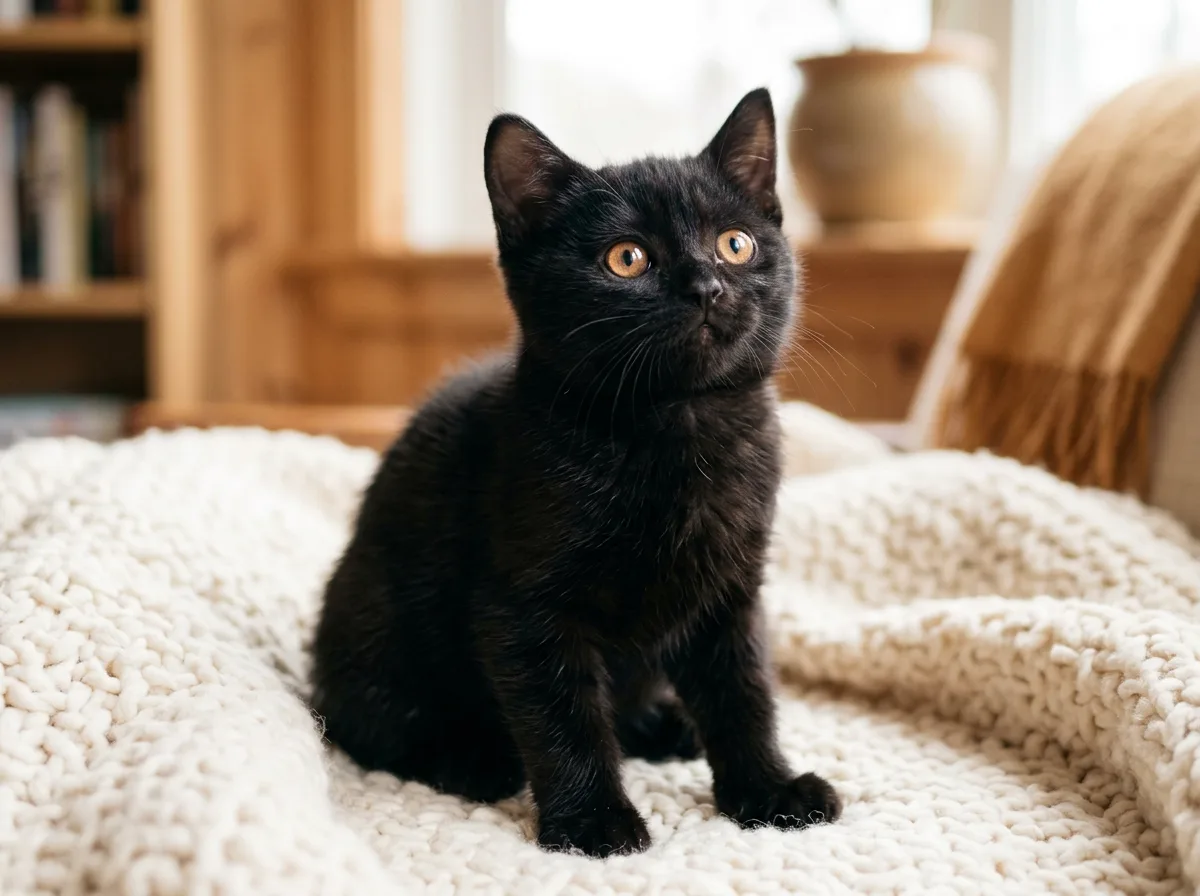
Adoption is often a better route. All-black cats are among the hardest to place in shelters, and Bombays or Bombay mixes do turn up in rescue. Adopting usually costs a fraction of a breeder price and gives a deserving cat a home.
Start with local shelters, breed-specific rescues, and our free online adoptable pet search to find a Bombay or a Bombay-type black cat near you.
If you do go through a breeder, be aware that kitten mills exist. Always ask to see the breeder home or cattery and meet the parent cats to confirm they are healthy, well-socialized, and screened for HCM.
One more practical tip for a new Bombay: because they are indoor cats prone to weight gain and the occasional health hiccup, a health-monitoring litter that flags changes in urine can give early warning. Pair it with an odor-control litter setup to keep a single-cat home fresh.

Color-changing crystal litter that flags pH shifts in your cat's urine, an early warning sign of UTIs, kidney issues, and more.
Petful may earn a commission when you click through to Chewy, at no extra cost to you.

Is a Bombay Cat Right for You?
A Bombay is a wonderful fit for someone who wants a deeply affectionate, interactive cat and is home enough to give it company. They suit families with children, multi-pet households, and first-time owners who want a dog-like cat. They are a poor fit for someone gone long hours every day, since a lonely Bombay can become anxious or destructive.
If the Bombay sounds close but not quite right, compare it with other social, low-shedding breeds in our cat breeds library to find your match.
Want to see that famous Bombay fetch habit in action? This clip shows Ralph, a 15-week-old Bombay kitten, playing fetch on the stairs.
Frequently Asked Questions
Bombay cats are special because they combine an exotic, mini-panther look with an unusually affectionate, dog-like personality. They were deliberately bred to resemble a black leopard while staying a gentle, social lap cat that bonds closely with its family.
A true Bombay is jet black to the roots with a glossy, patent-leather coat, round copper to gold eyes, black nose leather and paw pads, and a medium, muscular build that feels heavier than it looks. Personality is also a clue: Bombays are exceptionally people-oriented and talkative. A black cat with green eyes, white hairs, or faint tabby markings is more likely a black domestic shorthair.
A Bombay kitten from a reputable breeder usually costs between $500 and $2,000, depending on bloodline and quality. Adopting a Bombay or Bombay mix from a shelter or rescue costs far less, often just a standard adoption fee.
Yes. The Bombay is considered a rare breed. Relatively few breeders produce them, so prospective owners often join a waitlist. Their scarcity, not high demand alone, is part of why a Bombay can be hard to find.
Bombay cats shed, but only lightly. Their short, single-layer coat sheds far less than long-haired or double-coated breeds. A weekly brush is usually enough to capture loose hair and keep the coat glossy.
Yes, Bombays are a talkative breed, though their voice is softer and sweeter than a Siamese yowl. Expect chirps, trills, and conversational meows, especially around mealtime or when they want attention.
Most Bombays love physical affection and actively seek out laps, shoulders, and warm spots against their owners. They are among the more cuddle-friendly cat breeds, though individual personality and early handling still matter.
Bombay cats typically live 9 to 15 years, and many healthy indoor Bombays reach their mid-teens. Regular veterinary care, a healthy weight, and screening for heart disease all support a long life.
Yes. Bombays are known for being patient and playful with children and generally get along well with other cats and even dogs when properly introduced and socialized. Their social nature makes them a good fit for busy, multi-pet homes.
The American Bombay was developed in the United States from sable Burmese and black American Shorthairs and has a strict copper-to-gold eye standard. The British Bombay was developed later in the UK from Burmese and black domestic and British cats, and some registries accept gold-to-green eyes. For most pet owners the differences are minor.
The Bombay cat delivers the drama of a panther with the heart of a lap cat. If you can offer one the company and attention it craves, you will be rewarded with a glossy, talkative, devoted companion for well over a decade.

Kristine Lacoste has been researching dog and cat breeds for nearly a decade and has observed the animals up close at dog shows in both the United States and the United Kingdom. She is the author of the book One Unforgettable Journey, which was named as a finalist for a Maxwell Award from the Dog Writers Association of America, and was host of a weekly pet news segment on the National K-9 Academy Radio Show. In addition, she was the New Orleans coordinator for Dogs on Deployment, a nonprofit that helps military members and their pets, for 3 years. Kristine has researched and written about pet behaviors and care for many years. She holds a bachelor’s degree in psychology, another bachelor’s degree in English and a Master of Business Administration degree.
Sign up for expert-backed reviews and safety alerts all in one place.