Sphynx Cat Personality: A Complete Guide to the Velcro Cat
A complete guide to the sphynx cat personality: the velcro affection, dog-like loyalty, high energy, intelligence, vocal streak, and food drive, plus why they are like this, what living with one is really like, and the honest downsides.
Petful is reader supported. As an affiliate of platforms like Amazon and Chewy, we may earn a commission when you buy through links on this page. There is no extra cost to you.
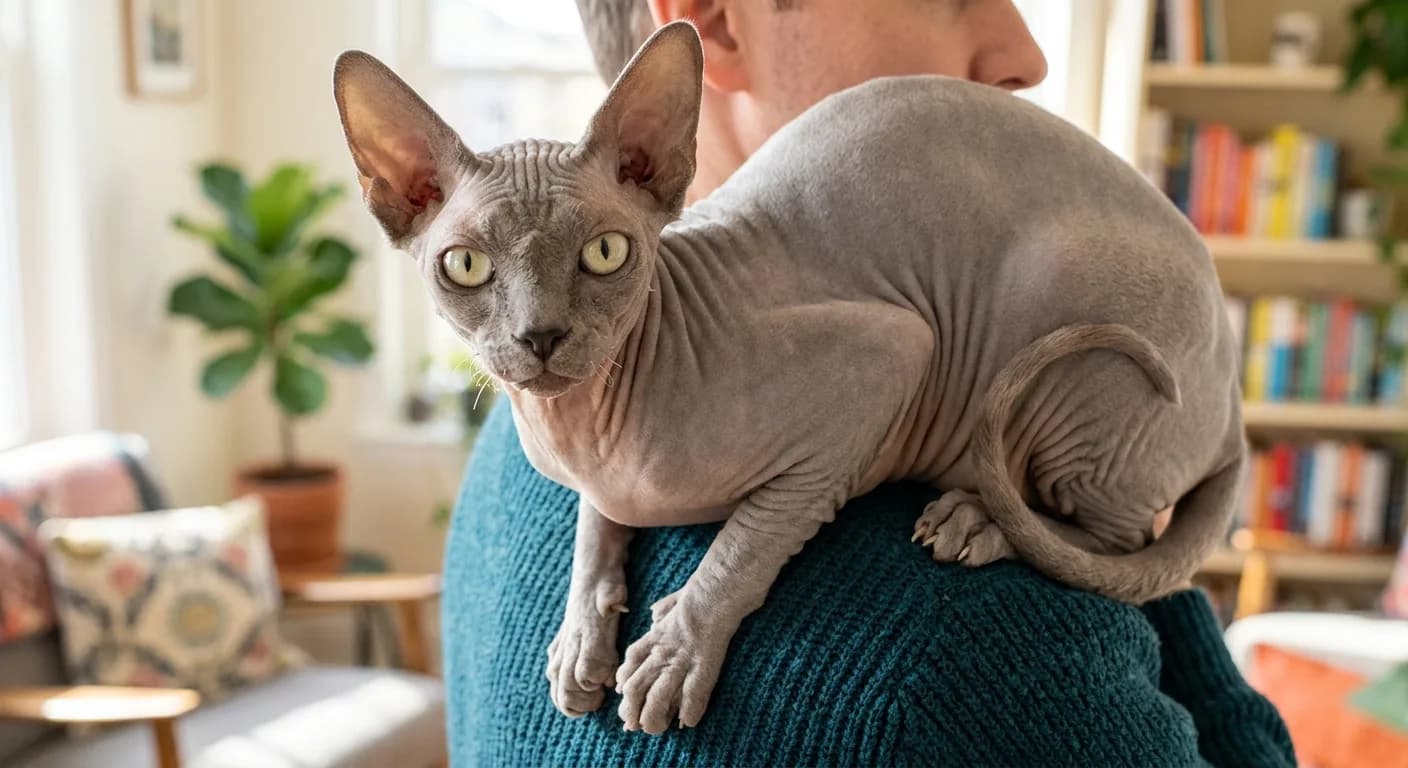
The Cat Fanciers' Association sums up the sphynx cat personality in seven words: "curious, outgoing, very intelligent, and anything but shy." That single line undersells just how intense these hairless cats are. A sphynx is the closest a cat gets to a dog wearing a cat suit: a velcro companion that follows you room to room, greets you at the door, rides on your shoulder, burrows under the covers for warmth, and loudly tells you exactly what it wants. They are affectionate to the point of clingy, athletic to the point of acrobatic, and clever to the point of mischievous. This guide breaks down every core trait, explains why the breed turned out this way, and lays out honestly what daily life with one is like, including the parts breeders do not put in the brochure.
- 1Sphynx cats are extroverted "velcro" cats that crave constant human attention and bond hard with their people
- 2They are dog-like: loyal, trainable for fetch and leash walking, and they greet you at the door
- 3Expect high energy, acrobatics, real intelligence, plenty of mischief, and a vocal cat that talks back
- 4They are warmth-seeking cuddlers because they have no coat, so they burrow into laps, beds, and blankets
- 5The big downside is dependence: they struggle when left alone all day and are prone to separation stress

Sign up for expert-backed reviews and safety alerts all in one place.
The sphynx cat personality at a glance
Before the deep dive, here is the shape of the breed in one view. Google's own knowledge panel tags the sphynx with six temperament words (curious, energetic, cuddly, intelligent, affectionate, and extroverted), and every reputable source from Hill's to the CFA echoes the same cluster. What sets the sphynx apart is not any one trait but the volume dial: each of these is turned up higher than in a typical cat.
| Trait | Rating | What It Looks Like Day to Day |
|---|---|---|
| Affection level | Very high | Velcro cat, lap-seeker, sleeps in your bed under the covers |
| Energy level | High | Climbs, leaps, sprints, performs acrobatics for an audience |
| Intelligence | High | Learns tricks, opens cabinets, solves puzzle feeders |
| Vocalization | Moderate to high | Chirps, meows, and complains, especially around food and attention |
| Sociability with people | Very high | Loves strangers, kids, and guests, follows you everywhere |
| Sociability with pets | High | Generally good with other cats and cat-friendly dogs |
| Independence | Low | Does poorly alone all day, prone to separation stress |
| Trainability | High | Responds to clicker training, fetch, and leash work |
- Breed describes the odds, not the individual. Most sphynx cats fit the extroverted, clingy profile, but early socialization, home environment, and each cat's own wiring all shape the final personality. Meet the parents and the kitten before you commit.
Extroverted and attention-seeking: the original velcro cat
If there is one word that defines the sphynx, it is "more." More attention, more contact, more involvement in whatever you are doing. The breed is the textbook velcro cat, the term owners use for a cat that physically attaches itself to its favorite human and stays there. A sphynx does not watch you fold laundry from across the room. It sits on the laundry. It supervises your laptop by lying on the keyboard, rides your shoulder while you cook, and waits at the bathroom door for you to come out.
This is genuine, demand-it attention-seeking, not aloof tolerance. The CFA notes that a sphynx "will communicate its needs, which usually revolve around attention or food, very vocally," and that it would happily greet you at the door if it could. Owners on sphynx forums describe cats that throw themselves into laps the second someone sits down and sulk visibly when ignored. For a lonely person or a busy household that wants a cat fully woven into daily life, this is the dream. For someone who pictured a low-touch, independent cat, it can be overwhelming.
Never Scoop Again® with the Whisker Litter-Robot, the smart self-cleaning automatic litter box. Monitor visits and track weights for better overall care in the Whisker® app. Multi-cat friendly.
Petful may earn a commission when you click through to Whisker, at no extra cost to you.
- A sphynx that learns it gets attention by pestering will pester more. Build in two or three predictable play and cuddle sessions a day so your cat can rely on them. A satisfied velcro cat is far calmer than one constantly campaigning for notice.
Dog-like loyalty and trainability
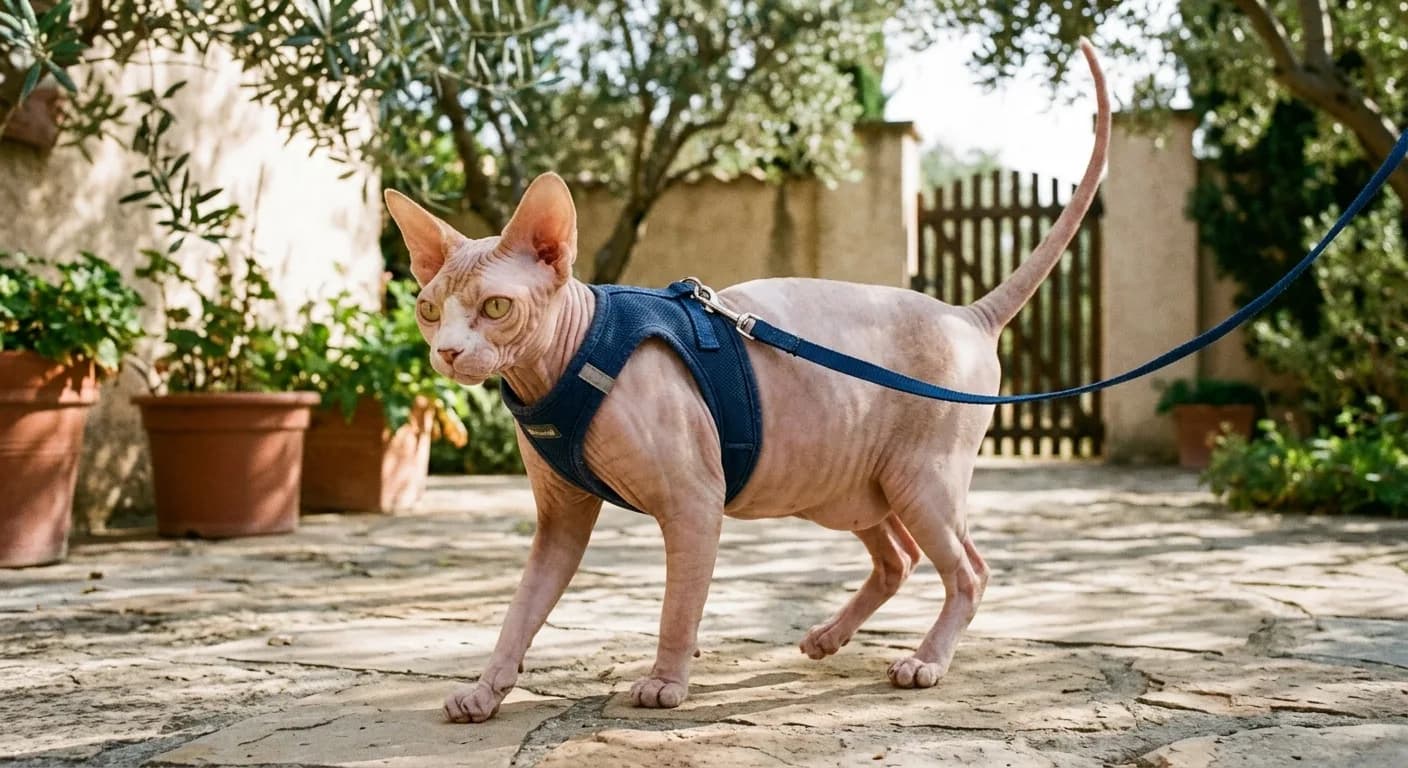
Ask any sphynx owner what their cat reminds them of and most will say a dog. The comparison is not just about the door greetings. Sphynx cats form an intense, focused bond with their people, follow a favorite human from room to room, and want to be part of the pack rather than a solo operator. They are loyal in the way dogs are loyal: they orient their day around you.
That dog-like wiring also makes them genuinely trainable, which is rare in cats. Sphynx cats respond well to positive-reinforcement training, and owners routinely teach them to play fetch, come when called, sit, high-five, and walk on a harness and leash. The combination of high intelligence and high food motivation (more on that below) means a clicker and a bag of treats go a long way. If you have ever wanted a cat you can actually train, this is one of the few breeds that delivers. Our Sphynx cat breed profile covers the full picture of living with one beyond temperament alone.
High energy and acrobatics
The sphynx is not a lap potato that only cuddles. Between affection sessions, it is one of the most physically active cat breeds you can own. Hill's describes the sphynx as "an energetic, acrobatic performer who loves to show off for attention," and that captures it: these cats climb to the highest shelf in the room, leap impressive distances, sprint in zoomies, and balance in poses that look impossible. They are natural clowns and seem to enjoy an audience.

Compare coverage choices for your pet, then request a quote directly on Lemonade.
- Check a price for your pet
- Review available coverage choices
- See the terms before you decide
Eligibility, waiting periods, limits and exclusions apply.
Petful may earn a commission when you click through to Lemonade, at no extra cost to you.
Part of this is metabolic. With no coat to hold body heat, a sphynx burns calories fast just staying warm, which fuels a higher-octane engine and a bigger appetite. The practical takeaway is that a sphynx needs serious outlets: tall cat trees, wand toys, puzzle feeders, and daily interactive play. A bored sphynx does not nap the boredom away; it invents its own entertainment, usually involving something you did not want rearranged.
- Because they are smart and athletic, under-stimulated sphynx cats get into cabinets, knock items off shelves, and shred what they can reach. Most "behavior problems" in the breed trace back to too little physical and mental exercise, not a bad cat.
Intelligence and mischief
Sphynx cats are among the smartest cat breeds, and that intelligence cuts both ways. On the good side, they learn tricks quickly, solve food puzzles, and figure out routines (they will know when you usually feed them and remind you). On the challenging side, a clever, dexterous, curious cat with long toes is an escape artist and a cabinet burglar. Owners report sphynx cats that open doors, pull open drawers, fish toys out of containers, and learn to operate things they were never taught.
This is why mischief is baked into the breed rather than being a flaw in any one cat. The sphynx wants stimulation, has the brains to engineer it, and has the physical tools to pull it off. Channel that intelligence into training, foraging toys, and rotating enrichment and you get a delightful, interactive companion. Leave it idle and the same brain goes to work on your kitchen.
- Smart cats habituate fast, so a toy that is endlessly available becomes invisible. Keep most toys put away and rotate a few at a time, and feed at least one meal a day out of a puzzle feeder or snuffle mat to give that busy brain a job.
Vocalization: a cat that talks back
The sphynx is not a quiet, mysterious cat. It is a chatterbox. This is the trait most breed profiles gloss over, yet it shapes daily life as much as any other. Sphynx cats chirp, trill, meow, and outright complain, and they use their voice strategically: to demand food, to demand attention, to greet you, and to object when they are ignored or left out of a room. The CFA's note that a sphynx communicates its needs "very vocally" is putting it politely.
For many owners the running commentary is part of the charm, a cat that genuinely seems to be in conversation with you. But if you want a silent cat or you live somewhere with thin walls, factor the volume in. A sphynx that wants something and is being ignored will escalate, and they are persistent.
Warmth-seeking and cuddliness
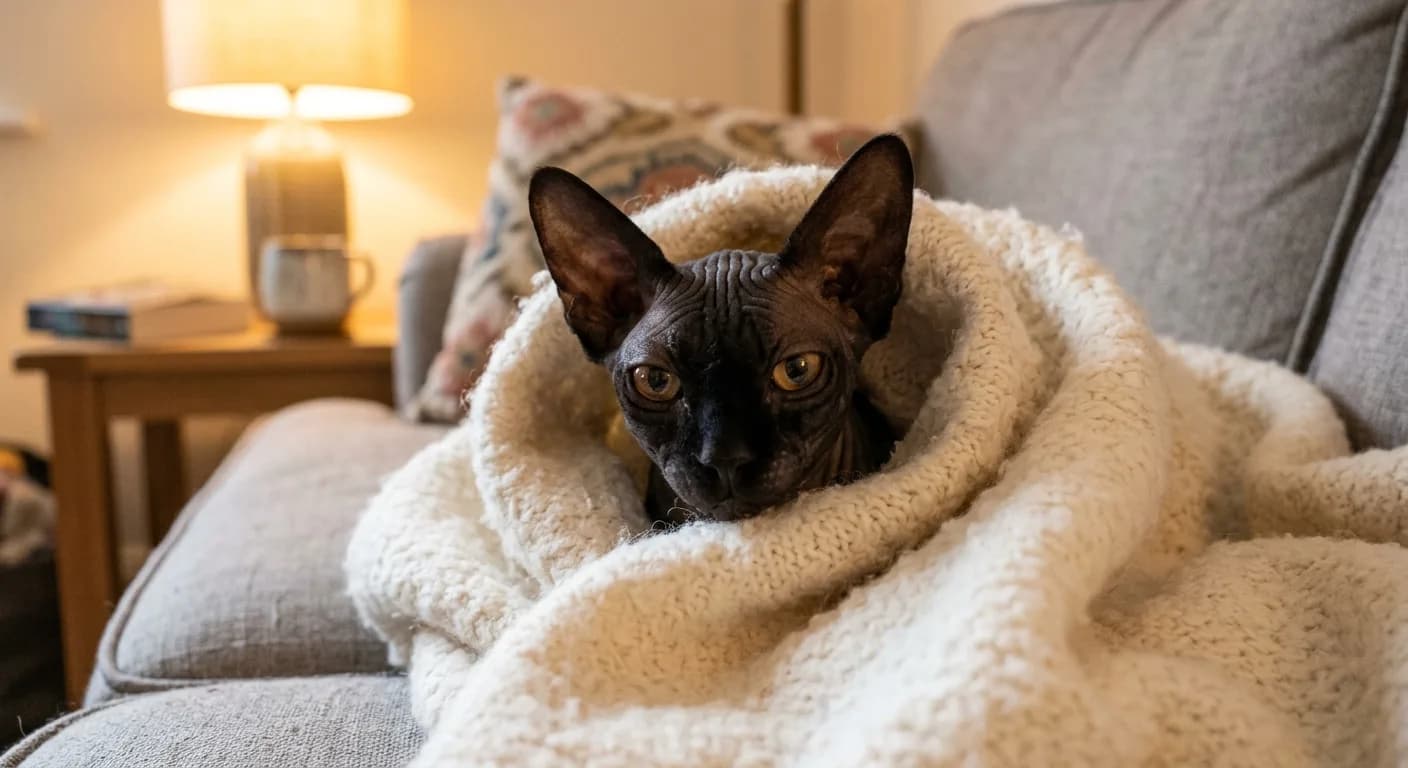
Here is where the lack of a coat directly drives behavior. A sphynx is always a little cold, so it is a relentless heat-seeker, and the warmest thing in the house is usually you. This is the engine behind the breed's legendary cuddliness: they burrow under blankets, wedge into your lap, drape across your neck at night, and pile in with other pets for shared body heat. They feel warm to the touch (often warmer than a furry cat) because nothing insulates that skin, and they radiate toward any heat source, from a sunny windowsill to a laptop to a heating vent.
The cuddliness is real affection, but it is amplified by simple thermodynamics. A sphynx cat that crawls under your duvet at 3 a.m. loves you and is also cold. Plan for it: provide heated cat beds, soft blankets in their favorite spots, and warm sweaters in winter, and accept that you will have a bedmate.
- Because a sphynx cannot retain its own body heat, seeking warmth is not just a preference, it is a need. Give your cat warm spots to retreat to and the cuddling becomes a choice rather than a desperate hunt, which makes for a more relaxed, less clingy cat.
Food motivation
Tied to that fast metabolism is one of the breed's most useful (and most demanding) traits: sphynx cats are seriously food-motivated. They burn calories keeping warm, so they tend to have hearty appetites and a strong interest in whatever you are eating. This is the secret weapon behind their trainability, since a highly food-driven cat is easy to teach with treats and clicker work. It also means counter-surfing and food theft are common, and they will lobby hard at mealtimes (vocally, of course).
Lean into the upside by using a portion of the daily ration for training and puzzle feeding, which works that brain and that appetite at once. Just keep an eye on the calorie math: a food-obsessed cat plus free-fed bowls is a recipe for weight gain, and the RVC found that a non-ideal body weight is linked to a shorter life in this breed.

63-inch multi-level cat tree with scratch posts, hammock, plush perches, and dangling toys. Vertical territory is non-negotiable for high-energy climbing breeds like the Bengal.
Petful may earn a commission when you click through to Chewy, at no extra cost to you.
Sociability: with children, dogs, and other cats
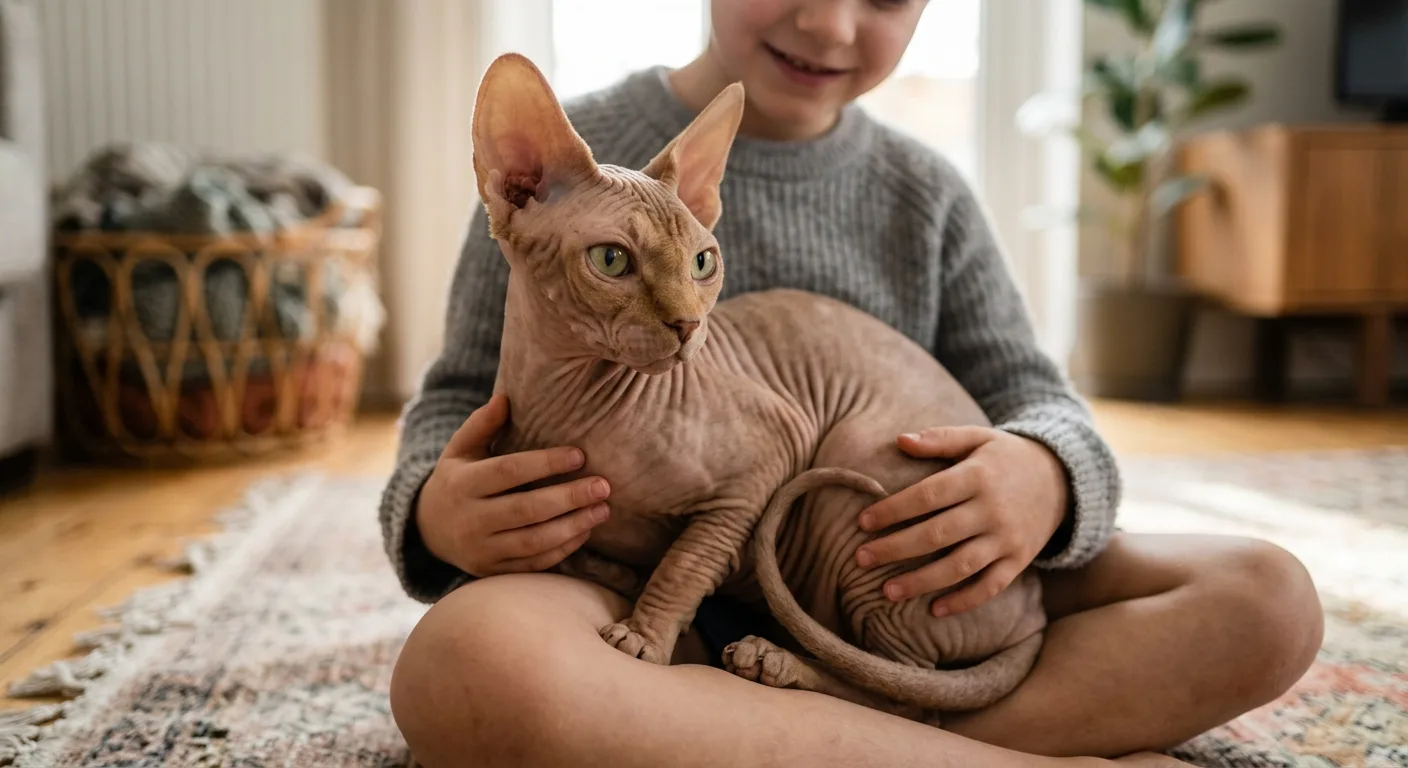
The sphynx is one of the most socially flexible cats there is, which is a direct result of how attention-hungry and people-oriented the breed is. A cat that loves everyone tends to do well with a full, busy household.
With children
Sphynx cats are generally excellent with respectful children. They are sturdy, playful, tolerant of handling, and they love the extra attention and play that kids provide. The usual rules apply: teach children to be gentle, supervise young kids, and give the cat an escape route. But as cat breeds go, the sphynx is one of the more kid-friendly choices.
With dogs and other cats
Because they crave company and dislike being alone, sphynx cats often do beautifully with other pets, including cat-friendly dogs and other cats, and many owners specifically recommend a second pet so the sphynx is not left solo all day. They will happily share a heat pile with a dog or curl up with another cat. Proper introductions still matter, but the breed's social, non-territorial nature stacks the odds in your favor.
- Because sphynx cats struggle when left alone, a compatible second pet (another cat or a cat-friendly dog) can be one of the best things you do for one. They are social enough to genuinely enjoy the company, and it takes pressure off you to be the sole source of attention.
Why are sphynx cats like this? Breed history and selection
Personality this distinct is not an accident. The sphynx began in Toronto, Canada, in 1966, when a domestic cat gave birth to a hairless kitten (a natural genetic mutation), later named Prune, and the modern breed was built from that line plus additional hairless cats found in Canada and Europe through the 1970s and 1980s. The hairlessness itself comes from a recessive mutation in a gene called KRT71.
Two threads of that history explain the temperament. First, the gene pool was tiny, so breeders had to outcross to other cats to keep the line healthy, frequently to friendly, people-oriented breeds. Second, and more importantly, a hairless cat is utterly dependent on humans for warmth and care, so breeders consciously selected for sociability, tolerance, and a love of human contact from the very beginning. A standoffish hairless cat is a miserable hairless cat, so the cats that thrived (and got bred) were the ones that bonded hard with people. Generations of that selection pressure produced the extroverted, attention-craving, dog-like companion we have today. The personality is, in a real sense, the breed's adaptation to having no fur. If you are curious about other breeds shaped the same way, see our guide to hairless cat breeds.

108-oz stainless steel pet fountain with quiet pump and water-level window. Bengals are notoriously water-obsessed; a flowing fountain encourages hydration and pulls them away from sinks and toilets.
Petful may earn a commission when you click through to Chewy, at no extra cost to you.
- The same mutation that took away the coat is why these cats are so people-focused. Bred from the start to depend on and adore humans, the sphynx is affectionate by design, not by chance.
What living with a sphynx is really like
Reading a trait list is one thing. Living with the cumulative reality is another. A sphynx is a high-input, high-output companion: it gives enormous affection and entertainment, and it demands time, warmth, attention, and a fair amount of cleaning in return (no coat means oily skin that needs regular bathing, plus ear and nail-fold cleaning). They are not a cat you can adopt and largely ignore. That ongoing commitment of time and care is worth weighing alongside the upfront cost, which we break down in our Sphynx cat price guide.
The single most important thing to understand is that sphynx cats do badly left alone all day. They are companionship animals first. In a home where someone is around much of the time, or where a second pet keeps them company, they flourish. In a home where they are alone from 8 to 6 every weekday with no feline or canine company, they are prone to loneliness, stress, and the destructive boredom behaviors that follow.
- This is the breed's biggest mismatch. A sphynx left alone for long stretches every day, with no companion animal and no enrichment, is set up for separation stress and behavior problems. If your household is out all day and you cannot add a companion pet or a midday visit, a more independent breed is the kinder choice.
The ideal sphynx household
The sphynx thrives with people who are home often (remote workers, retirees, families), who want an interactive, almost dog-like cat, who are happy to provide warmth and daily play, and who do not mind a vocal, in-your-face companion and a regular bathing routine. A second compatible pet is a big plus.
A poor-fit household
The breed is a poor match for people who are out of the house all day with no companion animal, who want a quiet, independent, low-maintenance cat, who cannot keep the home warm or commit to grooming, or who are houseproud about counters and shelves. None of this makes the sphynx a bad cat; it makes it the wrong cat for that life.
Common behavior quirks and how to manage them
Most sphynx "problems" are simply breed traits without an outlet. Here is how the common quirks map to fixes.
| Quirk | Why It Happens | How to Manage It |
|---|---|---|
| Counter-surfing and food theft | High metabolism plus high food drive | Puzzle feeders, scheduled meals, secured food, redirect to a perch |
| Destructive boredom | High intelligence and energy with no outlet | Daily interactive play, rotating toys, cat trees, training sessions |
| Excessive vocalizing | Attention or food demands | Scheduled attention, ignore demand-meowing, reward quiet behavior |
| Clinginess and shadowing | Velcro-cat wiring and need for warmth | Heated beds, a companion pet, predictable cuddle times |
| Knocking things over | Curiosity and dexterity | Enrichment, secure fragile items, give legal climbing outlets |
| Separation stress when alone | Deep dependence on company | A companion animal, enrichment, avoid long daily absences |
- Punishing a sphynx for a trait-driven behavior does not work and damages the bond. Meet the underlying need (exercise, warmth, food enrichment, company) and the unwanted behavior usually fades on its own.
The downsides: demanding, dependent, and mischievous
In the interest of an honest picture, the sphynx personality has real downsides that deserve equal billing with the charm. They are demanding: the constant need for attention and the vocal lobbying can be a lot, especially for first-time cat owners. They are dependent: separation stress is a genuine risk, and this is not a "leave food out and travel for a long weekend" cat. They are mischievous and can be destructive when bored, thanks to the intelligence-plus-energy combination. And the personality comes attached to a high-maintenance body (weekly bathing, ear cleaning, sun and cold sensitivity) and to serious health considerations, including a notably short average lifespan in at least one large study.
- As of 1 January 2026, the Netherlands prohibits keeping, breeding, buying, and selling hairless cats (and folded-ear cats), citing welfare concerns such as poor body-temperature regulation, skin and ear problems, and the loss of whiskers. Cats born before that date and microchipped may live out their lives. It is a real, in-force law worth understanding before choosing the breed.
On health and longevity specifically, the picture is sobering and worth weighing alongside the wonderful temperament. A 2024 Royal Veterinary College VetCompass study of UK cats reported that the sphynx had the shortest life expectancy of the breeds analyzed, far below the average for cats overall, and the breed's leading medical concern is hypertrophic cardiomyopathy (HCM), a heart disease that responsible breeders screen for by echocardiogram. We cover the numbers and the drivers in detail in our Sphynx cat lifespan guide. Loving the personality means going in with eyes open about the body it comes in.
- 1The sphynx is affectionate, loyal, smart, athletic, vocal, and intensely people-focused, the most dog-like cat many owners will meet
- 2Those same traits become demanding, clingy, and destructive without enough attention, warmth, play, and ideally a companion pet
- 3It is the wrong cat for a home that is empty all day or an owner who wants quiet independence
- 4Beyond temperament, factor in heavy grooming, the Netherlands welfare ban, and a notably short average lifespan with HCM as the top concern
Frequently asked questions about sphynx cat personality
Yes, exceptionally so. Sphynx cats are among the most affectionate cat breeds, often called velcro cats because they attach to their favorite humans, follow them everywhere, ride on shoulders, and burrow into laps and beds for both love and warmth. Their lack of a coat makes them constant heat-seekers, which amplifies the cuddling.
For the right home, yes. They are loving, social, playful, trainable, and great with kids and other pets, which makes them wonderful companions for people who are home often and want an interactive, dog-like cat. They are a poor fit for owners who want a quiet, independent, low-maintenance cat or who are away all day, and they require regular bathing plus serious attention to warmth and health.
Very. Cuddliness is one of the breed's defining traits, driven by both genuine affection and the fact that, with no fur to retain body heat, they constantly seek warmth. Expect a sphynx to sleep under your covers, drape over your neck, and pile in with other pets. They feel warm to the touch because nothing insulates their skin.
Yes, clinginess is typical and is the flip side of their affection. Sphynx cats crave near-constant attention and company, do not like being left alone, and can develop separation stress. The clinginess is manageable with predictable attention, enrichment, warm resting spots, and ideally a companion pet, but a person wanting an aloof, independent cat will likely find a sphynx too needy.
Generally yes. Sphynx cats are sturdy, playful, tolerant, and they love the attention and play that respectful children provide, making them one of the more kid-friendly breeds. As always, supervise young children, teach gentle handling, and give the cat a way to retreat when it wants a break.
Yes, sphynx cats are among the most intelligent cat breeds. They learn tricks like fetch and leash walking, solve puzzle feeders, open doors and drawers, and quickly master household routines. There is no real cat IQ score, but their problem-solving, trainability, and curiosity all rate high, which is exactly why they get into mischief when bored.
Most do, enthusiastically. Sphynx cats typically seek out being petted and many love being held, carried, and draped over a shoulder, partly for affection and partly for the warmth of contact. Individual preferences vary, so some prefer to sit pressed against you rather than be picked up, but as a breed they are far more contact-seeking than the average cat.
Pros: deeply affectionate, loyal, social, trainable, dog-like, great with families and other pets, and endlessly entertaining. Cons: demanding and attention-hungry, prone to separation stress when left alone, vocal, mischievous and potentially destructive if bored, high grooming needs (regular bathing, ear and skin care), sensitivity to heat and cold, and serious health considerations including HCM and a notably short average lifespan. They reward the right owner and frustrate the wrong one.
The main downsides are behavioral and practical: they are needy and do badly alone, they are vocal, and a bored sphynx can be destructive. Layered on top are heavy maintenance (weekly bathing, skin and ear cleaning, sun and cold protection), the breed's health risks led by hypertrophic cardiomyopathy, a short average lifespan in large studies, and a 2026 welfare ban on hairless cats in the Netherlands. The personality is a joy, but the overall commitment is high.

Coreen Saito is a pet writer and longtime shelter volunteer with more than a decade in animal rescue. She covers cat behavior, breed care, and the small, ordinary science of sharing a life with companion animals, with a particular focus on honest takes about the products and decisions that actually matter. At home in Arizona, she's outranked by Mac (a dog with the loudest opinion in the house), Rebel (a cat who governs by quiet authority), and Meri (an orange tabby who runs the late shift and the laundry basket). She writes about all three, plus the rescues that keep coming through her life, at LifeWithMinty.com.
Sign up for expert-backed reviews and safety alerts all in one place.