Sphynx Cat Price: The Real Cost of a Hairless Cat (2026 Guide)
A complete Sphynx cat price guide: the real breeder cost (1,500 to 6,000 dollars), the cheaper adoption route, what drives the price, your first-year budget, and the Sphynx-specific hidden costs most buyers miss.
Petful is reader supported. As an affiliate of platforms like Amazon and Chewy, we may earn a commission when you buy through links on this page. There is no extra cost to you.
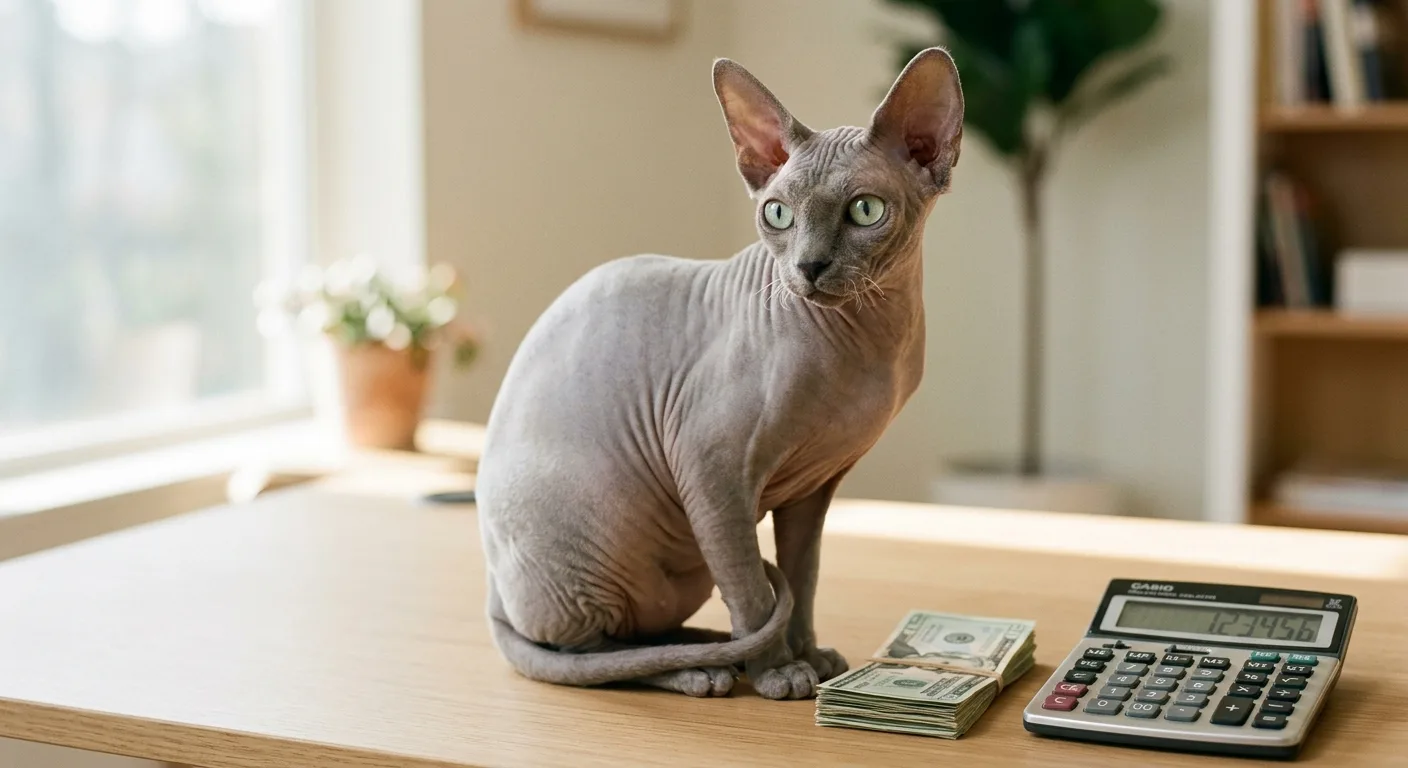
The honest sphynx cat price from a reputable breeder in 2026 runs roughly 1,500 to 6,000 US dollars for a pet-quality kitten, with most reputable catteries clustering around 2,000 to 5,000 dollars, and that purchase tag is only the down payment on a breed that costs more to own than almost any other cat. The sticker shock is real, but it is not arbitrary: a single HCM heart screening on a breeding cat costs a cattery several hundred dollars a year, kittens stay 12 weeks or more before they go home, and a hairless cat needs heating, frequent baths, and closer veterinary care for life. This guide breaks down the full sphynx cat cost picture, the purchase price range, the cheaper adoption route, what actually drives the number up or down, your real first-year budget, and the ongoing monthly costs most buyers underestimate, so you can decide with eyes open. There is more on this in Petful’s guide to Peterbald cat price.
- 1A pet-quality Sphynx kitten from a reputable breeder typically costs 1,500 to 6,000 dollars, most often 2,000 to 5,000 dollars
- 2Adoption or rescue is far cheaper, usually 75 to 500 dollars, but adult Sphynx are uncommon in shelters
- 3Bloodline, breeder reputation, color and pattern, show-versus-pet quality, and your location are the five biggest price drivers
- 4Expect a first-year cost of roughly 3,000 to 7,000 dollars all in, then 1,500 to 3,000 dollars per year ongoing
- 5Sphynx-specific hidden costs (HCM echocardiograms, dental cleanings, heating, frequent bathing) are what make this breed expensive to own, not just to buy

Sign up for expert-backed reviews and safety alerts all in one place.
How much is a Sphynx cat? The price range at a glance
Ask ten breeders and you will get ten numbers, because there is no single sphynx cat price. What you pay depends on where the kitten sits on a quality ladder that runs from a non-show pet companion at the bottom to a champion-line cat with breeding rights at the top. Here is the realistic 2026 landscape, drawn from reputable US catteries and breed-cost guides.

Compare coverage choices for your pet, then request a quote directly on Lemonade.
- Check a price for your pet
- Review available coverage choices
- See the terms before you decide
Eligibility, waiting periods, limits and exclusions apply.
Petful may earn a commission when you click through to Lemonade, at no extra cost to you.
| Source or Quality | Typical Price | What You Get |
|---|---|---|
| Shelter or breed rescue | 75 to 500 | An adult or older kitten, often already altered and vetted |
| Backyard or "bargain" listing | 500 to 1,500 | High risk: no health testing, possible scam, often an outcross with hair |
| Pet-quality from a reputable breeder | 1,500 to 3,500 | Healthy companion, spayed or neutered, no breeding rights |
| Top pet or rare color or pattern | 3,500 to 6,000 | Strong type, sought-after color, champion-line parents |
| Show or breeding rights | 4,000 to 10,000+ | Breeding rights, elite bloodline, proven HCM-clear lines |
Notice the gap between a "bargain" Sphynx and a reputable one. The Sphynx Facebook and Reddit communities are full of buyers who balked at a 1,600 to 2,000 dollar kitten, then learned the hard way that an 800 dollar hairless cat is almost always a red flag. As one well-known breeder puts it, you cannot even properly raise and feed a Sphynx litter for 12 weeks on 800 dollars, so that price usually signals a scam, a sick kitten, or an outcross (a Sphynx mix that still has fur).
- Legitimate breeders rarely price healthy, health-tested pet kittens under 1,500 dollars. A rock-bottom price almost always means no HCM testing, no genetic panel, a deposit scam, or a kitten sent home too young. If the price seems too good to be true, slow down and verify the cattery before sending any money.
For the full picture of what you are actually buying into (temperament, grooming load, and lifelong care), read our Sphynx cat breed profile alongside this cost guide.
Adoption and rescue: the cheaper route to a Sphynx
If the breeder sphynx cat cost makes you wince, adoption is the budget path, and it comes with a real ethical upside. Adopting a Sphynx through a shelter or a breed-specific rescue typically costs between 75 and 500 dollars, and that fee usually already covers spay or neuter surgery, a microchip, and a first round of vaccines, hundreds of dollars of value baked into a small fee.
Never Scoop Again® with the Whisker Litter-Robot, the smart self-cleaning automatic litter box. Monitor visits and track weights for better overall care in the Whisker® app. Multi-cat friendly.
Petful may earn a commission when you click through to Whisker, at no extra cost to you.
The catch is supply. Sphynx are an uncommon, in-demand breed, so they rarely sit in general shelters for long, and purebred kittens are rarer still. Most rescue Sphynx are adults or seniors surrendered by owners who underestimated the grooming and vet commitment, which is exactly the commitment this guide is about. If a hairless cat in general appeals more than this specific breed, our roundup of hairless cat breeds covers the Sphynx alongside the Donskoy, Peterbald, and other naked options, some of which turn up in rescue more often.
- Set alerts on Petfinder and Adopt-a-Pet for the Sphynx breed filter, and search for regional Sphynx and "hairless cat" rescue groups on social media. Be ready to travel and to pass a home check. Many rescue Sphynx come with a known health history, which is a genuine advantage over an unscreened bargain kitten.
Why are Sphynx cats so expensive? The 5 price drivers
"Why is a Sphynx cat so expensive?" is one of the most-searched questions about the breed, and the answer is a stack of legitimate breeder costs plus simple supply and demand. Five factors move the sphynx cat price up or down.
1. Bloodline and pedigree
A kitten from imported, award-winning champion lines costs far more than one from unregistered parents. Pedigree is the single biggest lever on price, because elite bloodlines carry documented type, temperament, and (critically) generations of heart-health screening.
2. Breeder reputation and health testing
This is where your money actually goes with an ethical cattery. Responsible Sphynx breeders screen breeding cats for hypertrophic cardiomyopathy (HCM) by echocardiogram every year, which can cost several hundred dollars per cat annually, and they run genetic and blood panels on top of that. Add premium nutrition, a climate-controlled cattery, and round-the-clock kitten care, and a breeder commonly spends on the order of a couple thousand dollars per cat in the first year before a single kitten is sold. A breeder who skips this testing can charge less, and that discount is the danger.
3. Color and pattern
Pigment in a Sphynx shows in the skin rather than a coat, and certain looks command a premium. Common solids sit at the low end, while in-demand colors and patterns, such as a striking black Sphynx, blue, or a bold bicolor, push the price up. "Black Sphynx cat price" is a popular search precisely because that dramatic look carries a premium over a plain pink-skinned kitten.
4. Show quality versus pet quality
The same litter can contain both. A "pet-quality" kitten (a perfectly healthy companion with a minor cosmetic deviation from the breed standard) costs much less than a "show-quality" sibling with ideal type, and a kitten sold with breeding rights costs the most of all. Most buyers want a pet, and pet pricing is where the 1,500 to 3,500 dollar band lives.
5. Location and demand
Where you live matters. In high-cost metros and states with few catteries (searches like "Sphynx cat price near California" and "near Texas" are common), limited local supply and higher vet and living costs push prices up, and you may pay 400 to 700 dollars more for hand-delivery from an out-of-state breeder.
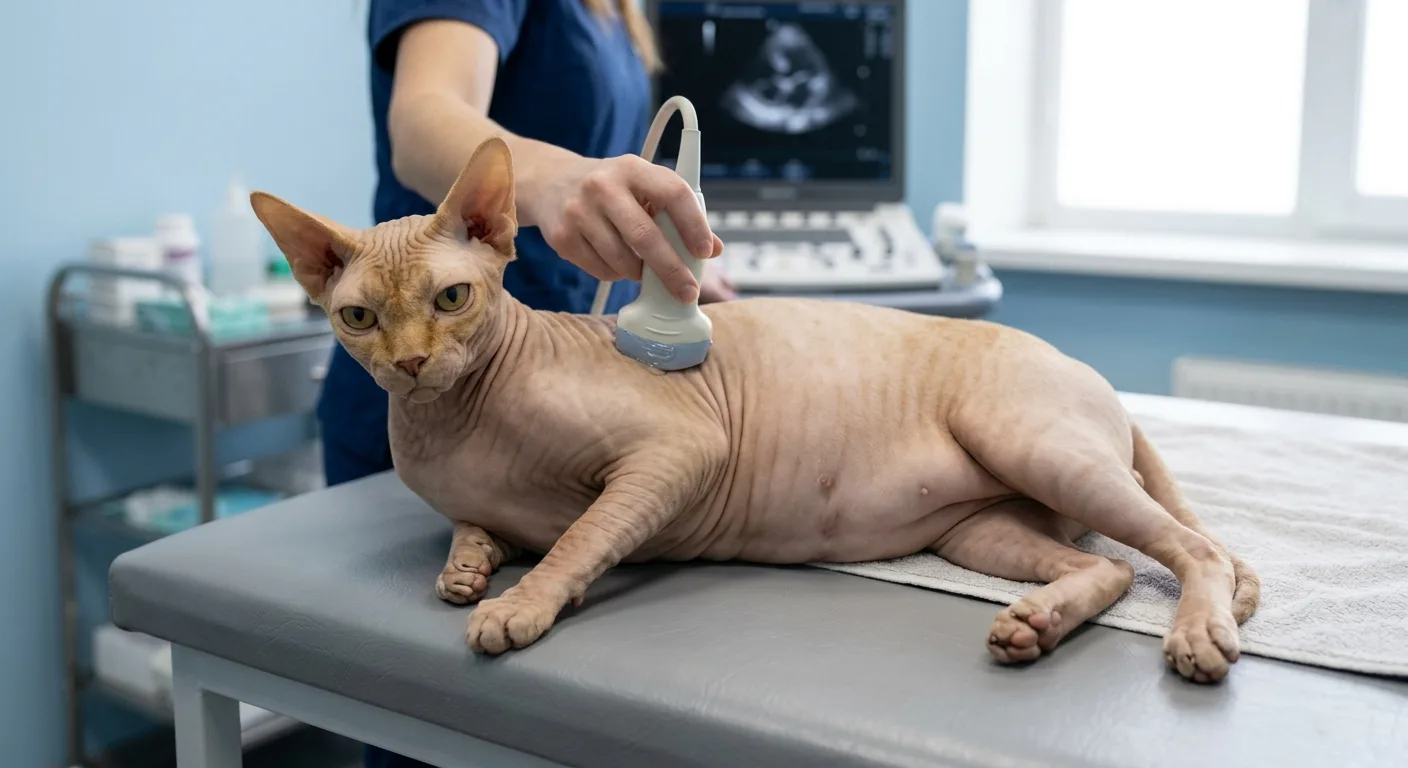
- Hypertrophic cardiomyopathy is the leading health concern in the Sphynx breed, and it can be silent until it is serious. Reputable breeders screen breeding cats by echocardiogram (an ultrasound of the heart read by a veterinary cardiologist) so they can keep affected cats out of their program. That recurring cost is a big reason a well-bred Sphynx is not cheap, and it is exactly the cost a "bargain" breeder skips.
First-year cost of owning a Sphynx
The purchase price is the beginning, not the budget. Your first 12 months with a Sphynx carry one-time setup costs plus the initial vet work, and for this breed that adds up faster than for a typical shorthair. Across reputable cost guides, most US owners spend roughly 3,000 to 7,000 dollars in year one, purchase price included, because of specialized setup, vaccinations, HCM-aware vetting, skin-care products, and heating gear.
Here is the realistic one-time setup, separate from the kitten itself.

63-inch multi-level cat tree with scratch posts, hammock, plush perches, and dangling toys. Vertical territory is non-negotiable for high-energy climbing breeds like the Bengal.
Petful may earn a commission when you click through to Chewy, at no extra cost to you.
| Item | Typical Cost | Notes |
|---|---|---|
| Spay or neuter | 100 to 300 | Often already done by the breeder or rescue |
| Microchip | 40 to 60 | Frequently included in the adoption fee |
| Initial vet exam and vaccines | 125 to 350 | First wellness visit plus core vaccine series |
| Litter box and scoop | 30 to 200 | A covered box helps contain litter and odor |
| Carrier | 30 to 75 | Hard-sided for vet and travel safety |
| Bed and heated pad | 30 to 100 | A heated bed is close to essential for a hairless cat |
| Food and water bowls | 10 to 30 | Stainless or ceramic, easy to keep clean |
| Scratching post and toys | 40 to 100 | Sphynx are high-energy and need enrichment |
| Starter skin-care and bath kit | 25 to 60 | Gentle cat shampoo, wipes, ear cleaner, nail clippers |
| Sweaters | 15 to 50 | Several lightweight sweaters for warmth |
Add those one-time items (roughly 450 to 1,300 dollars) to your kitten price, then layer in the first year of ongoing costs below, and the 3,000 to 7,000 dollar first-year range makes sense. The big swing factor is whether you hit any unexpected vet visits, which this breed is more prone to than most.
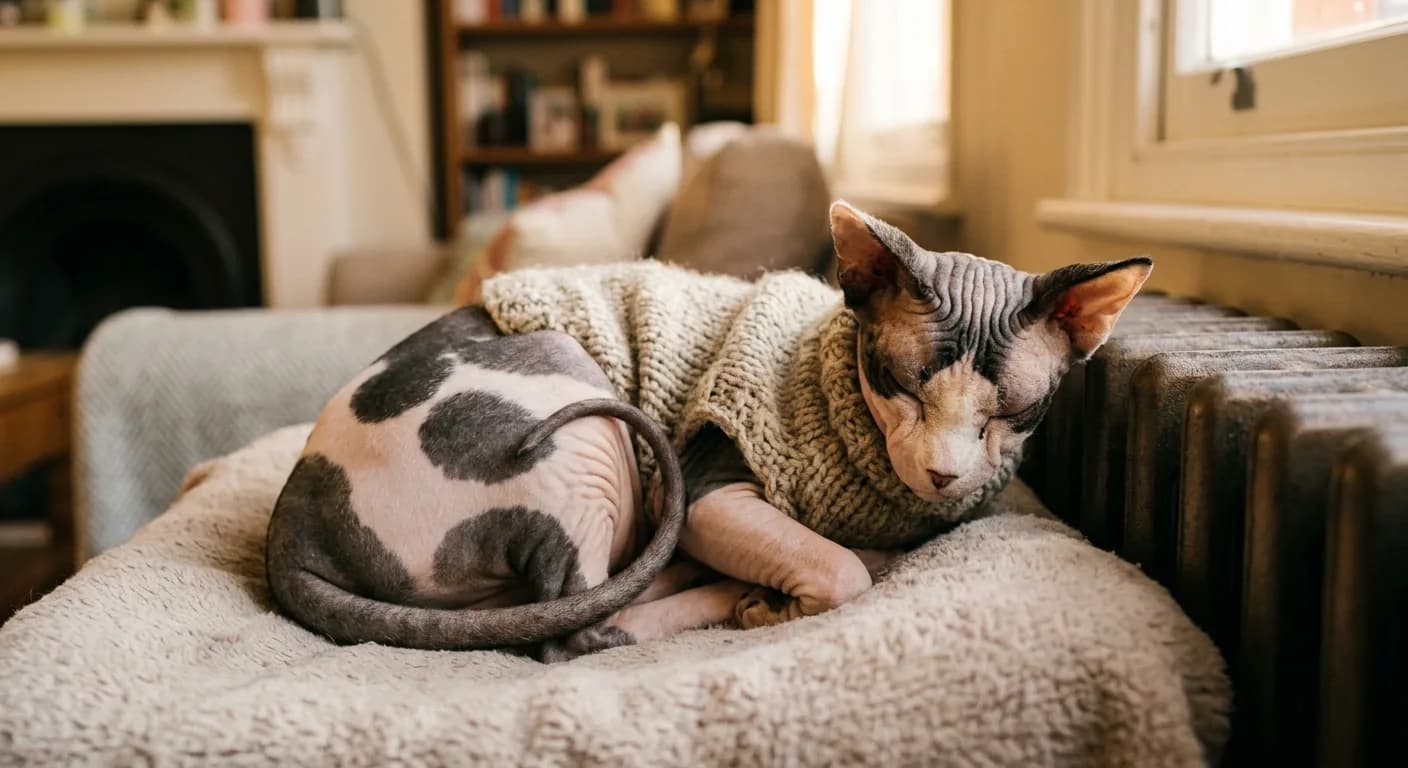
- With no coat to trap body heat, a Sphynx genuinely gets cold and will burrow under blankets or seek out warm laps and radiators. A heated pad or self-warming bed and a few soft sweaters are not cute extras for this breed, they are comfort basics. Buy them before the kitten comes home so it has a warm spot waiting.
Recurring monthly and annual costs
This is the part buyers underestimate most. A Sphynx is more expensive to keep month to month than a typical cat, mainly because it eats more (burning calories to stay warm), needs more frequent bathing and skin care, and benefits from closer veterinary monitoring. Plan on roughly 130 to 320 dollars a month once you include pet insurance, which works out to a meaningful annual figure.
| Category | Per Month | Per Year |
|---|---|---|
| Premium food | 20 to 60 | 240 to 720 |
| Cat litter | 20 to 45 | 240 to 540 |
| Skin, bath, and ear-care supplies | 10 to 25 | 120 to 300 |
| Routine and preventive vet care | 35 to 70 | 400 to 800 |
| Pet insurance | 25 to 70 | 300 to 840 |
| Heating, sweaters, and heated-bed power | 10 to 30 | 120 to 360 |
| Toys and enrichment | 10 to 30 | 120 to 360 |
| Ongoing total (typical) | 130 to 330 | 1,540 to 3,920 |
A reasonable rule of thumb: budget around 1,500 to 3,000 dollars per year to own a Sphynx in good health, more in a high-cost area or if you carry comprehensive insurance. Insurance is worth a hard look for this breed specifically, because the conditions Sphynx are prone to (heart disease, skin issues, dental disease) are exactly the expensive, recurring kind.
- A hairless cat has no insulating coat, so its body burns extra energy keeping warm. That raises its calorie needs and your food bill, and it is one reason a high-quality, calorie-dense diet matters more for this breed. Pair the higher food cost with a warm home and heated beds and your cat spends less energy shivering and more staying healthy.
The Sphynx-specific hidden costs most guides skip
Beyond the everyday line items, a Sphynx carries breed-specific costs that a domestic shorthair simply does not. These are the expenses that catch new owners off guard, and they are the real reason "how much does a Sphynx cat cost" has a bigger answer than the kitten price.

108-oz stainless steel pet fountain with quiet pump and water-level window. Bengals are notoriously water-obsessed; a flowing fountain encourages hydration and pulls them away from sinks and toilets.
Petful may earn a commission when you click through to Chewy, at no extra cost to you.
- HCM echocardiogram monitoring. Because hypertrophic cardiomyopathy runs in the breed, many vets recommend periodic heart screening for your pet, not just for breeders. An echocardiogram with a cardiologist commonly runs a few hundred dollars per visit, and your vet may suggest repeating it every year or two.
- Dental care. Sphynx are prone to periodontal disease, and a professional dental cleaning under anesthesia (with pre-op bloodwork) is one of the larger predictable bills, often several hundred to well over a thousand dollars when extractions are involved.
- More frequent baths and skin care. With no fur to wick away oil, a Sphynx accumulates sebum on its skin and needs regular bathing plus ear and nail-fold cleaning. That means a steady spend on gentle shampoo, wipes, and ear cleaner, and time you would not spend on a self-grooming cat.
- Sun and temperature protection. Sphynx skin can sunburn and the cat chills easily, so pet-safe sun protection for sunny windows, plus heating and sweaters, are ongoing comfort costs unique to hairless breeds.
- More vet visits overall. As a breed with above-average health risks, Sphynx simply tend to see the vet more often, and each unplanned visit is a cost a healthier breed might avoid.
These hidden costs are also why lifespan matters to the math. A landmark 2024 Royal Veterinary College VetCompass study of UK cats found the Sphynx had the shortest life expectancy of the breeds analyzed (a notably low median, far below the breed's commonly cited 8 to 15 year range), driven by exactly these heart, skin, and respiratory issues. We cover that data in depth in our Sphynx cat lifespan guide, and it is essential reading before you commit, because the years you get may be fewer and more medically intensive than with a hardier breed.
- On welfare grounds (poor temperature regulation, skin and ear problems, and the loss of sensory whiskers), the Netherlands moved beyond its long-standing breeding ban: as of 1 January 2026 it is illegal to keep, buy, sell, or breed hairless cats there, with an exception for cats already microchipped before that date. This does not affect US buyers directly, but it reflects the serious, well-documented welfare concerns behind the breed's high care costs, and it is worth weighing before you buy.
Sphynx cat cost compared to other hairless and rex breeds
Is a Sphynx the most expensive naked cat? Not always. It sits in the mid-to-upper range for unusual breeds, similar to other rare-coat cats, while truly exotic hybrids run far higher. For context, a Bengal or a Savannah can cost many thousands more, and the cats that show up in "most expensive cat" lists (the Ashera and high-generation Savannah) reach into five figures, which is the kind of figure behind viral "100,000 dollar cat" headlines. Against its closest cousin, the curly-coated Cornish Rex, the Sphynx is usually comparable or a bit pricier; see our Cornish Rex price guide for that side-by-side.
- The smartest place to put your budget is a breeder who proves HCM-clear lines and gives a written health guarantee, not on the rarest color. A well-screened common-colored Sphynx is a far better buy than a flashy "rare" kitten from a cattery that cannot show heart-screening records. Health documentation, not pigment, is what protects you from the breed's biggest costs.
Is a Sphynx cat worth the price? Reading the value honestly
For the right owner, yes. Sphynx are famously affectionate, dog-like, and entertaining, and devotees say the personality is worth every dollar. But "worth it" assumes you can carry the ongoing cost, not just the purchase price, and that you are clear-eyed about the breed's health profile. A Sphynx is a poor fit for a tight or unpredictable budget, because its predictable extra costs (food, baths, dental, heart monitoring) and its higher risk of expensive illness do not pause when money is tight.
If the lifelong commitment fits your life and your wallet, buy from a breeder who tests, or adopt from a rescue with a known history, and budget for the full picture this guide lays out. If the numbers feel like a stretch, that is useful information too, and a hardier, lower-maintenance breed may be the kinder choice for both of you.
- 1Budget the whole picture, not just the kitten: purchase price plus year-one setup plus lifelong care
- 2A reputable pet-quality Sphynx is rarely under 1,500 dollars, and a sub-1,000 dollar kitten is usually a warning sign
- 3The biggest long-run costs are Sphynx-specific: HCM heart monitoring, dental cleanings, frequent skin care, and heating
- 4Insurance is worth strong consideration because the breed's common illnesses are the recurring, expensive kind
- 5"Worth it" depends on a stable budget and clear eyes about the breed's short, care-intensive lifespan
Frequently asked questions about Sphynx cat price
A pet-quality Sphynx kitten from a reputable breeder usually costs 1,500 to 6,000 US dollars, most commonly in the 2,000 to 5,000 dollar band, while show-quality cats or kittens sold with breeding rights run 4,000 to 10,000 dollars or more. Adoption is far cheaper at roughly 75 to 500 dollars. Beyond the purchase price, expect a first-year cost of about 3,000 to 7,000 dollars and ongoing costs of around 1,500 to 3,000 dollars per year.
The price reflects real breeder costs plus supply and demand. Responsible breeders screen breeding cats for hypertrophic cardiomyopathy (HCM) by echocardiogram every year (several hundred dollars per cat), run genetic and blood panels, provide premium nutrition and a heated cattery, and keep kittens 12 weeks or more before sale. Champion bloodlines, rare colors, and show quality push the price higher, and because Sphynx are an uncommon, in-demand breed, demand outpaces supply.
A Sphynx kitten typically costs 1,500 to 6,000 dollars from a reputable breeder, with most pet-quality kittens landing between 2,000 and 5,000 dollars. Price varies with bloodline, breeder reputation and health testing, color and pattern, whether the kitten is pet or show quality, and your location. A kitten priced under about 1,000 dollars is a red flag for missing health testing or a scam.
Yes, Sphynx are one of the higher-maintenance cat breeds. With no coat to absorb skin oils, they need regular bathing plus ear and nail-fold cleaning, they get cold easily and need heated beds and sweaters, they can sunburn, and they are prone to heart, dental, and skin issues that mean more frequent vet care. They are also very social and need attention and enrichment. The grooming and health commitment is a major part of the true cost of ownership.
After the first year, plan on roughly 1,500 to 3,000 dollars per year for a healthy Sphynx, covering premium food, litter, skin and bath supplies, routine vet care, pet insurance, heating, and enrichment. Costs run higher in expensive metros, with comprehensive insurance, or if your cat develops a chronic condition such as HCM or dental disease. The first year is higher, around 3,000 to 7,000 dollars, because it includes the purchase price and one-time setup.
A black Sphynx generally sits at the higher end of the pet-quality range, often 2,500 to 6,000 dollars, because the dramatic solid-black skin is a popular, in-demand look. Color in a Sphynx shows in the skin rather than a coat, and striking colors and patterns like black, blue, or bold bicolors typically command a premium over a plain pink-skinned kitten of the same quality.
Yes, though it takes patience. Adopting a Sphynx through a shelter or breed-specific rescue usually costs 75 to 500 dollars, and that fee often includes spay or neuter surgery, a microchip, and initial vaccines. Sphynx are uncommon in general shelters and kittens are rare, so most rescue Sphynx are adults or seniors. Set breed alerts on Petfinder and Adopt-a-Pet and look for regional hairless-cat rescues.
The cats that top "most expensive" lists are exotic hybrids, not Sphynx. The Ashera and high-generation Savannah cats have sold for tens of thousands of dollars, which is the basis for headlines about 100,000 dollar cats. A separate viral story involves Tommaso, an Italian cat who inherited a fortune valued around 13 million dollars, but that reflects an inheritance, not a purchase price. A Sphynx is far more attainable by comparison.
They can if they are not bathed regularly. Because a Sphynx has no fur to wick away skin oils, sebum builds up on the skin and inside the ears and nail folds, and that residue can take on an odor and even stain bedding. Regular bathing (many owners bathe weekly or every couple of weeks) plus routine ear and nail-fold cleaning keeps a healthy Sphynx from smelling. Persistent odor despite good grooming warrants a vet check for a skin or ear infection.
On animal-welfare grounds. Dutch authorities cite the breed's difficulty regulating body temperature, its tendency toward skin and ear problems, and the loss of functional whiskers. The Netherlands had banned breeding hairless cats since 2014 and, as of 1 January 2026, also made it illegal to keep, buy, or sell them, with an exception for cats microchipped before that date. The ban does not apply in the US, but it reflects the documented welfare concerns behind the breed's high care needs.

Coreen Saito is a pet writer and longtime shelter volunteer with more than a decade in animal rescue. She covers cat behavior, breed care, and the small, ordinary science of sharing a life with companion animals, with a particular focus on honest takes about the products and decisions that actually matter. At home in Arizona, she's outranked by Mac (a dog with the loudest opinion in the house), Rebel (a cat who governs by quiet authority), and Meri (an orange tabby who runs the late shift and the laundry basket). She writes about all three, plus the rescues that keep coming through her life, at LifeWithMinty.com.
Sign up for expert-backed reviews and safety alerts all in one place.