Sphynx Cat Lifespan: How Long Do Hairless Cats Really Live?
Sphynx cats are often quoted at 8 to 15 years, yet a 2024 Royal Veterinary College study found a median of just 6.68 years. A vet-reviewed look at what shortens a hairless cat's life and the proven steps that extend it.
Petful is reader supported. As an affiliate of platforms like Amazon and Chewy, we may earn a commission when you buy through links on this page. There is no extra cost to you.
The Sphynx cat lifespan is most often quoted as roughly 8 to 15 years, but a landmark 2024 Royal Veterinary College study of 7,936 UK cats put the breed's median life expectancy at just 6.68 years, the shortest of any cat breed it measured. That gap between the hopeful range on most breeder pages and the sobering number in the data is the single most important thing for a Sphynx owner to understand, because it is not a reason to panic, it is a reason to act. This guide, reviewed by veterinarian Dr. Pippa Elliott, BVMS MRCVS, lays out what the evidence actually says, what shortens a hairless cat's life, and the specific, proven steps that help your Sphynx beat the average and live a long, comfortable life.
- 1The commonly cited Sphynx cat lifespan is about 8 to 15 years, but the 2024 RVC VetCompass study found a median of only 6.68 years, the lowest of any breed studied
- 2The leading killer is hypertrophic cardiomyopathy (HCM), followed by skin and infection problems, dental disease, and other hereditary conditions
- 3Annual or twice-yearly vet checks plus periodic echocardiogram screening for HCM are the highest-impact things you can do
- 4Indoor living, a warm environment, dental care, a quality diet, and a breeder who screens parents all push lifespan upward
- 5The shortened average reflects population statistics, not your individual cat: well-cared-for Sphynx cats regularly reach their mid-teens

Sign up for expert-backed reviews and safety alerts all in one place.
How long do Sphynx cats live? The honest answer
Ask ten sources how long a Sphynx cat lives and you will get ten ranges. Breed profiles from Daily Paws and ASPCA Pet Insurance cite 8 to 15 years. Some retailer blogs stretch it to 20. The truth is more nuanced, and being honest about it is how you actually help the cat.
There are two numbers worth holding in your head at the same time. The first is the commonly cited range of about 8 to 15 years, which describes a Sphynx that avoids or survives its major health risks and receives good care. Plenty of Sphynx cats land in that range, and some go further. The second is the median from the best available data: 6.68 years, from a 2024 study published in the Journal of Feline Medicine and Surgery by researchers at the Royal Veterinary College using the VetCompass database. That study analyzed death records for 7,936 cats in the UK between 2019 and 2021, and the Sphynx came out as the shortest-lived breed in the dataset, against an overall cat median of 11.74 years.

360-degree Wi-Fi pet camera so you can watch your cat's resting breathing rate and behavior from your phone and catch worrying changes early.
Petful may earn a commission when you click through to Chewy, at no extra cost to you.
Both numbers are true. A median is the midpoint of a whole population, dragged down by cats lost early to heart disease or infection. It is not a prediction for your individual cat, especially one that gets screened, stays indoors, and sees a vet on schedule. Think of 6.68 years as the warning label and the mid-teens as the target you are working toward.
- The "8 to 15 years" range and the study's 6.68-year median are not contradictory. The range describes a well-cared-for individual; the median describes the whole breed including cats lost early to preventable or screenable disease. Your job is to move your cat toward the top of the range, and that is largely within your control.
For a complete picture of the breed beyond longevity, including temperament and grooming needs, see our full Sphynx cat breed profile.

 Sponsored
Have a health question about your cat?
Talk to a licensed vet at Dutch over video or message, including nights and weekends.
Use code Pets60
Plans start at $12/month · covers up to 5 pets
- Licensed vets in most states
- Rx for 150+ conditions
- 4.7 on Trustpilot
What the 2024 Royal Veterinary College study actually found
Because this study is now the headline number behind every "Sphynx has the shortest lifespan" article, it is worth understanding what it did and did not say.
Never Scoop Again® with the Whisker Litter-Robot, the smart self-cleaning automatic litter box. Monitor visits and track weights for better overall care in the Whisker® app. Multi-cat friendly.
Petful may earn a commission when you click through to Whisker, at no extra cost to you.
Researchers built life tables from 7,936 cat death records drawn from the VetCompass program, which collects anonymized clinical data from UK veterinary practices. They calculated life expectancy at birth for the overall cat population and for individual breeds. The findings most relevant to Sphynx owners:
- Overall UK cat life expectancy: 11.74 years from birth.
- Sphynx life expectancy: 6.68 years, the lowest of any breed measured.
- Burmese cats were the longest-lived in the study at 14.42 years, more than double the Sphynx figure.
- Male cats lived on average about 16 months less than females across the whole population.
- Purebred cats overall tended to live shorter lives than crossbred (mixed) cats.
- A 6.68-year median means half of Sphynx cats in the data lived longer than that, some well into their teens. It reflects population-level risk, heavily weighted by the breed's heart and infection problems, not a ceiling on any one cat. Use it as motivation to screen and prevent, not as a reason to despair.
The practical reading is straightforward. The Sphynx is a wonderful, affectionate companion with a real, measurable health burden. Knowing the burden lets you target it. The rest of this guide is about exactly that.
What shortens a Sphynx cat's lifespan
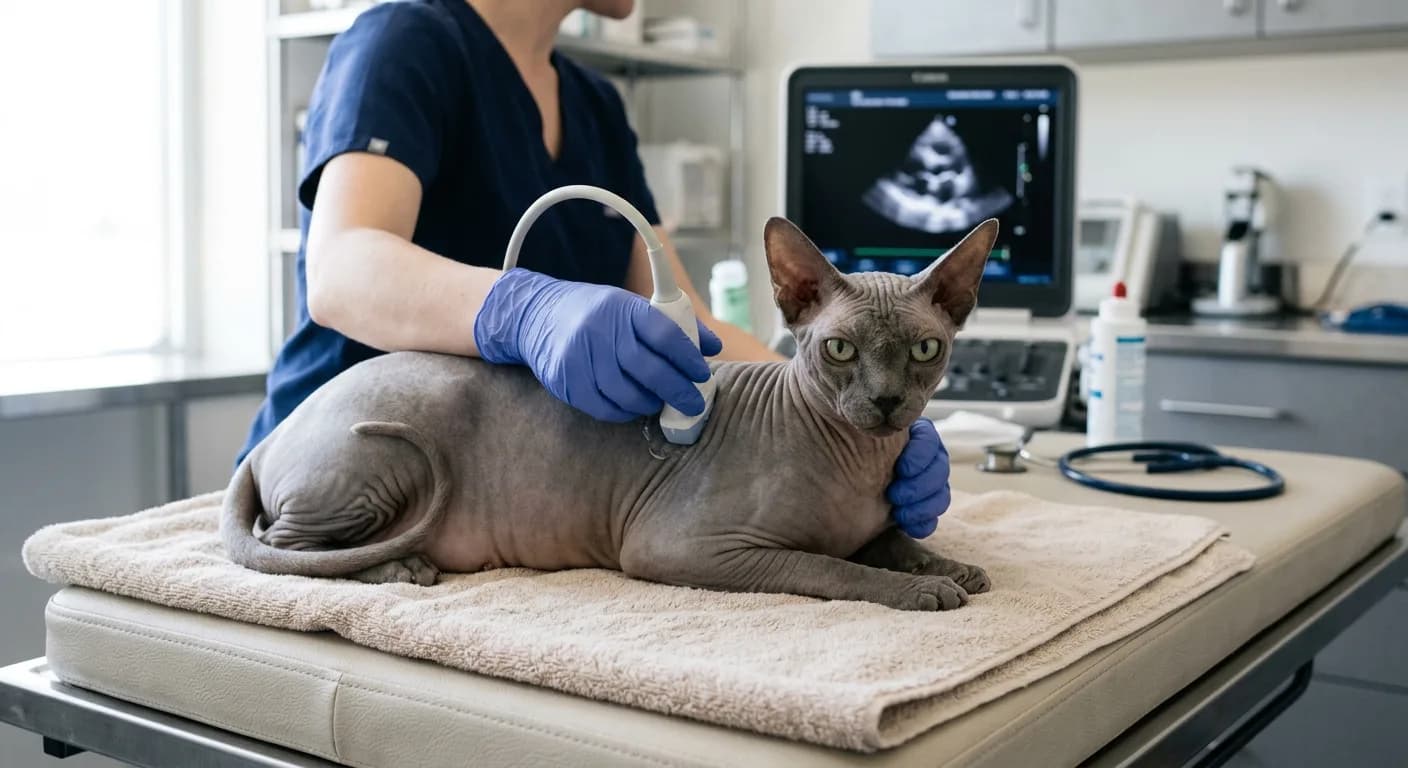
The breed's shortened average is not random. It traces to a cluster of specific, mostly identifiable conditions. Knowing them tells you where to point your attention and your vet budget.
Hypertrophic cardiomyopathy (HCM): the leading concern
Hypertrophic cardiomyopathy, a thickening of the heart muscle that impairs the heart's ability to pump, is the most significant threat to Sphynx longevity and the single biggest driver of the breed's reputation for early death. HCM is the most common heart disease in cats generally, but the Sphynx is recognized as a predisposed breed, and the disease can progress silently until it causes heart failure, blood clots, or sudden death.
The good news is that HCM is screenable. A veterinary cardiologist can detect muscle thickening on an echocardiogram (a heart ultrasound) often well before symptoms appear, which buys time for monitoring and medication. Responsible breeders echocardiogram-screen their breeding cats specifically to reduce HCM in their lines, and the American College of Veterinary Internal Medicine (ACVIM) cardiology specialty publishes consensus guidance on diagnosing and managing the disease.
- HCM frequently shows no outward signs until a crisis. Ask your vet about a baseline echocardiogram and a sensible re-screening schedule for your Sphynx. If you ever see open-mouthed breathing, sudden hind-leg weakness or pain, or collapse, treat it as an emergency and go to a vet immediately.
Skin, infection, and the no-coat problem
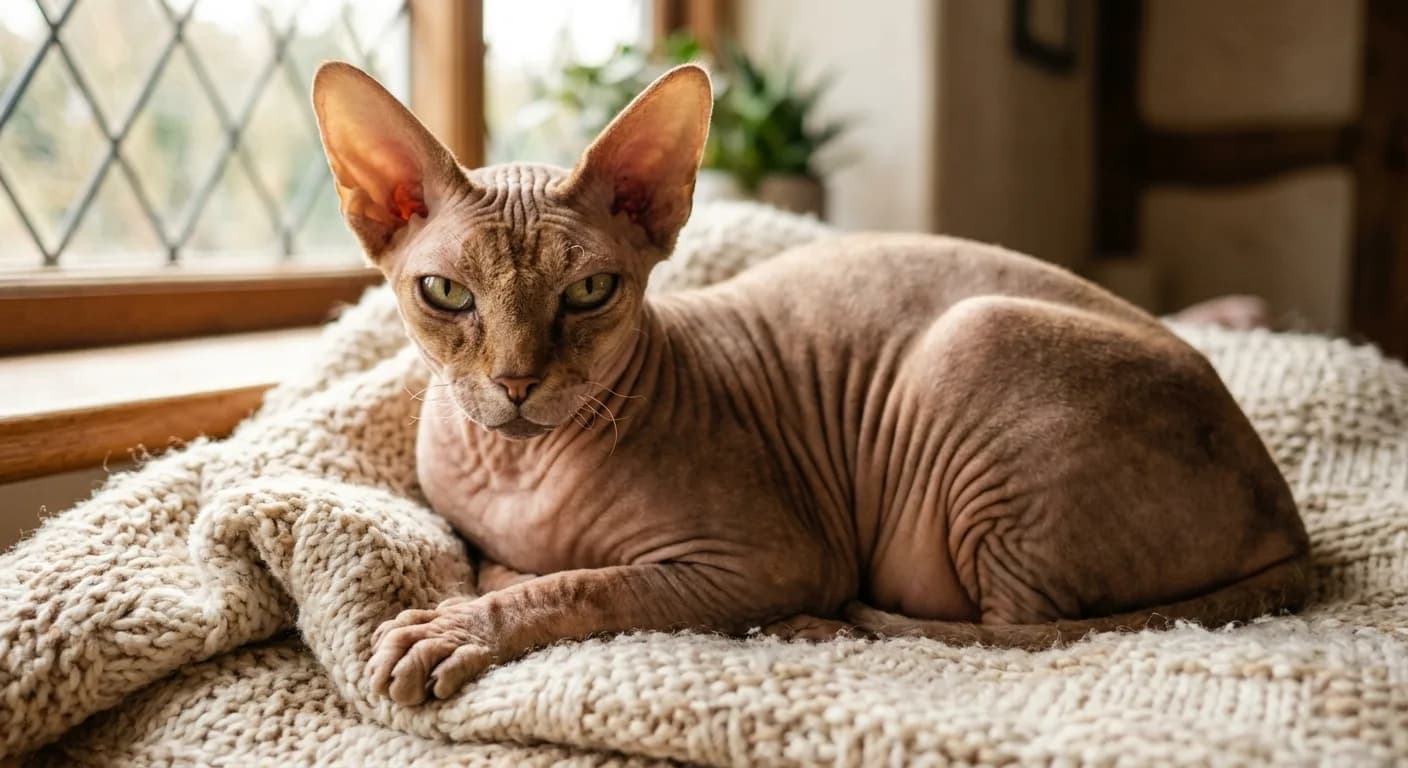
A Sphynx is not truly hairless; it has a fine peach-fuzz down, but it lacks the protective coat that normally wicks oil off the skin and shields against sun, cold, and abrasion. That creates a chain of lifespan-relevant issues. Body oils (sebum) build up and can lead to clogged pores, yeast and fungal infections, and skin irritation if the cat is not bathed regularly. The exposed skin can sunburn and is more vulnerable to injury. Some Sphynx cats also develop urticaria pigmentosa, a recurring crusty skin condition. None of these are usually fatal on their own, but chronic skin and ear infections add stress and veterinary problems over a lifetime.
Dental and periodontal disease
Sphynx cats are prone to periodontal (gum) disease, and dental disease is a quiet contributor to poor health and shortened life across all cats, not just hairless ones. Untreated infection in the mouth causes pain, tooth loss, and a bacterial burden that can affect the whole body. Regular dental care and professional cleanings under your vet's guidance matter more for this breed than many owners realize.

63-inch multi-level cat tree with scratch posts, hammock, plush perches, and dangling toys. Vertical territory is non-negotiable for high-energy climbing breeds like the Bengal.
Petful may earn a commission when you click through to Chewy, at no extra cost to you.
Other hereditary and breed-linked conditions
Beyond the heart, Sphynx lines can carry several inherited issues that affect quality and length of life: a hereditary muscle condition sometimes described as a congenital myopathy or myasthenic syndrome that causes muscle weakness, eye conditions, respiratory sensitivity, and digestive issues. These are part of why the study found purebred cats living shorter lives than mixed-breed cats on average, and part of why a screening, health-testing breeder is so important.
- With no insulating coat, a Sphynx loses body heat fast and seeks warmth constantly; chilling and the stress it causes are genuine welfare concerns. The same lack of coat means real sunburn risk near windows. Keep the home warm, provide heated beds, and limit direct, intense sun exposure.
SponsoredVet care that's always there
Unlimited video calls and messaging with licensed vets for less than a typical vet visit. One membership covers up to five pets.
Use code Pets60
Plans start at $12/month · covers up to 5 pets
- Licensed vets in most states
- Rx for 150+ conditions
- 4.7 on Trustpilot
What extends a Sphynx cat's lifespan
Here is the encouraging half. Most of what drags the breed's average down is either screenable, preventable, or manageable, which means the owner has real leverage. These are the highest-impact moves, roughly in order.
| Care Priority | What To Do | Primary Risk It Addresses |
|---|---|---|
| HCM heart screening | Baseline echocardiogram with a vet or cardiologist, then re-screen as advised | Hypertrophic cardiomyopathy, the leading cause of early death |
| Routine vet visits | Annual exams, twice-yearly for seniors, plus bloodwork | Early detection of heart, kidney, dental, and metabolic disease |
| Dental care | Home brushing plus professional cleanings as recommended | Periodontal disease, pain, systemic infection |
| Regular bathing | Gentle bath every 1 to 4 weeks, plus ear and nail-fold cleaning | Skin oil buildup, yeast and fungal infections |
| Warmth and sun safety | Heated beds, warm rooms, limited intense sun near windows | Chilling, stress, and sunburn |
| Quality nutrition | Complete, balanced diet; manage weight; vet-guided portions | Obesity, malnutrition, digestive trouble |
| Strictly indoor living | Keep the cat indoors at all times | Trauma, infectious disease, predation, theft |
| Responsible breeder | Choose lines that echocardiogram-screen and health-test parents | Inherited HCM and other hereditary conditions |
Make HCM screening non-negotiable
If you do one thing on this list, make it heart screening. Because HCM is both the breed's leading killer and detectable before symptoms, an echocardiogram is the highest-value preventive step you can take. Talk to your vet about a baseline scan and a re-check schedule. Early detection does not cure HCM, but it allows monitoring and medication that can meaningfully extend and improve life.
Keep up with veterinary care and dental health
Routine veterinary visits catch problems while they are still cheap and treatable: heart murmurs, early kidney changes, dental disease, weight creep. For senior Sphynx cats, twice-yearly exams with bloodwork are reasonable. Pair that with at-home dental care and professional cleanings to keep the mouth healthy, which protects the whole cat.

108-oz stainless steel pet fountain with quiet pump and water-level window. Bengals are notoriously water-obsessed; a flowing fountain encourages hydration and pulls them away from sinks and toilets.
Petful may earn a commission when you click through to Chewy, at no extra cost to you.
Bathe, warm, and feed them right
A gentle bath every one to four weeks (frequency depends on the individual cat's oil buildup), along with ear and nail-fold cleaning, prevents the skin infections that plague under-groomed Sphynx cats. Provide consistent warmth through heated beds and warm rooms, and limit intense direct sun. Feed a complete, balanced diet in vet-guided portions, because both obesity and undernourishment shorten feline lives. A Sphynx runs a fast metabolism to stay warm, so appetite is usually healthy, but weight still needs watching.
Keep them indoors and choose the breeder carefully
Sphynx cats should live strictly indoors. They have no coat to protect them from weather, they are highly trusting and easily stolen, and outdoor life exposes them to trauma and infectious disease. Finally, longevity starts before you bring the cat home: a breeder who echocardiogram-screens breeding cats and health-tests their lines stacks the genetic deck in your favor. If you are weighing what responsible sourcing costs, our Sphynx cat price guide breaks down why a health-tested kitten is worth the premium.
- Pick a bath-and-ear-cleaning rhythm and put it on the calendar. Book the annual (or twice-yearly) vet visit in advance. Ask about HCM screening at the next appointment. Keep a heated bed available year-round. Four small habits cover the bulk of what extends a Sphynx cat's life.
Sphynx lifespan by life stage: what to expect and watch for
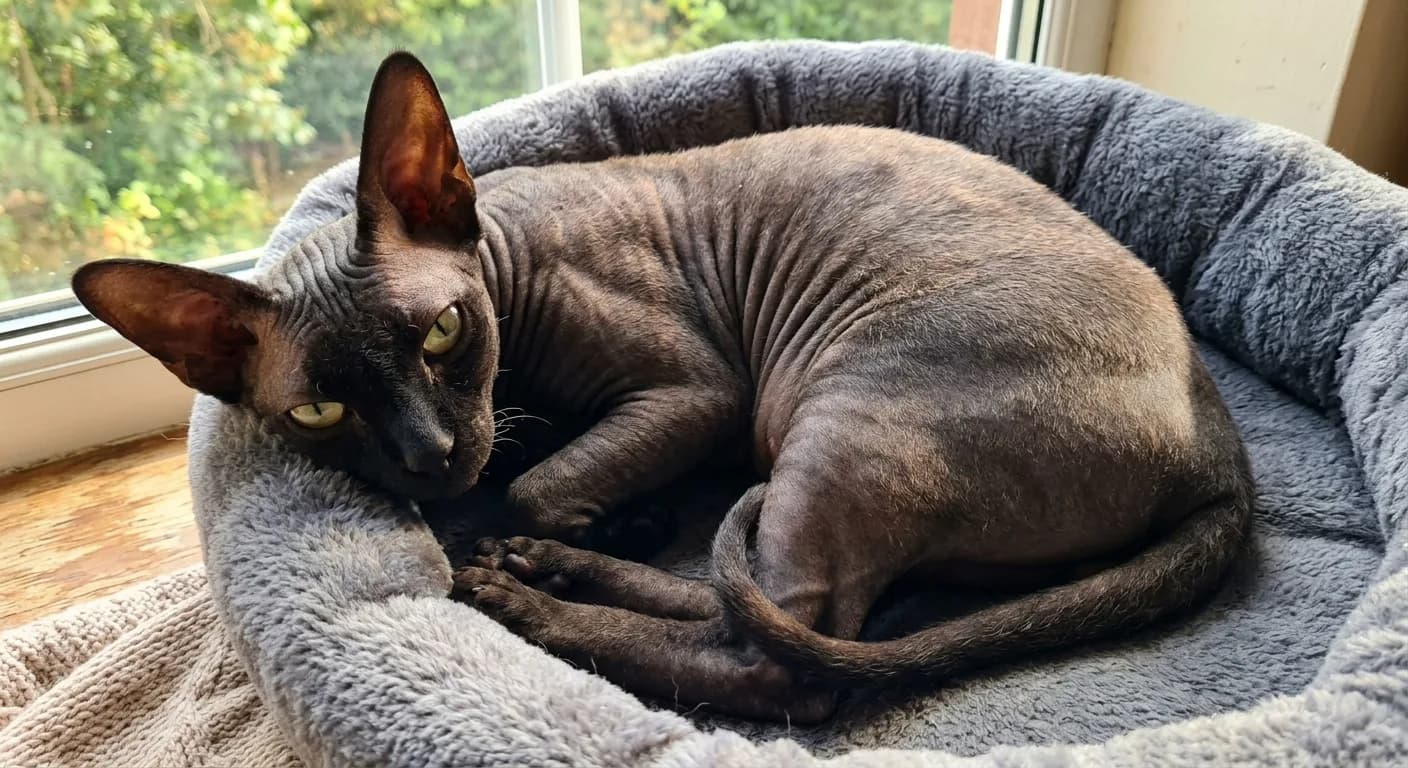
A Sphynx ages on roughly the same timeline as other cats, but its health risks make stage-appropriate care especially valuable. Use the stages below to know what to prioritize and which warning signs deserve a vet call.
| Life Stage | Approximate Age | Care Focus |
|---|---|---|
| Kitten | 0 to 1 year | Vaccinations, neutering, establishing bathing routine, first heart auscultation, breeder health records |
| Young adult | 1 to 6 years | Baseline HCM echocardiogram, dental care begins, weight and diet management, annual exams |
| Mature adult | 7 to 10 years | More frequent heart monitoring, bloodwork, dental cleanings, watch for early disease |
| Senior | 11+ years | Twice-yearly vet visits, kidney and heart monitoring, comfort, warmth, and mobility support |
Signs of aging in a Sphynx cat
As a Sphynx moves into its senior years, watch for the usual feline aging signs and act on them early: reduced activity or reluctance to jump, changes in appetite or thirst, weight loss, cloudier eyes, more sleeping, stiffness, dental odor or difficulty eating, and any change in litter box habits. Because the breed's heart risk runs high, pay particular attention to breathing changes, lethargy, and any episode of weakness or collapse. Aging is not a disease, but in a breed this predisposed, early veterinary attention to new changes is one of the simplest ways to add good years. For more on how the breed's temperament shifts with age and what daily life looks like, see our guide to Sphynx cat personality and behavior.
- On animal-welfare grounds, the Netherlands has moved against breeds with extreme features, and as of 1 January 2026 the keeping, breeding, and sale of hairless cats including the Sphynx is restricted there (an expansion of an earlier breeding prohibition). The reasoning, that a coatless cat is more vulnerable to cold, skin disease, and chronic illness, is the same health picture this guide describes, and it underscores why proactive care matters so much.
Do males, females, and indoor cats differ in lifespan?
A few patterns from the research are worth flagging. In the RVC study, male cats lived on average about 16 months less than females across the whole cat population, a sex difference that is consistent with broader feline data, though it is a population trend rather than a guarantee for any individual Sphynx. Indoor living is strongly associated with longer life in cats generally because it removes the biggest causes of early death (trauma, infectious disease, predation), and for a coatless, trusting breed like the Sphynx the indoor advantage is even more pronounced. Coat color, including black or blue Sphynx cats, has no established effect on lifespan; longevity is driven by heart health, infection control, dental care, and genetics, not skin pigment.
Because the Sphynx is sometimes chosen by allergy sufferers, it is worth correcting a common myth that bears on care: the breed is not truly hypoallergenic, since the major cat allergen lives in saliva and skin secretions rather than fur. Our explainer on whether the Sphynx cat is hypoallergenic covers why direct skin contact can actually increase allergen exposure.
Frequently asked questions about Sphynx cat lifespan
The Sphynx's short average life expectancy, measured at a median of 6.68 years in a 2024 Royal Veterinary College study, is driven mainly by hypertrophic cardiomyopathy (a heart-muscle disease the breed is predisposed to), plus skin and infection problems from having no protective coat, dental disease, and several inherited conditions. Much of this is screenable or preventable, which is why well-cared-for individuals often live far longer than the median.
Indoor living is associated with longer life in cats because it removes trauma, infectious disease, and predation as causes of early death, and the advantage is even greater for a coatless, trusting breed. An indoor Sphynx that is heart-screened, kept warm, groomed, and seen by a vet regularly can realistically reach the upper end of the commonly cited 8-to-15-year range, well beyond the breed's 6.68-year population median.
There is no formally verified record for the oldest Sphynx, but owners commonly report cats reaching their mid-to-late teens, and some claim cats approaching or passing 20 years. These are outliers rather than the norm; the documented median for the breed is about 6.68 years, so a Sphynx in its mid-teens is already living well above average.
The main downsides are health and maintenance related: a high risk of hypertrophic cardiomyopathy, a shorter average lifespan than most breeds, the need for regular bathing and ear cleaning because of oil buildup, sensitivity to cold and sun, a tendency toward dental and skin issues, and higher veterinary costs. They are also intensely social and dislike being left alone for long stretches.
Beyond the health risks already noted, practical disadvantages include the grooming workload (frequent baths, ear and nail-fold cleaning), the need to keep the home warm and provide heated beds, the requirement to keep them strictly indoors, and the cost of screening and treating breed-linked conditions like HCM. For the right, attentive owner these are manageable, but they are real commitments.
Cats are most commonly stressed by loud noises, sudden environmental changes, dirty litter boxes, lack of routine, being grabbed or over-handled, and territorial conflict with other pets. For a Sphynx specifically, being cold is a major stressor because the breed cannot regulate temperature well, so an under-heated home is both annoying and a genuine welfare issue for them.
The 3-3-3 rule is a guideline for helping a newly adopted cat settle in: roughly 3 days to decompress and feel safe, 3 weeks to start learning the household routine and showing personality, and 3 months to feel fully at home and bonded. It applies to Sphynx cats like any other and is a useful reminder to be patient with a new arrival.
The figure usually refers to the Ashera, a marketed designer hybrid cat that was advertised at around $100,000, and to high-end Savannah and Bengal hybrids that can command tens of thousands of dollars. The Sphynx is far more affordable than these by comparison, though a health-tested Sphynx kitten from a reputable breeder still represents a meaningful investment.
No. Skin color and pattern, including black and blue Sphynx cats, have no established link to lifespan. Longevity in the breed is determined by heart health, infection and dental control, genetics, and quality of care, not pigment, so a black Sphynx and a pink one have the same outlook given the same care.

Coreen Saito is a pet writer and longtime shelter volunteer with more than a decade in animal rescue. She covers cat behavior, breed care, and the small, ordinary science of sharing a life with companion animals, with a particular focus on honest takes about the products and decisions that actually matter. At home in Arizona, she's outranked by Mac (a dog with the loudest opinion in the house), Rebel (a cat who governs by quiet authority), and Meri (an orange tabby who runs the late shift and the laundry basket). She writes about all three, plus the rescues that keep coming through her life, at LifeWithMinty.com.
Sign up for expert-backed reviews and safety alerts all in one place.