Are Sphynx Cats Hypoallergenic? A Vet-Reviewed Answer
Are Sphynx cats hypoallergenic? No cat truly is. Here is the vet-reviewed science on the Fel d 1 protein, why hairless does not mean allergen-free, and the steps that actually reduce reactions for allergy sufferers.
Petful is reader supported. As an affiliate of platforms like Amazon and Chewy, we may earn a commission when you buy through links on this page. There is no extra cost to you.
Are Sphynx cats hypoallergenic? No, they are not, and the American College of Allergy, Asthma and Immunology is blunt about the bigger picture: no cat breed is truly hypoallergenic, because every cat (hairless ones included) makes the same allergy-triggering protein. The myth that a naked cat is a safe cat comes from a simple but wrong assumption, that cat allergies are caused by fur. They are not. The real culprit is a tiny protein called Fel d 1, made in a cat's saliva and skin oils, and a Sphynx produces it just like any other cat. In fact, because a Sphynx has no coat to soak up those oils, direct skin contact can leave you with more allergen on your hands, not less. This guide explains the science in plain terms, separates the rare grain of truth from the marketing, and lays out exactly what does and does not reduce reactions, with sources from allergy and veterinary authorities throughout.
- 1No, Sphynx cats are not hypoallergenic, and allergy and veterinary authorities agree no cat breed truly is
- 2Cat allergies are caused by the Fel d 1 protein in saliva and skin oils, not by fur, so a hairless cat still produces it
- 3With no coat to absorb skin oils, petting a Sphynx can transfer MORE oil-bound allergen to your skin, not less
- 4What actually helps: frequent bathing and wipe-downs, hand-washing, HEPA filtration, a bedroom off-limits to the cat, a Fel d 1-binding diet, and allergy immunotherapy through an allergist
- 5Always spend extended time with a Sphynx before committing, because reactions are individual and unpredictable

Sign up for expert-backed reviews and safety alerts all in one place.
The short answer: no, and here is why that surprises people
If you have read that the Sphynx is the most hypoallergenic cat, you are not imagining it. That claim is everywhere on breeder and product sites. It is also wrong, and it traces back to one understandable mistake: confusing fur with allergen. People who react to cats assume the fur is the problem, so a cat with no fur sounds like the obvious fix.
The allergy actually has very little to do with hair. The substance your immune system overreacts to is a protein, and it is produced whether or not a cat has a coat. A hairless Sphynx makes that protein in roughly the same way a fluffy Persian does. So while a Sphynx may shed less allergen-laden hair around your home (a real and meaningful difference we will get to), the cat itself is not low-allergen, and it is certainly not allergen-free. For the full picture of the breed beyond allergies, see our Sphynx cat breed profile.
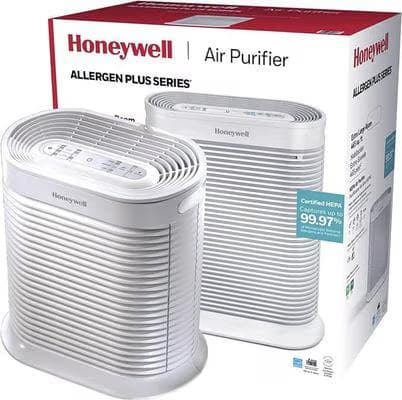
Certified True HEPA air purifier that captures 99.97% of airborne dust, dander, pollen, and smoke, reducing the airborne triggers behind feline asthma and respiratory irritation.
Petful may earn a commission when you click through to Chewy, at no extra cost to you.
- If you have asthma or a history of severe allergic reactions, talk to a board-certified allergist before bringing any cat into your home. Reactions to cats are highly individual, and no breed, product, or routine can promise you will not react. This article is educational and is not a substitute for personal medical advice.
What actually causes cat allergies: meet Fel d 1
The protein at the center of nearly every cat allergy is called Fel d 1 (short for Felis domesticus allergen 1). According to allergy researchers, Fel d 1 is responsible for the large majority of allergic reactions to cats in sensitized people. It is produced mainly in a cat's salivary glands and sebaceous (oil) glands in the skin, with smaller amounts in tear and anal glands and in urine.
Here is the mechanism that matters. A cat grooms constantly, coating its skin and (in furred cats) its coat with saliva. That saliva dries, and the Fel d 1 it carries flakes off as microscopic dander particles that drift through the air, settle on surfaces, and cling to clothing. Those particles are tiny and light, so they stay airborne for a long time and travel easily. When you inhale them or rub your eyes after contact, your immune system, if it is sensitized, treats Fel d 1 as a threat and launches the sneezing, itching, congestion, and wheezing you know as a cat allergy.
Notice what is missing from that explanation: the length of the cat's coat. Fur is a passenger, not the driver. It can carry and spread dried saliva and dander, but it does not create the allergen. That single fact is the key to the whole question.
Never Scoop Again® with the Whisker Litter-Robot, the smart self-cleaning automatic litter box. Monitor visits and track weights for better overall care in the Whisker® app. Multi-cat friendly.
Petful may earn a commission when you click through to Whisker, at no extra cost to you.
- A peer-reviewed study that measured Fel d 1 in so-called hypoallergenic and ordinary breeds found that coat type and length did not reliably predict how much allergen a cat produced. Individual cats varied widely regardless of breed. Allergen output is about the cat's biology, not its haircut.
Hairless does not mean allergen-less
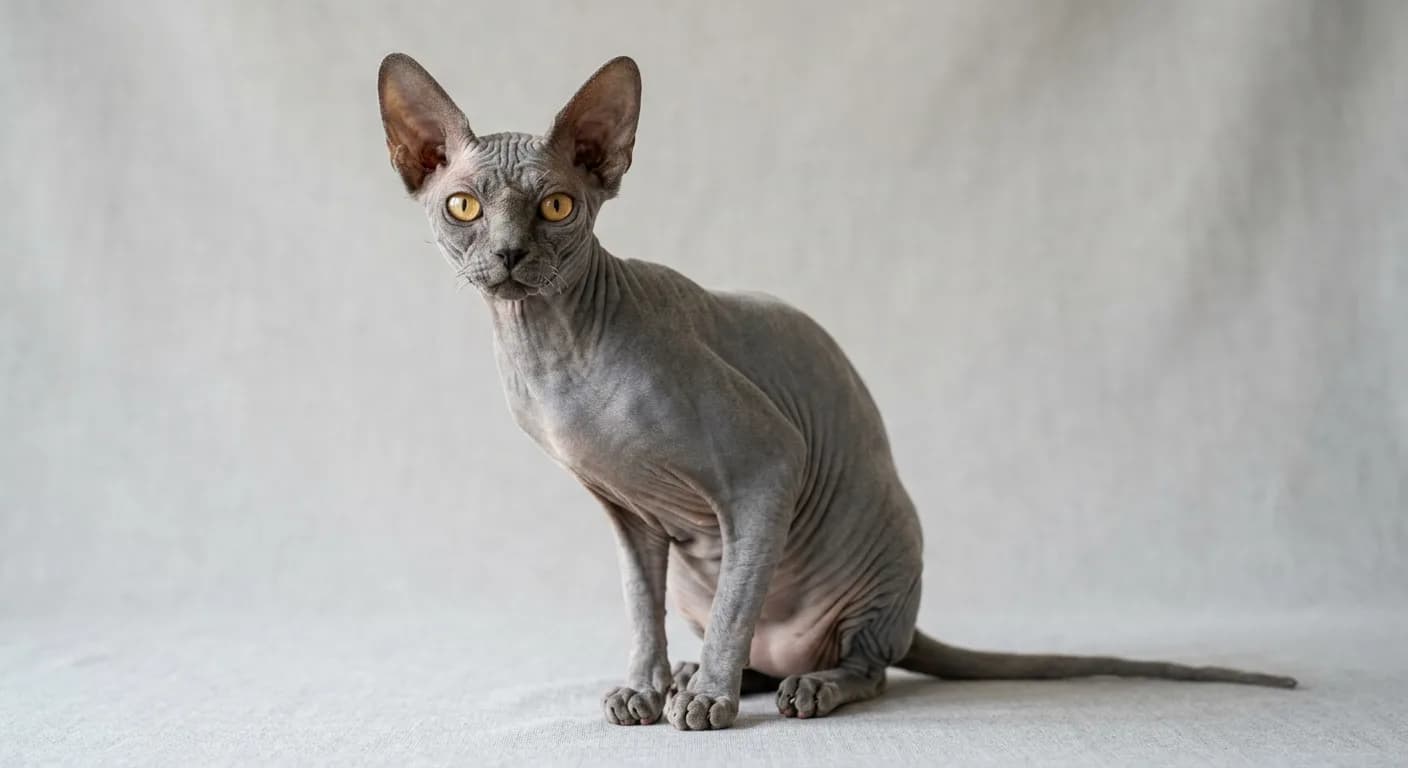
A Sphynx still has skin, still has sebaceous glands, still produces saliva, and still grooms itself. Every one of those is a Fel d 1 source, and none of them depends on having fur. So the Sphynx manufactures the major cat allergen at full strength. Stripping away the coat changes how the allergen is distributed around your home, but it does not switch off the factory. It is also worth noting that Sphynx cats are rarely truly bald: most carry a fine peach-fuzz down, and some are noticeably fuzzier than others, as we cover in our guide to the Sphynx cat with hair. That residual fuzz makes no difference to allergen output either, since the protein comes from skin and saliva regardless.
This is exactly why allergy and veterinary organizations refuse to call any cat hypoallergenic. The American Academy of Allergy, Asthma and Immunology notes that no cat breed has been proven to be free of allergens, and the same point is echoed by the American College of Allergy, Asthma and Immunology. The word hypoallergenic only ever means relatively lower in allergen, never zero, and for the Sphynx even the relatively lower part is debatable.
The counterintuitive part: a Sphynx can expose you to more allergen
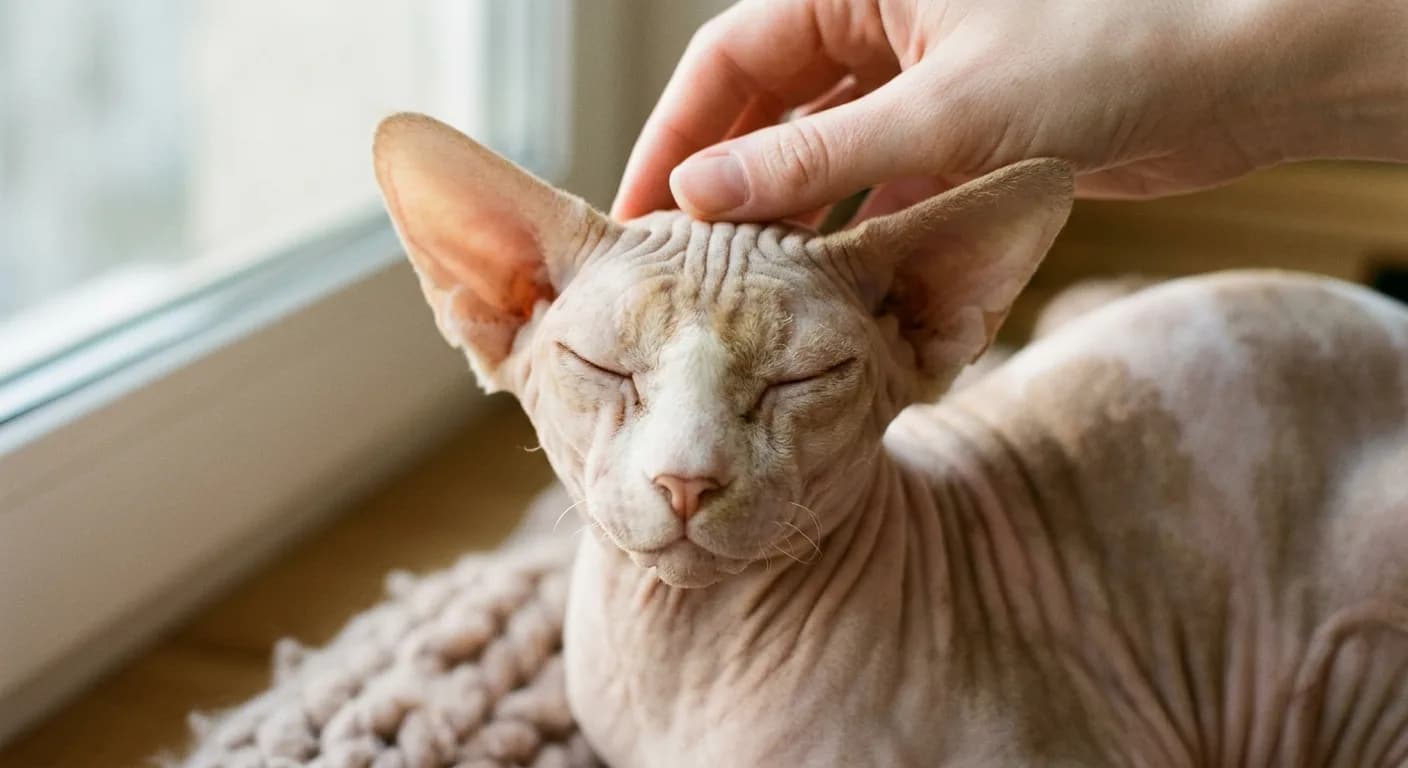
Here is the twist that the breeder marketing leaves out. On a furred cat, the coat acts a bit like a sponge, soaking up skin oils and the Fel d 1 they carry and holding much of it away from direct skin contact. A Sphynx has no such sponge. With no coat to wick it away, the oily, allergen-rich sebum sits right on the skin surface.
That means when you stroke a Sphynx, your bare hand presses directly into oil that is loaded with Fel d 1, and a good amount transfers straight onto your skin. People who are allergic frequently report that hands-on contact with a hairless cat triggers them faster than petting a furred cat does. Long-time Sphynx owners and even breeders concede the same thing: these cats are not a low-allergen shortcut, and the close cuddling a Sphynx craves is the very thing that can set off a reaction.
- Plenty of people purchase a Sphynx specifically because they were told it would not trigger their allergies, then have to rehome a cat they have bonded with when the reactions do not stop. A hairless coat is not an allergy treatment. If allergies are your reason for choosing this breed, that reasoning does not hold up, and the cat pays the price.
The small grain of truth: how hairlessness can change exposure
To be fair and accurate, the hairless-equals-better idea is not pure fiction. There are limited, indirect ways a Sphynx can mean less allergen floating around your home, and they are worth understanding honestly.
- Less shed hair carrying dander. Furred cats constantly drop allergen-coated hair onto floors, furniture, and clothing, seeding the whole house. A Sphynx sheds essentially no hair, so there is no fur acting as a delivery system spreading dried saliva into every room. The allergen is still produced, but one major distribution route is largely removed.
- The cat is bathed regularly anyway. Because a Sphynx must be bathed often to manage its oily skin (more on that below), the surface allergen gets physically washed off on a schedule that almost no one keeps up with on a furred cat. Frequent bathing is a genuine allergen-reduction tactic, and Sphynx ownership builds it in by necessity.
- Allergen stays more localized. With no airborne fur ferrying it around, more of the Fel d 1 on a Sphynx stays on the cat and on the surfaces it touches directly, rather than coating the entire home. That can make targeted cleaning more effective.
None of this makes the Sphynx hypoallergenic. It means that, with disciplined management, some people find a Sphynx more livable than a heavy-shedding cat, while others react just as badly or worse. Both outcomes are common, and you cannot know which one is yours without direct, extended exposure.
- A Sphynx may scatter less allergen across your home thanks to minimal shedding, but the cat itself produces a full load of Fel d 1 and concentrates it on its skin. Reduced spreading helps the room; it does not help the moment you pick the cat up.
What actually reduces cat-allergy reactions
If you already have a Sphynx, are committed to getting one with eyes open, or live with any cat and react to it, the good news is that exposure is manageable for many people. None of these steps cures the allergy, but stacking several together can meaningfully lower your symptom load. These are the measures allergists and veterinarians actually recommend.
Bathe and wipe the cat regularly
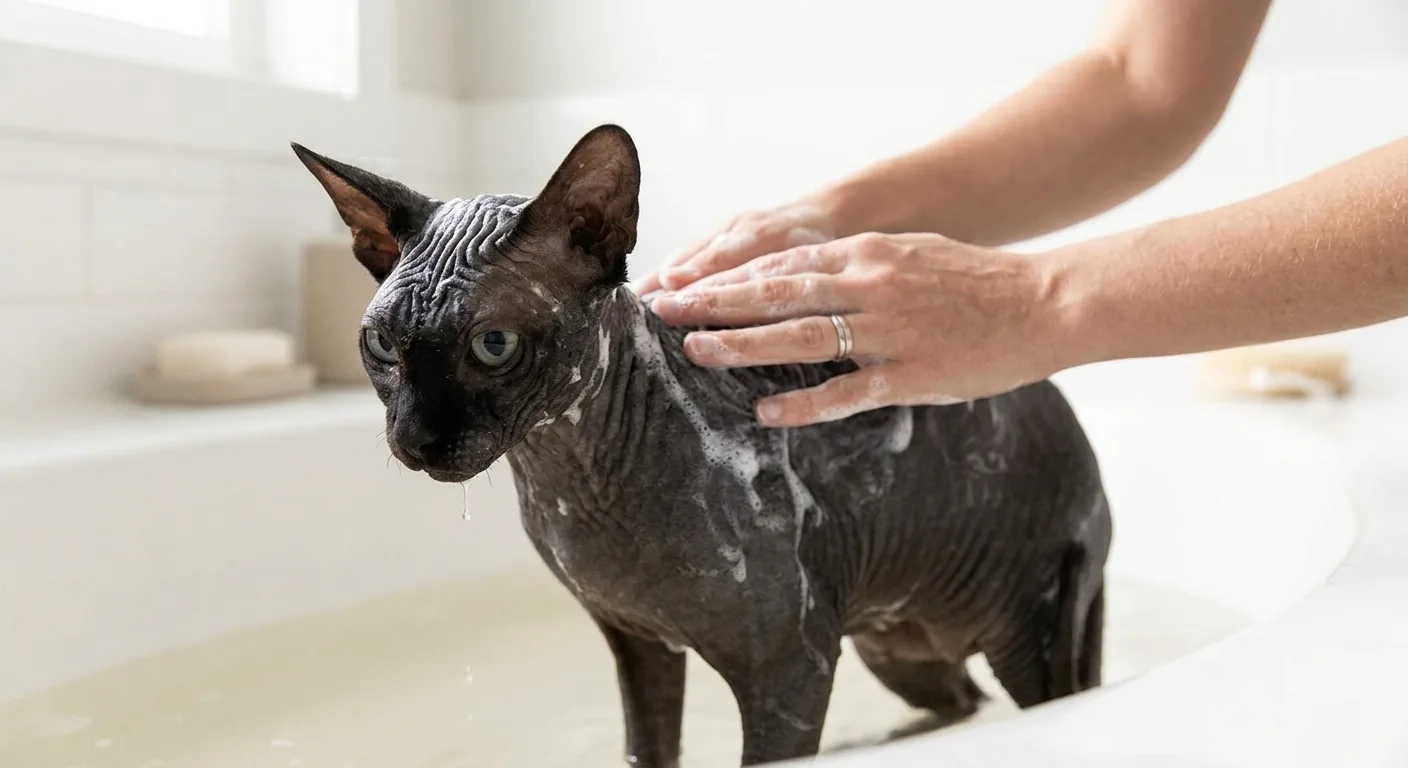
Frequent bathing physically removes Fel d 1 from the skin surface, and the Sphynx needs regular baths anyway to control oil buildup. Many owners bathe weekly or every other week using a gentle, cat-safe shampoo. Between baths, a quick wipe-down with a damp cloth or a fragrance-free pet wipe knocks down the surface oils (and the allergen riding on them) that rebuild within days. Wiping is fast enough to do daily and is one of the highest-value habits for an allergic household.
Wash your hands and change after contact
Because petting a Sphynx loads allergen directly onto your skin, washing your hands immediately after handling the cat, and keeping your hands away from your eyes and face until you do, prevents a large share of reactions. Changing your shirt after a long cuddle session helps too, since Fel d 1 transfers readily onto fabric.
Run a true HEPA air purifier
A HEPA (high-efficiency particulate air) filter captures the microscopic Fel d 1 particles that stay suspended in the air. Running a HEPA purifier in the rooms where you spend the most time, especially the bedroom, measurably lowers airborne allergen. Pair it with a HEPA-rated vacuum so you are removing settled dander rather than blowing it back into the air.

63-inch multi-level cat tree with scratch posts, hammock, plush perches, and dangling toys. Vertical territory is non-negotiable for high-energy climbing breeds like the Bengal.
Petful may earn a commission when you click through to Chewy, at no extra cost to you.
Keep the cat out of the bedroom
You spend roughly a third of your life in your bedroom, so making it a cat-free zone gives your airways a long nightly break from allergen. Keep the door shut, wash bedding in hot water regularly, and resist letting the cat sleep on your pillow no matter how much it lobbies. This single boundary is one of the most effective changes an allergic owner can make.
Feed a Fel d 1-binding diet
A newer option works at the source instead of on surfaces. Purina Pro Plan LiveClear is a cat food coated with an egg-derived antibody (an immunoglobulin called IgY) that binds to Fel d 1 in the cat's mouth as it eats and grooms, neutralizing a portion of the active allergen before it ever spreads. In the manufacturer's research, the diet reduced the active Fel d 1 on cats' hair and dander by an average of about 47 percent beginning in the third week of daily feeding. It does not eliminate the allergen and results vary by cat, but as one layer in a broader plan it can help. Feed it as the cat's complete daily diet, not an occasional topper, for the effect to hold.
See an allergist about immunotherapy
The only approach that treats your allergy rather than just managing the cat is allergen immunotherapy, supervised by a board-certified allergist. Through gradually increasing exposure (allergy shots, or in some cases under-the-tongue drops), immunotherapy can desensitize your immune system to cat allergen over months to years, and for many people it reduces or resolves symptoms. It is a medical treatment with real commitment and oversight involved, so it starts with an allergist evaluation, not a product purchase.
- No single step solves a cat allergy. The people who live happily with a cat despite allergies almost always combine several: a HEPA filter plus a cat-free bedroom plus regular bathing plus hand-washing plus, for some, a binding diet and immunotherapy. Layered together, these can drop symptoms dramatically even though each one alone is partial.
A quick reality check: what helps and what does not
Allergy management is full of half-truths and wishful thinking. This table sorts the common ideas into what genuinely lowers exposure and what does not, so you can spend effort where it pays off.
| Approach | Does It Help? | The Honest Verdict |
|---|---|---|
| Buying a hairless Sphynx instead of a furred cat | Partly, indirectly | Less shed hair spreading dander, but the cat still produces full Fel d 1 and skin contact can expose you to more |
| Weekly bathing of the cat | Yes | Physically removes surface allergen; the Sphynx needs it anyway |
| Daily damp wipe-downs between baths | Yes | Fast, high-value habit that keeps surface oils and allergen down |
| Washing hands and face after petting | Yes | Stops allergen you picked up from reaching your eyes and nose |
| HEPA air purifier plus HEPA vacuum | Yes | Captures and removes the airborne and settled particles that trigger you |
| Cat-free bedroom | Yes | Gives your airways a long nightly recovery window |
| Fel d 1-binding diet (LiveClear) | Partly | Cuts active allergen by roughly 47 percent on average in studies; not a cure, varies by cat |
| Allergy immunotherapy via an allergist | Yes, treats the cause | The only option that desensitizes you rather than just managing the cat |
| Choosing a female or neutered male cat | Slightly | Females and neutered males tend to produce somewhat less Fel d 1 than intact males |
| Relying on the breed label hypoallergenic | No | No cat is hypoallergenic; the label is marketing, not a medical category |
Other breeds wrongly marketed as hypoallergenic
The Sphynx is not the only cat sold on an allergy promise it cannot keep. Several breeds get the hypoallergenic label, and it is worth knowing where there is a sliver of evidence and where there is none.
The curly-coated Cornish Rex and Devon Rex are often pitched as low-allergen because they have thin, fine coats that shed little. Like the Sphynx, they shed less allergen-laden hair, but they still produce Fel d 1 in full, so the same caveats apply. We dig into one of these claims specifically in our look at whether the Cornish Rex is hypoallergenic.

108-oz stainless steel pet fountain with quiet pump and water-level window. Bengals are notoriously water-obsessed; a flowing fountain encourages hydration and pulls them away from sinks and toilets.
Petful may earn a commission when you click through to Chewy, at no extra cost to you.
The breeds with the most credible (though still partial) evidence are the Siberian and the Balinese, both of which some studies and breeders report produce lower average levels of Fel d 1 than typical cats. Lower is not zero, individual cats vary enormously, and plenty of allergic people still react to both. If you want to compare the various coatless and low-shed options, our roundup of hairless cat breeds puts them side by side.
At the extreme end, the so-called Ashera, marketed in the mid-2000s as an ultra-rare hypoallergenic luxury cat at prices in the tens of thousands of dollars, illustrates how far the hype can run. Its hypoallergenic claim was never substantiated, and many Asheras turned out to be rebranded Savannah cats. The lesson holds across the board: hypoallergenic on a breeder's site is a sales word, not a clinical guarantee.
- Beyond breed, a cat's biology matters. Research indicates female cats and neutered males generally produce somewhat less Fel d 1 than intact (un-neutered) males. It is a modest effect, not a solution on its own, but if you are allergy-prone it is one more small factor worth weighing.
Realistic expectations if you are an allergy sufferer
So where does this leave you if you love the Sphynx look but react to cats? With honest, sometimes hard, expectations.
First, test yourself before you commit. Spend extended, repeated time with an adult Sphynx, ideally several hours across more than one visit, in the home of an owner or a reputable breeder. A five-minute hello is not enough; allergic reactions can build over hours and after repeated exposure. Reputable breeders expect this request and will accommodate it. If you react badly during these visits, believe it, because it will not improve once the cat lives with you full time.
Second, plan to do the work indefinitely. The management routine above is not a launch-week project; it is a permanent lifestyle. If frequent bathing, daily wiping, HEPA filtration, and a closed bedroom door sound like more than you will sustain for 10 or more years, the Sphynx is not the right match.
Third, get medical input. If your allergies are anything beyond mild, an allergist can test your specific sensitivity, advise on whether a cat is realistic for you, and start immunotherapy if appropriate. That conversation is worth having before you bring a cat home, not after.
- Cat-allergy symptoms often take time to build and can lag hours behind exposure, so a brief, happy first meeting is not proof you are in the clear. Insist on extended and repeated contact with an adult Sphynx before deciding, and trust a delayed reaction if it shows up that evening or the next day.
Beyond allergies: the welfare and health context
Two further points belong in any honest answer, because they shape whether choosing a Sphynx is wise at all.
On welfare, the Netherlands has acted against the breed. Breeding the Sphynx has been prohibited there since 2014, and from January 1, 2026 the country went further by banning the keeping of newly acquired hairless cats (alongside folded-ear breeds), with cats microchipped before the cutoff allowed to live out their lives and shows featuring the breed banned. The stated grounds are animal welfare: hairless cats are prone to cold sensitivity and skin problems. Whether other countries follow remains to be seen, but it signals that the hairless trait carries real welfare debate, not just an unusual look.
On health, the Sphynx faces several breed-linked concerns that matter more than allergies for the cat itself. The leading one is hypertrophic cardiomyopathy (HCM), a thickening of the heart muscle, which responsible breeders screen for by echocardiogram. The breed is also prone to a skin condition called urticaria pigmentosa, to periodontal (dental) disease, and to assorted skin and eye issues tied to having no protective coat. A large UK study from the Royal Veterinary College in 2024 also reported a notably short average life expectancy for the breed, on the order of 6.8 years from birth in that dataset, well below the roughly 11 to 12 years typical for cats overall, a sobering figure to weigh even allowing for the breed-specific health risks behind it. Lifespans for individual well-bred, well-cared-for Sphynx cats are commonly cited in the range of 8 to 15 years.
- If you adore the breed for its affectionate, people-obsessed personality and you go in clear-eyed about the bathing, the skin care, the health screening, and the fact that it will not solve a cat allergy, a Sphynx can be a wonderful companion. The mistake is choosing one to dodge allergies, which is the one thing it cannot reliably do.
If price is part of your decision, our Sphynx cat price guide breaks down what to budget, including the ongoing costs of the skin care and health screening this breed needs.
The bottom line
Are Sphynx cats hypoallergenic? No. The allergy is driven by the Fel d 1 protein in saliva and skin oils, not by fur, so a hairless cat produces it in full, and the lack of a coat can actually leave more oil-bound allergen on your skin when you touch the cat. The honest middle ground is that a Sphynx sheds less allergen-carrying hair around your home and is bathed often by necessity, which makes some allergic owners more comfortable, while others react just as much or more. What truly helps is a layered routine (bathing, wiping, hand-washing, HEPA filtration, a cat-free bedroom, a Fel d 1-binding diet) plus, for the underlying allergy itself, immunotherapy through an allergist. Test your own reaction with extended exposure before committing, and never buy a Sphynx as an allergy cure, because that is the one job it cannot do.
- 1No cat is hypoallergenic, and the Sphynx is no exception because it produces the Fel d 1 allergen in saliva and skin oils
- 2Its main advantage is shedding little allergen-laden hair, but skin contact can transfer MORE allergen than petting a furred cat
- 3Manage exposure by stacking bathing, wiping, hand-washing, HEPA filtration, and a cat-free bedroom
- 4Consider a Fel d 1-binding diet and, for the allergy itself, immunotherapy through a board-certified allergist
- 5Spend extended time with an adult Sphynx first, and never choose the breed expecting it to cure your allergy
Frequently asked questions about whether Sphynx cats are hypoallergenic
Not reliably. Sphynx cats are not hypoallergenic and produce the Fel d 1 allergen in full through their saliva and skin oils. They shed little allergen-carrying hair, which helps some sufferers, but with no coat to absorb skin oils, petting one can transfer more allergen to your hands. Some allergic people tolerate a Sphynx with diligent management; others react just as badly or worse. Always spend extended time with one before committing.
There is no truly hypoallergenic breed, but the Siberian and the Balinese are the most credibly reported to produce lower average levels of Fel d 1, so they are reasonable starting points. Female cats and neutered males also tend to produce somewhat less allergen than intact males. Lower is not zero, individual cats vary widely, and you should still test your own reaction with extended exposure before deciding.
No single cat is guaranteed allergy friendly, but Siberians and Balinese cats are commonly cited as lower in the Fel d 1 protein than typical cats, and a young, female, or neutered cat fed a Fel d 1-binding diet such as Purina Pro Plan LiveClear may be tolerated by some sufferers. The most important step is testing your personal reaction in advance, because allergy outcomes differ from cat to cat regardless of breed.
Sphynx cats are not low-maintenance. With no coat, their skin gets oily and needs regular bathing plus ear and nail-fold cleaning, they sunburn easily and seek out warmth because they get cold, and they are prone to health concerns including hypertrophic cardiomyopathy (HCM), urticaria pigmentosa, and dental disease. They are also intensely people-focused and dislike being left alone. And despite the myth, they are not hypoallergenic.
The main downsides are the constant skin care (frequent baths and wipe-downs to manage oil), sensitivity to cold and sun, a higher burden of breed-linked health problems such as HCM, potentially high vet costs for screening and treatment, a strong need for companionship, and the fact that they do not solve cat allergies. A 2024 UK study even reported a notably short average life expectancy for the breed, so the commitment is significant.
Original blue Dawn is sometimes used and even recommended by some Sphynx breeders for occasional baths because it cuts oil well, but it is not the best long-term choice. Dish soap can dry out and irritate a Sphynx's already-sensitive skin with regular use. A gentle shampoo formulated for cats is safer for routine bathing. Whatever you use, rinse thoroughly, keep it out of the eyes, and check with your vet if the skin looks irritated.
The Ashera was marketed in the mid-2000s as an ultra-rare luxury cat at prices ranging from roughly $20,000 to over $100,000, advertised as exotic and hypoallergenic. Both claims were dubious: the hypoallergenic marketing was never substantiated, and many Asheras were found to be high-generation Savannah cats sold under a premium brand. Savannahs and other exotic hybrids can also reach five-figure prices, but no cat is reliably hypoallergenic at any price.
This is a popular search that pops up alongside cat-allergy questions, but there is no reliable public evidence that Taylor Swift is allergic to cats. She is famously a cat owner, with Scottish Fold and Ragdoll cats. The relevant takeaway for allergy sufferers is the one that applies to everyone: cat allergies are caused by the Fel d 1 protein, no breed is truly hypoallergenic, and reactions are individual.

Coreen Saito is a pet writer and longtime shelter volunteer with more than a decade in animal rescue. She covers cat behavior, breed care, and the small, ordinary science of sharing a life with companion animals, with a particular focus on honest takes about the products and decisions that actually matter. At home in Arizona, she's outranked by Mac (a dog with the loudest opinion in the house), Rebel (a cat who governs by quiet authority), and Meri (an orange tabby who runs the late shift and the laundry basket). She writes about all three, plus the rescues that keep coming through her life, at LifeWithMinty.com.
Sign up for expert-backed reviews and safety alerts all in one place.