Cornish Rex Hypoallergenic: The Honest Vet-Reviewed Truth
The Cornish Rex sheds very little, but that curly down coat does not reduce Fel d 1, the protein responsible for most cat allergies. Here is what the science actually says and how to manage if you are set on the breed.
Petful is reader supported. As an affiliate of platforms like Amazon and Chewy, we may earn a commission when you buy through links on this page. There is no extra cost to you.
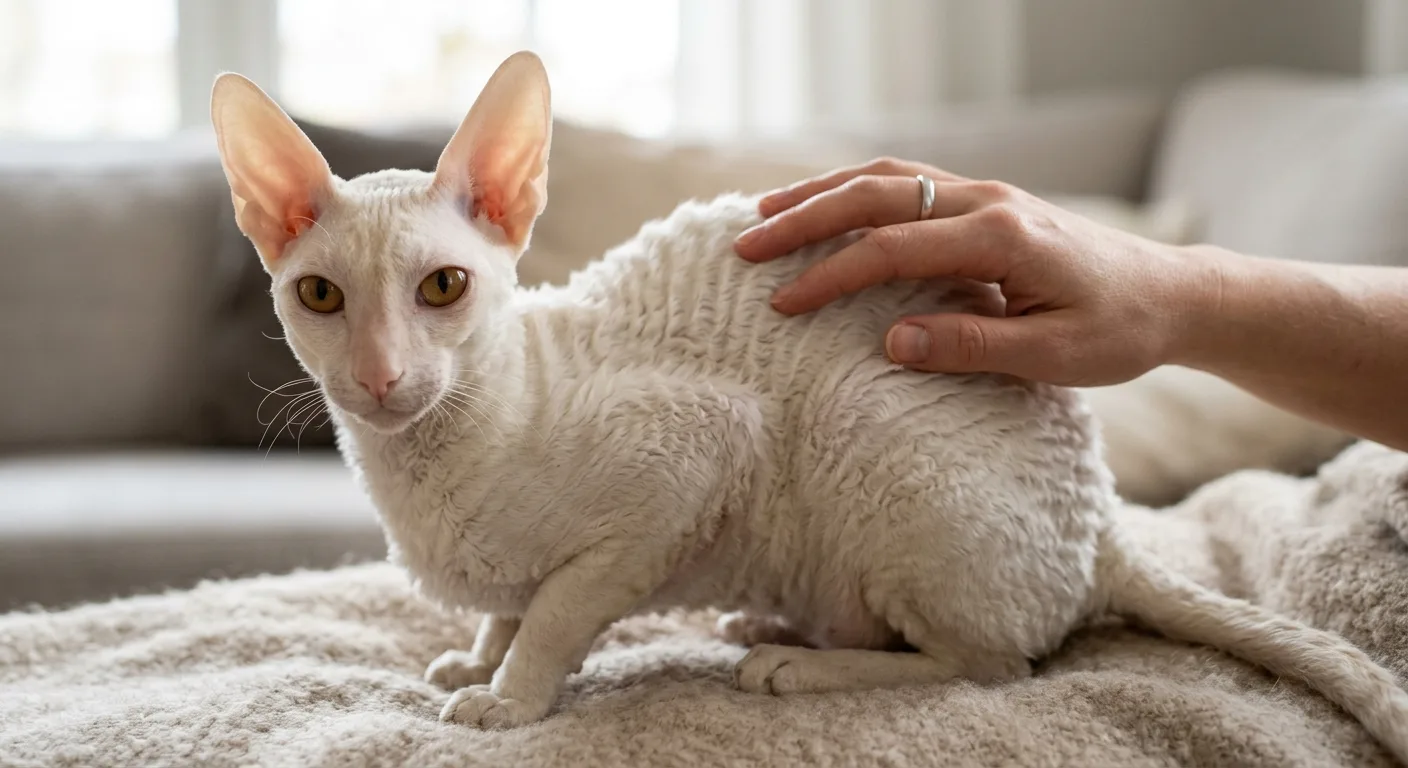
Cornish rex hypoallergenic claims are everywhere online, and the short, wavy coat of this breed makes the rumor easy to believe. The truth, reviewed here by Dr. Pippa Elliott, MRCVS, is more nuanced: the Cornish Rex sheds far less hair than most cats, but it produces a completely normal amount of Fel d 1, the protein responsible for 96 percent of cat allergies in humans. Less hair in the air is not the same thing as fewer allergens in your home.
- 1The Cornish Rex is NOT a hypoallergenic breed.
- 2The allergen causing cat allergies is the protein Fel d 1, found in saliva and skin secretions, not in hair.
- 3The Cornish Rex produces normal Fel d 1 levels despite its short, low-shedding coat.
- 4Milder symptoms in some allergy sufferers are due to less hair distribution, not fewer allergens.
- 5Always spend extended time with a specific cat before adopting if you have allergies.

Sign up for expert-backed reviews and safety alerts all in one place.
The Real Cause of Cat Allergies: Meet Fel d 1
Before you decide whether any cat breed is right for you, you need to understand what actually triggers your symptoms. It is not cat hair.
Cat allergies are caused by a tiny glycoprotein called Fel d 1, produced by sebaceous glands in the cat's skin and by the salivary glands. Every time your cat grooms itself, it spreads Fel d 1-laden saliva all over its coat. As that saliva dries, microscopic particles flake off as dander and float through the air, landing on upholstery, bedding, clothing, and your respiratory tract.
The American College of Allergy, Asthma and Immunology (ACAAI) notes that Fel d 1 is exceptionally sticky and airborne, able to stay suspended in the air for hours and cling to surfaces for months. That is why cat allergens travel home on clothing even from places where no cat lives.
- No cat breed is truly hypoallergenic. Every domestic cat produces Fel d 1. Any claim that a particular breed is "allergy-safe" without qualification is misleading and may set up allergy sufferers for a serious reaction after adoption.
How much Fel d 1 does a Cornish Rex produce?
Studies measuring Fel d 1 output across cat breeds have found that the Cornish Rex produces amounts within the normal range for domestic cats. According to research published in the Journal of Allergy and Clinical Immunology, Fel d 1 concentrations vary more between individual cats within a breed than between breeds overall. Sex matters more than breed: intact males produce the highest levels, neutered males produce less, and females produce the least, though all cats produce meaningful amounts.
The Cornish Rex is not among the breeds documented to produce lower-than-average Fel d 1. Breeds like the Siberian and Balinese have been studied and found to produce significantly less of the protein, making them genuinely lower-allergen options for some people.
Never Scoop Again® with the Whisker Litter-Robot, the smart self-cleaning automatic litter box. Monitor visits and track weights for better overall care in the Whisker® app. Multi-cat friendly.
Petful may earn a commission when you click through to Whisker, at no extra cost to you.
What the Cornish Rex Coat Actually Does (and Does Not Do)
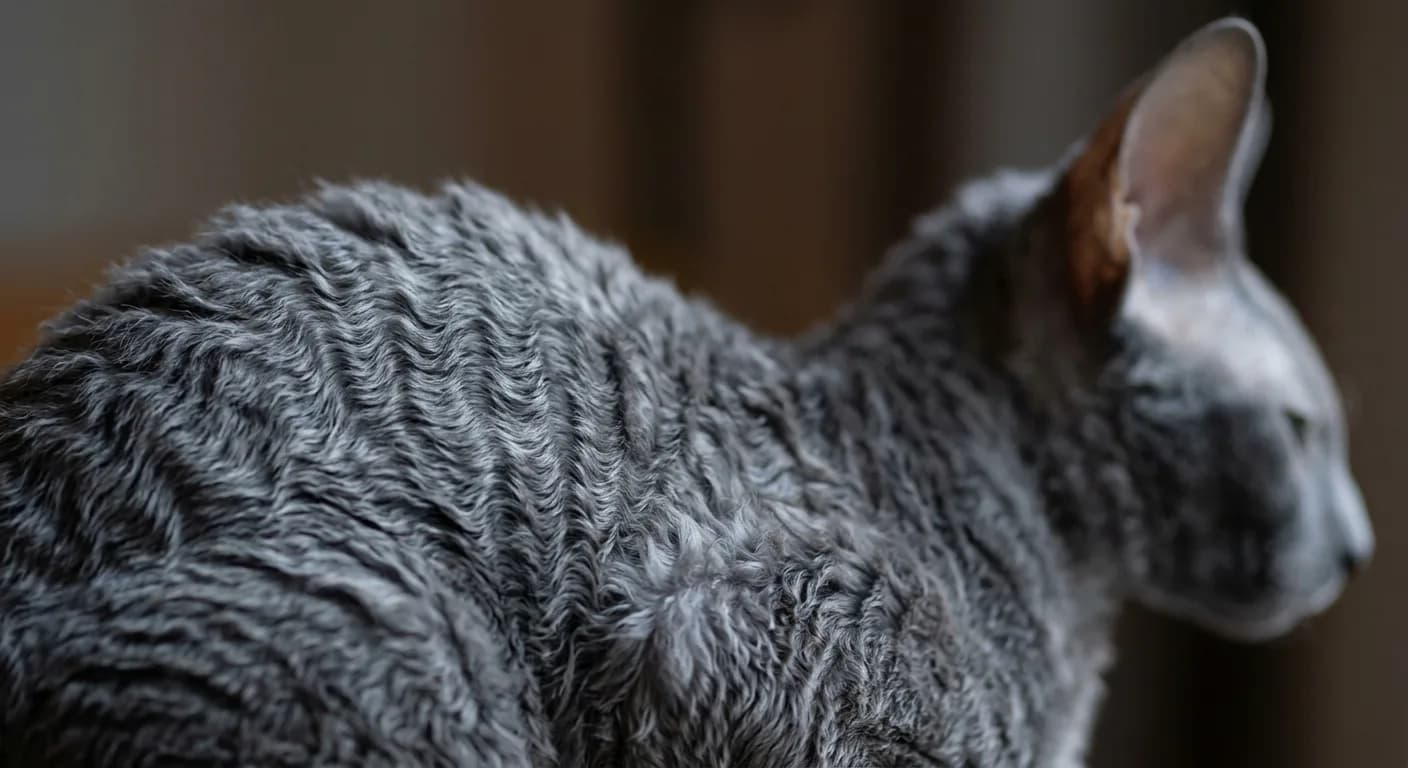
The Cornish Rex has a striking coat unlike any other. Most cats have three layers: a coarse outer guard coat, a middle awn coat, and a soft inner down coat. The Cornish Rex carries only the innermost down layer, which grows in tight, rippled waves. This genetic trait results from a recessive mutation first documented in Cornwall, England in 1950.
This single-layer coat means the Cornish Rex sheds far less than the average cat. Less shed hair means less dried saliva-carrying dander deposited around your home. That is a real and meaningful difference, but it is not the same thing as having fewer allergens in the cat itself.
- The Cornish Rex leaves less hair on your couch, but the allergen level in its saliva and skin secretions is unchanged. The result: some allergy sufferers notice milder reactions because less allergen is physically distributed, not because the cat makes less of it.
Think of it this way: a leaky faucet that drips slowly is still a leaky faucet. A Cornish Rex distributes Fel d 1 more slowly through the environment than a Maine Coon, but the source is equally full.
Lower Shedding vs. Genuinely Lower Allergen: Know the Difference
Not all "hypoallergenic" marketing claims are equally misleading. Some breeds actually have documented evidence of reduced Fel d 1 production. The Cornish Rex is not among them.
| Breed | Coat Type | Shedding Level | Fel d 1 Production | Allergy Impact |
|---|---|---|---|---|
| Cornish Rex | Single-layer down only | Very low | Normal (typical) | May be milder due to less dander distribution |
| Siberian | Long, thick triple coat | Moderate | Documented lower | Genuinely lower allergen for many sufferers |
| Balinese | Long silky single coat | Low to moderate | Documented lower | One of the best-studied low-Fel-d-1 breeds |
| Sphynx | Essentially hairless | Minimal shedding | Normal (typical) | Allergen on bare skin, wipes off easily but still present |
| Devon Rex | Single-layer wavy coat | Very low | Normal (typical) | Similar profile to Cornish Rex |
| Russian Blue | Short dense double coat | Moderate | Produces less Fel d 1 | Anecdotally milder for some allergy sufferers |
The practical takeaway: if a low-allergen breed is your primary goal, the Siberian or Balinese are better-studied options. If you love the Cornish Rex and have mild allergies, the reduced shedding may help you manage, but you should not adopt expecting allergy relief.
Why the Hypoallergenic Myth Persists
The Cornish Rex became famous as a "hypoallergenic" cat for a simple reason: people saw the sparse, unusual coat and assumed less hair meant less allergy risk. Early cat fancy literature and some veterinary sources used the word loosely, and the claim propagated through websites, breeders, and social media.
- Some Cornish Rex breeders still advertise their kittens as "hypoallergenic" or "great for allergy sufferers." While their cats genuinely do shed less, this framing may set unrealistic expectations. Ask any breeder specifically about Fel d 1 and whether they test their breeding cats.
The confusion is compounded by the variable nature of cat allergies. Because individual immune systems differ, some people with mild cat sensitivities genuinely do better with low-shedding breeds like the Cornish Rex, the Devon Rex, or the Sphynx. When those people report few symptoms, it reinforces the hypoallergenic label, even though the mechanism is reduced dander distribution, not reduced allergen production.
Living With a Cornish Rex When You Have Allergies: 8 Practical Strategies
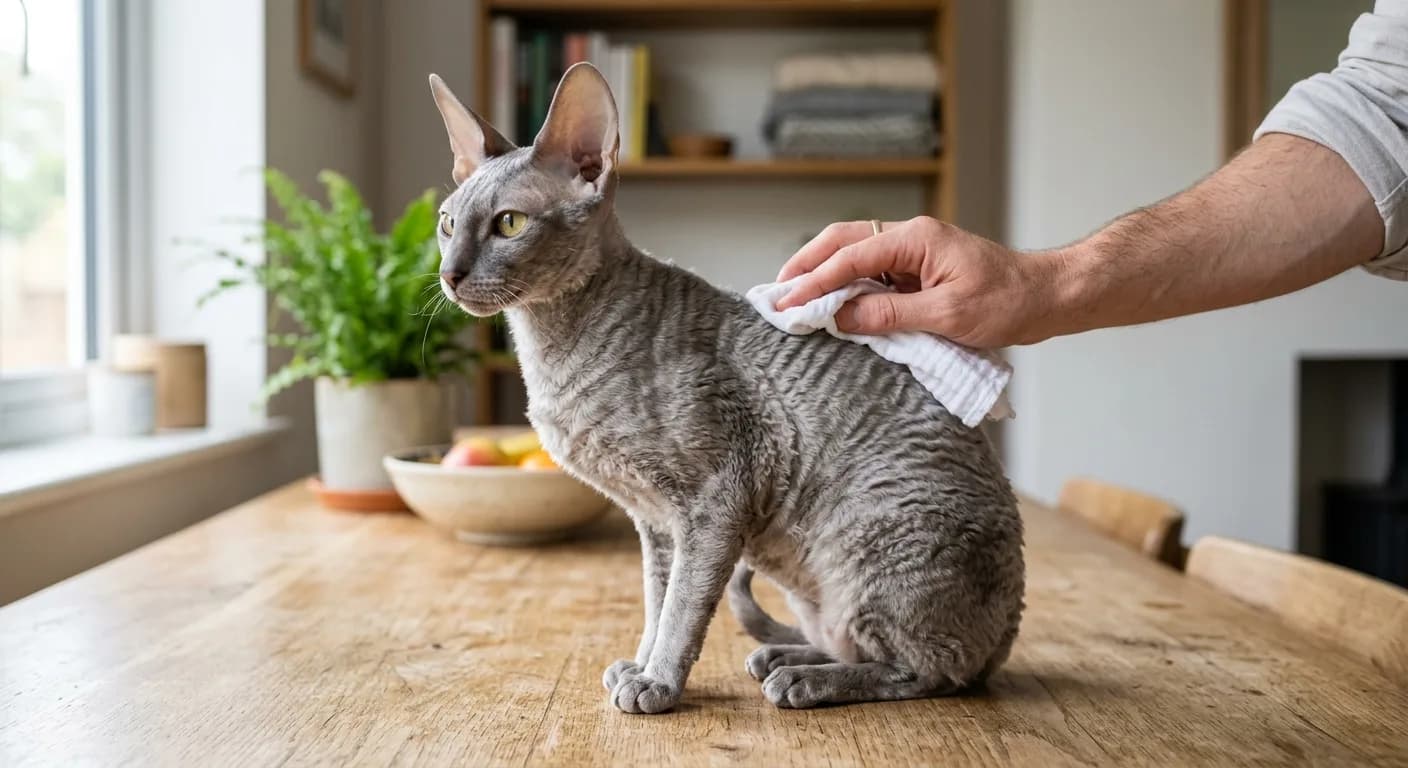
If you have mild to moderate cat allergies and are set on a Cornish Rex, the following evidence-based strategies can meaningfully reduce your exposure to Fel d 1.
1. Wipe the cat down regularly
Use a fragrance-free, pet-safe damp cloth or unscented baby wipes to wipe your Cornish Rex two to three times a week. This removes dried saliva and dander from the coat surface before it becomes airborne. Because the Cornish Rex coat is short and low-shedding, this is easier to do thoroughly than on a longhaired cat.
2. Run a HEPA air purifier in your bedroom
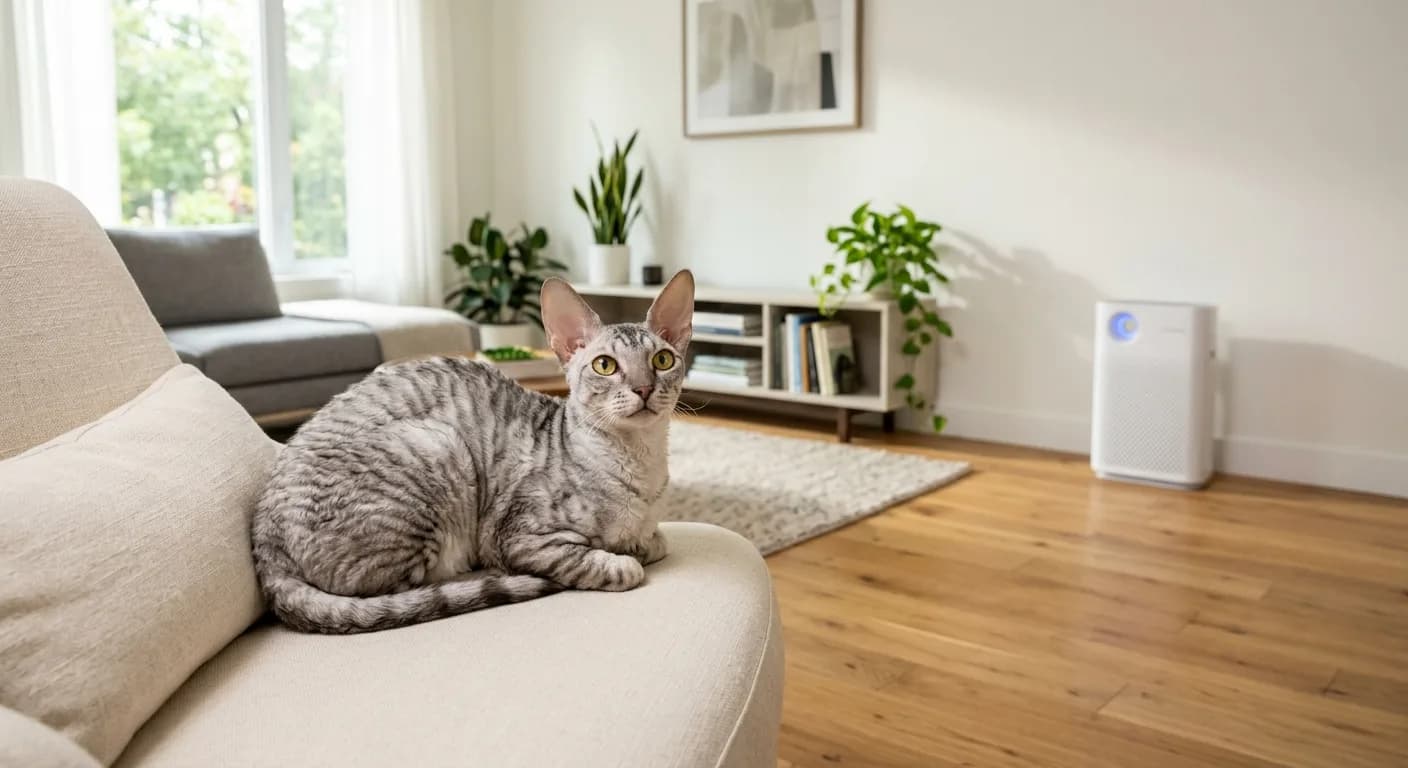
Fel d 1 particles are small enough to stay airborne for hours. A HEPA-rated air purifier (minimum MERV 13 filter) running continuously in your bedroom removes the particles from the air before you breathe them in during sleep. Prioritize the room where you spend the most time.
3. Enforce a bedroom ban
Allergen concentrations in a bedroom with a cat sleeping on the bed are dramatically higher than in rooms the cat does not access. Even if your cat sleeps elsewhere most of the time, occasional access raises allergen loads that persist for days. A firm bedroom boundary is one of the highest-impact changes you can make.

63-inch multi-level cat tree with scratch posts, hammock, plush perches, and dangling toys. Vertical territory is non-negotiable for high-energy climbing breeds like the Bengal.
Petful may earn a commission when you click through to Chewy, at no extra cost to you.
4. Wash your hands after every petting session
Do not touch your eyes or face after contact. Washing with soap and water removes Fel d 1 from your hands and significantly reduces ocular and nasal reactions triggered by hand-to-face contact.
5. Use a vacuum with a HEPA filter
A standard vacuum redistributes fine allergen particles back into the air. A HEPA-filter vacuum captures them. Vacuum carpets, upholstered furniture, and cat bedding at least twice weekly.
6. Choose hard flooring where possible
Carpet holds orders of magnitude more Fel d 1 than hard flooring. If you cannot replace carpet, use washable area rugs and launder them every two to four weeks.
7. Wash the cat's bedding weekly
Cat bedding accumulates saliva and dander rapidly. Hot-washing it weekly (above 60 degrees Celsius / 140 degrees Fahrenheit) kills the protein and removes it from the fabric.
8. Ask your vet about Purina Pro Plan LiveClear
This prescription-grade diet, now available as a standard cat food, contains a specific egg product ingredient that neutralizes Fel d 1 in the cat's saliva before it reaches the coat. Clinical trials published in the journal Immunity, Inflammation and Disease showed a 47 percent average reduction in active Fel d 1 on the cat's coat after 10 weeks of feeding. It does not eliminate allergens but it may meaningfully reduce them. Discuss it with your vet before switching.

108-oz stainless steel pet fountain with quiet pump and water-level window. Bengals are notoriously water-obsessed; a flowing fountain encourages hydration and pulls them away from sinks and toilets.
Petful may earn a commission when you click through to Chewy, at no extra cost to you.
- Visit the breeder or shelter and spend at least two to three hours with the specific cat you are considering. Bring your usual antihistamine but note any symptoms. A second visit without antihistamine gives cleaner data. Individual cats vary significantly in the allergen levels they produce, and personal sensitivity varies too. This is the single most important pre-adoption step.
The Pre-Adoption Test Is Non-Negotiable
Breed generalizations about allergy risk are a starting point, not a guarantee. Two Cornish Rex cats from the same litter can produce meaningfully different amounts of Fel d 1. Your immune system's reaction to one cat tells you almost nothing about how you will react to another.
Before committing to adoption:
- Visit the cat in its current environment at least twice, each visit one hour minimum
- Note whether symptoms appear in the first 30 minutes (immediate response) or after 60 to 90 minutes (delayed response)
- Ask the breeder or shelter whether any previous potential adopters reported reactions to this specific cat
- Consider an allergy skin-prick test from your allergist if you have never been formally tested; you may be reacting to a different allergen entirely
Cornish Rex vs. Devon Rex: Does It Matter for Allergies?
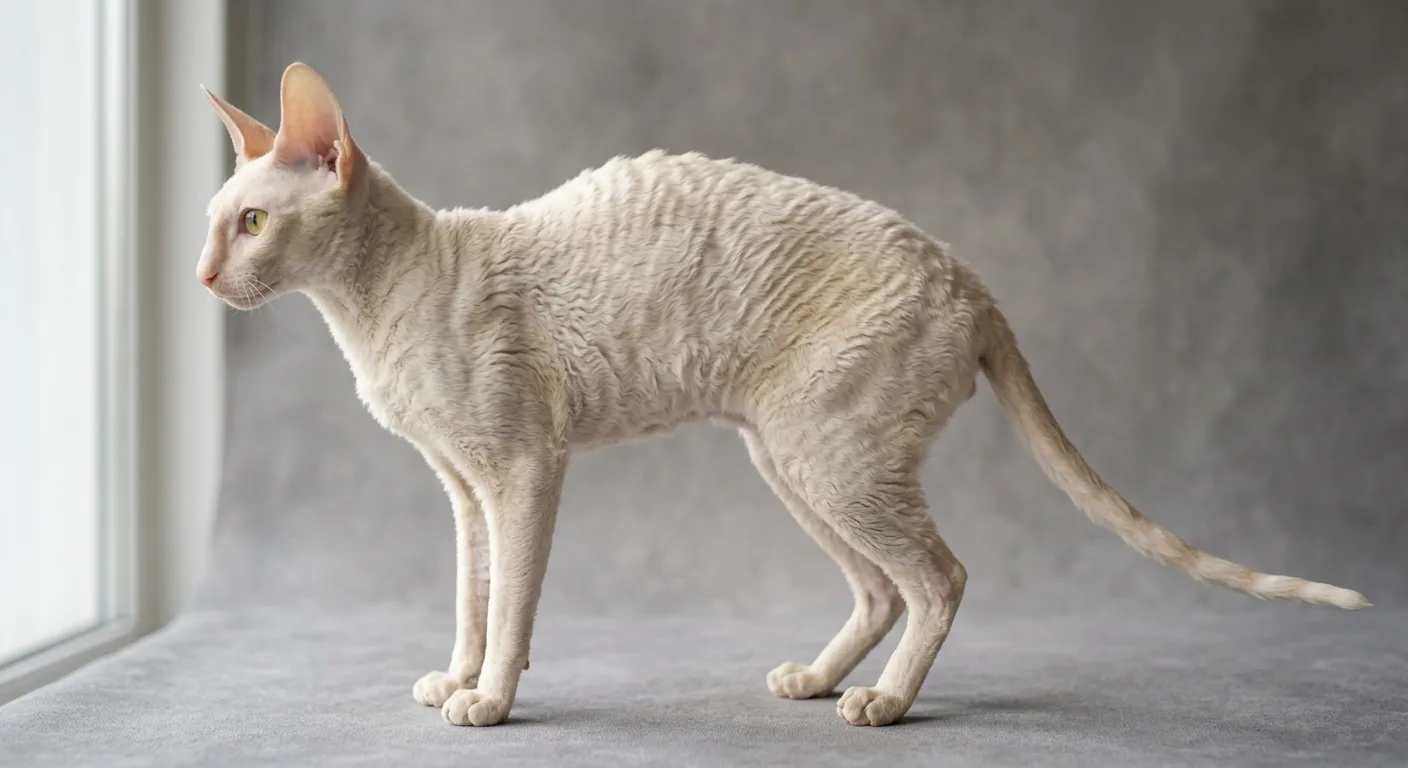
The Devon Rex and Cornish Rex look similar to the untrained eye, and both are frequently marketed as hypoallergenic. Their coats are structurally different: the Devon Rex has a curly coat with some awn hairs present, giving it slightly more coat volume than the Cornish Rex. Both breeds produce normal Fel d 1 levels, and neither is a better choice than the other on a strict allergen basis. The difference in allergy impact between individual cats within each breed is far larger than the average difference between the two breeds.
The Cornish Rex breed profile goes deeper on the coat's unique structure, temperament, and care requirements if you want the full picture before deciding.
What About Sphynx Cats?
The Sphynx is essentially hairless, which leads many people to assume it is the safest choice for allergy sufferers. In practice, the Sphynx produces normal Fel d 1 in its skin oils and saliva. Because there is no coat to trap the protein, it sits directly on the skin surface and transfers easily to hands, clothing, and furniture. Some allergy sufferers find the Sphynx easier to manage because the allergen wipes off bare skin readily; others find it worse because the protein spreads directly from skin contact without the coat acting as any kind of buffer. Individual results vary significantly.
How Much Does a Cornish Rex Cost?
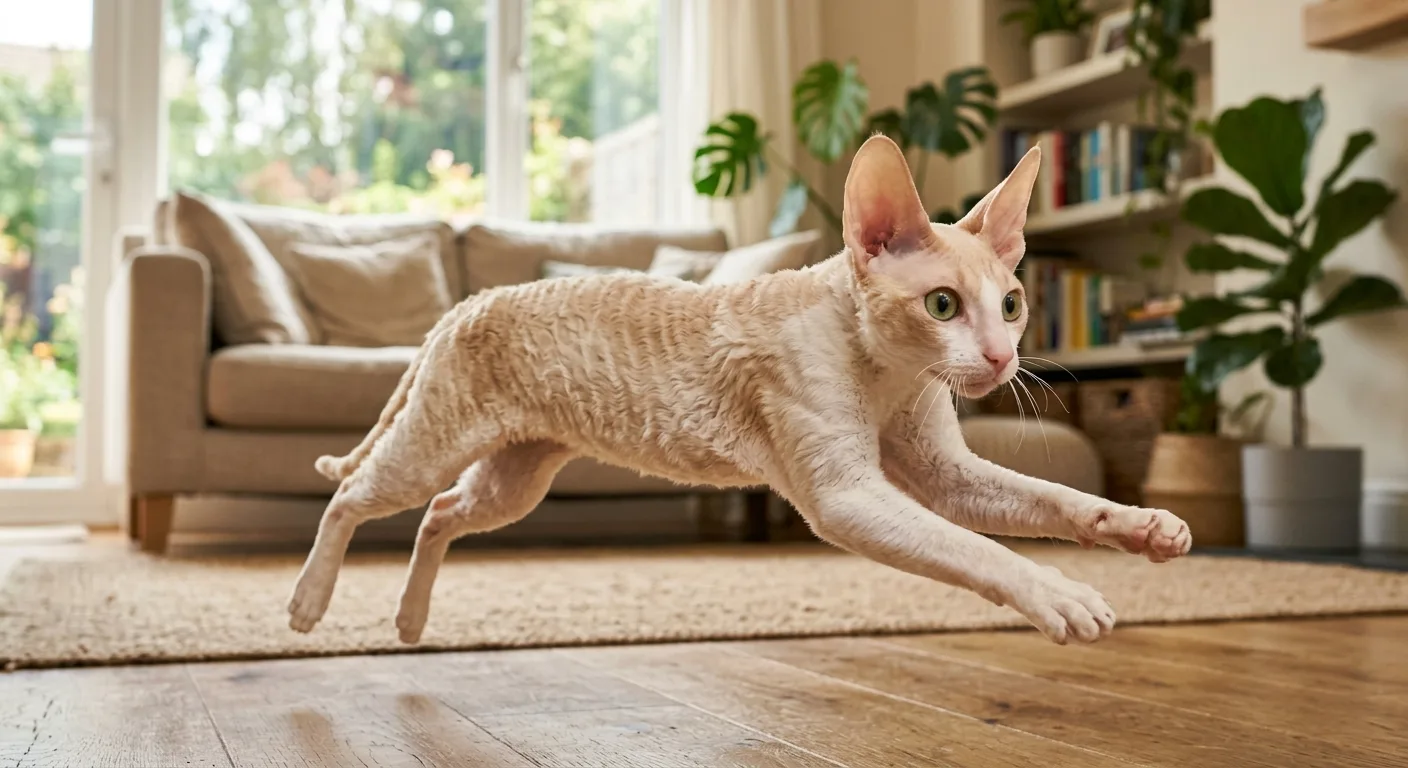
If you are researching this breed for allergy reasons and still want to proceed, you should know that Cornish Rex pricing from reputable breeders typically runs between $800 and $2,000 depending on pedigree and coat quality. Adopting from a rescue significantly reduces cost but limits your ability to spend pre-adoption time with the specific cat.
More Cornish Rex Reading
Explore the full Cornish Rex category for breed profiles, care guides, and health resources on this and other breeds you may be considering.
No. The Cornish Rex is not hypoallergenic. It sheds very little hair due to its single-layer down coat, but it produces a completely normal amount of Fel d 1, the protein that causes most cat allergies. Less shedding means less allergen distributed around your home, but the cat itself is not a low-allergen animal.
Possibly, for people with mild sensitivities. The breed's low-shedding coat distributes less dander than most cats, which can mean milder symptoms for some allergy sufferers. However, this is not guaranteed and depends heavily on the individual cat and your specific immune response. People with moderate to severe cat allergies are unlikely to be symptom-free with a Cornish Rex.
No cat is truly hypoallergenic. Among furred breeds with the most evidence for reduced Fel d 1 production, the Siberian and Balinese are the best-studied. Both have been found in clinical research to produce measurably lower levels of Fel d 1 than average, though reactions still vary between individuals.
Breeds that produce high Fel d 1 and shed heavily tend to trigger the most symptoms. Siberian cats (if not a low-producer), Persians, and Maine Coons are commonly cited due to their dense, long coats that distribute large amounts of allergen-carrying dander. Intact male cats of any breed generally produce the highest allergen levels.
Among lower-Fel-d-1 breeds, the Balinese and Siberian are both known for affectionate, people-oriented temperaments. The Cornish Rex, while not genuinely lower in Fel d 1, is famously sociable, playful, and human-bonded, making it a popular choice for families who can manage its allergen load with the strategies described above.
Cats with high Fel d 1 output and heavy shedding create the worst conditions for allergy sufferers. Unneutered male cats of any breed produce the most Fel d 1. Among specific breeds, the Persian, Maine Coon, and Norwegian Forest Cat are often associated with stronger allergic reactions due to their heavy, long coats.

Coreen Saito is a pet writer and longtime shelter volunteer with more than a decade in animal rescue. She covers cat behavior, breed care, and the small, ordinary science of sharing a life with companion animals, with a particular focus on honest takes about the products and decisions that actually matter. At home in Arizona, she's outranked by Mac (a dog with the loudest opinion in the house), Rebel (a cat who governs by quiet authority), and Meri (an orange tabby who runs the late shift and the laundry basket). She writes about all three, plus the rescues that keep coming through her life, at LifeWithMinty.com.
Sign up for expert-backed reviews and safety alerts all in one place.