Burmese Cat Price: What You'll Actually Pay in 2026
Burmese cat price: $600 to $1,500 from a reputable breeder, up to $3,000 show-quality, or $50 to $350 to adopt. Full breakdown of acquisition, setup, monthly food, vet, and insurance so you can budget before you commit.
Petful is reader supported. As an affiliate of platforms like Amazon and Chewy, we may earn a commission when you buy through links on this page. There is no extra cost to you.
The burmese cat price ranges from $600 to $1,500 for a kitten from a reputable US breeder, with show-quality or European-line kittens reaching $2,500 to $3,000. Adopt from a rescue and the fee drops to $50 to $350. Below is every cost you need to know before you commit.

Sign up for expert-backed reviews and safety alerts all in one place.
Quick Price Summary
| Source | Typical Cost Range |
|---|---|
| Rescue / shelter adoption | $50 to $350 |
| Pet-quality kitten, breeder | $600 to $1,200 |
| Show-quality kitten, breeder | $1,500 to $2,500 |
| European-line or grand champion bloodline | $2,500 to $3,000 |
| Free (rehome, Craigslist) | $0 (vet history required) |
- 1Burmese kittens from reputable breeders cost $600 to $1,500 on average
- 2Show or European-line kittens can reach $3,000
- 3Adoption is the budget path at $50 to $350 and includes spay/neuter and vaccines
What Drives the Burmese Cat Price?
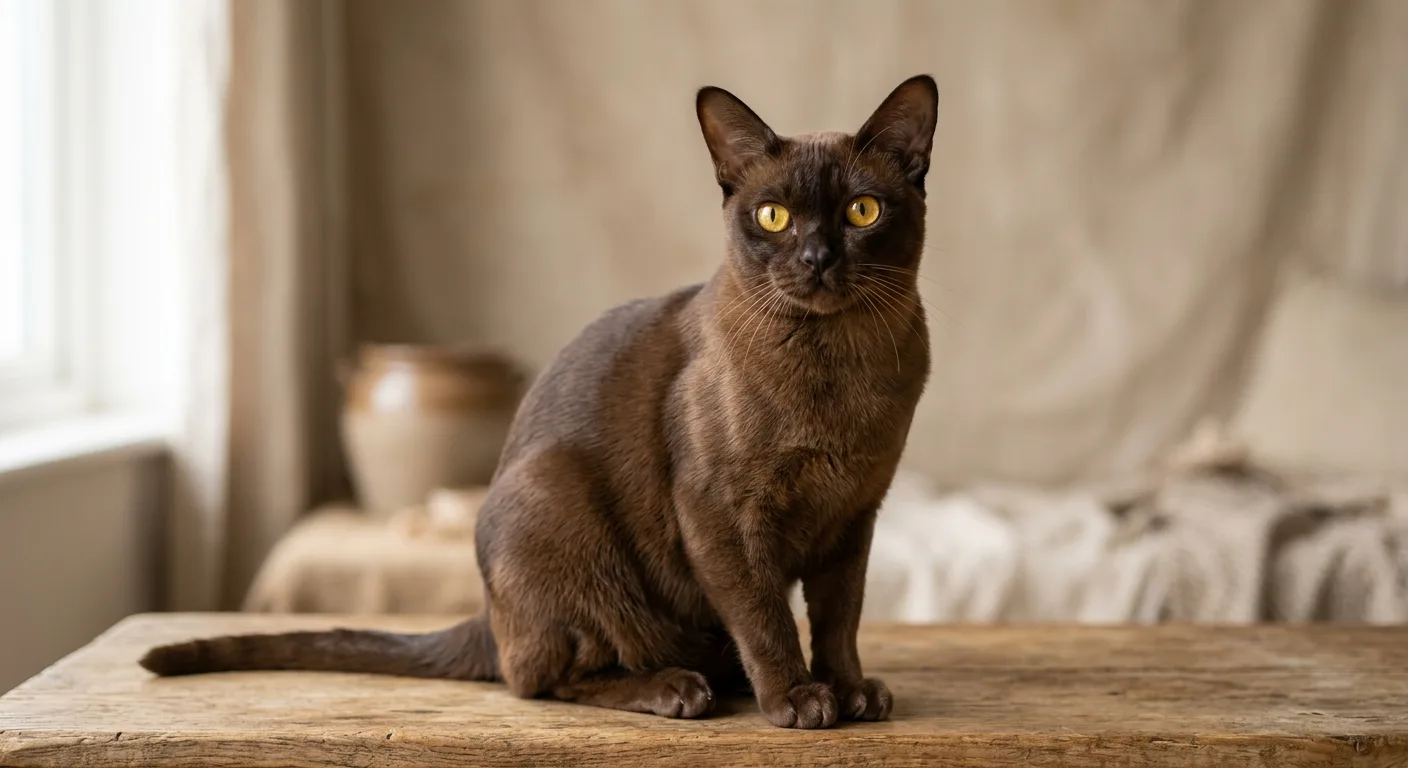
The Burmese cat is a compact, muscular breed with a satin-smooth coat, wide golden eyes, and a personality that leans more "dog" than "cat." That combination of looks and temperament keeps demand steady, which keeps prices firm. Several factors push a specific kitten's price up or down within the $600 to $3,000 window.
Bloodline and registration. A kitten from two CFA- or TICA-registered parents, with a documented pedigree going back multiple generations, commands the top of the range. Breeders who compete on the show circuit invest heavily in genetic health testing and selectively pairing champion lines, and price accordingly. An unregistered litter from a backyard breeder will often come in under $600, but you lose the health-screening backstop.
Coat color. The CFA recognizes four Burmese colors: sable (the classic dark brown), champagne (warm honey-beige), blue (medium blue-gray), and platinum (pale silver-gray). Sable is the most common and typically the least expensive within a breeder's litter. Champagne, blue, and especially platinum are produced in smaller numbers and can add $100 to $400 to the base price. The Burmese coat colors also affect desirability on the show circuit, which cascades into breeding-stock prices.
American vs. European line. This is the price driver most buyers miss entirely. The American Burmese has a rounder head and more cobby body, developed through decades of selective breeding in the US. The European (or "traditional") Burmese has a slightly longer muzzle, larger ears, and a more angular face. European-line breeders are fewer, their import and breeding costs are higher, and their kittens regularly list at $2,000 to $3,000 even for pet-quality placements.
Age. Kittens aged 12 to 16 weeks are the premium tier. A retired breeding queen or adult male re-homed from a cattery often sells for $300 to $600, occasionally less; these cats are fully socialized, healthy, and genuinely underpriced relative to their temperament.
Breeder location. Catteries in high cost-of-living metros (New York, Los Angeles, San Francisco) price 15 to 25 percent above the national median to cover facility and veterinary costs. Buyers willing to fly a kitten home from a mid-South or Midwest breeder often pay less for the same quality.
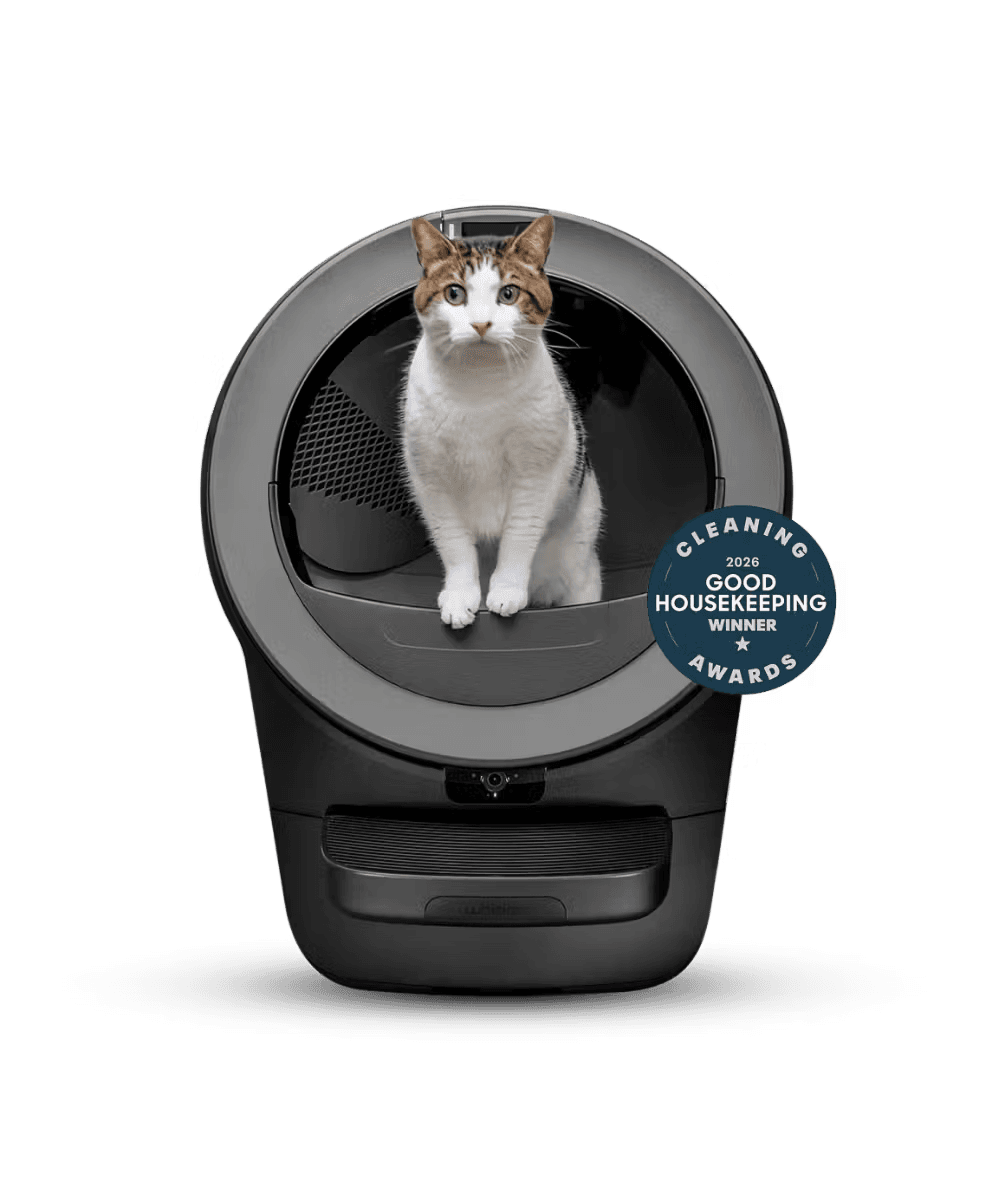
Never Scoop Again® with the Whisker Litter-Robot, the smart self-cleaning automatic litter box. Monitor visits and track weights for better overall care in the Whisker® app. Multi-cat friendly.
Petful may earn a commission when you click through to Whisker, at no extra cost to you.
Sex. Some breeders price females slightly higher because they retain breeding rights more often, but the premium is usually $100 to $200 at most. Intact males go higher if retained as studs.
- Kittens offered below $400 from an alleged "breeder" rarely come with veterinary health guarantees, genetic screening, or CFA/TICA registration papers. A burmese cat price under $400 from a private party is a signal to verify carefully before you wire a deposit.
Burmese Kitten Price vs. Adult Price
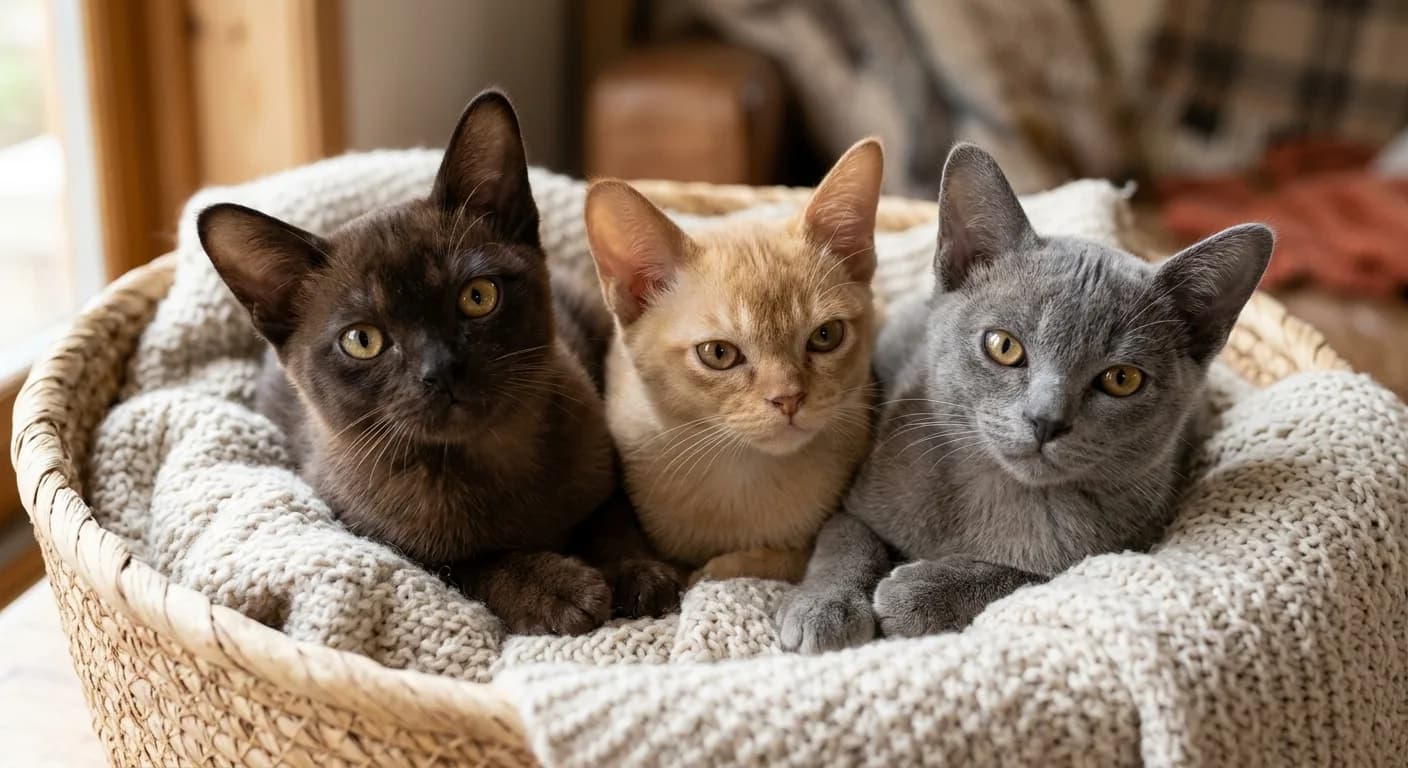
Most buyers default to kittens, which drives demand and holds kitten prices firm. A Burmese kitten from a reputable cattery includes:
- First two rounds of FVRCP vaccines
- Deworming and flea treatment
- A vet health certificate (often required for airline travel)
- A written health guarantee (typically one to two years for genetic conditions)
- CFA or TICA registration papers (on pet kittens, usually with an altered-only contract)
An adult Burmese re-homed from a cattery typically costs $300 to $600. You still get a fully vetted cat, often spayed or neutered, with known health history. For buyers who want the breed's legendary personality without the kitten chaos, the adult route is seriously underrated.
Adoption vs. Breeder: The Real Cost Comparison
Adoption fees at shelters and breed rescues run $50 to $350. That fee almost always covers spay/neuter, a full vaccine series, microchip, and a feline leukemia/FIV test, a package that would cost $300 to $500 if you handled it yourself post-purchase from a breeder.
The catch: purebred Burmese cats are rare in general shelters. Your best leads are the Burmese Cat Society rescue network and breed-specific postings on Petfinder and Adopt-a-Pet. Waiting lists of several months are normal for adoptable Burmese in most regions.
A comparison of true first-year cost makes the picture clearer:
| Cost Item | Adoption | Breeder Kitten |
|---|---|---|
| Acquisition fee | $50 to $350 | $600 to $1,500 |
| Spay / neuter | Included | $145 to $250 |
| Core vaccines (series) | Included | $100 to $180 |
| Microchip | Included | $45 to $55 |
| Vet exam at acquisition | $0 to $60 | $50 to $70 |
| First-year total (acquisition + one-time vet) | $50 to $560 | $940 to $2,055 |
One-Time Setup Costs
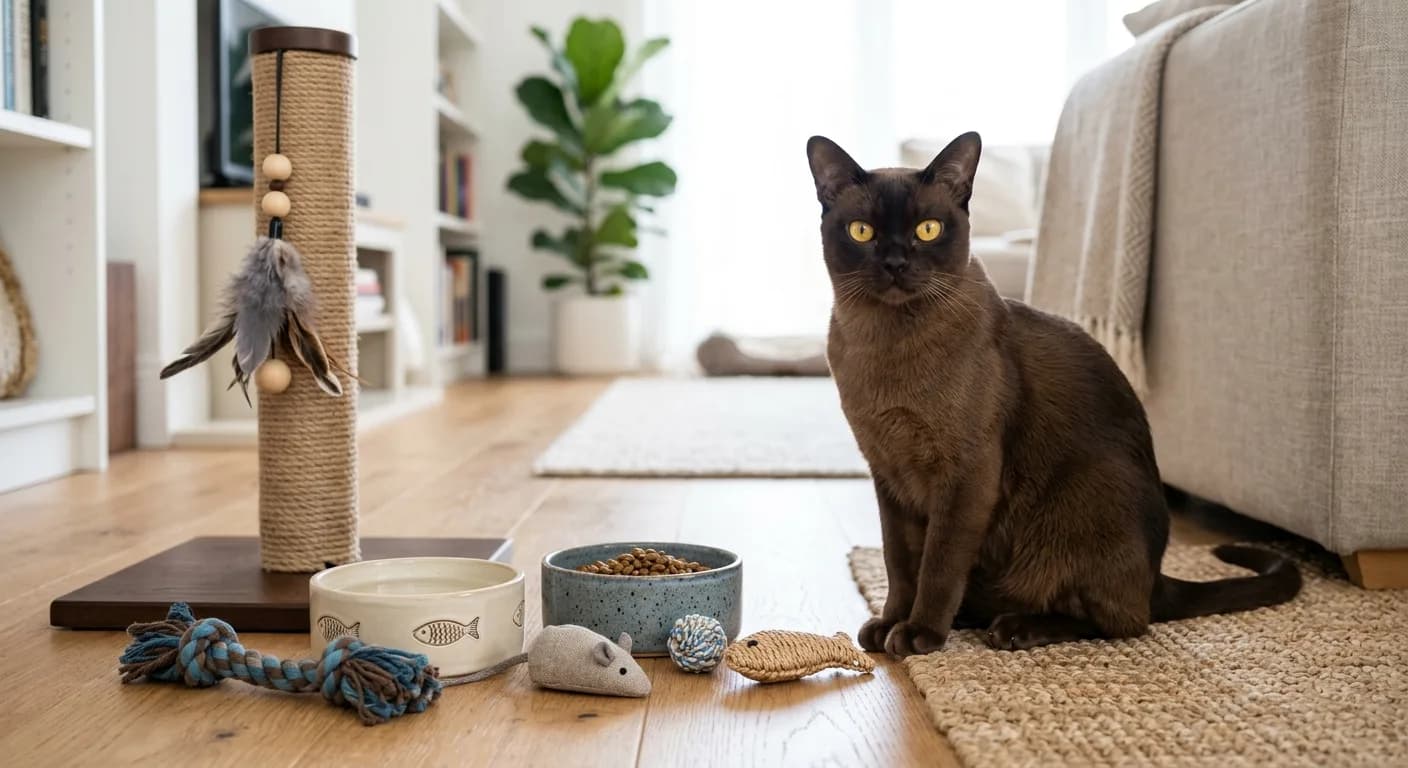
Whether you adopt or buy from a breeder, you'll need the same gear before your Burmese comes home.
| Item | Estimated Cost |
|---|---|
| Stainless steel food and water bowls | $15 to $30 |
| Cat carrier (airline-approved) | $35 to $80 |
| Litter box (one per cat, plus one extra) | $15 to $150 |
| Scratching post or cat tree | $40 to $120 |
| Collar and ID tag | $10 to $20 |
| Initial toy set | $20 to $50 |
| Nail clippers, brush, toothbrush kit | $15 to $30 |
| Setup total | $150 to $480 |
The Burmese vs. Siamese comparison is worth reading if you are deciding between the two breeds: the Burmese is typically quieter and less vocal, but equally people-focused, so your setup needs are nearly identical.

63-inch multi-level cat tree with scratch posts, hammock, plush perches, and dangling toys. Vertical territory is non-negotiable for high-energy climbing breeds like the Bengal.
Petful may earn a commission when you click through to Chewy, at no extra cost to you.
Monthly Cost of Owning a Burmese Cat
Food
Burmese cats are medium-sized (6 to 12 pounds) with healthy but not excessive appetites. A quality wet-food-forward diet (recommended for urinary tract health) runs $30 to $65 per month for one cat. Dry-only diets can drop to $20 to $35 per month but sacrifice moisture intake.
Litter
Clumping clay litter runs $17 to $35 per month. Premium options (silica crystals, walnut shell, tofu litter) push to $40 to $60. Self-cleaning litter boxes reduce scooping labor but cost $150 to $600 upfront and roughly the same monthly on replacement trays.
Veterinary care (routine)
Annual wellness exams average $50 to $70 per visit. Two visits per year for a young adult Burmese is the recommendation, totaling $100 to $140 annually (roughly $8 to $12 per month amortized). Budget for a rabies booster every three years and a FVRCP booster every one to three years.
Pet insurance
Burmese cats have a breed-specific health concern: hypokalemia (low blood potassium), which can cause muscle weakness and is managed with supplementation. They are also predisposed to cranial deformities in the hypertype (extremely flat-faced) American show lines, and to diabetes mellitus in middle age. A comprehensive wellness-plus-illness policy runs $20 to $45 per month for a kitten, rising to $35 to $70 for a cat over age seven.
Grooming
The Burmese single-coat sheds minimally. A weekly once-over with a rubber curry brush takes five minutes. Professional grooming is optional and runs $40 to $70 per session if you want nail trimming and a bath handled for you. Most owners spend $0 monthly on professional grooming.
Entertainment
Burmese cats are high-energy and social. Budget $10 to $30 per month for rotating toys. Interactive wand toys, puzzle feeders, and a tall cat tree are not luxuries for this breed; they are necessities for mental health.

108-oz stainless steel pet fountain with quiet pump and water-level window. Bengals are notoriously water-obsessed; a flowing fountain encourages hydration and pulls them away from sinks and toilets.
Petful may earn a commission when you click through to Chewy, at no extra cost to you.
| Category | Low Estimate | High Estimate |
|---|---|---|
| Food | $20 | $65 |
| Litter | $17 | $60 |
| Vet care (amortized) | $12 | $25 |
| Pet insurance | $20 | $70 |
| Grooming | $0 | $20 |
| Toys and enrichment | $10 | $30 |
| Monthly total | $79 | $270 |
Annual and long-term cost
At 15 to 18 years of typical Burmese lifespan, the long-term financial commitment is significant. At the median monthly cost of roughly $175, a Burmese costs approximately $2,100 per year and $31,500 to $37,800 over a lifetime, not counting the purchase price. That number is not a deterrent; it is context for budgeting pet insurance and an emergency fund.
Is the Burmese Cat Worth the Price?
For the right household, yes. The Burmese ranks among the most interactive, affectionate, and socially intelligent domestic cats. They follow their people from room to room, greet strangers without hissing, and tolerate children and confident dogs with unusual grace.
The qualities that push the burmese cat price above average (selective health testing, pedigree documentation, early socialization) are also what make the breed predictable in temperament and physically robust when sourced correctly.
If you are comparing cat breeds on temperament-per-dollar, the Burmese is one of the strongest cases for paying the breeder premium over a random mixed-breed from a shelter.
- The Cat Fanciers' Association (CFA) and TICA both maintain breeder directories searchable by breed and region. Reputable Burmese breeders will require a contract, ask you screening questions, and never ship kittens under 12 weeks. The International Burmese Breeders Association (IBBA) is another vetted resource.
European vs. American Burmese: Does the Premium Make Sense?
The European Burmese is not a separate breed by CFA standards; it is a variant within the Burmese breed. But in practice, European-line breeders operate in a near-separate market. Their kittens arrive with import documentation (if parents were European-sourced), more angular structure, and a slightly less extreme head type that some veterinarians prefer from a respiratory standpoint.
Whether the $1,000 to $1,500 premium over a standard pet-quality American Burmese is "worth it" depends entirely on whether the visual and structural differences matter to you. On personality and day-to-day health, the two lines are functionally equivalent.
If you are also considering the Persian cat price for comparison, note that Persians often demand a similar premium for show-line or flat-faced (extreme peke-face) kittens, for analogous reasons.
How to Budget: First Year Worksheet
Adoption path: $50 to $350 acquisition + $150 to $480 setup + $948 to $3,240 annual maintenance = $1,148 to $4,070 first year.
Breeder path: $600 to $1,500 acquisition + $290 to $555 first-year vet (spay/vaccines/microchip) + $150 to $480 setup + $948 to $3,240 annual maintenance = $1,988 to $5,775 first year.
Year two and beyond drops to the maintenance-only range: roughly $948 to $3,240 per year.
- Set aside $500 to $1,000 in a dedicated pet emergency fund before your Burmese comes home. Hypokalemia treatment, dental extractions, and urinary blockages each commonly exceed $800. Pet insurance covers ongoing illness; the emergency fund covers the deductible and the unexpected.
FAQ
From a reputable US breeder, a Burmese kitten costs $600 to $1,500 for a pet-quality placement and $1,500 to $2,500 for show quality. European-line or grand-champion bloodlines can reach $3,000. Adoption from a rescue runs $50 to $350 and typically includes spay/neuter and vaccines.
Yes, they are considered one of the best house-cat breeds. Burmese cats are people-oriented, adaptable, rarely destructive, and get along well with children and dogs. They need companionship, so many owners adopt a pair.
Burmese cats demand interaction and become depressed or destructive when left alone for long periods. They vocalize when bored. Health-wise, the breed carries risk for hypokalemia, diabetes in middle age, and cranial deformities in extreme show types. Female Burmese also reach sexual maturity early, making timely spaying important.
The Burmese is one of the longest-lived domestic cat breeds, with a typical lifespan of 15 to 18 years. Indoor-only, properly fed Burmese regularly reach 16 to 20 years. Their longevity is a key reason the lifetime ownership cost adds up.
Prices vary by region. Breeders in high cost-of-living metros (New York, LA, San Francisco) typically charge 15 to 25 percent above the national median. Expect $700 to $1,200 in the Midwest and South, $900 to $1,500 or more on the coasts. Use the CFA or TICA breeder directory to find catteries in your region.
No breed of domestic cat consistently sells at $100,000. Ultra-high figures sometimes cited for Ashera or F1 Savannah cats are marketing claims or one-off transactions. The most expensive mainstream breeds (Bengal, Savannah, Chausie) typically top out at $5,000 to $20,000 for exceptional F1 Savannah kittens.
The F1 Savannah (first-generation Savannah, half domestic cat and half wild serval) regularly sells for $10,000 to $20,000 and is widely cited as the most expensive domestic cat. The Ashera is sometimes listed higher, but it is disputed as a rebranded Savannah. The Burmese, at $600 to $3,000, sits in the mid-range of purebred pricing.
Blue Burmese kittens typically cost $50 to $300 more than sable (the baseline color) within the same cattery, landing most blue kittens in the $800 to $1,600 range from reputable US breeders. Blue is the second most common Burmese color after sable, so availability is better than champagne or platinum.

Coreen Saito is a pet writer and longtime shelter volunteer with more than a decade in animal rescue. She covers cat behavior, breed care, and the small, ordinary science of sharing a life with companion animals, with a particular focus on honest takes about the products and decisions that actually matter. At home in Arizona, she's outranked by Mac (a dog with the loudest opinion in the house), Rebel (a cat who governs by quiet authority), and Meri (an orange tabby who runs the late shift and the laundry basket). She writes about all three, plus the rescues that keep coming through her life, at LifeWithMinty.com.
Sign up for expert-backed reviews and safety alerts all in one place.