Maine Coon Size: Growth Charts, Weight by Age, and Full-Size Timeline
The Maine Coon is North America's largest domestic cat breed. Adult males weigh 15-25 lb and reach 40 inches nose to tail. This guide covers growth charts by age, male vs. female differences, and when Maine Coons stop growing.
Petful is reader supported. As an affiliate of platforms like Amazon and Chewy, we may earn a commission when you buy through links on this page. There is no extra cost to you.
Maine coon size is the first thing most people notice about this breed: a fully grown male can top 18 pounds, stretch 40 inches from nose to tail tip, and still be gaining mass into his fourth year. According to The Cat Fanciers' Association (CFA), the Maine Coon is officially the largest recognized domestic cat breed in North America. These are not internet-exaggerated numbers; the CFA breed standard describes a "large, well-muscled cat with a broad chest," and real-world weights of 15-25 pounds for males are common at reputable catteries.
Whether you just brought home a kitten or you're trying to figure out how big your adult is supposed to be, this guide walks through every sizing metric: weight by month, height, body length, how males and females compare, how the breed stacks up against average domestic cats, and the big question everyone asks: when do Maine Coons stop growing?
- 1Adult males typically weigh 15-25 lb and measure up to 40 inches nose to tail
- 2Females are noticeably smaller at 8-14 lb and reach full size about a year earlier
- 3Maine Coons do not fully mature until 3-5 years old, making them one of the slowest-maturing cat breeds
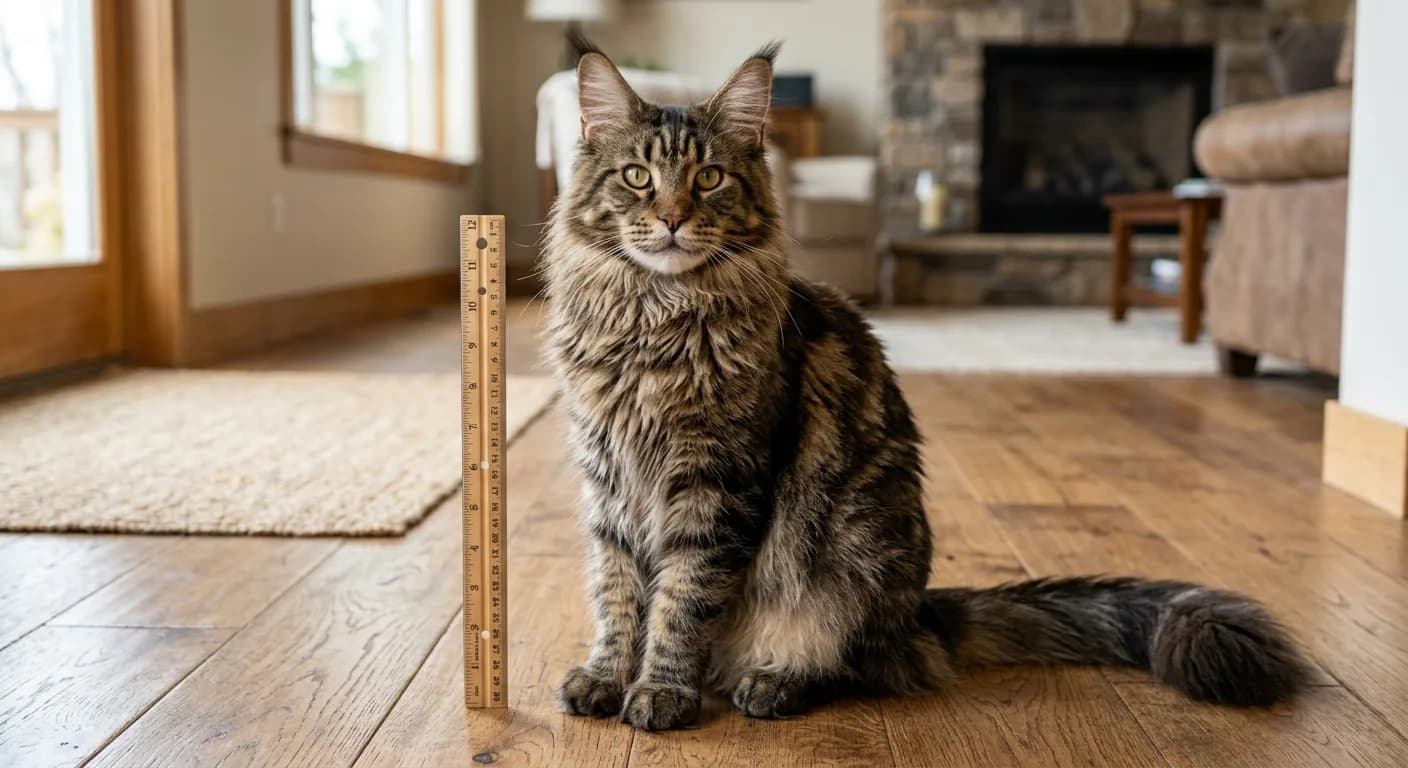
- 4Height at the shoulder ranges from 10-16 inches, taller than almost any other domestic breed
- 5A healthy adult Maine Coon outweighs the average domestic cat by 50-100%

Sign up for expert-backed reviews and safety alerts all in one place.
How Big Do Maine Coons Get? The Core Numbers
Before diving into growth charts, here are the headline figures recognized by the CFA and confirmed by multiple breed registries:
| Measurement | Male | Female |
|---|---|---|
| Body weight | 15-25 lb (6.8-11.3 kg) | 8-14 lb (3.6-6.4 kg) |
| Body length (nose to base of tail) | 19-30 inches | 16-22 inches |
| Total length (nose to tail tip) | 30-40 inches | 24-34 inches |
| Shoulder height | 10-16 inches | 8-14 inches |
| Tail length | 12-18 inches | 10-14 inches |
- Maine Coon size varies considerably based on genetics, diet, neutering status, and individual variation. A neutered male from a large-bodied line often exceeds the upper end of standard ranges. These figures represent healthy breed-typical animals, not outliers.
Maine Coon Weight by Age: Growth Charts for Males and Females
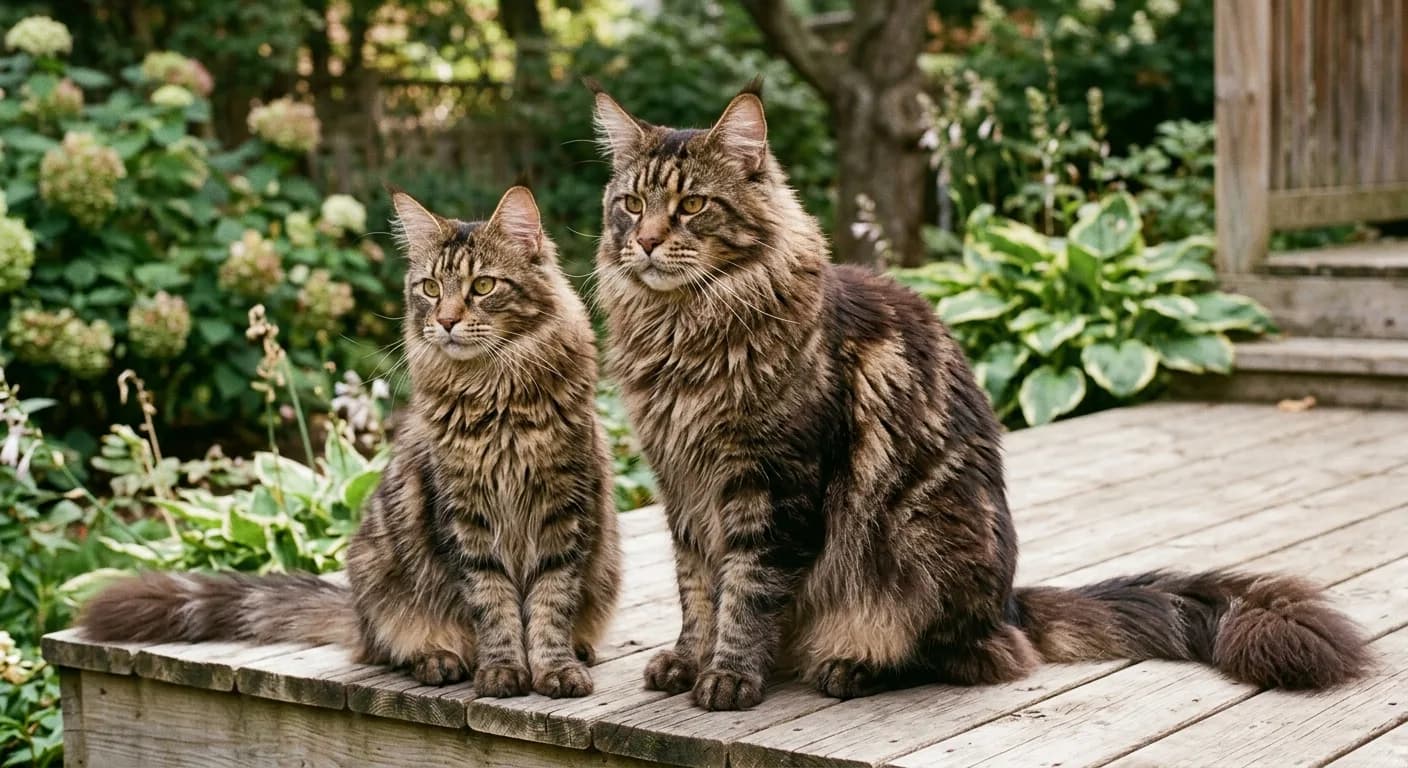
Maine Coons follow a distinctly slow growth curve compared to most domestic cats. Where a typical shorthair reaches full size around 12 months, Maine Coons are still actively building muscle and skeleton well into year three or four. The charts below reflect reported weights from CFA breeders and Maine Coon owner communities.

Never Scoop Again® with the Whisker Litter-Robot, the smart self-cleaning automatic litter box. Monitor visits and track weights for better overall care in the Whisker® app. Multi-cat friendly.
Petful may earn a commission when you click through to Whisker, at no extra cost to you.
Male Maine Coon Growth Chart
| Age | Average Weight (lb) | Average Weight (kg) | Notes |
|---|---|---|---|
| 8 weeks (typical adoption age) | 2.0-3.0 | 0.9-1.4 | Rapid early growth phase |
| 3 months | 3.5-5.0 | 1.6-2.3 | Gaining 1-2 lb per month |
| 6 months | 7.0-11.0 | 3.2-5.0 | Growth spurt visible in paws and ears |
| 9 months | 10.0-14.0 | 4.5-6.4 | Body lengthening noticeably |
| 1 year | 13.0-18.0 | 5.9-8.2 | Still 1-2 years from full maturity |
| 18 months | 15.0-20.0 | 6.8-9.1 | Chest and ruff filling in |
| 2 years | 16.0-22.0 | 7.3-10.0 | Approaching peak body mass |
| 3 years | 17.0-24.0 | 7.7-10.9 | Most males near full size |
| 4-5 years | 18.0-25.0 | 8.2-11.3 | Fully mature; some large lines reach beyond this |
Female Maine Coon Growth Chart
| Age | Average Weight (lb) | Average Weight (kg) | Notes |
|---|---|---|---|
| 8 weeks | 1.8-2.8 | 0.8-1.3 | Slightly lighter than males from birth |
| 3 months | 3.0-4.5 | 1.4-2.0 | Growth rate similar to males early on |
| 6 months | 6.0-9.0 | 2.7-4.1 | Divergence from male weights begins |
| 9 months | 8.0-11.0 | 3.6-5.0 | Body elongating; coat thickening |
| 1 year | 9.0-13.0 | 4.1-5.9 | Some females near full weight by now |
| 18 months | 10.0-13.5 | 4.5-6.1 | Majority reach full weight by 2 years |
| 2 years | 10.0-14.0 | 4.5-6.4 | Typically fully mature |
| 3 years | 10.5-14.0 | 4.8-6.4 | Final physical refinement complete |
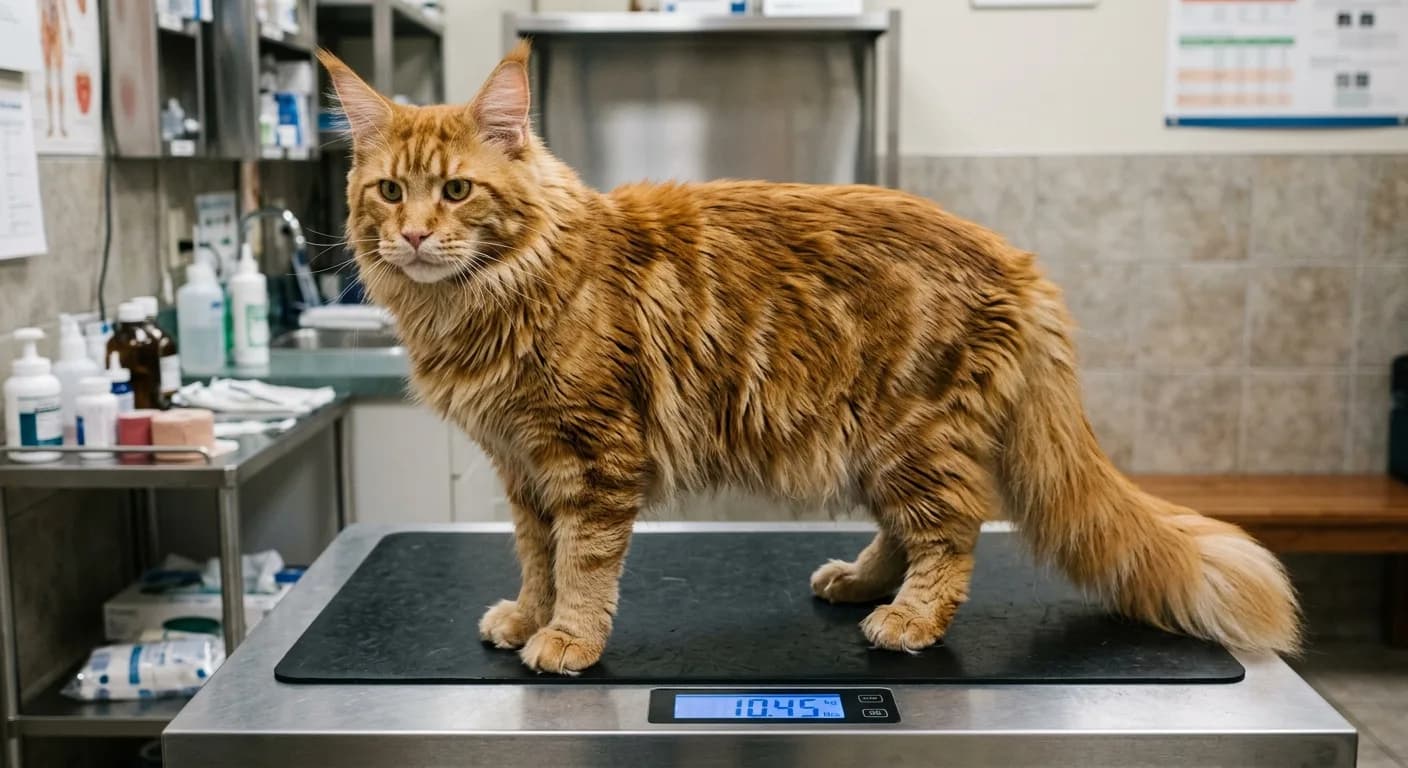
- Weigh your Maine Coon kitten monthly on a kitchen scale (place the carrier on the scale, then deduct its weight). Any month where a kitten loses weight or stays flat for two consecutive months warrants a vet call. Maine Coons should gain steadily through at least year two.
When Do Maine Coons Stop Growing?
This is one of the most common questions from new owners. The short answer: later than almost any other domestic cat breed.
Most domestic cats reach full adult size by 12 months. Maine Coons operate on a completely different timeline. Skeletal growth (bone length) typically completes around 18-24 months, but muscular development and body mass continue to increase until age 3-5. A two-year-old Maine Coon often looks "big," but a five-year-old from the same litter may be visibly broader in the chest and heavier by several pounds.
Key milestones:
- 12 months: Reaches roughly 75-80% of final adult weight. Most people see the cat and think "this is a big cat." It is not done yet.
- 2 years: Skeletal frame essentially complete. Muscle and ruff filling begins.
- 3 years: The majority of Maine Coons are at or very close to their final weight.
- 4-5 years: Large-framed males (especially entire toms) may still add weight through year five. Neutered males and all females typically plateau by year three.
- Some owners, eager to see their Maine Coon reach its full size, push high-calorie diets to speed development. Overfeeding a growing kitten does not produce a bigger cat; it produces an overweight cat. Bone length is genetically determined. Feed to a healthy body condition score (visible waist, ribs palpable but not visible) and let genetics do the rest.
Male vs. Female Maine Coon Size Comparison
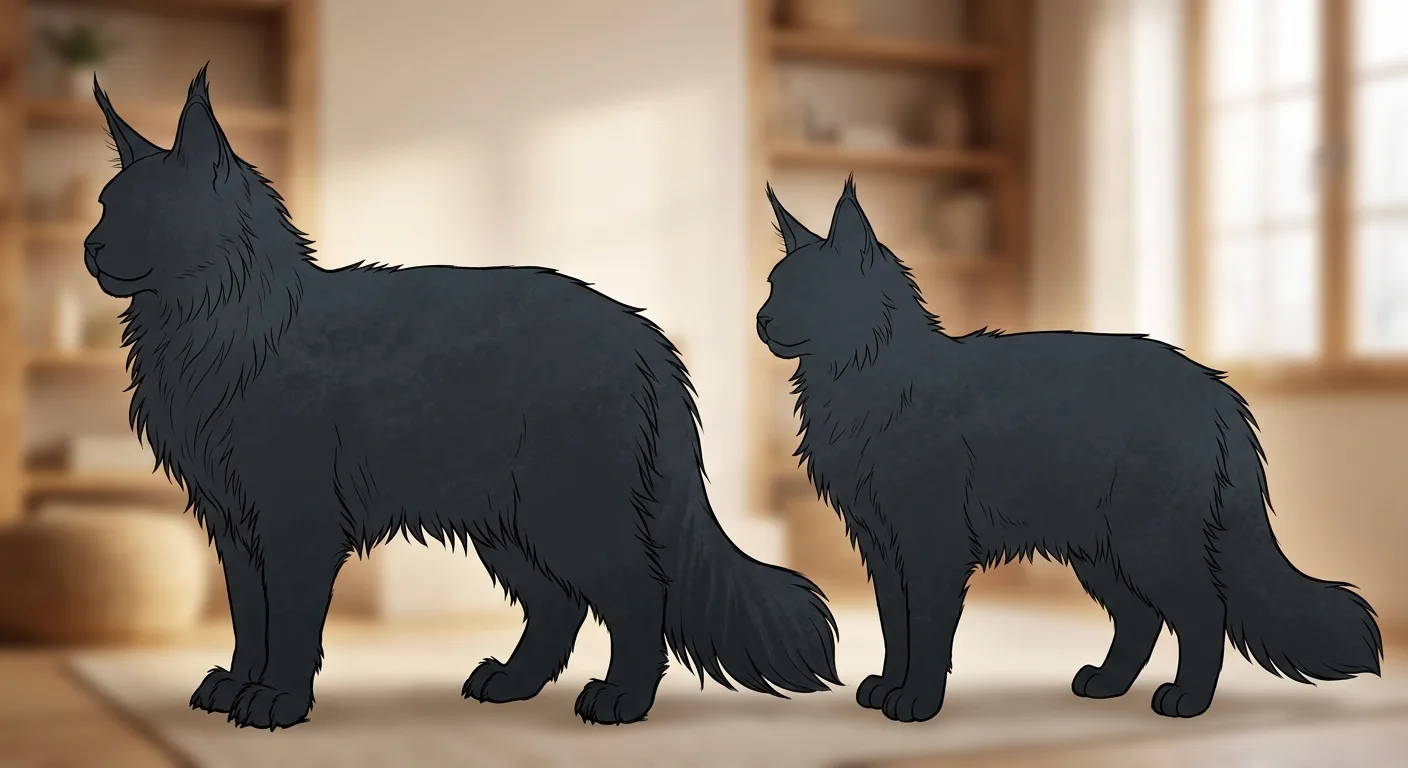
The sex-based size difference in Maine Coons is more pronounced than in almost any other domestic breed. It is not subtle; a full-grown male standing next to a full-grown female from the same litter often looks like two entirely different breeds.
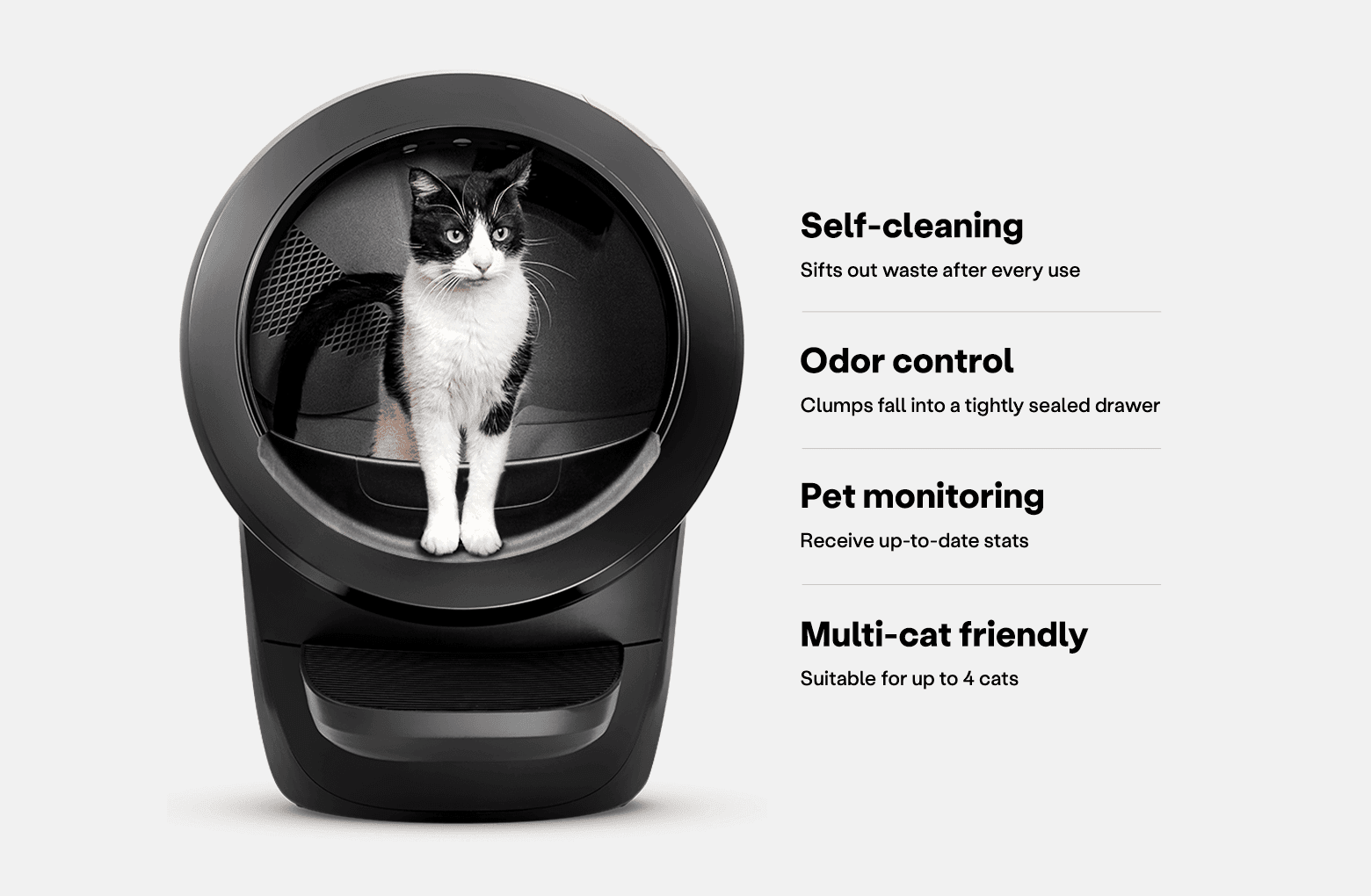
The proven Litter-Robot trusted by 1.8M+ households, with real-time litter and waste tracking in the Whisker app. The established pick if you want Litter-Robot reliability for less.
Petful may earn a commission when you click through to Whisker, at no extra cost to you.
| Measurement | Male | Female | Difference |
|---|---|---|---|
| Typical adult weight | 15-25 lb | 8-14 lb | Males 40-70% heavier |
| Shoulder height | 10-16 inches | 8-14 inches | Males 2-4 inches taller |
| Body length (nose to tail base) | 19-30 inches | 16-22 inches | Males 3-8 inches longer |
| Head size | Distinctly broader | Narrower | Males have a more square muzzle |
| Ruff (chest mane) | Fuller, denser | Lighter | Males' ruff is a signature feature |
| Full maturity age | 3-5 years | 2-3 years | Females mature roughly a year earlier |
One practical note: because males grow for longer and invest more in muscle mass, the size gap widens as the cats age. At 6 months, a male and female littermate may look similar. At 3 years, they may differ by 8-10 pounds.
- Neutered males often grow slightly larger than intact males because testosterone signals the body to stop bone growth earlier. Without that signal, a neutered male's growth plates stay open a little longer, adding some extra frame. This is one reason neutered males frequently appear at the upper end of weight ranges.
Maine Coon Size vs. Average Domestic Cat: The Real Comparison
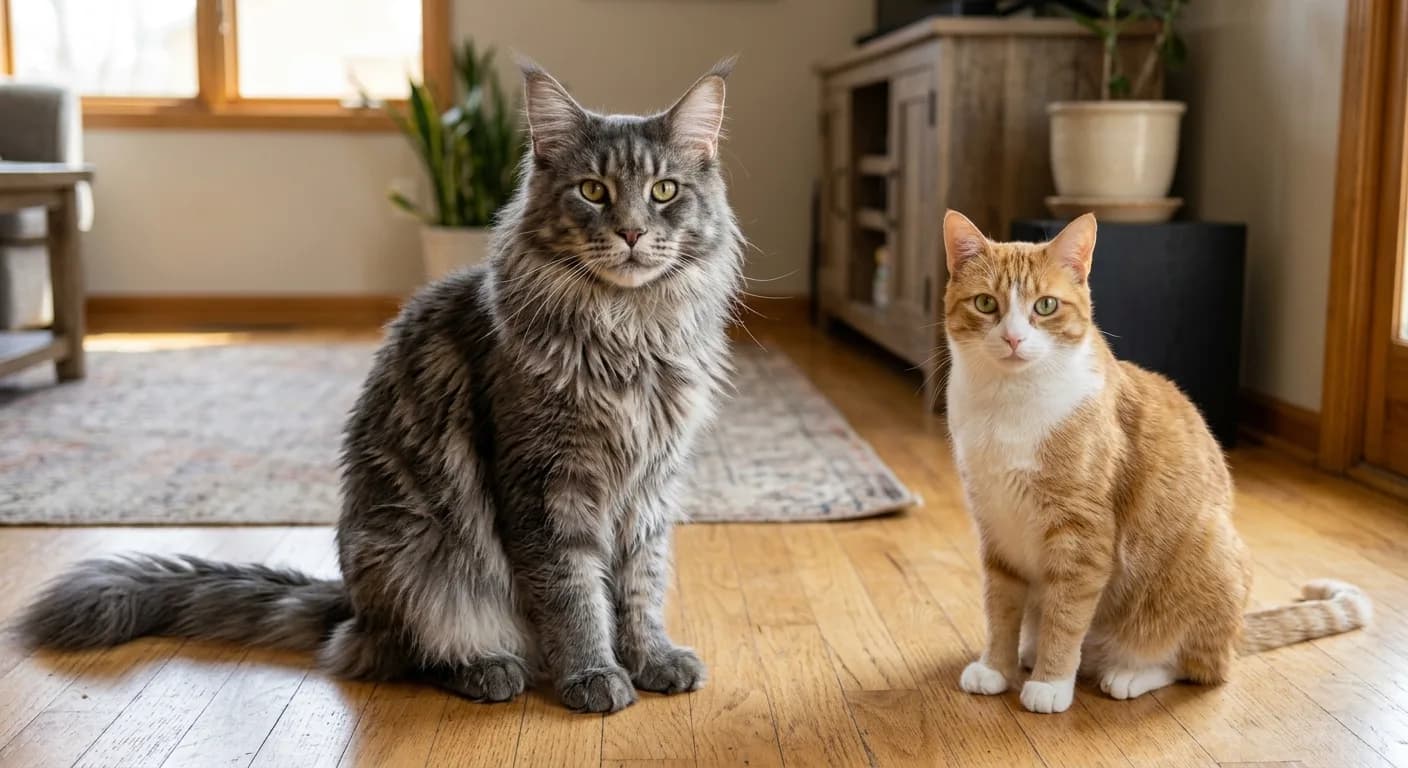
People often describe a large Maine Coon as "dog-sized," and while that is an exaggeration, the comparison to an average domestic cat is genuinely striking. Petful’s guide to Maine Coon lifespan covers how long they live and what shortens or extends it.
| Measurement | Maine Coon (Male) | Average Domestic Cat | How Much Bigger? |
|---|---|---|---|
| Weight | 15-25 lb | 8-10 lb | 50-150% heavier |
| Shoulder height | 10-16 inches | 8-10 inches | Up to 60% taller |
| Body length (w/tail) | 30-40 inches | 18-24 inches | Up to 80% longer |
| Growth period | 3-5 years | 10-12 months | 3-4x longer to mature |
| Paw size | Extra large | Standard | Significantly wider |
The body length difference is where Maine Coons become truly astonishing. An average domestic cat measures 18-24 inches nose to tail tip. A large Maine Coon male regularly hits 36-40 inches. That is roughly the length of a toddler.
Maine Coons also carry their size differently than simply "fat cats." A healthy Maine Coon is lean and muscular with large bones and long legs; the weight is structural, not excess body fat.
Maine Coon Height and Length: The Often-Forgotten Measurements
Weight gets most of the attention, but height and length tell an equally impressive story.

63-inch multi-level cat tree with scratch posts, hammock, plush perches, and dangling toys. Vertical territory is non-negotiable for high-energy climbing breeds like the Bengal.
Petful may earn a commission when you click through to Chewy, at no extra cost to you.
Height at the Shoulder
The CFA breed standard for Maine Coons describes a "medium to large" frame, but in practice, adults measure 10-16 inches at the shoulder, which is taller than almost all other domestic breeds. For context, a typical domestic cat stands 8-10 inches at the shoulder.
Body Length
Maine Coon body length (nose to base of tail, not including tail) typically falls between 16-22 inches for females and 19-30 inches for males. When you add the tail, which itself is 12-18 inches long and should reach at least to the shoulder when draped across the back, total nose-to-tail-tip measurements of 30-40 inches are common.
The Longest Maine Coons on Record
For an in-depth look at record-holders and famous giant Maine Coons (including Barivel, the current Guinness World Record holder at 120 cm / 3 ft 11.2 in), see our companion piece on the biggest Maine Coon cats ever recorded. This spoke focuses on typical sizing data rather than extreme outliers.
What Makes Maine Coons So Big? Four Biological Factors
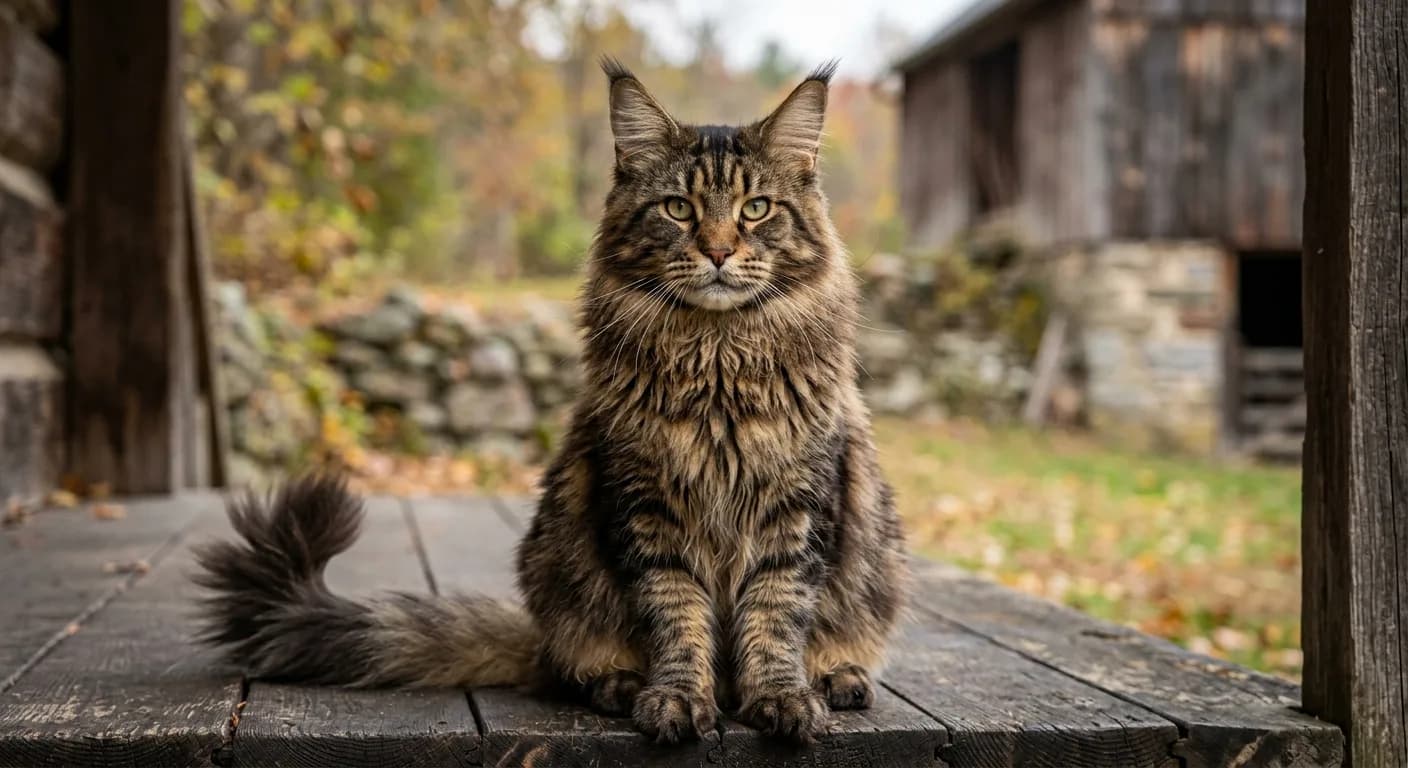
Maine Coon size is not an accident or a modern breeding exaggeration. It reflects the breed's origins and genetics.
1. Genetics and Selective Breeding History
Maine Coons developed in the rugged winters of New England, where larger body mass meant better cold tolerance and more effective hunting. Over generations, the trait for large frame was naturally reinforced. Today, CFA and TICA breed standards actively select against small-framed animals in the show ring, keeping size pressure in the gene pool.
2. Slow Maturation Rate
Most cats deposit bone growth quickly and stop early. Maine Coons maintain open growth plates for significantly longer, allowing the skeleton to keep adding length and density through year four or five. This extended growth window is the primary mechanism behind their adult size.
3. Sexual Dimorphism
Maine Coons show more pronounced sexual dimorphism (size difference between sexes) than most domestic breeds. The biological driver is muscle mass: testosterone promotes muscle-building, so intact males and even neutered males (who still had early testosterone exposure during development) accrue more muscle mass than females.
4. Diet and Nutrition
Genetics sets the ceiling; nutrition determines whether a cat reaches it. Maine Coon kittens and adults require high-protein diets that support muscle synthesis. Caloric deficiency during the growth phase does not produce a sleek, trim cat; it produces an undersized cat that never fills out as genetics intended. High-quality protein at every meal is the non-negotiable nutritional baseline.

108-oz stainless steel pet fountain with quiet pump and water-level window. Bengals are notoriously water-obsessed; a flowing fountain encourages hydration and pulls them away from sinks and toilets.
Petful may earn a commission when you click through to Chewy, at no extra cost to you.
- Maine Coon owners frequently worry their cat is too small. Before concluding that, check two things: age and lineage. If your cat is under 3 years old, it may not have finished growing. If the breeder ran small-framed lines, so will your cat. A vet body condition score (BCS) assessment is the right diagnostic tool; "smaller than the internet Maine Coons" is not a health problem by itself.
Maine Coon Size Compared to Other Large Cat Breeds
Maine Coons are often mentioned alongside other "big" breeds. Here is how they actually compare:
| Breed | Male Weight Range | Female Weight Range | Maturity Age |
|---|---|---|---|
| Maine Coon | 15-25 lb | 8-14 lb | 3-5 years |
| Norwegian Forest Cat | 12-20 lb | 8-14 lb | 2-3 years |
| Ragdoll | 15-20 lb | 10-15 lb | 3-4 years |
| Siberian | 12-17 lb | 8-12 lb | 2-3 years |
| Savannah (F1) | 17-25 lb | 12-16 lb | 2-3 years |
| Average Domestic | 8-12 lb | 6-10 lb | 10-12 months |
The Norwegian Forest Cat is the closest comparison in silhouette; both breeds share a large frame, a thick semi-long coat, and tufted ears. If you are curious about how those two breeds differ, our article on the Norwegian Forest Cat breed profile covers the key distinctions. Genetically, the Norwegian Forest Cat and Maine Coon are distinct lines; the physical similarities are convergent evolution rather than shared ancestry. Petful’s separate guide to Norwegian Forest Cat vs Maine Coon compares the two breeds side by side.
Practical Life with a Large Maine Coon
Size has real day-to-day implications for Maine Coon owners that go beyond "wow, big cat."
Litter Boxes
Standard litter boxes are genuinely inadequate for adult Maine Coons. Most adults need an extra-large box, ideally at least 24 x 18 inches, or a storage tote converted into a litter box. A cramped box means messes outside the box, not behavioral problems.
Cat Trees and Furniture
Standard cat trees rated for "large cats" often cap at 15-18 pounds. Verify weight ratings before purchasing. Maine Coons are active climbers and jumpers; a poorly rated tree that collapses or wobbles under a 22-pound cat becomes a hazard.
Carriers and Vet Visits
A top-loading hard-shell carrier in "large dog" sizing is the practical choice for adult Maine Coons. Standard cat carriers force a large Maine Coon into a hunched position that stresses joints during transport.
Food Quantity
An 18-20 pound Maine Coon has meaningfully higher caloric needs than an 8-pound domestic cat. Consult your vet for breed-specific feeding guidelines. Underfeeding a large, active cat risks muscle loss; free-feeding risks obesity. Measured portion feeding at appropriate caloric density is the standard recommendation.
- Weigh your Maine Coon monthly once it reaches adulthood. Because the breed is dense and fluffy, visual assessment is unreliable; a cat can gain 3-4 pounds before looking noticeably heavier. A kitchen scale with a tare function and a consistent time of day gives you the most useful data.
For more on the breed's complete personality, health needs, and history, the Maine Coon breed profile on Petful covers the full picture.
Photography and the "Giant Maine Coon" Phenomenon
An important reality check: social media is full of Maine Coon photos that appear to show cats the size of small dogs. Many of these are genuine. Many others involve low-angle photography, a small-framed human holding the cat with arms extended, or kittens positioned next to objects chosen to maximize the size illusion.
Real Maine Coons are genuinely large. A 22-pound Maine Coon is impressive in person. But if every photo you see online shows 30-35+ pound cats, you are looking at a curated highlight reel, not representative breed data. The verified weight distribution for the breed peaks at 18-22 pounds for males, with outliers reaching 25-28 pounds. Cats above 28 pounds exist but are not the norm even among large-framed lines.
This matters because buyers who expect a "giant" may seek out breeders who selectively breed for extreme size, which is not a health-neutral practice. Large frame with correct body condition is the goal; maximum weight as an end in itself is not a breed standard anywhere.
Frequently Asked Questions
A fully grown male Maine Coon typically weighs 15-25 lb and measures 30-40 inches from nose to tail tip, with a shoulder height of 10-16 inches. Females are noticeably smaller at 8-14 lb and 24-34 inches total length. Both sexes take 3-5 years to reach full maturity.
Maine Coons stop growing much later than other domestic cats. Skeletal length is mostly set by 18-24 months, but muscle mass and body weight continue to increase until age 3-5. Males often grow for longer than females, with some large-framed males still filling out into year four or five.
Yes, the size difference is pronounced. Males typically weigh 40-70% more than females from the same lines, stand 2-4 inches taller at the shoulder, and are 3-8 inches longer in the body. The difference is most visible after age two, when males continue building mass while most females have already reached their final size.
The Norwegian Forest Cat is the most common lookalike. Both breeds share a large frame, semi-long double coat, tufted ears, and a bushy tail. Key differences include head shape (Maine Coon has a wedge with high cheekbones; Norsk has a more triangular, straight-profiled head) and origins (Maine Coon is American; Norwegian Forest Cat developed in Scandinavia).
An average domestic cat weighs 8-10 lb. A healthy adult male Maine Coon weighs 15-25 lb, making him 50-150% heavier than the average pet cat. Even a smaller-framed female Maine Coon at 10-12 lb is heavier than most standard domestic cats.
Yes, though it is not typical. Verified weights above 28 lb exist in healthy, structurally large cats, but most Maine Coons max out at 22-25 lb. Weights consistently above 28 lb should be evaluated by a vet to confirm the excess is muscle and frame, not excess body fat.
Maine Coon body length (nose to tail base) is typically 19-30 inches for males and 16-22 inches for females. Adding a tail of 12-18 inches gives total nose-to-tail-tip measurements of 30-40 inches for males. This makes them one of the longest domestic cat breeds in the world.
Maine Coon size is the product of several factors: their New England working-cat origins selected for large-bodied animals that could hunt effectively in cold weather; the breed has a significantly extended growth period (3-5 years vs. 1 year for typical domestic cats); strong sexual dimorphism produces large males; and modern selective breeding via CFA and TICA shows reinforces large frame in the gene pool.
Absolutely. Maine Coons are known as "gentle giants." Their temperament is calm, sociable, and playful, and they adapt well to home environments. The main practical adjustments are larger litter boxes, weight-rated cat furniture, a larger carrier, and higher daily calorie requirements. The size is an asset for families who want a substantial, interactive companion cat.

Coreen Saito is a pet writer and longtime shelter volunteer with more than a decade in animal rescue. She covers cat behavior, breed care, and the small, ordinary science of sharing a life with companion animals, with a particular focus on honest takes about the products and decisions that actually matter. At home in Arizona, she's outranked by Mac (a dog with the loudest opinion in the house), Rebel (a cat who governs by quiet authority), and Meri (an orange tabby who runs the late shift and the laundry basket). She writes about all three, plus the rescues that keep coming through her life, at LifeWithMinty.com.
Sign up for expert-backed reviews and safety alerts all in one place.