Calico vs Tortoiseshell Cat: How to Tell the Difference
Calico or tortoiseshell? White fur is the giveaway: calicos are mostly white with bold orange and black patches, while torties blend the two colors with little white. Learn the genetics, the dilutes, and the in-between coats.
Petful is reader supported. As an affiliate of platforms like Amazon and Chewy, we may earn a commission when you buy through links on this page. There is no extra cost to you.
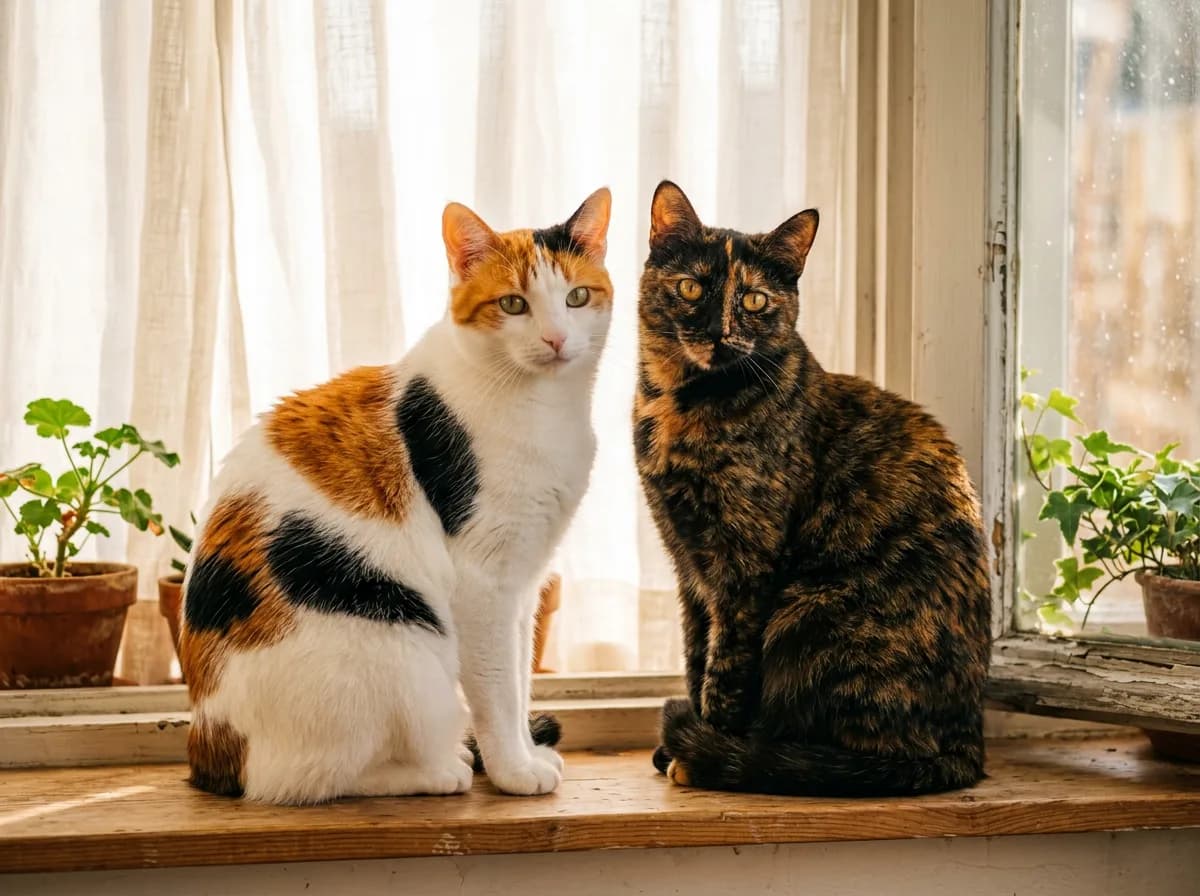
The calico vs tortoiseshell cat question stumps even lifelong cat people, yet the Cat Fanciers' Association (CFA) classifies both as tri-color coat patterns, and roughly 99.9 percent of the cats wearing either coat are female. The difference between calico and tortoiseshell comes down to one visual cue: white fur. A calico is mostly white with distinct, separate patches of orange and black, while a tortoiseshell weaves those same two colors together in a brindled mosaic with little or no white at all. Once you understand what the white-spotting gene does to a tri-color coat, you can tell the two patterns apart in seconds, and you can spot the in-between coats (torbies, calibys, and torticos) that confuse everyone.
- 1Calico = a mostly white coat with distinct, separate orange and black patches
- 2Tortoiseshell = brindled, interwoven orange and black with little or no white
- 3The white-spotting (piebald) gene is the main genetic difference between the two patterns
- 4About 99.9 percent of calicos and torties are female; male calicos occur about 1 in 3,000
- 5Both are coat patterns found across many breeds, never breeds themselves

Sign up for expert-backed reviews and safety alerts all in one place.
Calico vs Tortoiseshell Cat: The Quick Answer
If you remember only one thing, make it this: white fur separates the two patterns. A calico cat is predominantly white with crisp, well-separated patches of orange and black. A tortoiseshell cat (tortie for short) shows the same orange and black, but the colors are woven together in a brindled, marbled blend with little or no white at all.
A popular rule of thumb, spread widely by cat behaviorist Jackson Galaxy, holds that when roughly 20 percent or more of the coat is white, the cat reads as a calico rather than a tortoiseshell. The major registries do not publish an exact percentage. CFA color standards describe the calico as a white cat with unbrindled patches of black and red, with white predominant on the underparts, while the tortoiseshell is described as black with patches or softly intermingled areas of red. In practice, more white produces bigger, cleaner color blocks, which is why the two patterns look so different even though the difference between calico and tortoiseshell starts with a single white-spotting gene.
- Calico and tortoiseshell are coat patterns, not breeds. Dozens of pedigreed breeds plus countless mixed-breed cats can wear either coat, and a cat's pedigree comes from its breed, never from its color pattern.
What Is a Tortoiseshell Cat?
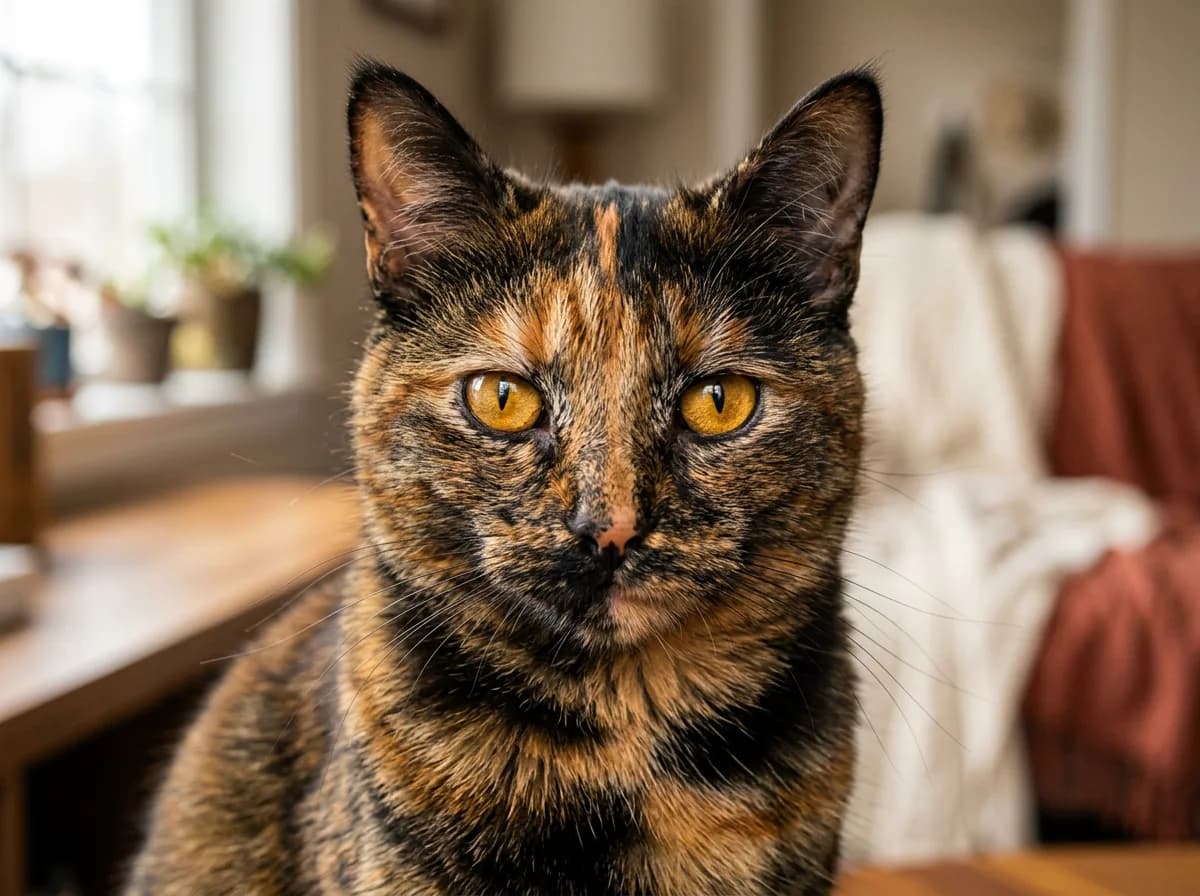
A tortoiseshell cat wears a two-tone coat of black and orange blended together like the mottled shell of a sea turtle, which is exactly where the name comes from. Geneticists call the orange pigment phaeomelanin and the black pigment eumelanin, and on a tortie the two are interwoven so tightly that the coat can look almost flecked or marbled from a distance. Some torties show larger soft swirls of each color; others look finely speckled all over.
Torties can carry a tiny splash of white, a small locket on the chest or a few white toes, without crossing into calico territory. What they lack is the large, dominant expanse of white that defines a calico. Every tortoiseshell's pattern is also one of a kind: the placement of every orange and black patch is fixed in the womb by a random process, so no two torties ever match exactly.
What Is a Calico Cat?
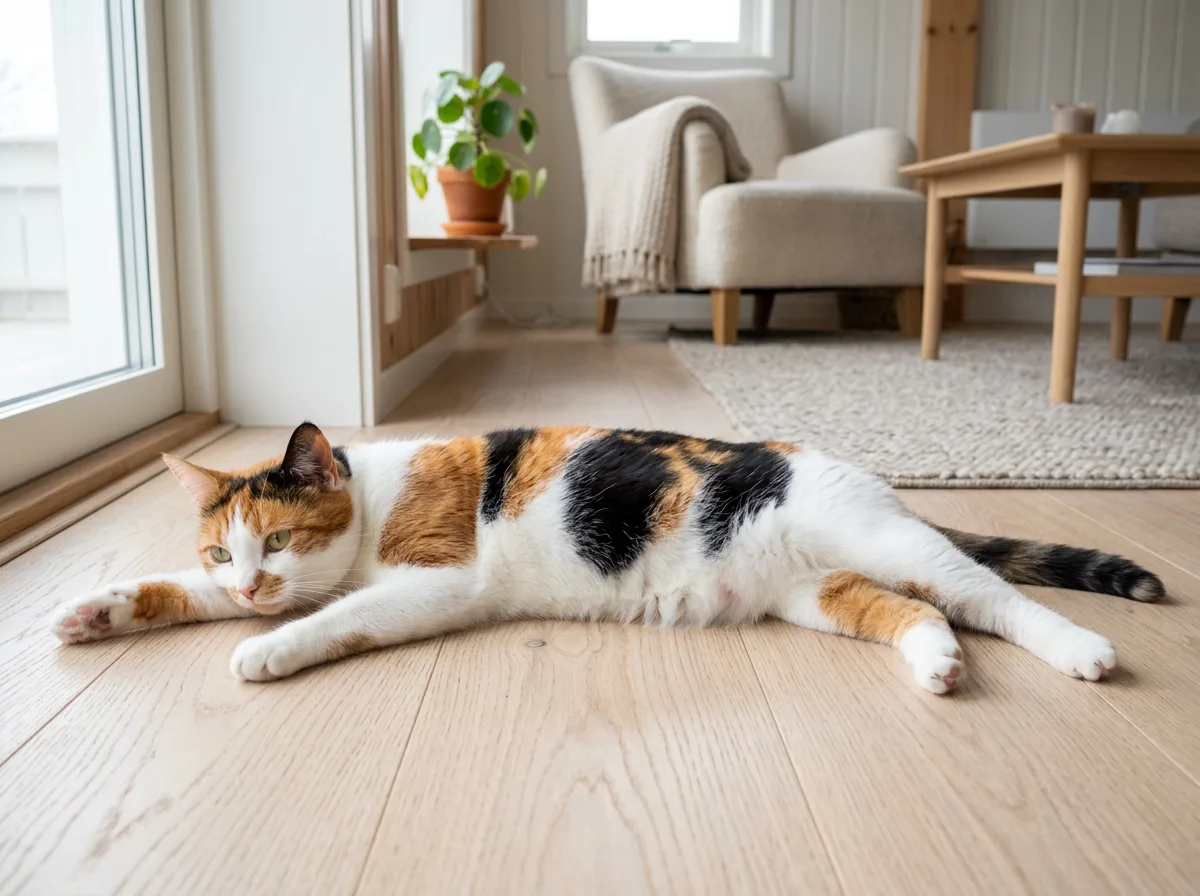
A calico cat is mostly white with distinct, unbrindled patches of orange and black sitting on top of that white base. The white usually dominates the chest, belly, and legs, because the white-spotting gene clears pigment from the underside of the body first, leaving the bold color patches concentrated along the back, head, and tail.

Never Scoop Again® with the Whisker Litter-Robot, the smart self-cleaning automatic litter box. Monitor visits and track weights for better overall care in the Whisker® app. Multi-cat friendly.
Petful may earn a commission when you click through to Whisker, at no extra cost to you.
The calico's patchwork look has earned it nicknames around the world. In Japan the pattern is called mi-ke, meaning "triple fur," and in parts of the United States calicos were once called money cats for the good fortune they supposedly brought. The pattern shows up everywhere from ordinary household shorthairs to show-quality pedigreed cats; the full range of Maine Coon colors, for example, includes both calico and tortoiseshell varieties. Whatever the breed, the formula is the same: a tri-color coat plus enough white spotting to break the colors into clean, separate patches.
Calico vs Tortoiseshell: 5 Key Differences
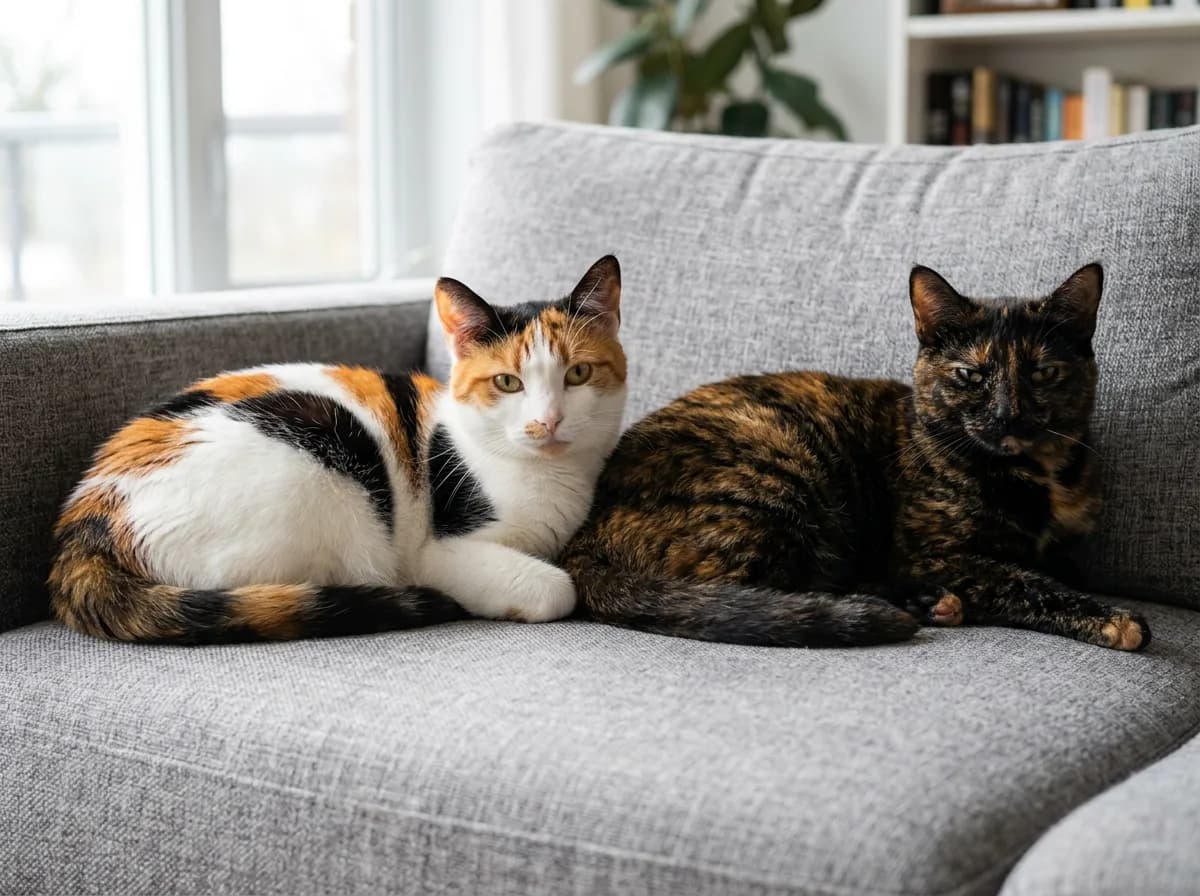
Side by side, the two patterns are easy to tell apart once you know what to check. Here are the five differences that settle nearly every "which one is my cat" debate.
| Feature | Calico | Tortoiseshell |
|---|---|---|
| Amount of white | Predominantly white, often 20 percent or more of the coat | Little to none, perhaps a locket or white toes |
| Color layout | Distinct, separate patches of orange and black on white | Brindled, interwoven orange and black across the body |
| Overall look | Patchwork quilt with white between bold color blocks | Marbled, mottled blend over the whole cat |
| Key gene at work | X-linked orange gene plus strong white spotting (piebald) | X-linked orange gene with weak or no white spotting |
| Common nicknames | Tri-color cat, mi-ke, money cat | Tortie, brindle cat |
The first three rows are what your eyes register instantly: a calico looks like color painted onto a white cat, while a tortie looks like a cat dipped in swirled black and orange. The genetics row explains why, and it is worth understanding, because it also explains the dilutes, the torbies, and the famous all-female skew.
The Genetics Behind Tri-Color Coats
Both patterns start with the same gene: the sex-linked orange gene, which sits on the X chromosome. For decades its exact identity was one of the longest-standing mysteries in cat genetics. In 2025, two independent research teams (Greg Barsh's group at HudsonAlpha and Stanford, and Hiroyuki Sasaki's team at Kyushu University) finally identified it: a small regulatory deletion that switches on a gene called ARHGAP36 in pigment cells, published in Current Biology in May 2025. The orange version of the gene produces reddish phaeomelanin and masks black eumelanin.
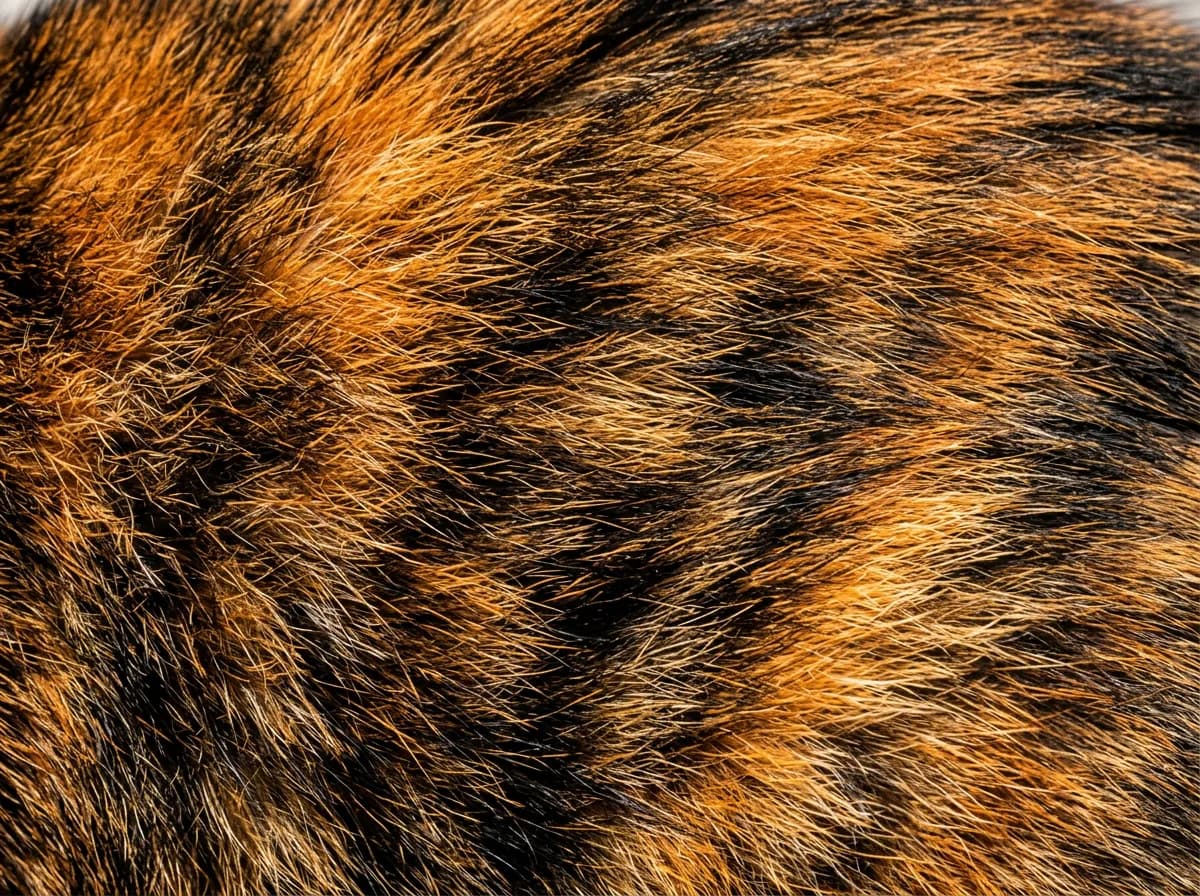
Here is the key step. A female cat has two X chromosomes. If one X carries orange and the other carries non-orange, every cell in her developing body randomly shuts down one of the two. That process, called X-chromosome inactivation or lyonization (described by geneticist Mary Lyon in 1961), creates a living mosaic: patches of skin where the orange X is active grow orange fur, and patches where the non-orange X is active grow black fur. That mosaic IS the tortoiseshell.
The calico needs one more ingredient: the white-spotting gene, a KIT-related piebald gene that blocks pigment cells from colonizing parts of the growing embryo. Those regions default to white, and the surviving orange and black areas get pushed into larger, cleaner, well-separated patches. The same KIT-linked biology drives high-white and all-white coats, like the striking white Maine Coon. In short: tortoiseshell plus significant white spotting equals calico.
Why Almost All Calicos and Torties Are Female
Because the orange gene rides on the X chromosome, showing BOTH orange and black normally requires two X chromosomes, one carrying each version. That is the standard female arrangement (XX). A typical male cat has just one X (XY), so he can be orange or black, but not both. The result: roughly 99.9 percent of calico and tortoiseshell cats are female.
Male calicos do exist, at a rate of about 1 in 3,000, the commonly cited figure from a University of Missouri College of Veterinary Medicine study. Most are XXY males (Klinefelter syndrome), carrying an extra X chromosome through a cell-division error. A male calico or tortie can also be a chimera (two fused embryos in one body) or a somatic mosaic. Genetic quirks like these are more common in cats than many owners realize; polydactyl cats, born with extra toes, are another single-gene surprise you can spot from across the room.
One important correction to a common myth: not every male calico is sterile. XXY males almost always are, but the rare fertile males are usually chimeras or mosaics. Either way, a male calico has no special breeding value.
- XXY (Klinefelter) males are almost always sterile and often face health problems, including a tendency toward shorter lifespans. If you share your home with one of these rare boys, keep up with regular veterinary checkups.
Dilute Calico vs Dilute Tortoiseshell: The Softer Versions
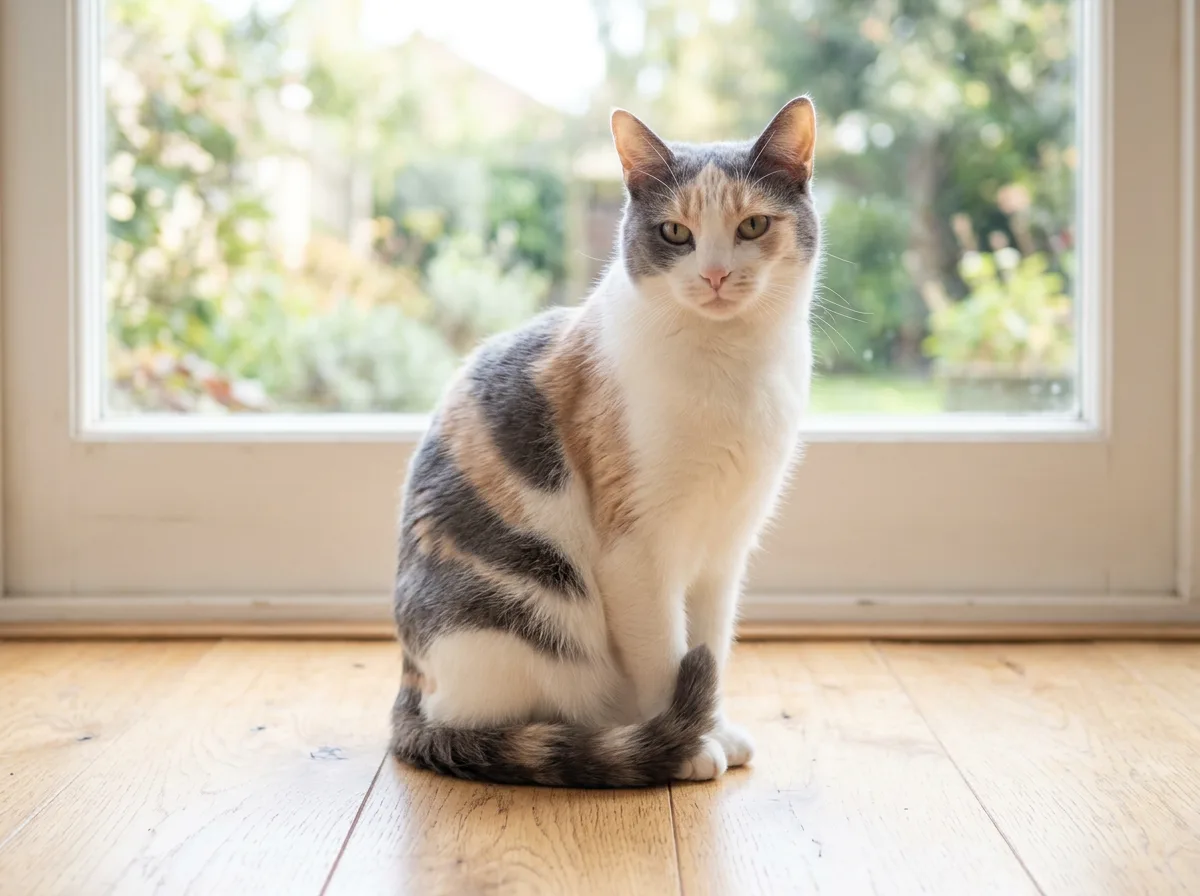
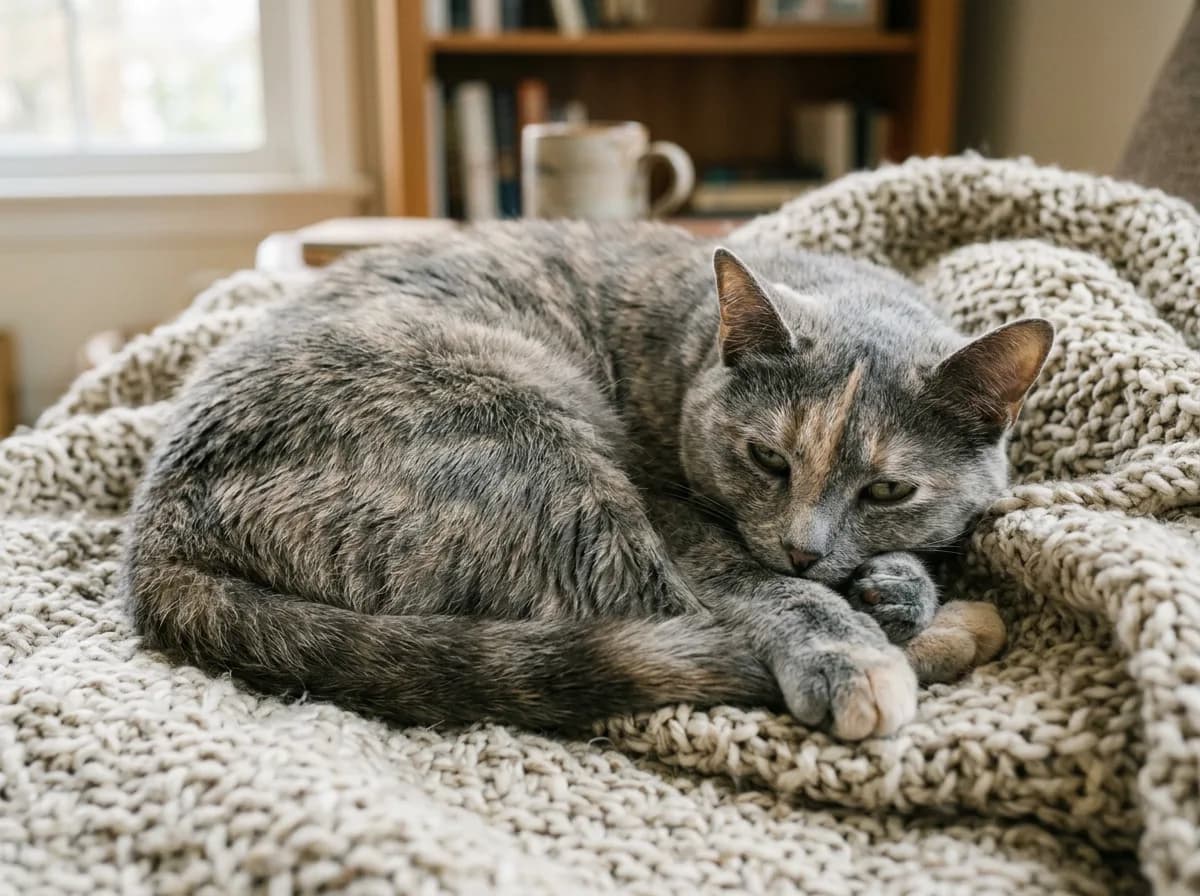
Both patterns come in a pastel edition. The dilution gene, MLPH (melanophilin), is recessive: a cat needs two copies (d/d) for it to show. When it does, black softens to blue-gray and orange softens to cream, turning the bold tri-color palette into something watercolor-soft.
A dilute calico keeps the calico blueprint, a mostly white coat with distinct patches, but the patches are blue-gray and cream instead of black and orange. Breeders often call the look blue-cream and white.
A dilute tortoiseshell follows the tortie blueprint instead: blue-gray and cream brindled together over the whole body, with little or no white. The pattern is usually called blue-cream. Because dilution is recessive, two richly colored parents can produce dilute kittens if both happen to carry a hidden copy of the gene.

63-inch multi-level cat tree with scratch posts, hammock, plush perches, and dangling toys. Vertical territory is non-negotiable for high-energy climbing breeds like the Bengal.
Petful may earn a commission when you click through to Chewy, at no extra cost to you.
Telling the dilutes apart works exactly like telling the standard versions apart: check the white. Mostly white with soft-colored patches means dilute calico; an all-over blue-cream blend means dilute tortie.
Torbie, Caliby, Tortico, and Tortie With White: The In-Between Coats
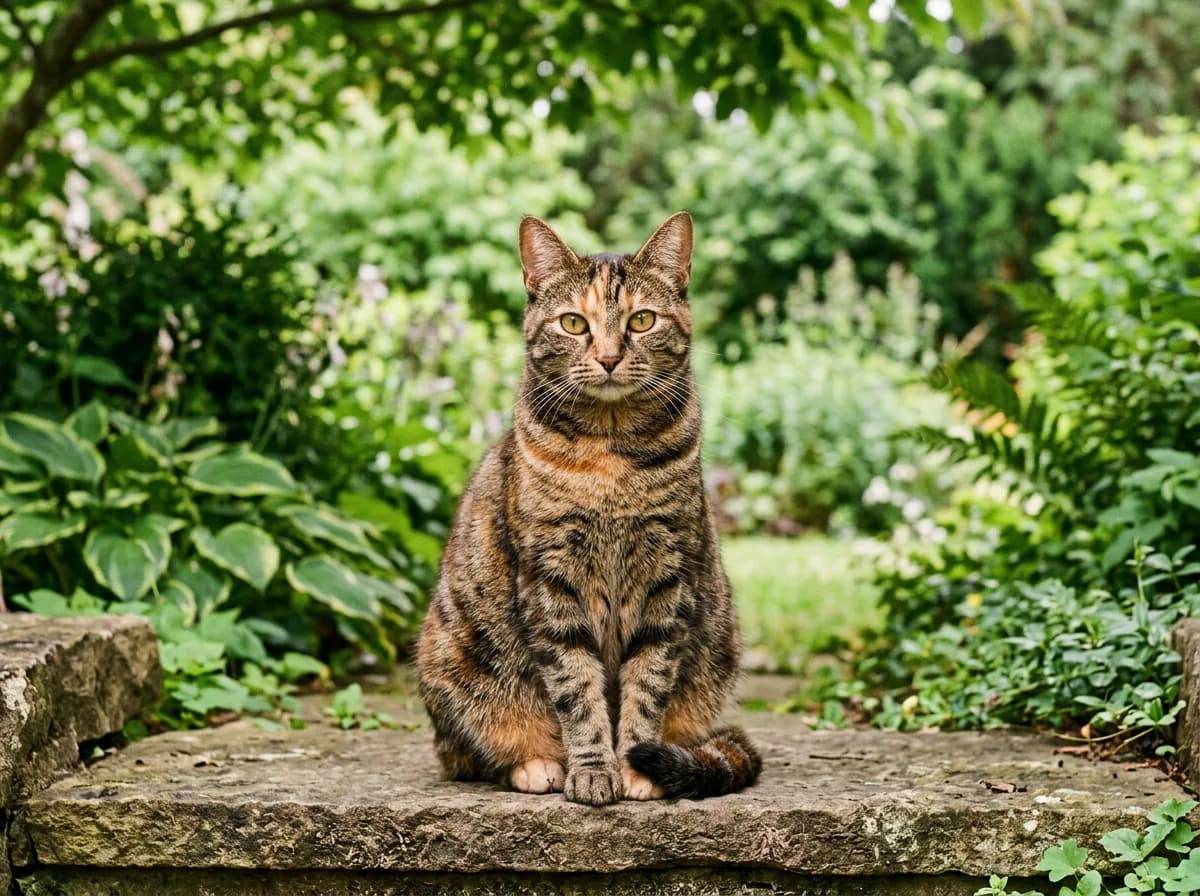
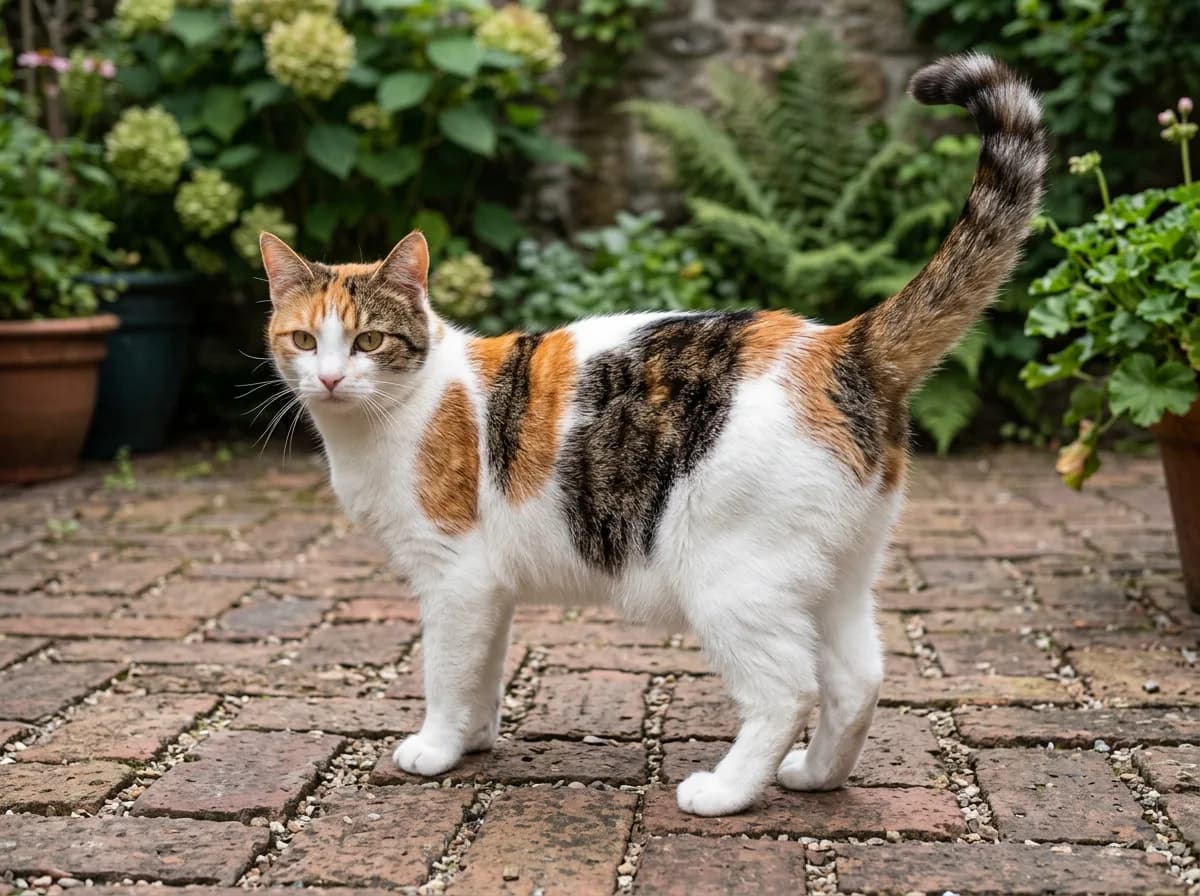
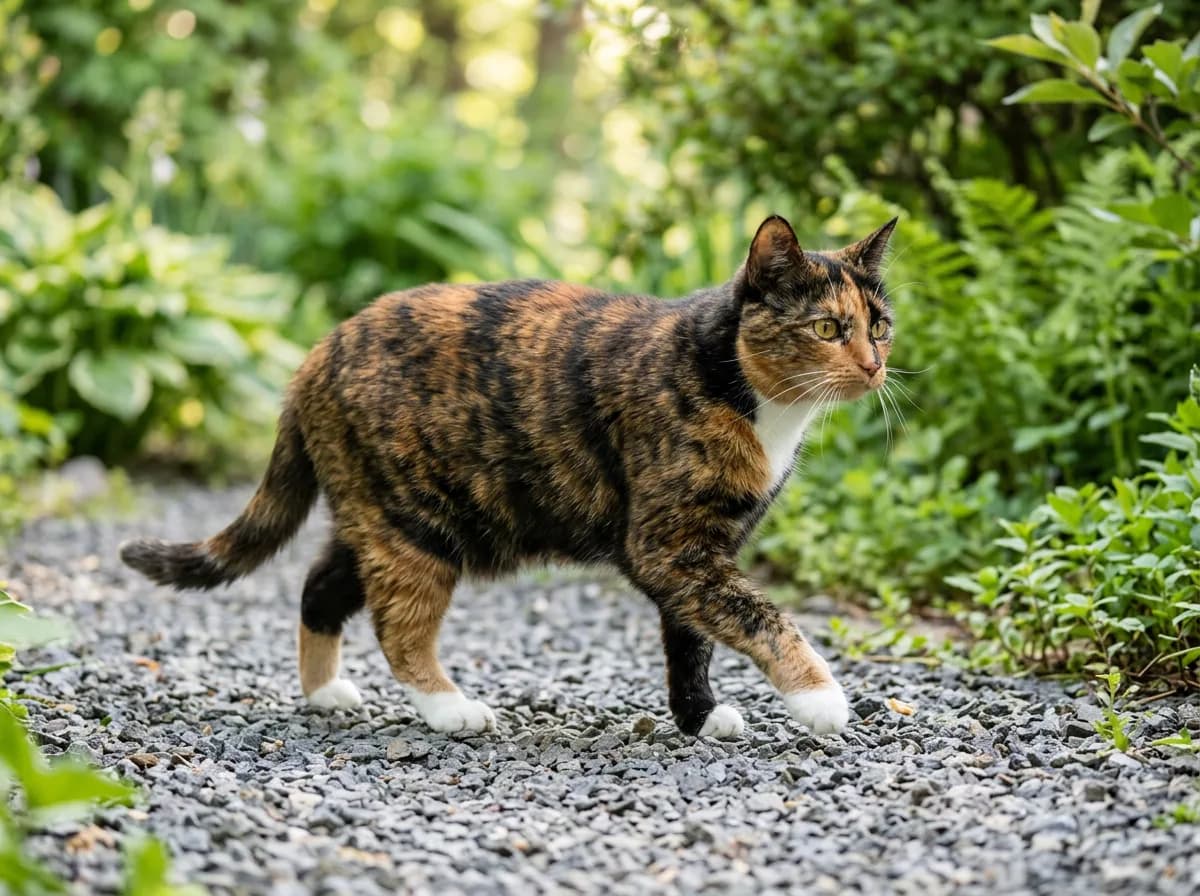
Real cats do not always read the rulebook, and several coats sit between or on top of the classic calico and tortoiseshell definitions.
A torbie (also called a patched tabby) is a tortoiseshell with tabby stripes layered over the brindled orange and black. Look closely at the colored areas: if you see defined striping inside them, plus the classic tabby "M" on the forehead, you have a torbie rather than a plain tortie.
A calico tabby (popularly called a "caliby," sometimes "tabico") is the calico equivalent: a mostly white cat whose orange and black patches carry tabby striping inside them. Almost no one covers the caliby, but the distinction is simple: torbie = tortie plus tabby, caliby = calico plus tabby. If the stripes look familiar, our guide to the types of tabby cats walks through all four core tabby patterns and their colors.
Finally, there is the cat with more white than a tortie but less than a calico. Fanciers call this a tortie with white, and some shelters and enthusiasts use the informal blend word tortico. The brindled tortie texture stays, but white appears on the chest, paws, or belly without taking over the coat.
| Variant | Base Colors | Amount of White | Tabby Striping |
|---|---|---|---|
| Calico | Orange and black patches on white | High, roughly 20 percent or more | None |
| Dilute calico | Blue-gray and cream patches on white | High | None |
| Tortoiseshell | Brindled orange and black | Little to none | None |
| Dilute tortoiseshell | Brindled blue-gray and cream | Little to none | None |
| Torbie (patched tabby) | Brindled orange and black | Little to none | Yes, stripes inside the colored areas |
| Calico tabby (caliby) | Orange and black patches on white | High | Yes, stripes inside the patches |
| Tortie with white (tortico) | Brindled orange and black | Low to moderate, between tortie and calico | None |
Personality: Is Tortitude Real?
Tortie owners swear by "tortitude," and calico owners trade stories of "calico-tude": a sassy, opinionated, vocal streak supposedly wired into the tri-color coat. The honest answer is that personality is not determined by coat pattern, and the best available data is far more modest than the legend.
The most frequently cited evidence is a 2016 study from researchers at the University of California, Davis (Stelow, Bain, and Kass, published in the Journal of Applied Animal Welfare Science). The team surveyed cat guardians online and analyzed 1,274 completed responses. Owners reported slightly more frequent aggressive behaviors toward humans, during everyday handling and vet visits, in sex-linked orange female cats (torties, calicos, and torbies) as a group, along with gray-and-white and black-and-white cats. The differences were small, the data was owner-reported rather than clinically measured, and the authors themselves cautioned against judging a cat by its color.
In other words: tortitude is a fun label, not a diagnosis. Individual temperament, early socialization, and breed background shape a cat's personality far more than the color of her patches, and there is no evidence that calicos and torties differ from each other at all.

108-oz stainless steel pet fountain with quiet pump and water-level window. Bengals are notoriously water-obsessed; a flowing fountain encourages hydration and pulls them away from sinks and toilets.
Petful may earn a commission when you click through to Chewy, at no extra cost to you.
Which Breeds Can Be Calico or Tortoiseshell?
Because both coats are patterns rather than breeds, they appear across a long list of pedigreed cats as well as in random-bred domestic shorthairs and longhairs. Breeds whose standards accept calico or tortoiseshell coloring include the Persian, Maine Coon, Manx, American Shorthair, British Shorthair, Japanese Bobtail, Exotic Shorthair, Devon Rex, Norwegian Forest Cat, and Turkish Van, among others. The luxurious range of Persian cat colors includes both calico and tortoiseshell divisions, and even the famously plush British Shorthair comes in tortie variations. For more, see Petful’s guide to Manx cat colors.
Pricing follows the breed, not the pattern. Adopting a calico or tortie from a shelter typically costs about $50-200, while pedigreed kittens that happen to wear either coat follow their breed's normal pricing, roughly $800-2,500 for most pedigreed kittens. The pattern itself adds no legitimate price premium, and it does not change a healthy cat's expected lifespan of about 12-16 years.
Lucky Cats: Calico and Tortoiseshell Folklore
Tri-color cats drag a charming trail of folklore behind them. In Japan, the calico mi-ke is the traditional model for the maneki-neko, the beckoning-cat figurine displayed in shops to invite good fortune. Japanese sailors prized calico ships' cats as protection at sea, and torties have long carried their own lucky reputation in maritime and Celtic folklore. In the United States, the calico's nickname "money cat" carries the same hopeful theme.
- The calico has been Maryland's state cat since October 1, 2001. Its orange, black, and white coat matches the colors of the Baltimore oriole (the state bird) and the Baltimore checkerspot butterfly (the state insect).
How to Tell If Your Cat Is a Calico or a Tortie
Most people land on this page holding a photo of their own cat, so here is the step-by-step identification checklist no other guide gives you.
1. Estimate the white. If white covers roughly 20 percent or more of the coat and the orange and black sit in separate patches on top of it, you are in calico territory. Little or no white points to tortoiseshell.
2. Look at how the colors meet. Crisp boundaries between solid color blocks say calico. Interwoven, brindled, salt-and-pepper mixing says tortie.
3. Check the belly, chest, and legs. White spotting clears the underside first, so a white belly and white legs strongly suggest calico. A dark belly suggests tortie.
4. Scan for stripes inside the color. Striping within the colored areas (plus an "M" on the forehead) upgrades your answer to torbie (low white) or caliby (high white).
5. Note the shade of the colors. Blue-gray and cream instead of black and orange means you have the dilute version of whichever pattern you identified.
6. Handle the borderline cases. A brindled cat with a white bib and mittens, but a mostly colored body, is a tortie with white (the cat some call a tortico), not a true calico.
- Squint at your cat from a few feet away. If the coat blurs into one brindled, brownish-black tone, you have a tortoiseshell. If clear white blocks still stand out between the color patches, you have a calico.
Run the checklist in order and you will classify nearly any tri-color cat in under a minute, including the in-between coats that fuel endless online debates.
Frequently Asked Questions
Estimate the white. If your cat is mostly white with separate orange and black patches, she is a calico; if the orange and black are woven together with little or no white, she is a tortoiseshell. A small white locket or a few white toes do not make a tortie a calico.
Neither pattern is rare in female cats, and no registry tracks exact numbers. Torties are often considered slightly more common because the calico needs an additional white-spotting gene on top of the tortoiseshell genetics. The genuinely rare cats are males of either pattern, at roughly 1 in 3,000.
Not officially. Registries classify a cat as one or the other based on how much white she has and how separated her patches are. Cats that sit in between, often called tortie with white or tortico, carry more white than a classic tortie but less than a true calico.
Nearly every tortie is female, and each one wears a pattern that can never be exactly duplicated, because random X-chromosome inactivation in the womb decides where every orange and black patch lands. Sailors historically considered torties lucky, and in 2025 scientists finally identified the orange gene (ARHGAP36) behind the pattern.
Yes, but only about 1 in 3,000 calicos is male, a figure from a University of Missouri College of Veterinary Medicine study. Most male calicos and torties are XXY (Klinefelter syndrome) and sterile, though rare fertile males exist, usually chimeras or somatic mosaics.
About 99.9 percent are. Displaying both orange and black normally requires two X chromosomes, the female arrangement. The rare male torties typically carry an extra X chromosome (XXY) or are chimeras formed from two fused embryos.
A torbie, also called a patched tabby, is a tortoiseshell with tabby stripes layered over the brindled orange and black. Look for defined striping inside the colored areas and the classic tabby "M" marking on the forehead.
Both carry two copies of the dilution gene (MLPH), which softens black to blue-gray and orange to cream. A dilute calico is mostly white with blue-gray and cream patches, while a dilute tortoiseshell is a blue-cream brindle with little or no white.
There is no evidence that calicos and torties differ from each other. A 2016 UC Davis survey study found owners reported slightly more frequent aggression in tri-color cats as a group, but the differences were modest and owner-reported, and individual temperament, breed, and socialization matter far more than coat pattern.
No. Both are coat patterns that appear across many breeds, from Persians and Maine Coons to Japanese Bobtails, as well as in countless mixed-breed cats. A cat's breed status comes from its pedigree, never from its color pattern.

Coreen Saito is a pet writer and longtime shelter volunteer with more than a decade in animal rescue. She covers cat behavior, breed care, and the small, ordinary science of sharing a life with companion animals, with a particular focus on honest takes about the products and decisions that actually matter. At home in Arizona, she's outranked by Mac (a dog with the loudest opinion in the house), Rebel (a cat who governs by quiet authority), and Meri (an orange tabby who runs the late shift and the laundry basket). She writes about all three, plus the rescues that keep coming through her life, at LifeWithMinty.com.
Sign up for expert-backed reviews and safety alerts all in one place.