Dilute Calico Cat: Rarity, Colors, Cost, and Care
A dilute calico cat shows soft blue-gray, cream, and white instead of bold black and orange. Learn what makes this pastel coat rare, how the dilution gene works, what it costs, and the best names for your muted calico.
Petful is reader supported. As an affiliate of platforms like Amazon and Chewy, we may earn a commission when you buy through links on this page. There is no extra cost to you.
A dilute calico cat is a tricolor cat whose coat shows soft blue-gray, cream, and white instead of the bold black and orange of a standard calico, and University of Missouri research puts the broader male-calico anomaly at roughly 1 in 3,000, a reminder of just how genetics-driven these pastel coats really are. The muted look comes from a single recessive gene, the MLPH (melanophilin) dilution gene, that lightens every dark pigment the cat produces. Pet geneticists estimate that calico patterning of any kind shows up in about 1 in 1,000 cats, and the diluted version is rarer still because it needs that extra recessive pairing on top of the calico setup. If you have fallen for one of these pastel cats, this guide covers exactly what makes them tick, from the genetics to the price tag to the best names to give one.
- 1A dilute calico cat is a coat PATTERN, not a breed: blue-gray, cream, and white patches instead of bold black, orange, and white.
- 2The muted color comes from the recessive MLPH (melanophilin) d/d dilution gene, which softens black to gray and orange to cream.
- 3Roughly 99.9% of calicos (standard and dilute) are female because the orange gene sits on the X chromosome; male dilute calicos are about 1 in 3,000 and usually sterile.
- 4The pattern itself carries no health risk; a healthy indoor dilute calico typically lives 12-16 years.
- 5Expect about $50-$200 to adopt from a shelter, or roughly $800-$2,500 from a breeder if the cat is also a pedigreed breed.

Sign up for expert-backed reviews and safety alerts all in one place.
What is a dilute calico cat?
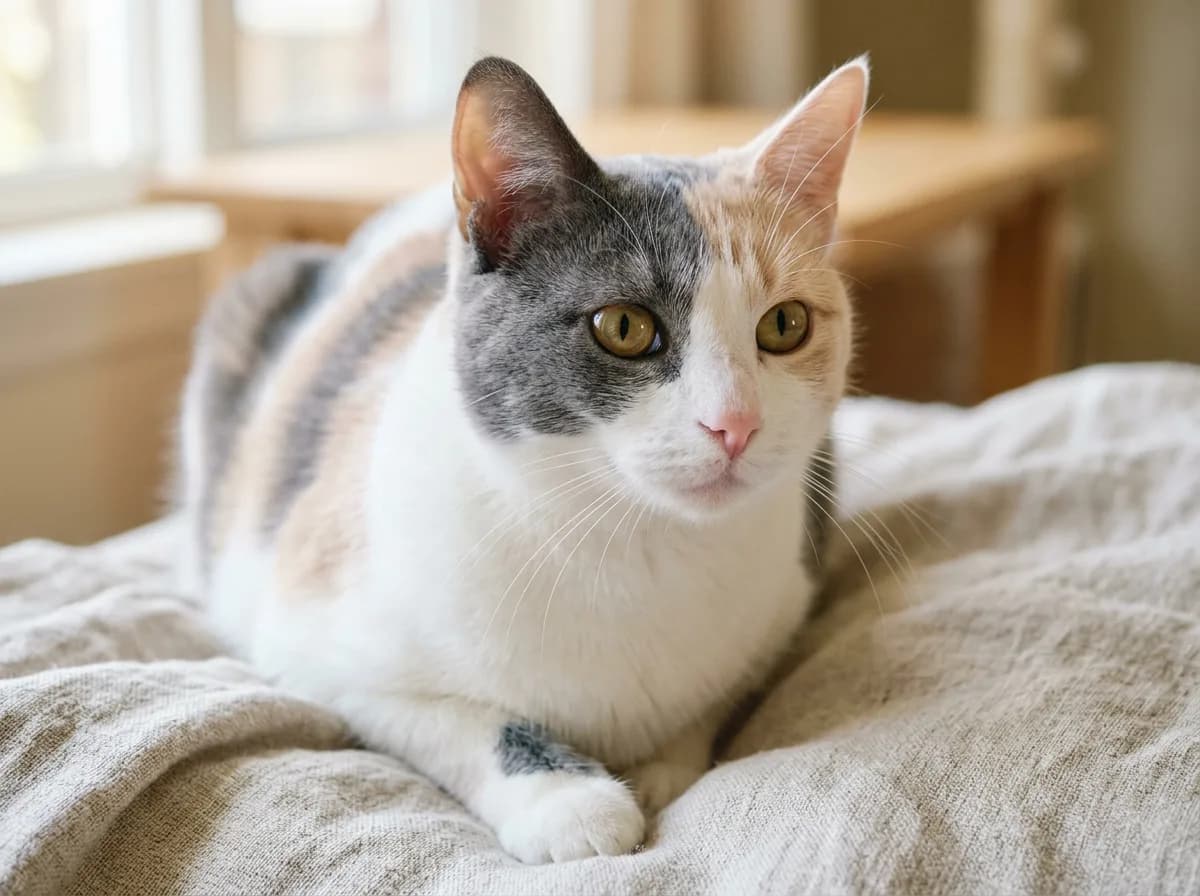
A dilute calico cat is a domestic cat whose coat carries three colors in a muted, pastel form: patches of blue-gray (diluted black), cream or buff (diluted orange), and white. It is the soft-focus version of the classic calico. The word "calico" describes the pattern of distinct color blocks on a mostly white coat, and "dilute" tells you a recessive gene has lightened those colors. Because the underlying genetics are identical to a standard calico apart from one extra gene, a dilute calico is not a separate breed and not a separate species: it is a color expression that can appear in many breeds and in everyday mixed-breed cats. There is more on this in Petful’s guide to Munchkin cat colors.
The Cat Fanciers' Association (CFA) and The International Cat Association (TICA) both recognize calico and dilute calico as accepted coat colors within the breeds that allow them, never as standalone breeds. So when a shelter or a listing calls a cat a "dilute calico," they are describing the way the cat looks, not its pedigree.
The vet-favorite enzymatic toothpaste. Its dual-enzyme system keeps working between brushings to control plaque and freshen breath, and the poultry flavor makes daily brushing easy.
Petful may earn a commission when you click through to Chewy, at no extra cost to you.
- A dilute calico is a tricolor cat showing blue-gray, cream, and white instead of black, orange, and white. The pastel effect comes from a recessive dilution gene. It is a coat pattern that appears across many breeds, not a breed of its own.
What does a dilute calico cat look like?
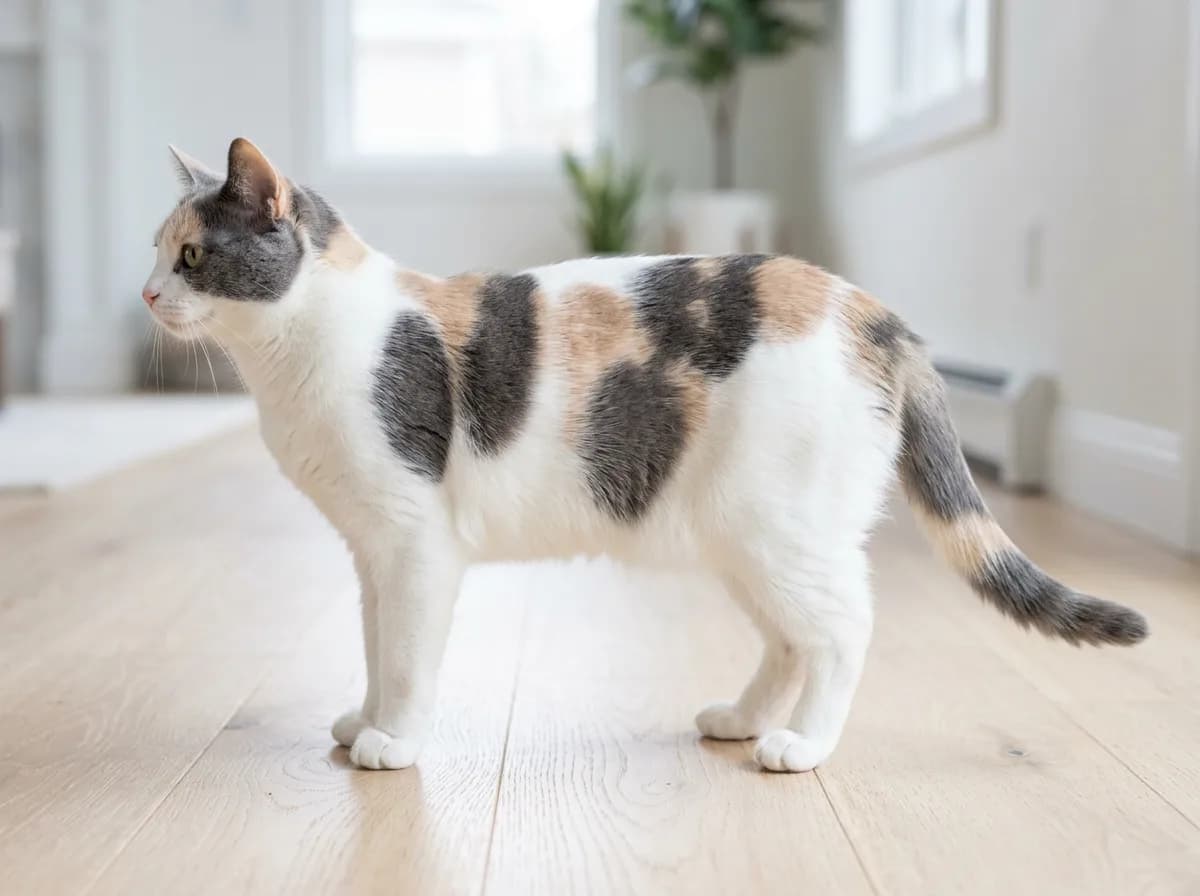
Picture a calico cat that someone gently turned the saturation down on. Where a standard calico has jet-black and vivid orange patches, a dilute calico shows the same map of color blocks in blue-gray and cream, set against white. The result is the airy, dusty-pastel coloring that people often search for as a "grey dilute calico" or "blue-gray calico."
A few features set the dilute look apart:
- Blue-gray patches instead of black. Breeders call this color "blue," but to the eye it reads as a soft slate or dove gray.
- Cream or buff patches instead of bright orange. These can range from pale apricot to a warm light tan.
- Crisp white areas, usually across the chest, belly, legs, and face, separating the colored patches.
- Softer edges. Dilute patches often blend a little more at the borders than the sharp, high-contrast patches of a standard calico.
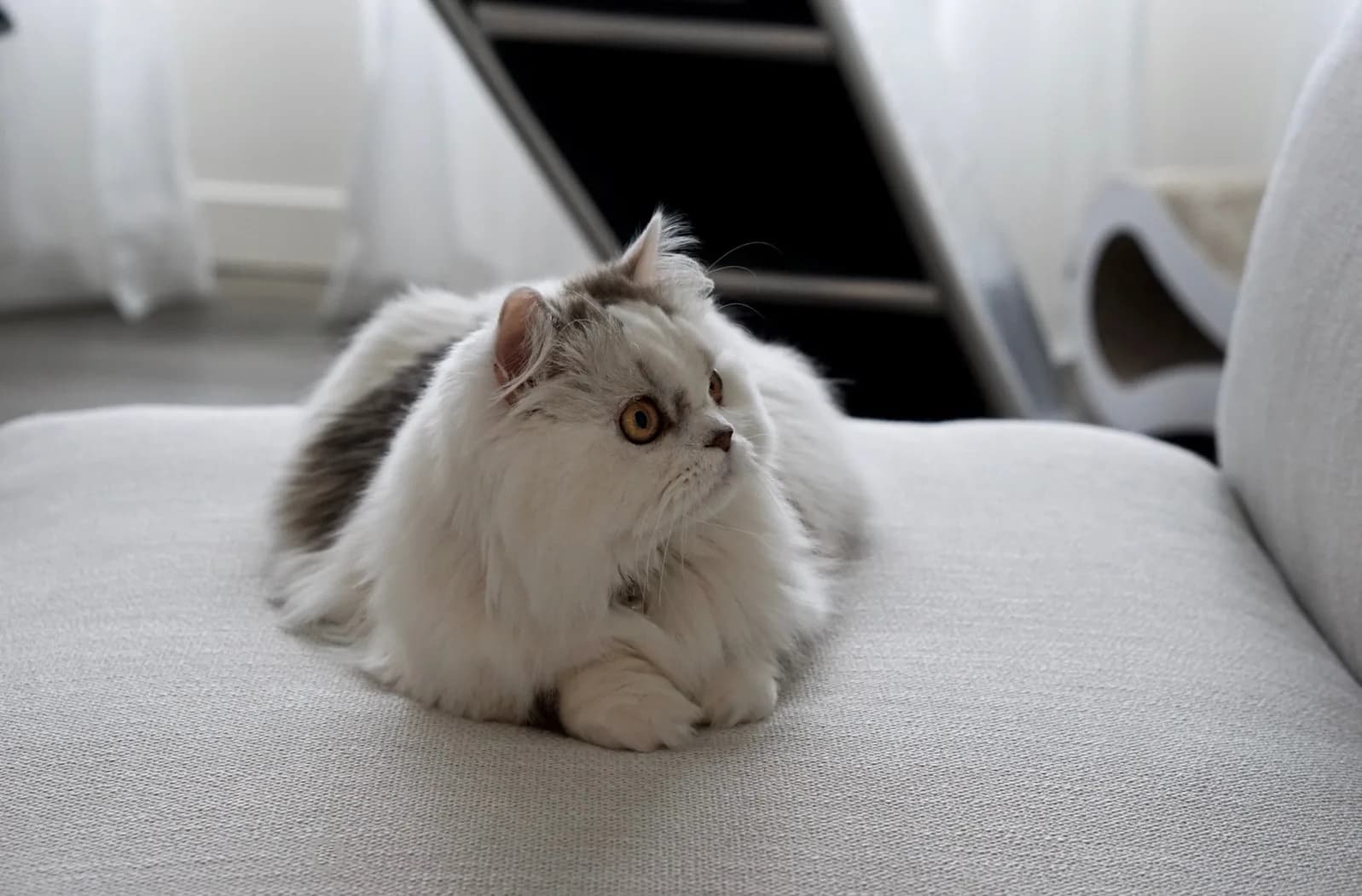
Coat length varies entirely with the breed behind the cat. A dilute calico domestic shorthair has a sleek, close coat that shows the pastel blocks clearly, while a dilute calico Persian or Maine Coon carries the same colors in long, flowing fur that can make the patches look even more cloud-like.
- If the dark patches look gray rather than black and the warm patches look cream rather than orange, you are almost certainly looking at a dilute calico. The white should still be clearly white, not muted.
Dilute calico vs. standard calico: what's the difference?
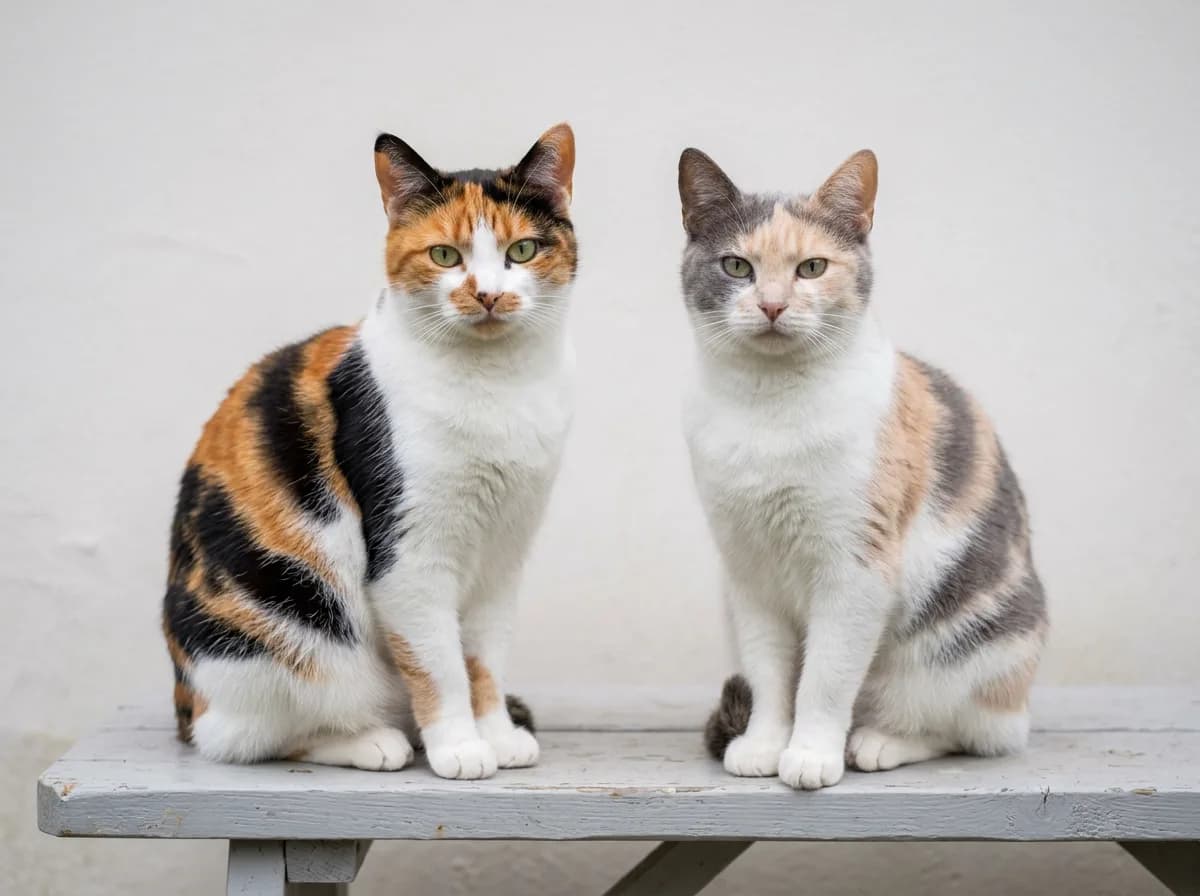
The only genetic difference between a standard calico and a dilute calico is the dilution gene. A standard calico produces full-strength pigment, so its dark patches are true black and its warm patches are saturated orange. A dilute calico carries two copies of the recessive MLPH dilution gene, which lightens that same pigment to gray and cream. Same three-color pattern, same mostly-white base, lower color intensity.
| Feature | Standard Calico | Dilute Calico |
|---|---|---|
| Dark patches | True black | Blue-gray ("blue") |
| Warm patches | Bright orange/red | Cream/buff |
| White base | White | White |
| Genetic driver | Full pigment (no dilution) | Two copies of recessive MLPH (d/d) |
| Overall look | High contrast, bold | Soft, pastel, muted |
| Rough rarity | About 1 in 1,000 cats | Rarer still (needs extra recessive pair) |
That extra recessive requirement is exactly why dilute calicos turn up less often. A cat can only look dilute if it inherits the dilution gene from BOTH parents. Two non-dilute parents who each secretly carry one copy can still produce a dilute calico kitten, which is why these cats sometimes appear unexpectedly in litters.
- You will see dilute calicos called "muted calicos" online, which is just a plain-language label for the same pastel pattern. The term "reverse calico" is sometimes used for cats that are mostly colored with small white patches, but that describes how much white there is, not the dilution.
Are dilute calico cats rare?
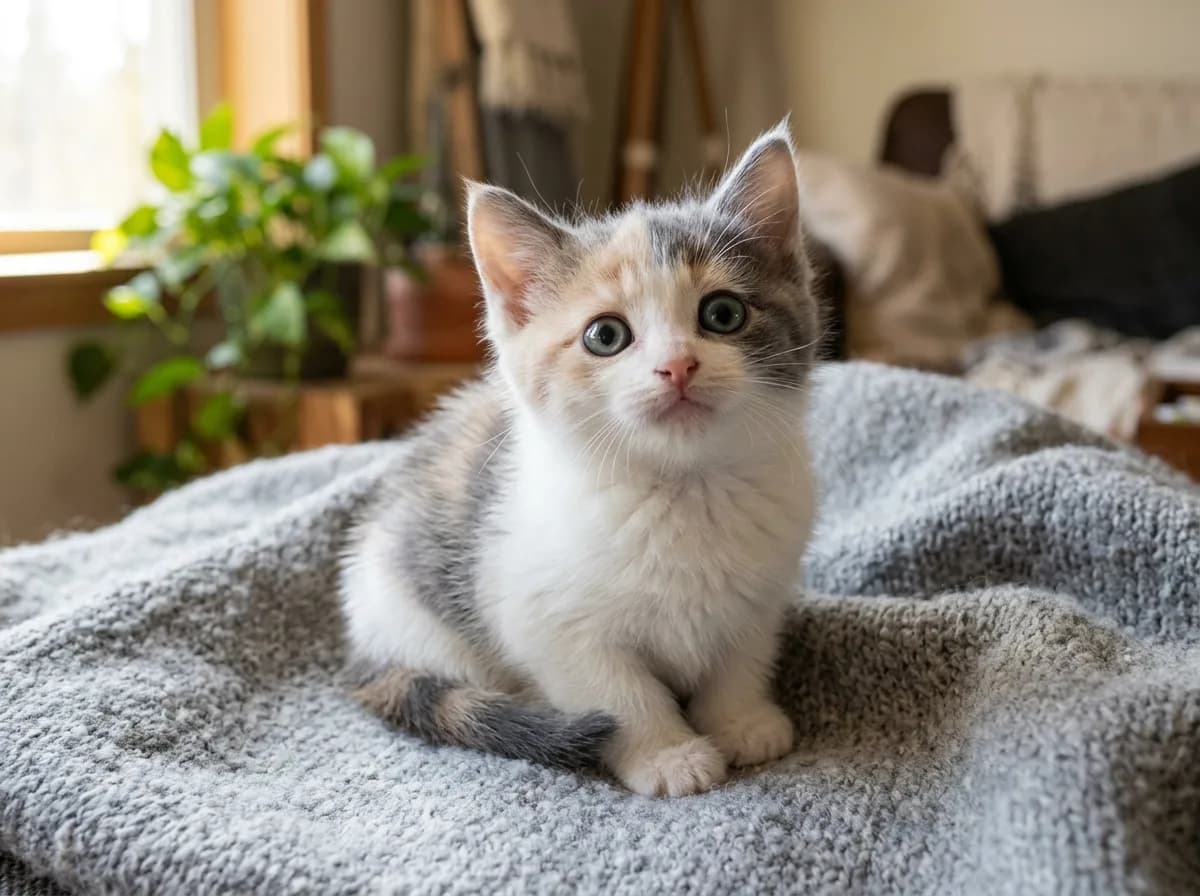
Yes, dilute calicos are genuinely uncommon, and the rarity stacks in layers. First, calico patterning itself appears in only about 1 in 1,000 cats, since it depends on a specific combination of the X-linked orange gene plus the white-spotting gene. On top of that, a dilute calico also needs two copies of the recessive dilution gene. Each added requirement narrows the odds, which is why estimates for dilute calicos specifically tend to land somewhere in the range of roughly 1 in 1,000 to 1 in several thousand cats, depending on the local cat population and how strictly you define the color.

Never Scoop Again® with the Whisker Litter-Robot, the smart self-cleaning automatic litter box. Monitor visits and track weights for better overall care in the Whisker® app. Multi-cat friendly.
Petful may earn a commission when you click through to Whisker, at no extra cost to you.
Layer in sex, and the math tightens further. Because the pattern is X-linked, about 99.9% of all calicos, dilute included, are female. So a dilute calico female is uncommon, and a dilute calico male is one of the rarest cats you will ever meet.
One caution before the cost section: rarity makes a dilute calico special to look at, but it does not make one a premium product. Pattern rarity has no breeding value, and a responsible source prices a cat on health, breed, and care, never on a coat color upsell.
The genetics behind the dilute gene
Three pieces of genetics combine to make a dilute calico, and they are worth understanding because they explain everything from the sex ratio to the rarity.
The orange gene and X-inactivation
The gene that switches a cat between orange and black pigment sits on the X chromosome. In 2025, two independent teams (Greg Barsh's group at HudsonAlpha and Stanford, and Hiroyuki Sasaki's team at Kyushu University) identified this long-sought orange gene as a regulatory deletion near ARHGAP36, published in Current Biology. A female cat has two X chromosomes. If one X carries orange and the other carries non-orange, she can display both colors at once.
How? Through a process called X-chromosome inactivation, or lyonization, first described by geneticist Mary Lyon in 1961. Early in development, each cell randomly switches off one of its two X chromosomes for good, and all of that cell's descendants keep the same X switched off. The result is a living mosaic: some patches of skin express the orange X, others express the non-orange (black) X. That mosaic is the tortoiseshell. Add the white-spotting gene, and the colors separate into the larger, distinct blocks on white that we call calico.
The dilution gene that mutes the color
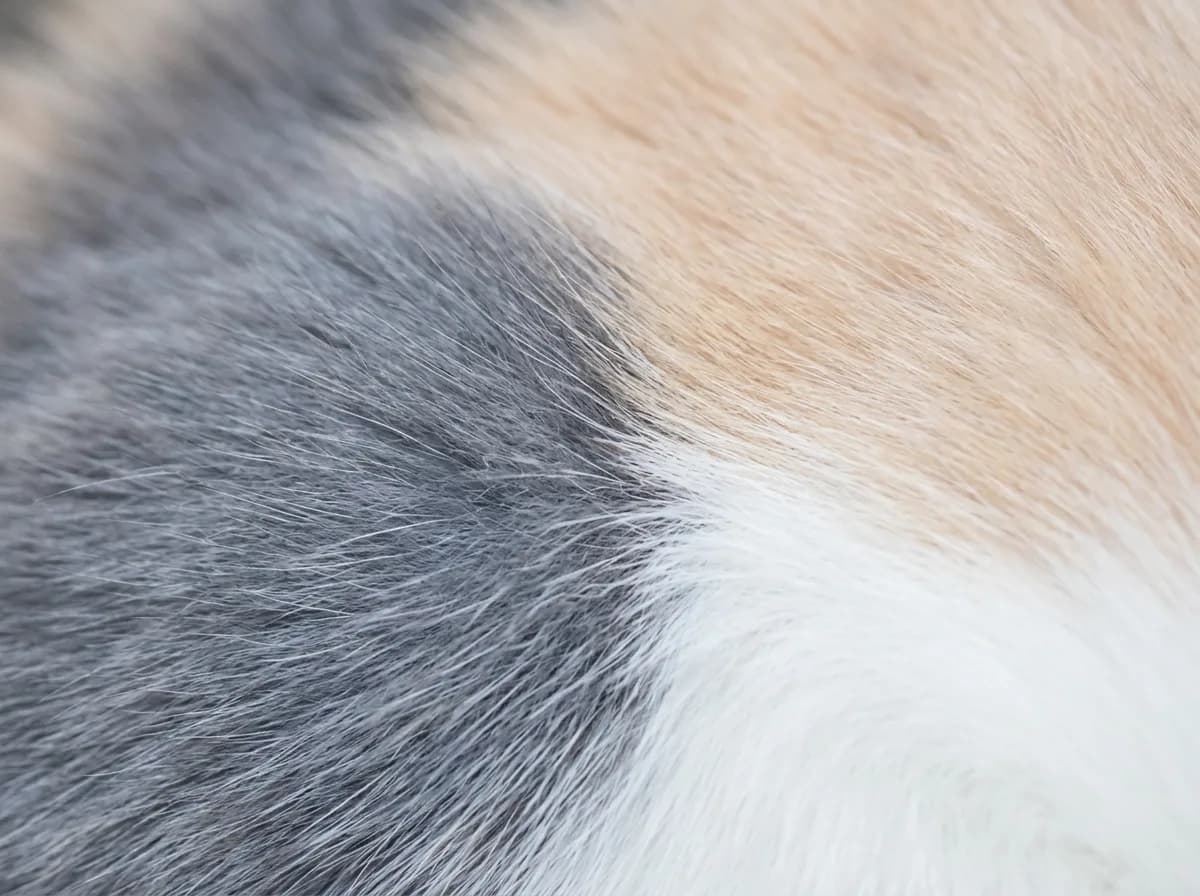
Sitting on top of all that is the dilution gene, the MLPH (melanophilin) gene. The dilute version (written d) is recessive, so a cat needs two copies, one from each parent, to show the muted look. The mutation, a single-base deletion confirmed by the UC Davis Veterinary Genetics Laboratory, changes how pigment granules are packed into the growing hair. Instead of dense, even pigment, the granules clump, so the eye reads the color as lighter: black becomes blue-gray, and orange becomes cream. Apply that to a calico and you get a dilute calico.
This is also why a dilute calico is a pattern and not a breed. Calico and dilution are color genes that ride along inside whatever breed the cat happens to be: a Persian, a Maine Coon, and an alley cat can all be dilute calicos. The genes determine the color; the breed determines everything else.
Can a dilute calico cat be male?
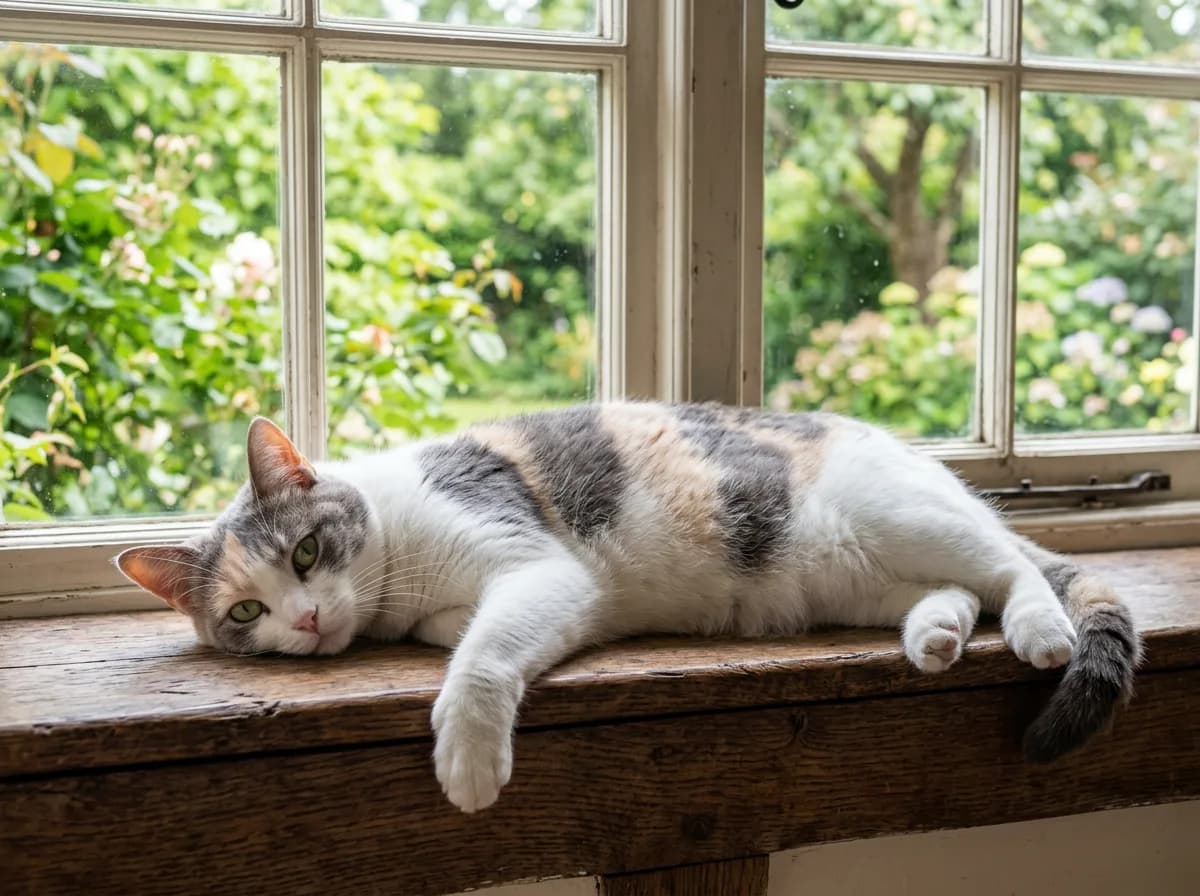
Almost never, but not literally never. Because the orange-versus-black choice lives on the X chromosome, a typical male cat (XY) has only one X, so he can show orange OR black, but not both at once, which means he cannot be a normal calico or tortoiseshell. That is why roughly 99.9% of calicos are female.
The rare male calicos that do exist, including dilute males, usually come from one of three quirks:
- Klinefelter syndrome (XXY). The cat carries an extra X chromosome, giving him two X's to play the calico mosaic game. These males are almost always sterile and can face extra health issues tied to the chromosomal imbalance.
- Chimerism. Two early embryos fuse into one cat that carries two cell lines. A few of these chimeric males can actually be fertile.
- Somatic mosaicism. A genetic change happens in some cells during development, producing patches the orange gene would not otherwise allow.
The commonly cited figure, from a University of Missouri study, is that male calicos occur about once in every 3,000 calico cats. A dilute male calico is rarer than that because it also needs the double recessive dilution gene.
Treat a male dilute calico as a curiosity, not a prize. Do not pay a premium for one expecting breeding value: the overwhelming majority are sterile, and the rare fertile chimeras do not pass on the pattern in any predictable way. A vet check matters more than the novelty.
Dilute calico vs. dilute tortoiseshell
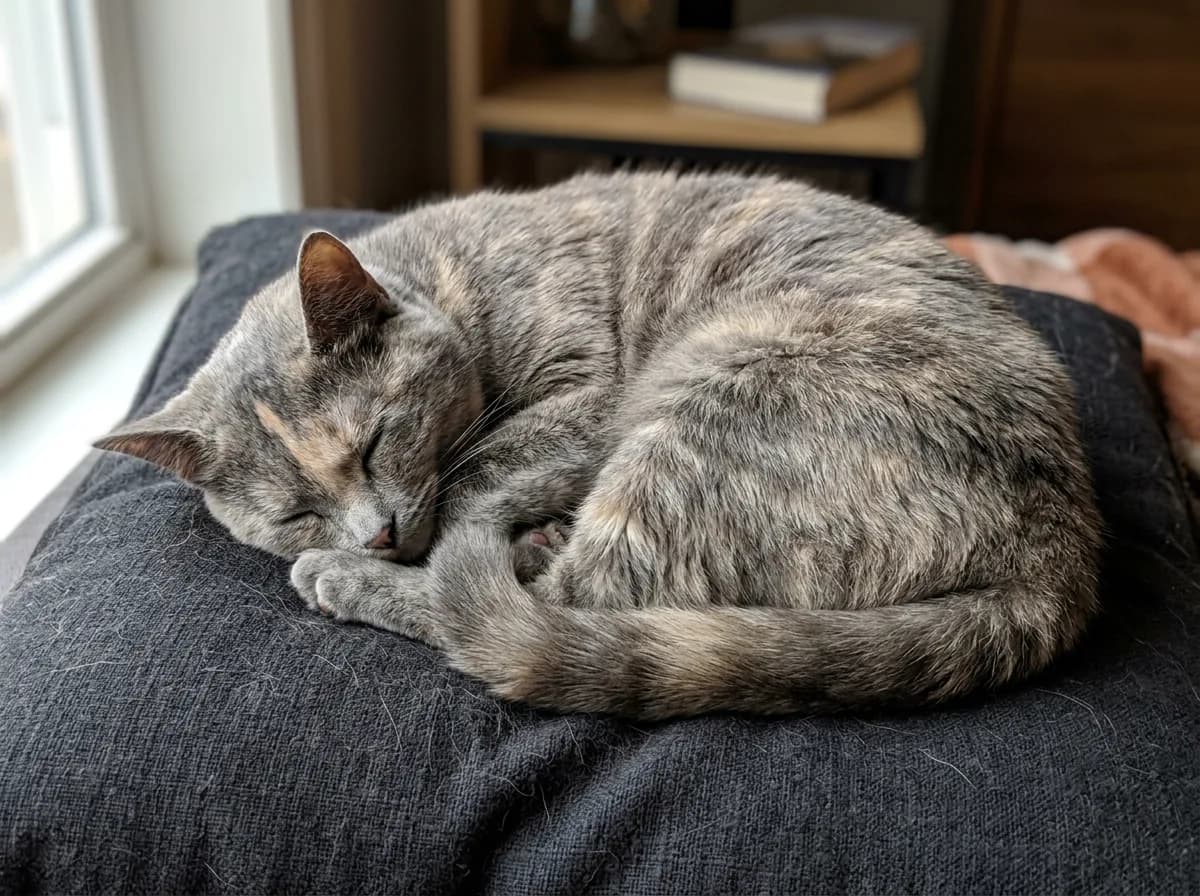
People mix these two up constantly, so here is the clean distinction. The difference between any calico and any tortoiseshell is white, specifically the white-spotting gene.
- A dilute calico has the white-spotting gene, so its blue-gray and cream show up as distinct patches separated by clear areas of white. Think of it as a tricolor: gray, cream, and white in defined blocks.
- A dilute tortoiseshell (often called a "dilute tortie" or "blue-cream") has little or no white. Its blue-gray and cream are brindled and swirled together in a marbled, interwoven mix rather than separate patches.
So if the muted colors sit in clear blocks on a white coat, it is a dilute calico. If the gray and cream blend together with almost no white, it is a dilute tortie.
| Trait | Dilute Calico | Dilute Tortoiseshell (Blue-Cream) |
|---|---|---|
| White coat | Yes, prominent | Little to none |
| Color layout | Distinct blue-gray and cream patches | Brindled, swirled blue-gray and cream |
| Driver | White-spotting gene + dilution | Dilution, no major white-spotting |
| Common name | Dilute or muted calico | Blue-cream, dilute tortie |
- If a dilute calico's gray or cream patches have visible tabby stripes inside them, the cat is called a "caliby" or dilute calico tabby. Many cats with orange (and therefore cream) patches show faint striping, because orange-based pigment always reveals some tabby pattern.
What cat breeds can be dilute calico?
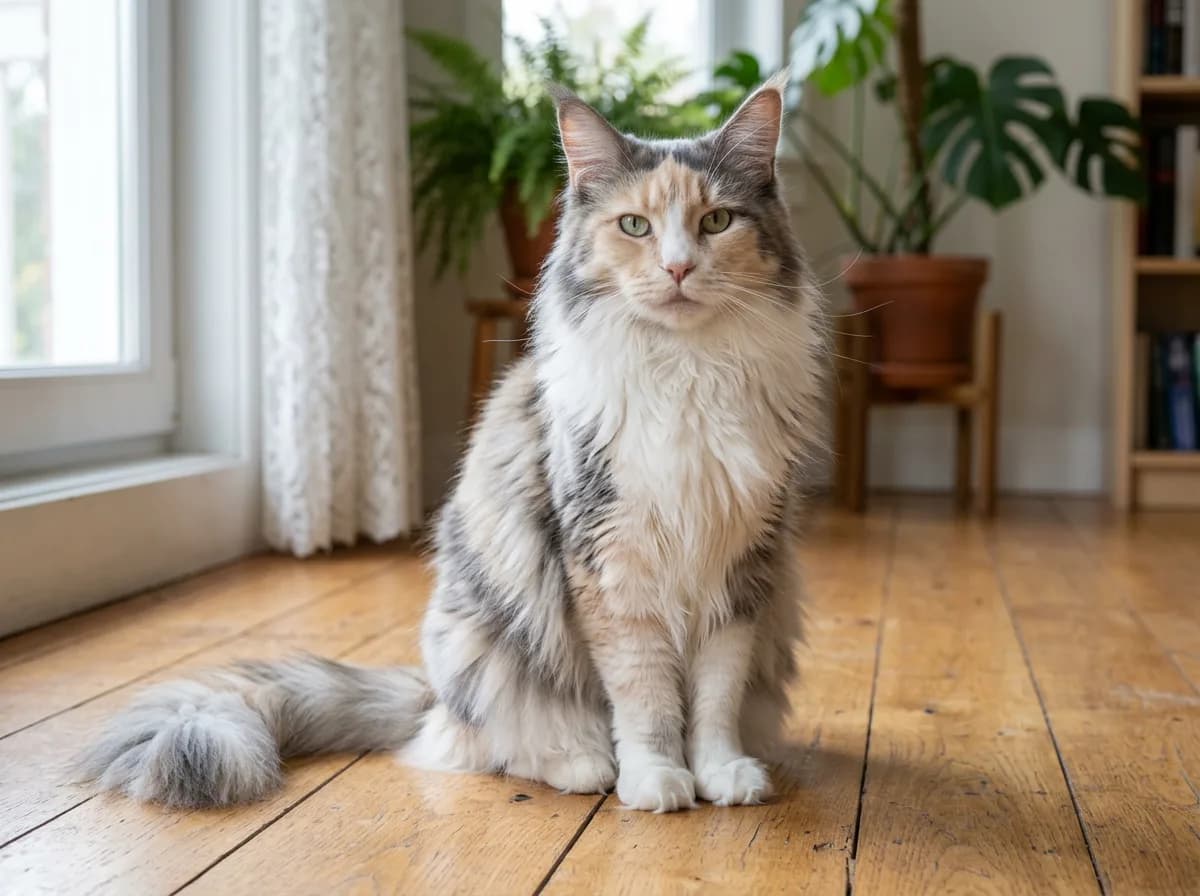
Because dilute calico is a color pattern rather than a breed, any breed that allows the calico color and carries the dilution gene can produce one. The pattern is most associated with mixed-breed domestic shorthairs and longhairs, simply because there are so many of them, but plenty of pedigreed breeds can wear it too.
Breeds that can appear as dilute calico include:
- Persian (longhair, classic pastel dilute calicos)
- Exotic Shorthair (the shorthaired Persian cousin)
- Maine Coon (large longhair, dramatic dilute patches)
- American Shorthair
- British Shorthair (famous for its plush blue/dilute coats)
- Manx
- Japanese Bobtail (the mi-ke tricolor tradition)
- Norwegian Forest Cat
- Turkish Van and Turkish Angora
- Devon Rex and Cornish Rex
- Scottish Fold
A dilute calico shorthair is the most common version simply because shorthaired cats outnumber longhaired ones. If you want a specific breed AND the dilute calico color, you will be searching a narrow slice of an already-rare color, so patience and a reputable breeder or breed-specific rescue both help.
If you love the look of dilute or blue coats in general, breeds like the British Shorthair are known for their plush gray and dilute coloring, and the Maine Coon's color range shows just how many ways the dilution gene can present in a single breed.

63-inch multi-level cat tree with scratch posts, hammock, plush perches, and dangling toys. Vertical territory is non-negotiable for high-energy climbing breeds like the Bengal.
Petful may earn a commission when you click through to Chewy, at no extra cost to you.
Dilute calico cat personality and temperament
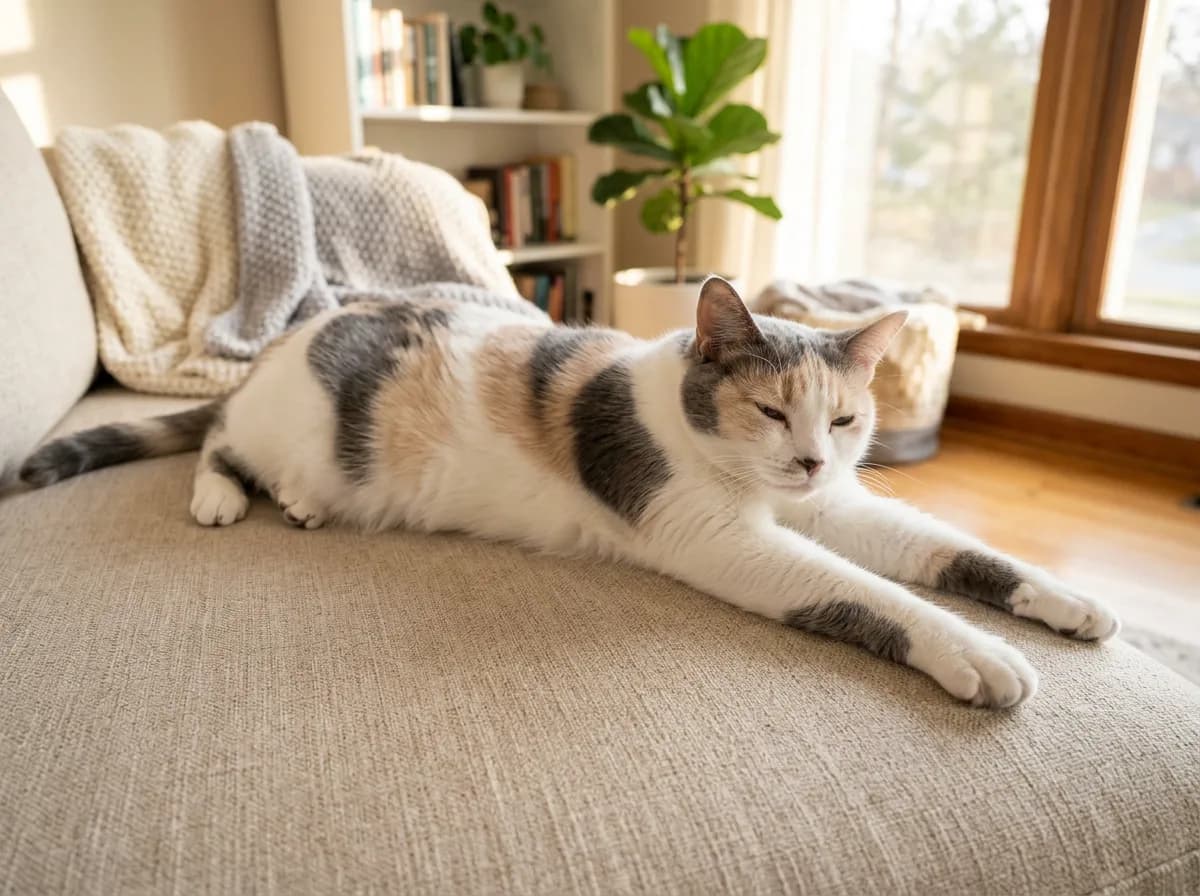
Here is the honest answer many sites skip: coat color does not set personality. A dilute calico is not a behavioral type, it is a color. Two dilute calicos from different litters can have completely opposite temperaments, because what shapes a cat's behavior is its breed, its individual genetics, its early socialization, and how it is treated, not the pigment in its fur.
You may run into the idea of "tortitude" or "calico-tude," the folklore that tricolor cats are sassier or more strong-willed. It is a fun idea, but it is not scientifically established. The closest real data comes from a UC Davis veterinary survey (Stelow, Bain, and Kass, published 2016 in the Journal of Applied Animal Welfare Science), which found that owners REPORTED slightly higher levels of certain feisty behaviors in tricolor cats. The key words are "owner-reported" and "slightly." The effect was modest, it relied on human perception, and individual variation dwarfed any pattern-based trend.
Treat tortitude as charming folklore, not a guarantee: a dilute calico's color tells you nothing reliable about whether it will be a lap cat or a livewire. So judge a dilute calico the way you would judge any cat: spend time with it, watch how it responds to handling, and ask the shelter or breeder about its individual character. The pastel coat is a bonus, not a personality profile.
Health and lifespan of a dilute calico cat
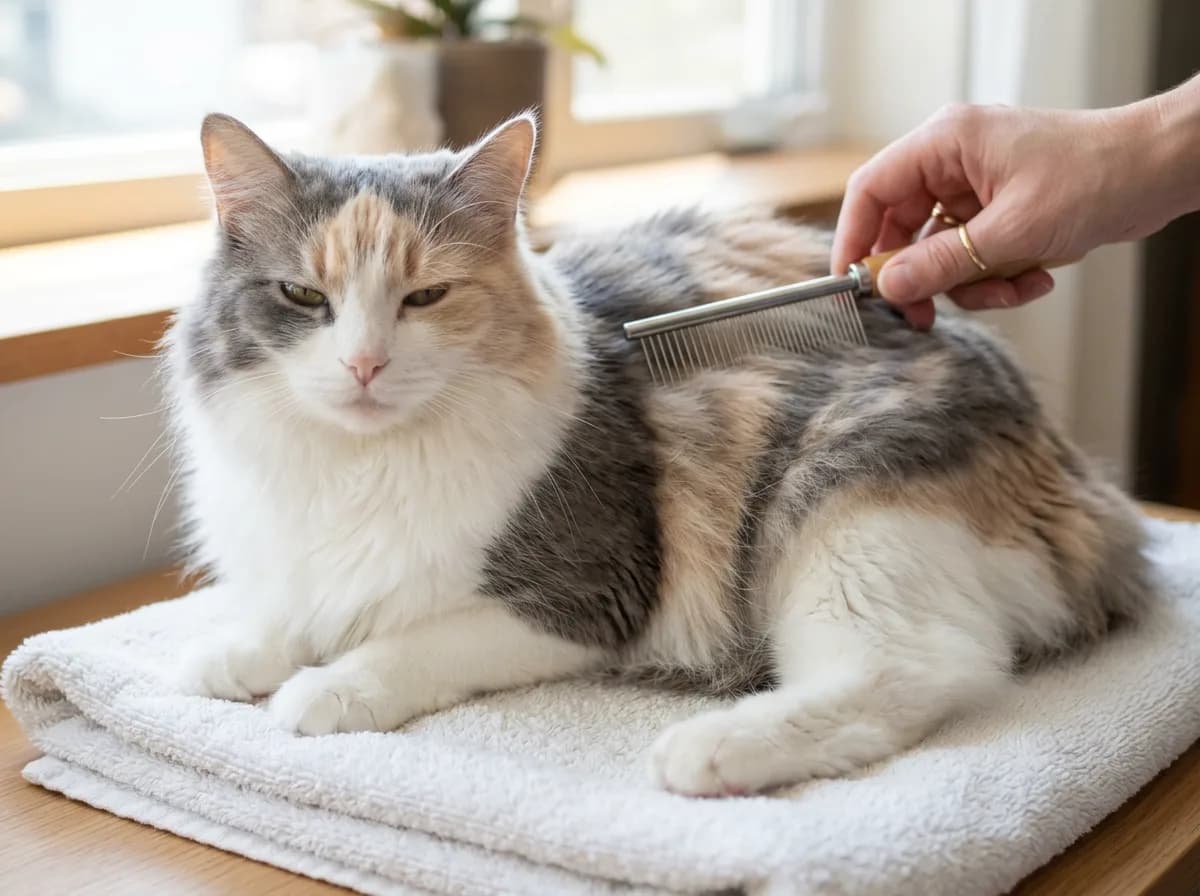
The reassuring news is that the dilute calico coat pattern itself carries no inherent health risk. The MLPH dilution gene affects pigment, not organs, so a dilute calico is no more disease-prone than any other cat of the same breed and lifestyle. A healthy, well-cared-for indoor dilute calico typically lives 12-16 years, with some reaching their late teens or even 20.
The one real caveat involves the rare male dilute calicos. Males that are calico because of Klinefelter syndrome (XXY) can have shorter lifespans and a higher rate of health problems linked to the extra chromosome, on top of being almost always sterile. That risk is tied to the chromosomal anomaly that let them be calico in the first place, not to the dilute color.
- A female dilute calico has no pattern-linked health risks. The exception is a rare XXY male dilute calico, who deserves a thorough vet workup for chromosome-related issues. The dilute coloring is never the problem; the underlying chromosome anomaly in males can be.
Otherwise, a dilute calico's health depends on standard cat factors: the breed's known conditions, weight management, dental care, parasite prevention, and routine vet visits. Whatever breed sits behind the pastel coat, screen for that breed's typical concerns. For a deeper look at how genetics can produce unusual but mostly harmless quirks, the story of polydactyl cats is a useful parallel: a striking inherited trait that, on its own, rarely affects health.
Grooming and coat care
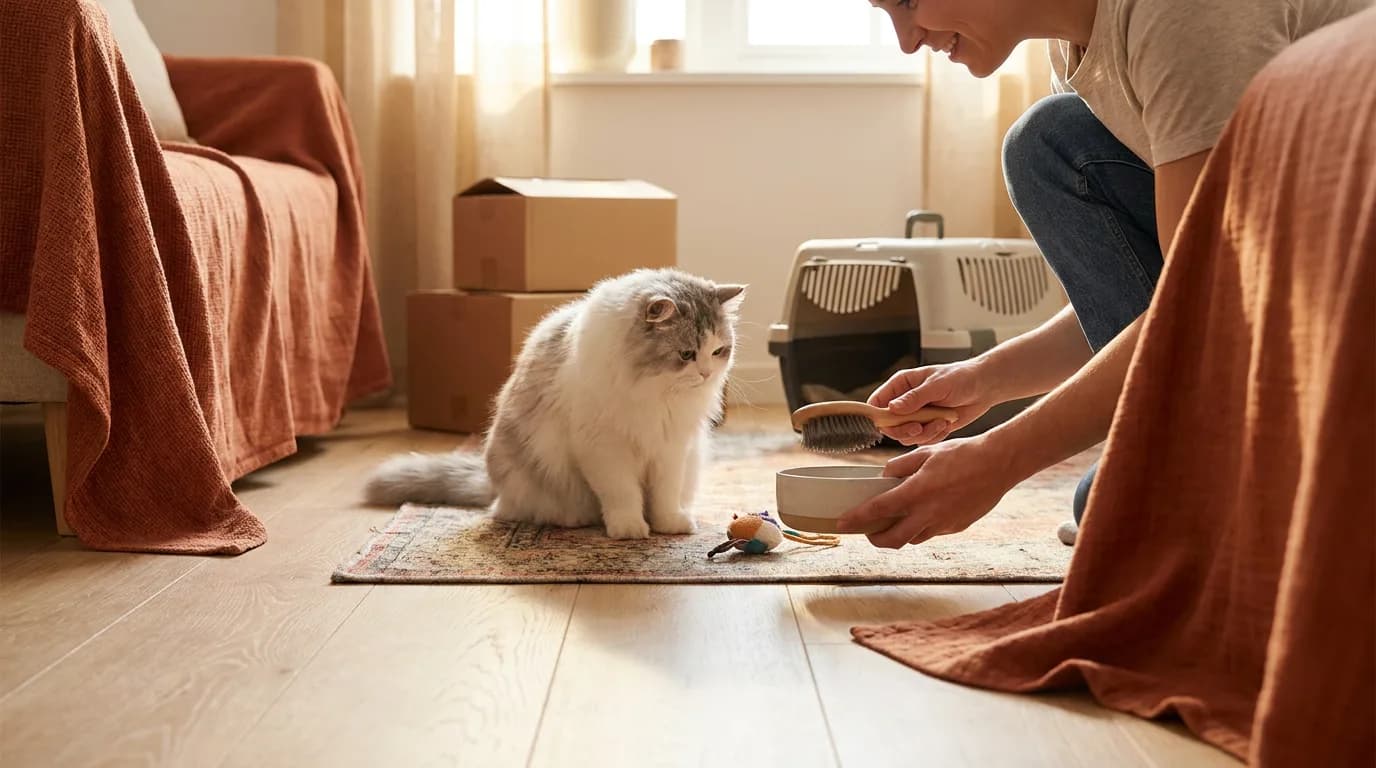
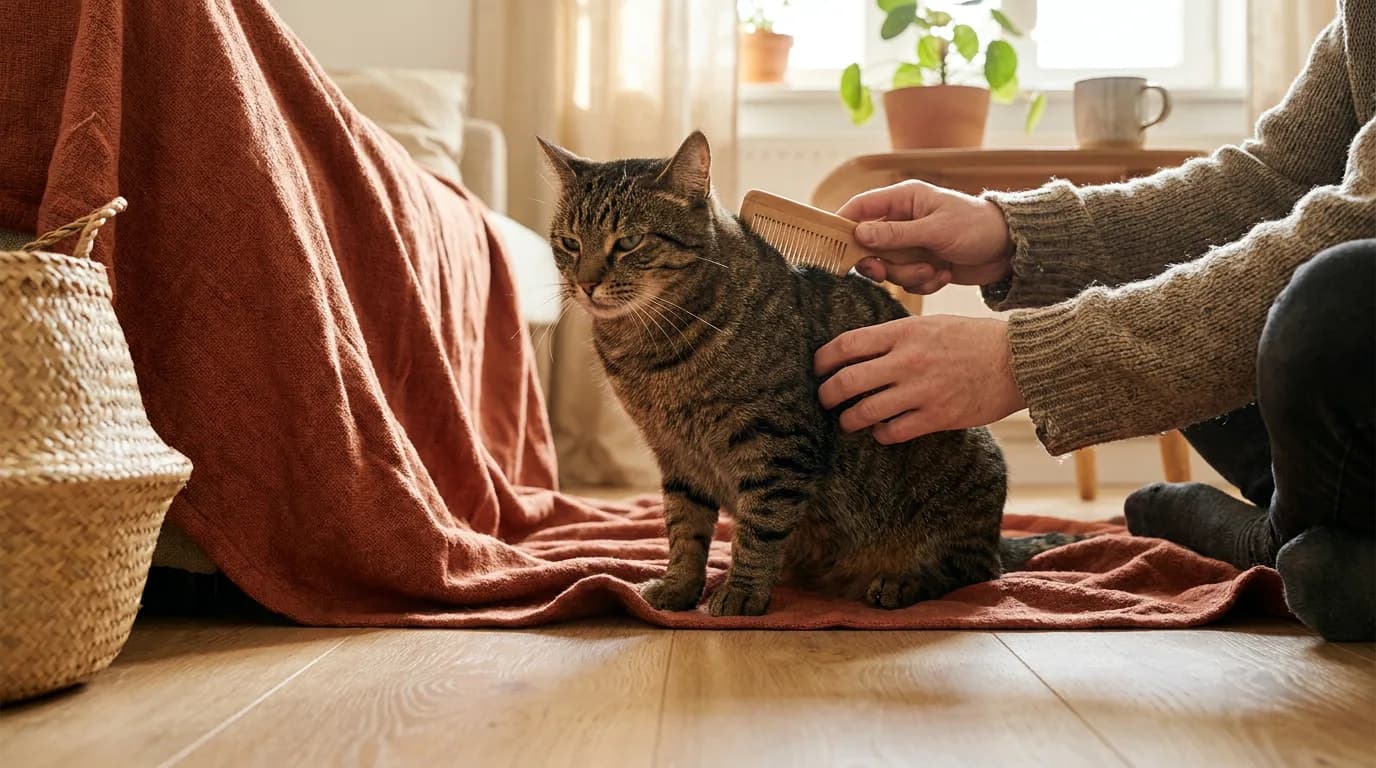
Coat care for a dilute calico depends entirely on hair length, not color. A dilute calico shorthair needs only weekly brushing to remove loose hair and the occasional nail trim. A longhair dilute calico (a dilute Persian, Maine Coon, or Norwegian Forest Cat type) needs daily or near-daily combing to prevent mats and tangles, plus attention to the belly and behind the ears where knots form. The pastel coat does not need any special products; a gentle routine that suits the breed's coat length keeps a dilute calico looking its soft, cloudy best.
How much does a dilute calico cat cost?
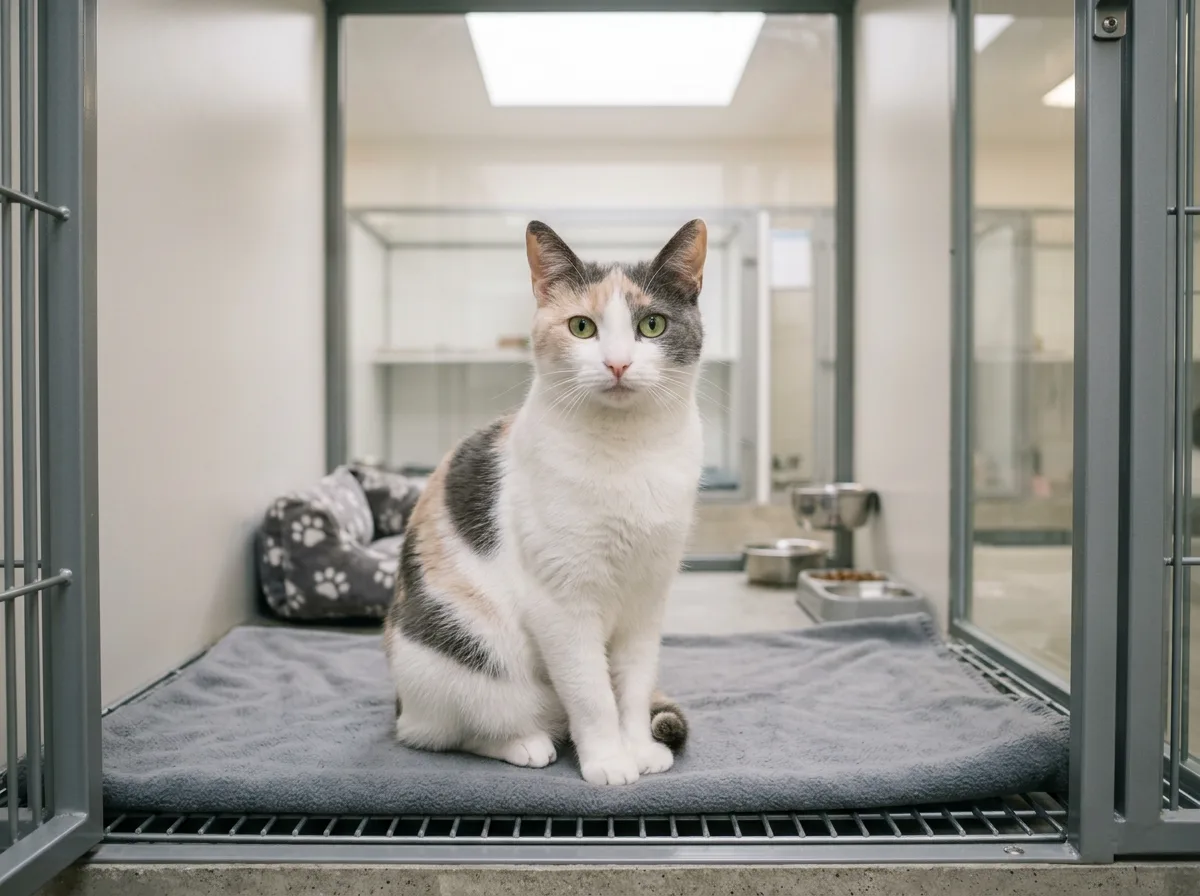
Cost depends almost entirely on the source and whether the cat is also a pedigreed breed, not on the dilute color by itself. Reputable sources never charge a "dilute premium" as if the coat were a luxury feature.
| Source | Typical Cost | What You Get |
|---|---|---|
| Shelter or rescue adoption | $50-$200 | Usually spay/neuter, vaccines, microchip, vet check included |
| Breed-specific rescue | Modestly above standard shelter fees | Same plus breed screening |
| Reputable breeder (pedigreed breed that is also dilute calico) | $800-$2,500 | Registered pedigree, health testing, early socialization |
| Specialty or show-line breeders | Top of the breed's range (toward $2,500) | Top show or breeding lines of a specific breed |
The takeaway: if you simply want a dilute calico companion, a shelter or rescue is by far the most affordable and ethical route, often $50 to $200 all in. If you want a dilute calico of a SPECIFIC pedigreed breed (say a dilute calico Persian or British Shorthair), you are paying that breed's normal price, roughly $800 to $2,500, and the dilute color is incidental to the cost.
- Any seller marketing a dilute or muted calico as a "rare designer color" worth a steep markup is selling hype. The color is uncommon, but it adds no health, no pedigree, and no breeding value. Pay for verified health and ethical breeding, not for a coat description.
Where to adopt a dilute calico cat
Because the dilute calico look is uncommon, finding one usually takes a little patience and a wide net. The good news is that shelters and rescues regularly take in calicos and dilute calicos, since the pattern shows up across the everyday cat population.
Practical ways to find one:
- Local shelters and humane societies. Visit in person and ask staff to flag any pastel tricolor cats; coats are often described inconsistently, so a "gray and cream tortie" listing may actually be a dilute calico.
- Petfinder and Adopt-a-Pet. Search broadly for "calico" and "dilute calico" and filter by your area, then widen the radius. Set up alerts so new listings reach you fast.
- Breed-specific rescues. If you want a particular breed in dilute calico, breed rescues are your best shot at the color without breeder prices.
- Reputable breeders. For a guaranteed pedigree, choose a registered breeder of the breed you want, ask to see health testing and the kitten's parents, and be ready to wait for the right color to appear in a litter.
Dilute calicos are not rare because anyone is hiding them; they are simply uncommon in any given litter, so the right pastel cat usually turns up for the adopter who keeps alerts running and casts a wide net.
A dilute calico's pattern can appear in many cat breeds, so it can pay to read up on the breeds you like before you commit. Profiles like the Persian cat and the Ragdoll give you a sense of the temperament and care behind the coat, so you are choosing the whole cat, not just the color.

108-oz stainless steel pet fountain with quiet pump and water-level window. Bengals are notoriously water-obsessed; a flowing fountain encourages hydration and pulls them away from sinks and toilets.
Petful may earn a commission when you click through to Chewy, at no extra cost to you.
Dilute calico cat names
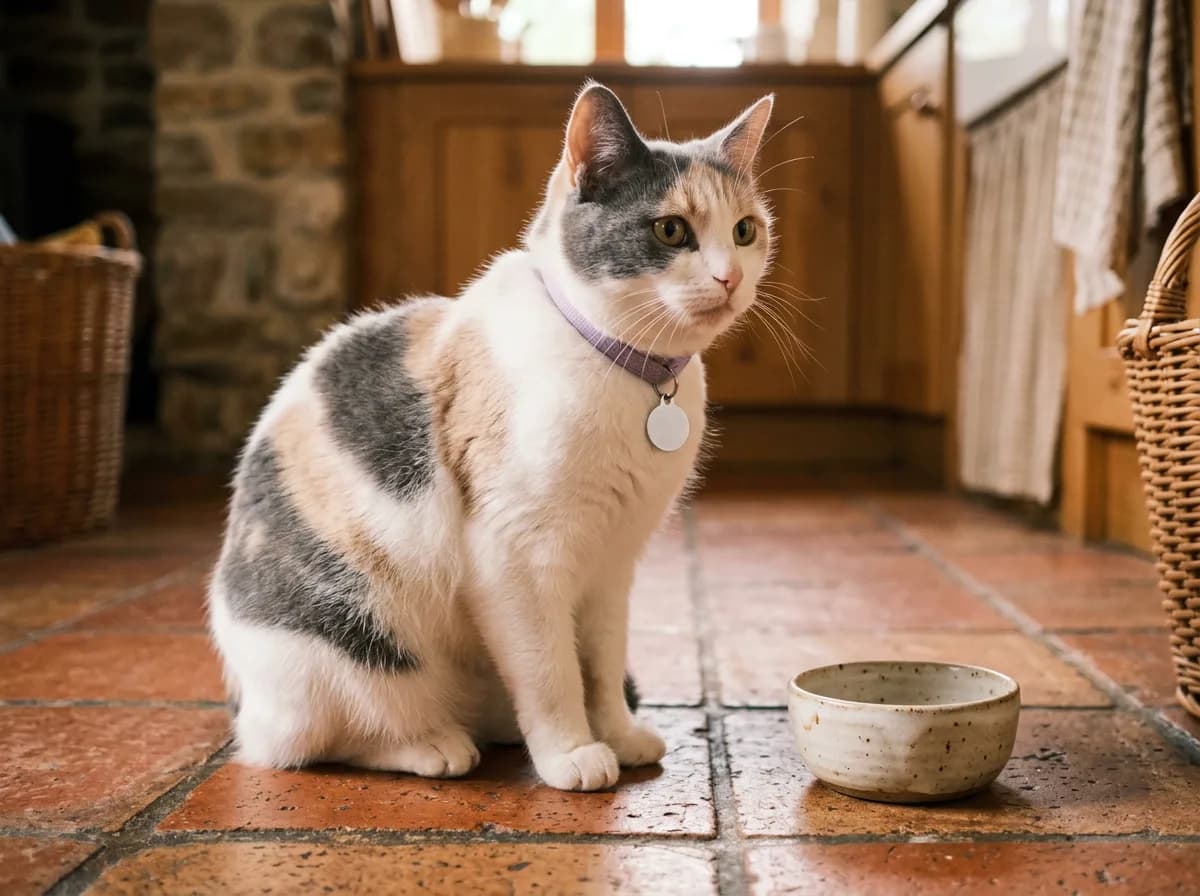
A pastel coat practically begs for a soft, pretty, or playful name. Here is a dedicated name list to get you started, sorted by vibe.
Names inspired by the colors:
- Misty
- Pearl
- Dove
- Smoke
- Ash
- Cream
- Taffy
- Buttercream
- Hazel
- Sterling
Soft and pretty names:
- Willow
- Luna
- Daisy
- Clementine
- Marble
- Calliope (a nod to "calico")
- Sage
- Juniper
- Lavender
- Coco
Playful and quirky names:
- Patches
- Cookie
- Biscuit
- Domino
- Pixel
- Mosaic
- Sundae
- Pebbles
- Mochi
- Sprinkles
The best name fits the cat's personality more than its pattern, so spend a few days with your new dilute calico before you lock one in. Color names like Misty or Pearl are lovely, but a quirky cat might suit Pixel or Domino better; the right name usually picks itself. The pastel coat gives you a head start on inspiration.
Frequently asked questions about dilute calico cats
Yes. Calico patterning of any kind appears in only about 1 in 1,000 cats, and the dilute version is rarer still because it also needs two copies of the recessive MLPH dilution gene. A dilute calico female is uncommon, and a dilute calico male is one of the rarest cats you can find.
A dilute calico costs about $50 to $200 to adopt from a shelter, or roughly $800 to $2,500 from a breeder if the cat is also a pedigreed breed. The dilute color itself adds no real monetary value, so treat any "rare color premium" as a marketing upsell.
Cats show affection by slow-blinking at you, head-bonking and cheek-rubbing to share their scent, kneading with their paws, purring near you, following you around, and exposing their belly in trust. A dilute calico communicates love the same way any cat does, through body language and proximity rather than color or pattern.
They can be, but friendliness comes from breed, socialization, and individual personality, not coat color. There is no scientific evidence that dilute calicos are more or less friendly than other cats. Meet the individual cat and watch how it responds to handling rather than relying on the pattern.
A dilute calico cat is a tricolor cat with patches of blue-gray (diluted black), cream (diluted orange), and white, instead of the bold black, orange, and white of a standard calico. The muted look comes from a recessive dilution gene. It is a coat pattern, not a breed.
The only difference is the dilution gene. A standard calico has full-strength black and orange patches, while a dilute calico carries two copies of the recessive MLPH gene that softens those colors to blue-gray and cream. The three-color, mostly-white pattern is otherwise identical.
Very rarely. Because the orange gene sits on the X chromosome, about 99.9% of calicos are female. Male calicos, including dilute males, occur roughly 1 in 3,000 and usually result from Klinefelter syndrome (XXY), chimerism, or mosaicism. Most are sterile.
Many, because dilute calico is a color pattern, not a breed. It appears in Persians, Exotic Shorthairs, Maine Coons, American and British Shorthairs, Manx, Japanese Bobtails, Norwegian Forest Cats, Turkish Vans, Devon and Cornish Rexes, and most commonly in mixed-breed domestic shorthairs and longhairs.
No. Dilute calico is a coat color and pattern that can appear across many breeds and in mixed-breed cats. Registries like the CFA and TICA recognize it as a color within breeds, never as a breed of its own.
A dilute calico has prominent white, so its blue-gray and cream show up as distinct patches separated by white. A dilute tortoiseshell (blue-cream) has little or no white, with its gray and cream brindled and swirled together. The presence of white is what separates the two.
A healthy, well-cared-for indoor dilute calico typically lives 12 to 16 years, with some reaching their late teens or beyond. The coat pattern itself does not affect lifespan. The exception is rare XXY male dilute calicos, who can have shorter lifespans due to the chromosome anomaly.
Yes. The dilute calico pattern affects only pigment, not health, so these cats are no more disease-prone than any other cat of the same breed. The one exception is rare XXY male dilute calicos, who deserve a careful vet workup for chromosome-related issues. Female dilute calicos have no pattern-linked health risks.
Soft, color-inspired names suit the pastel coat well: Misty, Pearl, Dove, Smoke, Cream, Taffy, Hazel, and Sterling. Pretty options include Willow, Luna, Daisy, Calliope, and Sage. Playful picks include Patches, Cookie, Domino, Pixel, Mosaic, and Mochi.

Coreen Saito is a pet writer and longtime shelter volunteer with more than a decade in animal rescue. She covers cat behavior, breed care, and the small, ordinary science of sharing a life with companion animals, with a particular focus on honest takes about the products and decisions that actually matter. At home in Arizona, she's outranked by Mac (a dog with the loudest opinion in the house), Rebel (a cat who governs by quiet authority), and Meri (an orange tabby who runs the late shift and the laundry basket). She writes about all three, plus the rescues that keep coming through her life, at LifeWithMinty.com.
Sign up for expert-backed reviews and safety alerts all in one place.