Calico Kitten Guide: Colors, Genetics, and Care
A calico kitten has a tricolor white, orange, and black coat, and about 99.9% are female. See the genetics, a labeled photo gallery of every color variation, real cost ranges, and a first-weeks care guide for your new calico kitten.
Petful is reader supported. As an affiliate of platforms like Amazon and Chewy, we may earn a commission when you buy through links on this page. There is no extra cost to you.
A calico kitten is a tricolor cat whose white, orange, and black coat traces to a single X-linked gene that scientists at Stanford and Kyushu University finally identified in May 2025, and roughly 99.9% of all calico kittens are female. That last number is the headline fact most people remember, but it barely scratches the surface of what makes these patchwork kittens so genetically interesting. Calico is a coat pattern, not a breed, which means a calico kitten can show up in a Persian litter, a barn cat colony, or a shelter intake on the same week. This guide covers what a calico kitten actually is, the genetics behind the tricolor coat, how rare males really are, a labeled photo gallery of every color variation, what one costs, and how to care for a new calico kitten through its first weeks at home.
- 1A calico kitten has a mostly white coat with distinct patches of orange and black, which is a pattern, not a breed
- 2About 99.9% of calico kittens are female because the orange color gene rides on the X chromosome; males occur about once in every 3,000 calicos
- 3The tricolor look comes from random X-chromosome inactivation, first described by geneticist Mary Lyon in 1961, plus a white-spotting gene that separates the colors into blocks
- 4Shelter adoption usually runs $50 to $200, while a calico kitten of a recognized breed follows that breed's pricing of roughly $800 to $2,500
- 5A calico kitten's exact patches are set before birth and stay put, though shading can deepen as the adult coat grows in

Sign up for expert-backed reviews and safety alerts all in one place.
What Is a Calico Kitten?
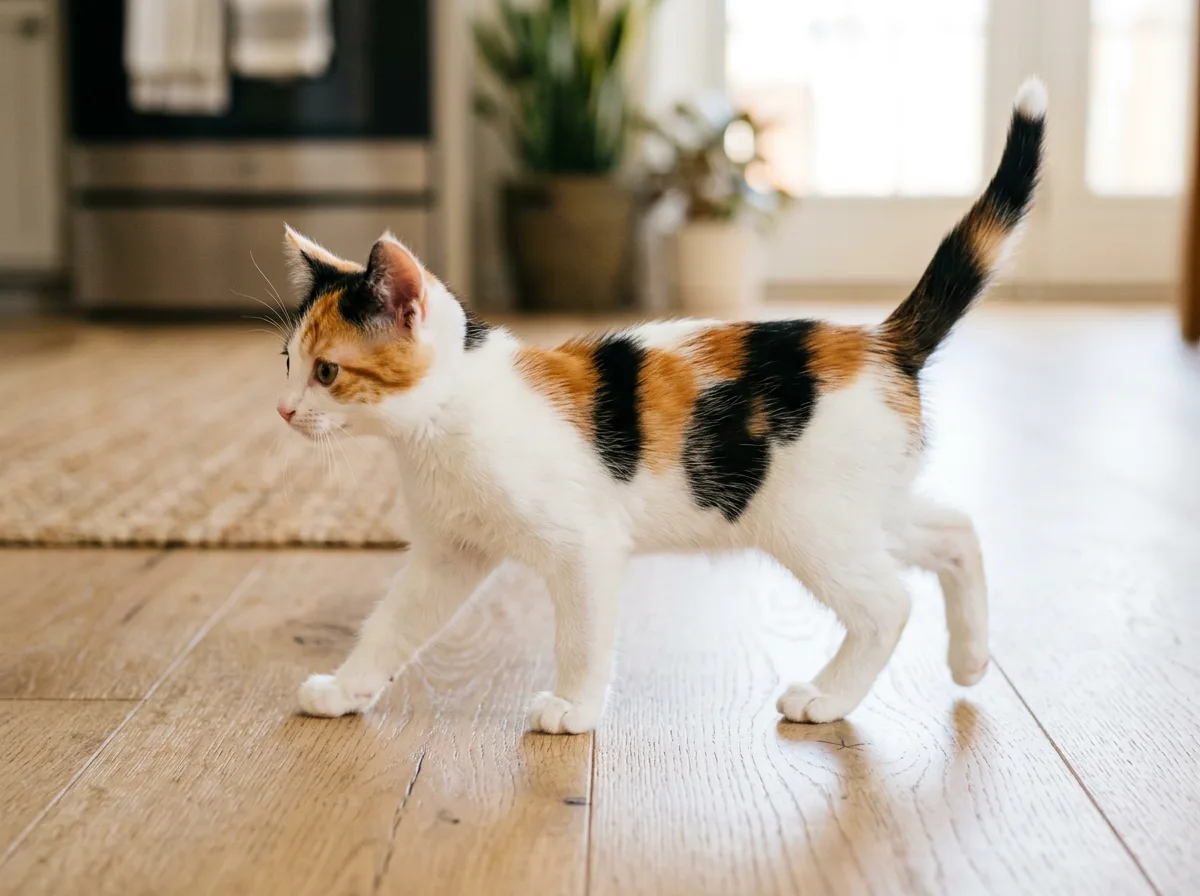
A calico kitten is a cat under about one year old that carries the classic calico coat: a predominantly white base broken up by separate, well-defined patches of orange (red) and black. The three colors are the defining feature, which is why calico is sometimes called "tricolor" or "tortoiseshell-and-white," and why adoption listings sometimes use the redundant label "calico cat kitten" for the same coat. The key word is "distinct." On a true calico, the orange and black sit in clear blocks rather than blending together, and there is usually a generous amount of white, especially across the chest, belly, legs, and face.
It is worth being precise about terminology from the start, because the words get mixed up constantly. Calico is a coat pattern, not a breed. There is no "calico breed" registered with the Cat Fanciers' Association (CFA) or The International Cat Association (TICA). Instead, calico is a color pattern that can appear in dozens of recognized breeds and in random-bred domestic cats alike. When a breeder or shelter calls a kitten "calico," they are describing the coat, the same way they might say "tabby" or "tuxedo."
The name itself comes from calico cloth, a brightly printed cotton fabric. Nineteenth-century observers thought the cat's bold, blocky color splashes looked like the patterned textile, and the name stuck. In Japan the same pattern is called "mi-ke," which translates to "triple fur," and the lucky beckoning cat figurine, the maneki-neko, is traditionally modeled on a calico.
Calico Kitten Genetics: Why Almost All Calicos Are Female
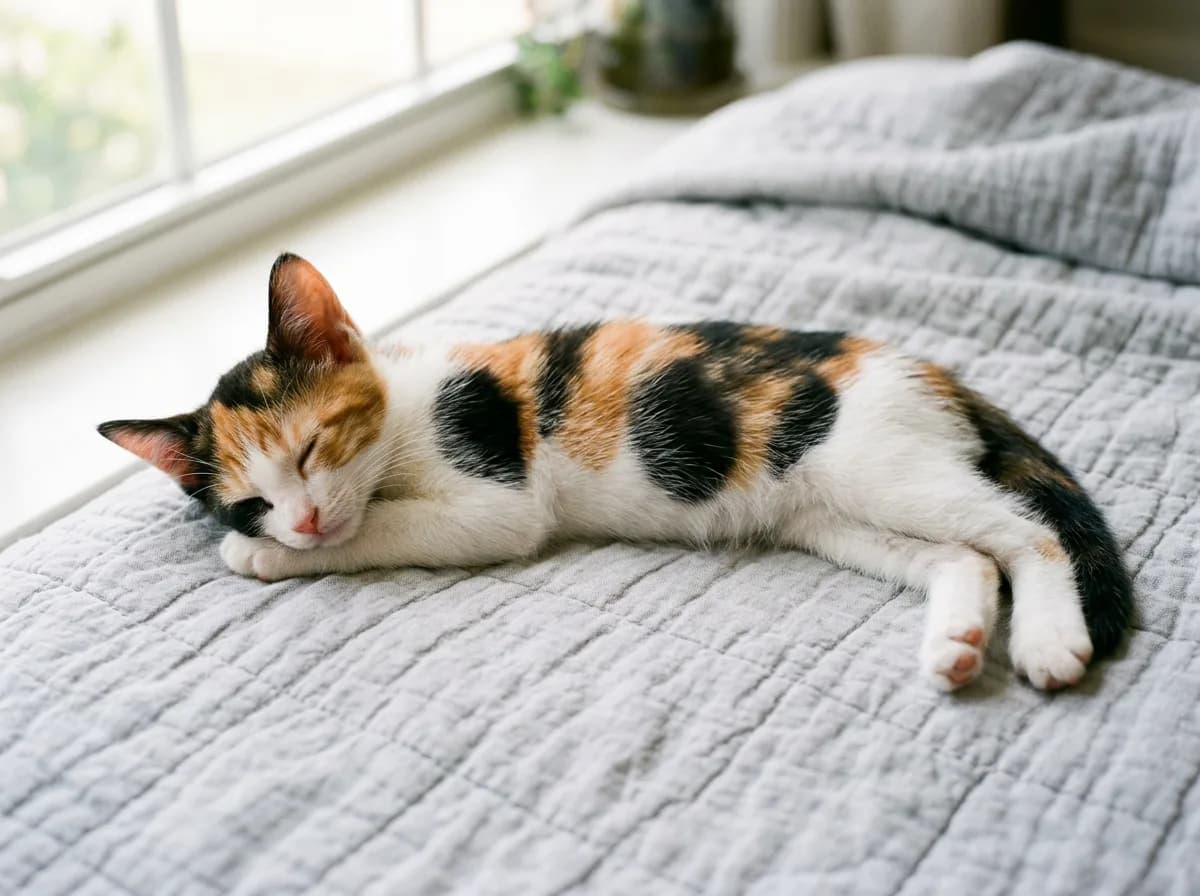
The reason nearly every calico kitten is female comes down to one chromosome. The gene that produces orange (often written as the "O" gene) sits on the X chromosome. Orange pigment is phaeomelanin, and the orange gene effectively masks the black-brown pigment, eumelanin, wherever it is active.
Female cats have two X chromosomes (XX). A female can carry the orange instruction on one X and the non-orange instruction on the other. Early in development, in every cell of the embryo, one of the two X chromosomes is switched off at random and stays off in all of that cell's descendants. This process is called X-chromosome inactivation, or lyonization, after British geneticist Mary Lyon, who described it in 1961. The result is a living mosaic: some skin regions express the orange X, others express the non-orange (black) X. That mosaic of orange and black is the tortoiseshell pattern.
Add a second gene, the white-spotting gene (a KIT-related piebald gene), and the picture changes. White spotting suppresses pigment cells in patches of skin, which pulls the colored areas apart into larger, cleaner blocks separated by white. Heavy white spotting plus the orange-and-black mosaic is exactly what produces a calico: distinct color patches on a white field.
Male cats normally have just one X and one Y chromosome (XY). With a single X, a male kitten can express either orange or non-orange across his whole body, but not both at once. That is why a male is typically a solid orange tabby or a black-based color, not a calico. In 2025, two independent teams (Greg Barsh's group at HudsonAlpha and Stanford, and Hiroyuki Sasaki's team at Kyushu University) identified the long-sought orange gene itself as a small regulatory deletion affecting a gene called ARHGAP36, published in the journal Current Biology. It was the final piece of a genetics puzzle that researchers had chased for more than a century.
What About Male Calico Kittens?
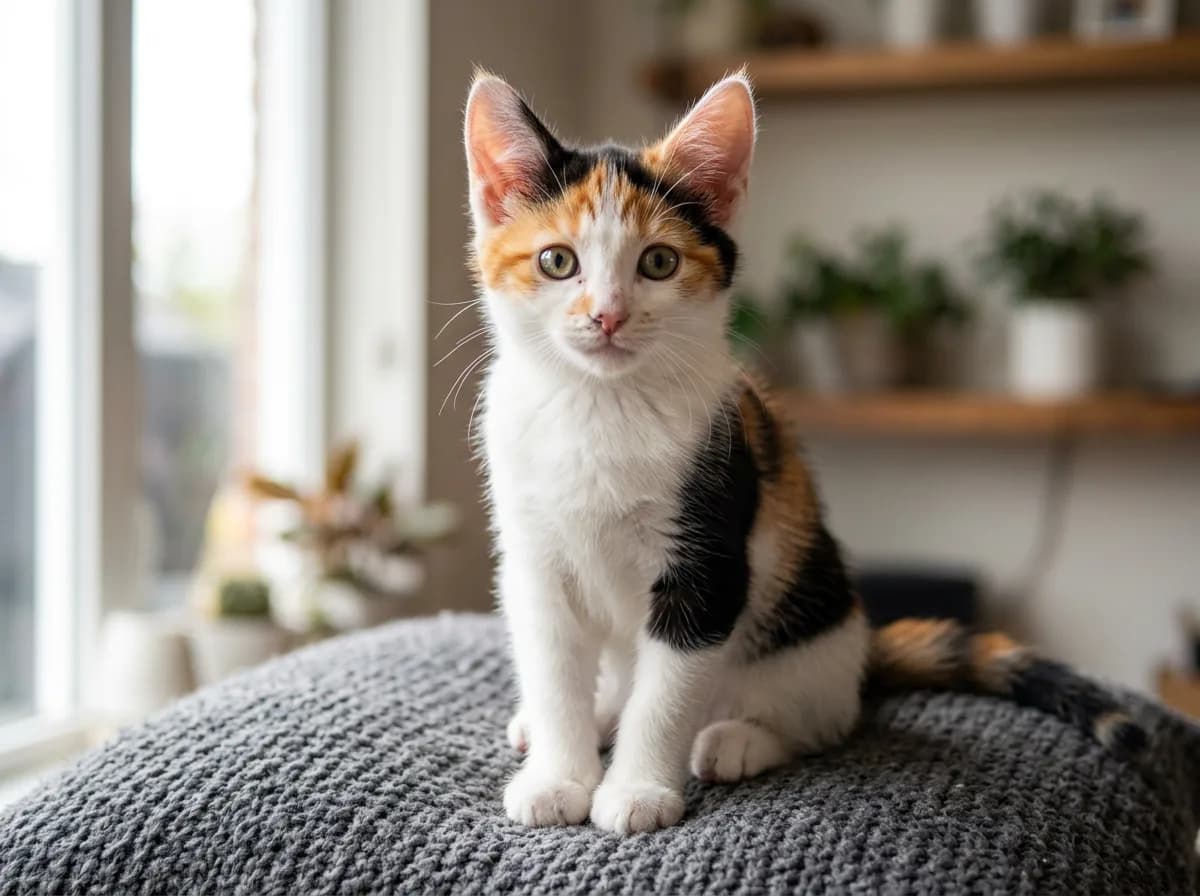
Male calico kittens do exist, but they are the rare exception. A male calico almost always has an extra sex chromosome, an XXY arrangement (the feline version of Klinefelter syndrome). With two X chromosomes, the same random X-inactivation that happens in females can play out in a male, producing the tricolor coat. Less commonly, a male calico is a chimera (two fused embryos) or shows somatic mosaicism (a mutation in some cells but not others).
The famous statistic, roughly 1 male for every 3,000 calicos, comes from a study at the University of Missouri's College of Veterinary Medicine. Most XXY male calicos are sterile, and many carry health concerns linked to the chromosomal arrangement (more on that in the health section). A male calico kitten is a genuine curiosity, but he is not "worth more." Because he typically cannot reproduce, he has no breeding value, and reputable sources warn buyers against paying a premium on the rarity alone.
Are Calico Kittens Rare?
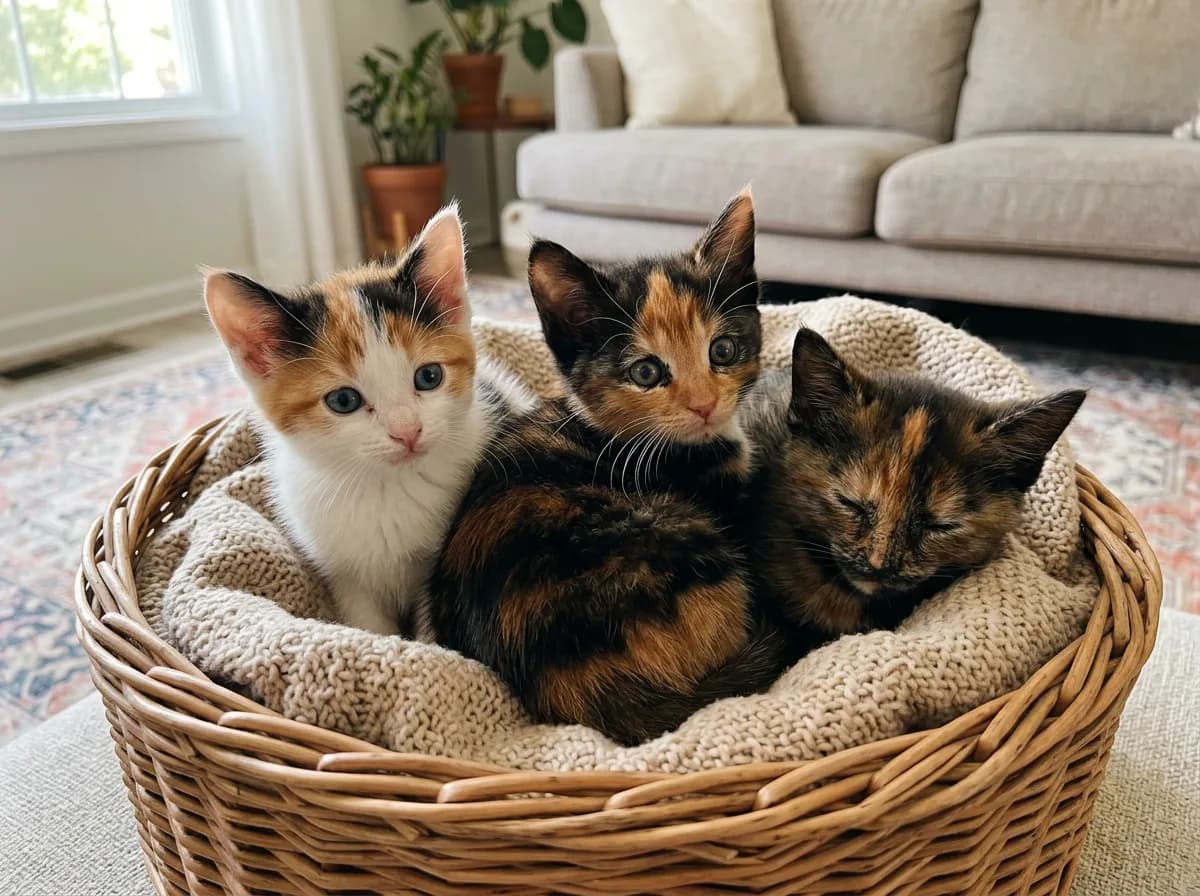
Female calico kittens are not rare at all. The tricolor pattern is common across the cat population wherever the orange gene and white-spotting gene both circulate, which is almost everywhere. Walk into a typical shelter and you are likely to see at least one calico or tortoiseshell among the kittens.
What is rare is a male calico kitten, at about 1 in 3,000. So the honest answer to "are calico kittens rare?" depends on which kitten you mean. A female calico is everyday common. A specific pattern variation, like a true dilute calico or a high-contrast black calico, is somewhat less common but still widely available. A fertile male calico is essentially a once-in-a-lifetime find.

Never Scoop Again® with the Whisker Litter-Robot, the smart self-cleaning automatic litter box. Monitor visits and track weights for better overall care in the Whisker® app. Multi-cat friendly.
Petful may earn a commission when you click through to Whisker, at no extra cost to you.
- If someone advertises a "rare calico kitten" at a high price, ask whether the rarity claim is about sex (a male calico is genuinely rare) or just the pattern (female calicos are common). The distinction protects your wallet.
Calico Kitten Colors and Patterns (Photo Gallery)
No two calico kittens are patterned exactly alike, because the X-inactivation that paints the coat is random in every individual. Even littermates differ. Still, calico kittens fall into recognizable categories by color intensity, the balance of orange to black to white, and coat length. Use this labeled gallery to identify the variation you are looking at.
Classic (Standard) Calico Kitten
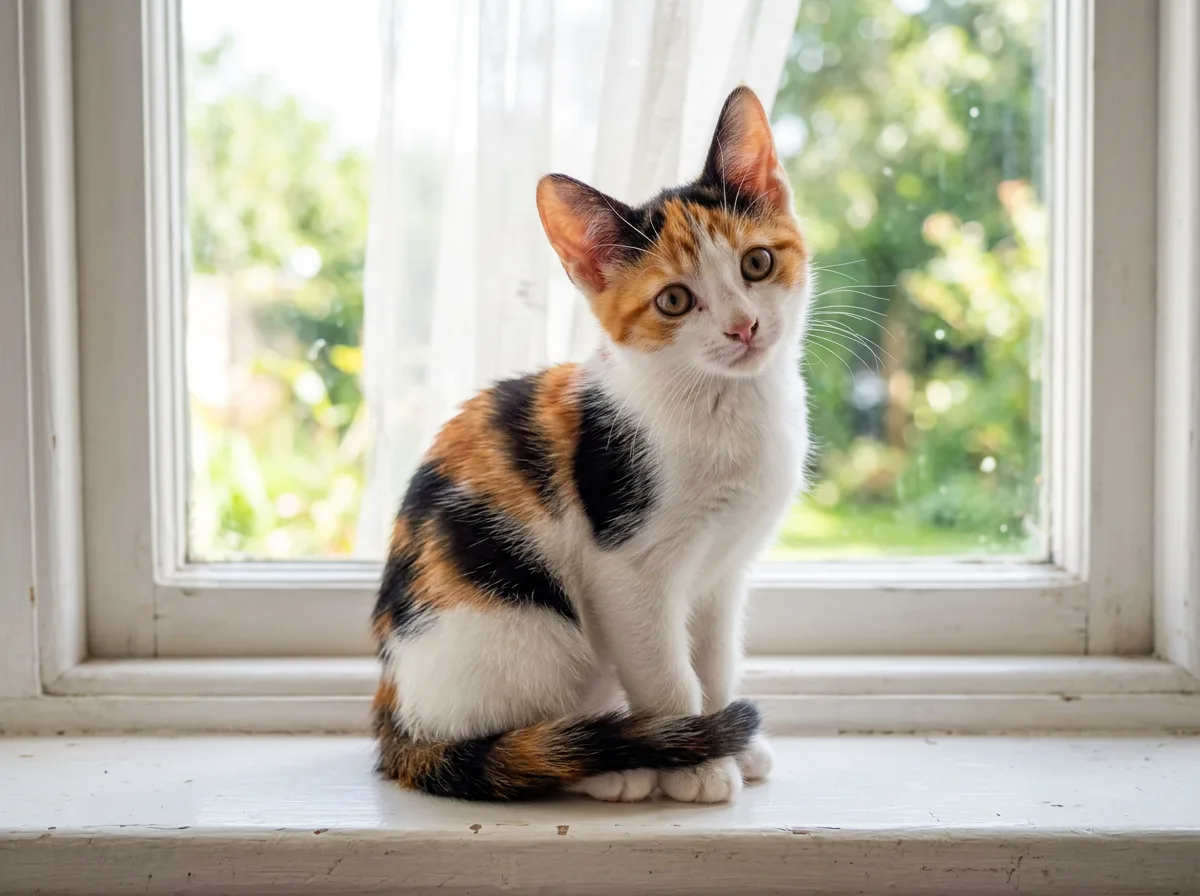
The classic calico kitten has a bright, high-contrast coat: a clean white base with bold patches of deep orange and dense black. This is the look most people picture when they hear "calico."
Dilute Calico Kitten
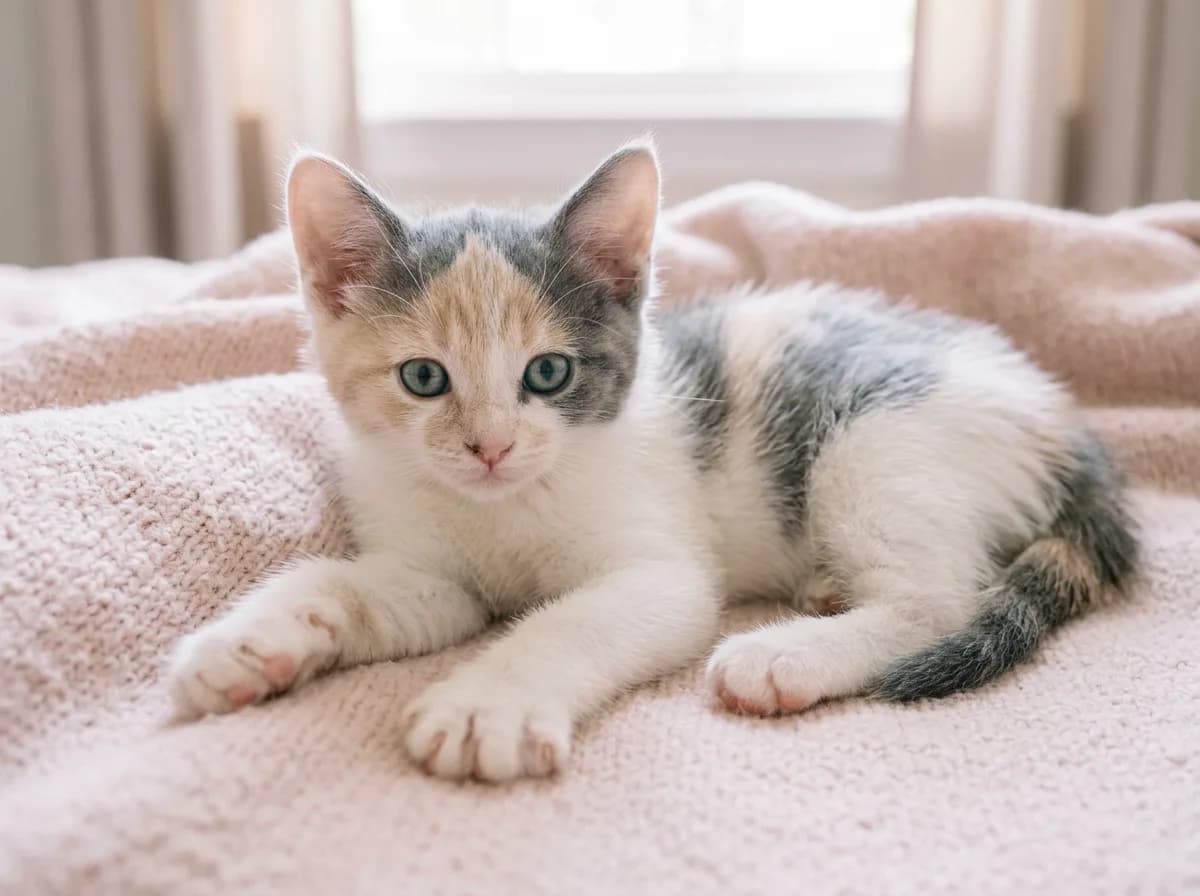
A dilute calico kitten carries two copies of the dilution gene (the MLPH, or melanophilin, gene, written d/d), which softens the colors. Black becomes blue-gray and orange becomes cream. The result is a muted, pastel version of the calico pattern: gray, cream, and white instead of black, orange, and white.
Black Calico Kitten (High-Black / Tortie-Heavy)
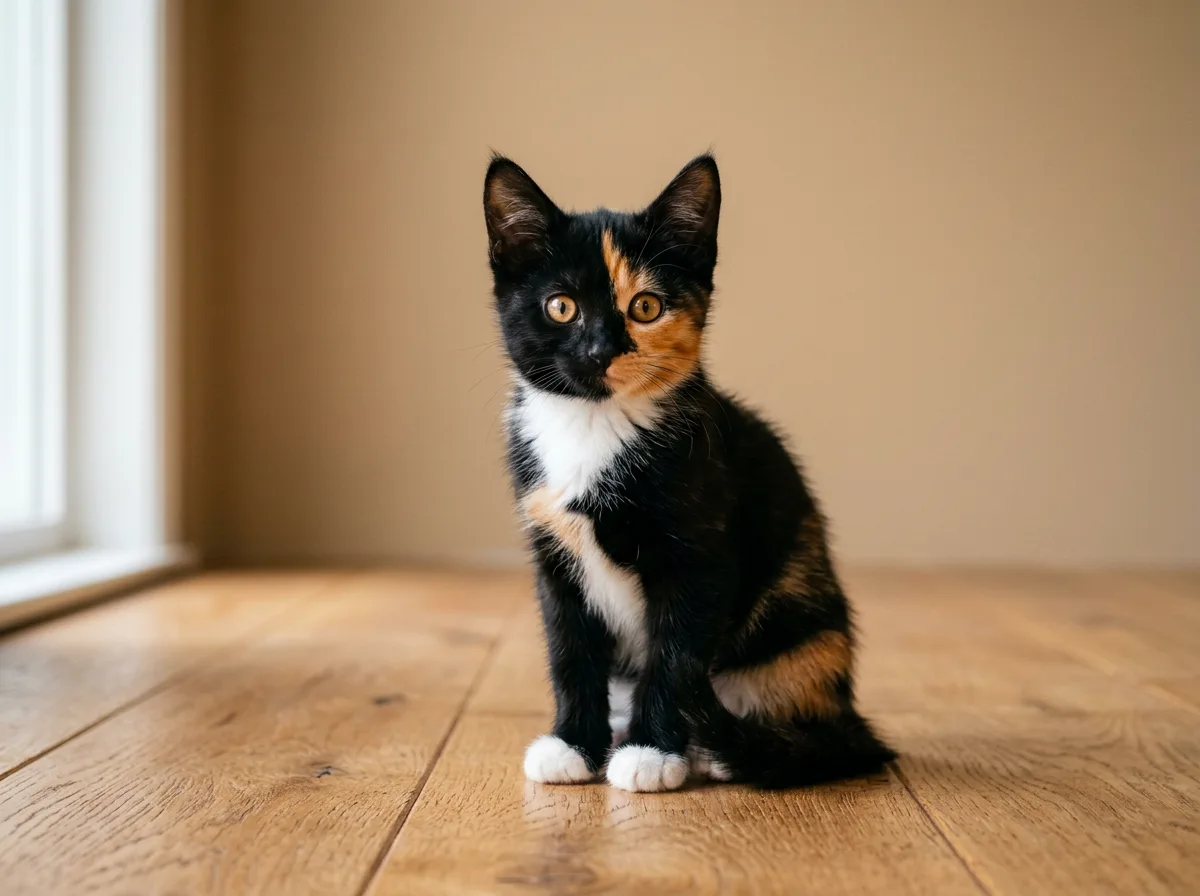
A "black calico" kitten is one where black is the dominant color, with smaller orange patches and less white than a standard calico. The coat reads as mostly black with orange and white accents. These high-black calicos sit on the visual border between calico and tortoiseshell.
Calico Tabby Kitten (Caliby)
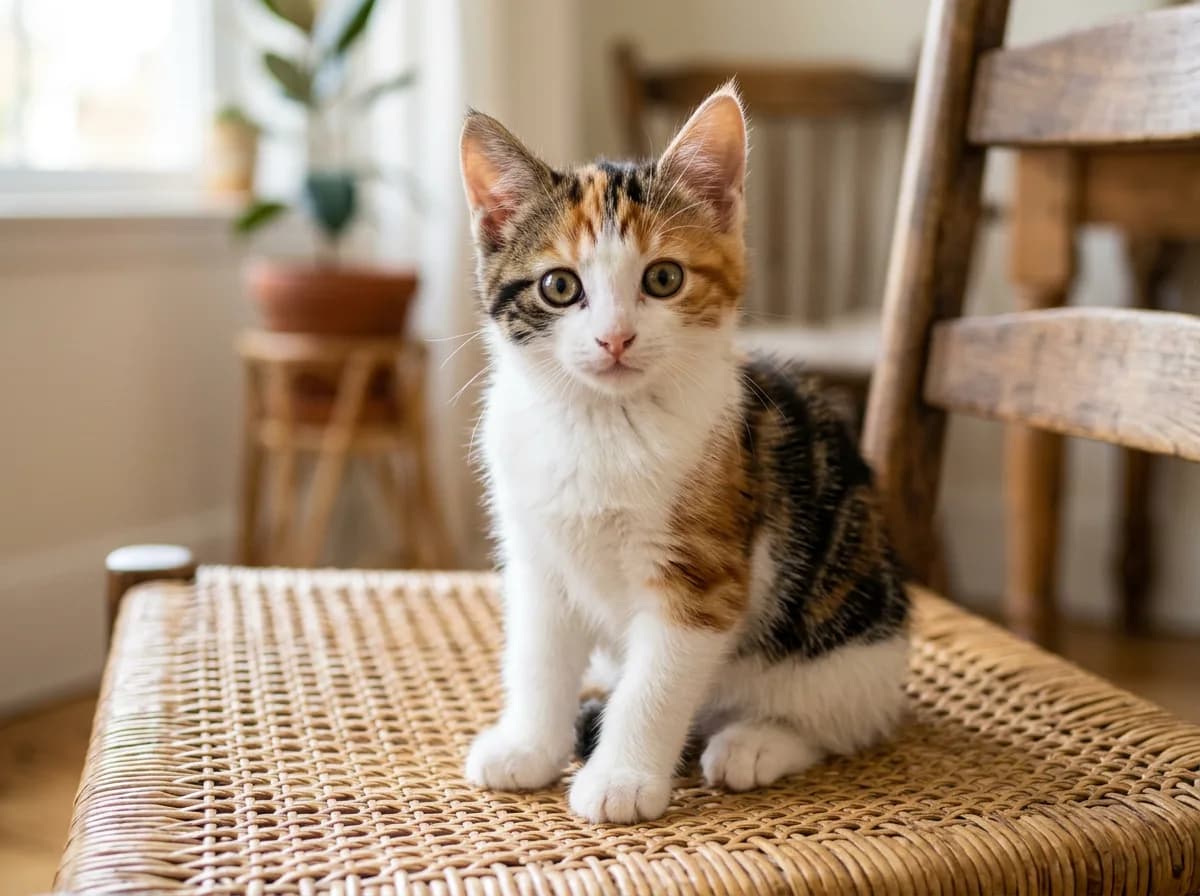
When the orange and black patches carry tabby striping instead of solid color, the kitten is a "calico tabby," also called a caliby or tabico. Look closely at the patches for stripes, swirls, and the telltale "M" marking on the forehead. The tabby pattern shows up most obviously in the orange areas. You can read more about how tabby striping works in our guide to tabby color variations.
Long-Haired Calico Kitten
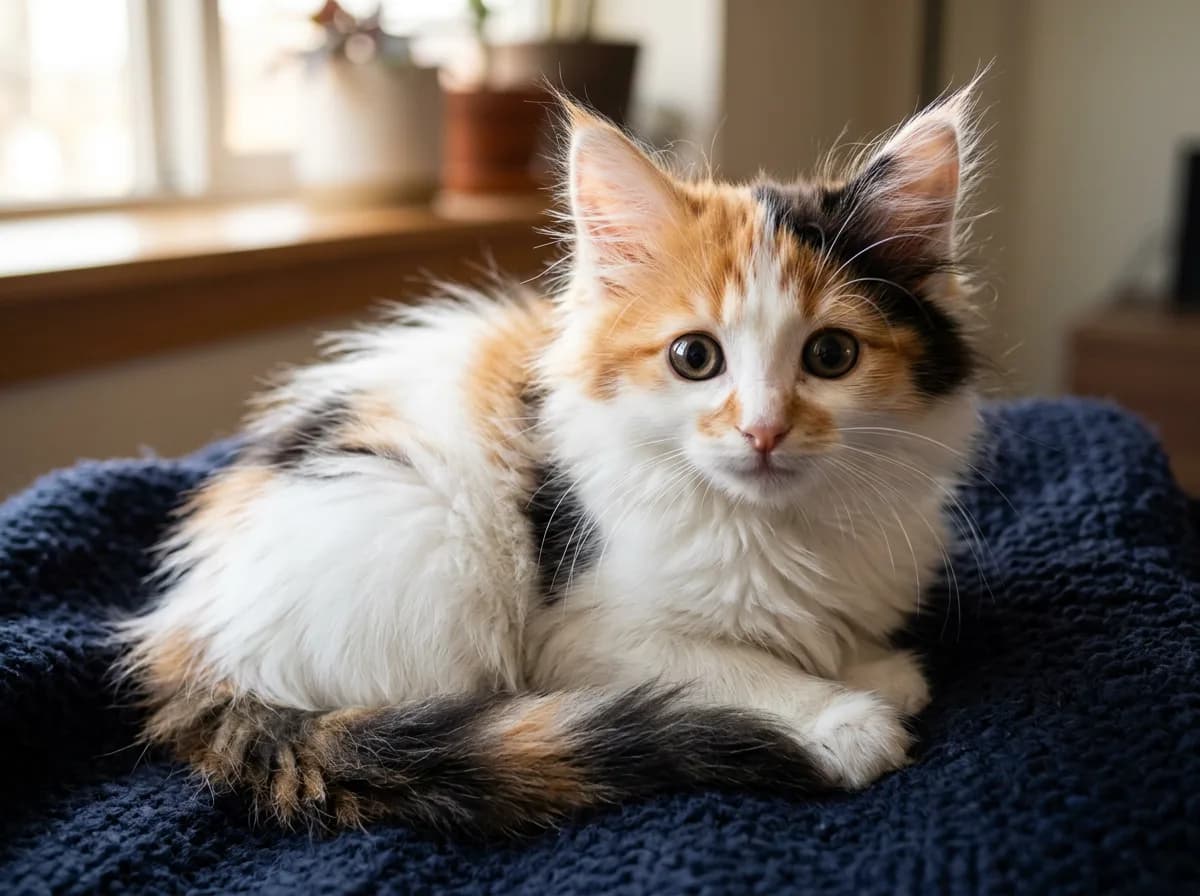
Calico is just a color pattern, so it appears in long-haired coats too. A long-haired calico kitten (common in Persian, Maine Coon, and Norwegian Forest backgrounds) has the same tricolor blocks spread across a fluffy, plush coat.
Short-Haired Calico Kitten
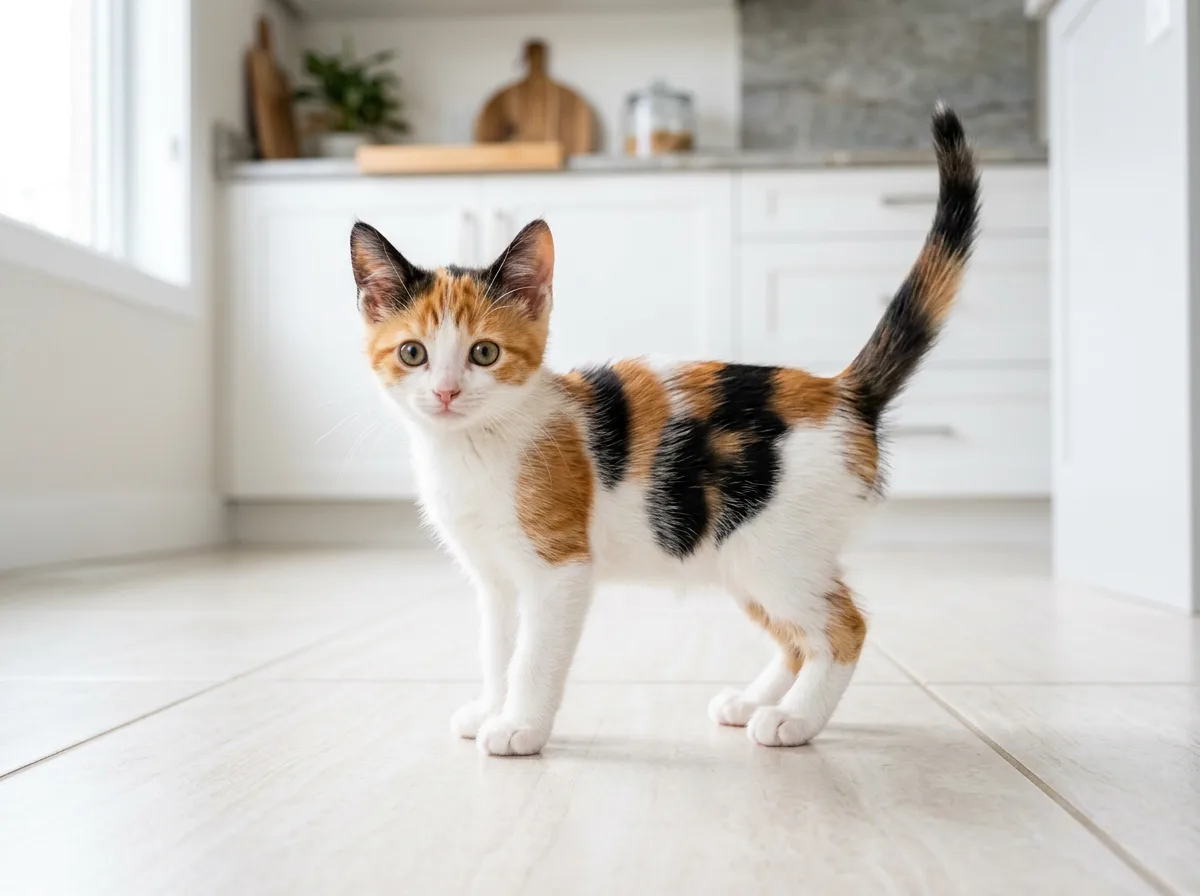
The short-haired calico kitten is the most common version in shelters and random-bred litters. The patches look crisper and more defined on a sleek short coat.
High-White (Van-Pattern) Calico Kitten
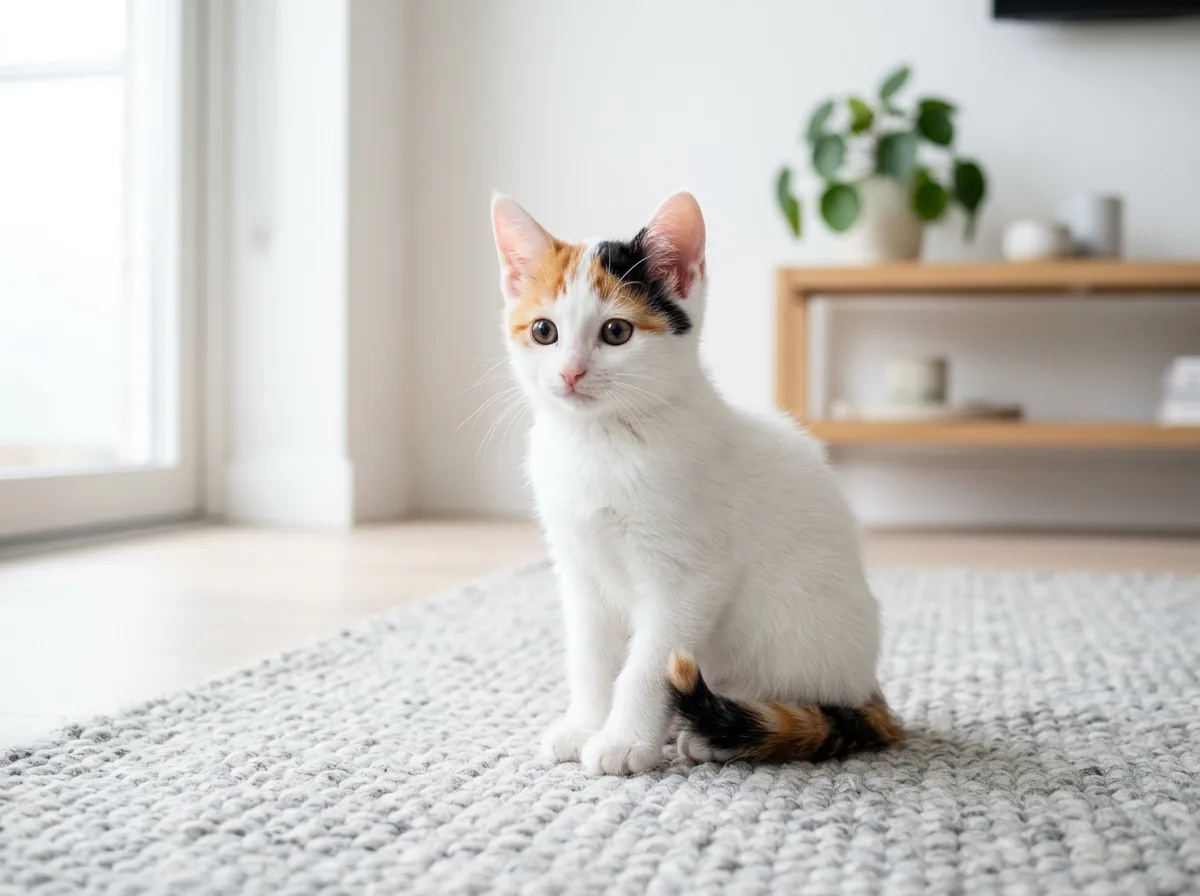
Some calico kittens carry so much white spotting that color appears only on the head and tail, with an almost entirely white body. This high-white look is sometimes called the "van" pattern after the Turkish Van.
Orange-Dominant Calico Kitten
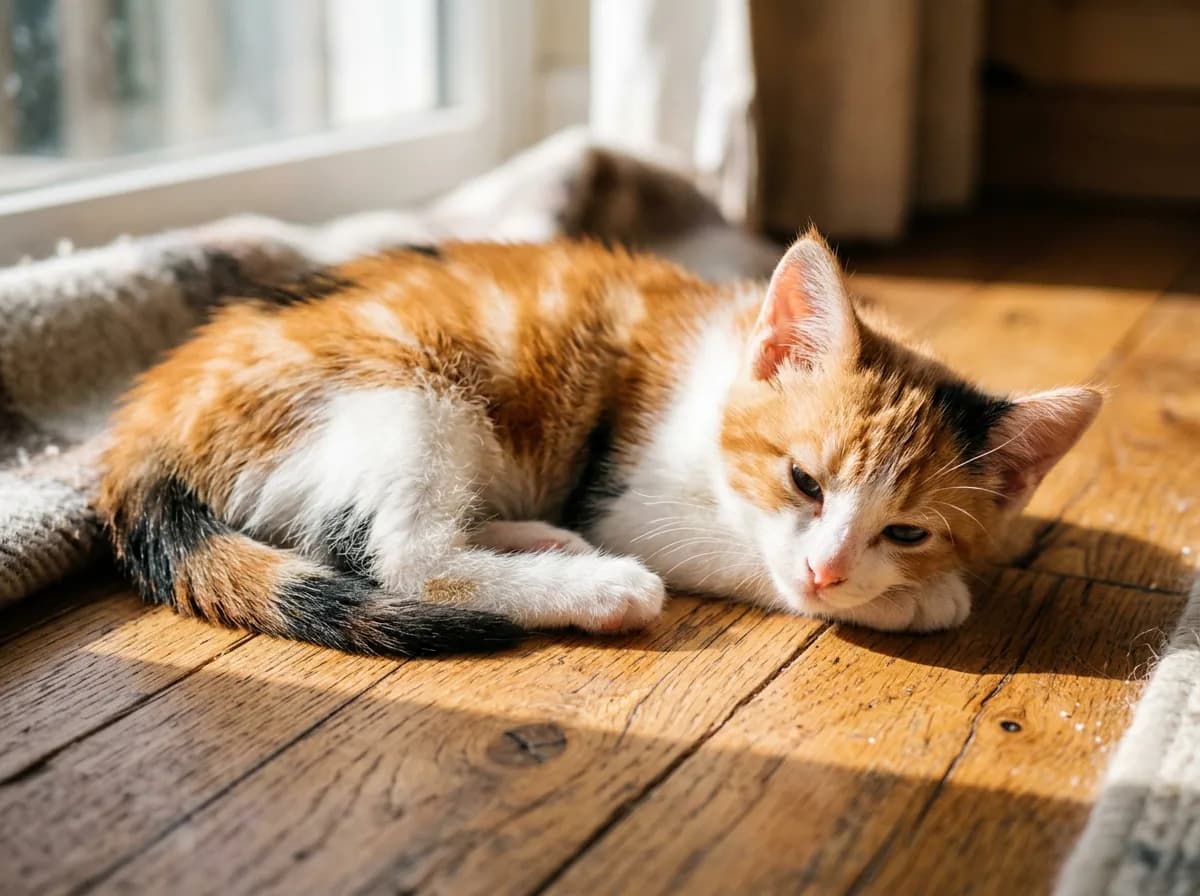
The mirror image of the black calico, an orange-dominant calico kitten shows mostly orange patches with smaller black areas, plus white. The warm overall tone makes these kittens look almost golden.
Calico Kitten Eyes and Face
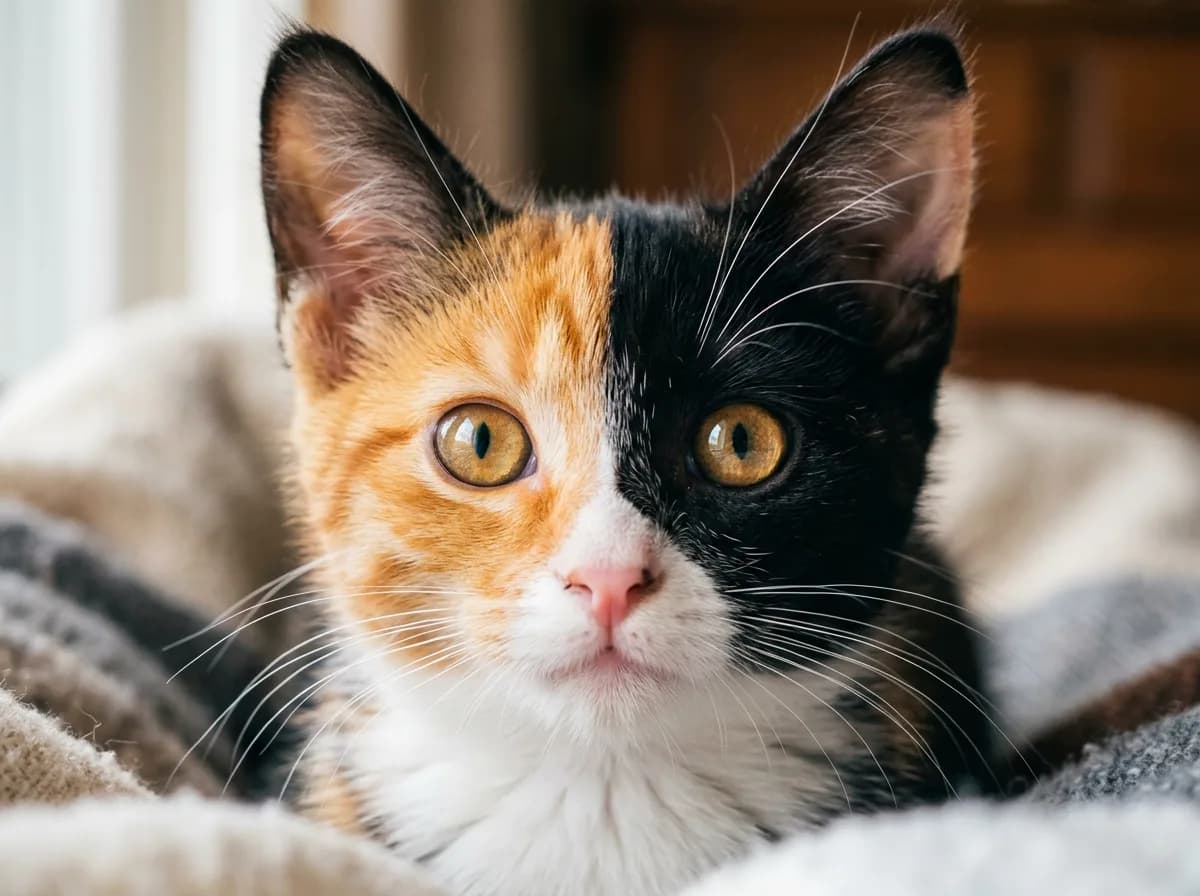
Calico kittens, like all kittens, are born with blue eyes that shift toward their adult color (gold, green, copper, or amber) around 6 to 7 weeks of age. The face often shows a striking split of color down the middle, which is one of the most photogenic calico features.
Calico vs. Tortoiseshell vs. Dilute Calico: How to Tell Them Apart
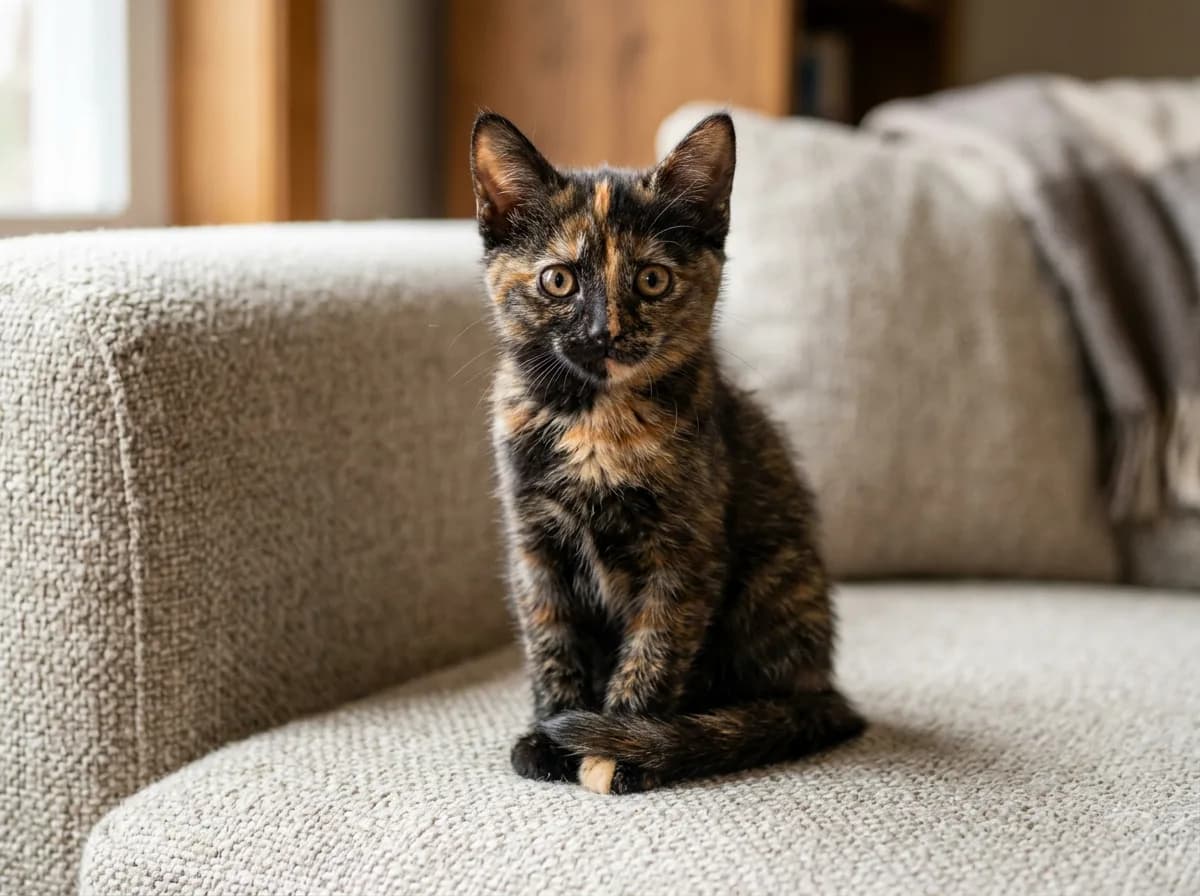
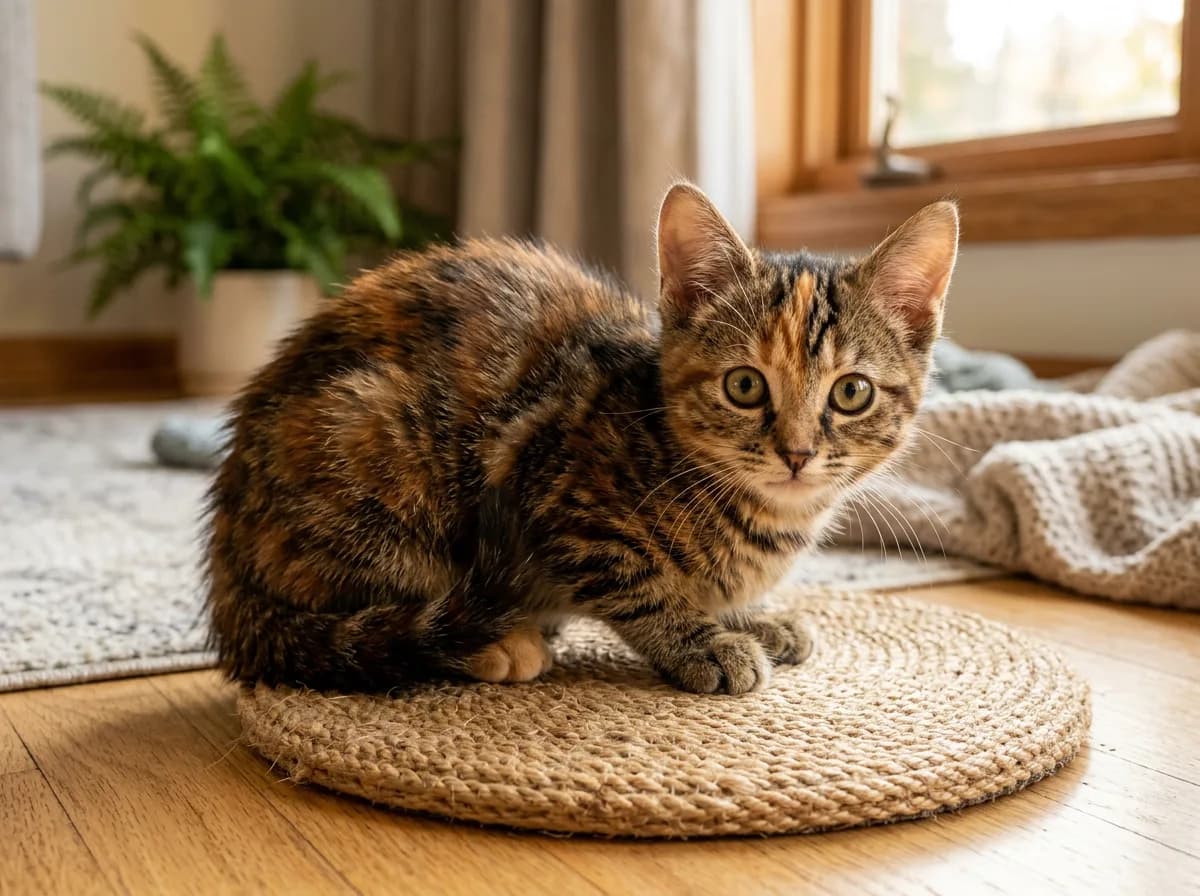
These three are constantly confused, and the difference is mostly about white and how the colors mix. A calico has a lot of white with distinct, separated patches of orange and black. A tortoiseshell has little or no white, with the orange and black brindled and woven together in a marbled mix. A dilute calico is simply a calico with the colors softened to gray and cream by the dilution gene.
There is one more cousin worth knowing: the torbie, or patched tabby, which is a tortoiseshell whose patches carry tabby striping. If you see stripes plus a brindled tortie mix, you are looking at a torbie rather than a calico.
| Pattern | Colors | Amount of White | How the Colors Mix |
|---|---|---|---|
| Calico | White, orange, black | A lot (often the dominant color) | Distinct, separated patches |
| Tortoiseshell | Orange, black | Little or none | Brindled, woven together |
| Dilute Calico | White, blue-gray, cream | A lot | Distinct, separated pastel patches |
| Torbie (patched tabby) | Orange, black with tabby stripes | Little or none | Brindled with visible striping |
- More white and clearly separated patches means calico. Mostly mixed orange and black with little white means tortoiseshell. Gray and cream instead of black and orange means it is a dilute version of either one.
Which Cat Breeds Can Have Calico Kittens?
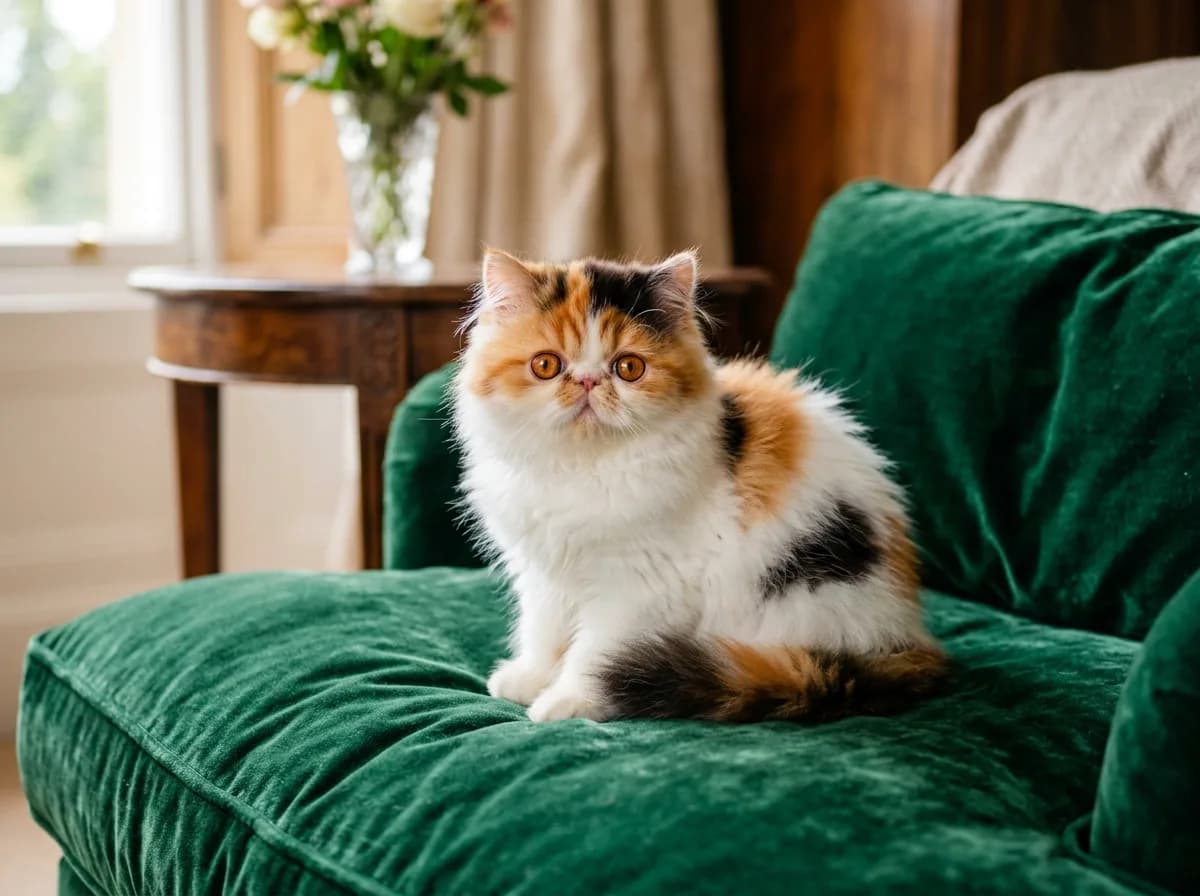
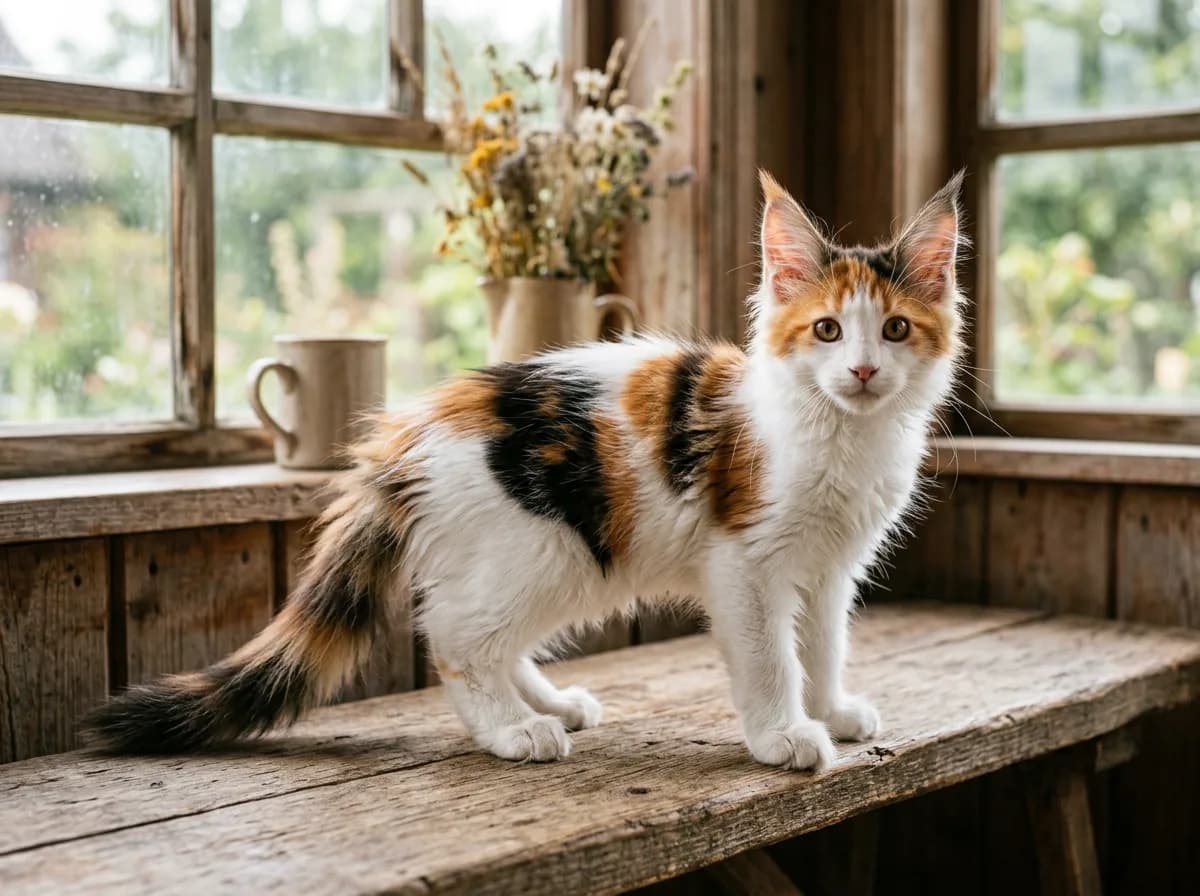
Because calico is a pattern rather than a breed, many recognized breeds produce calico kittens. The CFA and TICA accept the calico pattern in a long list of breeds. Common ones include:
- Persian and Exotic Shorthair, often as luxurious long-haired or plush short-haired calicos
- Maine Coon, where calico appears alongside the breed's famous size and tufted coat
- British Shorthair and American Shorthair, classic round-faced calicos
- Japanese Bobtail, the breed most associated with the mi-ke (calico) coat in its homeland
- Manx, Devon Rex, Norwegian Forest Cat, and Turkish Van, among others
If you want a calico kitten with a predictable size, coat length, and temperament, a recognized breed is the route, since you are choosing the breed first and the calico coat second. You can compare breed profiles such as the Maine Coon, the Persian, and the British Shorthair to see which body type and personality fit your home.
Purebred status always comes from the breed and its pedigree, never from the calico coloring. A random-bred calico kitten from a shelter is just as much a "real" calico as a pedigreed one. For a broader look at how color genetics play out across one breed, the Maine Coon color guide is a useful companion read.

63-inch multi-level cat tree with scratch posts, hammock, plush perches, and dangling toys. Vertical territory is non-negotiable for high-energy climbing breeds like the Bengal.
Petful may earn a commission when you click through to Chewy, at no extra cost to you.
Do Calico Kittens Change Color as They Grow?
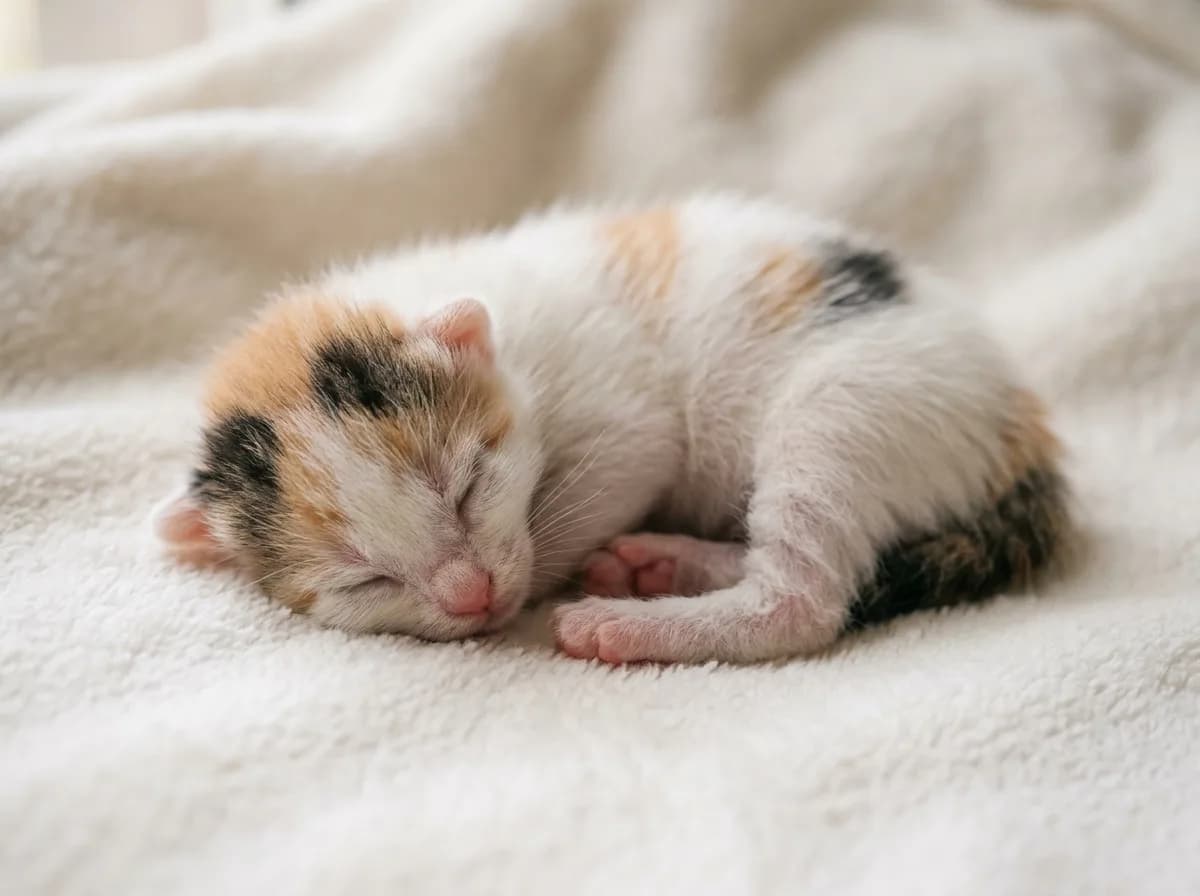
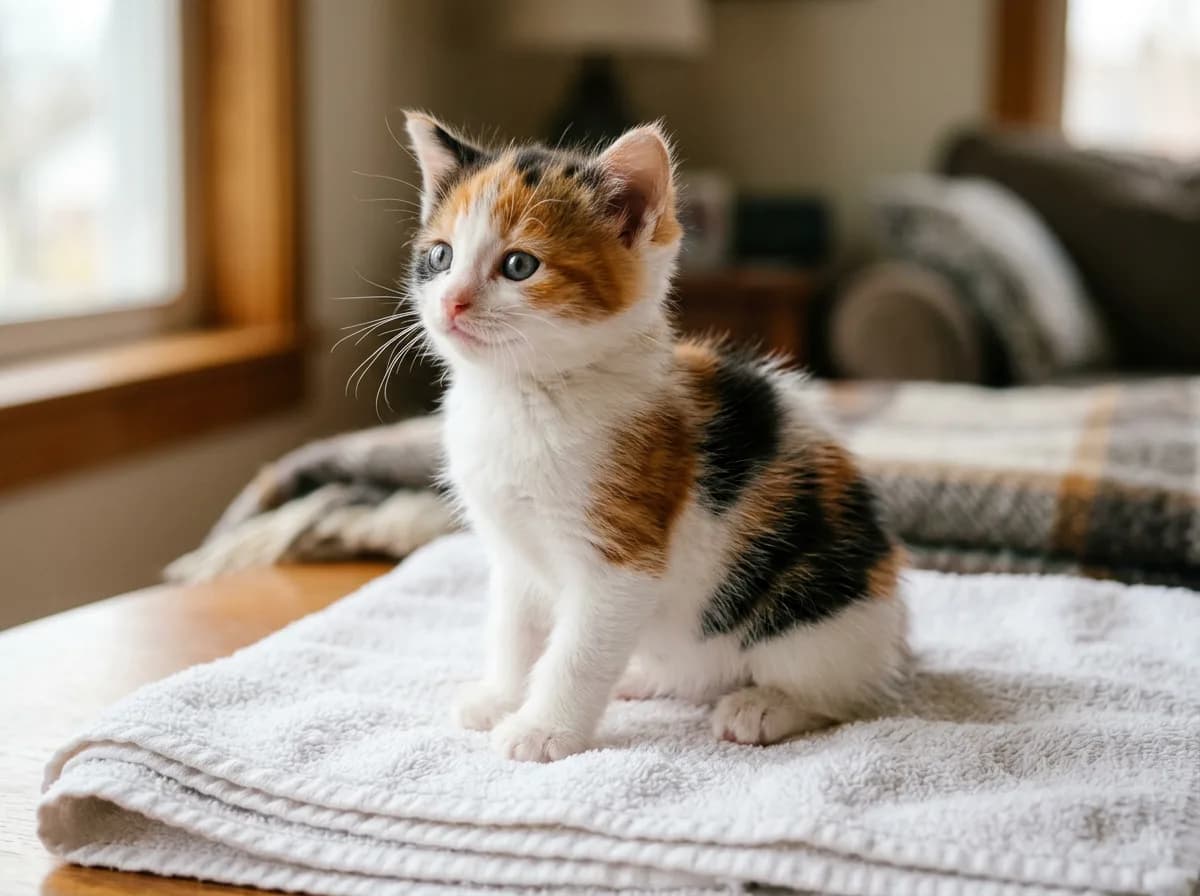
This is the question most ranking pages skip, and it is the one new owners ask most. The short answer: the pattern (where the patches sit) is fixed before birth and does not move, but the shading and detail can change as the kitten matures.
A newborn calico kitten arrives with its color blocks already laid down, but the coat is short, fine, and often looks paler or less defined than it will become. The patches are there from day one; they simply have not filled in. Over the first several weeks, as the kitten's fur thickens and the adult coat begins to replace the baby fluff, the colors deepen and the edges of the patches sharpen.
A few specific changes to expect:
- Eye color shifts from the newborn blue to the adult color (gold, green, or copper) around 6 to 7 weeks.
- Color depth increases as the adult coat grows in; a kitten that looked washed out at three weeks can look richly tricolored by four months.
- Caliby striping can become more obvious in the orange patches as the coat matures.
What will not change is the basic map of the patches. A calico kitten with a big orange splash over one shoulder will keep that splash for life. That is why the patches are essentially a fingerprint, unique to each cat.
If a newborn calico kitten looks "mostly white," do not assume the color will spread. The patches are already set: they will deepen and sharpen, but new patches will not appear in formerly white areas.
Calico Kitten Personality and Temperament
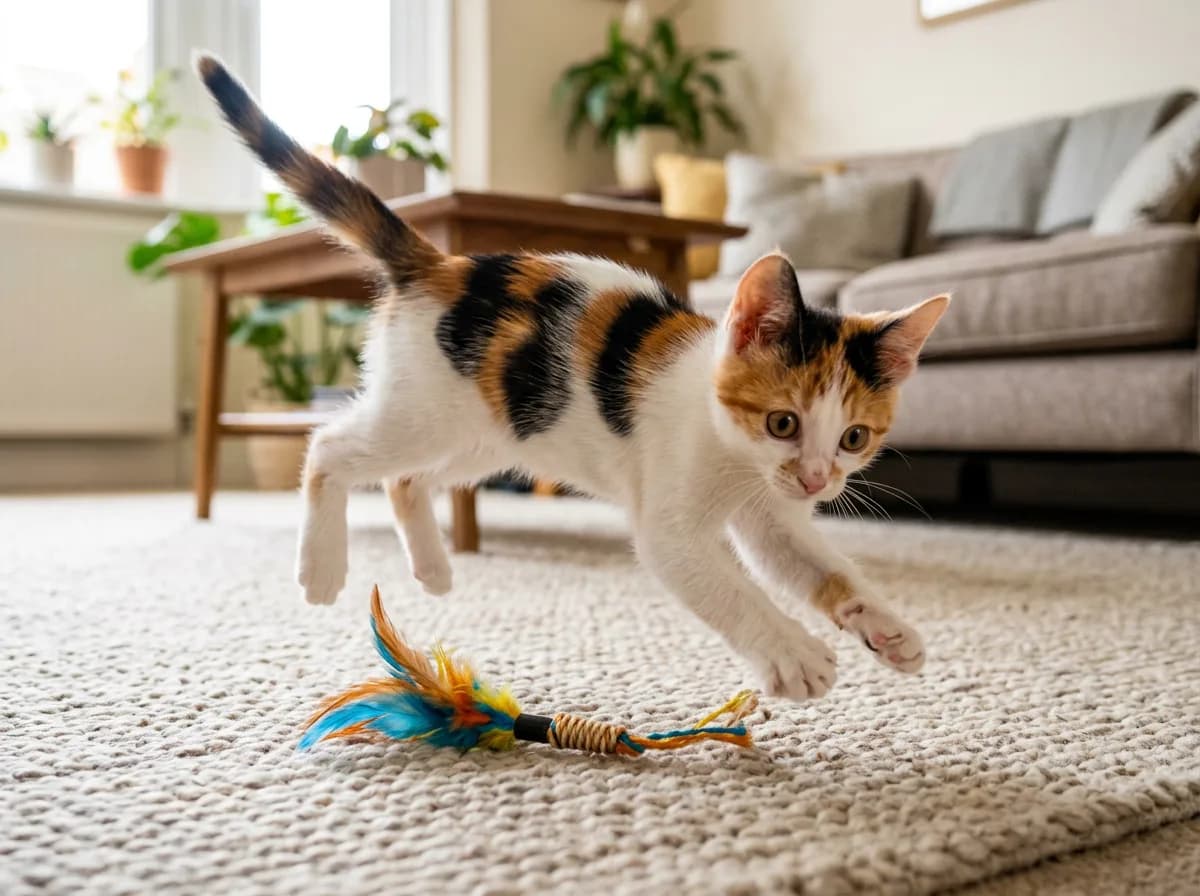
You may have heard of "tortitude" or "calico-tude," the idea that tricolor cats are sassier, more independent, or more aggressive than other cats. It is a fun stereotype, but it is not scientifically established as a rule.
The one piece of real research often cited is a 2016 University of California, Davis survey (Stelow, Bain, and Kass, published in the Journal of Applied Animal Welfare Science). It polled about 1,200 cat owners and found that owners reported slightly more frequent aggressive behaviors (like hissing or swatting during handling) in tortoiseshell and calico cats than in some other coat colors. The key caveats: the differences were modest, the data was owner-reported rather than directly observed, and the study's own authors stressed that individual variation matters far more than coat color.
- A coat pattern does not determine temperament. Breed, early socialization, handling, and the individual kitten matter much more than whether the coat is calico. Judge the kitten in front of you, not the color.
In practice, a calico kitten is as likely to be cuddly, playful, shy, or bold as any other kitten. If personality predictability matters to you, choosing a breed with a documented temperament will tell you far more than the calico coat ever could.
Calico Kitten Health and Lifespan
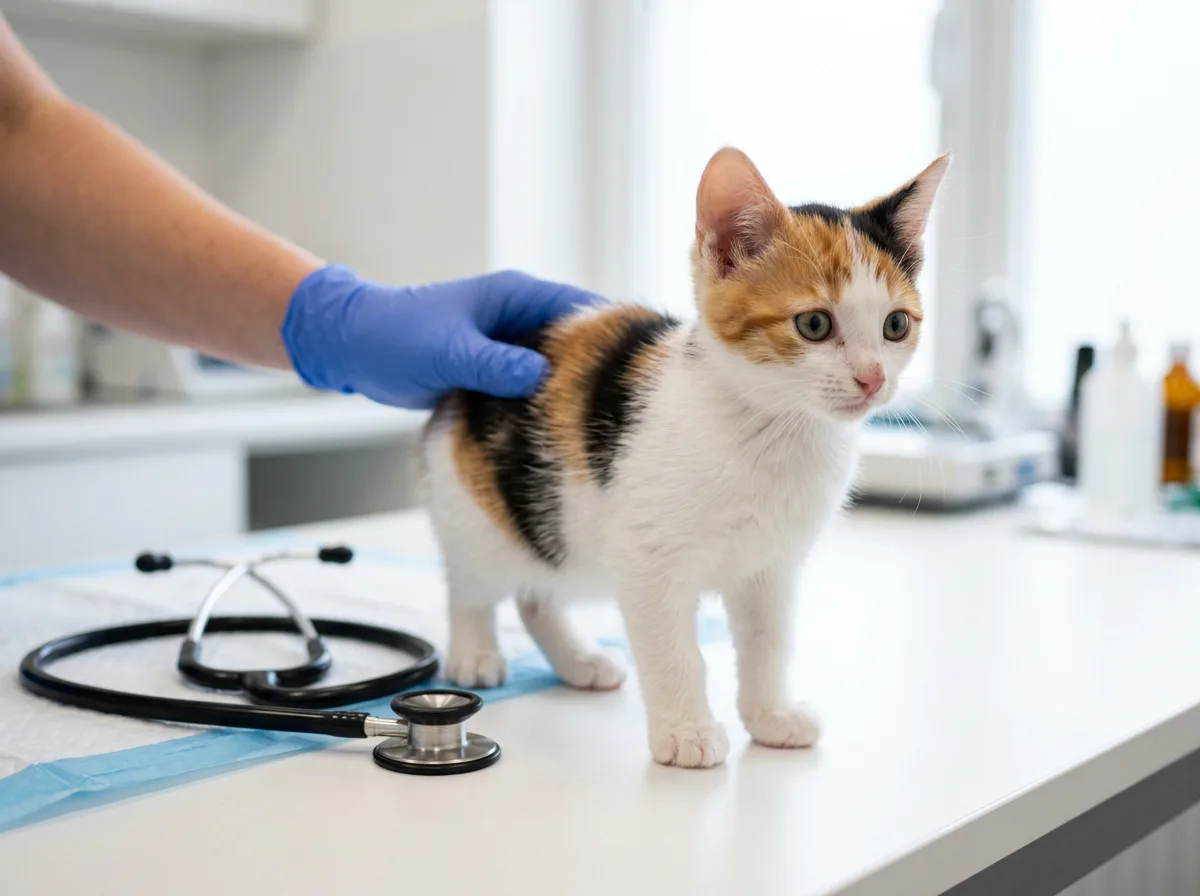
The calico pattern itself does not affect health or lifespan. A female calico kitten is, genetically, an ordinary female cat that happens to wear three colors, and she can be expected to live as long as any healthy cat. With good veterinary care, indoor cats typically live 12 to 16 years, and some reach 20.
The exception is the male calico. Because male calicos almost always carry the extra X chromosome (XXY / feline Klinefelter syndrome), they can face health issues tied to that chromosomal arrangement, and many have shorter lifespans than typical cats. XXY males are also nearly always sterile. If you adopt a male calico kitten, a thorough veterinary workup and ongoing monitoring are worthwhile.
- A male calico kitten's rarity comes from a chromosomal difference (XXY) that can bring health and fertility problems. Schedule a full vet exam early and discuss a long-term monitoring plan rather than treating the rarity as a bragging point.
Beyond that, calico kittens share the same routine health needs as any kitten: a core vaccine series, deworming, spay or neuter, dental care as they age, and a complete, life-stage-appropriate diet.
How Much Does a Calico Kitten Cost?
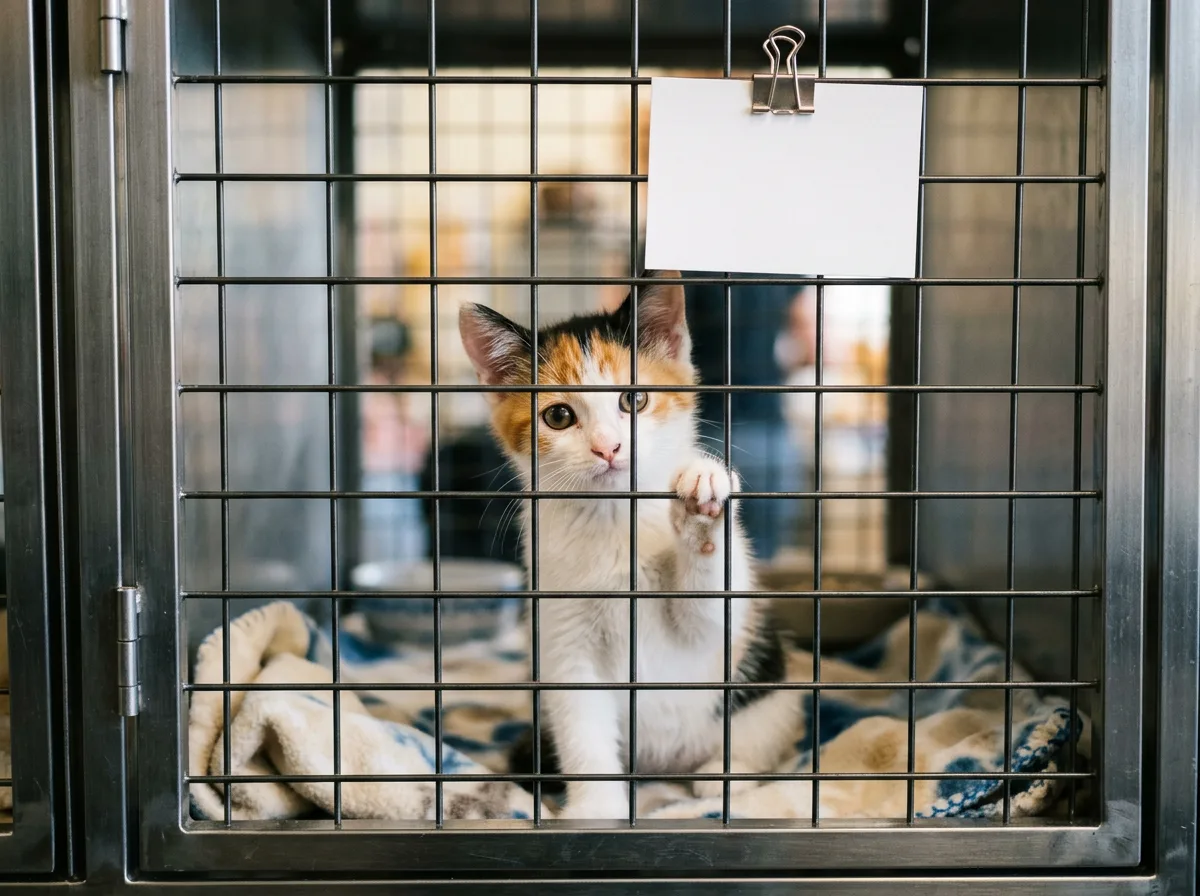
Cost depends entirely on where the kitten comes from, not on the calico coloring itself. There is no across-the-board "calico price," and you should be skeptical of anyone who quotes one.

108-oz stainless steel pet fountain with quiet pump and water-level window. Bengals are notoriously water-obsessed; a flowing fountain encourages hydration and pulls them away from sinks and toilets.
Petful may earn a commission when you click through to Chewy, at no extra cost to you.
| Source | Typical Price Range | What It Usually Includes |
|---|---|---|
| Shelter or rescue adoption | $50 to $200 | Spay/neuter, first vaccines, microchip, deworming |
| Random-bred / "free to good home" | Free or a small rehoming fee | Usually little or no vet work done yet |
| Recognized breed (CFA/TICA registered) | $800 to $2,500+ | Pedigree, early vet care, health guarantee, registration |
A shelter or rescue is almost always the most affordable and most ethical place to find a calico kitten, and the adoption fee usually bundles in spay/neuter, the first round of vaccines, a microchip, and deworming, which would cost far more à la carte. A calico kitten of a recognized breed (a calico Persian or Maine Coon, say) follows that breed's pricing, which can run from roughly $800 to $2,500 or more for a well-bred, health-screened kitten.
- A male calico is genuinely rare, but he is almost always sterile and has no breeding value. Paying a steep premium for one is paying for a curiosity, not for quality. Budget instead for the extra vet care he may need.
Where to Find a Calico Kitten: Adoption and Breeders
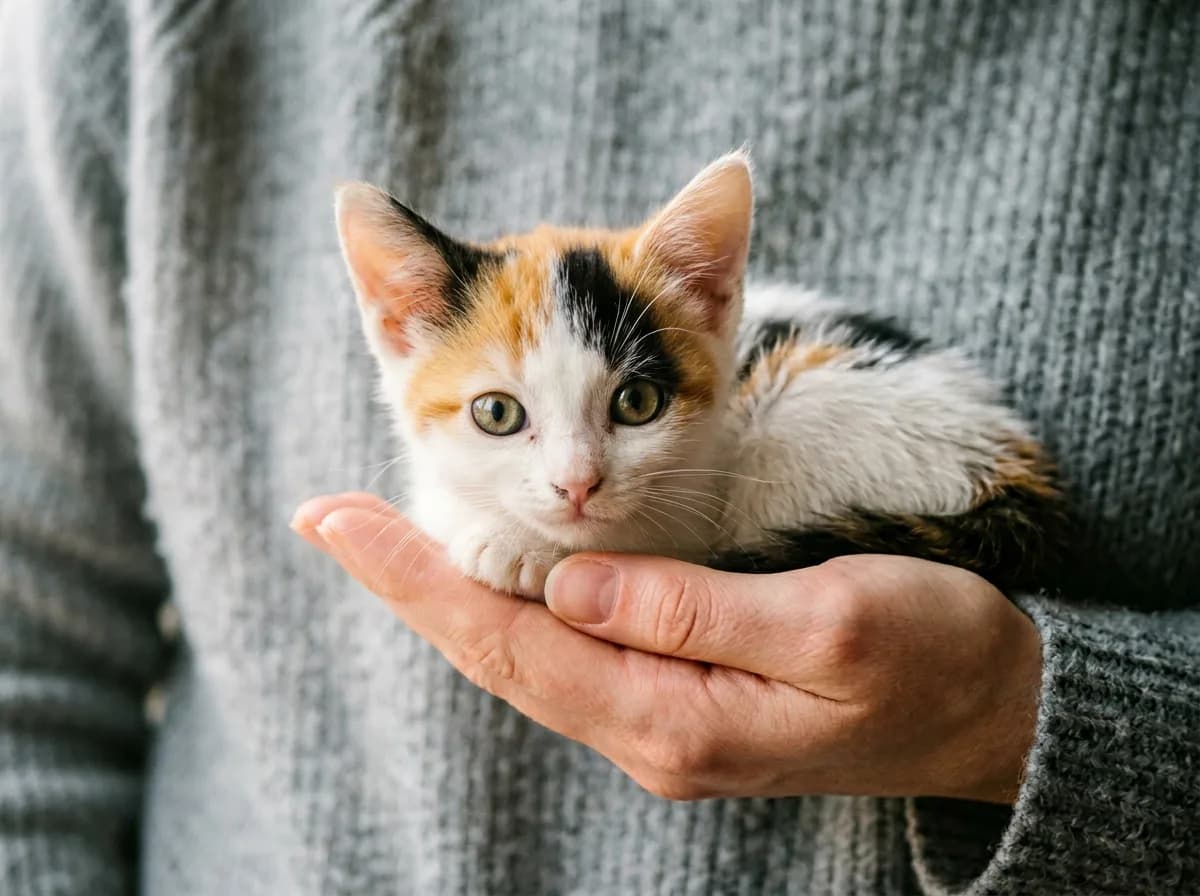
Because female calicos are common, you rarely have to look far. Start with these sources:
- Local animal shelters and humane societies. Calico and tortoiseshell kittens turn up regularly, especially during spring and summer "kitten season."
- Breed-specific and all-breed rescues. Many run foster networks and post available kittens online.
- Pet adoption listing sites. Searchable databases let you filter by color, age, and location to find calico kittens for adoption near you.
- Reputable registered breeders, if you want a calico kitten of a specific breed. Look for health testing, in-home rearing, and a willingness to answer questions.
Searches like "calico kittens for sale" and "free calico kittens near me" are popular, but a shelter or rescue is usually the better path: lower cost, kittens already vetted, and you are freeing up space to save another cat. Reserve breeder searches for when you specifically want a documented breed.
Whatever the source, ask to see the kitten interact, confirm it has had a vet check, and get written records of any vaccines or deworming already done. Avoid any seller who pressures you, will not let you visit, or pushes a "rare male calico" at a premium.
Caring for Your New Calico Kitten
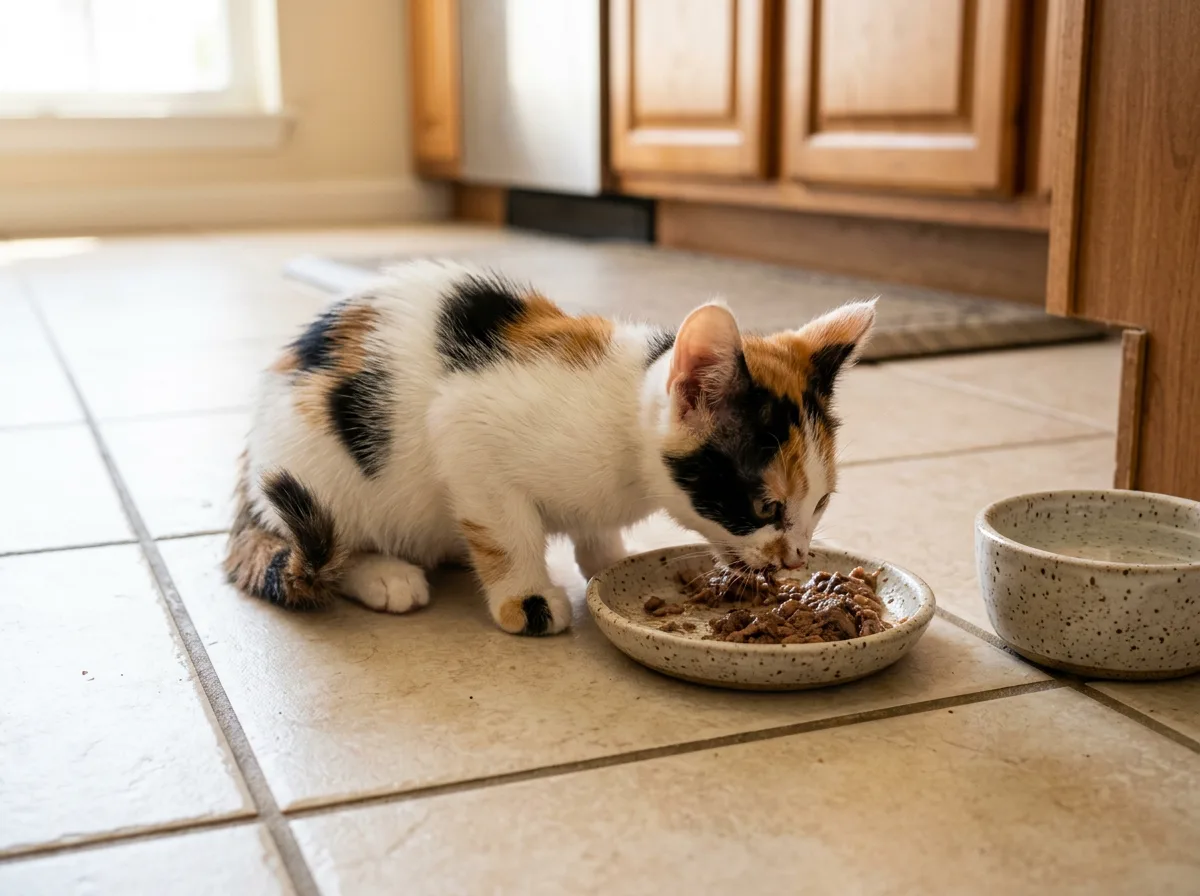
A calico kitten needs the same thoughtful start as any kitten, with no special requirements created by the coat itself. Here is a first-weeks checklist.
Feeding by age. Kittens need a complete kitten-formula diet (higher in calories and protein than adult food). Very young kittens eat small meals several times a day; as they grow you can space meals out. Always provide fresh water.
Vaccines and vet care. Plan for the core kitten vaccine series (typically starting around 6 to 8 weeks and boosted every few weeks until about 16 weeks), deworming, and a spay or neuter discussion. A first vet visit soon after adoption sets a baseline.
Grooming by coat length. A short-haired calico kitten needs only occasional brushing. A long-haired calico (Persian or Maine Coon type) should be brushed several times a week from kittenhood so it learns to tolerate grooming and to prevent mats.
Litter, safety, and play. Provide a low-sided litter box, kitten-safe toys, scratching surfaces, and a quiet space to retreat. Kitten-proof cords, small objects, and toxic plants before the kitten roams.
Calico Kitten Names
Calico kittens practically beg for names that play off their three colors, their patchwork look, or their lucky reputation. Here are ideas to get you started.
| Theme | Name Ideas |
|---|---|
| Color and pattern | Patches, Marble, Pumpkin, Ginger, Domino, Confetti |
| Sweet and warm | Honey, Caramel, Penny, Clementine, Marmalade |
| Lucky and cultural | Lucky, Maneki, Fortuna, Mochi, Sakura |
| Bold and sassy | Pixel, Calliope (Callie), Harlequin, Saffron, Jinx |
"Callie" is far and away the most popular calico nickname, a natural shortening of "calico" itself. "Patches," "Pumpkin," and "Marble" are also classics that nod directly to the coat.
Calico Cats in Folklore: Why They Are Considered Lucky
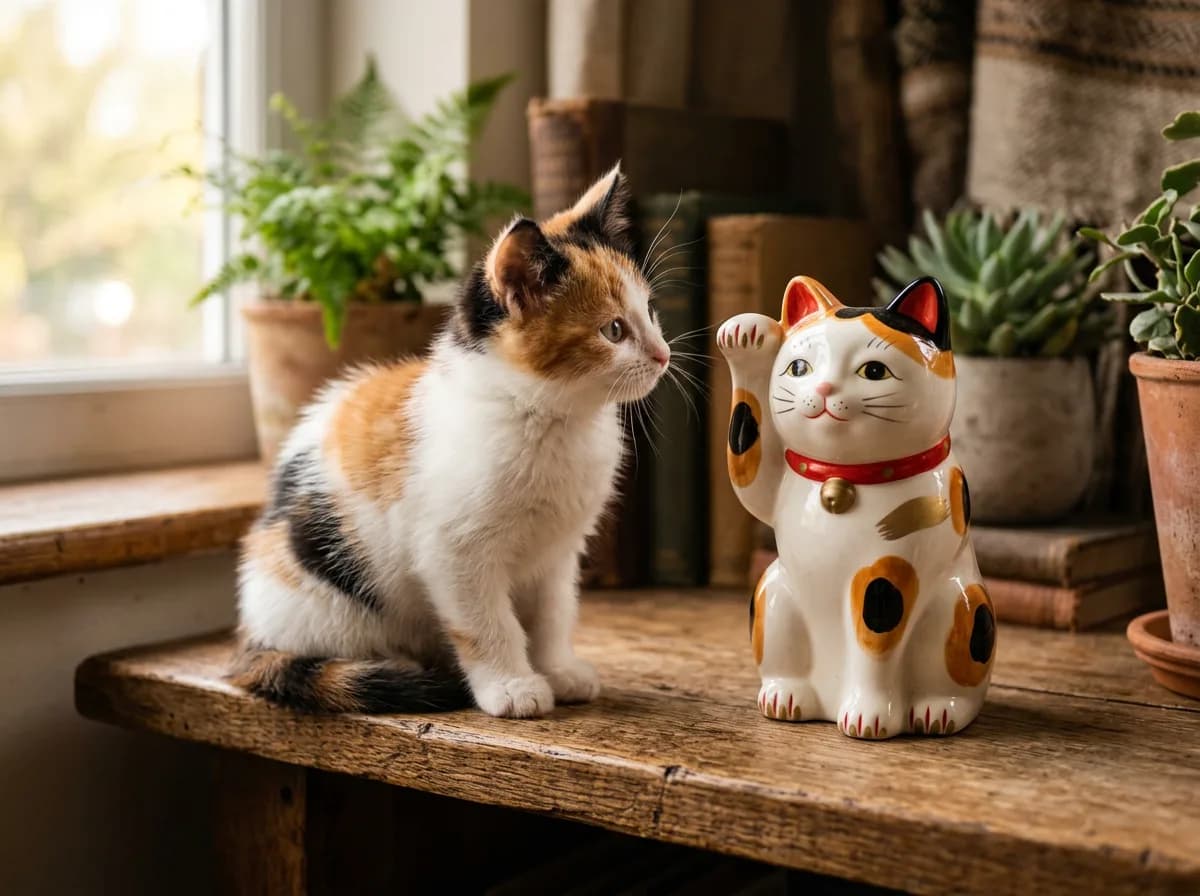
Calico cats carry a centuries-old reputation as good-luck charms across several cultures, which adds to their appeal.
Japan. The calico (mi-ke, "triple fur") is the model for the maneki-neko, the beckoning cat figurine believed to invite good fortune into homes and businesses. Calico cats were also prized aboard ships.
Maritime tradition. Sailors across many seafaring cultures considered calico cats lucky and kept them aboard to bring safe passage and ward off bad weather.
United States. The calico is the official state cat of Maryland, designated on October 1, 2001, because its orange, black, and white colors echo the state's Baltimore oriole and the Baltimore checkerspot butterfly.
Europe. Folklore in Germany and Ireland has long tied calico and tortoiseshell cats to good luck and even to home remedies and weather prediction.
In parts of the United States, calicos also earned the nickname "money cats," thanks to the folk belief that they bring prosperity to the household. The luck is folklore, of course, but the affection is real.
Frequently Asked Questions About Calico Kittens
Cats show affection with a slow blink, sometimes called a "cat kiss." When a kitten looks at you and slowly closes and opens its eyes, it is signaling trust and comfort. You can return the gesture with your own slow blink to reinforce the bond.
Female calico kittens are common, not rare, because the orange and white-spotting genes circulate widely. What is genuinely rare is a male calico kitten, which occurs roughly once in every 3,000 calicos.
Cats express affection by slow blinking, head-butting (bunting), kneading with their paws, purring, following you around, and exposing their belly. A kitten that seeks out your lap or sleeps near you is showing trust.
Cats see blues and yellows best and are less sensitive to reds and greens, so toys in blue and yellow tend to stand out most to them. That said, movement and contrast attract a cat's attention far more than any single color.
Almost, but not entirely. About 99.9% of calico kittens are female because the orange color gene sits on the X chromosome. Males occur about 1 in 3,000 and almost always carry an extra X chromosome (XXY).
Most are. The typical male calico has an XXY chromosome arrangement (feline Klinefelter syndrome) and is nearly always sterile. Rare fertile males exist, usually through chimerism or mosaicism rather than the XXY pattern.
A shelter or rescue adoption usually runs $50 to $200 and includes early vet care. A calico kitten of a recognized breed follows that breed's pricing, roughly $800 to $2,500 or more. The calico coloring itself adds no set premium.
A dilute calico kitten carries two copies of the dilution gene (MLPH, d/d), which softens the coat colors. Black becomes blue-gray and orange becomes cream, so the kitten shows pastel gray, cream, and white instead of black, orange, and white.
Look at the white and the way the colors mix. A calico has a lot of white with distinct, separated patches of orange and black. A tortoiseshell has little or no white, with the orange and black brindled and woven together.
The pattern (where the patches sit) is fixed before birth and stays put. The shading can change as the adult coat grows in, with colors deepening and edges sharpening, and eye color shifts from newborn blue to its adult shade around 6 to 7 weeks.
Many recognized breeds can, including the Persian, Exotic Shorthair, Maine Coon, British Shorthair, American Shorthair, Japanese Bobtail, Manx, Devon Rex, Norwegian Forest Cat, and Turkish Van. Calico is a pattern, so purebred status comes from the breed, not the coat.
Start with local animal shelters and humane societies, breed-specific or all-breed rescues, and pet adoption listing sites where you can filter by color and location. Calico kittens are common, especially during spring and summer kitten season.
Curious about the genetics behind unusual feline traits more broadly? Our guide to polydactyl cats covers another genetic quirk that, like the calico coat, is far more about heredity than luck.

Coreen Saito is a pet writer and longtime shelter volunteer with more than a decade in animal rescue. She covers cat behavior, breed care, and the small, ordinary science of sharing a life with companion animals, with a particular focus on honest takes about the products and decisions that actually matter. At home in Arizona, she's outranked by Mac (a dog with the loudest opinion in the house), Rebel (a cat who governs by quiet authority), and Meri (an orange tabby who runs the late shift and the laundry basket). She writes about all three, plus the rescues that keep coming through her life, at LifeWithMinty.com.
Sign up for expert-backed reviews and safety alerts all in one place.