Polydactyl Cats: Health Issues, Genetics, and Extra-Toe Care
Polydactyl cats usually live normal lives, but extra claws need careful checks. Learn the genetics, paw anatomy, routine nail care, warning signs, and when a veterinarian should examine a problem digit.
Petful is reader supported. As an affiliate of platforms like Amazon and Chewy, we may earn a commission when you buy through links on this page. There is no extra cost to you.
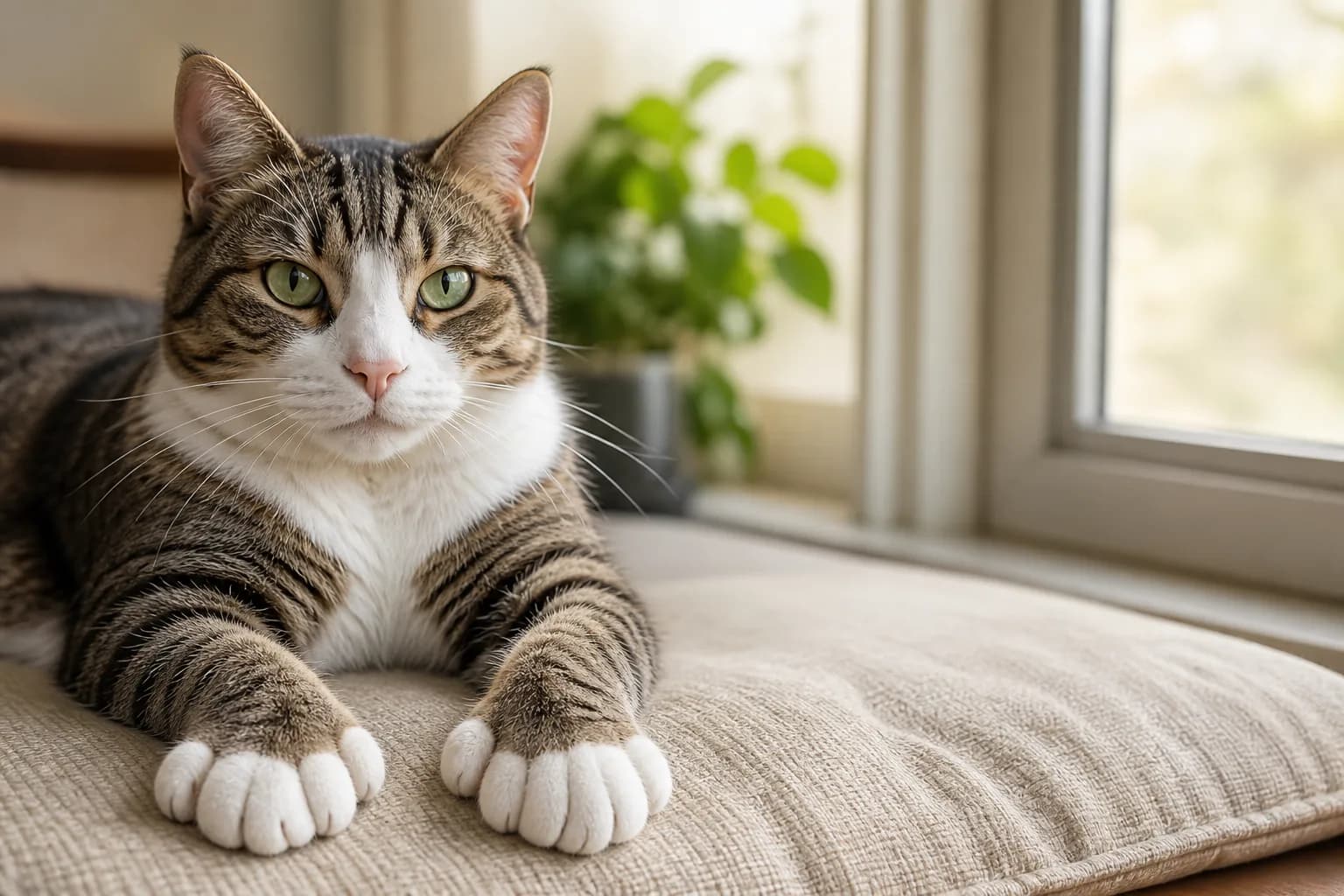
Polydactyl cats are born with more toes than the usual feline total. The extra digits may look like a small side toe, a broad mitten-shaped paw, or a second cluster of toes. Most affected cats can walk, play, and climb normally, but every extra claw needs to be found and checked because a hidden or poorly aligned nail can overgrow.
The trait is inherited in many families, yet its appearance varies widely. One cat may have a single extra toe on each front paw, while another has several extra digits on front and hind feet. Good care starts with mapping the individual cat's paws instead of assuming that all polydactyl paws are built alike.

Sign up for expert-backed reviews and safety alerts all in one place.
What is a polydactyl cat?
Polydactyly is usually a manageable inherited variation, not an illness by itself. Count every claw, inspect the skin around each digit, trim nails according to their individual growth, and call a veterinarian for pain, swelling, discharge, limping, or a claw growing into skin.
A polydactyl cat has one or more additional digits. Veterinarians use the terms preaxial for extra digits on the inner, thumb side of a limb and postaxial for digits on the outer side. The bones, joints, pads, and claws of an extra digit may be fully formed, partially formed, or connected differently from the cat's ordinary toes.
Polydactyly is congenital, which means the paw difference is present from birth. The Merck Veterinary Manual notes that feline polydactyly most often affects the front paws and rarely causes problems by itself. Merck's cat-owner overview describes the inherited condition.
Feline polydactyly is a physical trait, not a separate breed. A polydactyl kitten can be a domestic shorthair, domestic longhair, Maine Coon, or another background. The informal label double-pawed describes appearance, not a diagnosis or guaranteed ability. Breed, coat, personality, health, and the arrangement of extra toes cannot be determined from the nickname alone.
How many toes do cats normally have?
A typical cat has 18 toes: five on each front paw and four on each hind paw. One front digit, the dewclaw, sits higher on the inside of the leg and does not touch the ground during ordinary standing. A polydactyl cat has at least one digit beyond that usual pattern.
Count claws as well as visible pads. Fur can conceal a small nail, and two claws may sit close together. A compact clipper can help an experienced owner reach individual nails without forcing adjacent toes apart. The Necoichi Purrcision cat nail clipper is one cat-sized option for routine trims when the cat is calm and the claw is clearly visible.

Petful may earn a commission when you click through to Chewy, at no extra cost to you.
What is special about polydactyl cats?
What is special about polydactyl cats? The special feature is their anatomical variation. Some front paws look like mittens because a large inner digit resembles a thumb. Other paws look broad and rounded, with several digits arranged across the front. Researchers describe preaxial and postaxial forms plus substantial differences in digit number, alignment, pads, joints, and claw direction.
Extra toes do not give every cat the same ability or temperament. Anecdotes about superior climbing, hunting, balance, or friendliness are not a substitute for evidence. What matters for care is whether each digit bears weight normally, has a usable pad, moves comfortably, and carries a claw that can wear or be trimmed safely.

 Sponsored
Have a health question about your cat?
Talk to a licensed vet at Dutch over video or message, including nights and weekends.
Use code Pets60
Plans start at $12/month · covers up to 5 pets
- Licensed vets in most states
- Rx for 150+ conditions
- 4.7 on Trustpilot
What polydactyl paws look like
Begin with the cat standing on a flat surface. Extra-toe anatomy becomes useful when it becomes a repeatable home paw-check routine. Compare the left and right paws, look for a widened outline, and note whether a toe points inward, outward, or upward. Then examine one relaxed paw at a time, using gentle pressure above and below each digit to extend the claw. Stop if the cat resists or shows pain.
A simple paw map can prevent missed nails. Draw four paw outlines and mark every pad and claw, including dewclaws and small digits tucked between larger toes. Record which claws touch the floor, which remain elevated, and which curve toward neighboring skin. Recheck the map after adoption and at routine wellness visits.
For owners assembling a first routine nail kit, the Frisco cat nail clipper and Kwik-Stop starter kit combines small-pet clippers with styptic powder. Use the clippers only when the cat is comfortable and the quick is visible; a groomer or veterinary professional can demonstrate positioning for an unusual digit.

Petful may earn a commission when you click through to Chewy, at no extra cost to you.
| Pattern | What an owner may see | Care implication |
|---|---|---|
| Inner extra digit | A thumb-like toe on the inside of a front paw | Check the claw even if it does not contact the floor |
| Outer extra digit | A small toe on the outside edge | Watch for rubbing against nearby skin or surfaces |
| Broad cluster | Several toes across a wide paw | Separate fur and inspect between every pair of digits |
| Elevated or hidden digit | A claw above or between weight-bearing toes | Track growth because normal walking may not wear it down |
| Irregular digit | A small, angled, or loosely attached toe | Ask a veterinarian to document anatomy and assess any repeated injury |
Why do some cats have extra toes?
Polydactyly results from changes in developmental signaling that help position digits while an embryo forms. Research has identified variants in a regulatory region associated with the Sonic hedgehog pathway, often called the ZRS. Different variants can produce similar extra-toe appearances, which helps explain why the trait is genetically and anatomically diverse.
In many cat families, the trait follows an autosomal dominant pattern, but that shorthand does not predict every paw. Penetrance and expression can vary, so a cat carrying a relevant variant may not have the same number or arrangement of toes as a parent or littermate. A genetics review details the known ZRS variants and variable expression. Because expression varies, inheritance claims should stay qualified: a dominant inherited trait can show incomplete penetrance and variable expression instead of producing a fixed number or arrangement of toes.
Genetic testing is not usually needed simply to care for a comfortable pet cat. A physical examination answers the practical questions: how many digits are present, whether they articulate normally, whether a claw threatens nearby skin, and whether imaging is needed for an abnormal or painful toe.
Is polydactyly caused by inbreeding?
Is polydactyl from inbreeding? No. Extra toes alone do not prove that a cat is inbred. A dominant variant can pass through an otherwise diverse population and become common in a local cat family. Close breeding can concentrate many inherited traits, but toe count cannot reveal a cat's overall relatedness.
If a breeder is intentionally selecting for polydactyly, responsible decisions should include whole-cat health, genetic diversity, sound limb structure, and veterinary guidance. Selecting only for an extreme number of digits can ignore the comfort and function of the resulting paws.
How rare are polydactyl cats?
How rare is polydactyl in cats? There is no reliable worldwide percentage because frequency differs by geography, local founder populations, and breeding history. The trait is familiar in some Maine Coon lines and parts of North America but uncommon elsewhere. Rarity does not change care: every digit still needs inspection, and every hidden claw needs care even when the cat comes from a well-known local population.
Online rarity claims often mix all cats, one breed, a shelter population, or a famous colony without saying which group was measured. Treat a precise percentage cautiously unless the source defines its population and method. Rarity does not change the basic care needs of the individual paw.
Do polydactyl cats have health problems?
Most polydactyl cats do not have a generalized disease simply because they have extra toes. In a clinical study of 70 Maine Coons, including 48 polydactyl cats, researchers documented wide paw variation and found no apparent welfare harm in the examined cohort. One cat had lameness, and the authors said additional long-term work was needed. Read the full clinical study.
The concerns are usually localized to a nail, nearby skin, or mobility rather than a whole-body disease. An extra digit may have unusual bones, joints, attachments, pads, or claw angles. A toe that never touches a scratching surface can retain a sharp hook, while a crowded claw can press into a neighboring pad. These individual differences are why one comfortable study cohort cannot guarantee the outcome for every cat.
Comfort and function are better health measures than toe count. Normal play and even landings are reassuring, as is painless paw handling. A cat may instead guard one paw or chew one toe. It may hide, avoid jumping, or change its gait. Any of those changes calls for a veterinary examination of the claw bed and joints, with attention to weight bearing and the structure of the extra digit.
Nail, skin, and hidden-claw problems
The most preventable issue is an overgrown claw. A curved nail can catch fabric, split, or continue into the pad. Crowded digits can trap litter and moisture, and a damaged nail fold can become inflamed or infected. Long fur may hide the problem until the cat begins limping.
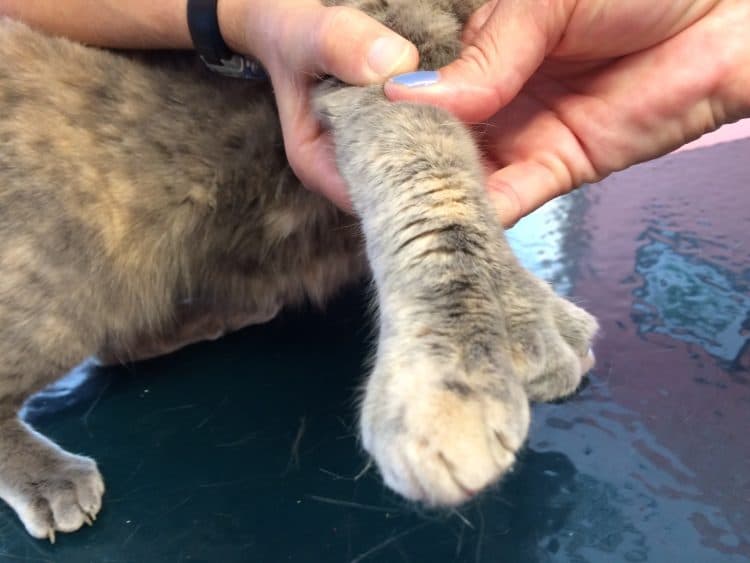
Petful's guide to an ingrown cat nail shows why a claw embedded in the pad is not a routine home trim. Blood, pus, odor, marked swelling, or a painful embedded nail calls for veterinary care, where the wound and the nail's growth pattern can be assessed safely.
- Stop home handling if the cat cries, bites, pants, struggles unusually, or cannot bear weight. Do not pull an embedded claw out of skin, cut into swollen tissue, or give human pain medicine.
Do polydactyl cats have a different lifespan?
What is the lifespan of a polydactyl cat? There is no good evidence that uncomplicated polydactyly sets a different lifespan. Longevity depends on the same broad factors that affect other cats, including genetics, preventive care, nutrition, environment, dental health, chronic disease, and injury risk. Toe count alone does not establish a shorter or longer life.
A painful claw can reduce activity or become infected if ignored, but that is a care problem rather than proof of a shorter inherited lifespan. Regular paw checks turn a hidden-nail risk into something owners and veterinarians can monitor.
How to care for a polydactyl cat's paws
Keep Miracle Care Kwik-Stop styptic powder with the clippers for a small routine nick, follow the label, and stop the trim once bleeding is controlled.

Petful may earn a commission when you click through to Chewy, at no extra cost to you.
Make paw care predictable and brief. Choose a quiet room, handle one paw for a few seconds, reward calm behavior, and finish before the cat becomes upset. Some cats tolerate one or two nails per session better than a full manicure. A compact routine option is the Frisco cat nail clipper and Kwik-Stop starter kit, used only when the cat is calm and each claw is clearly visible.
Ask for a demonstration if any claw is dark, twisted, extremely close to a pad, or hard to isolate. A veterinary technician or cat-experienced groomer can show a safe angle and help decide whether professional trims are kinder for that particular cat.
SponsoredVet care that's always there
Unlimited video calls and messaging with licensed vets for less than a typical vet visit. One membership covers up to five pets.
Use code Pets60
Plans start at $12/month · covers up to 5 pets
- Licensed vets in most states
- Rx for 150+ conditions
- 4.7 on Trustpilot
Count and inspect every claw
- Check front and hind paws, including the higher dewclaws and any claw hidden in fur.
- Look at the skin between digits for redness, moisture, debris, odor, or discharge.
- Compare left and right paws for new swelling, changed angle, or unequal weight bearing.
- Track fast-growing claws on a written paw map or phone reminder.
- Recheck after a snag, fall, rough play session, or sudden reluctance to jump.
Inspection frequency should match the cat. A hidden claw that never contacts the floor may need more frequent checks than a weight-bearing nail that sheds normally. Kittens also change quickly as paws grow, so update the map instead of relying on the first count. Keep Miracle Care Kwik-Stop styptic powder with the routine trimming tools and follow its label if a small nick occurs.
Keep a note of prior trouble spots for wellness visits. If one claw repeatedly approaches the pad despite careful trims, the veterinarian can examine its growth direction and surrounding anatomy before it becomes an emergency.
Routine trimming and scratcher setup
Offer both vertical and horizontal scratching surfaces with stable bases. Scratching helps cats stretch, mark, and shed outer claw sheaths, but it may not wear every elevated polydactyl claw. A scratcher complements inspection and trimming rather than replacing them. The Necoichi wall-mounted cat scratcher is one upright option to consider when that orientation suits the cat and the wall.
For cats that prefer an upright surface, the Necoichi wall-mounted cat scratcher can be positioned at a comfortable height on a suitable wall. Observe which paws and claws contact it, and continue checking any extra nail that misses the surface.
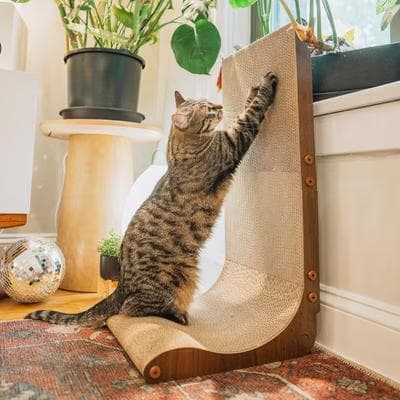
Curved cardboard wall scratcher with a wood frame that protects walls and gives cats a satisfying vertical scratch surface.
Petful may earn a commission when you click through to Chewy, at no extra cost to you.
Place scratchers near sleeping spots, room entrances, or furniture the cat already targets. Reward use without moving the cat's paws against the surface. Petful's cat scratching-post tips can help match texture, orientation, and location to the cat's preference.
For trimming mechanics, see Petful's step-by-step guide to trimming cat nails. A polydactyl cat follows the same basic process, but the owner must slow down and account for every extra digit. For a cat-sized tool, the Necoichi Purrcision cat nail clipper is one routine option when the claw is visible and the cat is calm.
When to call your veterinarian
Call your veterinarian when a paw or gait changes suddenly. The following signs can indicate pain, trauma, infection, or an embedded claw and should not be managed as a routine home trim.
- Mobility signs include limping, holding a paw off the ground, or suddenly avoiding jumps.
- Behavior signs include sudden hiding or repeated licking and chewing at one toe.
- Paw signs include swelling, warmth, blood, pus, odor, a torn claw, or a claw touching or entering skin.
A same-day visit is appropriate when the cat is clearly painful, cannot bear weight, has active bleeding that does not stop with gentle pressure, or has an open wound. Emergency care may be needed after major trauma or when the cat is weak, pale, breathing abnormally, or otherwise systemically ill.
Bring the paw map and describe when gait or behavior changed. The veterinarian may examine the claw bed, joints, tendon function, and weight bearing. Radiographs can show whether an unusual digit contains bone and how it connects to the limb.
Can a problem extra toe be removed?
A comfortable, functional extra toe does not need removal simply because it looks different. The boundary between medically indicated surgery and elective declawing is the purpose: a veterinarian may treat one painful, infected, repeatedly injured, or structurally problematic digit, while elective declawing removes healthy terminal toe bones for convenience. Surgery still carries anesthesia, pain, wound, and infection considerations.
The professional Merck Veterinary Manual notes that damaged or infected digits may require amputation in some cases. That decision belongs to a veterinarian after examination and, when needed, imaging. See Merck's professional overview of congenital limb anomalies.
Do not confuse targeted treatment of one diseased digit with declawing. Declawing removes the last bone of a toe, not just the claw. The ASPCA opposes elective declawing and describes it as an amputation with medical and behavioral risks. Read the ASPCA position statement.
How much is a polydactyl cat worth?
How much is a polydactyl cat worth? There is no responsible universal price. Rarity and monetary value are separate questions, and the non-speculative answer depends on documented facts. Online value answers often imply a premium without separating the variables. Adoption fees can reflect care and location. Lineage needs documentation. Health is a separate question. Local demand can change pricing. Extra toes alone do not establish value.
Treat the cat as a companion, not a collectible. Before adoption, ask for medical records, examine the paws, confirm that every claw has been identified, and budget for routine care. A higher asking price is not proof that the paws are sound or that a seller follows ethical breeding practices.
Polydactyl cats, ships, and Hemingway history
Polydactyl cats are often called ship's cats or Hemingway cats. Maritime stories say broad-pawed cats were valued aboard ships, but claims that extra toes made every cat a better sailor or hunter are difficult to prove. The lasting association likely reflects both folklore and the spread of cat populations through port communities.
The Ernest Hemingway Home and Museum in Key West maintains a well-known colony and says Hemingway received a white six-toed cat named Snow White from a ship captain. The museum reports that about half of its nearly 60 cats show the physical polydactyl trait. Read the museum's account of its cats.
That history is culturally interesting, but it does not change veterinary care. A famous lineage cannot be confirmed by appearance alone, and a 'Hemingway cat' still needs the same individual paw map, nail checks, preventive medicine, and prompt care for pain.
Frequently asked questions
Most polydactyl cats are healthy and comfortable, and extra toes rarely cause a generalized problem by themselves. Individual digits may still have unusual alignment, crowded skin, or claws that never contact a scratching surface. Count and inspect every claw regularly. Pain, limping, swelling, odor, discharge, a torn nail, or a claw growing into skin warrants veterinary care.
How many toes can a polydactyl cat have? Any total above the usual 18 toes qualifies as polydactyly. A typical cat has five toes on each front paw and four on each hind paw, but extra-toed cats vary widely in number and arrangement. Front paws are affected more often. Care should follow the actual pads, bones, joints, and claws present rather than a record-setting toe count.
Is polydactyly caused by inbreeding? No. Extra toes alone do not prove that a cat is inbred. In many families, a relevant variant can be inherited as a dominant trait and persist in an otherwise diverse population. Close breeding can concentrate many traits, but paw appearance cannot reveal overall relatedness. Responsible breeding decisions should consider whole-cat health, sound limb structure, and genetic diversity.
Do polydactyl cats need special nail care? They need the same basic nail care as other cats plus a complete map of every extra claw. Hidden, elevated, or crowded nails may not touch the floor or a scratcher, so normal activity may not wear them down. Check each digit, trim only the clear hook beyond the quick, and ask a veterinary professional or cat-experienced groomer to demonstrate difficult angles.
Do polydactyl cats live shorter lives? There is no good evidence that uncomplicated polydactyly shortens lifespan. Longevity depends on the same broad factors that affect other cats, including genetics, preventive care, nutrition, environment, dental health, chronic disease, and injury risk. Prompt treatment of an ingrown, injured, or infected claw helps keep a local paw problem from causing ongoing pain or wider illness.
A comfortable, functional extra toe should not be removed simply because it looks different or is inconvenient to trim. A veterinarian may discuss surgery when a digit is repeatedly injured, infected, painful, or structurally problematic, sometimes after radiographs clarify its anatomy. Targeted treatment of one diseased digit is also different from elective declawing, which removes the last bone of a toe.
Sources
- Merck Veterinary Manual: Congenital and Inherited Disorders Affecting Multiple Body Systems of Cats
- Merck Veterinary Manual: Congenital and Inherited Anomalies of the Musculoskeletal System
- Veterinary clinical study: Polydactyly in Maine Coon Cats
- Genetics review: Genotype-Phenotype Correlations of Polydactyly in Cats
- ASPCA: Cat Grooming Tips
- ASPCA: Position Statement on Declawing Cats
- Ernest Hemingway Home and Museum: Our Cats

VMD
Dr. Debora Lichtenberg, VMD, is a small animal and exotics veterinarian who has been practicing medicine for over 30 years. A graduate of the University of Pennsylvania School of Veterinary Medicine, Dr. Lichtenberg also trained at the Philadelphia Zoo. She now practices in the New York City area and lives in the West Village with her husband and her rescued pets, Cocoa and OG. Dr. Lichtenberg has been writing for Petful for many years, and she has been recognized with Certificates of Excellence from both the Dog Writers Association of America and the Cat Writers Association of America.
Sign up for expert-backed reviews and safety alerts all in one place.