How to Treat an Ingrown Cat Nail: Essential Tips for Cat Owners
Learn how to identify and treat an ingrown cat nail, when home trimming is safe, when the paw needs urgent veterinary care, likely costs and prevention for high-risk cats.
Petful is reader supported. As an affiliate of platforms like Amazon and Chewy, we may earn a commission when you buy through links on this page. There is no extra cost to you.
An ingrown cat nail develops when an overlong claw curves toward the paw pad and presses into or punctures it. A claw that is merely long may be trimmed at home if your cat is calm and the pad is healthy. Once the nail touches or enters the pad, or the toe is swollen, bleeding, smelly, or painful, veterinary treatment is the safer choice.
Cats often hide foot pain, so the first clue may be limping, licking one paw, or avoiding a jump rather than crying. This guide shows what an ingrown claw looks like, how to make the home-vs-vet decision, what removal may cost, and how to protect senior, polydactyl, and other high-risk cats.

Sign up for expert-backed reviews and safety alerts all in one place.
What an Ingrown Cat Nail Looks Like (Signs and Causes)
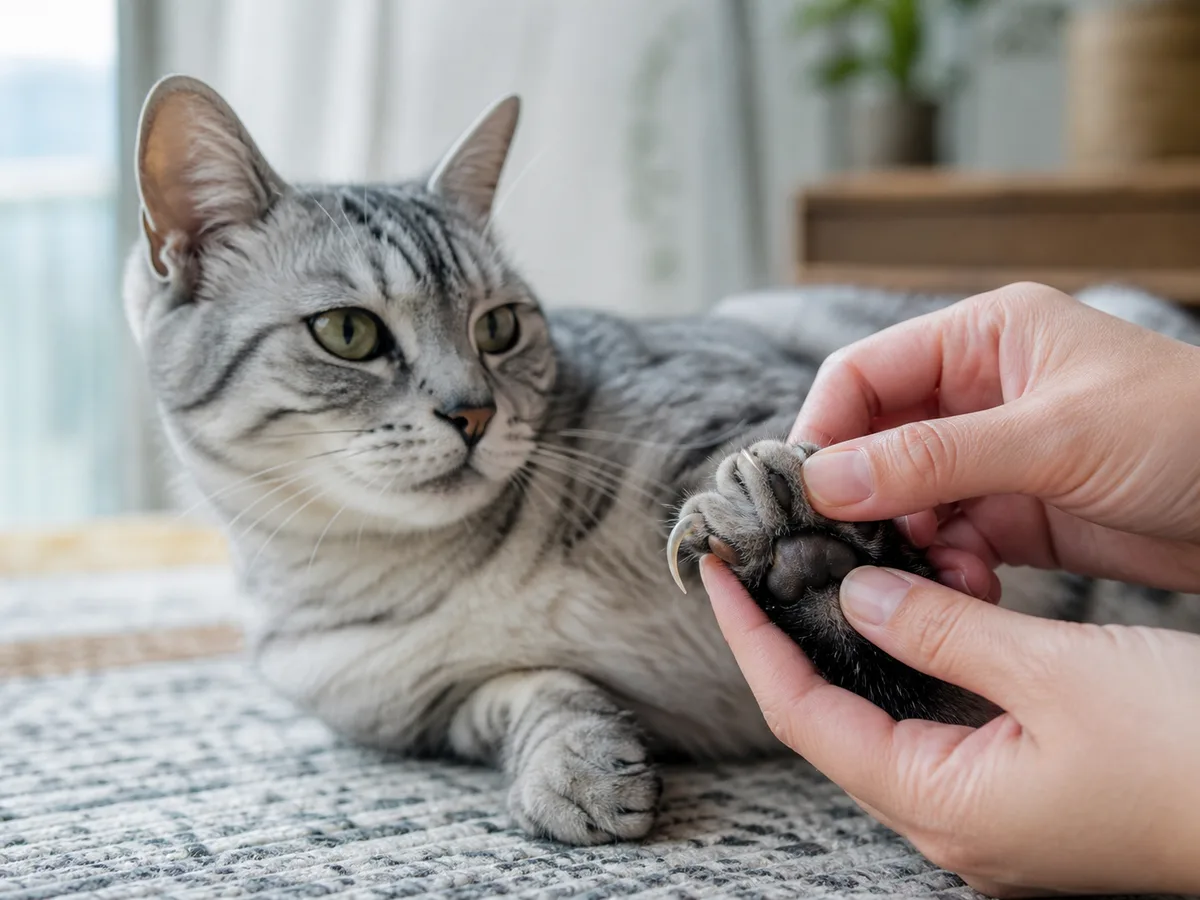
Can cats get ingrown nails? Yes. What an ingrown nail looks like before and after it pierces the pad is the key appearance decision. Before puncture, the claw becomes long and hook-shaped, curves back toward the toe, and leaves a narrow gap above the pad. After it becomes embedded, redness, swelling, moisture, bleeding, crusting, discharge, or odor are infection signs that change the decision from routine trimming to veterinary care. Owners may describe the same progression as an ingrown cat claw, a cat nail growing into the pad, or a cat claw growing into the pad. VCA Animal Hospitals explains why unworn claws keep growing, while the Cornell Feline Health Center advises frequent senior nail checks before a claw reaches the pad.
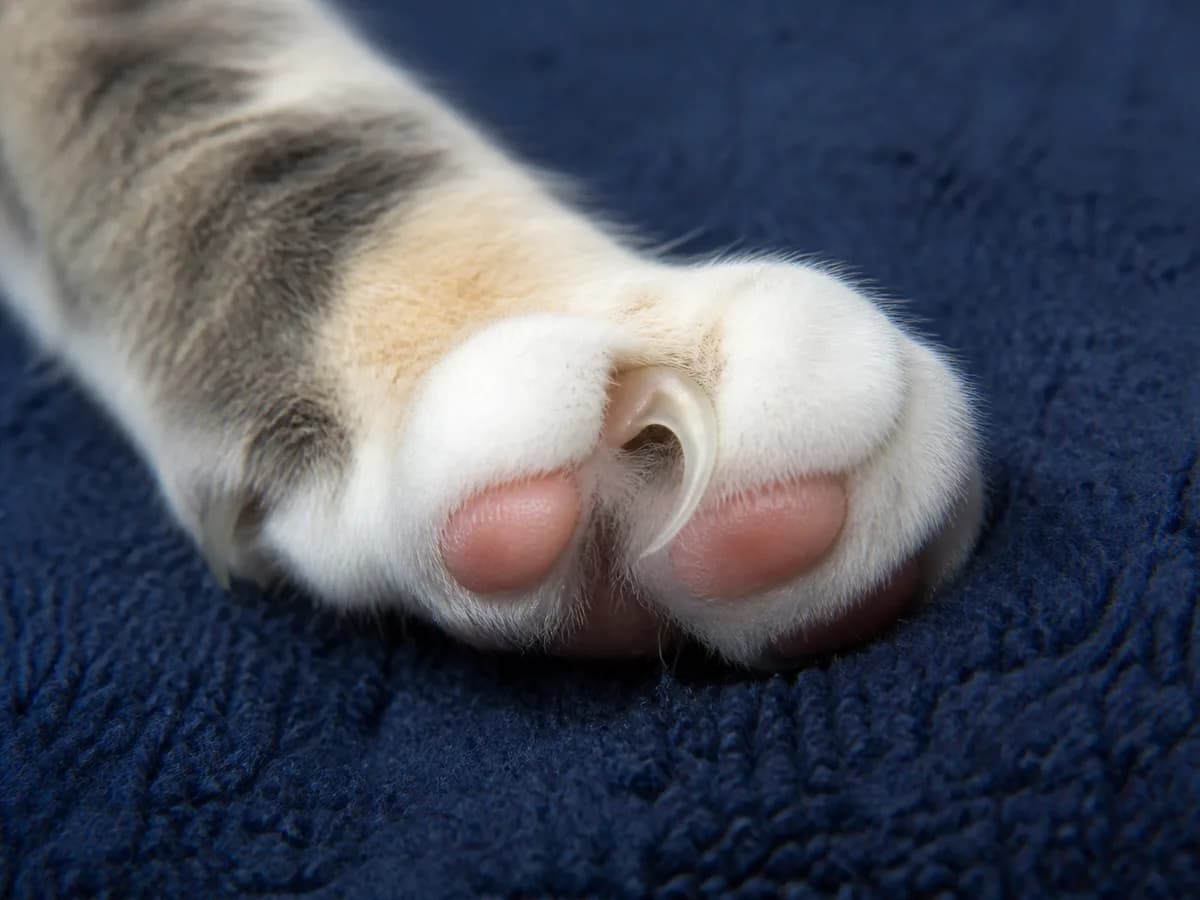
The condition starts when normal nail growth outpaces wear and trimming. Cats shed the outer claw sheath when they scratch, but scratching does not shorten every nail evenly. VCA Animal Hospitals notes that dewclaws do not contact the ground, so scratching and ordinary movement cannot wear them down. Senior cats also tend to develop thicker, more brittle claws and may scratch less. The image-pack appearance reference below provides a curled claw close-up with the nail curling into the pad, so readers can compare the before-and-after appearance without relying on a generic cat portrait. A stable surface such as the Necoichi Premium Comfort Cat Scratcher Wall can support normal scratching behavior, but it does not replace nail checks or trims.
- 1A claw curling toward the pad is the early warning stage.
- 2Limping on one paw, repeated licking, or reluctance to jump can be the first sign of pain.
- 3A nail embedded in the pad, pus or discharge, swelling, bleeding, or odor requires veterinary care.
Other clues include:
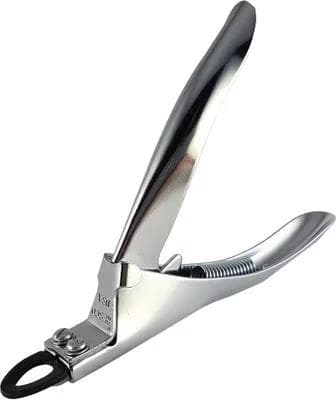
Petful may earn a commission when you click through to Chewy, at no extra cost to you.
- Clicking on hard floors or claws snagging fabric
- One toe held off the ground
- Flinching or pulling away when the paw is touched
- A dark spot or small puncture beneath the claw tip
- Hair matted around a damp or draining toe
- Irritability, hiding, reduced activity, or less use of the scratching post
Not every abnormal-looking toe is an ingrown claw. A torn nail, nail-bed infection, paw-pad inflammation, foreign material between the toes, or a toe mass can also cause swelling and licking. The difference matters because clipping does not treat those conditions. If your concern is "my cat's claw has grown into his pad," the claw is embedded and needs same-day veterinary care rather than blind clipping. If the claw shape does not clearly explain the problem, let a veterinarian examine it.
 Sponsored
Have a health question about your cat?
Talk to a licensed vet at Dutch over video or message, including nights and weekends.
Use code Pets30
Plans start at $11/month · covers up to 5 pets
- Licensed vets in most states
- Rx for 150+ conditions
- 4.7 on Trustpilot
How to Treat an Ingrown Cat Nail: Home Care vs. the Vet
How do you treat an ingrown nail on a cat? Safe home-trim thresholds vs mandatory vet care depend on whether the claw has injured the pad, as established by primary veterinary sources. Home trimming is limited to a claw that is not touching or embedded in the skin, with no redness, swelling, bleeding, discharge, odor, or obvious pain. The cat must also tolerate handling well enough that you can see the quick and make one controlled cut. A symptom-based home-vs-vet decision table is more useful than generic "see your vet" advice because it turns each visible stage into an action and urgency level.
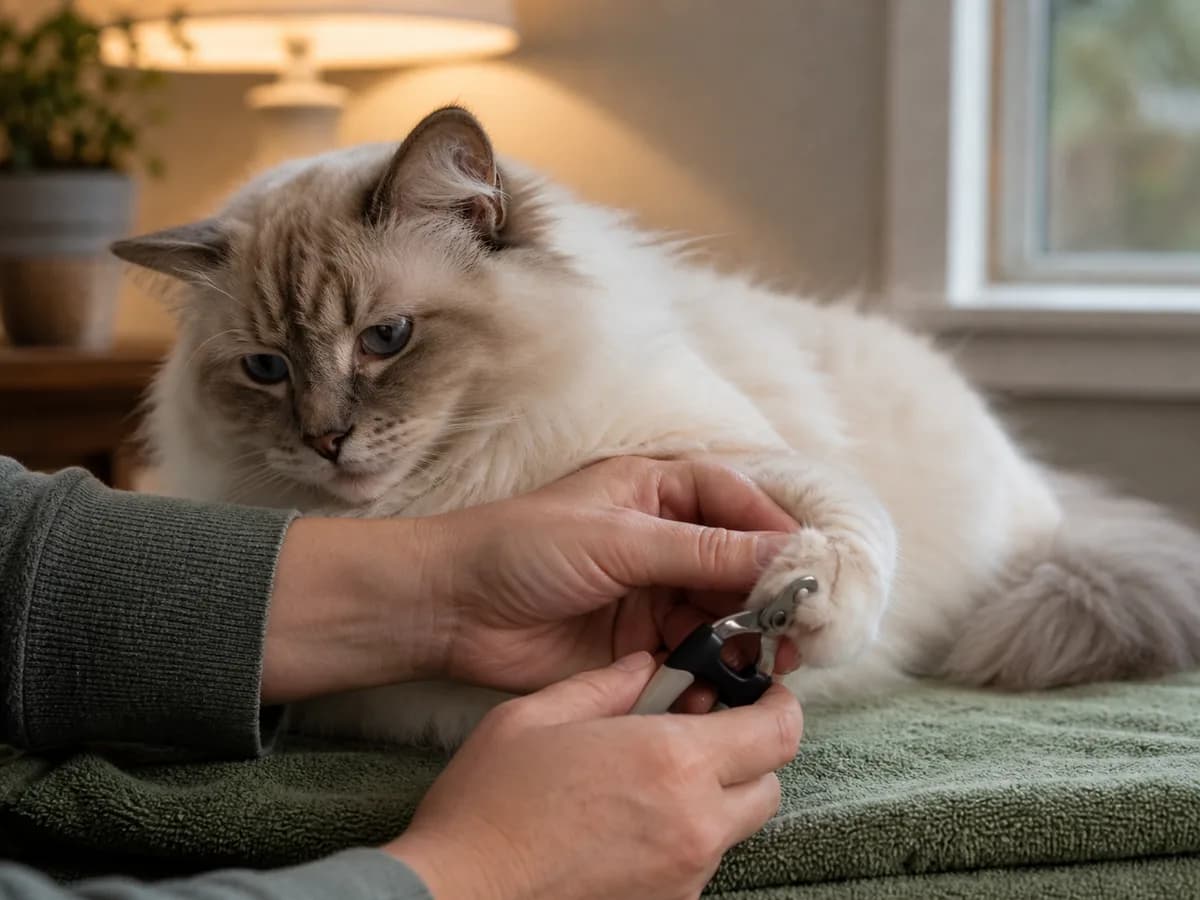
Mandatory vet care begins when a claw touches or enters the pad, the cat is painful or cannot be handled safely, or redness, swelling, bleeding, discharge, odor, heat, or limping is present. Do not pull a nail out of the pad, dig beneath it, squeeze a swollen toe, or force a painful cat to stay still. An embedded nail may need pain relief or sedation before it can be clipped and withdrawn safely. The veterinarian can then clean the puncture, assess its depth, and decide whether antibiotics, anti-inflammatory treatment, a bandage, or further testing is needed.
| Symptom-based home-vs-vet decision table | Safe action | Urgency |
|---|---|---|
| Long or curling, with a clear gap above a healthy pad | Trim only if you are confident, can see the quick, and the cat remains calm | Routine home care or a scheduled professional trim |
| Tip touching the pad but not visibly embedded, with no swelling or discharge | Arrange a prompt vet or experienced veterinary technician/groomer trim; avoid forcing the paw | Within a few days, sooner if the cat is painful |
| Claw embedded in the pad, puncture visible, or bleeding present | Do not pull or cut blindly; keep the cat indoors and call the veterinarian | Same-day vet visit |
| Swelling, pus, odor, heat, limping, marked pain, or reduced appetite | Veterinary removal, wound care, and infection assessment are needed | Urgent same-day care; emergency care if the cat is systemically ill |
If the claw is safely trimmable at home, use cat nail clippers and remove only the hooked transparent tip. Stop before the pink quick. Have styptic powder nearby for accidental bleeding, but do not use styptic powder as treatment for a punctured or infected pad. The prevention section below links Petful's full restraint and clipping technique.
After a simple trim, check that the pad is intact and let the cat walk. A cat that remains lame, keeps licking, or resists using the paw may have a puncture or a different nail problem that was not obvious at first.
What the Veterinarian May Do
The appointment is usually straightforward when the problem is caught before infection. The veterinary team examines every toe because a second overgrown claw may be hidden beneath fur or between polydactyl digits. They also compare the affected nail with the others, feel the toe for swelling, and check whether the claw has merely pressed against the pad or created a true puncture.
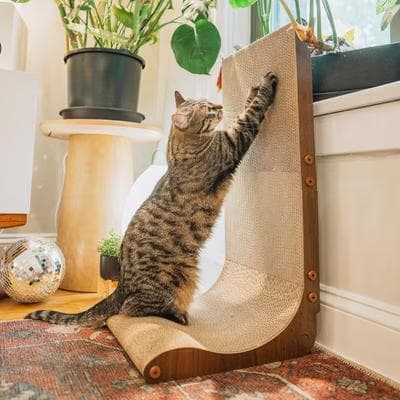
Curved cardboard wall scratcher with a wood frame that protects walls and gives cats a satisfying vertical scratch surface.
Petful may earn a commission when you click through to Chewy, at no extra cost to you.
Treatment is matched to what they find:
- Clip and smooth an overgrown claw that has not broken the skin
- Use pain relief or sedation when handling would otherwise hurt or frighten the cat
- Remove the embedded tip and flush a puncture wound
- Check for an abscess, damaged nail bed, abnormal tissue, or retained nail fragment
- Prescribe pain medicine and, when infection warrants it, antibiotics
- Bandage selectively and set a recheck schedule for wound and nail growth
Ask the team to demonstrate the cat's individual safe trim line before you leave. Thick or dark claws can hide the quick, and a cat with arthritis may need a different position or shorter sessions for future trims. For later routine trims on healthy claws, the Frisco Nail Clippers with Kwik-Stop Styptic Powder keeps a clipper and accidental-bleeding aid together; styptic powder is not treatment for an embedded or infected nail.
Infected Ingrown Nails: When It Cannot Wait
Will an infected ingrown nail heal on its own? Do not count on it. An embedded claw acts like a foreign object in the pad, and the puncture remains contaminated until the nail is removed and the wound is cleaned. Cats can hide significant pain, while infection can spread into deeper toe tissues. Call the veterinarian the same day for swelling, pus or discharge, bad odor, warmth, bleeding, or limping.
- A claw embedded in the pad; pus or yellow-green discharge; a swollen, hot, or foul-smelling toe; persistent bleeding; marked limping; pain when the paw is touched; lethargy; fever; or reduced appetite. Do not squeeze the toe or apply peroxide, alcohol, essential oils, Vicks VapoRub, or human antibiotic creams unless a veterinarian specifically directs their use.
Veterinary treatment usually begins with clipping the nail at a safe point and removing the curved tip from the pad. Depending on pain and temperament, the cat may need local pain control, sedation, or anesthesia. The veterinarian may flush the puncture, prescribe pain medicine, and use antibiotics when infection is present. A bandage is sometimes needed, but cat paw bandages require careful placement and follow-up because a tight or wet bandage can create new problems.
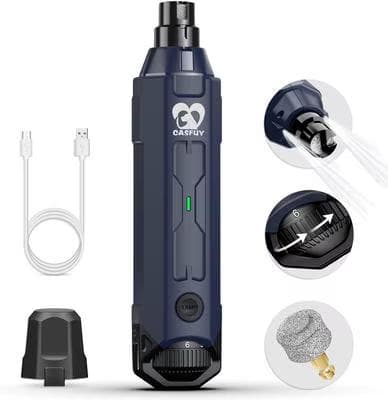
A quiet, 6-speed rechargeable grinder that files nails smooth, ideal for dogs who dislike clippers.
Petful may earn a commission when you click through to Chewy, at no extra cost to you.
Until the appointment, keep the cat indoors on a clean, dry surface and prevent licking if you can do so without a struggle. Do not soak an embedded claw to "draw it out." If a nail broke rather than curled into the pad, use Petful's separate guide to a torn cat nail because the bleeding control and damaged-nail decision are different.
Cat Ingrown Nail Removal Cost
How much does it cost to get a cat's ingrown claw removed? A realistic U.S. cost range begins with an exam fee of about $53 to $124 for a straightforward visit. Sedation may add about $94 to $147 and puncture-wound treatment about $133, while medicines, laboratory work, rechecks, or emergency care increase the total. There is no single guaranteed fee because the bill depends on whether the nail only needs clipping or has caused a painful puncture or infection.
A veterinarian-reviewed MetLife Pet Insurance cost guide lists these planning figures:
- Regular veterinary visit: about $53 to $124
- Emergency veterinary visit: around $121
- Sedation when needed: about $94 to $147 additional
- Treatment for a puncture wound: around $133
Cost coverage is thin everywhere except an insurance blog, so this concrete itemized cost range fills an important planning gap without pretending to be a guaranteed total or price quote. A calm cat with a newly overgrown claw may need only an exam and trim. An infected cat ingrown nail may require sedation, wound cleaning, medication, culture, bandaging, and rechecks. Fees vary by region and clinic. Ask for a written estimate that separates the exam, removal, sedation, wound care, medication, and follow-up.
SponsoredVet care that's always there
Unlimited video calls and messaging with licensed vets for less than a typical vet visit. One membership covers up to five pets.
Use code Pets30
Plans start at $11/month · covers up to 5 pets
- Licensed vets in most states
- Rx for 150+ conditions
- 4.7 on Trustpilot
High-Risk Cats: Seniors, Polydactyls, and Dewclaws
Any cat can develop an ingrown claw, but risk rises when a nail does not wear normally or the cat no longer grooms and scratches effectively. "Old cat nails growing into pads" is a common description of the senior-cat pattern, but the same problem can affect a polydactyl cat or any unworn dewclaw.
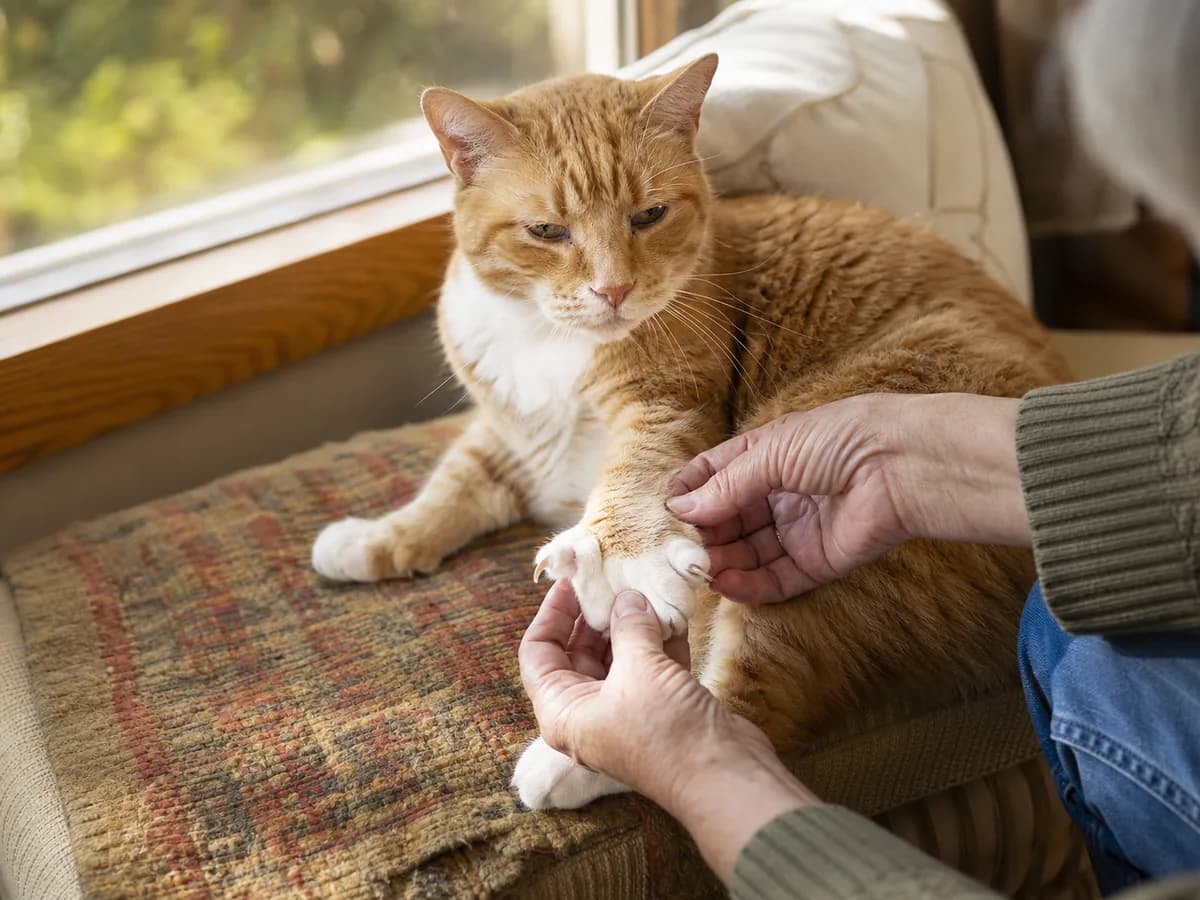
Senior Cats
Senior-cat thickened nails and reduced scratching are the leading risk combination. An elderly cat's claws often become thick, brittle, and overgrown, while arthritis, weakness, or cognitive changes may reduce scratching and make paw handling harder. The Cornell Feline Health Center recommends checking a senior cat's nails weekly and trimming them when necessary. A senior cat that suddenly stops scratching or resists paw care may be painful, so discuss the behavior change as well as the nail.
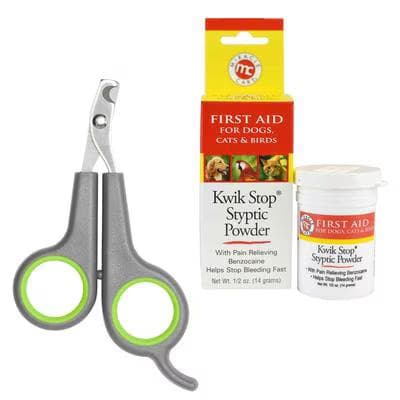
Petful may earn a commission when you click through to Chewy, at no extra cost to you.
Polydactyl Cats
A polydactyl cat, sometimes called a Hemingway cat, has extra toes. Most extra toes cause no problem, but some sit at an angle or between other toes where the claw does not contact a scratching surface. Count every toe on every paw, then look between digits rather than checking only the obvious front claws. A hidden extra nail can curl into a pad while the visible nails look normal.
Dewclaws and Unusual Nail Growth
A dewclaw sits higher on the leg and never bears weight, so it needs deliberate inspection. A cat dew claw ingrown into the skin follows the same home-vs-vet rule: a long claw with a healthy gap may be trimmed, but a claw touching or entering tissue needs professional care. A nail-like growth on a previously declawed toe is not ordinary overgrowth and should be examined for nail regrowth, infection, or another toe disorder.
The 60-Second Monthly Paw Check
The practical monthly paw-check routine below addresses senior, polydactyl, and dewclaw risk instead of mentioning those cats only in passing. This monthly 60-second paw-check routine is built specifically for high-risk cats: seniors, polydactyl cats, and cats with dewclaws. A dewclaw never wears down through ground contact, so make the routine a minimum for every cat and a weekly habit for seniors or cats with prior overgrowth:
- Wait until the cat is relaxed, then check one paw at a time.
- Count every toe, including dewclaws and extra polydactyl toes.
- Press the pad gently so each claw extends.
- Look for thickening, splitting, unusual angles, and a narrowing gap between claw tip and pad.
- Check the pad and nail fold for redness, swelling, moisture, odor, or discharge.
- Watch the cat walk away and note limping or immediate licking.
Record the trim date on a calendar. A recurring ingrown dewclaw or unusually curved nail may need a shorter schedule set with your veterinary team.
Preventing Ingrown Nails With Routine Trims
Routine trimming prevents most overgrown claws from reaching the pad. Scratching posts help cats shed old claw sheaths and support normal behavior, but they do not replace inspection and trimming. AAHA's position on feline scratching explains why suitable scratching surfaces matter, while VCA specifically cautions that dewclaws can continue growing into the pad because they never contact the ground. For a calm cat with healthy, unembedded nails, a gradual introduction to the Casfuy Upgraded Quiet Electric Dog & Cat Nail Grinder may provide another maintenance option; never use a grinder on a painful, punctured, or infected toe.
Keep prevention simple:
- Check all paws monthly, or weekly for senior and high-risk cats.
- Provide stable vertical and horizontal scratching surfaces.
- Trim before the claw forms a full hook toward the pad.
- Ask a veterinary technician or experienced groomer for help if the nail is thick, dark, misshapen, or difficult to reach.
- Schedule shorter trim intervals after any previous ingrown nail.
- Mention reduced scratching, difficulty jumping, or resistance to handling because pain or arthritis may be part of the problem.
Nail caps do not remove the need for claw checks. If caps are used, follow the product and veterinary instructions, replace them on schedule, and inspect the underlying nails for overgrowth. For routine technique, use Petful's guide to how to trim cat nails.
Frequently Asked Questions (FAQ)
What can be mistaken for an ingrown nail includes a torn or split nail, nail-bed infection, pododermatitis swelling, a foreign body between the toes, ringworm involving a claw, and a toe mass. An ingrown claw should have a visible curved nail pressing into or embedded in the pad. If that relationship is not clear, do not clip blindly. A veterinarian may need to examine or sample the toe.
Yes, cats can get ingrown nails. Indoor senior cats are especially vulnerable because thick claws and reduced scratching allow overgrowth, but younger cats, polydactyl cats, and cats with unworn dewclaws can also be affected. There is no good prevalence study proving ingrown claws are less common than in dogs. What matters is whether an individual claw is curving toward or entering the pad.
Veterinary Sources

VMD
Dr. Debora Lichtenberg, VMD, is a small animal and exotics veterinarian who has been practicing medicine for over 30 years. A graduate of the University of Pennsylvania School of Veterinary Medicine, Dr. Lichtenberg also trained at the Philadelphia Zoo. She now practices in the New York City area and lives in the West Village with her husband and her rescued pets, Cocoa and OG. Dr. Lichtenberg has been writing for Petful for many years, and she has been recognized with Certificates of Excellence from both the Dog Writers Association of America and the Cat Writers Association of America.
Sign up for expert-backed reviews and safety alerts all in one place.