Are Automatic Litter Boxes Safe for Cats? Risks and Benefits (2026)
A complete guide to which cats can safely use automatic litter boxes, what safety features actually matter, the real risks (especially for kittens and senior cats), and the health benefits of switching from a traditional scoop box.
Petful is reader supported. As an affiliate of platforms like Amazon and Chewy, we may earn a commission when you buy through links on this page. There is no extra cost to you.
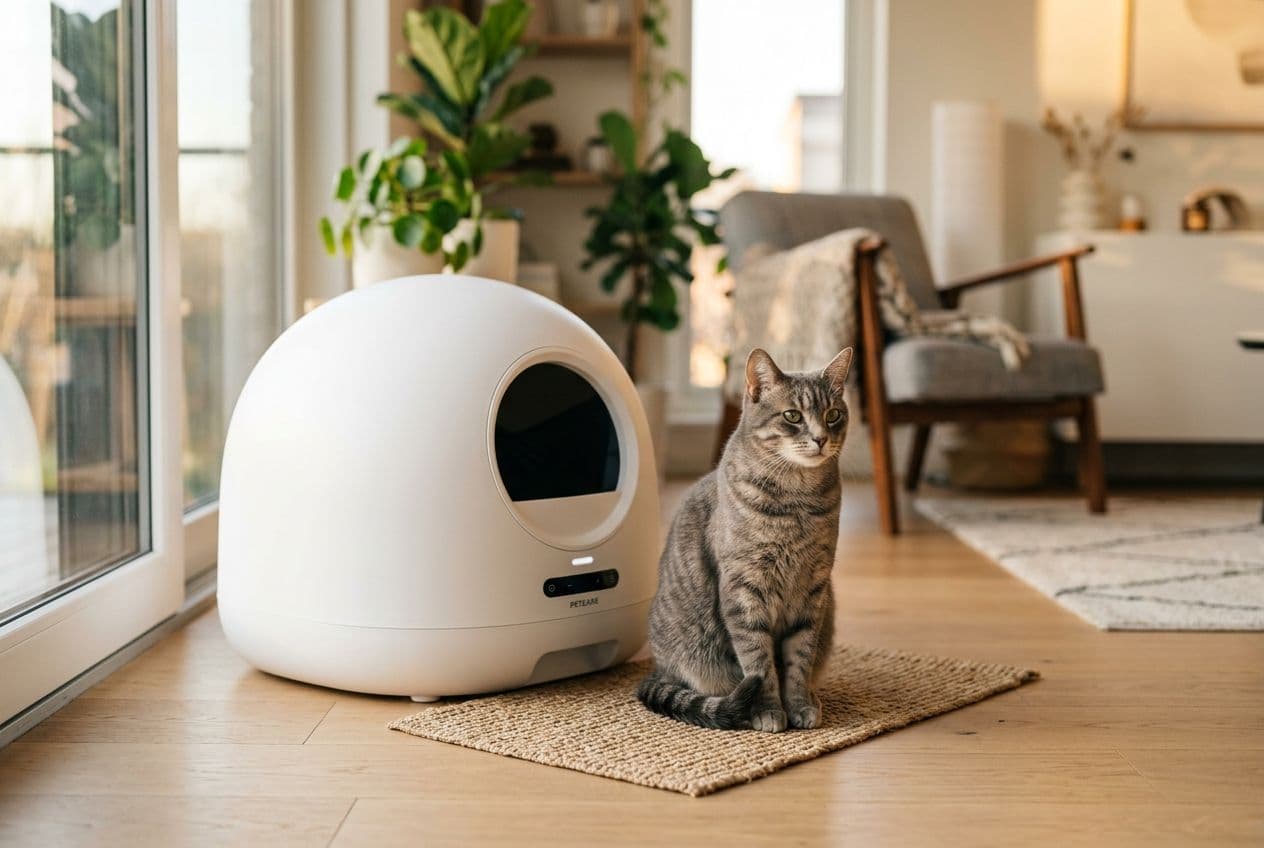
Are automatic litter boxes safe for cats? The short answer is yes, for most healthy adult cats between 3 and 30 pounds, modern automatic litter boxes from established brands like Whisker, PetSafe, and Litter-Robot are safe and can actually improve a cat's health by detecting urinary changes early. The real risks are concentrated in a small group of cats: kittens under 3 pounds, very arthritic or tripod cats, and cats with severe anxiety around enclosed spaces. The other genuine risk is cheap unbranded imports, which can have weak safety sensors. This guide covers exactly which cats can use them safely, what safety features to look for, and when a traditional litter box is still the right call. For more, see Petful’s guide to best automatic litter box.
- 1For most healthy adult cats between 3 and 30 pounds, automatic litter boxes from established brands (Whisker, PetSafe, CatGenie) are safe and well-engineered.
- 2Four safety features matter: cat-presence detection, delayed cycle start, pinch protection, and an open entry that never closes during a cycle.
- 3Pregnant women, immunocompromised people, and busy multi-cat households gain the most: automatic boxes eliminate toxoplasmosis-exposure risk from daily scooping.
- 4Skip automatic boxes for kittens under 3 pounds, severely arthritic or tripod cats, or cats with documented anxiety around enclosed spaces.
- 5Avoid cheap unbranded imports (often sold under generic Amazon listings) where safety sensor failures have caused documented injuries.
Automatic litter boxes have moved from niche pet-tech curiosity to a category of their own. Whisker alone sells four current Litter-Robot models, PetSafe sells the ScoopFree line, and dozens of competitors fill the $150 to $900 price range. With that growth has come a fair question from cautious cat owners: are these machines actually safe? Below is a complete framework for answering that for your specific cat.
- Reduces stress-related FLUTD and Pandora syndrome by maintaining a clean box at all times (cats are notoriously sensitive to soiled boxes).
- Whisker app and similar systems detect changes in urination frequency days before a human owner would notice, leading to earlier vet visits for FLUTD, chronic kidney disease, and diabetes.
- Sealed waste drawers and carbon filters keep litter box bacteria, ammonia exposure, and odor well below the levels of an unscooped traditional box.
- Modern boxes from Whisker, PetSafe, and similar reputable brands include weight or motion sensors, pinch bars, and delayed cycles that pause if a cat re-enters.
- Most reputable brands offer a 30 to 90 day in-home trial, so an unsuitable cat-box match is reversible at no cost.
- Kittens under 3 pounds cannot trigger weight-based sensors on most current models and should not use them in fully automatic mode.
- Cheap unbranded boxes (often imported and sold under generic Amazon listings) have documented failures of safety sensors and should be avoided.
- Cats with severe anxiety, blindness, or claustrophobia may refuse enclosed boxes and become litter box averse during acclimation.
- Senior or arthritic cats can struggle with the entry height of some models and may need a ramp accessory.
- Owners can miss visual cues (blood, abnormal stool, straining) if the box scoops before they see the deposit.
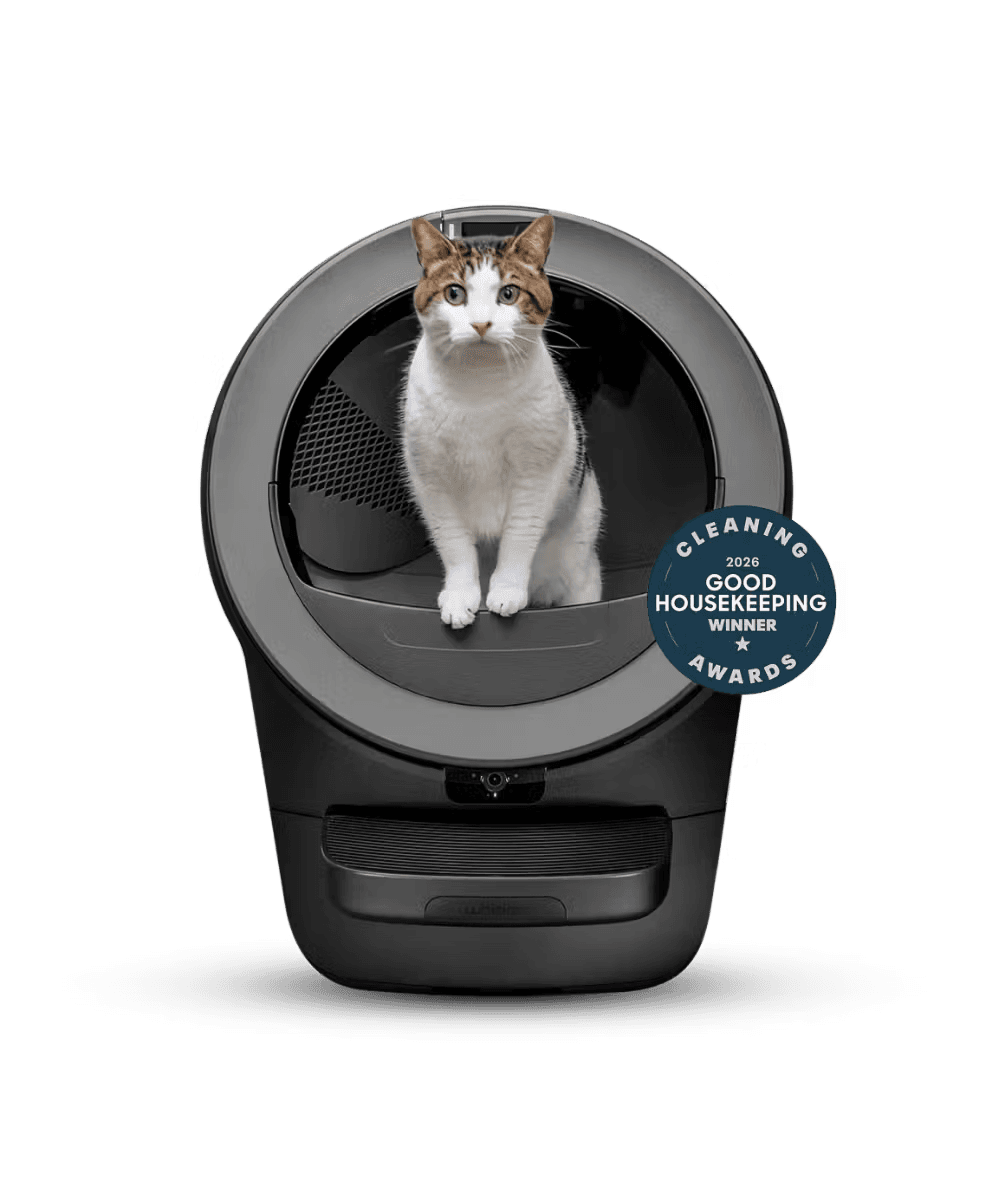
Never Scoop Again® with the Whisker Litter-Robot, the smart self-cleaning automatic litter box. Monitor visits and track weights for better overall care in the Whisker® app. Multi-cat friendly.
Petful may earn a commission when you click through to Whisker, at no extra cost to you.

Sign up for expert-backed reviews and safety alerts all in one place.
Safety Features That Actually Matter
Not all automatic litter boxes are built to the same safety standard. Before buying any model, confirm it has all four of the following safety features. Any reputable brand (Whisker, PetSafe, CatGenie) checks all four; many cheap imports check only one or two.
- Cat-presence detection: a weight scale (Whisker), laser sensor (some PetSafe), or motion sensor that detects when the cat is in or near the box and prevents the cycle from running.
- Delayed cycle start: a 3 to 15 minute wait after the cat exits before the cycle starts, so a cat who circles back is detected before the rake or rotation begins.
- Pinch protection: mechanical bars or torque sensors that stop the cycle if any resistance is met (such as a paw or tail in the wrong place).
- Open entry that never closes: an entry opening that stays open during the cycle. Avoid any box where the entry closes mechanically, which is the primary failure mode in cheap imports that have caused injuries.
- Before you buy, find the brand's published safety datasheet (usually on their product or support page) and confirm all four features are listed by name. If any are missing or vague ("safety sensors" without naming the type), email the brand and ask for specifics. Reputable brands (Whisker, PetSafe, CatGenie) publish all four; cheap imports usually publish none.
Cats Who Should NOT Use an Automatic Litter Box
Some cats are not good candidates for automatic boxes. For these cats, a clean traditional litter box scooped twice daily is safer and better.
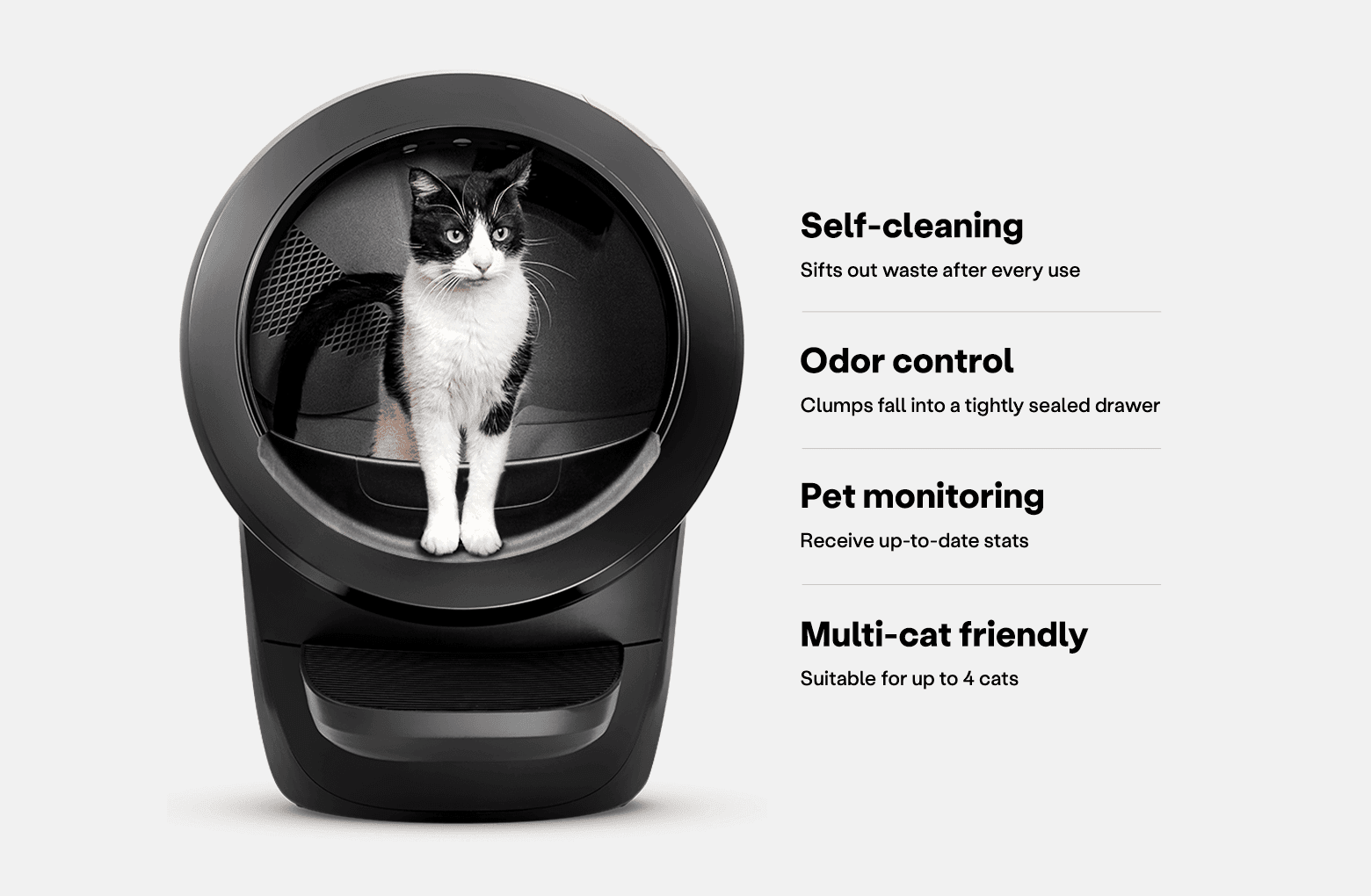
The proven Litter-Robot trusted by 1.8M+ households, with real-time litter and waste tracking in the Whisker app. The established pick if you want Litter-Robot reliability for less.
Petful may earn a commission when you click through to Whisker, at no extra cost to you.
Kittens Under 3 Pounds
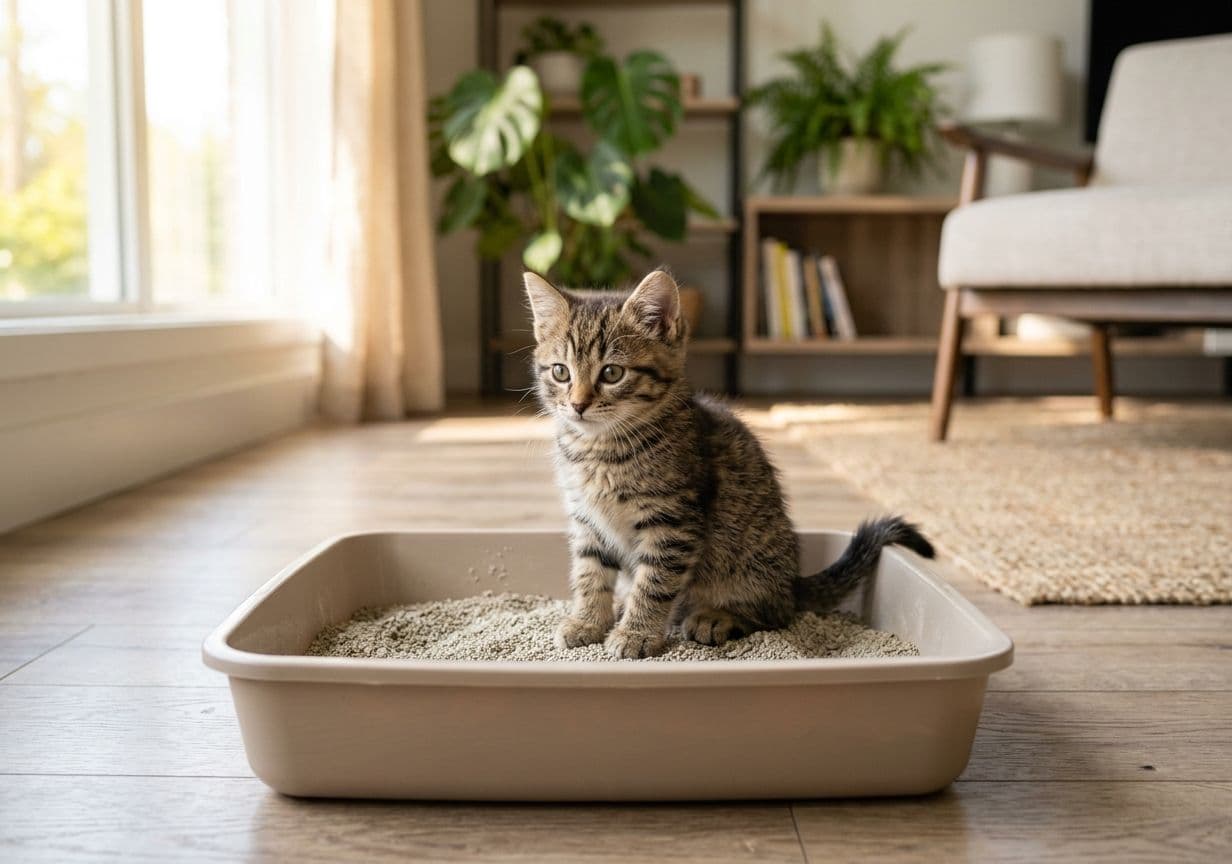
Most current automatic litter boxes use a weight-based scale to detect the cat. Cats under 3 pounds (most kittens 8 to 12 weeks old) are too light to register, which means the box can cycle while the kitten is still inside. The Litter-Robot 5 and 5 Pro lower the floor to 2 pounds, but most kittens younger than 8 weeks should still use a traditional shallow-sided box. See our step-by-step kitten litter training guide for the right setup.
- Most current automatic litter boxes (Litter-Robot EVO, Litter-Robot 4, PetSafe ScoopFree) use weight-based sensors with a 3-pound floor. Kittens lighter than that cannot trigger the sensor and could be inside the box when a cycle starts. The Litter-Robot 5 and 5 Pro lower the floor to 2 pounds, but kittens under 2 pounds (most cats 8 weeks or younger) should always use a traditional shallow-sided box during litter training.
Severely Arthritic or Tripod Cats
Most automatic boxes have an entry height of 12 to 15 inches. Cats with advanced osteoarthritis, recent orthopedic surgery, or limb amputations can struggle to step up. Whisker offers a ramp accessory for the Litter-Robot lineup, which lowers the effective entry to under 4 inches. If your senior cat is already avoiding their current box, a vet exam to rule out arthritis (very treatable now with monthly injections like Solensia) should come before any automatic-box purchase.
Cats with Severe Anxiety or Claustrophobia
Cats with a history of refusing covered boxes, hiding in unusual spots, or showing other signs of anxiety should not be forced into an enclosed automatic box. Forcing a stressed cat into an unfamiliar enclosed space can trigger Pandora syndrome and stress-related FLUTD, which is the very condition that motivates many owners to buy a self-cleaning box in the first place. For these cats, open-top automatic models (PetSnowy, CatGenie, OneIsAll) are a safer choice than enclosed Litter-Robot-style globes.
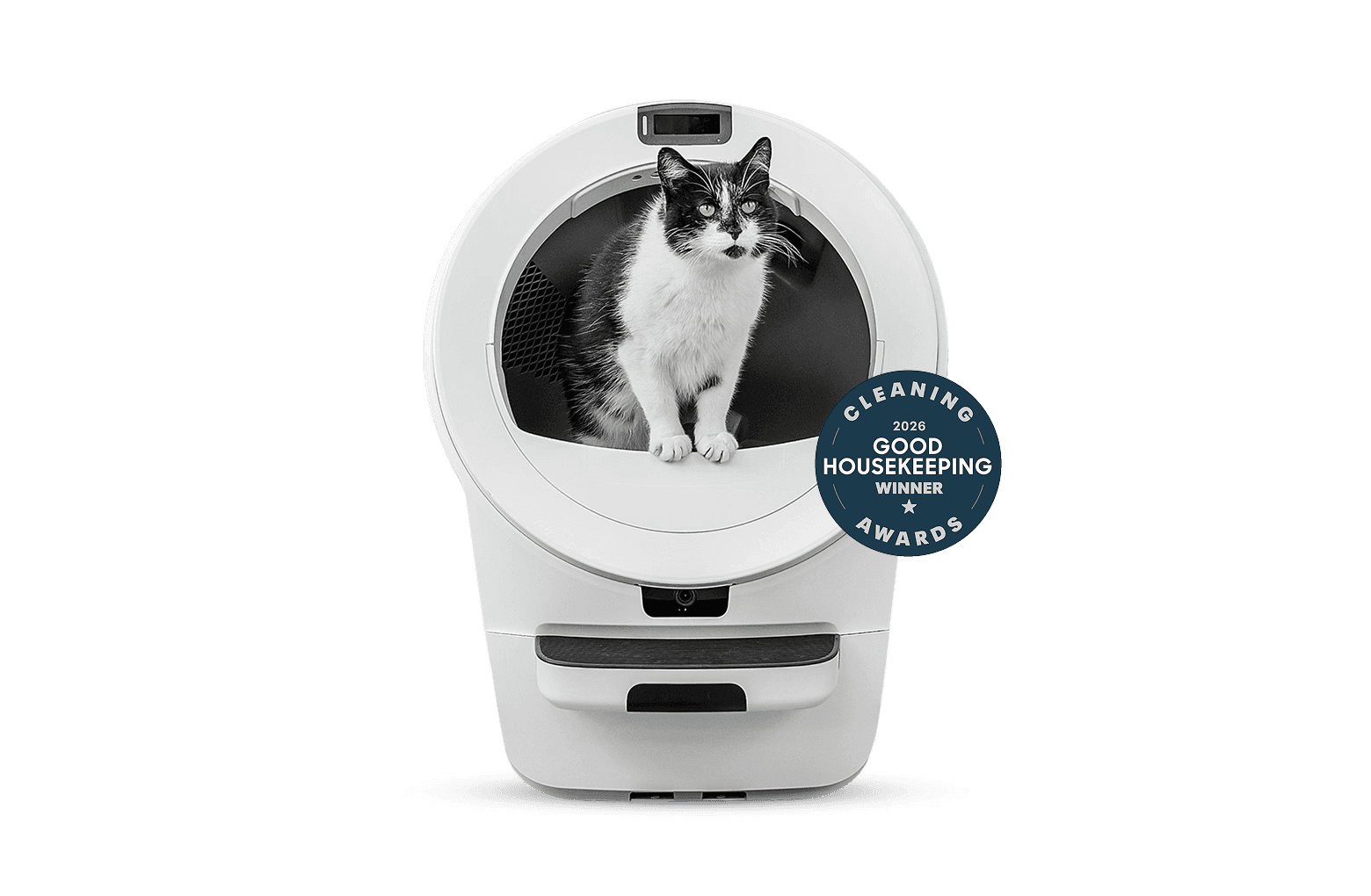
The flagship AI-powered Litter-Robot with dual cameras, WasteID, SmartScale weight tracking, and low-light monitoring. Backed by a 90-day in-home trial and WhiskerCare warranty.
Petful may earn a commission when you click through to Whisker, at no extra cost to you.
Cats Over the Manufacturer's Weight Limit
Most automatic boxes have an upper weight limit. The Litter-Robot EVO caps at 19 pounds. The Litter-Robot 4 has no upper limit but does have a maximum opening width that excludes the largest Maine Coons and Savannahs. The Litter-Robot 5 and 5 Pro accept cats up to 30 pounds. Putting an over-limit cat in an automatic box risks scale errors, cycle failures, and (in cheap imports) physical injury when the rotation cannot complete.
- Most cat injuries in automatic litter boxes have come from cheap unbranded boxes sold under generic Amazon listings, not from established brands. The single highest-risk failure mode is a box that closes the entry mechanically during the cycle. Whisker, PetSafe, and CatGenie all use open-entry designs that never close during cycling. If a box's safety datasheet does not list weight sensors, pinch protection, and a delayed cycle start, do not buy it for your cat.
Households with Curious Dogs or Young Children
Automatic litter boxes are generally safer than traditional boxes in homes with dogs (most large dogs cannot fit through the entry, and weight-based sensors immediately pause the cycle if a dog steps in) but the smell of the sealed waste drawer can still attract a determined puppy. For households with toddlers, position the box behind a baby gate or in a closed laundry room. Whisker's sealed drawer is more child-resistant than an open litter pan but is not childproof; toddlers can lift the drawer lid in most current models.
What Happens During a Power or WiFi Outage?
If the power goes out, current Whisker Litter-Robot models hold their last state and resume normal operation when power returns; no waste is dumped automatically and the box does not cycle while unpowered. If your WiFi goes down or you lose internet, the box still cycles normally on its built-in timer because cycling does not depend on the app or cloud. You lose remote monitoring and push notifications until WiFi returns, but cat safety and basic operation are unaffected. The app reconnects automatically once the network is back.
Health Benefits That Outweigh Most Risks
Pregnancy and Immunocompromised Households: Toxoplasmosis Risk Reduction
The single strongest medical case for an automatic litter box is reducing exposure to Toxoplasma gondii, the parasite shed in cat feces that causes toxoplasmosis. The CDC and the American College of Obstetricians and Gynecologists both advise pregnant women to avoid scooping cat litter because of the risk to the fetus, and the same advice extends to anyone on immunosuppressive therapy (chemotherapy, post-transplant) or with HIV. A sealed automatic litter box that scoops itself into a closed waste drawer means the person at risk can empty the drawer occasionally (with gloves and ideally with someone else present) instead of handling fresh feces daily. Many automatic litter boxes including the full Whisker Litter-Robot lineup are listed as HSA and FSA eligible for exactly this medical-need reason.
- If you are pregnant, on chemotherapy, post-transplant, or otherwise advised by a doctor to avoid handling cat feces, an automatic litter box may qualify as an HSA or FSA eligible expense. Whisker lists the Litter-Robot lineup as HSA/FSA eligible. Check with your plan administrator and bring documentation from your physician noting the medical reason.
For most healthy adult cats, the health upsides of a quality automatic litter box meaningfully exceed the risks. A consistently clean box reduces stress-driven idiopathic cystitis and the bladder infections that can develop from a dirty litter box. App-tracked visit data lets you spot a sick cat days earlier than a human eye would. And for households with two or more cats, automated weight tracking can catch silent weight loss (a hallmark of hyperthyroidism, diabetes, and chronic kidney disease) when it is still cheap to treat.
The Litter-Robot 5 and 5 Pro add WasteID sensing, which distinguishes urine from feces and logs each separately. For cats with FLUTD, chronic kidney disease, IBD, or diabetes, that single data point can be the difference between a cheap early intervention and an expensive emergency visit. No traditional box gives you that signal.
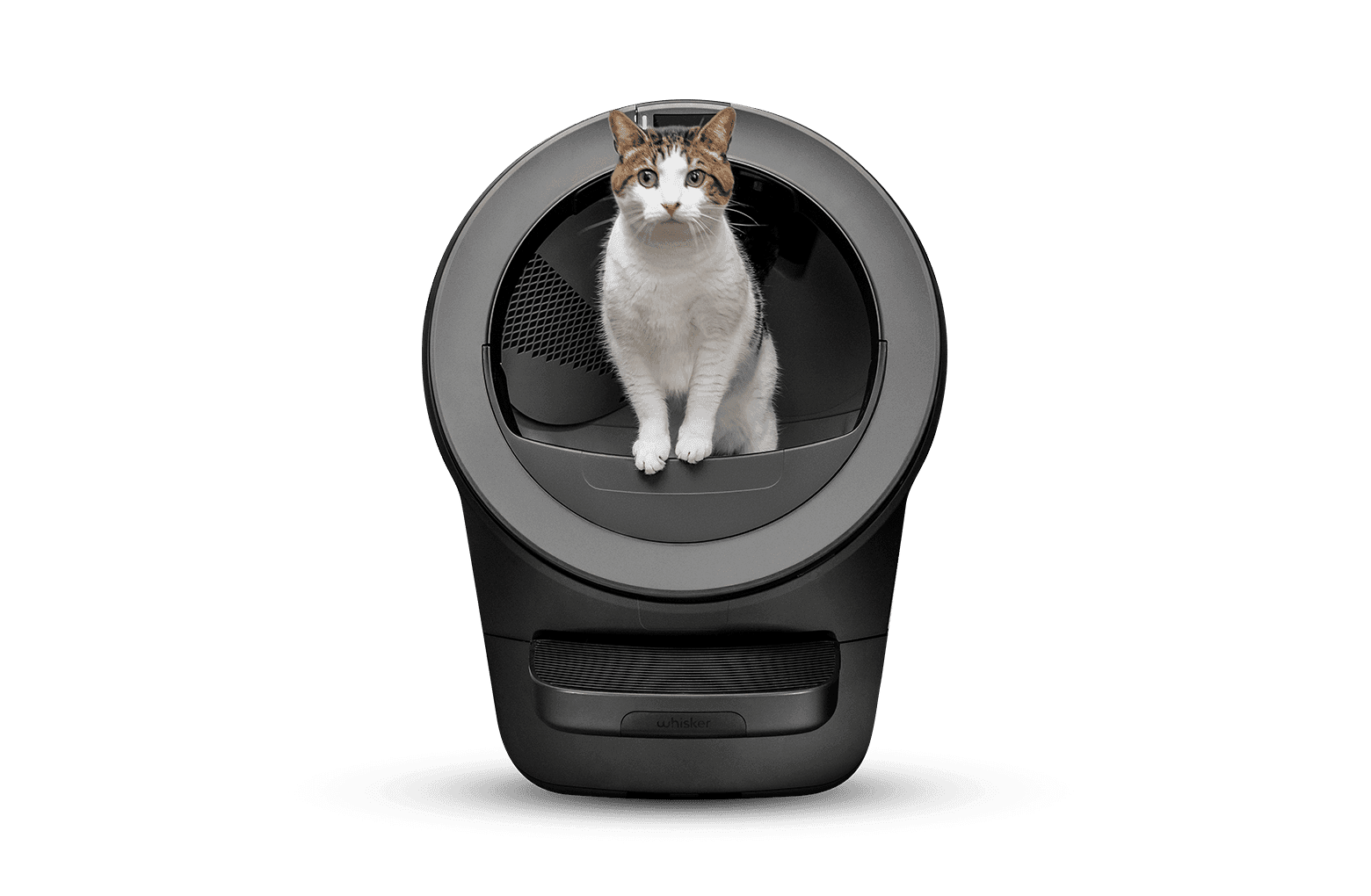
Next-generation Litter-Robot with WasteID, upgraded sensing, and support for up to 5 cats, without the Pro's cameras. Includes the 90-day in-home trial and WhiskerCare warranty.
Petful may earn a commission when you click through to Whisker, at no extra cost to you.
How to Choose a Safe Automatic Litter Box
Once you have ruled out the not-suitable cases above, the safety question becomes brand-choice. Stick with established names that publish their safety standards and offer real in-home trials. Our head-to-head Litter-Robot 4 vs 5 (and EVO and 5 Pro) comparison covers the whole current Whisker lineup. For deep-dive hands-on testing of specific models, see our Litter-Robot EVO review and our Litter-Robot 4 review.
Before you buy any specific model, confirm three things: (1) the box supports your cat's weight (check both the lower and upper bounds), (2) the brand offers an in-home trial of at least 30 days so you can return the box if your cat refuses, and (3) the box has all four safety features listed earlier (cat-presence detection, delayed cycle, pinch protection, open entry).
For most healthy adult cats between 3 and 30 pounds, automatic litter boxes from established brands like Whisker, PetSafe, and CatGenie are safe. The four safety features that matter are cat-presence detection, a delayed cycle start, pinch protection, and an open entry that never closes during a cycle. The biggest real risk is cheap unbranded imports with weak sensors.
Yes, and a quality automatic litter box is often safer than scooping a traditional box during pregnancy. The CDC advises pregnant women to avoid handling fresh cat feces because of toxoplasmosis risk. A sealed automatic box that scoops itself into a closed waste drawer lets a pregnant cat owner (or an immunocompromised person) empty the drawer occasionally with gloves instead of handling fresh feces daily. Many automatic litter boxes are HSA and FSA eligible for this medical reason.
Documented injuries from Whisker Litter-Robot models are rare and are typically associated with cats under the weight floor or with users disabling the safety sensors. The Litter-Robot lineup has an open front that never closes during a cycle, plus weight and pinch-bar protections. Injuries are far more common with cheap imported boxes that close the entry during cycling.
Kittens under 3 pounds cannot trigger the weight sensors on the Litter-Robot EVO or Litter-Robot 4 and should not use either model in automatic mode. The Litter-Robot 5 and 5 Pro lower the floor to 2 pounds, which covers most kittens older than 10 weeks. For very young kittens, use a traditional shallow-sided box during litter training.
Most senior cats can safely use an automatic litter box if they can comfortably step over the entry sill (typically 12 to 15 inches). For arthritic, tripod, or post-surgical cats, choose a model with a ramp accessory (Whisker sells a Litter-Robot ramp) or stick with a low-entry traditional box. A vet exam to rule out untreated arthritis should come before any box change.
Current Whisker Litter-Robot models hold their last state on power loss and resume normal operation when power returns. The box does not cycle while unpowered, and no waste is dumped automatically. A cat inside the box during a power loss is in no more danger than in a traditional unpowered litter box. The box also continues to operate on its built-in timer if WiFi or internet goes down; only app monitoring is interrupted.
Only during acclimation, and only in cats predisposed to anxiety. Most cats acclimate within one to two weeks if introduced gradually (place the new box next to the old one, leave the old box clean, and let the cat investigate at their own pace). Whisker reports that about 95% of cats accept their Litter-Robot. The 90-day in-home trial covers the 5% that do not.
Open-top automatic litter boxes (like the PetSnowy SNOW+ or OneIsAll Ease S1) are easier for anxious or claustrophobic cats to accept and reduce the small risk of a cat being inside the dome during a cycle. The trade-off is more litter tracking and less odor containment. For most healthy cats, enclosed Litter-Robot-style boxes are equally safe and contain odor much better.
- Yes, for the vast majority of healthy adult cats between 3 and 30 pounds, automatic litter boxes from reputable brands (Whisker, PetSafe, CatGenie) are safe and can actively improve cat health by detecting urinary changes early. They are also the safer choice for pregnant or immunocompromised owners (lower toxoplasmosis exposure). Skip them for kittens under 3 pounds, severely arthritic cats, or cats with documented anxiety around enclosed spaces. Always buy from a brand offering at least a 30-day in-home trial so you can return the box if your cat does not adjust.

Coreen Saito is a pet writer and longtime shelter volunteer with more than a decade in animal rescue. She covers cat behavior, breed care, and the small, ordinary science of sharing a life with companion animals, with a particular focus on honest takes about the products and decisions that actually matter. At home in Arizona, she's outranked by Mac (a dog with the loudest opinion in the house), Rebel (a cat who governs by quiet authority), and Meri (an orange tabby who runs the late shift and the laundry basket). She writes about all three, plus the rescues that keep coming through her life, at LifeWithMinty.com.
Sign up for expert-backed reviews and safety alerts all in one place.