Calico Tabby Cat (Tabico): Genetics, Photos and Facts
A calico tabby cat (tabico or caliby) layers tabby stripes inside calico patches. Learn the genetics behind the coat, why nearly all are female, how rare they really are, what they cost, and how to identify one at a glance.
Petful is reader supported. As an affiliate of platforms like Amazon and Chewy, we may earn a commission when you buy through links on this page. There is no extra cost to you.
A calico tabby cat, better known to her fans as a tabico or caliby, layers tabby stripes inside calico patches, and the genetics behind that coat are so strongly sex-linked that a University of Missouri study found only about 1 in 3,000 calico-patterned cats is born male. The combination is one of the most striking looks in the feline world: a mostly white coat, bold orange and black (or gray and cream) patches, and clear tabby striping or swirling running through the colored areas. In this guide we break down exactly what makes a calico tabby cat, how to tell her apart from a plain calico or a plain tabby, the newly identified gene behind the orange patches, what these cats cost, and how to pick the perfect name.
- 1A calico tabby cat (tabico or caliby) is a calico whose colored patches carry visible tabby stripes; it is a coat pattern, not a breed
- 2Roughly 99.9% of calico-patterned cats are female because the orange gene rides on the X chromosome; males occur about 1 in 3,000
- 3In 2025, researchers finally identified the orange gene itself: a deletion affecting ARHGAP36, published in Current Biology
- 4Shelter adoption typically runs $50-200; purebred cats that happen to wear the pattern follow their breed's pricing, roughly $800-2,500

Sign up for expert-backed reviews and safety alerts all in one place.
What Is a Calico Tabby Cat? (Tabico and Caliby Explained)
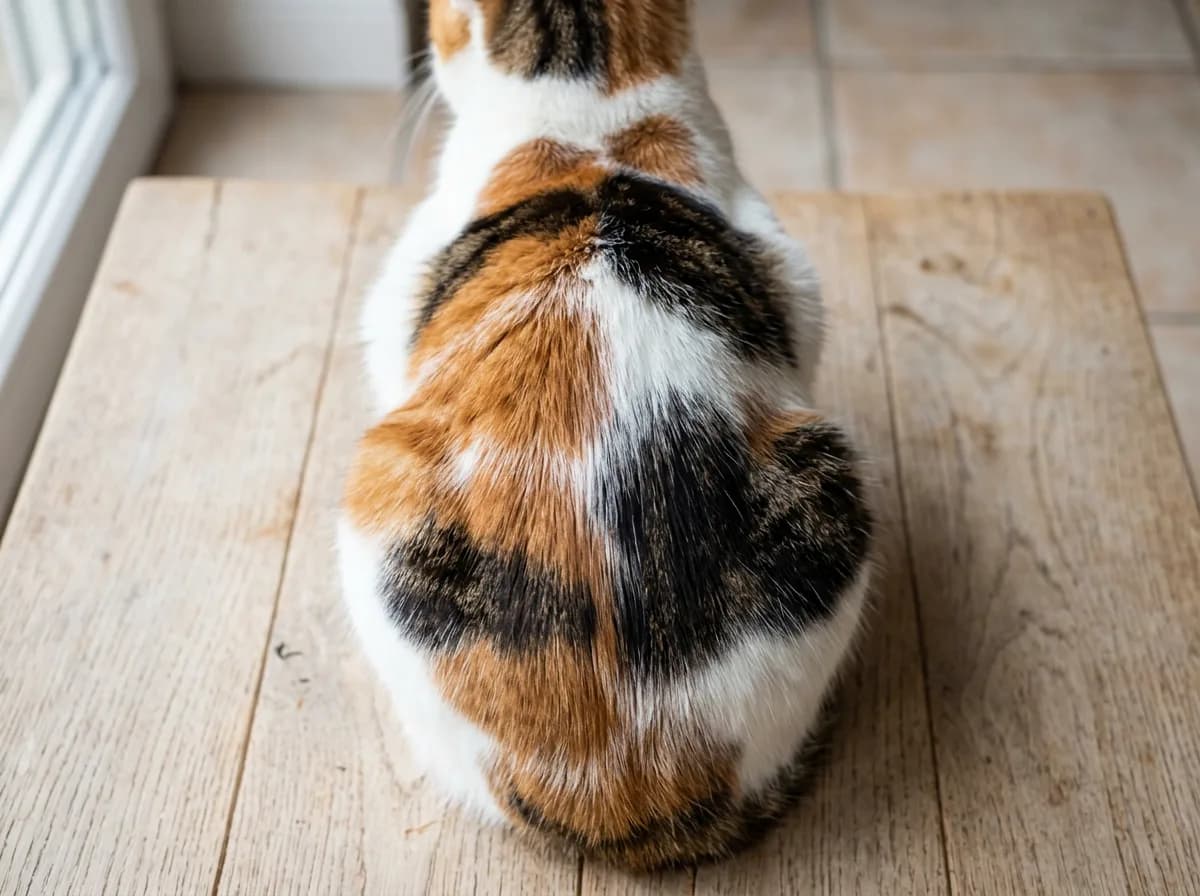
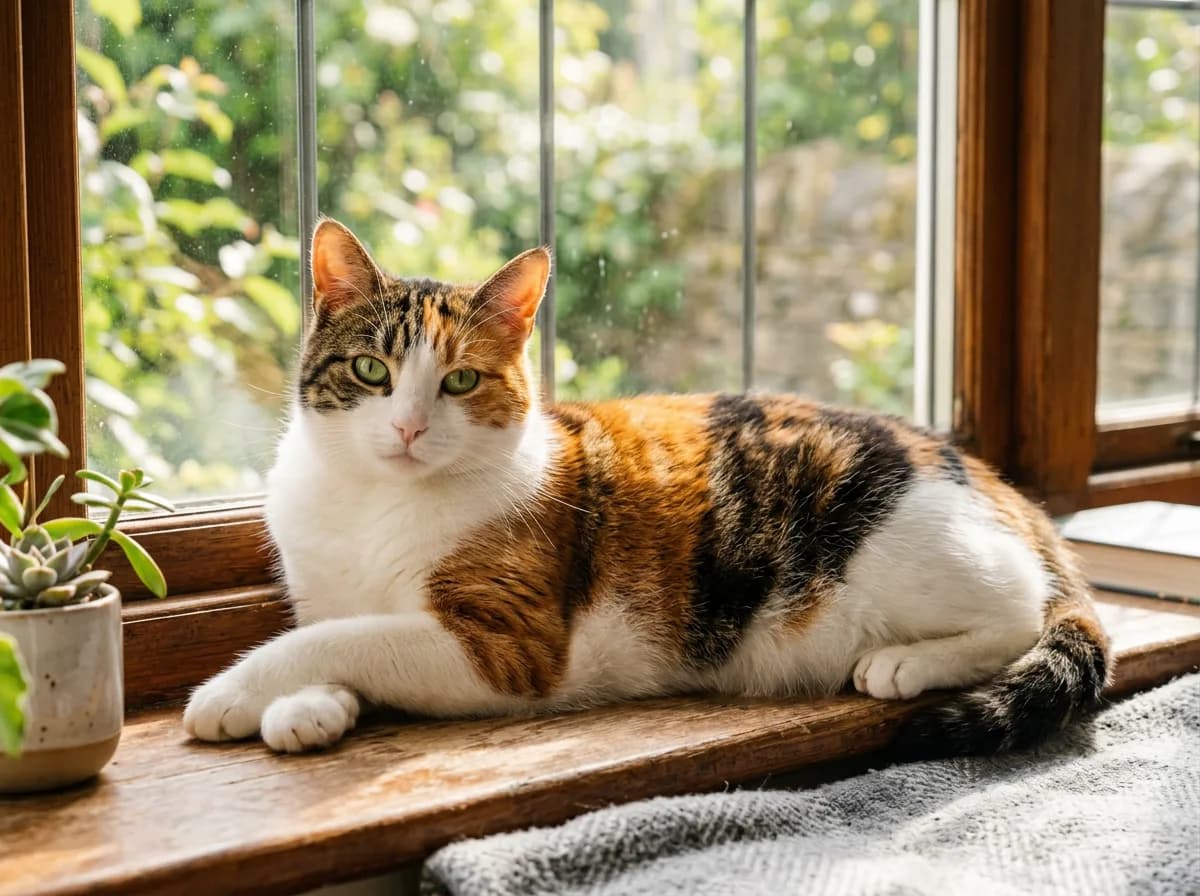
A calico tabby cat is a cat wearing two coat patterns at the same time. The calico part gives her a predominantly white coat with distinct, separate patches of orange and black. The tabby part adds stripes, swirls, spots, or ticking inside those colored patches. Look closely at a calico tabby and you will see mackerel stripes or classic swirls running through the orange and brown areas instead of solid blocks of color.
Cat lovers have invented two affectionate nicknames for the combination: tabico (tabby + calico) and caliby (calico + tabby). Both describe exactly the same coat. Neither is an official term, and neither describes a breed. The Cat Fanciers' Association (CFA) and The International Cat Association (TICA) both treat calico and tabby as pattern and color descriptors, not breeds, which is why you will see the same coat formally listed in show paperwork under color classes like "brown patched tabby and white."
- Tabico and caliby are interchangeable community nicknames for a calico tabby cat. Shelters, vets, and registries may each write the coat differently, but they all describe a white cat with orange and black patches that carry tabby markings.
Because nearly every domestic cat carries tabby pattern genes, the tabby layer is always lurking in a calico's DNA. Whether you actually see the stripes depends on the agouti gene, which we cover in the genetics section below. One quirk worth knowing right away: orange patches on any calico almost always show at least faint tabby markings, because orange pigment cannot be rendered fully solid.
Calico vs. Tabby vs. Calico Tabby: How to Tell Them Apart
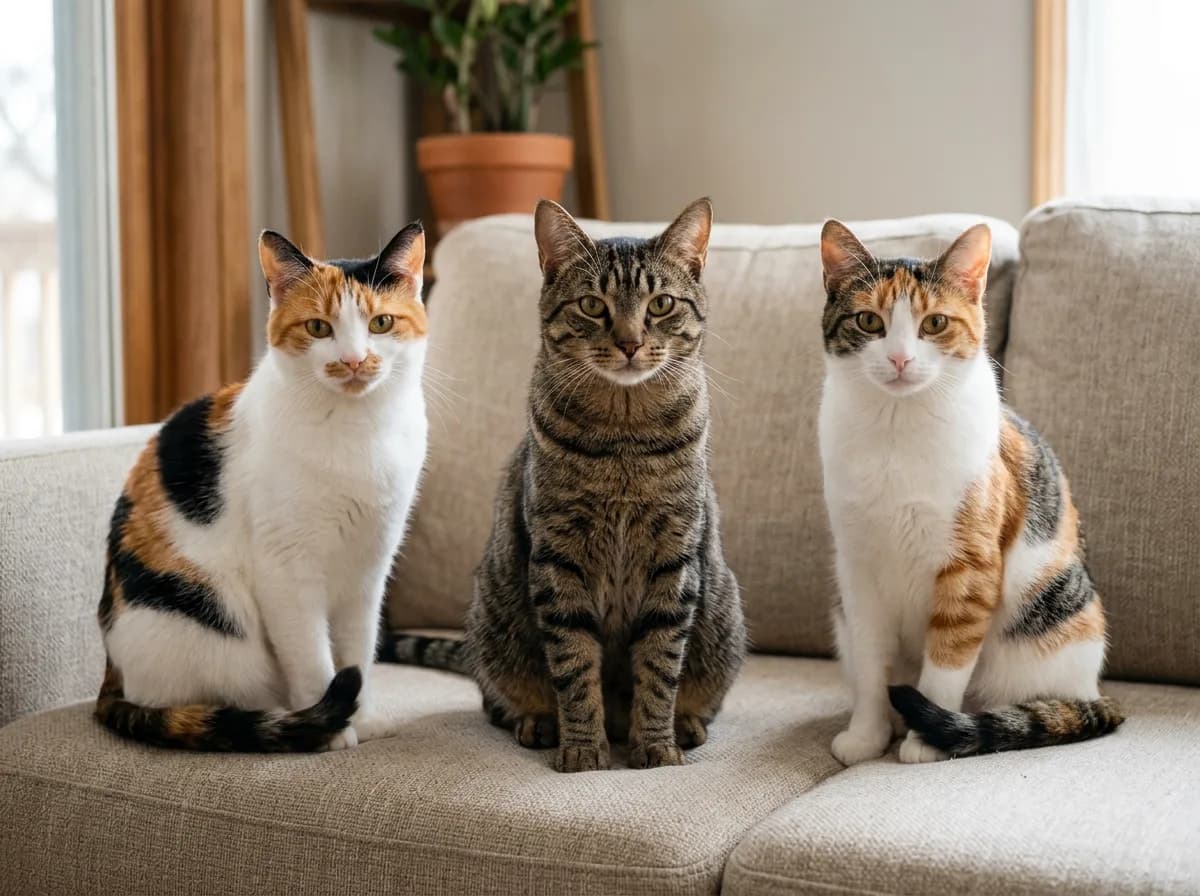
People searching for a calico tabby mix usually want one simple answer: which pattern am I actually looking at? Here is the quick version. A calico is white with solid orange and solid black patches. A tabby is striped, swirled, spotted, or ticked all over, usually in one base color. A calico tabby splits the difference: the white background and separate patches of a calico, with tabby markings visible inside the patches.
| Pattern | White on the coat | Patch style | Markings inside the color | Common nicknames |
|---|---|---|---|---|
| Calico | Lots: white is the base coat | Distinct orange and black patches | Solid color, no stripes (orange may show faint ghost stripes) | Tricolor, mi-ke |
| Tabby | Optional, often none | No patches: one continuous pattern | Stripes, swirls, spots, or ticking everywhere | Tiger cat |
| Calico tabby | Lots: white base like a calico | Distinct patches like a calico | Clear tabby stripes or swirls inside the patches | Tabico, caliby |
| Tortoiseshell | Little or none | Brindled, interwoven orange and black | Mixed and marbled, not patched | Tortie |
| Torbie | Little or none | Brindled like a tortie | Tabby striping through the brindle | Patched tabby |
If you want a deeper tour of the striped side of the family, our guide to the types of tabby cats walks through mackerel, classic, spotted, and ticked patterns in detail.
The Calico Tabby Cat Debate: Why Your Vet Says Tabby and the Internet Says Calico
If you have ever taken a tricolor cat to the clinic and seen "tabby with white" on the chart while every commenter online insists she is a calico, you have met the calico tabby cat debate. Both sides are right. Veterinary records tend to shorthand a coat by its most prominent pattern, while cat registries stack descriptors: white spotting, plus tortoiseshell-style patching, plus tabby. In CFA show language the same cat may be a "patched tabby and white." In shelter language she is a calico tabby. At home she is simply a caliby. There is no governing body that crowns one label official for mixed-breed cats, so use whichever term communicates the coat clearly.
Is My Cat a Calico or a Tabby? A 5-Point Identification Checklist
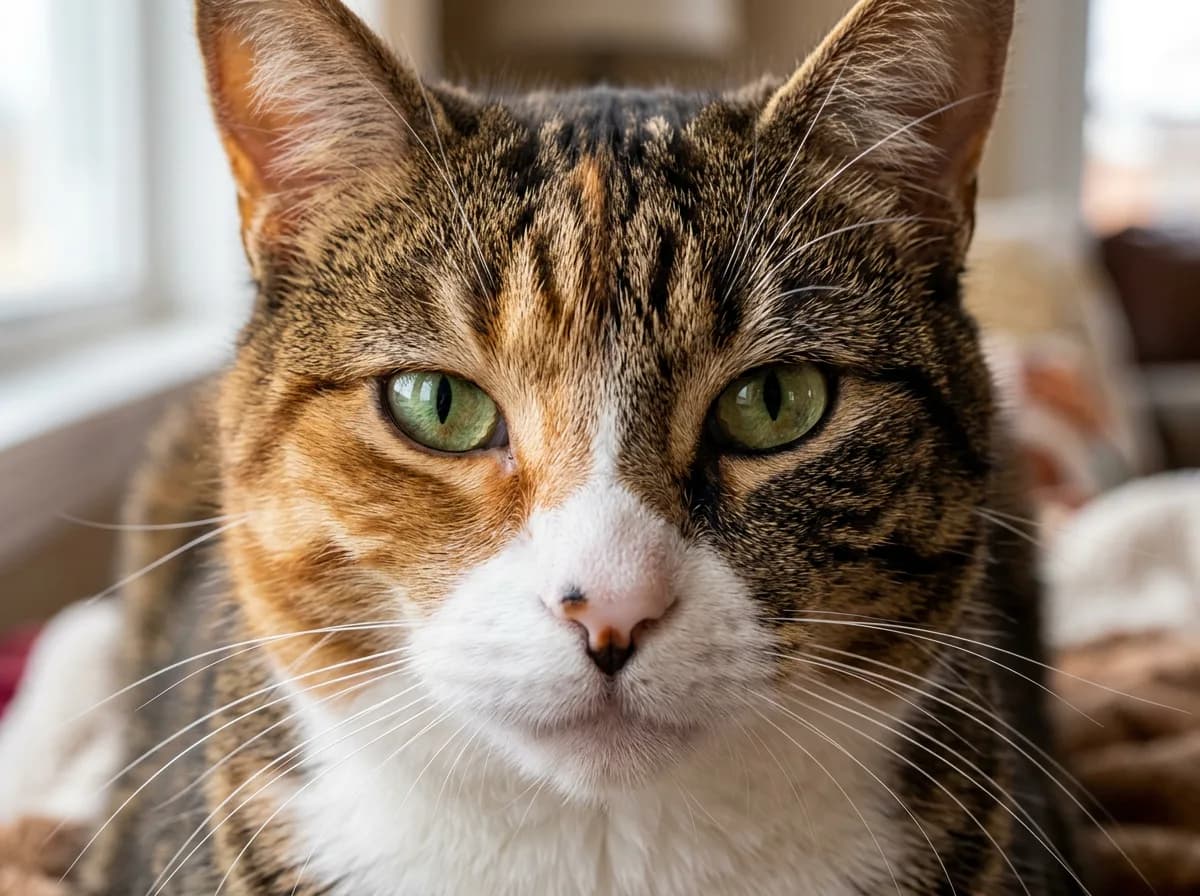
This is the question owners ask most, and you can settle it in under a minute. Work through these five checks:
1. Check the background color. Is the cat mostly white with separate colored patches? That is the calico foundation. No meaningful white and no distinct patches points to a plain tabby or a tortie.
2. Count the colors. A calico tabby shows three: white, orange (or cream), and black, brown, or gray. A standard tabby usually works in one base color plus its darker markings.

Never Scoop Again® with the Whisker Litter-Robot, the smart self-cleaning automatic litter box. Monitor visits and track weights for better overall care in the Whisker® app. Multi-cat friendly.
Petful may earn a commission when you click through to Whisker, at no extra cost to you.
3. Look inside the patches. Solid, even color means calico. Stripes, swirls, or spots inside the patches mean calico tabby.
4. Find the M. Look at the forehead. All tabbies, including calico tabbies, carry the signature M-shaped marking above the eyes. A true calico with non-tabby black patches will not show a crisp M.
5. Study the orange areas last. Orange patches almost always carry faint striping even on "true" calicos, so never judge by the orange alone. The black or brown patches are the tiebreaker: striped means tabico, solid means calico.
- Orange pigment cannot be made fully solid, so even a textbook calico can show ghost stripes in her orange patches. To identify a calico tabby cat with confidence, look for striping in the BLACK or BROWN patches, where tabby markings only appear if the cat is genetically agouti.
Calico Tabby Coat Variations With Photos: Standard, Dilute, and Patched
The calico tabby coat is not one fixed look. White spotting, dilution, and coat length each create distinct variations, and recognizing them helps when you are reading adoption listings or breeder paperwork.
Standard Calico Tabby (Caliby)
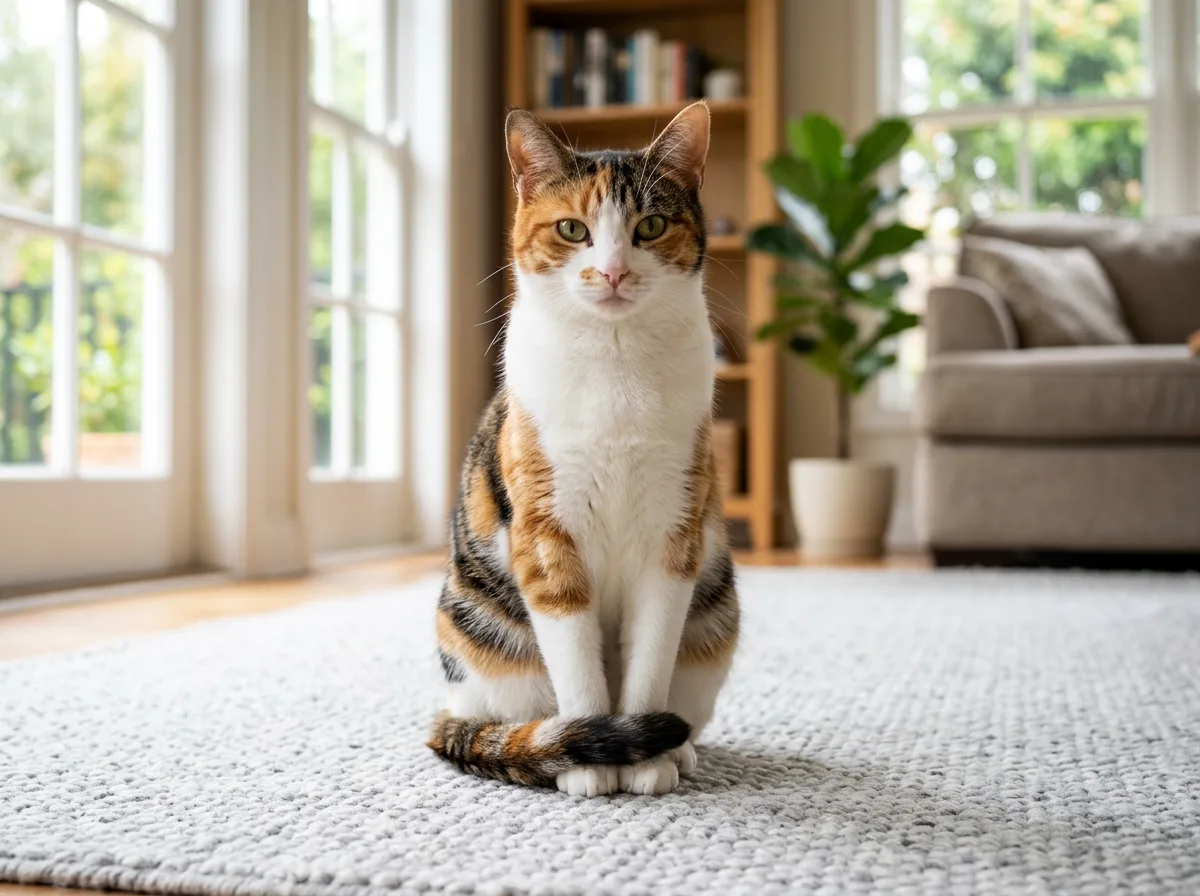
The classic look: a white base coat covering roughly a quarter to three-quarters of the body, with rich orange and brown-black patches showing crisp mackerel stripes or classic swirls.
Dilute Calico Tabby
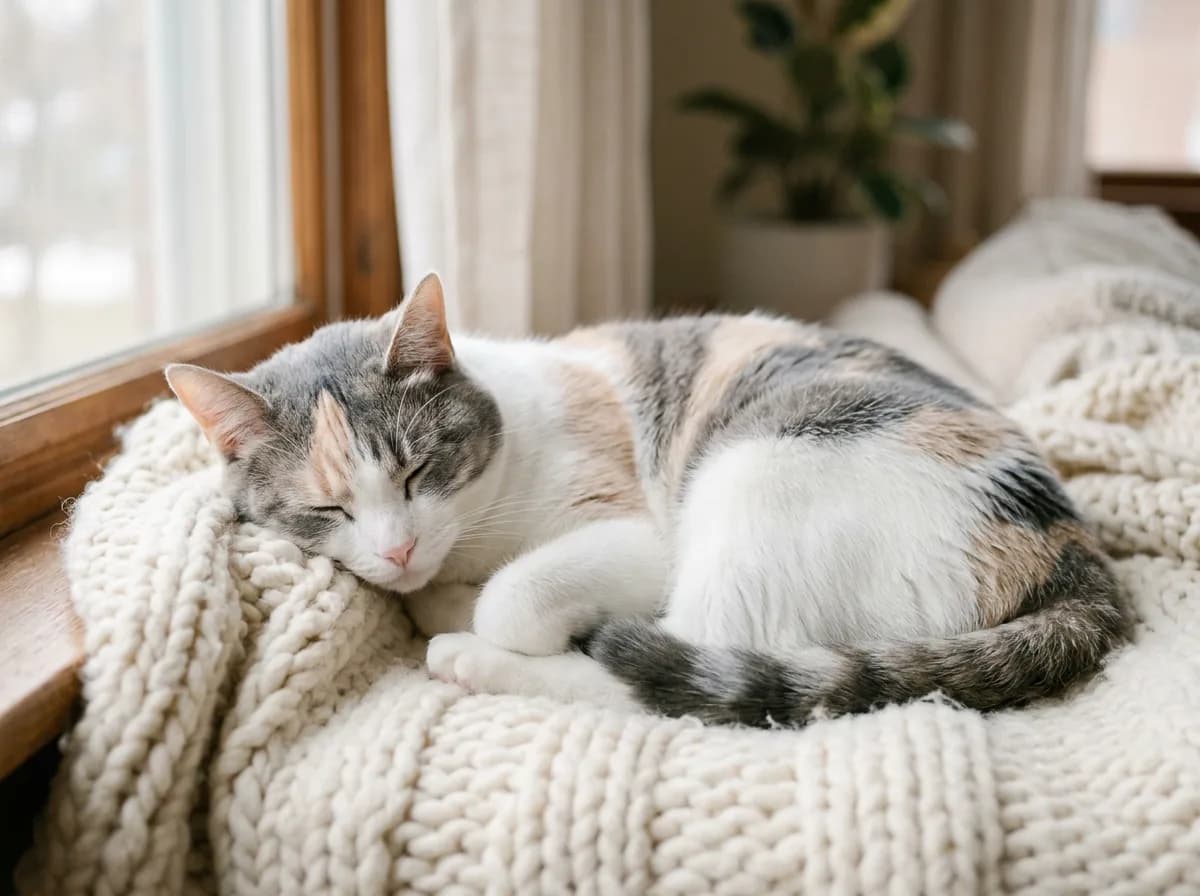
When a cat inherits two copies of the recessive dilution gene (MLPH), black softens to blue-gray and orange softens to cream. The result is a pastel caliby: white with smoky gray and pale cream patches, tabby markings still visible but in muted watercolor tones. Dilute calibies are a favorite on adoption sites and tend to photograph beautifully.
High-White Calico Tabby
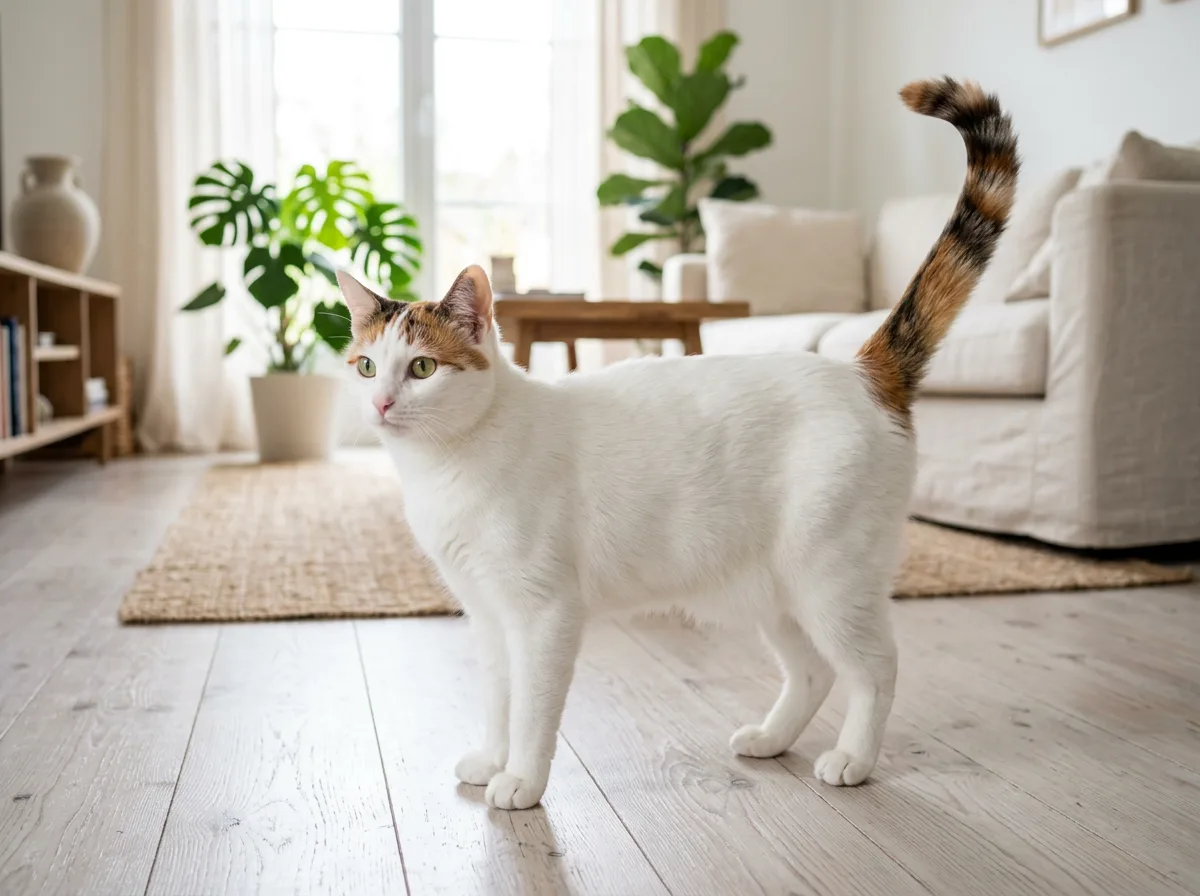
Strong white spotting pushes the color to the edges: a mostly white cat with striped patches confined to the head, ears, and tail. Breeders sometimes call extreme versions a "van" pattern, after the Turkish Van.
Low-White (Dense) Calico Tabby
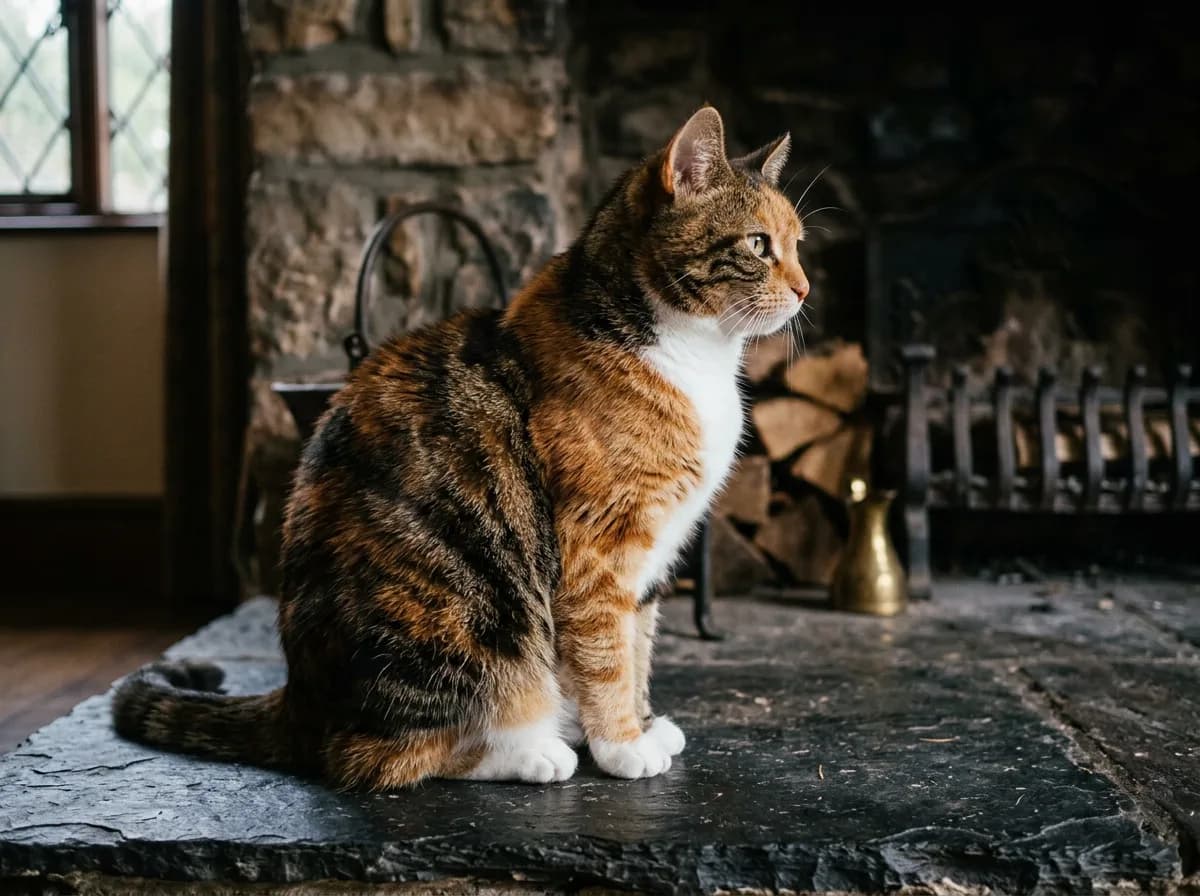
With less white spotting, the colored patches grow larger and crowd together, leaving white mainly on the chest, belly, and paws. These cats sit visually between a caliby and a torbie, and they spark plenty of identification debates.
Long-Haired Calico Tabby
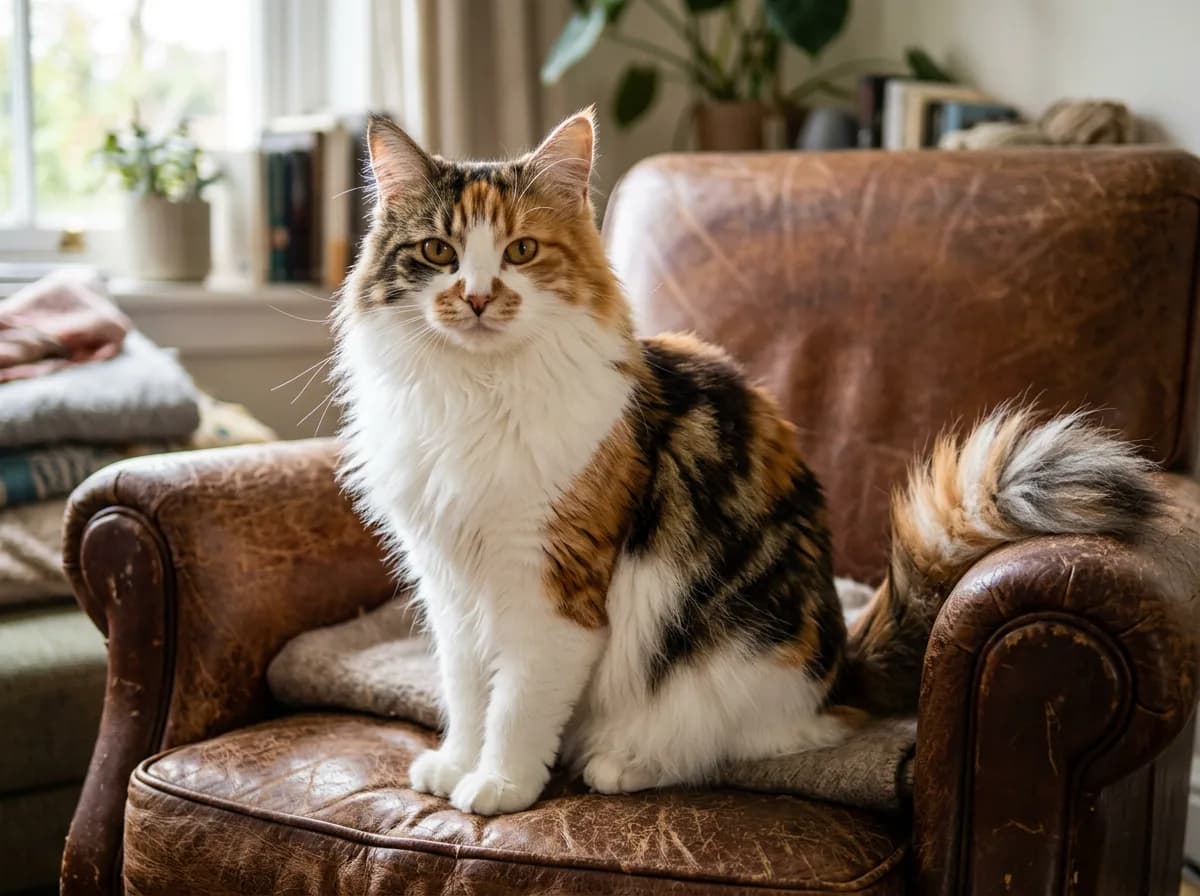
Long fur softens the pattern's edges into a marbled, painterly look. You will see it in random-bred domestic longhairs and in long-coated breeds such as the Persian, Maine Coon, and Norwegian Forest Cat.
Calico Tabby Kitten
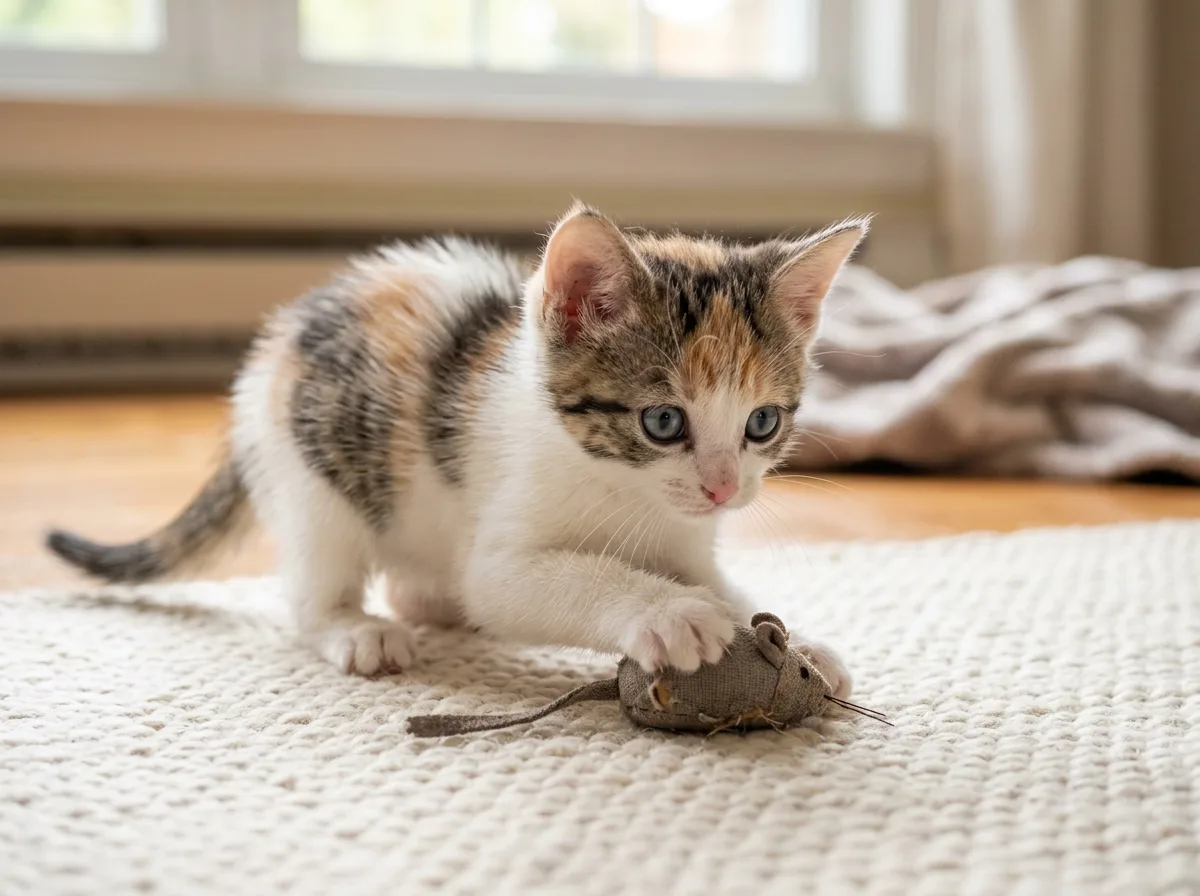
Calico tabby kittens are born with their pattern already mapped out, but it sharpens as the adult coat grows in. Kitten eyes are blue at birth and shift to their adult color at around 6-7 weeks, and pale ghost markings can darken or fade as the coat matures, so a kitten's look at 8 weeks is a sketch, not the finished portrait.
The Genetics Behind the Calico Tabby Pattern
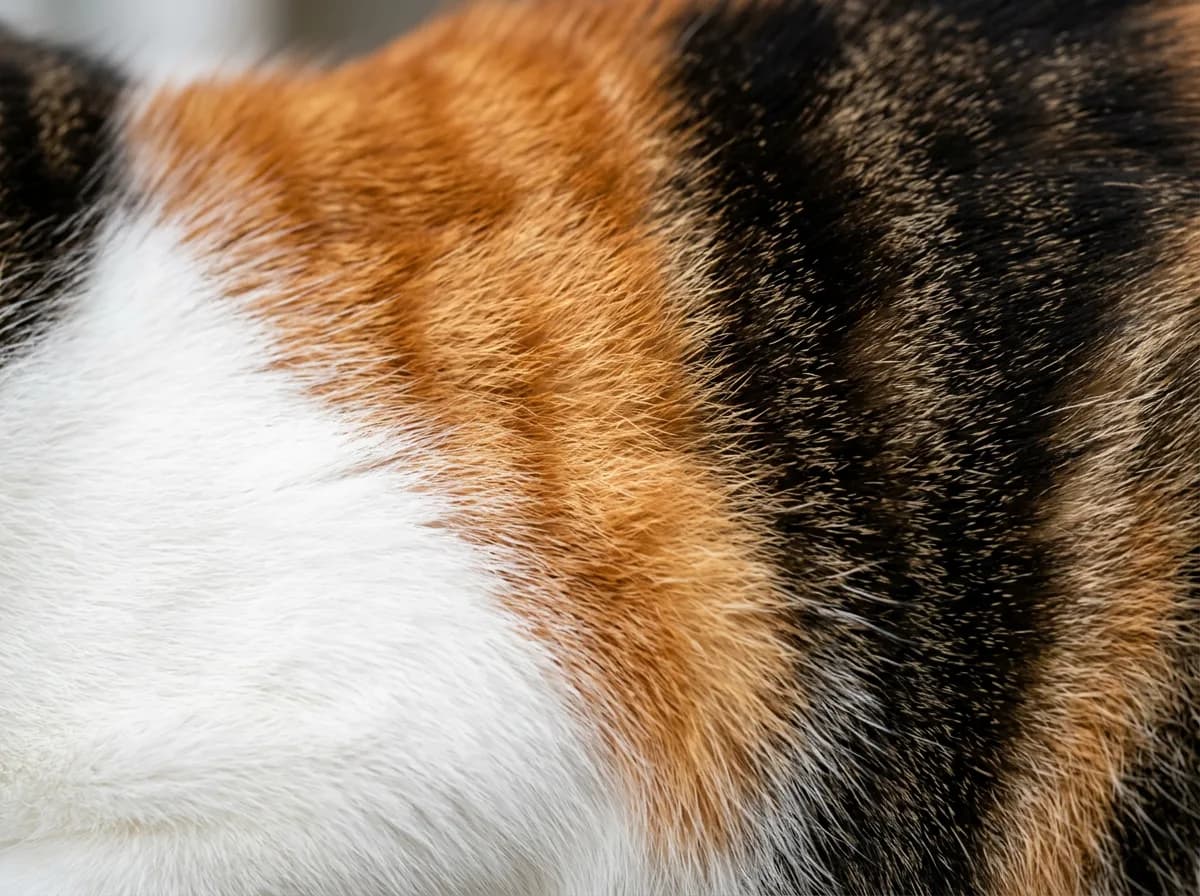
A calico tabby coat requires four genetic systems working at once, and one of them made global headlines in 2025.
The orange gene (finally identified in 2025). Scientists knew for over a century that orange in cats is sex-linked, but the gene itself stayed hidden until 2025, when two independent teams, Greg Barsh's group at HudsonAlpha and Stanford and Hiroyuki Sasaki's team at Kyushu University, identified it as a regulatory deletion affecting the ARHGAP36 gene, published in Current Biology. The orange variant (O) produces phaeomelanin, the red-orange pigment, and masks black eumelanin wherever it is active.
X-inactivation creates the patches. The orange gene sits on the X chromosome. A female cat (XX) carrying orange on one X and non-orange on the other shuts down one X at random in each cell early in development, a process called lyonization, first described by geneticist Mary Lyon in 1961. The result is a living mosaic: some skin patches make orange pigment, others make black.
White spotting separates the colors. On its own, that mosaic produces a tortoiseshell. Add the KIT-related piebald white-spotting gene and the colored areas separate into the larger, cleaner patches on a white background that define a calico.
Agouti switches the stripes on. Nearly every domestic cat carries tabby pattern genes. The agouti gene (ASIP) decides whether they show: agouti cats display banded hairs and visible tabby markings, while non-agouti (a/a) cats hide the stripes in their black patches. A calico tabby cat is simply a calico who is also genetically agouti, so her patches display the tabby pattern her genome was always carrying. The pattern type itself (mackerel versus the swirled classic) traces to the Taqpep gene, identified by Kaelin and colleagues in Science in 2012.
Feline coat genetics is full of these elegant quirks, from tricolor mosaics to extra-toed polydactyl cats, and the calico tabby happens to stack four of them in one animal.
Why Nearly All Calico Tabby Cats Are Female
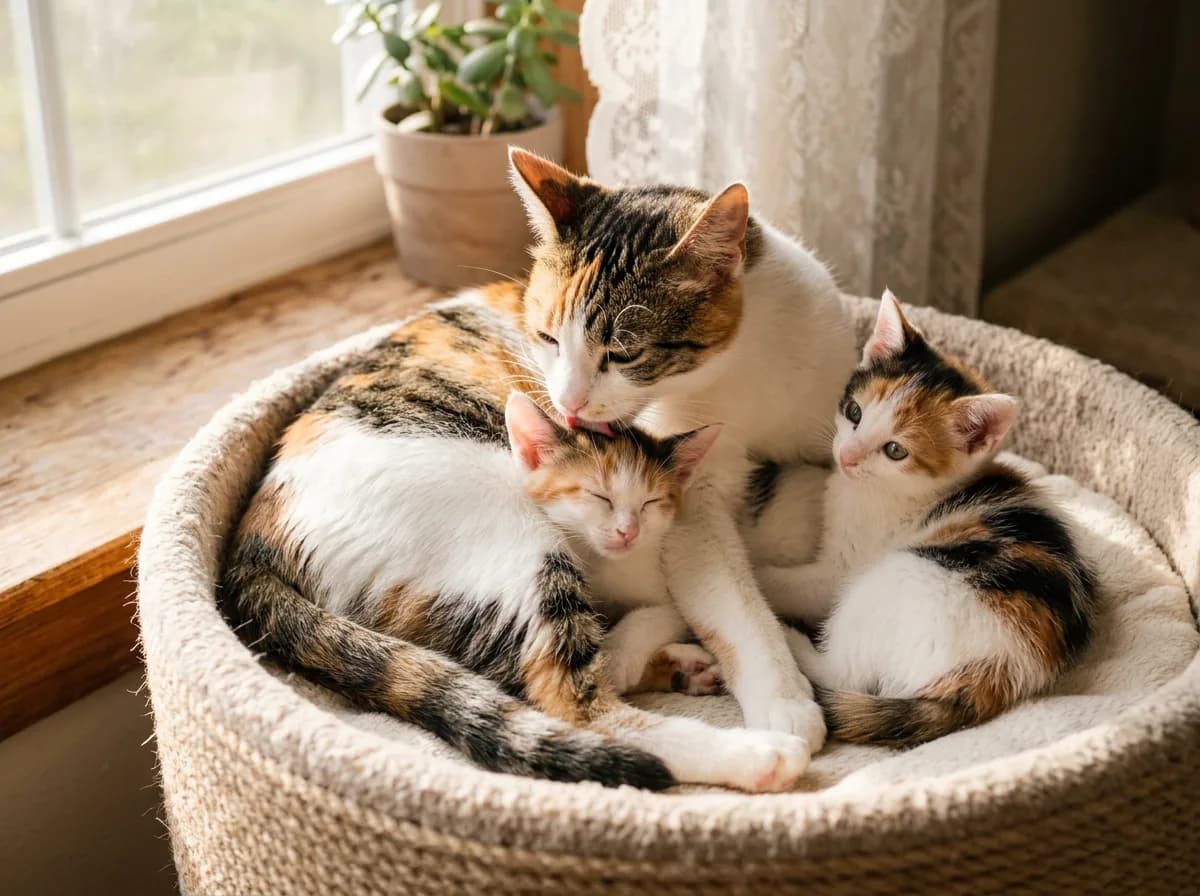
Because displaying both orange and black at once requires two X chromosomes, roughly 99.9% of calico and tortoiseshell-patterned cats, calibies included, are female. A normal male (XY) has only one X, so he is either orange or non-orange, never both.
Male calico tabby cats do exist, at a rate of about 1 in 3,000, the commonly cited figure from a University of Missouri study. They arise three ways: an extra X chromosome (XXY, called Klinefelter syndrome), chimerism (two embryos fused into one cat), or somatic mosaicism (a mutation in some cell lines but not others). XXY males are almost always sterile and often face health issues, though not every male calico is sterile: the rare fertile ones are usually chimeras or mosaics.
- XXY (Klinefelter) male calicos are almost always sterile and are prone to health problems, including shorter lifespans, compared with typical males. If you share your home with a male calico tabby, tell your veterinarian so they can monitor him appropriately.
A male caliby is a genuine genetic curiosity, but he is not a lottery ticket. Because XXY males cannot reproduce, they have no breeding value, and any seller charging a premium for one is selling rarity, not substance.
Are Calico Tabby Cats Rare?
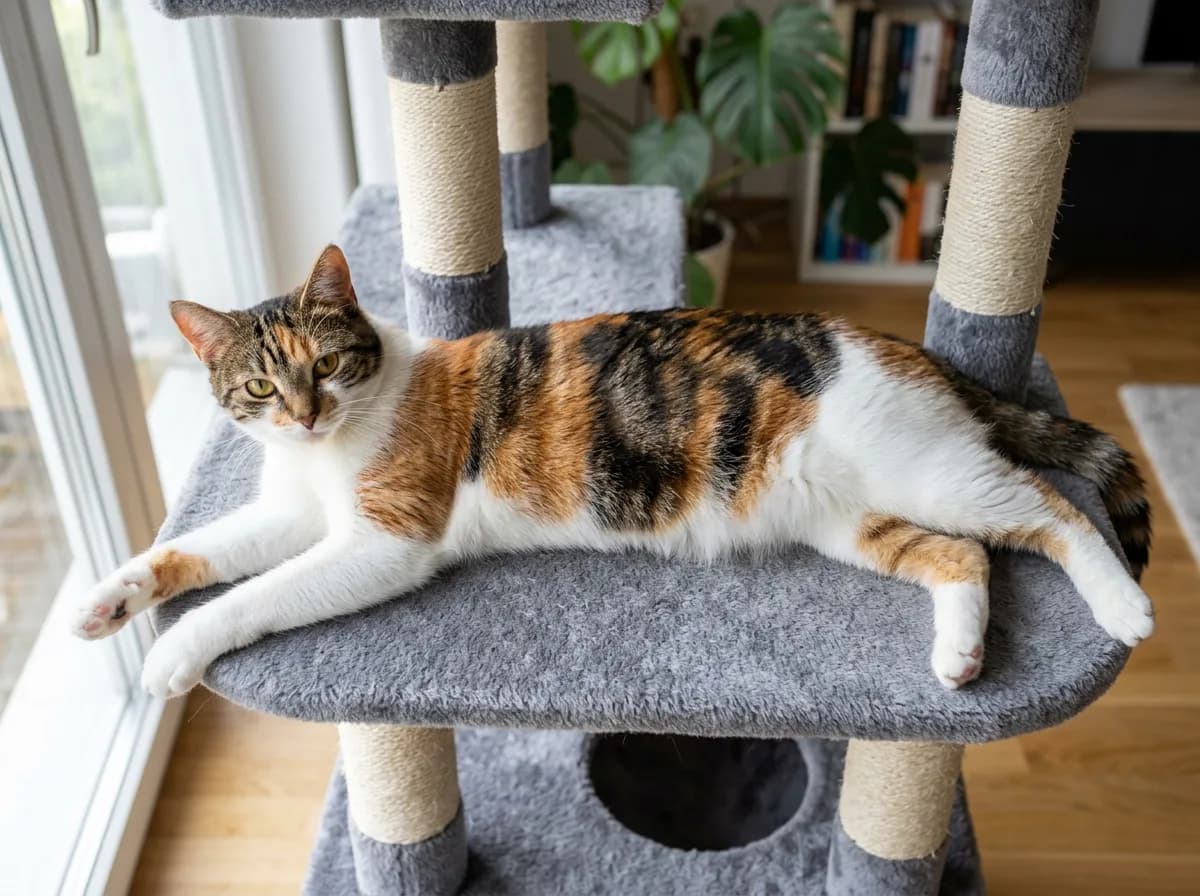
Calico tabby cats are uncommon, but not rare in the way male calicos are. The coat needs a specific stack of genes: one orange X and one non-orange X (so, almost always a female), white spotting, and the agouti gene switched on. Plenty of random-bred cats carry all of it, which is why most shelters see a handful of calibies and torbies every season.
What is rare is any particular combination. Because X-inactivation is random, no two calico tabby cats wear the same patch map, even genetically identical twins would differ. A dilute calico tabby is scarcer than a standard one (the cat needs two copies of the dilution gene on top of everything else), and a male calico tabby is the unicorn of the family at 1 in 3,000. If you find a calico tabby kitten in a shelter litter, she is special, but happily not so rare that you cannot find one to adopt within a season or two of looking.

63-inch multi-level cat tree with scratch posts, hammock, plush perches, and dangling toys. Vertical territory is non-negotiable for high-energy climbing breeds like the Bengal.
Petful may earn a commission when you click through to Chewy, at no extra cost to you.
Tabico vs. Torbie vs. Tortico: The Tri-Color Family Tree
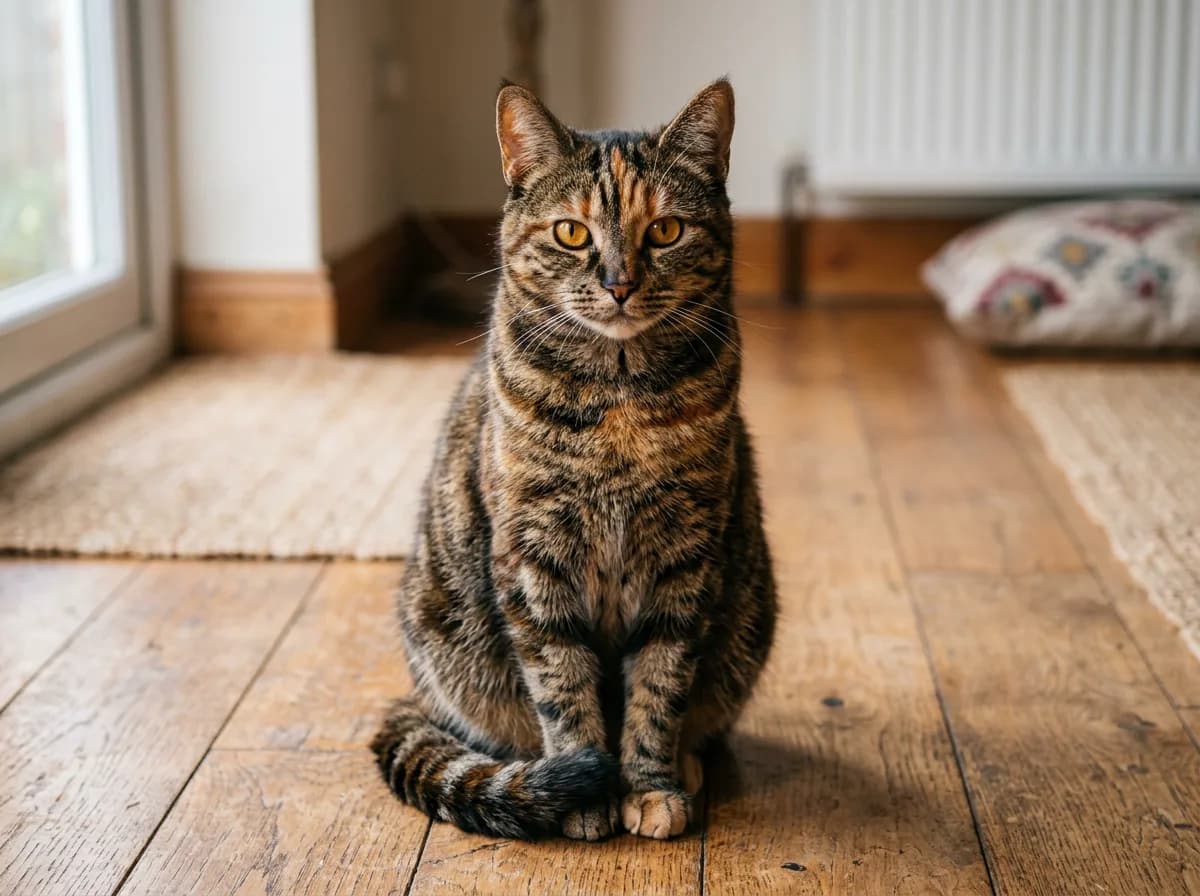
The tricolor family generates more naming confusion than any other corner of cat coats, so here is the full tree in plain English:
- Tortoiseshell (tortie): orange and black interwoven in a brindled mix, with little or no white.
- Calico: a predominantly white cat with distinct, separate patches of orange and black.
- Torbie (patched tabby): a tortoiseshell whose coat also shows tabby striping. Brindled, striped, minimal white.
- Tabico / caliby (calico tabby): a calico whose patches show tabby striping. White base, patched, striped.
- Tortico: a less common community term for cats sitting between tortie and calico, with brindled color and a modest amount of white.
The white is the fastest tiebreaker: lots of white with patched color says calico family (calico, tabico), while little white with woven color says tortie family (tortie, torbie). Then check for stripes to decide whether the tabby layer applies. A torbie and a tabico can look similar in photos, but in person the patch structure gives it away.
Calico Tabby Cat Personality and Temperament
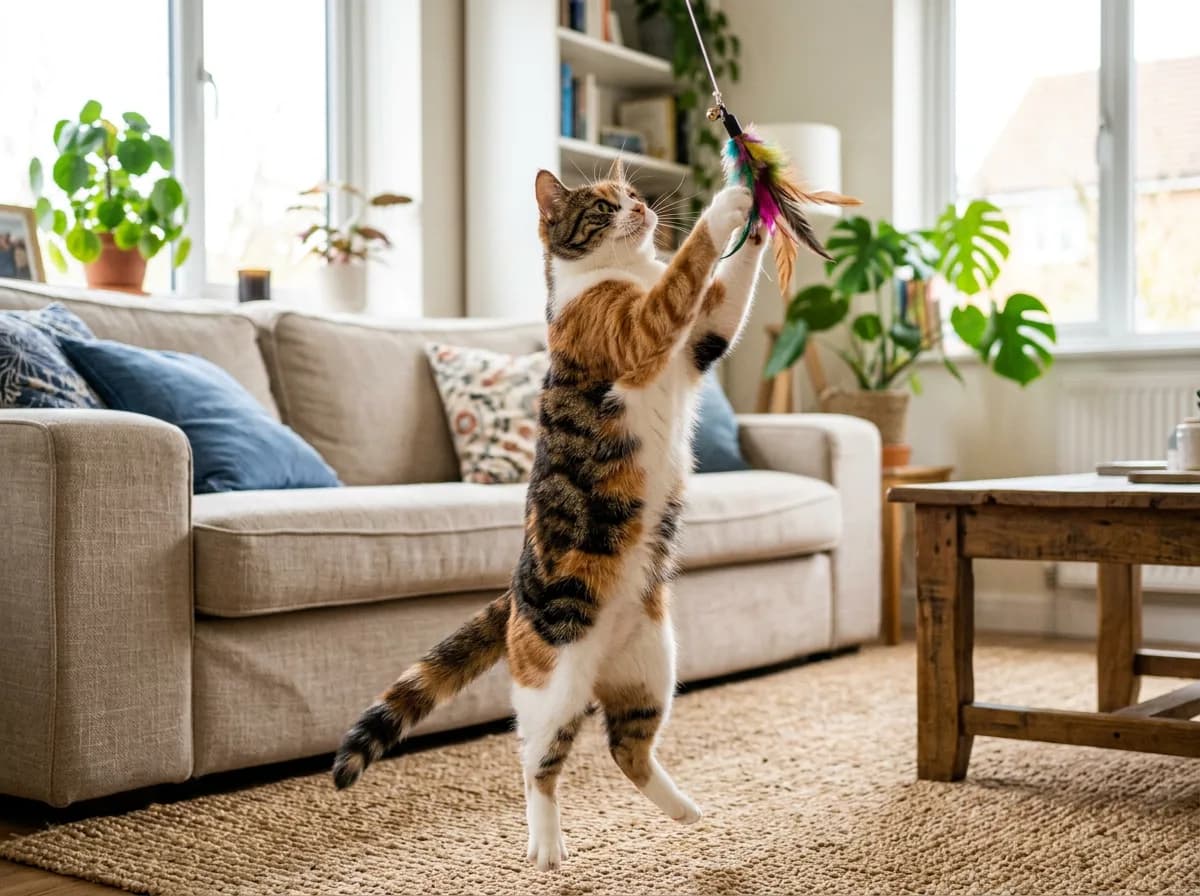
Owners swear by "tortitude" and its calico cousin "calico-tude": the idea that tricolor cats run sassier, feistier, and more opinionated than other cats. Science is far more cautious. A UC Davis veterinary survey (Stelow, Bain, and Kass, published 2016 in the Journal of Applied Animal Welfare Science) asked 1,274 cat owners about behavior and found owner-reported aggression was slightly higher in tricolor cats, including calicos and torties. Note the qualifiers: owner-reported, and modest. The effect was small, and individual variation dwarfs any pattern-level trend.
The honest answer is that coat pattern does not determine personality. A calico tabby cat's temperament comes from her breeding, her early socialization, and her individual nature. A caliby Maine Coon will act like a Maine Coon: mellow and companionable. A caliby domestic shorthair raised underfoot in a busy family will likely be confident and social. Expect a cat, not a stereotype, and you will rarely be wrong.
That said, many caliby owners describe their cats as bold, chatty, and affectionate on their own terms, which may be the most universal cat trait of all.
Cat Breeds That Can Wear the Calico Tabby Coat
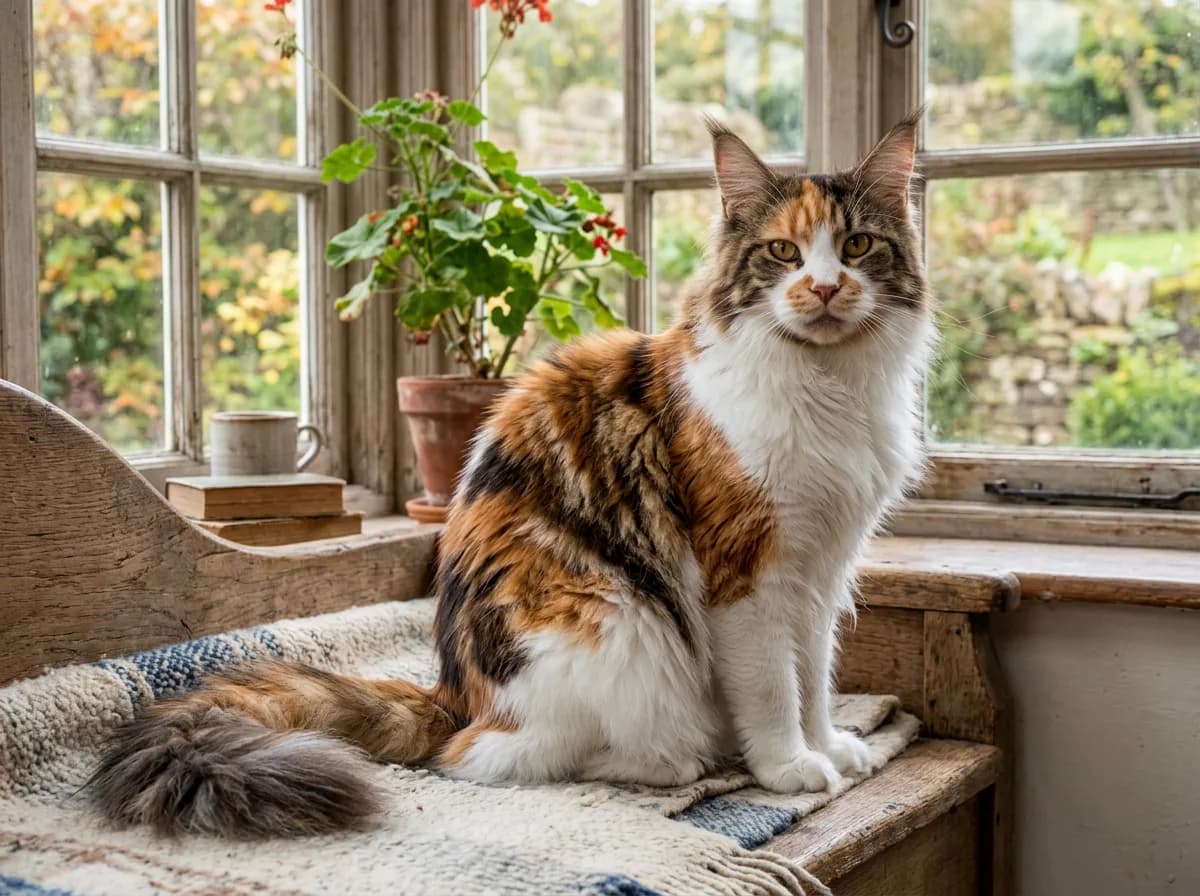
Calico tabby is a pattern, not a breed, so "what breed is my caliby?" has no automatic answer. Most calico tabby cats are random-bred domestic shorthairs and longhairs. But several pedigreed breeds accept tricolor-with-tabby coats (often registered as "patched tabby and white") under their standards, including:

108-oz stainless steel pet fountain with quiet pump and water-level window. Bengals are notoriously water-obsessed; a flowing fountain encourages hydration and pulls them away from sinks and toilets.
Petful may earn a commission when you click through to Chewy, at no extra cost to you.
- Maine Coon: the gentle giant comes in a huge range of tricolor and tabby combinations, detailed in our Maine Coon colors guide
- Persian
- British Shorthair
- American Shorthair
- Exotic Shorthair
- Manx
- Japanese Bobtail: the breed behind Japan's beckoning-cat tradition
- Devon Rex
- Norwegian Forest Cat
- Turkish Van
Remember that purebred status comes from the breed, not the pattern. A calico tabby Maine Coon is a Maine Coon who happens to wear the caliby coat; the coat itself adds no pedigree.
Calico Tabby Cat Price: Adoption and Breeder Costs
Searches for "calico tabby cat for sale" spike year-round, so let's set honest expectations. You cannot buy a calico tabby "breed," because no such breed exists. You are either adopting a random-bred cat who wears the pattern or buying a pedigreed cat whose breed standard allows it.
| Source | Typical cost | What you are paying for |
|---|---|---|
| Shelter or rescue adoption | $50-200 | Spay/neuter, vaccines, microchip usually included |
| Random-bred kitten (private rehoming) | Free or a small rehoming fee | No vetting included; budget for first vet visits |
| Pedigreed kitten in a caliby-eligible breed | Roughly $800-2,500 | The breed (Maine Coon, Persian, etc.), health testing, papers |
| "Rare" male calico from a seller | No legitimate premium | XXY males are sterile curiosities with no breeding value |
Adoption is the realistic route for most families. Because calibies are reasonably common among random-bred females, shelters regularly have calico tabby kittens and adults, typically at $50-200 with spay, vaccines, and microchip already done. If your heart is set on a pedigreed caliby, expect to join a breeder's waitlist and to pay the breed's standard kitten price, roughly $800-2,500 for most pedigreed kittens, with the exact figure set by the breed and the breeder's program, not by the coat.
Calico Tabby Cat Health and Lifespan
Here is the good news: the calico tabby pattern itself has no effect on health or lifespan. The genes that build the coat (orange, white spotting, agouti, dilution) are cosmetic, and a healthy indoor caliby should live the same 12-16 years typical of indoor cats, with plenty reaching their late teens and some passing 20.
The one exception is the XXY male. Klinefelter-syndrome calicos carry an extra chromosome, and that genetic difference, not the coat, predisposes them to health problems and often shorter lifespans. If you have a male caliby, regular veterinary checkups matter even more.
Otherwise, care for a calico tabby like any cat: keep her indoors or supervised outside, keep her lean (obesity is the most common feline nutrition problem), stay current on vaccines and parasite prevention, and book annual wellness exams (twice yearly for seniors). One pattern-adjacent note: white areas of a cat's coat, especially on the ears and nose, have less protective pigment, so a high-white caliby who sunbathes by a window or ventures outdoors has a higher risk of sun damage on those spots. Your veterinarian can advise on protection if your cat is a dedicated sun-worshipper.
Lucky Cats: Calico Tabby Folklore Around the World
Tricolor cats trail centuries of good-luck folklore, and your caliby inherits all of it. In Japan, the calico is called mi-ke, meaning "triple fur," and the famous maneki-neko beckoning cat figurine seen in shop windows worldwide is traditionally a calico. Japanese sailors prized mi-ke ships' cats as protection against storms, and tricolor ships' cats were considered lucky in maritime cultures well beyond Japan.
In the United States, the calico holds official honors: Maryland named the calico its state cat on October 1, 2001, chosen because its orange, black, and white coat matches the Baltimore oriole (the state bird) and the Baltimore checkerspot butterfly (the state insect).
- Maryland's state cat is the calico, designated October 1, 2001. The tricolor coat earned the title by matching the colors of the state bird (Baltimore oriole) and state insect (Baltimore checkerspot butterfly), making the caliby arguably the most patriotic pet in Baltimore.
Folk traditions in parts of Europe and the United States also cast tricolor cats as "money cats" that bring fortune to their households. None of it survives scientific scrutiny, but as far as superstitions go, sharing your couch with a certified good-luck charm is a pleasant one.
Name Ideas for a Calico Tabby Cat
A coat this distinctive deserves a name that fits. Popular directions for a calico tabby mix name:
- Pattern names: Patches, Callie, Stripes, Marble, Swirl, Mosaic, Patchwork, Pixel
- Color and spice names: Pumpkin, Marmalade, Ginger, Cinnamon, Nutmeg, Pepper, Maple, Amber
- Japanese-inspired names: Mi-ke, Suzu (bell), Hana (flower), Koban (the gold coin a maneki-neko holds), Sakura
- Lucky names: Clover, Penny, Lucky, Fortuna, Charm
- Dilute caliby names: Misty, Smoke, Lavender, Pearl, Willow, Dove
Match the name to her actual coat: a bold standard caliby carries "Marmalade" well, while a soft dilute girl suits "Misty" or "Pearl." And if your household runs democratic, shortlist three and let her ignore all of them equally.
Frequently Asked Questions About Calico Tabby Cats
They are uncommon but not truly rare. The coat requires a female cat (almost always) carrying orange on one X chromosome, non-orange on the other, white spotting, and the agouti gene that reveals tabby striping. Shelters see calibies regularly. Male calico tabbies are the genuinely rare ones, at about 1 in 3,000 per a University of Missouri study.
Yes. Calico and tabby are separate coat patterns controlled by different genes, and one cat can wear both. A calico tabby (tabico or caliby) has the calico's white coat and distinct orange and black patches, with tabby stripes or swirls visible inside the colored patches.
Cat lovers call her a tabico (tabby + calico) or a caliby (calico + tabby). Both nicknames describe the same coat. Registries like CFA may record the pattern in show classes such as patched tabby and white. None of these terms is a breed name.
No. A calico tabby is white-based with distinct, separate striped patches. A torbie (patched tabby) is a tortoiseshell with tabby striping: her orange and black are brindled and interwoven, with little or no white. The amount of white and the patch structure tell them apart.
About 1 in 3,000 calico-patterned cats is male, the commonly cited figure from a University of Missouri study. Males result from XXY chromosomes (Klinefelter syndrome), chimerism, or somatic mosaicism. XXY males are almost always sterile and often have health issues.
Coat pattern does not determine personality. A 2016 UC Davis survey (Stelow, Bain, and Kass) found owner-reported aggression was slightly higher in tricolor cats, but the effect was modest and individual variation dominates. Breeding, socialization, and the individual cat matter far more than the coat.
Shelter adoption typically runs $50-200 and usually includes spay, vaccines, and a microchip. Pedigreed cats that happen to wear the pattern follow their breed's pricing, roughly $800-2,500 for most pedigreed kittens. There is no legitimate premium for the pattern itself or for a male calico.
The pattern does not change lifespan. Healthy indoor cats typically live 12-16 years, and some reach 20. The exception is XXY male calicos, whose extra chromosome predisposes them to health problems and often shorter lives.
Persian, Maine Coon, Manx, American Shorthair, British Shorthair, Japanese Bobtail, Exotic Shorthair, Devon Rex, Norwegian Forest Cat, and Turkish Van can all wear tricolor-with-tabby coats, among others. Most calibies, though, are random-bred domestic shorthairs and longhairs.
A caliby who inherited two copies of the recessive dilution gene (MLPH). Dilution softens black to blue-gray and orange to cream, producing a pastel coat of smoky gray and cream striped patches on white instead of bold black and orange.
Cats show affection through slow blinks (return them), head bunting, kneading, purring in your company, grooming you, bringing you "gifts," and simply choosing to sit near you. A calico tabby who follows you between rooms and sleeps against you is saying it plainly.
Siamese cats are most often described as velcro cats, with Ragdolls, Burmese, Tonkinese, and Sphynx close behind. Clinginess tracks breed temperament and individual personality, not coat pattern, so a calico tabby's neediness depends on who she is, not what she wears.

Coreen Saito is a pet writer and longtime shelter volunteer with more than a decade in animal rescue. She covers cat behavior, breed care, and the small, ordinary science of sharing a life with companion animals, with a particular focus on honest takes about the products and decisions that actually matter. At home in Arizona, she's outranked by Mac (a dog with the loudest opinion in the house), Rebel (a cat who governs by quiet authority), and Meri (an orange tabby who runs the late shift and the laundry basket). She writes about all three, plus the rescues that keep coming through her life, at LifeWithMinty.com.
Sign up for expert-backed reviews and safety alerts all in one place.