American Shorthair Cat: Breed Guide, Personality & Care
The American Shorthair is a pedigreed working-cat breed with a muscular body, dense coat, and adaptable personality. Learn its identity, history, temperament, care, and household fit.
Petful is reader supported. As an affiliate of platforms like Amazon and Chewy, we may earn a commission when you buy through links on this page. There is no extra cost to you.
The American Shorthair cat is a pedigreed breed with a muscular, balanced body, a short dense coat, and a reputation for being an adaptable companion. Its working-cat history helps explain the breed's sturdy build and alert personality, but a round face, tabby coat, or calm manner cannot prove ancestry. Reliable pedigree and registry records are the meaningful evidence that separates an American Shorthair from a shorthaired domestic cat that happens to look similar.
This refreshed guide covers breed identity, history, size, personality, daily care, and household fit. Petful's dedicated guides own the deeper decisions about American Shorthair colors, kittens, breeders, and adoption, American Shorthair price, American Shorthair vs Domestic Shorthair differences, and health and lifespan.

Sign up for expert-backed reviews and safety alerts all in one place.
American Shorthair cat at a glance
The Cat Fanciers' Association American Shorthair profile describes a medium-to-large cat with a powerful, well-balanced body, broad chest, substantial legs, full cheeks, and a short coat firm enough to protect the skin. Males are generally larger than females, but sex alone does not determine adult size. Growth, body condition, neuter status, diet, activity, and individual genetics all influence what a healthy adult looks like.
The TICA American Shorthair profile characterizes the breed as easygoing, intelligent, and adaptable, with a working-cat background and a tendency to mature slowly. Those are breed-level expectations, not promises. A particular cat may be outgoing or reserved, lap-seeking or nearby-but-independent, highly playful or more measured.
The practical answer is that an American Shorthair is a registered breed, not a general label for every cat with short hair. The strongest identification starts with traceable records and then asks whether the whole cat is consistent with the standard. Color, size, temperament, and face shape are supporting observations only.
Petful may earn a commission when you click through to Chewy, at no extra cost to you.
- 1An American Shorthair is a pedigreed working-cat breed, not another name for any shorthaired cat
- 2The typical cat is muscular, balanced, adaptable, and moderately active
- 3Short dense coats occur in many colors and patterns
- 4Pedigree and registry records establish ancestry more reliably than appearance
| Reader decision | Practical answer |
|---|---|
| Identity | A registered breed confirmed through pedigree and registry records |
| Build | Medium to large, muscular, balanced, and substantial rather than extreme |
| Coat | Short, dense, protective, and recognized in many colors and patterns |
| Personality | Often adaptable and companionable, with meaningful individual variation |
| Activity | Daily interactive play, climbing, scratching, and hunting-style enrichment |
| Care | Measured feeding, weekly combing, dental and nail care, litter monitoring, safe transport, and preventive veterinary care |
What is an American Shorthair cat?
The essential American Shorthair facts begin with identity and origin: this is a registered breed, not a catch-all name for any shorthaired cat born in the United States. American Shorthair cat origin records connect the modern breed to working cats selected and documented over generations. Pedigree rather than appearance is the ancestry evidence that supports the name.
An American Shorthair cat is a pedigreed breed developed from sturdy working cats that traveled with settlers and protected food stores from rodents. Organized breeding later standardized the population around a balanced body, sound structure, dense coat, and recognizable head. The name describes a specific registered breed with documented ancestry.
That definition prevents a common mistake. Domestic Shorthair is a broad description for shorthaired cats of mixed or unknown ancestry, not a single standardized breed. Many Domestic Shorthairs are healthy, attractive, affectionate companions, and some can resemble American Shorthairs closely. The resemblance does not make the labels interchangeable.
A three-level identity check
Use three levels of description:
- Observed appearance: The cat has short hair, a broad face, a tabby pattern, or a sturdy body.
- Reported identity: A seller, shelter, or previous owner used the American Shorthair label, but supporting records may be absent.
- Documented breed identity: Pedigree and registry information trace the cat to the registered American Shorthair population.
This evidence ladder protects buyers from unsupported premiums, helps adopters interpret shelter labels honestly, and makes health discussions more accurate. It also allows a person to appreciate a wonderful lookalike without inventing ancestry.
American Shorthair history and working-cat roots
Registry histories connect the breed to shorthaired cats brought to North America aboard ships and valued for rodent control. These cats were selected for practical traits such as strength, hardiness, alertness, and an effective hunting style. As cat shows and formal breeding grew, fanciers documented pedigrees and shaped a consistent American type.
The breed was once called the Domestic Shorthair. The name was changed to American Shorthair to distinguish the pedigreed population from mixed-ancestry domestic cats. That historical naming explains why the terms are still confused today, but it does not erase the modern distinction.
Three parts of the history matter for owners:
- The working background supports a sturdy, athletic standard rather than an exaggerated body.
- Formal registry development created a documented population and written breed standard.
- The modern breed label rests on ancestry records, not on a cat's nationality, coat length, or success at catching mice.
The breed's history is interesting, but it should never be used to excuse unsafe outdoor roaming. Hunting instinct does not protect a cat from vehicles, toxins, predators, infectious disease, or conflict with wildlife. Safe indoor territory, a secure catio, and supervised harness time can provide stimulation with less risk.
Why the working-cat label still matters
“Working cat” is historical context, not a modern job assignment. It helps explain why the standard values substance, balance, alertness, and comfortable movement. It does not mean an American Shorthair should be kept hungry to hunt, placed outdoors for pest control, or expected to tolerate unsafe conditions.
Translate that history into safe enrichment. Let the cat search for a measured food portion, watch a toy disappear behind furniture, climb to a secure observation point, and finish a chase sequence with a catch. These activities use parts of the predatory sequence without exposing the cat or wildlife to outdoor risk.
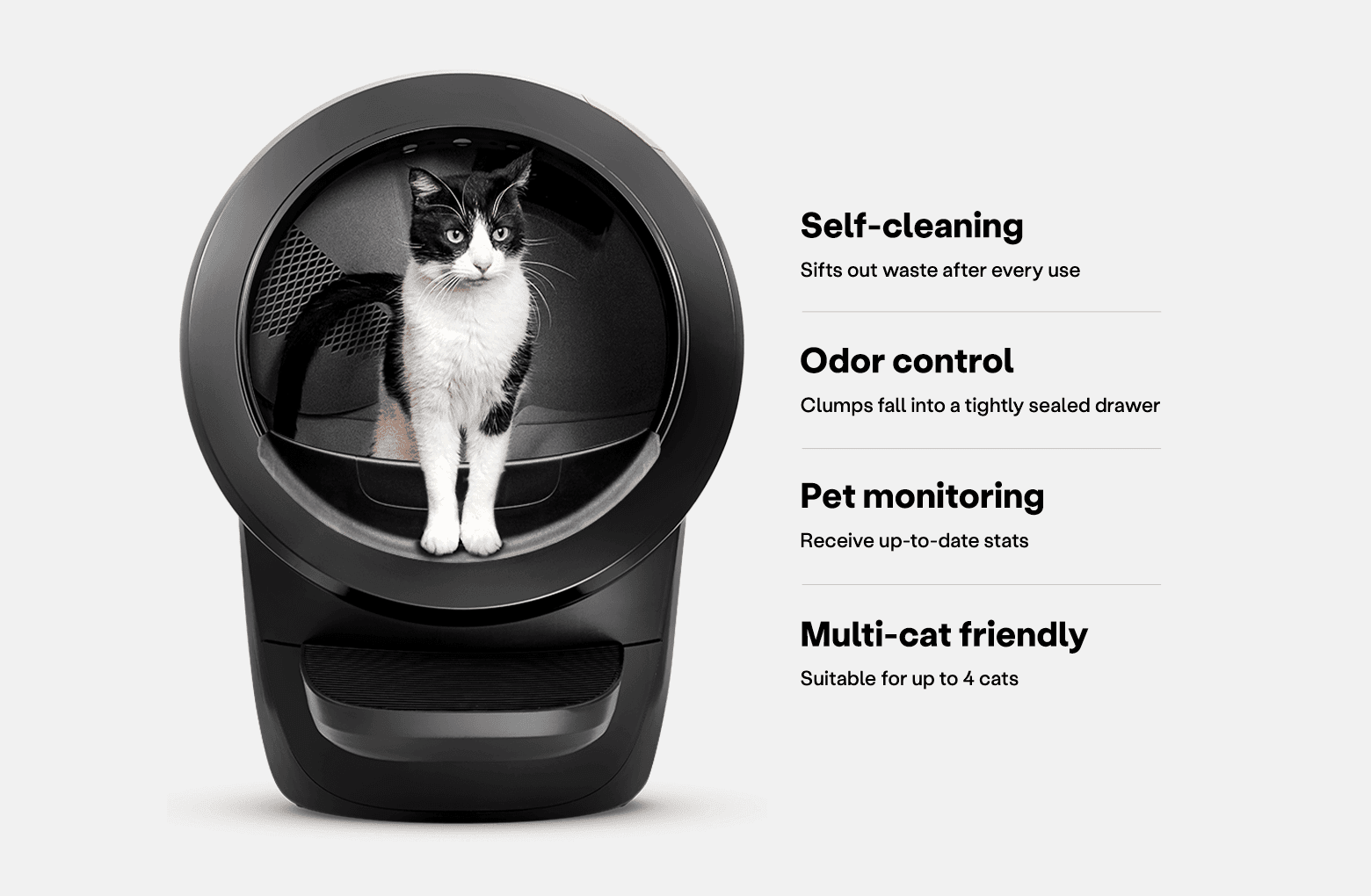
The proven Litter-Robot trusted by 1.8M+ households, with real-time litter and waste tracking in the Whisker app. The established pick if you want Litter-Robot reliability for less.
Petful may earn a commission when you click through to Whisker, at no extra cost to you.
How to identify an American Shorthair without guessing
Start with documents, not with a checklist of facial features. Review the cat's registered name, registration number, pedigree, breeder information, dates, and veterinary records. Confirm that the details refer to the same individual. A screenshot of an unrelated pedigree or a registry logo on a seller's page is not enough.
After records, compare the complete cat with the official standard. The CFA American Shorthair breed standard covers head proportions, body, legs, paws, tail, coat, eye color, and accepted colors. A credible identification should be consistent across the whole cat rather than depending on one memorable feature.
Use this order of confidence:
- Low confidence: A short coat, tabby pattern, round face, or muscular body.
- Limited confidence: A verbal claim or shelter listing with no traceable ancestry.
- Moderate confidence: A detailed pedigree that can be matched to the cat and breeder.
- High practical confidence: Verifiable registry documentation connected to the pedigree and individual cat.
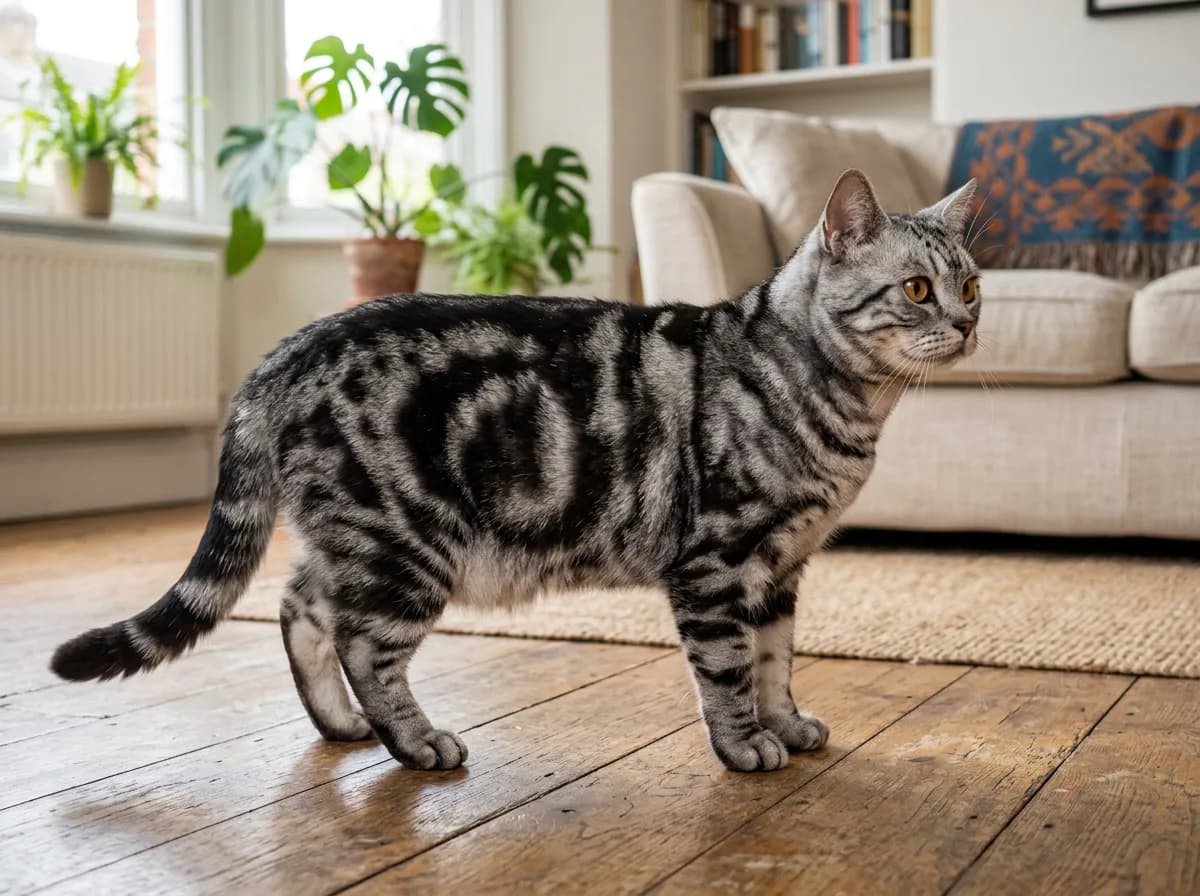
- Silver tabby markings, a broad face, a dense short coat, or an easygoing personality may be compatible with the American Shorthair standard, but none proves ancestry. When records are absent, describe the visible traits and treat the breed label as uncertain.
DNA ancestry products should not be treated as substitutes for pedigrees unless the test provider can demonstrate a validated breed-reference method appropriate to the question. A percentage in a consumer report may sound precise while answering a different question from registry ancestry.
American Shorthair size and physical traits
American Shorthair characteristics and American Shorthair traits describe a balanced medium-to-large build, not one required number on a scale. A useful American Shorthair description includes the whole body, head, coat, legs, tail, movement, and condition. American Shorthair cat size must always be interpreted for the individual rather than used as a breed test.
The American Shorthair should look strong and balanced. The body is slightly longer than tall, with a broad chest and powerful shoulders, hips, and hindquarters. Substantial legs and rounded paws support the frame. The tail is medium in length and carried naturally, while the head is broad with full cheeks and a firm chin.
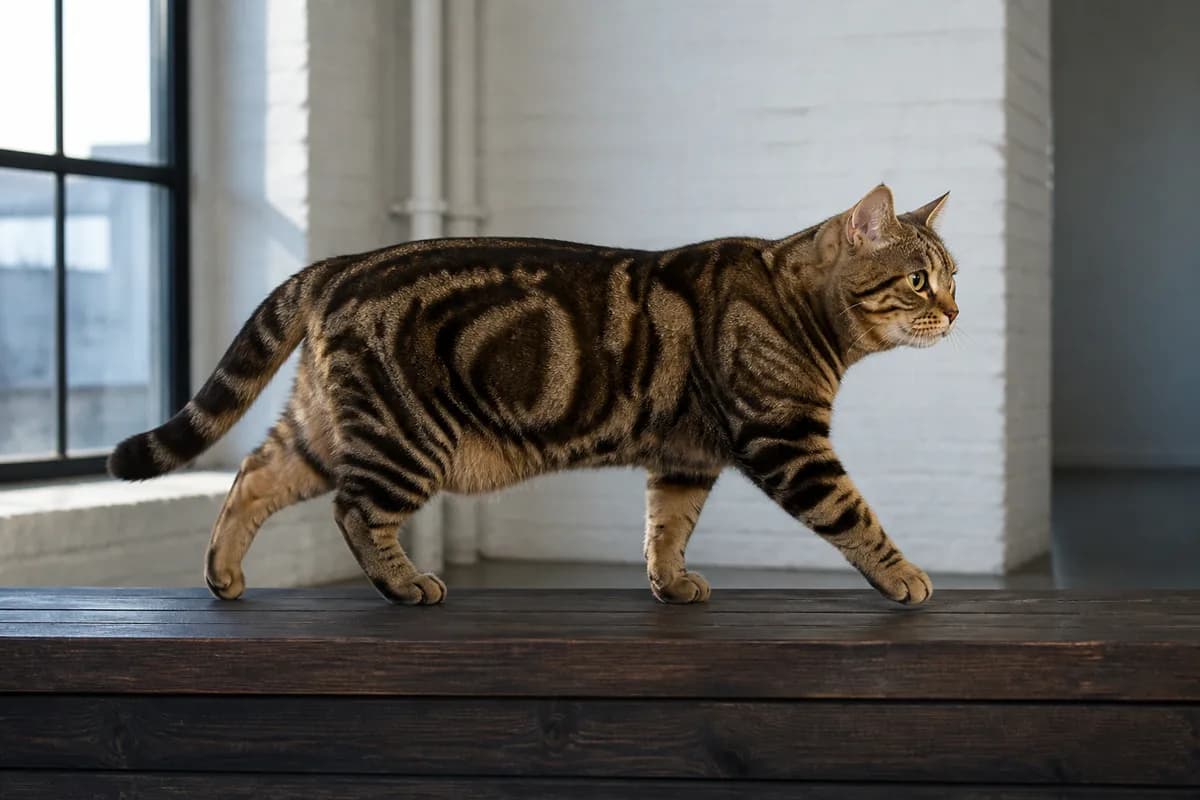
American Shorthair size is best evaluated through proportion and body condition, not one target number. A large-framed cat can be lean, while a smaller cat can carry excess fat. Feel for ribs under a light covering, look for a waist from above, and discuss changes with a veterinarian rather than comparing the cat with a social-media photo.
The breed matures gradually. A young adult may continue filling out after reaching full height, especially through the chest and cheeks. Slow maturation is not a reason to overfeed. Extra calories create fat, not healthy skeletal development.
Head, eyes, and expression
The head is broad with a full-cheeked expression, particularly in mature males. Medium ears are set apart, and large eyes contribute to an open, alert look. Eye color should be considered together with coat color under the standard, but eye color alone cannot identify the breed.
Look for comfort as well as conformation. Squinting, discharge, a newly cloudy eye, head shaking, oral odor, difficulty eating, or facial asymmetry deserves veterinary attention. Do not dismiss a change as a normal feature of a round-faced breed.
Coat and recognized variety
The coat is short, thick, and even, with density that can vary by season and climate. It should protect the skin without becoming long, fluffy, or woolly. American Shorthair colors include solids, tabbies, smokes, shaded coats, bicolors, calicos, and other recognized combinations, with silver classic tabby especially familiar.
Color vocabulary becomes complicated because several layers can appear at once. The dedicated American Shorthair colors and patterns guide explains base color, tabby pattern, silver or smoke effects, white spotting, and dilute expression with distinct photographic references.
American Shorthair personality and temperament
American Shorthair personality is often summarized as an adaptable personality with individual variation. American Shorthair temperament and American Shorthair cat behavior still differ from cat to cat, so being friendly, reserved, playful, or cuddly should be observed rather than promised from the label. Compare repeated individual behavior across quiet time, play, meals, handling, and new situations before deciding whether the cat fits the household.
American Shorthair personality is often described as adaptable, intelligent, companionable, and moderately playful. Many cats enjoy sharing a room with people without requiring constant holding. Some sit on laps, some prefer an adjacent chair, and others move between social contact and independent observation.
American Shorthair temperament should be treated as a starting hypothesis. Early socialization, age, health, handling history, resource access, household noise, and the behavior of other animals all influence the individual. A cat that hides during the first days in a new home may become social after decompression, while a confident kitten may still dislike restraint.
Watch voluntary behavior
Watch what the cat chooses:
- Does the cat approach when people sit quietly?
- Can the cat disengage from play and settle?
- Does handling remain comfortable for a few seconds?
- How does the cat respond to visitors, household sounds, and routine changes?
- Which forms of touch, play, rest, and distance does the cat seek?
A stable Yaheetech multi-level cat tree can give an American Shorthair climbing routes, a scratching surface, and a choice of resting heights. Anchor tall furniture as directed, keep launch and landing areas clear, and position at least one perch where the cat can observe without being cornered.
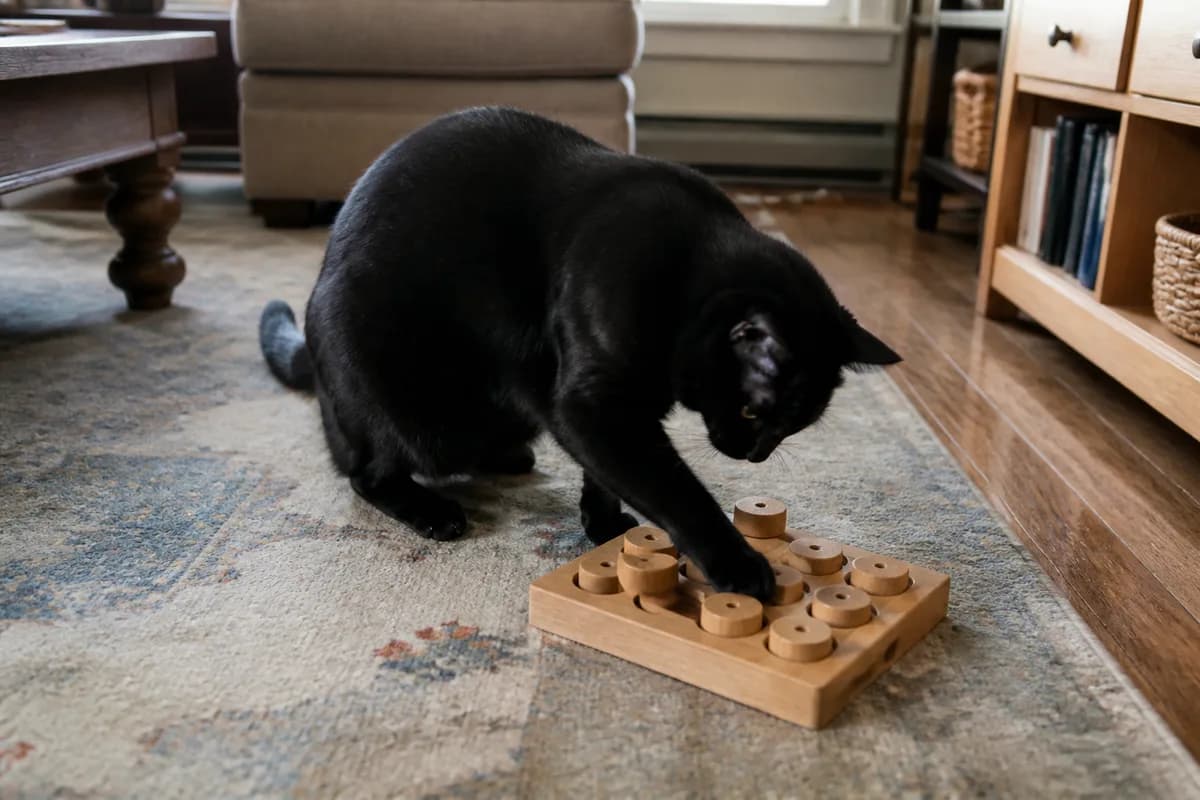
For more variety, WebVet's guide to interactive cat toys separates chase, puzzle, movement, and solo-play options. Rotate categories instead of leaving every toy out indefinitely. Novelty lasts longer when familiar items disappear and return.
Petful may earn a commission when you click through to Chewy, at no extra cost to you.
Everyday care for an American Shorthair
The short coat is manageable, but low-maintenance does not mean no maintenance. A weekly combing session can remove loose hair, distribute skin oils, and help a caregiver notice small changes. Increase frequency during a heavy seasonal shed or when an older cat stops grooming efficiently.
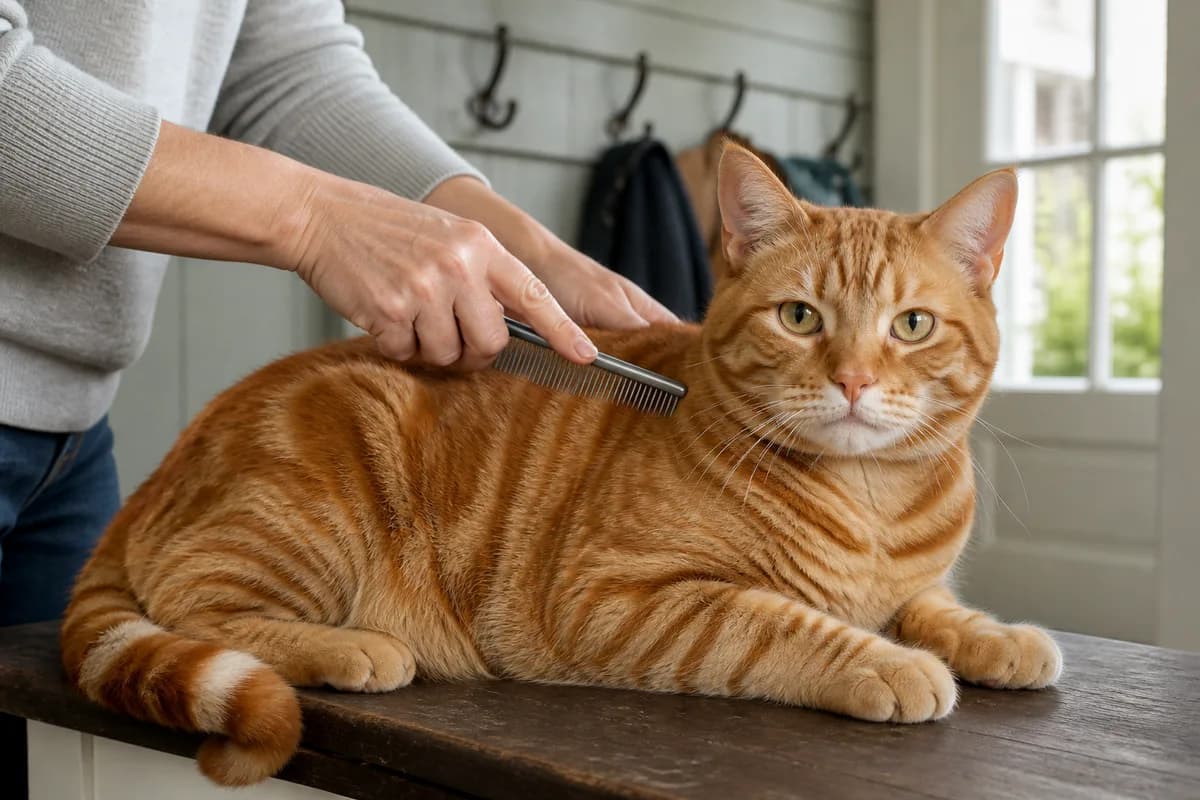
Build care around short, cooperative sessions:
- Run a comb through one comfortable area, then pause before the cat becomes frustrated.
- Touch paws briefly and reward calm behavior before introducing nail clippers.
- Pair a pet toothbrush with licking a preferred treat, then progress gradually.
- Look at ears and eyes without inserting tools or cleaning a healthy ear unnecessarily.
- Record new lumps, coat thinning, dandruff, odor, pain, or sensitivity for veterinary discussion.
Litter-box output is part of routine health monitoring. A Whisker Litter-Robot 4 can automate scooping for a cat that accepts the unit, but it does not replace direct observation. Introduce it beside the familiar box, keep a conventional option available during transition, and check urine, stool, frequency, and machine operation every day.
Feeding and weight management
Feed a complete and balanced diet appropriate for the cat's life stage and clinical needs. Measure portions rather than estimating from a bowl. Use body-condition trends, muscle condition, weight history, appetite, and veterinary guidance to adjust the plan.
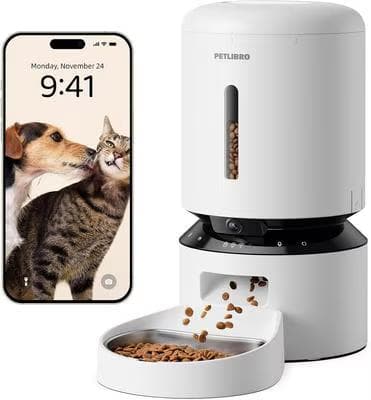
The Petlibro Granary WIFI automatic feeder with camera can dispense measured dry-food portions on a schedule. It cannot calculate the correct daily calories or show how much a multi-cat household member actually ate. Verify every dispensing cycle during setup, clean food-contact parts, keep a manual backup, and continue observing meals directly.
Dental, nail, and carrier care
Dental disease can be painful before a cat stops eating. Build toothbrushing gradually with pet-safe products and ask a veterinarian about oral findings and professional care. Trim only the clear nail tip and stop before the quick. Scratching posts help normal claw maintenance, but they do not eliminate nail checks.
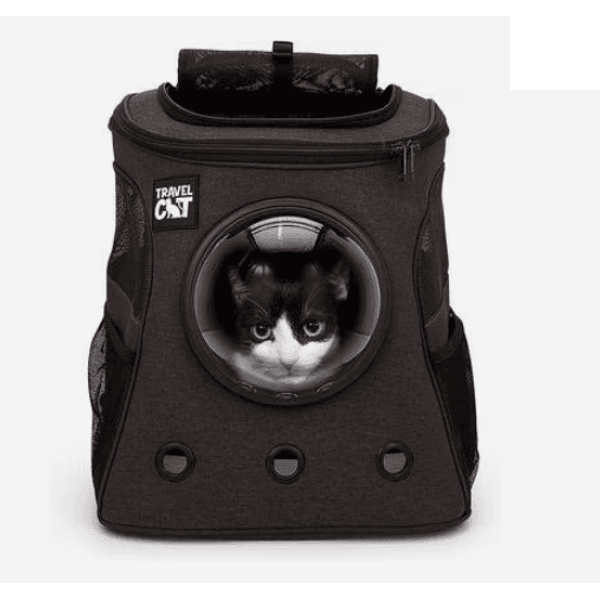
Make the carrier part of the room rather than an object that appears only before a stressful trip. A Travel Cat Fat Cat backpack carrier can support secure transport when its dimensions, ventilation, closure, and weight rating fit the individual cat. Leave it open, add familiar bedding, reward voluntary entry, and practice short carries before travel. For more, see Petful’s guide to cat backpack.

63-inch multi-level cat tree with scratch posts, hammock, plush perches, and dangling toys. Vertical territory is non-negotiable for high-energy climbing breeds like the Bengal.
Petful may earn a commission when you click through to Chewy, at no extra cost to you.
Play, enrichment, and a daily routine
American Shorthairs retain the attention and physical ability associated with working cats. They benefit from opportunities to stalk, chase, pounce, climb, scratch, search, and observe. The goal is not constant excitement. A balanced routine alternates activity with predictable food, grooming, social contact, and rest.
Try a simple daily pattern:
- Offer a short hunting-style play session before breakfast.
- Feed a measured meal and allow quiet grooming or rest.
- Provide a puzzle, hidden portion, window view, or safe climbing route during the day.
- Repeat interactive play before the evening meal.
- End with a calm activity and check litter, water, appetite, and behavior.
Use the Yaheetech cat tree as one part of a territory plan, not the entire environment. Separate resting, feeding, litter, and observation areas so the cat can move between resources without conflict. In a multi-cat home, duplicate important resources and avoid narrow routes where one cat can block another.
An automatic Petlibro feeder can help maintain meal timing, especially when work schedules change, but daily human checks remain essential. Sudden appetite loss, persistent hunger, repeated vomiting, or a change in eating speed is information, not an equipment problem to ignore.
When a routine stops working
A useful routine changes with the cat. A kitten may need shorter, more frequent play, while a mature adult may enjoy longer search tasks. A senior may prefer low-impact tracking, floor-level puzzles, and closer landing surfaces. Pain, vision change, dental discomfort, or social conflict can make a previously favorite activity less appealing.
Do not force participation to preserve a schedule. Record what changed, offer a lower-effort alternative, and seek veterinary advice when reduced interest persists or accompanies appetite, mobility, litter, breathing, grooming, or social changes.
Is an American Shorthair right for you?
An American Shorthair can suit a household that wants a companionable cat with moderate activity, manageable coat care, and enough independence to rest while people work. The breed may be less suitable for someone expecting a guaranteed lap cat, a cat that never sheds, or a pet content with no daily play.
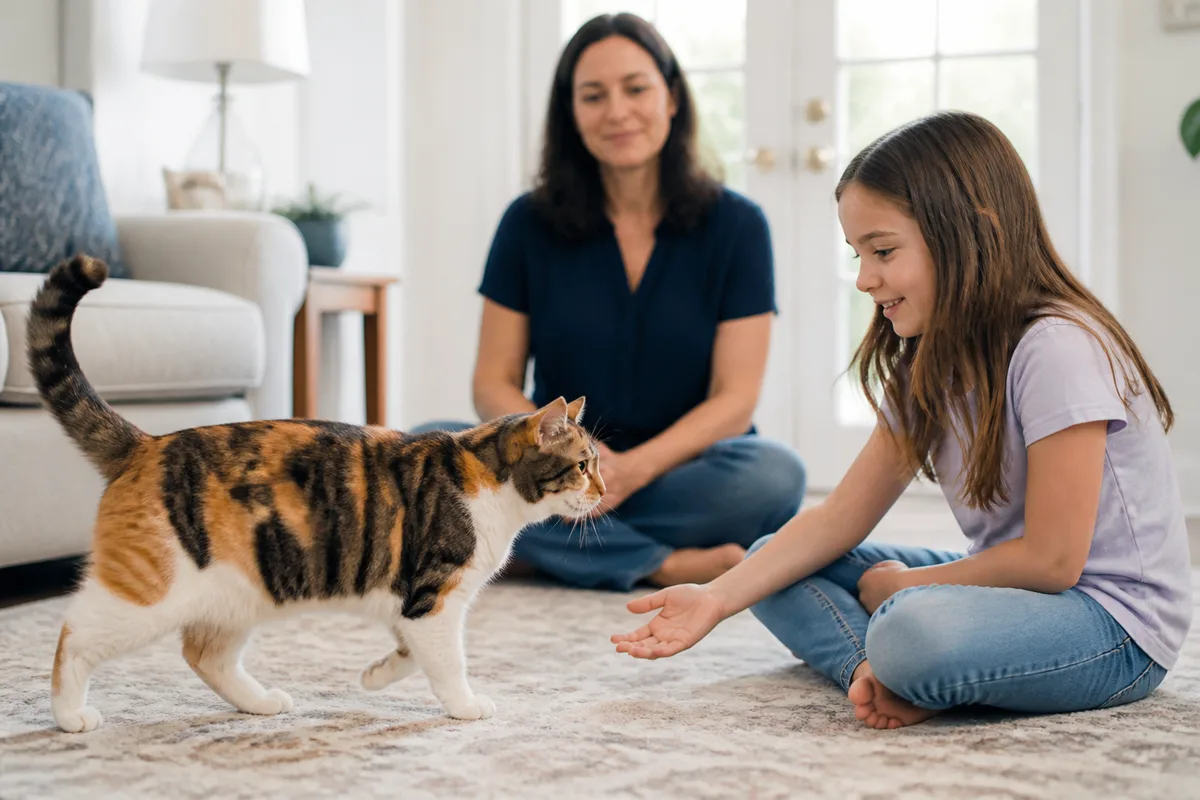
The most useful fit questions are concrete:
- Can the household provide daily play and safe vertical territory?
- Will people respect a cat that prefers nearby companionship to being carried?
- Is there a realistic budget for food, preventive care, dental care, supplies, transport, and emergencies?
- Can children learn to invite contact and stop when the cat moves away?
- Can resident pets be introduced through separate spaces and gradual exposure?
- Often adaptable to different household routines
- Moderately playful without being constantly demanding
- Short coat is usually straightforward to maintain
- Many individuals enjoy companionable nearby contact
- No breed label guarantees lap-sitting or child tolerance
- Dense coat still sheds and needs routine combing
- Weight can creep up when portions and play are not managed
- Pedigreed kittens require careful seller verification and patience
For children, teach seated interaction, gentle touch, and full-body support only when lifting is necessary and the cat is comfortable. Adults should supervise rather than expecting a breed reputation to create safety. For dogs, control chasing and provide high cat-only escape routes. For cats, use scent exchange, separate resources, and gradual visual access.
A second Travel Cat carrier mention is relevant when a household is planning introductions, evacuation, or veterinary transport. Each cat should have access to a secure carrier sized for that individual. Do not depend on fitting two stressed cats into one carrier during an emergency.
American Shorthair colors and patterns
American Shorthair colors range well beyond silver tabby, and American Shorthair patterns include solid, tabby, bicolor, calico, tortoiseshell, smoke, and shaded expressions recognized within registry rules. Petful's American Shorthair colors guide explains American Shorthair cats' colors through base color, pattern, white spotting, and hair-shaft effects without treating coat as proof of ancestry. The photographed examples also show why lighting, undercoat, and white spotting should be checked separately.
American Shorthair vs Domestic Shorthair
The central American Shorthair vs Domestic Shorthair distinction is ancestry evidence. In a Domestic Shorthair vs American Shorthair comparison, the former is a broad mixed-ancestry population label and the latter is a documented breed. If you are asking, "Is American Shorthair the same as Domestic Shorthair?", use Petful's American Shorthair vs Domestic Shorthair guide to grade the evidence from appearance through registry documentation.
Finding American Shorthair kittens and adult cats
Readers considering a pedigreed kitten should separate three questions: Is the cat's identity documented, does the seller follow responsible practices, and can the household afford the complete commitment? A high price does not answer any of them.
Petful's guide to American Shorthair kittens for sale, breeders, and adoption covers live visits, parent and kitten records, contracts, payment safety, socialization, and rescue routes. The American Shorthair price and lifetime cost guide separates acquisition estimates from setup, recurring care, and emergency reserves.
An American Shorthair kitten, an American Shorthair breeder, and American Shorthair cats for adoption require different verification routes. Search results for American Shorthair kittens for sale are only leads; the owner page is the hub-style decision map for records, live contact, contract terms, payment safety, and adoption evidence. It routes each major search intent to a focused decision without asking the broad breed guide to duplicate the complete buying workflow.
Evidence to collect before payment
Before paying, ask for:
- The seller's full identity and a live conversation.
- A live visit or live video showing the kitten moving naturally in its environment.
- Pedigree and registration records tied to the same kitten.
- Veterinary, vaccination, and microchip documentation.
- A written contract, return policy, pickup timing, and clear payment terms.
- Time to verify claims independently without pressure.
Adoption can be an excellent route, especially for an adult whose behavior is already observable. A shelter may use an American Shorthair label descriptively. Ask what evidence supports it, then make the decision around the individual cat's health, behavior, and fit rather than an uncertain ancestry story.
American Shorthair price and ownership cost
American Shorthair cat price, American Shorthair price, and American Shorthair cat cost searches often focus only on acquisition. The American Shorthair price and lifetime cost guide owns that decision and separates the quote from setup, annual care, insurance, travel, and emergency planning. It also shows how dated local estimates can be replaced without pretending one national number predicts every breeder, rescue, household, or future veterinary expense.
American Shorthair health and lifespan
No breed page can predict one cat's health or lifespan. The American Shorthair health and lifespan guide owns the deeper discussion of longevity ranges, body condition, preventive care, shedding, and changes that require veterinary attention.
American Shorthair lifespan, American Shorthair cat health, American Shorthair cat weight, and American Shorthair shedding are connected care questions, not guarantees. Daily play and weight management establish a practical baseline, while measured meals, hydration, preventive examinations, dental care, and cooperative grooming add observable checkpoints. A veterinarian should interpret appetite, breathing, mobility, body-condition, coat, or behavior changes for the individual cat.
At the pillar level, the priorities are straightforward:
- Maintain an appropriate body condition through measured feeding and daily activity.
- Schedule veterinary exams at an interval matched to age and health.
- Discuss vaccinations and parasite prevention based on real exposure.
- Build dental care before obvious pain develops.
- Monitor appetite, water intake, urine, stool, mobility, grooming, and social behavior.
- Seek prompt care for breathing difficulty, collapse, inability to urinate, severe pain, sudden weakness, or rapid decline.
Keep a simple monthly baseline note even when the cat seems well. Record weight when available, appetite, favorite activities, jumping comfort, coat care, and any recurring litter change. A short trend log gives the veterinary team more context than trying to reconstruct several months during a stressful visit.
The Litter-Robot 4 can reduce routine scooping, but its reports are only one observation stream. A caregiver still needs to see the cat, inspect waste, verify machine cycles, and maintain backup access. Technology supports attention; it does not outsource it.
American Shorthair cat FAQs
These answers resolve the captured household-fit questions while routing comparison, color, cost, sourcing, and health decisions to their dedicated pages.
American Shorthairs can be good pets for households that value an adaptable, moderately active companion and can provide daily play, respectful social contact, measured feeding, and routine veterinary care. Breed reputation cannot guarantee how one cat will respond to children, dogs, other cats, handling, or schedule changes, so evaluate the individual behavior and known history. Some seek close contact while others show affection on their terms. Are American Shorthair cats good pets for your home? The answer depends on the individual cat and whether the household can meet those needs consistently.
Some American Shorthairs enjoy laps or close physical contact, while others prefer sitting nearby and choosing shorter interactions. Affection on their terms is still affection. Do American Shorthair cats like to cuddle as a rule? No breed label can promise that behavior. Watch the individual cat's approach, body tension, tail movement, ears, and decision to stay or leave, and let repeated voluntary contact define that cat's preference.
An American Shorthair is a registered pedigreed breed descended from working cats and standardized around a muscular balanced body, broad head, and short dense coat. Pedigree and registry records establish breed identity more reliably than color, face shape, or a seller's verbal claim.
They usually need daily interactive play, routine social contact, and an environment with climbing, scratching, observation, and quiet resting options. Many can rest independently between activities, but low-maintenance does not mean emotionally or physically self-sufficient.

Melissa Smith has been researching and writing about pet behaviors for several years. Her work has been recognized with Certificates of Excellence from both the Dog Writers Association of America and the Cat Writers’ Association. A longtime animal lover, Melissa is a professional pet sitter on Cape Cod through her company, Fresh Start Services.
Sign up for expert-backed reviews and safety alerts all in one place.