Pomsky vs Husky: Which Fits Your Household?
A Pomsky is often smaller than a Husky, but smaller does not automatically mean easier. Compare adult size, exercise, training, shedding, household compatibility, and the records behind each individual dog.
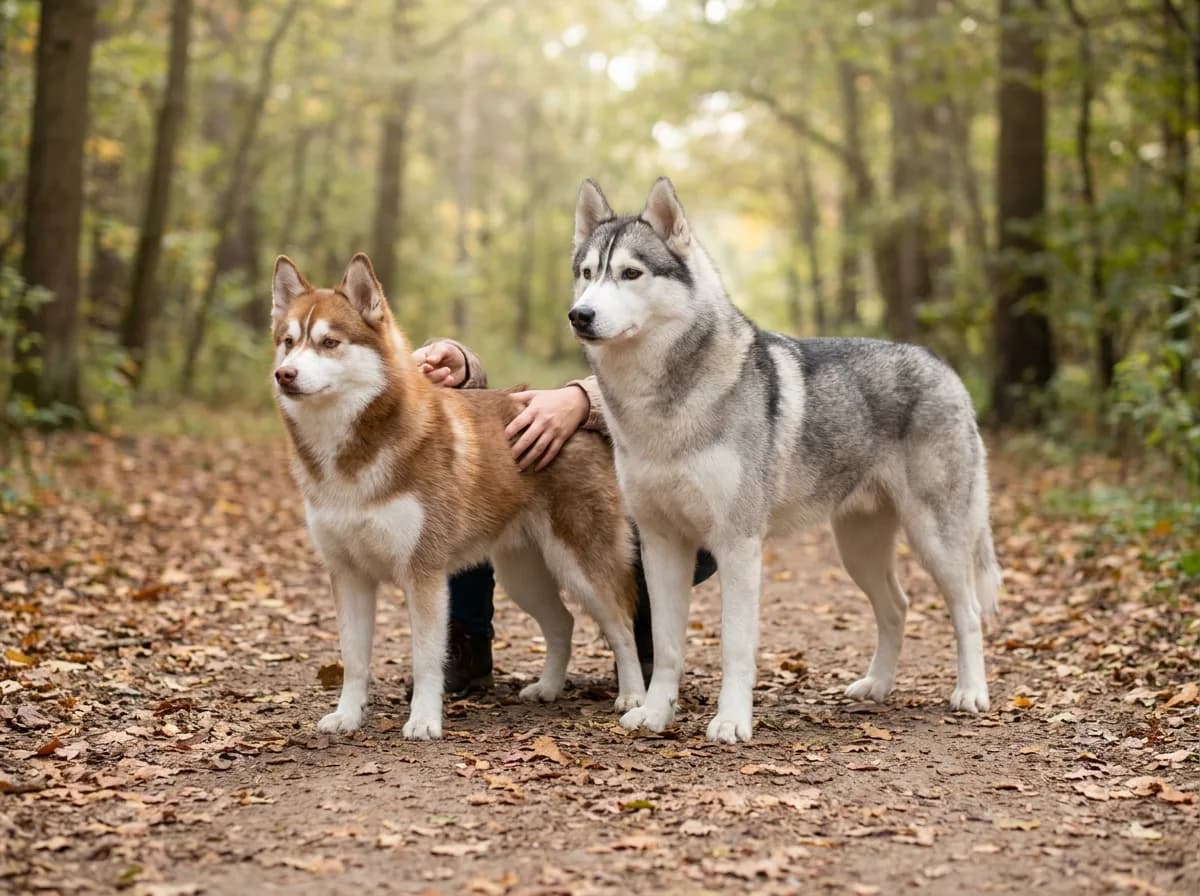
Appearance alone does not establish ancestry or predict adult size.
Petful is reader supported. As an affiliate of platforms like Amazon and Chewy, we may earn a commission when you buy through links on this page. There is no extra cost to you.
The Pomsky vs Husky decision starts with predictability: a Siberian Husky is an established breed, while a Pomsky is a Pomeranian-Husky mix whose adult size and traits can vary more widely. A Pomsky is often smaller, but that does not automatically make it quieter, easier to train, or less demanding.
Compare the daily routine you can provide with the individual dog's needs. Exercise, containment, shedding, handling, and time alone matter more than choosing the most striking puppy photograph.
Pomsky vs Husky is a household-fit decision, not a simple small-versus-large choice. Expect activity, training, shedding, and secure containment to matter for both. Compare actual adult size, behavior, records, and the weekday routine you can consistently provide.

Sign up for expert-backed reviews and safety alerts all in one place.
Pomsky vs Husky: the main difference
This guide uses Husky to mean Siberian Husky, which has an established breed background and standard. If a listing says miniature Husky, ask which breed or cross the seller means rather than assuming it is a Pomsky. A Pomsky combines Pomeranian and Husky ancestry, sometimes over multiple generations. The mix does not produce one uniform miniature copy of a Husky; its body, coat, behavior, and adult size depend on the actual family and individual development.
The American Kennel Club's Siberian Husky profile describes a medium-sized northern sled dog developed for endurance and working in groups. That background helps explain why prospective owners should take activity and management seriously. It does not mean every individual has identical preferences or behavior.
Petful may earn a commission when you click through to Chewy, at no extra cost to you.
| Decision | Pomsky | Siberian Husky |
|---|---|---|
| Ancestry | Pomeranian-Husky mix; ask about the actual parents | Established breed; still assess the individual |
| Adult size reference | PetMD guide: 12–35 pounds; individual Pomskies vary | AKC standard: males 45–60 pounds; females 35–50 pounds |
| Exercise | Can be an active companion despite a smaller body | Endurance background makes an activity plan important |
| Coat | Often a substantial double coat | Thick double coat with regular shedding management |
| Training | Needs patient, consistent learning | Needs patient, consistent learning |
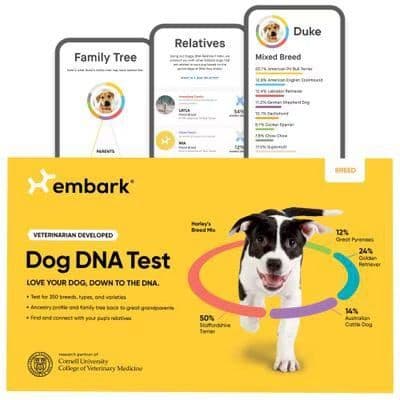
If choosing a rescue dog with uncertain ancestry, the Embark Breed Identification Dog DNA Test Kit is one option for additional background. It cannot tell you whether the dog will be quiet, safe with a cat, or comfortable alone. The actual history and observed behavior remain more useful for those decisions.
Adult size and what it changes at home
For a concrete size comparison, the AKC Siberian Husky standard lists males at 45–60 pounds and females at 35–50 pounds. PetMD’s Pomsky profile gives a broad 12–35-pound adult range. The Husky figures describe a breed standard; the Pomsky figure is a general guide, not a guarantee for a puppy. Measure the individual before making equipment or housing decisions.
Ask for parent measurements and documented adult relatives when considering a Pomsky puppy. For an adult of either type, measure height, weight, and body length as needed. Coat volume can obscure the dog's shape, and a close camera angle can exaggerate a difference between two animals.
- Check whether every usual handler can manage the individual dog comfortably.
- Compare vehicle access and safe transport arrangements.
- Plan a rest area with enough room for natural movement.
- Consider how you would assist the dog after illness or injury.
The PetSafe Easy Walk Dog Harness, Medium/Large is one option for an appropriately measured dog. It will not fit every Pomsky or Husky. Check the exact manufacturer's size instructions and ensure that the design permits comfortable movement without rubbing or slipping.
Smaller size may make transport easier, but it does not answer the behavioral questions. A compact dog that is intensely reactive or distressed alone can require more support than a larger dog whose routine and temperament suit your household.
Exercise, training, and escape prevention
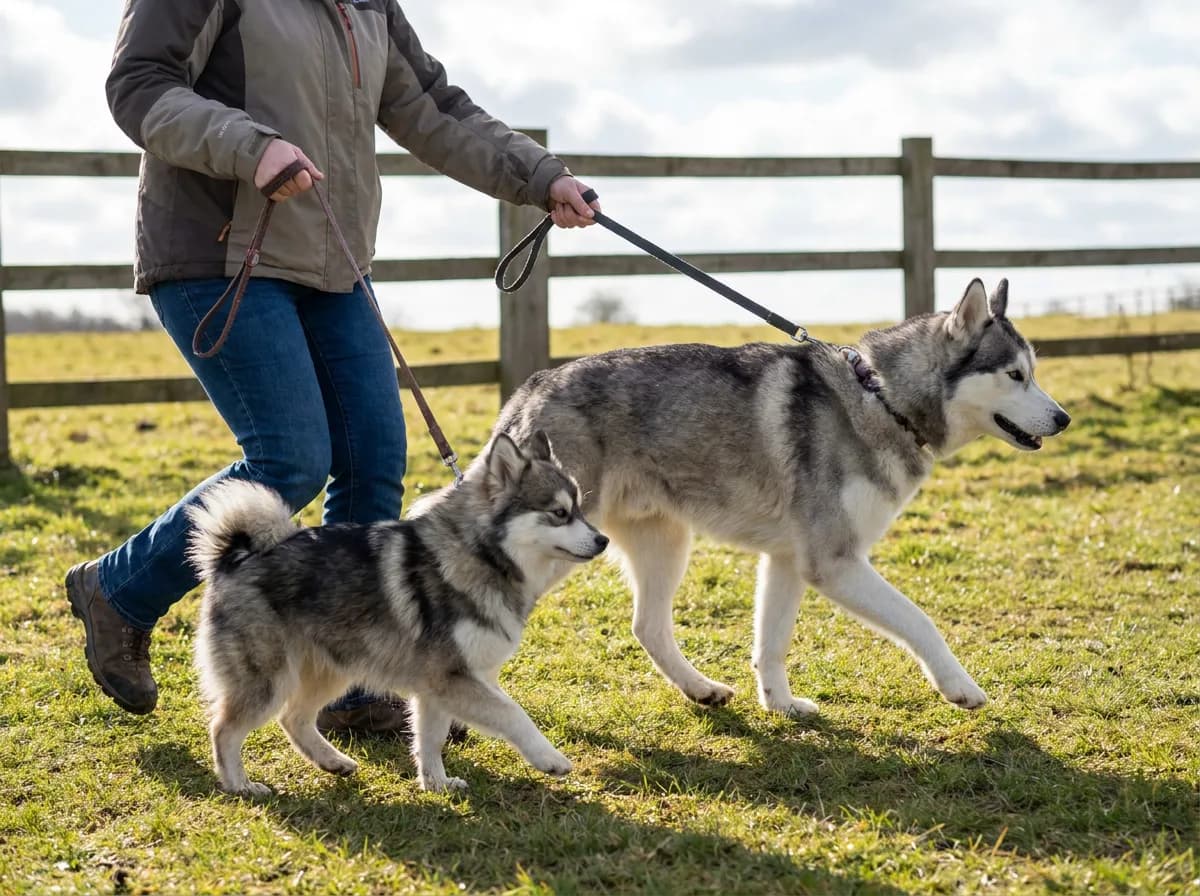
Build a weekday exercise plan before choosing either dog. Include walks that provide opportunities to sniff, suitable play, short training sessions, and enough rest. Adjust the plan for age, health, weather, and individual behavior rather than using one rigid exercise quota.

Petful may earn a commission when you click through to Chewy, at no extra cost to you.
A Frisco six-foot traffic leash needs hardware and handling suited to the individual dog. Carry a Frisco 1.5-cup travel bowl and sufficient drinking water on outings; the smaller dog’s needs still depend on weather, exertion, and the individual.
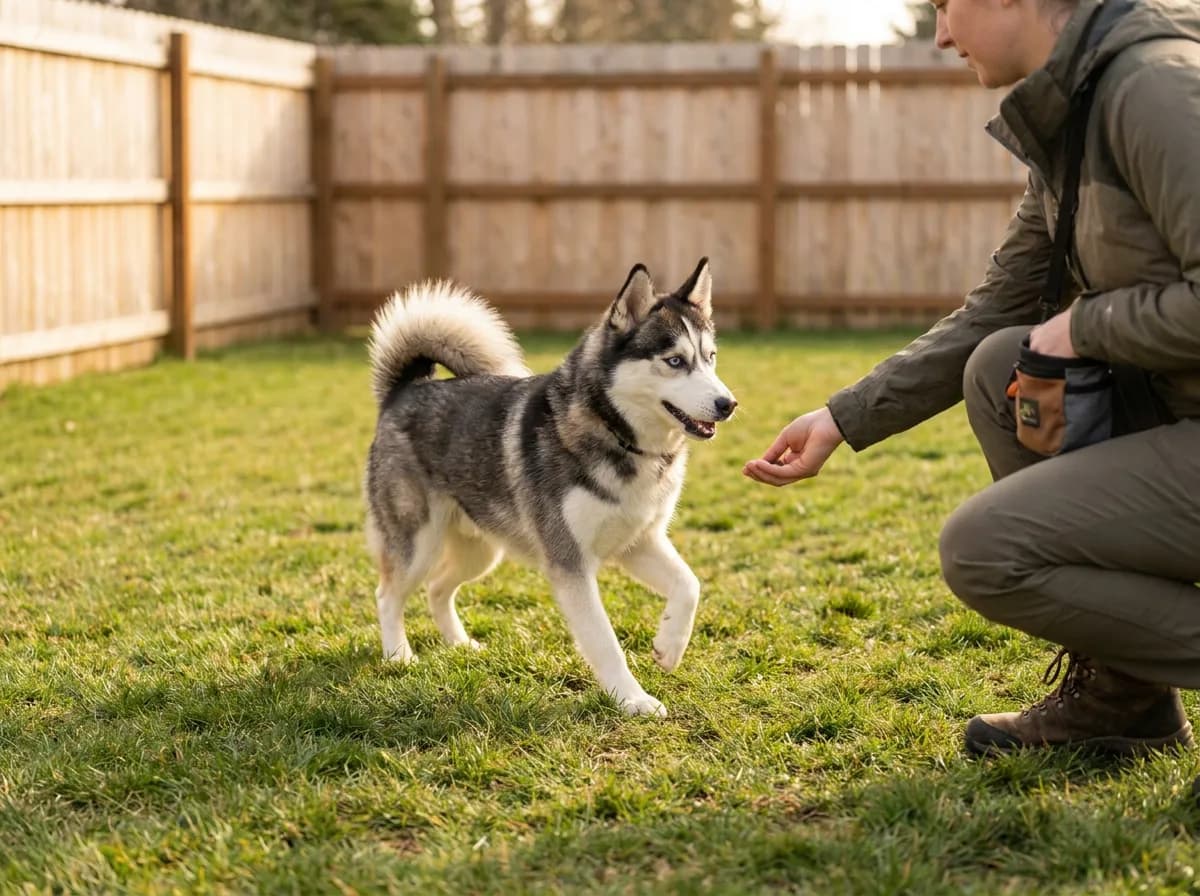
A yard is useful only when it is safe and the dog has meaningful activity. It should not become a place where the dog repeatedly rehearses barking, chasing along a fence, or trying to escape. Supervision and interaction remain part of the plan.
Start with a secure containment check
- Inspect gates, latches, fence gaps, and potential digging areas.
- Consider objects that provide access over a barrier.
- Use a leash or secure enclosure while recall is developing.
- Plan how deliveries and visitors enter without opening an escape route.
Do not assume good recall in a quiet garden will transfer immediately to wildlife, other dogs, or an unfamiliar location. Train progressively and use management that keeps the dog safe while it learns. A dog can be affectionate and responsive at home yet highly motivated by something outdoors.
Enrichment and calm learning
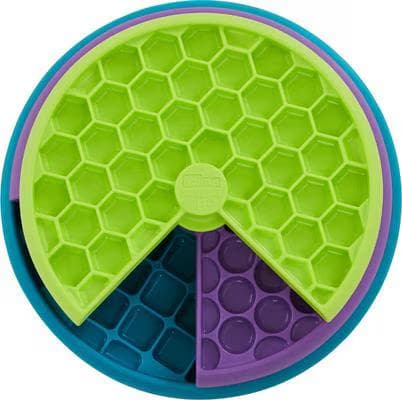
The Outward Hound Nina Ottosson Lickin' Layers Interactive Puzzle Game & Slow Feeder is one enrichment option for a dog that can use it safely and comfortably. Supervise initial sessions, match difficulty to the individual, and account for the food used. A puzzle is an activity, not a replacement for walks or a treatment for separation distress.
Reward calm behavior and teach useful skills in manageable stages. Loose-leash walking, waiting at doors, comfortable handling, and settling on a mat can make either dog easier to live with. If a situation overwhelms the dog, reduce the difficulty instead of repeating cues more loudly.
Coats, shedding, and warm weather
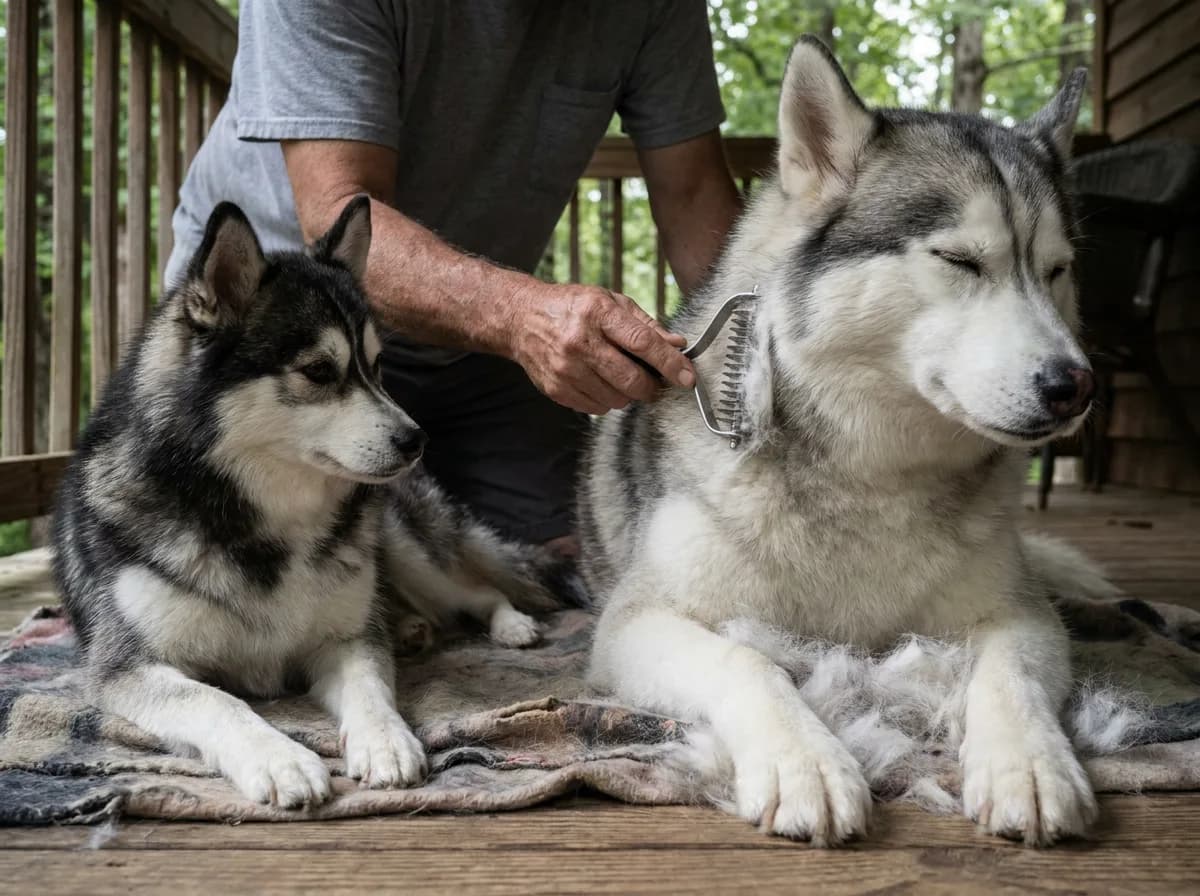
Both Siberian Huskies and many Pomskies have substantial coats that require regular maintenance. A smaller Pomsky can still shed noticeably. Neither should be selected on the assumption that a fluffy appearance comes with little grooming or guarantees allergy compatibility.
For routine bathing, compare TropiClean puppy and kitten shampoo with your groomer’s advice and its directions. Keep Virbac C.E.T. dog and cat toothpaste in a separate dental kit: an extensive coat-care routine does not replace care of the teeth.
Ask about the individual coat and learn a gentle brushing technique. The Frisco Deshedding Cat & Dog Brush, Medium, Medium to Long Hair is one tool to discuss with a groomer for a suitable coat. Do not scrape repeatedly over the same skin or use force when a tool catches.
- Check friction areas beneath equipment and behind ears.
- Remove loose coat through appropriate brushing rather than painful pulling.
- Ask for professional help with tight mats or skin changes.
- Keep coat care separate from assumptions about medical skin conditions.
Warm-weather planning should include shade, water, a cool resting environment, and appropriate activity timing. A haircut does not make unsafe heat exposure acceptable. Ask your veterinarian about the individual dog's risks and change the routine when conditions are unsuitable.
Petful may earn a commission when you click through to Chewy, at no extra cost to you.
Children, other animals, and time alone
Assess the individual dog's behavior and experience. Breed descriptions can suggest questions, but they cannot guarantee compatibility with a child, cat, or resident dog. Ask how the animal behaves during handling, around food, with visitors, and when activity ends.
Supervise children actively and give the dog a retreat where it is not disturbed. Teach children to let the dog approach and to leave eating or sleeping animals alone. A smaller Pomsky can be injured by rough handling, while a Husky or larger Pomsky can knock someone over during play.
Introductions and separation
- Introduce resident animals gradually with distance and barriers.
- Feed separately during adjustment and manage valuable items.
- Do not assume a calm first meeting proves unsupervised compatibility.
- Practice alone time in tolerable steps rather than waiting for a long workday to test it.
Some dogs enjoy close physical contact; others prefer resting nearby. Respect the individual instead of choosing based on a promise that a Pomsky will always cuddle or a Husky will always be independent. Similar care is needed when interpreting vocal behavior: sounds can reflect alerting, excitement, frustration, or distress.
If being alone produces panic, ask a veterinarian or qualified behavior professional for a plan. Stronger containment and more exhausting exercise are not universal solutions. The dog needs an approach suited to the underlying problem and the practical realities of the home.

Petful may earn a commission when you click through to Chewy, at no extra cost to you.
Compare lifetime costs and health records
Compare the complete care budget rather than only the initial purchase or adoption fee. Food, veterinary care, grooming, equipment, training, and help during travel all matter. Request current local quotes where costs depend on dog size or coat condition.
For a puppy, ask which health screening was completed on the actual parents and request the records. The OFA health-screening resource explains breed-specific programs. A normal result is useful evidence within its scope, not a guarantee against every future condition.
A practical decision checklist
- Write a weekday exercise plan with named household responsibilities.
- Complete a secure containment check before bringing the dog home.
- Review relevant veterinary and parent-screening records.
- Price realistic grooming, food, training, and care arrangements.
- Decide how you will manage unexpected illness or a change in your schedule.
- Choose the dog whose needs you can meet consistently. If the budget or routine works only under an ideal assumption that the dog stays tiny, never barks, or needs little grooming, revisit the decision. An adult adoption may offer clearer information about size and behavior than a puppy forecast, while still requiring an adjustment period.
Pomsky temperament and daily life
The Pomsky breed guide covers the broader Pomeranian-Husky mix, including vocal behavior, exercise, and household suitability. Use it to investigate the Pomsky side of this comparison in more depth. The key principle remains individual fit: a label does not guarantee how a dog will behave when visitors arrive or the household leaves.
Pomsky price and ownership budget
The Pomsky price guide separates purchase or adoption cost from the ongoing budget. Compare what a quote includes and what records support it. A high-priced Pomsky is not automatically a better match than an adopted Husky, and a low initial fee does not eliminate the need to plan for long-term care.
Pomsky adult-size comparison
The Pomsky full-grown guide explains adult-size variation and the limits of puppy forecasts. Parent dimensions and growth records are more useful than a single photograph. If size is a nonnegotiable household constraint, consider the advantage of evaluating a measured adult dog rather than relying on an uncertain puppy estimate.
Pomsky colors and coat patterns
The Pomsky colors guide covers visible patterns and appearance. A white Pomsky, black Pomsky, or brown Pomsky can have different proportions and behavior from another dog of the same color. Do not use a coat or eye-color preference as evidence about health, trainability, or the daily care required.
Mini and teacup size labels
The mini and teacup Pomsky guide explains why small-size advertising deserves careful questions. Mini, micro, toy, and teacup labels do not all use the same definitions. Ask for actual adult family measurements and health records instead of assuming the smallest-looking Pomsky offers Husky appearance without the work.
Pomsky shedding and grooming
Pomsky dogs can shed, and the amount varies with the actual coat and season. A slicker brush for a Pomsky must suit that dog’s coat and handling tolerance. Introduce grooming gently, check for discomfort, and ask a groomer to demonstrate the appropriate method. The shedding guide explains the routine and tools without promising that one brush will eliminate loose hair.
The Pomsky shedding and grooming guide covers brushing and routine coat care in more detail. A small Pomsky can still leave considerable loose hair, and coat length does not establish allergy compatibility. Compare the actual grooming needs with the time and help available in your household before choosing either dog.
Pomsky lifespan and health planning
The Pomsky lifespan guide explains health planning and the uncertainty of broad longevity estimates. A mixed-breed background is not protection against every inherited or acquired condition. Review records, maintain preventive care, and ask your veterinarian about the individual dog rather than selecting a companion on a promised number of years. Bring dated weight, appetite, activity, and medication notes to that discussion so changes can be evaluated in context.
Frequently asked questions
A Pomsky and a Siberian Husky are not the same: the Husky is an established breed, while the Pomsky combines Pomeranian and Husky ancestry. Ask for the individual dog’s background before assuming it will resemble one parent. Adult size, coat, behavior, and care needs can vary within the mix, so a Pomsky is not simply a Husky in miniature.
Some Pomskies enjoy other dogs and others need careful management or prefer more space. Ask about the individual dog's history and behavior records, introduce animals gradually, and supervise early interactions. Breed ancestry cannot guarantee compatibility. A friendly greeting does not prove that dogs can share food, valuable toys, or unsupervised space safely.
Some Pomskies like the water and others avoid it. Ask about previous experiences and any relevant health records, then introduce shallow safe water gently if appropriate. Never force a dog to swim or assume it can swim because it has Husky ancestry. Supervise around water and use suitable safety equipment for the setting and the dog.
A Pomsky can overlap in size with a smaller Husky, depending on its actual ancestry and individual development. Parent measurements and adult family records are more useful than an advertised size label. If being too large would exclude a dog from your housing or transport arrangements, consider a measured adult rather than relying on a puppy estimate.
There is no universal winner. A well-matched individual Pomsky or Husky with suitable behavior and reliable records may be more manageable than a dog chosen only for appearance. Compare your time for exercise, training, grooming, and supervision, and arrange support before arrival. Smaller size alone does not establish an easier first dog.

Coreen Saito is a pet writer and longtime shelter volunteer with more than a decade in animal rescue. She covers cat behavior, breed care, and the small, ordinary science of sharing a life with companion animals, with a particular focus on honest takes about the products and decisions that actually matter. At home in Arizona, she's outranked by Mac (a dog with the loudest opinion in the house), Rebel (a cat who governs by quiet authority), and Meri (an orange tabby who runs the late shift and the laundry basket). She writes about all three, plus the rescues that keep coming through her life, at LifeWithMinty.com.
Sign up for expert-backed reviews and safety alerts all in one place.