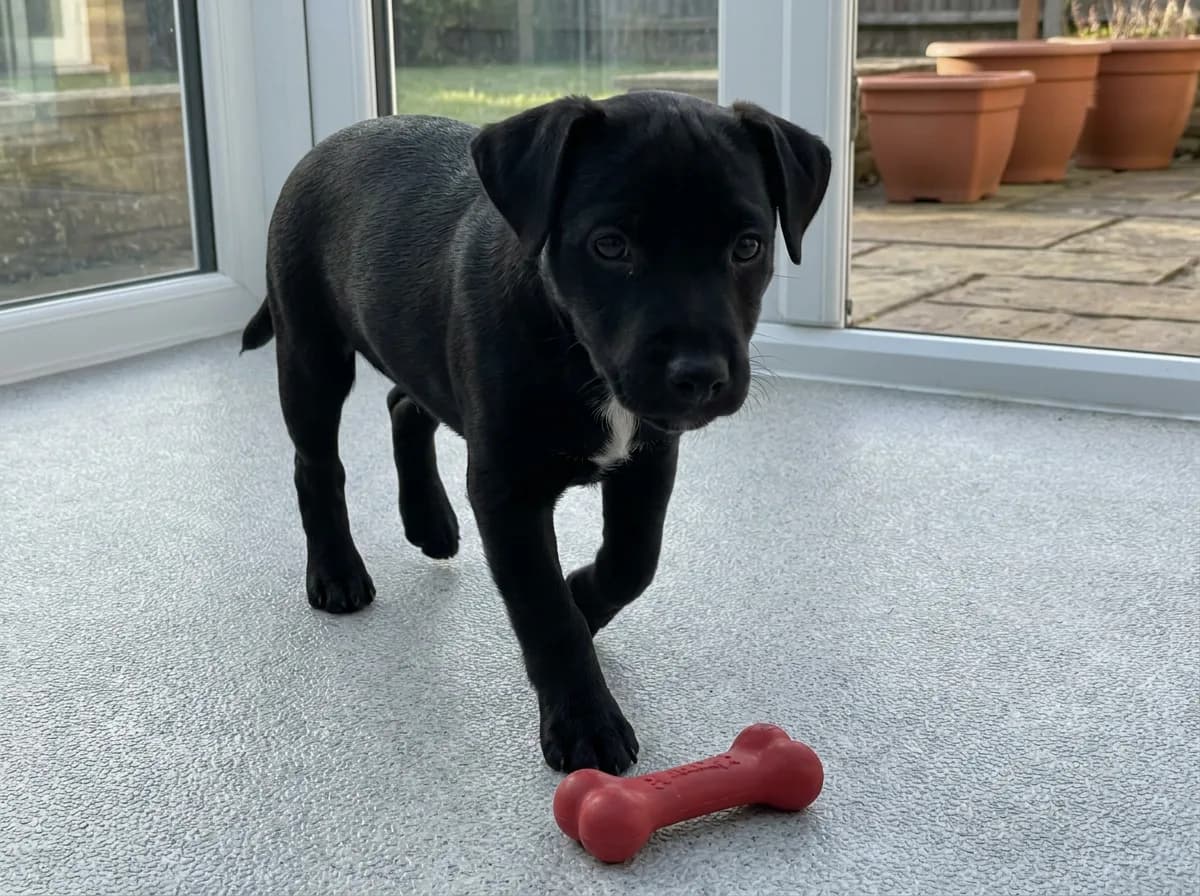
Pomsky Lifespan and Common Health Concerns
Understand Pomsky lifespan estimates, inherited health concerns, preventive care, senior changes, and the symptoms that need prompt veterinary attention.

BVMS, MRCVS
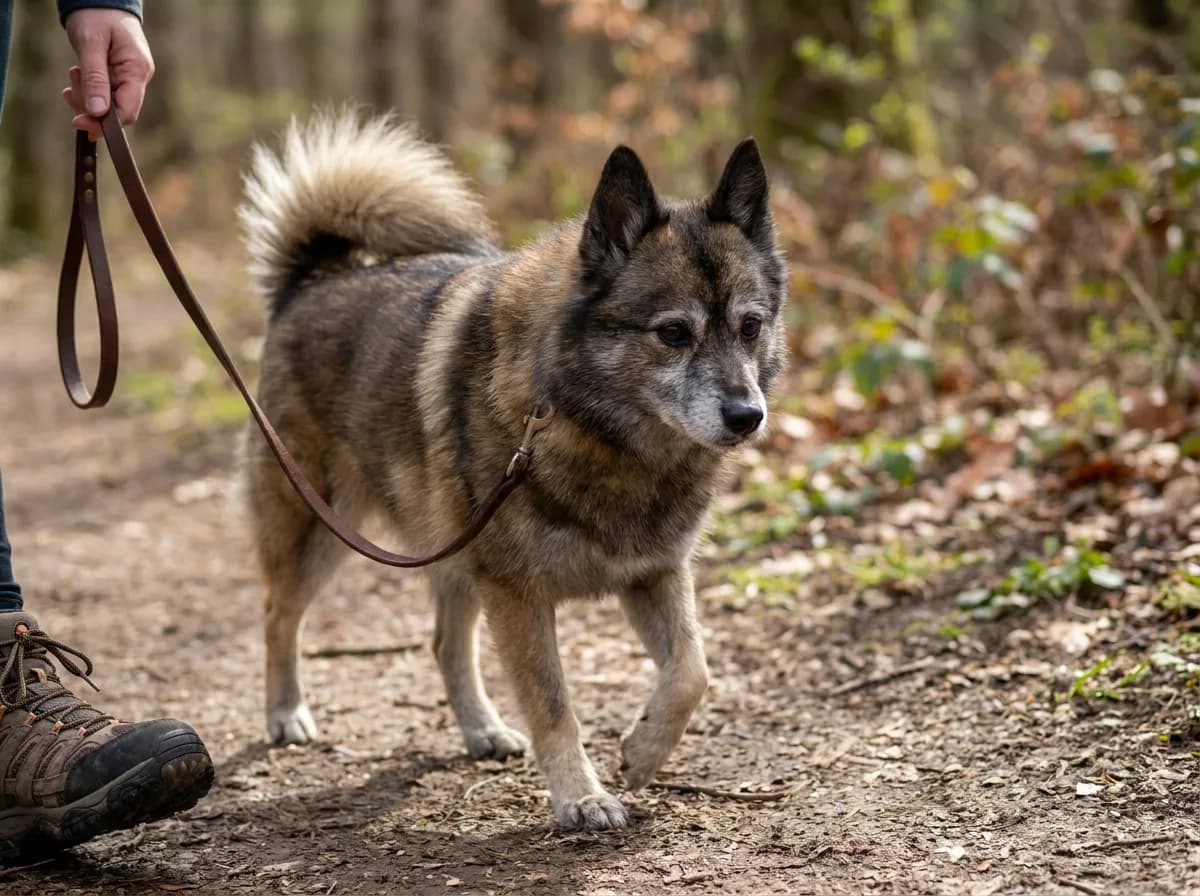
Appearance alone does not establish ancestry or predict adult size.
Petful is reader supported. As an affiliate of platforms like Amazon and Chewy, we may earn a commission when you buy through links on this page. There is no extra cost to you.
Pomsky lifespan is commonly estimated at 12 to 15 years, but the mix lacks a well-established population average. Parent health records, preventive care, and a change from normal in your own dog are more useful than promises about an exact age.
Pomsky lifespan planning matters because this dog may be part of your family for well over a decade. The commonly quoted 12-to-15-year range helps with long-term planning, but it cannot predict an individual dog's future. This Pomeranian-Siberian Husky mix varies in ancestry, adult size, and health, and an appealing puppy photograph tells you very little about those factors.
The practical question is how to give your dog appropriate care at each life stage and recognize when something needs attention. Start with a baseline health record, then update it as your dog's needs change. That record helps you describe a problem clearly instead of trying to decide whether it is just part of getting older.

Sign up for expert-backed reviews and safety alerts all in one place.
Pomsky lifespan: an estimate, not a promise
PetMD's Pomsky profile reports a typical lifespan of 12 to 15 years and acknowledges the limited information available for this relatively recent mix. Treat that as a broad published estimate. It is not a measured Pomsky average lifespan drawn from a large, representative survival study, and it does not guarantee a minimum age.
When asking how long Pomsky dogs live, separate three different questions: what is typical, what is possible, and what is likely for this individual. One unusually old Pomsky cannot establish a typical life expectancy. Equally, a dog that develops an illness young does not show that all Pomskies share the same outlook. A veterinarian can interpret the individual's findings, but even a thorough examination cannot promise a lifespan.
| Lifespan claim | What it can tell you | What it cannot tell you |
|---|---|---|
| A general 12-to-15-year range | A rough horizon for budgeting and planning | How long your own dog will live |
| Ages of adult relatives | Some family history, if records are reliable | Whether your puppy will avoid those relatives' illnesses |
| A normal puppy examination | Findings at that examination | That every inherited or later-life condition has been excluded |
| A parent screening result | Information about the particular test and dog | A lifetime health guarantee for the litter |
| An online story about a very old dog | One reported experience | A verified population average or maximum |
Male, female, and teacup lifespan questions
There is not strong Pomsky-specific evidence for separate male and female lifespan estimates. Sex, reproductive history, body size, environment, and health all belong in an individual assessment. Treat a precise number assigned to either sex cautiously unless the source explains which dogs were studied and how the result applies.
The same caution applies to teacup Pomsky lifespan claims. A smaller dog is not automatically a healthier dog, and a seller's size label is not a medical category. Ask what the parents actually weigh, what examinations were performed, and whether any concerns have been identified. Read our mini and teacup Pomsky guide for the separate question of what those size labels mean.
Petful may earn a commission when you click through to Chewy, at no extra cost to you.
Plan for the full commitment
Long-term planning includes your circumstances as well as your dog's needs. Consider who could provide care if your work schedule changes, whether your housing permits dogs, and how you would handle an unexpected veterinary bill. A plan is useful even when a dog stays healthy. It also reduces the pressure to make financial and practical decisions during an emergency.
- Keep routine care expenses separate from an emergency reserve or insurance decision.
- Identify an alternate caregiver who knows your dog's normal routine and veterinary contacts.
- Retain adoption, microchip, vaccination, and medical records where another caregiver can find them.
- Review the plan when you move, change veterinarians, or notice a new care need.
 Sponsored
Have a health question about your dog?
Talk to a licensed vet at Dutch over video or message, including nights and weekends.
Use code Pets30
Plans start at $11/month · covers up to 5 pets
- Licensed vets in most states
- Rx for 150+ conditions
- 4.7 on Trustpilot
Inherited risks and health screening
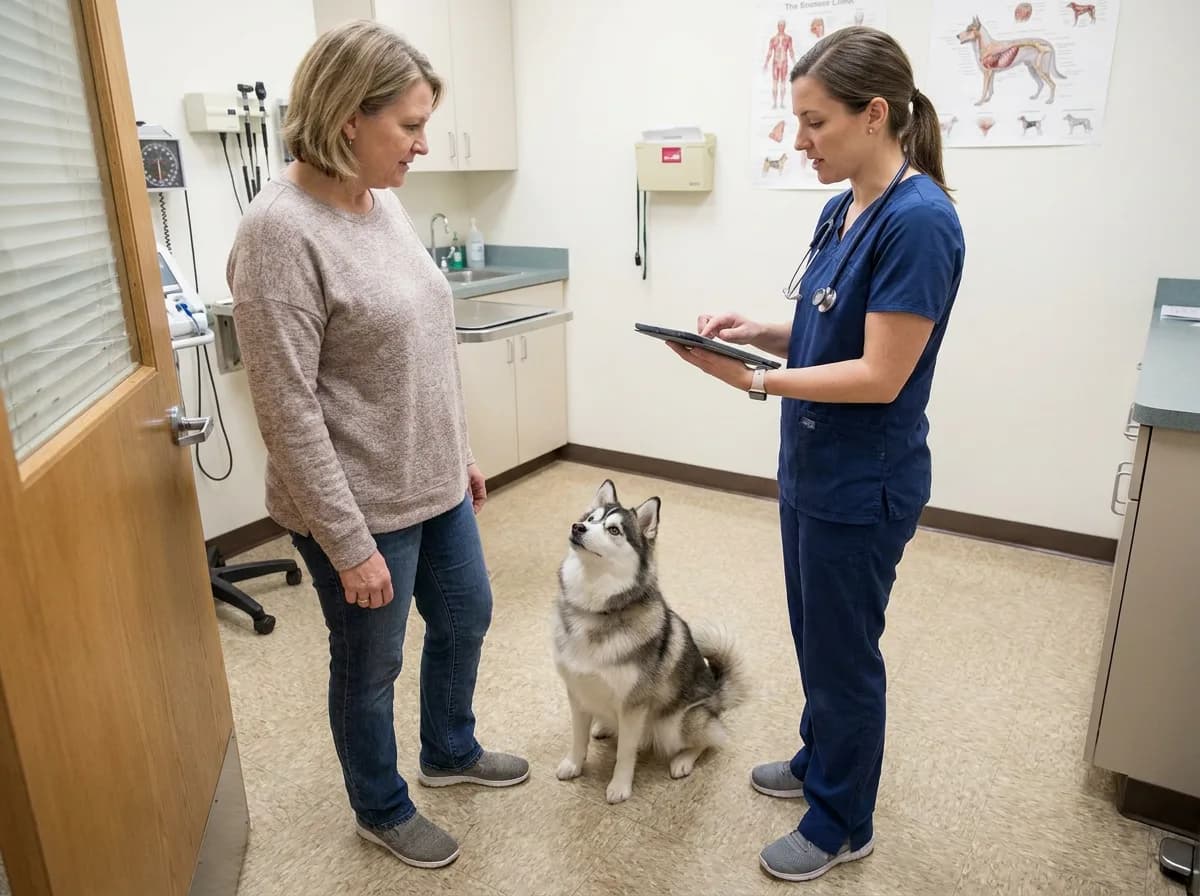
Pomsky health issues cannot be predicted simply by calling the dog a mixed breed. A puppy can inherit variants and physical traits from both parent lines. Mixing ancestry does not guarantee protection from inherited disease, and an apparently healthy parent may still need appropriate screening. The useful question is which examinations or tests were performed, on which dogs, at what ages, and with what results.
For context, the Siberian Husky Club of America's health statement describes screening relevant to Huskies, including hip and eye evaluation. The American Pomeranian Club's health recommendations identify evaluations such as patellar, cardiac, and eye assessment. Your veterinarian can help interpret which parent-breed concerns and tests are relevant to the particular pairing. Do not assume a generic DNA panel replaces physical or specialist examinations.
What to ask before choosing a puppy
Ask for actual reports instead of accepting phrases such as health checked, vet approved, or genetically clear without detail. A vaccination record, a general wellness examination, a breed identification test, and a disease screening panel answer different questions. All may be useful in context, but they are not interchangeable proof of health.
- Confirm which report belongs to each parent and how the dog is identified on the document.
- Ask which tests were performed and why those tests were chosen for this pairing.
- Check whether a result needs updating or was obtained before an appropriate testing age.
- Ask about known illnesses in parents, siblings, and earlier litters, including any uncertain diagnoses.
- Review the puppy's own examination, medications, vaccination history, and follow-up needs with your veterinarian.
You do not need to become a geneticist to use this checklist. Its purpose is to replace a vague assurance with information that can be interpreted. If a source cannot provide coherent records, pause before committing. A responsible conversation leaves room for uncertainty and explains what the tests do not cover.
Joint and mobility concerns
Pomsky health problems discussed in veterinary breed profiles include hip dysplasia and patellar luxation. A limp, a skipping gait, reluctance to jump, or difficulty rising can have several causes, so the pattern needs an examination rather than an online diagnosis. Do not repeatedly ask a sore dog to demonstrate the problem for a video. One brief recording of normal movement, if safe to obtain, can be more useful than repeated testing.
Useful observations include when the change began, which activities make it more apparent, and whether it followed an injury. Let your veterinarian decide what examination or imaging is appropriate. A product advertised for joints is not a substitute for identifying why your dog is uncomfortable. Avoid giving human pain medicines or leftover veterinary medication unless your veterinarian specifically directs you to do so.

A dual-ended toothbrush with a large and a small head to fit different mouth sizes and reach the back molars where plaque hides. Soft bristles angled for the gumline.
Petful may earn a commission when you click through to Chewy, at no extra cost to you.
Eyes, skin, and other changes
Watch for squinting, redness, unusual discharge, cloudiness, or an apparent change in vision. These signs do not identify one disease, but a painful or suddenly abnormal eye needs prompt advice. Similarly, persistent itching, repeated ear trouble, hair loss, or a new odor should not be dismissed as a normal feature of a fluffy dog. Coat thickness can make a skin change harder to notice.
Create a short observation note rather than a diagnosis list. For example, record that your dog began licking a particular paw yesterday and now avoids touching it to the floor. That is more informative than writing that your dog has an allergy. Photographs can document a visible change, but do not delay care while trying to obtain a perfect image.
Reproductive and preventive decisions
There is no single Pomsky neuter age that is correct for every dog. Discuss timing with your veterinarian using the dog's sex, expected size, health, household circumstances, and local requirements. The same individual approach applies to vaccination, parasite prevention, and screening tests. The goal is an appropriate plan with a clear reason, not a package chosen only from a mixed-breed label.
Keep a list of prescribed medicines and preventive products, including the last dose and any reactions. Tell the clinic about supplements and over-the-counter products as well. If more than one person handles care, use a shared record to prevent missed or duplicate doses. Contact the prescribing clinic when instructions are unclear instead of guessing or adapting another dog's schedule.
Daily habits that support long-term health
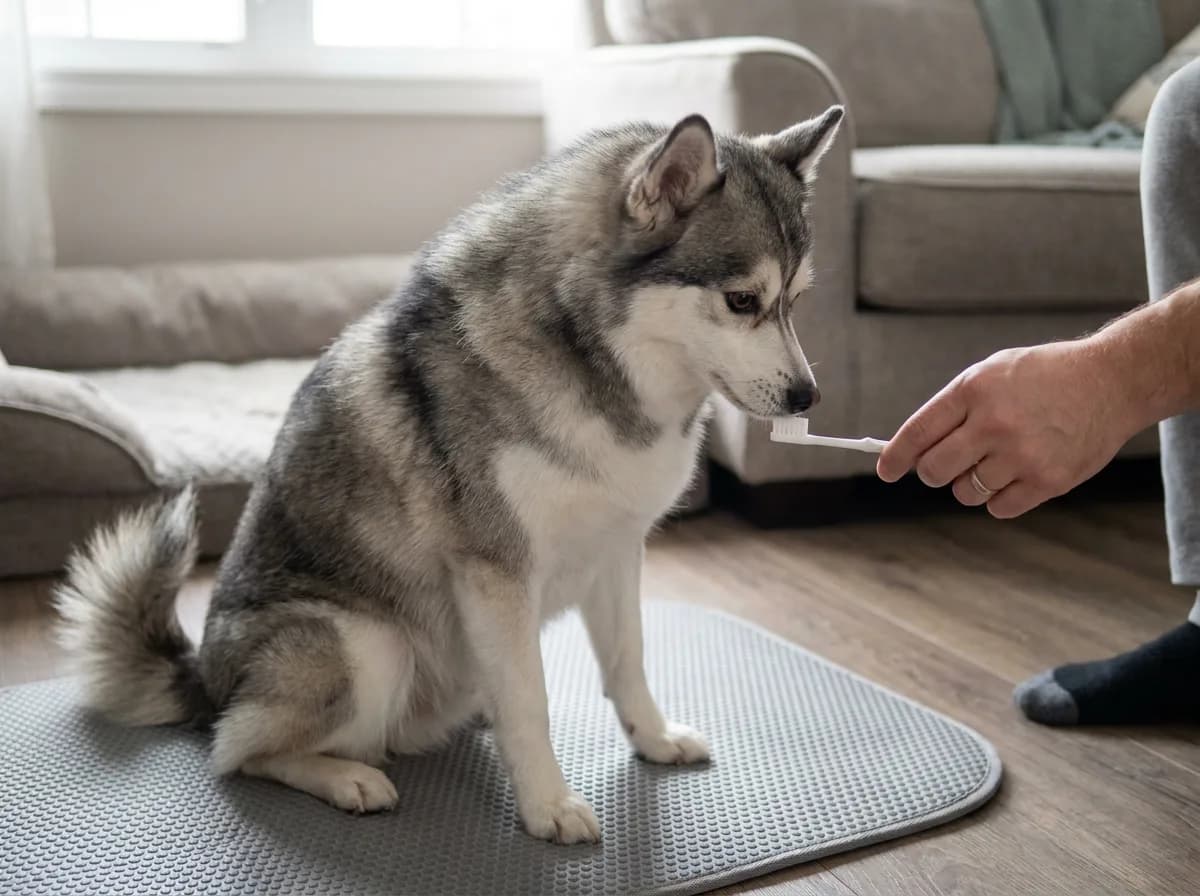
Everyday care supports health and comfort, but it does not guarantee extra years. Focus on routines you can maintain: appropriate food portions, access to water, comfortable activity, dental care, preventive appointments, and a safe home. A dramatic new supplement or exercise challenge is less useful than noticing a small, persistent change in how your own dog eats or moves.
Compare a pet toothpaste such as Virbac C.E.T. dog and cat toothpaste for the dental routine and a Frisco six-foot traffic leash that suits the individual dog and handler. These are practical care supplies, not treatments for inherited disease or promises of a longer life.
Food, portions, and body condition
Choose a complete and balanced food appropriate to your dog's life stage and medical needs. Use the label as a starting point, then work with your veterinarian to adjust portions to the individual. Treats and food used for training count toward daily intake. A thick coat can hide body shape, so ask your veterinary team to show you how to assess body condition by looking and feeling appropriately.
Record changes without trying to force the dog into a generic Pomsky weight range. Growing puppies, lean adults, and dogs with particular illnesses have different needs. If appetite changes, note whether your dog refuses all food, avoids harder pieces, drops food, or still accepts treats. Those observations help the clinic decide what to investigate; they do not establish whether the problem is behavioral or medical.
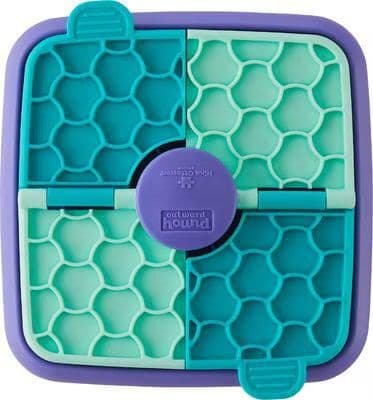
A food puzzle can turn part of an ordinary meal into a manageable activity. The Outward Hound Nina Ottosson Lick N' Flip Treat Puzzle Dog Toy & Slow Feeder is one option to consider if its size and difficulty suit your dog. Supervise use, count the food within the normal ration, and stop if the dog chews the toy or becomes frustrated. A puzzle is enrichment, not treatment for anxiety, obesity, or cognitive change.
Dental care that the dog can tolerate
Dental problems can affect comfort even when a dog continues eating. Introduce home care gradually and ask the clinic to demonstrate suitable technique. Start with comfortable handling around the face, then progress at the dog's pace. If the mouth appears painful, seek an examination before trying to brush through resistance. AAHA's dental guidance explains why home care and veterinary dental assessment work together.
The Virbac C.E.T. Dual-Ended Dog & Cat Toothbrush offers two head sizes; choose the end that fits comfortably rather than assuming one size suits every Pomsky. Use toothpaste intended for dogs and follow veterinary advice. Do not use force to open a worried dog's mouth, and do not treat a toothbrush purchase as a replacement for an examination or recommended professional care.

Collapsible silicone travel bowl with a carabiner that clips to a leash or bag, so your dog always has fresh water on walks, hikes, and car trips.
Petful may earn a commission when you click through to Chewy, at no extra cost to you.
Activity, rest, and water
Build activity around the dog's current fitness, weather, and comfort. A young adult who enjoys long outings may need a different routine after an injury or as health changes. Shorter comfortable walks, sniffing, and simple training can remain worthwhile when strenuous activity is unsuitable. Ask your veterinarian about restrictions when a condition has been diagnosed rather than following a universal exercise target.
Carry water for outings and offer sensible breaks. A Frisco Silicone Collapsible Travel Bowl with Carabiner, Small 1.5 cup is a compact option; its capacity may mean frequent refills for a larger dog or a longer trip. A portable bowl does not make hot-weather exercise safe. Adjust the outing itself, avoid overexertion, and contact a veterinarian promptly if your dog appears distressed.
A simple home safety review
- Use secure containment and identification appropriate to your dog's environment.
- Keep medicines, toxic foods, cleaners, and chewable hazards out of reach.
- Provide stable footing where your dog walks, turns, or gets up to rest.
- Check that equipment fits the current dog rather than relying on a puppy purchase.
- Give the dog a quiet resting place and respect signals that handling or play should stop.
Revisit this review when routines change. A room that worked for a confident young dog may be harder to navigate after vision or mobility changes. Make the environment easier to use while arranging assessment of a new problem. Practical accommodation and veterinary investigation can happen together; you do not have to choose one and postpone the other.
 Sponsored
Vet care that's always there
Unlimited video calls and messaging with licensed vets for less than a typical vet visit. One membership covers up to five pets.
Use code Pets30
Plans start at $11/month · covers up to 5 pets
- Licensed vets in most states
- Rx for 150+ conditions
- 4.7 on Trustpilot
Senior changes worth recording
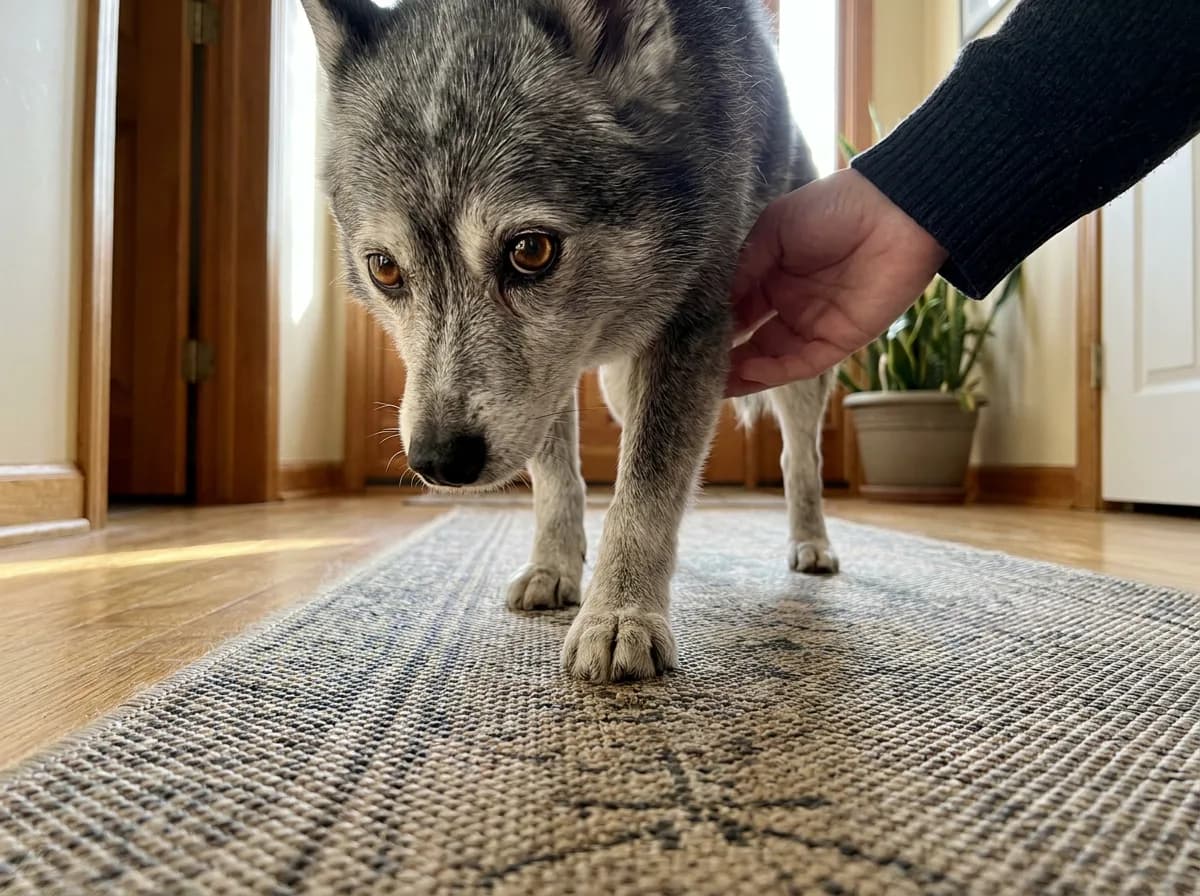
An older Pomsky should be assessed as an individual, not assigned a fixed senior birthday from a chart. Age, size, existing conditions, and the dog's usual function all matter. The AAHA senior care guidance encourages attention to changes that owners may otherwise attribute to aging. Report a change from normal even when it seems mild or develops gradually.
A washable Pet Parents Pawtect small blanket can make a familiar resting space easier to maintain. A supervised Pet Parents Forager snuffle mat may offer a gentle food-search activity if the dog finds it comfortable; simplify or stop when the activity becomes frustrating.
- Your baseline health record does not need to be elaborate. A few dated observations can help you notice a trend and answer questions accurately at an appointment. Track what matters to your dog without turning every ordinary variation into a medical alarm. If a change is sudden, substantial, painful, or persistent, contact your veterinarian rather than waiting for a monthly review.
| Area | Useful baseline | A change to describe |
|---|---|---|
| Meals and water | Usual appetite and drinking pattern | Eating differently or noticeably more or less drinking |
| Movement | Comfortable routes and ability to rise | Hesitation, limping, slipping, or reduced stamina |
| Sleep and behavior | Typical rest, interaction, and nighttime routine | Restlessness, withdrawal, disorientation, or new distress |
| Toileting | Usual frequency and comfortable elimination | Accidents, straining, or a clear change in output |
| Mouth and coat | Comfortable chewing and usual grooming tolerance | Dropping food, new odor, itching, or painful handling |
Record function, not just birthdays
A note such as walked more slowly means more when it includes context. Was the weather warmer than usual? Did your dog stop at the same step every time? Is the difficulty worse after resting? Record what you see without making the dog repeat a painful movement. If another family member provides care, agree on the same simple descriptions so the notes remain useful.
AAHA’s cold-weather guidance cautions that tolerance varies with age, size, coat, and health. A dense coat does not guarantee that an older, small, or unwell Pomsky can tolerate prolonged cold. Shorten outdoor exposure when needed, watch for discomfort, and provide warm, dry indoor rest. Ask your veterinarian how to adapt winter outings to your dog’s condition.

Petful may earn a commission when you click through to Chewy, at no extra cost to you.
Do not wait for a dog to stop eating or walking completely before seeking help. Gradual changes can still affect comfort, and some conditions can be managed more effectively when investigated sooner. Conversely, one quiet afternoon after an unusual outing does not establish chronic illness. Your veterinarian can help distinguish a transient variation from a pattern that needs further assessment.
Grooming as a comfortable check-in
Gentle grooming gives you an opportunity to notice a new lump, tenderness, tangles, or a change in skin condition. Keep sessions short enough that your dog stays comfortable and avoid pulling on mats. The aumuca Self Cleaning Slicker Brush is a possible tool for suitable coat areas when used lightly; ask a groomer to demonstrate technique if you are unsure. It should not scrape skin or force through a knot.
Stop if an older dog suddenly objects to a previously comfortable routine. The issue might involve the skin, joints, mouth, or something else, and increased resistance is information. Choose a stable surface, support the dog's comfortable position, and seek help for difficult grooming. Recording which area caused the response is more useful than assuming the dog has simply become stubborn.
Prepare for a productive senior visit
Bring a short prioritized list: the most important change, when it began, any associated symptoms, and current medications. Include videos or photographs only when they add useful context. Tell the clinic about changes in sleep, social interaction, house training, and activity even if they seem unrelated to the appointment's main reason. A senior assessment considers the whole dog.
Ask what to monitor next, how to judge whether a recommended change is helping, and when to call again. If a plan involves several steps, request written instructions. Knowing the follow-up threshold is especially helpful when a symptom fluctuates. You should not have to guess whether to wait another week when the clinic can explain which changes need earlier contact.
When to call your veterinarian
Some signs need urgent help regardless of age or expected lifespan. Difficulty breathing, collapse, seizures, suspected poisoning, major injury, severe pain, or inability to urinate warrant urgent veterinary advice. Contact an emergency service when your regular clinic is unavailable. Do not spend time calculating whether the dog is too young or too old for the problem to be serious.
For less dramatic changes, call the clinic and describe what is happening. Include duration, severity, appetite, drinking, toileting, medications, and whether the dog can move comfortably. The team can advise the appropriate timing for assessment. Persistent vomiting or diarrhea, a new painful eye, repeated coughing, marked lethargy, or unexplained weight change should not be managed by adding a product and hoping the pattern disappears.
Make the call easier
- Give the dog's name, approximate age, known conditions, and current location.
- Describe the main sign plainly and say when it began.
- Mention possible exposure to medicines, chemicals, unusual food, or injury.
- Explain any medicine already given, including the product, amount, and time.
- Follow the clinic's instructions about travel, handling, food, water, or other immediate steps.
If poisoning is possible, keep the packaging or take a clear photograph when safe. Do not induce vomiting or give home remedies unless a veterinary professional specifically directs you. For an injured or distressed dog, minimize unnecessary handling and ask how to transport them safely. A frightened or painful dog may react differently from normal, even with familiar people.
Quality of life is part of long-term care
Living longer and living comfortably are related but different goals. When a chronic illness develops, discuss pain control, appetite, mobility, rest, enjoyable activities, and the burden of treatment. A veterinarian can help you assess whether the plan is meeting your dog's needs. Keep the focus on the individual dog's daily experience rather than reaching an advertised lifespan number.
If you are uncertain whether a treatment is helping, bring specific observations from the baseline record. Note both improvements and difficulties, including side effects or trouble administering medication. Asking for a reassessment is appropriate. The plan may need adjustment as disease, response, or family circumstances change, and a clear conversation helps avoid assumptions on either side.
Build a care record that travels with your dog
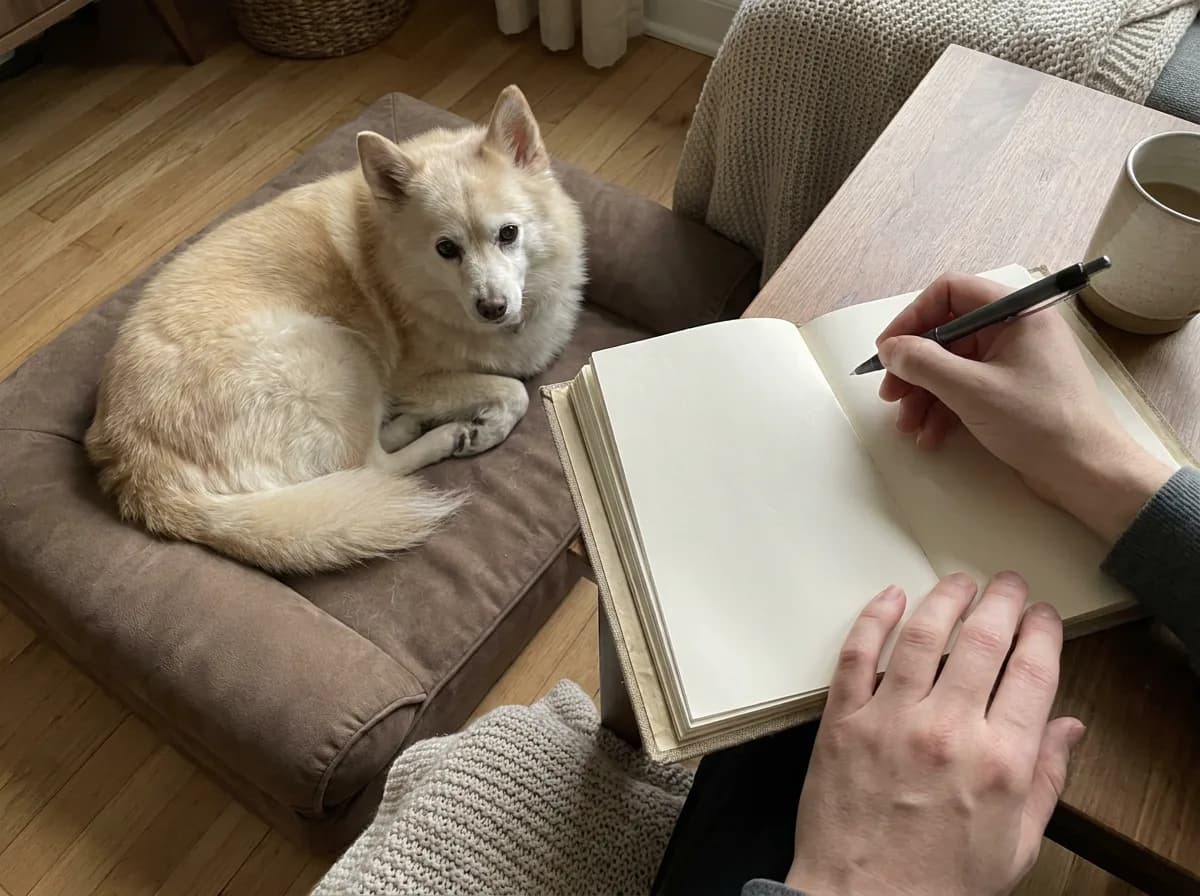
Keep the essential information in one accessible place, with a backup caregiver able to find it. The record can be paper or digital; consistency matters more than the format. Include your regular clinic and nearest emergency service, but confirm the emergency service's current availability before relying on an old contact list. Update the file after appointments and medication changes.
| Record | What to include |
|---|---|
| Identification | Name, microchip details, caregiver contacts, and identifying photo |
| Background | Known ancestry, adoption information, and reliable parent screening records |
| Medical history | Diagnoses, procedures, allergies or reactions, and examination summaries |
| Current care | Food, medications, preventive products, and written dosing instructions |
| Daily baseline | Comfortable activity, appetite, sleep, toileting, and handling preferences |
| Next steps | Appointments, recommended monitoring, and reasons to contact the clinic |
A baseline health record is a communication tool, not a way to diagnose at home. Its value is that you can say what changed, show the relevant history, and follow an agreed plan. That approach remains useful whether your Pomsky is a growing puppy, an active adult, or an older companion whose routine needs more support.
Instructions for a temporary caregiver
Give a temporary caregiver a short practical handover as well as the medical file. Explain the usual meal routine, comfortable walking route, sleeping arrangements, and any handling the dog finds difficult. Demonstrate prescribed care when appropriate, and provide the clinic contact for questions. Keep instructions current when medication changes; an old printed sheet should not compete with a new prescription. Ask the caregiver to report changes promptly instead of adjusting treatment independently.
Behavior changes and the daily routine
Learning a Pomsky’s usual behavior helps you notice a meaningful change later. Record how comfortably the dog rests alone, responds to handling, plays, and recovers after activity. The Pomsky breed guide covers everyday training and household fit. If an established pattern changes suddenly, describe what happened to your veterinarian rather than treating the change as stubbornness or assuming the dog has finally grown calmer.
A grooming plan for the actual coat
Pomskies shed, and their double coat needs care even when a puppy looks easy to brush. Bath frequency, professional grooming, and any haircut depend on the actual coat, skin, and handling needs. There is no universal rule that every Pomsky needs the same number of baths or a routine close clip. Our Pomsky shedding and grooming guide explains gentle section brushing, loose undercoat, drying, and when to ask a groomer or veterinarian for help. A coat-care product should not conceal persistent itching, painful skin, or a new bald patch. Those changes need their own assessment instead of simply increasing grooming frequency.
Keep growth records in context
A growing puppy needs a different weight assessment from a mature dog. Save dated weights and veterinary body-condition notes, and avoid feeding toward an advertised adult-size target. The full-grown Pomsky guide explains how parent measurements and growth trends inform planning. If the puppy’s appetite or growth changes unexpectedly, ask the veterinary team to interpret the record; a breed chart cannot determine the cause.
Budget for care throughout life
Pomsky puppy price, adoption fees, and recurring care costs are separate parts of the decision. A lower initial cost does not remove the need for food, veterinary care, grooming, safe equipment, or help when your schedule changes. A higher asking price does not guarantee better health or temperament. Our Pomsky price guide explains how to compare included care, first-year expenses, monthly costs, and an emergency reserve. Ask for written details and use current local quotes instead of assuming a national example is the amount your household will pay. Adult adoption may change the starting cost, while the ongoing care commitment remains.
Frequently asked questions
Yes, Pomskies can have health problems, including inherited conditions and illnesses that affect dogs generally. Mixed ancestry is not a guarantee of better health. Ask your veterinarian to interpret parent screening records and the individual dog's findings. A normal puppy examination or one clear DNA result cannot exclude every future illness. Keep a baseline health record so later changes are easier to describe.
No. Smaller Pomskies do not always live longer than larger Pomskies, and there is no reliable size-only formula for predicting an individual lifespan. Very small advertised size is not a health guarantee. Consider the dog's actual condition, family records, and veterinary findings. Use a general lifespan estimate for planning, while making daily care decisions around the individual rather than a seller's miniature label.
No. An F1, F1b, or F2 Pomsky label describes claimed breeding background, not a validated lifespan prediction. It does not replace reliable parent records, appropriate screening, or assessment of the dog. Ask the source to explain the actual ancestry and supporting documentation. Avoid adding or subtracting years from a life expectancy estimate solely because one generation label sounds more desirable than another.
No DNA test can tell you how long your Pomsky will live. A test may provide ancestry information or results for selected genetic variants, depending on its scope. Those findings need interpretation and do not cover every possible condition or environmental factor. Share results with your veterinarian and keep them with the medical record, without treating a negative panel as a lifetime guarantee.
No. Slowing down in an older Pomsky may reflect pain, illness, sensory change, or other problems, so it should not automatically be dismissed as normal aging. Describe what changed and when: rising, walking, sleep, appetite, or social interaction. Your veterinarian can assess the cause and discuss suitable care. A sudden or substantial decline needs prompt advice rather than a wait for the next routine visit.
BVMS, MRCVS
Dr. Pippa Elliott, BVMS, MRCVS, is a veterinarian with nearly 30 years of experience in companion animal practice. Dr. Elliott earned her Bachelor of Veterinary Medicine and Surgery from the University of Glasgow. She was also designated a Member of the Royal College of Veterinary Surgeons. Married with 2 grown-up kids, Dr. Elliott has a naughty Puggle named Poggle, 3 cats and a bearded dragon.
Sign up for expert-backed reviews and safety alerts all in one place.