Do Pomskies Shed? Coat Care, Brushing, and Grooming
Do Pomskies shed? Learn how their double coat changes through the year, which brushing habits help, and when hair loss needs a veterinarian's attention.
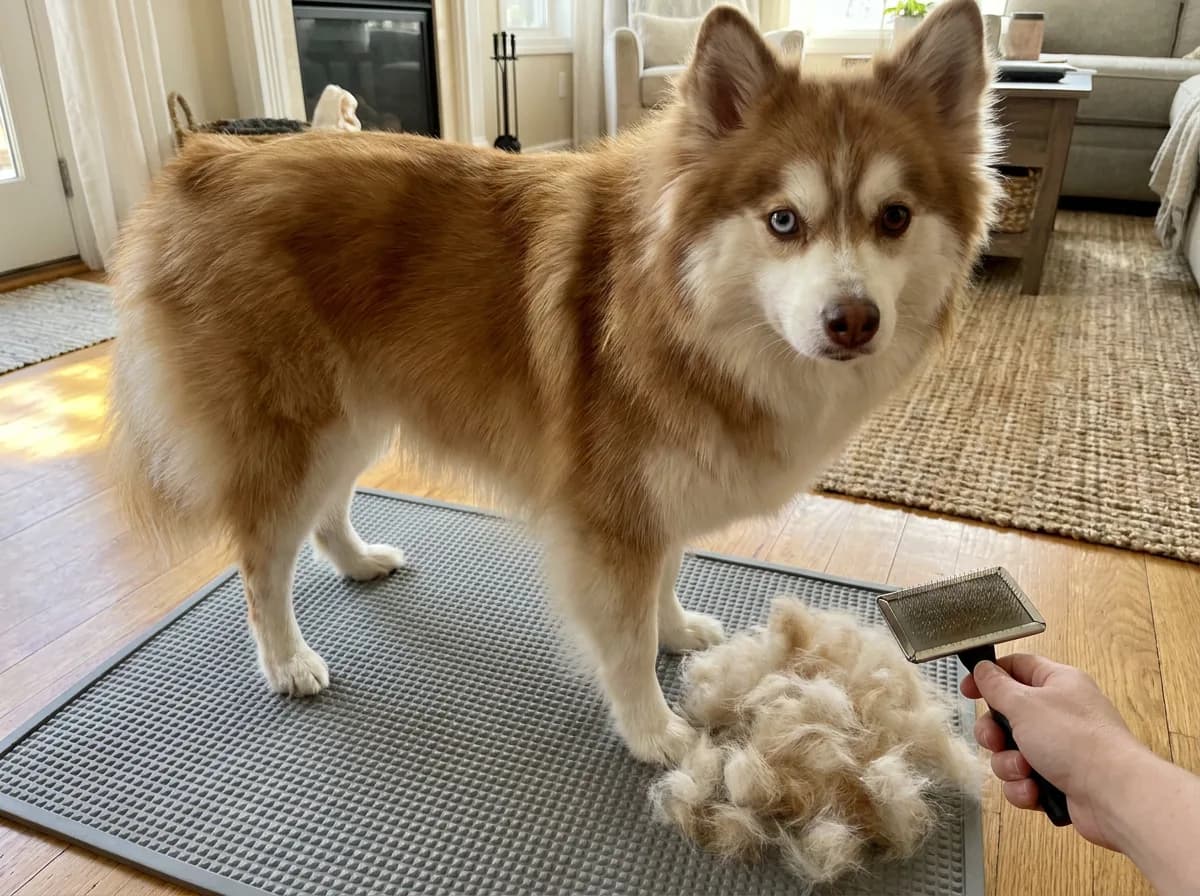
Appearance alone does not establish ancestry or predict adult size.
Petful is reader supported. As an affiliate of platforms like Amazon and Chewy, we may earn a commission when you buy through links on this page. There is no extra cost to you.
Yes, Pomskies shed. Their double coat can release loose hair year-round, with heavier seasonal changes. Regular gentle section brushing helps manage the coat; shaving does not stop the shedding cycle, and bald patches or irritated skin need veterinary attention.
Do Pomskies shed? Yes. Before bringing one home, plan for hair on clothing and furniture as well as regular grooming. A smaller body does not make this Pomeranian-Siberian Husky mix a non-shedding dog. How much hair you notice varies with the individual coat, season, household, and grooming routine.
The most useful routine reaches the loose undercoat without scraping skin or repeatedly dragging a tool through the same area. A coat check routine also helps separate ordinary shedding from mats, irritation, and abnormal hair loss. Those problems need different responses even when they all first appear as extra hair on a brush.

Sign up for expert-backed reviews and safety alerts all in one place.
Do Pomskies shed? The short answer
Yes. Pomskies generally have a double coat, with an outer layer and a softer undercoat. The amount, length, and density vary, but even a relatively short-coated Pomsky can shed. A second-generation Pomsky is not guaranteed to shed less than another generation. The American Kennel Club's double-coat guidance explains why looking after both layers matters. Brushing only the surface can leave loose undercoat or tangles underneath.
How much do Pomskies shed? There is no dependable breed-wide quantity in cups, brushfuls, or hairs per day. Expect routine loose hair and the possibility of noticeably heavier shedding. Photographs of a large grooming pile cannot establish an average because time since the last brushing, dog size, and coat density may all differ. Compare your own dog's pattern over time instead of treating another dog's pile as a target.
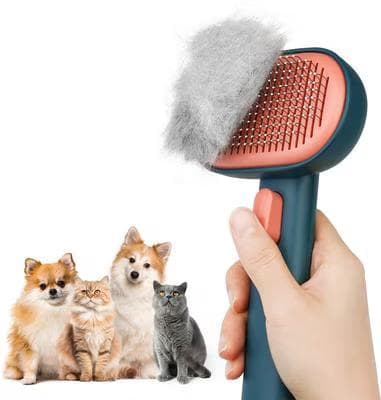
Petful may earn a commission when you click through to Chewy, at no extra cost to you.
The Siberian Husky Club of America's coat standard describes the Husky's double coat and seasonal undercoat loss. That supports planning for shedding, not a promise that a smaller Pomsky will lose less hair. The sources cited here do not provide a measured Pomsky-versus-Husky shedding ratio; assess the individual coats and expect routine hair management for either dog.
| What you notice | Likely care question | Sensible next step |
|---|---|---|
| Loose hairs with comfortable, normal-looking skin | Routine coat maintenance | Gentle brushing and normal household cleaning |
| Soft undercoat coming away more heavily | Seasonal change or accumulated loose coat | Shorter, more frequent checks and grooming help if needed |
| Knots that pull or resist a comb | Tangles or mats | Stop tugging and consult a groomer |
| Bald areas, sores, itching, or painful skin | Possible medical problem | Contact your veterinarian |
Do Pomsky puppies shed? Puppies can lose hair as their coats develop, and the adult texture may differ from the soft puppy coat. That does not make every episode of hair loss normal. Look at the skin and the dog's comfort, and ask your veterinarian about unusual patches, irritation, or a sudden change. Introduce gentle handling early rather than waiting for a dense adult coat to become difficult.
Seasonal shedding and coat differences
Pomsky shedding season often becomes noticeable around seasonal coat changes, but an indoor dog may release hair throughout the year. Do not expect every dog to follow the same calendar or finish shedding within a fixed number of days. Light exposure, environment, coat development, and individual variation can affect what you observe. A change accompanied by itching or skin lesions should not be written off as spring shedding.
Terms such as standard, plush, and wooly describe coat appearance in Pomsky conversations, but they are not a promise about grooming effort. A wooly Pomsky coat may have longer feathering and more areas that tangle. A plush coat may look especially dense, while a standard coat may appear shorter. Run a gentle, practical check through each dog's coat instead of buying tools solely from a seller's label.
Keep a simple coat check routine
- Part the hair gently in several places and look at the skin without pulling.
- Check behind the ears, around the collar or harness, under the legs, and around feathering.
- Notice whether loose hair comes away easily or whether a knot resists movement.
- Record new itchiness, redness, odor, bald patches, or handling sensitivity.
- Adjust the next grooming session to the coat you actually found.
Before-and-after grooming pictures can illustrate appearance, but they cannot prove how a particular dog will shed. Neither color nor blue eyes determines whether routine coat care is needed. An unusually sparse patch also should not be reclassified as a different coat type without assessment. The useful comparison is with your dog's usual coat and skin, not a social media photograph.
A coat care routine that reaches the undercoat
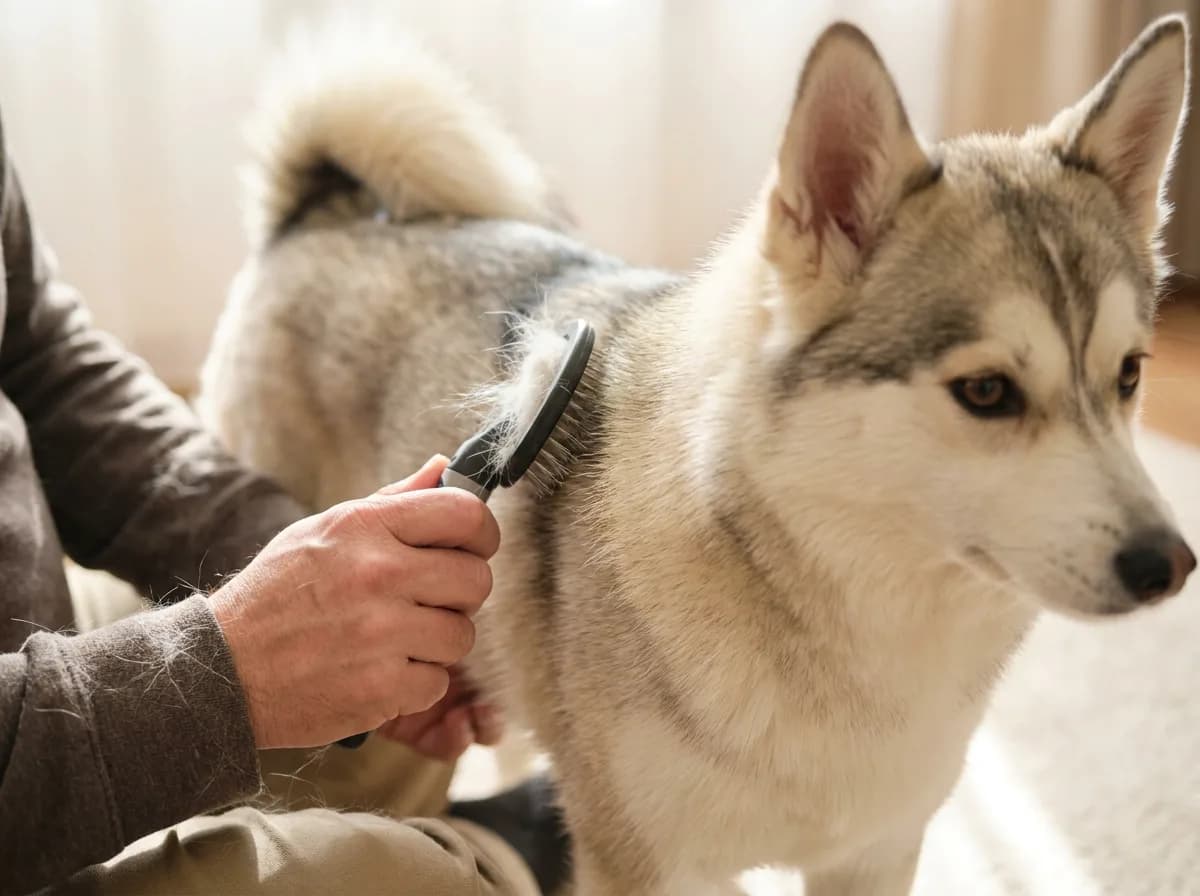
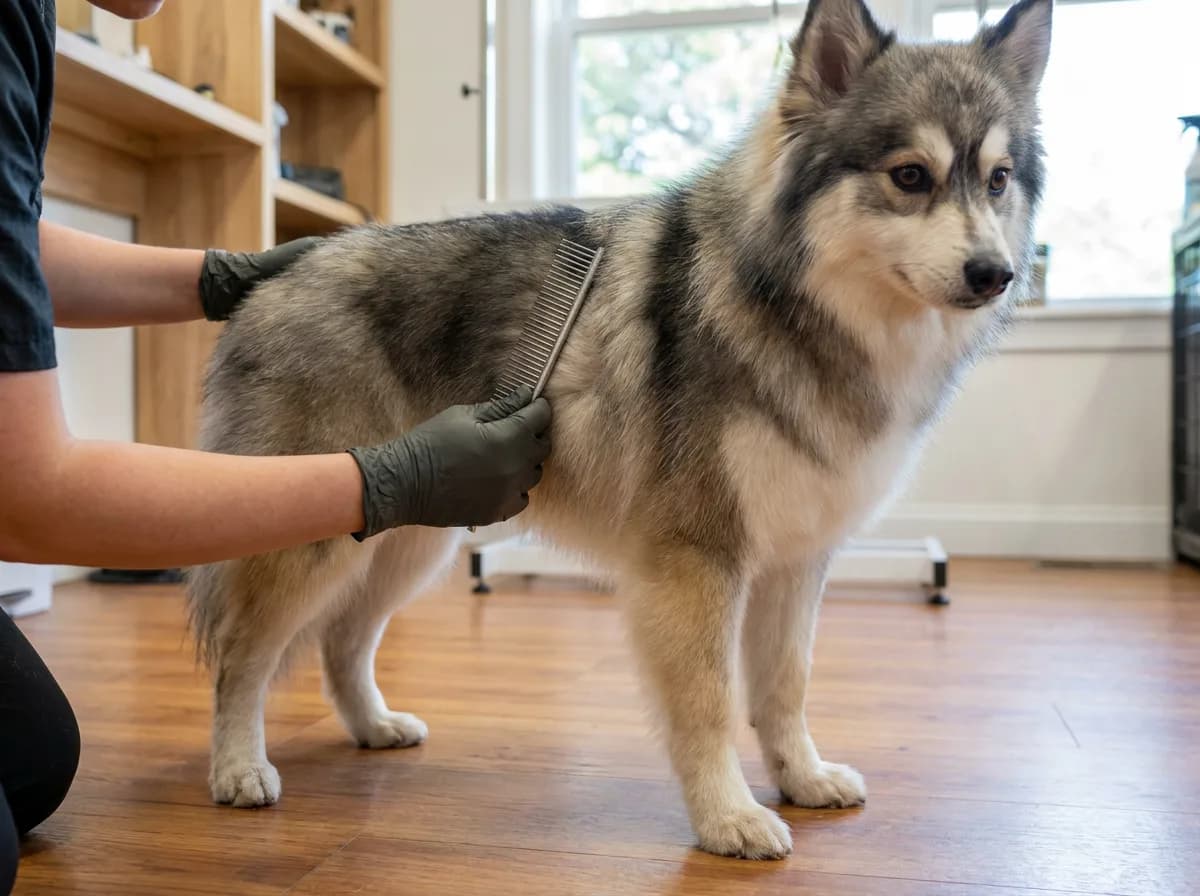
Choose tools that suit the coat and use light pressure. A slicker brush for a Pomsky can be helpful in appropriate areas, but the pin length and technique must let you work through the hair without scraping the skin. The aumuca Self Cleaning Slicker Brush is one available option. Its cleaning feature does not remove the need to check comfort and avoid repeated strokes over one spot.
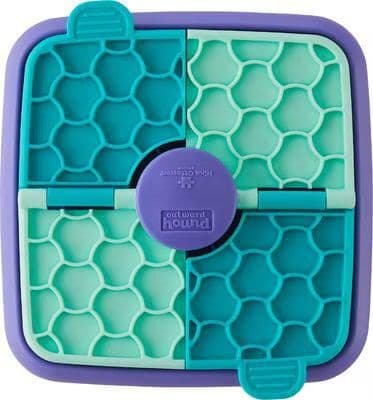
Petful may earn a commission when you click through to Chewy, at no extra cost to you.
For a short supervised break from handling, a Pet Parents Forager snuffle mat offers a separate food-search activity using some of the daily ration. Keep drinking water available in a Frisco 1.5-cup travel bowl during outings to grooming appointments.
- Gentle section brushing means working through small areas rather than sweeping repeatedly across the entire surface. Use your hand to separate a manageable section, keep the skin supported, and follow the direction of the coat. If a tool catches, stop and identify the obstruction. A comb check can help reveal a missed tangle after brushing, but forcing a comb through a knot can hurt.
- Choose a stable, nonslip surface and a position your dog finds comfortable.
- Begin on an easy area with a few light strokes and reward calm participation.
- Work in small sections, paying attention to friction areas and feathering.
- Pause when the dog needs a break; divide the task across sessions if necessary.
- Stop for painful skin, tight mats, or a handling response you cannot manage comfortably.
Build skill before a major coat blow
Start with short successful sessions while the coat is manageable. Let your dog investigate tools, reward comfortable touch, and gradually increase what you ask. Holding a dog down until an entire groom is finished can make future handling harder. If your dog is frightened, seek a groomer experienced in cooperative handling and discuss medical concerns with your veterinarian.
A reward-based pause can use a small amount of the dog's normal food. Keep the reward separate from the brush path, supervise closely, and avoid giving something that requires an awkward stance. The Outward Hound Nina Ottosson Lick N' Flip Treat Puzzle Dog Toy & Slow Feeder can be used for a separate calm activity before or after grooming if appropriate for the dog. Do not use a food distraction to keep working through pain or fear.
How often should you brush?
AKC’s double-coat grooming guide recommends brushing with a slicker and following with a comb at least weekly. Use that as a starting point, then check the coat regularly so loose hair and small tangles do not build into a difficult session. A dog releasing more undercoat may need shorter sessions more often; a dense or long coat may need more attention to friction areas. If you cannot comfortably keep the coat clear, a groomer can help set a realistic schedule.
An undercoat rake is not automatically the best brush for every Pomsky. Designs vary, and some tools can irritate skin or damage coat when misused. Ask a groomer to show you a suitable tool and pressure on your own dog. Stop once an area is comfortably clear rather than continuing until no hair can possibly appear. Excessive brushing can create its own problem.
Bathing, drying, and professional grooming
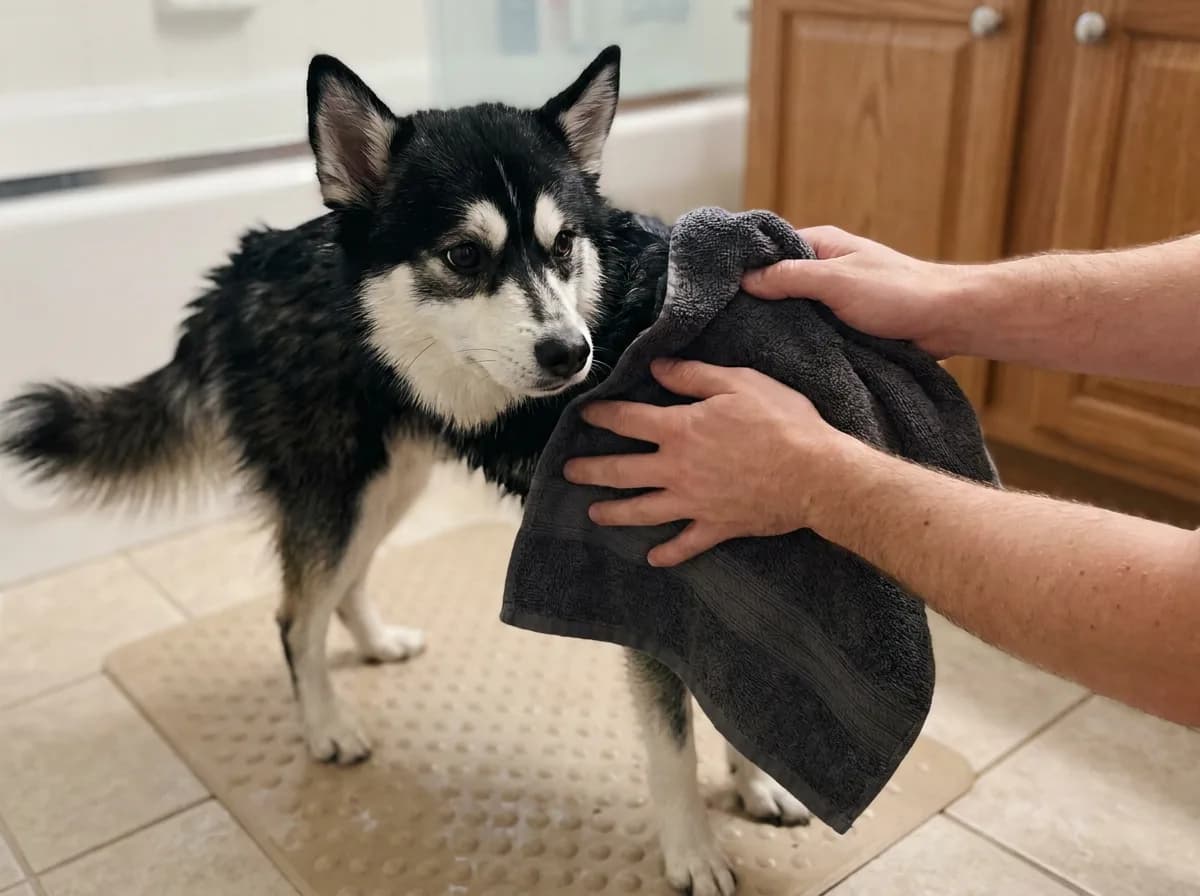
How often should you bathe a Pomsky? There is no universal calendar that suits every coat and skin condition. Dirt, odor, lifestyle, and a veterinarian's treatment plan all affect the answer. Ask for advice if frequent bathing seems necessary to control itching or odor, because washing repeatedly may obscure a problem that needs assessment. A medicated shampoo should be used according to the prescribing instructions.
If a groomer recommends a non-medicated wash, compare TropiClean puppy and kitten shampoo against its label directions and your dog’s needs. A washable Pet Parents Pawtect small blanket can cover the resting area once the coat is dry; it does not replace thorough drying.

Petful may earn a commission when you click through to Chewy, at no extra cost to you.
For routine cleaning when appropriate, Earthbath Oatmeal & Aloe Itch Relief Fragrance Free Dog & Cat Shampoo is an available dog shampoo option. Follow the label and your veterinarian's advice. The product name does not establish that it will treat the cause of itching, and a fragrance-free label does not mean every dog will tolerate it. Stop and seek advice if irritation develops. For a product comparison, see oatmeal shampoos for dogs.
Before, during, and after the bath
- Check for tangles first; water does not make tight mats safe to brush out.
- Use comfortable water temperature and avoid getting product into eyes or ears.
- Rinse thoroughly so shampoo is not left in the dense coat.
- Dry with appropriate equipment and attention to skin temperature and comfort.
- Recheck the coat gently when dry and stop if the skin looks irritated.
A professional groomer may be particularly helpful when the coat is dense, the dog is anxious, drying is difficult, or mats have formed. Ask what the service includes: bath, appropriate drying, undercoat work, nails, and any limited hygiene trimming. Discuss the dog's health and handling needs in advance. A routine appointment should not be treated as permission for an unexplained major haircut.
Haircuts and shaving
Pomsky haircut styles in online photographs can be misleading. A tidy outline, limited hygiene trim, and a close all-over shave are different services. The AKC's advice on shaving dogs explains why routine shaving is generally unsuitable for double coats. Shaving does not stop follicles releasing hair, and removing length is not a dependable solution to shedding or warm weather.
Clipping may sometimes be necessary for medical care or severe matting, with professional guidance. That is a different decision from choosing a teddy-bear haircut because a photograph looks appealing. Explain the outcome you want and ask the groomer what is appropriate for the actual coat. Never use household scissors close to a tight mat; skin can be drawn up into it and be difficult to see.
Include teeth and nails in the care plan
Coat maintenance is only one part of grooming. Ask your veterinary team about dental care and comfortable nail maintenance. For a dog ready for home toothbrushing, the Virbac C.E.T. Dual-Ended Dog & Cat Toothbrush offers different head sizes; use the end that fits and toothpaste intended for dogs. Introduce it gradually, and arrange assessment if the mouth seems painful rather than forcing the routine.
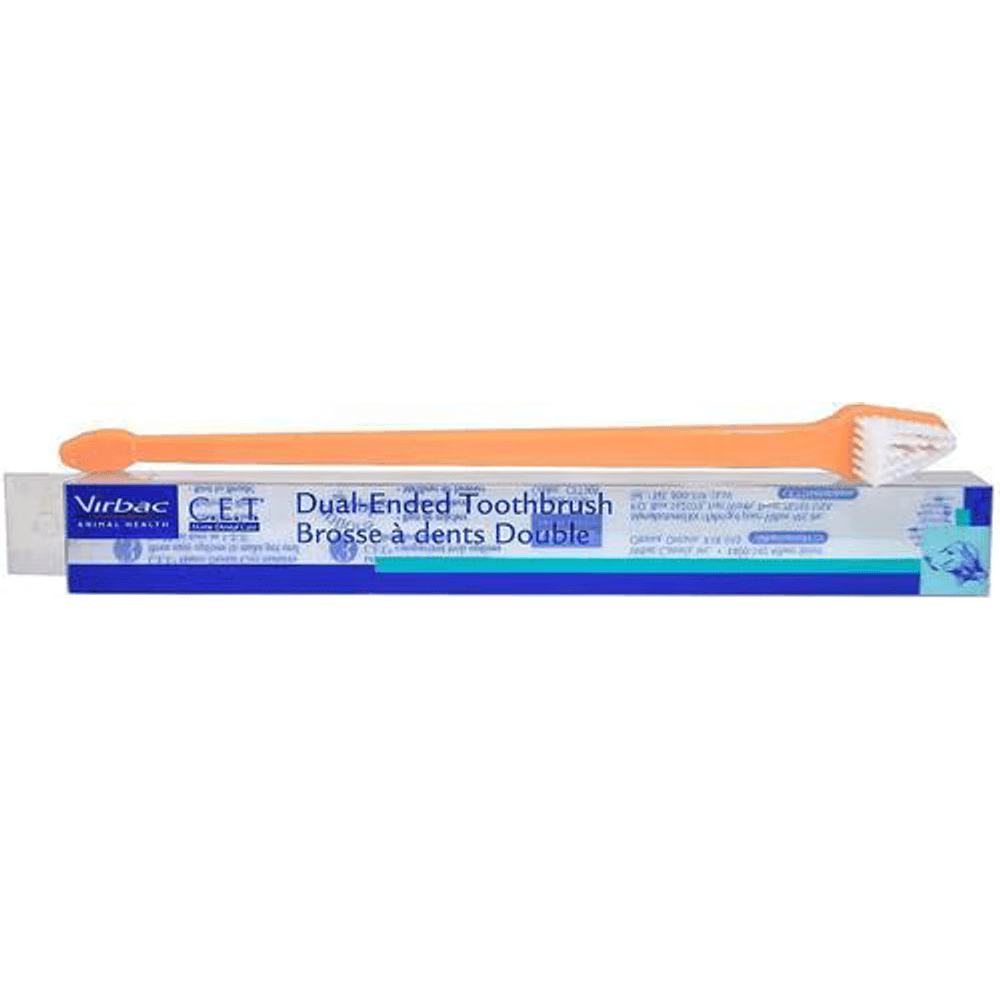
A dual-ended toothbrush with a large and a small head to fit different mouth sizes and reach the back molars where plaque hides. Soft bristles angled for the gumline.
Petful may earn a commission when you click through to Chewy, at no extra cost to you.
Shedding, allergies, and signs of skin trouble
Pomskies are not reliably hypoallergenic. Visible shedding and human allergy are related questions, but hair quantity alone cannot predict whether a person will react to a dog. Grooming and household cleaning do not make an individual dog allergy-free. Anyone with a relevant allergy should get appropriate medical advice and avoid relying on a breeder's promise of a non-shedding Pomsky.
For household hair, wash suitable bedding according to its care instructions and clean floors and upholstery with appropriate equipment. A vacuum can collect shed hair from the environment, but it cannot replace brushing through a coat or assessing a skin problem. Avoid directing household vacuum equipment at a worried dog. Keep grooming comfortable and use household cleaning as a separate task.
When shedding deserves a veterinary call
Contact your veterinarian for bald patches, sores, persistent scratching, marked redness, unusual odor, painful handling, or a sudden unexplained change. Note when it started and whether you changed food, products, medications, or the routine. Photographs can help document a visible change, but avoid repeated rubbing or brushing of an irritated area just to see how much more hair comes out.
Ordinary loose hair is a management task. A dog who is uncomfortable needs the cause investigated. A balanced coat routine makes that distinction easier: gentle section brushing, a brief skin check, appropriate baths, and professional help when needed. The goal is a comfortable, manageable coat rather than a promise that no hair will ever land on the sofa.
Temperament and the grooming routine
Grooming is easier to sustain when the household can meet the dog’s other needs too. Pomskies can be active and vocal, and a dog distressed by handling or separation may need support beyond a new brush. The Pomsky breed guide covers training, exercise, introductions, and time alone. Ask a caregiver about the individual dog’s ordinary routines and comfort with touch before deciding whether that care commitment fits your home.
Coat volume and adult size
A fluffy coat can hide the body’s outline, so coat volume is a poor guide to adult weight or equipment fit. The full-grown Pomsky guide explains which family measurements and dated growth records are useful. Measure the dog before choosing a harness or carrier, and ask your veterinarian about body condition. A dog looking slimmer after brushing does not necessarily mean it has lost body weight.
Small-size labels do not mean less coat care
Mini, miniature, micro, toy, and teacup Pomsky labels are used differently by different sellers. They do not establish a standardized adult size, a non-shedding coat, or a health guarantee. A full-grown mini Pomsky still needs appropriate activity, training, dental care, and comfortable grooming. Our mini and teacup Pomsky guide explains how to question size claims and evaluate documented adult relatives. Ask for actual measurements and health information instead of paying for a tiny label alone. A puppy's current size is only one piece of evidence, and exceptionally small advertised size should never replace an assessment of welfare and care needs.
Budget for recurring grooming
Pomsky puppy price, adoption fees, and recurring care costs are separate parts of the decision. A lower initial cost does not remove the need for food, veterinary care, grooming, safe equipment, or help when your schedule changes. A higher asking price does not guarantee better health or temperament. Our Pomsky price guide explains how to compare included care, first-year expenses, monthly costs, and an emergency reserve. Ask for written details and use current local quotes instead of assuming a national example is the amount your household will pay. Adult adoption may change the starting cost, while the ongoing care commitment remains.
Color does not determine grooming needs
A black, white, brown, or patterned coat still needs care suited to its density, length, and skin condition. A shorter coat may look less fluffy while continuing to shed. The Pomsky colors guide explains color and pattern vocabulary separately from grooming needs. Do not pay for a particular color expecting less loose hair, or mistake a newly sparse patch for an ordinary color change.
Comparing Pomsky and Husky care
Comparing a Pomsky vs Husky involves more than body size. Both may need substantial attention to exercise, training, secure containment, and coat care, while individuals differ in energy and behavior. A Pomsky is not guaranteed to be a smaller version of a specific Husky parent. Our Pomsky vs Husky comparison considers daily routines, shedding, family fit, and costs. If you are deciding between them, describe an ordinary weekday first: available walks, company, quiet rest, and grooming time. Then assess the actual dog and its records against that routine instead of relying on the breed nickname to resolve the decision.
Grooming observations and long-term health
Pomsky dog lifespan is commonly described with a broad estimate, but it is not a promise for an individual. Health history, appropriate screening, preventive care, and changes in appetite or mobility deserve attention throughout life. Our Pomsky lifespan guide explains the limits of the published range, health questions to discuss with a veterinarian, and a baseline health record for later comparison. Neither a dense healthy-looking coat nor mixed ancestry proves that a dog is free of disease. Use grooming as an opportunity to notice changes, while leaving diagnosis and treatment to the veterinary team.
Frequently asked questions
Pomskies can be heavy shedders, particularly when they release more undercoat during seasonal changes. The amount varies with coat density, size, environment, and grooming history, so there is no reliable universal shedding level. Plan for regular coat care and household cleaning. Compare your Pomsky with its usual pattern, and contact your veterinarian if extra hair comes with itching, sores, or bald areas.
Pomskies can shed substantially, but there is no dependable rule that every Pomsky sheds as much as every Husky. A smaller dog may have less total coat while still releasing plenty of hair. Coat density, seasonal change, and grooming history affect the comparison. Choose based on your ability to maintain the actual dog's coat, not a promise that mixed ancestry guarantees less shedding.
Shaving a Pomsky will not stop the shedding cycle. Hair follicles still release hair, and routine close shaving is generally unsuitable for a double coat. A groomer or veterinarian may recommend clipping for a specific medical or severe matting problem, but that is a different decision. Discuss the actual coat and need before choosing a haircut from an online photograph.
No. A vacuum removes hair from floors and upholstery, while regular brushing helps manage loose hair and tangles within the Pomsky's coat. These are different tasks. A vacuum also cannot assess irritated skin or safely remove tight mats. Keep household cleaning separate from comfortable dog grooming, and seek professional help when brushing becomes painful, frightening, or ineffective.
Pomskies are not reliably hypoallergenic. Visible hair shedding does not fully predict a person's allergic response, and a short or carefully groomed coat cannot make a dog allergy-free. Anyone with a relevant allergy should seek appropriate medical advice before choosing a dog. Do not rely on a seller's non-shedding claim or assume that more frequent bathing will solve the household's allergy concerns.

Coreen Saito is a pet writer and longtime shelter volunteer with more than a decade in animal rescue. She covers cat behavior, breed care, and the small, ordinary science of sharing a life with companion animals, with a particular focus on honest takes about the products and decisions that actually matter. At home in Arizona, she's outranked by Mac (a dog with the loudest opinion in the house), Rebel (a cat who governs by quiet authority), and Meri (an orange tabby who runs the late shift and the laundry basket). She writes about all three, plus the rescues that keep coming through her life, at LifeWithMinty.com.
Sign up for expert-backed reviews and safety alerts all in one place.