Pomsky Full Grown: Adult Size, Weight, and Pictures
Full-grown Pomskies vary in weight, proportions, and coat volume. Learn how family measurements, growth records, adult pictures, and equipment checks help you plan for the individual dog.
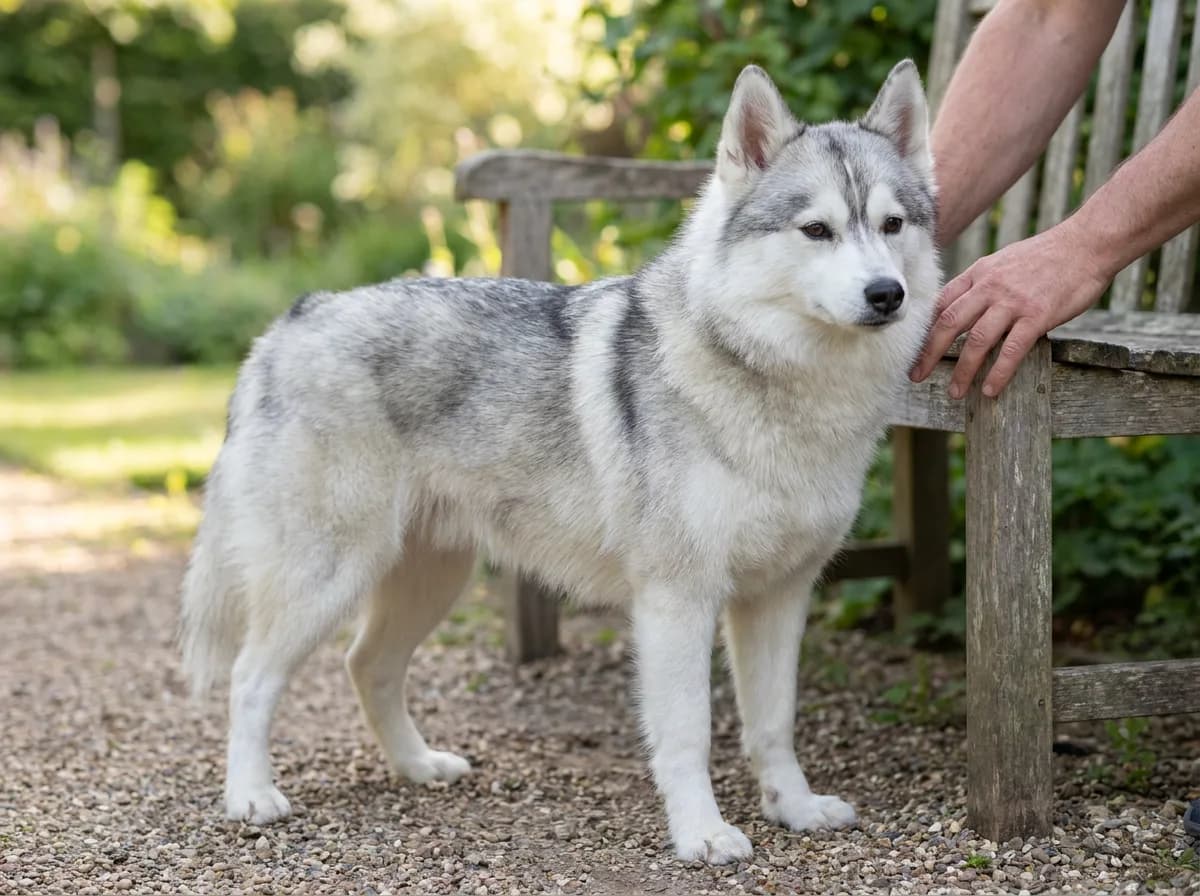
Appearance alone does not establish ancestry or predict adult size.
Petful is reader supported. As an affiliate of platforms like Amazon and Chewy, we may earn a commission when you buy through links on this page. There is no extra cost to you.
Pomsky full grown size is best treated as a range, not a promise. PetMD describes adult Pomskies as roughly 12–35 pounds, but a particular dog can fall outside that guide. Parent size, family history, ancestry, and individual growth all matter more than the puppy's color or a seller's size label.
For planning, collect three kinds of information: measured adult relatives, your puppy's growth trend, and the actual dimensions needed for housing and equipment. An adult photograph can help you understand proportions, but it cannot establish weight or prove that another puppy will mature the same way.
A full-grown Pomsky may be a small or medium companion, with considerable individual variation. Use family measurements and a growth trend record, then measure the dog itself before purchasing fitted equipment.

Sign up for expert-backed reviews and safety alerts all in one place.
Pomsky full grown: size and weight ranges
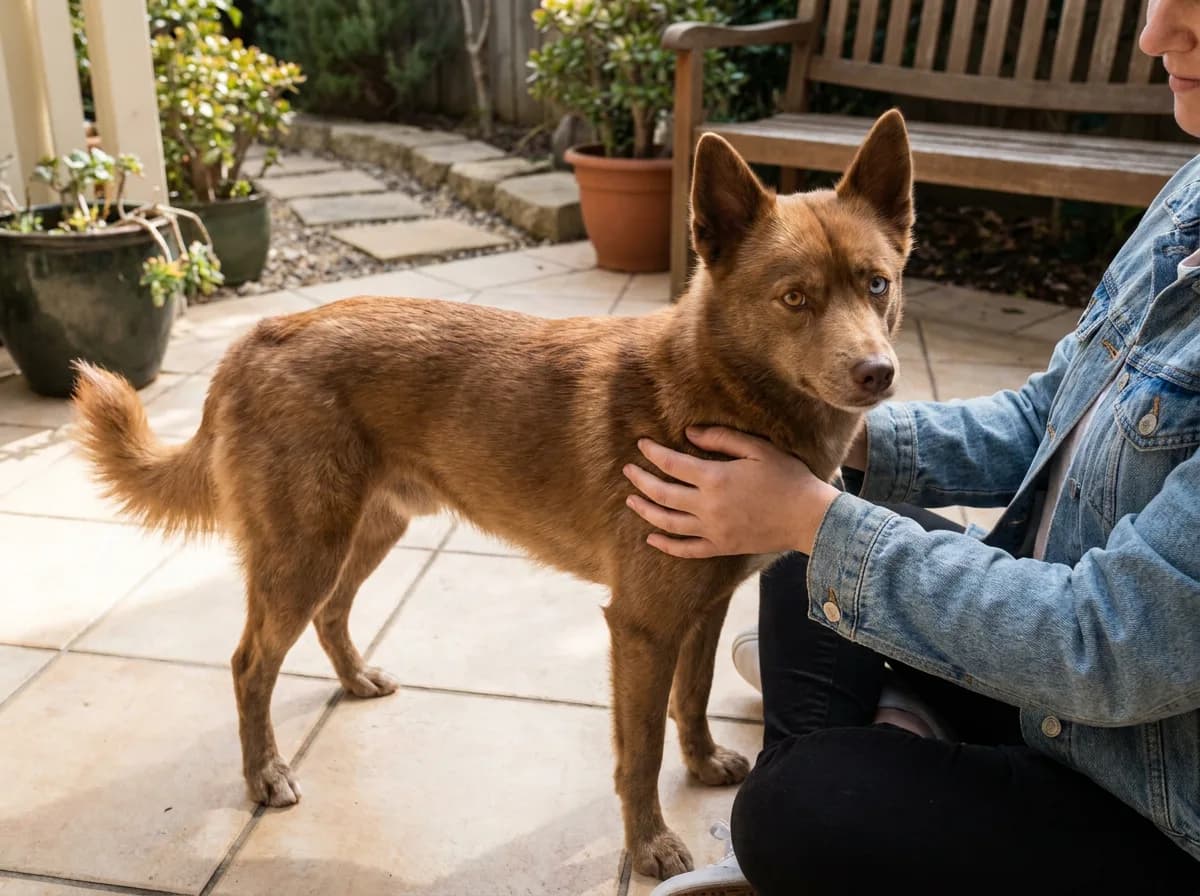
The commonly quoted 12–35-pound range gives you a starting point, but it is not an official boundary for every dog sold as a Pomsky. This mix brings together substantially different parent sizes, and subsequent generations can have different ancestry combinations. A precise forecast needs more evidence than the breed name.
Weight also does not describe the whole dog. Two adults at the same weight may differ in height, chest depth, leg length, and coat volume. That matters if you are choosing a carrier, checking a housing limit, or hoping for a dog that is easy for a particular person to lift. Record each measurement in consistent units and confirm whether a quoted size refers to a puppy, a young adult, or a mature dog.

Petful may earn a commission when you click through to Chewy, at no extra cost to you.
| Measurement | What it helps answer | What it cannot establish |
|---|---|---|
| Body weight | Equipment weight limits and veterinary growth tracking | Chest fit, temperament, or body condition by itself |
| Shoulder height | Overall stature and clearance | Exact adult weight of a puppy |
| Chest circumference | Harness sizing | Whether the dog fits a carrier lengthwise |
| Body length | Crate and travel-space planning | Whether the dog can stand comfortably inside |
| Body condition assessment | Whether weight is appropriate for the individual | A guaranteed future size |
How tall will a Pomsky get?
How much should a Pomsky weigh? The 12–35-pound reference range is broad orientation, while a suitable adult weight depends on the individual dog's frame and body condition. Compare shoulder height, chest measurements, and veterinary findings rather than using one average as a feeding target. A dog outside the quoted range is not automatically unhealthy, and a dog inside it is not automatically at an appropriate weight.
Ask for shoulder height rather than height to the ears or top of the head. The APKC’s 2025 standard defines toy as 11–13 inches, mini as 13.01–16 inches, and standard as 16.01–18 inches at the shoulder. These are that organization’s categories, not universal limits for every dog sold as a Pomsky. Confirm the measuring point, the definition used by the seller, and actual parent records; a label cannot guarantee a puppy’s mature height.
If a breeder gives an expected range, ask which measured relatives support it. Request the age, shoulder height, and healthy adult weight of each parent, plus information about older offspring when available. A record of multiple adults from the family is more informative than one especially small relative.
Is a full-grown Pomsky a good apartment size?
Physical size is only one part of apartment suitability. Review any weight restrictions using the potential adult range, then consider activity, noise, stairs, elevators, and toilet access. A dog that fits comfortably on the sofa may still need more daily interaction than your schedule allows.
Read our broader Pomsky temperament and care guide before making a housing decision. If the lease has a firm limit and there is little room for uncertainty, an already mature dog with a recent weight record may provide a clearer answer than a puppy estimate.
Pomskies can bark or howl, and puppies need patient teaching as they learn household routines. Ask for specific observations before concluding that an unfamiliar dog is friendly, anxious, or aggressive. Size does not settle those questions. A history of comfortable handling, managed introductions, and appropriate support gives you more useful information than an adult-weight estimate by itself.
Why adult size varies between Pomskies
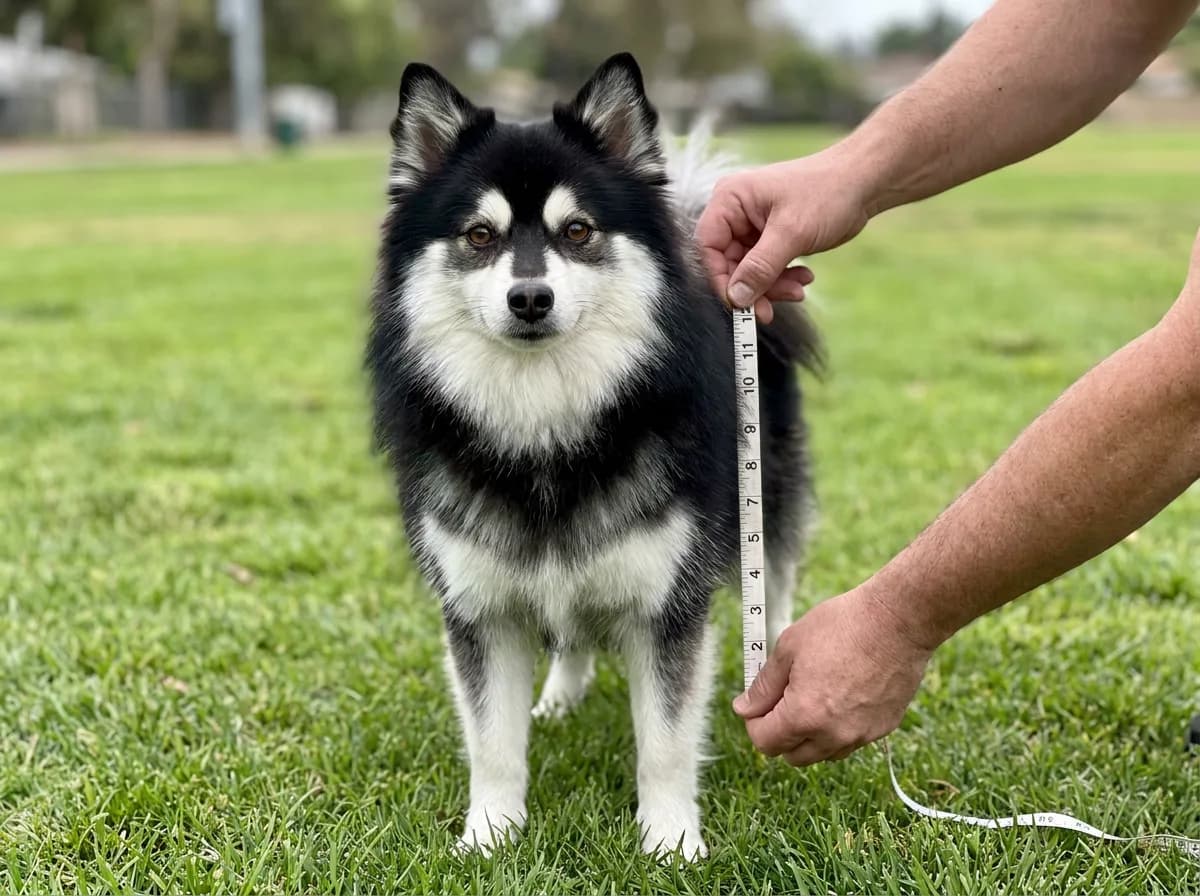
Pomeranian and Siberian Husky ancestry can contribute different builds, and puppies do not inherit a neat visual average of their parents. Within a litter, individuals may develop different proportions. Later generations add another reason to ask about the actual family rather than assuming all Pomskies share the same expected size.
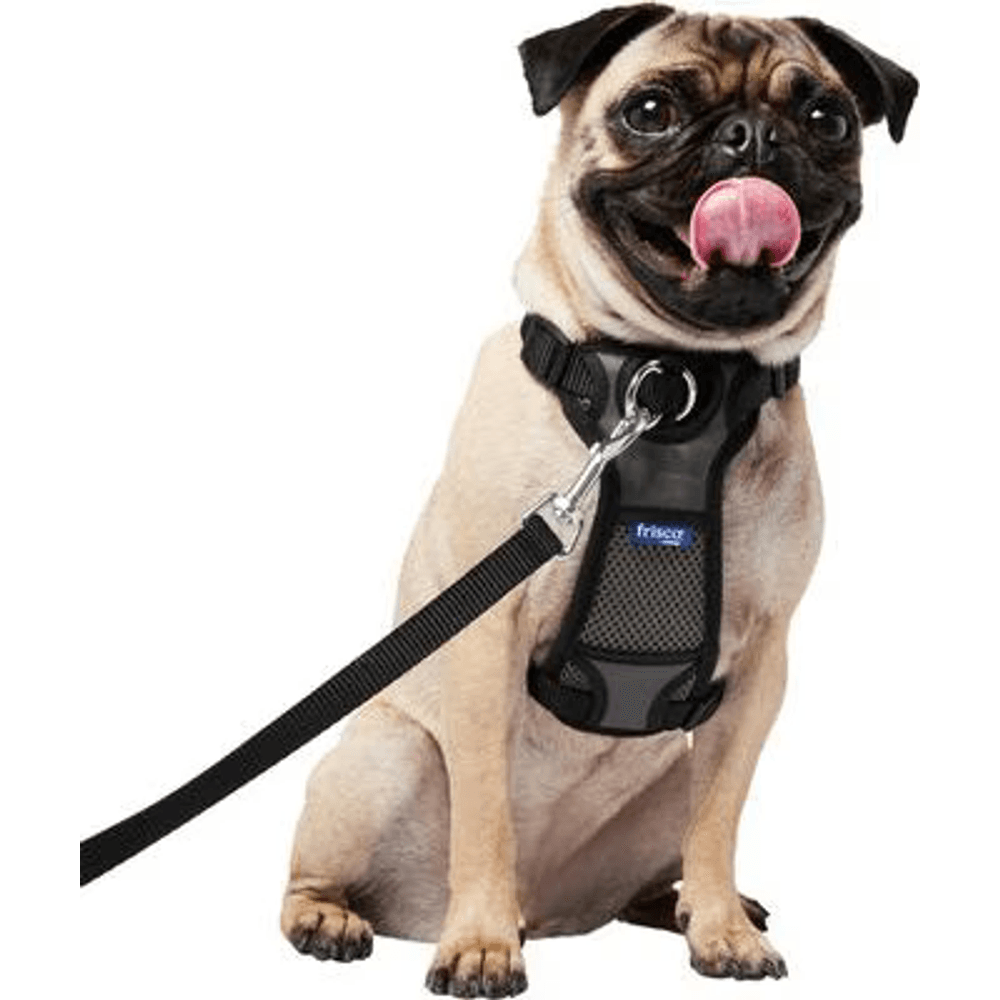
A budget-friendly padded no-pull harness that keeps leash pressure off a coughing dog's neck and windpipe by distributing it across the chest. A simple, affordable way to protect an irritated airway or a collapsing trachea on every walk.
Petful may earn a commission when you click through to Chewy, at no extra cost to you.
Whether a full-grown Pomsky is described as F1, F1b, F2, F2b, F3, F4, or second generation, ask who its actual parents are. A backcross abbreviation or a 25/75 ancestry description cannot guarantee adult dimensions. Breeders may use generation terminology differently, so a written pedigree and measured family members are more useful than assuming the code tells you exactly how large the dog becomes.
- Ask whether the listed parent weights were recorded in adulthood.
- Distinguish measured facts from an estimate based on appearance.
- Request information about previous litters without expecting every puppy to match them.
- Clarify how the seller defines words such as standard, mini, toy, or micro.
- Keep the estimate as a range and plan for the upper end when practical.
Mini and teacup are not a substitute for measurements
Different sellers may apply small-size labels differently. Ask what the term means in pounds and shoulder height, how that estimate was developed, and whether the dog is already mature. A label without a definition does little to help with a carrier or housing decision.
Our mini and teacup Pomsky guide covers those labels in detail. For this size decision, the useful question is simple: what verified evidence supports the estimate for this specific dog? A low purchase weight is not proof of a very small adult.
Can a DNA test settle the question?
A consumer ancestry test such as Wisdom Panel Essential Breed Identification may help clarify breed background when records are missing. It does not guarantee adult dimensions. An ancestry estimate should sit alongside growth records and a veterinary assessment, not replace them.
If you already have reliable parentage records, buying another test may add little to an equipment decision. Measuring the dog and recording changes is usually the more direct next step. Do not treat an ancestry percentage as a calculation that can turn a puppy's current weight into a certain adult figure.
Growth timing and a useful weight record
- Growth slows as a dog approaches maturity, but there is no universal calendar date when every Pomsky becomes fully grown. Dogs with different builds can reach that stage at different times. Body shape, muscle, and coat can also continue changing after rapid height gain has slowed.
Use a Frisco 1.5-cup travel bowl for water on outings, and introduce a supervised Pet Parents Forager snuffle mat with part of the normal food ration. Equipment capacity and product size are not evidence of a dog’s eventual adult weight.
For planning, small dogs may take less time to grow to adult size than medium dogs, but those categories do not establish one timetable for every Pomsky. The AKC’s general growth guidance gives about 6–8 months for small breeds and around 12 months for medium breeds, and notes that mixed-breed forecasts are especially uncertain at 6–10 weeks. Use those as general context, not a Pomsky-specific deadline or an age-by-weight target. Keep a dated growth record and ask your veterinarian to interpret it alongside body condition, diet, and health.
| Date and age | Weight and scale used | Food and daily amount | Body condition or veterinary note | Recent change |
|---|---|---|---|---|
| First reliable record | Enter the measured figure | Record the current diet | Note who assessed it | New home or previous history |
| Next planned check | Use the same scale if possible | Record changes accurately | Add the clinician's advice | Appetite, activity, or illness |
| Later growth check | Compare the trend, not just one value | Include treats and extras | Record the agreed target | Equipment fit or activity changes |
| Adult baseline | Keep a recent healthy weight | Retain the established plan | Save the adult assessment | Use as a future comparison |
Make the record consistent
Choose a repeatable weighing method and note when the scale changes. Record the unit explicitly, especially if veterinary records and a home scale use different systems. A pounds-versus-kilograms mix-up creates a much larger apparent change than ordinary day-to-day variation.
Keep the written record simple enough to maintain. A date, weight, and short note are better than an elaborate spreadsheet that stops after two entries. Save a side-view and overhead photograph occasionally, taken on level ground with the dog standing naturally, if your veterinarian finds that useful.
If you receive old weights from the breeder or rescue, copy the original date and source rather than treating them as current measurements. Ask whether the recorded age is known or estimated. A puppy's growth history is much easier to interpret when those uncertainties remain visible instead of being converted into falsely precise numbers.
Petful may earn a commission when you click through to Chewy, at no extra cost to you.
- Retain a weight record from a time when your veterinary team considers the adult dog's body condition appropriate. This gives future changes context; it is not a rule that every dog must stay at one unchanging number forever. Discuss trends before making feeding adjustments.
Avoid the puppy-weight multiplier trap
Online calculators may offer an adult estimate by multiplying a weight at a particular age. The result can look authoritative because it is a precise number, but that precision does not remove uncertainty about ancestry, age, health, and individual growth. Treat it as a rough estimate at most.
If a Pomsky looks skinny, ask for a body-condition assessment instead of judging health through the coat or increasing food to match a chart. The World Small Animal Veterinary Association's nutrition resources emphasize individualized nutritional assessment. Ask your veterinarian about the dog's growth and body condition when a weight seems unexpectedly high or low. For help reading food labels, see the guide to complete and balanced dog food.
- Healthy size varies between dogs. Compare the puppy's own trend and clinical assessment rather than trying to make it reach a littermate's weight.
Separate growth from a changing coat
A puppy can appear to become much bigger when its coat fills out, even if the scale changes little. Seasonal coat changes can reverse that impression. A groomed or wet dog may also look surprisingly narrow without having lost body mass.
Use the record to distinguish what changed: weight, height, coat, or body condition. Our Pomsky shedding guide explains coat maintenance, while the Pomsky lifespan guide covers longer-term health observations. A change in appetite, energy, or comfort deserves attention beyond a size comparison.
Adult Pomsky pictures and proportions
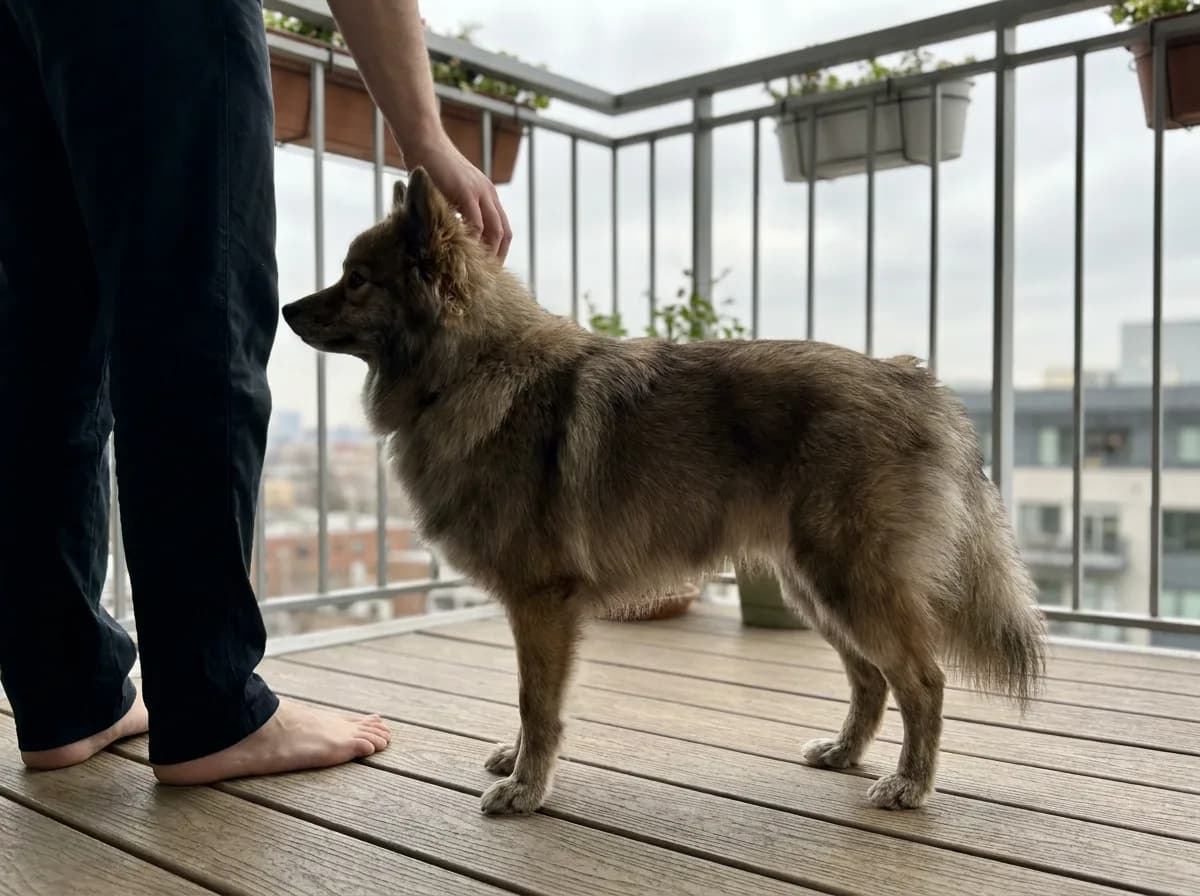
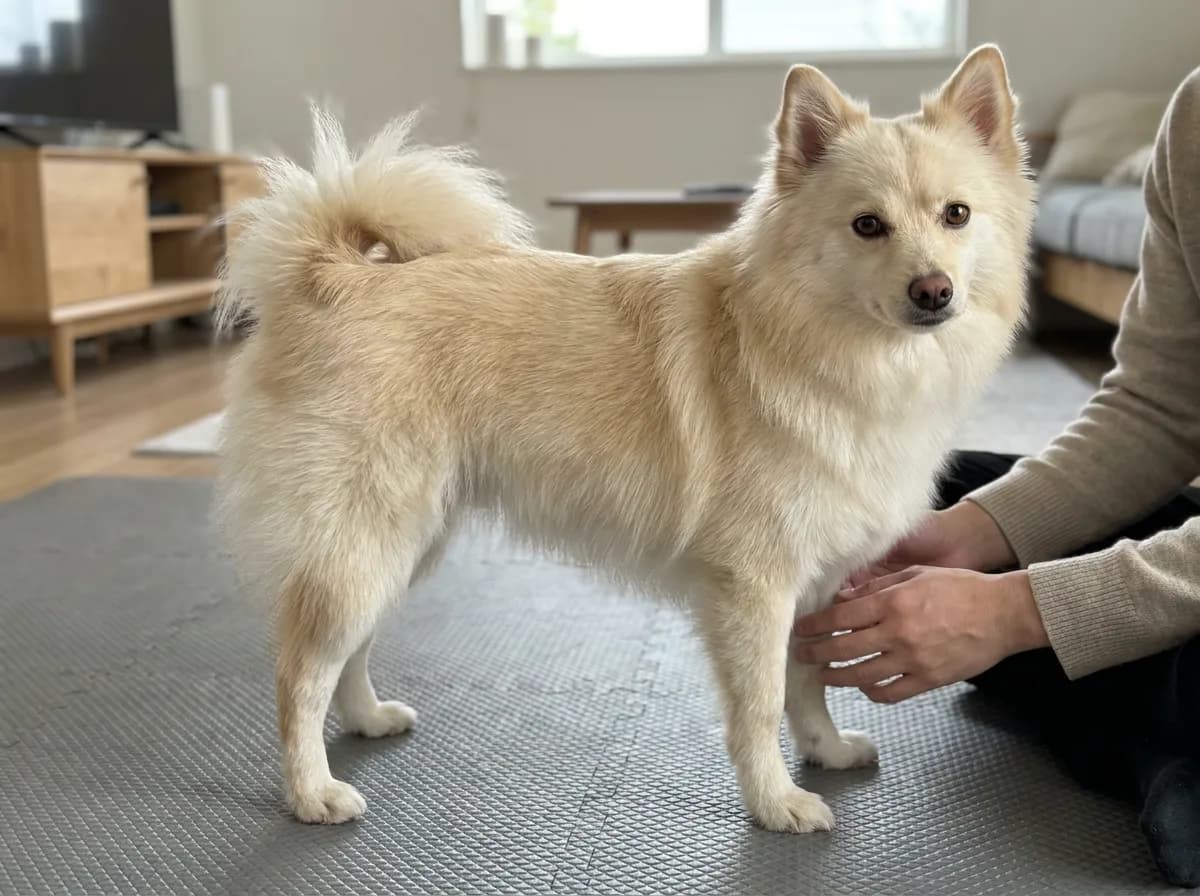
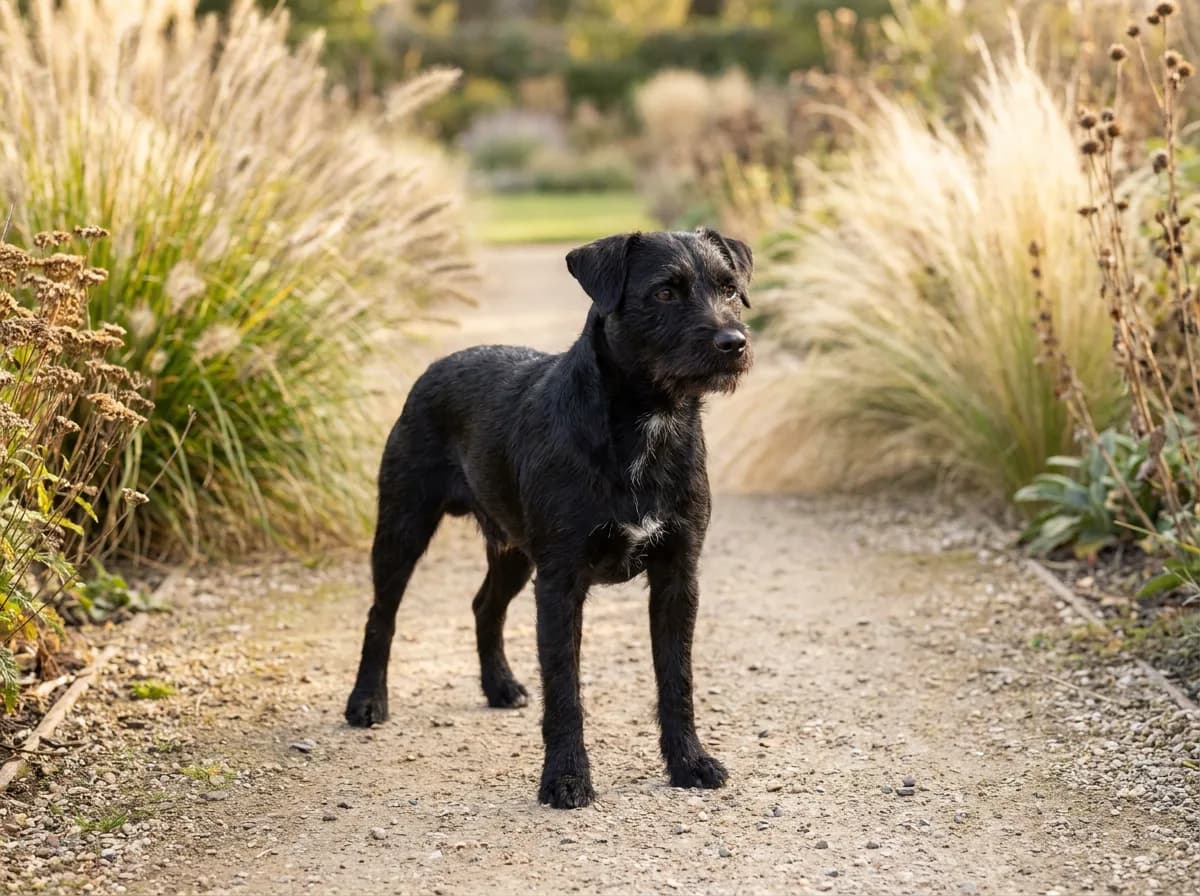
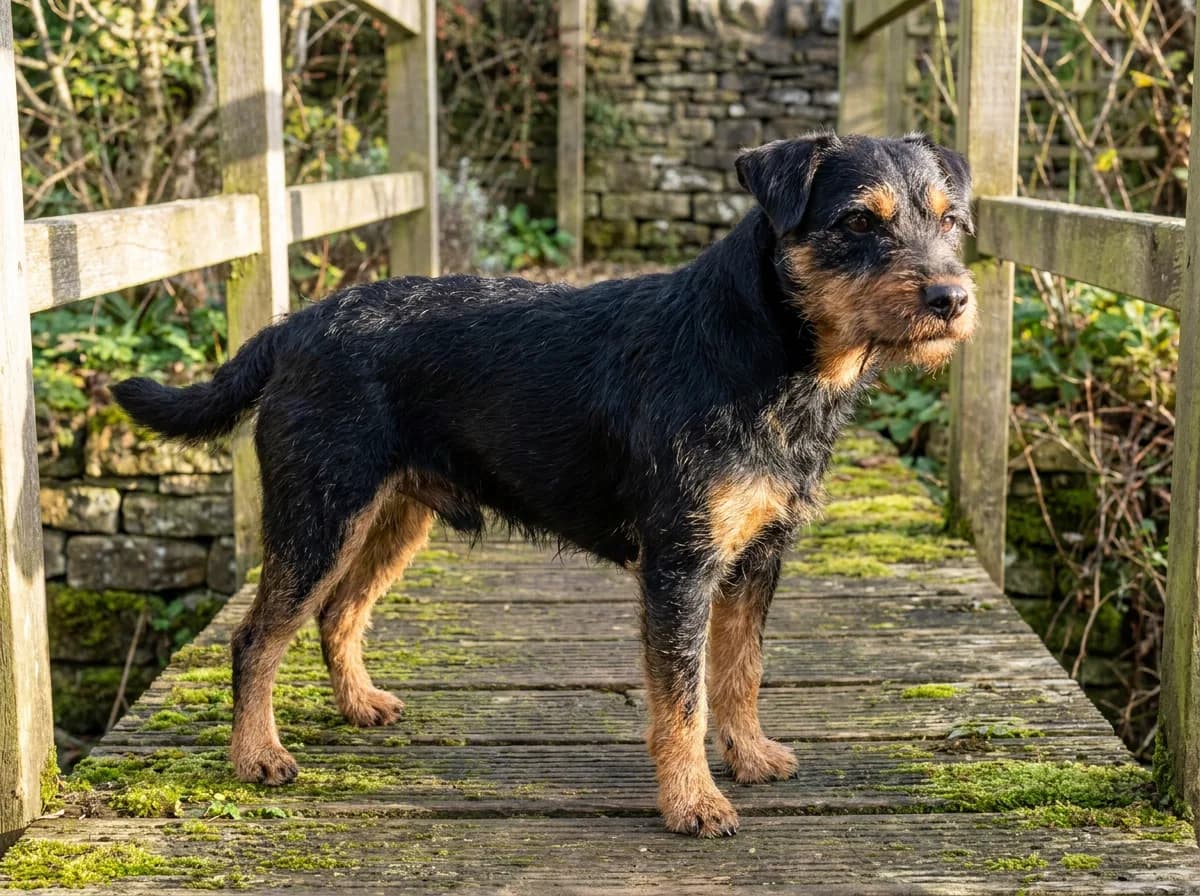
Adult pictures are useful when you know what to look for. Study the length of the legs, depth of the chest, body length, and amount of coat. An image with all four paws visible and the dog standing on level ground gives a clearer impression than a tightly cropped face or a dog held close to the camera.
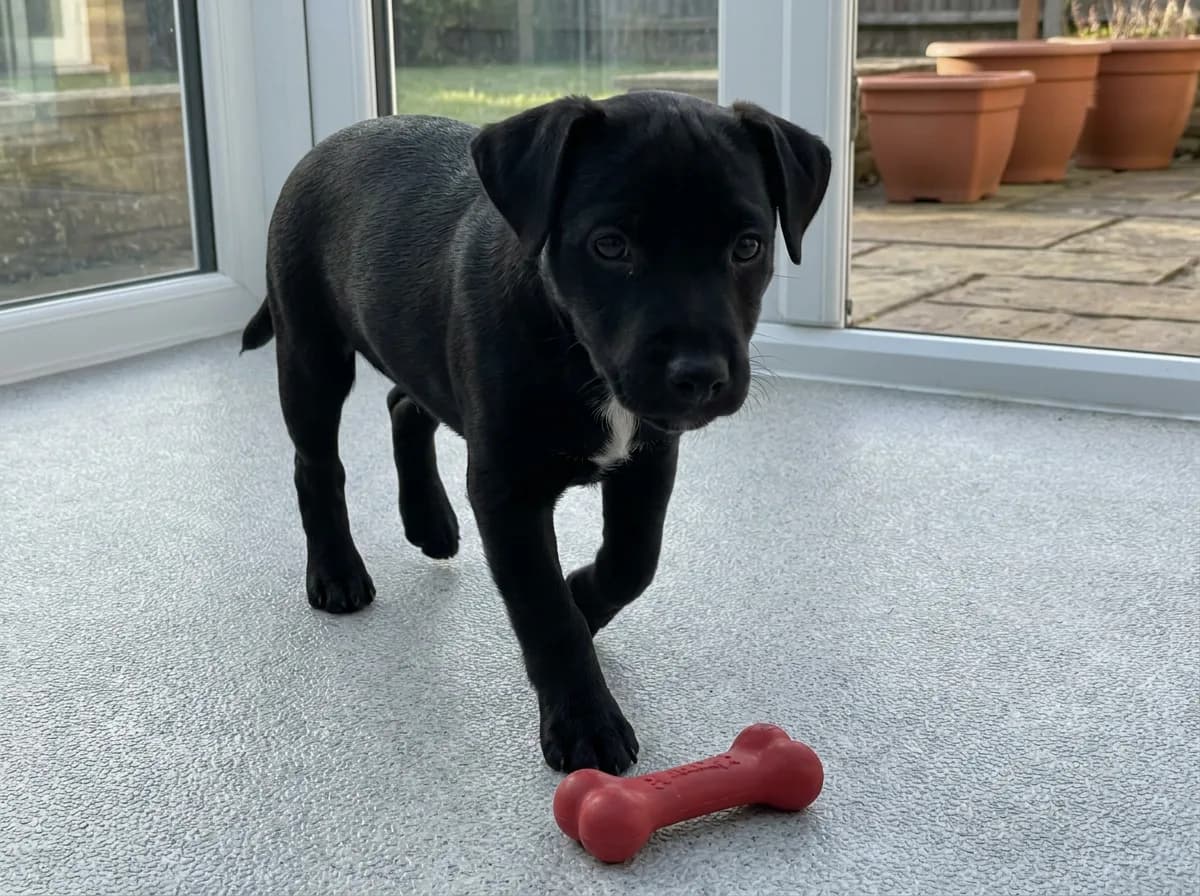
The images in this guide are generated visual illustrations of plausible adult Pomsky appearances. They are not photographs of measured dogs, proof of ancestry, or evidence that a puppy will develop a particular build. They help explain what to observe; actual measurements must come from the dog you are considering.
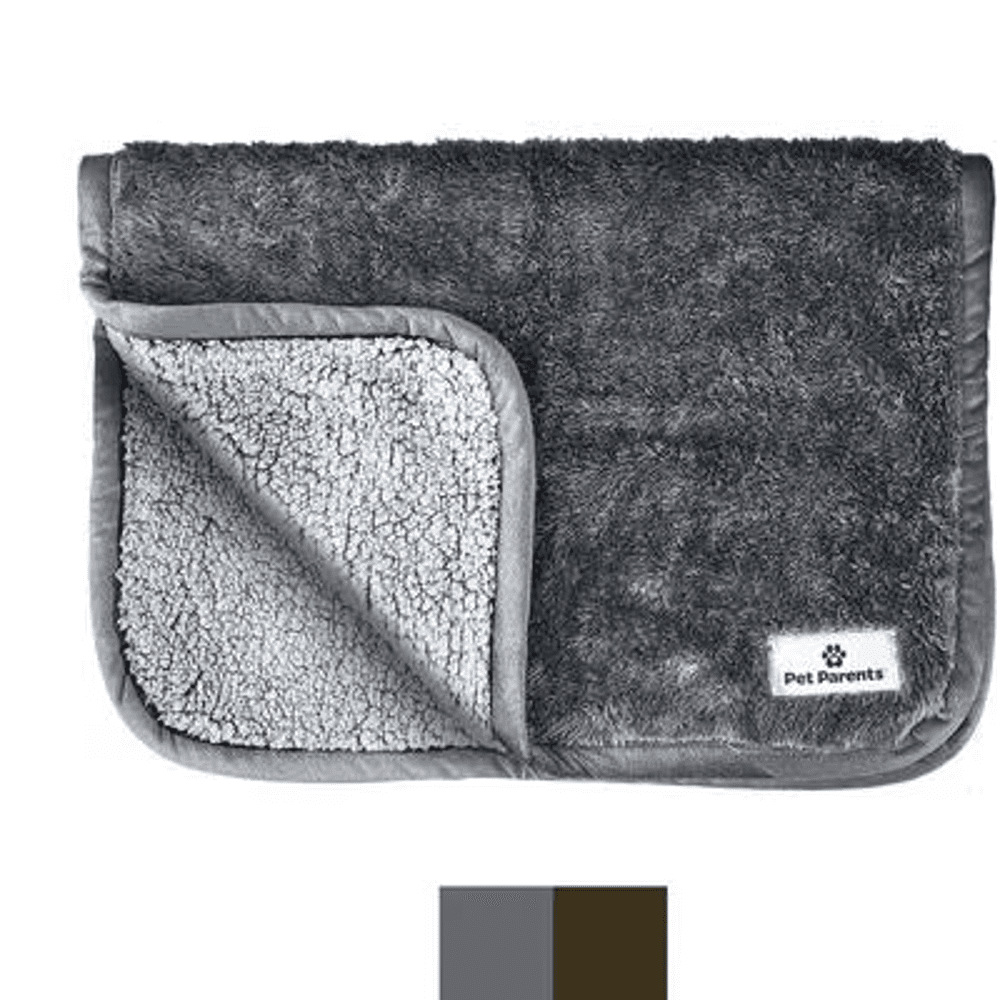
A plush, waterproof sherpa blanket that gives a cold or shivering dog a warm, cozy layer to curl into. The hidden waterproof lining protects the bed, couch, or car seat, and the whole thing is machine washable.
Petful may earn a commission when you click through to Chewy, at no extra cost to you.
| Photo feature | Why it can mislead | Better comparison |
|---|---|---|
| Dog close to the camera | Perspective exaggerates apparent size | Similar camera distance and angle |
| Very thick coat | Fur hides the body's outline | Measured weight and hands-on assessment |
| Seated or curled posture | Legs and body length are difficult to judge | Relaxed standing side view |
| Puppy beside a prop | The prop may have no known dimensions | Current measurements with date and age |
| Close face portrait | Attractive details dominate the impression | Whole-body view plus records |
Different adult looks can share the same ancestry
Some adults have a more compact outline and full ruff; others look longer-legged or narrower through the muzzle. Markings can emphasize those differences. A pale chest may appear broader in a front-facing image, while a dark coat can conceal its contours.
These impressions should not become claims about personality. A wolf-like mask does not establish behavior, and blue eyes do not prove ancestry. Our Pomsky color guide explains appearance separately from size so that one does not stand in for the other.
White, black, brown, red, and black-and-white Pomsky coats change how outlines appear in photographs. A blue-eyed dog may attract attention to its face, while sable or merle markings draw attention across its body. Neither color nor pattern identifies a size class. Use ordinary light and a full-body view when comparing adult pictures, then return to measured height and weight for decisions.
Comparing a Pomsky with a Husky
Use measured adults rather than a tiny Pomsky puppy next to a mature Husky. Ask whether the photographs show dogs at the same distance from the camera and whether both are fully grown. Otherwise the contrast may say more about age and perspective than expected adult size.
If a smaller Husky-like companion is your goal, also compare exercise, coat care, and household fit. The Pomsky vs. Husky comparison explains why reducing body size does not automatically reduce every care responsibility.
Measure before buying a harness, crate, or carrier
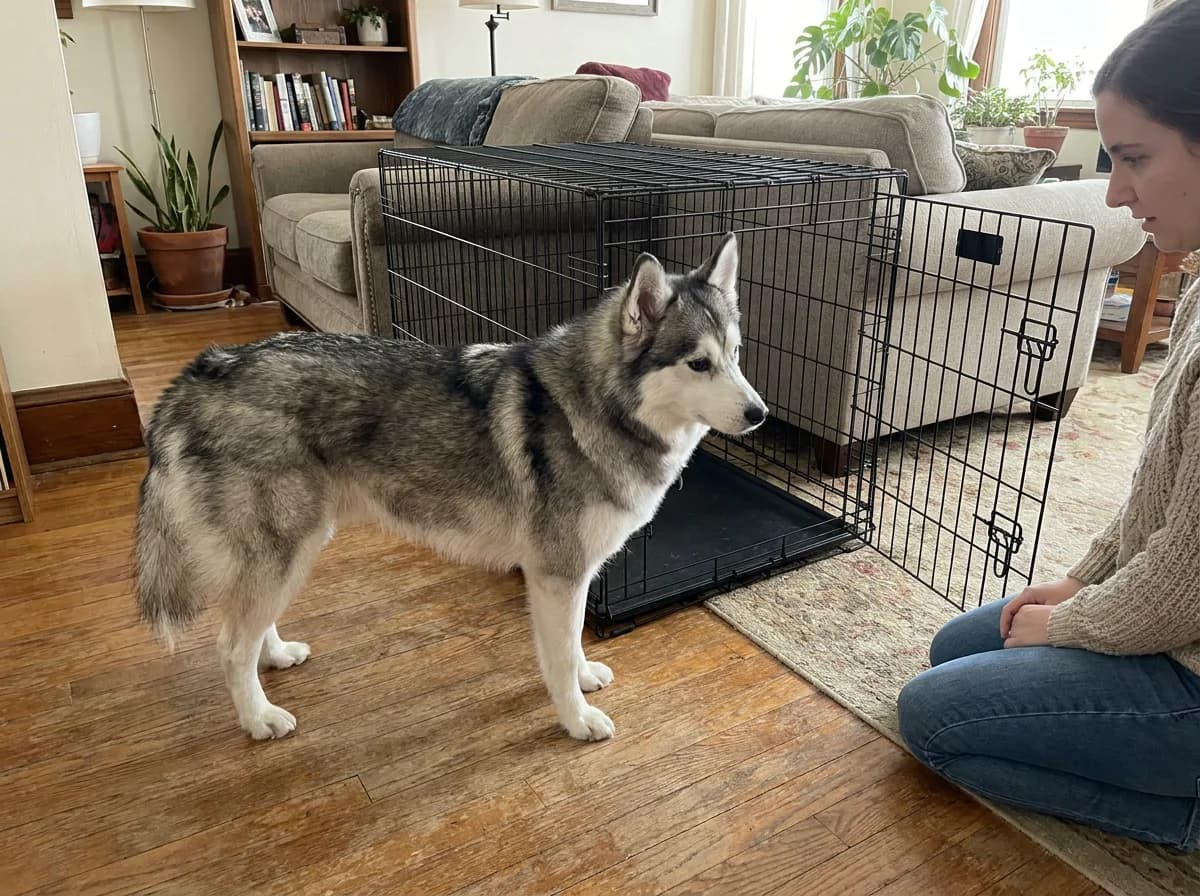
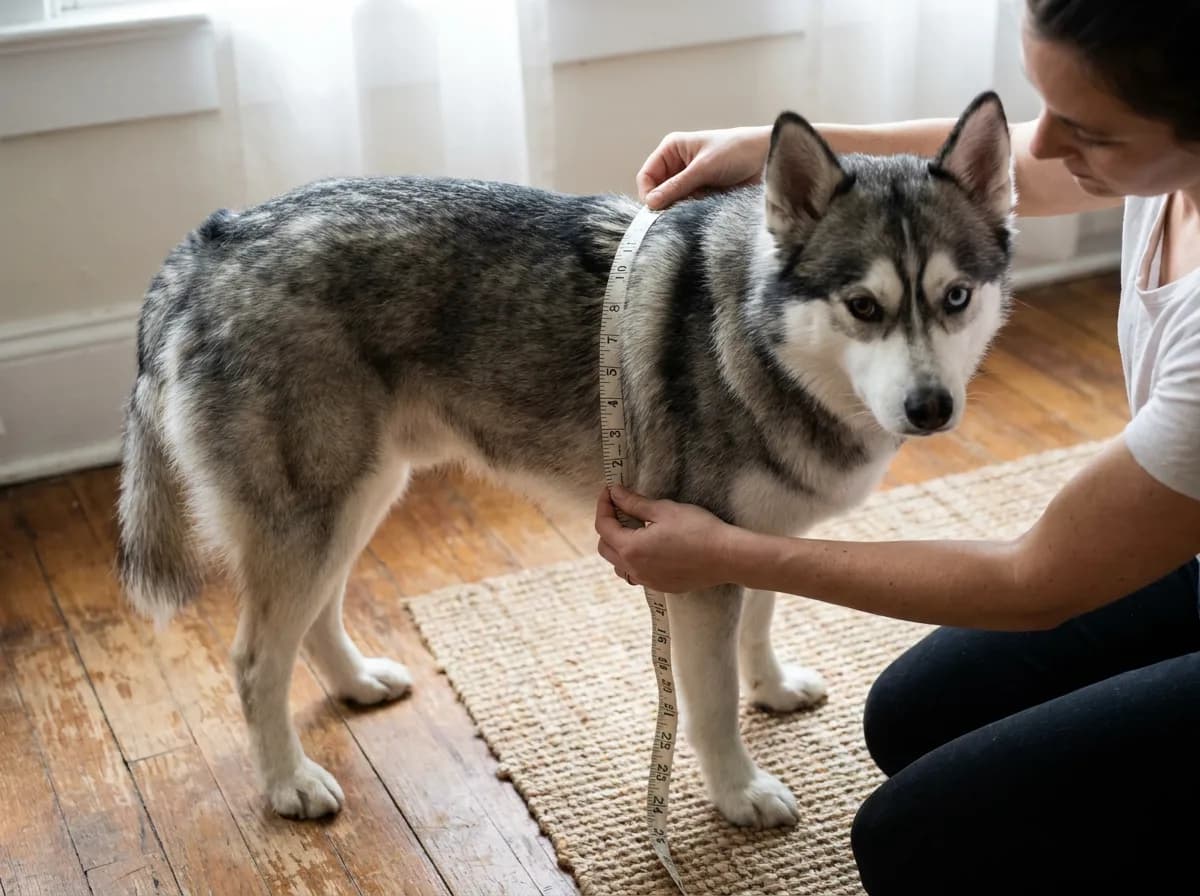
A Frisco 30-inch gate and playpen needs its own fit check: opening width, bar spacing, mounting, and the dog’s climbing behavior. A Frisco six-foot traffic leash should also suit the adult dog’s weight and your ability to hold it securely.
Keep your growth trend record nearby when choosing adjustable equipment, but fit the item to today's dog. An item selected only for an imagined adult size may be unsafe or uncomfortable now. Read each manufacturer's instructions because different products use different measuring points.
The three measurement checklist combines chest circumference, body length, and standing height because each answers a different fit question. A harness needs the specified chest measurement, while a carrier also needs usable floor length and headroom. Keep these figures beside the growth trend record and current weight. Together they help you spot when equipment should be adjusted or replaced rather than waiting for visible discomfort.
- Stand the dog comfortably on a nonslip floor, with another person helping if needed.
- Measure chest circumference at the location specified by the harness maker.
- Measure body length using the equipment maker's defined start and end points.
- Measure standing height as required for the crate or carrier.
- Compare with internal usable dimensions and the stated weight limit.
- Recheck the fit after adjustment and as the dog grows.
Harnesses need a fit check, not just a size name
A Frisco Padded No Pull Dog Harness, Small is relevant only if your Pomsky's measurements match that specific size chart. Small is a manufacturer category, not a Pomsky recommendation. Choose a different size or product when the measurements do not fit.
Check that straps do not interfere with the front legs and that the dog cannot back out during ordinary movement. Practice putting the harness on calmly and reassess after a walk. Padding does not compensate for poor fit, and an adjustable strap still has a defined usable range.
A carrier's weight rating is only one limit
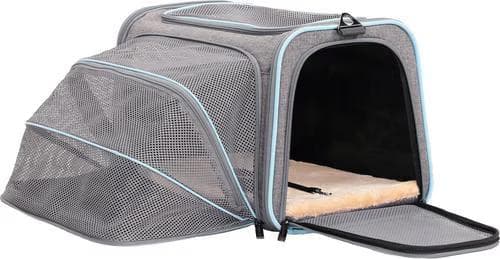
The Petsfit Expandable Carrier, 19 x 12 x 12 inches may be worth comparing for a sufficiently small adult, but many Pomskies will need a different arrangement. Check the manufacturer's internal dimensions, usable configuration, and weight limit against your dog's actual measurements before purchasing.
For airline travel, verify the carrier and pet rules with the operating airline for the specific trip. An expandable side section may add room while stationary but does not necessarily count as usable space during transport. Your dog must fit the travel configuration comfortably, not merely the opened display version.
Plan the rest area around the whole dog
A crate or bed should accommodate comfortable positions, not just a curled-up sleeping shape. Measure the available floor space and check how the dog enters, stands, turns, and rests. If a divider is used for a growing puppy, follow the manufacturer's directions and revise the space as the dog grows.
A Pet Parents Pawtect Blanket, Small can protect a suitably sized resting surface, but check dimensions before treating it as full coverage for an adult Pomsky. Remove bedding a dog tears or swallows. The goal is a comfortable, manageable area rather than a collection of items bought for the breed name.
Leave room in the budget for growth
Puppies may outgrow some equipment before reaching adulthood. Buy essentials first, select sensible adjustment ranges, and postpone decorative extras until fit is clearer. Our Pomsky price and cost guide includes replacement equipment in the ownership plan.
Ask the breeder or rescue which supplies come with the dog, then check whether they still fit. A carrier or harness supplied with a puppy may need replacing well before growth ends. Put those replacements in the budget alongside the purchase or adoption fee.
Coat care tools can often remain useful through those changes. A gently used aumuca Self Cleaning Slicker Brush may suit part of the routine, with a groomer's advice about reaching the particular coat safely. Grooming also gives you a regular opportunity to notice changing fit around harness contact points.
Frequently asked questions
An F1 Pomsky does not always stay smaller than a Husky. F1 describes the parental cross, while inherited size traits and individual growth still vary. Ask for measured mature relatives, preferably several from the same family, and plan around a range rather than treating the generation label as a weight limit.
Puppy paw size alone cannot reliably predict adult weight and is not a dependable adult-weight calculator. Coat, posture, proportions, and age can change how large they look. A dated growth record and measurements from mature relatives provide more useful planning evidence. If equipment fit is the immediate concern, measure the actual puppy and check the maker’s chart instead of purchasing from an adult prediction.
A small Pomsky should not eat more simply to match another dog or an online chart. Ask your veterinarian to assess growth, diet, and body condition. A healthy smaller individual may have no catching up to do, while unexpected growth changes need an individualized assessment. Bring a record of food amounts, treats, recent weights, and any appetite changes so the conversation is based on the dog’s actual routine.
No, a fluffy coat does not mean a Pomsky is overweight. Coat volume can make a lean dog look broad, and a photograph cannot reliably assess body condition. Use current weight records and a hands-on body-condition assessment with your veterinary team rather than judging by fluff alone. A consistent side-view photograph can complement that record, but the camera angle and coat length should never replace the physical assessment.

Coreen Saito is a pet writer and longtime shelter volunteer with more than a decade in animal rescue. She covers cat behavior, breed care, and the small, ordinary science of sharing a life with companion animals, with a particular focus on honest takes about the products and decisions that actually matter. At home in Arizona, she's outranked by Mac (a dog with the loudest opinion in the house), Rebel (a cat who governs by quiet authority), and Meri (an orange tabby who runs the late shift and the laundry basket). She writes about all three, plus the rescues that keep coming through her life, at LifeWithMinty.com.
Sign up for expert-backed reviews and safety alerts all in one place.