Cockapoo vs Cavapoo: Which Is Right for You?
Cockapoo vs Cavapoo compared: the Cockapoo is the playful, energetic Cocker Spaniel cross, the Cavapoo the calmer Cavalier cuddler. See how size, coat, shedding, health, lifespan, and cost stack up before you choose.

Petful is reader supported. As an affiliate of platforms like Amazon and Chewy, we may earn a commission when you buy through links on this page. There is no extra cost to you.
The cockapoo vs cavapoo decision comes down to one thing above all: the spaniel side of the family, because a Cockapoo carries the busy, work-bred energy of a Cocker Spaniel crossed with a Poodle, while a Cavapoo blends the calm, cuddly Cavalier King Charles Spaniel with a Poodle. Both are among the most popular doodle mixes in the United States and the United Kingdom, both are small companion dogs that live roughly 12-15 years, and both can produce low-shedding coats. But temperament, energy, and daily needs pull in different directions. This guide compares size, coat, shedding, trainability, health, and cost so you can match the dog to your actual lifestyle instead of the label.
- 1A Cockapoo is Cocker Spaniel x Poodle: playful, high-energy, needs more daily exercise and mental work
- 2A Cavapoo is Cavalier King Charles Spaniel x Poodle: calmer, softer, more of a lapdog and a better fit for quieter homes
- 3Both are small (usually 9-18 lb for toy and miniature crosses), both live about 12-15 years, and neither is truly hypoallergenic
- 4Coat and shedding vary by which parent each dog favors, so no cross is guaranteed low-shed
- 5The right choice is the one that matches your energy, time, and home, not the one with the cuter name

Sign up for expert-backed reviews and safety alerts all in one place.
Cockapoo vs Cavapoo: The Quick Answer
If you want the short version, here it is. A Cockapoo (Cocker Spaniel crossed with a Poodle) is the more energetic, playful, and outgoing of the two. It thrives with an active owner who can give it a good hour or more of exercise plus plenty of mental stimulation. A Cavapoo (Cavalier King Charles Spaniel crossed with a Poodle) is generally calmer, softer, and more content to curl up on the couch, which makes it a strong pick for gentler households, first-time owners, and smaller homes.
Neither breed is officially recognized by the American Kennel Club, because both are crossbreeds rather than purebreds. The parent breeds are recognized: the Cocker Spaniel, the Cavalier King Charles Spaniel, and the Poodle all appear in AKC and Kennel Club registries. That parentage is where every real difference between these two doodles begins.
| Trait | Cockapoo | Cavapoo |
|---|---|---|
| Parent breeds | Cocker Spaniel x Poodle | Cavalier King Charles Spaniel x Poodle |
| Typical adult weight | 12-24 lb (toy to miniature) | 9-18 lb |
| Typical adult height | 10-15 in | 9-14 in |
| Energy level | High, playful, busy | Moderate, calmer, cuddly |
| Exercise needs | 60+ minutes daily | 30-60 minutes daily |
| Coat | Wavy to tightly curly | Wavy to curly, often softer |
| Shedding | Low to moderate | Low to moderate |
| Lifespan | About 12-15 years | About 12-15 years |
| Best for | Active homes, dog-experienced owners | Quieter homes, first-time owners |
For most families the deciding factor is honest self-assessment of your energy and schedule. Read on for the full breakdown, and if you are already leaning toward one, our dedicated Cockapoo breed guide and Cavapoo breed guide go deeper on each.
What Is a Cockapoo?
The Cockapoo is a cross between a Cocker Spaniel (American or English) and a Poodle, usually a Toy or Miniature Poodle. It is one of the oldest intentional doodle crosses, with breeders in the United States developing the mix as far back as the 1960s, well before the "doodle" boom. That long history means Cockapoo litters are often more predictable than newer designer crosses.
Cockapoos are small dogs. A Toy Cockapoo (bred from a Toy Poodle) typically weighs around 12 pounds, while a Miniature Cockapoo lands closer to 13-18 pounds, and larger Maxi crosses from a standard-leaning line can reach into the low 20s. For a fuller size breakdown, see our guide to a Cockapoo full grown.
Petful may earn a commission when you click through to Chewy, at no extra cost to you.

The Cocker Spaniel half is a bird dog, bred to flush and retrieve game, so Cockapoos tend to be busy, curious, and driven to interact with their people. The Poodle half adds intelligence and a lower-shedding coat. The result is a playful, affectionate companion that wants to be part of the action.
- The Cockapoo predates most modern doodle crosses, with deliberate Cocker Spaniel x Poodle breeding documented in the U.S. since the 1960s. Neither the AKC nor the UK Kennel Club recognizes it as a breed, since it is a hybrid.
You will also see Cockapoos described by generation, and it is worth understanding the shorthand before you talk to a breeder. An F1 Cockapoo is a first-generation cross with one purebred Cocker Spaniel parent and one purebred Poodle parent, which gives the most hybrid vigor but the least predictable coat. An F1b Cockapoo is an F1 bred back to a Poodle, so it inherits more Poodle genetics, a curlier coat, and typically the lowest shedding of the common generations. Multigenerational (F2, F3, and beyond) Cockapoos come from two Cockapoo parents and tend to breed truer over time. If a low-shed coat is your priority, an F1b is usually the safest generation to ask for in either this cross or the Cavapoo.
What Is a Cavapoo?
The Cavapoo (also spelled Cavoodle, especially in Australia and the UK) is a cross between a Cavalier King Charles Spaniel and a Poodle, again usually a Toy or Miniature Poodle. It is a newer cross than the Cockapoo, rising sharply in popularity over the last two decades as one of the most sought-after small companion mixes.
Cavapoos are typically a touch smaller than Cockapoos, generally weighing 9-18 pounds and standing 9-14 inches at the shoulder, though the exact size depends on the Poodle parent. The Cavalier King Charles Spaniel is a toy breed developed as a lap companion for royalty, not a working dog, and that lineage is the single biggest reason Cavapoos lean calmer and cuddlier than Cockapoos.
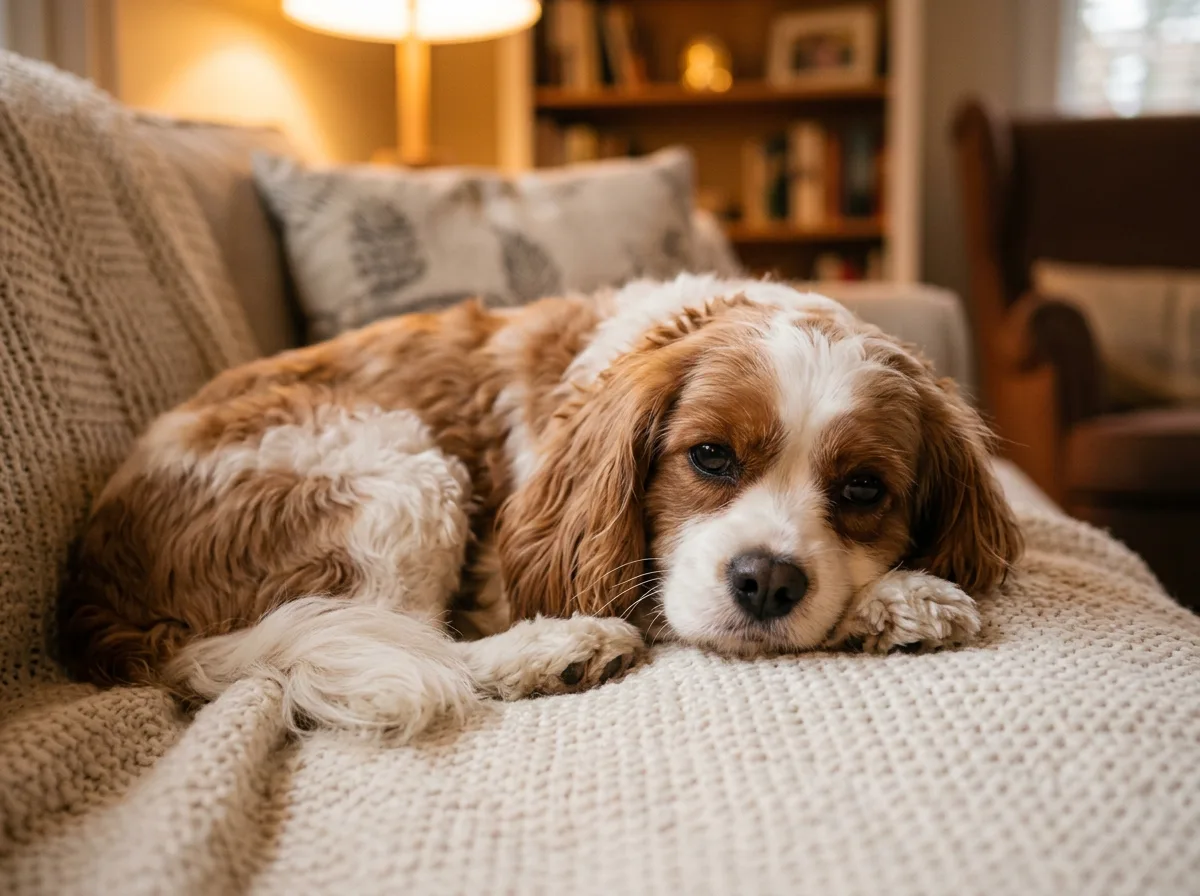
The Poodle contribution is the same as in the Cockapoo: intelligence, a curl-prone coat, and reduced shedding relative to many breeds. What changes is the spaniel side. Where the Cocker was bred to work a field, the Cavalier was bred to sit on a lap, and that difference shows up in daily temperament.
- The Cavapoo pairs the Cavalier King Charles Spaniel, a toy companion breed, with a Poodle. Because the Cavalier is a lap dog rather than a gundog, Cavapoos generally have a lower baseline energy than Cockapoos.
The same generation labels apply to the Cavapoo. An F1 Cavapoo (purebred Cavalier crossed with a purebred Poodle) is the most common and gives the classic soft, teddy-bear look many buyers want, while an F1b Cavapoo (an F1 bred back to a Poodle) trades a little of that Cavalier roundness for a curlier, lower-shedding coat. Because the Cavalier King Charles Spaniel carries a well-documented risk of inherited heart disease, the generation matters less here than the health testing behind it. A responsible Cavapoo breeder should be able to show a cardiac clearance on the Cavalier parent no matter which generation the puppy is. Petful’s separate guide to Cavapoo prices breaks down breeder, adoption, and lifetime costs.
Cockapoo vs Cavapoo: Size and Appearance Compared
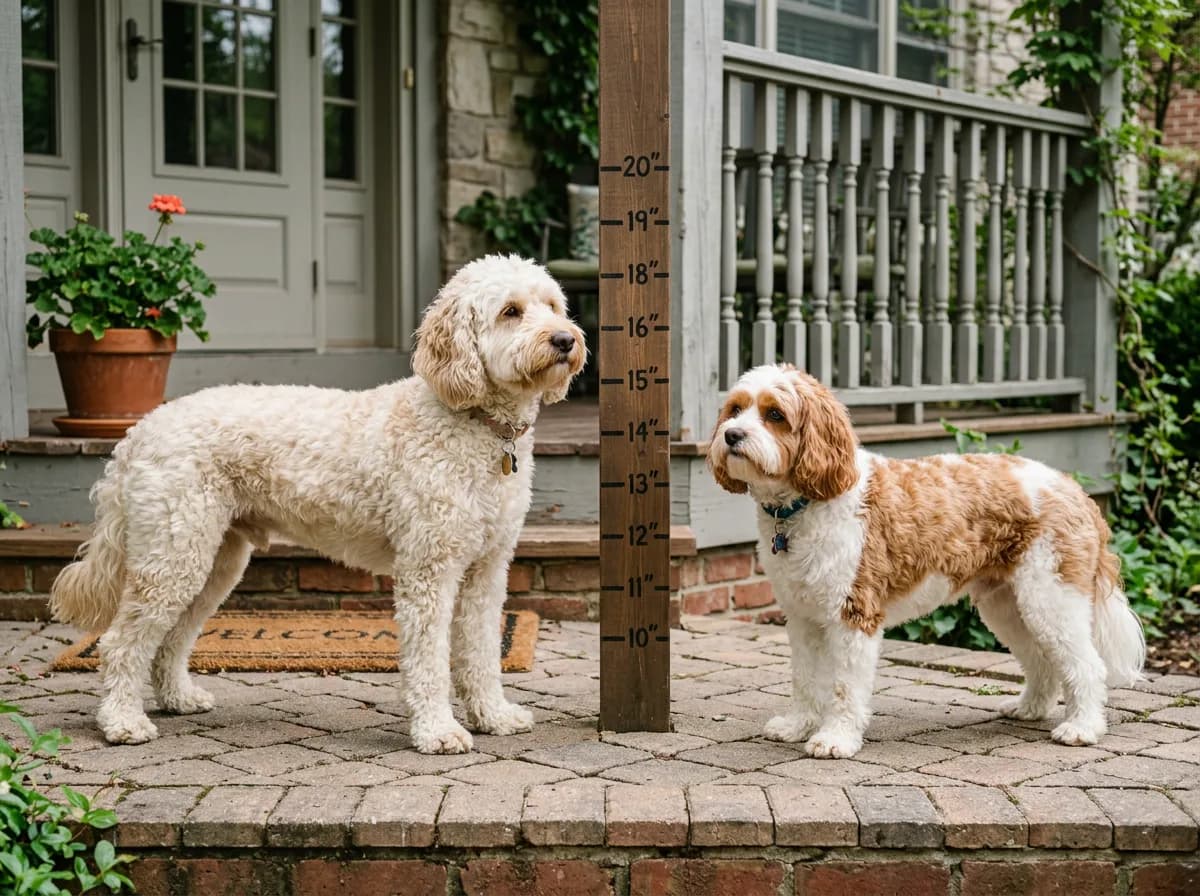
On size, the two overlap heavily but the Cavapoo skews slightly smaller. Both are small dogs suited to apartments and houses alike, and in both breeds the final adult size is driven by whether a Toy or Miniature Poodle was used and by the size of the spaniel parent.
Cockapoos usually finish at roughly 10-15 inches tall and 12-24 pounds. Cavapoos usually finish at roughly 9-14 inches and 9-18 pounds. In practice, a miniature-line Cockapoo and a larger Cavapoo can be nearly the same size, so weight alone is a poor way to tell them apart.
Appearance is where the spaniel genetics show. Cockapoos often have the longer muzzle and the busier, more athletic build of the Cocker Spaniel. Cavapoos tend toward the rounder head, larger eyes, and softer, more doll-like face of the Cavalier. Coat color is broad in both: apricot, cream, red, chocolate, black, sable, and parti (two-color) patterns all appear.
- Because appearance and size vary so much within each cross, ask a breeder to show you both parent dogs. The parents are the best predictor of how big your puppy will get and what its coat will do.
Cockapoo vs Cavapoo Temperament: Energetic vs Calm
This is the heart of the comparison. Both dogs are affectionate, people-focused, and good with families, but they express it differently.
Petful may earn a commission when you click through to Chewy, at no extra cost to you.
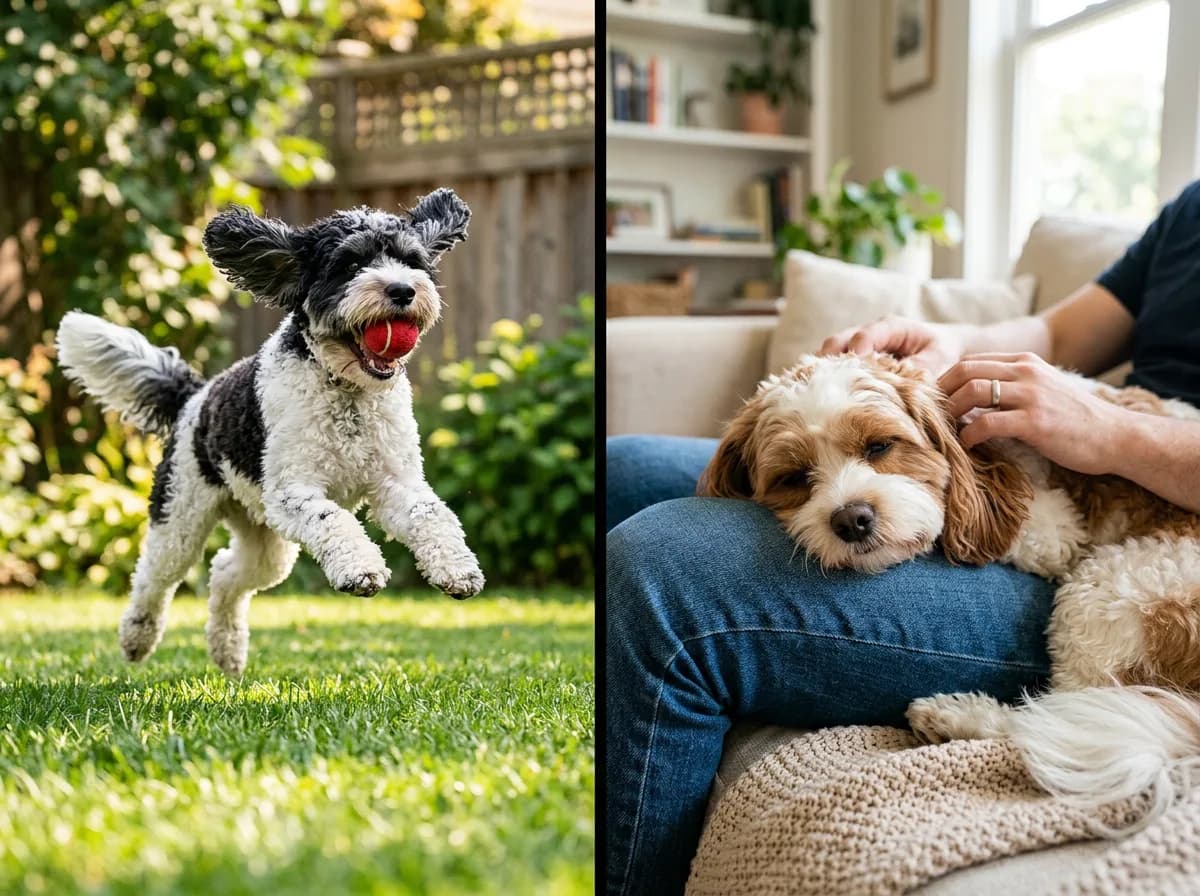
The Cockapoo is outgoing, playful, and eager to be involved in whatever the household is doing. It brings the Cocker Spaniel's enthusiasm, which is wonderful for active families and can be a lot for a quiet one. Cockapoos generally want more interaction, more play, and more stimulation.
The Cavapoo is gentler and more laid-back. It still loves play and company, but it is more content to settle, snuggle, and follow you from room to room at a relaxed pace. That calmer default is a big part of why Cavapoos are so often recommended for first-time owners, families with young children, and seniors.
Both breeds are strongly bonded to their people, which is a plus for companionship but a risk for separation anxiety in either dog if left alone too long. Neither is a good fit for a home where the dog will be by itself all day.
- Cockapoos and Cavapoos are companion dogs bred to be with people. Left alone for long stretches, either can develop separation anxiety, which shows up as barking, chewing, or house-soiling. Plan for company, a dog walker, or daycare if you work long hours.
Which is better with kids and other pets?
Both crosses are among the more family-friendly small dogs, and both generally do well with children and other animals when raised with them and socialized early. The differences are ones of degree. The Cavapoo's gentle, patient default often makes it the easier match for a home with very young or boisterous children and for a household that wants a low-drama companion for a resident cat or senior dog. The Cockapoo's higher energy and playfulness can be a wonderful fit for older, active kids who will engage it, but that same enthusiasm can be overwhelming for a toddler or an elderly pet if the dog is under-exercised. With either breed, the non-negotiables are the same: supervise interactions with small children, teach children how to handle a small dog gently, and introduce other pets slowly. A well-exercised dog of either cross is a far better housemate than an under-exercised one, regardless of breed.
Which is calmer, Cavapoo or Cockapoo?
The Cavapoo is generally the calmer of the two. Its Cavalier King Charles Spaniel parent is a lap companion, not a working gundog, so its baseline energy and drive sit lower than the Cockapoo's Cocker Spaniel side. If a mellow, cuddly temperament is your top priority, the Cavapoo is usually the safer bet, though individual dogs vary and early socialization and training shape adult behavior in both.
Energy Level and Exercise Needs
Energy is the practical, day-to-day version of the temperament difference, and it is where many owners under-plan.
A Cockapoo typically needs 60 minutes or more of real activity every day: brisk walks, off-leash running where safe, fetch, and games. It also needs mental work such as training, food puzzles, or scent games, because a bored Cockapoo will invent its own entertainment, and you will not like the results.
A Cavapoo is usually satisfied with 30-60 minutes of daily exercise plus normal indoor play. It still needs walks and enrichment, but its lower drive means it is more forgiving of a rest day and more willing to match a calmer household rhythm. Before you choose, track your own week honestly: if you can reliably deliver an hour-plus of active exercise and training every day, a Cockapoo will reward it, and if your realistic ceiling is a solid daily walk plus play, a Cavapoo is the more comfortable fit.
- Both crosses are smart, and smart under-exercised dogs get destructive. A tired dog is a well-behaved dog, so build the daily walk and a few minutes of training or puzzle work into your routine from day one.
Both breeds do best with mental stimulation on top of physical exercise. Their Poodle heritage makes them smart, and smart dogs get destructive when under-stimulated. To learn how much running around each does at maturity, our Cockapoo temperament guide covers energy management in depth.
Trainability and Intelligence
Both crosses are highly trainable, and for the same reason: the Poodle is one of the most intelligent dog breeds in the world, and both spaniel parents are biddable and people-pleasing.
Petful may earn a commission when you click through to Chewy, at no extra cost to you.
Cockapoos are quick studies and often excel at obedience, tricks, and dog sports thanks to their Cocker Spaniel work ethic and Poodle brains. Their energy makes training essential rather than optional, and it channels their drive productively.
Cavapoos are equally bright but tend to be a little softer and more sensitive, responding best to gentle, reward-based methods. Harsh corrections can shut down either breed, but the more sensitive Cavapoo especially.
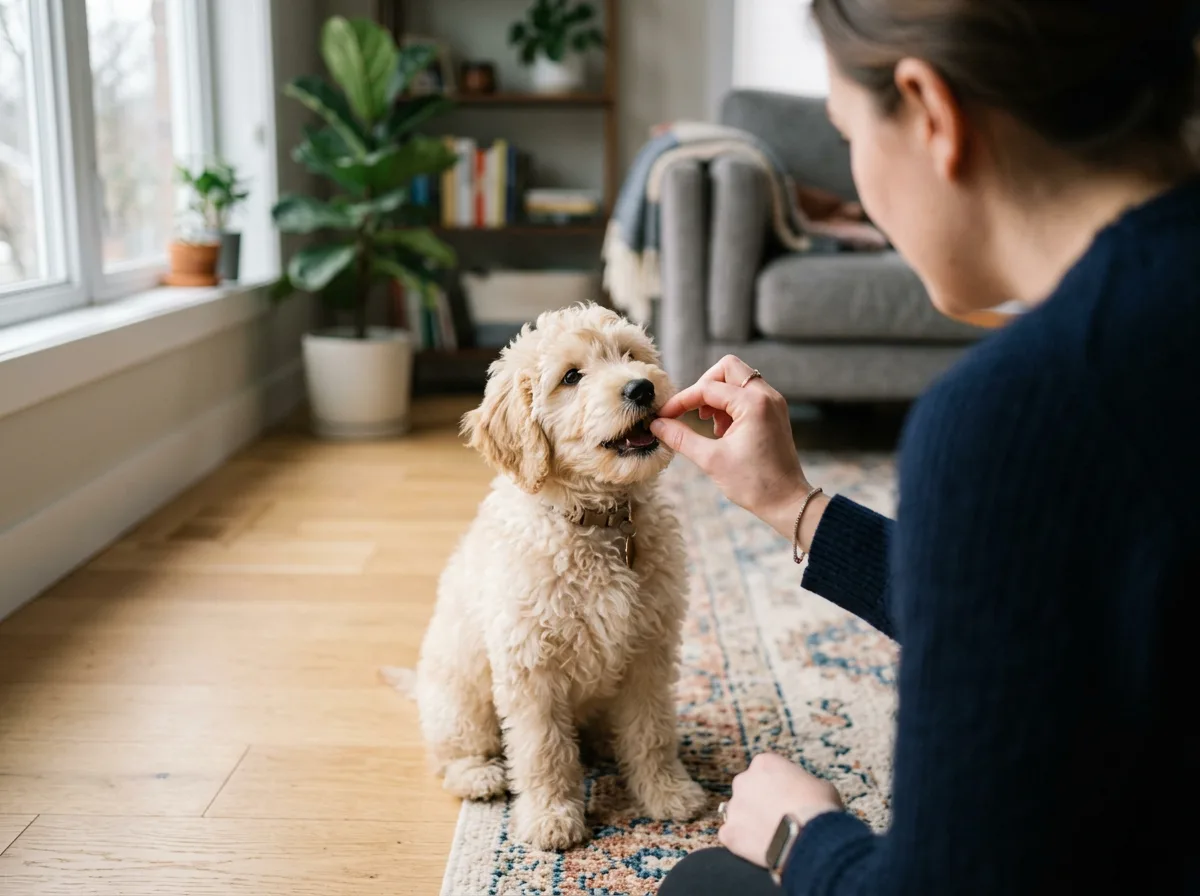
Both breeds respond well to positive reinforcement started in puppyhood. Early socialization to people, other dogs, sounds, and handling pays off for life, and it is especially important for reducing the anxiety and barking both crosses can develop.
The two crosses do tend to differ in what they find hardest, and knowing that up front lets you plan the right training. For a Cockapoo the challenge is usually managing drive and impulse: a bright, busy dog that will happily learn a dozen commands but also invents its own games when under-stimulated, so structured outlets like scent work, fetch with rules, and short daily training reps keep the brain productively occupied. For a Cavapoo the challenge is usually building confidence and independence: the sensitive, people-bonded temperament that makes it so trainable also makes it prone to leaning too hard on its owner, so gentle exposure to being alone, handled by strangers, and calm in new places matters as much as any obedience cue. Crate training and a predictable routine help both. House training tends to take patience in either small breed, since small dogs have small bladders, so frequent trips out and a consistent schedule beat frustration every time.
- Both crosses bond hard, so the kindest thing you can do for a new puppy is teach it that being briefly alone is normal and safe. Short, calm departures from the very first week build independence and are the best insurance against the separation anxiety both breeds are prone to.
Grooming, Coat Types, and Shedding
Grooming is one of the biggest real-world commitments with either dog, and it is where the "hypoallergenic" myth causes the most disappointment. Both crosses have coats that keep growing and need regular clipping, plus frequent brushing to prevent mats.
Coat type in both breeds runs from wavy to tightly curly, depending on how much Poodle a given dog inherited. Curlier coats shed less but mat more and need more brushing. Wavier or straighter coats (more spaniel influence) may shed a bit more but are often easier to brush.
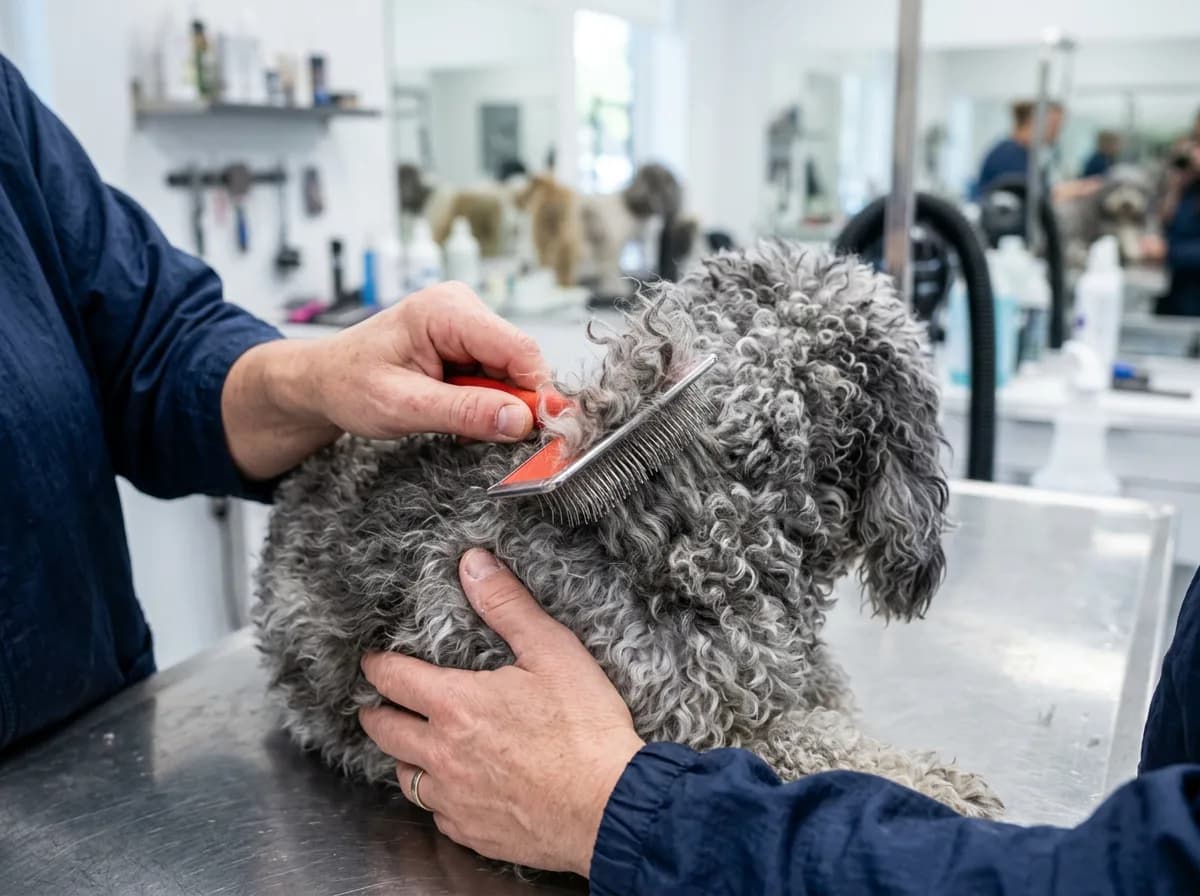
Plan on brushing several times a week (ideally daily for curly coats) and a professional groom every 6-8 weeks for either breed. For a full routine, see our Cockapoo grooming guide; the same principles apply to a Cavapoo.
There is also a coat-change stage that catches many first-time doodle owners off guard, and it hits both breeds. Somewhere between about six and twelve months of age the soft puppy coat is replaced by the coarser adult coat, and during that transition the coat mats faster than at any other time in the dog's life. Owners who coasted through puppyhood on light brushing suddenly find dense mats forming behind the ears, in the armpits, and around the collar. Get ahead of it with daily brushing during those months, use a slicker brush and a metal comb to reach the skin rather than just the surface, and introduce the grooming table, clippers, and dryer early so the dog is calm for the professional. The floppy, hair-filled ears both crosses inherit also need attention: check them weekly, keep them dry, and have the groomer or vet manage the hair that grows in the canal, because trapped moisture is the single most common cause of ear infections in doodles.
What sheds more, Cockapoo or Cavapoo?
Neither breed reliably sheds more than the other, because shedding in both is driven by which parent the individual dog favors rather than by the cross itself. A spaniel-leaning Cockapoo or Cavapoo with a wavier coat will shed more than a Poodle-leaning one with a tight curl. On average both are considered low to moderate shedders, and both are marketed as "low-shedding," but no doodle is guaranteed non-shedding. If a low-shed coat matters to you, choose a puppy with a curlier, more Poodle-like coat and confirm the coat type with the breeder. Our guide to whether Cockapoos shed breaks this down in detail.
- No dog is truly hypoallergenic. Both Cockapoos and Cavapoos can trigger allergies because the allergen (the Can f 1 protein) is in dander, saliva, and urine, not just shed hair. A low-shedding coat may spread less dander around your home, but it does not eliminate the allergen. Spend time with the specific dog before committing if anyone in the household has allergies.
Health and Lifespan
Both are generally healthy small dogs, and hybrid vigor from crossbreeding can help, but both inherit risks from their parent breeds. Buying from a breeder who health-tests the parents is the single best thing you can do to stack the odds in your favor.
Petful may earn a commission when you click through to Chewy, at no extra cost to you.
Common concerns to ask about in a Cockapoo include hip dysplasia, patellar luxation (slipping kneecaps), progressive retinal atrophy and other eye conditions, and ear infections (the floppy spaniel ears trap moisture). The Cocker Spaniel side also carries some risk of eye and ear issues.
Common concerns in a Cavapoo include mitral valve disease (a heart condition the Cavalier King Charles Spaniel is notably prone to), syringomyelia and other neurological conditions from the Cavalier line, patellar luxation, and eye conditions. The Cavalier's heart risk is the one to press a breeder on hardest.
Mitral valve disease deserves a closer look because it is the defining health difference between these two crosses. In the Cavalier King Charles Spaniel it is the leading cause of death, and veterinary cardiology breeding schemes recommend that Cavaliers used for breeding be over a certain age and clear of a heart murmur, with a parent who is also clear, before they produce puppies. A Cavapoo inherits a diluted but real version of that risk. Early signs to watch for over the dog's life include a new cough, tiring on walks, or faster breathing at rest, all of which warrant a veterinary cardiac exam. Syringomyelia, a condition where fluid-filled cavities form in the spinal cord, is the other Cavalier-line concern; signs include air-scratching at the neck and shoulder area, sensitivity around the head, and yelping when picked up.
Both crosses also share risks that trace to the Poodle and to their small size. Patellar luxation (a kneecap that slips out of its groove) is common in small dogs and shows up as a skipping or hopping gait. Progressive retinal atrophy, a gradual degeneration of the retina that can lead to blindness, has a DNA test available in Poodles and both spaniel parents, so ask whether the parents were screened. Dental disease is near-universal in small breeds and is one of the most preventable, which is why at-home tooth brushing and professional cleanings matter so much for either dog.
- For a Cavapoo, ask specifically about the Cavalier parent's heart (cardiac) clearance because of mitral valve disease. For a Cockapoo, ask about hip and eye testing. Reputable breeders of either cross health-test the parents and will show you the results. Walk away from any breeder who cannot.
Preventive care that adds healthy years
Genetics set the ceiling, but daily care decides where in the 12-15 year range a dog actually lands, and the preventive routine is nearly identical for both crosses. Keep either dog lean, because carrying extra weight strains the same joints, heart, and spine that are already the breeds' weak points. Brush the teeth several times a week and budget for professional dental cleanings, since untreated dental disease drives infection and heart strain in small dogs. Clean and dry the ears regularly, as the floppy, hair-filled ears both crosses inherit trap moisture and are a frequent cause of infection. Stay current on parasite prevention and annual wellness exams, and add a mid-life senior blood panel from around age seven so problems are caught before they are symptomatic. For a Cavapoo especially, ask your veterinarian to listen to the heart at every visit so any new murmur is caught early.
What is the lifespan of a Cavapoo and Cockapoo?
Both breeds have a similar lifespan of roughly 12-15 years, typical for small dogs of their size. Good genetics from health-tested parents, a healthy weight, dental care, and regular veterinary checkups all push a dog toward the top of that range. Our Cockapoo lifespan guide covers how to maximize those years.
Cost to Buy and Own
Neither of these is a budget dog. Both are popular designer crosses, and popularity keeps prices high.
Purchase price for either a Cockapoo or a Cavapoo from a reputable breeder in the U.S. commonly runs in the low thousands of dollars, with the exact figure driven by location, coat color, size, and the breeder's health-testing standards. Rarer colors and highly sought lines cost more. For a detailed breakdown, see our Cockapoo price guide; Cavapoos sit in a broadly similar range.
Ongoing costs are also comparable and are dominated by the same categories for both breeds:
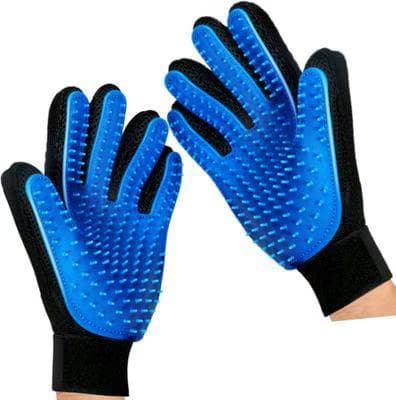
Petful may earn a commission when you click through to Chewy, at no extra cost to you.
| Cost category | What to expect |
|---|---|
| Professional grooming | Every 6-8 weeks, a recurring cost for both curly coats |
| Food | Quality small-breed diet, modest volume for a small dog |
| Routine veterinary care | Annual exams, vaccines, parasite prevention |
| Health screening or insurance | Worth it for both, given inherited-condition risk |
| Supplies and enrichment | Toys, puzzles, bedding, training gear |
The two costs new owners most often underestimate are professional grooming every 6-8 weeks and the vet care tied to inherited conditions. Pet insurance for a doodle is worth pricing early, before any pre-existing condition is on record.
Cost by region and life stage
Where you live moves the numbers more than which of the two crosses you pick. Purchase prices for both Cockapoos and Cavapoos run highest in and around major U.S. metros and lowest in rural areas, and in the U.K. the Cavapoo (Cavoodle) often commands a premium because of its popularity there. Rarer coat colors, smaller toy sizes, and health-tested show lines add to the price in either breed, while a puppy from an unproven backyard breeder will look cheaper up front and frequently costs far more in vet bills later.
Cost also shifts across the dog's life. The first year is the most expensive by a wide margin once you add the purchase price, the initial vaccine series, spay or neuter, microchipping, and the startup supplies (crate, bed, leash, toys, grooming tools). The adult years settle into a steadier rhythm dominated by grooming every 6-8 weeks, food, annual wellness care, and insurance. The senior years, roughly age eight onward, tend to climb again as inherited conditions surface, especially cardiac care for a Cavapoo and joint or eye care for either cross. Budgeting for all three stages, not just the puppy price, is the honest way to compare what these dogs really cost.
- Enroll either dog in pet insurance while it is a healthy puppy. Once a heart murmur, luxating patella, or eye condition is on the record it becomes a pre-existing condition and is typically excluded, which is exactly when a doodle owner most wants the coverage.
Barking, Separation Anxiety, and Apartment Living
Both breeds can live happily in an apartment given enough daily exercise and company. Their small size helps, but noise and separation anxiety are the two things to plan around.
Do Cavapoos bark less than Cockapoos?
Cavapoos tend to bark a little less than Cockapoos on average, because they are calmer and less driven overall. The Cockapoo's higher energy and alert Cocker Spaniel side make it a touch more vocal, especially when under-exercised or bored. That said, both breeds bark, and both can become nuisance barkers if left alone too long or under-stimulated. Barking in either dog is usually a symptom of unmet needs (exercise, attention, or enrichment) rather than a fixed trait, and consistent training plus a tired, well-companioned dog keeps it in check.
Separation anxiety is a genuine concern in both. Each was bred to be a close companion, so long solo days are hard on both, and anxiety is a leading cause of barking, chewing, and house-soiling. For apartment living, plan for company during the day and a reliable exercise routine.
Cons of a Cavapoo and Negatives of a Cockapoo
No breed is perfect, and honest downsides matter more than a sales pitch when you are choosing a dog for the next 12-15 years.
What are the cons of a Cavapoo?
The main cons of a Cavapoo are health risk, grooming demand, cost, and clinginess. Because of the Cavalier King Charles Spaniel parent, Cavapoos carry a real risk of inherited heart disease (mitral valve disease) and neurological conditions, so parent health-testing is essential. The curly coat needs frequent brushing and professional grooming every 6-8 weeks, or it mats. Cavapoos are expensive to buy, and because they bond so tightly, they are prone to separation anxiety and can struggle when left alone. They are also not guaranteed hypoallergenic despite the marketing.
What are the negatives of a Cockapoo?
The main negatives of a Cockapoo are high energy, grooming needs, potential for barking and anxiety, and inherited health risks. A Cockapoo needs a lot of daily exercise and mental stimulation, and an under-exercised one gets bored, destructive, and vocal. Like the Cavapoo, its coat requires regular brushing and grooming, it can develop separation anxiety, and it inherits risks such as hip dysplasia, eye conditions, and ear infections from its parent breeds. It is also a pricey dog to buy and to maintain.
For both crosses the recurring downsides are the same: a real grooming commitment, meaningful purchase and care costs, inherited health risks that make parent health-testing non-negotiable, and a bonding drive strong enough to cause separation anxiety. Go in with eyes open on all four.
Which Should You Choose?
Both are wonderful family companions, so the honest answer is that neither is "better," only better-suited to a given home. Line up your real life against the two profiles.
Choose a Cockapoo if you are active, can commit to an hour-plus of daily exercise and training, want a playful and outgoing dog to do things with, and have some dog experience or the time to channel a busier temperament.
Choose a Cavapoo if you want a calmer, cuddlier companion, are a first-time owner, live in a smaller or quieter home, have young children or older family members, and value a gentle, laid-back temperament over high energy.
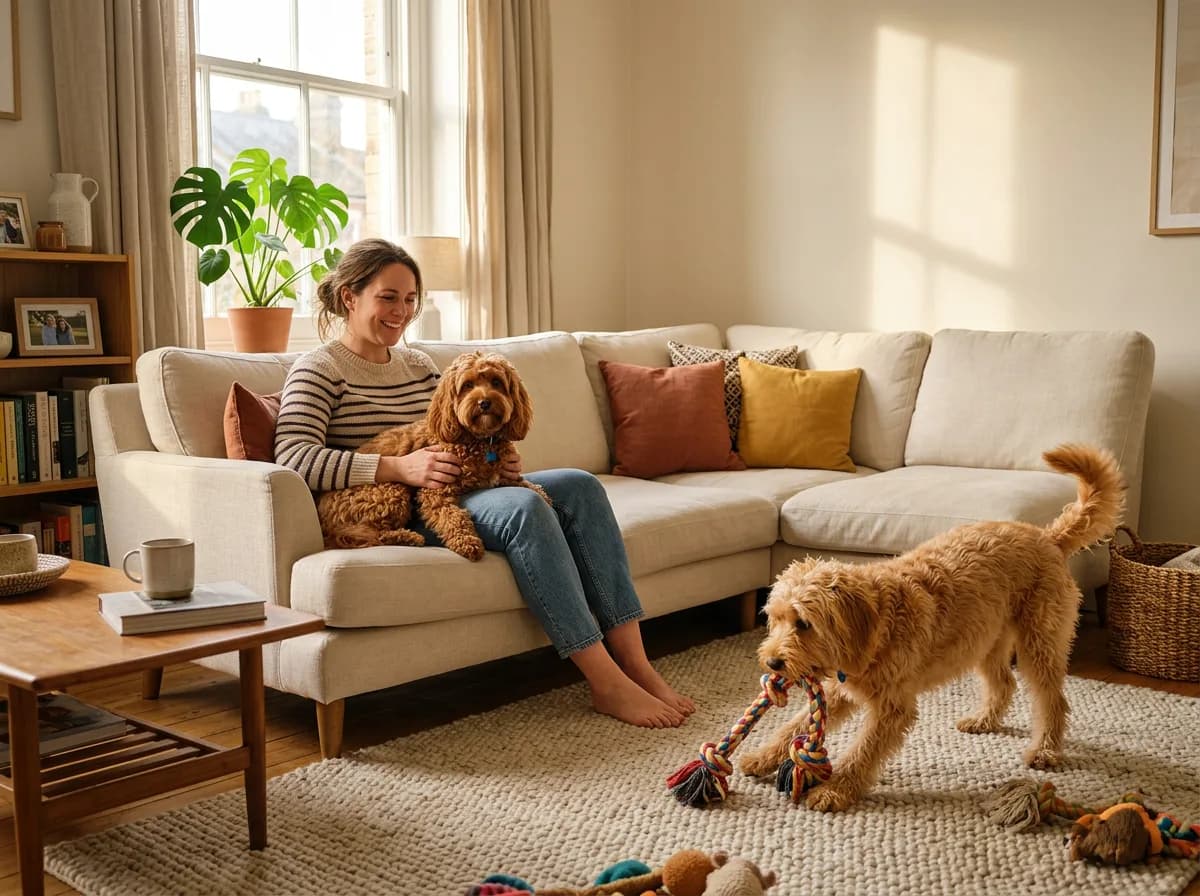
What is the nicest, calmest dog breed?
There is no single "nicest, calmest" dog breed, because temperament depends on the individual dog, its breeding, socialization, and training as much as on the breed. That said, among small companion crosses the Cavapoo is frequently cited as one of the calmest and most affectionate, thanks to its gentle Cavalier King Charles Spaniel parent, which is why it is so often recommended for first-time owners, families with children, and seniors. The Cavalier King Charles Spaniel itself, along with breeds like the Bichon Frise and the Pug, is also regularly named among the calmest, most people-friendly companions. Whatever the breed, early socialization and reward-based training do more to produce a calm, well-mannered dog than the label on the paperwork.
Whichever way you lean, read the full breed profiles before you commit: the Cockapoo guide and the Cavapoo guide cover each dog's needs in depth.
Frequently Asked Questions
The main cons of a Cavapoo are inherited health risk (the Cavalier King Charles Spaniel parent brings a real risk of mitral valve heart disease and neurological conditions), a curly coat that needs frequent brushing and professional grooming every 6-8 weeks, a high purchase price, and a strong bonding drive that can lead to separation anxiety when the dog is left alone. Cavapoos are also not guaranteed hypoallergenic despite how they are often marketed.
On average, yes, Cavapoos tend to bark a little less than Cockapoos because they are calmer and less energetic. The Cockapoo's higher drive and alert Cocker Spaniel side make it slightly more vocal, especially when bored or under-exercised. Both breeds bark, though, and barking in either is usually a sign of unmet exercise or attention needs rather than a fixed trait.
Neither reliably sheds more than the other. Shedding in both is determined by which parent the individual dog favors, not by the cross itself: a spaniel-leaning dog with a wavier coat sheds more than a Poodle-leaning dog with a tight curl. Both are considered low to moderate shedders, and neither is truly non-shedding.
Both breeds have a similar lifespan of roughly 12-15 years, which is typical for small dogs. Health-tested parents, a healthy weight, dental care, and regular veterinary checkups all help a dog reach the upper end of that range.
The Cavapoo is generally calmer. Its Cavalier King Charles Spaniel parent is a lap companion rather than a working gundog, so its baseline energy sits lower than the Cockapoo's Cocker Spaniel side. Individual dogs vary, and socialization and training shape adult behavior in both.
There is no single nicest, calmest breed, since temperament depends on the individual dog, its breeding, and its training. Among small companion crosses the Cavapoo is often named one of the calmest and most affectionate, and its parent the Cavalier King Charles Spaniel, along with breeds like the Bichon Frise, is regularly cited among the gentlest companions.
The Cavapoo is the calmer of the two. It is more content to relax and cuddle, while the Cockapoo is busier and more playful and needs more daily exercise to stay settled. If a mellow temperament is your priority, the Cavapoo is usually the better match.
The main negatives of a Cockapoo are its high energy (it needs 60 or more minutes of daily exercise plus mental stimulation, and gets bored and destructive without it), regular grooming and brushing to prevent mats, a tendency toward barking and separation anxiety if under-stimulated or left alone, inherited health risks such as hip dysplasia and eye and ear conditions, and a high cost to buy and maintain.

Coreen Saito is a pet writer and longtime shelter volunteer with more than a decade in animal rescue. She covers cat behavior, breed care, and the small, ordinary science of sharing a life with companion animals, with a particular focus on honest takes about the products and decisions that actually matter. At home in Arizona, she's outranked by Mac (a dog with the loudest opinion in the house), Rebel (a cat who governs by quiet authority), and Meri (an orange tabby who runs the late shift and the laundry basket). She writes about all three, plus the rescues that keep coming through her life, at LifeWithMinty.com.
Sign up for expert-backed reviews and safety alerts all in one place.