Cockapoo Temperament: Are They Good Family Dogs?
The cockapoo temperament is sweet, smart, affectionate and people-oriented, which makes them excellent family dogs. But that same devotion drives separation anxiety, and their sharp minds need real exercise and training.
Petful is reader supported. As an affiliate of platforms like Amazon and Chewy, we may earn a commission when you buy through links on this page. There is no extra cost to you.
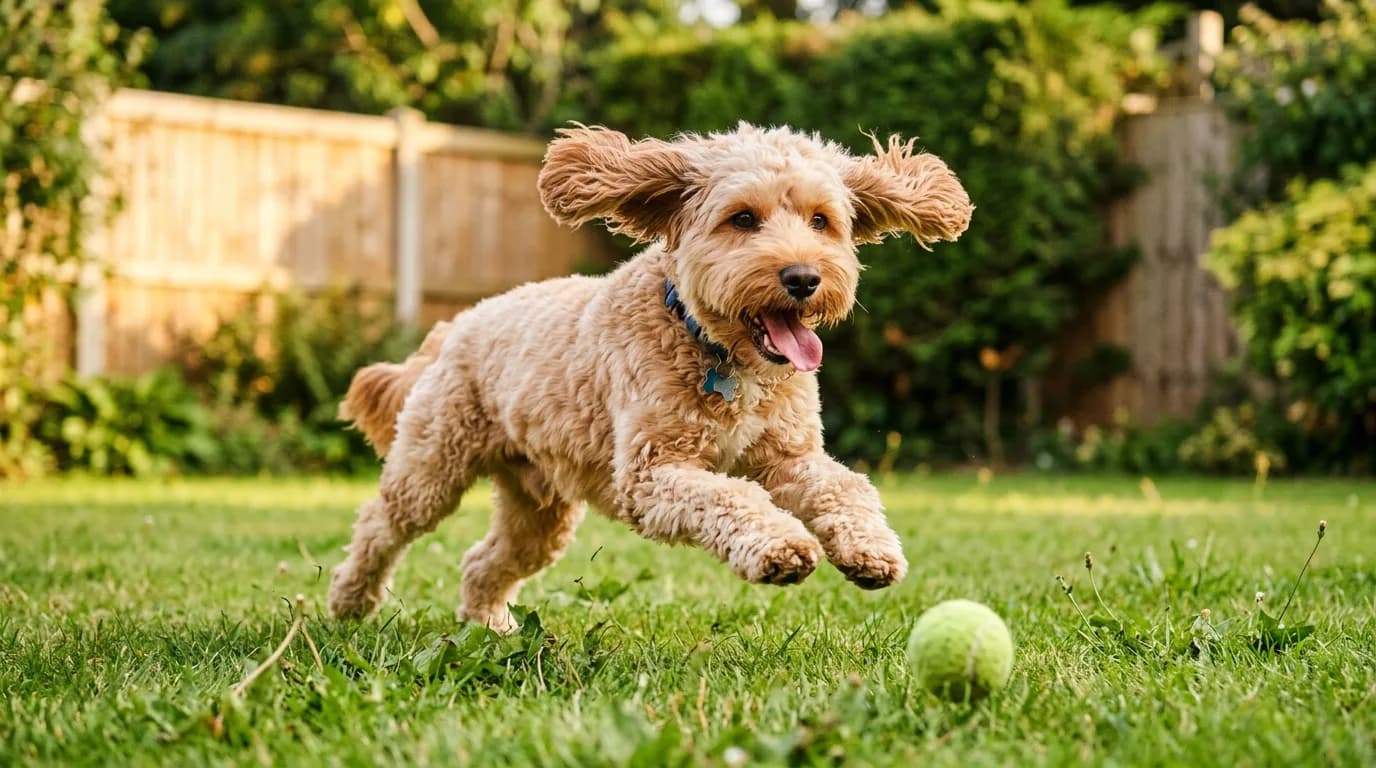
The cockapoo temperament is best summed up in four words that owners and breed clubs repeat again and again: sweet, smart, affectionate and people-oriented. As a cross between a Cocker Spaniel and a Poodle, two of the most intelligent and biddable companion breeds, the cockapoo inherits an outgoing, playful, eager-to-please nature that makes it one of the most popular family dogs on both sides of the Atlantic. The American Cockapoo Club and the Cockapoo Club of GB both describe the breed as gentle, sociable and highly trainable. But the same traits that make cockapoos so lovable, their deep attachment to people and their sharp minds, are also the source of their two most common problems: separation anxiety and boredom-driven mischief. This guide covers the full picture, the wonderful and the wearing, so you know exactly what you are signing up for.
- 1The cockapoo temperament is friendly, affectionate, intelligent and people-oriented, which makes them excellent family dogs.
- 2Their strong bond with people is a double edge: it drives easy training but also separation anxiety when they are left alone too long.
- 3Most cockapoo "behavior problems" (barking, nipping, chewing) trace back to under-exercise, boredom or poor socialization, not a bad temperament.
- 4Aggression is uncommon and not a breed trait; when it happens it is almost always fear, resource guarding or a lack of training, which are all manageable.

Sign up for expert-backed reviews and safety alerts all in one place.
Cockapoo Temperament and Personality Traits
Ask any cockapoo owner to describe their dog and you will hear the same handful of words: loving, clever, goofy, glued-to-me. Because the cockapoo is a designer cross rather than a standardized breed (no major kennel club, including the AKC, recognizes it), there is no official written temperament standard. What exists instead is a remarkably consistent picture drawn from breed clubs, trainers and thousands of owners. The core traits below are what almost every well-bred, well-socialized cockapoo shares.
Affectionate and People-Oriented
Above all else, cockapoos are affectionate. They were bred to be companions, not workers, and it shows in how relentlessly they seek out human contact. A cockapoo wants to be on your lap, at your feet or following you from room to room, and it thrives on physical closeness and attention. This is the single defining feature of the cockapoo temperament and the reason the breed is so beloved by families, retirees and first-time owners alike. It is also the trait that makes them poorly suited to a home where everyone is out all day, a point we return to below.
Intelligent and Highly Trainable
Both parent breeds are famously bright: the Poodle is routinely ranked among the two or three smartest dog breeds, and the Cocker Spaniel was bred as a working gundog that takes direction well. Their cockapoo offspring is quick to learn, responsive to reward-based training and eager to please, which is why the breed does so well in obedience, agility and as a therapy or assistance dog. Housetraining, basic manners and even complex tricks come faster to a cockapoo than to most breeds, provided the training is positive and consistent. That intelligence has a flip side, though: a bored, under-stimulated cockapoo will invent its own entertainment, often something you would rather it did not.
Playful, Energetic and Fun-Loving
Cockapoos are lively, bouncy and endlessly up for a game. They keep a puppyish, playful streak well into adulthood, and even a physically full-grown cockapoo often behaves like an adolescent until 18 to 24 months of age. They love fetch, tug, water, and any game that involves you. This energy is a genuine joy in an active household but needs an outlet: a cockapoo that does not get enough exercise and play will channel that energy into barking, digging or chewing instead. For a full picture of how the adult dog settles, see our cockapoo full grown guide on size and maturity.

Peanut butter soft chews with L-theanine, chamomile, and ashwagandha to ease hyperactivity and support calm, relaxed behavior.
Petful may earn a commission when you click through to Chewy, at no extra cost to you.
Social and Friendly With Almost Everyone
A well-socialized cockapoo is a social butterfly. They typically greet strangers, visitors, children and other dogs with a wagging tail rather than suspicion, which makes them poor guard dogs but wonderful companions. This friendliness is part of why they slot so easily into busy family life and why they are a top pick for households that want a dog everyone can handle. Early, positive exposure to lots of people, places and animals in puppyhood cements this trait; a cockapoo that misses that window can grow up more nervous or reactive, which is a training and socialization gap rather than a temperament fault.
- Both parent breeds were selected for centuries as biddable, people-focused companions and workers. Crossing two gentle, trainable breeds tends to produce a gentle, trainable dog. There is no official breed standard, so temperament comes from breed-club descriptions (American Cockapoo Club, Cockapoo Club of GB) and owner experience, not a kennel-club document.
The Trade-Off Built Into Every Cockapoo
It is worth naming the pattern early, because it explains almost everything else in this article. The cockapoo's greatest strengths, its love of people and its sharp mind, are inseparable from its greatest challenges. A dog that bonds this hard will struggle to be left alone. A dog this clever will find trouble if it is bored. Understand that trade-off, meet the needs on the good side, and the problems on the bad side mostly disappear. Ignore it, and you get the barking, anxious, mouthy dog that fills the breed's negative reviews.
Are Cockapoos Good Family Dogs?
Yes. Cockapoos are widely considered one of the best family dog choices available, and it is the number-one reason people buy the breed. Their affectionate, gentle, playful and highly trainable nature is almost tailor-made for a household with children, and their size (usually 12 to 24 pounds) is manageable for most homes. The caveat is not about the dog's temperament at all; it is about lifestyle. A cockapoo is a great family dog for a family that is home a lot and active. It is a poor fit for a family that is out of the house from morning to night, because the same devotion that makes it wonderful with the kids makes it miserable when everyone leaves.
Cockapoos and Children
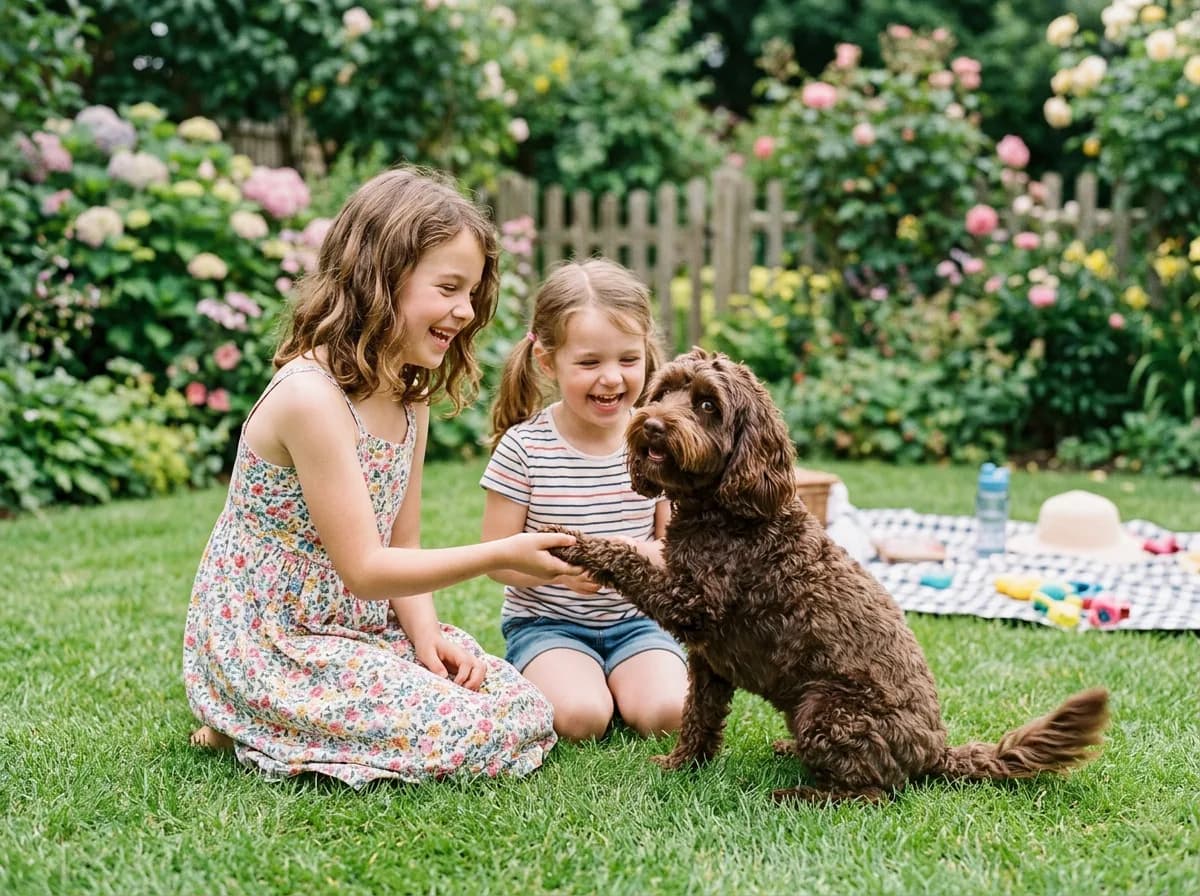
Cockapoos are generally excellent with children. They are patient, playful and rarely snappy, and their sturdy-but-small build (especially the popular miniature) means they can keep up with kids without being overwhelming. As with any breed, a few ground rules keep everyone safe: teach children to be gentle, never to disturb a dog that is eating or sleeping, and supervise interactions with toddlers, who can be clumsy and unintentionally rough. Because cockapoos are people-loving and forgiving, they tend to tolerate the chaos of family life better than many breeds, but supervision protects both the child and the dog.
Cockapoos and Other Pets
Cockapoos usually get along well with other dogs, cats and household pets, particularly when raised alongside them or socialized early. Their friendly, non-dominant nature means they rarely pick fights, and many happily share a home with other dogs, which also helps with the loneliness problem, since a companion animal can take the edge off time alone. The Cocker Spaniel side does carry a mild bird-and-small-animal chase instinct, so introductions to cats, rabbits or birds should be gradual and supervised, but most cockapoos settle into a multi-pet home without drama.
The One Real Requirement: Your Time
If there is a single honest caveat on "good family dog," it is this: a cockapoo needs a family that is around. This is a companion breed that does not cope with being left alone for a full workday. Families where someone works from home, works part time, or can arrange a dog walker or daycare are the ideal match. Families where the house is empty from 8am to 6pm should choose a more independent breed or rethink the schedule. Get that one thing right and the cockapoo is close to an ideal family dog.
- Give the dog a crate or bed that is a "child-free zone" it can retreat to, teach children to leave it alone when it is there, and involve older kids in training and feeding so the dog sees them as leaders too. A cockapoo that has its own safe space and clear routine is calmer and safer around a busy household.
Cockapoo Behavior Problems (and How to Manage Them)
Most cockapoos are easy dogs, but the breed does have a recognizable set of behavior problems, and nearly all of them come from the same root: a bright, sociable dog whose needs for company, exercise and mental stimulation are not being met. Address the cause and the behavior almost always resolves. Here are the four you are most likely to meet, and what actually fixes each.
Petful may earn a commission when you click through to Chewy, at no extra cost to you.
Separation Anxiety
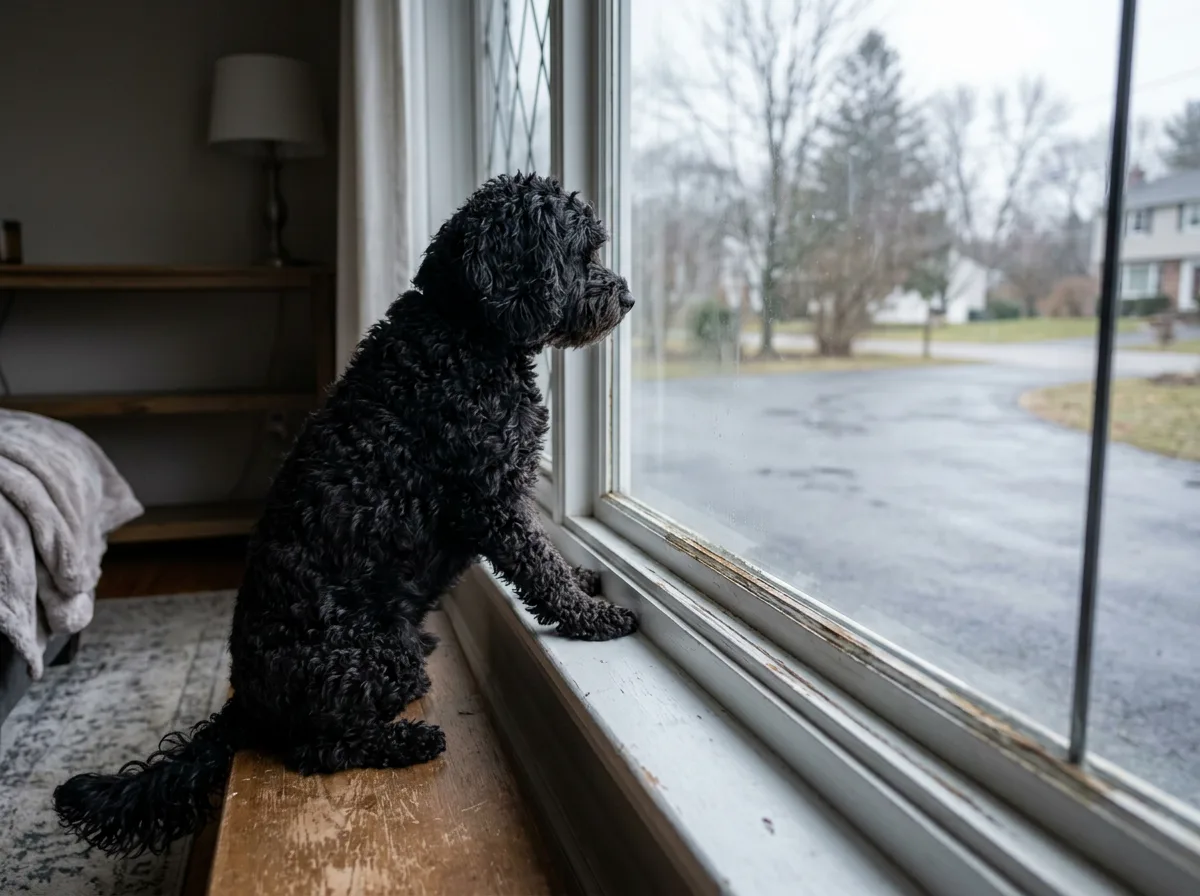
This is the big one, and it flows directly from the breed's devotion. A cockapoo left alone too long or too abruptly can develop genuine separation anxiety that shows up as constant barking or howling, house-soiling, drooling, pacing or destructive chewing when you are gone. It is not spite or "getting back at you"; it is panic. The fixes are gradual alone-time training from puppyhood (leaving for seconds, then minutes, then longer, always returning calmly), never making arrivals and departures a big emotional event, plenty of exercise before you leave, and enrichment (a stuffed Kong, a puzzle feeder) to occupy the dog. For serious cases, a dog walker, daycare or a certified behaviorist makes the difference. Our full cockapoo breed guide covers daily routine and how much alone time the breed can realistically handle.
Nipping and Mouthiness
Cockapoo puppies are mouthy, and new owners often worry that nipping during play is aggression. It almost never is. Puppies explore with their mouths and, during teething (roughly 3 to 6 months), chew and nip to relieve sore gums. Redirect the mouth onto an appropriate chew toy every time, yelp or stop play the instant teeth touch skin so the puppy learns bite inhibition, and never encourage rough hand-play. Most cockapoos grow out of nipping by 6 to 8 months with consistent redirection. If an adult is still mouthing hard, it usually signals over-arousal or under-exercise rather than aggression.
Barking
Cockapoos can be vocal, a trait inherited partly from the Cocker Spaniel. They may bark at the doorbell, at passersby, out of excitement, or, most commonly, out of boredom and to demand attention. The cure is rarely a bark collar; it is meeting the underlying need. A well-exercised, mentally engaged cockapoo that is not left alone all day barks far less. Teach a "quiet" cue, avoid rewarding attention-barking by giving in to it, and rule out separation anxiety if the barking happens mainly when you are gone.
Stubbornness and Selective Hearing
For all their intelligence, cockapoos can be stubborn, especially the Cocker-heavy ones, and adolescents (6 to 18 months) go through a classic teenage phase of "forgetting" commands they knew perfectly a month earlier. This is normal and passes. Keep training sessions short, upbeat and reward-based, stay consistent across the whole household, and do not let the dog learn that ignoring you works. Cockapoos respond terribly to harsh corrections and beautifully to positive reinforcement, so patience wins. This teenage phase lines up with the breed's slow mental maturity, which our cockapoo full grown guide covers alongside physical growth.
- Before you label a cockapoo's behavior a temperament flaw, audit the basics: is it getting 45 to 60 minutes of real exercise a day, daily mental enrichment, enough company, and consistent training? Fix those four and the barking, chewing and hyperactivity usually vanish. A cockapoo acting out is almost always a cockapoo whose needs are not being met.
How Much Exercise and Stimulation a Cockapoo Really Needs
Because nearly every cockapoo behavior problem traces back to unmet needs, it is worth spelling out exactly what "enough" looks like day to day. Meeting this is the single most reliable way to keep the sweet, easygoing side of the temperament dominant and the barky, mouthy, anxious side in check.
Daily Physical Exercise
A healthy adult cockapoo needs roughly 45 to 60 minutes of real physical exercise every day, and many of the higher-energy working-cocker types happily take more. That does not mean one plod around the block. It means a proper walk or two with some off-lead running, fetch or recall games where it is safe and legal, and ideally some variety in route and terrain so the dog gets fresh smells to process. Puppies need far less structured exercise while their joints are developing (a common rule of thumb is about five minutes of formal exercise per month of age, up to twice a day, so a four-month-old gets around 20 minutes), with the rest of their energy burned through short bursts of free play. Cockapoos also love water, and a swim is a joint-friendly way to tire out an energetic adult.
Daily Mental Stimulation
Physical exercise alone will not settle a clever cockapoo. This is a thinking breed that needs its brain worked, and 15 to 20 minutes of daily mental enrichment often does more to calm a dog than an extra walk. Snuffle mats, puzzle feeders, scatter-feeding kibble in the garden, short training sessions teaching new tricks, and chew or lick items such as a stuffed and frozen Kong all give the mind a job. Nose-work games are especially effective because scenting is naturally tiring and taps straight into the Cocker Spaniel's gundog heritage. A cockapoo that is both physically exercised and mentally worked is a cockapoo that sleeps contentedly while you get on with your day.
- A puzzle toy your cockapoo has solved fifty times stops being stimulating. Keep three or four enrichment activities in rotation, introduce a new trick every week or two, and vary walk routes so the dog is always processing something fresh. Novelty is what tires the mind; repetition is what bores it into mischief.
Grooming as Bonding, Not Just Maintenance
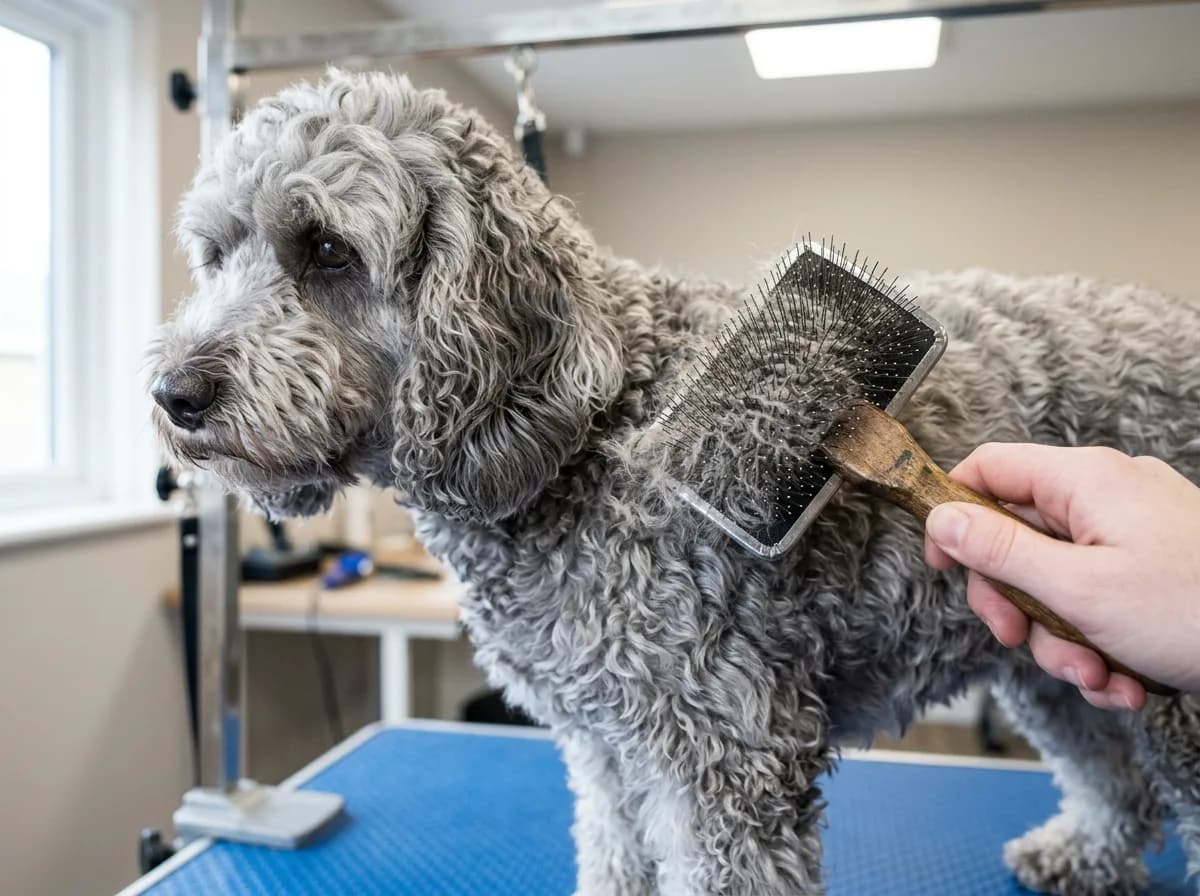
Grooming is usually filed under "coat care," but for a people-oriented breed it doubles as temperament work. A cockapoo needs brushing several times a week and a professional trim every six to eight weeks, and a puppy that is taught early to enjoy handling, brushing, ear-checks and paw-touches grows into an adult that is calm at the vet, the groomer and in the home. Pairing daily handling with praise and treats builds a dog that trusts human contact, which reinforces the gentle, cooperative core of the cockapoo temperament rather than leaving grooming as a battle.

A durable rubber dog toy that can be stuffed with treats and selected by the manufacturer's size guide; supervise use and retire it when damaged.
Petful may earn a commission when you click through to Chewy, at no extra cost to you.
Can Cockapoos Be Aggressive?
Aggression is not a cockapoo breed trait, and a well-bred, well-socialized cockapoo is one of the least aggressive dogs you can own. That said, no breed is immune, and the questions people ask about cockapoo aggression deserve a straight, evidence-based answer rather than a brush-off. When a cockapoo does show aggression, it is almost always explainable and, crucially, manageable. Here is the honest breakdown.
The "Cocker Rage" Question
The specific worry many buyers have heard about is "cocker rage" (sometimes called rage syndrome), a rare neurological condition documented mainly in solid-colored English Cocker Spaniels, in which a dog has sudden, unprovoked, explosive aggressive outbursts and then returns to normal, seemingly with no memory of it. It is genuinely rare, is thought to have a genetic component, and is not the same as ordinary situational aggression. Because the cockapoo carries Cocker genes, the theoretical possibility exists, but true rage syndrome in cockapoos is very uncommon and is one more reason to buy only from a breeder who health-tests and can show you calm, stable parents. Most "aggression" owners report is nothing to do with rage syndrome at all; it is fear, guarding or over-arousal.
Why a Cockapoo Might Actually Become Aggressive
When a cockapoo does behave aggressively (growling, snapping, biting), the cause is almost always one of a short list of manageable factors:
- Fear. A poorly socialized or previously frightened dog may snap when it feels cornered or threatened. Fear is the most common driver of dog aggression across all breeds.
- Resource guarding. Some cockapoos guard food, toys or a favorite person. This is learnable behavior that responds well to structured training and, ideally, prevention from puppyhood.
- Pain or illness. A normally sweet dog that suddenly gets snappy may be in pain (ear infection, dental trouble, an injury). A vet check should come first with any sudden change.
- Lack of training or socialization. A dog that never learned bite inhibition or how to cope with the world can react badly to normal situations.
- Over-humanizing and no boundaries. A cockapoo treated as a baby, never told "no," and allowed to run the house can become possessive and reactive. Kind, consistent boundaries prevent this.
The Good News
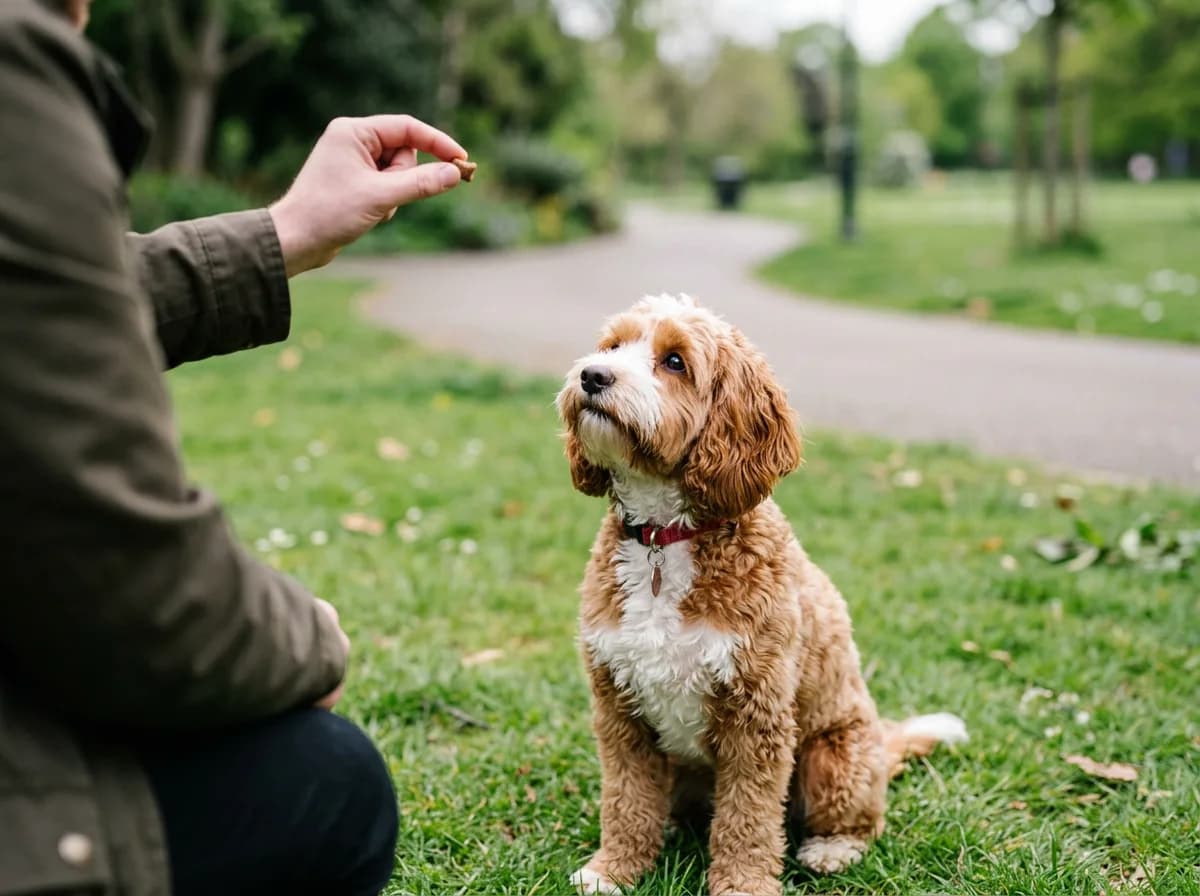
Because cockapoo aggression is almost always situational rather than baked into the breed, it is highly preventable and highly treatable. Early socialization, positive-reinforcement training, meeting the dog's exercise and company needs, ruling out pain, and, for entrenched cases, working with a qualified force-free behaviorist resolve the vast majority of cases. If you buy from a responsible breeder, socialize hard in the first months, and give the dog structure and enough activity, the odds of a genuinely aggressive cockapoo are very low.
- If a previously gentle cockapoo suddenly becomes snappy or aggressive, book a veterinary exam before anything else. Pain from an ear infection, dental disease, arthritis or an injury is a common and easily missed cause of a "personality change." Rule out a medical cause first, then address training.
Do Cockapoos Bond With One Person?
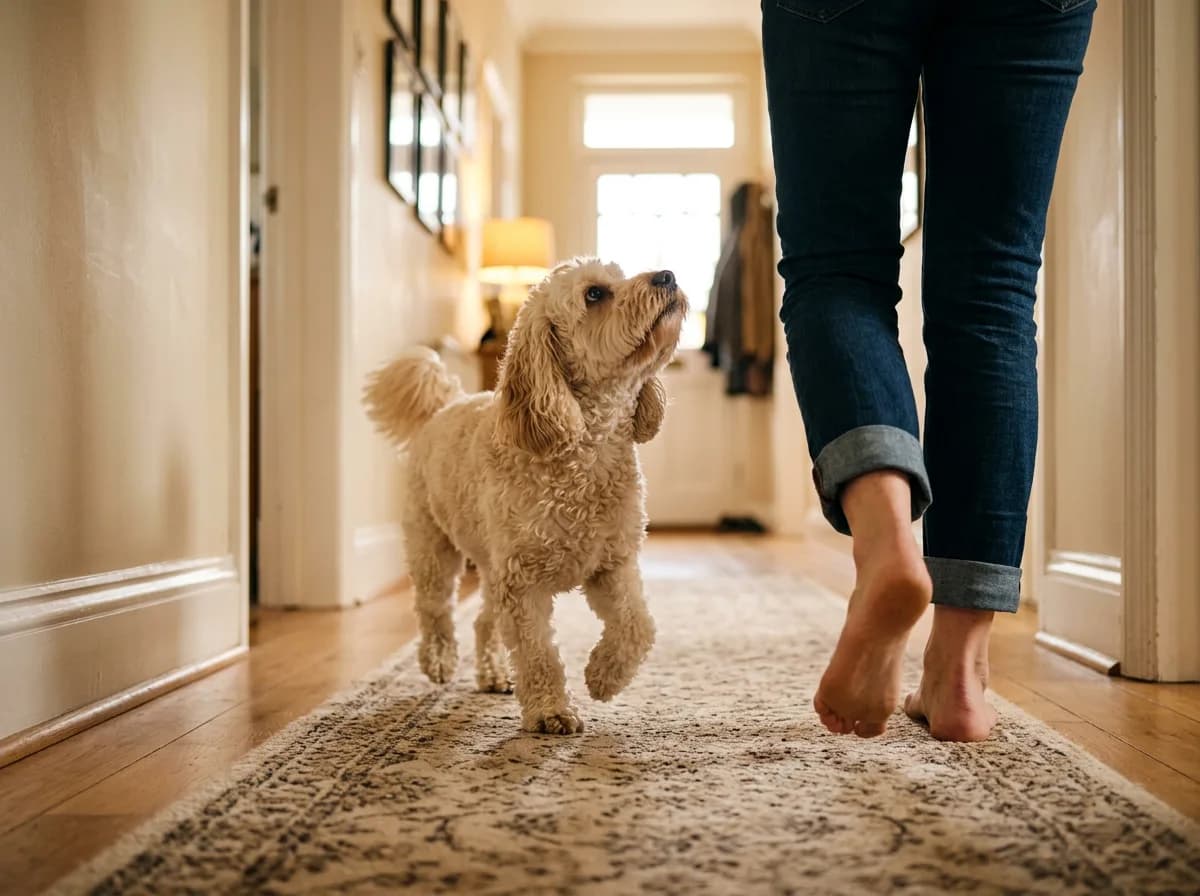
Cockapoos are classic "velcro dogs," and many do form an especially strong bond with one person, usually the one who feeds, walks and trains them most, while still being loving and affectionate with the whole family. This is not jealousy or a problem; it is the breed's companion nature turned up to full. A cockapoo will often follow its favorite person from room to room, settle nearest them, and greet them most enthusiastically. In a family, though, a well-socialized cockapoo happily spreads its affection around and bonds with everyone who invests time in it.

Multiple ridges and valleys slow eating, reduce gas and bloating, and turn mealtime into a fun puzzle. Non-skid base, dishwasher safe, 4-cup capacity.
Petful may earn a commission when you click through to Chewy, at no extra cost to you.
The one thing to watch is that intense one-person attachment can feed the separation problem: a dog bonded hard to a single individual may struggle more when that person leaves. The fix is to deliberately share the caregiving. Have different family members feed, walk, train and play with the dog so it learns to feel safe with more than one person. That broadens the bond, eases separation anxiety, and makes life easier when the "favorite" is away. If you want the deepest possible read on the breed before you commit, our full cockapoo breed guide covers history, care and daily life.
- If your cockapoo is fixating on one person, rotate who does the feeding, walking and training. A dog that trusts several people copes far better with alone time and with the favorite person being out, and it is safer and happier in a busy household.
What Affects a Cockapoo's Temperament?
Not every cockapoo is identical, and the spread you see (from a mellow lapdog to a bouncy livewire) comes down to four big levers: genetics and parent lines, socialization, generation, and training. Understanding these helps you both pick the right puppy and shape the dog you end up with.
Genetics and Parent Lines (Working vs Show Cocker)
The single biggest predictor of a puppy's temperament is its parents' temperament, so meeting calm, friendly parents is the best insurance you can buy. One nuance specific to the cockapoo: the Cocker Spaniel side comes in "show" (bench) and "working" (field) lines, and working-line cockers tend to be higher-energy and more driven, which carries through to their cockapoo puppies. A cockapoo from working-cocker stock may need noticeably more exercise and mental work than one from show lines. Ask the breeder which line the Cocker parent comes from if energy level matters to you.
Socialization
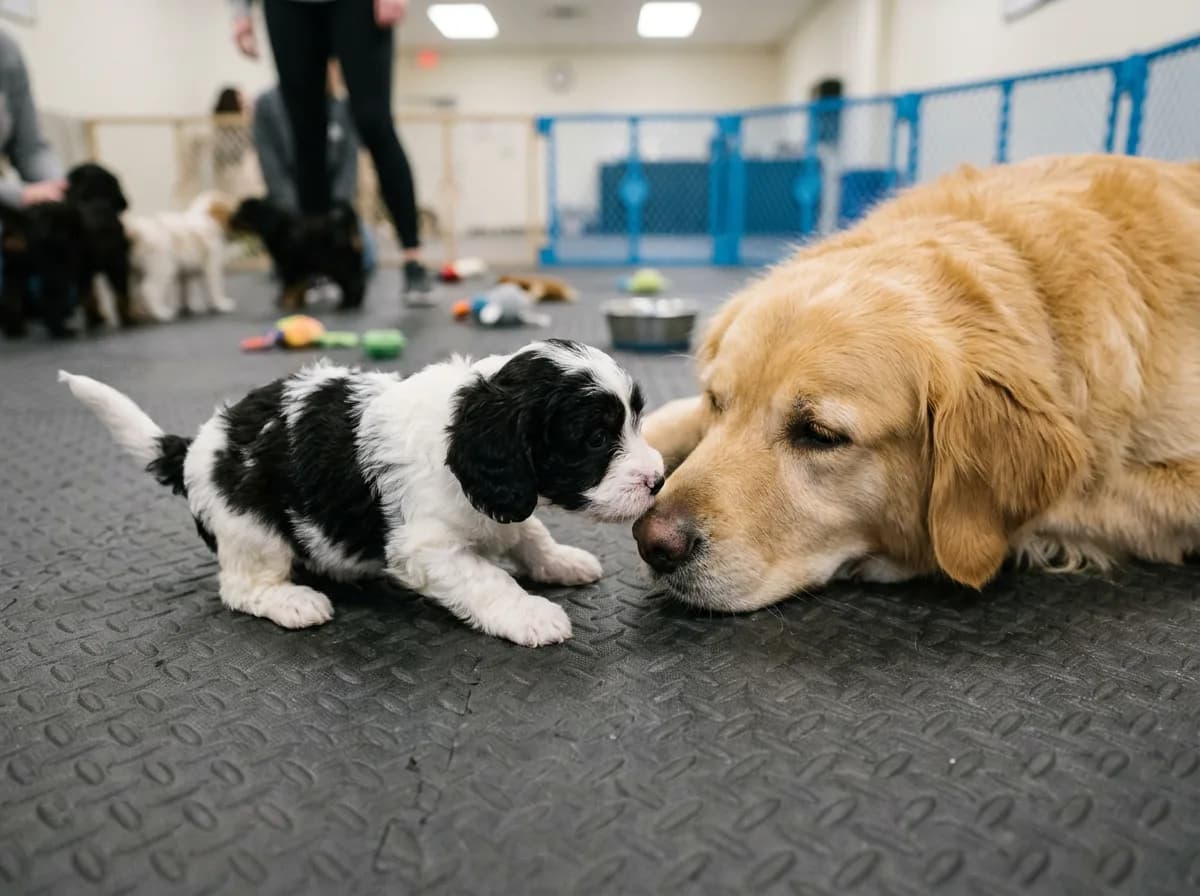
Early socialization (roughly 3 to 16 weeks) shapes temperament for life. A cockapoo puppy that is gently exposed to lots of people, dogs, sounds, surfaces and situations grows into a confident, easygoing adult. One that is under-socialized can become nervous, reactive or fearful, no matter how good its genes. This window is short and matters enormously, which is why responsible breeders begin socialization before the puppy even goes home, and why new owners should continue it hard through puppy classes and safe outings.
Generation: F1 vs F1b and Beyond
Generation labels (F1, F1b, F2) describe how far a cockapoo is from its purebred ancestors. They influence coat and shedding much more than temperament, but there is a subtle effect: an F1b (backcrossed to a Poodle) carries more Poodle genes, which can nudge temperament toward the slightly more reserved, highly biddable Poodle end, while an F1 is a straight 50/50 blend. The difference is minor compared with parent temperament and socialization, so do not choose a generation for personality alone. To see how these labels affect the coat and shedding side, our do cockapoos shed guide breaks it down.
Training and Environment
Finally, the dog you raise is partly the dog you make. Consistent, positive, reward-based training produces a well-mannered, confident cockapoo; harsh corrections or no boundaries produce an anxious or unruly one. A calm, structured, active home brings out the best in the breed. The same puppy raised in two different households can turn out noticeably different, which is a reminder that temperament is nature and nurture together.

Petful may earn a commission when you click through to Chewy, at no extra cost to you.
- Because temperament is heavily inherited, the calmest, most reliable way to predict your puppy's personality is to meet its parents (at minimum the mother) and see that they are friendly, stable and well-adjusted. A nervous or snappy parent is a red flag no amount of "designer" marketing should override.
What the Research Actually Says About Doodle Temperament
It is fair to ask whether "designer" crossbreeds like the cockapoo are genuinely calmer or healthier, or whether that is just marketing. The honest answer is that rigorous, breed-specific temperament research on cockapoos barely exists, because the cockapoo is not a standardized breed that studies can cleanly track. What data there is comes from the parent breeds and from broader work on doodles. The Royal Veterinary College's VetCompass programme, which analyses anonymised UK veterinary records at scale, has published widely cited work on Cocker Spaniel health and on the surge in "designer" crossbreed ownership, and its researchers have repeatedly cautioned that a crossbreed is not automatically healthier or more predictable than its purebred parents. The practical lesson is not that cockapoos are a bad choice, but that the "hybrid vigour guarantees a perfect dog" claim is oversold. Temperament still comes down to the same fundamentals: the parents you can meet, the socialization the breeder provides, and the training you put in. Buy on evidence you can see with your own eyes, not on a generation label or a designer name.
Male vs Female Cockapoo Temperament
Prospective owners often ask whether to get a male or female cockapoo, expecting a big personality difference. In reality, the difference is small and heavily outweighed by breeding, socialization and the individual dog. Any tendencies below are averages with huge overlap, not rules.

| Trait | Male Cockapoo | Female Cockapoo |
|---|---|---|
| Affection | Often a touch more openly cuddly and goofy | Affectionate, sometimes a little more independent |
| Trainability | Very trainable; can be more food-motivated | Very trainable; sometimes matures a little faster |
| Size | Averages slightly larger | Averages slightly smaller |
| Adolescent phase | Can be a bit more boisterous as a teen | Sometimes settles a fraction earlier |
| Bottom line | Excellent pet; pick on the individual | Excellent pet; pick on the individual |
The practical takeaway: choose your cockapoo on the individual puppy's personality and its parents, not on sex. Both males and females make wonderful, affectionate family pets, and neutering or spaying (discuss timing with your vet) further reduces any hormone-driven differences. If a breeder tells you one sex is dramatically calmer or better with kids, be skeptical; the evidence for a large, reliable sex difference in this breed simply is not there.
How the Cockapoo Temperament Compares to Similar Breeds
Cockapoos are usually shortlisted alongside other small doodles and companion breeds, and the temperament differences, while modest, can tip a decision. All of these are affectionate, trainable family dogs; the distinctions are in energy, independence and grooming.
- Cockapoo vs Cavapoo (Cavalier King Charles Spaniel cross). Cavapoos tend to be a touch calmer and more content to relax, thanks to the laid-back Cavalier side, while cockapoos are typically bouncier and more driven, especially from working-cocker lines. A cavapoo may cope marginally better in a lower-energy home; a cockapoo rewards a more active one.
- Cockapoo vs Cockapoo's cousin, the Labradoodle or Goldendoodle. These doodles are larger and often need even more exercise, so a cockapoo is the more apartment-friendly, easier-to-handle option for many families while sharing the same friendly, biddable outlook.
- Cockapoo vs purebred Cocker Spaniel. The Poodle influence tends to make cockapoos a shade more trainable and less prone to the solid-colour Cocker's rare temperament quirks, while both share the same sensitivity to harsh handling and love of company.
- Cockapoo vs purebred Poodle. Poodles can be slightly more reserved with strangers and famously sharp; cockapoos usually inherit a more openly goofy, everyone-is-my-friend sociability from the Cocker side.
Across every comparison, the cockapoo lands in roughly the same place: a warm, clever, people-first companion that needs company, activity and grooming. Choose it over these alternatives when you want that exact blend of Cocker friendliness and Poodle smarts in a small, family-suited package, and can meet the exercise and grooming commitment.
Downsides of Owning a Cockapoo
For all the praise, no breed is perfect, and an honest temperament guide has to cover the cons. None of these are reasons the cockapoo is a "bad" dog; they are the realities that catch out owners who bought the fluffy puppy without reading the fine print. Go in knowing them and you will be a far happier owner.
- They hate being alone. The biggest downside by far. This is not a dog for a household that is out all day, and forcing it leads to separation anxiety and destruction.
- High grooming needs. The cockapoo's coat needs brushing several times a week and a professional groom every 6 to 8 weeks to avoid painful matting. It is an ongoing cost and chore many buyers underestimate. Our cockapoo grooming guide covers the schedule and tools.
- They need real exercise and mental work. Bright and energetic, cockapoos get bored and destructive without 45 to 60 minutes of daily activity plus enrichment. They are not low-maintenance lapdogs.
- They can be barky and mouthy. Especially as puppies and when under-stimulated, as covered above.
- Health uncertainty of a cross. As a Cocker-Poodle mix they can inherit conditions from either side (ear infections, hip and eye issues, patellar luxation), so health-tested parents matter and pet insurance is worth considering early. See our cockapoo lifespan guide for the health picture.
- Cost. Purchase price, grooming, food, insurance and vet care add up; the cockapoo is not a cheap dog to run.
- Inconsistent breeding. Because they are popular and unregulated, cockapoos attract puppy mills and careless breeders, so a badly bred one can be nervous or unhealthy. Buying from a responsible breeder is essential.
The through-line is that the cockapoo's downsides are almost all about commitment: time, grooming, exercise and money. The temperament itself is rarely the problem. If your lifestyle can meet those commitments, the cons shrink to manageable chores and the pros (an affectionate, clever, family-friendly companion) far outweigh them. If it cannot, the cockapoo will be an unhappy dog and you an unhappy owner, which is why an honest look at the downsides matters as much as the praise.
- The breed's popularity has made "cute fluffy puppy" its main selling point, but the reality is a dog that needs daily company, exercise, mental work and expensive regular grooming for 12 to 15 years. Buy one because you can meet those needs, not because it looks adorable on social media.
Frequently Asked Questions
The main downsides are that cockapoos hate being left alone and are prone to separation anxiety, they need frequent professional grooming (every 6-8 weeks) plus brushing several times a week to avoid matting, they require 45-60 minutes of daily exercise and mental stimulation or they get bored and destructive, they can be barky and mouthy, and as a cross they can inherit health issues from either parent. They are also not cheap to buy or run, and their popularity attracts poor breeders, so careful sourcing matters.
The most common cockapoo behavior problems are separation anxiety (barking, howling, chewing or soiling when left alone), attention or boredom barking, puppy nipping and mouthiness during teething, and adolescent stubbornness or selective hearing. Nearly all of these stem from under-exercise, boredom, poor socialization or being left alone too long, not from a bad temperament, and they respond well to more exercise, mental enrichment, consistent positive training and gradual alone-time work.
Cockapoos are "velcro dogs" and many do bond especially strongly with one person, usually whoever feeds, walks and trains them most, while still being affectionate with the whole family. It is a sign of their companion nature, not a problem. To prevent it from feeding separation anxiety, have several family members share the feeding, walking, training and play so the dog feels secure with more than one person.
Aggression is not a cockapoo breed trait, and a well-bred, well-socialized cockapoo is one of the gentlest dogs you can own. When aggression does appear it is almost always situational: fear, resource guarding, pain or illness, lack of socialization, or a lack of boundaries. All of these are preventable and treatable with early socialization, positive training, meeting the dog's needs, and a vet check to rule out pain. True genetic aggression is rare.
A cockapoo may not suit you if: 1) you are out of the house all day, as they suffer separation anxiety; 2) you cannot commit to grooming every 6-8 weeks plus regular brushing; 3) you want a low-energy dog, as they need daily exercise and mental work; 4) you dislike barking or mouthy puppies; 5) you want a guard dog, as they are too friendly; 6) you are on a tight budget, since buying and upkeep are costly; 7) you cannot provide consistent training for a clever, sometimes stubborn dog; 8) you want a hypoallergenic guarantee, as shedding varies; 9) you cannot vet a responsible breeder to avoid poorly bred or unhealthy dogs; or 10) you want an independent dog that is happy alone. If none of these apply, a cockapoo is a superb companion.
There is no single official "naughtiest" breed, and mischief is driven far more by exercise, training and boredom than by breed. That said, high-energy, highly intelligent breeds that need a lot of stimulation (such as Cockapoos, Beagles, Jack Russell Terriers, Huskies and Border Collies) most often get labeled "naughty" when their needs are not met, because a bored, clever, under-exercised dog invents its own entertainment. A cockapoo is only "naughty" when it is under-stimulated; a well-exercised, well-trained one is a delight.
The single biggest downside of a cockapoo is that it cannot cope with being left alone for long and is prone to separation anxiety, so it is a poor match for households that are out all day. Close behind are high grooming needs and cost, a real requirement for daily exercise and mental stimulation, and the health uncertainty of a crossbreed. All are manageable for an owner who is home enough and prepared for the commitment.
When a cockapoo becomes aggressive it is almost always because of fear (often from poor socialization), resource guarding of food, toys or a person, underlying pain or illness, a lack of training and boundaries, or over-humanizing that lets the dog run the household. Rarely, the Cocker line can carry a genetic tendency (the uncommon "rage syndrome"). The first step with any sudden aggression is a vet check to rule out pain, followed by socialization, positive-reinforcement training and, for stubborn cases, a qualified behaviorist.

Coreen Saito is a pet writer and longtime shelter volunteer with more than a decade in animal rescue. She covers cat behavior, breed care, and the small, ordinary science of sharing a life with companion animals, with a particular focus on honest takes about the products and decisions that actually matter. At home in Arizona, she's outranked by Mac (a dog with the loudest opinion in the house), Rebel (a cat who governs by quiet authority), and Meri (an orange tabby who runs the late shift and the laundry basket). She writes about all three, plus the rescues that keep coming through her life, at LifeWithMinty.com.
Sign up for expert-backed reviews and safety alerts all in one place.