Cockapoo Grooming: The Complete At-Home Guide
Cockapoo grooming made simple: how often to brush, the tools you need, line-brushing to beat mats, bathing, the teddy bear cut, ear and nail care, and when to book a professional groomer.
Petful is reader supported. As an affiliate of platforms like Amazon and Chewy, we may earn a commission when you buy through links on this page. There is no extra cost to you.
Cockapoo grooming is the single biggest care commitment this breed asks of you, and most owners underestimate it: the American Kennel Club notes that poodle-cross coats need brushing several times a week plus a professional trim roughly every 6 to 8 weeks to stay healthy. A cockapoo is a cross between a poodle and a cocker spaniel, and it inherits a coat that grows continuously and traps loose hair instead of shedding it onto your floor. That low-shedding trait is exactly why the coat mats so fast without upkeep. This guide walks through the tools, the brushing routine, bathing, the popular teddy bear cut, ear and nail care, seasonal adjustments, real costs, and when to hand the job to a professional, so you can keep your cockapoo comfortable and looking like the dog you fell for.
- 1Cockapoos are low-shedding but high-grooming: the coat traps loose hair and mats without regular brushing
- 2Brush every 1 to 2 days (daily for curly coats), with a full professional groom every 6 to 8 weeks
- 3Line-brush right down to the skin with a slicker brush and a metal comb, because mats start where you cannot see them
- 4The teddy bear cut is the classic cockapoo trim: rounded face, even 1 to 2 inch body length
- 5Neglecting the coat leads to painful pelting and a full shave-down, so consistency beats intensity

Sign up for expert-backed reviews and safety alerts all in one place.
How Often Does a Cockapoo Need Grooming?
A cockapoo needs some form of grooming almost every day. The at-home routine and the professional routine run on two different clocks, and you need both.
At home, plan to brush your cockapoo every one to two days, and daily if the coat is curly or going through the puppy coat change. Left more than a couple of days, a poodle-type coat starts binding loose hair into mats against the skin. On top of brushing, book a professional groom every six to eight weeks for a bath, a full trim, nail work, and de-matting. Many owners stretch to eight weeks with a shorter cut and tighten to six with a longer, fuller look.
Bathing sits on its own schedule: every three to four weeks, or when your dog is genuinely dirty, always followed by a full brush-out as the coat dries. Ears need checking weekly and nails every two to three weeks. Put together, cockapoo grooming is a little-and-often job, not a once-a-month event.
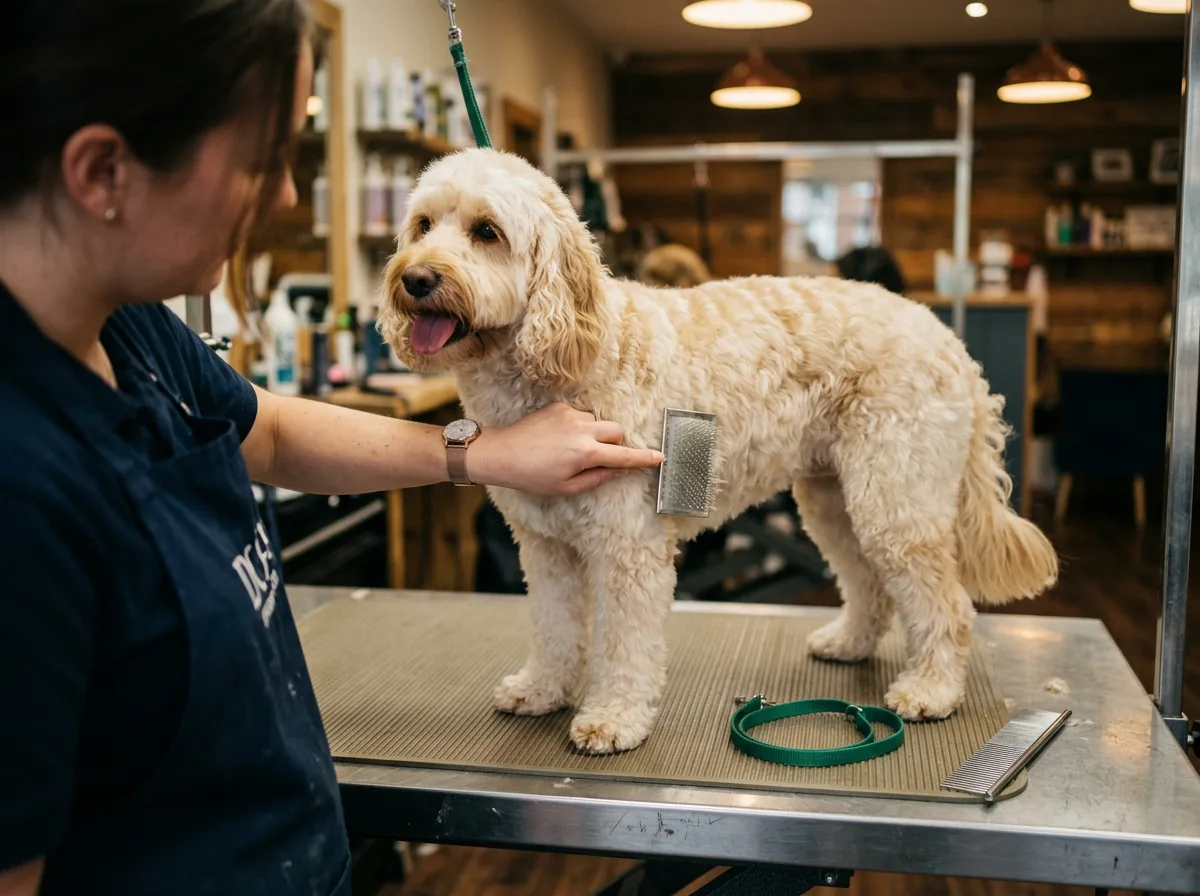
- The cockapoo's poodle coat sheds very little precisely because it holds onto loose hair. That same trait is what makes it mat. A clean floor comes at the cost of a real grooming routine, not instead of one.
Grooming frequency by coat type
The coat your cockapoo inherits sets the pace. Curly, poodle-leaning coats mat fastest and need daily attention. Wavy or fleece coats, the classic cockapoo look, do well on brushing every one to two days. Straighter, cocker-leaning coats shed a bit more but mat less, so they tolerate slightly less frequent brushing. You often cannot tell which coat your puppy will have until the adult coat comes in around six to ten months.
Generation labels give you a rough clue but no guarantee. An F1 cockapoo (a first-cross poodle to cocker spaniel) tends toward a wavy, fleece coat, while an F1b (an F1 bred back to a poodle) leans curlier and lower-shedding, which usually means more matting and more frequent brushing. Later generations vary widely, and even littermates can differ, so treat your own dog's coat, not its paperwork, as the final word on how often to brush.

Petful may earn a commission when you click through to Chewy, at no extra cost to you.
| Task | Curly Coat | Wavy / Fleece Coat | Straight Coat |
|---|---|---|---|
| Home brushing | Daily | Every 1-2 days | Every 2-3 days |
| Professional groom | Every 6 weeks | Every 6-8 weeks | Every 8 weeks |
| Bath | Every 3-4 weeks | Every 3-4 weeks | Every 4 weeks |
| Ear check and clean | Weekly | Weekly | Weekly |
| Nail trim | Every 2-3 weeks | Every 2-3 weeks | Every 2-3 weeks |
For a deeper look at why this coat behaves the way it does, our guide to whether cockapoos shed breaks down coat genetics and generation labels.
The Cockapoo Grooming Tools You Actually Need
Good tools make cockapoo grooming faster and far less stressful for the dog. You do not need a full salon setup, but a few key items separate a quick, comfortable session from a painful tug-of-war.
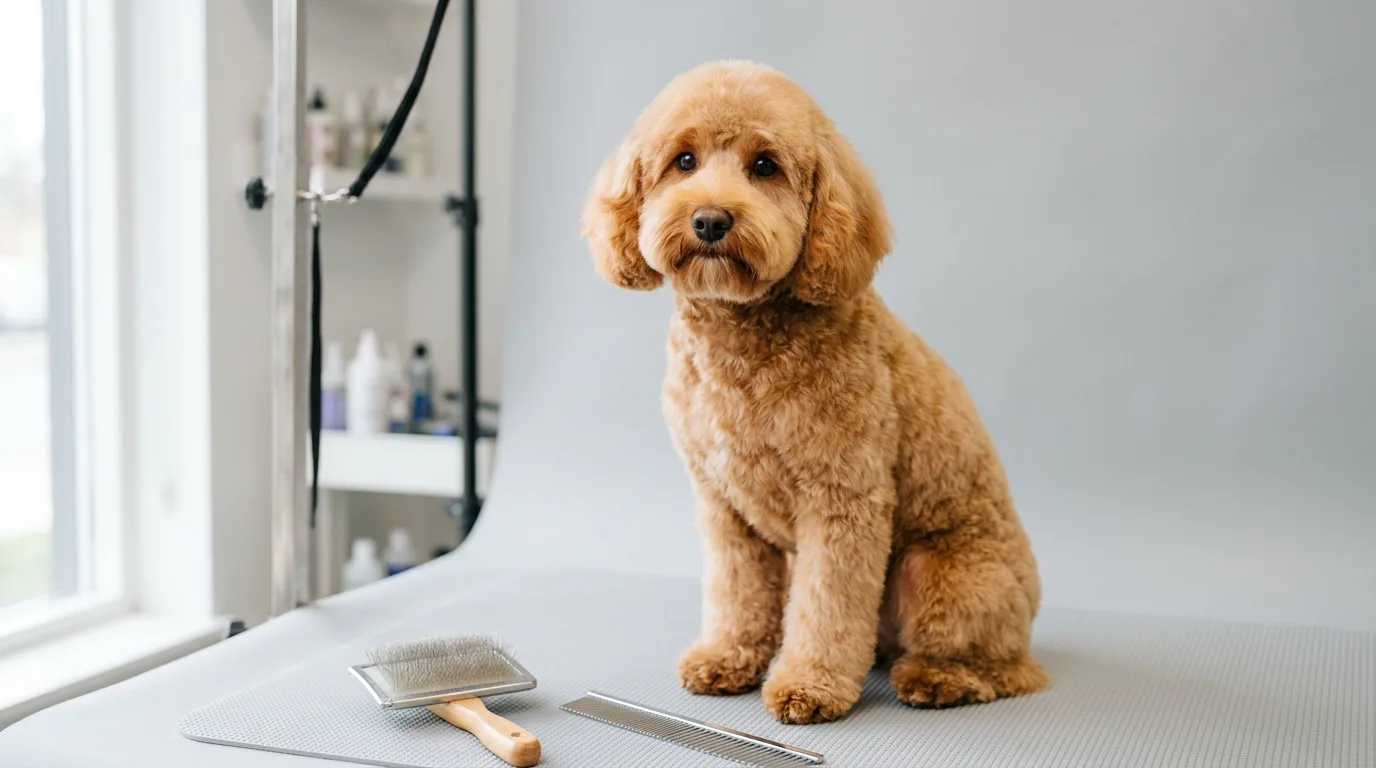
The non-negotiables are a slicker brush and a metal grooming comb. The slicker brush lifts and separates the coat; the comb is your quality check, because if the comb glides from skin to tip without catching, the section is genuinely mat-free. A brush alone can skim over the top of a mat and leave it hidden underneath.
Beyond those two, a useful kit includes:
- A dematting tool or coarse comb for the occasional tangle that forms behind the ears, in the armpits, and around the collar.
- Rounded-tip grooming scissors for tidying the face, feet, and sanitary areas between professional grooms.
- Clippers if you plan to do body trims yourself, with guard combs to keep the length even.
- A pin brush for finishing a longer coat and lifting it after brushing.
- Dog-safe shampoo and conditioner formulated for the pH of canine skin (human shampoo is too harsh).
- A nail grinder or clipper and styptic powder in case a nail is trimmed too short.
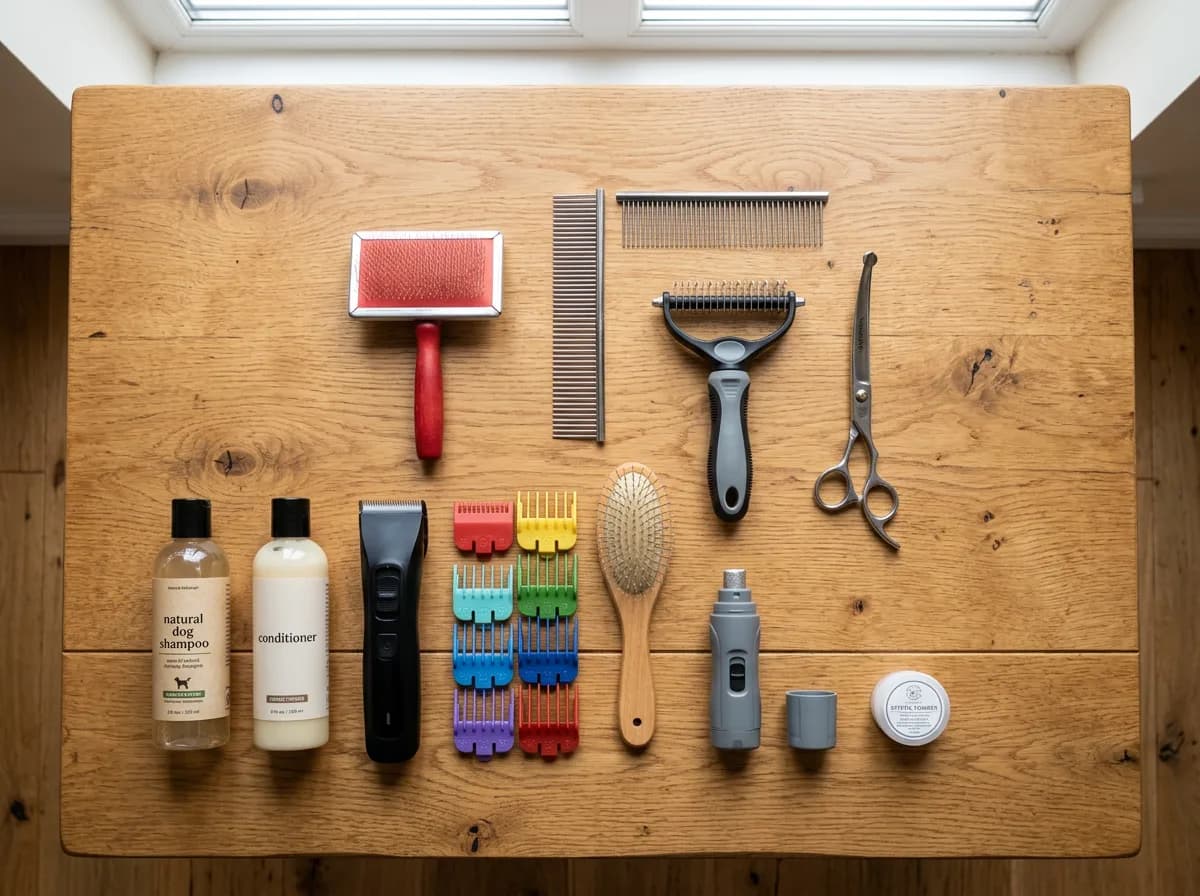
- Always finish a brushing session by running a metal comb from the skin outward through every part of the coat. If it snags, you have a mat the slicker brush missed. This one habit prevents most surprise shave-downs.
Choosing a slicker brush and comb that fit your dog
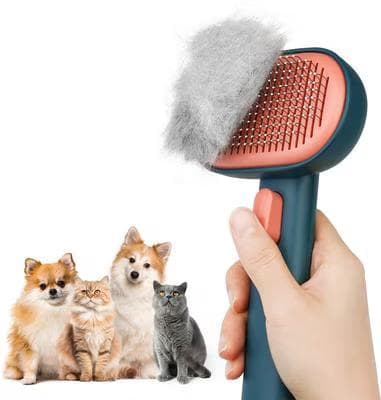
Not every slicker brush suits every cockapoo. Firmer, longer pins reach the skin on a dense curly coat, while a softer, flexible-headed slicker is gentler on a thinner puppy coat or a straighter cocker-leaning coat. Whatever you choose, work with a light hand: pressing a slicker hard against the skin causes "brush burn," a red, sore patch of irritated skin that makes your dog dread the next session. For the comb, a dual-density model with wider teeth at one end and finer teeth at the other lets you rough out a section, then check it closely. Keep the tools clean, since a slicker packed with old hair stops lifting the coat and just drags.
Petful may earn a commission when you click through to Chewy, at no extra cost to you.
How to Brush a Cockapoo Without Missing Mats
Brushing is the heart of cockapoo grooming, and how you brush matters as much as how often. The mistake most owners make is brushing only the top layer, which leaves a felt of tangles forming underneath, right against the skin.
The fix is a technique called line brushing. Instead of sweeping over the surface, you part the coat and work in sections from the skin out.
Line brushing, step by step
1. Start on a calm, dry dog. Never brush a wet or dirty coat hard, because friction on damp hair drives tangles into tighter knots.
2. Part the coat to expose a line of skin, usually starting low on a leg or the belly and working upward.
3. Brush the exposed hair downward from the skin with the slicker brush, in short, gentle strokes, holding the hair above the part out of the way.
4. Move the part up a half inch and repeat, so you brush the whole dog in overlapping horizontal lines.
5. Follow with the comb through each finished section. If it glides cleanly, move on; if it catches, brush that spot again.
6. Work the trouble zones last: behind the ears, under the collar, the armpits, the groin, and the backs of the legs, where friction creates mats first.
Keep sessions short and positive, especially with a puppy. A few relaxed minutes every day builds a dog that stands calmly for grooming, which pays off for a lifetime. Reward with treats and finish before your dog loses patience.
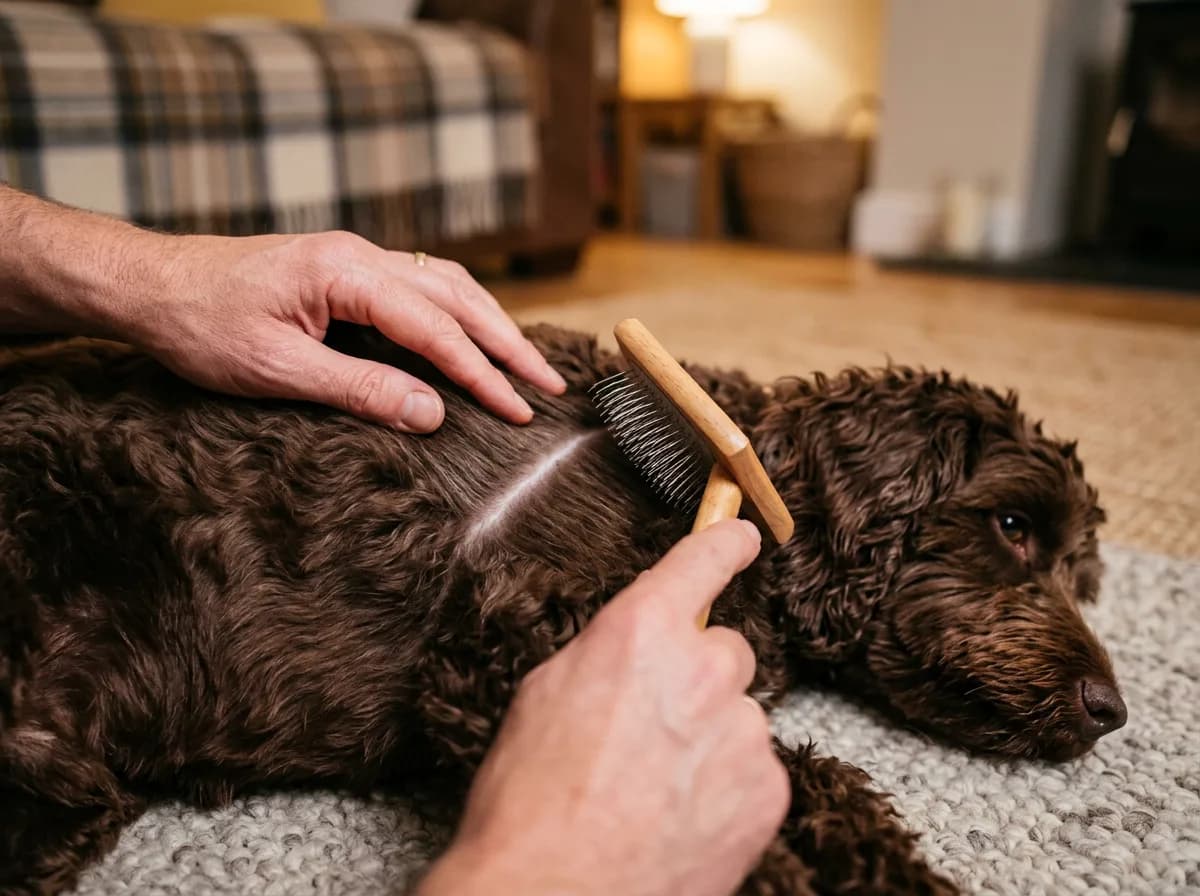
- Dragging a brush through a tight mat hurts and can tear skin. Work small mats apart with your fingers and a dematting comb, holding the base of the hair to spare the skin. If a mat is close to the skin or spreads into a large pelt, stop and let a professional groomer shave it out safely.
Working out a mat safely at home
For a small, loose tangle you can often save the coat rather than cut it. Hold the hair firmly at the base, close to the skin, so any pulling lands on your fingers rather than the dog. Tease the mat apart from the outer edge inward with your fingertips first, then a dematting comb or the end teeth of your metal comb, freeing a few hairs at a time. A spritz of a dog detangling spray helps the fibers slide. What you must not do is saw at a tight mat with scissors: the skin tents up into the base of the mat and is nicked in a heartbeat, and a coat blade in inexperienced hands does the same. Anything larger than a coin, or any mat that has flattened against the skin into a pad, is a job for a groomer.
Getting through the puppy coat change
Somewhere between six and twelve months, a cockapoo's soft puppy coat is replaced by its coarser adult coat, and this transition is the single worst matting stage of the dog's life. The two coat textures tangle together constantly. Owners who ease off brushing here almost always end up at the groomer for a full shave-down. Brush daily through the coat change, even when shedding looks minimal, and you will keep the coat intact.
Bathing Your Cockapoo the Right Way
Cockapoos do not need frequent baths, but they do need correct ones. Over-bathing strips the natural oils that keep the coat and skin healthy; under-bathing lets the cocker-inherited skin get greasy and smelly. Every three to four weeks, or whenever your dog is dirty, is a sensible rhythm for most cockapoos.

Petful may earn a commission when you click through to Chewy, at no extra cost to you.
The order of operations is what protects the coat:
1. Brush and de-mat before the bath, never after. Water shrinks and tightens any existing mats, so a knot you could have combed out becomes a solid clump once wet.
2. Wet the coat thoroughly with lukewarm water, keeping water out of the ears.
3. Lather a dog-specific shampoo from the neck back, working it down to the skin, then a conditioner to keep the coat soft and easier to comb.
4. Rinse completely. Leftover shampoo irritates skin and leaves a dull, sticky coat that mats faster.
5. Towel gently, then blow-dry on a low, cool setting while brushing. Air-drying a curly coat lets it clump and curl into tangles. Brushing as it dries sets the coat straight and fluffy.
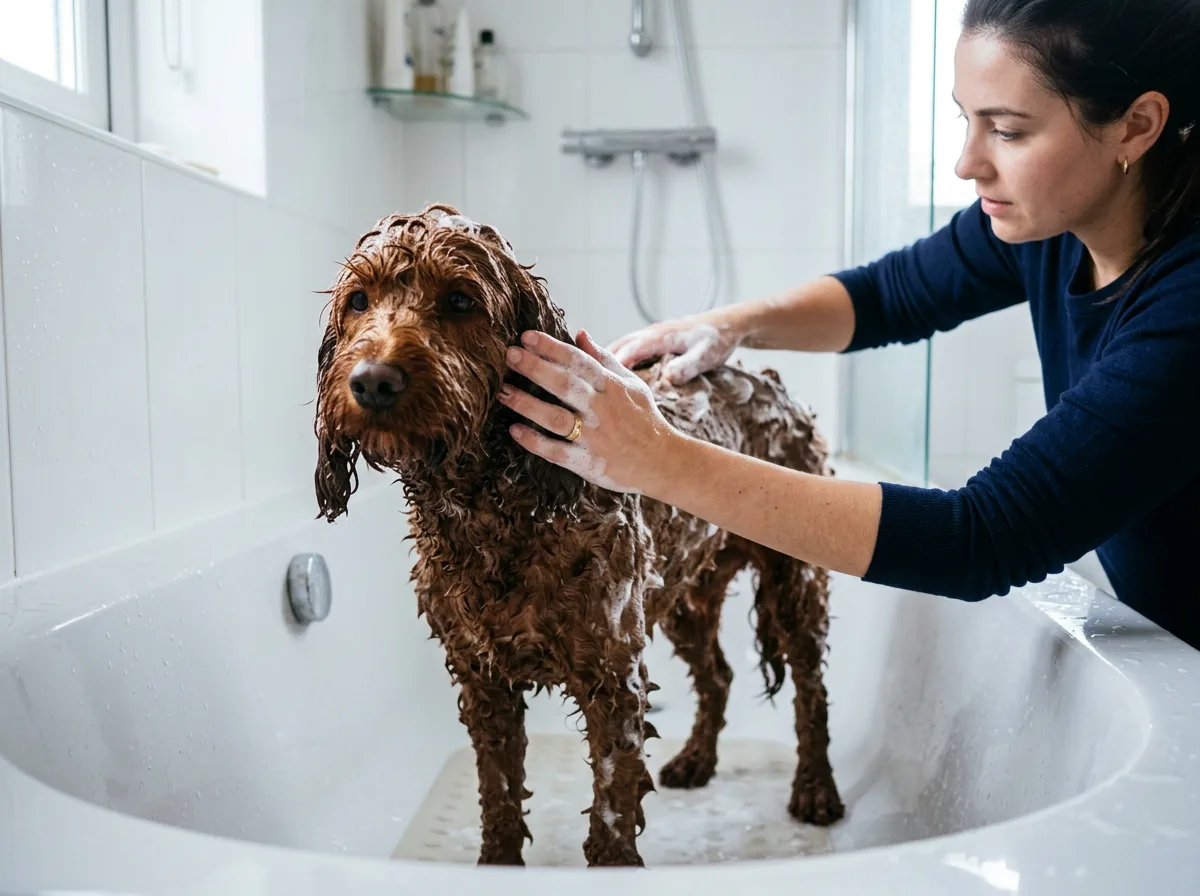
- A gentle oatmeal or hypoallergenic formula suits most cockapoos, and a medicated or vet-prescribed shampoo may be needed for itchy or allergy-prone skin. Skip heavy fragrances and anything sold for people, which throws off the skin's natural pH and can trigger flaking and itch.
Cockapoo Haircuts and Styles
Because a cockapoo's coat grows continuously, it has to be cut, and that opens up a range of styles. The right length is a trade-off between how the dog looks and how much daily brushing you are willing to do. Longer coats look fuller but mat faster; shorter coats are lower maintenance and cooler in summer.
What is a teddy bear cut on a cockapoo?
The teddy bear cut is the most popular cockapoo style, and it is exactly what it sounds like: the coat is scissored to a soft, even length (commonly one to two inches) all over the body, with the face rounded out and fluffed so the dog looks like a plush teddy bear. The muzzle is left fuller rather than shaved close, the ears blend into the head, and the overall shape is round and soft rather than sculpted. It suits the cockapoo's face beautifully and keeps grooming manageable without going as short as a full shave.
Other common cockapoo styles include:
Petful may earn a commission when you click through to Chewy, at no extra cost to you.
- The puppy cut: a short, even trim (often half an inch to an inch) all over. It keeps the round teddy-bear-ish look while dramatically cutting daily brushing time. The single easiest coat to maintain.
- The lamb cut: shorter on the body with slightly longer, fuller legs, giving a lamb-like silhouette.
- The summer or kennel cut: a very short all-over clip for hot climates or heavy-shedding-season relief, easiest to maintain but least fluffy.
- A longer show-style coat: full length left on the body and legs. Striking, but it demands daily line brushing to stay mat-free.
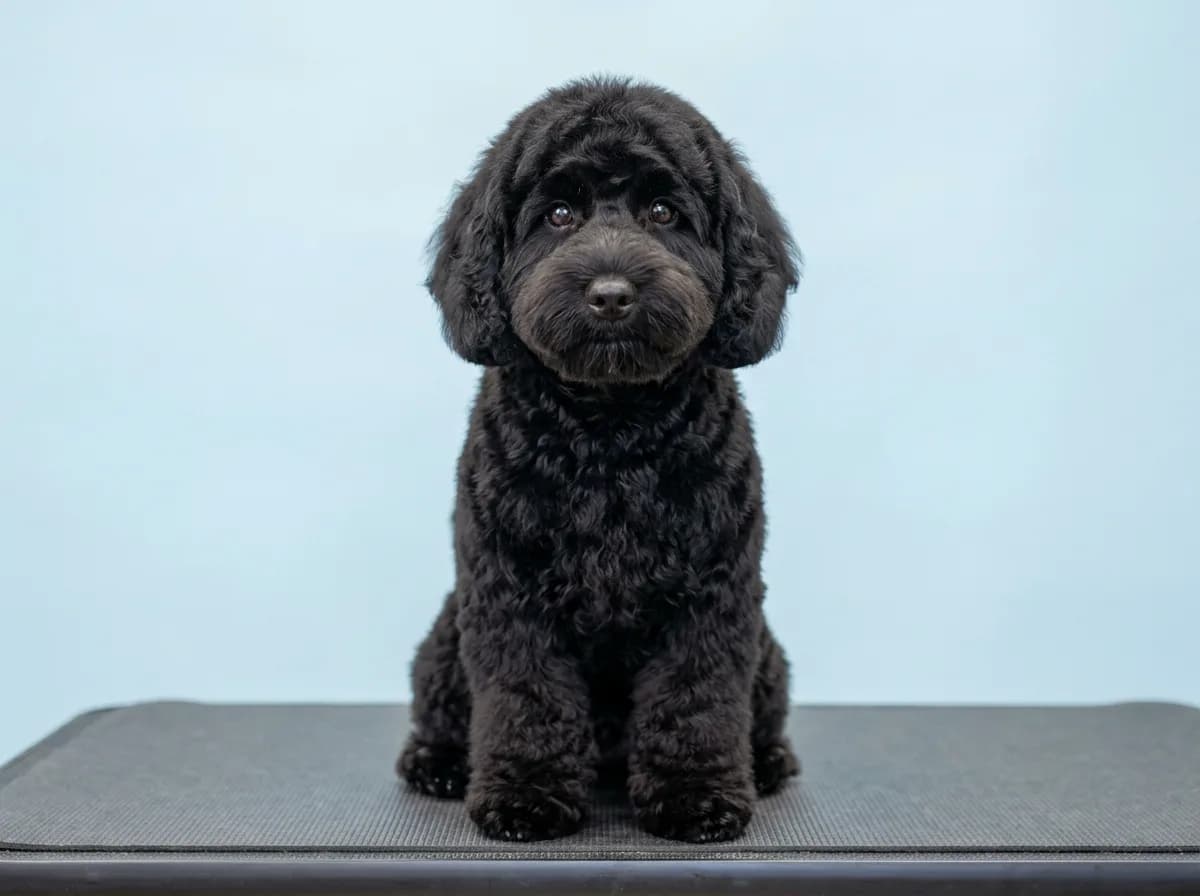
- Grooming terms like "teddy bear" and "puppy cut" mean slightly different things to different groomers. A clear photo of the length and face shape you want removes the guesswork and gets you the result you pictured.
Trimming the face, feet, and sanitary areas at home
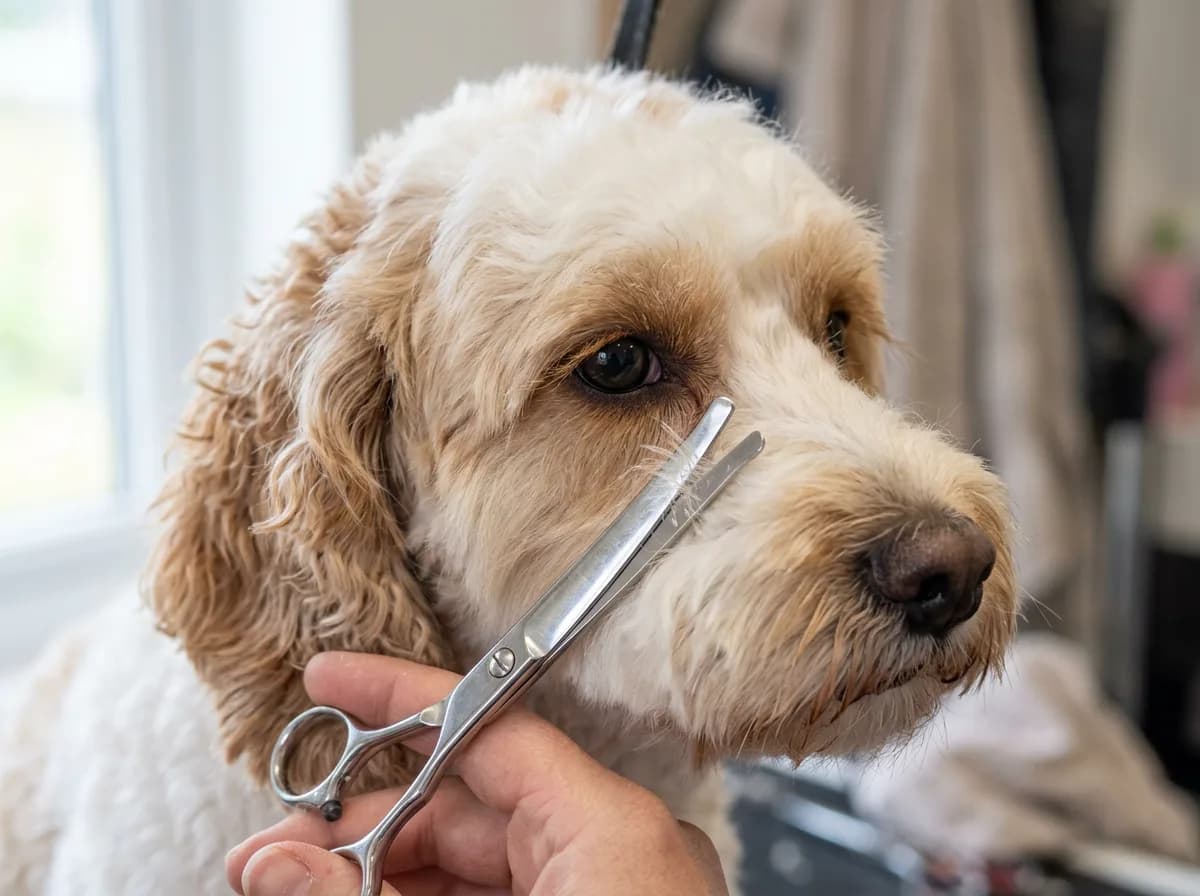
Even if a professional handles the full body clip, a few tidy-ups between grooms keep your cockapoo comfortable. Use rounded-tip scissors to keep hair out of the eyes (long face hair can wick tears and irritate the eyes), trim the fur between the paw pads so it does not collect debris and slip on floors, and keep the sanitary area under the tail clean. Go slowly, use blunt-tipped scissors, and only trim what you can clearly see.
The right length also depends on the dog. A larger cockapoo carries more coat than a toy, and grooming time scales with it, so knowing what to expect from your full-grown cockapoo helps you plan the routine before the adult coat fully comes in.
Adjusting the coat for the seasons
Grooming a cockapoo is not identical year round. In summer, a shorter body length keeps a dark or dense-coated dog cooler and cuts the risk of the coat trapping grass seeds and burrs, which burrow into a long coat on every walk and can lodge in the skin. Keep the belly and armpits tidy so wet grass does not felt them. In winter, many owners leave a little more length for warmth, but longer hair plus wet, muddy walks means more brushing, not less, because damp mud dries into mats fast. Trim the hair between the paw pads more often in winter too, since it collects ice balls and, in gritted areas, drying road salt that irritates the pads. Whatever the season, dry your cockapoo fully after wet walks and brush out before the coat sets.
Ear, Eye, Nail, and Dental Care
Cockapoo grooming is not just the coat. The cocker spaniel side brings floppy, hair-filled ears that are prone to trouble, and the rest of the body needs routine attention too.
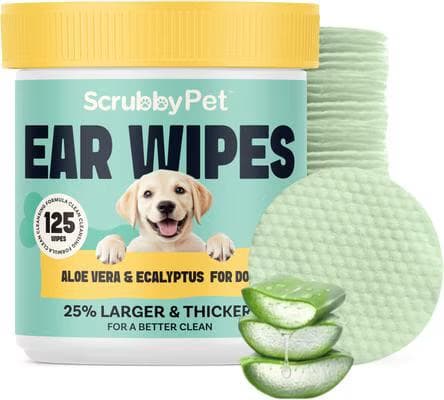
Ears are the biggest health flashpoint. Those long, hairy ear flaps trap moisture and reduce airflow, creating a warm, damp environment where yeast and bacteria thrive. Check the ears weekly for redness, a yeasty or foul smell, dark discharge, or head-shaking and scratching, all signs of an ear infection that needs a vet. Clean the ears with a dog-specific ear cleaner as your vet recommends, and dry them well after every bath and swim. Many cockapoos also need the hair plucked or trimmed from inside the ear canal to keep it ventilated; your groomer or vet can show you how.
Eyes on lighter-coated cockapoos often show tear staining. Keep the hair around the eyes trimmed short and wipe the area gently with a damp cloth to reduce buildup. Persistent heavy staining can signal blocked tear ducts or irritation worth a vet visit.
Nails should be trimmed every two to three weeks. If you can hear them clicking on the floor, they are too long. Overlong nails splay the foot and cause pain over time. Trim a little at a time to avoid the quick (the blood vessel inside the nail), and keep styptic powder on hand.
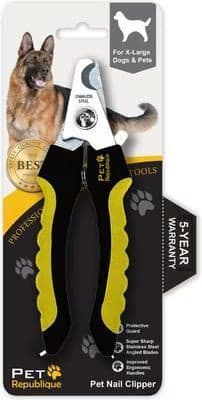
Sharp stainless-steel clippers with a built-in safety guard to help prevent over-cutting, sized for large breeds.
Petful may earn a commission when you click through to Chewy, at no extra cost to you.
Teeth benefit from brushing several times a week with a dog-safe toothpaste, since small breeds are prone to dental disease. Dental chews help but do not replace brushing.
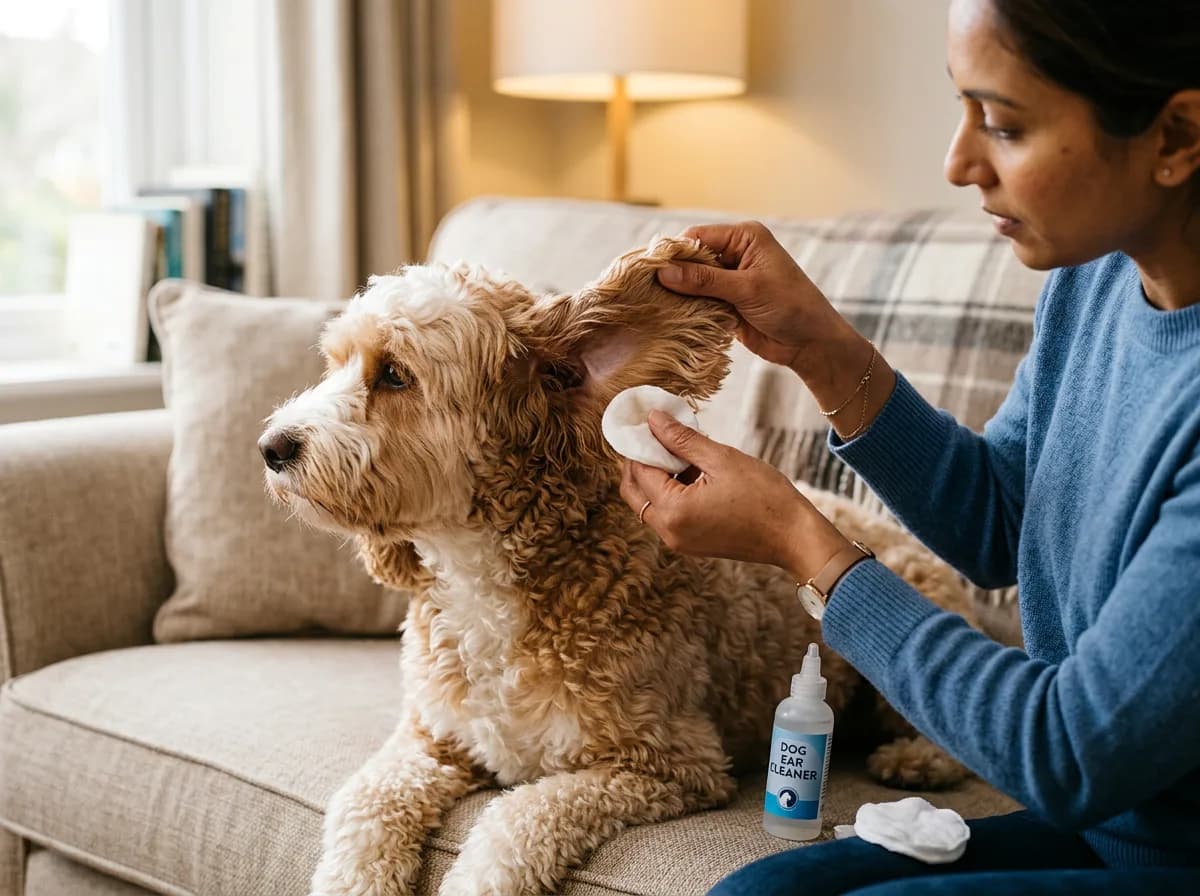
- The cockapoo's cocker-inherited ears are the number one grooming-related health issue in the breed. Weekly checks, drying after every bath, and keeping the ear canal hair managed prevent most painful, recurring ear infections.
Skin and coat health problems grooming should catch
A grooming routine is also your early-warning system for skin trouble, and cockapoos inherit a few tendencies worth knowing. Allergies (to pollen, dust mites, fleas, or food) commonly show up as itchy, red, or flaky skin and lead to scratching that breaks the coat and mats it further. A single flea bite can set off flea allergy dermatitis in a sensitive dog, so keep parasite prevention current. Trapped moisture under a matted or over-bathed coat can trigger hot spots, raw inflamed patches that flare quickly and need veterinary care. Because the poodle side can carry sebaceous adenitis, a coat that turns dull, brittle, or patchy with scaling is worth a vet check rather than just more conditioner. Running your comb over the whole dog every day is how you find these while they are small.
Professional Grooming vs Doing It Yourself
You can absolutely maintain a cockapoo at home, but most owners land on a hybrid: daily brushing and small tidy-ups themselves, with a professional groomer handling the full clip and bath every six to eight weeks. That split keeps costs reasonable while ensuring the coat gets a proper reset.
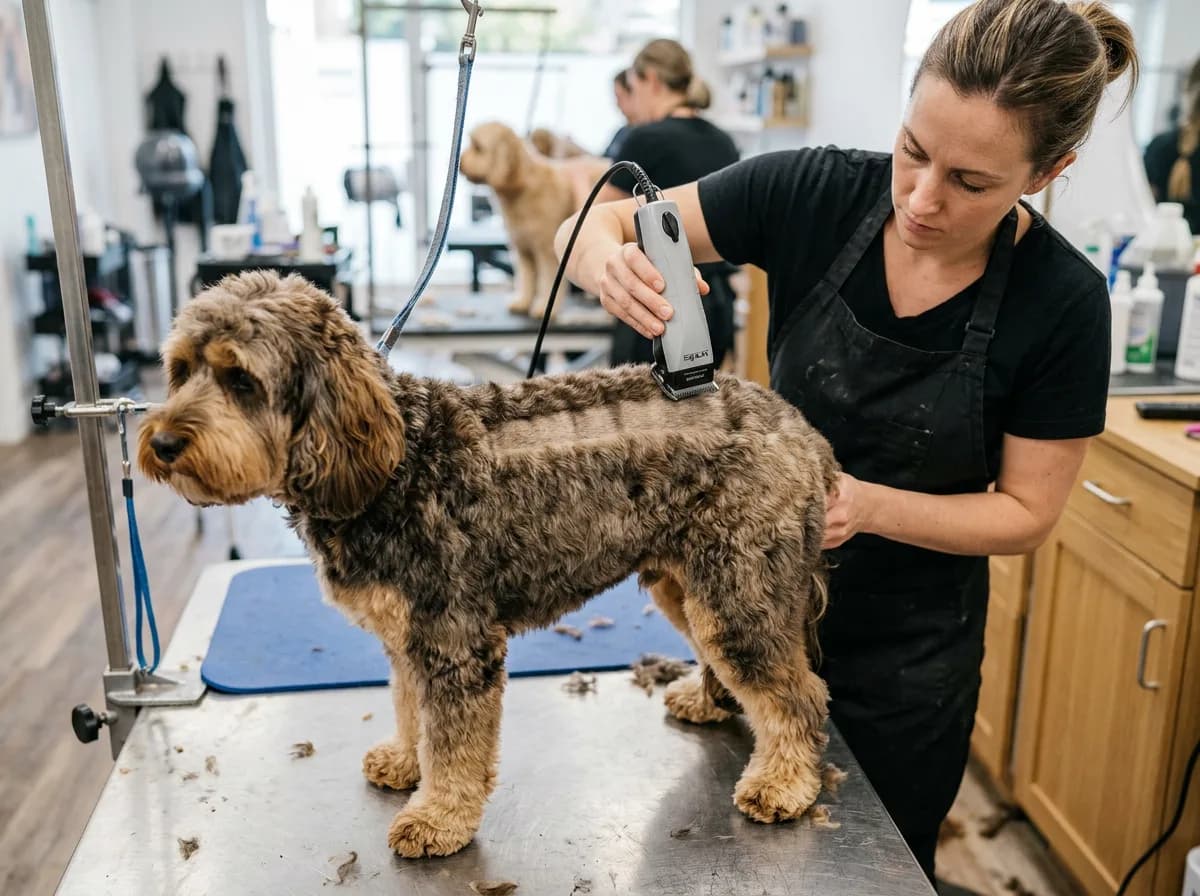
A professional groom is worth it for the parts that are hard to do well at home: an even body clip, a safe de-matting or shave-down when a coat has pelted, ear-canal hair removal, and nail work if your dog resists you. A skilled groomer also spots skin issues, lumps, and ear problems early.
If you decide to clip at home, invest in decent clippers and guard combs, watch your groomer work first, and start with a longer guard until you are confident. Never use scissors blind near the skin, and never try to cut out a tight mat with scissors, since the skin tents up into the mat and is easily nicked.
Grooming demands are similar across the popular doodle crosses, so if you are still deciding which one suits your household, our cockapoo vs cavapoo comparison covers coat, size, and temperament side by side.
What does cockapoo grooming cost?
Professional grooming for a cockapoo in the United States typically runs about $50 to $90 per session depending on your region, the dog's size, the coat condition, and the style. Prices skew higher in major metro areas and on the coasts, where a full groom for a medium cockapoo often lands between $75 and $110, and sit lower in smaller towns and rural areas, closer to $45 to $70. Toy and mini cockapoos usually cost less to groom than a larger maxi cockapoo simply because there is less coat and less time on the table.
The style you ask for moves the price too. A full teddy bear or show-length scissor finish takes longer and costs more than a quick all-over clipper cut, and mobile or in-home grooming carries a premium over a salon. Badly matted coats often cost more still, because de-matting is labor-intensive (and many groomers will shave rather than brutally brush out a pelt, for the dog's comfort). Expect some groomers to add a de-matting surcharge or refuse the brush-out entirely once a coat has pelted. At every six to eight weeks, a routine groom adds up to roughly $400 to $800 a year, so factor grooming into the cost of owning a cockapoo before you commit.
| Cockapoo Size | Salon Groom | Mobile / In-Home |
|---|---|---|
| Toy or mini | $45 to $70 | $65 to $95 |
| Standard or maxi | $60 to $90 | $85 to $120 |
| Heavily matted (any size) | $80 to $130+ | $100 to $150+ |
- Groomers charge extra for heavily matted dogs because de-matting is slow and, past a point, impossible without shaving. More importantly, tight mats pull the skin, hide parasites and sores, and cause real pain. Consistent home brushing is cheaper and kinder than paying to fix neglect.
Building a Grooming Routine From Puppyhood
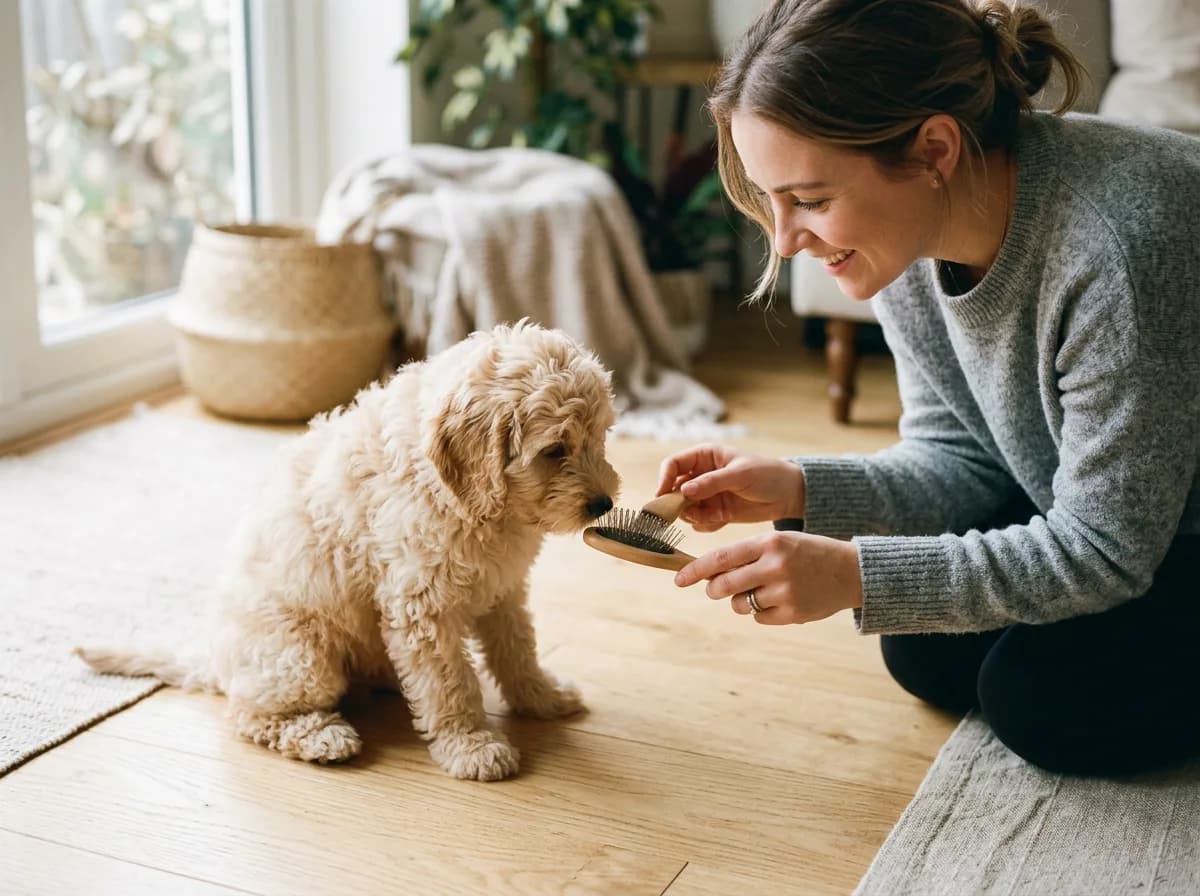
The easiest cockapoo to groom is one that learned as a puppy that grooming is normal and pleasant. Start handling your puppy's paws, ears, mouth, and coat within the first weeks home, even before the adult coat needs much brushing. Introduce the brush, the comb, and the sound of clippers gradually, pairing each with treats and praise.
Book the first professional groom early, around four to five months, even if it is mostly a bath, a light tidy, and a nail trim. A young dog that sits through a calm first appointment becomes an adult that tolerates grooming for life. Keep home sessions short and upbeat, end on a good note, and never turn brushing into a wrestling match, because a dog that dreads grooming makes every future session harder.
Handling a dog that hates grooming
If your cockapoo already fights the brush, rebuild the habit slowly rather than forcing it. Break grooming into tiny wins: one leg brushed, then a treat and a break, and stop well before your dog gets tense. Desensitize the parts most dogs resent (paws, face, and the buzz of clippers) on their own, rewarding calm before you ever add pressure. Choose a non-slip surface at a comfortable height so the dog feels stable, and keep your own body language relaxed, since dogs read tension. For a dog with a genuine grooming phobia or one that snaps out of fear, work with a groomer experienced in nervous dogs or a positive-reinforcement trainer rather than muscling through, which only deepens the fear.
Grooming is also a bonding routine and a health check rolled into one. Running your hands and comb over the whole dog every day means you notice new lumps, ticks, cuts, ear odor, or sore spots early. To see how this care fits into the breed's overall needs and personality, read our full cockapoo breed guide and our overview of cockapoo temperament.
The Bottom Line on Cockapoo Grooming
Cockapoo grooming rewards consistency over intensity. Brush every day or two with a slicker brush and a comb, line-brushing right down to the skin, bathe every few weeks with a proper brush-out, book a professional groom every six to eight weeks, and stay on top of ears and nails. Do that, and the coat that makes this breed so low-shedding and so charming stays soft, healthy, and mat-free. Skip it, and the same coat pelts against the skin and ends in a shave-down. The good news is that a little time each day is all it takes, and a well-groomed cockapoo is one of the most rewarding companions you can share a home with.
Frequently Asked Questions
A cockapoo needs brushing every one to two days at home (daily for curly coats or during the puppy coat change) plus a full professional groom every six to eight weeks for a bath, trim, de-matting, and nails. Bathe every three to four weeks, check ears weekly, and trim nails every two to three weeks. Cockapoo grooming is a little-and-often routine rather than a once-a-month task.
Continuously growing, non-shedding coats are the hardest to groom, so breeds like the poodle, bichon frise, Afghan hound, komondor (corded coat), Portuguese water dog, and puli are often named the most demanding. Doodle crosses such as the cockapoo, cavapoo, and goldendoodle are close behind, because their poodle-type coats mat quickly and need daily brushing plus frequent professional trims.
Because a cockapoo's coat grows continuously and does not shed out, skipping haircuts and brushing lets loose hair bind into mats that tighten into a solid pelt against the skin. Matting pulls painfully on the skin, restricts movement, traps moisture and parasites, hides sores and infections, and covers the eyes. A neglected coat usually has to be fully shaved down by a groomer, which is the only humane fix once it pelts.
A teddy bear cut is the most popular cockapoo style: the coat is scissored to a soft, even length (commonly one to two inches) all over the body, with the face rounded and fluffed and the muzzle left full so the dog resembles a plush teddy bear. It flatters the cockapoo's face, keeps grooming manageable, and is less extreme than a full shave or short summer cut.
The hardest dogs to groom are those with dense, continuously growing or corded coats that mat easily and never shed out, including the poodle, bichon frise, komondor, puli, Afghan hound, and Portuguese water dog. Cockapoos and other doodle crosses rank among the higher-maintenance dogs too, since their poodle-influenced coats require near-daily brushing and a professional groom every six to eight weeks.
The Great Dane is often called the "heartbreak breed" because of its short average lifespan of roughly 7 to 10 years, meaning owners lose these gentle giants far sooner than smaller dogs. The nickname reflects how quickly a beloved companion is gone, not a grooming trait. Cockapoos, by contrast, are a small-to-medium breed that commonly lives 12 to 15 years or more.
Dogs read affection through calm body language and routine rather than words. Soft, slow eye contact with relaxed blinking (sometimes called "eye kisses"), a gentle voice, calm petting where your dog enjoys it, and shared quiet time all signal love in a way dogs understand. A relaxed, unhurried grooming session is one of the clearest ways a cockapoo learns that being handled means care and closeness.

Coreen Saito is a pet writer and longtime shelter volunteer with more than a decade in animal rescue. She covers cat behavior, breed care, and the small, ordinary science of sharing a life with companion animals, with a particular focus on honest takes about the products and decisions that actually matter. At home in Arizona, she's outranked by Mac (a dog with the loudest opinion in the house), Rebel (a cat who governs by quiet authority), and Meri (an orange tabby who runs the late shift and the laundry basket). She writes about all three, plus the rescues that keep coming through her life, at LifeWithMinty.com.
Sign up for expert-backed reviews and safety alerts all in one place.