Do Cockapoos Shed? What to Really Expect From the Coat
Do cockapoos shed? Yes, but usually very little, because the poodle coat traps loose hair. Here is what really drives shedding: coat type, generation, grooming trade-offs, and whether cockapoos are hypoallergenic.
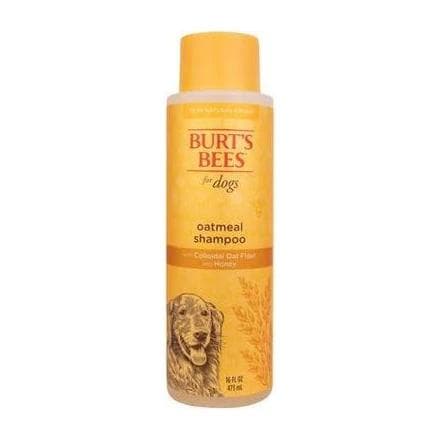
Petful is reader supported. As an affiliate of platforms like Amazon and Chewy, we may earn a commission when you buy through links on this page. There is no extra cost to you.
Do cockapoos shed? The honest answer, and one the American Kennel Club echoes for every poodle mix, is yes, but usually very little, because a cockapoo is a cross between a poodle and a cocker spaniel and inherits a mix of both coats. No dog is truly nonshedding. The poodle side keeps loose hair trapped in the curls instead of dropping it on your floor, which is why so many families describe their cockapoo as a low-shedding companion rather than a heavy shedder. How much any individual dog sheds comes down to genetics, coat type, and generation, and that is exactly what this guide unpacks.
- 1Cockapoos are low-shedding, not no-shedding, because the poodle parent trims down loose hair
- 2The tighter and curlier the coat, the less hair you will see around the house
- 3Curly and wavy coats shed least; straight or flat cocker-leaning coats shed more
- 4Low shedding does not mean low grooming: this coat needs brushing every day or two plus regular trims
- 5No cockapoo is guaranteed hypoallergenic, though many allergy sufferers tolerate them better than heavy shedders

Sign up for expert-backed reviews and safety alerts all in one place.
Do Cockapoos Shed? The Short Answer
Cockapoos shed, but most owners barely notice it. Because the breed pairs a poodle (a famously low-shedding breed) with a cocker spaniel (a moderate, seasonal shedder), the result usually lands closer to the poodle end of the scale. Loose hairs tend to stay caught in the coat rather than falling out, so you get less fur on your couch and clothes than you would from a Labrador or a husky.
That trapped hair is the whole trick. It does not vanish. If you skip brushing, those loose hairs bind together into painful mats against the skin instead of drifting onto the floor. So the low-shedding reputation is real, but it comes with a grooming trade-off rather than a free pass.
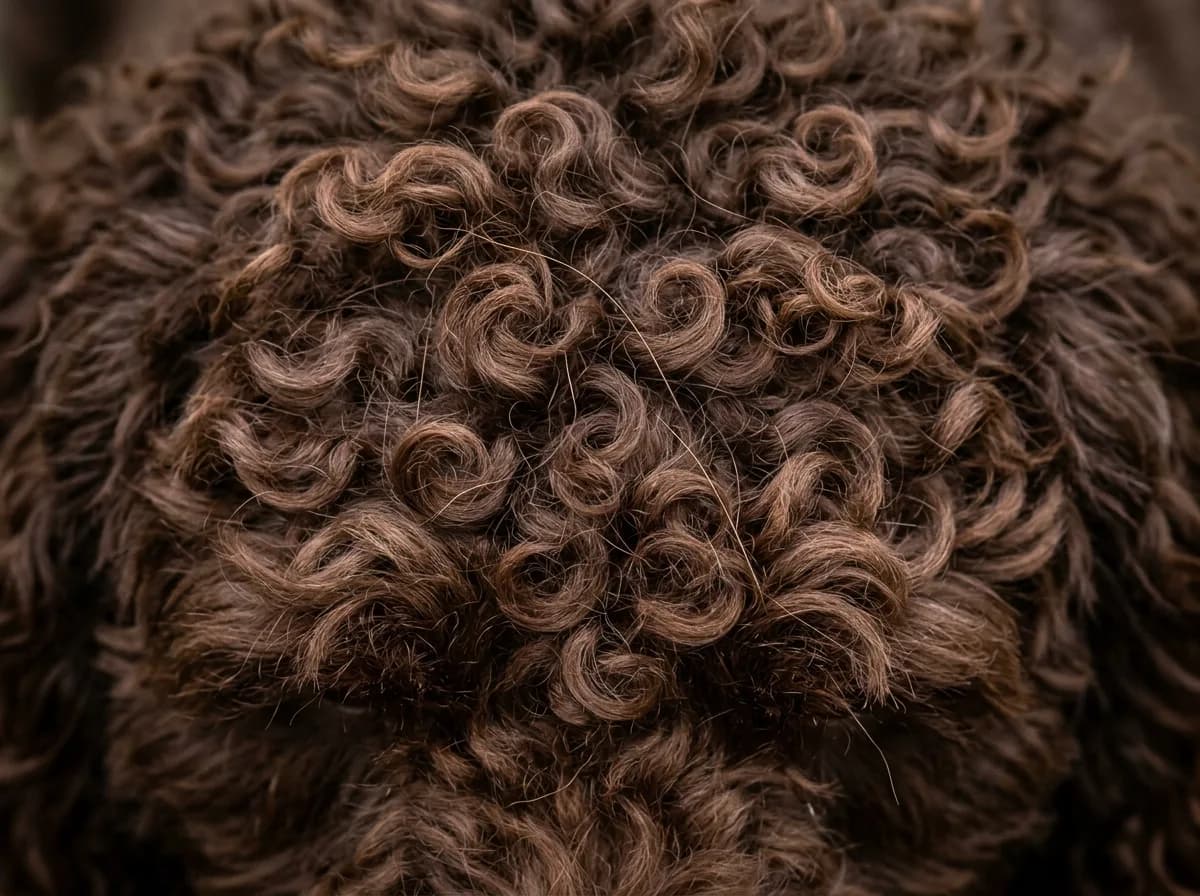
Every cockapoo is an individual. Two puppies from the same litter can grow up with noticeably different coats and shedding levels, especially in first-generation (F1) crosses where the genetics are least predictable. If a breeder promises you a zero-shed dog, treat that as a sales pitch, not a fact.

Petful may earn a commission when you click through to Chewy, at no extra cost to you.
- Marketing around doodle breeds often blurs this line. Every dog with hair loses some of it. Cockapoos simply shed far less visibly than double-coated breeds, and the loose hair collects in the coat rather than on your furniture.
Why Cockapoos Shed Less Than Most Dogs
To understand a cockapoo's coat, look at its parents. The poodle carries a single, curly coat that grows continuously and sheds minimally, which is why poodles are one of the breeds the AKC lists as a good match for some allergy sufferers. The cocker spaniel carries a denser, feathered coat that sheds on a more typical cycle, heaviest in spring and fall.
A cockapoo inherits some blend of the two. The more poodle influence in the coat, the less shedding you tend to see. This is also why the poodle side drives the grooming needs: a coat that traps hair instead of dropping it has to be brushed and trimmed to stay healthy.
The role of the hair-growth cycle
Dog hair grows in phases, and shedding is simply the release of hairs that have reached the end of their growth phase. Heavy-shedding breeds cycle a large share of their coat at once, especially seasonally. Poodle-type coats have a longer active growth phase, so fewer hairs reach the shedding stage at any given time. Cockapoos inherit a softened version of this, which stretches out and reduces visible shedding.
The technical term for the growth phase is anagen, and the release phase is telogen. A double-coated breed like a husky spends a large share of its coat in telogen at once, which is why it appears to shed in dramatic clumps twice a year. Because poodle-type hair holds a longer anagen phase, the cockapoo drops hair in a slow trickle that the surrounding curls quietly capture. This is the same reason a cockapoo can grow long, flowing feathering that keeps getting longer until it is trimmed, rather than reaching a fixed length and stopping the way a Labrador's coat does.
Cockapoo Coat Types and How Much Each One Sheds
Cockapoo coats generally fall into three categories, and the type your dog has is the single biggest predictor of how much it sheds. You often cannot tell for certain until a puppy is several months old and the adult coat starts coming in.
| Coat Type | Look and Feel | Shedding Level | Grooming Effort |
|---|---|---|---|
| Curly (poodle-leaning) | Tight, springy curls | Lowest | Highest: brush daily, mats form fast |
| Wavy (fleece) | Soft loose waves, the classic cockapoo look | Low | Moderate to high: brush every 1-2 days |
| Straight or flat (cocker-leaning) | Sleeker, feathered, closer to a spaniel | Highest of the three | Moderate: sheds more, mats less |
The curly, poodle-leaning coat sheds the least but demands the most brushing, because tight curls trap loose hair and mat quickly. The wavy or fleece coat is what most people picture when they imagine a cockapoo, and it strikes a middle ground: low shedding with manageable grooming. The straight or flat coat leans toward the cocker spaniel side, sheds the most of the three, and is the least "hypoallergenic" of the coat types.
It helps to know what a coat change actually looks like on the ground. A puppy that arrives with a soft, wavy fleece may tighten into curls by its first birthday, or relax into a straighter cocker-style coat instead. Color can shift too: many cockapoos are born dark and "fade" or "clear" to a lighter apricot or cream as they mature, which is a coat change, not a shedding problem. None of this changes the core rule, which is that the curlier the adult coat settles, the less loose hair you will find on your clothes.
- Ask the breeder to show you the parents and, if possible, adult dogs from previous litters. Adult relatives are a far better preview of your puppy's mature coat and shedding than the puppy fluff you see at 8 weeks.
Does generation (F1, F1B, F2) change shedding?
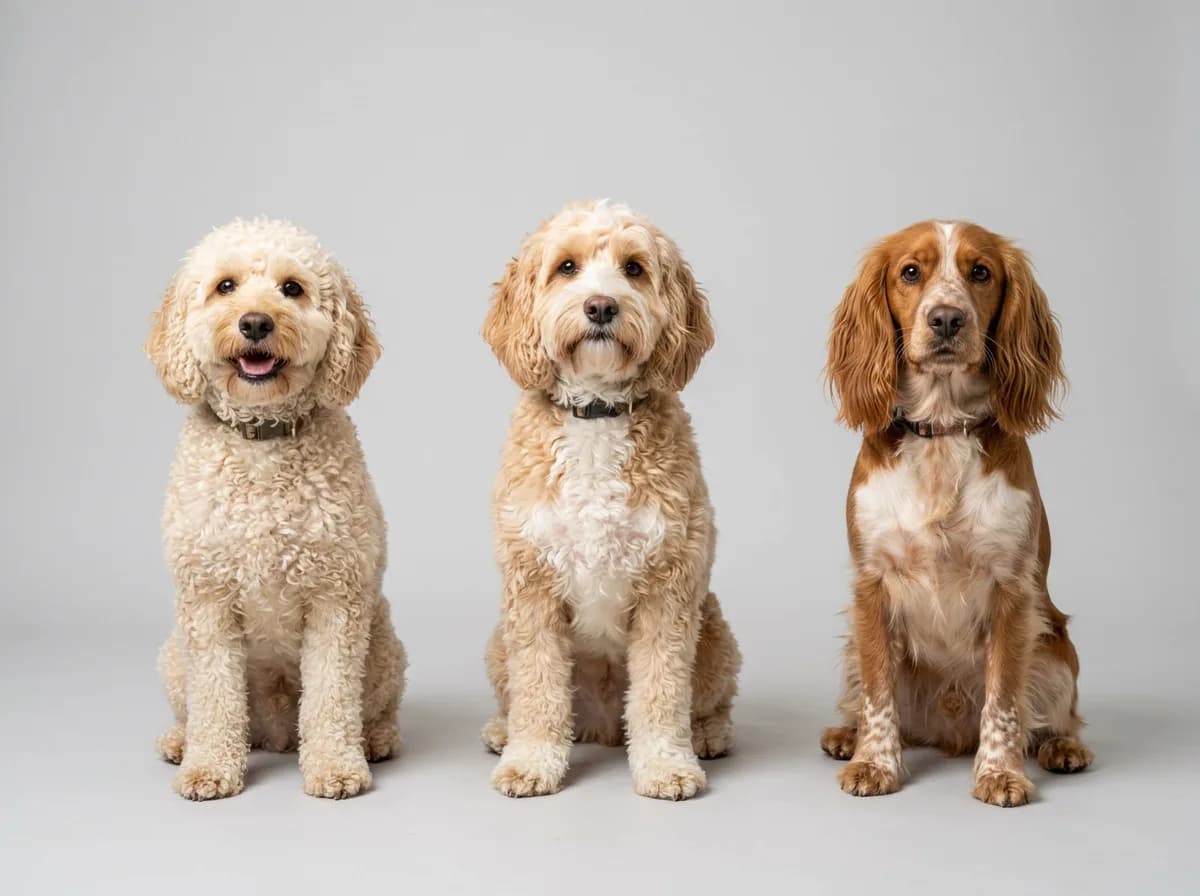
Generation labels describe the cross behind your dog and can shift the odds. An F1 cockapoo is a first-generation poodle-to-cocker cross, so coats and shedding vary the most. An F1B cockapoo is bred back to a poodle, so it carries more poodle genetics and usually sheds the least, which is why breeders often recommend F1B dogs to families worried about allergies or shedding. F2 and later generations become less predictable again as the gene combinations widen.

Petful may earn a commission when you click through to Chewy, at no extra cost to you.
For families weighing the options, the practical hierarchy usually runs like this. An F1B (roughly three-quarters poodle) offers the most reliable low-shed coat and is the common pick for allergy households. A standard F1 (half poodle, half cocker) is the widest lottery, capable of producing anything from a tight curl to a flat spaniel coat within a single litter. Multigenerational dogs (F2, F3, and "F1B x F1B" pairings) can be bred toward a consistent fleece coat by an experienced breeder, but only if that breeder is deliberately selecting for coat type rather than color or size. Always ask which generation you are looking at and, more importantly, ask to feel the parents' coats yourself.
None of these labels is a guarantee. Generation nudges the probability, but the individual dog's coat is what actually determines shedding.
Do Cockapoos Shed Seasonally?
Some cockapoos, especially those with more cocker spaniel in the coat, do shed a little more heavily in spring and fall as the coat adjusts to the changing weather. Curlier, poodle-leaning cockapoos tend to shed at a low, steady rate all year with less of a seasonal spike.
There is also a one-time event owners sometimes mistake for heavy shedding: the puppy coat blowing out. Between roughly six and twelve months, a cockapoo's soft puppy coat is replaced by its adult coat. During this transition you may see more loose hair and, more importantly, a sharp rise in matting. Daily brushing through this window keeps the coat from felting.
Diet and health can also nudge shedding up. A dog with a poor coat, unbalanced nutrition, parasites, allergies, or a skin infection may shed more than a healthy one, regardless of coat type. If your cockapoo suddenly starts losing noticeably more hair, or you see bald patches, redness, or itching, that is a sign to see your veterinarian rather than a normal coat trait. Stress and hormonal changes, including the months after a female is spayed, can temporarily thin the coat too.
- Around 6 to 12 months the coat transitions and tangles form fast. Owners who ease off brushing during this stage often end up at the groomer for a full shave-down. Brush daily through the coat change even if shedding looks minimal.
Health conditions that cause abnormal shedding
Normal cockapoo shedding is light and even. Hair loss that comes in patches, or that leaves the skin visibly irritated, is a medical signal rather than a coat trait. The most common culprits your veterinarian will look for are:
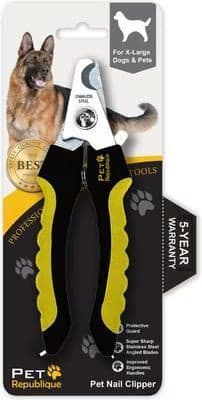
Sharp stainless-steel clippers with a built-in safety guard to help prevent over-cutting, sized for large breeds.
Petful may earn a commission when you click through to Chewy, at no extra cost to you.
- Allergies and atopic dermatitis. Food and environmental allergies are common in both parent breeds. Itching leads to scratching and chewing, which breaks hair and creates thin, inflamed patches.
- Fleas, mites, and parasites. Flea allergy dermatitis is one of the top causes of localized hair loss, and mange mites (demodex or sarcoptes) cause circular bald spots.
- Ear and skin infections. The cocker heritage brings floppy, moisture-trapping ears; yeast and bacterial infections around the ears, muzzle, and paws thin the coat locally.
- Hypothyroidism. An underactive thyroid, seen in middle-aged and older dogs, classically causes symmetrical hair thinning along the flanks plus weight gain and low energy.
- Poor nutrition. A diet short on protein or essential fatty acids produces a dull, brittle coat that sheds more. Many nutrition experts point to poor diet as the single most common avoidable cause of excess shedding.
If shedding suddenly changes in volume or pattern, book a veterinary exam rather than assuming it is seasonal. Early treatment of allergies, parasites, or thyroid disease usually restores the coat.
Grooming a Low-Shedding Coat: What It Actually Takes
Here is the trade-off at the heart of the breed. A cockapoo sheds little precisely because the coat holds onto loose hair, and that same trait means it will mat without regular grooming. Low shedding and low maintenance are not the same thing.
For a healthy, mat-free cockapoo coat, plan on:
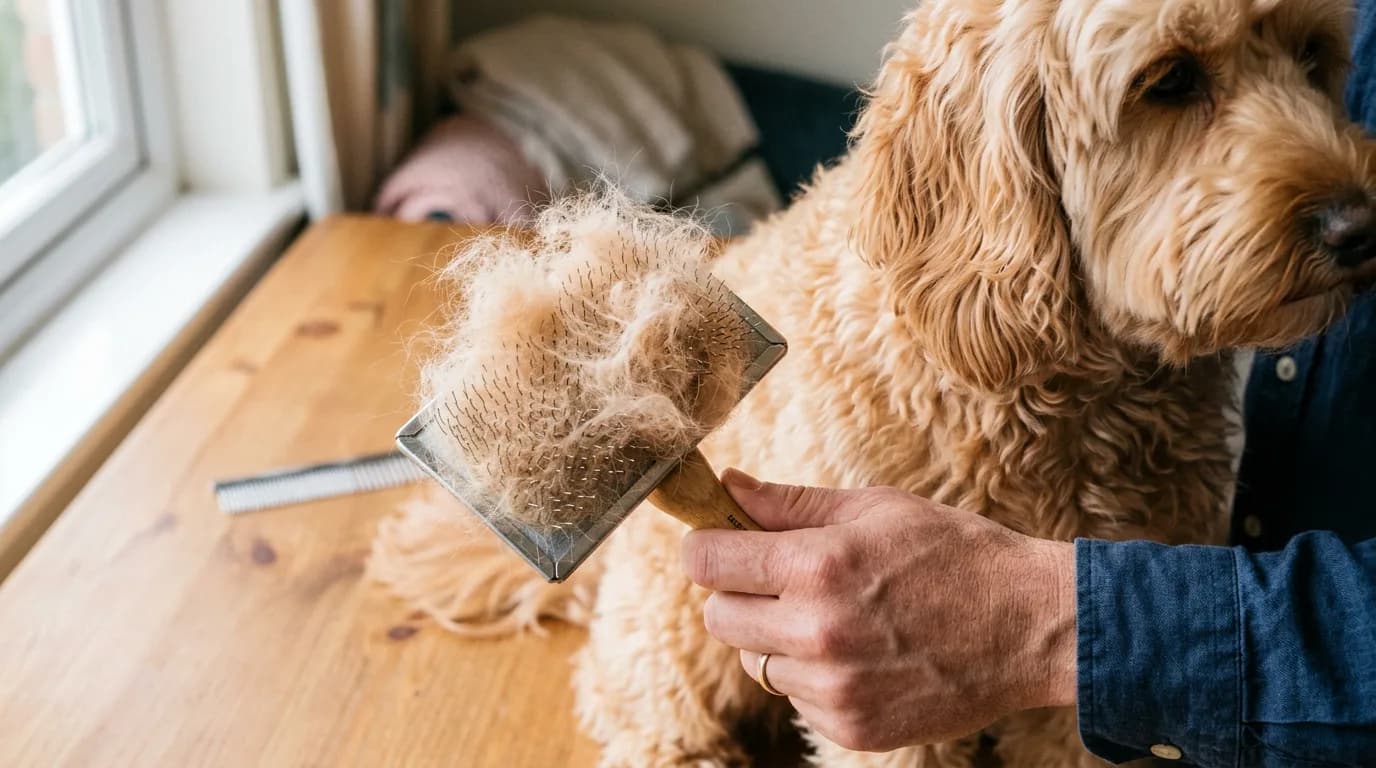
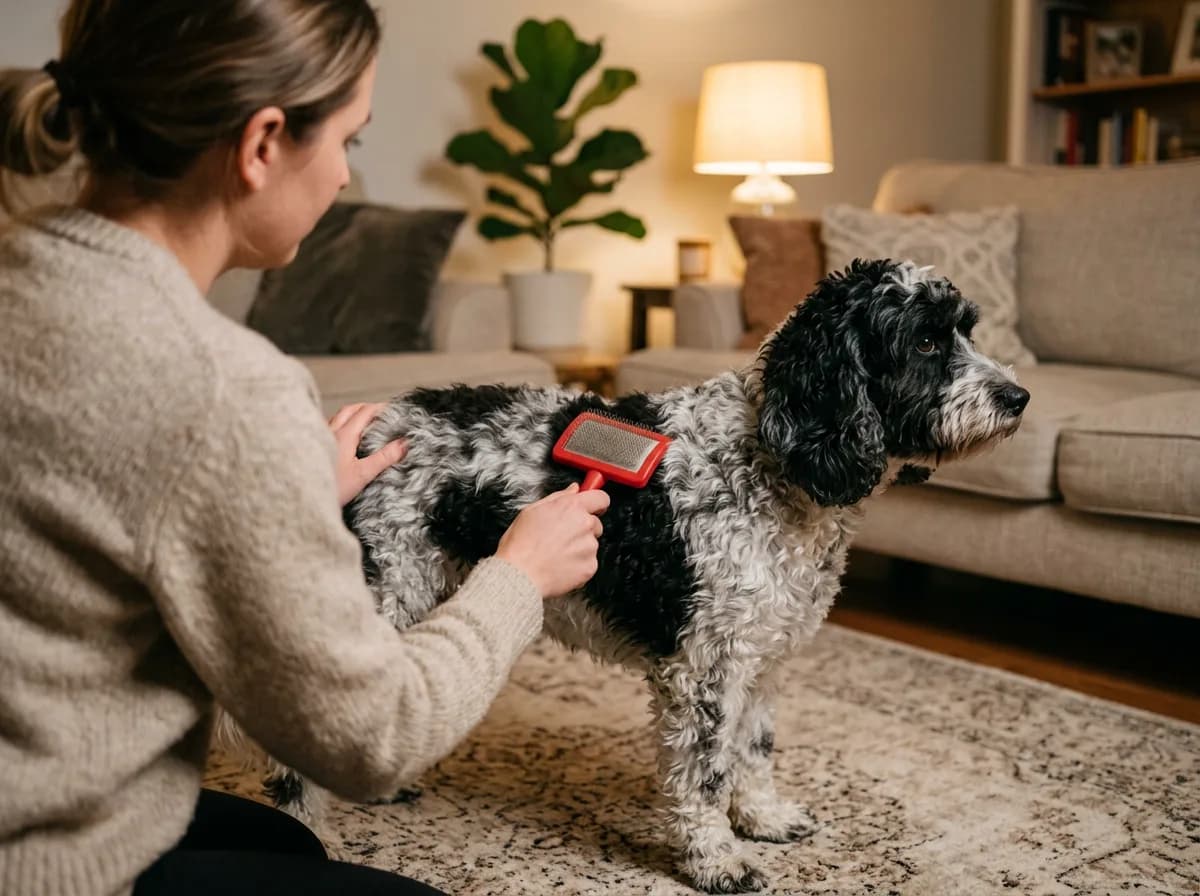
- Brushing every one to two days, and daily for curly coats or during the puppy coat change. Use a slicker brush and a metal comb to reach the skin, where mats start.
- A full professional groom every 6 to 8 weeks, including a bath, trim, and thorough de-matting. Many owners keep a shorter "puppy cut" to reduce daily brushing.
- Bathing every 3 to 4 weeks or as needed, followed by a full brush-out while the coat dries so it does not felt.
- Routine ear, nail, and eye care, since the cocker heritage brings floppy, hair-filled ears that trap moisture and are prone to infection.
Skipping the brushing is the most common mistake. A coat that never drops hair on your floor is dropping it into itself instead, and neglected mats pull on the skin, hide parasites, and can only be fixed with a full shave-down. For the complete routine, our cockapoo grooming guide walks through tools, trims, and timing.
The tools that actually reach the mats
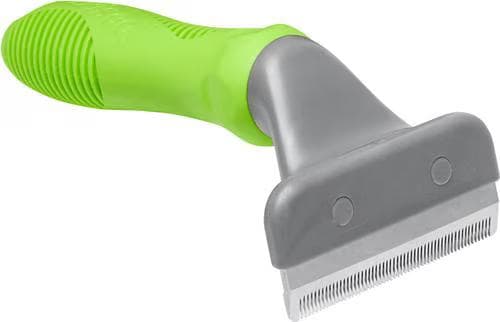
Most owners who "brush daily" and still end up with mats are only grooming the top layer. Mats form at the skin, where a soft-bristle brush never reaches. A working cockapoo kit is short: a slicker brush to lift and separate the outer coat, a stainless steel greyhound comb to test all the way down to the skin (if the comb glides to the roots, the section is mat-free), and a detangling spray to ease the comb through without ripping. Line brushing, where you part the coat and work in horizontal layers from the skin outward, is the single technique that keeps a fleece coat truly mat-free. For the underarms, behind the ears, and the "trousers" on the back legs, which are the three spots that felt first, comb those every single day.
Petful may earn a commission when you click through to Chewy, at no extra cost to you.
Ear care the cocker side demands
The cockapoo's inherited floppy, hairy ears are a genuine health item, not a cosmetic one. Because air cannot circulate and hair grows inside the canal, moisture and wax build up and yeast thrives. Check the ears weekly, clean with a vet-approved ear solution every one to two weeks, and dry the ears thoroughly after every bath or swim. A sweet, yeasty, or sour smell, head-shaking, or scratching at one ear means it is time for a veterinary visit before a mild irritation becomes a painful infection.
- A shorter all-over trim keeps the classic teddy-bear look while cutting daily brushing time. It is the single easiest way to make a cockapoo coat manageable for a busy household without sacrificing the low-shedding benefit.
Are Cockapoos Hypoallergenic?
This is where expectations need a reality check. No dog breed is truly hypoallergenic, and that includes the cockapoo. The AKC is explicit that even poodles, one of the go-to breeds for allergy sufferers, are not allergen-free.
The reason is that the main dog allergen most people react to, a protein called Can f 1, is not primarily in the hair at all. It is in dander (shed skin flakes), saliva, and urine. Because low-shedding dogs release less hair, they spread less of the dander that clings to that hair, so many allergy sufferers genuinely tolerate a cockapoo better than a heavy shedder. But the allergen is still produced. A curly, poodle-leaning cockapoo that sheds very little is your best bet if allergies are a concern, and spending time with the specific dog before committing is the only real test.
If you are managing a mild allergy in the household, a few habits meaningfully lower the allergen load: bathe the dog every three to four weeks to wash dander off the coat, run a HEPM air purifier in the main living space and the bedroom, keep the dog off beds and upholstered furniture where dander concentrates, wash hands after handling the dog, and vacuum with a HEPA-filter machine twice a week. None of these makes a dog hypoallergenic, but together they can be the difference between a workable and an unworkable match for a mild sufferer. Anyone with a severe or asthmatic dog allergy should consult an allergist before bringing any dog home.
- If someone in your home has dog allergies, spend extended time with the exact dog (or its parents) before bringing a cockapoo home. Individual reactions vary widely, and no breeder can guarantee an allergy-free dog. Frequent bathing and a good air purifier reduce, but never eliminate, household allergens.
How Shedding Compares: Cockapoo vs Other Doodles
A cockapoo sits comfortably in the low-shedding tier alongside other poodle crosses, though the exact amount depends on the second breed and the coat. Compared with a cavapoo (a Cavalier King Charles spaniel and poodle cross), the two are broadly similar in shedding, with coat type mattering more than breed label. If you are weighing the two, our cockapoo vs cavapoo comparison breaks down the differences beyond the coat.
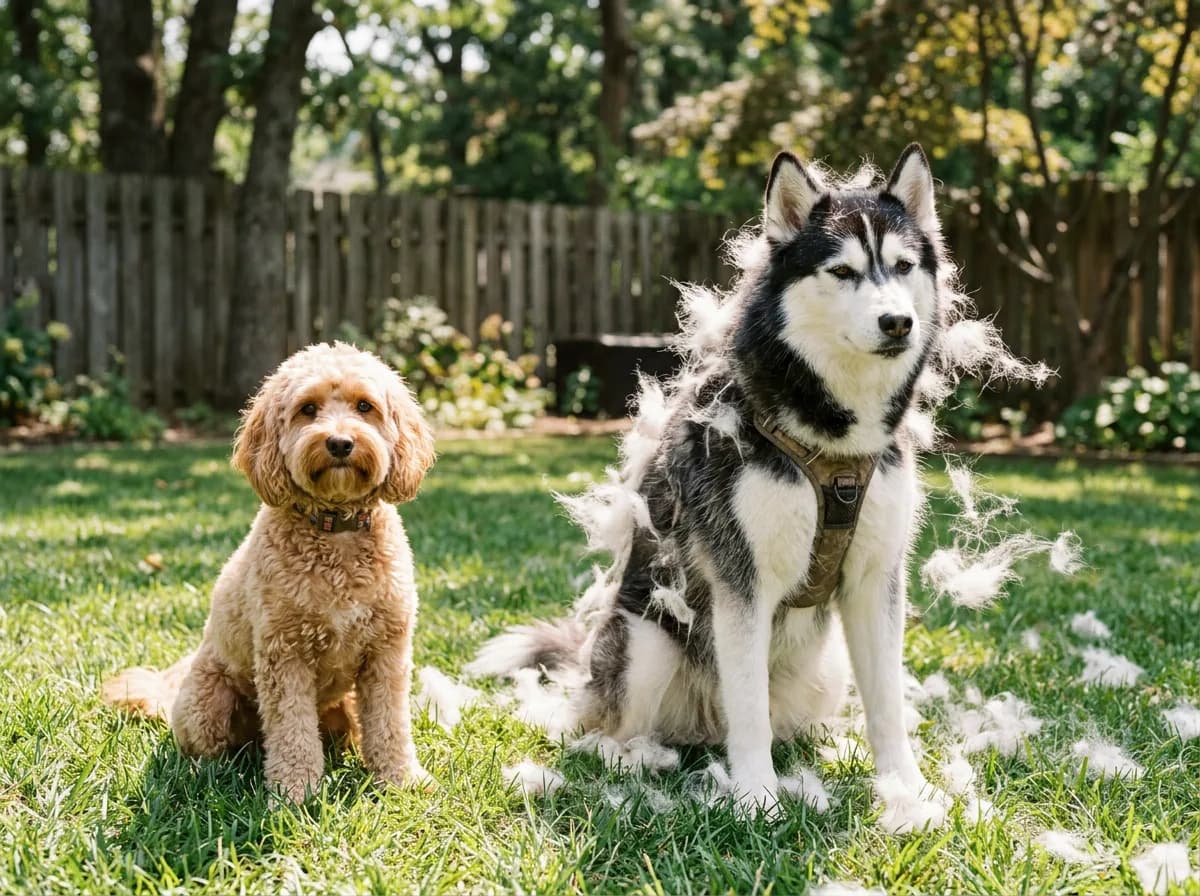
Against heavy double-coated breeds like huskies, German shepherds, or golden retrievers, the difference is dramatic: a cockapoo will leave a fraction of the fur those breeds shed. Double-coated breeds carry a dense undercoat that "blows" seasonally in large quantities, which is the fur that coats furniture and clothing. Cockapoos have no such undercoat to shed, so even a straighter, cocker-leaning cockapoo stays far cleaner than a typical shedding breed. That low-shed profile, plus a friendly disposition, is a big part of why the crossbreed became so popular. You can read more about the personality side in our guide to cockapoo temperament.
Petful may earn a commission when you click through to Chewy, at no extra cost to you.
It is worth setting realistic expectations against a labradoodle or goldendoodle as well. Those crosses use the same low-shedding poodle influence, so shedding levels are comparable when the coats are similar. In every poodle cross, the pattern holds: the curlier and more poodle-like the coat, the less the dog sheds, and the more brushing it needs. Breed name matters less than the coat in front of you. One caveat with the larger doodles: a goldendoodle or labradoodle simply has more surface area and more hair overall, so even at a comparable shed rate they can leave more total hair around than a small, curly cockapoo. On a per-pound basis they are similar; on an absolute basis the compact cockapoo usually wins for a spotless floor.
What a Low-Shedding Cockapoo Costs to Own
Low shedding is a lifestyle benefit, but the grooming trade-off shows up in the budget, so it is worth going in with real numbers. Costs vary by region, coat, and how much of the grooming you do yourself.
- Puppy purchase price. In the United States a cockapoo from a reputable, health-testing breeder typically runs between about $1,000 and $3,000. F1B litters, rare colors, and established breeders sit at the higher end; higher-cost-of-living regions such as the coasts skew above the Midwest and South.
- Professional grooming. A full groom every 6 to 8 weeks commonly costs $60 to $100 per visit depending on coat length, size, and metro area, which adds up to roughly $500 to $800 a year if you never miss an appointment.
- At-home grooming supplies. A starter kit (slicker brush, steel comb, detangling spray, dog shampoo, nail clippers, ear cleaner) runs about $60 to $120 up front, then a modest amount each year for replacements. Learning to brush and bathe at home is the biggest single way to cut lifetime grooming spend.
- Food. Budget roughly $30 to $70 a month for a quality small-to-medium breed diet, more if a veterinarian prescribes an allergy or sensitive-skin formula.
- Routine veterinary care. Annual wellness visits, vaccines, and parasite prevention generally total a few hundred dollars a year, with more in the puppy year for the initial vaccine series and spay or neuter.
- Pet insurance. Many cockapoo owners carry insurance because of the breed's allergy and ear-infection tendencies; premiums commonly land in the $30 to $60 per month range depending on age, location, and coverage.
Across a first year, it is realistic to plan for the purchase price plus roughly $1,500 to $2,500 in setup, grooming, food, and care, then a lower recurring annual figure after that. The coat is genuinely low-shed, but the brushing and trimming it needs to stay that way is the line item new owners most often underestimate.
Living With a Cockapoo: Behavior and Care Beyond the Coat
Shedding is only one piece of daily life with this breed. Cockapoos are bright, people-oriented dogs that bond hard with their families, which is a joy and a caution in equal measure. That deep attachment is exactly why the breed is prone to separation anxiety: a cockapoo left alone too long or too often may bark, pace, or become destructive. Building up alone-time gradually from puppyhood, leaving enrichment toys, and avoiding marathon absences prevents most of it.
Their intelligence, inherited from both the poodle and the working cocker, makes them highly trainable and eager to please, and it also means they need a job. A bored cockapoo is a barking, digging, chewing cockapoo. Plan on 30 to 60 minutes of real exercise a day plus mental work: short training sessions, puzzle feeders, scent games, and fetch all channel that energy. Consistent, reward-based training from the first week home sets the tone; harsh corrections backfire with a sensitive breed like this one.
On barking specifically, cockapoos are moderately vocal rather than yappy by nature. Most barking traces back to alerting, boredom, or loneliness, so the fix is usually more exercise, more enrichment, and calm, consistent responses rather than punishment. Early socialization to visitors, other dogs, traffic, and everyday noises produces a confident adult that feels less need to sound the alarm at everything.
The Bottom Line on Cockapoo Shedding
If you want a dog that leaves very little hair around the house, a cockapoo is a strong choice, especially one with a curly or wavy, poodle-leaning coat or an F1B cross. Just go in clear-eyed: low shedding buys you a cleaner floor, not less grooming. This coat needs consistent brushing and regular trims to stay healthy, and no cockapoo is a guaranteed fix for allergies.
For the full picture on size, cost, health, and care, start with our complete cockapoo breed guide, and if you are still choosing a puppy, our overview of the full-grown cockapoo size will tell you what to expect as they mature.
Frequently Asked Questions
The main downsides are high grooming needs (daily or near-daily brushing plus a professional groom every 6 to 8 weeks), a tendency toward separation anxiety because the breed bonds closely with its people, ear infections inherited from the cocker spaniel side, and unpredictable coats and health in first-generation crosses. The low-shedding coat also mats easily if you skip brushing.
In grooming terms, yes. A cockapoo is low-shedding but not low-maintenance: the coat traps loose hair and mats without brushing every 1 to 2 days and a full groom every 6 to 8 weeks. They are also emotionally high-need dogs that want company and exercise, so they do best with people who are home often.
Cockapoos can be moderately vocal. They tend to bark to alert you to visitors or noises and may bark more when bored, under-exercised, or left alone too long. Early training, mental stimulation, and enough daily activity keep barking in check, and individual dogs vary widely.
Cockapoos are not an especially smelly breed, but their floppy, hair-filled cocker-style ears trap moisture and can develop a yeasty odor or ear infection if not cleaned. A neglected or matted coat and dirty ears are the usual culprits behind a smelly cockapoo, so regular grooming, ear cleaning, and bathing every 3 to 4 weeks keep odor away.
Neither sex is clearly better; temperament depends far more on the individual dog, breeding, and training than on gender. Some owners feel males are a touch more affectionate and females a bit more independent, but these are generalizations. Both make excellent family dogs, and spaying or neutering further reduces any sex-linked behavior differences.
There is no single healthiest small dog, but breeds often cited for longevity and relatively few inherited problems include mixed-breed dogs, the toy poodle, the miniature schnauzer, and the bichon frise. A cockapoo can be a healthy small-to-medium dog when it comes from health-tested parents, since crossbreeding can reduce some purebred-specific conditions. Choosing a responsible breeder matters more than the breed label.
The biggest single downside is the grooming commitment: a low-shedding coat that mats quickly and needs frequent brushing and professional trims. Add a strong tendency toward separation anxiety, inherited ear problems, and variable coats and health in F1 crosses, and the cockapoo is best suited to owners who can commit time to both grooming and companionship.
In the United States a cockapoo puppy from a reputable breeder typically costs between about $1,000 and $3,000, with sought-after colors, F1B litters, and well-known breeders at the higher end. Beyond the purchase price, budget for lifetime costs including food, professional grooming every 6 to 8 weeks (about $500 to $800 a year), routine vet care, and pet insurance. See our cockapoo price guide for a full breakdown.

Coreen Saito is a pet writer and longtime shelter volunteer with more than a decade in animal rescue. She covers cat behavior, breed care, and the small, ordinary science of sharing a life with companion animals, with a particular focus on honest takes about the products and decisions that actually matter. At home in Arizona, she's outranked by Mac (a dog with the loudest opinion in the house), Rebel (a cat who governs by quiet authority), and Meri (an orange tabby who runs the late shift and the laundry basket). She writes about all three, plus the rescues that keep coming through her life, at LifeWithMinty.com.
Sign up for expert-backed reviews and safety alerts all in one place.