Cockapoo Full Grown: Adult Size, Weight and Growth Chart
A full-grown cockapoo weighs 12 to 24 pounds and stands 10 to 15 inches, but the toy-to-maxi spread runs 6 to 30+ lbs. See adult size by type, by generation, and a month-by-month growth chart.
Petful is reader supported. As an affiliate of platforms like Amazon and Chewy, we may earn a commission when you buy through links on this page. There is no extra cost to you.
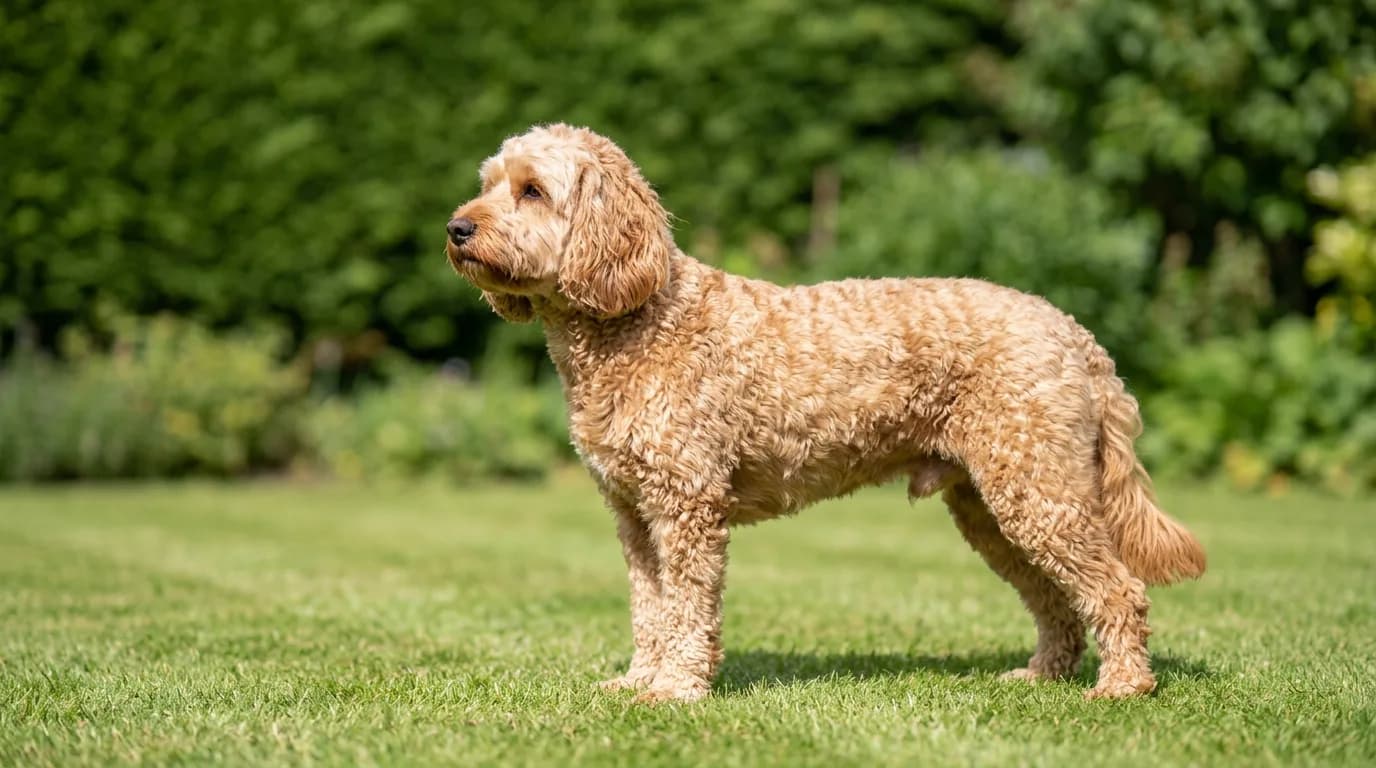
A cockapoo full grown typically weighs 12 to 24 pounds and stands 10 to 15 inches at the shoulder, though the range runs from a 6-pound toy to a 30-plus-pound maxi, depending entirely on which size of Poodle sat in the litter's family tree. Because the cockapoo is a cross between a Cocker Spaniel and a Poodle (and Poodles come in toy, miniature and standard), there is no single "adult cockapoo," only a spread of predictable sizes tied to the parents. Most cockapoos reach their full adult height by 9 to 11 months and fill out to their final weight by around 12 to 14 months. This guide breaks the finished dog down three ways at once: by variety (toy, mini, maxi, standard), by generation (F1, F1b, F2 and beyond), and month by month on a growth chart, so you can predict the adult dog in front of you.
- 1A cockapoo full grown usually weighs 12-24 lbs and stands 10-15 inches, but the toy-to-maxi spread is 6-30+ lbs.
- 2Adult size is set mainly by the Poodle parent's size (toy, mini or standard), not by the Cocker side.
- 3Most cockapoos reach full height by 9-11 months and full weight by 12-14 months; larger dogs finish later.
- 4Generation (F1, F1b, F2) shifts the odds but the Poodle line matters more than the F-number for final size.

Sign up for expert-backed reviews and safety alerts all in one place.
How Big Does a Cockapoo Get When Full Grown?
The honest answer is "it depends on the Poodle side," and any breeder who quotes you one exact adult weight for the whole breed is guessing. The cockapoo is a hybrid, not a standardized breed, so no kennel club (not the AKC, which does not recognize the cockapoo, nor the UK Kennel Club) publishes an official size standard. What does exist is a reliable pattern: the Cocker Spaniel parent is fairly consistent in size, so the finished dog's size is driven overwhelmingly by whether the Poodle parent was a toy, a miniature or a standard.
As a working rule, a full-grown cockapoo lands somewhere between 6 and 30-plus pounds and between about 9.5 and 18 inches tall at the withers. The bulk of the breed, the miniature cockapoo, clusters right in the middle at roughly 12 to 20 pounds. The American Cockapoo Club and the Cockapoo Club of GB both describe the breed in these variety terms rather than as one fixed size, which is why the sections below split the numbers out for you.
Think of it in three layers, each of which this guide covers in its own section. The first layer is variety: which size of Poodle was used, giving you toy, mini or maxi. The second layer is generation: whether the dog is an F1, F1b or F2, which shifts the odds within a variety. The third layer is the individual: sex, nutrition and the luck of the genetic draw, which move any single puppy a pound or two off the average. Stack those three and you can predict an adult cockapoo with far more confidence than a single breed-wide "average" ever gives you.
It also helps to know where the size actually comes from. The Cocker Spaniel side of the cross is remarkably consistent: an American Cocker Spaniel runs roughly 20 to 30 pounds and an English Cocker a little more, so the Cocker contributes a fairly steady mid-size influence to every litter. The Poodle side is the variable, because Poodles are the only breed that comes in three formal sizes. A toy Poodle is under 10 inches and 4 to 6 pounds, a miniature Poodle is 10 to 15 inches and 10 to 15 pounds, and a standard Poodle is over 15 inches and 40 to 70 pounds. That is why the same Cocker paired with three different Poodles can produce three wildly different adult dogs, and why "what size is the Poodle parent?" is the first question a serious buyer asks.
- The cockapoo is a designer cross, so major registries like the AKC do not recognize it and publish no breed standard. Size ranges here come from breed clubs (American Cockapoo Club, Cockapoo Club of GB) and observed litter data, not a kennel-club standard.
For a fuller picture of the breed beyond size, our complete cockapoo breed guide covers history, care and what living with one is actually like.
Petful may earn a commission when you click through to Chewy, at no extra cost to you.
Cockapoo Full Grown Size by Type
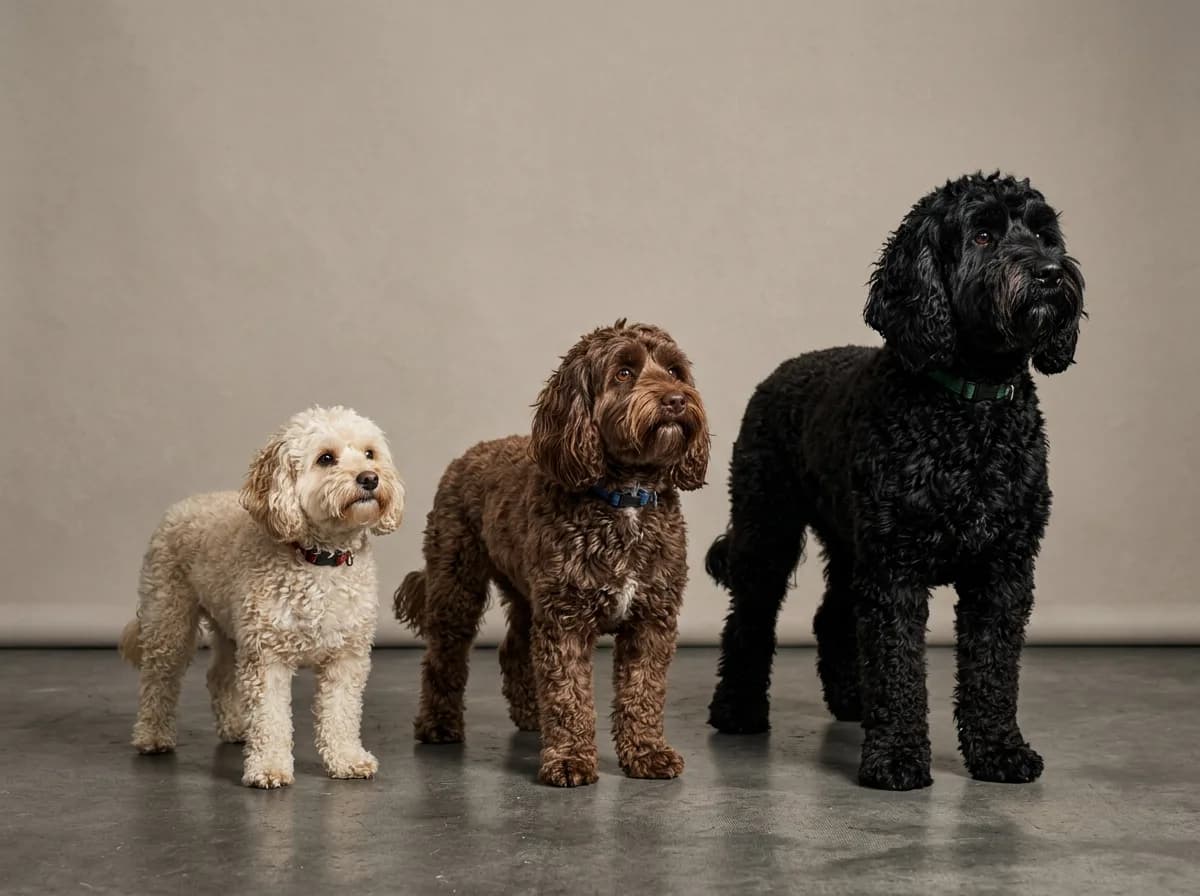
Breeders name cockapoo varieties after the Poodle parent used in the cross. The four you will see advertised are teacup (or toy), miniature (mini), maxi (or standard), with "toy" and "teacup" often used loosely for the smallest dogs. The table below gives the adult weight and height range for each, with the typical middle of the range in brackets.
| Type | Poodle Parent | Adult Weight | Adult Height | Full-Grown By |
|---|---|---|---|---|
| Teacup / Toy | Toy Poodle | 6-12 lbs | 9.5-10 in | 8-10 months |
| Miniature (Mini) | Miniature Poodle | 12-20 lbs | 11-14 in | 9-11 months |
| Maxi / Standard | Standard Poodle | 20-30+ lbs | 15-18 in | 12-16 months |
| Cocker-heavy cross | varies | 18-30 lbs | 14-15 in | 11-14 months |
Teacup and Toy Cockapoo
A teacup or toy cockapoo comes from a toy Poodle parent and is the smallest of the group, usually 6 to 12 pounds and under 10 inches tall. "Teacup" is a marketing term, not a recognized size, and buyers should be cautious: breeding for extreme smallness can introduce fragility, dental crowding, fragile bones and a higher rate of health problems, and reputable breed clubs discourage the "teacup" label entirely. These dogs finish growing fastest, often reaching adult size by 8 to 10 months. They suit apartment living and less mobile owners, but their small size means they can be easily injured by rough handling or larger dogs, so they are not always the best match for homes with very young children.
Miniature Cockapoo
The miniature cockapoo is by far the most common and is what most people picture: 12 to 20 pounds, 11 to 14 inches, and full grown by roughly 9 to 11 months. It is the size that made the breed popular, big enough to be sturdy, small enough for apartments. A mini strikes the balance most families are after: robust enough to keep up on a decent walk and handle play with children, yet compact enough to scoop up, travel with and fit comfortably in a smaller home. Because miniature Poodles themselves are fairly consistent in size, mini cockapoo litters tend to be the most predictable of all, which is another reason they dominate the breed.
Maxi and Standard Cockapoo
A maxi or standard cockapoo, bred from a standard Poodle, is the largest at 20 to 30-plus pounds and 15 to 18 inches. These dogs take the longest to mature, often not reaching their final frame until 12 to 16 months. If you want a full-sized companion for hiking, running or a busy active family, this is the variety to look for. Maxi cockapoos generally need more daily exercise and more floor space than their smaller cousins, and their food and grooming bills scale up accordingly. They are still very much a family dog, but prospective owners should size their home, yard and budget to the larger adult rather than to the puppy they meet at 8 weeks.
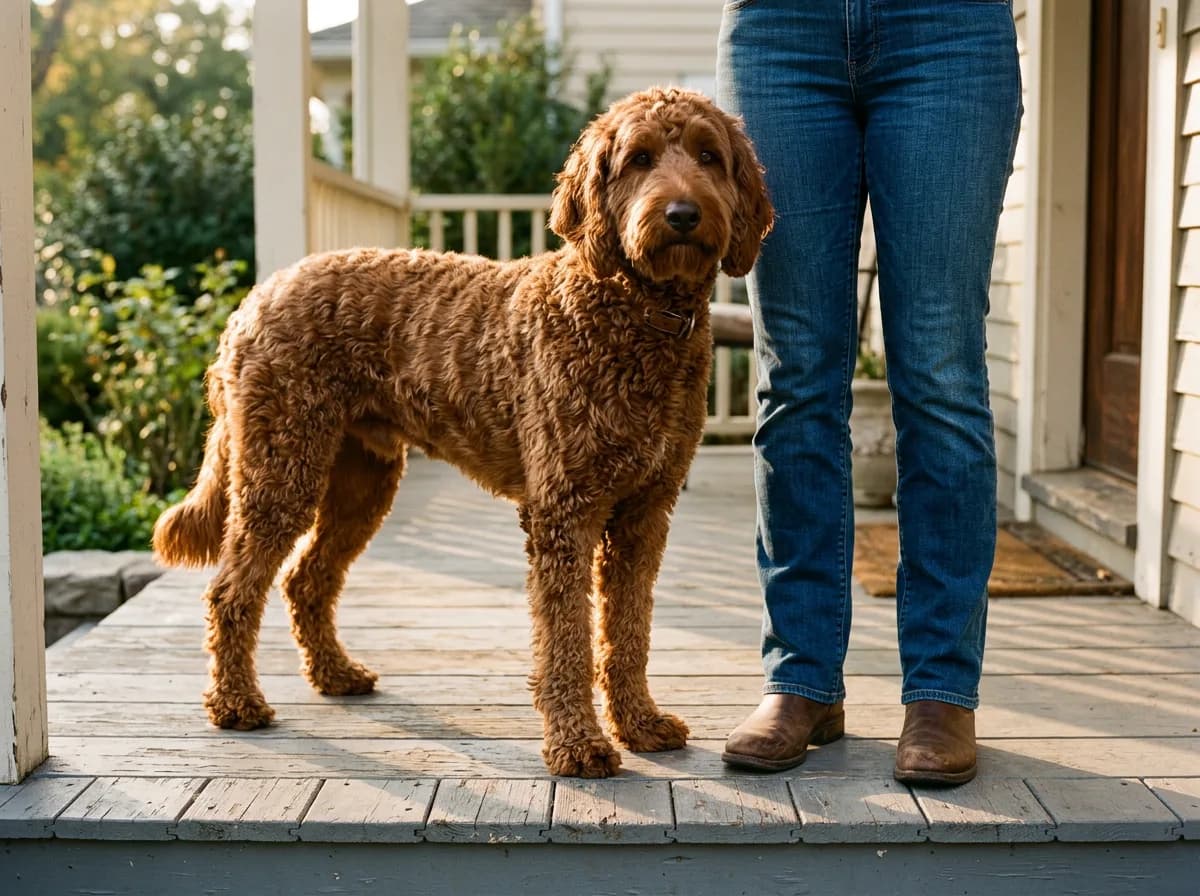
- A rough rule of thumb: a cockapoo's weight at 6 months is often around 65-75% of its adult weight. Doubling the weight at 4 months also gets you in the ballpark for mini cockapoos. Always ask the breeder the weight of both parents; that is the single best predictor.
Cockapoo Full Grown Size by Generation
Generation labels (F1, F1b, F2 and so on) describe how far a dog is from its purebred Cocker and Poodle ancestors. They matter more for coat and shedding than for size, but they do shift the odds, because "b" (backcross) generations lean back toward the Poodle side.

Petful may earn a commission when you click through to Chewy, at no extra cost to you.
| Generation | The Cross | Typical Size Effect |
|---|---|---|
| F1 | Cocker Spaniel x Poodle | Mid-range; a 50/50 blend of both parents' sizes |
| F1b | F1 Cockapoo x Poodle (usually) | Skews toward the Poodle parent's size and coat |
| F2 | F1 Cockapoo x F1 Cockapoo | Widest variation; can favor either parent |
| F2b / multigen | Later backcrosses to Poodle | More Poodle-like; size tracks the Poodle line used |
- F1 is a first-generation cross of a purebred Cocker and a purebred Poodle. Size sits between the two parents and is the most predictable single-generation outcome.
- F1b is an F1 cockapoo bred back to a Poodle. Because there is more Poodle in the mix, size (and curl, and low-shedding coat) leans toward whichever Poodle was used, so an F1b from a mini Poodle stays small.
- F2 and beyond widen the spread. With two cockapoo parents, a puppy can favor either grandparent, so litters are less uniform.
The practical takeaway: the F-number tells you less about final size than the Poodle parent's size does. An F1b from a toy Poodle will be small; an F1 from a standard Poodle will be large. Generation is genuinely useful information, but for coat and shedding, not for size. F1b and later backcrosses carry more Poodle genes, so they tend to have curlier, lower-shedding coats that suit allergy-conscious homes, while an F1 can go either way on coat. If your priority is a low-shedding dog, generation matters a lot; if your priority is knowing how big the dog will be, the Poodle parent's size is the number to chase. To go deeper on how coat type ties to shedding across these generations, see do cockapoos shed.
Generation also affects price. F1b and multigen puppies from health-tested, low-shedding lines often command a premium, and the size of the parents feeds into that too, since smaller "designer" sizes are frequently marketed at higher prices. If you are budgeting for a puppy, our cockapoo price guide breaks down what generation, size and breeder quality do to the cost.
- F1b only means "more Poodle." Whether that makes the dog smaller or larger depends on which Poodle. An F1b crossed with a standard Poodle can be bigger than an F1 from a mini. Always trace the actual Poodle parent, not just the label.
Cockapoo Growth Chart by Age
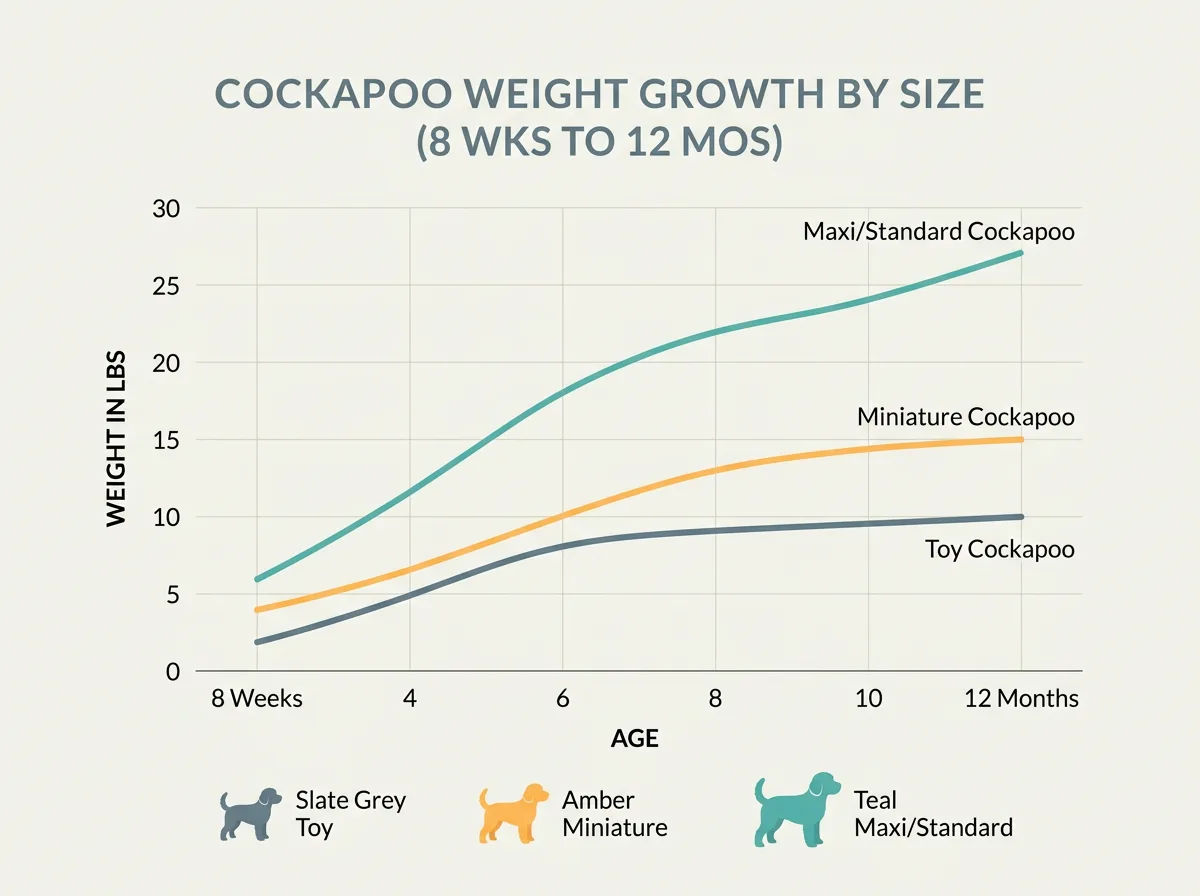
Here is the month-by-month picture almost no competing page publishes: a growth-by-age chart split by size. Use the row that matches your dog's expected adult size (from the parents). Weights are approximate and healthy dogs will fall a little above or below.
| Age | Toy | Miniature | Maxi / Standard |
|---|---|---|---|
| 8 weeks | 2-3 | 3-5 | 5-7 |
| 3 months | 3-5 | 5-8 | 8-12 |
| 4 months | 4-6 | 7-11 | 11-16 |
| 6 months | 5-9 | 10-15 | 15-22 |
| 9 months | 6-11 | 12-18 | 19-27 |
| 12 months | 6-12 | 12-20 | 20-30 |
| Adult (full grown) | 6-12 | 12-20 | 20-30+ |
Reading the chart: growth is fastest in the first four months, when a puppy can nearly double in weight month to month, then slows through months 6 to 12 as the dog fills out rather than shoots up. Toy cockapoos essentially finish by 8 to 10 months. Minis are done by 9 to 11 months. Maxi and standard dogs keep adding muscle and chest depth up to 14 to 16 months even after their height is set. The single most useful checkpoint is the 6-month weight: a cockapoo at 6 months is typically at around 65 to 75 percent of its adult weight, so multiplying a mini's 6-month weight by about 1.4 gives you a solid estimate of the finished dog.
Do not panic over week-to-week swings. Puppies grow in bursts, and a dog that seems to plateau for a fortnight often has a spurt the next. What matters is the overall trend line and body condition, not any single weigh-in. If your puppy is tracking well above or well below the row for its expected size, weigh the parents again in your mind and, if the gap is large, ask your vet whether the diet or a health issue is at play.
How to Measure Your Cockapoo Correctly
To weigh a small cockapoo, step on a bathroom scale holding the dog, then step on alone and subtract; larger dogs can use a vet or pet-store scale. To measure height, stand the dog squarely and measure from the floor to the top of the shoulder blades (the withers), not to the top of the head. Tracking both every few weeks against the chart tells you quickly whether your dog is on course for a toy, mini or maxi adult size.
At What Age Is a Cockapoo Full Grown?
Height comes first, weight second. Most cockapoos reach their full adult height by 9 to 11 months, then spend another few months filling out to their final weight, usually complete by 12 to 14 months. Larger (maxi/standard) cockapoos can take until 16 months to fully mature. Smaller toy cockapoos are often done growing by 8 to 10 months. Mentally, though, a cockapoo stays a puppy longer than it stays a small dog: even a physically full-grown 12-month-old often keeps its playful, adolescent temperament until 18 to 24 months, which is worth remembering when you are training an adult-sized but still-goofy dog.

Petful may earn a commission when you click through to Chewy, at no extra cost to you.
- A cockapoo usually stops getting taller months before it stops getting heavier. If your dog reached its adult height at 10 months but is still gaining a little weight at 13 months, that is normal filling-out, not a growth spurt.
What Affects a Cockapoo's Full-Grown Size?
Beyond variety and generation, a handful of factors nudge the final number.
- Parent size. The strongest predictor by far. Ask for the weight of both the Cocker and Poodle parents; the pup usually lands between them or near the Poodle side in backcrosses.
- Sex. Males average slightly larger and heavier than females, often by 1 to 3 pounds and up to an inch, though the overlap is large.
- Spay/neuter timing. Desexing very early can subtly affect growth-plate closure and final height in dogs; most vets now weigh timing against size and health. Discuss timing with your vet rather than defaulting to the earliest possible age.
- Nutrition. Over- or under-feeding a puppy will not change its genetic frame but will change its condition. Feed a complete puppy diet to the breed's small/medium schedule and keep the dog lean; excess weight is not "bigger," it is heavier and harder on the joints.
- Health. Chronic illness in puppyhood can stunt growth. A healthy, well-fed pup from known parents is highly predictable.
- You should be able to feel (not see) your cockapoo's ribs and see a waist from above. Puppy-specific food to around 12 months, then a portion-controlled adult diet, keeps growth steady and protects the hips and knees this breed is prone to.
Feeding a Cockapoo to Its Adult Size
Feeding follows size, not the other way around. A toy cockapoo may eat well under a cup of food a day, a mini around three-quarters to one and a quarter cups, and a maxi one and a half to two cups, always split into two meals and always adjusted to the individual dog's activity and body condition rather than the bag's generic chart. Use a complete puppy formula suited to small or medium breeds until roughly 12 months (a little longer for maxi dogs whose growth plates close later), then transition over a week to an adult diet. Overfeeding does not make a cockapoo bigger in frame, it only makes it heavier, which strains the very joints (hips, knees) this breed is predisposed to. Lean is the goal at every stage.
Full-Grown Cockapoo Temperament and Ownership
Size is only half the question buyers really care about; the other half is what the full-grown dog is like to live with. A mature cockapoo is famous for being affectionate, people-oriented, highly intelligent and eager to please, which is exactly why it trains so well and why it struggles when left alone too long. For the complete personality picture, our cockapoo temperament guide goes deeper; the essentials that intersect with size and adulthood are below.
Exercise and Energy
Adult cockapoos are energetic and need around 45 to 60 minutes of exercise a day, split across walks and play, plus mental enrichment because they are smart and bore easily. Mini and standard dogs need more than toys, and a maxi from a standard Poodle line can want a good hour of real activity. Under-exercised cockapoos are a top cause of the destructive chewing and barking new owners complain about, so the surest way to calm a hyper adult is to meet its physical and mental needs first, then layer on routine and training.
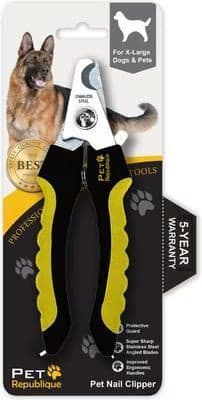
Sharp stainless-steel clippers with a built-in safety guard to help prevent over-cutting, sized for large breeds.
Petful may earn a commission when you click through to Chewy, at no extra cost to you.
Time Alone and Separation
This is a sociable, velcro breed. A full-grown cockapoo should not be left alone for a full 8-hour workday on a regular basis; four hours is a safer ceiling for an adult, and puppies need far more frequent breaks. Left too long, cockapoos are prone to separation anxiety that shows up as barking, howling, house-soiling or chewing. Owners who work full time should plan for a dog walker, daycare or a midday visit, and should teach alone-time gradually from puppyhood so the adult copes calmly.
Sleep and Settling
Most cockapoos settle best in a crate or dog bed in a quiet, draft-free spot, ideally near the family at first so the dog feels secure. A crate doubles as a house-training aid and a safe den for an anxiety-prone breed. Consistency matters more than the exact location: pick a spot and keep it. On a puppy's very first night home, set the crate or bed close to where you sleep so it can hear and smell you, expect some whimpering, and include a warm blanket plus a worn item of your clothing to ease the transition.
- Neither sex is clearly "better"; temperament tracks breeding and socialization far more than sex, though males average slightly larger. Likewise, no coat color is healthier or better behaved, so apricot, red, black, chocolate, cream, sable, merle and parti are all down to personal taste. Be wary of breeders charging large premiums for "rare" colors or "teacup" sizes.
Training and Behavior of the Adult Dog
A cockapoo inherits its trainability from both parents: the Poodle side is one of the most intelligent dog breeds, and the Cocker side is a soft, people-pleasing gundog, so the adult dog is quick to learn but sensitive to harsh handling. Reward-based training (short sessions, food or play rewards, no punishment) is by far the most effective approach and the one every major welfare body, including the American Veterinary Society of Animal Behavior, recommends. Because they are so bright, adult cockapoos need their brains worked as well as their bodies: scent games, trick training, food puzzles and short refresher obedience sessions keep an under-stimulated dog from inventing its own entertainment in the form of barking or chewing.
Two behavior patterns show up often enough in the breed to plan for. The first is separation-related behavior, discussed above, which is easier to prevent through gradual alone-time practice from puppyhood than to fix in an adult. The second is over-arousal or "hyper" behavior that owners often mistake for a training problem when it is actually an exercise and enrichment deficit; a cockapoo that has had a real walk, a sniff and a short training game is a markedly calmer dog than one left to simmer. Consistency across the household matters more than any single technique: when everyone uses the same cues and the same house rules, the intelligent, eager-to-please adult cockapoo settles into them fast.
Full-Grown Cockapoo Care: What Changes as They Mature
A full-grown cockapoo is not just a bigger puppy; its needs shift as it matures.
Grooming the Adult Coat
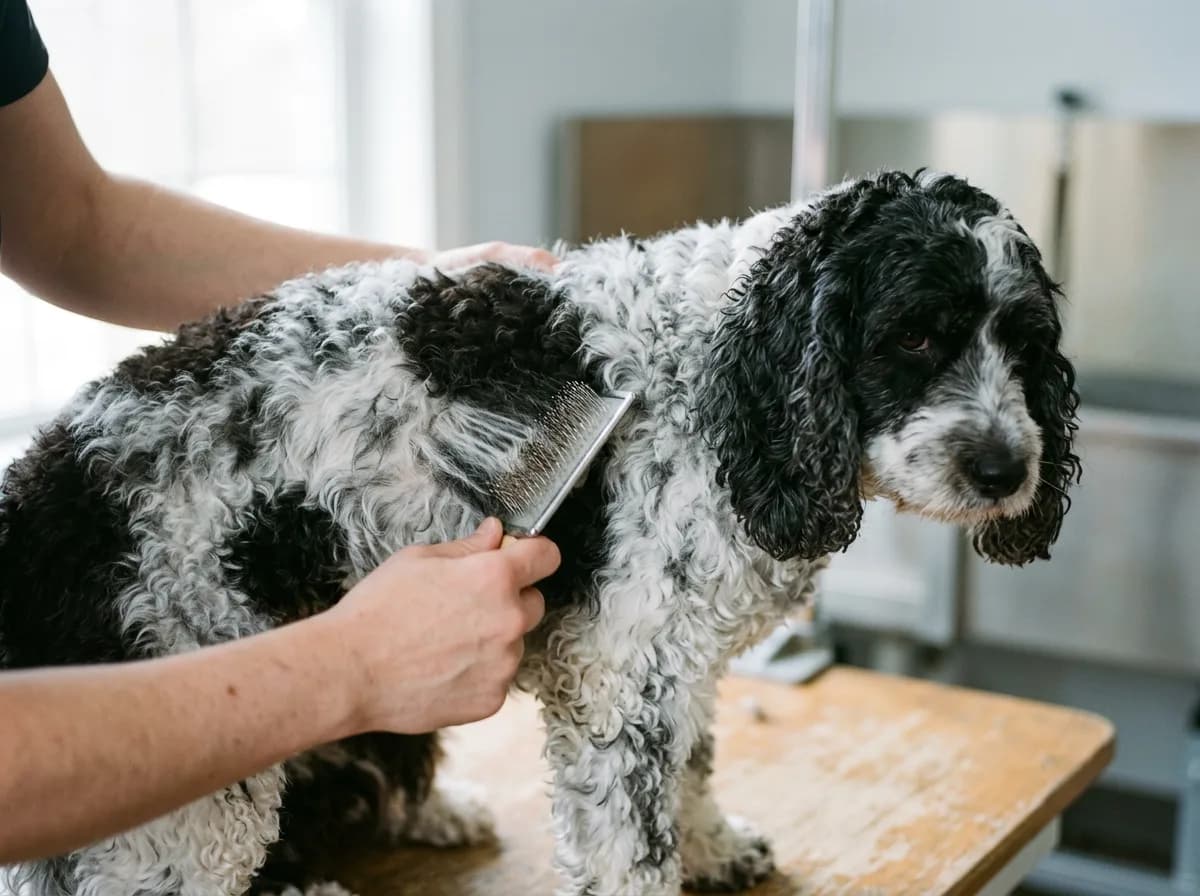
A cockapoo's coat reaches its full adult texture around 8 to 12 months, right as it becomes full grown, and it needs regular upkeep: brushing several times a week and a professional groom every 6 to 8 weeks to prevent matting. The adult coat can be wavy, curly or a looser fleece depending on the mix and generation, and curlier F1b coats mat faster, so they demand more frequent brushing than a wavier F1. Budget for grooming as an ongoing adult cost, not a one-off: it is one of the larger recurring expenses of owning the breed. Our cockapoo grooming guide walks through the tools and schedule for the adult coat.
Petful may earn a commission when you click through to Chewy, at no extra cost to you.
Lifespan and Long-Term Health
Cockapoos are long-lived for their size, typically 12 to 15 years, and some reach 18. As a Cocker-Poodle cross they can inherit conditions from either side, including hip dysplasia, patellar luxation (a slipping kneecap), progressive retinal atrophy (PRA, an inherited eye disease that can lead to blindness), and ear infections (those floppy, hairy Cocker ears trap moisture). Cockapoos can also be prone to allergies and, in some lines, to a Poodle-inherited condition called von Willebrand's disease (a blood-clotting disorder). None of this is a reason to avoid the breed; it is a reason to buy from a breeder who health-tests both parents (hips, eyes and, where relevant, DNA panels), which is the single best protection you can give a puppy. See our cockapoo lifespan breakdown for the full health picture.
A few of these conditions are worth understanding in a little more depth, because the full-grown years are when several of them tend to surface. Hip dysplasia and patellar luxation are both joint problems that a lean body weight directly protects against: the Orthopedic Foundation for Animals (OFA) recommends hip and patella evaluation on breeding dogs precisely because a lighter, well-conditioned adult puts far less load on those joints, so the single most effective thing an owner can do post-maturity is keep the dog at a healthy weight. Progressive retinal atrophy is a DNA-testable condition in Poodles, which means a responsible breeder can clear a line before breeding; ask specifically whether the Poodle parent was PRA-cleared by DNA, not just eye-examined once. Ear disease is the most common day-to-day complaint in the breed because the Cocker-inherited drop ear plus the Poodle-inherited hair in the canal creates a warm, moist, poorly ventilated environment; a weekly ear check and drying the ears after baths or swimming prevents most cases before they need a vet. Dental disease is the quiet one owners overlook: small-mouthed toy and mini cockapoos crowd their teeth, so brushing several times a week and a vet dental check each year protects the teeth the breed keeps for over a decade.
Vaccination and parasite prevention also become adult routines rather than puppy events. A full-grown cockapoo needs its core vaccines kept current on the schedule your vet sets (typically boosters every one to three years depending on the vaccine and local law), year-round flea, tick and heartworm prevention dosed to its adult weight, and an annual wellness exam that becomes twice-yearly once the dog passes about eight years old, when the American Animal Hospital Association recommends more frequent senior screening. Building those into the calendar at maturity is what turns the breed's long potential lifespan into an actual long, comfortable life.
Because cross-breeds can carry inherited conditions and vet care for them is not cheap, many owners of doodles like the cockapoo take out pet insurance while the dog is young and healthy, before any condition is flagged as pre-existing. Comparing a policy in the first few months is worth the small effort.
- The two most common cockapoo health issues owners can act on early are ear infections (keep the ears dry and clean, especially after swimming) and patellar luxation (a slipping kneecap). Report any skipping gait or head-shaking to your vet promptly.
Cockapoo vs. Cavapoo: Which Ends Up Bigger?
Buyers cross-shopping doodles often ask how the full-grown cockapoo compares to a cavapoo (Cavalier King Charles Spaniel x Poodle). In general, cockapoos run a touch larger and more athletic, while cavapoos tend slightly smaller and calmer, but the overlap is huge and, again, the Poodle parent decides most of it. The table below sets the two adults side by side at a glance.

| Trait | Cockapoo | Cavapoo |
|---|---|---|
| Adult Weight | 12-24 lbs (6-30+ across types) | 9-25 lbs |
| Adult Height | 10-15 in | 9-14 in |
| Energy Level | Moderate to high | Low to moderate |
| Grooming | Every 6-8 weeks | Every 6-8 weeks |
| Full Grown By | 9-14 months | 9-12 months |
Because the Cavalier parent is smaller than a Cocker, a cavapoo skews a little smaller and lower-energy on average, and a Cavalier's temperament tends toward the laid-back. But a cavapoo from a mini Poodle can easily out-size a cockapoo from a toy Poodle, so never assume one breed is bigger than the other without checking the specific parents. If you are weighing the two, our cockapoo vs cavapoo comparison lines them up on size, temperament and grooming side by side, and the cavapoo breed guide covers that cross in full.
- Whether you are looking at a cockapoo or a cavapoo, a toy Poodle parent yields a small adult and a mini or standard yields a larger one. Compare the specific parents of the two litters, not just the breed labels.
Buying for the Full-Grown Dog, Not the Puppy
The most common regret cockapoo owners voice is choosing on the puppy in front of them and being surprised by the adult it became. Because a cockapoo's final size is so parent-driven, the single most important thing you can do at the buying stage is meet the parents (or at least the mother) and get their weights and, ideally, the size of the Poodle grandparent. That one data point tells you more than any breeder's estimate.

Beyond size, ask about generation (F1, F1b, F2), because it drives coat, shedding and price, and insist on proof of health testing on both parents: hip scores, eye tests for PRA, and DNA panels where the line warrants it. Ask to see the puppy vet-checked, wormed and first-vaccinated, ask for references from previous buyers, and walk away from anyone selling "teacup" puppies without health guarantees or refusing to let you see the mother with the litter. A responsible breeder will happily answer all of it.
Finally, plan for the full-grown dog's running costs, which scale with its adult size. A maxi cockapoo eats more, needs more grooming product and a larger everything (crate, bed, harness) than a toy. The rough monthly picture below helps you budget for the adult you are actually buying, not the 3-pound puppy you fall for at 8 weeks.
| Cost Area | Toy | Miniature | Maxi / Standard |
|---|---|---|---|
| Food | Lower | Moderate | Higher |
| Grooming (per groom) | Similar across sizes, more coat on bigger dogs | Similar | Slightly more |
| Preventive vet / meds | Dosed by weight (lowest) | Mid | Highest |
| Insurance | Varies by size and age | Varies | Varies |
To put real numbers on that table, a full-grown mini cockapoo in the United States typically costs an owner somewhere between 120 and 220 dollars a month across food, grooming, preventive medication and a pet-insurance premium, with toy dogs landing at the lower end and maxi dogs at the higher end because everything they consume scales with body weight. Food alone runs roughly 25 to 55 dollars a month depending on size and whether you feed a premium formula. The single largest recurring line for this breed is grooming: a professional groom every six to eight weeks costs about 60 to 90 dollars in most of the country and noticeably more in high-cost metro areas, which works out to 40 to 75 dollars a month once you average it. Preventive vet care (the annual exam, core vaccine boosters and year-round parasite prevention) adds another 20 to 45 dollars a month spread across the year, and a pet-insurance premium for a young, healthy cockapoo commonly falls between 30 and 60 dollars a month, rising as the dog ages.
Those figures also shift with life stage, not just size. The puppy year is front-loaded with one-time costs (spay or neuter, the initial vaccine series, microchipping, and the crate, bed and harness you buy once), so first-year ownership almost always costs more than any later year. The healthy adult middle years are the cheapest stretch, when a well-bred dog mostly needs food, grooming and routine prevention. Costs climb again in the senior years past about eight, when twice-yearly vet visits, dental work and the higher end of insurance premiums or out-of-pocket treatment for age-related conditions come into play. Budgeting for the full arc, not just the sticker price of the puppy, is what separates owners who feel in control of the cost from those who get caught out by it.
Whatever the size, the reward is the same: a bright, affectionate companion that stays with the family for well over a decade. Get the size expectation right up front and the rest of ownership is far smoother.
Frequently Asked Questions
Pros: affectionate, highly trainable, good with kids, low-to-moderate shedding coats that suit many allergy sufferers, and a long 12-15 year lifespan. Cons: they need daily exercise and mental stimulation, require professional grooming every 6-8 weeks, can suffer separation anxiety if left alone too long, and, as a cross, can inherit health issues from either parent, so health-tested parents matter.
Ask to see both parents and their weights (your best size predictor), the generation (F1, F1b, F2), and proof of health testing on both the Cocker and Poodle parents (hips, eyes/PRA, patellas). Ask whether the pup has been vet-checked, wormed and vaccinated, whether you can visit the litter with the mother present, and for references from past buyers. Avoid anyone selling "teacup" pups without health guarantees.
Daily physical exercise plus mental enrichment (puzzle feeders, training games, sniff walks) is the foundation; a tired, engaged cockapoo is a calm one. Add a predictable routine, a quiet crate or den space, calming chews or a Kong, and gradual alone-time training to prevent separation anxiety. Rule out under-exercise first, as that is the most common cause of a hyper cockapoo.
Most cockapoos do best in a crate or dog bed in a quiet, draft-free spot, ideally near the family at first so they feel secure. A crate aids house-training and gives an anxious breed a den. Some owners transition an adult to a dog bed in the bedroom once house-trained. Wherever it is, keep it consistent.
Neither is clearly better; temperament depends far more on breeding, socialization and the individual dog than on sex. Males average slightly larger and can be a little more affectionate and goofy; females are sometimes a touch more independent. Both make excellent pets when well-raised, so choose on the individual puppy and the parents, not the sex.
No, 8 hours is too long for this sociable, people-oriented breed and often triggers separation anxiety, barking or destructive chewing. Adults should not be left more than about 4 hours regularly; puppies far less. If you work full time, arrange a dog walker, daycare or a midday break, and train alone-time gradually from a young age.
No color is healthier or better behaved than another, so "best" is purely personal preference. Cockapoos come in apricot, red, black, chocolate, cream, sable, merle, and parti (two-color) patterns. Choose on health, temperament and the parents rather than coat color, and be wary of breeders charging large premiums for "rare" colors.
On the first night, set up a crate or secure bed close to where you sleep so the puppy hears and smells you and feels safe in a strange new place. Expect some whimpering; a warm blanket, a soft toy and a recently worn item of your clothing help. Take the puppy out to toilet before bed and once overnight, and keep the routine calm and consistent.

Coreen Saito is a pet writer and longtime shelter volunteer with more than a decade in animal rescue. She covers cat behavior, breed care, and the small, ordinary science of sharing a life with companion animals, with a particular focus on honest takes about the products and decisions that actually matter. At home in Arizona, she's outranked by Mac (a dog with the loudest opinion in the house), Rebel (a cat who governs by quiet authority), and Meri (an orange tabby who runs the late shift and the laundry basket). She writes about all three, plus the rescues that keep coming through her life, at LifeWithMinty.com.
Sign up for expert-backed reviews and safety alerts all in one place.