American Bulldog Lab Mix: Size, Temperament, and Care
Learn what an American Bulldog Lab mix's parent records can tell you, why size and shedding vary, and how a first-month observation plan helps you build a workable daily routine.

BVMS, MRCVS
Petful is reader supported. As an affiliate of platforms like Amazon and Chewy, we may earn a commission when you buy through links on this page. There is no extra cost to you.
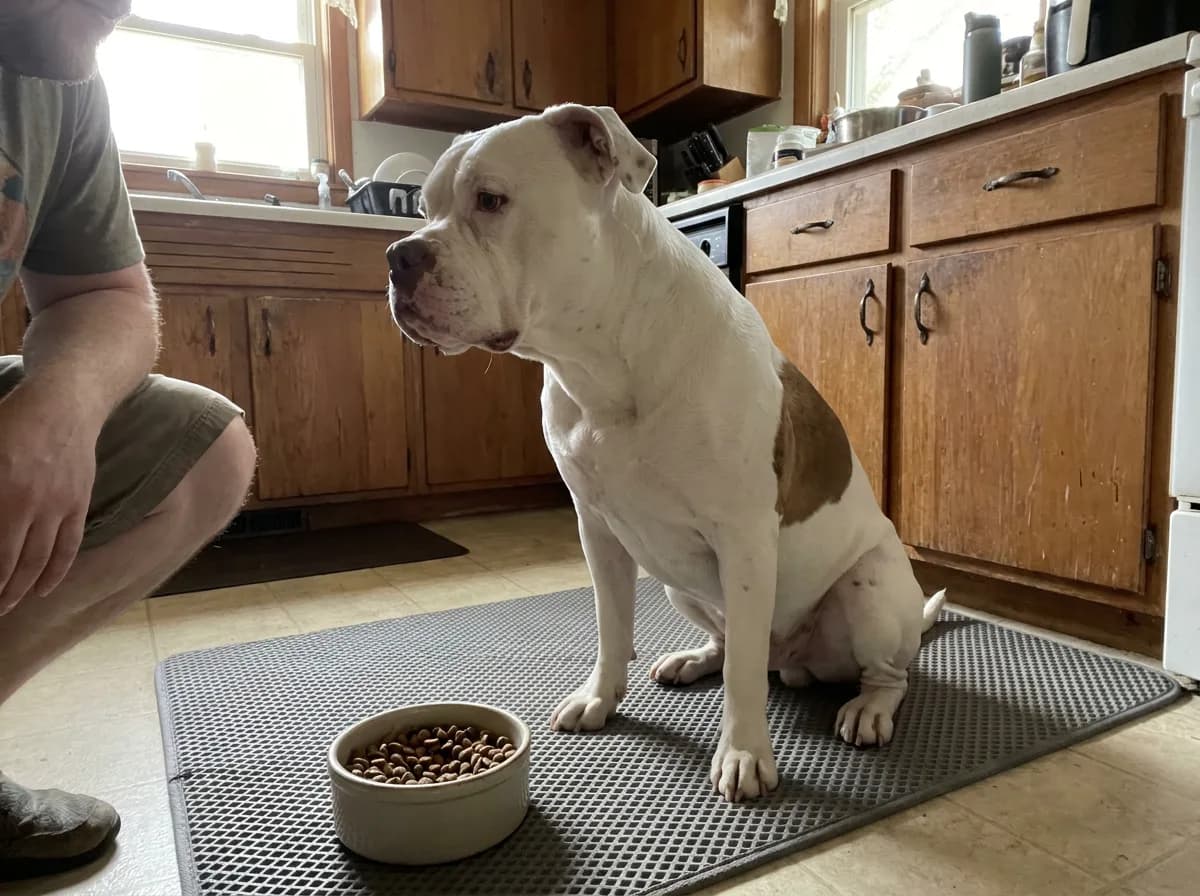
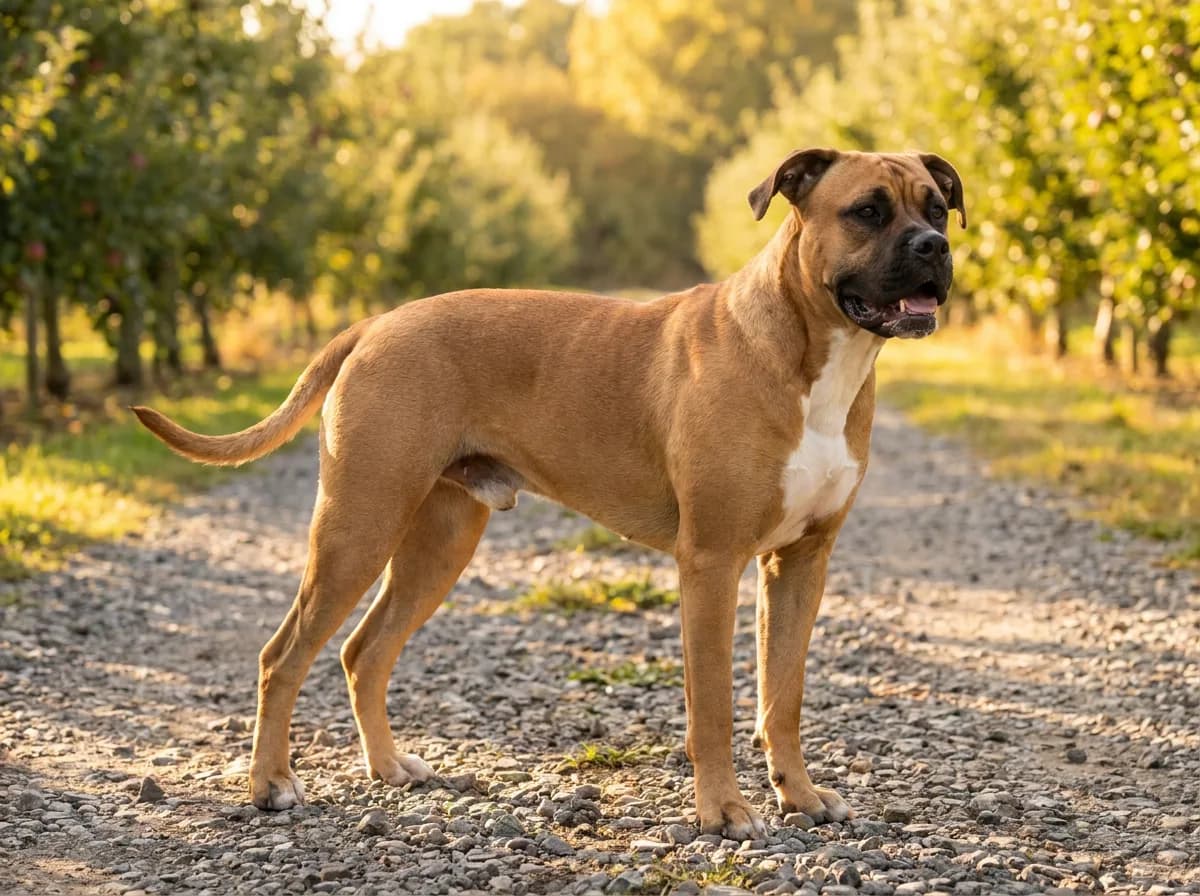
An American Bulldog Lab mix, often called an American Bullador, combines American Bulldog and Labrador Retriever ancestry. The name can help you ask useful questions about the parents, but it cannot promise a particular adult size, a low-shedding coat, or an easygoing family dog.
Before choosing one, separate what is documented from what someone expects. Parent records, observations in a home, and a practical plan for the first month tell you more than a photograph or a list of supposedly universal mixed-breed traits.

Sign up for expert-backed reviews and safety alerts all in one place.
What is an American Bullador?
An American Bullador is an American Bulldog crossed with a Labrador Retriever. Confirm the American Bulldog parent specifically: Bullador is also used for English Bulldog Labrador crosses, which have different parentage. If a listing only says “Bulldog mix,” ask the breeder or rescue what supports the identification.
| What to establish | Evidence to request | How it helps |
|---|---|---|
| American Bulldog parent | Identified parent, adult size and health records | Clarifies which Bulldog breed and family history are involved |
| Labrador Retriever parent | Identified parent, screening reports and household behavior | Adds information beyond the Labrador's general reputation |
| Adult mixed dog | Current measurements and observations in a home | Guides equipment, handling and daily routines |
| Puppy | Both parents' records and the puppy's development | Supports planning while leaving adult traits uncertain |
Advertisements may say American Bulldog cross Labrador, American Bulldog x Lab, or Labrador Retriever American Bulldog mix. These are naming variations rather than separate standardized breeds. Ask whether the ancestry is documented, reported by a previous owner, or estimated from appearance.
For walking equipment, compare the individual dog's chest measurements with the PetSafe Easy Walk Medium/Large harness size guide. A Labrador parent and an American Bulldog parent do not guarantee that one harness size will fit their offspring.

A Medium/Large harness option when the American Bullador's actual measurements match the size guide. Check strap position and comfortable movement.
Petful may earn a commission when you click through to Chewy, at no extra cost to you.
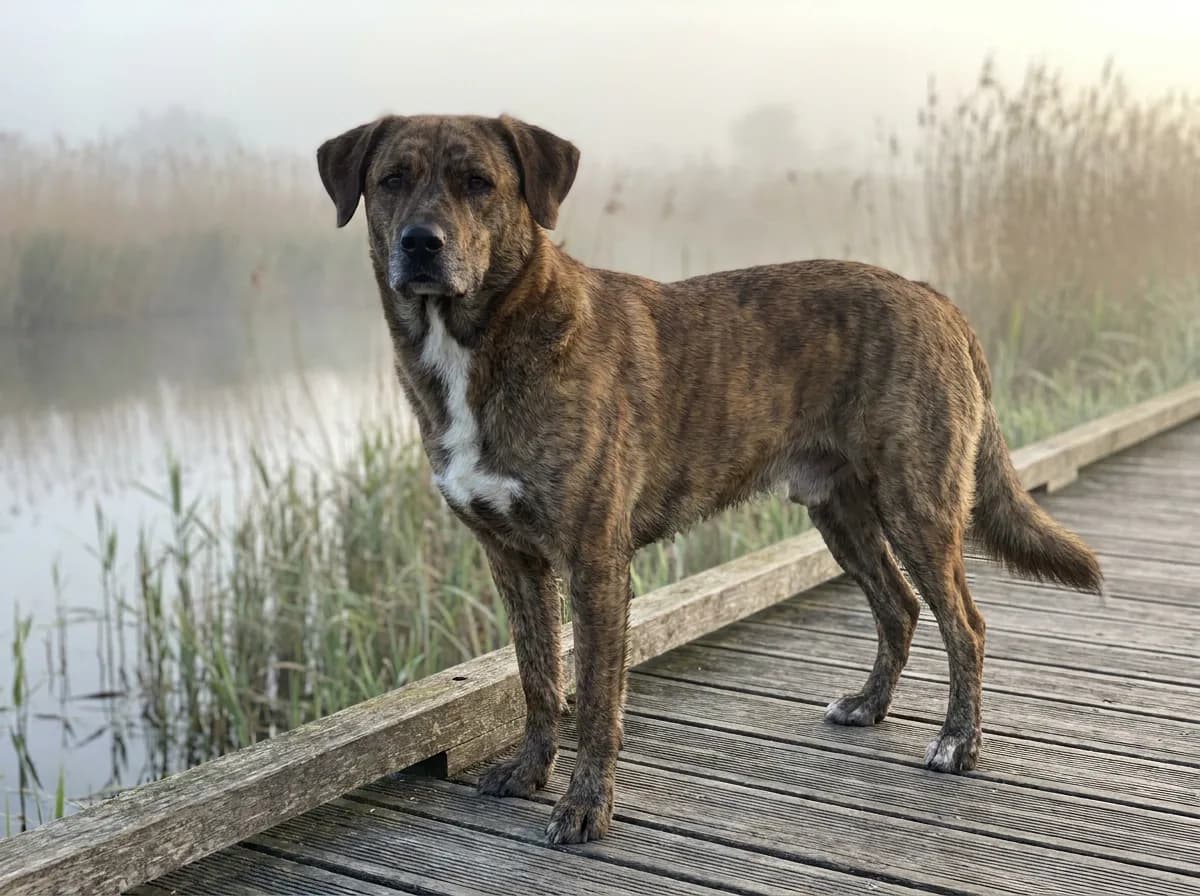
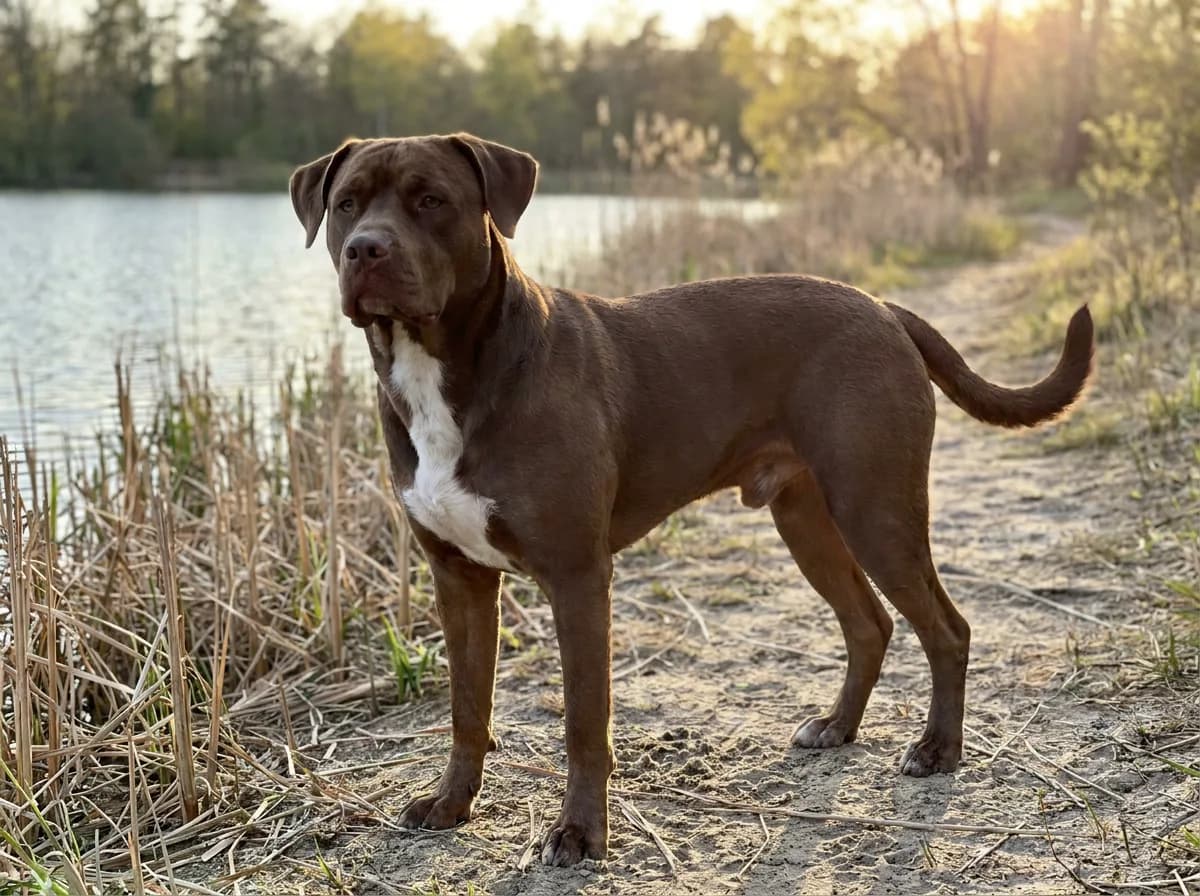
Descriptions such as chocolate Lab American Bulldog mix or yellow Lab American Bulldog mix identify a claimed parent color or the dog's appearance. They do not describe a predictable personality. Similarly, brindle striping is a coat feature, not proof that a dog has one specific combination of parents.
- Use pictures to examine visible build, coat, and condition.
- Request the actual parents' identities when they are known.
- Ask which claims are supported by records and which are estimates.
- Choose a dog for observed needs rather than a fashionable cross name.
The American Bulldog parent
The American Bulldog parent is a substantial working dog with variation in build. The United Kennel Club's American Bulldog standard describes a farm-working background and a short coat. That context helps explain why you should plan for comfortable handling and suitable exercise, but it does not define every puppy's adult behavior.
A Four Paws grooming glove and curry brush is an option to assess for a short coat. It is not a substitute for checking the skin, and one tool may not suit every inherited coat. Use gentle pressure, reward cooperative handling, and stop if grooming seems painful.
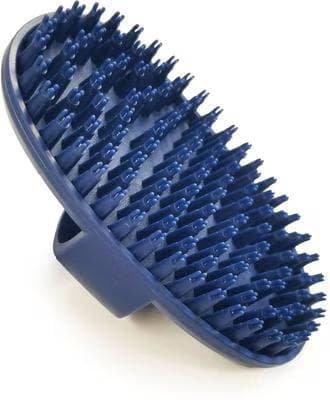
A glove and curry brush to consider for a shorter coat. A denser inherited Labrador-type coat may require different tools; judge the dog in front of you.
Petful may earn a commission when you click through to Chewy, at no extra cost to you.
Some American Bulldogs enjoy close physical contact with familiar people. Let the individual dog choose whether to approach for affection, and teach children to respect a dog who moves away. Cuddling preferences cannot be inherited as a guarantee. American Bulldog is also a different name from American Bully; do not let an abbreviated advertisement obscure which parent breed is involved.
Size and coat depend on the parents
For a full-grown American Bulldog Lab mix, start with actual measurements and body condition. For a puppy, ask about both parents rather than using a photograph to predict size. A black Lab American Bulldog mix puppy is not necessarily smaller, bigger, or more Labrador-like in temperament than a differently colored littermate.
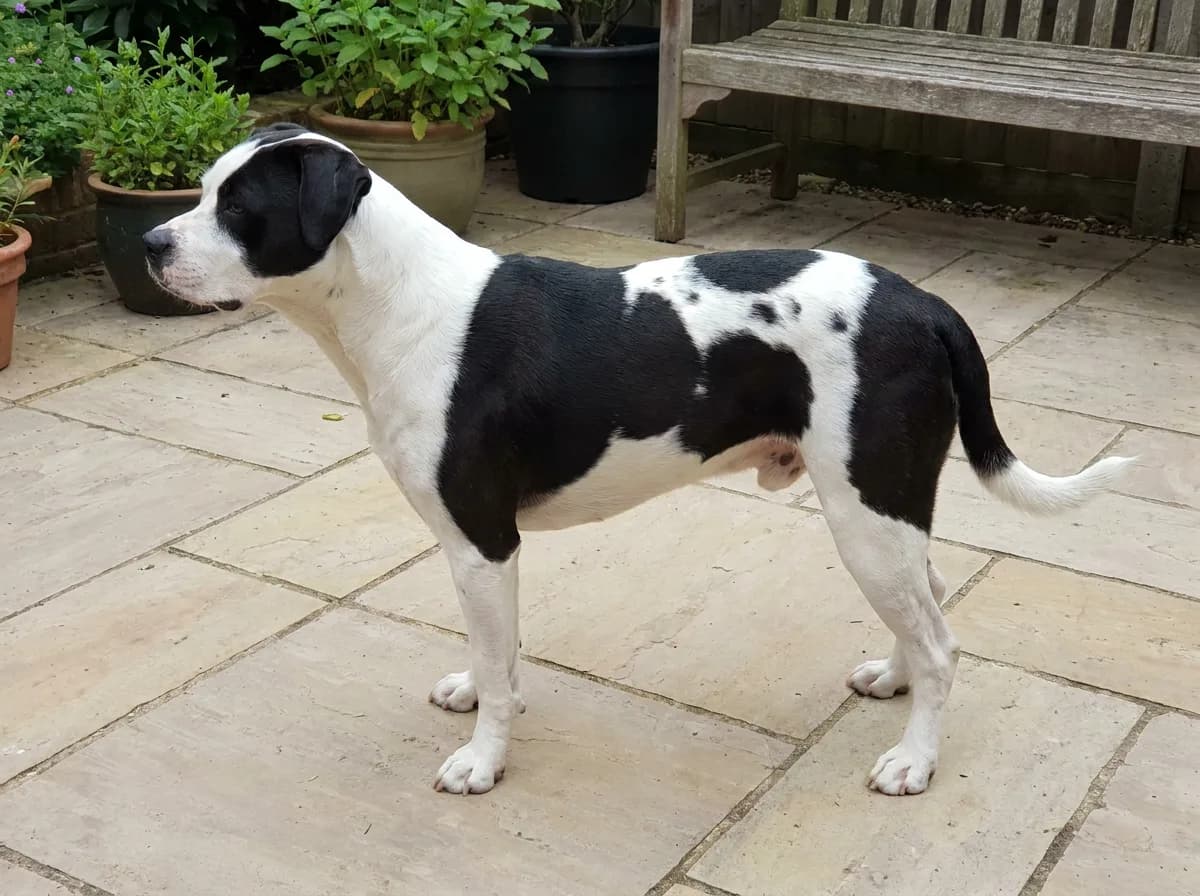
- 1Identify the American Bulldog parent and Labrador Retriever parent separately.
- 2Measure an adult dog's body rather than buying equipment from a breed label.
- 3Puppy growth and inherited coat variation require observation as the dog matures.
White markings can come into descriptions of this cross in several ways. “White Lab American Bulldog mix” might mean a very pale yellow Labrador parent, a mostly white mixed dog, or simply an informal label. Ask for clarification. Color wording cannot establish ancestry or explain the dog's care needs by itself.
The AKC Labrador Retriever profile describes a short, dense double coat and substantial shedding. An American Bullador may inherit a denser coat or a shorter, smoother one. Plan for loose hair and adjust grooming to the coat you actually have instead of expecting a non-shedding dog.
- Introduce brushing in brief sessions while the dog is relaxed.
- Check the brush or grooming glove against coat density and skin comfort.
- Wash bedding and vacuum as needed during heavier shedding.
- Inspect the skin for redness, sores, or bald patches while grooming.
- Ask a veterinarian about persistent itching or sudden coat changes.
Training, exercise, and family routines
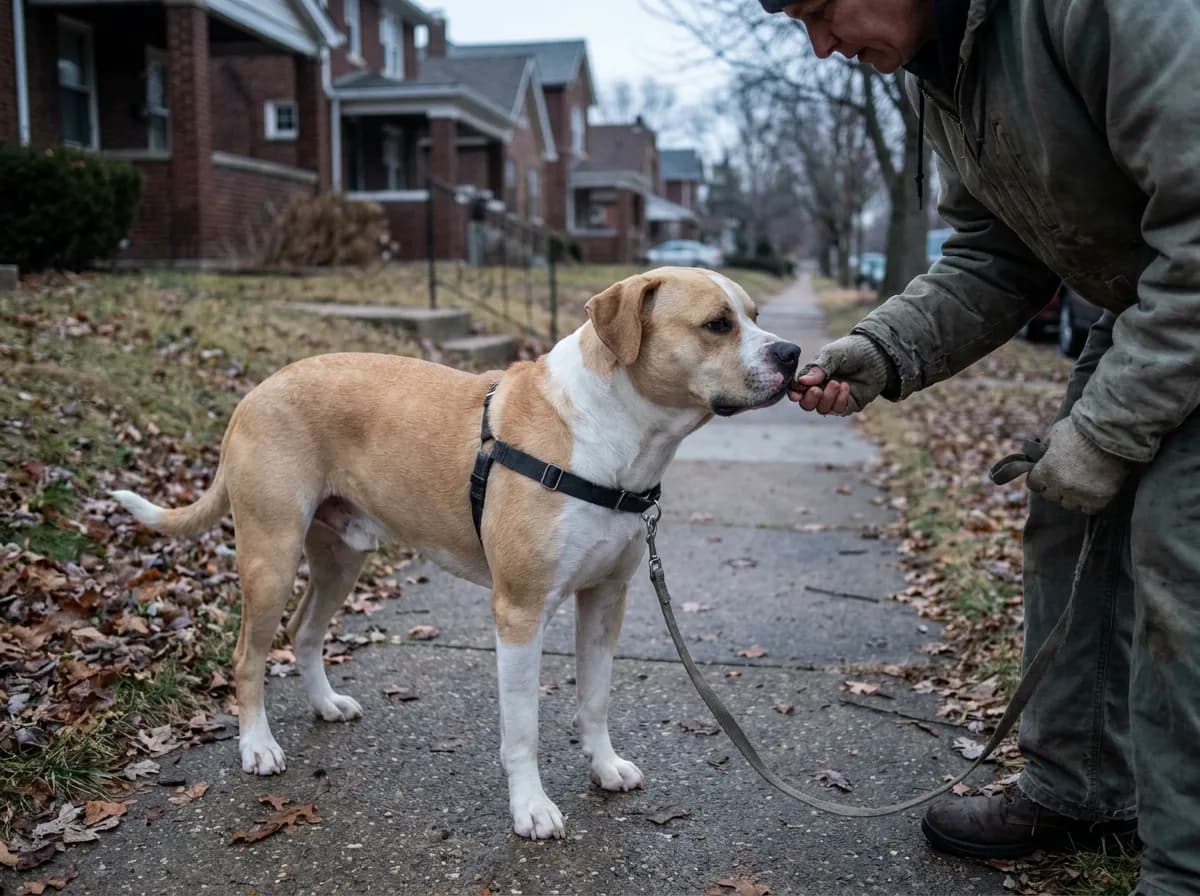
What is the temperament of an American Bulldog and a Labrador mix?
An American Bulldog and a Labrador mix may be affectionate, energetic, reserved, excitable, or some combination that changes with the situation. Labrador ancestry does not guarantee a calm, sociable, or easy-to-train puppy. Learning history, health, environment, and individual differences all matter when assessing the dog in front of you.
Ask for concrete examples:
- A dog who happily greets adults may still struggle with noisy children.
- Enjoying play with a familiar dog does not establish comfort with every unfamiliar dog.
- A foster caregiver's description of ordinary mornings, visitors, meals, and rest can be more useful than a broad “friendly” label.
Small Pet Botanics chicken training rewards can help reinforce a calm check-in on a walk when the dog tolerates them. Use manageable portions and include them in daily food intake; a food reward should not be used to pull a worried dog toward a distraction.
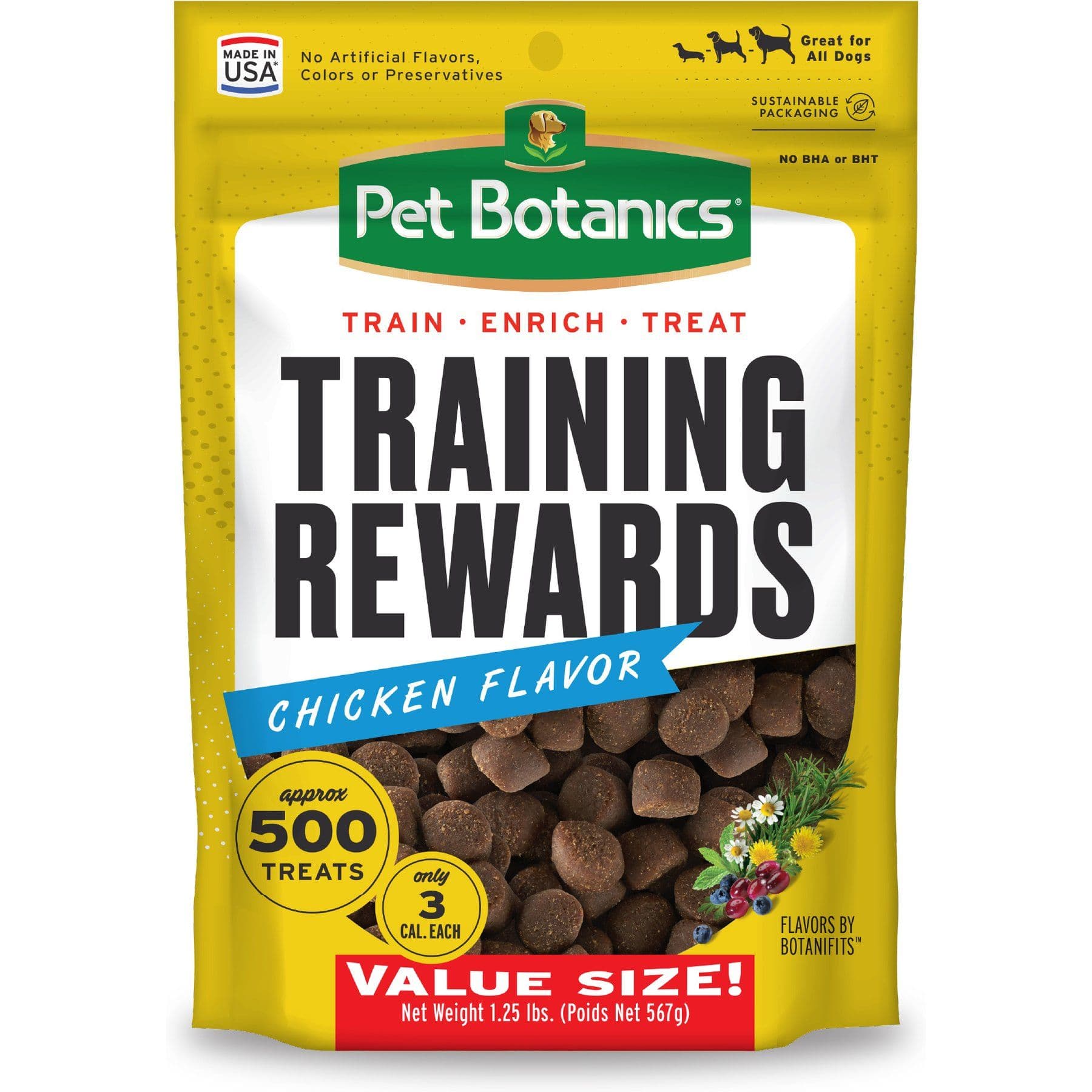
Small chicken-flavor rewards for calm check-ins and household learning. Include treats in the overall feeding plan.
Petful may earn a commission when you click through to Chewy, at no extra cost to you.
Use reward-based training, consistent household rules, and tasks the dog can succeed at. The American Veterinary Society of Animal Behavior supports reward-based methods. A strong adolescent dog needs skills such as walking comfortably on a leash and settling near people; physical strength is not a reason to use intimidation.
- Reward checking in during a walk before adding busier surroundings.
- Practice waiting at doors with a secure leash or barrier in place.
- Teach a comfortable resting place away from children's play.
- Exchange objects for an appropriate reward rather than chasing the dog.
- Keep sessions short enough that both dog and handler remain engaged.
A first-month observation plan
Use the first month to learn what helps your new dog feel secure. This is an observation framework, not a deadline for a dog to settle or a guarantee that behavior will stop changing. Keep the environment manageable and record patterns before increasing demands.
- During the first few days: Establish quiet sleeping, feeding, and toilet routines. Note appetite, stool, sleep, and willingness to interact without arranging a stream of visitors.
- As the dog becomes comfortable: Practice brief handling and simple reward-based skills. Observe which environments are easy and which cause pulling, avoidance, or overexcitement.
- Before extending absences: Try very short separations appropriate to the dog and watch the response. Arrange care if the dog cannot yet cope; do not use a full workday as a test.
- Before adding harder activities: Review recovery after exercise, comfortable movement, and the ability to settle. Adjust the plan with your veterinarian or qualified trainer when concerns emerge.
Keep notes specific: “barked when a delivery arrived, then rested after the door closed” is more useful than “protective.” Record the circumstances, what happened, and how long recovery took. Do not repeatedly expose the dog to something distressing just to collect more observations.
Separate animals initially and supervise family interactions. The Frisco 30-inch configurable gate and playpen can help create a supervised resting area only if its height, stability, and installation suit the individual dog. A 30-inch pen is not a reliable containment promise for a large, athletic adult. Children should not climb into the dog's resting space or approach while the dog is eating.
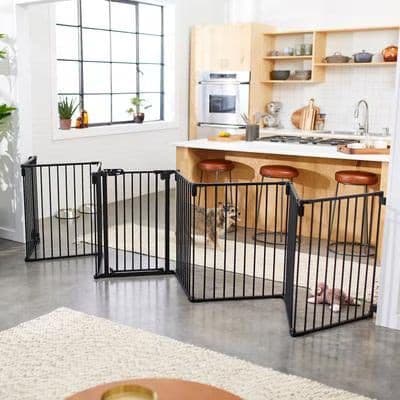
A 30-inch configurable gate and pen for an appropriate supervised rest space. It is not a containment guarantee for an athletic adult.
Petful may earn a commission when you click through to Chewy, at no extra cost to you.
Exercise suited to the individual
Provide opportunities for movement and sniffing alongside training and rest. Choose the pace, duration, and terrain around age, health, fitness, and weather. A puppy's enthusiasm is not evidence that sustained running, repetitive jumping, or long forced outings are appropriate. Ask your veterinarian to help plan exercise during growth.
- Start with manageable outings and change one aspect at a time.
- Use secure equipment and keep distance from distractions when needed.
- Offer quiet searching or simple food activities as alternatives to constant chasing. A Pet Parents Forager snuffle mat is one option for supervised searching with part of the normal meal; stop if the dog chews the fabric.
- Watch for limping, stiffness, or reluctance to continue.
- Reduce activity in hot conditions and provide water and a cool resting place.
Retriever ancestry does not prove that a dog enjoys water or swims safely. Introduce any water activity gradually, supervise closely, and keep the setting controlled. The dog's comfort matters more than an expectation that every Labrador cross should retrieve or swim.
- 1Record behavior in its actual context.
- 2Increase activity only when the dog remains comfortable and recovers well.
- 3Plan alone time and family boundaries before testing them in a busy household.
Food choices for growth and adult weight
Food choices for growth and adult weight should begin with life stage and nutritional adequacy. A growing American Bullador needs food suitable for growth; if the expected adult weight is 70 pounds or more, check that the adequacy statement includes growth of large-size dogs. Ask your veterinarian when to change to adult food rather than choosing a date from a mixed-breed size chart.
Measure portions and include treats in the daily total. The AAHA nutrition guidelines recommend a feeding plan that accounts for food, treats, and other extras. Compare calories as well as cup amounts when switching recipes, and adjust to body condition rather than trying to make a puppy grow faster.
Parent records and choosing a dog
When considering American Bulldog and Lab mix puppies for sale, ask for identified screening reports from both parents. The Labrador Retriever Club's puppy-buyer guidance discusses hip, elbow, eye, and genetic testing, including exercise-induced collapse and centronuclear myopathy. Your veterinarian can explain which results matter for the particular pairing and what they can and cannot predict.
- Check that each report belongs to the identified parent.
- Distinguish an eye examination, joint evaluation, and DNA result from a routine wellness visit.
- Ask about diagnosed disease and longevity in adult relatives.
- Obtain the puppy's own veterinary and preventive-care records.
- Discuss ongoing support and return arrangements before committing.
An adult offered for adoption or sale deserves the same careful record review. Missing parent information is common in rescue; it changes what can be known, not the dog's value as a companion. Arrange a veterinary assessment and build care around current findings. Lifespan planning is more useful when it includes practical provision for future treatment than when it relies on an unsupported average for this cross. For equipment planning, use crate measurements and interior clearance rather than the Bullador label.
The American Bulldog puppy guide adds parent-breed growth, teething and acquisition questions. Use its record-keeping approach rather than transferring a purebred growth chart to a Bullador. A rehomed adult’s measured size and documented routine can answer questions that remain uncertain for a puppy.
American Bulldog parent health records
The American Bulldog health guide gives parent-breed lifespan and screening context. For a Bullador with eye, ear, paw, odor or stomach concerns, bring the actual signs, diet and medical records to your veterinarian. Parentage alone does not diagnose the cause.
Other crosses and the limits of mix labels
The same principles apply to other American Bulldog crosses. A second breed's appealing reputation does not cancel out individual variation. Compare the evidence available for each dog rather than ranking crosses by a list of idealized parent traits.
For an American Bullador, a good match is one whose needs you can manage consistently: comfortable handling, appropriate activity, grooming, preventive care, and a household routine that allows rest. A dog with a well-described foster history may offer more useful information than a puppy sold with confident promises about adulthood.
An American Bullador is not automatically an American Bully or APBT. Use the American Bully versus Pitbull comparison to clarify those separate names.
Questions about american bulldog lab mix
There is no single dependable size range for every American Bullador. Parent dimensions help with a puppy's planning, but an adult estimate is a range rather than a guarantee. Measure a mature dog's shoulder height, weight, and chest instead of relying on a cross label, and consider body condition separately from overall size.
There is no validated cross-specific life expectancy that can predict your dog's lifespan. Parent health history, the individual dog's current health, and veterinary care are more useful for planning. Be cautious about an online average that simply combines parent-breed figures without data on this particular mixed population.
They can shed, and the amount depends on the coat the individual inherits. A short coat is not a promise of low shedding; Labrador ancestry can bring a denser double coat. Choose grooming tools for the actual coat and check the skin during gentle sessions. Persistent itching or patchy hair loss needs assessment rather than simply more brushing.
No. The nickname can also be used for a Labrador crossed with an English Bulldog. Ask which Bulldog parent is meant and what records support the identification before applying size or health information. Where parentage is uncertain, say so and build the care plan around the dog’s measured size, coat and observed behavior.
BVMS, MRCVS
Dr. Pippa Elliott, BVMS, MRCVS, is a veterinarian with nearly 30 years of experience in companion animal practice. Dr. Elliott earned her Bachelor of Veterinary Medicine and Surgery from the University of Glasgow. She was also designated a Member of the Royal College of Veterinary Surgeons. Married with 2 grown-up kids, Dr. Elliott has a naughty Puggle named Poggle, 3 cats and a bearded dragon.
Sign up for expert-backed reviews and safety alerts all in one place.