Devon Rex Cat: Breed Profile, Care, and Cost
The Devon Rex is the pixie of the cat world: oversized low-set ears, a short wavy suede coat, and a clingy, dog-like personality. Here is the full breed profile covering looks, temperament, care, health, cost, and whether it is right for you.
Petful is reader supported. As an affiliate of platforms like Amazon and Chewy, we may earn a commission when you buy through links on this page. There is no extra cost to you.
The devon rex cat is one of the most distinctive breeds recognized by The International Cat Association (TICA) and the Cat Fanciers' Association (CFA), a pixie-faced cat with oversized low-set ears and a short wavy coat that first appeared in 1960 from a single curly kitten named Kirlee. Often nicknamed the "monkey in a catsuit," this slender, hard-muscled cat is famous for clinging to its people, perching on shoulders, and acting more like a dog than a typical aloof feline. Below is the complete breed profile: what a Devon Rex looks like, how it behaves, what its grooming and skin need, the health issues to watch, the truth about whether it is hypoallergenic, and how much one costs.
- 1The Devon Rex originated in 1960 in Buckfastleigh, Devon, England, from a curly kitten named Kirlee, and its rexed coat is governed by the recessive KRT71 gene.
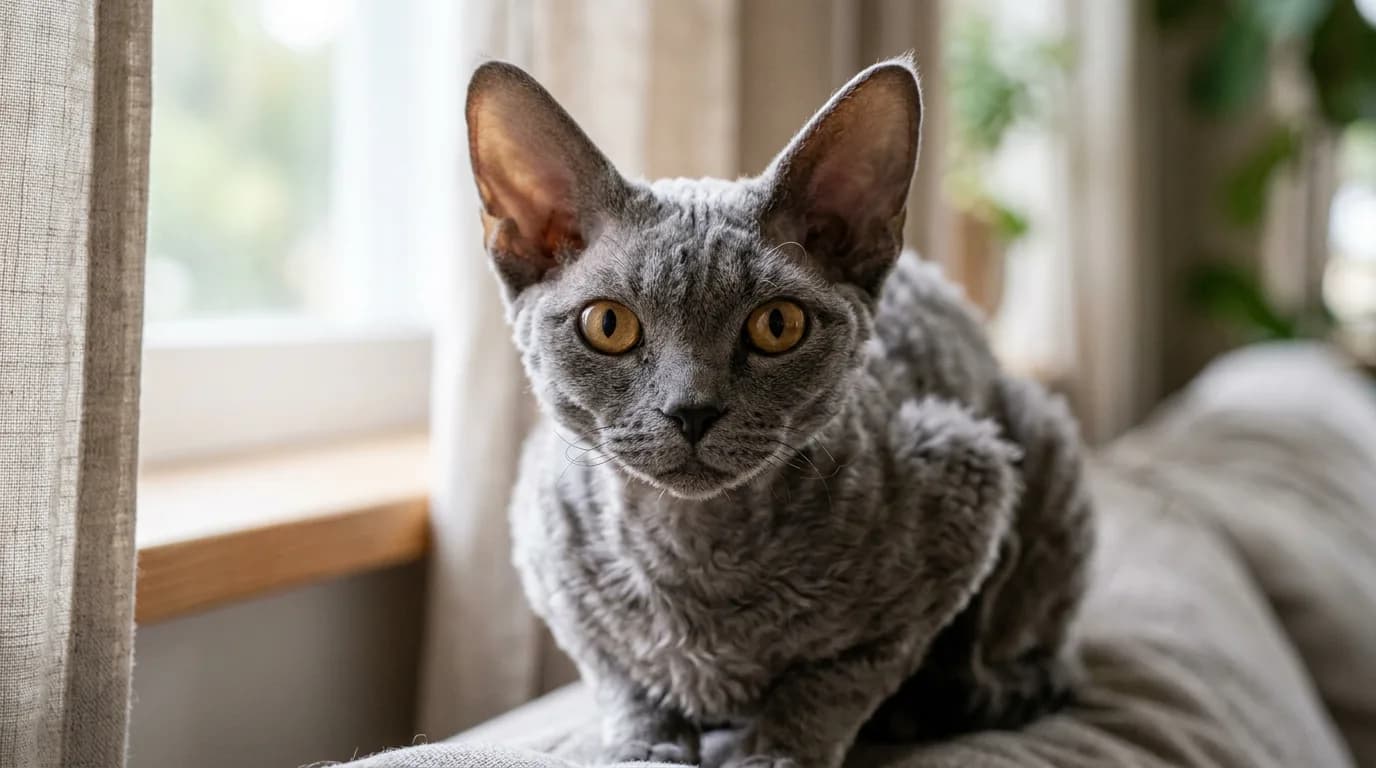
- 2Expect very large low-set ears, a pixie/elf face, big eyes, and a short, soft, wavy, suede-like coat that is sparse and sometimes near-bald on the belly.
- 3Temperament is intensely people-oriented, playful, intelligent, and food-motivated, a true "velcro cat" that wants to be on you.
- 4Plan for a lifespan of roughly 9-15 years, regular gentle skin and ear care, and a breeder price of about $1,200-3,000.

Sign up for expert-backed reviews and safety alerts all in one place.
What Is a Devon Rex Cat?
A devon rex cat is a small-to-medium curly-coated breed defined by three features: huge, low-set ears, a short rippled coat, and a triangular "elf" face with prominent cheekbones and large eyes. The breed traces to 1960 in Buckfastleigh, Devon, England, when a curly-coated stray tom fathered a litter that included a single curly kitten named Kirlee. Breeders initially assumed Kirlee carried the same mutation as the nearby Cornish Rex, but test matings proved otherwise: the Devon Rex coat comes from a different recessive gene, later identified with the KRT71 gene, and the two breeds do not "fix" each other's curl.
That genetic detail matters because it makes the Devon a separate breed, not a Cornish variant. If you are weighing curly cats against each other, it helps to compare the Devon with the Cornish Rex cat and other low-shedding options before deciding which one fits your home.
- Every Devon Rex alive today descends from Kirlee, the single curly kitten discovered in Devon, England in 1960.
Devon Rex Breed Overview and Quick Facts
For a fast read on the devon rex breed, here are the headline numbers and traits at a glance. This snapshot covers the essentials that most buyers ask about first, then the rest of the article goes deep on each one.
| Trait | Detail | Notes |
|---|---|---|
| Origin | Buckfastleigh, Devon, England (1960) | From a curly kitten named Kirlee |
| Size | Small to medium | Slender, hard-muscled, long legs |
| Weight | About 6-9 lb | Females usually lighter than males |
| Coat | Short, soft, wavy, suede-like, sparse | Governed by recessive KRT71 gene |
| Lifespan | Roughly 9-15 years | Well-cared-for cats often reach 14-15+ |
| Temperament | Clingy, playful, intelligent, food-motivated | "Velcro cat" / dog-like |
| Price | About $1,200-3,000 from a breeder | Show or pedigree lines can reach ~$5,000 |
The Devon Rex cat breed is recognized by all major registries, including CFA, TICA, and the Governing Council of the Cat Fancy (GCCF) in the UK, which gives buyers a clear pedigree standard to check a kitten against.
Devon Rex Appearance: Big Ears, Wavy Coat, and Elf Face
The Devon Rex looks unlike any other cat, and once you have seen one the silhouette is unmistakable. Three things define the look: the ears, the coat, and the face.
The Coat
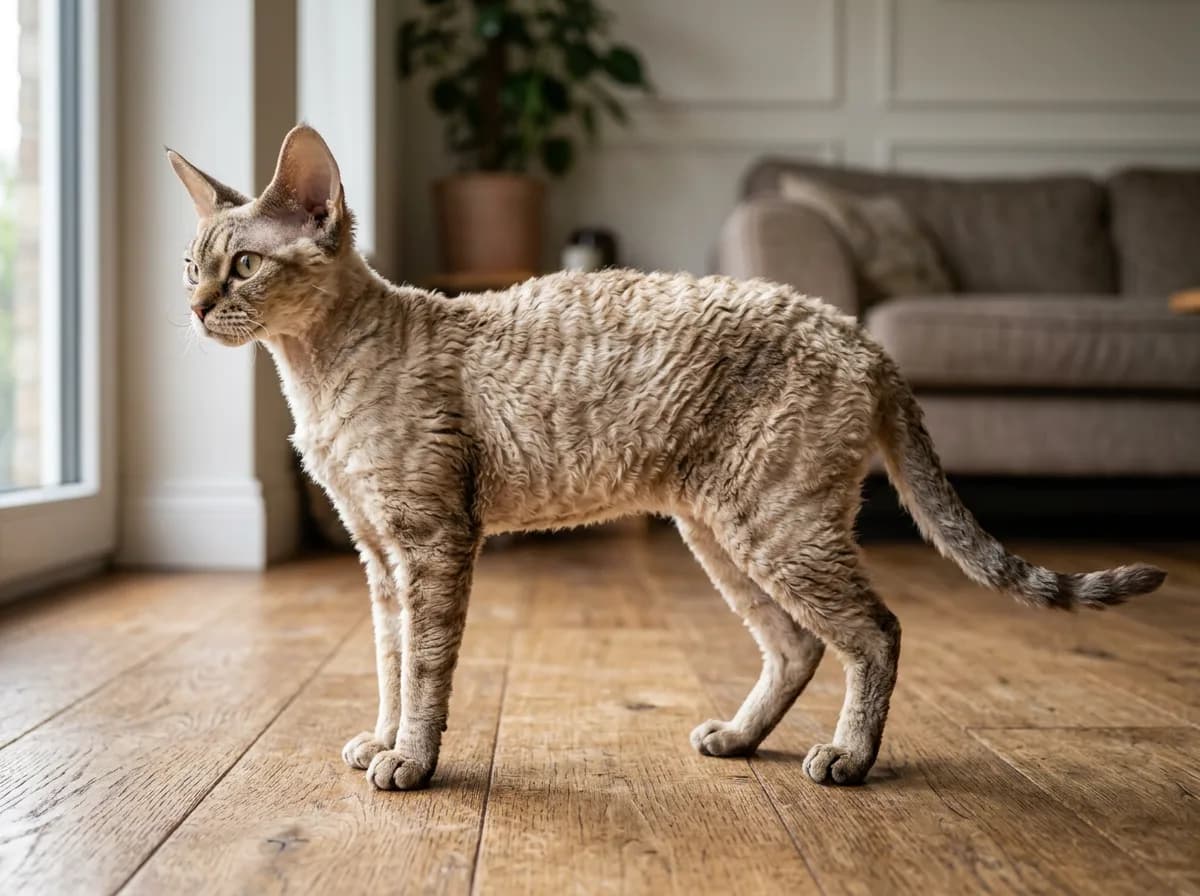
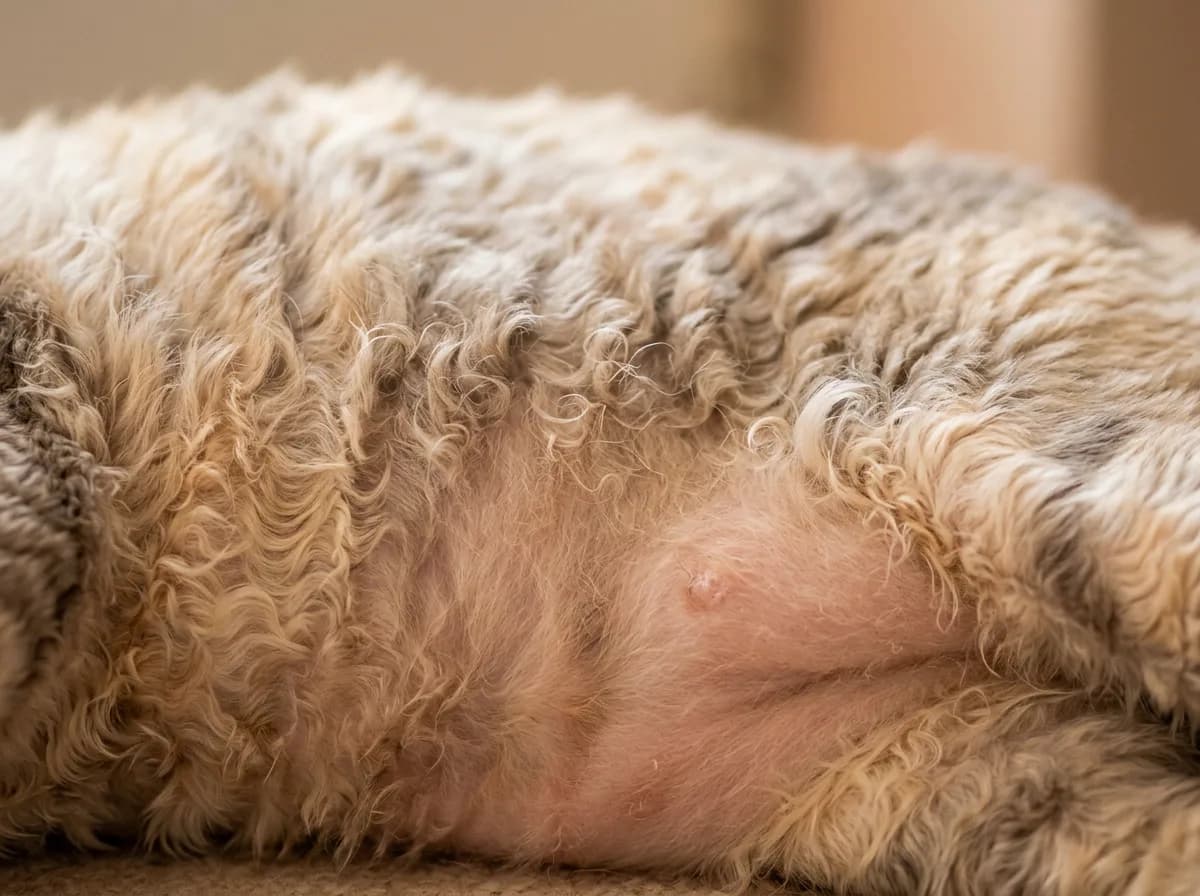
The devon rex coat is short, soft, and wavy with a suede-like feel. It is sparse compared with a normal cat, and many Devons have thin or near-bald patches on the belly, head, and in front of the ears. The fur can feel delicate, almost fragile, and the whiskers are a giveaway too: they are short and curled or brittle, often breaking off rather than growing long and straight. The waves are looser and coarser than the Cornish Rex's tight even ripples, which is one of the quickest ways to tell the two apart.

Never Scoop Again® with the Whisker Litter-Robot, the smart self-cleaning automatic litter box. Monitor visits and track weights for better overall care in the Whisker® app. Multi-cat friendly.
Petful may earn a commission when you click through to Whisker, at no extra cost to you.
The Ears and Face
The ears are the breed's signature: very large, wide at the base, and set low on the head, giving the cat a slightly impish, bat-like profile. The face is a short wedge with high, prominent cheekbones, a short muzzle, and big, wide-set eyes. Together these features create the "pixie" or "elf" look that fans love.
The Body
Underneath that delicate coat is a surprisingly athletic cat. The Devon has a slender, lithe build with a broad chest, long legs, and hard muscle. It is built to climb, leap, and perch, which is exactly what it does all day.
- Short, curled, or stubby whiskers are normal for a Devon Rex and are a reliable sign of the breed, not a health problem.
Devon Rex Colors and Coat Patterns
The devon rex cat comes in just about every color and pattern a cat can wear. Because the breed is defined by coat texture rather than color, registries accept the full range, which means buyers have a lot of choice.
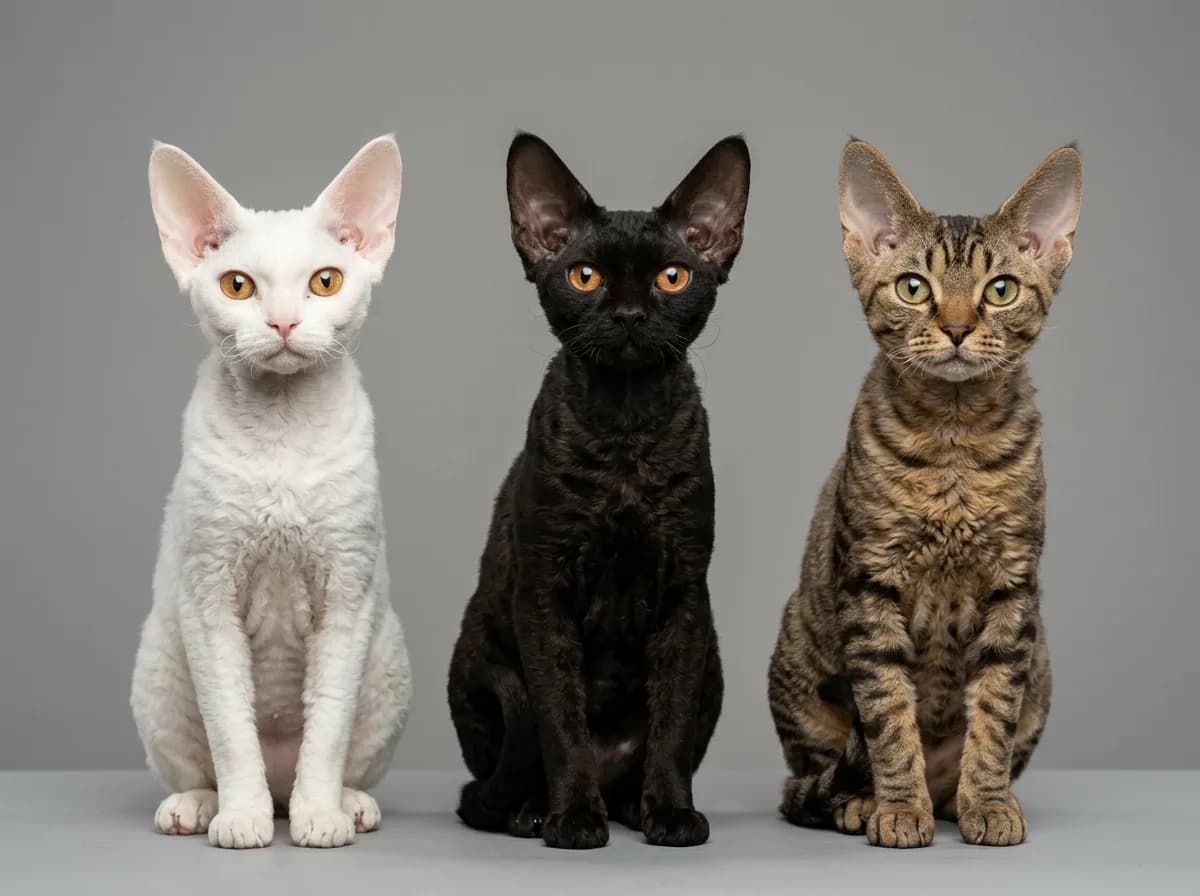
Common Devon Rex colors and patterns include:
- Solids: white, black, blue (grey), cream, chocolate, and red
- Tabby: classic, mackerel, and spotted in several base colors
- Bicolor and van: white paired with a colored pattern
- Tortoiseshell and calico
- Pointed (Siamese-style) coloring on the face, ears, legs, and tail
- Smoke, shaded, and silver variations
The suede texture stays the same across every color, so a black Devon and a white Devon feel identical to the touch. If you are set on a particular look, browse a breeder's recent litters, since Devon Rex colors and patterns vary widely from one breeding line to the next.
Devon Rex Temperament and Personality
If you want a cat that ignores you, look elsewhere. The devon rex temperament is intensely social, playful, and people-focused. Owners describe them as "velcro cats" or "dog-like," and the nickname "monkey in a catsuit" captures the mix of cleverness and mischief perfectly.
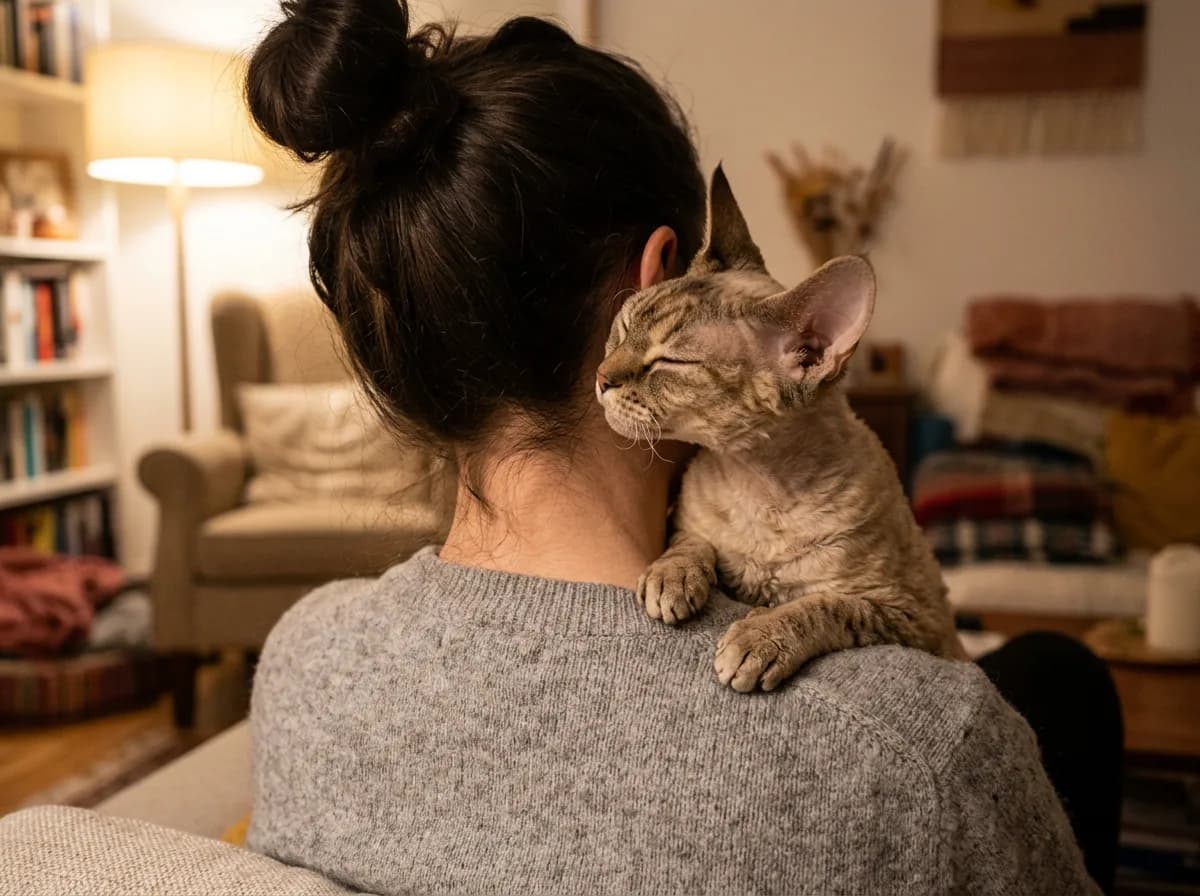
A typical Devon Rex will:
- Follow you from room to room and want to be in your lap or on your shoulder
- Perch on shoulders and curl around the back of your neck for warmth
- Learn tricks, fetch, and respond to its name (they are highly trainable)
- Stay playful and kitten-like well into adulthood
- Beg at the table, because Devons are notoriously food-motivated
That food drive is worth knowing about: Devons will counter-surf and steal snacks, so portion control matters. Their high intelligence also means they get bored without stimulation, so puzzle feeders, climbing space, and daily play keep them happy. For a deeper look at how these traits show up day to day, see our breakdown of Devon Rex personality.
- Devon Rex cats are typically excellent with respectful children and get along well with dogs and other cats, thanks to their confident, social nature.
Devon Rex Care, Grooming, and Skin Needs
People assume a low-coat cat is low-maintenance. The Devon Rex flips that: the sparse coat means the skin produces oils that the fur cannot fully absorb, so devon rex care leans more on skin and ear hygiene than on brushing.
Skin and Bathing
Because the coat is thin, the skin can get greasy and some Devons develop a yeast (Malassezia) buildup that leaves the coat feeling oily or causes a slight odor. A gentle bath every few weeks with a mild cat-safe shampoo keeps the skin balanced. Brushing is rarely needed and can actually damage the fragile fur, so a soft cloth or a light hand is enough.
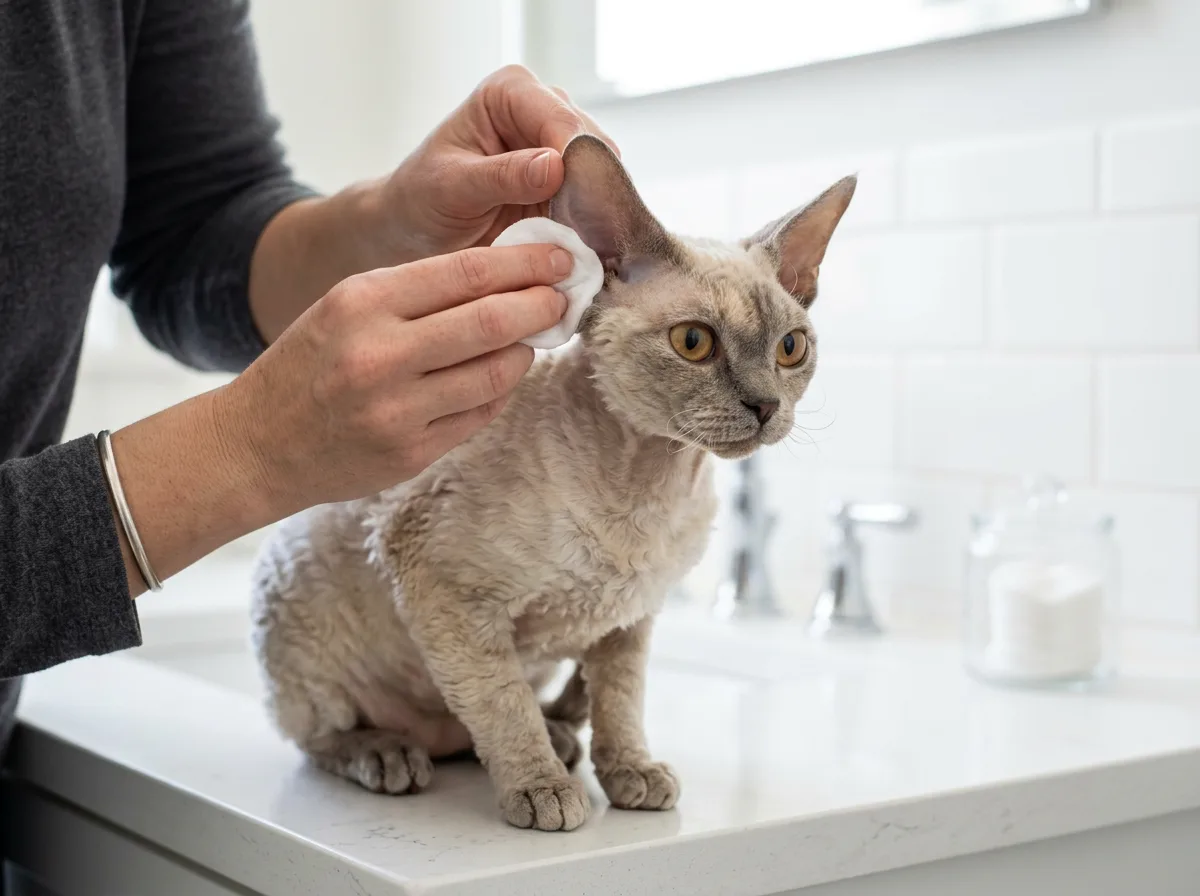
Ear Care
Those big ears produce a lot of wax. Check them weekly and clean gently with a vet-approved ear cleaner and a cotton pad. Never push anything deep into the ear canal.

63-inch multi-level cat tree with scratch posts, hammock, plush perches, and dangling toys. Vertical territory is non-negotiable for high-energy climbing breeds like the Bengal.
Petful may earn a commission when you click through to Chewy, at no extra cost to you.
Keeping Warm
With so little coat, Devons get cold easily. They seek out warm spots, sunny windows, laps, and heated beds, and many owners provide a cozy cat cave or a heated pad in winter. This is also why they nuzzle into your neck: you are a radiator.
- Bathe only when the coat feels greasy. Over-bathing strips the skin and can trigger more oil production, making the problem worse.
Devon Rex Health and Lifespan
The Devon Rex is generally a healthy, hardy breed, but like all pedigreed cats it carries a few known conditions. Responsible breeders screen for them, and good devon rex care includes regular vet checkups to catch issues early. The Devon Rex lifespan is roughly 9-15 years, and well-cared-for cats often live to 14-15 or beyond.
Health conditions associated with the breed include:
- Hypertrophic cardiomyopathy (HCM), a thickening of the heart muscle and the most common feline heart disease
- Patellar luxation, where the kneecap slips out of place
- Hip dysplasia, a malformation of the hip joint
- Congenital hypotrichosis, a hereditary hair-thinning or hairlessness
- Devon Rex myopathy (hereditary myopathy / spasticity), a congenital muscle condition affecting strength and posture
- Malassezia overgrowth and greasy skin or ear wax buildup that needs routine cleaning
- Reputable Devon Rex breeders should screen breeding cats for HCM and avoid lines affected by Devon Rex myopathy. Always ask for health records before buying.
A balanced diet, healthy weight (remember that food drive), and annual or twice-yearly vet visits go a long way. For a fuller picture of how long these cats live and what affects it, see our guide to Devon Rex lifespan.
Are Devon Rex Cats Hypoallergenic?
This is one of the most-searched questions about the breed, and the honest answer is no, the Devon Rex is not truly hypoallergenic. No cat is. Devons still produce Fel d1, the main protein that triggers cat allergies, which is found in saliva and skin oils, not just fur.
That said, there is a real reason allergy sufferers ask. Because the coat is short and sheds very little, a Devon can spread less loose, dander-coated hair around the home, so some people with mild allergies tolerate a Devon better than a heavy-shedding cat. It is a reduction in allergen spread, not an elimination of the allergen itself.
If allergies are your driver, spend time with an adult Devon before committing, and look at the broader category of hairless cat breeds and lower-shedding cats like the Sphynx cat to compare how your own allergies respond.
- The Devon Rex sheds less and may spread less dander, but it still produces the Fel d1 allergen. Test your tolerance with the actual cat before buying.
Devon Rex vs. Cornish Rex: How to Tell Them Apart
The two curly British breeds are constantly confused, but they come from different genes and look different once you know what to check. The devon rex breed has larger, lower-set ears and a coarser, sparser coat with curled whiskers, while the Cornish Rex has a finer, even "marcel wave" coat and no guard hairs.
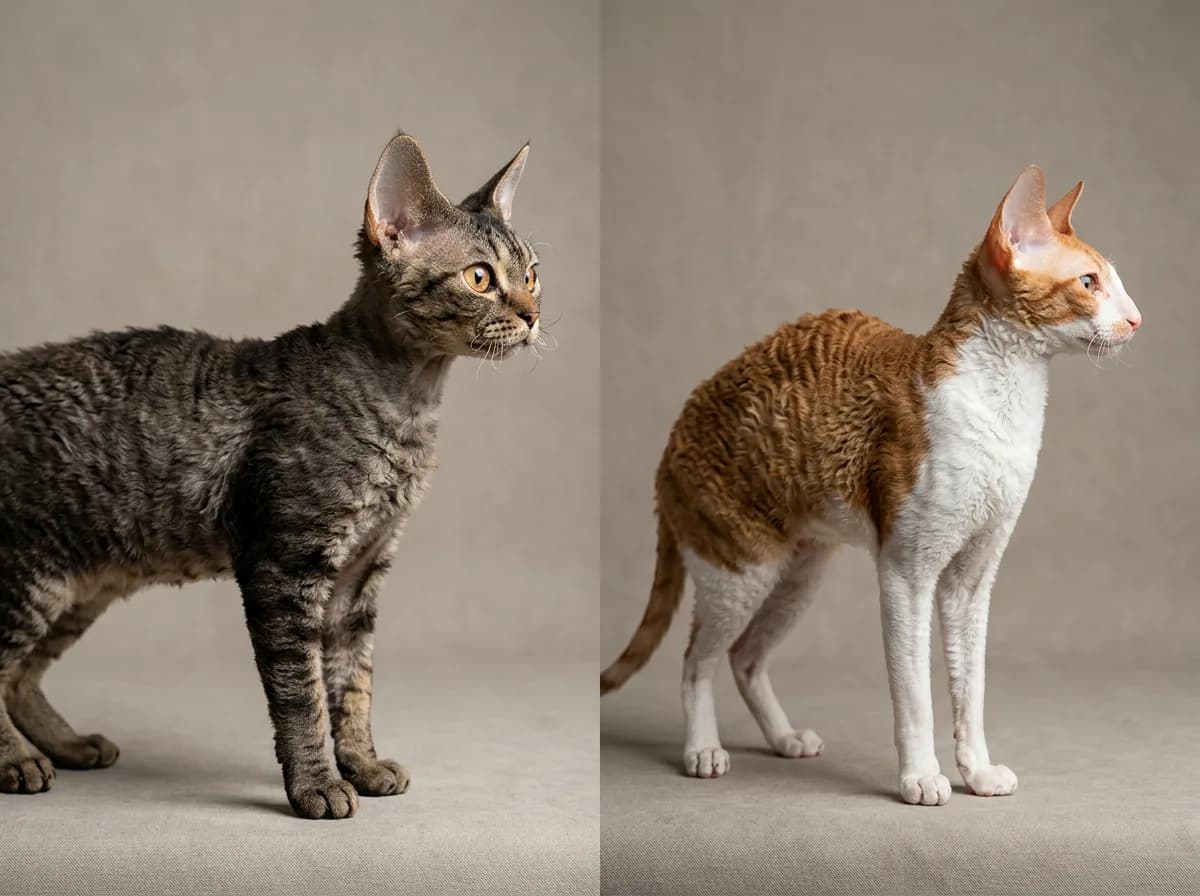
| Feature | Devon Rex | Cornish Rex |
|---|---|---|
| Ears | Very large, set low on the head | Large but set higher |
| Coat | Short, coarse, sparse, loose waves | Fine, soft, tight even "marcel wave" |
| Guard hairs | Present but sparse | Essentially none |
| Whiskers | Short, curled, often brittle | Short and curled |
| Coat gene | Recessive KRT71 (Devon type) | Different recessive gene |
| Face | Pixie/elf, high cheekbones | More angular, Roman nose |
The genes are recessive and distinct, which is why breeding a Devon to a Cornish does not produce curly kittens unless both parents carry the same mutation. For a full head-to-head, read our Cornish Rex vs Devon Rex comparison. If you like curly coats in general, the Selkirk Rex is a third, plusher option worth knowing about.
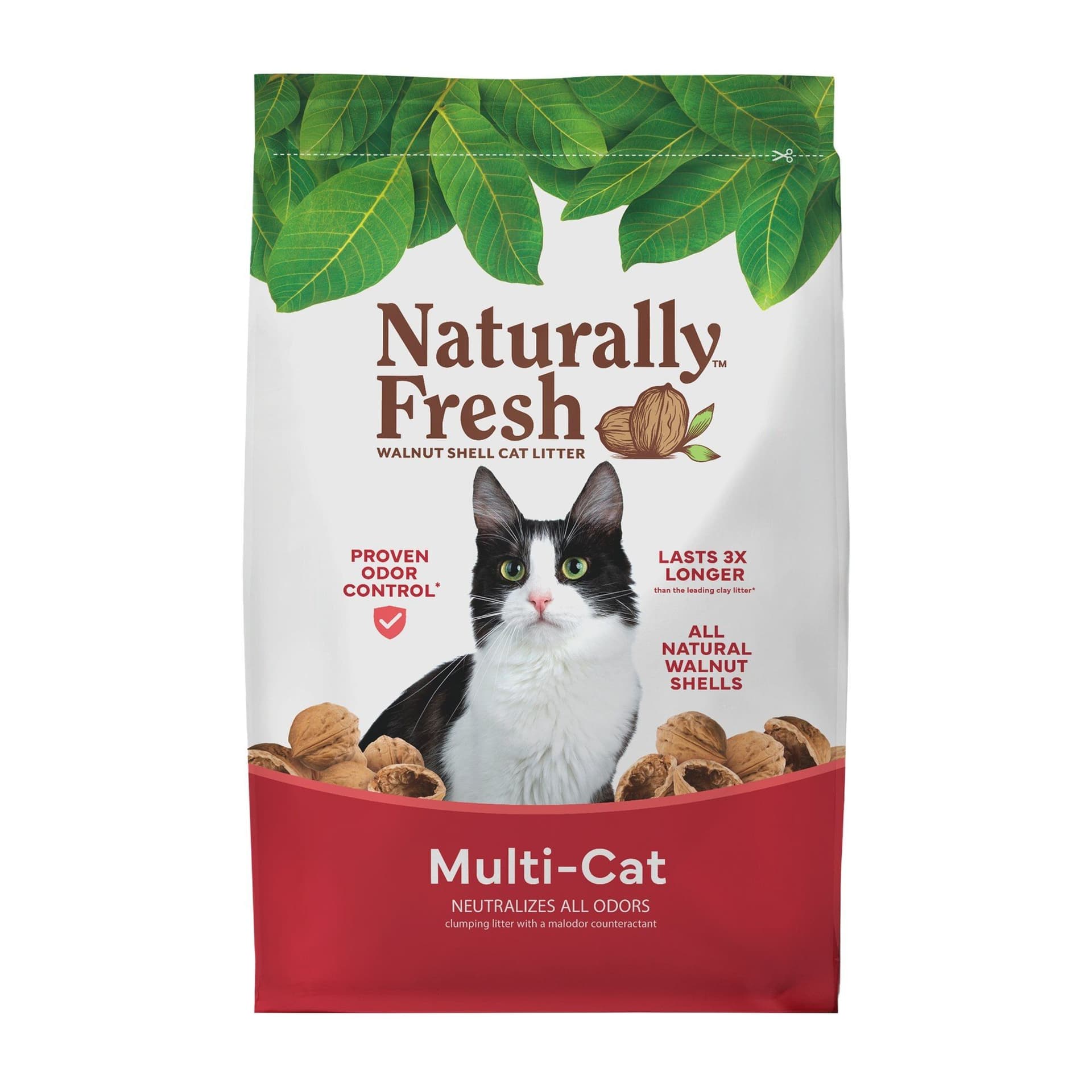
Walnut shell clumping cat litter that excels at odor control, lasts up to 3x longer than clay, and is a top pick for multi-cat households.
Petful may earn a commission when you click through to Chewy, at no extra cost to you.
How Much Does a Devon Rex Cost?
A devon rex cat typically costs about $1,200-3,000 from a reputable breeder, with show-quality or pedigree lines running higher, sometimes up to around $5,000. Adoption through a breed rescue costs far less, usually a few hundred dollars in fees.
Several factors push the price up or down:
- Pedigree and show lineage (champion bloodlines cost more)
- Color and pattern (rarer combinations command a premium)
- Health screening and vaccinations included by the breeder
- Region and breeder reputation
- Kitten vs. retired adult (adults are often cheaper)
Beyond the purchase price, budget for first-year costs like vaccinations, spay or neuter, microchipping, food, litter, and warm bedding for a cat that feels the cold. For a detailed breakdown of purchase and ownership costs, see our guide to Devon Rex price.
- A bargain-priced Devon Rex often means skipped health screening. Paying a fair breeder price up front usually saves money on vet bills later.
Finding Devon Rex Breeders and Kittens
Because the breed is uncommon, good devon rex breeders often have waitlists, so plan ahead. Start with the breeder directories maintained by CFA and TICA, which list registered catteries that follow a code of ethics.
When you contact a breeder, look for these green flags:

108-oz stainless steel pet fountain with quiet pump and water-level window. Bengals are notoriously water-obsessed; a flowing fountain encourages hydration and pulls them away from sinks and toilets.
Petful may earn a commission when you click through to Chewy, at no extra cost to you.
- Health screening records for the parents (especially HCM)
- Kittens raised in the home, well-socialized, and not separated before 12-14 weeks
- A written health guarantee and registration paperwork
- Willingness to answer questions and show you the kitten's living space
- A spay/neuter agreement for pet-quality kittens
Avoid sellers who have kittens always available, refuse to share health records, or push a quick cash sale. If you are flexible on age, ask about retired show cats or older kittens, who make wonderful pets and cost less. Browsing available Devon Rex kittens from registered breeders is the safest path to a healthy cat.
- Be wary of "Devon Rex kittens for sale" ads with rock-bottom prices and no health records. They are a common front for kitten mills and scams.
Is a Devon Rex Right for You?
The Devon Rex is a wonderful match for the right home and a poor one for the wrong one. The same devon rex temperament that makes them so endearing also makes them demanding of attention.
A Devon Rex is a great fit if you:
- Want a highly affectionate, interactive companion that bonds closely
- Are home often or have other pets to keep it company
- Like a playful, trainable cat and do not mind a clingy shadow
- Can manage light but regular skin and ear care
- Want a low-shedding cat (though not a hypoallergenic one)
A Devon Rex may not suit you if you:
- Are away long hours and cannot give daily attention
- Want an independent, hands-off cat
- Keep a cool home with no warm spots (they chill easily)
- Cannot commit to occasional baths and ear cleaning
If a close, busy, dog-like cat sounds perfect, the Devon Rex delivers in spades. If you want a calm, self-sufficient cat, a different breed will make you both happier.
Devon Rex FAQs
Yes. Devon Rex cats are affectionate, playful, intelligent, and highly social, making them excellent pets for people who want an interactive, dog-like companion and can give them daily attention.
Devon Rex cats are expensive because the breed is uncommon, litters are small, and responsible breeders invest in health screening, socialization, and registration, which pushes prices to about $1,200-3,000 and higher for show lines.
Absolutely. Devon Rex cats are famous "velcro cats" that love to cuddle, perch on shoulders, and curl around your neck for warmth, since their sparse coat makes them seek out body heat.
The average Devon Rex kitten costs about $1,200-3,000 from a reputable breeder, with show-quality or pedigree lines sometimes reaching around $5,000, while rescue adoption costs far less.
No. Devon Rex cats are not truly hypoallergenic because they still produce the Fel d1 allergen, but their low-shedding sparse coat can spread less dander, so some mild allergy sufferers tolerate them better.
Devon Rex cats live roughly 9-15 years on average, and well-cared-for individuals often reach 14-15 years or more with good diet, healthy weight, and regular veterinary care.
Devon Rex cats shed very little compared with most breeds because their coat is short and sparse, but they are not completely shed-free and still lose some hair and produce dander.
The Devon Rex has larger, lower-set ears and a coarser, sparser coat with curled whiskers, while the Cornish Rex has a finer, even marcel-wave coat and no guard hairs, and the two breeds come from different recessive genes.
Yes. Devon Rex cats are typically excellent with respectful children, dogs, and other cats thanks to their confident, social, and playful nature.
Devon Rex cats are small to medium, usually weighing about 6-9 pounds, with a slender, hard-muscled body, long legs, and a lithe frame despite their athletic build.
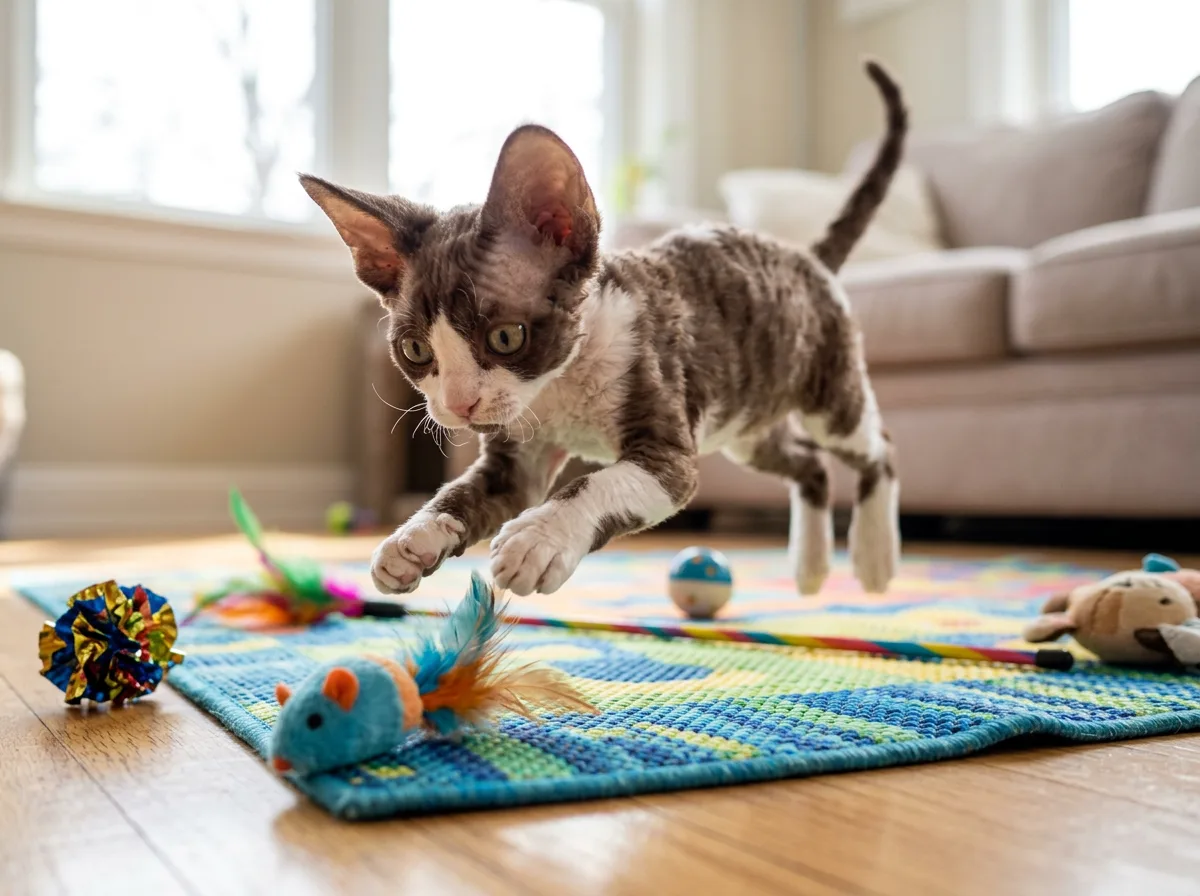
The Devon Rex is a one-of-a-kind cat: an elf-faced, big-eared, wavy-coated companion with a personality bigger than its slender frame. If you can match its need for warmth, attention, and a little skin care, you will gain one of the most devoted cats in the fancy.

Coreen Saito is a pet writer and longtime shelter volunteer with more than a decade in animal rescue. She covers cat behavior, breed care, and the small, ordinary science of sharing a life with companion animals, with a particular focus on honest takes about the products and decisions that actually matter. At home in Arizona, she's outranked by Mac (a dog with the loudest opinion in the house), Rebel (a cat who governs by quiet authority), and Meri (an orange tabby who runs the late shift and the laundry basket). She writes about all three, plus the rescues that keep coming through her life, at LifeWithMinty.com.
Sign up for expert-backed reviews and safety alerts all in one place.