Devon Rex Personality: The Cat, Dog, and Monkey Breed Explained
The Devon Rex personality is famously cat, dog, and monkey rolled into one: a clingy, playful, food-motivated velcro cat that rides your shoulder. Here is what their temperament, behavior, and care really look like before you bring one home.
Petful is reader supported. As an affiliate of platforms like Amazon and Chewy, we may earn a commission when you buy through links on this page. There is no extra cost to you.
The Devon Rex personality is so unlike a typical cat that the Cat Fanciers' Association (CFA), which recognized the breed in 1979, openly describes it as a "cat, dog, and monkey all rolled into one." Traced to a single curly kitten named Kirlee, born in 1960 in Buckfastleigh, Devon, England, this breed has spent more than 60 years earning a reputation as the clingy, shoulder-riding, food-obsessed velcro cat of the feline world. If you want a quiet, aloof lap ornament, this is not your cat. If you want a four-legged shadow that fetches, climbs, and follows you into the bathroom, read on.
- 1Devon Rex cats are famously people-oriented, often called "velcro cats" because they want to be on or near you constantly
- 2They are high-energy, athletic climbers and one of the more trainable cat breeds, capable of learning fetch and simple tricks
- 3They are intensely food-motivated, which makes counter-surfing and food-stealing common quirks to manage
- 4They do best in active, social homes and can struggle when left alone for long stretches

Sign up for expert-backed reviews and safety alerts all in one place.
Devon Rex Personality at a Glance
If you remember one thing about the Devon Rex personality, make it this: these cats bond hard and stay close. Breeders and registries consistently describe them as among the most affectionate and interactive of all pedigreed cats. Their temperament leans curious, mischievous, and relentlessly social, wrapped in an unmistakable elfin body with oversized, low-set ears and a short, wavy, suede-soft coat.
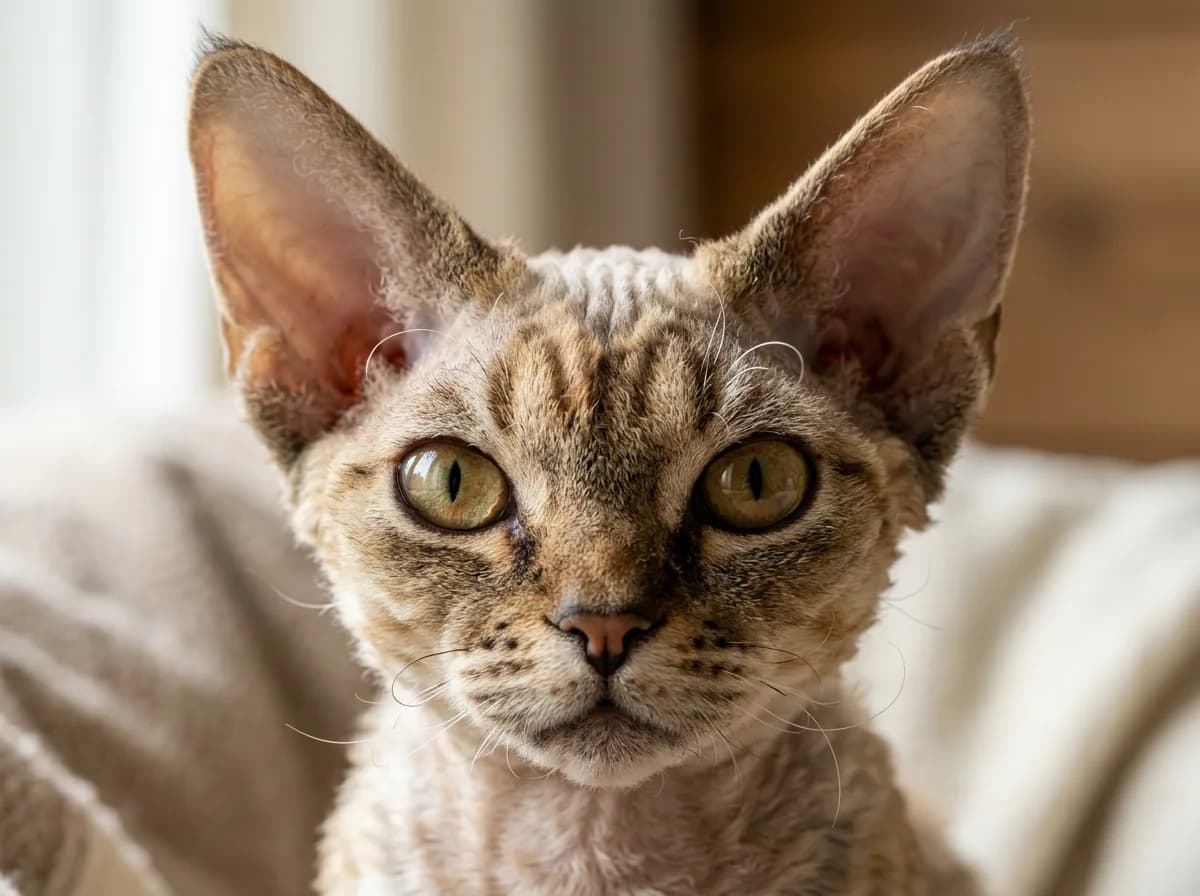
Their look is part of the story. The pixie face, prominent cheekbones, big eyes, and large ears give the Devon Rex a perpetually curious, slightly impish expression that matches the behavior underneath. For the full physical breakdown, our Devon Rex breed guide covers anatomy, coat, and standards in depth. Here, we are focused on what living with that personality is actually like.
| Trait | Devon Rex Rating | What It Means |
|---|---|---|
| Affection level | Very high | Wants constant contact, rides shoulders, sleeps under covers |
| Energy level | High | Active well into adulthood, needs daily play and vertical space |
| Intelligence | High | Problem-solves, learns tricks, opens cabinets |
| Vocalization | Moderate | Chatty but softer than a Siamese, uses chirps and trills |
| Trainability | High | One of the more dog-like, food-driven breeds to train |
| Independence | Low | Dislikes long alone time, thrives with company |
- Every Devon Rex traces back to one kitten, Kirlee, found in Devon, England, in 1960; the rexed coat comes from a recessive variant of the KRT71 gene, separate from the Cornish Rex gene.
The Cat, Dog, and Monkey Reputation Explained
The "cat, dog, and monkey" tagline is not marketing fluff. It is a surprisingly accurate shorthand for the Devon Rex temperament, and unpacking it trait by trait is the fastest way to understand the breed.
The cat part
It is still a cat. It grooms, it purrs, it stalks toys, and it claims sunny windowsills. The feline instincts are all intact. What changes is the intensity of the social drive layered on top.
The dog part
This is where Devon Rex behavior diverges from the feline norm. They greet you at the door, follow you room to room, come when called more reliably than most cats, and many learn to fetch and walk on a harness. The loyalty and people-focus read distinctly canine.
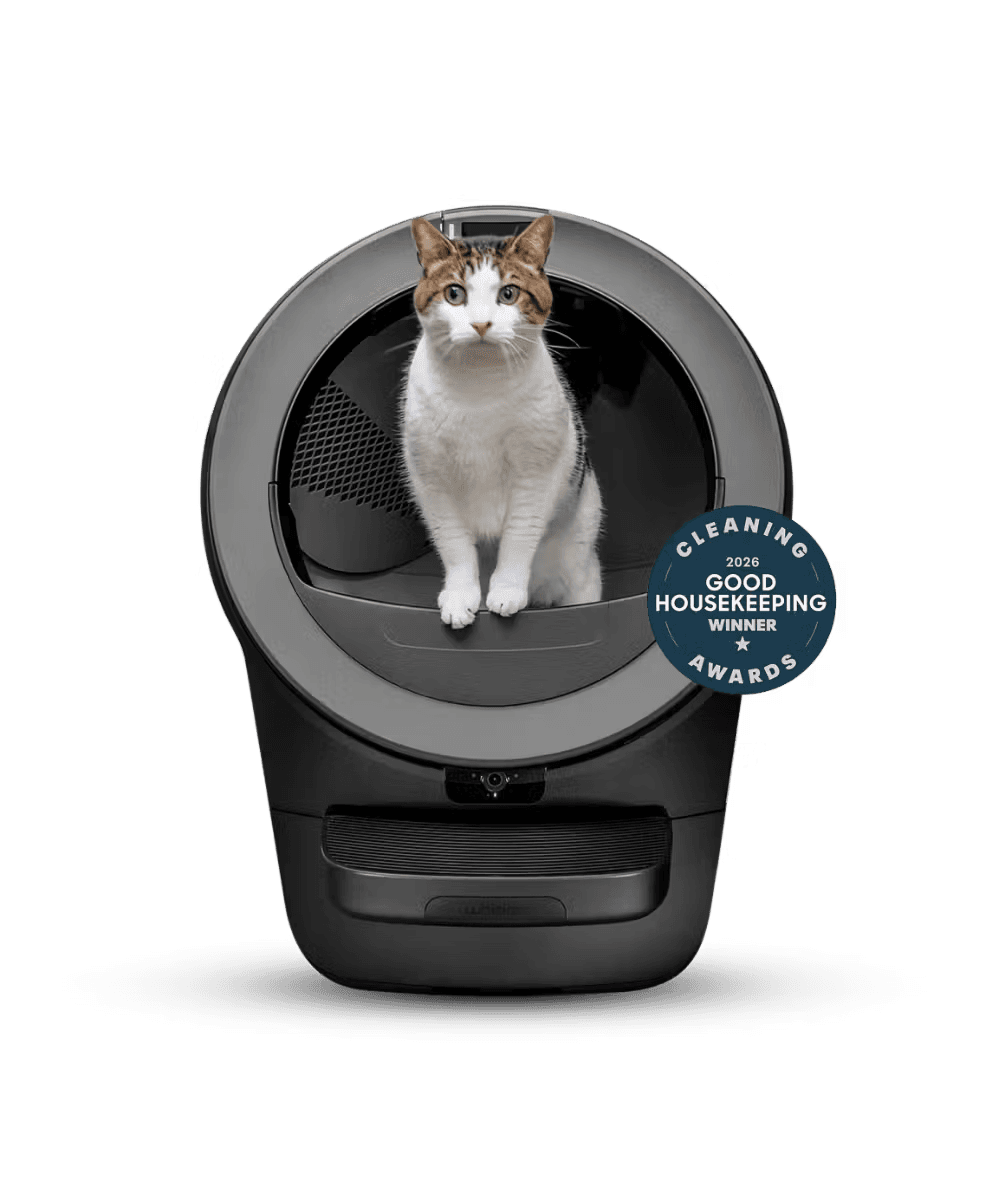
Never Scoop Again® with the Whisker Litter-Robot, the smart self-cleaning automatic litter box. Monitor visits and track weights for better overall care in the Whisker® app. Multi-cat friendly.
Petful may earn a commission when you click through to Whisker, at no extra cost to you.
The monkey part
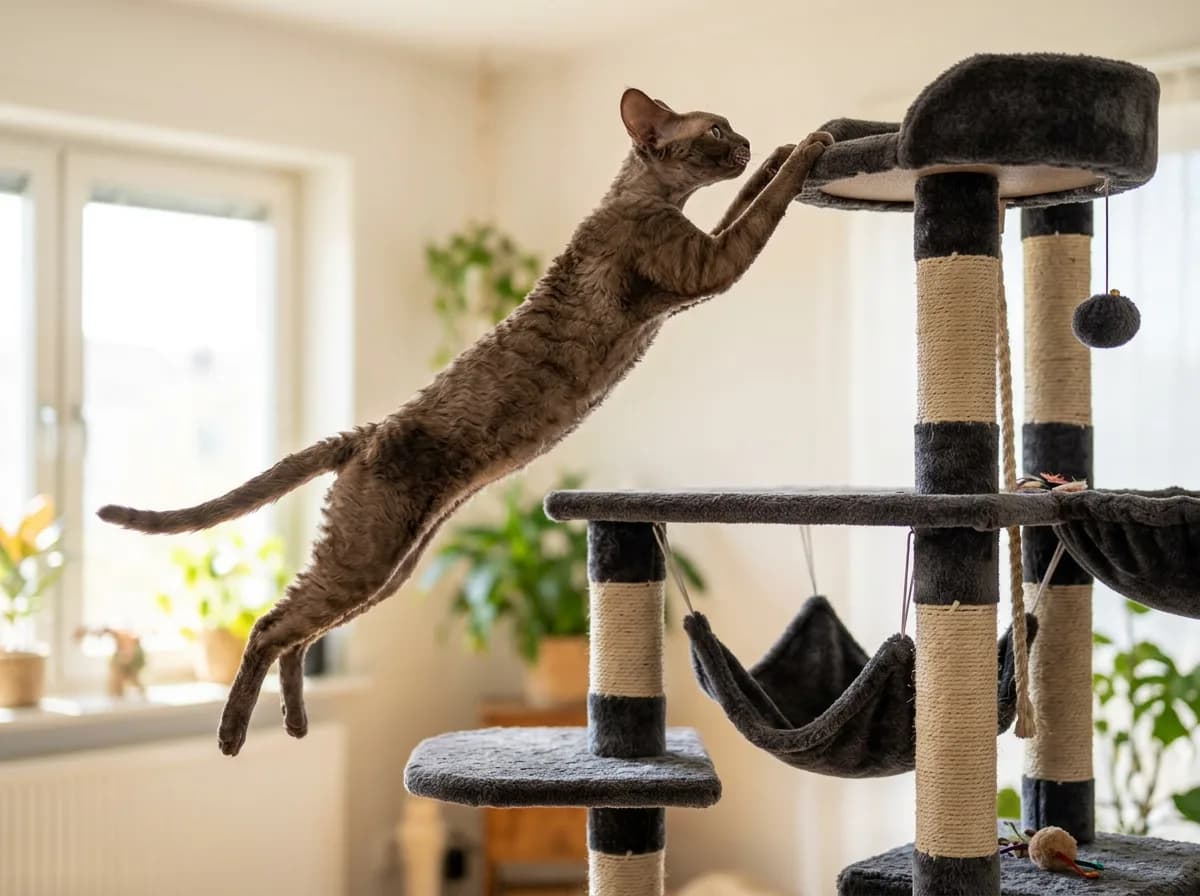
The monkey nickname covers two things: their acrobatic climbing and their busy little hands. A Devon Rex will scale a bookshelf, perch on your shoulder, and use its paws to investigate, open, and steal almost anything. Owners often call them "a monkey in a catsuit," and once you have lived with one, the label sticks.
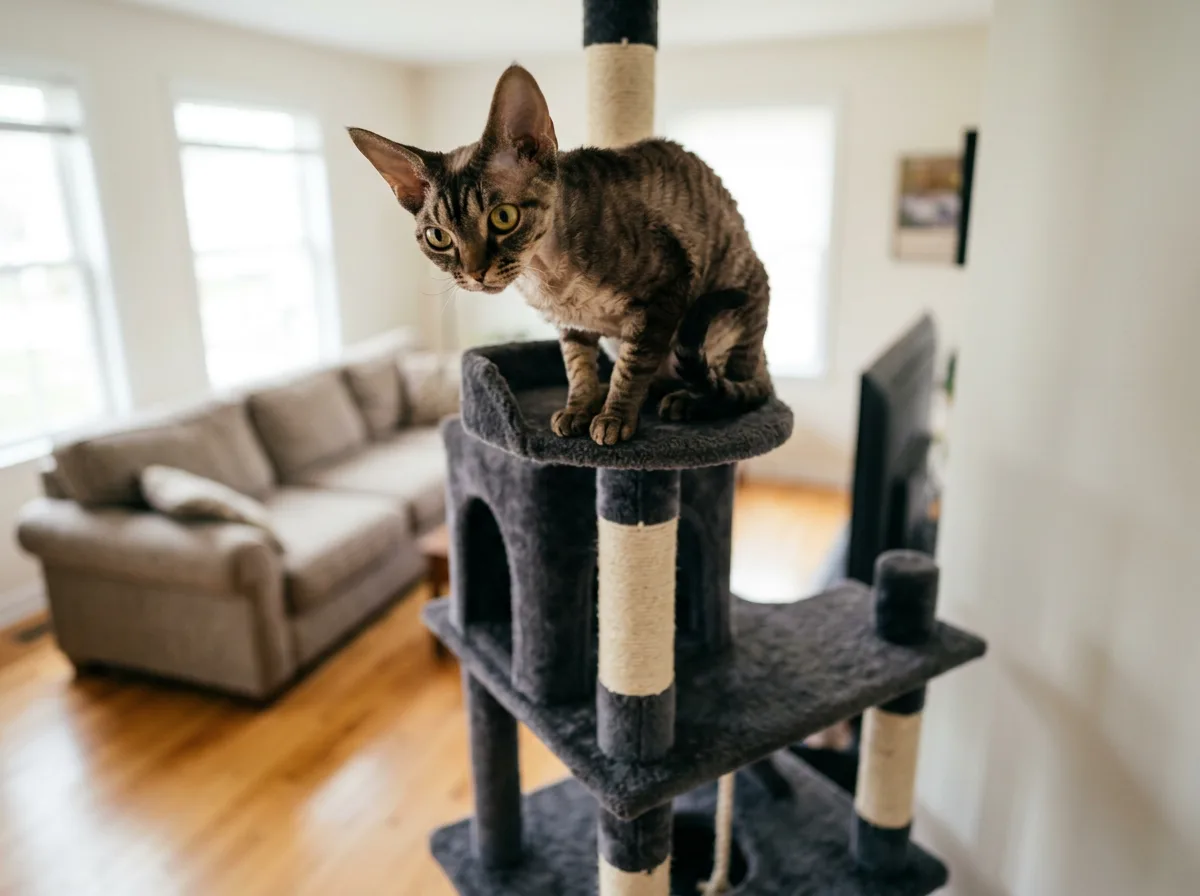
- Because the monkey instinct is wired in, give a Devon Rex tall, sanctioned places to climb. A floor-to-ceiling cat tree near a window redirects the acrobatics away from your curtains and cabinets.
Are Devon Rex Cats Affectionate? (The Velcro Cat Truth)
Yes, and that is an understatement. Among breed people, "velcro cat" is the standard description, and it is earned. A Devon Rex does not just tolerate affection; it actively seeks contact and gets visibly disappointed when it cannot get it.
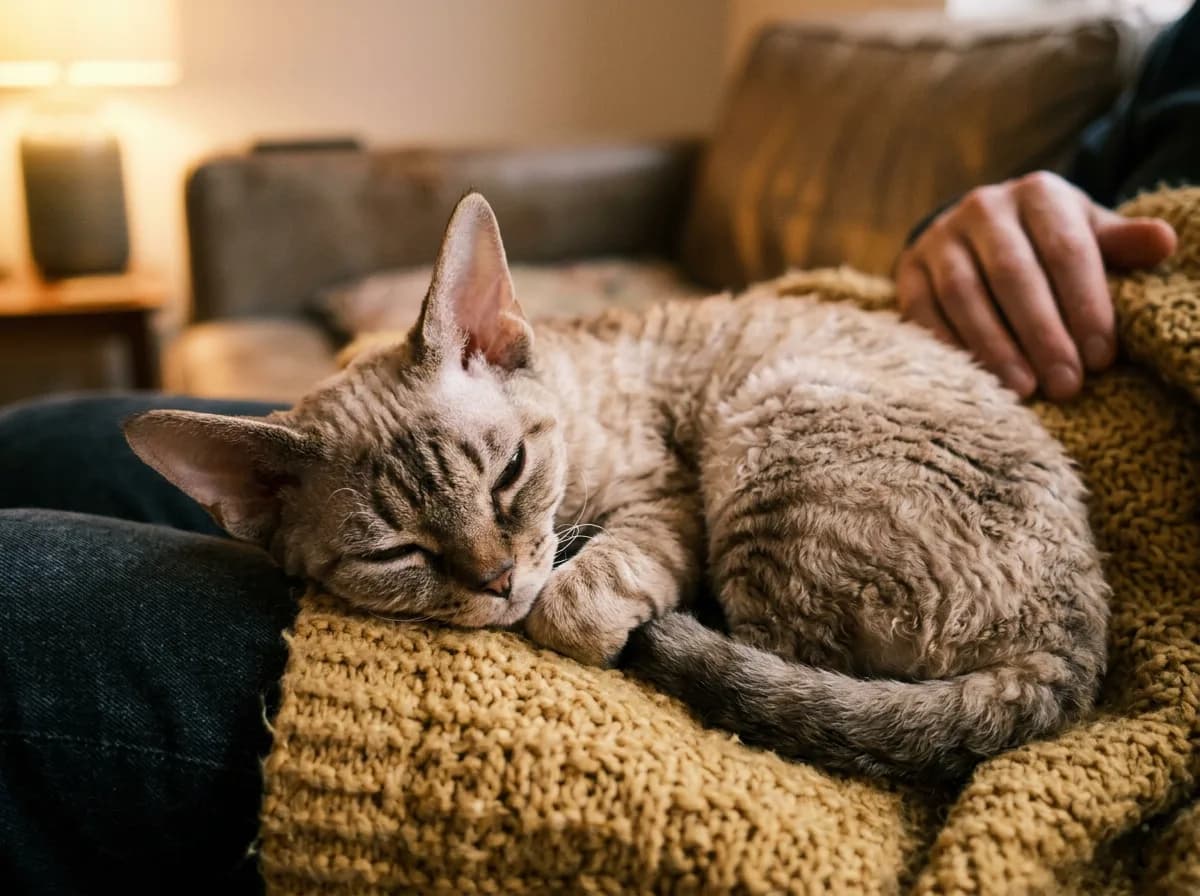
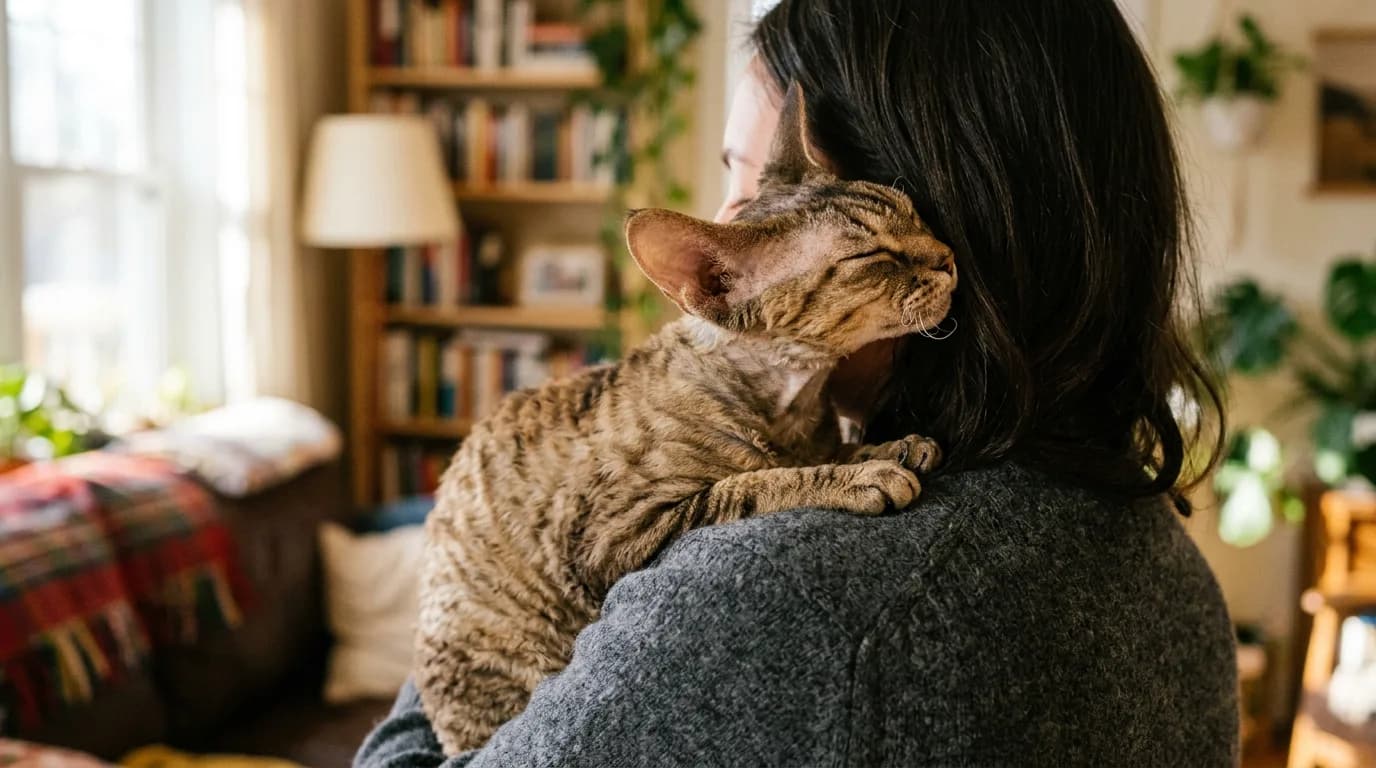
In practice, the affection shows up as a cat that wants to be physically on you: draped across your shoulders, tucked under the blankets at night (they love the warmth, since their sparse coat means they get cold easily), or wedged onto your lap the moment you sit down. They are heat-seekers and people-seekers at the same time, which makes them champion cuddlers in cool homes.
This intensity is closest to a couple of other famously clingy breeds. If you are comparing options, the Sphynx cat personality shows a similar warmth-seeking, attention-demanding profile, while the Siamese cat personality brings a louder, more vocal version of the same deep human bond.
- The flip side of all that devotion is real separation stress. A Devon Rex left alone for long workdays can become bored, anxious, or destructive. Plan for company, a pet sibling, or enrichment if your home is empty for 8 plus hours.
Devon Rex Temperament: Energy, Intelligence, and Mischief
The Devon Rex temperament stays kitten-like for years. These are not cats that mellow into furniture by age three. Expect sustained energy, sharp intelligence, and a streak of mischief that keeps you on your toes.
High energy that lasts
Devon Rex cats are athletic and busy. They run, leap, and climb with real coordination, and they want an audience. Daily interactive play is not optional; it is how you keep a clever, energetic cat from inventing its own (usually inconvenient) entertainment.
Problem-solving intelligence
This breed is smart in a way that creates work for you. They learn routines, watch how doors and latches work, and figure out where the treats live. A bored, intelligent Devon Rex will open the cabinet you thought was secure. The upside is that the same brainpower makes them genuinely trainable.
The mischief factor
Mischief is baked into the Devon Rex behavior profile. Knocking things off counters, dunking toys in water bowls, and stealing hair ties are par for the course. It is rarely malicious; it is a curious, social animal looking for stimulation and reaction.
Devon Rex Behavior: Climbing, Fetch, and Food-Stealing Habits
Three behaviors define daily life with a Devon Rex more than any others: they climb everything, many of them fetch, and almost all of them are obsessed with food.
Climbing and perching
A Devon Rex treats your home as a vertical playground. They love to be up high and especially love to be up high on you, which is why shoulder-perching is a signature move. Vertical territory is essential, not a luxury.
Fetch and play
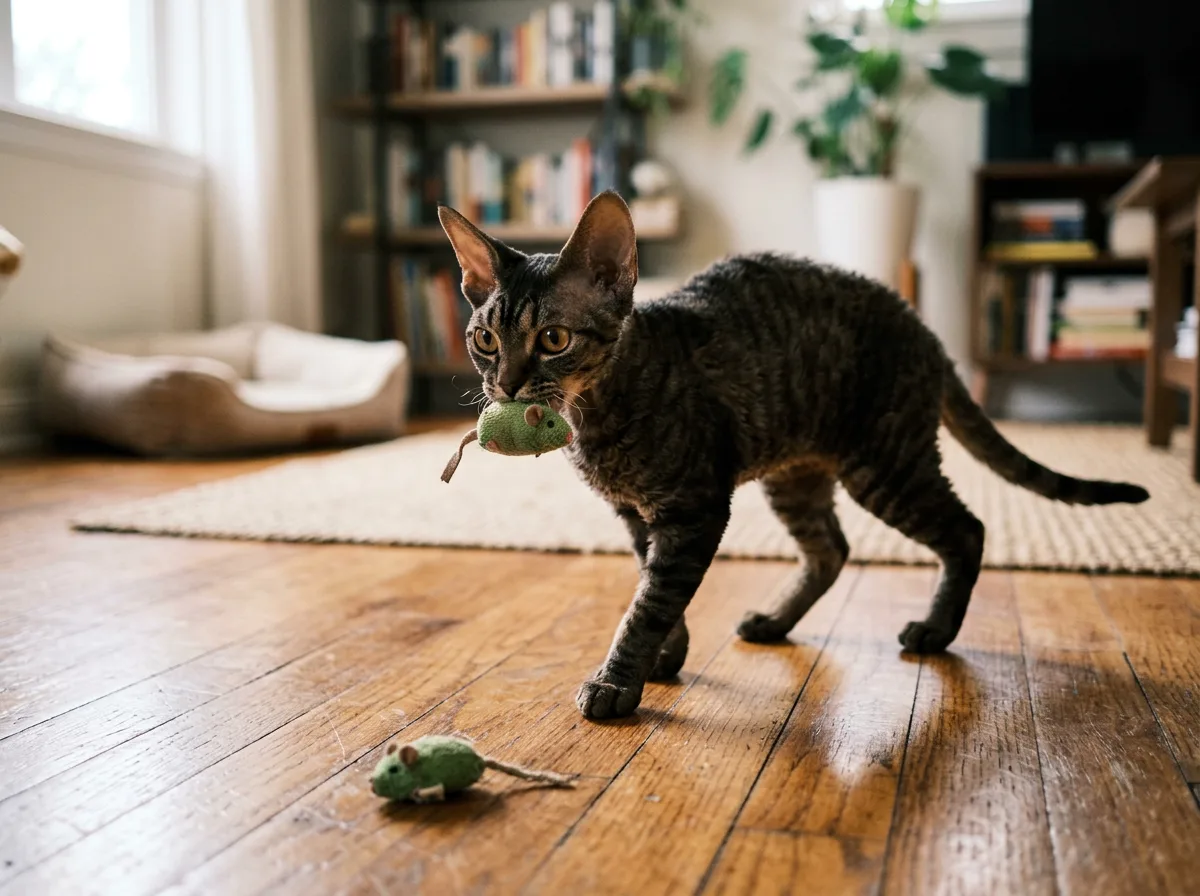
Plenty of Devon Rex cats will chase a toy, carry it back in their mouth, and drop it for another throw, just like a retriever. Not every individual does it, but the breed produces fetch enthusiasts at a rate few other cats match.
Food motivation and counter-surfing
Here is the trait owners underestimate: the Devon Rex is intensely food-motivated. That is a gift for training (more on that below) and a headache for kitchen management. They beg, they counter-surf, and they will steal food off an unattended plate without hesitation. Real owners frequently warn newcomers that nothing edible is safe on a countertop.
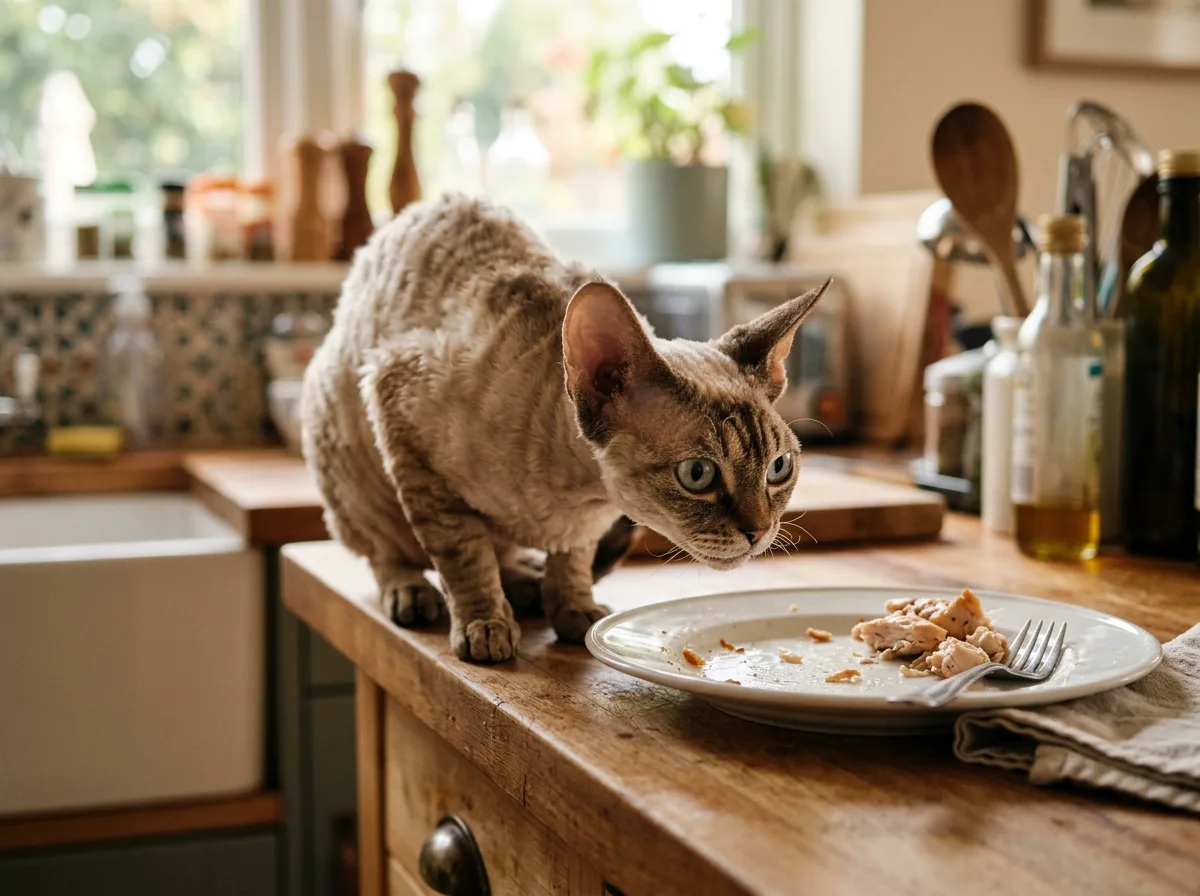
- Food motivation plus athleticism means a Devon Rex can reach almost any surface. Store human food sealed and out of reach, and never leave a plate unattended. Some human foods are toxic to cats, so the stakes are higher than a stolen snack.
The honest, owner-experience view is mixed on just how food-crazed any individual will be. Some Devon Rex cats are polite eaters; many are little opportunists. Plan for the opportunist and you will rarely be surprised.

63-inch multi-level cat tree with scratch posts, hammock, plush perches, and dangling toys. Vertical territory is non-negotiable for high-energy climbing breeds like the Bengal.
Petful may earn a commission when you click through to Chewy, at no extra cost to you.
How Vocal and Trainable Is a Devon Rex?
Two underrated parts of the Devon Rex personality are how they communicate and how readily they learn, both of which lean into the dog-like reputation.
Vocalization
Devon Rex cats are chatty but not deafening. They use chirps, trills, and soft meows to stay in conversation with you, especially around mealtimes and greetings. They are more talkative than an average cat but generally quieter and less piercing than a Siamese. If you want interaction without constant loud yowling, the Devon hits a comfortable middle.
Trainability
This is one of the most trainable cat breeds you can own, and it comes down to that food drive plus intelligence. With small treats and short, positive sessions, a Devon Rex can learn to:
- Come when called and respond to its name
- Fetch and retrieve toys
- Sit, high-five, and other simple tricks
- Walk on a harness and leash
- Use puzzle feeders and food-dispensing toys
- Keep sessions under five minutes and use a single kibble or a sliver of treat as the reward. The Devon Rex food drive does the heavy lifting; you just have to be consistent and end on a win.
Devon Rex With Kids, Dogs, and Other Cats
For families and multi-pet homes, the Devon Rex is one of the easier social fits, precisely because of that people-first temperament.
Devon Rex with kids
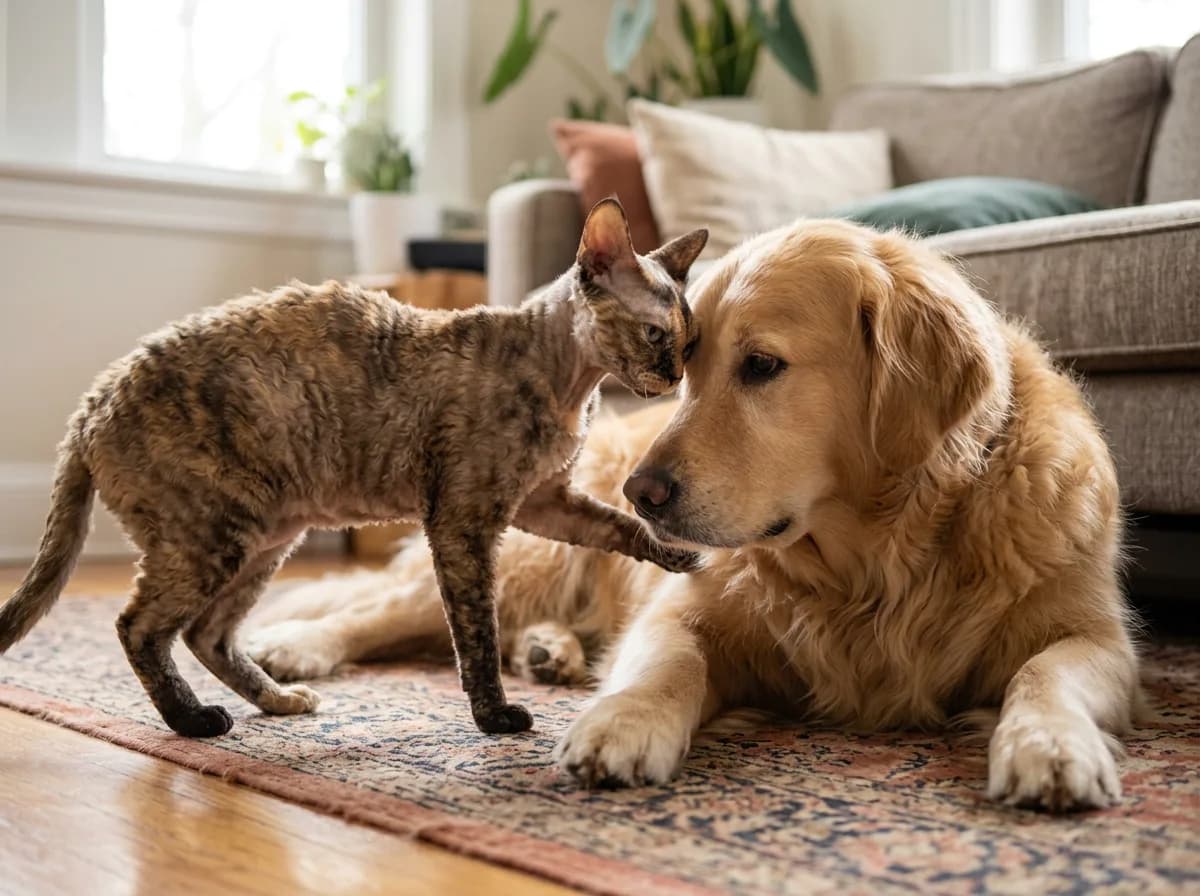
The Devon Rex with kids and dogs reputation is strong. Their playfulness, tolerance for handling, and love of attention make them well suited to households with respectful, gentle children. They enjoy the games and the constant activity. As with any cat, supervise young children and teach them calm, gentle interaction, and give the cat an escape route to a high perch when it needs a break.
Devon Rex with dogs
Their dog-like sociability extends to actual dogs. Properly introduced, many Devon Rex cats become genuine companions to a friendly, cat-safe dog, playing, grooming, and napping together. Slow, scent-first introductions are the key to a smooth start.
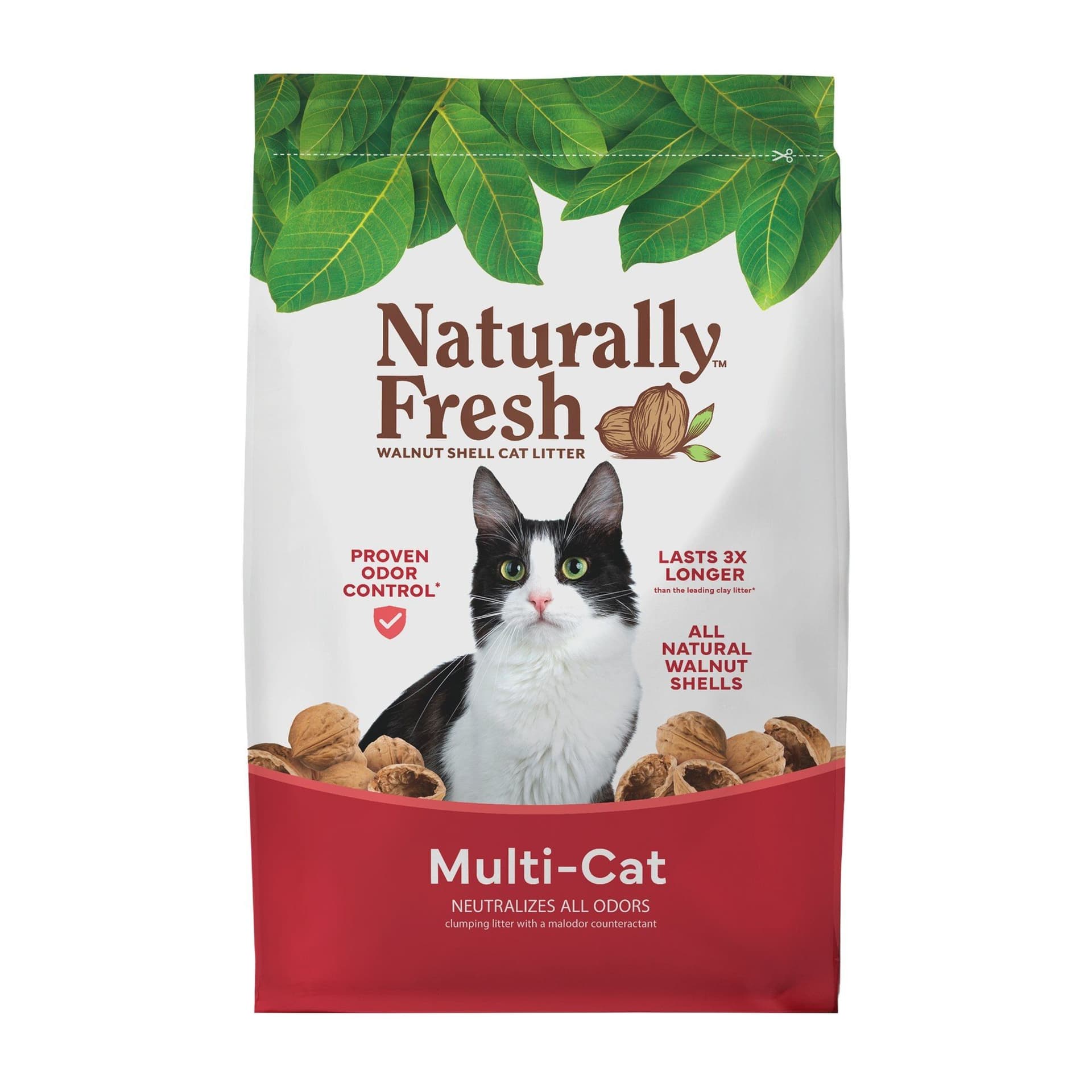
Walnut shell clumping cat litter that excels at odor control, lasts up to 3x longer than clay, and is a top pick for multi-cat households.
Petful may earn a commission when you click through to Chewy, at no extra cost to you.
Devon Rex with other cats
Because they crave company and dislike being alone, many Devon Rex cats do better with a feline (or canine) housemate, especially in homes where people are out for the workday. A second pet is not mandatory, but it is one of the best ways to keep a social, energetic Devon Rex content while you are away.
- If you work long hours, two Devon Rex cats, or a Devon plus a compatible pet, can be kinder than one cat home alone. Their need for interaction is real, and another animal helps fill the gap.
Devon Rex Care: Keeping a High-Energy Personality Happy
Devon Rex care is less about heavy grooming and more about meeting the needs of a busy brain and a sparse coat. The personality dictates the care plan.
Enrichment and exercise
A happy Devon Rex needs daily interactive play, puzzle feeders, rotating toys, and plenty of vertical space. Think tall cat trees, wall shelves, and window perches. Mental stimulation matters as much as physical exercise for a cat this smart.
Skin, coat, and warmth
The wavy, sparse coat needs little brushing (vigorous brushing can damage the fragile hairs), but it does need attention in two areas. Devon Rex cats can develop greasy skin and waxy ear buildup, sometimes linked to Malassezia yeast, so gentle, occasional bathing and regular ear cleaning are part of the routine. They also get cold easily, so warm bedding, sweaters in winter, and cozy hideouts keep them comfortable.
Diet and the food drive
That intense food motivation makes portion control important. Free-feeding a food-obsessed, treat-trained cat is a recipe for weight gain. Measured meals, puzzle feeders, and treats counted into the daily total keep them lean and engaged.
- The Devon Rex is a hardy breed but is associated with a few inherited conditions, including hypertrophic cardiomyopathy (HCM) and a hereditary muscle condition sometimes called Devon Rex myopathy. Buy from a breeder who screens, and keep up with annual vet checks. Discuss any health concerns with your veterinarian.
For more on the breed's longevity and the day-one details of bringing one home, see our guides to Devon Rex lifespan and Devon Rex kittens.
Is a Devon Rex the Right Cat for You?
The Devon Rex personality is wonderful for the right home and frustrating for the wrong one. Match yourself honestly to the temperament before you commit.
A Devon Rex is a great fit if you:

108-oz stainless steel pet fountain with quiet pump and water-level window. Bengals are notoriously water-obsessed; a flowing fountain encourages hydration and pulls them away from sinks and toilets.
Petful may earn a commission when you click through to Chewy, at no extra cost to you.
- Want a deeply affectionate, interactive, follow-you-everywhere companion
- Are home often or can provide a pet companion for company
- Enjoy play, training, and an active, mischievous cat
- Have, or will build, plenty of vertical climbing space
- Can keep food sealed and counters managed
A Devon Rex may not suit you if you:
- Want an independent, low-contact, low-maintenance cat
- Are away from home for long stretches with no other pets
- Prefer a calm, predictable cat that ignores you
- Cannot childproof, or rather Devon-proof, your kitchen
Budget matters too. Devon Rex kittens typically run about $1,200 to $3,000 from a reputable breeder, with top show lines going higher, while adoption costs far less. Our Devon Rex price guide breaks down what drives the range. If shedding or allergies are part of your decision, note that no cat is truly allergy-free; the Devon Rex hypoallergenic question gets a full, honest answer in its own guide.
Devon Rex vs. Cornish Rex: Personality and Looks
People constantly confuse the two curly-coated rex breeds, but they are genetically distinct and differ in both looks and personality.
The genetics matter: the Devon Rex coat comes from a different recessive gene than the Cornish Rex, so crossing the two does not "fix" the curl; it produces straight-coated kittens. On looks, the Devon has larger, lower-set ears, a coarser and sparser rexed coat, and short, curled, sometimes brittle whiskers. The Cornish Rex has a finer, more even "marcel wave" coat with no guard hairs and a more egg-shaped head.
| Feature | Devon Rex | Cornish Rex |
|---|---|---|
| Ears | Very large, low-set | Large, set higher |
| Coat | Coarser, sparser, wavy, can have bald patches | Finer, even marcel waves, no guard hairs |
| Whiskers | Short, curled, can be brittle | Sparse, curled |
| Face | Pixie/elf, prominent cheekbones | More egg-shaped head |
| Personality | Clingy, mischievous, food-driven, monkey-like | Playful, active, affectionate, slightly more graceful |
Personality-wise both are people-loving and playful, but Devon Rex owners tend to emphasize the monkey-like mischief and food obsession, while the Cornish leans athletic and acrobatic. You can dig into the other breed in our Cornish Rex cat profile.
Devon Rex Personality FAQ
Yes, Devon Rex cats are exceptionally cuddly. They are heat-seeking, people-seeking velcro cats that love to sleep under blankets, drape over your shoulders, and curl into your lap, making them one of the cuddliest cat breeds.
Extremely. Affection is the defining trait of the Devon Rex personality. They actively seek constant physical contact, follow their people from room to room, and bond intensely with the whole household.
The Devon Rex is one of the most clingy cat breeds, alongside the Sphynx and Siamese. Its velcro-cat reputation comes from a strong need to be on or near its humans at all times, and it can struggle when left alone.
Grooming is easy thanks to the short, low-shed coat, but the breed is moderately demanding overall. They need daily play, mental enrichment, company, warmth (they get cold easily), occasional bathing for greasy skin, and ear cleaning. Their social needs are the real work, not the coat.
They do not strictly need one, but many Devon Rex cats are happier with a feline or canine companion, especially in homes where people are away during the day. A companion helps satisfy their strong social drive and reduces loneliness.
Yes. Their playful, tolerant, people-first temperament makes Devon Rex cats a good match for families with gentle children and for cat-friendly dogs. Supervise young kids, teach respectful handling, and use slow introductions with other pets.
Moderately. Devon Rex cats are chatty, using chirps, trills, and soft meows to communicate, but they are generally quieter and less piercing than a Siamese. They talk to stay connected rather than to dominate the room.
Yes, the Devon Rex is one of the most trainable cat breeds. Their intelligence plus strong food motivation lets them learn to fetch, come when called, do simple tricks, and walk on a harness with short, positive, treat-based sessions.
Most do. As affection-driven velcro cats, Devon Rex cats generally enjoy being held, carried, and especially perched on a shoulder, more so than the average cat. Individual tolerance varies, so let each cat set its comfort level.
Both are affectionate and playful, but the Devon Rex is known for monkey-like mischief and intense food motivation, while the Cornish Rex is often described as more graceful and acrobatic. Physically, the Devon has larger, lower-set ears and a coarser, sparser coat with curled whiskers.

Coreen Saito is a pet writer and longtime shelter volunteer with more than a decade in animal rescue. She covers cat behavior, breed care, and the small, ordinary science of sharing a life with companion animals, with a particular focus on honest takes about the products and decisions that actually matter. At home in Arizona, she's outranked by Mac (a dog with the loudest opinion in the house), Rebel (a cat who governs by quiet authority), and Meri (an orange tabby who runs the late shift and the laundry basket). She writes about all three, plus the rescues that keep coming through her life, at LifeWithMinty.com.
Sign up for expert-backed reviews and safety alerts all in one place.