Devon Rex Lifespan: How Long Do These Curly-Coated Cats Live?
Most Devon Rex cats live 9 to 15 years, and some reach 18 to 20 with the right care. A vet breaks down the breed's key health problems, life stages, and the steps that help your Devon Rex live a longer, healthier life.

BVMS, MRCVS
Petful is reader supported. As an affiliate of platforms like Amazon and Chewy, we may earn a commission when you buy through links on this page. There is no extra cost to you.
The Devon Rex lifespan typically runs 9 to 15 years, and the Cat Fanciers' Association lists it among the longer-lived pedigreed cats, with well cared for individuals regularly reaching 14, 15, or more. As a veterinary surgeon, I want to give you the honest, sourced version of that number: where it comes from, why you will see wildly different ranges online, and which breed-specific health problems actually move it up or down. The good news is that much of what shapes a Devon Rex's life expectancy sits squarely in an owner's hands.
- 1Most Devon Rex cats live 9 to 15 years, with attentive care and good genetics pushing some to 18 to 20.
- 2The biggest lifespan threat is hypertrophic cardiomyopathy (HCM), the most common heart disease in cats and often silent until advanced.
- 3Devon Rex myopathy, patellar luxation, and hip dysplasia are inherited issues to screen for, but most are manageable.
- 4Keeping your cat indoors, lean, and on a yearly vet schedule (twice yearly for seniors) is the single most powerful longevity lever.

Sign up for expert-backed reviews and safety alerts all in one place.
How Long Do Devon Rex Cats Live? (Average Lifespan)
So, how long do Devon Rex cats live? The most widely cited and defensible Devon Rex life expectancy is 9 to 15 years. That range appears across veterinary breed hubs, pet insurers, and breed registries, and it lines up with what I see in practice. A healthy, indoor, neutered Devon Rex that gets routine veterinary care should comfortably reach its early-to-mid teens.
It helps to put the lifespan of Devon Rex cats in context. The average indoor domestic cat lives roughly 13 to 17 years, and many pedigreed breeds sit a touch lower because of concentrated genetics. The Devon Rex holds up well within that company. Where you land in the 9 to 15 window depends on three things: the genes your cat inherited, the lifestyle you provide, and how early any health problems are caught.
For the wider picture on temperament, grooming, and day-to-day care that supports a long life, our full Devon Rex breed guide is a useful companion to this article.
- An average lifespan is a midpoint, not a ceiling. Individual Devon Rex cats die younger from accidents or aggressive disease, while others sail past 18, so treat 9 to 15 as a planning figure rather than a countdown.
 Sponsored
Have a health question about your cat?
Talk to a licensed vet at Dutch over video or message, including nights and weekends.
Use code Pets30
Plans start at $11/month · covers up to 5 pets
- Licensed vets in most states
- Rx for 150+ conditions
- 4.7 on Trustpilot
Why Lifespan Estimates Vary So Much (9 to 20 Years Explained)
Search "Devon Rex life expectancy" and you will find numbers all over the map: 9 to 15, 10 to 15, 14 to 17, even 15 to 20 years. That inconsistency confuses owners, so let me reconcile it. The differences come almost entirely from the source of the data, not from real disagreement about the breed.
Registry and breed-club figures tend to be optimistic because they reflect well-bred, well-cared-for show lines. Insurer data skews lower because claims are filed when cats get sick or die, so it captures the harder cases. Veterinary breed hubs usually quote a conservative 9 to 15 to stay honest about inherited risk. None of these is wrong; they are measuring different populations.
| Source Type | Typical Range Quoted | Why It Reads That Way |
|---|---|---|
| Breed registry / club | 14 to 17+ years | Reflects healthy show lines and responsible breeding |
| Pet insurer data | 9 to 14 years | Built from real claims, so it captures sicker cats |
| Veterinary breed hubs | 9 to 15 years | Conservative figure that accounts for inherited disease |
| Exceptional individuals | 18 to 20 years | Outliers with great genes, indoor life, and early care |
The practical takeaway: a single Devon Rex lifespan number cannot capture every cat. Aim to maximize your own cat's odds rather than fixate on a statistic. If you are still researching the breed before bringing one home, the cost side matters too, and our Devon Rex price breakdown covers what responsible breeders charge and why.
Never Scoop Again® with the Whisker Litter-Robot, the smart self-cleaning automatic litter box. Monitor visits and track weights for better overall care in the Whisker® app. Multi-cat friendly.
Petful may earn a commission when you click through to Whisker, at no extra cost to you.
Devon Rex Health Problems That Affect Lifespan
The Devon Rex is generally a hardy little cat, but like every pedigreed breed it carries a handful of inherited and acquired conditions. Understanding these Devon Rex health problems is the key to protecting lifespan, because most of them are far more survivable when caught early. The conditions that matter most fall into four buckets: heart disease, the breed's hereditary muscle disorder, joint and structural issues, and skin and eye problems.
Pet insurer claims data adds a useful real-world layer. Insurers report that the most common Devon Rex health issues showing up in claims include digestive upset, lymphoma, inflammatory bowel disease (IBD), and corneal ulcers, alongside the inherited conditions below. These acquired problems are not unique to the breed, but they remind us that day-to-day issues, not just dramatic genetic ones, shape a cat's quality and length of life.
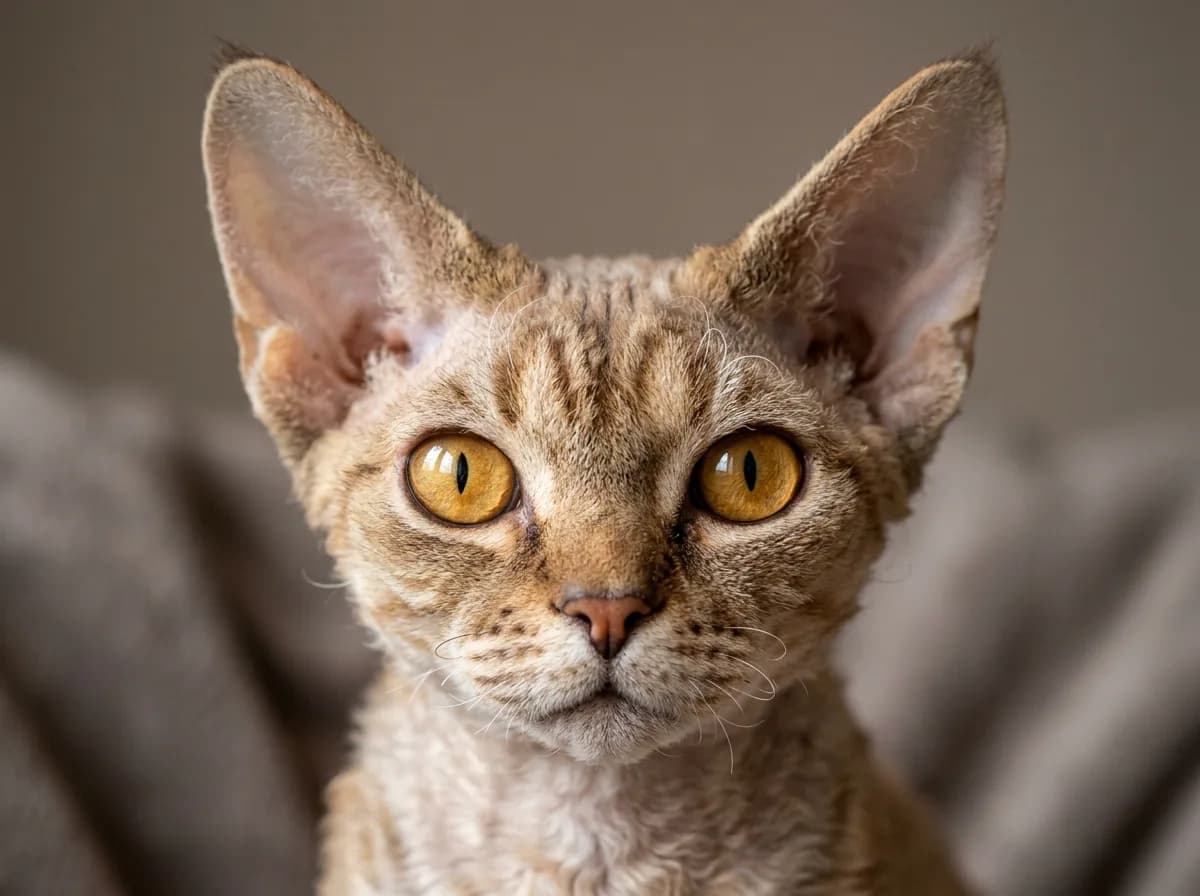
- Carrying a breed predisposition is not the same as developing the disease. Responsible breeding, screening, and early veterinary care dramatically lower the odds that any one of these conditions shortens your cat's life.
Hypertrophic Cardiomyopathy (HCM): The Leading Concern
If there is one condition every Devon Rex owner should understand, it is hypertrophic cardiomyopathy. HCM is the most common heart disease in cats, and according to the Merck Veterinary Manual it may affect as many as one in seven cats, with the great majority of cases subclinical (showing no outward signs). The disease causes the muscular wall of the heart's left ventricle to thicken, which makes the heart pump less efficiently and can lead to congestive heart failure or dangerous blood clots.
The Devon Rex is recognized as a higher-risk breed, in the same company as the Ragdoll, Maine Coon, and Sphynx. Because there is no breed-specific genetic test for HCM in the Devon Rex, the Merck Veterinary Manual notes that periodic echocardiography (a heart ultrasound performed by a cardiologist) is the recommended screening approach for at-risk breeds like this one.
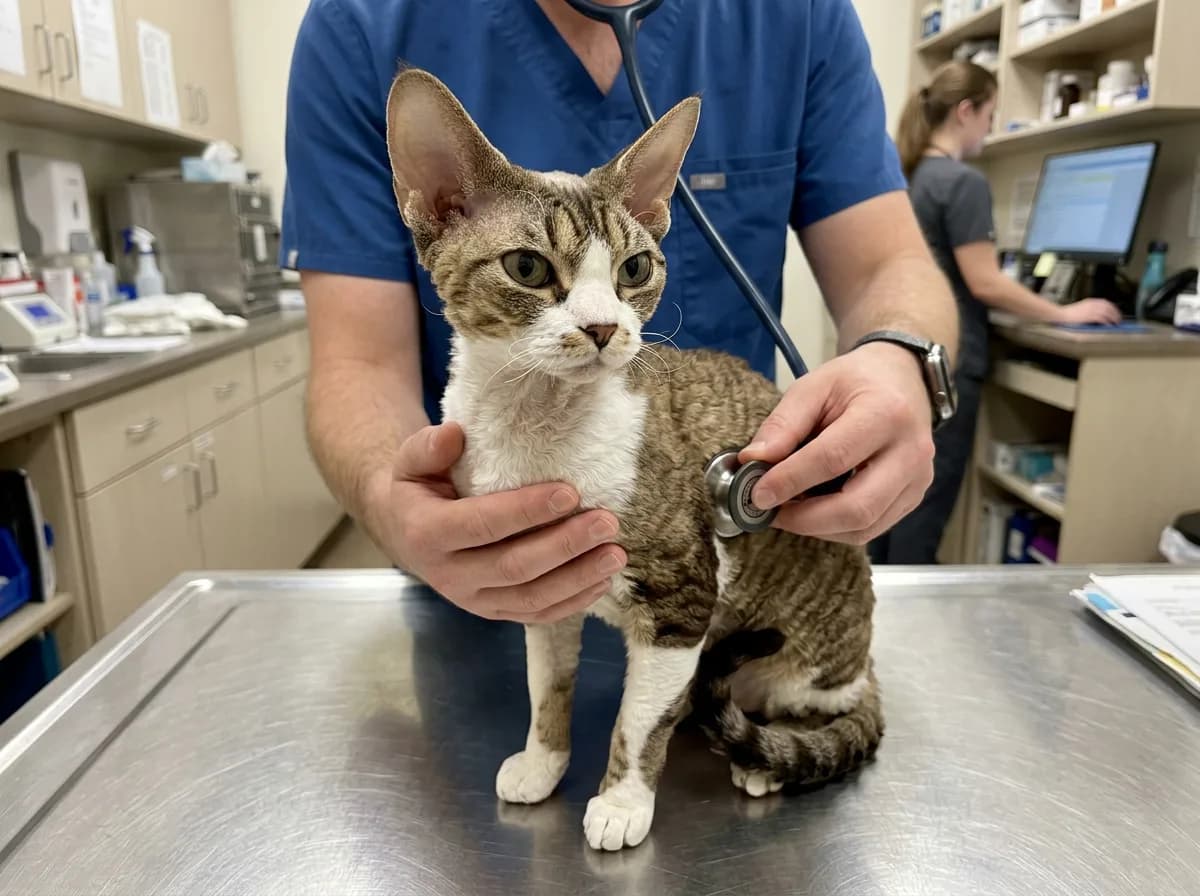
What makes HCM so dangerous is how quietly it progresses. Many affected cats look completely healthy right up until they collapse, develop sudden breathing difficulty, or suffer a painful clot (often a saddle thrombus that paralyzes the hind legs). That silent course is exactly why HCM earns its reputation as a leading cause of unexpected death in otherwise young cats.
- One of the easiest home checks for heart trouble is counting your sleeping cat's breaths per minute. A consistently resting rate above 30 breaths per minute warrants a same-week vet visit, as it can be an early sign of fluid building up from heart disease.
Devon Rex Myopathy (Spasticity) and Hereditary Conditions
Devon Rex myopathy is the breed's signature inherited disorder, and it is poorly explained on most websites, so it deserves a proper look. Historically called Devon Rex "spasticity" or muscular dystrophy, it is now understood to be a congenital myasthenic syndrome (CMS): a defect in how nerve signals reach the muscles. Research published in PubMed and used by the UC Davis Veterinary Genetics Laboratory traced it to a variant in the COLQ gene, shared by the Devon Rex and the Sphynx.
It is inherited in an autosomal recessive pattern, meaning a cat needs two copies of the variant (one from each parent) to be affected. According to UC Davis and the EveryCat Health Foundation, signs usually appear between 3 and 23 weeks of age: generalized muscle weakness, a head and neck that droop downward (passive ventroflexion), tiring quickly, and sometimes a hunched "dog-begging" or chipmunk posture. The condition typically progresses until around 9 months of age and then stabilizes.
Here is the encouraging part for lifespan. Per the published literature, affected cats with attentive supportive care can live a normal life span, though they will have lifelong episodes of weakness and fatigue and may need help managing swallowing and exertion. The far bigger lifespan win is prevention: because a DNA test exists for the COLQ variant, responsible breeders can test parents and avoid producing affected kittens entirely.
| Condition | What It Affects | Screening or Test Available |
|---|---|---|
| Hypertrophic cardiomyopathy (HCM) | Heart muscle | Periodic echocardiogram (no breed DNA test) |
| Devon Rex myopathy (CMS) | Nerve-to-muscle signaling | COLQ DNA test |
| Patellar luxation | Kneecap stability | Vet orthopedic exam |
| Hip dysplasia | Hip joint formation | Vet exam and X-ray |
| Polycystic kidney disease (PKD) | Kidneys | PKD DNA test and ultrasound |
If you are choosing a kitten, knowing which of these the parents were screened for matters enormously. Our guide to Devon Rex kittens walks through what a healthy, well-socialized litter should look like.
Joint, Skin, and Eye Conditions in the Devon Rex
Beyond the heart and muscle disorders, the Devon Rex is prone to several structural and surface conditions that, while rarely fatal on their own, affect comfort and can shorten a cat's active years if ignored.
Patellar Luxation and Hip Dysplasia
Patellar luxation, where the kneecap slips out of its groove, is reported in the breed. Mild cases cause an occasional skip in the gait; severe cases lock the kneecap out of place and may need surgical correction. Hip dysplasia, a malformed hip joint, also appears more often in the Devon Rex than in random-bred cats and ranges from barely noticeable to arthritis-inducing. Both are diagnosed on a veterinary orthopedic exam, sometimes with X-rays.

63-inch multi-level cat tree with scratch posts, hammock, plush perches, and dangling toys. Vertical territory is non-negotiable for high-energy climbing breeds like the Bengal.
Petful may earn a commission when you click through to Chewy, at no extra cost to you.
Skin and Coat Issues
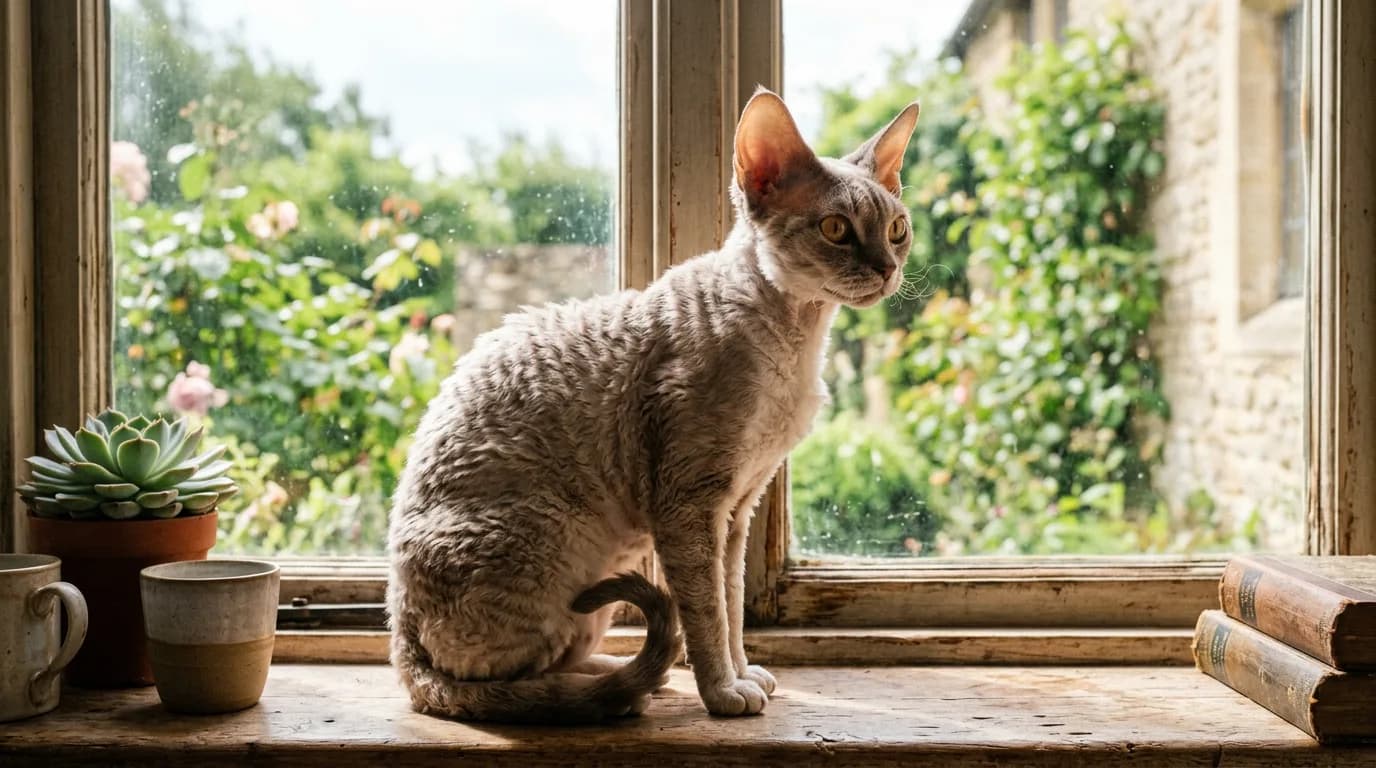
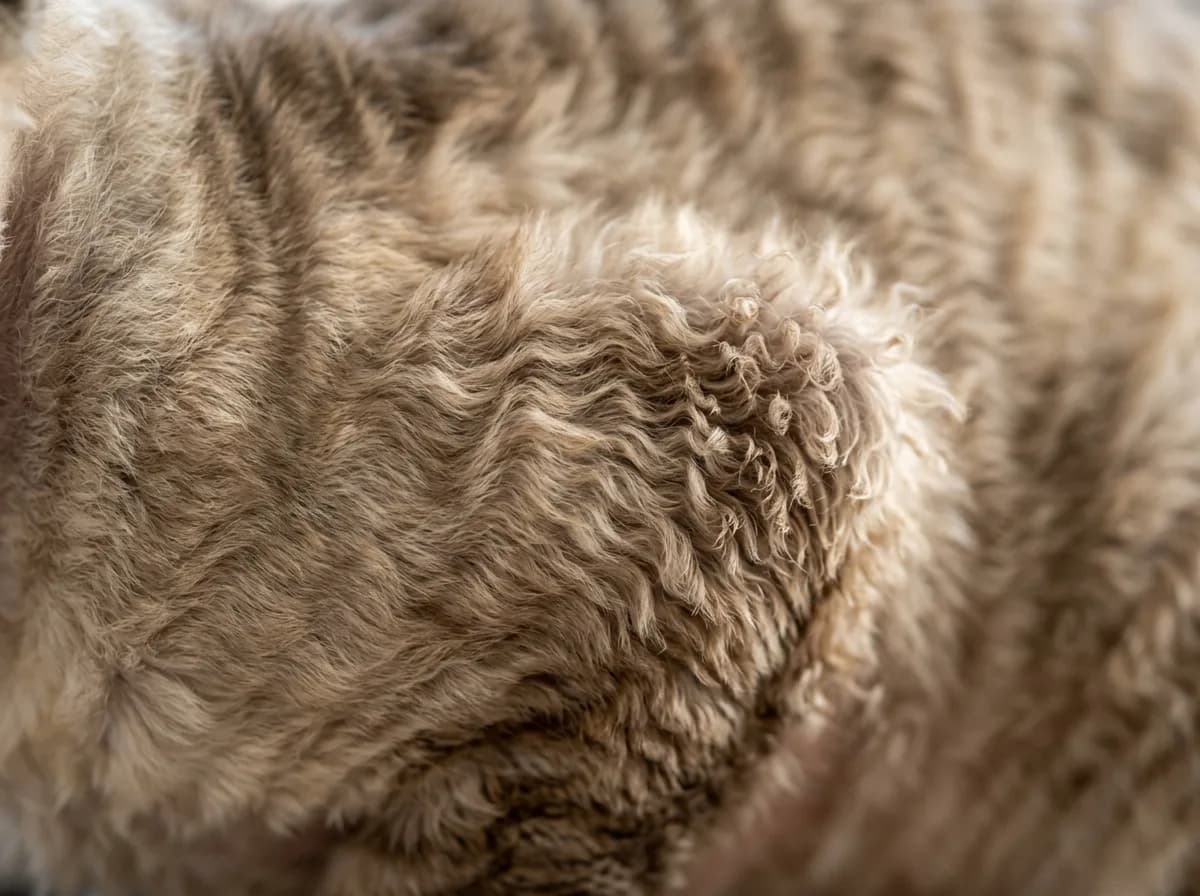
The same genetics that give the Devon Rex its short, soft, wavy suede coat also make that coat sparse and, in places, near-bald on the belly, head, and ears. The breed is prone to congenital hypotrichosis (patchy hair loss) and to greasy skin and waxy ear buildup, often linked to Malassezia yeast. This is why regular, gentle bathing is part of normal Devon Rex care rather than an occasional luxury.
Polycystic Kidney Disease and Eye Conditions
Polycystic kidney disease (PKD), in which fluid-filled cysts replace healthy kidney tissue, can occur and is detectable with a DNA test and ultrasound. Corneal ulcers also feature in insurer claims for the breed. None of these is a death sentence, but each is a reason to keep up with routine exams.
- Because the Devon Rex coat is thin and offers little insulation, these cats chill easily. Cold stress is a genuine welfare and health concern, so provide warm bedding, heated pads, and a draft-free home, especially for kittens and seniors.
Devon Rex Life Stages: What to Watch at Each Age
Lifespan is not just a final number; it is the sum of well-managed life stages. Knowing what to prioritize at each age helps you catch problems in the window where intervention works best.
| Life Stage | Age | What to Prioritize |
|---|---|---|
| Kitten | 0 to 1 year | Vaccinations, early myopathy and heart screening, neutering, warm housing |
| Young adult | 1 to 6 years | Baseline echocardiogram, dental care, lean body weight, annual exams |
| Mature adult | 7 to 10 years | Bloodwork for kidney and thyroid, weight and joint monitoring |
| Senior | 11+ years | Twice-yearly vet visits, blood pressure checks, comfort and warmth |
In the kitten stage, the priorities are protective: complete the vaccine series, confirm the breeder's genetic screening, and start monitoring for any early signs of muscle weakness. Young adulthood is the right time to establish a baseline heart screen so any future change is easy to spot. From the mature years onward, the emphasis shifts to catching the slow-burn diseases (kidney disease, hyperthyroidism, heart change) before they cause symptoms.
SponsoredVet care that's always there
Unlimited video calls and messaging with licensed vets for less than a typical vet visit. One membership covers up to five pets.
Use code Pets30
Plans start at $11/month · covers up to 5 pets
- Licensed vets in most states
- Rx for 150+ conditions
- 4.7 on Trustpilot
How to Help Your Devon Rex Live Longer
This is the section that actually moves the needle on the lifespan of Devon Rex cats, because most longevity gains come from daily choices, not luck. Here is what I recommend to owners who want to maximize healthy years.
- Keep your cat indoors. Indoor cats avoid traffic, predators, fights, and infectious disease, and they consistently outlive outdoor cats by years. For a thin-coated breed that chills easily, indoor life is also simply more comfortable.
- Maintain a lean body weight. Obesity is the single most common preventable health problem in cats and drives diabetes, arthritis, and heart strain. Measure meals and skip the free-feeding.
- Feed a complete, life-stage-appropriate diet. Choose a food labeled as meeting AAFP and AAFCO nutritional standards for your cat's age, and keep fresh water available.
- Stay on a veterinary schedule. Annual exams for adults and twice-yearly exams for seniors catch HCM, kidney disease, and dental disease early, when they are most treatable.
- Prioritize dental and enrichment care. Dental disease feeds chronic inflammation, and this intensely active breed needs daily play to stay fit and mentally well.
The Devon Rex is famously athletic and people-focused, the original "monkey in a catsuit," so channeling that energy into daily play is genuinely good medicine.
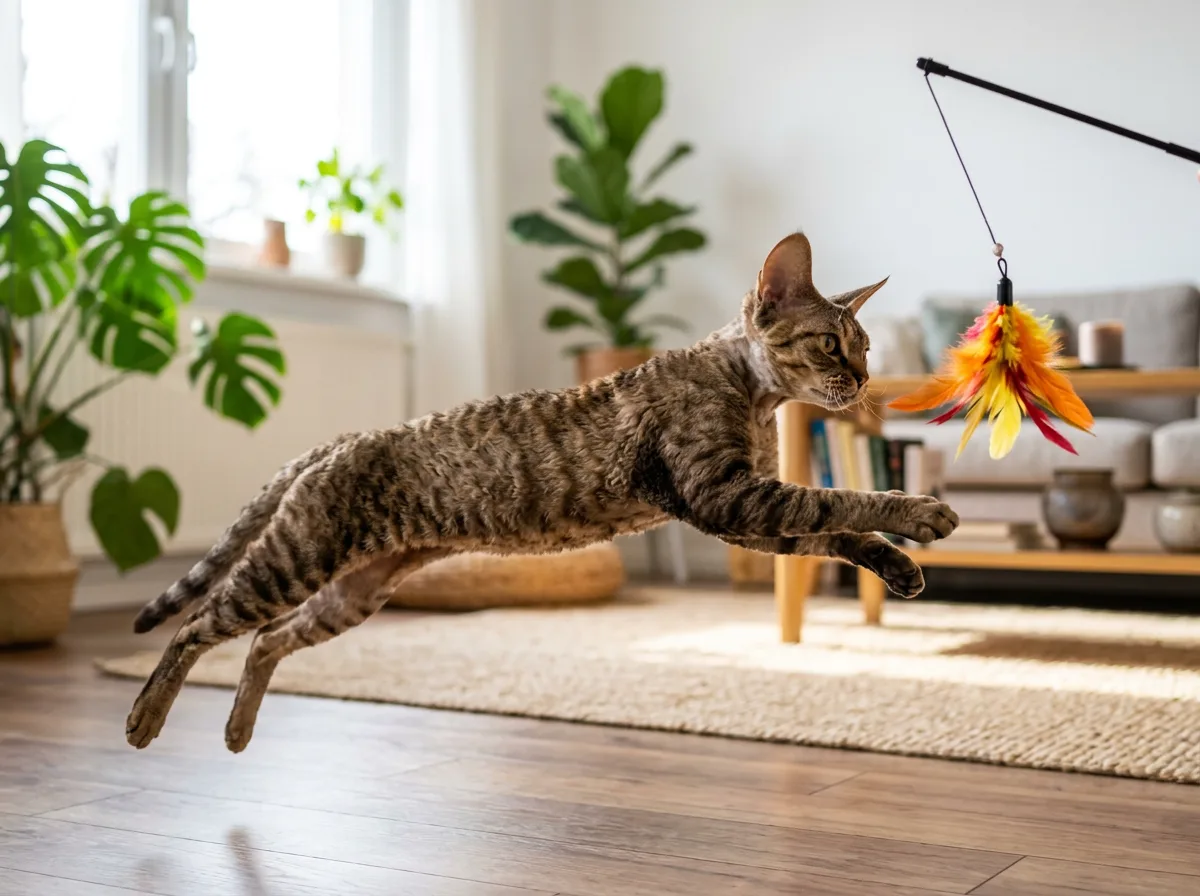
- Studies in cats consistently link a lean body condition to a longer, healthier life. If you cannot easily feel your Devon Rex's ribs under that thin coat, talk to your vet about a structured weight plan.
The breed's clingy, interactive nature is part of what makes them such rewarding pets. If that personality is what drew you in, our deep dive on Devon Rex personality covers how to keep these social cats happy and stimulated.

Walnut shell clumping cat litter that excels at odor control, lasts up to 3x longer than clay, and is a top pick for multi-cat households.
Petful may earn a commission when you click through to Chewy, at no extra cost to you.
Genetic Testing and Choosing a Responsible Breeder
Because so many of the breed's lifespan-limiting conditions are inherited, the choices a breeder makes before a kitten is even born matter more than almost anything you do afterward. A responsible Devon Rex breeder screens their breeding cats and shares the results openly. Here is the checklist I give prospective owners.
- HCM screening: ask for evidence of periodic echocardiograms on the parent cats by a board-certified cardiologist, not just a general vet listen.
- Devon Rex myopathy (COLQ) DNA test: confirm both parents were tested so two carriers were never bred together.
- PKD DNA panel: a simple test that should be standard.
- Patellar and hip assessment: ask whether the parents have had an orthopedic check.
- Health guarantee and records: a serious breeder provides written health records, a contract, and a willingness to take a cat back.
Walk away from any seller who cannot answer these questions, dodges health records, or pushes "cats for sale near me" volume over screening. Paying more upfront for a tested kitten routinely saves years of heartbreak and veterinary cost. For color-specific lines, our Devon Rex colors guide can help you set realistic expectations from a breeder.
- Devon Rex cats do turn up in breed-specific rescues. An adopted adult means an unknown genetic history, so budget for a thorough initial vet workup, including a heart screen.
Devon Rex vs Cornish Rex: Lifespan and Health Compared
Owners often compare these two curly-coated breeds, and it is worth being precise, because they are genuinely different cats. The Devon Rex and Cornish Rex coats are governed by separate recessive genes (the Devon's is tied to the KRT71 gene), and crossing the two does not "fix" either coat. Physically, the Devon Rex has larger, lower-set ears, a coarser and sparser rexed coat, and short, curled, sometimes brittle whiskers, while the Cornish Rex has a finer, even "marcel wave" coat with no guard hairs.
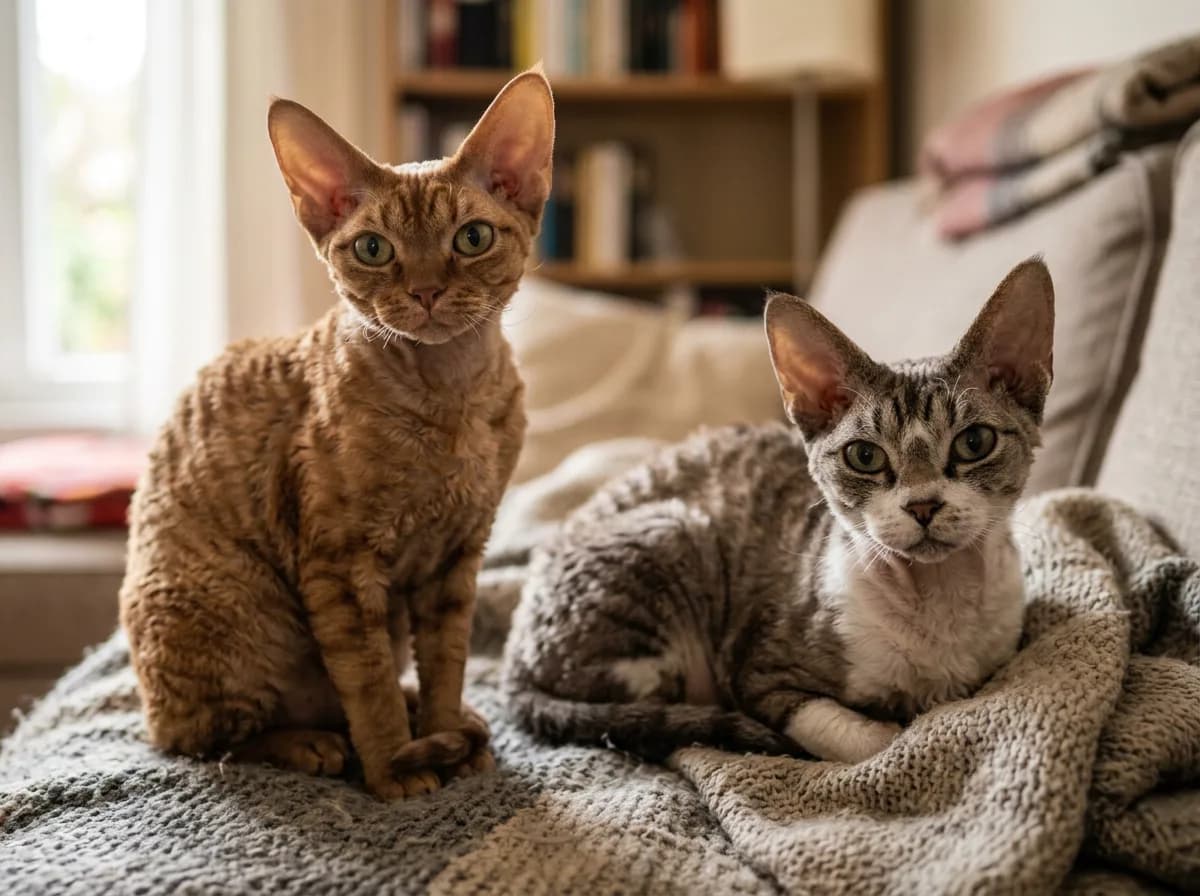
On lifespan, the two are broadly similar, and comparing them with the Sphynx and the domestic shorthair puts the Devon Rex in helpful perspective.
| Breed | Typical Lifespan | Notable Shared Health Risks |
|---|---|---|
| Devon Rex | 9 to 15 years | HCM, Devon Rex myopathy, patellar luxation |
| Cornish Rex | 11 to 15 years | Patellar luxation, heart disease, hereditary baldness |
| Sphynx | 8 to 15 years | HCM, the same COLQ myopathy, skin issues |
| Domestic shorthair | 13 to 17 years | Fewer concentrated inherited risks |
For more detail on the cousins, see our profiles on the Cornish Rex cat and the related Sphynx cat lifespan, which shares the Devon's COLQ myopathy. If you are weighing several short-statured or unusual breeds, the Munchkin cat lifespan guide is another useful comparison.

108-oz stainless steel pet fountain with quiet pump and water-level window. Bengals are notoriously water-obsessed; a flowing fountain encourages hydration and pulls them away from sinks and toilets.
Petful may earn a commission when you click through to Chewy, at no extra cost to you.
A quick note on allergies, since it comes up constantly with this breed: the Devon Rex is not truly hypoallergenic. Every cat, including this one, produces the Fel d1 allergen in skin and saliva. What the breed does have going for it is a sparse, low-shedding coat that can spread less dander around the home, which is why some (not all) allergy sufferers tolerate a Devon Rex better. Our Devon Rex hypoallergenic explainer covers how to test your own reaction before committing.
Senior Devon Rex Care and Knowing When It's Time
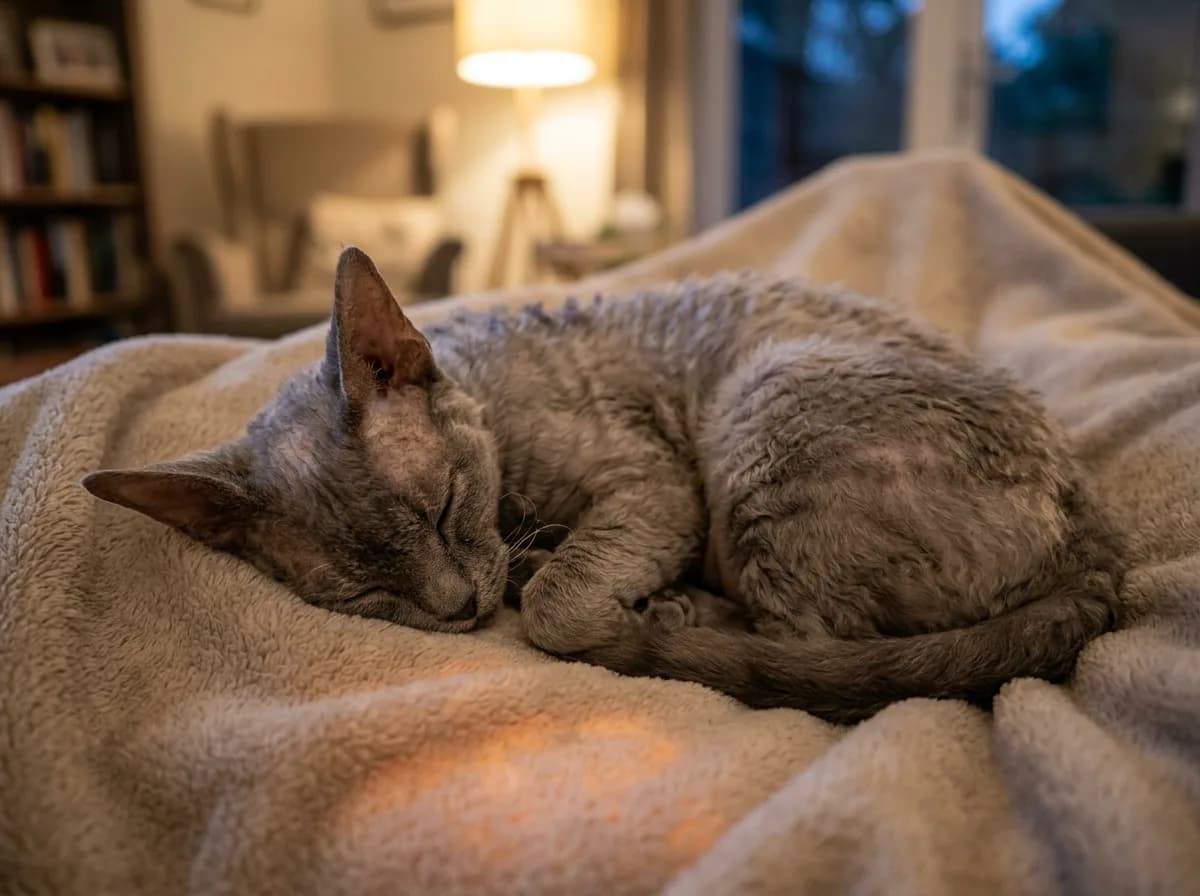
A Devon Rex entering its senior years (around 11 and up) needs a shift in care, and this is where thoughtful owners add quality years. Move to twice-yearly veterinary visits with bloodwork and blood pressure checks, because the diseases that end most cats' lives (chronic kidney disease, hyperthyroidism, heart disease, and cancer) creep in quietly during this stage. Keep senior cats warm, since the thin coat offers even less protection as muscle mass declines, and make food, water, and litter easy to reach.
The hardest part of sharing life with any cat is the end of it. As a vet, my guidance is to focus on quality of life rather than quantity alone. Reliable warning signs that a cat is struggling include refusing food for more than a day or two, hiding, labored breathing, an inability to use the litter box, and a clear loss of interest in the people and play they once loved. Quality-of-life scales (your vet can provide one) help turn an emotional decision into a structured, honest assessment. Choosing a peaceful, well-timed goodbye over prolonged suffering is itself an act of love, and your veterinary team is there to guide you through it.
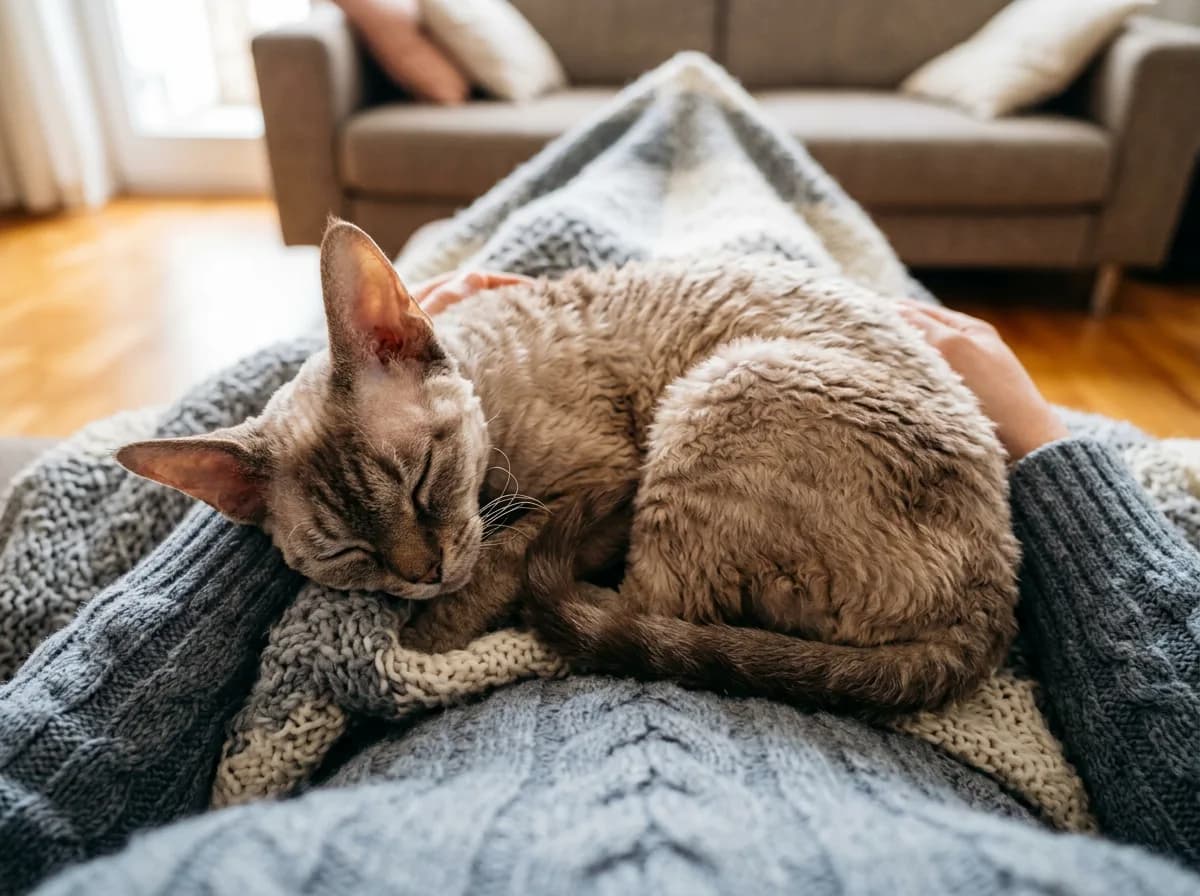
- Jotting down good days versus bad days gives you an objective trend instead of relying on memory. When bad days clearly outnumber good ones, it is time for a frank conversation with your vet.
Frequently Asked Questions About Devon Rex Lifespan
Devon Rex cats typically live 9 to 15 years, and well cared for individuals with good genetics often reach 14, 15, or beyond, with exceptional cats living to 18 to 20. Indoor living, a lean weight, and routine veterinary care are the biggest factors in reaching the upper end.
Yes, the Devon Rex is prone to several inherited conditions, most notably hypertrophic cardiomyopathy (HCM), Devon Rex myopathy (a COLQ-related muscle disorder), patellar luxation, and hip dysplasia, plus skin and eye issues. Most are manageable when screened for and caught early.
The most serious breed-specific threat is hypertrophic cardiomyopathy, which can cause sudden heart failure or blood clots. In older cats, chronic kidney disease, hyperthyroidism, and cancer (including lymphoma) are common end-of-life conditions, as they are in cats generally.
Very. The Devon Rex is one of the most people-oriented cat breeds, often described as dog-like or a velcro cat. They follow their owners, perch on shoulders, and want to be involved in everything, which is part of their charm but means they need company and interaction.
A Devon Rex can be left alone for a normal workday, but this is a highly social breed that does poorly with long, frequent isolation. If you are away often, provide enrichment, consider a second compatible pet, and keep absences as short as practical.
In some ways yes. They are not high-grooming in the brushing sense, but the greasy, sparse coat needs regular gentle bathing and ear cleaning, they get cold easily and need warmth, and their intense need for attention and play makes them more demanding of your time than an average cat.
Many Devon Rex cats benefit from a gentle bath every few weeks, because their sparse coat does not absorb skin oils well and they can develop greasy skin and waxy ears. Frequency varies by individual, so follow your vet's advice and watch your cat's skin.
Hypertrophic cardiomyopathy is often called a silent killer because affected cats can appear completely healthy until they suddenly develop heart failure or a clot. Chronic kidney disease earns the same label, as it progresses for years before obvious symptoms appear. Both are highly relevant to the higher-HCM-risk Devon Rex.
Breeding Devon Rex cats absolutely should be DNA tested, especially for the COLQ myopathy variant and PKD, and heart-screened by echocardiogram. For a pet Devon Rex, testing is not required, but knowing the parents were tested is one of the best predictors of a long, healthy life.
Devon Rex cats should be kept indoors. Their thin coat leaves them vulnerable to cold, and like all cats they live significantly longer indoors, away from traffic, predators, and disease. An indoor lifestyle is one of the strongest levers for reaching the top of the lifespan range.
There is no formally verified record for the oldest Devon Rex specifically, but individuals reaching 18 to 20 years are documented by owners and breeders. These are outliers that combine strong genetics, indoor living, lean body weight, and consistent veterinary care.
BVMS, MRCVS
Dr. Pippa Elliott, BVMS, MRCVS, is a veterinarian with nearly 30 years of experience in companion animal practice. Dr. Elliott earned her Bachelor of Veterinary Medicine and Surgery from the University of Glasgow. She was also designated a Member of the Royal College of Veterinary Surgeons. Married with 2 grown-up kids, Dr. Elliott has a naughty Puggle named Poggle, 3 cats and a bearded dragon.
Sign up for expert-backed reviews and safety alerts all in one place.