Devon Rex Price in 2026: Kitten, Vet, and Lifetime Cost Guide
A Devon Rex kitten costs roughly $1,800 to $5,000 from a breeder, or $300 to $600 to adopt. Here is the full price breakdown: setup, monthly care, vet bills, and the real first-year and lifetime cost of owning one.
Petful is reader supported. As an affiliate of platforms like Amazon and Chewy, we may earn a commission when you buy through links on this page. There is no extra cost to you.
The Devon Rex price in 2026 typically runs about $1,800 to $5,000 for a kitten from a reputable breeder, according to current pricing tracked across breed clubs registered with TICA and the CFA, with adoption costing far less at roughly $300 to $600. This is a breed first recorded in 1960 in Buckfastleigh, Devon, England, from a single curly kitten named Kirlee, and its rarity is a big reason the sticker price sits well above the average house cat. Below you will find honest, date-stamped numbers for the purchase price, one-time setup, monthly care, breed-specific health costs, and a true first-year and lifetime total so you know exactly what you are signing up for before you bring one home.
- 1A Devon Rex kitten costs about $1,800 to $5,000 from a reputable breeder; show or pedigree lines can reach $5,000 and beyond
- 2Adoption through a rescue or shelter runs roughly $300 to $600 and usually includes spay/neuter and vaccines
- 3Plan on $250 to $800 for one-time setup supplies and about $60 to $240 per month for ongoing care
- 4First-year cost typically lands between $2,500 and $6,500, with a 12-15 year lifetime cost commonly $15,000 to $30,000

Sign up for expert-backed reviews and safety alerts all in one place.
Devon Rex Price at a Glance: What You'll Actually Pay
If you want the short answer to "how much is a Devon Rex cat," here it is: most buyers pay between $1,800 and $5,000 for a kitten from a registered breeder in 2026. The Devon Rex cat price swings within that range based on pedigree, color, breeder reputation, and your region. Adoption is the budget route at $300 to $600, but Devon Rex cats rarely show up in shelters because the breed is uncommon.
The table below sets expectations for the Devon Rex price across the most common buying paths. These are 2026 ranges and should be treated as estimates, not fixed quotes, since breeder pricing shifts with demand and litter availability.
| Source | Typical Price Range | What It Usually Includes |
|---|---|---|
| Pet-quality breeder kitten | $1,800 - $3,000 | Vaccines, deworming, vet check, registration papers, spay/neuter |
| Show or breeding-quality kitten | $3,000 - $5,000+ | Pedigree lines, health screening, breeding rights (sometimes) |
| Rescue or breed-specific adoption | $300 - $600 | Spay/neuter, vaccines, microchip, vet exam |
| Older or "rehomed" adult | $200 - $800 | Varies widely; ask for vet records |
- A pet-quality Devon Rex from a small hobby breeder can cost a third of what a show-line kitten from a champion bloodline costs, even in the same city. Always ask what the price includes before comparing.
A quick note on terminology: "pet quality" does not mean a lesser cat. It means the kitten is not intended for the show ring or a breeding program, usually because of a minor cosmetic detail like coat density or color placement that has nothing to do with health or personality. For more on the breed itself, see our full Devon Rex breed guide.
How Much Does a Devon Rex Cost from a Breeder?
When people ask "how much do Devon Rex cats cost" from a breeder, the honest 2026 answer is $1,800 to $5,000, and occasionally higher for elite show lines. The Devon Rex kitten price reflects real costs the breeder absorbs long before the kitten goes home: genetic health testing, queen and stud care, vaccinations, deworming, early socialization, and registration with TICA or the CFA.
A responsible breeder typically prices a Devon Rex cost to cover:

Never Scoop Again® with the Whisker Litter-Robot, the smart self-cleaning automatic litter box. Monitor visits and track weights for better overall care in the Whisker® app. Multi-cat friendly.
Petful may earn a commission when you click through to Whisker, at no extra cost to you.
- Two to three rounds of core kitten vaccinations
- Deworming and a parasite-free guarantee
- A veterinary wellness exam before pickup
- Microchipping
- Spay or neuter (many breeders now spay/neuter before the kitten leaves)
- Registration papers and a written health guarantee
- Reputable Devon Rex breeders commonly take a deposit of $200 to $500 to hold a kitten, with the balance due at pickup. Be cautious of any seller demanding the full Devon Rex price up front by wire transfer or gift card.
Geography matters too. Devon Rex prices tend to run highest in major metro areas on the US coasts and lowest in the Midwest and South, simply because of breeder density and local demand. If you are flexible on location, a short drive or a reputable kitten-transport service can save you several hundred dollars. Expect ground transport to cost roughly $1 to $1.50 per mile, or $150 to $500 for cabin-accompanied air nanny services.
Devon Rex Adoption and Rescue Costs
The lowest cost of a Devon Rex cat comes through adoption. A Devon Rex adoption fee typically runs $300 to $600 through a breed-specific rescue, and sometimes less through a general shelter. That fee almost always bundles in spay/neuter, core vaccines, a microchip, and a vet exam, services that would cost $300 to $500 if you paid for them separately, so the real value is strong.
The catch is supply. The Devon Rex is a relatively rare breed, so purebred Devons are uncommon in shelters. Your best routes are:
- Breed-specific rescues such as Specialty Purebred Cat Rescue and regional Rex rescue networks
- Petfinder and Adopt-a-Pet breed filters with email alerts turned on
- Breeders themselves, who often rehome retired adults at a modest fee
Adoption suits buyers who care more about the cat than the kitten stage and who want a lower cost of a Devon Rex cat with the feel-good factor of giving an adult a home. If your heart is set on a kitten, a breeder is the realistic path.
Why Are Devon Rex Cats So Expensive?
So why are Devon Rex cats so expensive compared to a mixed-breed cat from a shelter? It comes down to four things: rarity, genetics, breeding cost, and demand.
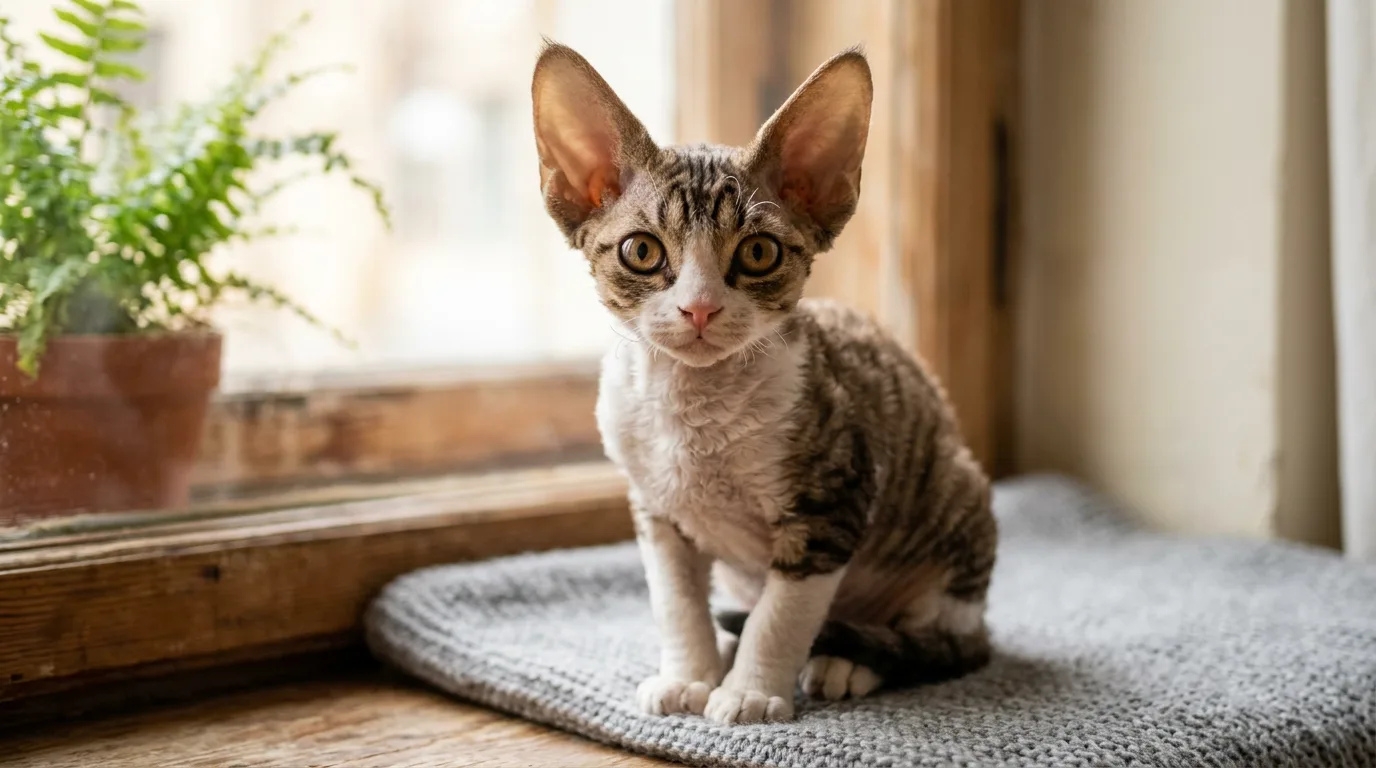
First, rarity. The entire breed traces back to one curly kitten, Kirlee, found in Devon, England, in 1960. The Devon Rex coat is governed by a recessive gene tied to the KRT71 gene, and it is a different recessive gene than the one behind the Cornish Rex, which is why crossing the two does not "fix" the curl. That limited, carefully managed gene pool keeps the breed scarce.
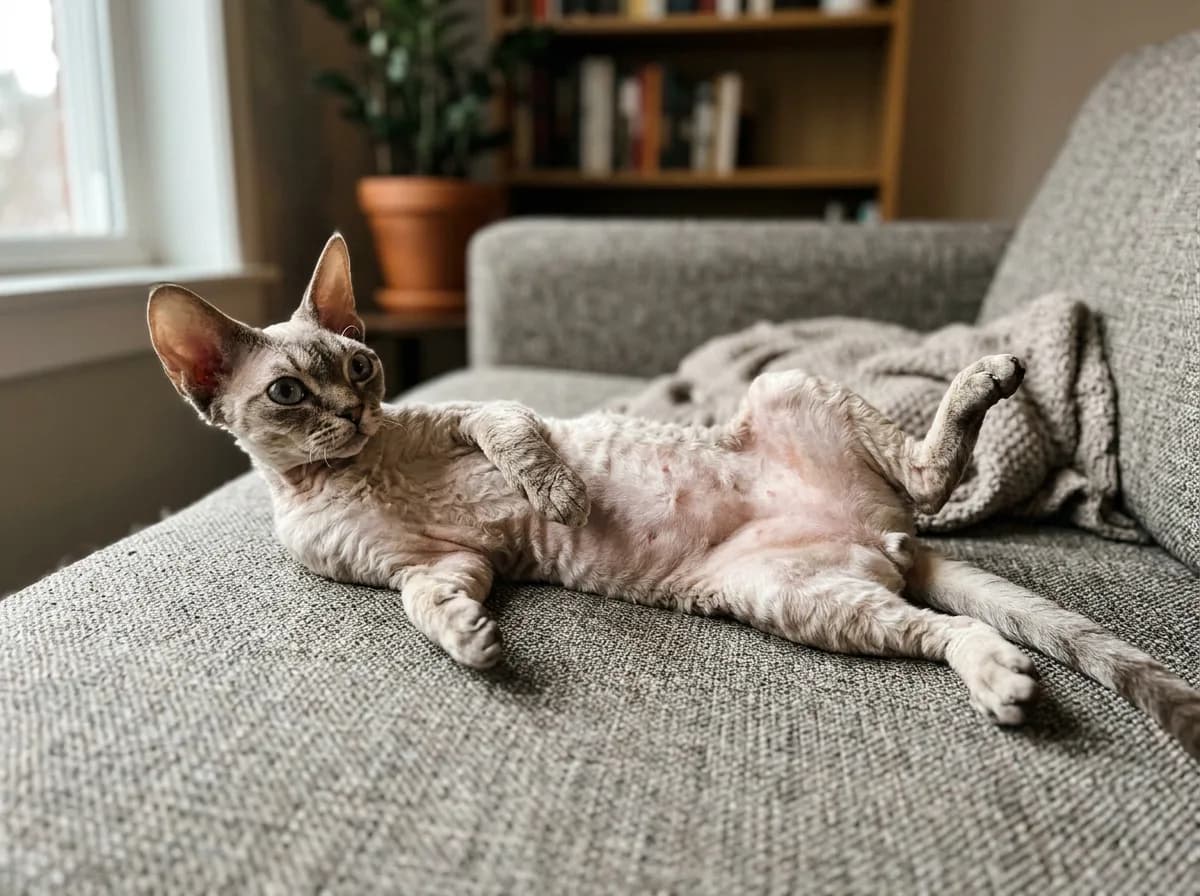
Second, breeding is expensive and risky. Queens have small litters, stud service and genetic screening cost money, and ethical breeders test for hereditary conditions before pairing cats. Third, demand is high relative to supply: the breed's "monkey in a catsuit" personality, those huge low-set ears, the pixie face, and the myth that it is allergy-friendly all drive waiting lists. Fourth, the hypoallergenic reputation inflates demand even though it is only partly true (more on that below), which pushes the Devon Rex price up further.
- A high Devon Rex price is only justified when it pays for genetic testing, veterinary care, and ethical breeding. A cheap "Devon Rex" with no papers and no health testing is the expensive option in the long run.
You can read how the breed's clingy, shoulder-perching temperament fuels that demand in our Devon Rex personality guide.
What Affects a Devon Rex Kitten's Price (Pedigree, Color, Breeder)
Two Devon Rex kittens from the same region can carry very different price tags. Here is what moves the Devon Rex kitten price up or down.
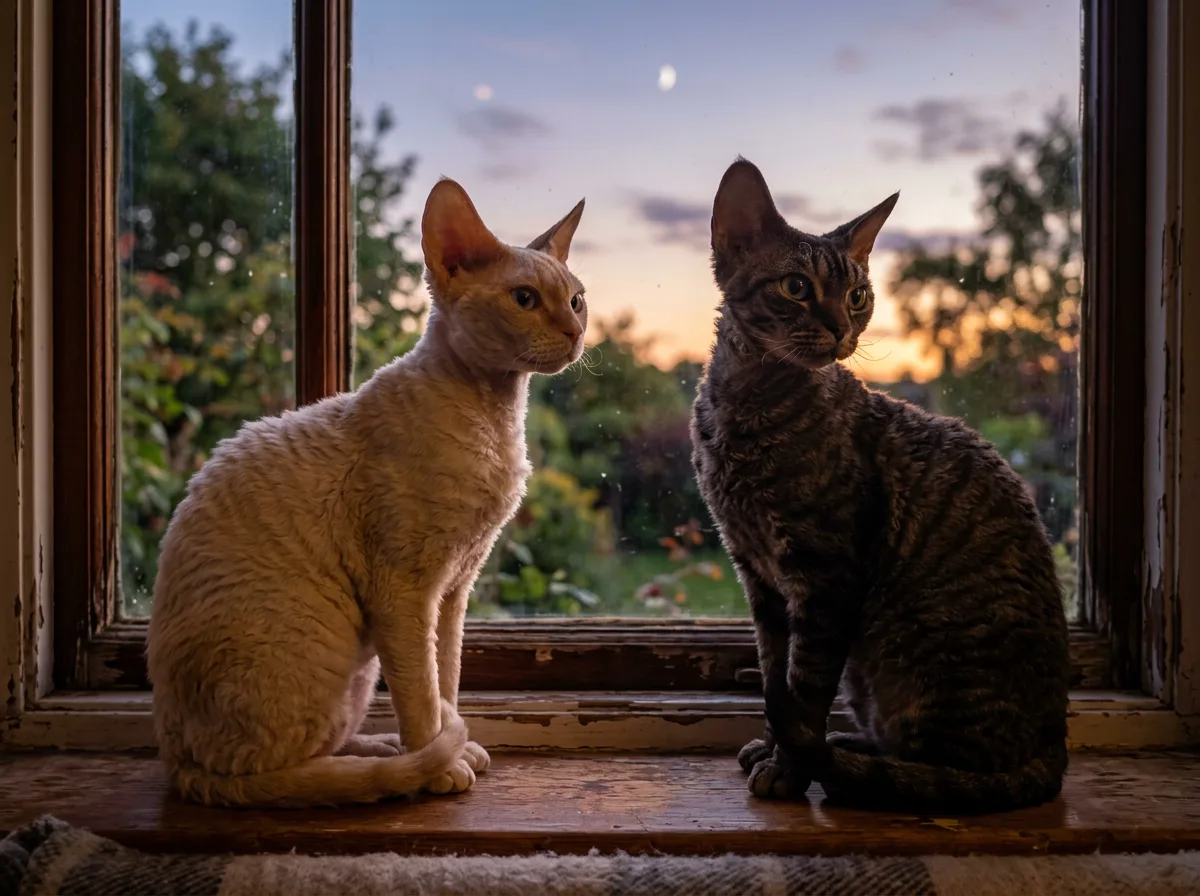
- Pedigree and lineage. Kittens from champion show bloodlines command the top of the range, often $3,000 to $5,000 or more.
- Coat color and pattern. Rare or in-demand colors and patterns can add a premium. Common colors sit at the base of the Devon Rex cat price. See our Devon Rex colors breakdown for what is rare and what is standard.
- Breeder reputation and registration. TICA and CFA registered breeders who health-test and socialize their litters charge more, and the premium is worth it.
- Age. Kittens cost the most; adolescents and retired adults cost less.
- Breeding rights. Pet-quality kittens are priced lower than kittens sold with breeding rights.
- Region and demand. Coastal metros and long waiting lists push prices up.
| Factor | Lower Price | Higher Price |
|---|---|---|
| Pedigree | Pet quality, no titles | Champion show lines |
| Color | Common color/pattern | Rare or in-demand color |
| Registration | Limited or none | TICA/CFA registered, health-tested |
| Age | Adolescent or adult | Young kitten |
| Rights | Pet only (spay/neuter) | Breeding rights included |
If you are specifically shopping for a young kitten, our Devon Rex kittens page covers what to expect at each stage.

63-inch multi-level cat tree with scratch posts, hammock, plush perches, and dangling toys. Vertical territory is non-negotiable for high-energy climbing breeds like the Bengal.
Petful may earn a commission when you click through to Chewy, at no extra cost to you.
One-Time Costs: Supplies and Setup
The purchase price is just the entry fee. Plan on $250 to $800 in one-time setup costs to bring your Devon Rex home ready and comfortable. The Devon Rex is active, intelligent, and athletic, so enrichment is not optional, it is part of the setup.
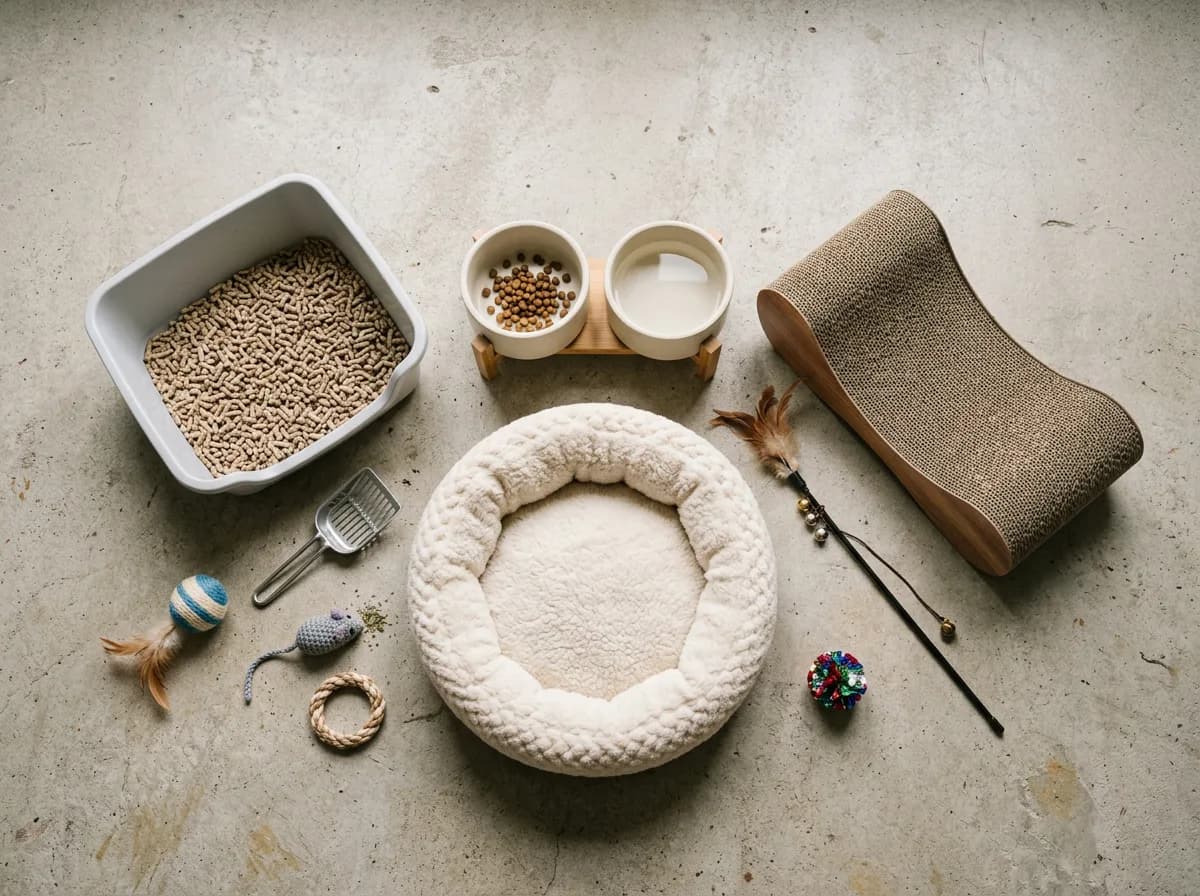
| Item | Budget | Premium |
|---|---|---|
| Litter box (covered or self-cleaning) | $20 | $200+ |
| Cat tree or climbing tower | $40 | $250 |
| Carrier | $25 | $80 |
| Bowls (food and water) | $15 | $60 |
| Bed or heated bed | $20 | $90 |
| Scratchers and toys | $30 | $120 |
| Initial vet visit and microchip (if not done) | $50 | $150 |
- Because the Devon Rex has a short, sparse coat and gets cold easily, a heated bed or a cozy covered hideaway is one of the smartest setup buys for this specific breed.
A tall cat tree earns its keep with this breed. Devons climb, leap, and perch, so vertical space cuts down on furniture damage and keeps a high-energy cat busy while you are out.
Monthly Cost of Owning a Devon Rex
Once your cat is home, plan on roughly $60 to $240 per month to cover the cost of a Devon Rex cat on an ongoing basis. The wide range reflects choices: premium versus standard food, self-cleaning versus basic litter, and whether you pay for pet insurance or cat-sitting.
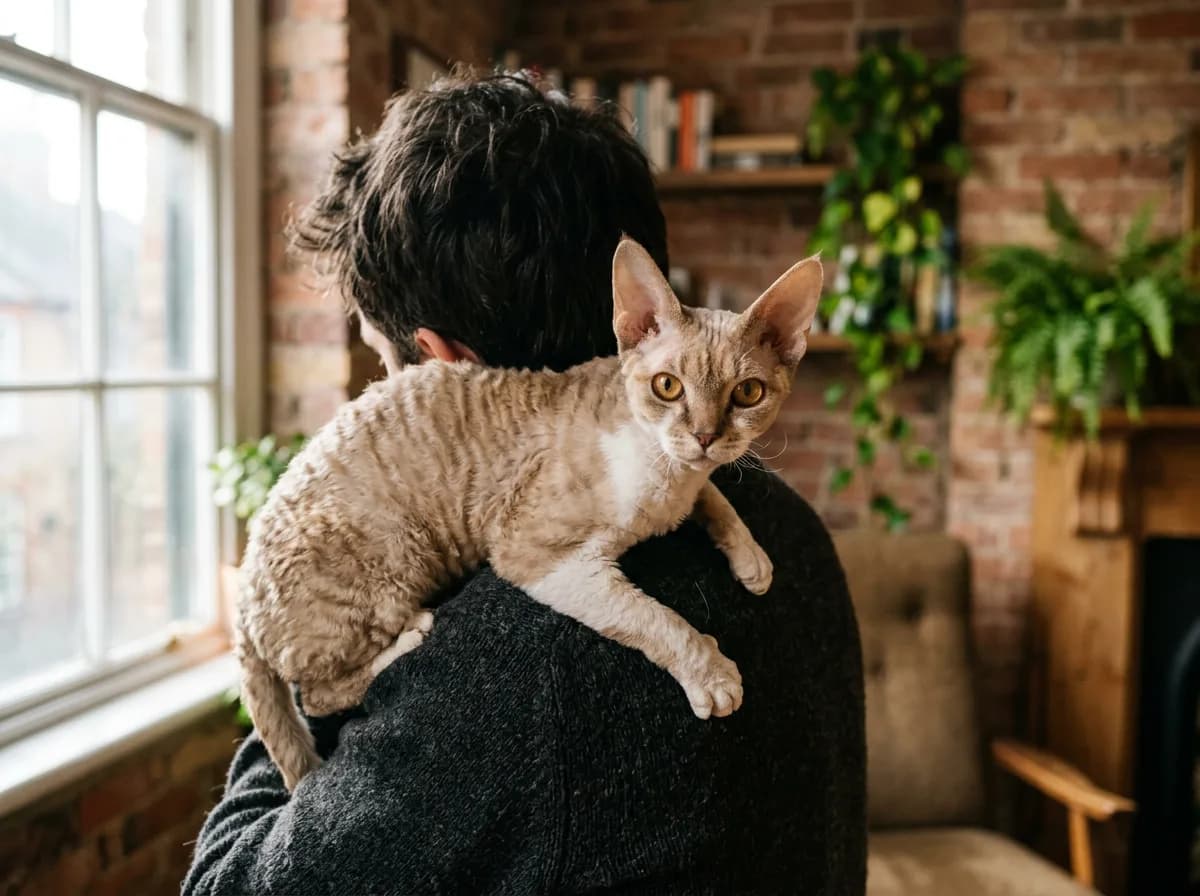
| Expense | Monthly Low | Monthly High |
|---|---|---|
| Food (quality cat food) | $25 | $70 |
| Litter | $15 | $40 |
| Routine health (amortized vet/preventives) | $10 | $50 |
| Pet insurance | $15 | $50 |
| Grooming supplies (wipes, ear cleaner, gentle shampoo) | $5 | $20 |
| Toys, treats, enrichment | $5 | $20 |
| Sitting or boarding (amortized) | $0 | $50 |
The Devon Rex is famously food-motivated, so portion control matters: this is a breed that will happily overeat. Grooming costs are low in the brushing sense (the coat is too delicate for heavy brushing) but you will spend a little on gentle bathing supplies and ear cleaner, because Devons are prone to greasy skin and waxy ear buildup that needs regular gentle cleaning.
Devon Rex Health Issues and Their Cost Impact
Health is where the Devon Rex cost can spike unexpectedly, so it pays to know the breed-specific conditions and budget for them. The Devon Rex is generally healthy, but it carries a handful of hereditary risks documented by veterinary sources. Pricing them out is exactly what most competitor cost guides skip.
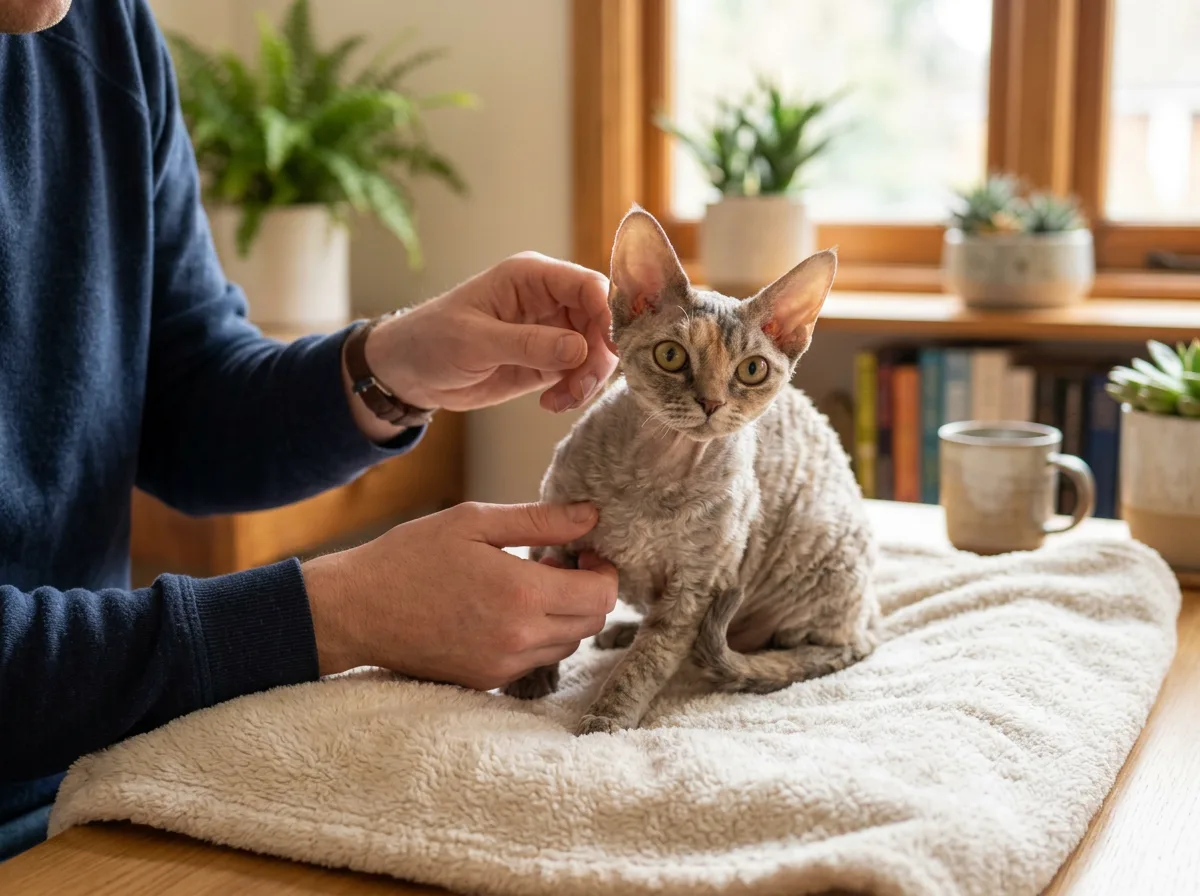
- Hypertrophic cardiomyopathy (HCM). The most common feline heart disease. Diagnosis (echocardiogram) runs $400 to $800; ongoing medication and monitoring can add $300 to $1,000+ per year.
- Patellar luxation. A kneecap that slips out of place. Mild cases are managed; surgical correction can cost $1,500 to $3,000 per knee.
- Hip dysplasia. Less common, but management or surgery can run from a few hundred dollars to several thousand.
- Devon Rex myopathy (hereditary myopathy / spasticity). A congenital muscle condition causing weakness; there is no cure, and lifelong supportive care adds cost.
- Congenital hypotrichosis. A hair-loss condition linked to the breed's sparse coat.
- Malassezia and greasy-skin / ear issues. Routine medicated baths and ear cleaning, plus occasional vet visits for flare-ups, $100 to $400 a year.
- Buying from a breeder who screens for HCM and avoids known myopathy carriers reduces, though it cannot eliminate, your risk of a five-figure health bill later. The higher upfront Devon Rex price can be the cheaper choice over a 15-year life.
A solid pet insurance policy ($15 to $50 a month) is a sensible hedge for this breed precisely because of HCM and patellar luxation. Buy it while the cat is young and healthy, before anything becomes a pre-existing condition. None of this is veterinary advice; talk to your own vet about screening and prevention.
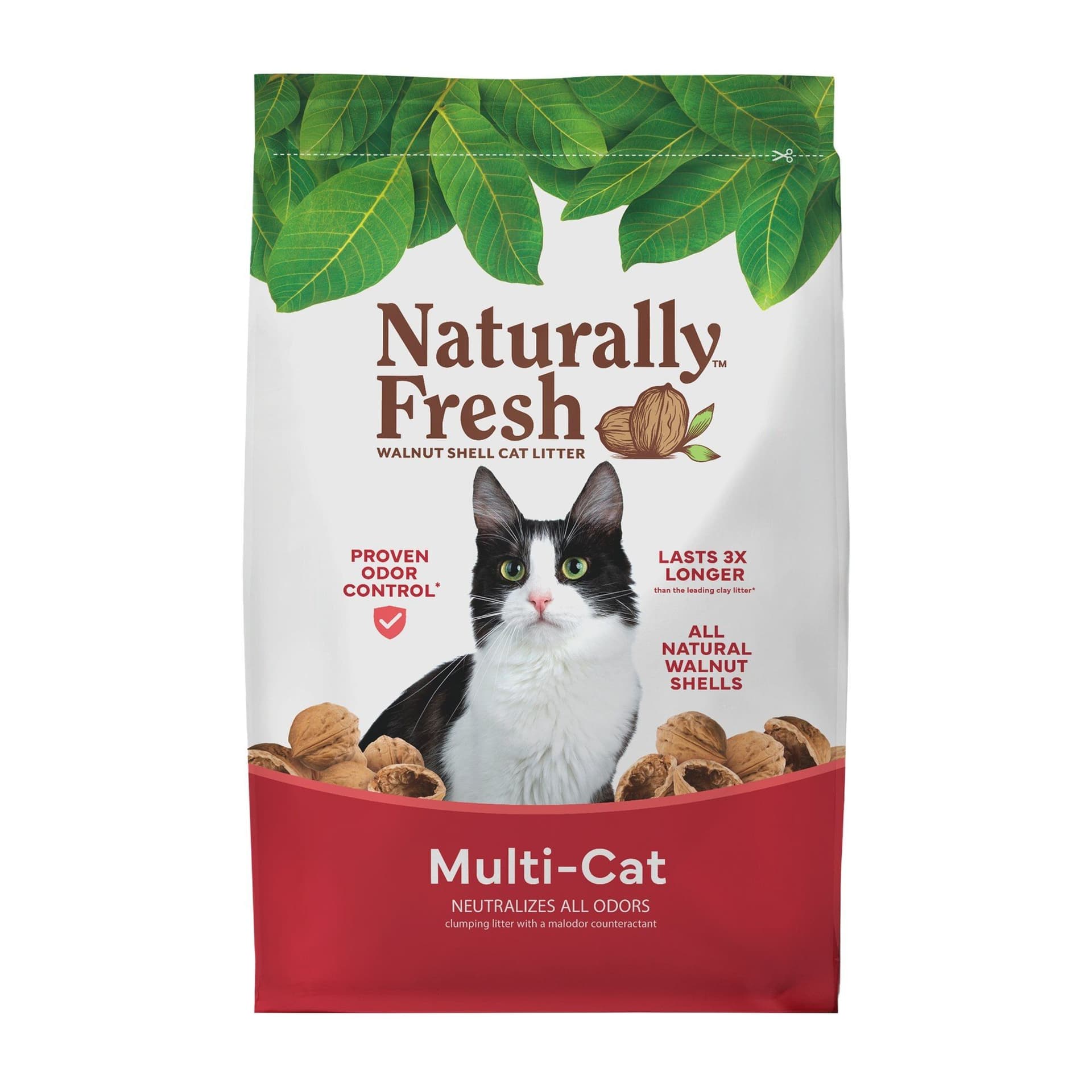
Walnut shell clumping cat litter that excels at odor control, lasts up to 3x longer than clay, and is a top pick for multi-cat households.
Petful may earn a commission when you click through to Chewy, at no extra cost to you.
Lifetime Cost of a Devon Rex (First Year and Beyond)
Here is the number almost no competitor totals: the true cost of a Devon Rex cat over its life. The Devon Rex lifespan is roughly 9 to 15 years, and well-cared-for cats often reach 14 to 15 or beyond, so you are budgeting for well over a decade. For more on longevity, see our Devon Rex lifespan guide.
| Cost Bucket | First Year | Lifetime (12-15 yrs) |
|---|---|---|
| Purchase or adoption | $300 - $5,000 | one-time |
| One-time setup supplies | $250 - $800 | replaced periodically |
| Food and litter | $480 - $1,320 | $6,000 - $18,000 |
| Routine vet and preventives | $200 - $600 | $3,000 - $8,000 |
| Pet insurance | $180 - $600 | $2,500 - $8,000 |
| Unexpected health (breed-specific) | $0 - $2,000 | $2,000 - $10,000 |
| Estimated total | $2,500 - $6,500 | $15,000 - $30,000+ |
- Over a 12-15 year life, the kitten price is often less than 15 to 25 percent of what you will spend. The lifetime cost of care dwarfs the sticker. Plan for the whole journey, not just the day you bring the cat home.
Treat these as planning ranges, not guarantees. Your real number depends on your city, your food and insurance choices, and your cat's health luck.
How to Save Money on a Devon Rex (Without Cutting Corners)
You can lower the Devon Rex cost without gambling on a sick cat or supporting a backyard operation. The trick is to save on the right things.
- Adopt or take a retired adult. The single biggest saving, $300 to $600 versus $1,800 to $5,000.
- Be flexible on color and pedigree. A common-color pet-quality kitten costs far less than a rare-color show line.
- Be flexible on location. Skipping a long-distance, in-demand breeder can save hundreds even after transport.
- Buy insurance early. A small monthly premium beats a surprise $3,000 surgery bill.
- Buy quality food and litter in bulk. Subscribe-and-save on staples trims the monthly cost of a Devon Rex cat.
- Invest in good setup once. A durable cat tree and scratchers protect your furniture, cheaper than replacing a sofa.
- Never save money by skipping breeder health testing or buying a no-papers "bargain Devon." The cheapest kitten is frequently the most expensive cat once hereditary health problems surface.
How to Spot a Reputable Devon Rex Breeder (and Avoid Scams)
Because the SERP for the Devon Rex kitten price is crowded with marketplace listings and scams, vetting your breeder is the most valuable thing you can do. A trustworthy breeder will gladly meet these standards.

108-oz stainless steel pet fountain with quiet pump and water-level window. Bengals are notoriously water-obsessed; a flowing fountain encourages hydration and pulls them away from sinks and toilets.
Petful may earn a commission when you click through to Chewy, at no extra cost to you.
Green flags to look for:
- Registered with TICA or the CFA and willing to show paperwork
- Health-tests breeding cats for HCM and screens for hereditary conditions
- Lets you visit (or video-call) to see the kittens with their mother
- Provides a written health guarantee and a contract
- Asks you questions, and has a waiting list rather than always-available kittens
- Sends the kitten home at 12 weeks or older, vaccinated and vet-checked
- Be very wary of any seller who demands full payment by wire, Zelle, or gift card; refuses a video call or visit; has unlimited kittens "ready now" at a too-good Devon Rex price; uses stolen photos; or cannot produce registration and vet records. If the deal feels rushed, it is a scam.
A few extra minutes of due diligence protects both your wallet and a living animal. Reputable breeders welcome scrutiny because it protects their kittens too.
Devon Rex Price vs Other Rex and Hairless Breeds
How does the Devon Rex price compare to its cousins? Buyers cross-shopping the curly and hairless breeds often want to know if the Devon is the better value. The table below stacks the Devon Rex cat price against the breeds it is most often compared with.
| Breed | Typical Breeder Price | Coat / Notable Trait |
|---|---|---|
| Devon Rex | $1,800 - $5,000 | Short, sparse, wavy rexed coat; huge low-set ears; curled whiskers |
| Cornish Rex | $1,000 - $2,500 | Finer "marcel wave" coat, no guard hairs, smaller ears |
| Sphynx | $2,000 - $6,000 | Hairless; high grooming/skincare needs |
| Munchkin | $1,000 - $3,000 | Short legs; otherwise standard coat |
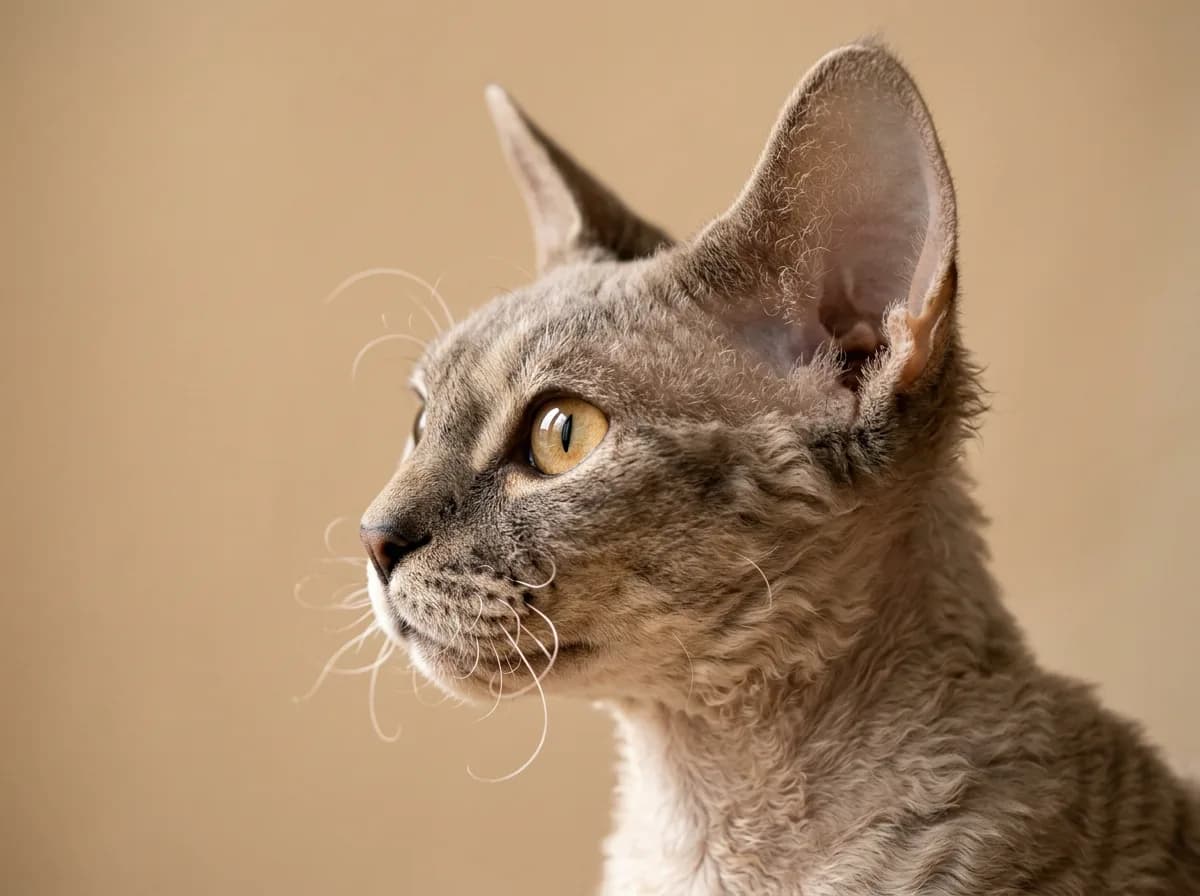
The Devon Rex and the Cornish Rex are easy to mix up but they are distinct: the Devon has larger, lower-set ears and a coarser, sparser coat with curled, brittle whiskers, while the Cornish has a finer, even coat and no guard hairs. They are governed by different recessive genes. For a deeper side-by-side, read our Cornish Rex vs Devon Rex comparison, our Cornish Rex price guide, the Sphynx cat price breakdown, and the Munchkin cat price guide.
- A Cornish Rex may cost less upfront, and a Sphynx may cost more, but ongoing skin, ear, and health care can flip the math. Compare lifetime cost, not just the kitten price.
Frequently Asked Questions
Devon Rex cats are expensive because the breed is rare (the entire line traces to one 1960 kitten named Kirlee), litters are small, ethical breeders pay for genetic health testing and registration, and demand outstrips supply, partly fueled by the breed's playful personality and its hypoallergenic reputation. A fair price reflects real breeding and veterinary costs, not just looks.
A Devon Rex cat costs about $1,800 to $5,000 as a kitten from a reputable breeder in 2026, with show or pedigree lines reaching the top of that range or higher. Adoption through a rescue runs roughly $300 to $600.
A Devon Rex kitten costs roughly $1,800 to $3,000 for pet quality and $3,000 to $5,000 or more for show or breeding-quality lines from a TICA or CFA registered breeder, usually including vaccines, deworming, a vet check, microchip, and often spay/neuter.
Yes, you can adopt a Devon Rex, though the breed is uncommon in shelters. Breed-specific rescue adoption fees typically run $300 to $600 and usually include spay/neuter, vaccines, a microchip, and a vet exam. Breeders also rehome retired adults for $200 to $800.
The Devon Rex lifespan is roughly 9 to 15 years, and well-cared-for cats often live to 14 or 15 and beyond with good nutrition, routine veterinary care, and a safe indoor home.
Three of the most expensive cat breeds are the Ashera and Savannah (often $10,000 to $25,000+), the Bengal (up to about $25,000 for top lines), and the Persian or Sphynx (up to about $5,000 to $6,000). The Devon Rex, at $1,800 to $5,000, is a premium breed but not among the priciest.
A Savannah cat, especially an early-generation F1 Savannah, can cost around $20,000, and some Bengal cats from elite bloodlines approach that figure. These prices reflect their wild-cat ancestry and difficult breeding, far above the Devon Rex price.
The Ashera, a controversial designer hybrid, was famously advertised at around $100,000 to $125,000, making it the cat most associated with that price. It is far more expensive than any Devon Rex.
No, Devon Rex cats are not truly hypoallergenic. They still produce the Fel d1 allergen that triggers reactions, so no cat is allergen-free. However, their short, sparse, low-shedding coat can spread less dander, so some allergy sufferers tolerate a Devon Rex better than other cats. Spend time with one before buying.
The first-year cost of owning a Devon Rex typically lands between $2,500 and $6,500, combining the $300 to $5,000 purchase or adoption fee, $250 to $800 in setup supplies, and ongoing food, litter, vet care, and insurance. After year one, plan on roughly $1,000 to $2,500 per year.
For the full picture on whether this breed fits an allergy-prone household, see our dedicated Devon Rex hypoallergenic guide.

Coreen Saito is a pet writer and longtime shelter volunteer with more than a decade in animal rescue. She covers cat behavior, breed care, and the small, ordinary science of sharing a life with companion animals, with a particular focus on honest takes about the products and decisions that actually matter. At home in Arizona, she's outranked by Mac (a dog with the loudest opinion in the house), Rebel (a cat who governs by quiet authority), and Meri (an orange tabby who runs the late shift and the laundry basket). She writes about all three, plus the rescues that keep coming through her life, at LifeWithMinty.com.
Sign up for expert-backed reviews and safety alerts all in one place.