Siamese Cat Personality: Traits, Temperament, and Behavior
The Siamese cat personality is famously vocal, social, intelligent, and deeply affectionate, with a velcro-like attachment to its people. This guide covers the breed's defining traits, behavior challenges, and whether it fits your home.
Petful is reader supported. As an affiliate of platforms like Amazon and Chewy, we may earn a commission when you buy through links on this page. There is no extra cost to you.
The Siamese cat personality is famously vocal, intensely social, highly intelligent, and deeply affectionate, which is exactly why this ancient breed has been one of the most beloved companion cats for centuries. A Siamese will talk to you throughout the day, follow you from room to room, demand to be part of whatever you are doing, and bond so closely that many owners describe them as more dog-like than cat-like. They are clever enough to learn tricks, open doors, and solve puzzles, and they crave constant interaction in a way few other breeds do. That same loyalty and need for engagement makes the Siamese cat personality both wonderfully rewarding and genuinely demanding. Understanding how these cats think, communicate, and behave helps you decide whether this chatty, velcro-like companion is the right fit for your home. For full breed background, see our Siamese cat breed profile.
- 1Siamese cats are among the most vocal and conversational of all breeds
- 2They are intensely social "velcro cats" that bond hard and dislike being alone
- 3High intelligence means they need enrichment or they get bored and destructive
- 4They are affectionate, loyal, and often form a strong attachment to one person
- 5The breed does best with company, whether a person at home or a second cat

Sign up for expert-backed reviews and safety alerts all in one place.
What Is the Siamese Cat Personality Like?
The Siamese cat personality is best summed up by five defining traits: vocal, social, intelligent, affectionate, and demanding. No single trait tells the whole story, but together they explain why Siamese owners are some of the most devoted in the cat world.

Compare coverage choices for your pet, then request a quote directly on Lemonade.
- Check a price for your pet
- Review available coverage choices
- See the terms before you decide
Eligibility, waiting periods, limits and exclusions apply.
Petful may earn a commission when you click through to Lemonade, at no extra cost to you.
Where many cats are content to nap alone for most of the day, the Siamese wants to be involved in everything. They will supervise your cooking, sit on your keyboard while you work, comment loudly on your comings and goings, and curl up against you the moment you sit down. They are emotionally expressive, sensitive to your mood, and quick to let you know when they want attention, food, or play.
This is not a low-maintenance, set-and-forget cat. The Siamese rewards the time you put in with extraordinary affection and personality, but it expects that time in return. Owners who travel constantly or are out of the house twelve hours a day may find a Siamese unhappy and acting out. Owners who want a true companion that interacts with them all day long rarely look back.
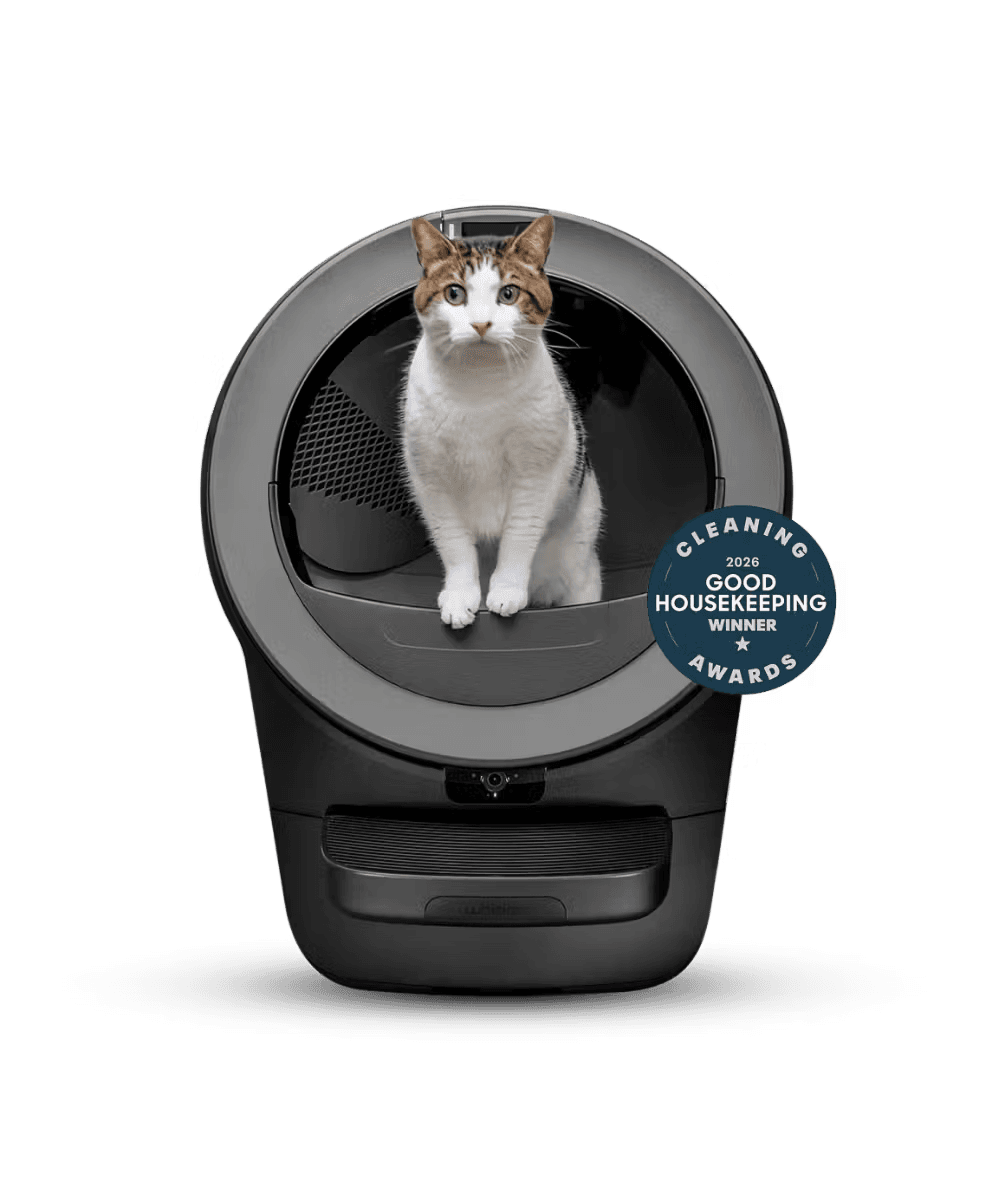
Never Scoop Again® with the Whisker Litter-Robot, the smart self-cleaning automatic litter box. Monitor visits and track weights for better overall care in the Whisker® app. Multi-cat friendly.
Petful may earn a commission when you click through to Whisker, at no extra cost to you.
Vocal and Talkative
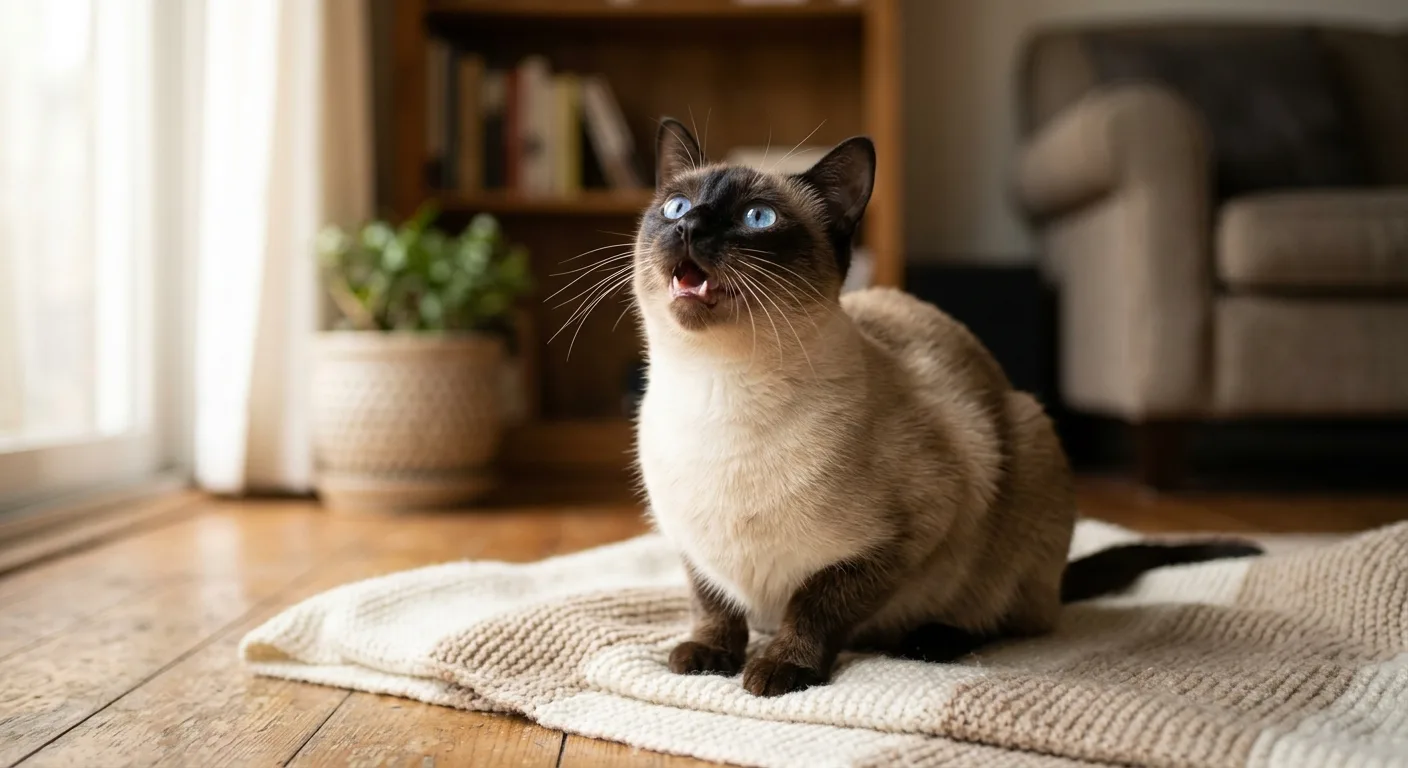
If there is one trait every prospective owner should understand, it is the Siamese voice. This breed is among the most vocal of all domestic cats, and its meow is unmistakable: loud, low-pitched, and often compared to the cry of a human infant. Siamese do not just meow, they hold genuine back-and-forth conversations, answering when you speak and initiating chatter on their own.
A Siamese will vocalize to greet you at the door, to ask for food, to protest a closed door, to demand play, or simply to comment on the day. Many owners learn to recognize distinct sounds for different requests. This constant dialogue is one of the breed's most endearing features for the right person, and one of its biggest dealbreakers for someone who wants a quiet cat.
The talkativeness is rooted in how socially wired the breed is. The Siamese sees you as a conversation partner and uses its voice to stay connected to you. Suppressing it is neither possible nor kind. The better approach is to engage: answer back, give attention when the request is reasonable, and make sure the cat has enough stimulation that it is not vocalizing purely out of boredom or loneliness.
- The Siamese is one of the "oriental" breeds bred over centuries for close human companionship, and selective breeding reinforced its talkative, people-focused nature. The signature low, insistent meow is the breed communicating with the human it considers part of its social group, not a sign that anything is wrong.
Social and People-Oriented
The Siamese is the textbook "velcro cat." It bonds hard, attaches to its humans with remarkable intensity, and wants to be physically near you as much as possible. Where an aloof breed might tolerate affection on its own schedule, the Siamese seeks it out, following you from room to room and inserting itself into every activity.
This deep sociability has a flip side: Siamese cats genuinely dislike being alone. Left without company for long stretches, they can become anxious, depressed, or destructive. The breed is one of the more prone to separation anxiety, which can show up as excessive vocalizing, over-grooming, inappropriate elimination, or frantic greeting behavior when you return.
The single best way to meet this need is companionship. Many Siamese thrive in pairs, and a second cat (often another Siamese or an equally social breed) gives them a playmate when the humans are out. If a second pet is not an option, the household needs to be one where someone is home often, and the cat should have plenty of enrichment to occupy the hours alone.
- Because Siamese cats are so social and prone to loneliness, many breeders and rescues recommend adopting a bonded pair or adding a second cat. A companion keeps a Siamese mentally and emotionally satisfied during the hours you cannot be there, and two Siamese together are endlessly entertaining.
Intelligent and Active
The Siamese is one of the smartest cat breeds, and that intelligence shapes everything about its behavior. These cats are natural problem-solvers: they learn to open cabinets and doors, figure out puzzle feeders quickly, and remember routines well enough to anticipate them. Many can be trained to walk on a harness, come when called, fetch a toy, and perform tricks that most people associate with dogs.
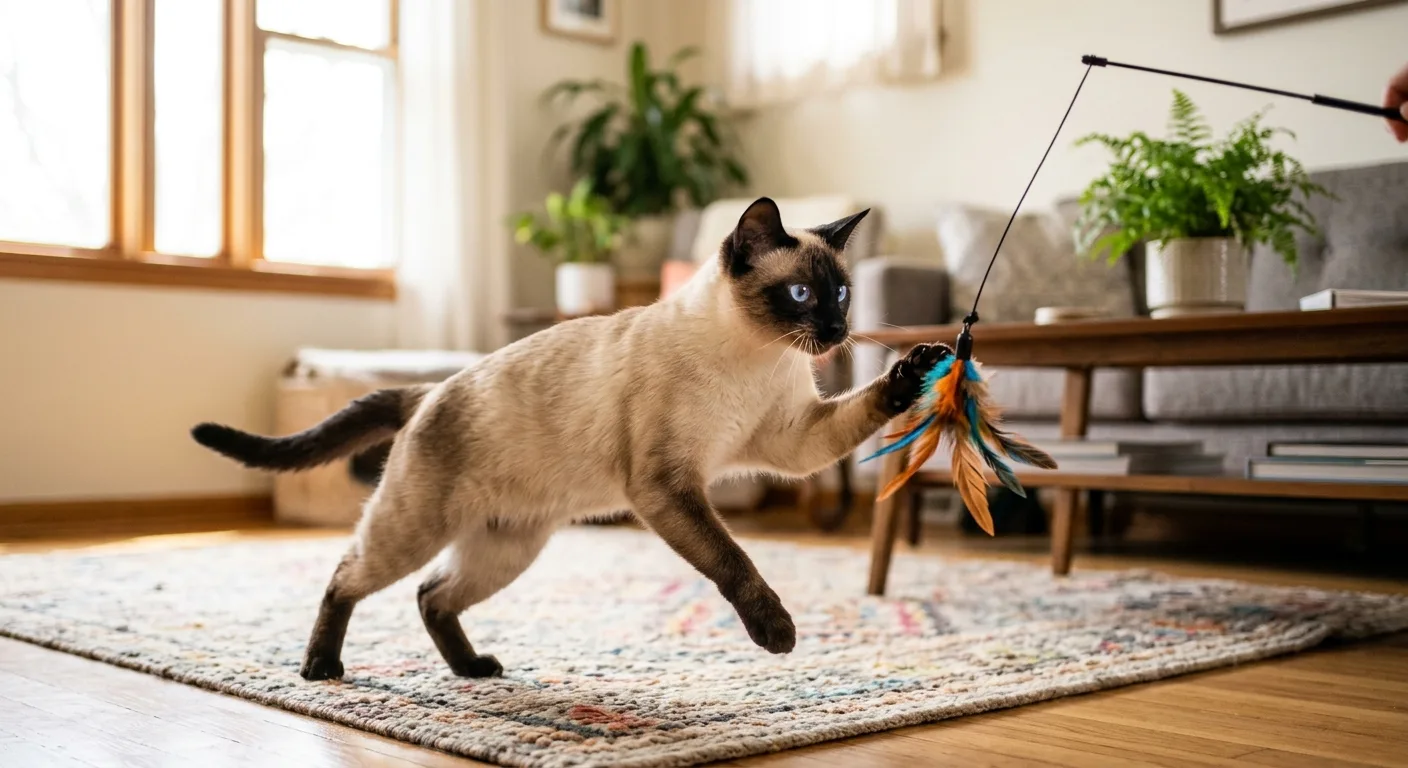
That sharp mind is a gift and a responsibility. A bored Siamese is a destructive Siamese. Without enough mental and physical stimulation, the breed will invent its own entertainment, which often means climbing curtains, knocking objects off shelves, getting into cupboards, and shredding things it should not. Behavior problems in Siamese cats are far more often a symptom of boredom than of a difficult temperament.
The solution is enrichment. Rotate interactive toys, provide puzzle feeders, set up tall cat trees and window perches, and schedule daily interactive play sessions with wand toys. Clicker training is especially well suited to the breed and channels that intelligence into a positive outlet. A Siamese given a job to do and a partner to do it with is a happy, well-behaved cat.

63-inch multi-level cat tree with scratch posts, hammock, plush perches, and dangling toys. Vertical territory is non-negotiable for high-energy climbing breeds like the Bengal.
Petful may earn a commission when you click through to Chewy, at no extra cost to you.
Affectionate and Loyal
Beneath the chatter and the cleverness, the Siamese is profoundly affectionate. This is a lap cat in the truest sense: it wants to be held, to sleep in your bed (usually under the covers and pressed against you), and to spend its downtime in physical contact with its favorite person. The breed is loyal to the point that owners often describe the bond as closer to a dog's devotion than a typical cat's independence.
Siamese cats frequently show a one-person tendency, forming an especially tight bond with a single member of the household while remaining friendly with everyone else. That chosen person is the one the cat seeks out for sleeping, the one it greets most enthusiastically, and the one it follows most closely. It does not mean the cat dislikes others, only that its deepest attachment lands on one human. Petful’s guide to cats attach to only one person has the full breakdown.
This loyalty is the payoff for everything the breed demands. In exchange for your time, attention, and conversation, a Siamese gives you a companion that is genuinely interested in you, attuned to your moods, and devoted in a way that surprises people who expected a standoffish cat.
Are Siamese Cats Good With Families, Kids, and Other Pets?
Yes, Siamese cats are generally excellent family pets, provided introductions are handled properly and the household can meet their need for interaction. Their playful, social nature makes them a natural fit for active homes, and their love of attention means they often gravitate toward the activity of a busy family.
With children, the Siamese is typically patient and playful, especially with kids old enough to engage in gentle, interactive play. The breed's tolerance has limits, as any cat's does, so children should be taught to respect the cat's space and to handle it gently. A Siamese that gets reciprocated attention from a child often becomes that child's closest companion.
With other pets, Siamese usually do well, and many actively prefer the company of another animal. They tend to get along with other cats, particularly equally social breeds, and a properly introduced second cat solves much of the breed's loneliness problem. Many Siamese also coexist happily with cat-friendly dogs. The key in every case is a slow, positive introduction so the resident and newcomer build a good first association. Because the breed is so people-oriented and craves company, the home that suits a Siamese best is rarely a quiet, empty one.

108-oz stainless steel pet fountain with quiet pump and water-level window. Bengals are notoriously water-obsessed; a flowing fountain encourages hydration and pulls them away from sinks and toilets.
Petful may earn a commission when you click through to Chewy, at no extra cost to you.
Common Siamese Behavior Challenges
No breed is perfect, and the same traits that make the Siamese so engaging can become challenges if they are not managed. Almost every Siamese behavior issue traces back to one of four things: the volume of vocalizing, the need for constant attention, a streak of jealousy, or sensitivity to change. The good news is that each is manageable once you understand what is driving it.
The table below lays out the most common challenges, what each one looks like in daily life, and how to handle it.
| Trait | What It Looks Like | How to Manage |
|---|---|---|
| Vocalness | Loud, frequent meowing, especially for food, attention, or at closed doors | Rule out hunger and health issues, reward quiet behavior, and provide enough play so it is not boredom-driven |
| Demanding attention | Following you constantly, interrupting work, pawing or vocalizing for interaction | Schedule daily dedicated play and lap time, use puzzle feeders, and consider a second cat for companionship |
| Jealousy | Pushing between you and a phone, laptop, partner, or another pet | Give consistent one-on-one attention, reward calm sharing, and avoid reinforcing the behavior with a reaction |
| Sensitivity to change | Stress from new homes, schedules, furniture, or people; may stop eating or hide | Introduce changes gradually, keep routines steady, and use familiar bedding and calming aids during transitions |
| Separation anxiety | Over-grooming, accidents, or frantic vocalizing when left alone | Provide enrichment, a companion animal, and gradual alone-time training; consult a vet if severe |
The pattern across all of these is consistent. A Siamese acts out when it is under-stimulated, lonely, or stressed by change, not because it is a badly behaved breed. Meet its social and mental needs, keep its routine stable, and most of these challenges shrink to manageable quirks.
- A normally chatty, social Siamese that becomes withdrawn, stops eating, over-grooms a patch of fur, or suddenly changes its litter box habits may be telling you something is medically wrong, not just acting out. Rule out a health problem with your veterinarian before treating a sudden shift as a behavior issue.
Is a Siamese Cat Right for You?
A Siamese is the right cat for you if you want a true companion that talks, follows, plays, and bonds with intensity, and if you have the time and household to give that back. The breed suits people who are home often, families with engaged children, multi-pet homes, and anyone who finds a vocal, interactive cat charming rather than exhausting. First-time owners can absolutely succeed with a Siamese as long as they go in understanding the commitment.
It is the wrong cat for you if you want a quiet, independent pet that entertains itself while you are away for long stretches. The Siamese voice does not turn off, the need for attention does not fade, and a Siamese left chronically alone is an unhappy and often destructive cat. If your lifestyle keeps you out of the house most of the day and a second pet is off the table, a more independent breed will be happier in your home, and you will be happier too.
For buyers weighing the breed, two practical reads round out the picture: our guide to Siamese cat colors covers the point patterns and what makes each one distinctive, and our breakdown of Siamese cat price walks through what a kitten costs and the first-year budget to expect. Match the breed's needs to your life honestly, and the Siamese personality becomes one of the most rewarding in the cat world.
Yes, Siamese cats are among the most affectionate of all breeds. They are true lap cats that want to be held, sleep in your bed pressed against you, and stay in physical contact with their favorite person. The breed is loyal to the point that owners often compare the bond to a dog's devotion rather than a typical cat's independence.
Siamese cats are so vocal because the breed was developed over centuries for close human companionship, which reinforced its talkative, people-focused nature. The signature low, insistent meow is how a Siamese stays connected to the human it considers part of its social group, asking for food, attention, play, or simply commenting on the day.
Yes, Siamese cats make excellent pets for the right home. They are social, playful, intelligent, and deeply bonded to their people, and they do well with children and other pets when introductions are handled properly. They are best suited to households where someone is home often or a second cat provides company, since the breed dislikes being alone.
Siamese cats often form an especially strong bond with one member of the household while staying friendly with everyone else. That chosen person is usually the one the cat sleeps with, greets most enthusiastically, and follows most closely. It does not mean the cat dislikes others, only that its deepest attachment tends to land on a single human.
Siamese cats are high maintenance in terms of attention and interaction, though not in grooming, since their short coat needs only weekly brushing. The breed demands daily play, conversation, and companionship, and it can become anxious or destructive if left alone too long. They are a high-engagement cat rather than a high-effort one to keep clean.
Your Siamese is family. Keep its microchip, pedigree, vaccination schedule, and vet records in one free digital profile with MyPetID so everything stays in one place.
Create a free pet record
Coreen Saito is a pet writer and longtime shelter volunteer with more than a decade in animal rescue. She covers cat behavior, breed care, and the small, ordinary science of sharing a life with companion animals, with a particular focus on honest takes about the products and decisions that actually matter. At home in Arizona, she's outranked by Mac (a dog with the loudest opinion in the house), Rebel (a cat who governs by quiet authority), and Meri (an orange tabby who runs the late shift and the laundry basket). She writes about all three, plus the rescues that keep coming through her life, at LifeWithMinty.com.
Sign up for expert-backed reviews and safety alerts all in one place.