Siamese Cat Colors: A Complete Guide to Every Point Pattern
Siamese cat colors range from the four traditional points (seal, chocolate, blue, lilac) to rare flame, lynx, and tortie points. This hub explains how the heat-sensitive pattern works and includes a full color chart to identify any Siamese.
Petful is reader supported. As an affiliate of platforms like Amazon and Chewy, we may earn a commission when you buy through links on this page. There is no extra cost to you.
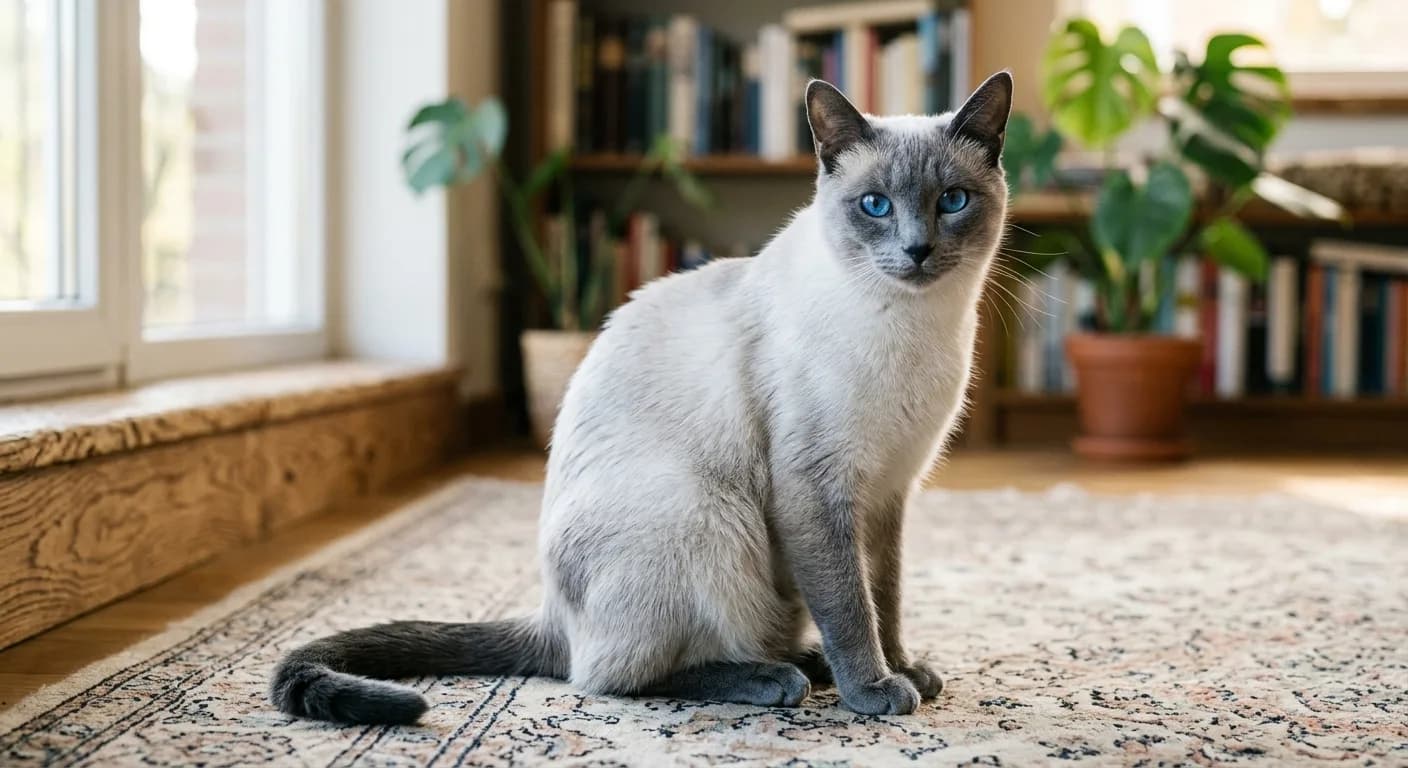
Siamese cat colors all share one defining trait: a pale body with darker "points" on the ears, face (mask), legs, paws, and tail. The Cat Fanciers' Association (CFA) recognizes four traditional Siamese colors (seal, chocolate, blue, and lilac point), while The International Cat Association (TICA) and other registries also accept newer shades like red (flame) point, cream point, and the patterned lynx and tortie points. Every one of these patterns comes from the same piece of feline genetics: a temperature-sensitive form of partial albinism that lets pigment develop only on the cooler parts of the cat's body. That is why a Siamese kitten is born almost pure white and slowly "colors in" over its first weeks of life. This hub explains how the points work, walks through each recognized color from common to rare, and includes a full color chart so you can identify any Siamese at a glance.
- 1All Siamese share a pale body with darker points
- 2Color comes from temperature-sensitive partial albinism
- 3Kittens are born white and develop points over weeks
- 4Four traditional colors: seal, chocolate, blue, lilac
- 5Flame point and lynx point are among the rarest

Sign up for expert-backed reviews and safety alerts all in one place.
How Siamese Cat Colors Work
Every Siamese carries a gene for a heat-sensitive enzyme that controls pigment production. On the warm core of the body, that enzyme stays switched off, so the coat there develops as a pale cream or fawn. On the cooler extremities (the ears, the face mask, the lower legs and paws, and the tail) the enzyme switches on and pigment develops, creating the signature darker points. This is a form of partial albinism, and it is the single reason the Siamese pattern exists.
Because the pattern is driven by temperature, the points are not fixed at birth. A Siamese kitten emerges from the womb (a warm, even environment) almost entirely white, with the points appearing only after a few days and deepening steadily over the first several weeks and months. The underlying color a kitten will become is set by genetics, but how dark and contrasted the points look is shaped by the cat's environment over its whole life. The science behind this heat-sensitive pigment is covered in depth in our companion guide to the science of color points.
A few practical points follow from this biology. Points keep darkening with age, so an older Siamese is usually deeper in color than the same cat as a young adult. Cats kept in cooler homes tend to develop richer, darker coats than those in warm climates. And the eyes are not part of the point system at all: the same albinism gene that creates the points also produces the breed's famous blue eyes, which is why every traditional Siamese has blue eyes regardless of point color.
Never Scoop Again® with the Whisker Litter-Robot, the smart self-cleaning automatic litter box. Monitor visits and track weights for better overall care in the Whisker® app. Multi-cat friendly.
Petful may earn a commission when you click through to Whisker, at no extra cost to you.
- The Siamese pattern is temperature-sensitive: pigment only develops on cooler skin. As a cat ages and as body temperature naturally drops slightly, more pigment forms, so points deepen over time. A Siamese living in a cold climate will often look noticeably darker than a littermate raised somewhere warm.
The Four Traditional Siamese Colors
The four "classic" or traditional Siamese colors are the ones the CFA has recognized longest, and they remain by far the most common. Each describes the color of the points; the body is always a complementary paler shade of the same tone.
Seal Point
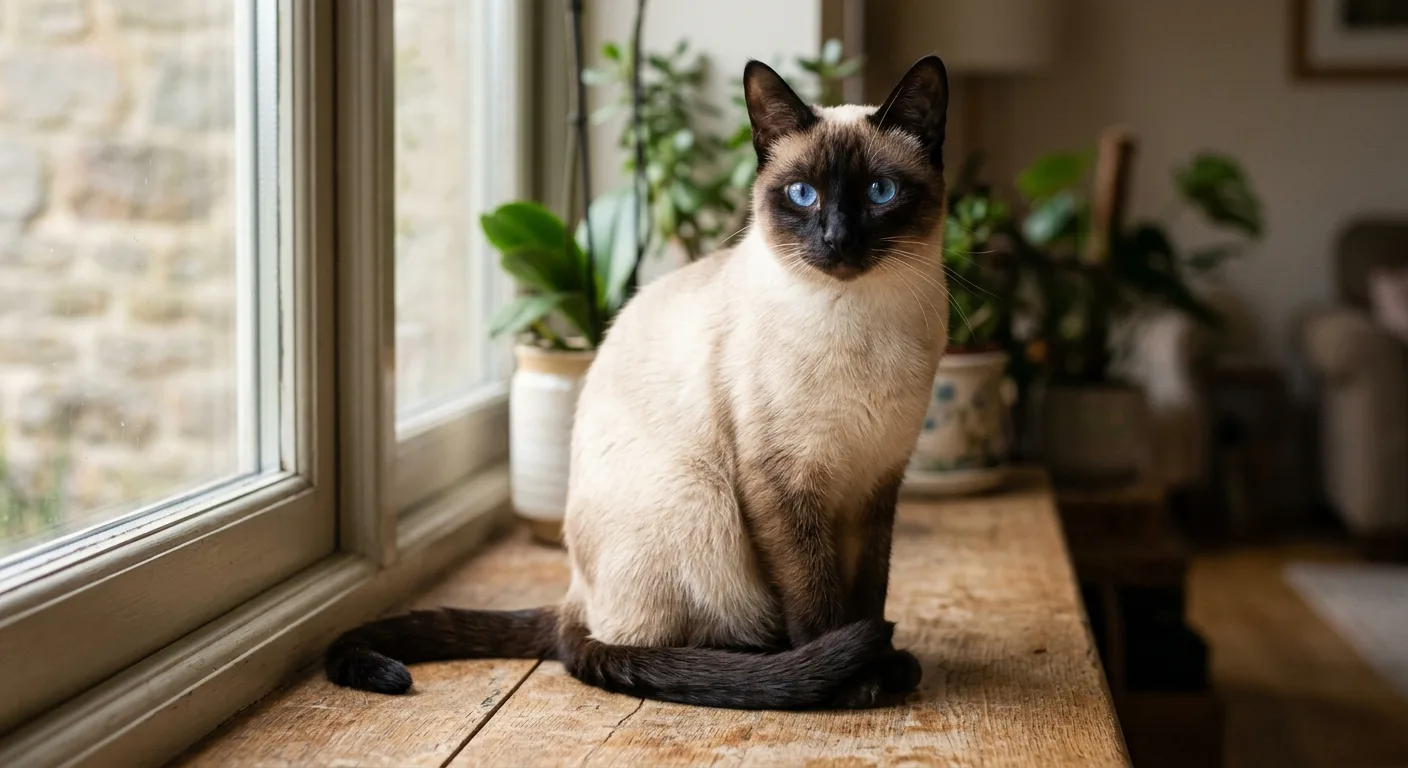
Seal point is the original and most common Siamese color, and the one most people picture when they hear the breed name. The points are a deep, dark brown that reads as almost black, set against a warm cream or fawn body. The contrast between the dark seal points and the lighter body is striking, which is part of why this color became the breed's signature.
Chocolate Point
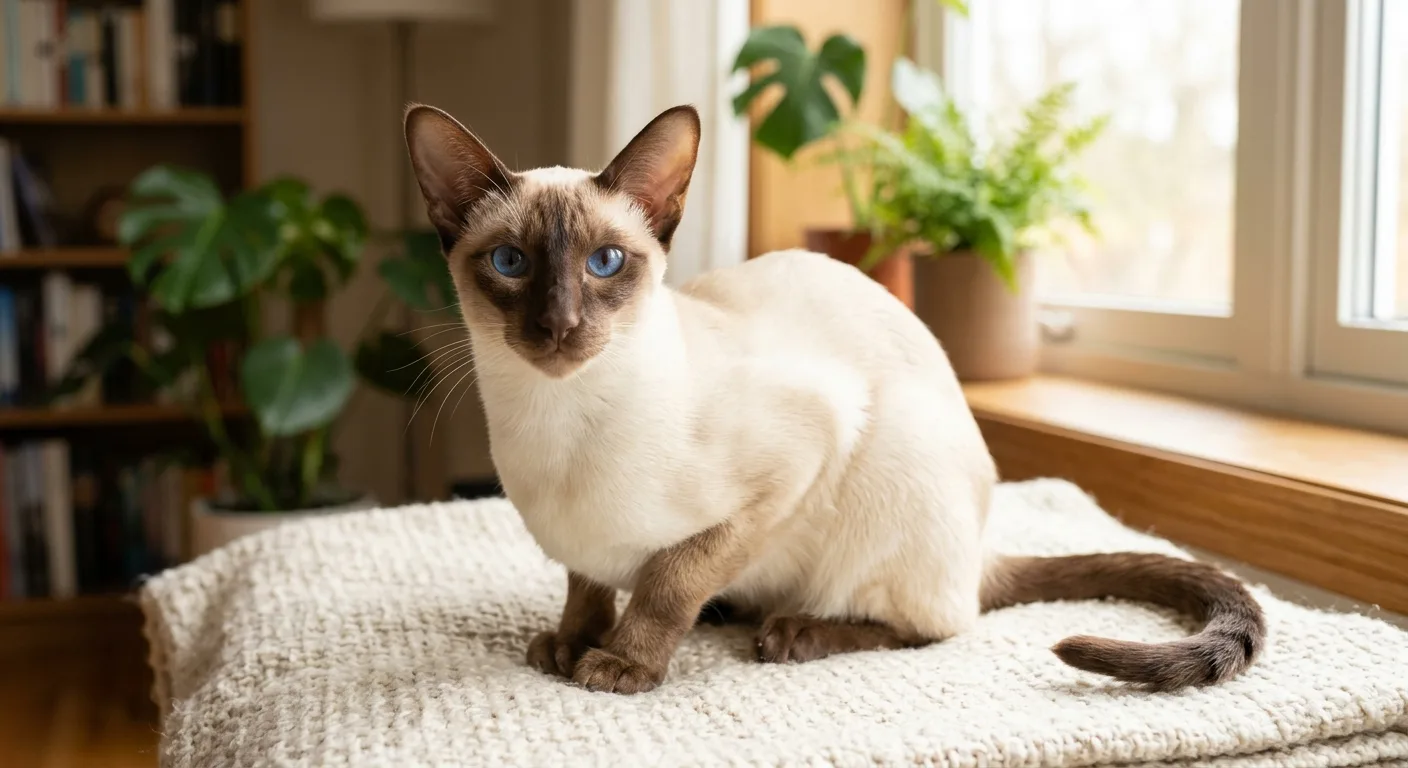
Chocolate point is a warmer, lighter version of seal. The points are a milk-chocolate brown rather than the near-black of seal, and the body stays a clean ivory with much less of the warm beige shading you see on a seal point. Chocolate points are genetically a "diluted" expression of the same brown pigment and are less common than seal.
Blue Point
Blue point swaps brown pigment for a cool slate gray. The points are a soft bluish gray and the body is a bluish white, giving the whole cat a cool, icy appearance rather than the warm tones of the brown-based colors. Blue point is the dilute form of seal, and it is one of the more popular traditional colors after seal itself.
Lilac Point (Frost Point)
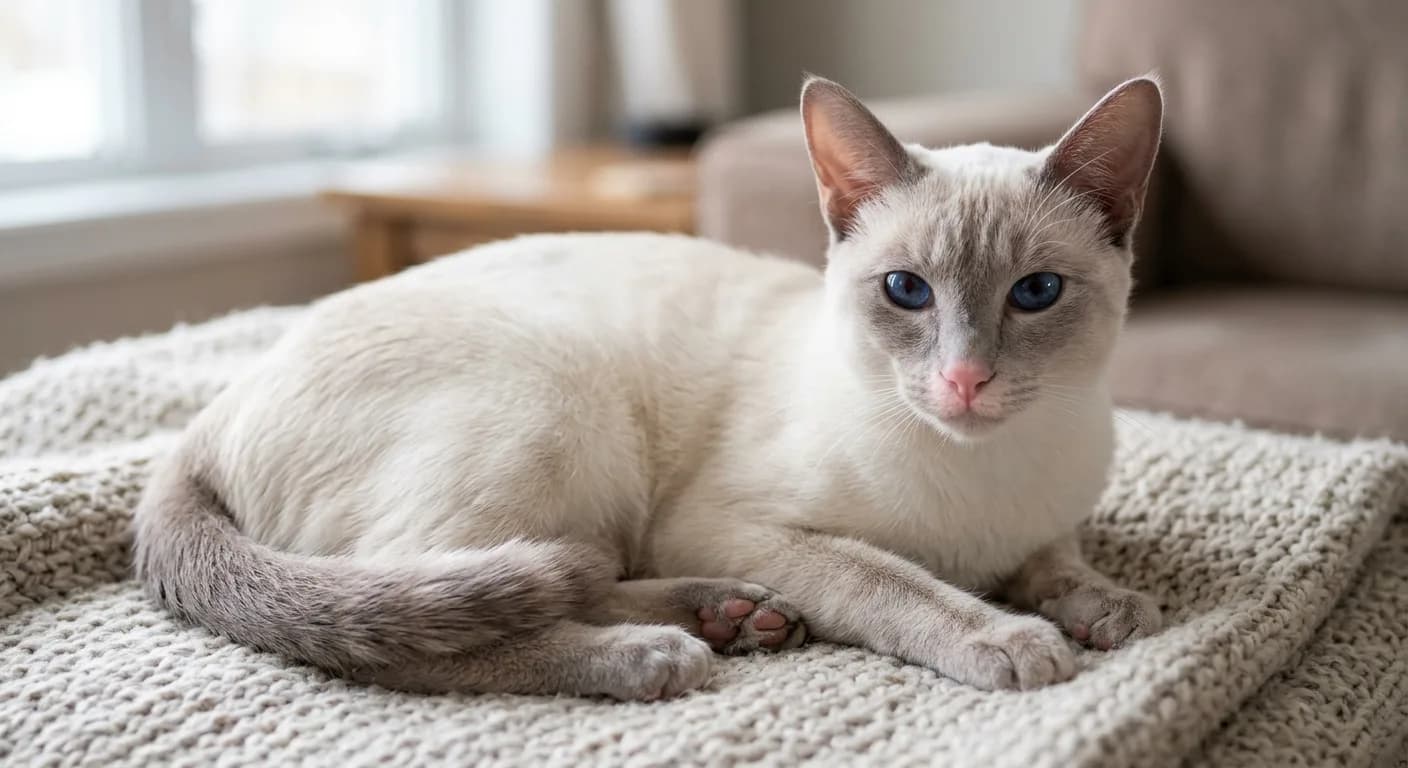
Lilac point (sometimes called frost point) is the palest of the four traditional colors. The points are a pinkish-gray and the body is a glacial, almost-white tone. Lilac is the dilute form of chocolate, which makes it the lightest and one of the least common of the classic four. In good light the faint pinkish cast of the points is what distinguishes lilac from blue.
Newer and Rare Siamese Colors
Beyond the traditional four, modern breeding (and crosses that introduced new pigment genes) produced a range of additional Siamese colors. The CFA registers some of these under the related Colorpoint Shorthair name, while TICA and many breeders simply count them as Siamese colors. They are generally rarer and often command higher prices.

63-inch multi-level cat tree with scratch posts, hammock, plush perches, and dangling toys. Vertical territory is non-negotiable for high-energy climbing breeds like the Bengal.
Petful may earn a commission when you click through to Chewy, at no extra cost to you.
- Red point (flame point): Warm reddish-gold to orange points over a creamy white body, with the same blue eyes. Because red pigment is carried on a different gene, flame point is harder to produce reliably and is one of the most sought-after rare colors. Our dedicated guide covers the flame point Siamese in full, including how the pattern is inherited.
- Cream point: The dilute version of red point. The points are a soft, pale apricot-cream rather than the brighter orange of flame, over an off-white body. Cream point is subtle and easy to mistake for a very pale lilac at first glance.
- Cinnamon point: A light reddish-brown point color, warmer and lighter than chocolate, produced by a separate "cinnamon" pigment gene. It is genuinely rare and not accepted by every registry.
- Fawn point: The dilute of cinnamon, giving very pale, warm taupe points. Fawn is among the rarest Siamese colors of all and is mostly seen in dedicated breeding programs.
Tabby (Lynx) Point and Tortie Point Patterns
Two pattern variations can be layered on top of any of the colors above, which multiplies the number of possible Siamese looks.
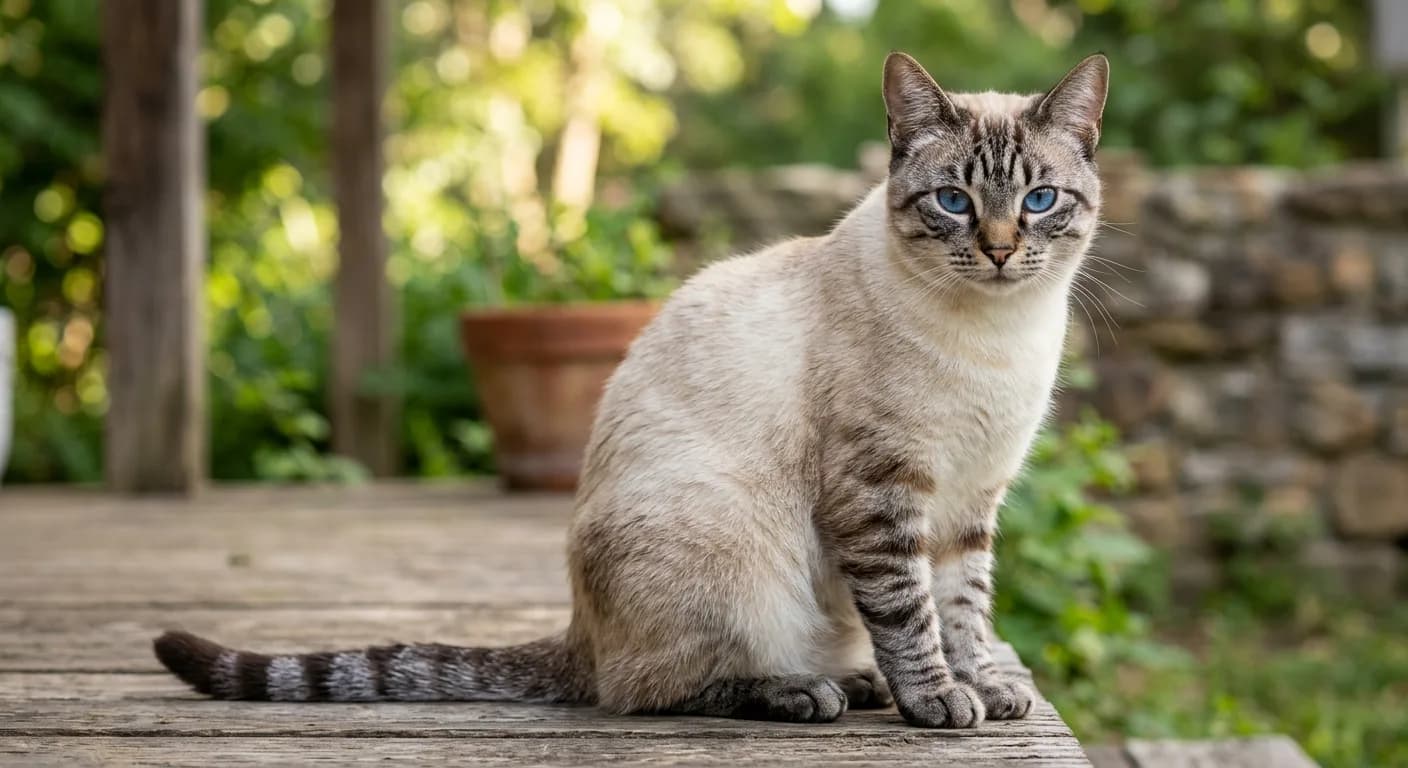
Lynx point (tabby point) adds tabby striping to the points. Instead of solid-colored ears, mask, legs, and tail, a lynx point shows fine stripes, a banded tail, and the classic tabby "M" marking on the forehead, often with pale spectacle-like rings around the eyes. Any base color can be a lynx point: a seal lynx point has dark brown striped points, a blue lynx point has gray striped points, and so on. The striped, expressive face makes lynx points especially popular. Our full breakdown of the lynx point Siamese covers each sub-variety in detail.
Tortie point (tortoiseshell point) appears only on female cats and mottles two pigments (a base color plus red or cream) into the points, creating a patched or marbled effect. A seal tortie point, for example, has points mottled with seal brown and red. Because tortie patterning requires two X chromosomes, tortie point Siamese are almost always female. The two patterns can even combine into a "torbie" (tortie plus lynx) point, with both striping and mottling.

108-oz stainless steel pet fountain with quiet pump and water-level window. Bengals are notoriously water-obsessed; a flowing fountain encourages hydration and pulls them away from sinks and toilets.
Petful may earn a commission when you click through to Chewy, at no extra cost to you.
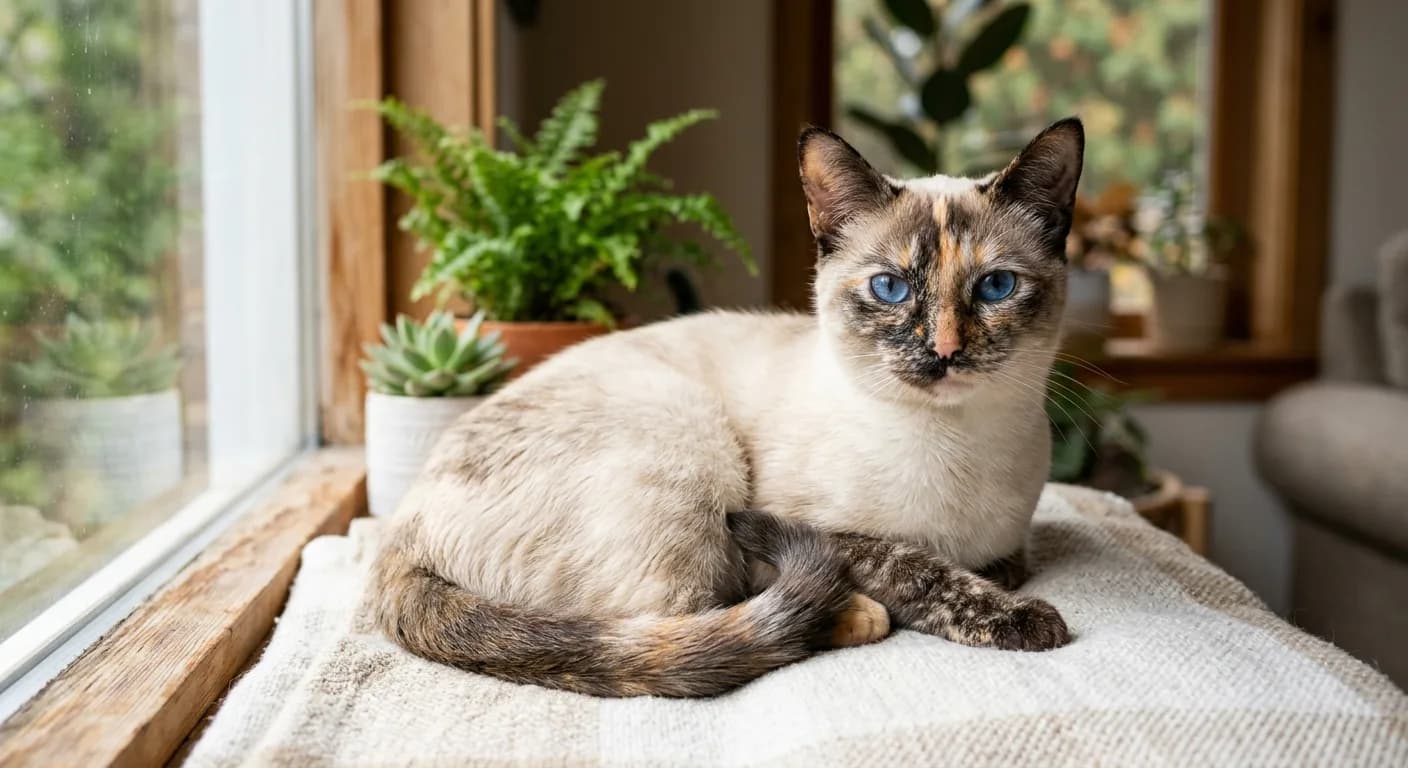
- A lynx point or tortie point is always built on one of the base colors. "Seal lynx point" and "blue tortie point" describe a base color plus an overlaid pattern, so the same cat can be named several different ways depending on which registry's convention you follow.
Full Siamese Color Chart
Use this chart to identify any Siamese at a glance. Body and point descriptions assume an adult cat in good light; remember that points deepen with age, so a young cat may look paler than the chart suggests.
| Color / Point | Body & Point Appearance | Eye Color | Rarity |
|---|---|---|---|
| Seal Point | Cream-to-fawn body, deep dark-brown (near-black) points | Deep blue | Common |
| Chocolate Point | Ivory body, milk-chocolate brown points | Blue | Less common |
| Blue Point | Bluish-white body, cool slate-gray points | Blue | Common |
| Lilac Point | Glacial white body, pinkish-gray points | Blue | Uncommon |
| Red (Flame) Point | Creamy white body, reddish-gold to orange points | Blue | Rare |
| Cream Point | Off-white body, pale apricot-cream points | Blue | Rare |
| Cinnamon Point | Ivory body, light reddish-brown points | Blue | Very rare |
| Fawn Point | Pale body, warm taupe points | Blue | Very rare |
| Seal Lynx Point | Cream body, dark-brown striped points with "M" marking | Blue | Uncommon |
| Tortie Point (female only) | Pale body, points mottled with base color plus red or cream | Blue | Rare |
For a breed with a much broader accepted coat palette, see the Turkish Angora color guide for white, solid, tabby, smoke, tortie, calico, bicolor, and eye-color context.
What Is the Rarest Siamese Color?
The rarest Siamese colors are fawn point and cinnamon point. Both rely on uncommon pigment genes (cinnamon and its dilute, fawn) that few breeding programs carry, and several major registries do not formally recognize them, which keeps numbers very low. If you ever see a Siamese with genuinely pale taupe or warm light-brown points, you are looking at one of the breed's true rarities.
Among the colors most buyers actually encounter, red (flame) point and lynx point are the rare-and-in-demand pairing. They are produced far less often than the traditional seal or blue, yet they are highly sought after, which is the combination that drives prices up. By contrast, seal point is both the original and the most common color, so it is almost always the easiest to find and the most affordable.
- Some sellers label an ordinary kitten "rare" to justify a higher price. A genuinely rare color (fawn, cinnamon, or a well-defined tortie) should come with registration paperwork from the CFA or TICA naming the color. Ask to see it, and be skeptical of a rare-color premium with no documentation behind it.
Does Coat Color Affect a Siamese Cat's Price?
Yes. Point color is one of the biggest price levers in the breed. The four traditional colors (seal, chocolate, blue, and lilac) are the most widely available and sit at the lower end of the range, while harder-to-produce patterns like flame point, lynx point, and the tortie points command a premium of several hundred dollars or more over a comparable seal point from the same breeder. The genuinely rare cinnamon and fawn points can cost more still when you can find them at all.
Color is only one factor, though. Bloodline and show titles, breeder registration, and whether you adopt or buy all move the number as much as color does. For the full breakdown of every cost factor, quality tiers, and a first-year ownership budget, see our guide to how much a Siamese cat costs. And for everything else about living with the breed (temperament, health, and care) start with the Siamese cat breed profile.
Frequently Asked Questions About Siamese Cat Colors
Siamese cats come in four traditional colors (seal, chocolate, blue, and lilac point) plus newer and rarer shades including red (flame) point, cream point, cinnamon point, and fawn point. Two patterns, lynx (tabby) point and tortie point, can also be layered on top of any base color, which creates dozens of named combinations.
Fawn point and cinnamon point are the rarest Siamese colors, because they rely on uncommon pigment genes that few breeders carry and several registries do not formally recognize. Among colors buyers commonly see, red (flame) point and lynx point are the rare and in-demand ones that command the highest premiums.
Seal point is the most common Siamese color and the breed's original pattern. It has deep dark-brown points (almost black) over a cream-to-fawn body. Because it is the most widely bred, seal point is usually the easiest to find and the most affordable of all the colors.
Yes. Siamese kittens are born almost pure white and develop their points over the first weeks and months of life. Because the pattern is temperature-sensitive, points also keep darkening with age, and a cat kept in a cooler home will develop a darker coat than one in a warm climate.
Traditional Siamese cats have vivid blue eyes regardless of point color. The same gene for partial albinism that creates the temperature-sensitive points also produces the blue eye color, which is why every classic Siamese, from seal point to flame point, shares those striking blue almond-shaped eyes.
From a classic seal point to a rare flame or lynx point, your Siamese deserves a complete profile. Store its photos, pedigree papers, microchip, and vet records in one free digital profile with MyPetID.
Create a free pet record
Coreen Saito is a pet writer and longtime shelter volunteer with more than a decade in animal rescue. She covers cat behavior, breed care, and the small, ordinary science of sharing a life with companion animals, with a particular focus on honest takes about the products and decisions that actually matter. At home in Arizona, she's outranked by Mac (a dog with the loudest opinion in the house), Rebel (a cat who governs by quiet authority), and Meri (an orange tabby who runs the late shift and the laundry basket). She writes about all three, plus the rescues that keep coming through her life, at LifeWithMinty.com.
Sign up for expert-backed reviews and safety alerts all in one place.