Lynx Point Siamese: The Tabby Point Cat Explained
A lynx point Siamese (tabby point) is a Siamese cat with tabby-striped points instead of solid color, marked by banded legs, an "M" on the forehead, and blue eyes. This guide covers the color varieties, genetics, personality, price, and care.
Petful is reader supported. As an affiliate of platforms like Amazon and Chewy, we may earn a commission when you buy through links on this page. There is no extra cost to you.
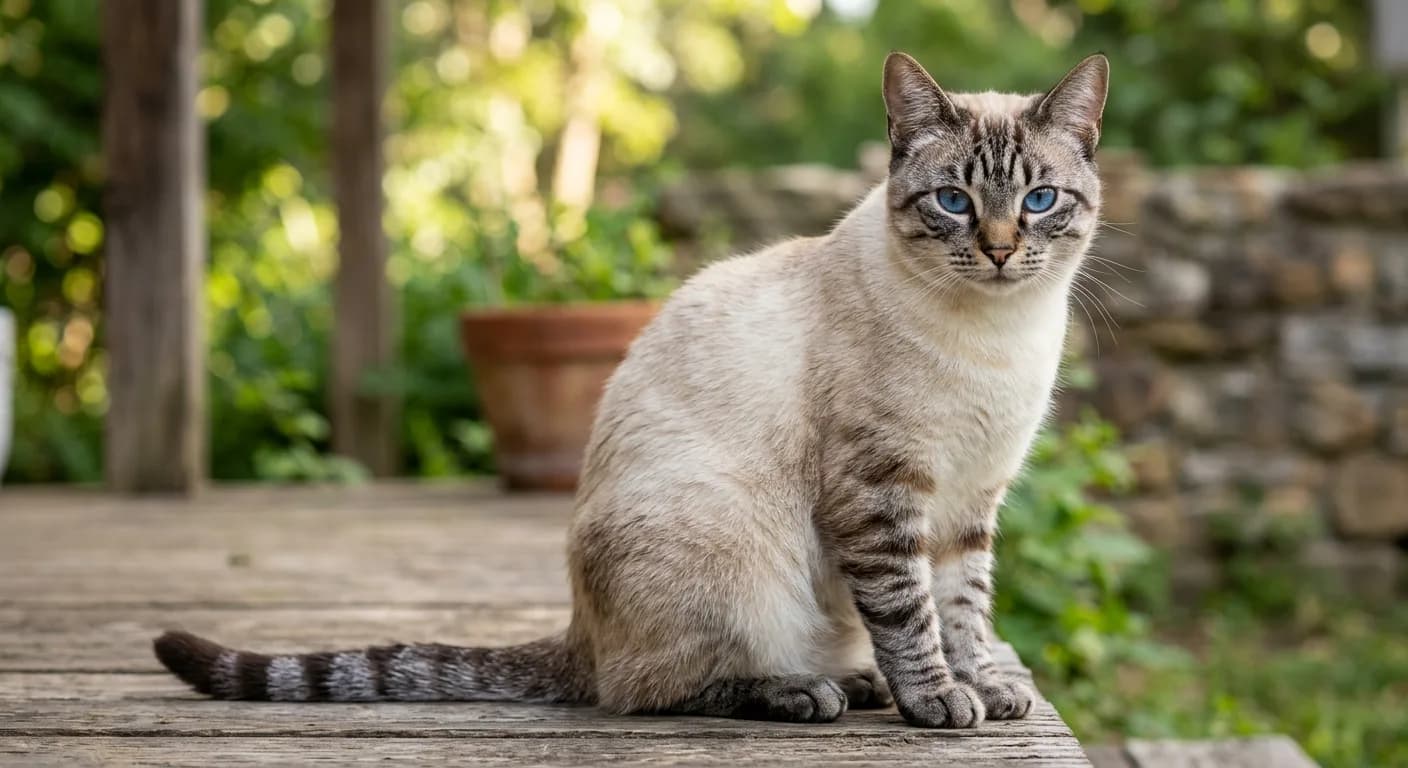
The lynx point Siamese, also known as the tabby point Siamese, is a Siamese cat whose color points carry tabby striping instead of solid color. Where a classic seal point Siamese has dark, evenly shaded ears, mask, legs, and tail, a lynx point shows fine bars and stripes through those same areas, plus a signature "M" marking on the forehead and the bright blue eyes the breed is famous for. The striping comes from the agouti (tabby) gene layered over the standard Siamese point pattern, so the cat reads as part Siamese and part tabby at a glance. This guide explains exactly what a lynx point Siamese is, how to recognize one, the color varieties you will encounter, the genetics behind the markings, and what to expect from temperament, price, and care. For the full breed background, start with our Siamese cat breed profile, and to see how this pattern fits the wider palette, browse all the Siamese cat colors.
- 1A lynx point Siamese (tabby point) has striped points instead of solid color
- 2The tabby striping comes from the agouti gene over a standard point
- 3A distinctive "M" marks the forehead and the eyes stay blue
- 4Varieties include seal, blue, chocolate, lilac, red (flame) and tortie lynx point
- 5They keep the classic Siamese personality: vocal, smart, and people-oriented

Sign up for expert-backed reviews and safety alerts all in one place.
What Is a Lynx Point Siamese?
A lynx point Siamese is a Siamese (or Siamese-type) cat that carries the tabby pattern in its color points. The term "lynx point" and "tabby point" describe the same cat, and you will hear both used interchangeably by breeders and registries. Instead of the solid, smoothly shaded points of a traditional Siamese, a lynx point shows stripes, bars, and rings through the ears, mask, legs, and tail.
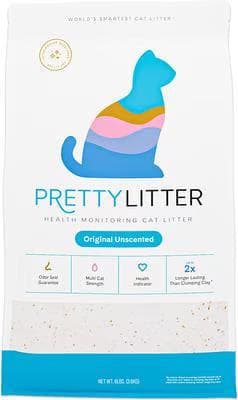
Color-changing crystal litter that flags pH shifts in your cat's urine, an early warning sign of UTIs, kidney issues, and more.
Petful may earn a commission when you click through to Chewy, at no extra cost to you.
The look comes down to a single added ingredient. A standard Siamese has the pointed (colorpoint) pattern, where color concentrates on the cooler extremities of the body. A lynx point adds the agouti gene, the same gene responsible for the striped coat of a common tabby cat. Layer that striping onto a colorpoint base and you get tabby-patterned points, a pale body, and the breed's hallmark blue eyes.
Because the lynx point is a pattern rather than a single color, it appears across many of the base point colors. A seal lynx point, a blue lynx point, and a chocolate lynx point are all "lynx points," each just built on a different underlying point color. That is why the pattern shows up throughout the breed's color range rather than as one fixed shade.
Never Scoop Again® with the Whisker Litter-Robot, the smart self-cleaning automatic litter box. Monitor visits and track weights for better overall care in the Whisker® app. Multi-cat friendly.
Petful may earn a commission when you click through to Whisker, at no extra cost to you.
- "Lynx point" is the common North American term, while "tabby point" is used more often in the UK and by some registries. Both describe a Siamese-pattern cat whose points carry tabby striping. Don't let the two names confuse you into thinking they are different cats.
Lynx Point Siamese Appearance
The lynx point is one of the easiest Siamese patterns to identify once you know the markers. Several features show up together and set it apart from a solid point.
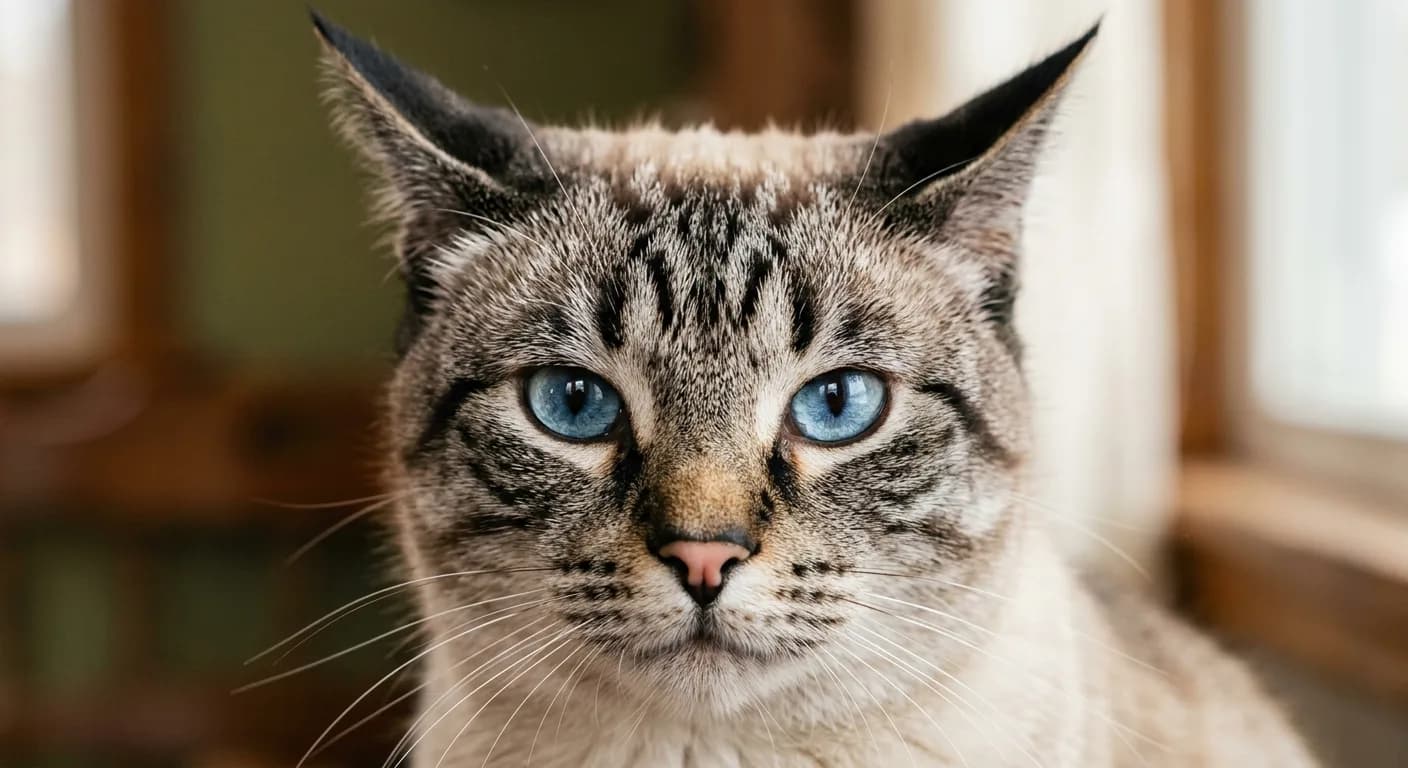
- Striped points. The ears, legs, and tail carry visible tabby striping and banding rather than a single block of color. The bars are usually clearest on the legs and around the eyes.
- The "M" marking. Like all tabby-patterned cats, a lynx point wears a distinctive "M" shape on the forehead, formed by the tabby striping above the eyes. It is one of the quickest ways to spot the pattern.
- Banded legs and ringed tail. The legs show horizontal bands, and the tail is typically ringed along its length, often with a solid tip.
- Outlined nose and eyes. The nose leather is frequently pink or rosy in the center with a darker outline, and the eyes are often rimmed with a thin dark line that makes the blue stand out.
- Pale body, blue eyes. As with every Siamese, the body stays light and the color concentrates at the points, while the eyes remain a clear, vivid blue.
Kittens are born nearly white, just like other Siamese, and their tabby points develop and sharpen over the first weeks and months of life. The striping often becomes more defined as the cat matures.
Lynx Point Color Varieties
Because lynx point is a pattern, it pairs with each of the recognized Siamese point colors to create a family of varieties. The table below sets the main lynx point colors side by side so you can tell them apart.
| Variety | Point Base Color | Look |
|---|---|---|
| Seal Lynx Point | Seal (dark brown) | The most common lynx point; dark brown striping on a cream-to-fawn body, strong "M" and ear bars |
| Blue Lynx Point | Blue (slate gray) | Soft slate-gray striping on a bluish-white body; a cooler, more muted version of the seal lynx |
| Chocolate Lynx Point | Chocolate (warm brown) | Lighter, warm milk-chocolate striping on an ivory body; less contrast than seal lynx |
| Lilac Lynx Point | Lilac (frosty gray-pink) | The palest variety; delicate pinkish-gray bars on a near-white body, very subtle striping |
| Red (Flame) Lynx Point | Red / cream | Warm reddish-gold striping on a creamy body; ties closely to the flame point family |
| Tortie Lynx Point | Tortie + tabby | A mottled mix of two colors plus tabby striping, so points blend tortoiseshell patches with bars |
Seal lynx point is the variety most people picture and the one you will see most often. The lilac lynx point sits at the opposite end, with such pale, frosty striping that the pattern can be easy to miss at a distance. The red (flame) lynx point overlaps with the flame point family, so if a warm reddish coat is what draws you to the breed, our guide to the flame point Siamese is the natural companion read.

63-inch multi-level cat tree with scratch posts, hammock, plush perches, and dangling toys. Vertical territory is non-negotiable for high-energy climbing breeds like the Bengal.
Petful may earn a commission when you click through to Chewy, at no extra cost to you.
- A lynx point's full name combines its base color with the pattern, as in "seal lynx point" or "blue lynx point." The first word tells you the underlying point color, and "lynx point" tells you the points are striped rather than solid. Once you know the format, every variety name decodes itself.
The Genetics Behind the Tabby Points
The lynx point pattern is the product of two things working together: the colorpoint pattern that makes a cat a Siamese, and the agouti (tabby) gene that adds the striping.
Every cat actually carries the genetic instructions for a tabby pattern. In a solid-colored cat, a separate "non-agouti" gene masks that striping, producing an even block of color. The agouti gene is what allows the underlying tabby pattern to show through. A lynx point Siamese has at least one copy of the dominant agouti gene, so the tabby striping appears in the points instead of being hidden.
In practical breeding terms, that striping has to come from somewhere. To produce lynx point kittens, at least one parent needs to carry the tabby (agouti) gene, typically a parent that is itself a lynx point or that carries the pattern. Pair that with the colorpoint genetics both Siamese parents already supply, and the result is points that are striped rather than solid. Because the pattern depends on inheriting that specific gene, lynx points are not guaranteed in every Siamese litter, which is part of why they can be harder to find than the classic solid points.
Lynx Point Siamese Personality
A lynx point Siamese is a Siamese first and a tabby pattern second, and the personality follows the breed, not the coat. These cats are every bit as engaging, demanding, and affectionate as their solid-point relatives.
Expect a cat that is highly vocal and genuinely conversational. Siamese are known for their loud, expressive voices and their habit of "talking" to their people throughout the day. They are intensely social and bond closely with their humans, often following from room to room and disliking long stretches of being left alone.

108-oz stainless steel pet fountain with quiet pump and water-level window. Bengals are notoriously water-obsessed; a flowing fountain encourages hydration and pulls them away from sinks and toilets.
Petful may earn a commission when you click through to Chewy, at no extra cost to you.
They are also strikingly intelligent. Siamese learn routines quickly, enjoy puzzle feeders and interactive play, and many can be taught to walk on a harness or fetch. That intelligence comes with a need for stimulation, so a lynx point does best in a home that offers attention, enrichment, and ideally some company during the day. The tabby striping changes the look, but the lively, people-focused temperament is pure Siamese.
Lynx Point Siamese Price
A lynx point Siamese usually costs more than a standard solid-point Siamese of the same quality tier. Because the tabby pattern depends on the right genetics and the look is in high demand, lynx points often carry a modest premium over the classic seal or chocolate points from the same breeder.
As a rough guide, pet-quality Siamese kittens generally run a few hundred to around a thousand dollars from a reputable breeder, with rarer patterns and colors pushing toward the upper end of that band or beyond. Within the lynx point family, the more unusual varieties such as lilac lynx point or tortie lynx point tend to sit higher than a common seal lynx point. For the full breakdown of what drives Siamese pricing across quality tiers, colors, and adoption versus breeder, see our dedicated guide to Siamese cat price.
Health and Care
Coat care for a lynx point Siamese is refreshingly simple. The Siamese is a short-haired breed with a fine, close-lying coat that needs little more than a weekly brushing to remove loose hair and keep it glossy. There is no special grooming demand tied to the tabby pattern, and an occasional nail trim plus routine ear and dental care round out the basics.
Health-wise, a lynx point is subject to the same considerations as any Siamese, since the pattern does not introduce its own issues. The breed and its lines can be predisposed to a handful of inherited conditions, including progressive retinal atrophy (PRA), certain heart conditions, and amyloidosis affecting the liver or kidneys. Buying from a breeder who health-tests their breeding cats, and keeping up with regular wellness exams, parasite prevention, and a complete diet, gives a lynx point Siamese the best shot at a long, healthy life. As always, any specific health concern about an individual cat should be discussed with your veterinarian.
Frequently Asked Questions
A lynx point Siamese, also called a tabby point Siamese, is a Siamese cat whose color points carry tabby striping instead of solid color. The striping comes from the agouti (tabby) gene layered over the standard Siamese point pattern, and it shows up as bars on the legs, rings on the tail, and an "M" marking on the forehead, all with the breed's classic blue eyes.
Lynx points are less common than the four classic solid points (seal, chocolate, blue, and lilac) because the pattern requires inheriting the tabby gene, so they aren't guaranteed in every litter. Some varieties, such as lilac lynx point and tortie lynx point, are rarer still and can be harder to find than a common seal lynx point.
A lynx point Siamese typically costs more than a solid-point Siamese of the same tier, often a modest premium over the classic colors from the same breeder. Pet-quality kittens generally run a few hundred to around a thousand dollars, with rarer lynx point varieties sitting at the upper end. See our Siamese cat price guide for the full breakdown.
The "M" is a marking formed by the tabby striping above the eyes, and it appears on virtually all tabby-patterned cats, including lynx point Siamese. It is one of the quickest visual cues that a Siamese carries the lynx (tabby) point pattern rather than a solid point.
Yes. Like all Siamese, lynx point cats have clear blue eyes, a trait tied to the colorpoint pattern itself. The tabby striping changes the look of the points but does not affect eye color, and many lynx points have a thin dark line around the eyes that makes the blue stand out even more.
Store your lynx point Siamese's pedigree papers, microchip number, and vaccination records in one free digital profile with MyPetID so everything stays in one place.
Create a free pet record
Coreen Saito is a pet writer and longtime shelter volunteer with more than a decade in animal rescue. She covers cat behavior, breed care, and the small, ordinary science of sharing a life with companion animals, with a particular focus on honest takes about the products and decisions that actually matter. At home in Arizona, she's outranked by Mac (a dog with the loudest opinion in the house), Rebel (a cat who governs by quiet authority), and Meri (an orange tabby who runs the late shift and the laundry basket). She writes about all three, plus the rescues that keep coming through her life, at LifeWithMinty.com.
Sign up for expert-backed reviews and safety alerts all in one place.