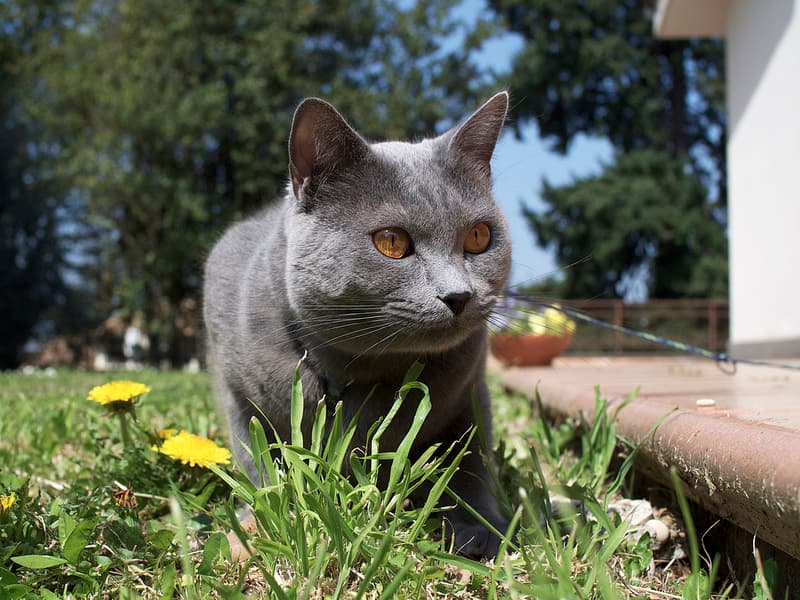
Turkish Angora Cat Colors: White, Orange, Gray & More
See Turkish Angora cat colors and patterns recognized by CFA, including white, black, blue, red, cream, tabby, smoke, tortie, calico, and bicolor.
Petful is reader supported. As an affiliate of platforms like Amazon and Chewy, we may earn a commission when you buy through links on this page. There is no extra cost to you.
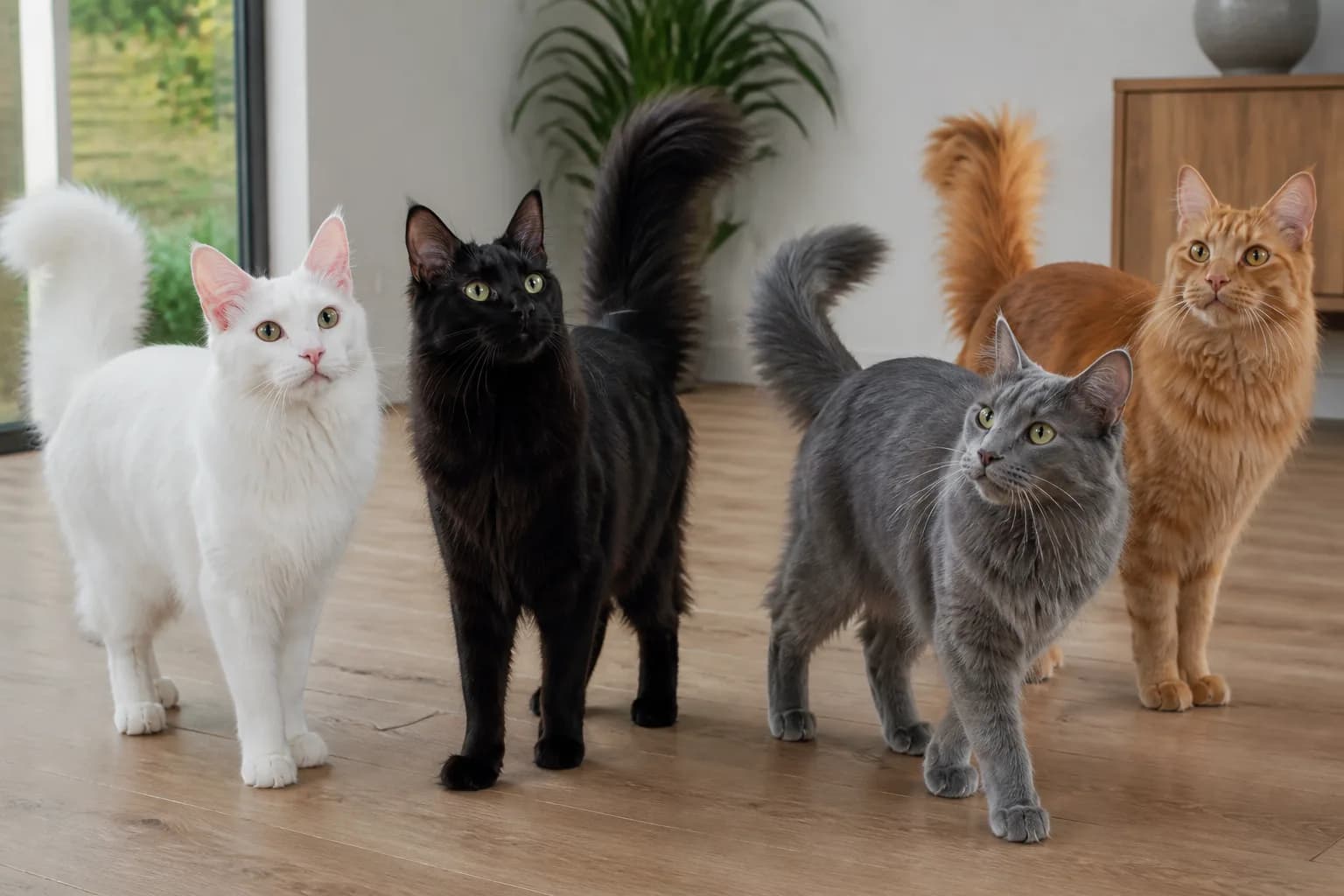
Turkish Angora cat colors extend far beyond white. The CFA standard recognizes solids, tabbies, smokes, tortoiseshell, calico, bicolor, tabby-and-white, and additional accepted combinations. White remains historically famous, but a colored Turkish Angora is not a lesser version of the breed.
This visual guide owns coat and eye-color terms. Use the breed pillar for overall identification and temperament, the price guide for cost, the kitten guide for documentation, the grooming guide for coat care, and the Turkish Van comparison for van-pattern confusion.

Petful may earn a commission when you click through to Chewy, at no extra cost to you.

Sign up for expert-backed reviews and safety alerts all in one place.
Turkish Angora colors at a glance
The CFA standard says all accepted colors have equal value. Turkish Angoras come in many colors and patterns, and that principle matters because seller language often treats white, odd-eyed, orange, gray, or tortie cats as automatically rarer or more valuable. Use registry color categories before common labels or rarity marketing. A coat label should describe appearance, not rank the cat’s worth.
The standard uses technical terms that differ from everyday search language. Blue means a cool gray coat, red is often called orange or ginger, parti-color includes tortoiseshell and blue-cream, and bicolor covers accepted color combined with white. Tabby patterns may be classic, mackerel, spotted, or ticked.
A complete color description answers several separate questions: What is the base color? Is there a tabby, smoke, shaded, or parti-color pattern? How much white is present? What eye color is visible? Combining those observations is more precise than choosing the first familiar label. It also prevents coat terminology from being used as a shortcut for breed identification.
- 1Turkish Angoras are recognized in many colors and patterns, not only white
- 2The CFA standard gives accepted colors equal value
- 3Blue is the standard term commonly searched as gray and red is commonly searched as orange
- 4Chocolate, lilac, and pointed patterns are not accepted under the CFA standard
| Color family | Examples | What to notice |
|---|---|---|
| White | Blue-, green-, amber-, or odd-eyed white | Pure white coat; eye color does not prove ancestry |
| Solid | Black, blue, red, cream | Even color from root to tip |
| Tabby | Brown, silver, blue, red, cream | Classic, mackerel, spotted, or ticked pattern |
| Parti-color | Tortoiseshell, blue-cream, calico, dilute calico | Patches or intermingled color, sometimes with white |
| Smoke and shaded | Black smoke, blue smoke, red smoke, cream smoke | Pale basecoat appears when fur moves or parts |
| Bicolor | Accepted colors or patterns with white | White spotting can range from low white to van-like distribution |
Registry language can differ across organizations and may be updated, so use the standard connected to the cat’s registration or show context. Everyday terms remain useful for search and conversation, but a breeder or registry record should be able to translate orange to red, gray to blue, and mixed patches to a specific standard class.
White Turkish Angoras and eye colors
A white Turkish Angora should be pure white, with pink nose leather and paw pads under the CFA description. The eyes may be blue, green, green-gold, amber, or odd-eyed. Odd-eyed means one blue eye and one eye in another accepted color family; it is not a separate coat color.
White fur and blue eyes can occur in many cats, so neither proves breed. White-cat hearing deserves a careful, separate discussion, particularly for some blue-eyed cats, but a photograph cannot establish hearing status. Ask for records and consult a veterinarian when hearing is a concern.
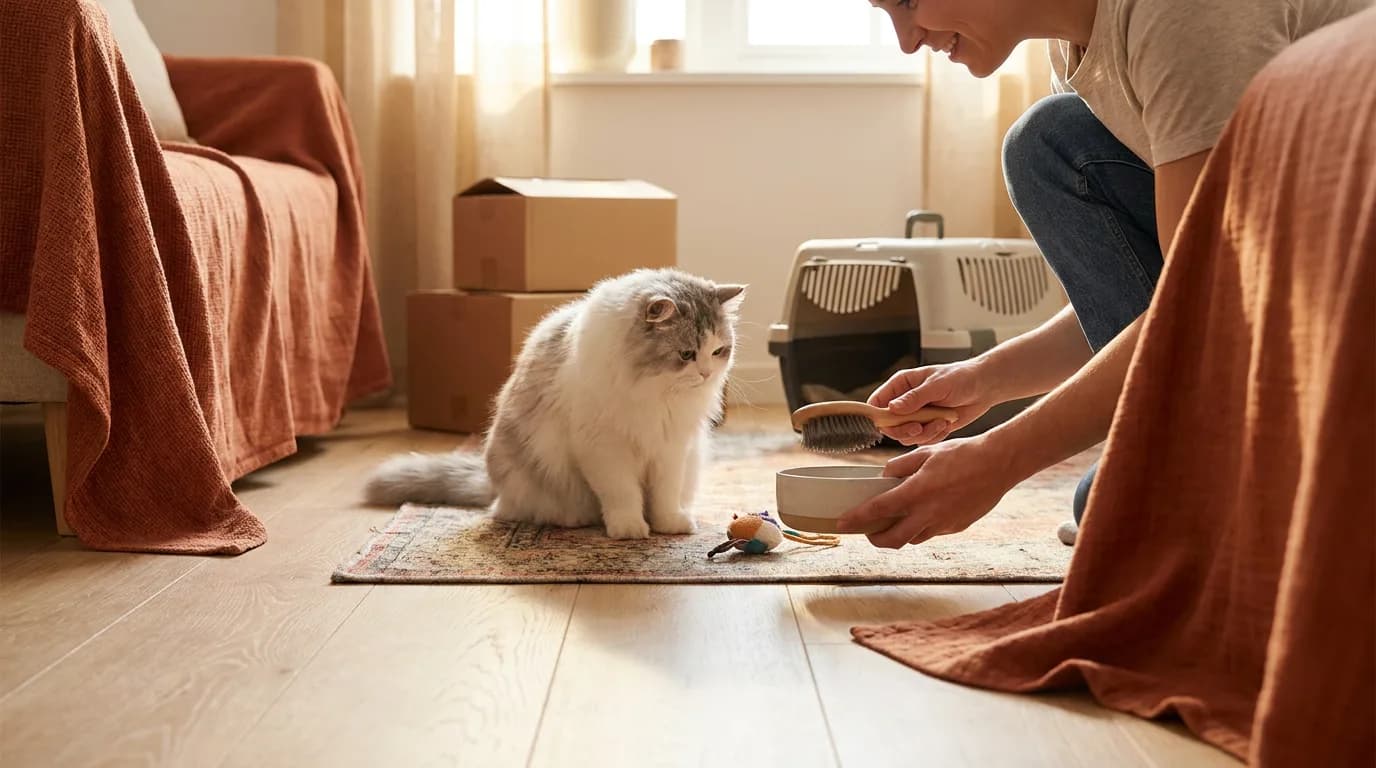
Use a familiar Travel Cat carrier for veterinary visits and hearing evaluation rather than trying to startle the cat at home. A quiet Best Friends by Sheri covered bed can provide rest after travel without making any claim about color or temperament.
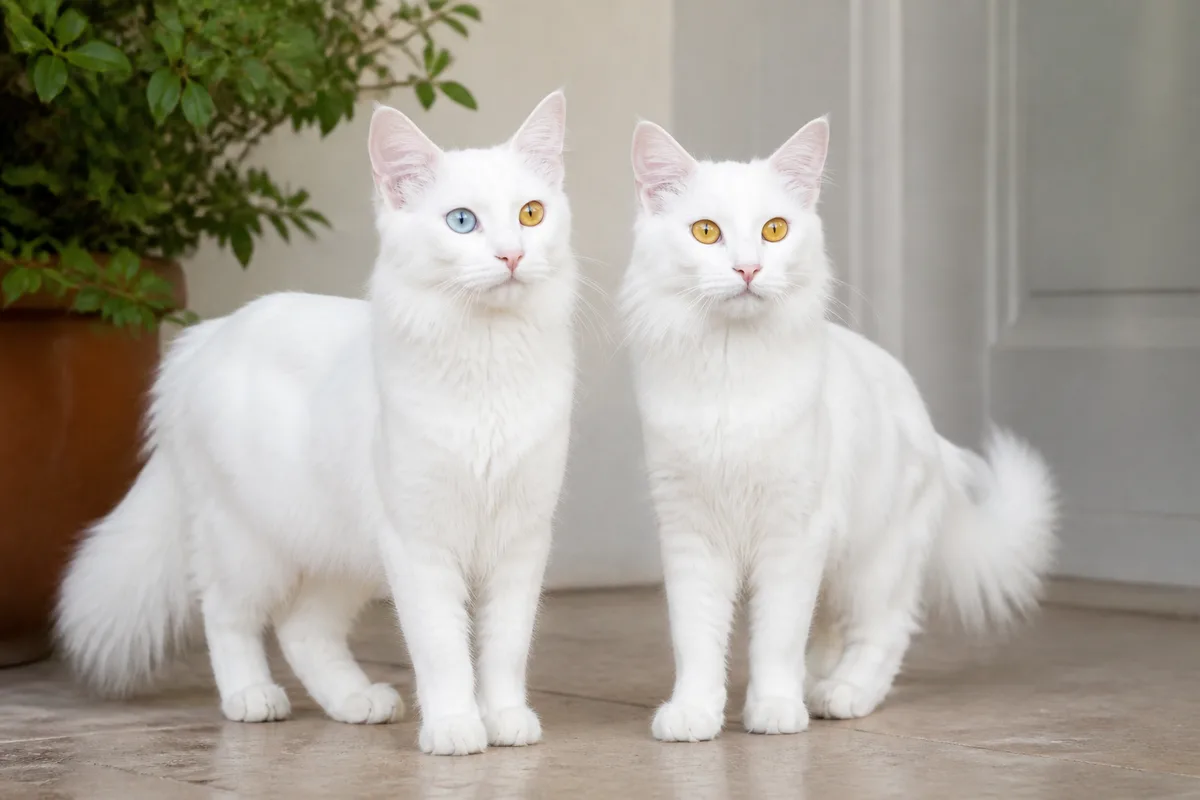
Do not infer hearing from which side the blue eye appears on, from a cat turning toward a sound, or from a seller saying the kitten reacts normally. Cats can notice vibration, movement, air currents, or another animal’s response. When the answer affects safety or a purchase decision, ask what objective evaluation was performed, when, by whom, and for which kitten.
White coats also reveal ordinary debris and staining easily. Yellowing around the face, paws, or hindquarters is not a new registry color and should not be covered with harsh brightening products. Identify moisture, litter, saliva, urine, or skin issues first and involve a veterinarian when the change is persistent or accompanied by discomfort.
Petful may earn a commission when you click through to Chewy, at no extra cost to you.
Black, blue, and cream solids
Black should appear dense and coal black from root to tip, without a rusty surface or pale smoke base. Blue is the diluted black color and reads as cool gray; the standard prefers an even tone, with a sound darker shade favored over a pale but uneven coat. Cream is a light buff shade that should be even and clear.
Sunlight, saliva, dust, nutrition, and camera white balance can change how a solid coat looks in a photograph. Check the hair close to the skin and compare several areas. Smoke is different from a faded solid because the pale base is a structured part of the coat, not just lighting.
For a useful comparison, part the coat gently at the shoulder, flank, and tail base in the same light. A true solid description should remain reasonably consistent across the hair shaft and body, allowing for normal condition and exposure. Do not pluck hair or repeatedly handle a reluctant cat to settle a cosmetic label; the registered record is the better tie-breaker.
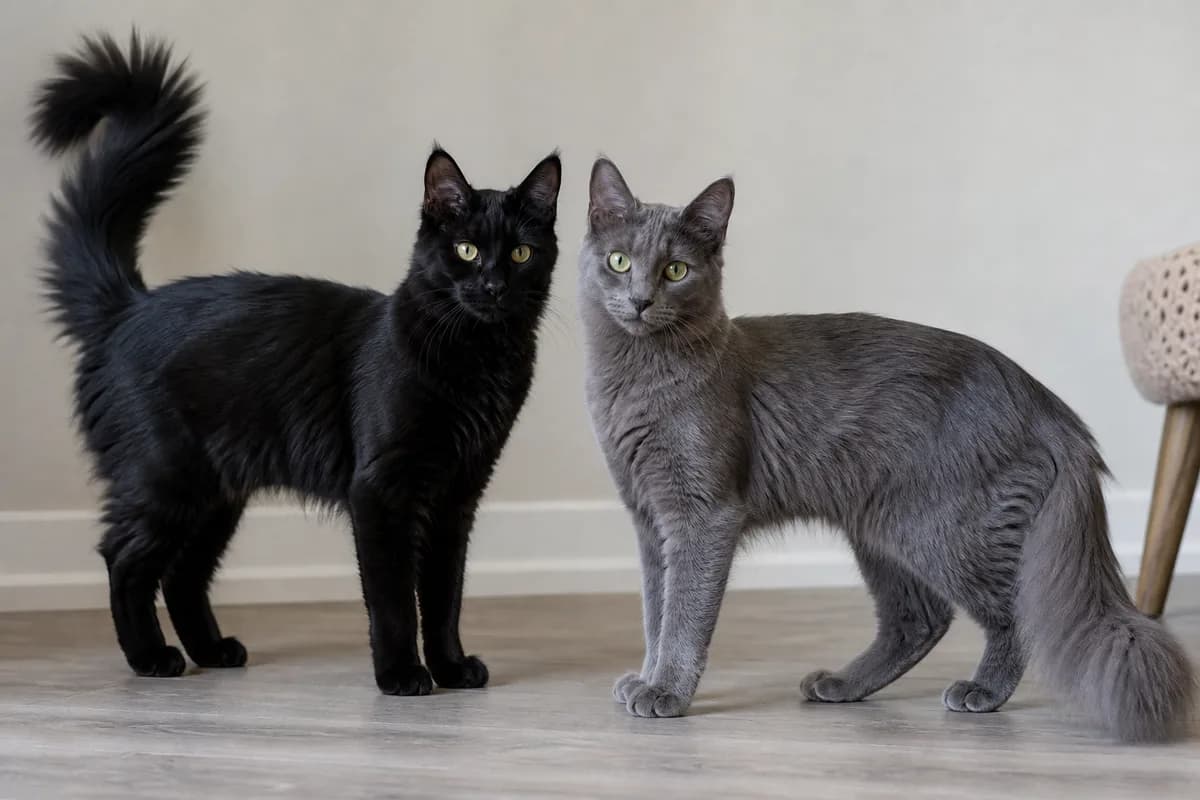
The word gray is not wrong in everyday speech, but blue is the term readers will see in the standard, pedigree, and many breeder records. Lavender or lilac is not simply another poetic word for the accepted blue color. Because lilac is specifically outside the CFA standard, ask the seller to identify the registered class instead of accepting interchangeable marketing terms.
Red, orange, and cream Turkish Angoras
Red is the registry term for the warm coat commonly called orange or ginger. A solid red coat should be rich and clear, but visible tabby markings are common in red-based cats and can complicate casual labeling. Red tabby is a separate standard description built around a red ground and deeper red markings.
Cream is the dilute form in this color family and can be solid, tabby, shaded, smoke, or combined with white in accepted classes. A pale warm photograph is not enough to distinguish cream from a sunlit red kitten. Look at the coat in neutral daylight and use pedigree color records when accuracy matters.
Sellers sometimes attach a premium to orange Turkish Angoras. Color alone does not prove scarcity, sex, pedigree, or quality. Compare the cat with the standard and keep the purchase decision anchored to records and welfare.
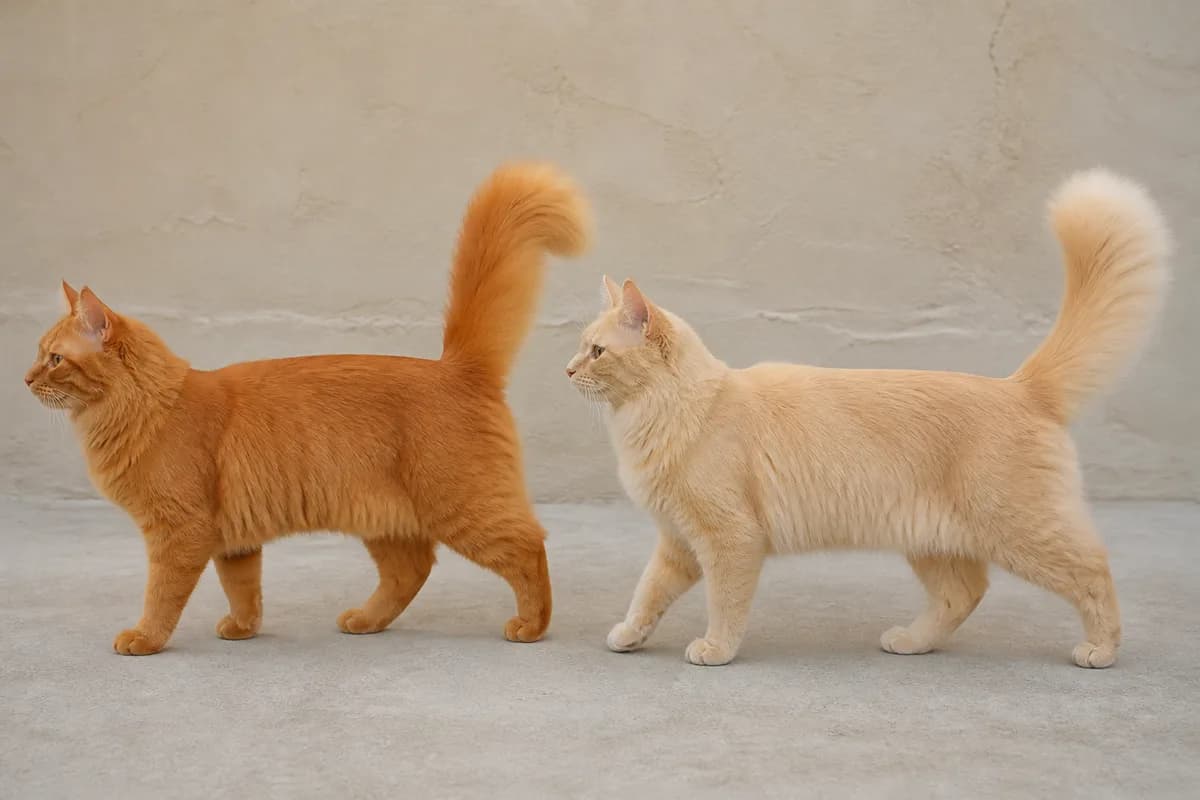
When markings are subtle, examine the face, legs, and tail as well as the torso. Tabby bars may be easier to see there than along a long flowing side coat. A kitten’s developing coat can make the first description uncertain, so compare the current appearance with the color listed in the registration application rather than inventing a rare new shade.
Turkish Angora tabby patterns
A Turkish Angora tabby can show several standard patterns. Classic tabby has broad markings and side swirls, mackerel tabby has narrow vertical penciling, spotted tabby breaks the body pattern into spots, and ticked tabby reduces obvious body striping while keeping markings on the head, legs, and tail. Each tabby Turkish Angora pattern can occur in several accepted color families.
Brown tabby uses a warm coppery brown ground with black markings. Silver tabby has a pale silver ground with black markings. Blue tabby combines a pale bluish ivory ground with deeper blue markings, and red or cream tabbies use darker versions of the same warm color for contrast.
A gentle aumuca slicker brush can separate the hair enough to inspect pattern and base color, but avoid brushing solely to stage a photograph. Coat comfort comes first, and the grooming guide explains how to select tools by coat condition.
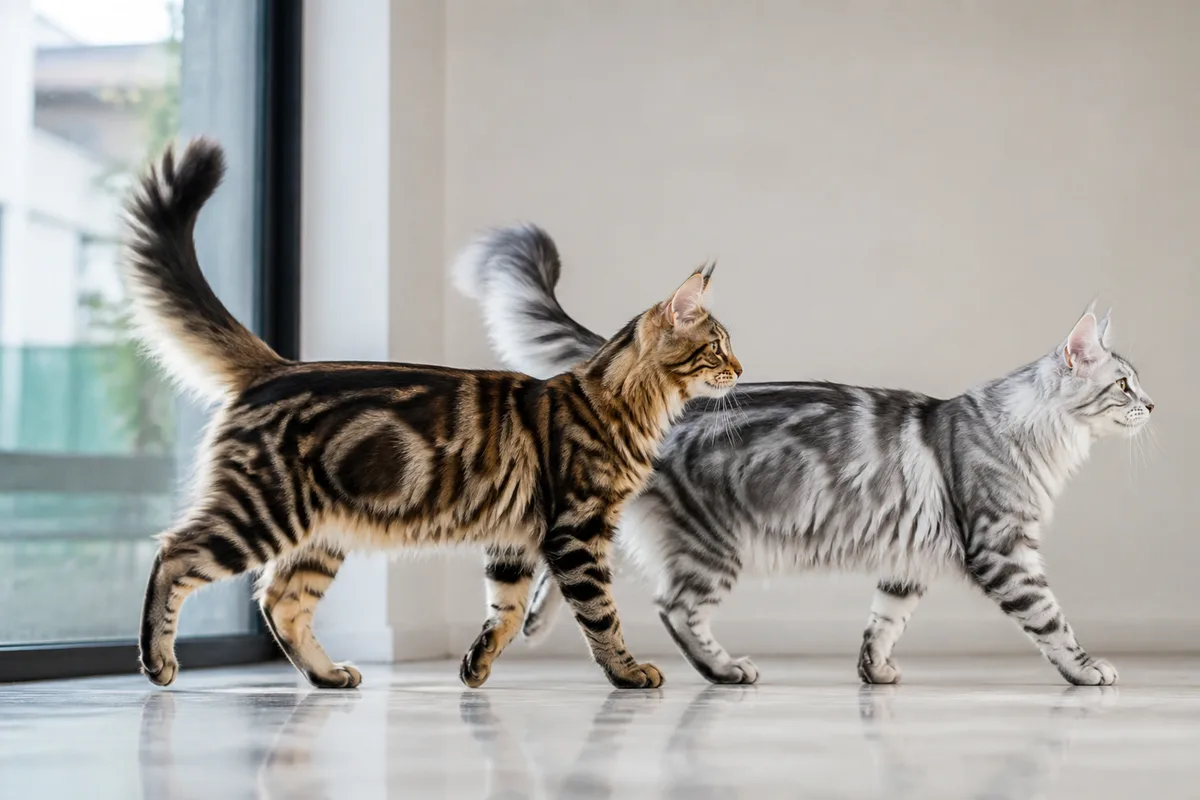
Start pattern identification at the shoulders and sides. Classic swirls form broad shapes; mackerel lines run as narrower vertical bars; spotted markings should read as spots rather than broken camera shadows; and ticking is best judged by the individual banded hairs plus the remaining face, leg, and tail marks. Long hair can soften every boundary, so use several views.
Next name the ground and marking color, then add white if present. “Silver mackerel tabby and white” communicates much more than “gray striped.” That precision is helpful for matching veterinary, microchip, registry, and lost-pet records even when the cat will never be shown.
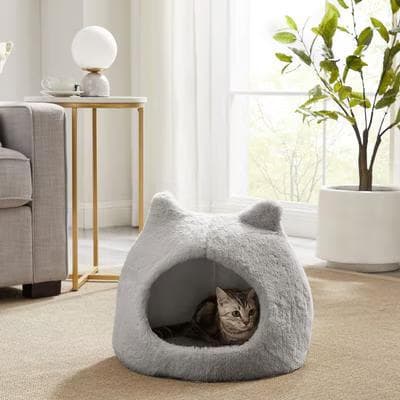
Covered, igloo-style cat bed in soft plush with a water-resistant bottom, giving cats a cozy enclosed spot to curl up. Grey.
Petful may earn a commission when you click through to Chewy, at no extra cost to you.
Tortoiseshell and blue-cream
Tortoiseshell combines black with red patches or softly intermingled red areas. The red can show more than one shade. Blue-cream is the dilute counterpart, with blue and cream patches or intermingling. These patterns can also appear with white in accepted classes.
The everyday word tortie is useful, but a precise description notes whether white is present and whether the dark base is black or blue. Torbie describes a patched tabby, where tabby patterning and red or cream patches occur together. Do not call every mottled coat tortoiseshell without checking the pattern.
Patch size is not a quality scale for a companion cat. One tortoiseshell may have bold separated areas while another has colors woven closely through the coat. Long hair and seasonal fullness can blur the boundaries further. Describe the distribution that is actually present and avoid personality claims based on the pattern.
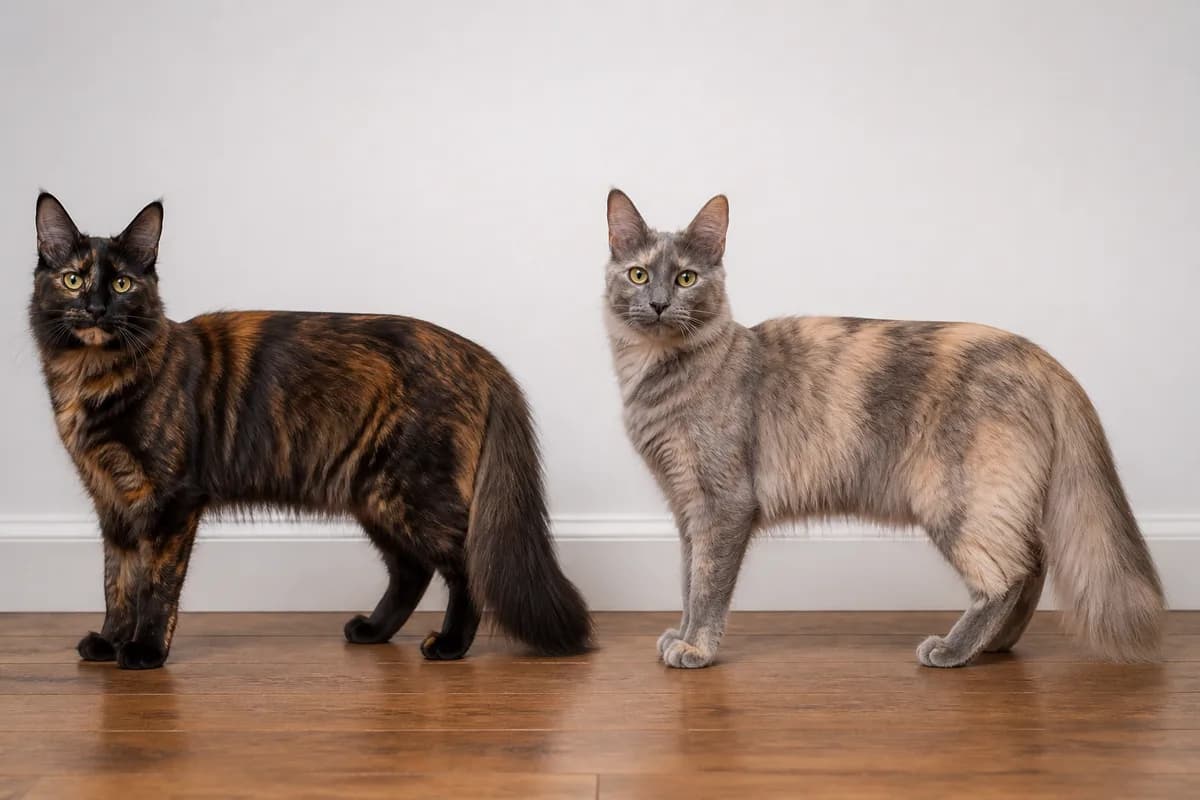
White spotting changes the class and the visual balance. A small white area, a clearly bicolored coat, and a calico distribution are not interchangeable just because black and red are also visible. Full-body photographs plus the formal record help distinguish them without turning a subjective color impression into an ancestry claim.
Calico and dilute calico
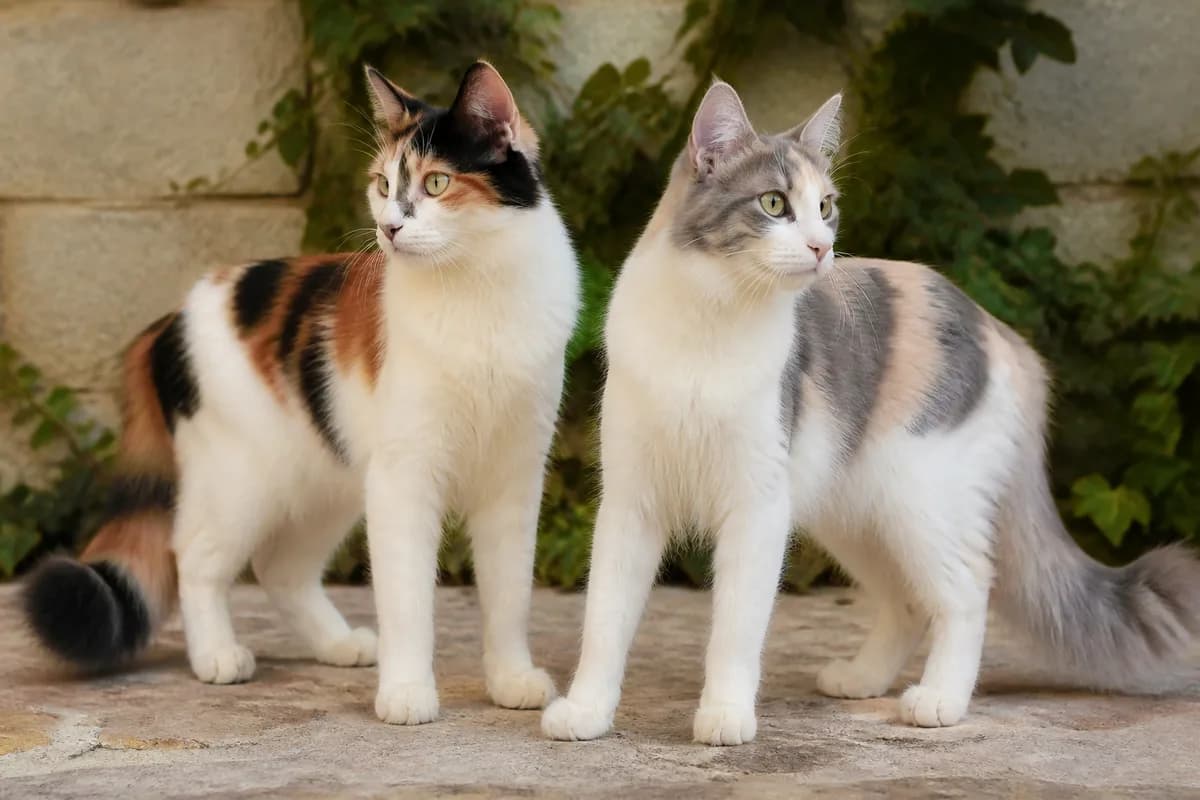
Calico combines white with distinct black and red patches; tabby markings may appear inside the red patches. Dilute calico uses blue and cream instead of black and red. The amount and placement of white can vary, so two registered cats in the same class may look very different.
A photograph should show the whole body, not only the face. Head markings can make a mostly white cat look more colorful than it is, while side and tail views reveal the actual distribution. Use neutral daylight and avoid filters that shift blue toward lavender or red toward brown.
If tabby striping is clear inside the colored patches, the more specific patched-tabby-and-white terminology may apply in the standard. That distinction cannot always be made from a small listing thumbnail. Ask for an unfiltered standing side view and the registered color description, especially when a seller uses calico as a broad label for every three-color coat.
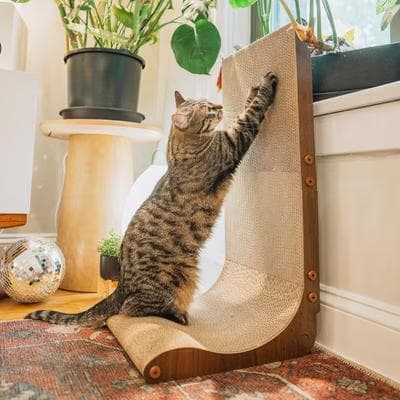
Curved cardboard wall scratcher with a wood frame that protects walls and gives cats a satisfying vertical scratch surface.
Petful may earn a commission when you click through to Chewy, at no extra cost to you.
Smoke and shaded coats
A smoke coat has a pale or white base with deep color on the outer portion of each hair. At rest, a black smoke cat can appear mostly black; in motion or when the fur is parted, the light base becomes visible. Blue, red, and cream smoke descriptions follow the same principle with their respective tipping colors.
Shaded coats create a mantle that becomes lighter on the chin, chest, belly, and underside. Young cats may show temporary barring or ghost markings as color develops. That is one reason a kitten photograph should not be treated as a final adult color certificate.
Routine handling with Frisco deshedding brush or Mr. Peanut grooming gloves may help remove loose hair, but the tool should glide without scraping skin or breaking the fine coat. Stop if the cat resists or the skin looks irritated.
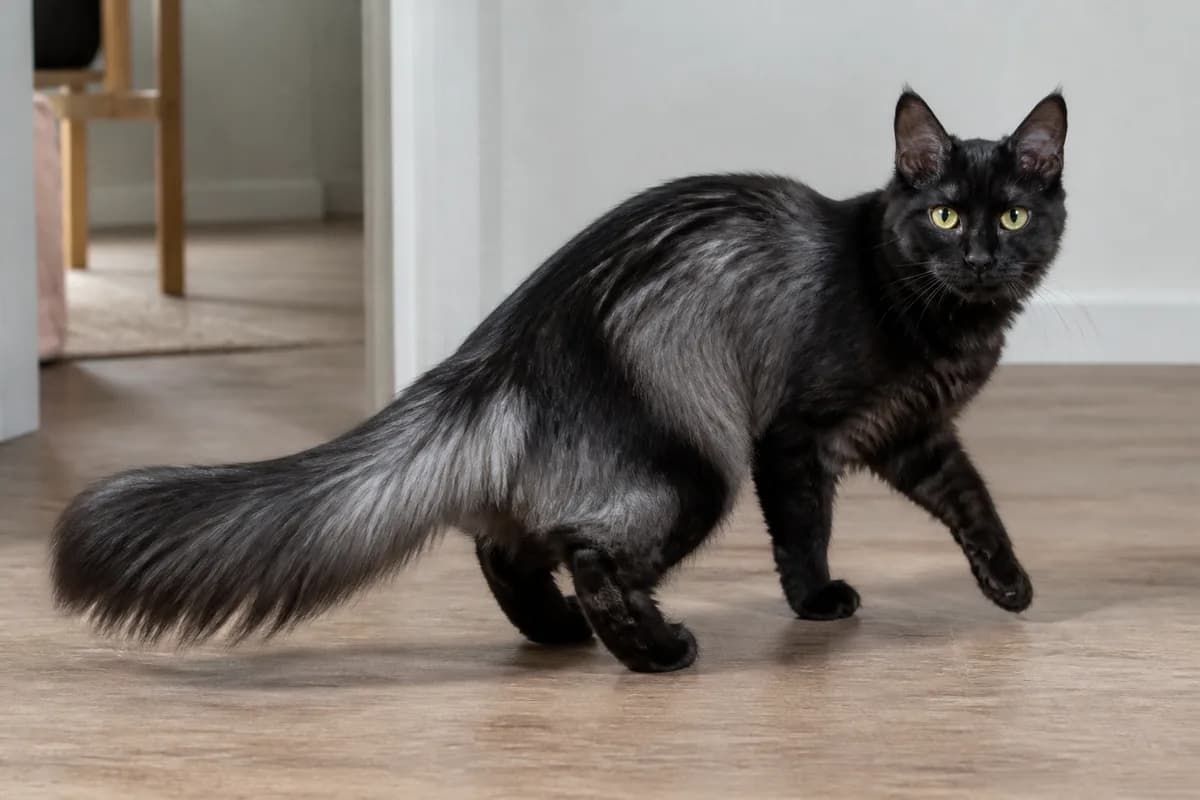
A smoke effect should be assessed down the shaft, not from a pale reflection on top of dark hair. Part a small area without pulling and let the coat fall naturally again. Shaded color is distributed more gradually and creates a different overall mantle. Both can look dramatically different between a still portrait and a moving cat.
Do not confuse a pale base with dry skin, clipped regrowth, sun fade, or a camera exposure that lifts shadows. Compare multiple body areas and dates, then use the pedigree or registration record when the class matters. A sudden coat change belongs in a health assessment before it becomes a color-label exercise.
Bicolor and tabby-and-white
Bicolor includes accepted solid, smoke, parti-color, or tabby color combined with white. CFA allows a wide range of white spotting, including low white and van-like distributions. A small button or locket alone does not necessarily place the cat in the bicolor class.
Tabby-and-white descriptions should name the tabby color and pattern, such as brown mackerel tabby and white or silver classic tabby and white. That creates more useful identification than a vague phrase such as mixed color. It also reduces confusion with a Turkish Van, whose breed identity cannot be inferred from the van pattern alone.
A Necoichi wall scratcher gives any color Turkish Angora an appropriate scratching option. The placement should follow traffic patterns and resting areas, not the room where the coat photographs best.
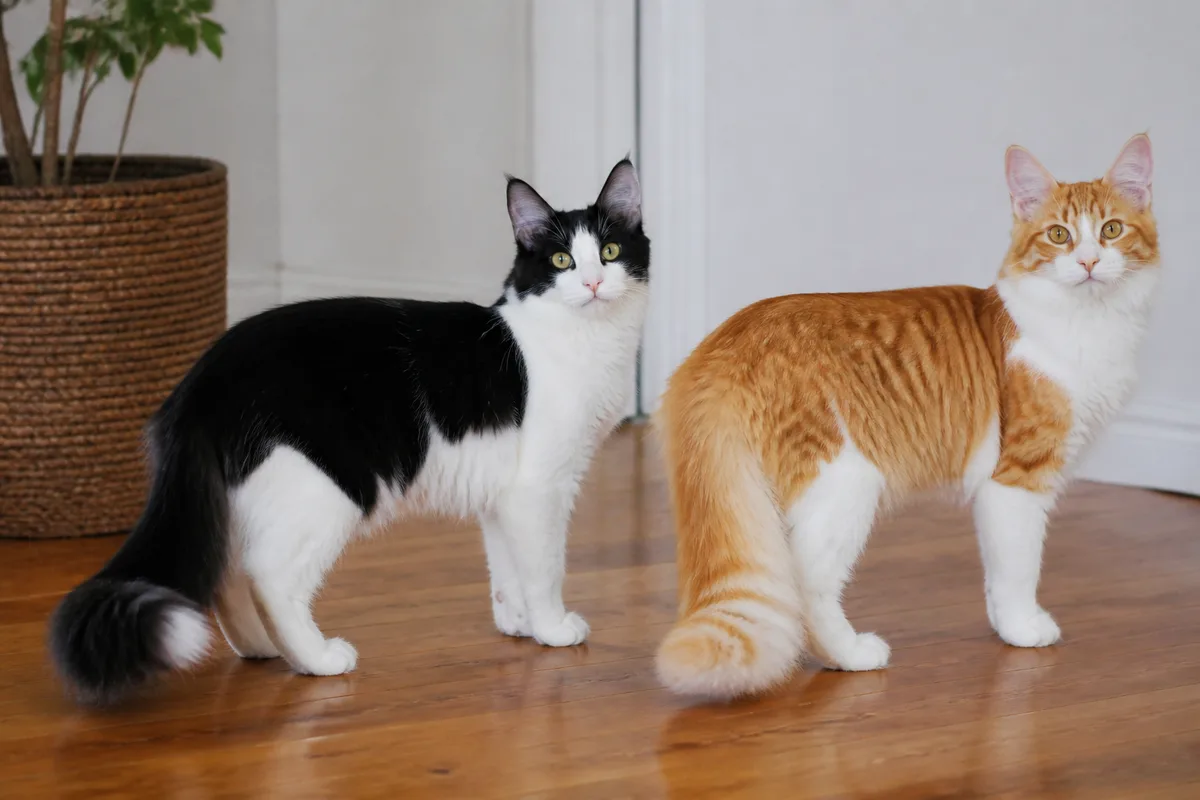
Van-like describes color concentrated mainly on the head and tail with a largely white body. It can occur as a pattern in cats that are not Turkish Vans. Conversely, a documented Turkish Angora may display substantial white without changing breeds. Keep pattern, breed standard, and pedigree as three separate pieces of information.
For records, note the color patches that are unlikely to change with grooming: a mark near one ear, rings on the tail, a colored saddle, or an asymmetrical face. Those details can help identify an individual cat, but they still do not establish ancestry. A microchip and current registration remain more reliable if the cat is lost.
Colors the CFA standard does not accept
The CFA Turkish Angora standard disqualifies colors or patterns indicating hybridization, including chocolate, lilac, the Himalayan or pointed pattern, and combinations of those with white. A listing that promotes a chocolate, lavender, or pointed Turkish Angora should trigger questions about ancestry and registry status.
The everyday word flame point is especially confusing. Red-orange markings on the face, ears, legs, and tail can describe a pointed pattern, but the pointed pattern is not accepted for a CFA Turkish Angora. Do not force a popular search label into the breed standard.
Chocolate, lilac, and pointed patterns are disallowed by the CFA Turkish Angora standard. Not accepted is a registry and breed-standard statement, not a diagnosis of the cat’s health or value as a companion. A cat with an unaccepted pattern may be wonderful, but the seller should not represent that pattern as a rare CFA Turkish Angora feature. Ask which registry issued the pedigree, what color appears on it, and whether breeding outside the standard is disclosed.
- Chocolate, lilac, and pointed patterns are not accepted under the CFA Turkish Angora standard. Ask for the registered color and traceable pedigree rather than relying on a rare-color claim.
How lighting changes color
Warm indoor bulbs can make blue look brownish and cream look orange. Cool shade can flatten red and make black look blue. Phone processing may lift shadows, sharpen pattern edges, or alter white balance. Photograph the cat in indirect neutral daylight, include a full-body view, and avoid filters.
Lighting and age can change appearance without changing the registered color. Kittens can show temporary markings, smoke or shaded color can reveal itself as the coat grows, and seasonal length changes how light moves through the hair. Keep dated photos in consistent neutral conditions if tracking development, but use registration records for the formal color description and avoid inventing a new color from one image.
Use the same room, time of day, camera, and approximate position when comparing dates. Include one standing side view, one face view, and one gently parted coat view only if the cat is comfortable. Do not use flash close to the eyes or hold the cat in a stressful pose. Consistency is more informative than dramatic studio lighting.
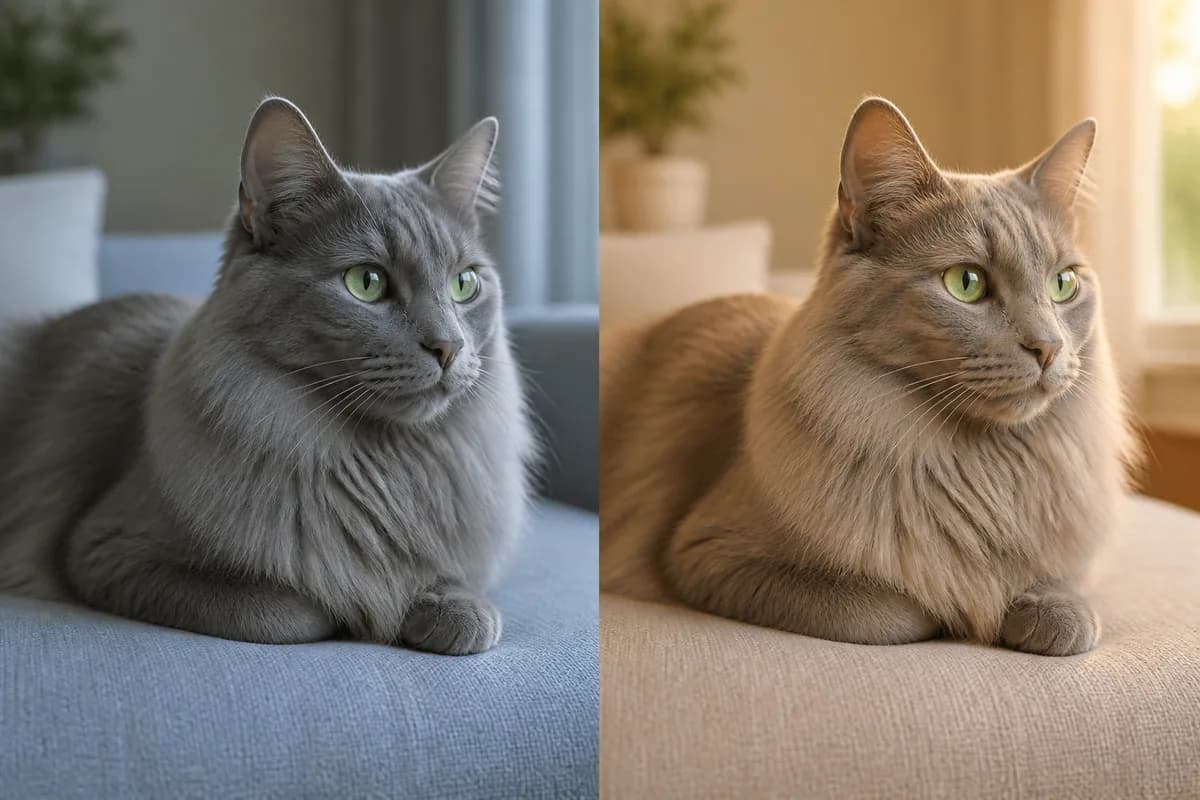
Screen settings create another layer of variation. Two people can view the same file with different brightness, color temperature, and saturation. If a purchase depends on an exact color claim, a remote photograph is weak evidence; the pedigree and registered description should carry the decision.
How to identify color without guessing breed
First describe what is visible: base color, pattern, white spotting, and eye color. Second compare those observations with the current standard. Third check pedigree and registration records. The first two steps describe appearance; the third addresses ancestry.
- Record the base color in neutral daylight.
- Name the pattern and the amount of white.
- Note eye color without treating it as ancestry proof.
- Compare the description with the current registry standard.
- Match the formal description to pedigree and registration records.
Never reverse that order by deciding a white, orange, gray, or tortie cat must be a Turkish Angora. Domestic longhairs can share every broad color and many structural traits. Breed identity is a documentary question even when the coat is a perfect visual match.
| Evidence | What it supports |
|---|---|
| One photograph | A preliminary visual description affected by light and angle |
| Neutral-light full-body views | Better coat and pattern description |
| Current breed standard | Whether a color or pattern is accepted for registration or showing |
| Pedigree and registration | Documented breed ancestry and formal color record |
| Seller rarity claim | Marketing only unless tied to a named current data source |
Match the paperwork to the animal. Confirm the name or litter identity, sex, birth date, microchip when present, parents, registered color, and breeder. A genuine-looking document that belongs to another cat does not solve the identification problem. Contact the named registry through its official channel when a record appears inconsistent.
Are any Turkish Angora colors rare?
The standard does not provide a current frequency table for accepted colors, so it cannot support a definitive rarest-color ranking. Breeder populations and litters also change. A color may be difficult to find locally without being the rarest worldwide.
Ask anyone making a rarity claim to define the population, geography, registry, and time period. “Rare in this litter,” “rare among one breeder’s cats,” and “rare across all registered Turkish Angoras” are very different claims. Without a named count or current registry report, treat the word as marketing context rather than a measurable fact.
Waiting for one preferred color can narrow an already small search and may encourage long-distance or rushed transactions. Decide which traits are preferences and which welfare, documentation, temperament, or household requirements are nonnegotiable. The soundest match may be a different accepted color than the one that began the search.
Keep rarity from controlling the purchase
Use the price guide and kitten guide to keep rarity language from controlling the transaction. A PawsPik stainless steel fountain or Frisco feather teaser wand supports care and play regardless of coat color; products should solve an individual need, not reinforce a color premium.
Coat color and grooming
Color does not change the basic single-coat care plan, but dirt, saliva staining, loose hair, and sun fading may be more visible on some coats. Groom for skin and coat health rather than cosmetic whitening or darkening. Avoid products that promise to alter color or contain medication unless a veterinarian recommends them for the individual cat.
Use clean tools, short sessions, and enough light to see the skin. Sudden thinning, greasy texture, sores, dandruff, intense licking, or a new color change at the skin level deserves a closer look and may require veterinary care.
Photograph a persistent change before washing or clipping it, note when it began, and record any itch, odor, diet change, medication, sun exposure, or grooming product. That evidence helps a veterinarian assess the skin and coat. Cosmetic treatment can remove a clue or worsen irritation, so health questions come before restoring a show-ready appearance.
Turkish Angora color FAQs
These concise answers preserve the article ownership boundaries and the evidence limits explained above.
There is no documented rarest color of Turkish Angora in the CFA standard. The standard says all accepted colors should be considered of equal value, and it does not publish a current frequency table that proves one accepted color is the rarest. Treat rare-color claims as marketing unless the seller provides a named data source. Use registry terminology to describe the coat, but use pedigree and registration documents, not color, eye color, a photograph, or a rarity claim, to establish breed ancestry. Relevant evidence includes all colors equal and many colors and patterns.
No. White is historically famous, but the standard also recognizes black, blue, red, cream, tabbies, smokes, tortoiseshell, calico, bicolor, and additional accepted combinations. Use registry terminology to describe the coat, but use pedigree and registration documents, not color, eye color, a photograph, or a rarity claim, to establish breed ancestry. Relevant evidence includes standard category and not ancestry proof.
Yes. Red is the registry term commonly searched as orange, and blue is the registry term commonly searched as gray. Both can appear in solid or patterned forms allowed by the standard. Use registry terminology to describe the coat, but use pedigree and registration documents, not color, eye color, a photograph, or a rarity claim, to establish breed ancestry. Relevant evidence includes standard category and not ancestry proof.
No fixed coat-to-eye match is required. Turkish Angora eyes may be blue, green, green-gold, amber, or odd-eyed, and eye color does not prove ancestry. Use registry terminology to describe the coat, but use pedigree and registration documents, not color, eye color, a photograph, or a rarity claim, to establish breed ancestry. Relevant evidence includes standard category and not ancestry proof.
No. A rare-color label is not ancestry proof. Compare the coat description with the standard, then rely on pedigree documentation and registration for breed identity. Use registry terminology to describe the coat, but use pedigree and registration documents, not color, eye color, a photograph, or a rarity claim, to establish breed ancestry. Relevant evidence includes standard category.

Coreen Saito is a pet writer and longtime shelter volunteer with more than a decade in animal rescue. She covers cat behavior, breed care, and the small, ordinary science of sharing a life with companion animals, with a particular focus on honest takes about the products and decisions that actually matter. At home in Arizona, she's outranked by Mac (a dog with the loudest opinion in the house), Rebel (a cat who governs by quiet authority), and Meri (an orange tabby who runs the late shift and the laundry basket). She writes about all three, plus the rescues that keep coming through her life, at LifeWithMinty.com.
Sign up for expert-backed reviews and safety alerts all in one place.