Turkish Van vs Turkish Angora: Key Differences
Compare the Turkish Van vs Turkish Angora by origin, build, coat, color pattern, temperament, grooming, water interest, and pedigree evidence.
Petful is reader supported. As an affiliate of platforms like Amazon and Chewy, we may earn a commission when you buy through links on this page. There is no extra cost to you.
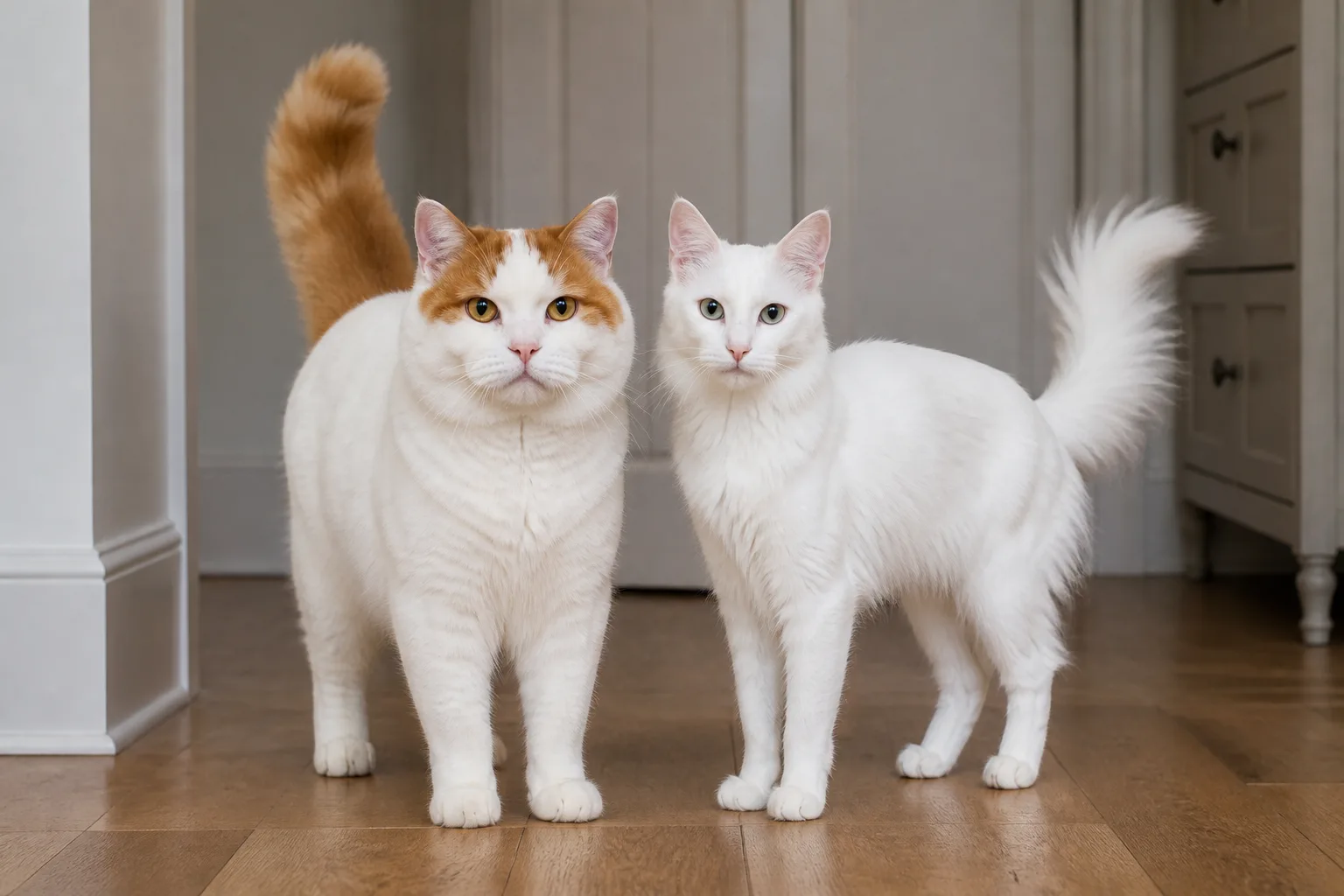
Turkish Van vs Turkish Angora is a comparison of two distinct breeds, not short- and long-haired versions of the same cat. Both have histories in Turkey and semi-long to long flowing coats, but their regional origins, body structure, coat texture, color traditions, and standards differ. A Turkish Van is generally more substantial; a Turkish Angora is finer boned, longer lined, and more ethereal in movement.
This page owns the comparison. Use the Turkish Angora breed pillar, price guide, kitten guide, color guide, and grooming guide for deeper Angora decisions.
Petful may earn a commission when you click through to Chewy, at no extra cost to you.

Sign up for expert-backed reviews and safety alerts all in one place.
Turkish Van vs Turkish Angora: the short answer
The CFA Turkish Van profile says the breed developed in the Lake Van region, while the CFA Turkish Angora profile connects the Angora with Ankara and a separate preservation history. Shared national origin does not merge the breeds.
Use the whole cat as a clue set. Van: substantial, broad, muscular, cashmere-like semi-long coat, and a famous head-and-tail color tradition. Angora: medium, fine-boned but muscular, long and linear, silky single coat, large high ears, and a wider accepted color range. Then confirm ancestry with records.
Turkish Vans and Turkish Angoras are distinct breeds, and pedigree records are the strongest practical evidence for either identity. A useful answer compares several standard-consistent traits together, labels overlaps honestly, and avoids turning one color, behavior, or seller description into a diagnosis. The difference becomes clearer when the whole evidence set is used in order.
- 1Turkish Vans and Turkish Angoras are distinct registered breeds
- 2Turkish Vans are generally more substantial and broad while Turkish Angoras are finer and more linear
- 3A van pattern or interest in water cannot prove breed
- 4Pedigree and registry records are the strongest ancestry evidence
Turkish Van vs Turkish Angora comparison
The Turkish Van vs Turkish Angora comparison combines origin, build, head, coat, tail, color, and behavior. The same evidence also answers Turkish Angora vs Turkish Van and Turkish Van vs Angora searches without changing the breed standards. No single visible clue carries the whole decision, individual cats can fall toward the edges of a standard, and random-bred cats can resemble either one.
The table describes breed ideals, not a diagnostic test. If a cat has no pedigree records, describe the visible traits and avoid certainty. This is especially important in shelters, where accurate history may not be available.
The difference between a Turkish Van and Turkish Angora is clearest across the whole evidence set. A Turkish Van is generally more substantial, while a Turkish Angora is generally finer boned and more linear. Compare those tendencies with head shape, coat texture, tail, and documented regional history. The distinction remains uncertain when the only evidence is one photograph, a van pattern, or a claim that the cat enjoys water.
| Feature | Turkish Van | Turkish Angora |
|---|---|---|
| Historic region | Lake Van area of eastern Turkey | Ankara and central Turkish preservation history |
| Build | Substantial, broad, muscular | Medium, fine-boned, long, firmly muscled |
| Head and ears | Broad wedge and substantial expression | Smooth medium-long wedge with large high-set ears |
| Coat | Semi-long, cashmere-like, seasonal fullness | Fine silky single coat with ruff, britches, and plume |
| Color tradition | White body with color mainly on head and tail is iconic | White is famous, but many solids and patterns are accepted |
| Identification | Pedigree and registry records | Pedigree and registry records |
Covered, igloo-style cat bed in soft plush with a water-resistant bottom, giving cats a cozy enclosed spot to curl up. Grey.
Petful may earn a commission when you click through to Chewy, at no extra cost to you.
Body and head shape
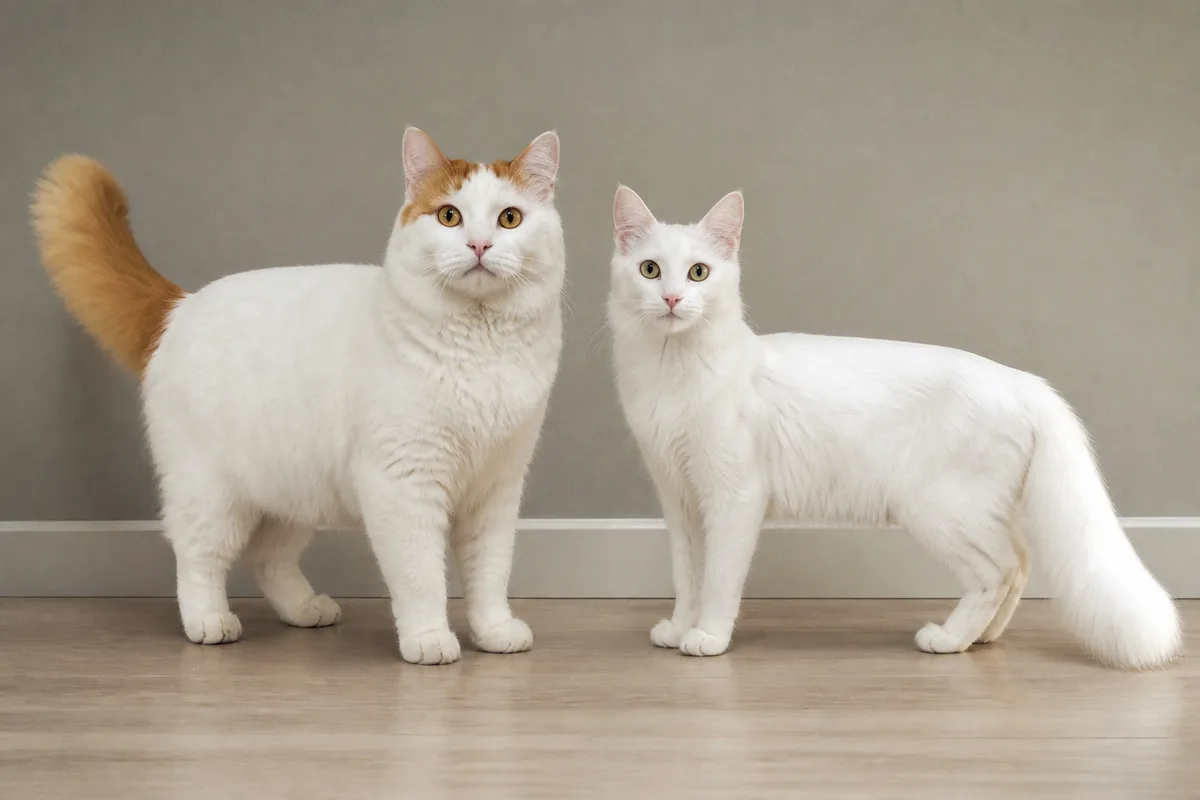
A Turkish Van should feel substantial, with broad strength and a body that takes years to fully mature. The Turkish Angora standard values balance, grace, fine boning, and length, with a narrow-looking but muscular body and hindquarters slightly higher than the shoulders.
The Angora’s large, vertical, closely set ears and two-plane profile create a sharp alert expression. The Van’s head reads broader and more substantial. Hair can exaggerate or hide these shapes, so photographs taken from one angle are weak evidence.
Coat texture and seasonal fullness
The Turkish Angora coat is fine, silky, and single, with a full ruff and plume but no dense woolly undercoat. The Turkish Van coat is commonly described as cashmere-like and changes noticeably with the seasons. Both can shed, and both need grooming based on condition rather than a stereotype.
A gentle aumuca slicker brush can help with loose hair when it glides comfortably, but the Turkish Angora grooming guide should not be treated as a complete Turkish Van routine. Coat density, length, age, mobility, and tolerance change the plan.
Color and pattern differences
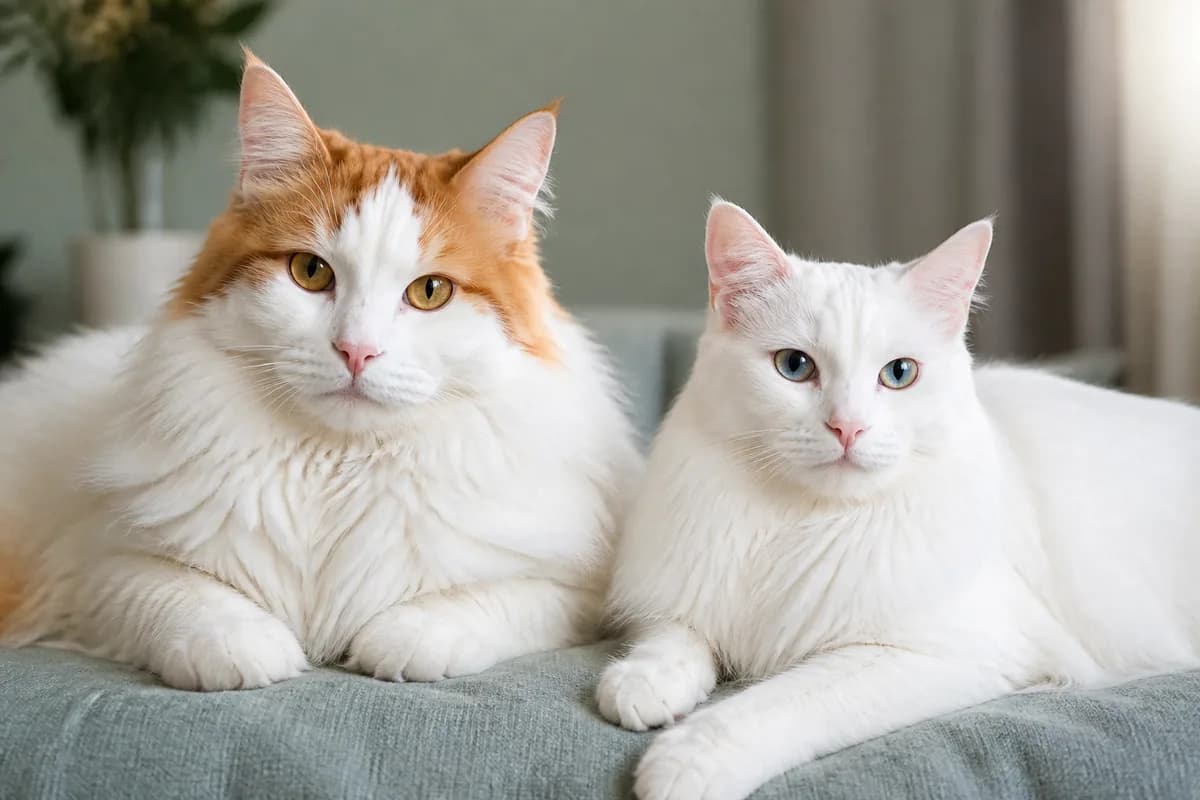
The classic Turkish Van image is a white body with color concentrated on the head and tail. That distribution is called the van pattern, but it appears outside the breed. The Turkish Angora standard accepts white plus many solid, tabby, smoke, tortoiseshell, calico, and bicolor coats.
A white cat with a colored tail is not automatically a Turkish Van, and an all-white longhair is not automatically a Turkish Angora. Pattern describes appearance. Pedigree documents ancestry. Confusing those jobs is the most common identification error.
See the Turkish Angora color guide for exact standard terms. A Necoichi wall scratcher or Best Friends by Sheri covered bed serves the same normal behavior and rest needs regardless of pattern.
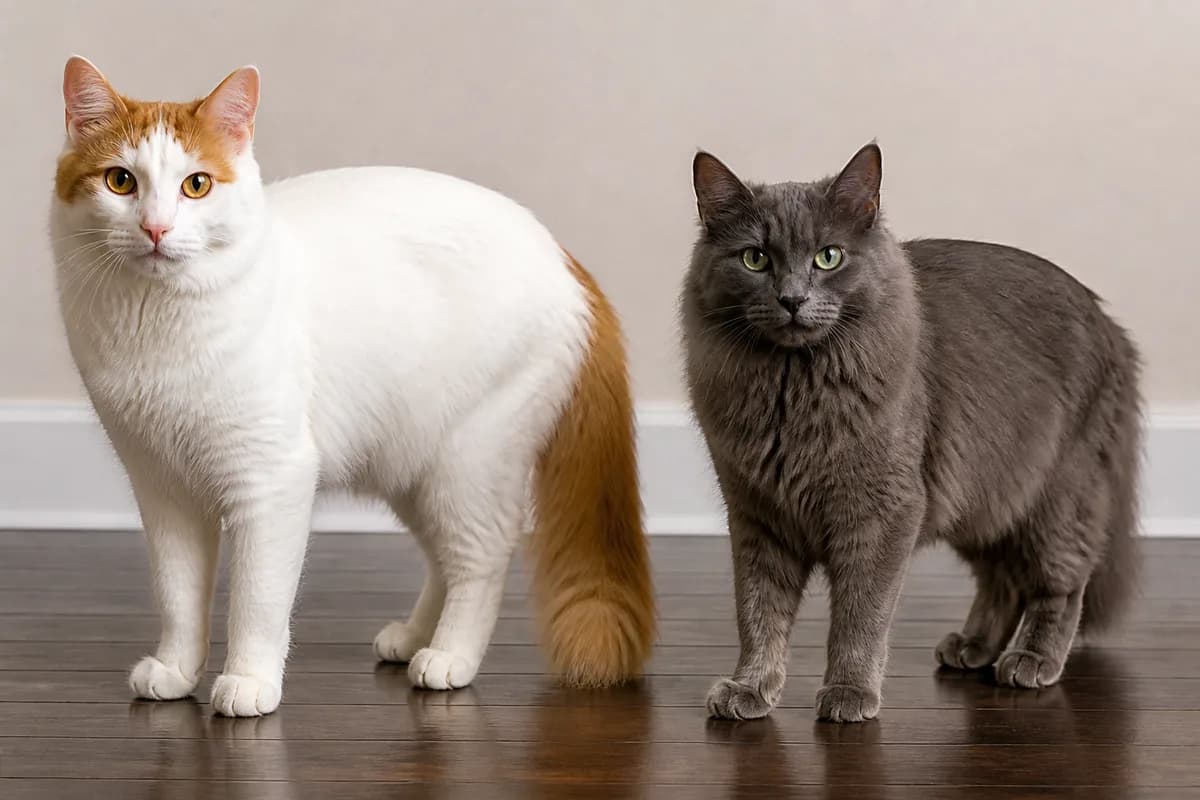
- Color concentrated on the head and tail can occur in cats without Turkish Van ancestry. Use the pattern as a description and pedigree records as ancestry evidence.

108-oz stainless steel pet fountain with quiet pump and water-level window. Bengals are notoriously water-obsessed; a flowing fountain encourages hydration and pulls them away from sinks and toilets.
Petful may earn a commission when you click through to Chewy, at no extra cost to you.
Tail and hindquarter differences
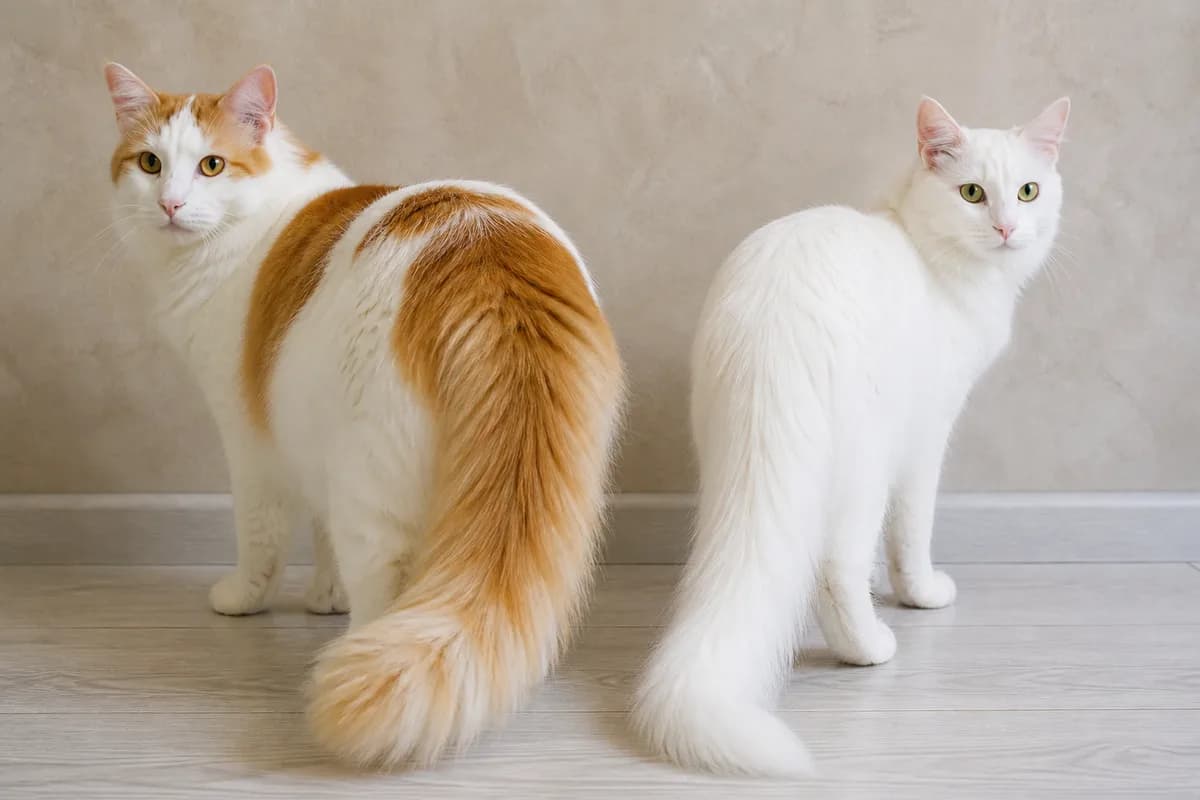
Both breeds carry impressive tails, but the silhouette works with the body differently. The Turkish Angora tail tapers from a wide base to a narrow end and is carried as a full plume beside long fine lines. The Turkish Van’s substantial hindquarters and brush tail reinforce a broader, more powerful outline.
Tail color also attracts attention in a classic Van pattern, while an Angora tail can match a solid coat, carry tabby rings, show smoke tipping, or combine color with white. Never use tail color alone to name the breed.
Temperament and activity
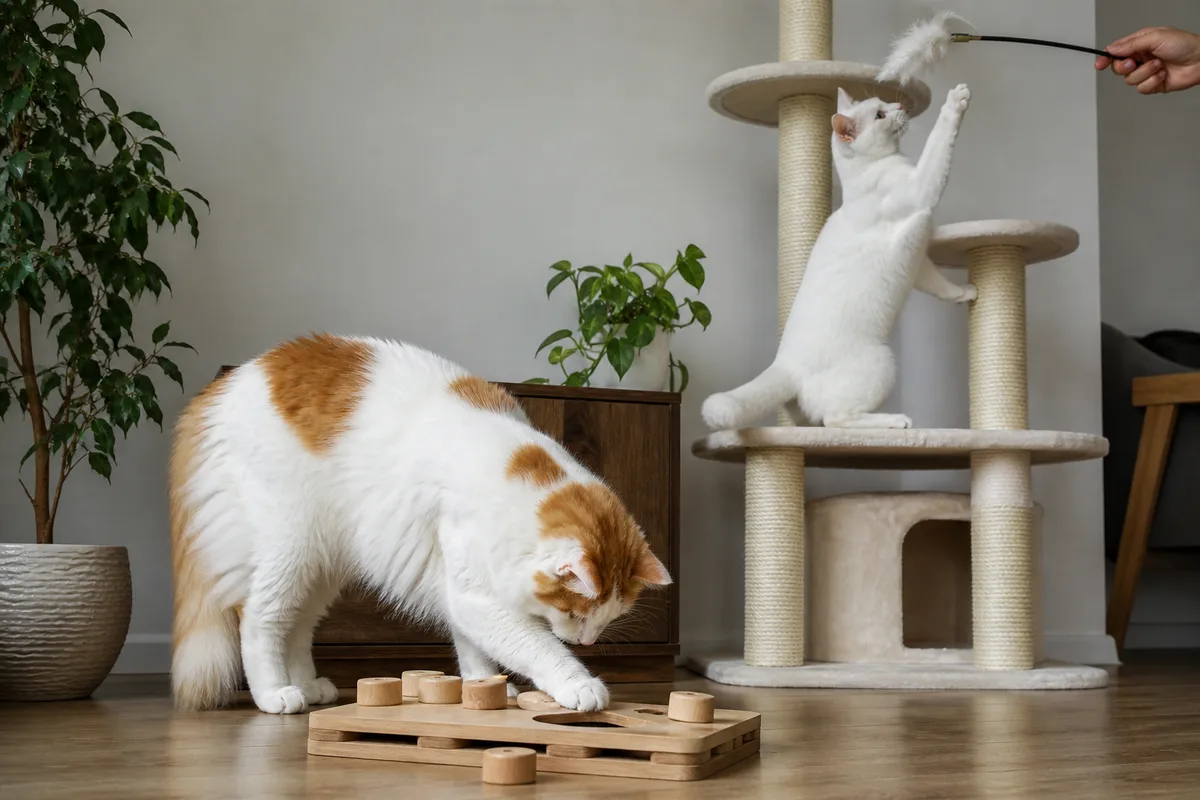
Both breeds are often described as active, intelligent, and involved with people, so temperament is an overlap rather than a clean divider. A Turkish Angora may seek the highest shelf and supervise household routines. A Turkish Van may bring substantial athletic play and strong opinions. Neither description guarantees one individual’s handling tolerance.
Provide climbing, scratching, puzzle opportunities, and person-led play. A Frisco feather teaser wand and Yaheetech cat tree support activity, but introduce them based on confidence and space. Observe recovery after novelty, social interest, and preferred contact instead of testing the cat against a breed stereotype.
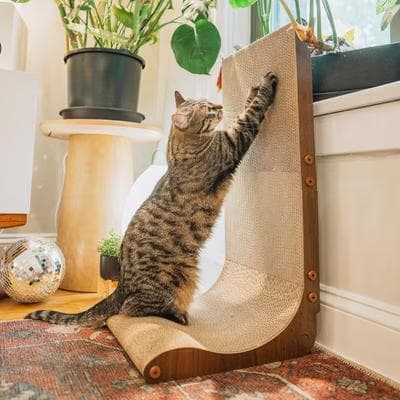
Curved cardboard wall scratcher with a wood frame that protects walls and gives cats a satisfying vertical scratch surface.
Petful may earn a commission when you click through to Chewy, at no extra cost to you.
Do both breeds like water?
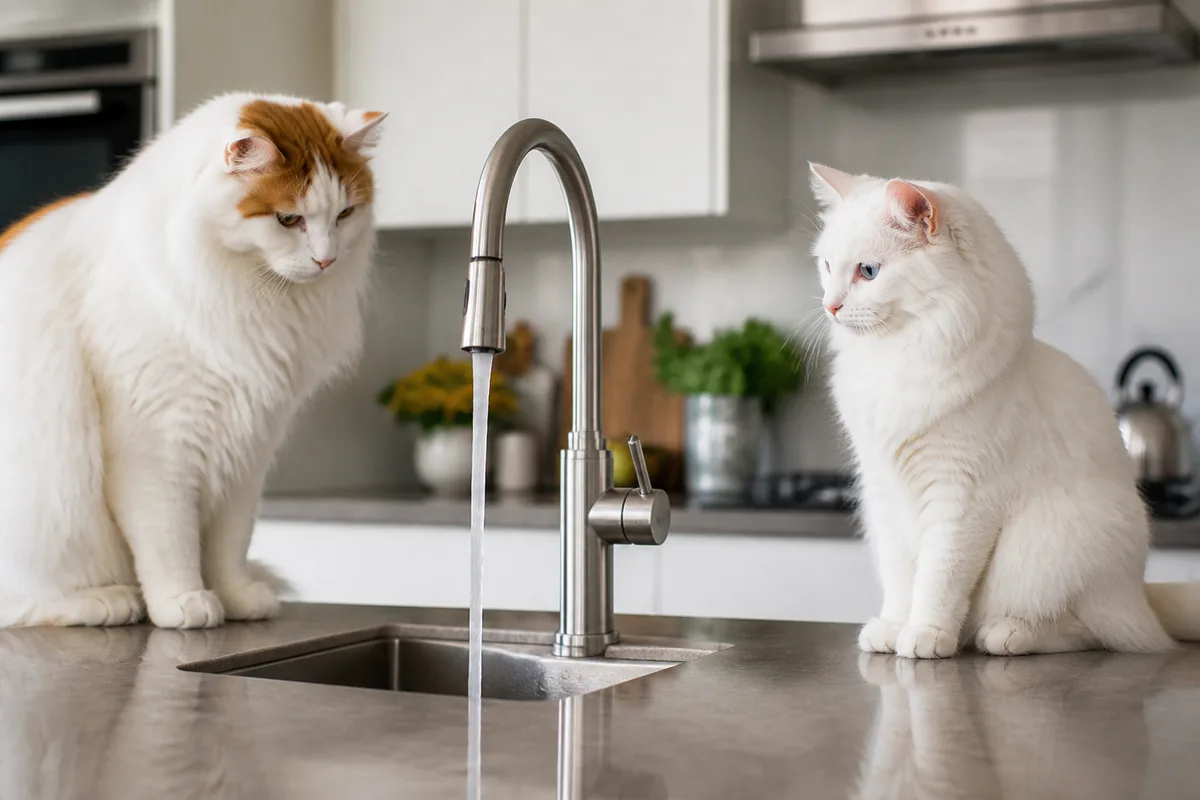
The Turkish Van has a strong popular association with swimming and water play, while Turkish Angora profiles also mention water curiosity. Pedigree limits matter, and water behavior is not a diagnostic breed trait. The useful answer is individual: some cats investigate faucets, some play with moving water, and others avoid wet surfaces. Water interest cannot identify either breed.
A PawsPik stainless steel fountain may appeal to a cat that likes moving water, but keep an ordinary bowl available during the transition and clean either option regularly. Never place a cat in water to test ancestry or force a bath because a breed profile says the cat should enjoy it.
Which clues are actually reliable?
For Turkish Van and Turkish Angora identification, rank evidence by strength. A seller label, social-media comment, or behavior story is weak. A full-body comparison with the standard is suggestive. Traceable breeder records add context. A registry pedigree tied to the individual cat is the strongest practical ancestry evidence in an ordinary purchase or adoption decision.
DNA ancestry products for cats do not replace breed registration and lineage documents. Random-bred cats can share traits with registered populations, and physical resemblance is not the same as a recent pedigreed ancestor.
The same rule applies when the search order is Turkish Angora and Turkish Van. Color and pattern are low-confidence clues, whole-cat structure and coat are stronger but overlapping clues, and independently verified registration is documentary evidence. If the records are missing, use a descriptive label and leave the ancestry question open instead of overstating certainty.
| Evidence | Confidence | Limitation |
|---|---|---|
| Seller or shelter label | Low | May be a good-faith description without records |
| Van pattern, white coat, or water interest | Low | Shared widely outside either breed |
| Whole-cat standard comparison | Moderate clue | Individual and random-bred overlap remains |
| Parent and breeder records | Stronger | Must be verified and connected to the cat |
| Registry pedigree | Strongest practical evidence | Confirm document identity and registry source |
How pedigree records settle the question
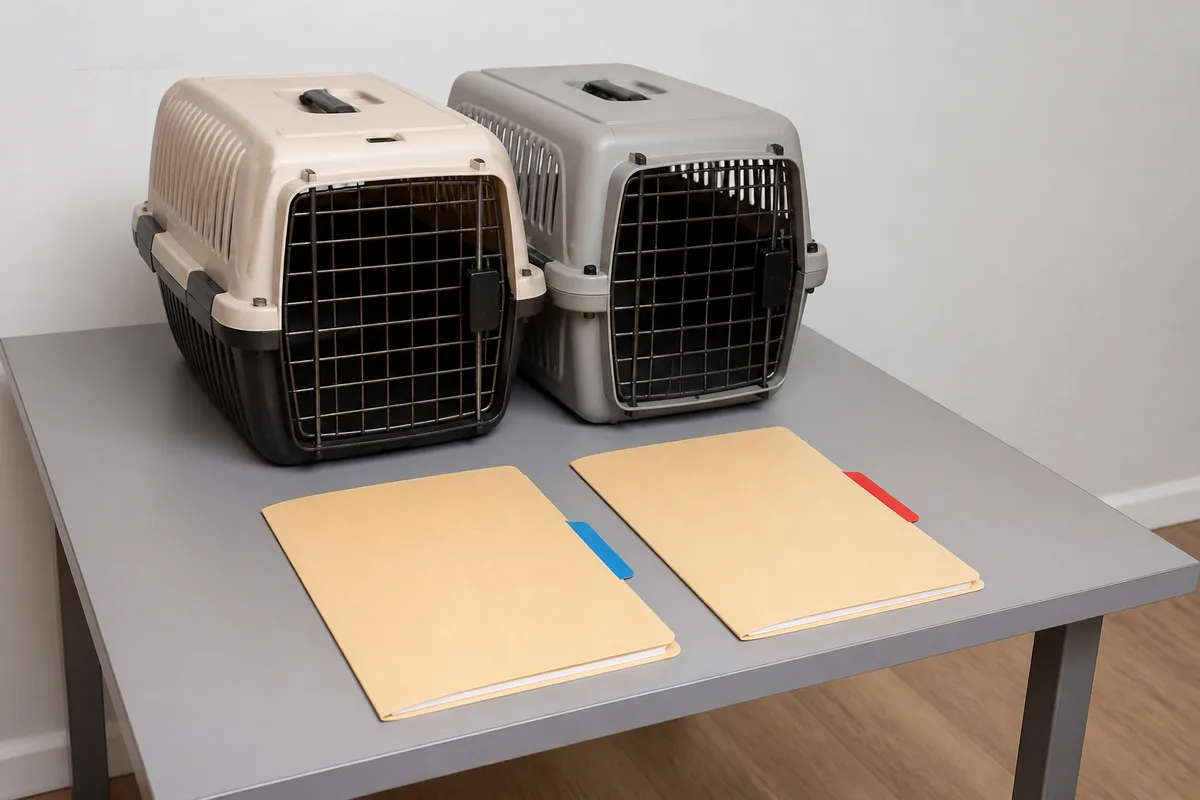
A pedigree should identify the cat or litter and connect the parents across registered generations. Check that the registry, breeder, date, sex, and color information are internally consistent. If the seller says paperwork will arrive later, the contract should explain exactly why and when.
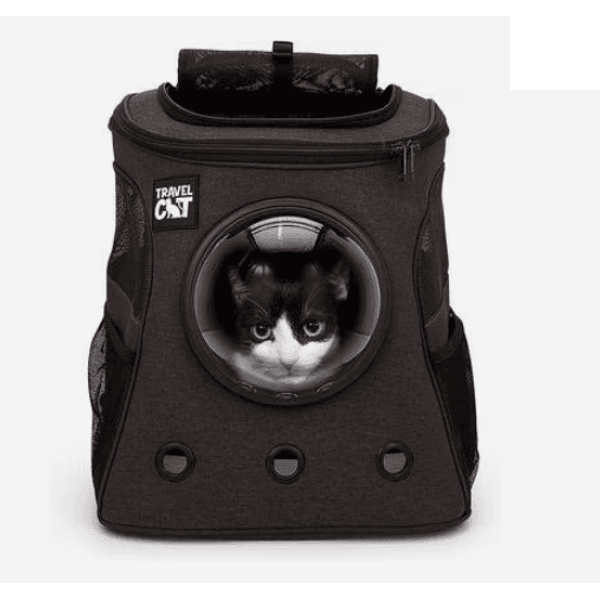
Use a Travel Cat carrier for safe transport while keeping documents dry and separate. Routine Resco cat nail clippers may be useful after the cat settles, but product ownership has no bearing on breed identity.
Turkish Van vs Turkish Angora FAQs
These concise answers preserve the article ownership boundaries and the evidence limits explained above.
A Turkish Van cat is relatively rare compared with many familiar breeds, and Turkish Angoras are also less common. Rarity is not a reliable identification clue or a reason to skip documentation, seller verification, household fit, and health checks. Compare the complete standard-consistent picture, allow for individual overlap, and give pedigree records more weight than color, pattern, size, voice, water interest, or one photograph. Relevant evidence includes distinct breeds.
To tell if a cat is a Turkish Van, compare build, head, coat texture, tail, and pattern together, then check records. A Turkish Van is generally more substantial; a Turkish Angora is finer and more linear, but documentary evidence is stronger than looks. Compare the complete standard-consistent picture, allow for individual overlap, and give pedigree records more weight than color, pattern, size, voice, water interest, or one photograph. Relevant evidence includes distinct breeds.
What is special about a Turkish Van cat is the combination of a substantial athletic build, cashmere-like semi-long coat, regional history, and famous head-and-tail color tradition. Those traits remain clues, while documentary evidence is stronger than looks. Compare the complete standard-consistent picture, allow for individual overlap, and give pedigree records more weight than color, pattern, size, voice, water interest, or one photograph. Relevant evidence includes distinct breeds.
Some Turkish Van cats talk a lot, while others are quiet. Voice is individual variation, not a reliable breed test, and should be interpreted with the cat’s context, body language, needs, and previous learning. Compare the complete standard-consistent picture, allow for individual overlap, and give pedigree records more weight than color, pattern, size, voice, water interest, or one photograph. Relevant evidence includes distinct breeds.
Both breeds may show water curiosity, and the Turkish Van has the stronger popular association. Interest varies by individual, so watching a faucet or playing near water cannot identify a breed. Compare the complete standard-consistent picture, allow for individual overlap, and give pedigree records more weight than color, pattern, size, voice, water interest, or one photograph. Relevant evidence includes distinct breeds.
Yes. Turkish Vans and Turkish Angoras both shed, although their coat texture and seasonal fullness differ. Groom the coat in front of you and adjust by condition rather than a fixed breed calendar. Compare the complete standard-consistent picture, allow for individual overlap, and give pedigree records more weight than color, pattern, size, voice, water interest, or one photograph. Relevant evidence includes distinct breeds.
No. They are distinct breeds with different regional histories and separate standards. Turkish Van and Turkish Angora ancestry should be established by pedigree records, not by a white coat or shared country name. Compare the complete standard-consistent picture, allow for individual overlap, and give pedigree records more weight than color, pattern, size, voice, water interest, or one photograph. Relevant evidence includes breed distinction and individual variation.
The Turkish Van standard describes a more substantial, broad, muscular cat, while the Turkish Angora standard emphasizes fine boning, length, and graceful balance. Individual cats can overlap. Compare the complete standard-consistent picture, allow for individual overlap, and give pedigree records more weight than color, pattern, size, voice, water interest, or one photograph. Relevant evidence includes breed distinction and individual variation.
Yes. A Turkish Van may have the van pattern, with color concentrated mainly on the head and tail. However, random-bred and other cats can show the same pattern, so the pattern is a description and not documentary evidence of Turkish Van ancestry. Compare the complete standard-consistent picture, allow for individual overlap, and give pedigree records more weight than color, pattern, size, voice, water interest, or one photograph. Relevant evidence includes breed distinction and individual variation.
Both breeds may show water curiosity, and the Turkish Van has the stronger popular association. Interest varies by individual, so watching a faucet or playing near water cannot identify a breed. Compare the complete standard-consistent picture, allow for individual overlap, and give pedigree records more weight than color, pattern, size, voice, water interest, or one photograph. Relevant evidence includes breed distinction and individual variation.

Coreen Saito is a pet writer and longtime shelter volunteer with more than a decade in animal rescue. She covers cat behavior, breed care, and the small, ordinary science of sharing a life with companion animals, with a particular focus on honest takes about the products and decisions that actually matter. At home in Arizona, she's outranked by Mac (a dog with the loudest opinion in the house), Rebel (a cat who governs by quiet authority), and Meri (an orange tabby who runs the late shift and the laundry basket). She writes about all three, plus the rescues that keep coming through her life, at LifeWithMinty.com.
Sign up for expert-backed reviews and safety alerts all in one place.