Turkish Angora Grooming: Coat Care, Brushing & Baths
Build a Turkish Angora grooming routine for its silky single coat, including brushing, shedding, mats, bathing, nail care, dental care, and warning signs.
Petful is reader supported. As an affiliate of platforms like Amazon and Chewy, we may earn a commission when you buy through links on this page. There is no extra cost to you.
Turkish Angora grooming is usually simpler than the dramatic plume tail suggests. The breed has a fine silky single coat rather than a dense woolly undercoat, so many cats resist matting better than heavier longhair breeds. Still, coat length, age, mobility, shedding, health, and tolerance vary, so a useful routine starts with observation rather than a rigid calendar.
This page owns coat, brush, shedding, bath, nail, and haircut intent. Use the breed pillar for temperament and identification, the price guide for budget, the kitten guide for early handling, the color guide for coat terms, and the Turkish Van comparison for coat differences between the breeds.
Petful may earn a commission when you click through to Chewy, at no extra cost to you.

Sign up for expert-backed reviews and safety alerts all in one place.
Turkish Angora grooming at a glance
Turkish Angora grooming starts with the silky single coat and gentle combing, not a rigid calendar. The CFA grooming guidance says younger Turkish Angoras may need combing only two or three times a month to control shedding, with more frequent help for some older cats. Individual brushing frequency varies with age, mobility, seasonal coat, condition, and tolerance. Organize grooming by coat condition, stress level, and safe stop points. A weekly hands-on check catches tangles, debris, skin changes, and nail length without assuming a full session is always needed.
Keep sessions brief and predictable. Work when the cat is relaxed, use a nonslip surface, begin in an easy area such as the shoulders, and stop before tail lashing, skin twitching, biting, or escape attempts escalate. Several thirty-second successes are more valuable than one forced marathon.
Separate inspection from intervention. The weekly check may end with no brushing at all when the coat is clean, loose, and tangle-free. On another week, it may identify one friction spot that needs a few supported comb passes. This keeps grooming proportional and gives the cat a history of easy sessions instead of teaching that every touch leads to restraint.
- 1Check the silky single coat at least weekly and groom only as much as the individual needs
- 2Use a comb or gentle brush without scraping the skin
- 3Routine shaving and lion cuts are usually unnecessary
- 4Tight mats, pain, sores, or sudden coat change need professional or veterinary help
Prepare the space before calling the cat over: tools within reach, good light, a stable mat, rewards, and an open exit. Remove dangling cords and close off a fall risk without trapping the cat in a tiny room. If two people are needed, one should reward and observe body language rather than hold the cat down.
Understand the Turkish Angora single coat
A single coat lacks the dense woolly undercoat found in many double-coated breeds. The Turkish Angora body coat varies in length, while the ruff, britches, and tail are fuller. Fine texture allows movement and shine, but the longest friction areas can still tangle.
Run flat fingers over the coat before using a tool. Feel behind the ears, under the front legs, along the belly, at the collar area, and around the hindquarters. Part the hair to see the skin. A smooth surface can hide a small knot close to the body.
A coat that suddenly mats, becomes greasy, thins, or looks unkempt may reflect more than missed brushing. Pain, dental disease, obesity, arthritis, stress, skin disease, or another medical problem can reduce self-grooming. Treat the change as information, not a moral failure by the owner or cat.
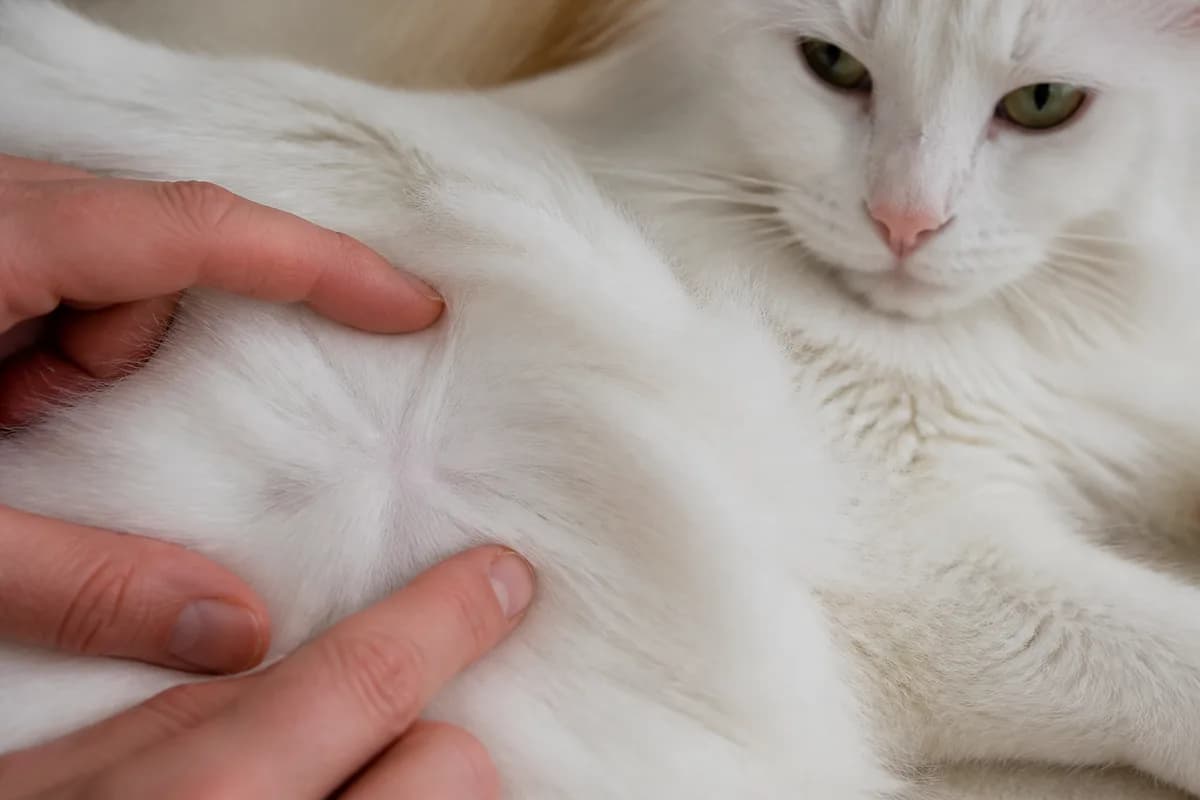
The longest furnishing areas do not all need the same technique. The plume tail should fall and move naturally, so avoid repeated backcombing. Britches may collect litter or stool and deserve a visual check, while the fine hair behind the ears and in the armpits can knot through friction. Work by body area rather than dragging one tool from head to tail.
Skin should look calm beneath the coat. Note redness, flakes, scabs, moisture, odor, flea dirt, parasites, or sensitivity before covering the area again. A photograph and date can help track a change, but do not delay veterinary advice while waiting to see whether a painful or spreading lesion photographs differently.
Petful may earn a commission when you click through to Chewy, at no extra cost to you.
Turkish Angora grooming schedule
Use condition-based intervals. Check the coat weekly, comb when loose hair or tangles appear, inspect nails every one to two weeks, and ask a veterinarian for an individualized dental plan. Ears generally need observation, not routine deep cleaning. Bathing is occasional and based on need.
Record what you find for a month. If the comb glides through and very little hair collects, the cat may need fewer full sessions. If seasonal shedding increases or an older cat cannot reach the back and hindquarters, add help gradually. Avoid turning more grooming into an automatic virtue.
A useful log can be extremely short: date, coat condition, problem area, tool used, session length, and the cat’s response. Add notes for a move, illness, medication, weight change, or seasonal coat shift. Patterns become visible without imposing a daily routine that the coat does not need.
| Task | Starting check | Adjust when |
|---|---|---|
| Coat | Hands-on check weekly | Tangles, debris, seasonal shedding, age, or reduced self-grooming increase |
| Nails | Inspect every one to two weeks | Tips catch fabric or touch the pad |
| Ears | Look during routine handling | Odor, discharge, redness, pain, or head shaking appears |
| Teeth | Follow an individualized veterinary plan | Breath, gum, eating, or pain signs change |
| Bath | Only as needed | The coat is dirty or a professional gives a specific reason |
Reassess after any change in mobility or self-care. Senior cats may need help along the back and hindquarters, while a recovering cat may need shorter sessions and professional handling. Kittens often need little hair removal but benefit from learning that fingers, combs, paw touches, and carrier travel predict rewards.
How to brush and comb safely
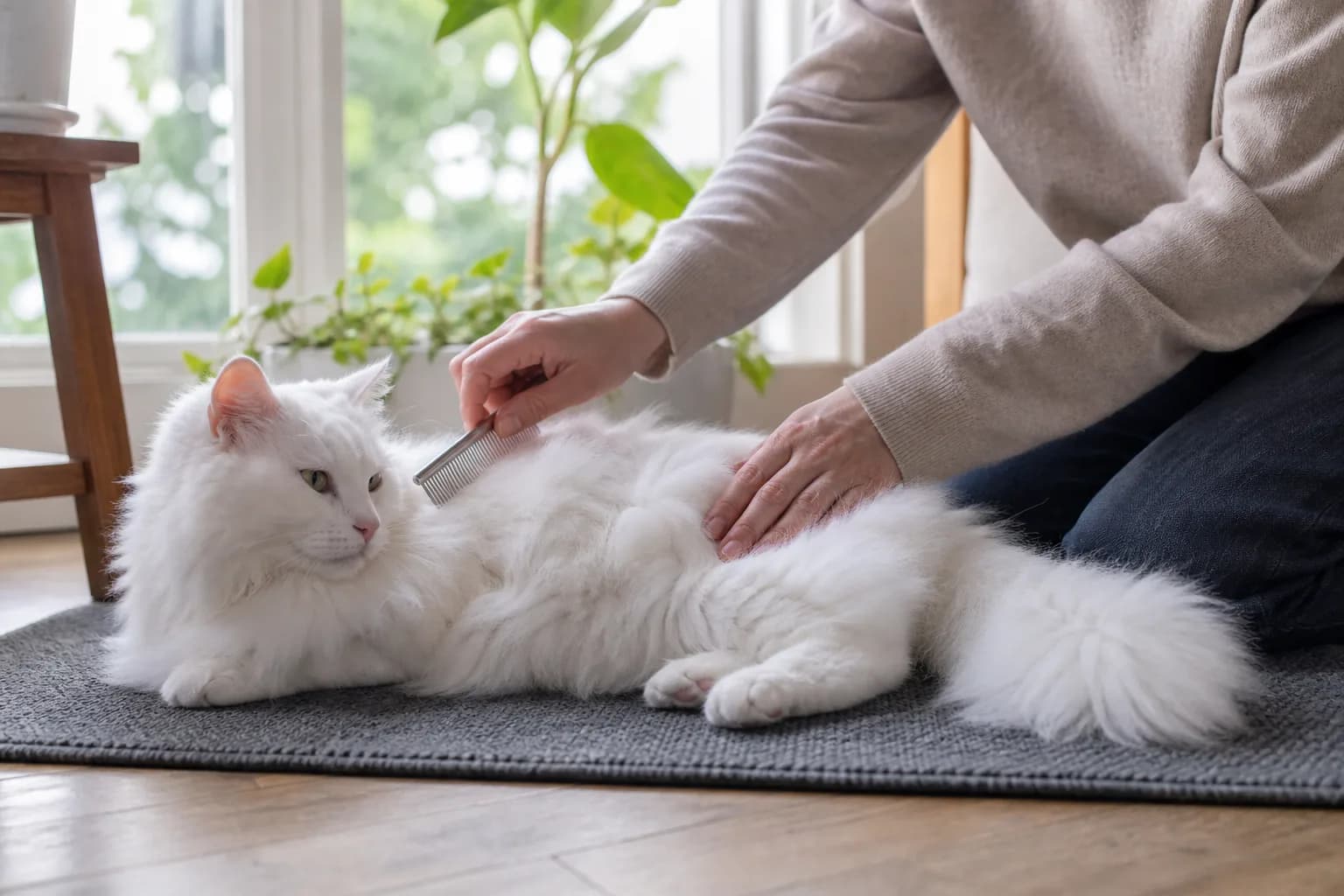
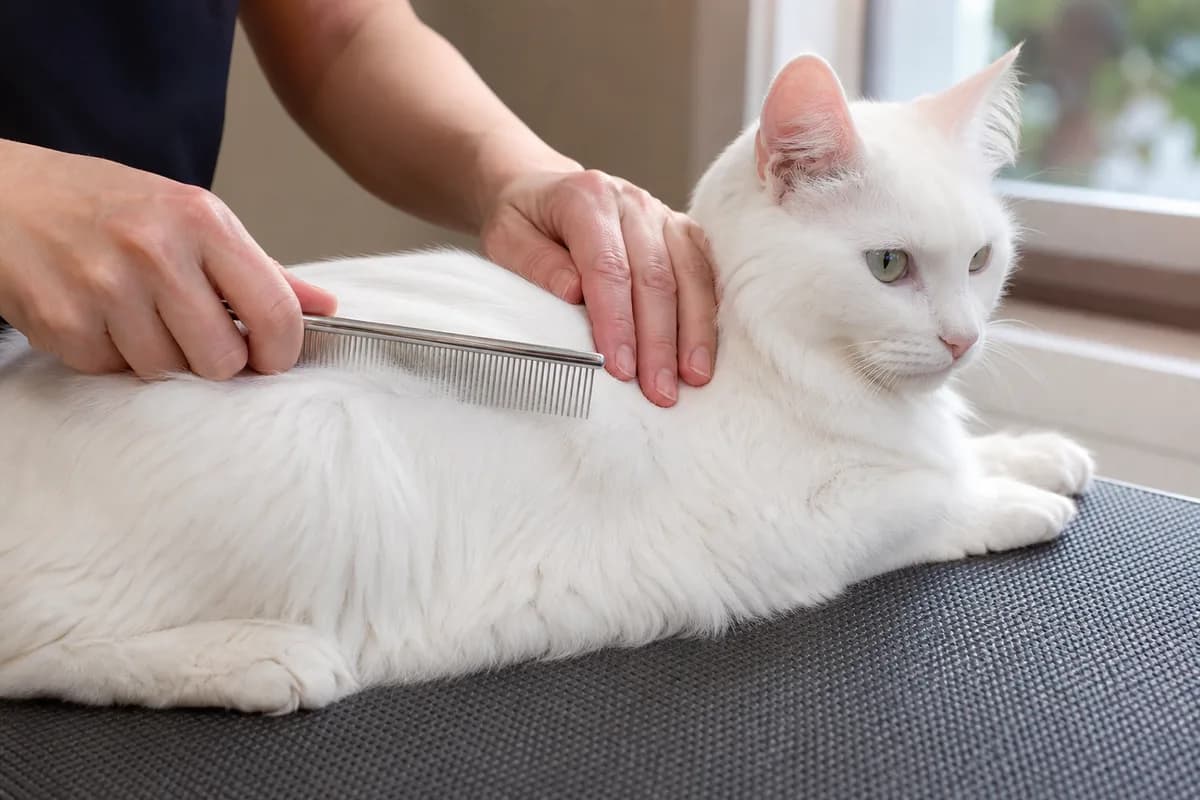
A metal comb is useful for finding small tangles because the teeth reach through the fine coat. A gentle aumuca slicker brush can lift loose surface hair when it moves freely and does not scratch. Test every tool on your own forearm and watch the cat’s skin rather than counting strokes.
Work in the direction the hair grows. Support the skin above a tangle, start at the outer end, and take small passes. Do not yank from the root. If the cat turns, braces, or vocalizes, stop and reassess. Pain can make a previously tolerant cat defensive.
- Check the coat and skin with flat fingers.
- Start in an easy area such as the shoulders.
- Support the skin above a small loose tangle.
- Comb from the outer end in short gentle passes.
- Stop for pain, panic, skin movement, or a tight mat.
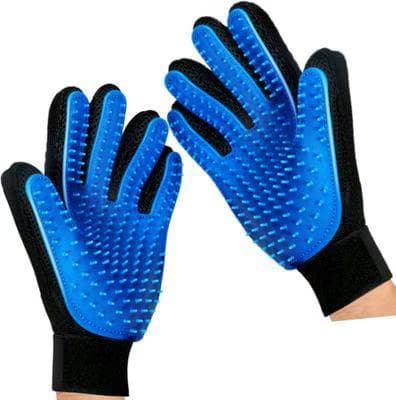
A Mr. Peanut grooming gloves may suit a cat that accepts stroking better than a brush, but it should not be used to pin the cat or scrub sensitive areas. Follow with your fingers or comb because a glove may smooth the surface while leaving a knot underneath.
Divide the body into small zones. Begin at the shoulders or side, where many cats accept touch, then move only while the skin remains loose and the cat continues eating a reward or choosing to stay. Save the belly, armpits, hindquarters, and tail for separate sessions if those areas create tension.
Use the free hand to feel ahead of the tool and to prevent skin from being pulled. A comb should not bounce, snag repeatedly, or make the skin ripple. When resistance appears, stop the long stroke, inspect with fingers, and decide whether the area is loose hair, a small supported tangle, or a mat that needs professional help.
Petful may earn a commission when you click through to Chewy, at no extra cost to you.
Grooming tools and what each one does
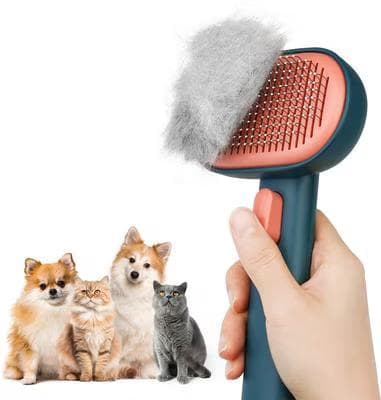
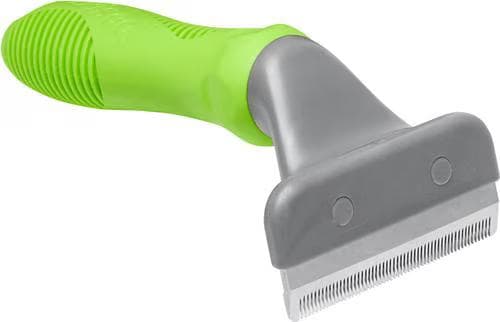
Choose the smallest tool set that covers the cat’s actual needs. A wide-tooth comb checks the coat, a finer comb finishes small areas, a soft brush collects surface hair, and cat nail clippers trim clear tips. A deshedding tool requires restraint because excessive pressure or repeated passes can break the fine coat and irritate skin.
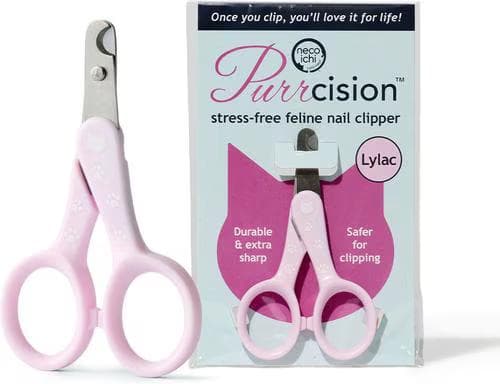
If using the Frisco deshedding brush, make one or two light test passes and inspect the skin and coat. The goal is loose hair removal, not a large pile for a photograph. Either Necoichi Purrcision nail clippers or Resco cat nail clippers can trim nails when the tool is sharp, clean, and comfortable in the handler’s hand.
Tool condition matters as much as tool type. Bent comb teeth, rough seams, packed brush pins, and dull or misaligned clippers can catch hair or crush a claw. Clean loose hair after each session, wash only as the manufacturer allows, let tools dry completely, and store them where damaged teeth or contaminated surfaces are easy to notice.
| Tool | Best use | Avoid |
|---|---|---|
| Fingers | Daily contact, skin check, and finding small knots | Pulling or twisting a tangle |
| Metal comb | Checking through the coat and easing loose tangles | Raking against the skin |
| Gentle slicker | Light surface hair removal when it glides freely | Repeated scraping or pressure |
| Grooming glove | Short low-stress surface sessions | Assuming it reaches every hidden knot |
| Deshedding brush | Limited seasonal loose-hair help for a tolerant cat | Chasing maximum hair removal |
| Cat nail clippers | Removing the clear claw tip | Cutting into the pink quick |
Avoid collecting specialty tools before the cat demonstrates a need. A basic comb, a gentle surface brush if tolerated, and suitable nail clippers cover many homes. When a tool repeatedly fails, ask whether the technique, coat problem, pain, or handling tolerance is the real issue before replacing it with a sharper or more aggressive version.
Seasonal shedding and loose hair
Turkish Angoras shed. Seasonal coat changes can make the plume, ruff, and britches look fuller or lighter, and indoor light and temperature can blur a neat spring-fall schedule. Use the amount of loose hair, hairball pattern, coat condition, and the cat’s comfort to adjust.
Increase frequency before increasing force. A few extra gentle combing sessions are safer than aggressive deshedding. Clean bedding, vacuum common resting areas, and support hydration and normal nutrition rather than chasing a zero-hair home.
A Best Friends by Sheri covered bed can keep loose hair concentrated in a washable rest area, while the existing Petful shedding guide explains when hair loss no longer looks like normal shedding. Bald patches, broken skin, intense itch, or sudden thinning are not solved by another brush.
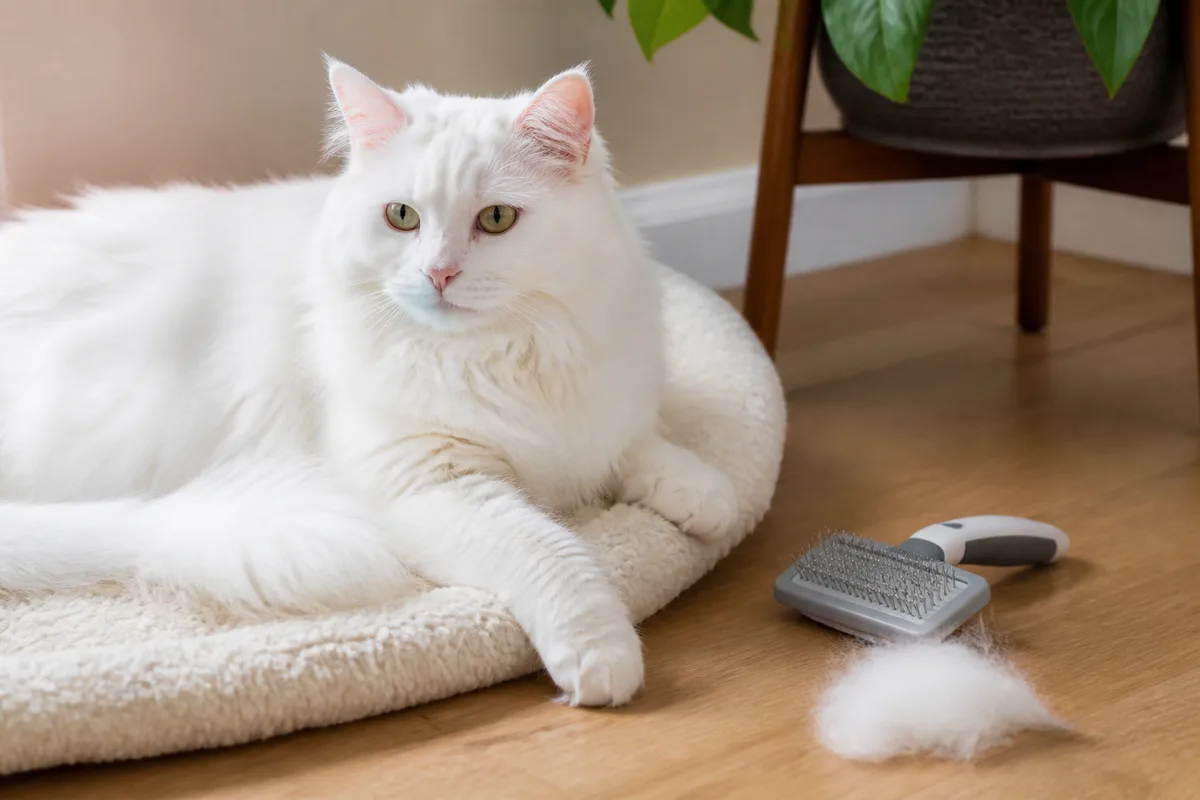
Measure change against the individual cat, not the amount of fur from another breed. A dramatic-looking plume can release visible long hairs while the skin and coat remain healthy. Conversely, a small amount of hair can matter when it comes from one thinning patch. Distribution, skin condition, itch, and behavior are more useful than the size of the brush pile.
Hairballs are not a reason to strip the coat aggressively. Track how often they occur and whether they accompany vomiting, appetite change, constipation, weight loss, coughing, or reduced activity. Gentle loose-hair removal may help routine intake, but recurring or changing signs deserve veterinary discussion rather than an ever-harsher grooming tool.
Petful may earn a commission when you click through to Chewy, at no extra cost to you.
Tangles and mats
A tangle is a small area that may loosen with fingers and a comb. A mat is a compact mass that can pull the skin, trap moisture and debris, and become painful. Check friction areas early so a small problem does not turn into a skin-level sheet.
Never slide scissors under a mat. Cat skin is thin and can tent into the hair, making a serious cut possible even when the blade seems far from the body. Clippers also require skill around loose skin and sensitive areas. A groomer or veterinary team can decide the safest handling and pain-control plan.
After removal, address the cause. The cat may need a more frequent check, a collar adjustment, weight or mobility support, dental care, or medical evaluation. Shaving the whole coat without addressing the reason only resets the clock.
Know when a tangle needs professional help
Do not wet a mat before evaluation. Water can tighten compacted hair and make the skin beneath it harder to dry. Do not soak it with oil, detergent, or a human detangling product either; the cat may lick the substance, the skin may become irritated, and a slippery mat can be harder to handle safely.
A small loose tangle can be supported at the base and eased from the outer edge with fingers or a comb. Stop if the skin lifts, the knot is wider than expected, debris is trapped, or the cat reacts as though it hurts. Professional removal is not a grooming failure; it is the correct choice when home technique cannot protect skin and comfort.
Do Turkish Angoras need haircuts?
A Turkish Angora haircut, lion cut, or short-hair look is usually unnecessary for a healthy Turkish Angora coat. The single coat offers protection and temperature regulation, and a cosmetic clip can create stress, uneven regrowth, or skin exposure without solving shedding.
A sanitary trim or targeted clip may occasionally be recommended for an individual cat with contamination, severe matting, mobility limits, or a medical procedure. That is a case-specific care decision, not a breed requirement. Use an experienced cat groomer or veterinary team.
Clipping does not stop shedding because new hair still grows and is released. It can also make sun exposure, skin temperature, and small injuries less buffered. If the motivation is household hair, use washable bedding, routine cleaning, and condition-based combing before choosing an invasive cosmetic change.
Ask for a case-specific clipping plan
When a targeted trim is recommended, ask who will perform it, what area is necessary, how the cat will be positioned, and whether anxiety or pain changes the plan. Sedation is a veterinary decision, not a convenience to improvise at home. Afterward, follow instructions for skin observation and prevent licking or temperature stress if advised.
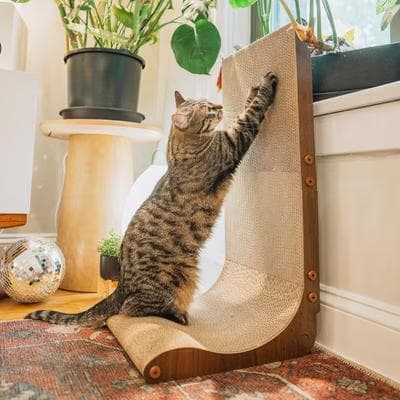
Curved cardboard wall scratcher with a wood frame that protects walls and gives cats a satisfying vertical scratch surface.
Petful may earn a commission when you click through to Chewy, at no extra cost to you.
Bathing and drying
Bathe only when the coat is genuinely soiled, sticky, contaminated with a safe-to-wash substance, or a professional has given a specific reason. Prepare towels, a nonslip surface, a cat-safe shampoo, and a warm room first. Keep water lukewarm and away from the nose and ears.
Rinse until the coat feels clean rather than slick. Residue can irritate skin and attract dirt. Press water out with towels instead of rubbing the fine hair into tangles. Use a dryer only if the cat is already comfortable with the sound and airflow; keep heat low and distance safe.
CFA notes that some Turkish Angoras tolerate bathing and show water curiosity, but this is not permission to force the cat. Curiosity at a faucet and comfort in a bath are different behaviors.
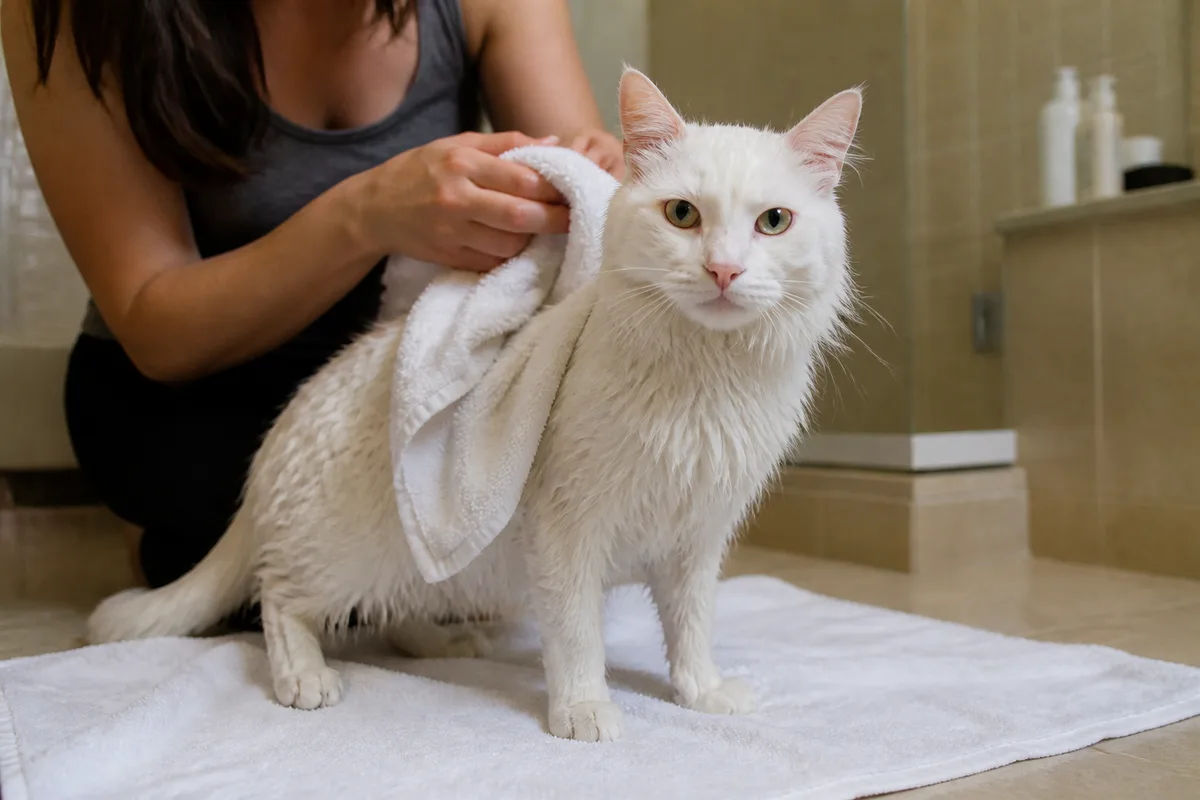
Brush or comb out only loose, safe tangles before the bath. Protect traction with a rubber mat or folded towel, keep the door closed without blocking airflow, and have every supply open and reachable. A second person can offer a lickable reward and watch breathing and body language, but should not scruff or pin a struggling cat.
Dry the skin as well as the visible coat, especially around the armpits, belly, and hindquarters. A damp fine coat can clump and chill the cat. Replace saturated towels, keep the room comfortably warm, and allow the cat to retreat to a dry bed. Stop a dryer immediately if the cat pants, panics, or the airflow feels hot on your wrist.
Nails, paws, and scratching
Condition paw handling between trims. Touch one leg, reward, press one toe gently, reward, and stop. When the cat is comfortable, remove only the sharp clear hook. If the claw is dark or the boundary is unclear, take less rather than guessing.
A Necoichi wall scratcher supports stretching and normal claw maintenance but does not replace nail inspection. Place scratching surfaces vertically and horizontally because preference varies. A familiar Travel Cat carrier can also make transport to a groomer or veterinarian less stressful when home care is not safe.
Inspect every claw, including the dewclaws higher on the front legs. Overgrown tips can catch fabric, curve toward the pad, or make movement uncomfortable. If a claw is split, bleeding, embedded, swollen, discolored, or painful, do not continue a routine trim around it; contact a veterinary team.
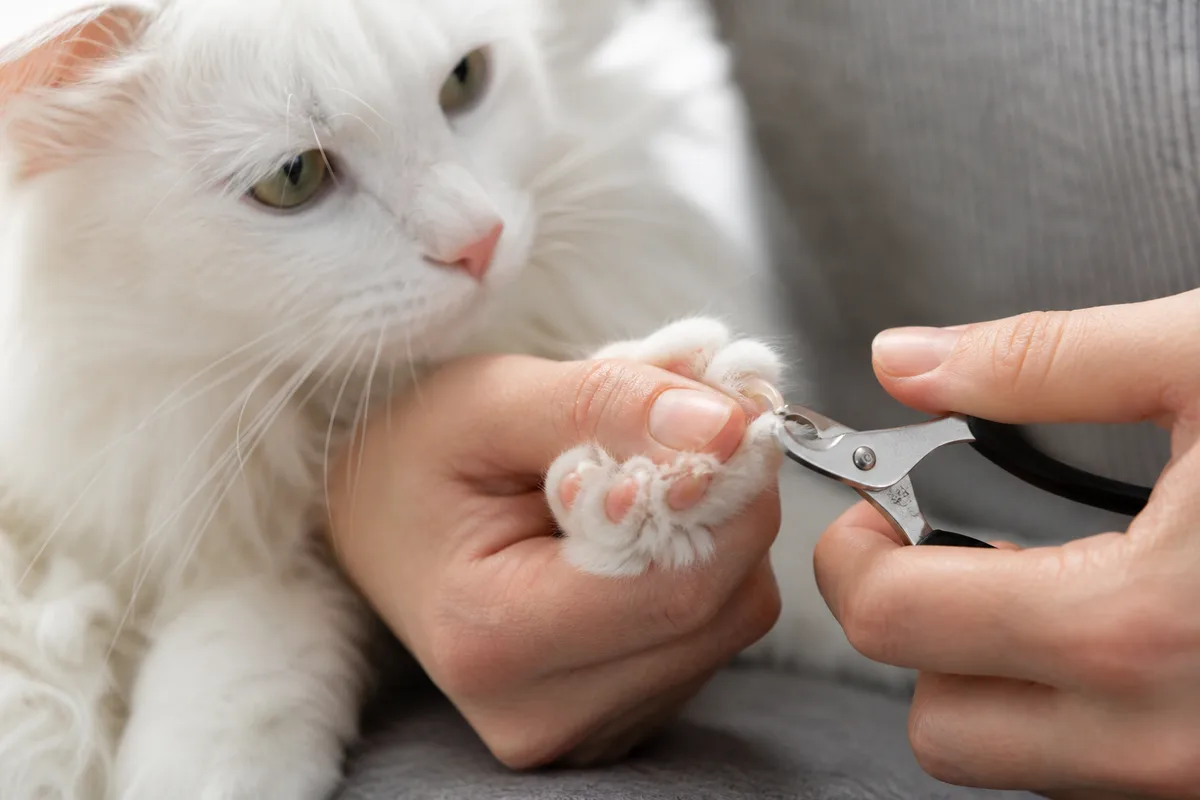
Trim one or two nails per session if that is the cat’s comfortable limit. Keep styptic material nearby and know the clinic contact before beginning, but use preparation to reduce risk rather than to justify taking a larger cut. If bleeding does not stop promptly or the cat is distressed, seek veterinary guidance.
Ears, eyes, and dental care
Look at the outer ear during normal handling. A healthy-looking ear does not need deep cleaning with cotton swabs. Odor, discharge, redness, swelling, head shaking, pain, or balance change needs veterinary guidance. Never pour a product into the ear simply because a schedule says cleaning day.
Wipe ordinary eye debris with a soft damp pad using a separate clean area for each eye. Persistent tearing, squinting, redness, cloudiness, or pain requires veterinary attention. White coat staining is cosmetic until a cause is understood.
Dental care is part of grooming but should follow a veterinary plan. Build tolerance gradually with brief lip lifting and a cat-appropriate method. Bad breath, drooling, pawing at the mouth, reduced appetite, or chewing changes are reasons for an exam.
Record one-sided and sudden changes
Use only products and methods intended for cats and recommended for the individual need. Human toothpaste, essential oils, peroxide, alcohol, and improvised ear or eye solutions can be harmful or irritating. When a product is prescribed, confirm the amount, frequency, location, and stop signs rather than generalizing it into a lifelong grooming step.
Record whether a sign is on one side or both, when it began, and whether appetite, balance, hearing response, or behavior also changed. That information is more useful to the clinic than cleaning away all visible material before an exam. Urgent pain or sudden neurologic signs should not wait for the next routine appointment.
When to stop grooming and get help
Stop when grooming causes pain, panic, breathing distress, escalating aggression, bleeding, or skin injury. Also stop when a mat is tight to the skin, the cat cannot be positioned comfortably, or the needed clip is near the armpit, belly, genitals, ears, or loose folds.
Veterinary evaluation is appropriate for sudden coat deterioration, bald areas, sores, intense itch, parasites, ear pain, unexplained odor, weight loss, stiffness, or a cat that abruptly stops self-grooming. A behavior change can be the first visible sign of discomfort.
Choose the right professional. A routine loose-coat session may suit an experienced cat groomer; painful mats, skin lesions, severe fear, medical instability, or possible sedation belong with a veterinary team. Ask how cats are handled, what happens if distress rises, and how findings will be documented for follow-up.
- Tight mats, skin sores, sudden coat change, ear pain, bleeding, breathing distress, or a cat that can no longer groom normally need professional or veterinary help rather than a longer home session.
Transport safely in a conditioned carrier and tell the professional what the cat tolerates, which areas are sensitive, and what medications or medical conditions matter. Do not give a sedative, supplement, or human medication unless the veterinarian responsible for the cat has directed it for that visit.
Build a low-stress routine
Pair each step with a predictable cue and reward. Groom in the same comfortable place, use the same small tool kit, and end on an easy body area. If the cat leaves, let the session end. Choice builds cooperation faster than pursuit.
Teach the component skills separately: stepping onto the mat, accepting shoulder touch, hearing the clipper near the paw, feeling one comb pass, and returning for another reward. Once each part is comfortable, combine only two or three pieces. This makes it clear which movement needs more practice and prevents an entire long routine from becoming the fear cue.
Watch subtle consent signals. A cat that remains only because it has frozen is not necessarily comfortable. Loose muscles, normal breathing, voluntary reorientation to the reward, and choosing to return are better signs. Turning away, crouching, skin rippling, ears rotating back, tail thumping, or refusing a usual treat means the session should become easier or end.
Start kittens with brief handling
Start kittens with touch and a brief comb pass rather than a full groom. The kitten guide explains early handling, while the color guide helps describe the coat without turning cosmetics into the goal. The comparison guide explains why Turkish Van coat care should not be copied blindly onto a Turkish Angora.
Turkish Angora grooming FAQs
These concise answers preserve the article ownership boundaries and the evidence limits explained above.
The grooming needs of a Turkish Angora kitten begin with calm handling, a regular coat check, and brief gentle combing. The silky single coat is generally less mat-prone than a dense double coat, but the right schedule still depends on coat length, age, shedding, and tolerance. Check the coat and the cat’s body language before every session, use the gentlest effective tool, and stop for pain, panic, skin irritation, or a mat that cannot be separated safely.
A Turkish Angora is not automatically high maintenance. The silky single coat is generally less mat-prone than a dense double coat, but it still needs a regular coat check and gentle combing. The right schedule depends on coat length, age, shedding, mobility, and tolerance. Check the coat and the cat’s body language before every session, use the gentlest effective tool, and stop for pain, panic, skin irritation, or a mat that cannot be separated safely.
Start with a brief weekly check and adjust. Some younger cats need only occasional combing, while older cats, heavier seasonal shedders, or cats that groom less effectively may need more help. Check the coat and the cat’s body language before every session, use the gentlest effective tool, and stop for pain, panic, skin irritation, or a mat that cannot be separated safely. Relevant evidence includes single coat and no routine shaving.
Routine haircuts and lion cuts are usually unnecessary. Do not use scissors against a tight mat because thin cat skin can be pulled into the blades; ask a skilled groomer or veterinarian for help. Check the coat and the cat’s body language before every session, use the gentlest effective tool, and stop for pain, panic, skin irritation, or a mat that cannot be separated safely. Relevant evidence includes single coat and no routine shaving.
Yes. Turkish Angoras shed, and loose hair may increase seasonally. Gentle combing, realistic expectations, and attention to sudden coat changes are more useful than aggressive deshedding. Check the coat and the cat’s body language before every session, use the gentlest effective tool, and stop for pain, panic, skin irritation, or a mat that cannot be separated safely. Relevant evidence includes single coat and no routine shaving.
Bathe only when the coat is genuinely dirty or a professional advises it. Use a cat-safe product, keep the session brief, rinse thoroughly, and dry the cat in a warm draft-free room. Check the coat and the cat’s body language before every session, use the gentlest effective tool, and stop for pain, panic, skin irritation, or a mat that cannot be separated safely. Relevant evidence includes single coat and no routine shaving.

Coreen Saito is a pet writer and longtime shelter volunteer with more than a decade in animal rescue. She covers cat behavior, breed care, and the small, ordinary science of sharing a life with companion animals, with a particular focus on honest takes about the products and decisions that actually matter. At home in Arizona, she's outranked by Mac (a dog with the loudest opinion in the house), Rebel (a cat who governs by quiet authority), and Meri (an orange tabby who runs the late shift and the laundry basket). She writes about all three, plus the rescues that keep coming through her life, at LifeWithMinty.com.
Sign up for expert-backed reviews and safety alerts all in one place.