Bengal Cat: The Complete Breed Guide (2026)
Bengal cats look like miniature leopards and act like intelligent, water-loving toddlers. A complete guide to colors, personality, health issues, legality, price, and whether a Bengal is right for you.

Petful is reader supported. As an affiliate of platforms like Amazon and Chewy, we may earn a commission when you buy through links on this page. There is no extra cost to you.
- 1Bengal cats are the only domestic breed with rosettes and a glittered coat, bred from Asian Leopard Cat hybrids.
- 2Expect 12 to 16 years of lifespan, very high activity needs, and a price range of $1,500 to $3,000 for pet-quality kittens.
- 3They are not hypoallergenic, despite persistent myths. Allergy sufferers react to Fel d 1 protein, which Bengals still produce.
- 4F1 through F3 Bengals are restricted or banned in multiple US states and cities; F5 and later are legal almost everywhere.
- 5Reputable breeders screen for HCM, PRA-b, and PK deficiency. Walk away from any seller who cannot show you test results.
Bengal cats are a hybrid breed created by crossing the wild Asian Leopard Cat (Prionailurus bengalensis) with domestic cats; the breed received TICA championship status in 1991. A pet-quality Bengal cat from a reputable breeder costs $1,500 to $3,000 in 2026, with show-quality and rare-color Bengals reaching $10,000 or more. Bengals live 12 to 16 years on average and are predisposed to three hereditary conditions: hypertrophic cardiomyopathy (HCM), progressive retinal atrophy Bengal type (PRA-b), and pyruvate kinase deficiency (PK Def). F1 through F5 generations are restricted or banned in several US states, including Hawaii and New York City; F4 and later generations are legally considered domestic cats nearly everywhere. Petful’s separate guide to the Caracat covers this rare caracal hybrid and whether it is a realistic pet.
The Bengal cat looks like a miniature leopard and acts like a toddler with a grappling hook. It is one of the most recognizable breeds in the world, and also one of the most misunderstood. This guide covers everything you need to decide whether a Bengal belongs in your home: the breed's wild ancestry, the colors and patterns, health and lifespan, legality by state, price and cost of ownership, and the temperament that makes Bengals equal parts joy and challenge.
We will draw on breed standards from The International Cat Association (TICA), research on feline genetic disease, and real-world owner experience. If you are new to cat breeds, you may also want to read our guide on tabby cats. Bengals are technically spotted tabbies, but with a twist.

Sign up for expert-backed reviews and safety alerts all in one place.
Bengal Cat Quick Facts
| Trait | Detail |
|---|---|
| Adult weight | Males 10-15 lb, females 8-12 lb |
| Lifespan | 12 to 16 years |
| Origin | United States, 1970s (Jean Mill breeding program) |
| Recognized by | TICA championship status since 1991 |
| Coat | Short, silky, low-shed; rosettes / spots / marbled patterns |
| Colors | Brown, snow (lynx/mink/sepia), silver, charcoal, blue |
| Temperament | Confident, athletic, vocal, water-loving, highly trainable |
| Activity level | Very high; needs 2 interactive play sessions per day |
| Hereditary risks | HCM, PRA-b, PK Deficiency (DNA-testable) |
| Pet-quality price (2026) | $1,500 to $3,000 from a reputable breeder |
What Is a Bengal Cat?
A Bengal cat is a domestic breed developed by crossing the wild Asian Leopard Cat (Prionailurus bengalensis) with domestic cats. The goal was simple: preserve the striking leopard-like coat of the wild parent while producing a friendly, trainable housecat. Geneticist Jean Mill kickstarted the modern breeding program in California in the 1970s. TICA granted the Bengal full championship status in 1991.
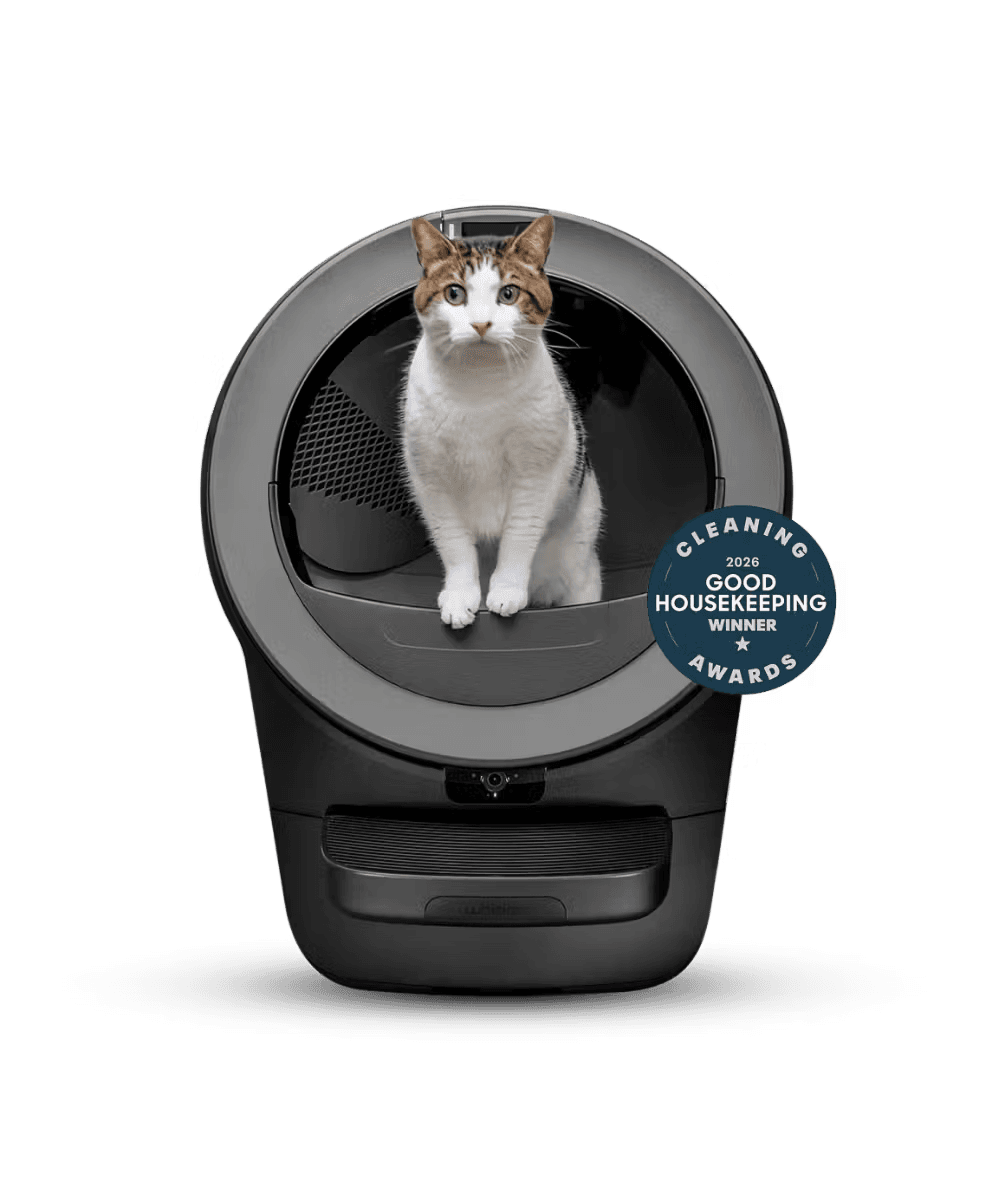
Never Scoop Again® with the Whisker Litter-Robot, the smart self-cleaning automatic litter box. Monitor visits and track weights for better overall care in the Whisker® app. Multi-cat friendly.
Petful may earn a commission when you click through to Whisker, at no extra cost to you.
Despite the exotic appearance, every modern Bengal cat sold as a pet is at least four generations removed from its wild ancestor. A fourth-generation Bengal (called F4) is legally considered a domestic cat in most US jurisdictions. Cats closer to the wild side (F1 through F3) are restricted or banned in many states, which we cover in detail below. There is more on this in Petful’s guide to Bengal cat generations.
- By the time a Bengal reaches F4 or later, it is genetically and behaviorally a domestic cat. The stripes on the outside are the leopard heritage. The purring cat on your keyboard is the domestic cat heritage winning every single day.
Bengal Cat History and the Asian Leopard Cat
The Bengal cat takes its name from the scientific name of the Asian Leopard Cat, Prionailurus bengalensis, a small wild felid native to South and East Asia. Cross-breeding records between domestic cats and Asian Leopard Cats date back to 1889, but the modern Bengal breed traces directly to geneticist Jean Sugden Mill, who began her crossing program in 1963 and revived it in the 1970s after acquiring a Leopard Cat hybrid from Loyola University researcher Willard Centerwall.
Mill's foundation cats were eventually bred for at least four generations away from the wild parent, producing fully domestic offspring with the wild coat retained. The International Cat Association (TICA) accepted the Bengal as an experimental breed in 1983 and granted full championship status in 1991. The Cat Fanciers' Association (CFA) accepted the breed in 2016 for show competition.
Longhair Bengals (Cashmere Bengals)
A long-haired Bengal variety, sometimes called the Cashmere Bengal, has been gaining recognition since 2013. TICA granted championship status to the longhair Bengal in 2017. They share the same temperament and rosette coat patterns as shorthair Bengals but require slightly more grooming, typically two or three brushings per week instead of weekly.
Asian Leopard Cat: The Wild Parent
The Asian Leopard Cat (Prionailurus bengalensis) is roughly the size of a domestic cat (5 to 16 pounds) but with a longer body, smaller head, and prominent rosettes against a yellowish-brown to gray coat. It lives across a vast range from Pakistan to the Russian Far East. Asian Leopard Cats are not domesticated and do not adjust well to captive life as pets, which is precisely why Mill's program aimed to capture the look in a domestic-tempered Bengal. For more, see Petful’s guide to Bengal cat size.
Bengal Cat Appearance
The Bengal is a medium to large, muscular cat with a long, athletic body. Males usually weigh 10–15 pounds; females run 8–12. The head is slightly smaller than the body, with high cheekbones, small rounded ears, and wide-set eyes that range from green and gold to blue in the snow varieties.
The coat: rosettes, spots, and glitter
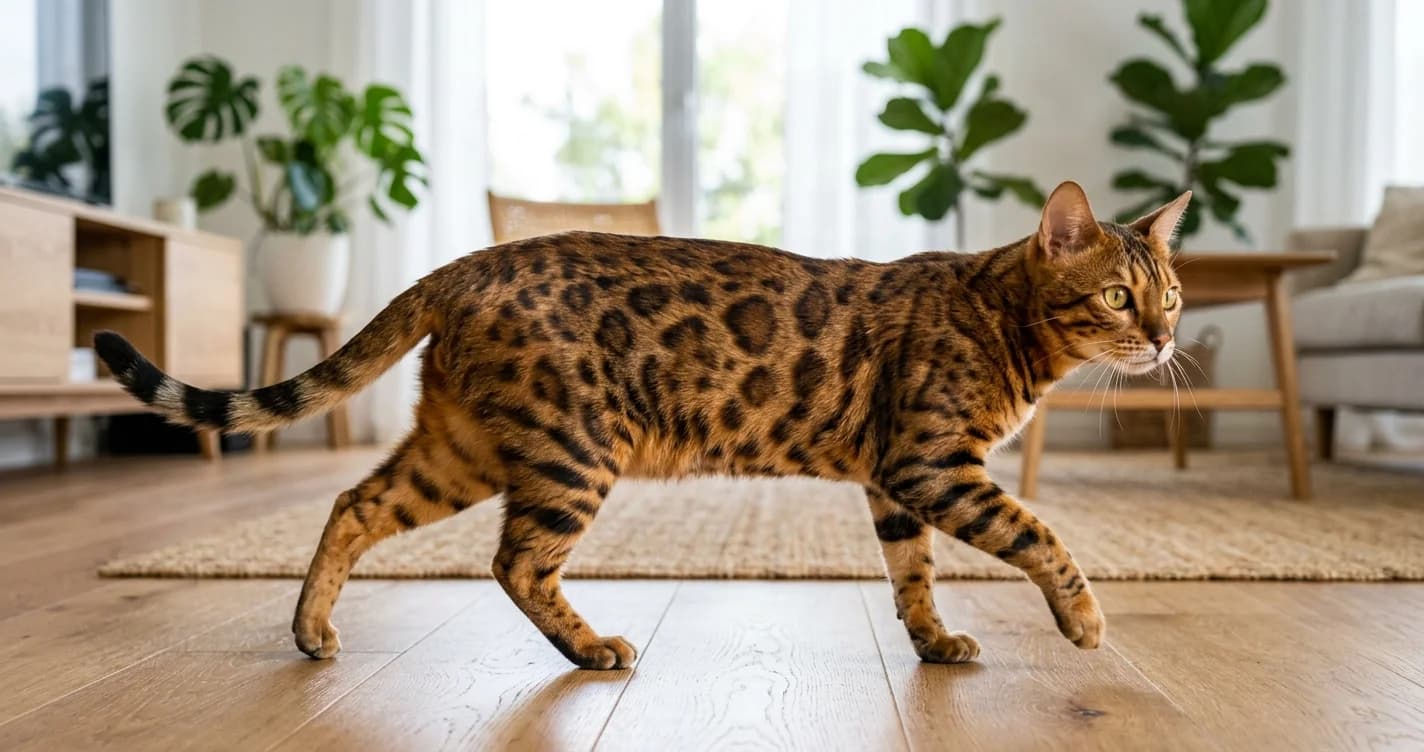
Bengals are the only domestic cat breed that displays true rosettes, the donut-shaped spots with a darker outline and lighter center seen on jaguars and leopards. Other Bengals show single spots (without rosette outlines) or a marbled pattern where the spots blur into bold horizontal swirls.
Many Bengals also have a trait called "glitter," where the tips of each hair reflect light as if dusted with gold or pearl powder. Glitter is a random mutation that appeared in the early breeding program and is now actively selected for. It is most visible on brown Bengals in strong sunlight.

Bengal cat colors and patterns
Bengals come in brown, snow (with three sub-types: seal lynx, seal mink, seal sepia), silver, charcoal, and blue. Each color can appear in either spotted or marbled pattern. For a full breakdown with photos and genetics, see our complete guide to Bengal cat colors and patterns. The snow Bengal variations in particular are frequently misidentified, so we cover seal lynx, mink, and sepia separately. A 'white Bengal' is usually a snow seal lynx, and a 'black Bengal' (melanistic) carries ghost rosettes that shimmer through the dark coat in strong light.
Silver Bengal Cats
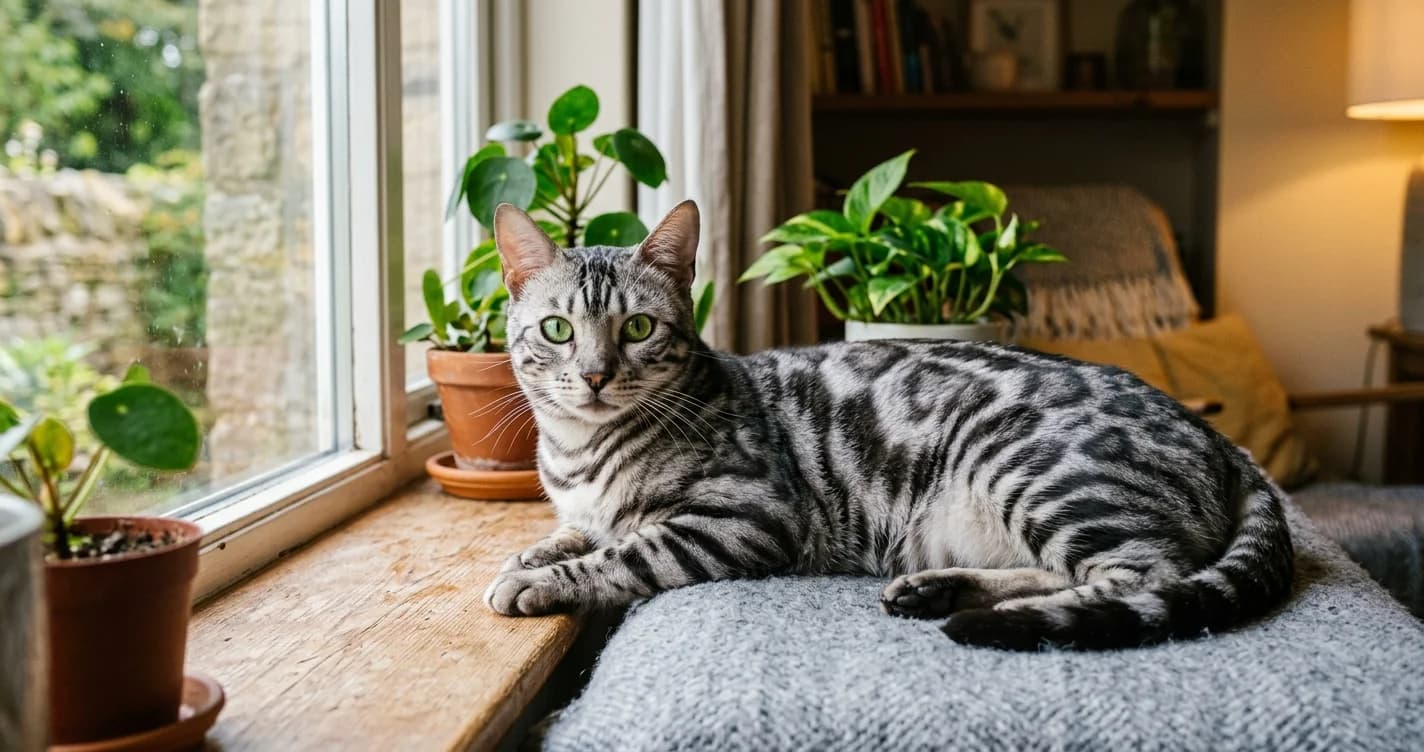
Silver Bengals show a striking cool-toned coat where the agouti gene is masked by the silver gene, producing dark spots or marbling against a near-white background. The contrast between the dark pattern and pale undercoat is the most dramatic of any Bengal color. Silver Bengals were first recognized by TICA in 2004 and remain rarer (and pricier) than the standard brown.
Bengal Cat Temperament and Personality
Bengals are confident, athletic, highly intelligent, and relentlessly curious. A well-socialized Bengal will follow you from room to room, demand to be part of conversations, and treat opening drawers, turning on faucets, and flushing toilets as reasonable life skills.
Common Bengal traits that surprise new owners:
- Vocal and chatty. Bengals meow, chirp, and trill more than most breeds. They want to talk about everything. For more, see Petful’s guide to why do cats chirp.
- Water-obsessed. Most Bengals will join you in the shower, fish ice cubes out of your drink, or swim in the tub. There is more on this in Petful’s guide to can cats swim.
- Trainable. Many Bengals walk on a harness, play fetch, and learn tricks on par with small dogs.
- Climbers. Expect to find them on the top of the refrigerator, the curtain rod, and inside kitchen cabinets.
- Prey-driven. They will stalk and ambush anything that moves: toys, feet, smaller pets, houseflies.
- If you want a cat that sleeps 18 hours a day and ignores you, do not get a Bengal. They are one of the most active cat breeds, and under-stimulated Bengals develop destructive behaviors: counter surfing, fabric destruction, aggressive play, and loud middle-of-the-night vocalization.
Bengals are uniquely water-obsessed (Petful has covered Bengal water behavior for years). A flowing pet fountain channels that fascination productively, into hydration, and away from sink taps and toilet bowls.

108-oz stainless steel pet fountain with quiet pump and water-level window. Bengals are notoriously water-obsessed; a flowing fountain encourages hydration and pulls them away from sinks and toilets.
Petful may earn a commission when you click through to Chewy, at no extra cost to you.
Is a Bengal Cat a Good House Cat?
For the right household, yes. Absolutely. Bengals thrive in homes that can provide vertical space, two interactive play sessions per day, puzzle feeders, and ideally a bonded companion (another cat, a playful dog, or a human who works from home). They do poorly in homes where they are left alone for long hours with no stimulation.
Bengals are generally good with older, respectful children and with dogs they have been raised alongside. They can be intense with small pets like hamsters, birds, or rabbits, because their prey drive is high.
- Stunning rosette coat and glittered sheen
- Highly intelligent and trainable, on par with smart dogs
- Interactive and affectionate with their people
- Love water, which opens up play options most cats won't touch
- Very athletic and playful well into adulthood
- High exercise and stimulation needs (at least 30–60 minutes of active play per day)
- Vocal. Some people find the chatter exhausting
- Expensive upfront cost and higher lifetime spend than average
- Restricted or illegal in some US states and cities for lower-generation cats
- Prey-driven, not ideal with small pocket pets or young birds
Bengal Cat Health Issues and Lifespan
A healthy Bengal typically lives 12 to 16 years. The breed is generally robust, but three hereditary conditions are common enough that reputable breeders screen for them before breeding:
- Hypertrophic cardiomyopathy (HCM). The most common heart disease in cats, and particularly prevalent in Bengals. Annual cardiac ultrasounds are recommended for breeding cats.
- Progressive retinal atrophy, Bengal type (PRA-b). A genetic eye disorder that causes gradual vision loss. A DNA test exists. Ask every breeder to show you results.
- Pyruvate kinase deficiency (PK Def). A red blood cell enzyme deficiency that causes anemia. Also DNA-testable.
Beyond the genetic issues, Bengals can develop the same conditions any cat can: dental disease, kidney issues later in life, and food sensitivities. For a deeper look at the inherited conditions, our dedicated Bengal cat health issues guide covers HCM, PRA, and PK Def in detail, including genetic test providers and what a clean health panel should look like.
- Bengal owners often inherit partial records from a breeder: a vaccination log, maybe a genetic test result, a microchip number. Those records fragment fast. Keeping every vet visit, lab result, and genetic test in one digital record saves headaches for the rest of the cat's life.
Bengals come with genetic test results, vet visits, and microchip data. Store everything in one AI-assisted record that lives with your cat, not your last email inbox.
Create a free pet record- If you take only one thing from this guide, take this: insist on written DNA test results for HCM, PRA-b, and PK Deficiency on both parents before you put a deposit on a Bengal kitten. These three conditions account for nearly every preventable health crisis I see in Bengal patients, and the tests cost the breeder under $200 per cat. A breeder who cannot produce them is not a reputable breeder, full stop. Dr. Rhiannon Koehler, DVM
- Bengal cats have an unusually high frequency of type B and type AB blood compared with most domestic cat breeds, which are predominantly type A. This matters in two situations: blood transfusions (mismatched type can be fatal) and breeding (a type-A queen bred to a type-B sire risks neonatal isoerythrolysis in kittens). Reputable breeders blood-type their breeding stock; pet owners should ask their vet to type their Bengal before any major surgery.
For owners who want to dig deeper into Bengal cardiac health, the American Veterinary Medical Association maintains breed-specific guidance on hypertrophic cardiomyopathy screening, and DNA testing labs such as OptiGen and Wisdom Panel can run the PRA-b and PK Deficiency panels for under $200 per cat.
Bengal Cat Care Basics
Vertical territory is non-negotiable for a healthy Bengal cat. The single highest-impact one-time purchase is a tall multi-perch tower the cat can climb, perch on, and own.

63-inch multi-level cat tree with scratch posts, hammock, plush perches, and dangling toys. Vertical territory is non-negotiable for high-energy climbing breeds like the Bengal.
Petful may earn a commission when you click through to Chewy, at no extra cost to you.
Grooming
Bengals are famously low-maintenance on grooming. The short, silky coat needs a brush once a week at most, mostly to reduce shedding on furniture. Bathing is rarely required. Most Bengals keep themselves immaculate.
Diet
Feed a high-protein, meat-first diet. Many Bengal owners prefer raw, lightly cooked, or high-quality wet food over dry kibble, because the breed is prone to food sensitivities and dry food can contribute to urinary issues. For general feeding principles, see our complete and balanced cat food guide (the macronutrient logic applies to cats too, though the target numbers differ).
Exercise and enrichment
Non-negotiable for a healthy Bengal:
- A tall cat tree or shelf system that reaches near the ceiling
- At least one puzzle feeder to slow down mealtime
- Two interactive play sessions per day with a wand toy or similar
- Rotating toys so novelty doesn't wear off in 48 hours
- A harness and leash for indoor-outdoor walks if you can commit to it
Are Bengal Cats Legal? US and International Restrictions
Partially. Bengal legality depends on generation and jurisdiction. Hawaii and New York City ban all Bengal cats regardless of generation. Seattle's municipal code prohibits all hybrid cats, though enforcement is weak. F5 and later Bengals (registered with TICA or another recognized association) are legal in most US states. F1 through F4 Bengals face additional restrictions and permit requirements in many jurisdictions. Our state-by-state Bengal cat legality guide breaks down every state and major city, with links to the actual regulations.
Outside the US, Bengal restrictions vary widely. Australia and New Zealand impose strict import quarantine and effectively ban early-generation Bengals. The United Kingdom and most of the European Union allow Bengals from F4 or later without permits, though Hungary and Switzerland have additional regulations. Canada permits Bengals provincially, with Manitoba and parts of Ontario requiring permits for F1 through F4. Always check current local regulations before purchase.
Bengal Cat Price and Cost of Ownership
A pet-quality Bengal kitten from a reputable breeder runs $1,500 to $3,000. Show-quality kittens, rare colors, and early generations can exceed $10,000. Beyond the purchase price, expect roughly $1,500 to $2,500 per year in food, litter, vet care, and enrichment. Over a 14-year lifespan, the total cost of owning a Bengal is typically $25,000 to $40,000.
Our full Bengal cat price and lifetime cost breakdown covers everything: purchase price by generation, annual expenses, and the lifetime budget you should realistically plan for.
Bengal Cat Generations (F1 to F5)
| Generation | % Asian Leopard Cat ancestry | Typical Price (USD) | Legal Status (US) |
|---|---|---|---|
| F1 | ~50% | $10,000 to $20,000+ | Restricted or banned in many states |
| F2 | ~25% | $4,000 to $8,000 | Some state restrictions; permits common |
| F3 | ~12.5% | $2,500 to $4,500 | Generally legal, may need permits |
| F4 (pet quality) | ~6.25% | $1,500 to $3,500 | Considered fully domestic in nearly all states |
| F5+ (show quality) | <6% | $3,000 to $6,000 | TICA-eligible for show; legal everywhere |
For a detailed look at behavior and care differences between generations, see our F1 through F5 Bengal generation guide.
- First and second generation (F1 and F2) male Bengals are usually sterile due to the genetic distance from their wild Asian Leopard Cat ancestor. Fertility typically returns by F3 or F4. This is one practical reason ethical breeders work several generations away from the wild parent before placing kittens with pet homes.
How to Find a Reputable Bengal Breeder
If you are searching for Bengal cats for sale, vet the breeder before the kitten. Not all Bengal breeders are equal. The breed's popularity has attracted backyard operations that skip health testing and socialization. A responsible breeder will:
- Show HCM, PRA-b, and PK Def test results on both parents
- Register kittens with TICA and provide a written health guarantee
- Never release a kitten younger than 12 weeks
- Interview you and ask about your home before selling
- Welcome in-person visits to see the kittens and the parents
Our reputable Bengal cat breeder guide walks you through every red flag and green flag, plus how to verify a breeder's TICA registration.
Are Bengal Cats Hypoallergenic?
No. Despite widespread claims on breeder websites, no scientific study has shown Bengals produce less of the Fel d 1 protein that causes most cat allergies. Some owners with mild allergies report fewer symptoms around Bengals, which may be due to the short coat, less grooming-related saliva spread, or lower shedding rates, not genuinely hypoallergenic biology.
We unpack the science, the myth's origins, and what to do if you are allergic but determined to live with a Bengal in our piece on whether Bengal cats are actually hypoallergenic.
Bengal Cat vs Similar Breeds
People shopping for a Bengal often also consider Savannahs, Maine Coons, or Egyptian Maus. The comparisons that matter:
| Breed | Adult Weight | Lifespan | Energy Level | Best For |
|---|---|---|---|---|
| Bengal | 8-15 lb | 12-16 yr | Very high | Active homes wanting a wild-look athlete |
| Savannah | 12-25 lb | 12-20 yr | Very high | Experienced exotic-cat owners |
| Maine Coon | 10-25 lb | 12-15 yr | Moderate | Families wanting a gentle giant |
| Egyptian Mau | 6-14 lb | 12-15 yr | High | Smaller, lower-key spotted-coat alternative |
| Ocicat | 9-15 lb | 10-15 yr | High | Bengal looks with no wild lineage |
Adopting a Bengal Cat
Bengals do end up in rescue, usually when an under-prepared owner realizes the energy level is more than they bargained for. Several dedicated Bengal rescues operate across the US, including the Great Lakes Bengal Rescue and Bengal Rescue Network. Shelter cats labeled "Bengal" are often marbled tabby mixes rather than purebred, but if you are adopting for temperament and appearance rather than pedigree, that's fine.
If you're bringing home a Bengal kitten, see our Bengal kitten care month-by-month survival guide for the first six months of feeding, training, vaccines, and kitten-proofing tactics that prevent the most common new-owner mistakes.
Frequently Asked Questions About Bengal Cats
A pet-quality Bengal kitten from a reputable breeder costs $1,500 to $3,000 in 2026. Show-quality kittens, rare colors like silver or charcoal, and early generations (F1 through F3) can exceed $10,000. Beyond the purchase, expect $1,500 to $2,500 per year in food, litter, vet care, insurance, and enrichment, putting the lifetime cost between $25,000 and $40,000.
Bengal ownership is legal in most US states for F4 and later generations. Hawaii and New York City ban Bengal cats regardless of generation, and Seattle prohibits all hybrid cats. F1, F2, and F3 Bengals face permit requirements or outright bans in many additional jurisdictions. Always verify current state and city regulations before purchase.
F1 Bengal cats (first-generation crosses with Asian Leopard Cats) and rare-color Savannahs are the two domestic breeds that routinely sell for $10,000 to $20,000 or more. Within the Bengal breed, $20,000 typically buys an F1 from a championship-line program with full health testing, a written contract, and shipping included.
Bengals are excellent house cats for active households that can provide vertical space, daily interactive play, and enrichment. They are vocal, water-loving, highly trainable, and bond intensely with their humans. They are a poor fit for owners away from home for long hours or households expecting a low-energy lap cat.
Bengal cats typically live 12 to 16 years. Lifespan depends most on hereditary health screening (HCM, PRA-b, PK Deficiency), diet quality, indoor-only living, and routine veterinary care. Bengals from health-tested breeding lines that receive annual cardiac screenings can live well into their late teens.
Bengals are low shedders compared with most cat breeds. Their coat is short, dense, and uniquely pelt-like with little undercoat, so seasonal shedding is mild. A weekly brushing is enough for most Bengals; longhair (Cashmere) Bengals need slightly more.
No. Bengals still produce the Fel d 1 protein responsible for most cat allergies, despite widespread breeder claims to the contrary. Some allergy sufferers report fewer symptoms around Bengals, likely due to the short coat, lower shedding, and reduced grooming-related saliva spread, but no scientific study has confirmed lower Fel d 1 production in the breed.
Bengal cats have a higher frequency of type B and type AB blood than most domestic cat breeds, which are predominantly type A. Reputable breeders blood-type their breeding stock to prevent neonatal isoerythrolysis in kittens. Pet owners should ask their vet to type their Bengal before any major surgery, since transfusion mismatches can be fatal.
If you commit to one daily ritual with a Bengal cat, make it two ten-minute interactive play sessions with a feather wand. It is the cheapest enrichment investment available and the difference between a Bengal that thrives and one that ends up in a shelter.

Feathered teaser wand with catnip-stuffed bird. Pairs perfectly with the no-bite training policy: redirect Bengal play drive into a 10-minute interactive session with the wand.
Petful may earn a commission when you click through to Chewy, at no extra cost to you.
The Bottom Line on Bengal Cats
A Bengal is the right cat for someone who wants an active, interactive, intelligent companion and is willing to trade the sleepy-lap-cat stereotype for something closer to a small dog in a cat's body. They are stunning, challenging, and deeply rewarding animals.
If you love the look but want a calmer personality, a domestic spotted tabby or an Ocicat may be a better fit. If you are ready for the activity level and can commit to the enrichment, few breeds offer the combination of beauty, intelligence, and personality that Bengals bring.
- 1Budget $1,500–$3,000 upfront plus $25,000–$40,000 lifetime.
- 2Plan for 30–60 minutes of active play per day, every day.
- 3Verify HCM, PRA-b, and PK Def test results before buying.
- 4Confirm legal status in your state and city before bringing home an F1–F3 Bengal.
- 5The Bengal is not hypoallergenic. Expect normal cat allergen levels.

Coreen Saito is a pet writer and longtime shelter volunteer with more than a decade in animal rescue. She covers cat behavior, breed care, and the small, ordinary science of sharing a life with companion animals, with a particular focus on honest takes about the products and decisions that actually matter. At home in Arizona, she's outranked by Mac (a dog with the loudest opinion in the house), Rebel (a cat who governs by quiet authority), and Meri (an orange tabby who runs the late shift and the laundry basket). She writes about all three, plus the rescues that keep coming through her life, at LifeWithMinty.com.
Sign up for expert-backed reviews and safety alerts all in one place.